Tuchel’s decision to select a central defender in Chalobah, rather than a natural full-back replacement, is further proof Real Madrid’s Alexander-Arnold remains well out of the picture.
This was after Tuchel even opted to pick Alexander-Arnold’s former Liverpool team-mate Curtis Jones, a central midfielder, ahead of him at right-back against Andorra in June.
Tuchel has made his concerns over Alexander-Arnold’s perceived defensive frailties clear, saying: “If he wants to have this impact in the English national team then he has to take the defensive part very, very seriously.
Advertisement
“Because when we are talking, especially about qualifying football, and then tournament football, the one defensive error, the one moment where you are not 100% awake, can be decisive. It can be the moment where you pack your suitcases and go home.”
Packing his suitcase early for a flight back to England is not on Tuchel’s agenda – so one of the country’s most naturally gifted footballers is overlooked again.
Alexander-Arnold was not included in Tuchel’s 35-man squad for friendlies against Uruguay and Japan in March, missing out again when the coach needed to seek reinforcements.
Tuchel instead picked Arsenal’s Ben White, who has not been a regular at club level and had been in self-imposed England exile since the Qatar World Cup in 2022.
Advertisement
Alexander-Arnold did make Tuchel’s provisional 55-man World Cup squad, although that could hardly be called a ringing endorsement.
It is in sharp contrast to the faith placed in Alexander-Arnold by Lee Carsley, England’s Under-21 coach who bridged the gap between Southgate’s departure and Tuchel’s appointment.
Carsley even used Alexander-Arnold at left-back in a 3-1 Nations League win at Finland in October 2024, crowning his performance with a superb free-kick.
Alexander-Arnold started four games out of six under Carsley but none of Tuchel’s 14 – those facts speak for themselves.
Advertisement
As a head coach who fixates on squad togetherness, was there a worry that having such a high-profile player on the margins might lead Alexander-Arnold to provide an unintentional distraction and focus of attention?
Alexander-Arnold’s latest rejection appears to be further evidence there is no way back for him with England as long as Tuchel is in charge.
PORT-AU-PRINCE, Haiti (AP) — U.N. Secretary-General António Guterres visited Haiti on Tuesday, where surging gang violence has left more than 1 in 10 people homeless.
New statistics released by the U.N. reveal that 2,300 people have been killed across Haiti so far this year, with another 100 kidnapped, while 1.5 million have been displaced. Among those abducted is James Boyard, cabinet director of the Defense Ministry, who was kidnapped last week in one of the few relatively safe areas of the capital.
Guterres’ one-day visit to Port-au-Prince comes after more than 30 people were killed, injured or missing last weekend in Cité Soleil, a seaside slum, according to Cooperative for Peace and Development, a local human rights organization.
His convoy sped past a neighborhood once fully controlled by gangs that left in their wake decimated car dealerships, abandoned homes and dozens of concrete buildings pockmarked with bullet holes. A colorful bus known as a tap-tap rumbled past, its windshield peppered with bullet holes.
Advertisement
Graffiti scrawled on a crumbling concrete wall read: “Down with Viv Ansanm, long live the police.” Viv Ansanm is a powerful gang federation that the U.S. government designated a foreign terrorist organization. It is estimated to control 70% of Port-au-Prince.
Guterres traveled past dozens of Haitians who fled the clashes and now live in makeshift homes under large pieces of canvas strung up with frayed rope.
They are among the more than 300,000 people displaced by gang violence across Port-au-Prince — a record. Among them are more than 18,000 people who fled the Cité Soleil slum in May, according to the U.N. International Organization for Migration.
“Haiti’s displacement crisis is entering an even more alarming phase,” Gregoire Goodstein, IOM chief of mission in Haiti, said in a recent statement.
Advertisement
Guterres’s first stop was the headquarters of the new gang-suppression force, which the U.N. Security Council approved in September. It replaces a U.N.-backed mission led by Kenyan police that aimed to help Haiti’s National Police fight gangs but remained underfunded and understaffed. So far, Jamaica, Chad, El Salvador and Guatemala have deployed troops that number less than 1,000 to form part of the growing force, which is due to start operations in the coming weeks.
They are expected to work with Haiti’s National Police and its growing Armed Forces, with hundreds of Haitian men and a couple of women lining up on a dusty road hoping to interview to join.
Advertisement
Sign up for Morning Wire:
Our flagship newsletter breaks down the biggest headlines of the day.
“We had a frank conversation about what’s happening in Haiti, the vision the government has for the future,” Fils-Aimé told The Associated Press after the meeting.
He said security is a priority so the transitional government can hold elections and “get back to republican rule.” Fils-Aimé added that Guterres can help with that effort by ensuring that the countries backing the gang-suppression force “live up to their engagement.”
Forced to flee to makeshift shelters
Guterres also stopped by a makeshift shelter in a former school where dozens of the people living there crowded around him.
Advertisement
Forced to flee their homes after gangs shot up their community and set fire to it, some had been living there for up to four years.
“Solino is not ready,” 31-year-old Clifford Lala said of going back to his community. It was one of the last holdouts in Port-au-Prince until gangs overran it.
Guterres ducked into a hot classroom and met privately with a group of six women who decried the lack of privacy at the shelter, even to shower or use the bathroom, and said they worried about their young children.
“It’s skin-to-skin and mouth-to-mouth,” said one woman.
Advertisement
The shelter houses more than 1,200 people who sleep side by side, and only one meal a day is guaranteed.
“We’re going to do our best,” Guterres told the women.
Outside, a man began to slap the building’s metal siding and bellowed, “We want to go back home!” His voice grew louder and angrier as security walked into the room and whisked Guterres away.
Wendy Cejour, 26, told the AP that he and his family have been living at the school for a year and a half.
Advertisement
“As long as we’re alive we have hope, but … things are difficult,” he said. “We ask … to return to our neighborhood to live better, because we don’t have a life here.”
A day before Guterres’s visit, Human Rights Watch published a letter urging him to protect the population and target the root causes of violence and human rights abuses. Guterres said he was deeply impacted by what he saw.
“What I saw will not leave me,” he said. “Each day is a fight to survive. … The women and the children pay the highest price.”
England’s late wobble, in which Kemp was run out for two, comes with the caveat of the confusion caused by Sciver-Brunt’s retirement.
Earlier, faced with a low total, Wyatt-Hodge and Jones continued to attack but chipped catches to the ring for 16 and nine respectively. Capsey was bowled by a fine yorker by Orla Prendergast for five.
Afterwards, Sciver-Brunt and Knight’s composed partnership steered England to the brink of victory, until Knight was pinned lbw by Prendergast for 26.
The only England player who had a real off day was seamer Lauren Bell. She conceded a boundary with the first delivery of Ireland’s innings and was hit for four fours by Louise Little in a final over that cost 17 and boosted Ireland’s score.
Advertisement
In between, Ireland were unable to counter as England mixed spin with seam through the middle. Sophie Ecclestone took three wickets and Dani Gibson and Dean two apiece, as England dominated much of Ireland’s innings of 118-9.
Dean bowled accurately and found turn to induce false shots with 36% of her deliveries.
Ecclestone mixed her pace to have Rebecca Stokell stumped with a quicker ball and Arlene Kelly and Cara Murray gave looping catches and Gibson, who took 2-10 in two overs, had Ireland’s Prendergast bowled via an inside edge for 25.
Ireland, who limped on from 57-5, have now lost 19 T20 World Cup matches from 19, but this performance was more encouraging than Saturday’s defeat by Scotland.
Advertisement
They were good with the ball, but did not have enough runs to defend.
The officer is also accused of failing to comply with tax obligations after receiving more than £20,000 through online sales
A Cambridgeshire Police officer has been accused of unauthorised business activities. PC Awuah will face a misconduct hearing into allegations that he failed to comply with tax obligations after receiving more than £20,000 through online sales between 2018 and 2023.
Advertisement
PC Awuah faces four allegations against him, including receiving a £5,000 bounce back loan for a business – with inaccurate information regarding turnover submitted in the application. Allegedly, the funds were used for non-business purposes.
The officer is also accused of selling items online between December 2022 and April 2024, following the refusal of two business applications in May 2021. It is alleged that this breached the business interest and secondary employment procedure.
He is also accused of breaching the relevant notifiable association policy in regards to one of the four allegations.
The hearing, on Monday, June 22, at Lysander House in Tempsford will consider whether the officer breached the standards of professional behaviour to the level of gross misconduct. This is in areas of honest and integrity, orders and instructions, duties and responsibilities and discreditable conduct.
He had previously been convicted of a sex offence in 2009
A man who sexually assaulted a Good Samaritan who tried to help him after he had collapsed from drink and drugs has been jailed. Brenden Clarke, 33, has been locked up for a year after an incident where he collapsed on Bourges Boulevard in Peterborough on February 4 this year.
Advertisement
Two women who had spotted Clarke while driving past pulled over to help and called an ambulance. As he came round, one of the women helped Clarke sit against a wall and remained with him to monitor him.
But Clarke, who was previously convicted of a sexual offence in 2009, began making sexual gestures towards her and tried to kiss her. The victim immediately stood up to create distance and told him to stop.
Clarke then made further sexual comments and, unsteady on his feet, attempted to walk into the road, forcing traffic to come to a halt. The victim encouraged him back onto the pavement.
Clarke said he did not want to wait for medical help and claimed he was going to the probation office. Concerned he may walk into the road again the two women walked with him.
Advertisement
However, while walking, Clarke again approached the same victim, sexually assaulted her and attempted to kiss her. She removed his grasp and loudly told him to stop and keep his distance. He repeated this behaviour before the victim pushed him towards a wall and he stopped.
On June 10 at Peterborough Crown Court, Clarke, of no fixed abode but from the Peterborough area, was sentenced to one year in prison and placed on the Sex Offender Register for ten years. He had pleaded guilty to sexual assault and failing to comply with notification requirements of the Sex Offenders Register.
PC Niamh Skipworth, who investigated, said: “This was a distressing incident for the woman was trying to help someone she believed needed medical attention. Clarke’s behaviour was disgraceful and left the victim shaken.
“I would like to commend the victim for her courage in reporting what happened and for the support she provided to officers throughout the investigation. This case demonstrates that sexual offending of any kind will be taken seriously, and we will continue to work to bring offenders before the courts.”
Donny Strathie, from Grangemouth, had travelled to the United States to support Scotland in the World Cup but he died suddenly in Boston on Sunday, June 14, aged 76
A devoted member of the Tartan Army has died in Boston while following Scotland at the World Cup – passing away before he got to see his beloved team kick a ball at the tournament.
Advertisement
Donny Strathie, from Grangemouth, Falkirk, passed away suddenly in Boston on Sunday, June 14, aged 76, reports the Daily Record.
The lifelong Scotland supporter had made the journey to the United States to cheer on Steve Clarke’s men on the grandest stage in football, and had even secured his ticket for Friday night’s fixture against Morocco. Heartbreakingly, he never lived to see the match he had longed to attend.
Now, his family, friends and fellow supporters are calling on the Tartan Army to unite and pay their respects during the game. A poster circulating on social media is urging Scotland fans to join in a minute’s applause during the 76th minute of the World Cup clash, in tribute to Donny’s age.
It reads: “One minute applause tribute to Donny Strathie. Tartan Army footsoldier who died in Boston on Sunday, June 14. Share and spread the word: One minute applause tribute in the 76th minute of Scotland v Morocco.
“Donny sadly passed away suddenly in Boston on Sunday aged 76. He had his ticket to the match and it was his dream to see Scotland in the World Cup but he never got the chance. Lets make him proud.”
Donny was a well-respected figure in his local community and served as captain of the Bowhouse Pool team. His daughters, Denise Strathie and Cheryl Strathie, have both shared cherished photographs of their father in his honour as an outpouring of love and support continues to pour in for the beloved man.
Cheryl Strathie shared the appeal, saying: “Please share on any platform. Let’s see if we can all make this happen Dad.”
Advertisement
Lynne Easton responded to a tribute photo posted by Denise Strathie, saying: “So so sorry about your Dad. We are all gutted and sending our love. A great guy who lived life the right way from his parish walks to his football and his family. Love to you all and here to help in any way.”
Karen Keegan McPheat said: “So very sad. He was so lovely and cheery. He was saying last week to watch out for him on tv. He will be missed.”
Posting in the Falkirk Chit Chat Pool League group, David Jerrett wrote: “Just heard sad news Donny Strathie, a stalwart of the pool league for years, captain of the Bowhouse has passed away. He was in Boston watching his beloved Scotland. Rest easy pal from the pool world.”
Advertisement
Lee Stevenson said: “Oh that’s so sad. I’m glad the last thing he did was doing something he loved. I hope he saw Scotland win their first match.”
Graham Rae added: “Such a shock. He was in ours just before he went away? Great guy as well. RIP.”
Cristiano Ronaldo has urged Portugal to believe they can finally win the World Cup.
Ronaldo will be competing in what will be a record-equalling sixth tournament.
The biggest prize of all also remains the one trophy to have eluded the footballing icon throughout his glittering career.
Advertisement
He knows at the age of 41, this could be his last chance complete his remarkable haul of trophies.
Portugal kick off their World Cup campaign with an opening game against DR Congo in Houston tomorrow (WED).
And Ronaldo wants Roberto Martinez’s men to leave nothing behind in the quest to conquer the world.
He said: “Every time we wear this jersey, we feel the same pride, the same passion and the same sense of responsibility as on the first day.
Advertisement
“Tomorrow begins a new chapter.
“We worked hard to reach this moment, and now it’s time to give everything for our country, and for all the Portuguese communities that support us here and around the world. Believe it like we do.”
Martinez, meanwhile, will face the media later, when he is expected to address speculation he will stand down as Portugal manager at the end of the tournament.
The UK government’s decision to introduce restrictions on children’s access to social media marks a significant moment in the evolution of online safety policy. For supporters, it represents a long-overdue response to growing concerns about children’s wellbeing. For critics, it raises questions about effectiveness, enforcement and unintended consequences.
Yet regardless of where one stands on the policy itself, its announcement provides an opportunity to reflect on a broader question: what exactly has this debate been about?
At one level, the answer appears straightforward. Public concern about children’s social media use has grown steadily over recent years. It has been fuelled by worries about a wide range of issues, from mental health and body image to online exploitation, misinformation and the changing nature of childhood itself. The government’s proposals are intended to respond to these concerns and reduce young people’s exposure to risk.
Yet one of the striking features of the debate is that the phrase “social media harms” has come to encompass an extraordinary range of anxieties. Depending on who is speaking, the problem may be cyberbullying, pornography, misogynistic influencers, loneliness, political polarisation, declining attention spans, excessive screen time, image-based abuse or the feeling that childhood is becoming increasingly mediated through screens.
These concerns are real and deserving of attention but they do not necessarily share the same causes or solutions.
When multiple anxieties become bundled together, it becomes tempting to seek a single response. Yet many of the challenges that worry parents, educators and policymakers are not solely technological in nature.
Young people were navigating body image pressures long before social media. Bullying and social exclusion existed before smartphones. Concerns about unrealistic representations of sex and relationships and success have existed for decades. Young people have always had to negotiate questions of identity, belonging, popularity and status.
Advertisement
Many of the issues that teenagers contend with predate social media. New Africa/Shutterstock
Social media may amplify these dynamics, but it does not create them from nothing. Understanding this distinction is important because it shapes how we understand both the problem and the solution. If online harms are understood primarily as problems of access, restricting access becomes the obvious response. If they are understood as the product of interactions between technology, relationships, culture and wider social conditions, the picture becomes considerably more complicated.
Changing relationships with tech
As a researcher who studies young people’s digital lives, what has struck me most throughout these debates is that many discussions about children and social media are not really about children and social media alone. They are also conversations about how adults feel about technology more generally.
Over the past two decades, digital technologies have transformed how people communicate, access information, form relationships and participate in public life. For much of that period, these developments were discussed primarily in terms of opportunity, innovation and connection. Increasingly, however, public conversations about technology are framed through the language of risk, uncertainty and loss.
Concerns about social media sit alongside wider unease about the power of technology companies. They accompany fears about the commercialisation of attention, the collection of personal data, the spread of misinformation and the growing influence of algorithms over everyday life.
Right now, debates about children’s social media use are unfolding against a backdrop of rapid technological change more broadly. The emergence of generative AI, deepfakes and increasingly sophisticated algorithmic systems has intensified public uncertainty about the role technology should play in society.
Parents, educators and policymakers are being asked to make decisions about technologies whose long-term implications remain unclear. Researchers are trying to study developments that evolve faster than evidence can often keep pace with. Schools are preparing young people for futures that are difficult to imagine.
In this context, proposals to restrict children’s access to social media can offer something that is often in short supply: a sense of certainty and control. They provide a visible intervention that governments can announce, institutions can implement and parents can understand. Faced with complex and rapidly evolving challenges, there is understandable appeal in policies that appear to offer a clear solution.
Advertisement
However, there is an important difference between taking action and resolving a problem.
What happens next?
One of the lessons emerging from international experience, including developments in Australia, is that the effectiveness of such restrictions remains uncertain. Young people may migrate to alternative platforms or create hidden accounts. They may become less willing to discuss their online experiences with trusted adults. Some may lose access to online communities, information or support networks that play an important role in their lives. The available evidence does not yet allow us to confidently conclude that restricting access will produce the wide-ranging benefits that many hope for.
This does not necessarily mean that restrictions are misguided. It does, however, suggest that policies can sometimes provide reassurance before we know whether they will meaningfully reduce harm. In that sense, there is a risk that social media bans become partly performative. They demonstrate that something is being done and may provide a welcome sense of action in the face of uncertainty. Yet they can also encourage the belief that a complex problem is being solved when many of the underlying issues remain unresolved.
Perhaps the greatest danger is not that restrictions fail, but that they succeed just enough to convince us that the work is done.
Even if age restrictions prove effective, young people will still eventually enter digital environments. They will still need to understand how algorithms shape the information they encounter. They will still need to evaluate misinformation, navigate relationships online, recognise manipulation and make sense of increasingly complex digital cultures. They will still require opportunities to develop critical thinking, digital literacy and healthy relationship skills.
More fundamentally, questions about the design of digital environments themselves will remain. If our concerns centre on addictive design, algorithmic amplification, misinformation or the concentration of power among technology companies, then restricting children’s access addresses only part of the issue. The broader challenge concerns the nature of the digital spaces that all of us inhabit.
Council says Stormont programme is primarily resourced to support prevention activity, rather than provision of services for women
A Northern Ireland council is making a call for a large emergency fund for Women’s Aid services, and has criticised Stormont focus on preventative action at the expense of refuge for victims.
Advertisement
Elected representatives at an Ards and North Down Borough Council committee meeting unanimously agreed a motion this week highlighting increased disclosures and referrals, particularly to Women’s Aid services, as a result of a lack of funding for provision.
The council is asking for a new dedicated emergency fund. The motion will go to the full meeting of the council later this month, where it is expected to pass.
In Ards and North Down, over the last three years referrals for floating support have increased by over 33 percent and referrals for refuge have increased by over 186 percent.
At a meeting in Newtownards of the council’s Active and Healthy Communities Committee on Monday (June 16), councillors agreed to the motion, forwarded by UUP Councillors Peter Wray and Katherine Newman, which acknowledges increased demand for service experienced by North Down and Ards Women’s Aid.
The motion firstly commits to write to the Minister for Communities requesting a review into the funding provided to Women’s Aid through the Northern Ireland Housing Executive Supporting People Grant.
It secondly commits to write to the Northern Ireland Executive welcoming the funding provided so far, but expressing concerns that the Ending Violence Against Women and Girls programme is primarily resourced to support prevention activity, rather than provision of services.
Advertisement
The motion states: “While investment in prevention is essential, it is already resulting in increased disclosures and referrals, particularly to Women’s Aid services. The letter should also highlight the need for multiyear funding, and increased funding allocation for the Tier 3 EVAWG programme, which currently doesn’t cover the cost of one additional member of staff.”
The letter will also propose the establishment of a dedicated emergency fund in Northern Ireland to support women who are fleeing domestic abuse but face immediate financial barriers to accessing safety.
The motion states: “Many women, particularly those who are working or have limited access to benefits, are unable to afford refuge accommodation costs or secure private rental housing due to high upfront expenses such as deposits and rent in advance. As a result, they are often forced to remain in unsafe environments or face homelessness.
“This fund would provide flexible, rapid financial assistance to cover emergency costs, refuge stays, and access to long -term housing, ensuring that no woman is prevented from leaving an abusive situation due to a lack of financial resources.”
The young boy, who was under the age of 18, was pronounced dead at the scene following the fatal cycling accident in Lismore
Emma O’Neill Content Editor and Danny De Vaal
22:14, 16 Jun 2026Updated 22:16, 16 Jun 2026
A young boy has tragically lost his life after colliding with a stationary lorry while cycling in Waterford.
The devastating incident took place in Ballygalane, Lismore, shortly after 11am this morning.
Advertisement
The youngster, who was under the age of 18, was declared dead at the scene. His body has been removed to the mortuary at University Hospital Waterford, where a post-mortem examination will be carried out in due course, reports the Irish Mirror.
The lorry driver was unhurt. The road was temporarily shut to allow for an examination of the scene but has now been reopened.
In a statement, Gardai confirmed they are “appealing for witnesses following a fatal road traffic collision in Ballygalane, Lismore, Co. Waterford this morning Tuesday 16th June, 2026.”
“The collision involved a parked lorry and a pedal cyclist and occurred shortly after 11:00am.
Advertisement
“A juvenile male, pedal cyclist was fatally injured and was pronounced deceased at the scene. His body has been removed to the mortuary at University Hospital Waterford where a post-mortem examination will take place in due course.
“The coroner has been notified. The male driver of the lorry was uninjured.
“The road was closed for technical examination by Garda Forensic Collision Investigators and has since reopened.
“Gardaí are appealing to anyone who witnessed this collision to come forward.
Advertisement
“Road users who may have camera footage (including dash-cam) and were travelling on the N72 between Lismore and Cappoquin, Co. Waterford this morning between 10.30am and 11.15am 16th June, 2026 are asked to make this available to investigating Gardaí.
“Anyone with any information is asked to contact Dungarvan Garda Station on (058) 48600, the Garda Confidential Line on 1800 666 111, or any Garda Station.
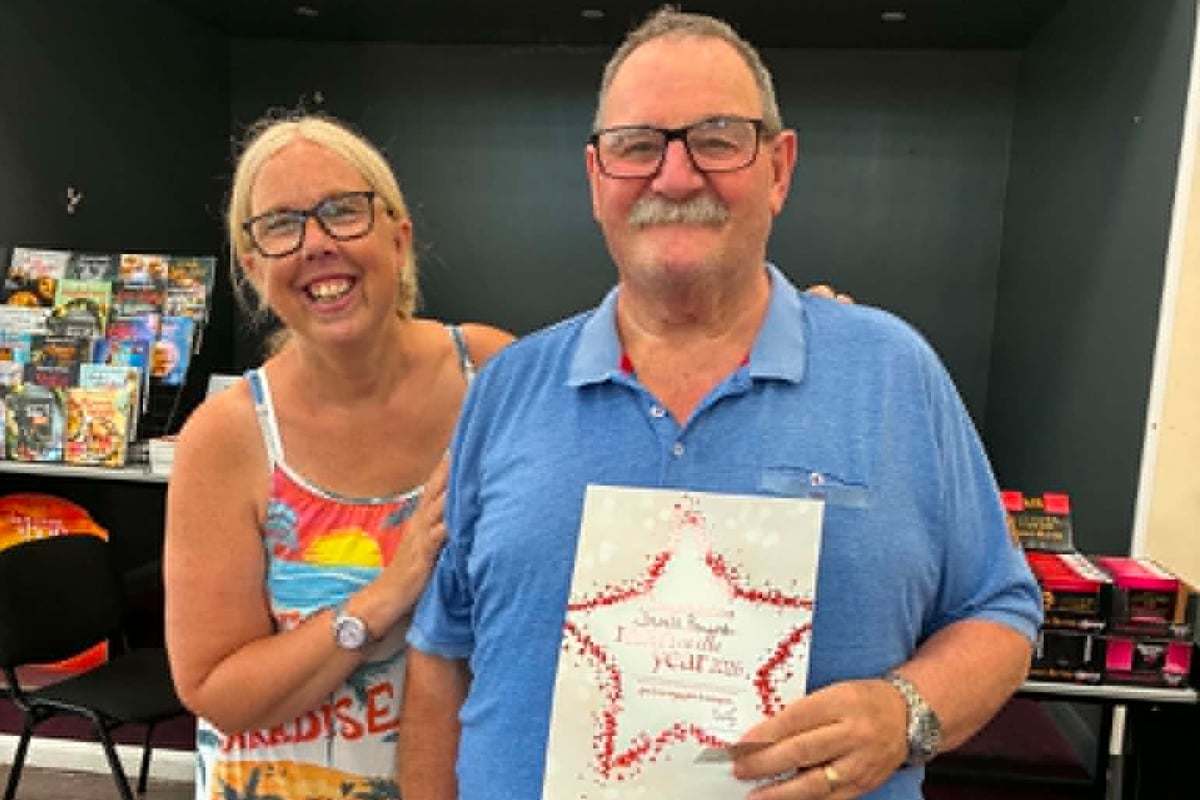
A Dad and Grandfather from Purbrook has shared his story this Diabetes Week and Men’s Health Week after losing 4 stone with Slimming World and changing his life by putting his type 2 diabetes into remission, without any medication, just weight loss, and the support from his Slimming World group and Slimming World Consultant, Mel Knibbs.



















































You must be logged in to post a comment Login