

Connect with us
DAPA Banner
DAPA Coin
DAPA
COIN PAYMENT ASSET
PRIVACY · BLOCKDAG · HOMOMORPHIC ENCRYPTION · RUST
ElGamal Encrypted MINE DAPA
🚫 GENESIS SOLD OUT
DAPAPAY COMING

NewsBeat

World Cup schedule, what to know July 4

Published

on

World Cup schedule, what to know July 4

The World Cup Round of 16 has arrived.

With it comes intensifying pressure — and in some places, stifling heat.

The second round of the knockout stage commences Saturday with Canada facing Morocco in the opener in Houston, while powerhouse France and Kylian Mbappé will meet Paraguay in the nightcap in Philadelphia.

There will be two games per day over the next four days to determine the eight quarterfinalists.

Advertisement

Mbappé has been one of the hottest players in the World Cup as he chases the career goals record currently held by Argentina’s Lionel Messi.

In Philadelphia, Mbappé, his teammates and Paraguay will play in sweltering conditions at Lincoln Financial Field.

The game coincides with a heat wave that’s expected to bring temperatures exceeding 100 degrees Fahrenheit (38 Celsius). More than 68,000 fans are expected to endure those conditions, which could drain the energy of Mbappé and every other player on the pitch.

Mbappé scored his 17th and 18th World Cup goals in France’s 3-0 rout of Sweden last weekend in East Rutherford, New Jersey, when it was 90 degrees for the 5 p.m. kickoff.

Advertisement

“I’m looking forward to the changing room and the AC,” Mbappé said as he came off the field.

For the July 4 game, misting fans will be available for fans approaching the stadium, and cooling tents will be available to fans within the stadium footprint at the fan experience.

All fans are allowed to bring one disposable, plastic water bottle into the stadium, as they are at any match in this World Cup in the U.S. and Canada. Water fountains are available in nine sections on the concourse.

Heat should not be a factor for the other match on Saturday in Houston because NRG Stadium has a retractable roof that will remain closed. That’s good news, considering temperatures outdoors could reach 95 degrees with high humidity.

Advertisement

Round of 16 schedule

Saturday, July 4:

— Canada vs. Morocco, 1 p.m. EDT in Houston (Fox/Telemundo/Peacock)

— Paraguay vs. France, 5 p.m. EDT in Philadelphia (Fox/Telemundo/Peacock)

Sunday, July 5:

Advertisement

— Brazil vs. Norway, 4 p.m. EDT in East Rutherford, New Jersey (Fox/Telemundo/Peacock)

— Mexico vs. England, 8 p.m. EDT in Mexico City (Fox/Telemundo/Peacock)

Monday, July 6:

— Portugal vs. Spain, 3 p.m. EDT in Arlington, Texas (Fox/Telemundo/Peacock)

Advertisement

— United States vs. Belgium, 8 p.m. EDT in Seattle (Fox/Telemundo/Peacock)

Tuesday, July 7:

— Argentina/Cape Verde winner vs. Egypt, noon EDT in Atlanta (Fox/Telemundo/Peacock)

— Switzerland vs. Colombia/Ghana winner, 4 p.m. EDT in Vancouver, British Columbia (Fox/Telemundo/Peacock)

Advertisement

Canada looks to avenge loss to Morocco in 2022 World Cup — with stakes much higher

Morocco and Canada will meet in a second straight World Cup, but this matchup will have much higher stakes.

Morocco beat Canada 2-1 in the group stage in 2022, when it went on to become the first African team to reach the semifinals.

Canada looks to continue to make history after notching its first-ever knockout win, a 1-0 triumph over South Africa on Sunday.

“We’re excited for the moment,” Canada coach Jesse Marsch said. “We wanted to get to a point in the tournament where we were playing against some big opponents and Morocco is exactly that.”

Advertisement

Morocco dispatched the Netherlands in a penalty shootout to reach the Round of 16. With a win Saturday, the Atlas Lions would become the first African team to reach the quarterfinals more than once.

Canada’s Alistair Johnston said his team embraces the challenge of facing Morocco.

“We’ve created so much new history, so many firsts,” Johnston said. “Now this is the chance that we wanted. To make sure that we got to the point in the tournament where we’re going to get to play a Goliath, and that’s what the Moroccan team is.”

Morocco coach Mohamed Ouahbi said his team has a great deal of respect for Canada.

Advertisement

“It will be very important for us to play at our level. The level that we have shown the last few games will not be enough,” Ouahbi said. “It’s going to be the most important game in this World Cup and the most challenging one. It’s not about being tentative about our approach. We’re playing a Round of 16 match and if we’re not good enough, we’re going home.”

More World Cup news

This high-tech ball was involved in one of the most dramatic moments in World Cup history

FIFA considering earlier kickoff for Mexico vs. England at the World Cup due to thunderstorm fears

Egypt defender becomes first player with two own-goals in World Cup history

Advertisement

US win over Bosnia-Herzegovina most-watched soccer telecast in English language history

One Extraordinary Photo: Argentine dog walker reflects country’s World Cup passion

Puppy love as dog walker turns his pack of 13 into Argentina jersey-clad World Cup followers

Stat of the day

Portugal’s Cristiano Ronaldo, at 41 years and 147 days, became the oldest player to win Player of the Match in a World Cup knockout game. The next oldest was Olivier Giroud of France at 36.

Advertisement

___

AP Sports Writers Dan Gelston and Kristie Rieken contributed to this report.

___

See more of AP’s World Cup coverage here

Advertisement

Source link

Advertisement
Continue Reading
Click to comment

You must be logged in to post a comment Login

Leave a Reply

NewsBeat

UK airline Eastern Airways to disappear after 29 years

Published

on

UK airline Eastern Airways to disappear after 29 years

Eastern Airways, which operated regional services from airports across the UK, entered administration at the end of last year.

The firm suffered financial difficulties after the loss of a contract with airline KLM.

Now, a potential rescue deal for the company and its affiliated company, Air Kilroe, has fallen through.

Advertisement

When did Eastern Airways enter administration?

Eastern Airways suspended operations at the beginning of November, with all operated flights cancelled.

Selina Chadha, Consumer & Markets Director at the UK Civil Aviation Authority, said at the time: “We urge passengers planning to fly with this airline not to go to the airport as all Eastern Airways flights are cancelled.

“Eastern Airways customers should visit the Civil Aviation Authority’s website for the latest information.”

Eastern Airways was founded in 1997 and was headquartered at Humberside Airport near the village of Kirmington in North Lincolnshire.

Advertisement

The airline operated domestic, international and private charter flights, with more than a million passengers flying with the airline per rolling year.

It provided 200 flights per day and employed around 330 staff members at its peak, and as well as routes across the UK, it also had some routes to Ireland and Europe.

The airline also had its own hubs in Aberdeen and Humberside.

Advertisement

Eastern Airways to disappear after 29 years as rescue deal fails

A potential rescue deal for Eastern Airlines, and its affiliated company Air Kilroe, has now fallen through, meaning administrators are unable to save the airline.

Administrators RSM UK are now set to break up and sell the businesses’ assets separately, according to a report from The Sun.

A joint sale of Eastern and Air Kilroe had been looked at, as the companies had operated under a single business.

At the time the business collapsed, RSM said “high fixed overheads” and its staff base had “ultimately proved too high to be sustainable”.

Advertisement

Jamie Miller, partner at RSM UK and joint administrator, said at the time: “The unexpected and sudden termination of Eastern’s KLM contract, along with other economic factors, unfortunately left the directors with no choice but to appoint administrators.”

Now, all nine of Eastern Airways’ aircraft fleet have been sold, along with plane parts and components.

Airlines and travel companies that have gone into liquidation or administration in 2026

Four UK airlines have fallen into administration or liquidation this year:

Several airlines also entered liquidation in 2025, according to the UK Civil Aviation Authority, including:

Advertisement
  • Blue Islands Limited (UK)
  • Air Kilroe Limited t/a Eastern Airways (UK)
  • Play Airlines (Iceland)

Several travel companies have also entered administration this year, including:

Luxury UK holiday company Salamander Voyages shut down back in April after entering administration.

Just last month, Groupia Ltd, which also trades as Groupia Golf, GoHen, StagWeb, Groupia School Trips, and Company Away Days, also fell into administration.

It offered customers “the best” group travel holidays to destinations in the UK and abroad, including Prague, Split, and Barcelona.

Advertisement

More than 750,000 travellers have used the company since it began back in 2002, booking everything from stag and hen weekends to golf trips, team tours, and spa breaks.

After 24 years in business, Groupia, which is based in Bath, has now fallen into administration.

Nigel Fox and Christopher Marsden of S&W Partners LLP were appointed joint administrators on June 16, according to the Groupia website.

It continues: “The Company has now ceased taking new bookings, and arrangements are in place with ABTOT to support customers with existing bookings.”

Bookings on or before August 31, 2026, are expected to go ahead as planned, the Groupia website says, thanks to an arrangement with ABTOT (financial protection company).

Advertisement

Any holidays booked with Groupia for after September 1, 2026, have been cancelled.

Have you been affected by any airline or travel company closures so far this year? Let us know in the comments.

Source link

Advertisement
Continue Reading

NewsBeat

Taylor Swift’s friend Lena Dunham leaves wedding guests gasping with X-rated speech

Published

on

Daily Mirror

Taylor Swift and Travis Kelce tied the knot in New York on Friday surrounded by a whole host of famous faces, including Emmy Award nominee, Lena Dunham

Taylor Swift’s wedding party was left gobsmacked as Lena Dunham turned the air blue at the lavish reception. The Bad Blood Billionaire, 36, tied the knot with Kansas Chiefs star, Travis Kelce, also 36, in New York on Friday, surrounded by a whole host of famous faces.

The guest list for the showbiz wedding of the year was kept strictly under wraps. However, Girls star, Lena Dunham – who is best pals with Taylor – was not only on the invite list but was also asked to make a speech at the reception in Maddison Square Garden.

Insiders have revealed that Lena made an X-rated speech while the toast of Tinseltown’s jaws dropped at some of her observations.

Advertisement

Referencing groom Travis’ American football career, the actress, who had Taylor as a bridesmaid for her wedding in 2021, allegedly joked that the sport was “just straight guys re-enacting gay porn” in front of all of the newlyweds’ family and friends – who included several NFL stars.

According to the Mail, gasps could be heard from the well-heeled guests in the Big Apple, which included actor Bradley Cooper, model, Gigi Hadid – and NFL icon, Tom Brady.

The source claims that while there were “lots of speeches,” but Lena became one of the biggest talking points of the night, as her jokes drew a “divided” response from guests who responded with a combination of “gasps and laughs.”

Advertisement

Taylor, who has been pals with Lena for years, is said to have seen the funny side of the crude gag and apparently called the Emmy Award nominee a “genius” after her speech.

Taylor and Lena have been pals for more than a decade, with Taylor a bridesmaid at Lena’s wedding to musician Luis Felber in 2021.

Lena also dedicated her 2026 memoir Famesick to the Love Story singer, writing in her dedication: “TayTay — you sing the songs I wrote this book to… and yet somehow, miraculously, you also pick up every desperate call at every desperate hour”.

Speaking to People previously about their friendship, the Too Much creator shared: “It’s a crazy thing, because she’s one of my best friends in the world but she’s also my favourite music.”

Advertisement

New York was transformed for Taylor and Travis’ big day, with huge billboards surrounding Madison Square Garden revealing the moment they became Mr and Mrs, giving excited fans outside the chance to celebrate with the happy couple.

Taylor’s brother, Austin, served as her Man of Honour, while Travis’ brother, Jason, was his Best Man and actor, Adam Sandler, officiated the wedding.

However, one famous face who was not at the nuptials was Taylor’s former BFF, Blake Lively. The girls were once so close that Taylor is godmother to Blake’s four children, James, Inez, Betty and Olin, whom she shares with Ryan Reynolds. Taylor also included the names of Blake’s children in her songs on folklore, as a special nod to her friend.

However, amid Blake’s legal battle with Justin Baldoni, she and the Bad Blood star appear to have fallen out, with the It Ends With Us actress reportedly ‘snubbed’ from the TayTay’s star-studded wedding.

Advertisement

For more of the latest showbiz news and gossip, follow Mirror Celebs on TikTok , Snapchat , Instagram , Twitter , Facebook , YouTube and Threads .
Source link

Advertisement
Continue Reading

NewsBeat

Alternative for Germany party convention to elect leaders as opponents protest

Published

on

Alternative for Germany party convention to elect leaders as opponents protest

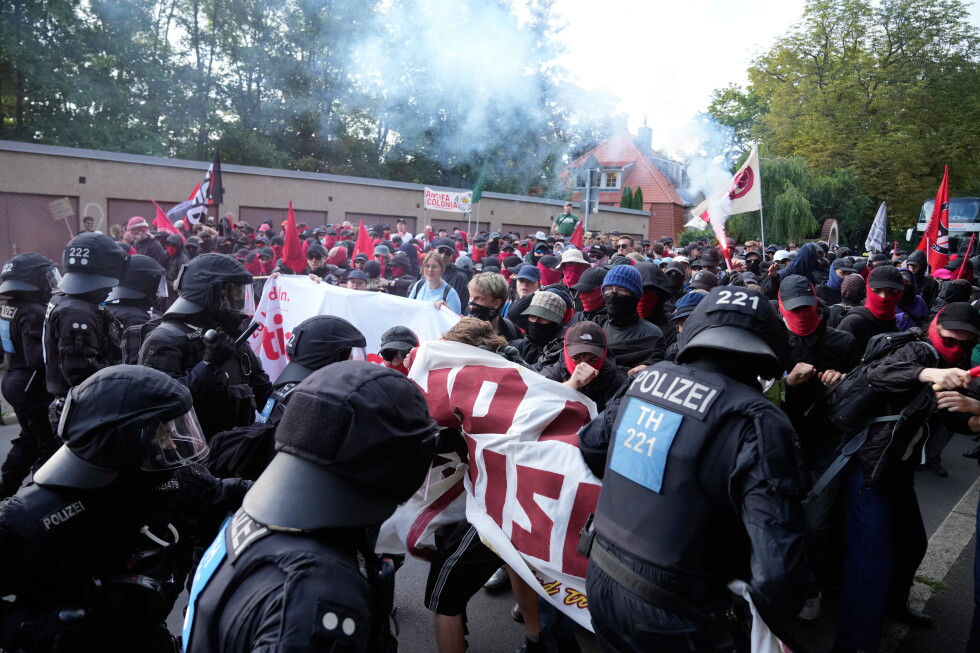
ERFURT, Germany (AP) — Thousands of protesters aimed to disrupt the national convention of Germany’s far-right Alternative for Germany party on Saturday, with some clashing with police in riot gear outside the meeting.

Alternative for Germany, or AfD, is meeting in the eastern city of Erfurt to elect its leaders, which German parties do every two years. The party seeks to show unity while extending the terms of leaders Alice Weidel and Tino Chrupalla, who have run the party together for four years.

The demonstrations outside the convention reflect how AfD has divided Germany even as it is the nation’s biggest opposition party nationally.

The weekend convention has drawn additional controversy by coinciding with the 100-year anniversary of a Nazi Party meeting held nearby that consolidated Adolf Hitler’s power over the fascist movement. Historians and political opponents say the timing carries powerful symbolism, an accusation the AfD rejects.

Advertisement

Weidel said recently that “2026 is a year of destiny for AfD.” Mainstream parties say they won’t work with it, a stance often known as a “firewall.”

But AfD is capitalizing on the unpopularity of a government that is trying to reform the sluggish economy. The party has become adept at harnessing discontent with issues well beyond its signature theme of curbing migration, which powered its rise in the mid-2010s.

AfD hopes to win 40% or more of the vote in a Sept. 6 state election in the eastern region of Saxony-Anhalt. That could put the party on course for an absolute majority or in a position where it might try to attract defectors from other parties, paving the way for its first state governor.

Advertisement

Source link

Continue Reading

NewsBeat

Police uncover suspected drugs and guns stash in Openshaw

Published

on

Police uncover suspected drugs and guns stash in Openshaw

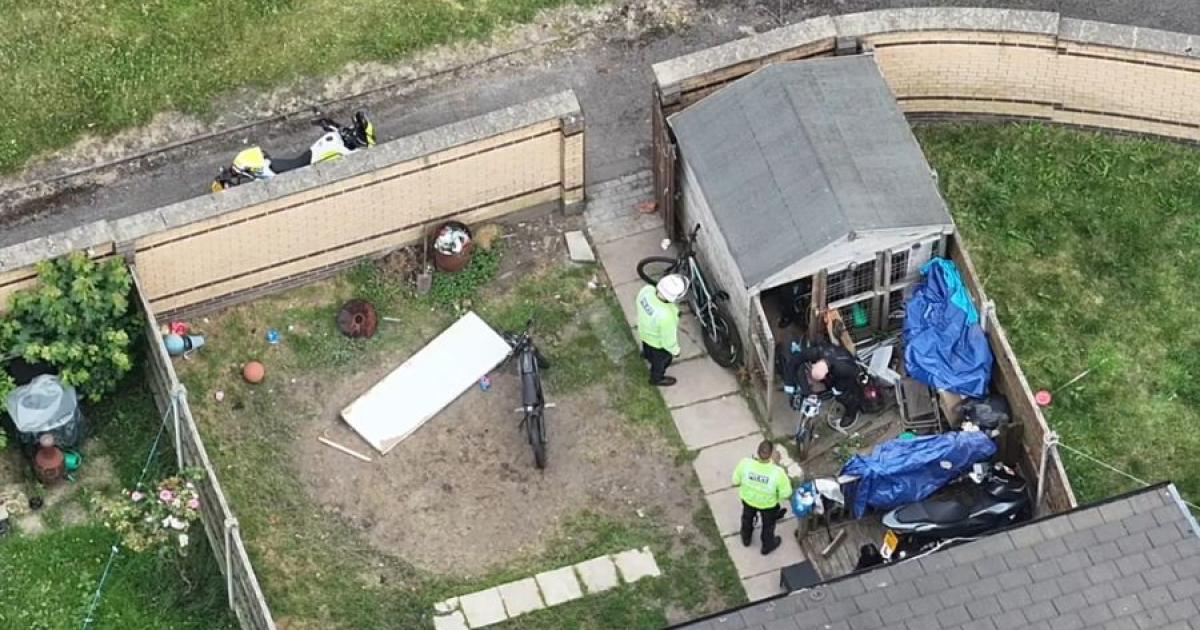
Officers from Greater Manchester Police’s Operation Venture team and other specialists had tracked a suspicious moped to Openshaw using a drone on Tuesday, June 30.

There, they arrested four people, three men and a woman, and found what they say is a range of suspicious items.

Inspector Joe Barron, from GMP’s Operation Venture team, said: “This was an excellent joint operation by several different teams, resulting in seven vehicles being seized and thousands of pounds’ worth of drugs being recovered.

“Our officers are always looking to proactively tackle issues across the Manchester area, and this is a case which has produced significant results thanks to that hard work.

Advertisement

Some of the seized bikes (Image: GMP)

“I would urge anyone with any information about drug supply in their area or, likewise, any suspicions regarding stolen bikes or similar, to please get in touch with us.”

Officers found four motorbikes, including a Surron, and three off-road style bikes in the shed, as well as a suspected stolen quad bike in the front garden.

A duffel bag was also found containing suspected Class A drugs, including heroin and cocaine, while what appeared to be ammunition for a handgun and a knuckle duster were also found.

Officers say five pit bull or XL Bully type dogs were also seized for further assessment.

Advertisement

Three men and a woman, aged 19 to 45, were arrested on suspicion of possession with intent to supply Class A drugs, possession of offensive weapons, and handling stolen goods.

They remain in custody for questioning.

Source link

Advertisement
Continue Reading

NewsBeat

How economic pressures are damaging Britain’s ‘zombie firms’

Published

on

How economic pressures are damaging Britain’s ‘zombie firms’

The UK’s borrowing costs are higher than the government would like them to be. Economic growth remains weak, and public finances are under constant pressure.

All of this make things difficult for pretty much everybody. But one particularly vulnerable group are the small businesses which survive mainly through continued borrowing.

Known as “zombie” firms, these are companies with persistently weak profitability which struggle to generate enough income to cover their debt costs over long periods of time.

Recent evidence suggests that the pressures on these companies are becoming more acute. Around one in six medium sized businesses in the UK is thought to be at risk of becoming a zombie firm.

Advertisement

And some sectors are more vulnerable than others. Businesses operating in leisure and hospitality, for example, often need substantial amounts of external finance to support tight margins, leaving them particularly exposed when borrowing costs rise.

But the worry is not simply that borrowing has become more expensive. It is that a combination of higher refinancing costs, weaker growth and geopolitical shocks could really damage firms that were already financially vulnerable.

The current pressure on firms is coming from several directions. One is the sharp increase in long-term borrowing costs across the UK economy.

In May 2026, the cost of borrowing for the UK government rose to its highest level in almost three decades after bond markets reacted to worsening tensions in the Middle East and the possibility of renewed inflationary pressure. Borrowing then tends to become more expensive for businesses as well.

Advertisement

But not all companies are affected equally. Large firms with strong balance sheets (like a bank or a big pharmaceutical firm) may be able to absorb higher financing costs relatively easily. Companies already carrying high debt and weak profitability are much more exposed.

Many firms borrowed heavily during the long period of exceptionally low interest rates that followed both the global financial crisis of 2008 and COVID. As those loans now mature, refinancing them becomes significantly more expensive. For some businesses, that shift may prove difficult to manage.

Zombie apocalypse now?

The rise in UK borrowing costs is closely tied to geopolitical developments.
Escalating tensions in the Middle East have increased fears of disruptions to energy supplies and shipping routes, particularly around the Strait of Hormuz and the Red Sea. Higher oil prices can feed quickly into inflation through fuel, transport and production costs.

Businesses that were already struggling with narrow profit margins may now face a devastating combination of higher refinancing costs, rising energy and transport bills, as well as weaker consumer demand and tighter lending conditions.

Advertisement

On their own, any one of these pressures might be manageable. Together however, they create the kind of environment in which financially fragile firms can quickly come under strain.

COVID led to cheaper borrowing.
1000 Words/Shutterstock

Smaller businesses are likely to face the greatest pressure because they depend heavily on bank lending and often operate with limited financial buffers.

Unlike large corporations, many small and medium-sized enterprises cannot easily raise money through financial markets. Their survival is closely tied to bank lending conditions and day-to-day cash flow.

But British banks may become more cautious as economic uncertainty rises. If lenders become less willing to refinance weaker companies, some firms that survived during the era of cheap credit could struggle to continue operating.

Advertisement

There is also evidence which suggests that prolonged periods of cheap borrowing can allow financially weak firms to survive longer than they otherwise would have. Some economists argue that this can reduce productivity by trapping labour and capital in inefficient businesses.

The current environment may therefore become a test of which firms remain viable once borrowing costs stay higher. The recent surge in UK borrowing costs is often discussed as a problem for government finances. But it may also signal something broader about the post-crisis economic model that dominated much of the past decade.

For years, exceptionally low borrowing costs helped support companies through periods of economic stress. Now that financing conditions are tightening again and geopolitical uncertainty is rising, some firms may find that survival becomes much harder.

That does not necessarily mean a sudden wave of collapses is imminent. Many businesses remain fundamentally healthy.

Advertisement

But the combination of higher refinancing costs and external shocks could increasingly expose firms whose survival depended on the unusually cheap borrowing conditions of the past decade. If that happens, the demise of zombie firms may start to become a much more visible feature of the UK economy.

Source link

Advertisement
Continue Reading

NewsBeat

Taylor Swift and Travis Kelce’s wedding guest list: All the celebrities at glitzy Madison Square Garden ceremony

Published

on

Taylor Swift and Travis Kelce's wedding guest list: All the celebrities at glitzy Madison Square Garden ceremony

Taylor Swift and Travis Kelce have tied the knot at a star-studded ceremony at New York’s Madison Square Garden.

Source link

Advertisement
Continue Reading

NewsBeat

Slovaks vote in a referendum on lifelong payments for populist leader Fico

Published

on

Slovaks vote in a referendum on lifelong payments for populist leader Fico

BRATISLAVA, Slovakia (AP) — Slovaks will cast the ballot on Saturday in a referendum to decide whether to cancel lifelong payments for populist Prime Minister Robert Fico and other leaders after their terms in office expire.

They will also vote on whether to reopen the office of the special prosecutor and the National Criminal Agency, which both dealt with major crime and corruption.

The referendum follows a petition organized by the Democrats, a non-parliamentary pro-Western opposition party, and was signed by more than 350,000 citizens in the nation of 5.4 million, the threshold required by law.

Only one referendum in Slovakia’s history — the 2003 vote on the country’s European Union membership — was successful. Others failed due to low turnout.

Advertisement

Polls suggested Saturday’s turnout would not reach the required 50%.

Slovak prime ministers and parliament speakers who served at least two terms in office are entitled to receive a lifelong payment — a monthly sum that equals the salaries of lawmakers in Parliament — as part of measures to boost security for leading politicians.

The payments were introduced following a 2024 assassination attempt on Fico, who was shot and gravely wounded after a government meeting, shocking the small country and reverberating across Europe. The benefit was provided only to former presidents before 2024.

Earlier in 2024, Slovak lawmakers approved a plan by Fico’s coalition government to abolish the special prosecutors’ office, which handles serious crimes such as graft, organized crime and extremism and the government also dismantled the police unit dealing with such crimes.

Advertisement

The legislation faced sharp criticism at home and abroad, and thousands of Slovaks repeatedly took to the streets to protest the law. A number of people linked to Fico’s party faced prosecution in corruption scandals.

Fico has been a divisive figure since returning to power in 2023. His pro-Russian and other policies prompted numerous protests.

Fico said he would not vote in this referendum.

Advertisement

Source link

Continue Reading

NewsBeat

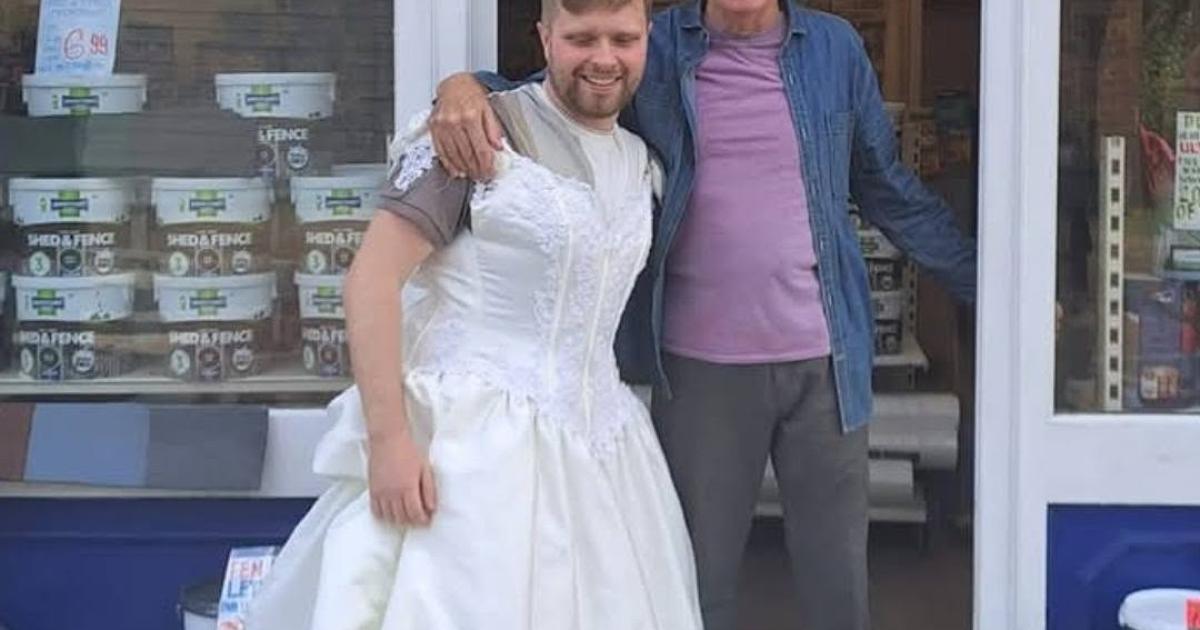
Last day of trading for Westhoughton store Decorsave

Published

on

Last day of trading for Westhoughton store Decorsave

Owner Terry Whatmough, 80, opened Decorsave in 2000 after spending years in the painting and decorating trade himself.

He announced the closure of the Westhoughton business at the beginning of June, shutting its doors for the final time on Thursday (July 2).

Terry locking the door at Decorsave (Image: Charlie Whatmough)

Terry said: “It feels very unusual – I keep waking up at quarter to seven even though I don’t need to.

“I’ve been clearing all the stock out. I’m going to go back on Monday to finish it.”

Advertisement

One of the items Terry will be taking with him is the ‘free paste tomorrow’ sign.

The ‘free paste’ sign refers to a long running joke. When customers would come in and buy wallpaper, they’d ask if there was any free paste to go with it. (Image: Charlie Whatmough)

This is a running joke between Terry and his customers, who regularly, when buying wallpaper, asked if it came with free wallpaper paste.

Unable to give it away for for no charge, the sign tells customers the free paste will be in stock tomorrow – a tomorrow that, of course, will never arrive.

When asked ifTerrywas going to take up any hobbies.

Advertisement

“I don’t really have any hobbies!” he responded.

(Image: Charlie Whatmough)

“I don’t do fishing, I don’t do football. Politics is just a lot of talking, and if I hear Andy Burnham’s name one more time I’m going to get up and turn my TV off!

“But the last few weeks have been really positive – lots of people have come into the shop to say goodbye.”

It was at his recent 80th birthday that Terry’s daughter, Rachel, told him that he should start thinking about retiring.

Advertisement

He had a few recent health scares too, including a heart attack in 2023 that required open heart surgery.

Terry outside Decorsave (Image: Dan Dougherty)

Terry was born in Salford in 1940, taking up the painting and decorating trade because of his father, who was in the same line of work.

“In them days, what you did for a living was based on what your father did,” said Terry.

Having spent so many years in the area, Terry has kids and grandkids dotted around Westhoughton, Bolton, Horwich, and Wigan. They’re also dotted all over the wall behind the Decorsave counter.

Advertisement

Anthony, one of his 11 grandchildren, owns the barber shop Troy’s on Wigan Road – just round the corner from Decorsave.

Source link

Advertisement
Continue Reading

NewsBeat

Andy Burnham says ‘I want new era to be about hope’

Published

on

Andy Burnham says 'I want new era to be about hope'

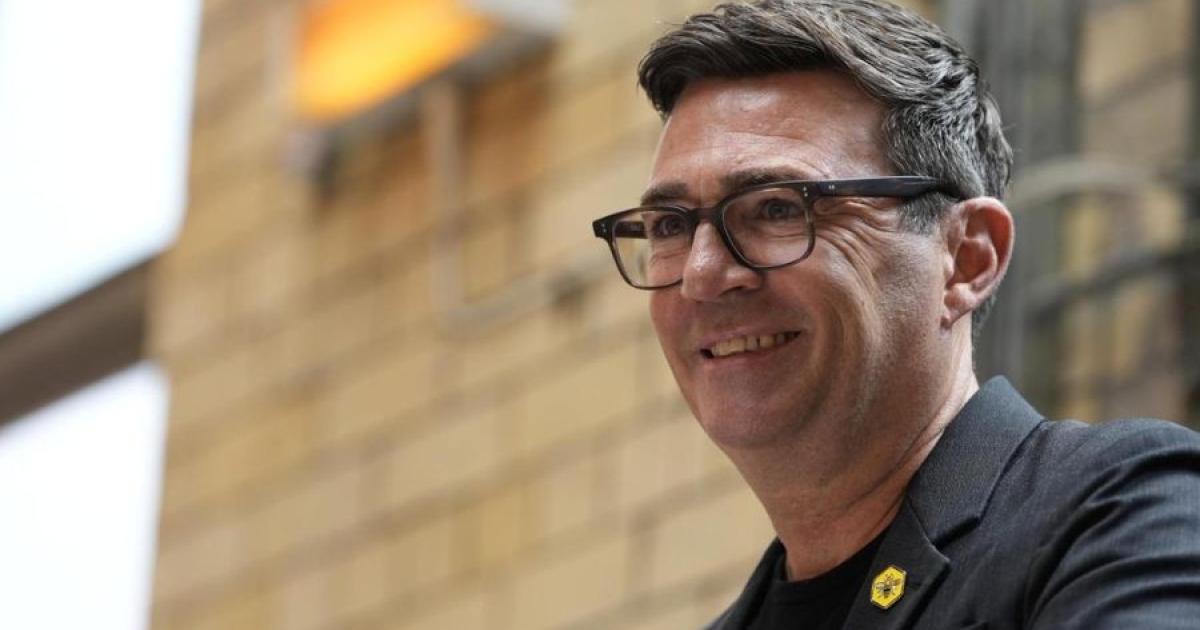
Mr Burnham, who was released to Westminster last month for the Makerfield constituency, is widely expected to replace Sir Keir Starmer as Prime Minister within a matter of weeks.

The former Greater Manchester Mayor has posted on professional networking social media site LinkedIn saying that he hopes to replicate his approach with the city region across the country.

Mr Burnham said: “To introduce myself here, I wanted to talk about how I left Westminster a decade ago because I wanted to build a politics that put problem-solving before point-scoring.

“And it worked.

Advertisement

Andy Burnham was recently elected MP for Makerfield (Image: Newsquest)

“In that time, I’m proud to have championed Greater Manchester’s economic revival, seeing it grow at twice the rate of the rest of the country.

“We made this happen by putting place before party, by bringing people with us, and crucially, working in partnership with business.

“The growth we created wasn’t abstract.

“It was felt by ordinary people and businesses every day, on their high streets and in their pockets.

Advertisement

“But everything we achieved during my time there felt like it was done despite Westminster, not because of it.

“Politics hasn’t been good enough—across the country people have struggled to make ends meet, businesses have struggled to stay open.

“Westminster hasn’t given them the support they need. That needs to change.

“I want to do things differently, to put power back in the hands of local communities and build an economy that works for everybody.

Advertisement

“Problem-solving, not point-scoring. Place-first, not party-first.

“Long-term thinking over short-term politics. I want this new era to be about hope.”

Mr Burnham has previously been Mayor of Greater Manchester since 2017 before stepping down after being elected as MP for Makerfield.

He won the Makerfield by-election with just under 55 per cent of the vote, around 20 per cent ahead of Reform UK’s Rob Kenyon in second place.

Advertisement

Sir Keir Starmer announced the following Monday that he would be stepping down as leader of the Labour Party and as Prime Minister.

Source link

Advertisement
Continue Reading

NewsBeat

what clean air laws teach us about power, pollution and profit

Published

on

what clean air laws teach us about power, pollution and profit

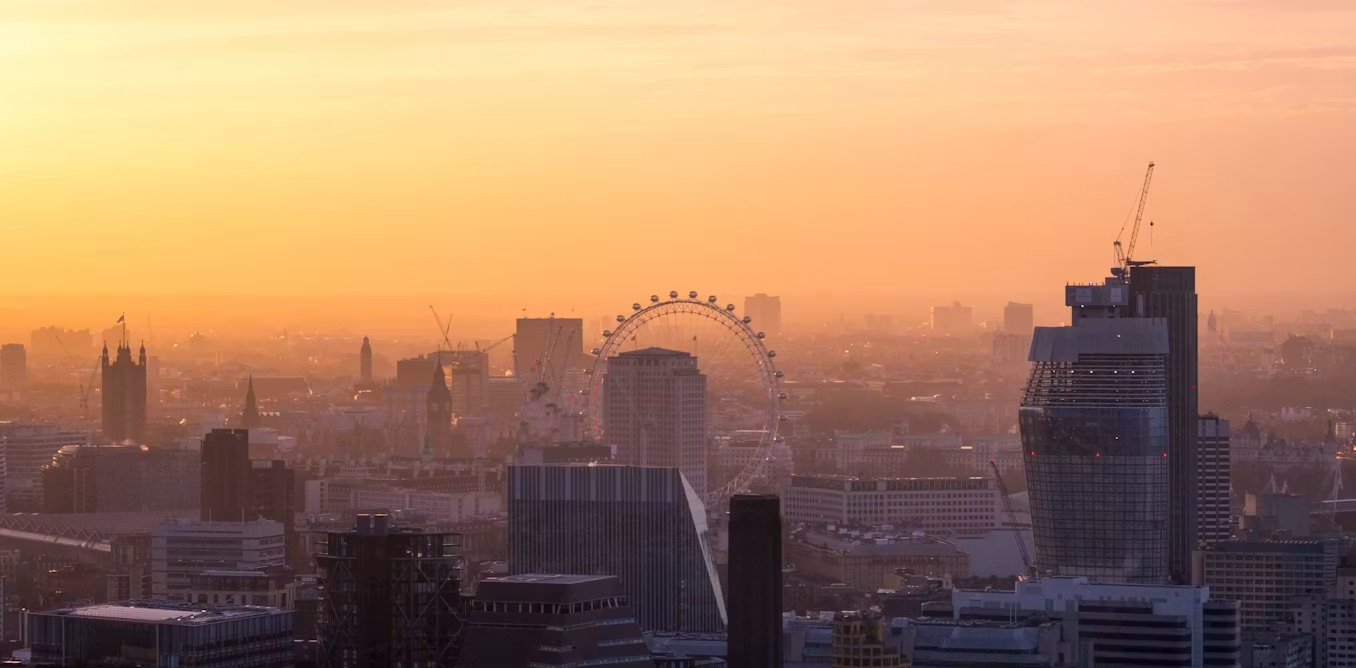
Seventy years ago, London choked. For five days in December 1952, a toxic smog smothered the city. Visibility collapsed. Transport failed. Thousands died. It was not a natural disaster. It was the product of policy failure.

Out of that catastrophe came one of the most important environmental laws in UK history: the Clean Air Act 1956. It was a turning point. It showed that science, when taken seriously, can transform public health.

But the story does not end in 1956. Because the same forces that delayed action then continue to shape air pollution policy today.

The Clean Air Act was born from evidence. The Beaver committee’s 1954 report, named after its distinguished chairman, Sir Hugh Beaver, made a simple but powerful case: air pollution was not inevitable. It was a social and economic problem that could be solved.

Advertisement

The law followed. Smoke-control areas were introduced. Dirtier fuels were phased out. Emissions were regulated. Over time, air quality improved dramatically.

This model spread globally. Evidence-led regulation became the foundation of air pollution control in many countries such as the US, Japan, Germany and Australia. Monitoring improved. Health effects became measurable. Courts began to hold governments accountable.


À lire aussi :
These colourful diagrams show how air quality has changed in over 100 countries around the world since 1850


Major global successes followed this template. The Montreal protocol, a landmark treaty agreed in 1987 after the discovery of the ozone hole, showed how fast action based on strong science could prevent a planetary crisis. When science leads, lives are saved.

Advertisement

But the 1956 Clean Air Act was not passed easily. Industry resisted. Industrial interests feared the cost of cleaner technologies. Political leaders hesitated.

Historical analysis shows that senior figures, including the government’s housing minister, Harold Macmillan, emphasised economic concerns and downplayed the risks of smoke and sulphur pollution during the early 1950s.

The science was already clear. The political response was not. It took pressure from outside government to break the deadlock. Public health advocates, local politicians and media campaigns all contributed. Only then did policy shift.

This pattern is one that continues today.

Advertisement

Even after 1956, action often came slowly. Leaded petrol remained in use in the UK until 2000, despite decades of evidence on neurotoxicity. Acid rain warnings were initially dismissed before international cooperation emerged. Air quality standards improved gradually, often only after legal or public pressure to cut pollution.

The lesson is uncomfortable. Science alone does not drive policy. Power does.

The modern era

Today’s air pollution looks different. It is less visible. More chemical. More complex. But it remains deadly.

According to the Royal College of Physicians, around 40,000 people die every year in the UK due to air pollution. Globally, the burden is far greater. An estimated 5 million deaths are linked directly to fossil fuel air pollution annually.

Advertisement

The sources are modern. Traffic emissions. Domestic heating. Agriculture. Industry. But the core issue remains unchanged. Pollution follows the money.

A growing body of evidence suggests that fossil fuel interests continue to shape political decision-making across multiple political systems. In the UK, investigative analyses indicate that the Conservative party has received substantial funding from fossil fuel-linked donors, while networks of industry-aligned thinktanks and lobbying groups have influenced policy direction. Similar patterns have been identified in Reform UK, whose funding base has been heavily concentrated among fossil fuel interests.

The trend is global. In the US, the Republican party and the campaigns of Donald Trump have received extensive support from the fossil fuel sector, alongside significant lobbying expenditure designed to shape policy outcomes.

These networks do not just fund politics. They shape it. Evidence suggests they have contributed to subsidies to the fossil fuel industry alongside delays and reversals in climate and air-quality policies, including the weakening of emissions targets and support for new fossil fuel extraction.

Advertisement

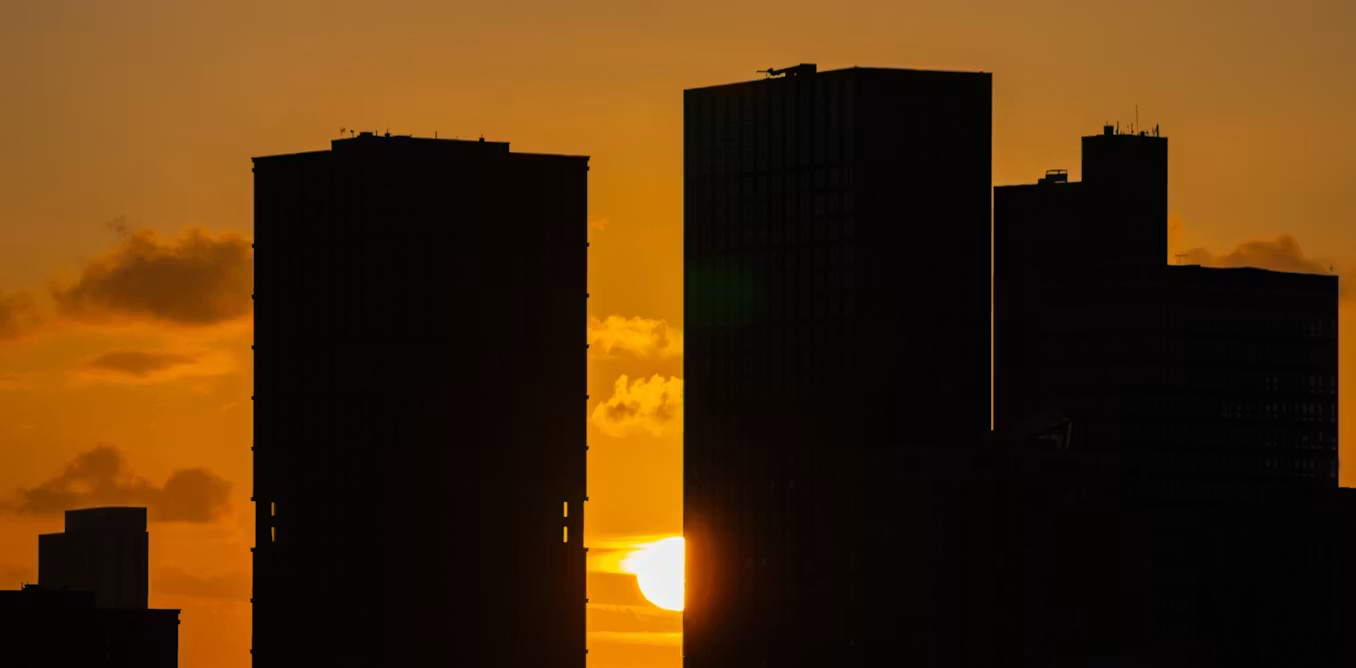
An ultra-low emission zones was introduced in London’s city centre in 2019.
Alena Veasey/Shutterstock

Scientific consensus is clear. Burning fossil fuels drives both climate change and air pollution. Reducing emissions delivers immediate health benefits.

Yet policy decisions often move in the opposite direction. Expanding oil and gas extraction. Delaying the transition away from petrol and diesel vehicles. Weakening environmental regulations. These choices directly conflict with the evidence. They also follow a pattern familiar from the 1950s. Economic arguments are used to justify delay. Uncertainty is emphasised. Long-term health costs are discounted.

The difference today is scale. Air pollution is no longer just a local issue. It is global.

Advertisement

The health burden of air pollution is vast. In the UK alone, tens of thousands of premature deaths are linked to exposure to fine particulate matter known as PM2.5 – tiny particles 2.5 micrometres or smaller that can penetrate deep into the lungs and bloodstream – each year. These people have heart disease, stroke, respiratory illness and their life expectancy is reduced.

The health effects are far from equal. Pollution exposure is higher in deprived communities. Health consequences are unevenly distributed.

Seventy years after the Clean Air Act, the lessons are clear. Disasters should not be required to trigger action. The Great Smog forced change. But policy should anticipate risk, not respond to tragedy.

We are now at another turning point. Air pollution remains one of the leading environmental causes of death worldwide. At the same time, the tools to reduce it have never been more available. Clean energy. Cleaner transport. Better regulation. Stronger data. Policy just needs to follow the science.

Advertisement

Source link

Continue Reading

Trending

Copyright © 2025