Connect with us
DAPA Banner
DAPA Coin
DAPA
COIN PAYMENT ASSET
PRIVACY · BLOCKDAG · HOMOMORPHIC ENCRYPTION · RUST
ElGamal Encrypted MINE DAPA
🚫 GENESIS SOLD OUT
DAPAPAY COMING

Tech

Aavik U-301 Unity Amplifier Combines Streaming, DAC, and 300W of Danish Power

Published

on

Audio Group Denmark has introduced the Aavik U-301 Unity Amplifier, an all-in-one high-end component that combines a streamer, DAC, preamplifier, and power amplifier in a single chassis. Building on the original U-300 Integrated Amplifier from 2015, the U-301 is designed for listeners who want fewer boxes, fewer cables, and a far cleaner installation without accepting the sonic shortcuts that often come with conventional systems.

That is an increasingly relevant proposition at the upper end of the market. Plenty of high-end buyers still want exceptional sound, but not necessarily a rack full of separates, costly power cords, and enough interconnects to keep a small cable manufacturer in business. The U-301 is intended to preserve signal integrity, timing, low noise, and musical coherence by keeping the critical stages of the signal path under one roof.

Aavik is not a brand built around affordable entry-level products, and the U-301 makes the most sense within Audio Group Denmark’s tightly controlled ecosystem of amplification, streaming, cabling, power management, and loudspeaker partners. For the right buyer, however, that ecosystem approach may be the point: a genuinely high-end system with far less visual clutter and fewer opportunities for the weak link to announce itself.

A Complete High End System in One Chassis

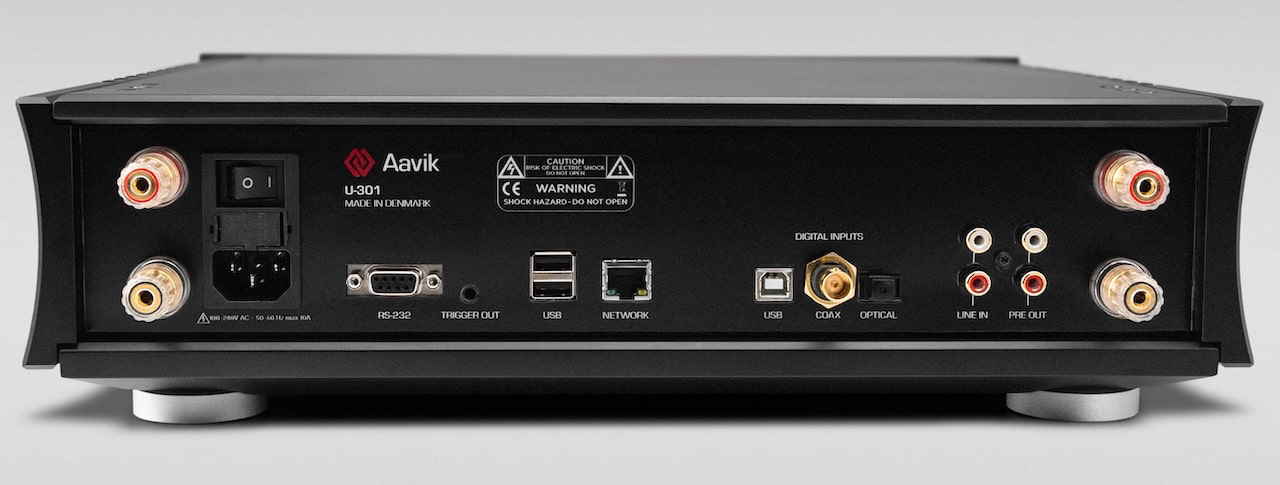
The U-301’s preamp stage gives the one-box design a useful expansion path. Its single RCA preamp output delivers up to 7.5Vrms, with 76 volume steps in 1dB increments and quoted line-stage distortion below 0.005 percent, allowing the U-301 to drive an external power amplifier when more scale or a different amplifier pairing is desired. 

Advertisement
aavik-u-301-rear

U-301 DAC: High Resolution PCM, MQA and Native DSD Support

Aavik’s proprietary DSD-upscaling DAC is not merely a digital convenience feature. The U-301 accepts PCM up to 24-bit/192kHz through BNC S/PDIF and optical inputs, while its USB UAC 2.0 connection supports PCM up to 32-bit/384kHz, MQA, DSD64, and DSD128. That gives the U-301 the format support expected of a serious high-end digital hub, while avoiding the usual pile of external boxes.

U-301 Streaming: A Wired Network First Approach

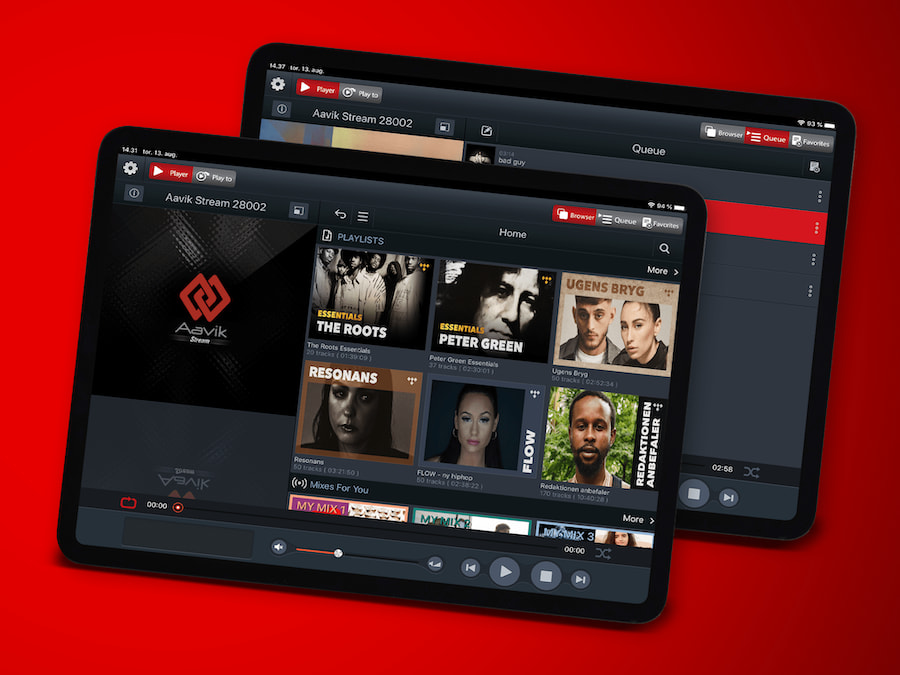
The U-301’s streaming platform follows Audio Group Denmark’s established ecosystem, using a wired Ethernet connection and the AGD Streaming App for iPad control. Built-in Wi-Fi and Bluetooth are not listed, and Android compatibility has not been indicated, so this is a deliberately focused rather than platform-agnostic approach.

aavik-app

Through the AGD app, users can access TIDAL, Qobuz, Spotify, vTuner internet radio, local music servers, NAS storage, USB hard drives, and USB sticks. Multi-room playback is also supported, allowing compatible AGD devices to be grouped together. It is a capable feature set, but one aimed at buyers comfortable with a wired network and Apple’s iPad ecosystem.

U-301 Amplification: 300 Watts Per Channel from Pascal Class D

The U-301 uses an amplifier stage derived from Aavik’s I-x88 series, built around Pascal Class D technology with high-speed UMAC modulation. Rated at 300 watts per channel into 8 ohms and 600 watts into 4 ohms, it is designed to provide the efficiency, low output impedance, and peak-current capability needed to maintain control over a wide range of loudspeakers. 

Advertisement

Mechanical Grounding

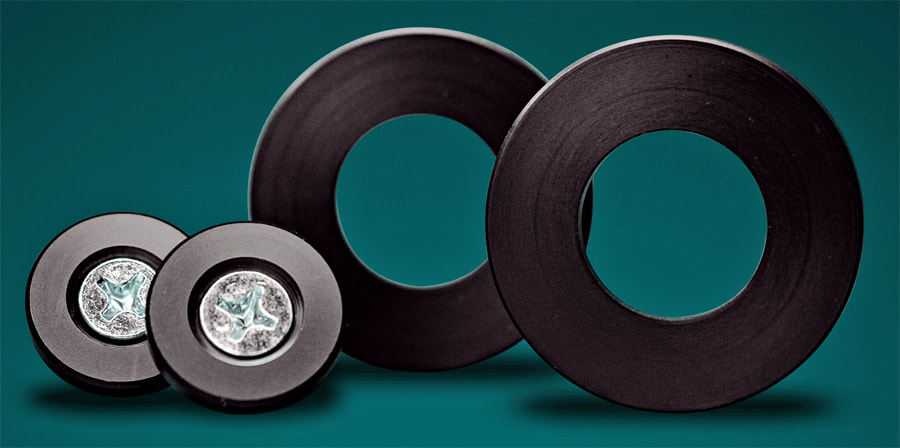
darkz-feet

To address vibration-related noise, Aavik equips the U-301 with Ansuz Darkz feet, designed to limit the transfer of structure-borne vibration into the chassis. The company also offers optional Darkz resonance-control devices for owners who want to take that approach further.

These accessories use precision mechanical assemblies and hard materials to manage vibration and resonance around the component. It is a distinctly Audio Group Denmark solution: the U-301 is not treated as an isolated amplifier, but as part of a larger ecosystem where mechanical grounding is considered alongside power supply design and electrical noise reduction.

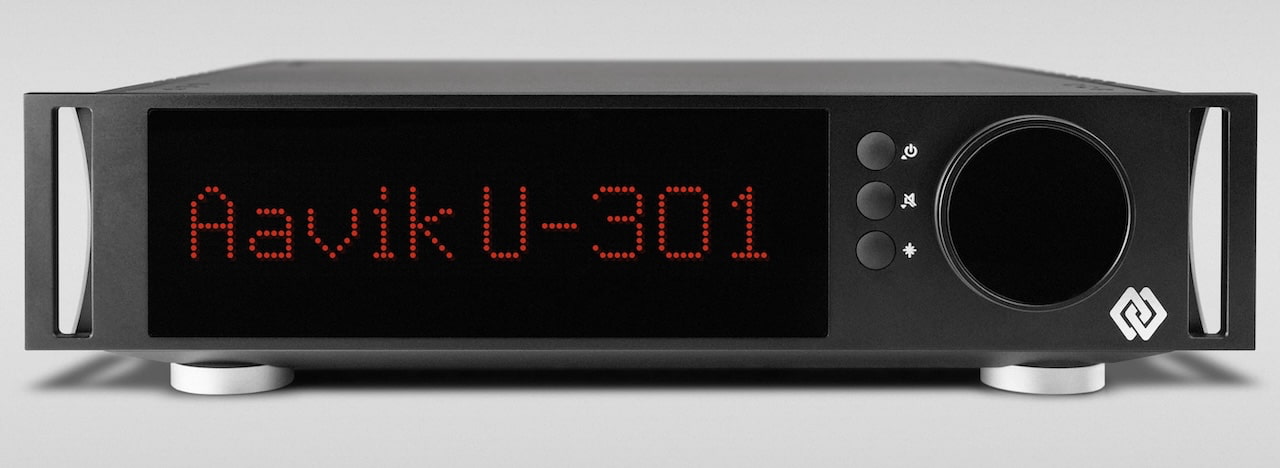
aavik-u-301-front

U-301 Design: Scandinavian Minimalism With a Purpose

The U-301 continues Aavik’s restrained Scandinavian design language, combining an aluminum frame, integrated cooling elements, large LCD display, substantial front-mounted control knob, and three integrated pushbuttons. Thick wood-based laminate top and bottom panels add warmth to what could otherwise be a very industrial-looking component.

Advertisement. Scroll to continue reading.

The design, created by Flemming Erik Rasmussen, is intended to do more than look expensive on a rack. Aavik says the enclosure also supports resonance control and helps protect the audio circuitry from mechanically induced noise. As Michael Børresen, Audio Group Denmark co-founder and CTO, explains: “The design process of the U-301 felt like a return to Aavik’s origins and our first unity amplifier. With Flemming’s input, the U-301 pays homage to that heritage while clearly pointing toward the future.”

Advertisement

Aavik U-301 Specifications

Aavik Model  U-301
Product Type  Network Preamp/Amplifier and DAC
Price EUR 15,000
USD 17,000
Line Input Maximum input 4.5V RMS 
Input impedance 10kohm
Digital inputs COAX – S/P-DIF: PCM 24-bit 44-192kHz and MQA

TOSLINK Optical – PCM 24-bit 44-192kHz and MQA

USB UAC 2 -PCM 32-bit 44-384kHz, MQA, DSD64, DSD128

Network Connectivity  Ethernet
Preamp Output 1 pair of RCA outputs
Speaker Connections 2 x Binding Posts
Max output 7.5Vrms
Distortion Line Stage <0.005% (THD at 1kHz, 1V input)
Volume Control 76 x 1dB steps
Power Output 2x 300W into 8Ω
Distortion <0.0028% (1W, 1kHz, 8Ω)
IMD (Intermodulation Distortion) <0.0008% (10W, 8Ω)
TIM (Transient Intermodulation Distortion) <0.002% (10W,  8Ω)
Control  RS232, 12Volt Trigger Out
Dimensions (HxWxD) 4.25 x 16.46 x 16.93 in
(10.8 x 41.8 x 43 cm)
Weight 23.1 lbs (10.5 kg)
aavik-u-301-angle

The Bottom Line 

The Aavik U-301 is not attempting to make $17,000 sound sensible to everyone. It is a serious one-box solution for buyers who want high-end streaming, digital conversion, preamplification, and 300 watts per channel without a rack full of components, cable clutter, and the usual matching exercise that accompanies separates.

Its real advancement over the original U-300 is not greater amplifier output, but a more streaming-focused architecture built around Aavik’s newer I-x88-derived Class D platform, resonant-mode power supply, and the broader Audio Group Denmark approach to electrical and mechanical noise control. The U-301 is a tightly integrated high-end system rather than a conventional integrated amplifier with a DAC bolted onto the side.

Advertisement

The glaring omission is the lack of a built-in phono stage. The U-300 offered one, while vinyl listeners considering the U-301 will need an external phono preamp, another cable, and another box. That rather undermines the “just add speakers” pitch for anyone with a turntable, although it does create an obvious path toward Aavik’s dedicated R-Series phono stages.

The U-301 will make the most sense for a streaming-first, two-channel listener who wants fewer boxes without stepping down into lifestyle-audio territory. It is not the connectivity equivalent of a Swiss Army knife, and the published materials do not position it as one. But for buyers committed to the Audio Group Denmark ecosystem and willing to pay for Danish engineering, design, and a very specific approach to system integration, the U-301 looks like one of the more ambitious all-in-one amplifiers available.

Price & Availability

The Aavik U-301 Unity Amplifier will be available for $17,000 (€15,000) beginning October 2026 through Authorized Audio Group Denmark Dealers.

For more information: audiogroupdenmark.com

Advertisement

Source link

Continue Reading
Click to comment

You must be logged in to post a comment Login

Leave a Reply

Tech

A Private Eye With a Supernatural Secret? This Sci-Fi Noir Series Is an Absolute Must-See

Published

on

In this day and age, it can be a tough sell to convince someone to watch a slow-burning detective series on a streamer when there are so many fast-paced programs vying for your attention. I get it; I do. But sometimes a show comes along that breaks free from the preconceived notions that can come with a genre, while also celebrating it. There’s one series, particularly, that comes to mind that ticks those boxes — and it’s currently streaming its second season on Apple TV.

Sugar stars Oscar and Emmy nominee Colin Farrell as private investigator, John Sugar. On the surface, it looks and operates like a modern-day noir detective show, but something supernatural is happening if you look a bit deeper.

I am going to spoil something about the series right now. It needs to be done if I’m going to discuss the new episodes with you. So, if you’re not caught up on season 1, you’ve been warned.

Advertisement

Read more: New on Apple TV in July 2026: Pickleball Comedy ‘The Dink,’ Anya Taylor-Joy in ‘Lucky’ and More

A white man in a suit sits in the driver's seat of a classic car.

Colin Farrell stars in Sugar on Apple TV.

Apple TV

John Sugar is an alien: a blue extraterrestrial, a bright-eyed being not from this planet. And yep, he still looks better in a suit than I do. 

Advertisement

This sci-fi story twist was revealed in 2024, when the show’s first season was brand new. While this creative swing disrupted expectations of the noir genre, it didn’t overshadow the story or the case he was striving to solve in those episodes. It added to it, like icing on a cake that didn’t necessarily need it but benefited from the sweetness nonetheless.

Through the show’s initial run, Sugar was searching for his missing sister, and his need to find her and reconcile that grief fueled his work as a private eye. Season 2 opens by closing that storyline, and follows Sugar, who, after the events of the first season’s finale, is allegedly the only member of his clan left on Earth. Without family or community, Sugar returns to the work that gives him purpose: finding missing people.

His doorway into our culture was movies — old Hollywood black-and-white movies, to be specific — and it’s through that glamorous, dramatic, stylized lens that he sees our world. However, this perception is regularly disrupted by the harsh, violent, brutal realities that accompany his work.

Advertisement
Production still from Sugar showing Jin Ha shirtless in a boxing ring.

Jin Ha stars as Danny Moon in the second season of Sugar.

Apple TV

Episode 3 drops on Apple TV on Friday, which means Sugar is still very much focused on this season’s missing person case. The man he’s looking for is Ji (Raymond Lee), the criminal-minded brother of a promising boxer, Danny Moon (Jin Ha). His investigation puts Sugar in all sorts of precarious situations, including gang territory, which pivots the series into familiar turf for those who miss shows like The Shield or The Wire. 

This tidbit adds a new layer to the series and is a nice reminder that Los Angeles is an important character in the show. Like another LA-based show, The Lincoln Lawyer, Sugar regularly features sequences in which Farrell is dressed to the nines, driving his classic convertible through the city’s streets, where the landscape toggles from tourist-crowded spectacle to crumbling and disheveled wasteland, and back again, much like it does if you drive around these parts regularly — which I do.

Season 1 introduced the voice-over narrative, with Farrell delivering an inner monologue to inform the story. Stylistically, it’s a common tool used in the detective noir genre and could easily plummet the show into cheeseball territory, but it worked in its first run of episodes and continues to be a nice addition in the new episodes.

Advertisement

That shouldn’t be surprising, considering the caliber of actor delivering these lines.

Colin Farrell is magnetic as John Sugar, who is soft-spoken, calculated and stoic. His performance as the alien private eye is the exact opposite of the work he did as Oz Cobb in The Penguin, where he disappeared in the role of the brash, boisterous Gotham City crime boss through heavy prosthetics. 

Colin Farrell and Shea Whigham sit on a park bench in season 2 of Sugar.

Colin Farrell and Shea Whigham star in Sugar on Apple TV.

Advertisement

Apple TV

His voice-over segments, accompanied by classic film clips featuring a lot of Humphrey Bogart, guide the emotional journey Sugar is on. He’s far from being a human, but he can’t get enough of humanity. The camera work, filled with Dutch angles and other stylistic elements, helps inform the series and pay tribute to the noir genre while also solidifying the notion that John Sugar is a strange man, stuck living a solitary life in a rather strange land.

Heck, I would go so far as to say that John Sugar is kind of how I’d imagine Clark Kent could’ve turned out, if he remained an outcast, fell in love with movies and never decided to put on the Superman costume to share his powers with the world.

Farrell’s Sugar is always watching, observing, fascinated with the people around him. He’s a rudderless being still searching for purpose. So, he works to find humans — which, I suppose, means there’s a conversation that can be had here about how cinema benefits and connects humanity, but I digress.

Advertisement
Laura Donnelly wears a white long sleeved blouse in a production still from Sugar on Apple TV.

Laura Donnelly stars in season 2 of Sugar on Apple TV.

Apple TV

Yes, Farrell is the No. 1 reason you should give the show a watch. But the supporting cast is worth your time, too. Shea Whigham’s turn as Sugar’s Big Lebowski-style mentor, Tom, adds a similar energy to Elliott Gould’s in The Lincoln Lawyer. Laura Donnelly’s femme fatale, Charlotte, keeps Sugar on his toes. Sasha Calle brings street smarts as his new assistant, Val, and the always superb Tony Dalton, who is this season’s big bad, Ray Vega, does unnerving work without chewing the scenery.

Trust me, scenery could easily be chewed here, and it’s all so delectible to take in, I assure you. Sugar is a science fiction series that would still fire on all dramatic cylinders if it were solely a brooding detective story. It’s all so good from the writing and cinematography to the steadily increasing emotional stakes and nuanced performances of its cast. 

But it has that supernatural DNA, to be sure. And that makes it another unique, intriguing, must-watch entry in Apple TV’s lineup

Advertisement

Source link

Continue Reading

Tech

If you want a cheap iPhone, this reduced model is our pick

Published

on

The iPhone 13 still holds its own against other bargain phones, especially when it’s available at this price.

BackMarket has the iPhone 13 in 128GB available for just £209 from its original £599, a saving of £419 that turns a premium phone into a genuine bargain buy. You can up the condition too, with one in Excellent condition going for £238.

iPhone 13 on a pink backgroundiPhone 13 on a pink background

Get a refurbished iPhone 13 on the cheap

If you want a jump in camera quality and battery life without paying flagship prices, the iPhone 13 at £209 is hard to look past right now.

Advertisement

View Deal

That kind of saving matters most when the phone underneath it still performs like one of Apple’s better cameras, since the iPhone 13 borrows its dual 12-megapixel wide and ultrawide sensors almost directly from the pricier iPhone 12 Pro Max, minus only the optical zoom that most casual shooters rarely use in daily life anyway.

Advertisement

Larger sensors on the iPhone 13 let in noticeably more light than the previous generation, and paired with Sensor Shift stabilisation on the main camera, low light stops being the moment your photos fall apart.

The Whatsapp LogoThe Whatsapp Logo

Get Updates Straight to Your WhatsApp

Join Now

Advertisement

Advertisement

Shooting in dim bars or restaurants becomes one of the iPhone 13’s genuine strengths, since it leans into Night mode more readily than pricier siblings and still turns out detailed, naturally bright results with barely any visible noise creeping in.

None of that would matter as much if the battery couldn’t keep pace, but Apple paired bigger cells with the more efficient A15 Bionic chipset, giving the iPhone 13 real improved endurance over the model it replaced.

Advertisement

The display carries its own quiet upgrade too, with a smaller notch and a brighter OLED panel that hits 800 nits in general use and 1100 nits for HDR video, making outdoor scrolling and map checking noticeably easier on sunny days.

It isn’t without limits, since the screen sticks to a standard 60Hz refresh rate rather than the adaptive ProMotion technology found on Apple’s Pro models, so anyone coming from a faster Android panel may notice the difference in everyday scrolling.

If you’ve been holding onto an older iPhone for years and want a meaningful jump in camera quality and battery life without paying flagship prices, the iPhone 13 at this price is hard to look past right now.

Advertisement

Advertisement

SQUIRREL_PLAYLIST_10148964

Source link

Continue Reading

Tech

Garmin Forerunner 70 and 170 Series Arrive in India With 13-Day Battery & AI Training Tools

Published

on

Garmin has expanded its running smartwatch lineup in India with the launch of the new Forerunner 70, Forerunner 170, and Forerunner 170 Music. Aimed at everyone from first-time runners to marathon enthusiasts, the new wearables bring AMOLED displays, Garmin Coach training plans, built-in GPS, smart notifications, safety features, and access to the Garmin Connect ecosystem. They also include Garmin’s adaptive coaching tools, such as Garmin Coach, Training Readiness, Training Status, HRV Status, Recovery Time, and Daily Suggested Workouts, to help runners optimize both training and recovery.

Garmin Forerunner 70 Features

The entry-level Forerunner 70 is designed for beginners who want a dedicated running watch without sacrificing advanced training tools. It features a 1.2-inch AMOLED display, offers up to 13 days of battery life in smartwatch mode, and tracks pace, distance, and wrist-based heart rate.

Despite being the most affordable model in the lineup, Garmin has included several premium metrics such as Running Power, Running Dynamics, Acute Load, Training Effect, and Recovery Time. The watch also supports over 80 sports modes, including cycling, swimming, yoga, strength training, and HIIT. Outside workouts, users can monitor sleep, stress levels, Body Battery energy, and receive the company’s Morning Report with a daily health summary.

Garmin Forerunner 170

The Forerunner 170 and Forerunner 170 Music are designed for more serious runners seeking deeper performance insights. Both watches feature a 1.2-inch AMOLED display, a lightweight 43mm case, and up to 10 days of battery life. The duo builds upon the Forerunner 70 by offering more advanced recovery analysis and training metrics, including Running Dynamics, Running Power, Training Readiness, Training Status, HRV Status, and Acute Load.

Garmin has also included a full suite of health features like all-day heart rate monitoring, Sleep Coach, Body Battery, stress tracking, respiration monitoring, Morning Report, Evening Report, and women’s health tracking. Like the Forerunner 70, both models support more than 80 built-in sports profiles. The biggest difference between the two is that the Forerunner 170 Music lets users download playlists from supported music streaming services directly to the watch, enabling phone-free listening during workouts.

Advertisement

The Garmin Forerunner 70 is priced at ₹32,990 and goes on sale starting July 3. Meanwhile, the Forerunner 170 is priced at ₹39,490, while the Forerunner 170 Music costs ₹45,990. Both models will be available from July 4 through Garmin India’s website, Amazon, and authorized retail stores across the country.

Source link

Continue Reading

Tech

George Thorogood’s Greatest Hits Live Vinyl Review: Bad to the Bone After Midnight

Published

on

Some live albums arrive as victory laps. The Baddest Show on Earth: Greatest Hits Live arrives more like corroborating evidence.

Craft Recordings released the collection on June 12, and yes, we are a few weeks late to the bar. But George Thorogood and the Destroyers are still out playing dates across Europe, the UK, and the U.S., so this is less an archival dust-off than a reminder that the operation remains loud, mobile, and only vaguely interested in behaving itself.

The vinyl edition is not a sprawling career retrospective. It is a tightly edited seven-track set that moves between 1978, 1980, 1982, and 2024, pairing the expected staples with four previously unreleased performances. That structure is the point. “Who Do You Love?” and “One Bourbon, One Scotch, One Beer” catch the band in its early, hungry phase; “Bad to the Bone” comes from a 1982 Boston performance; and “Born to Be Bad,” recorded in Sarasota in 2024, makes the case that Thorogood has not spent the past four decades quietly becoming a heritage-act wallpaper salesman. You are confusing him with Rod Stewart.

Related Reviews:

Advertisement

For vinyl buyers, this is the compact version of the story: seven songs, no padding, and a sensible emphasis on the band’s central strength. Thorogood’s records have always had their place, but the Destroyers were built for stages, bad lighting, overworked bartenders, and rooms full of people who did not come to hear anything subtle. The expanded CD and digital editions go deeper with 11 tracks, but the LP gets straight to the point with considerably less ceremony.

baddest-show-on-earth-tracks-back-cover

That matters because The Baddest Show on Earth Tour is still rolling. The band plays Wolverhampton on June 29 and London on June 30 before continuing through Finland, Minnesota, Vermont, and California later this summer and fall. For a catalog built on a handful of songs that have been played hard enough to qualify as public infrastructure, this set is not trying to reinvent George Thorogood. It is simply proving that the engine still starts on the first turn.

The first time I heard George Thorogood was almost certainly over the air in Toronto, probably on Q107, which had been the city’s album-rock station since 1977. It was far more likely to unleash something as greasy and gloriously unvarnished as “Bad to the Bone” than 1050 CHUM’s Top 40 format or 104.5 CHUM-FM. I cannot prove the exact spin all these decades later, but the memory feels right: that riff hitting the speakers, a teenager suddenly convinced that a leather jacket, a pool table, and terrible judgment were a viable life plan.

My other recollection also checks out. “Bad to the Bone” was Barry Champlain’s theme on Oliver Stone’s 1988 Talk Radio, with Eric Bogosian playing the ferociously confrontational talk show host and John C. McGinley as Stu, his DJ and friend. Years before McGinley made a career out of verbally disassembling people as Dr. Cox, he was already standing near a microphone while someone else made the room deeply uncomfortable.

Live albums are hit or miss. Labels and artists rarely choose the worst performance of a best-selling song for release, although anyone with a few shelves of concert records knows that it happens. Selecting the right versions of these tracks was probably not an easy task.

Advertisement
baddest-show-on-earth-back-cover-about

Thorogood and the Destroyers played constantly, often in venues that were less than ideal, but one thing George never did was mail it in. The band understood that the job was to hit the stage hard, make the room move, and leave the audience a little worse for wear. And probably a tad hard in the backseat in the parking lot if they were lucky that night.

And that matters, because not every veteran act can still pull it off. Looking directly at Robert Smith and The Cure, whose Disintegration rehash in New York a few years back was a complete mess. I have seen The Cure five times going back to the 1980s, and that performance was not remotely up to their usual standard. It was a total waste.

Advertisement. Scroll to continue reading.

This live set is definitely not a stinker. Thorogood sounds committed, the band is locked in, and the performances still have the kind of loose, barroom danger that made these songs work in the first place.

Is The Baddest Show on Earth: Greatest Hits Live a Blue Note Tone Poet-level pressing in terms of sound quality? No. That would be an absurd benchmark for a hard-driving live blues rock set assembled from performances recorded across four decades.

Advertisement

What it does offer is a clean, detailed, hard-hitting presentation that is noticeably quieter than my older Thorogood records from the period, all of which were purchased at Sam the Record Man in Toronto and have survived more study sessions, moves, and questionable evenings with the boys than they probably deserved. The LP is well centered, the surfaces are quiet, and the new jacket is a clear step up from the thinner, more utilitarian packaging that accompanied a lot of his original releases.

Sonically, it has the right kind of crunch. The guitars bite, the drums have real weight, and the band retains enough rawness to sound like a live George Thorogood record should. It is not audiophile showroom material, but it is far better than a nostalgia cash grab pressed onto noisy vinyl in a flimsy sleeve.

Our Ratings

★★★★★★★★★★ Sound Quality

★★★★★★★★★★ Pressing Quality

Advertisement

★★★★★★★★★★ Album

Where to buy


Source link

Continue Reading

Tech

Warp Point: A Web Ring For Gaming Sites Built For 2026

Published

on

At one point in time web rings were one of the best ways to find content on the World Wide Web — involving not just a directory of participating sites, but also each site linking to each other in a ring-like fashion. With search results these days becoming increasingly less useful, having such a focused resource sounds better and better, with the Warp Point directory and web ring now doing just that for video game websites. Topics range from reviews to retro gaming and game development, so there’s probably something for everyone here.

For the reasoning behind this effort take a look at this article by [Wes Fenlon] and [Matt Sayer]. The inspiration was part nostalgia and part longing for the return of a simple system that Just Works™ without algorithms, advertising, ‘AI’ and corporate overlords involved at any point in time. Everything is just focused on helping you find the content and community you were looking for as quickly as possible, though spending a few hours just clicking through the ring is also perfectly fine.

Everyone is free to submit their own awesome site to Warp Point, after which it’ll be manually reviewed. Even if not strictly curated, it would seem to be a refreshing return to a more simpler time, using an approach that should still hold up just as well as it did in 1999.

Advertisement

Although the big commercial web directories like those on Yahoo! quickly became unwieldy and unusable, there’s a lot to be said for having these small, focused web directories and rings to regain that sense of community and humanity that’s become so scarce on the WWW in 2026.

Source link

Advertisement
Continue Reading

Tech

Beta code hints at AirPods with cameras

Published

on

Code in the latest iOS 27 developer beta describes handling images from a pair of cameras, and hints that these are surely the expected AirPods with cameras.

AirPods with cameras may have long been expected, but the most recent leak claimed that Apple has “suspended” the whole project. Whether it has or not, the device got far enough that there are references to it in the latest iOS 27 developer beta.

That social media posting from coder Sam Henri Gold posits that the code in the screenshot hints at “smart glasses codenamed B790.”

Advertisement

However, the code segment, called a response template, contains instructions for processing a very specific type of image. It concerns, and only concerns, “two images from cameras on either side of user’s head (left first, right second).”

If it weren’t for that, it could be for some future pair of smart glasses. Or it could as easily be code referring to the Apple Vision Pro.

However, specifying that there are two cameras and they are on either side of the wearer’s head must surely mean that AirPods are more likely. The expected update to the AirPods Pro is believed to contain cameras in the stems of the earbud, arranged to face forward of the wearer.

There are all sorts of issues with this, starting with how these stems would surely need to be at least a little elongated. The stems on the current AirPods Pro are angled so that they only slightly protrude from the ear.

Advertisement

Then there are also concerns about privacy, and how Apple will indicate to people that an AirPods wearer is filming or photographing them.

Nonetheless, there are no other Apple devices that currently exist, or have been rumored. That includes the various future iterations of the Apple Vision Pro or its successors that have been mooted.

There could well be a device that hasn’t leaked yet, or perhaps it’s for a version of AirPods Max with cameras. But it seems certain that this code means AirPods Pro with cameras, which does not mean they are launching soon, but does bolster another recent claim that the devices have been in an advanced stage of testing.

Advertisement

Source link

Continue Reading

Tech

Irish developer of malaria vaccine wins European Inventor Award

Published

on

Adrian Hill’s highly effective vaccine exceeded the World Health Organization’s protection targets of 75pc to 80pc in clinical trials.

Ireland’s Adrian Hill has received the European Patent Office’s European Inventor Award 2026 in the research category for his work developing the R21/Matrix-M malaria vaccine.

The highly effective vaccine achieved roughly 80pc protection in clinical trials, exceeding even World Health Organization (WHO) targets of 75pc. 

Designed for large-scale deployment in lower-income countries, the awarding body noted, the vaccine created by Hill and his team presents more of the malaria-specific protein regions needed to trigger a strong immune response, which offers significantly more protection against the disease than traditional vaccines. 

Advertisement

It costs less than €3 to make per dose and can remain stable for up to two years under standard refrigeration conditions, helping make vaccination programmes more accessible in regions where malaria remains endemic, according to the European Patent Office. 

Commenting on the win, Hill said, “I am delighted to accept this prestigious award on behalf of the many hundreds of people who have contributed to the discovery, development and licensure of our malaria vaccine over the past 12 years.”

Hill’s commitment to malaria research began in Gambia in 1988 when he witnessed the impact the illness can have, particularly on young children. According to the WHO, in 2024 there were 282m cases of malaria causing roughly 610,000 deaths globally. Three-quarters of those reported deaths were in Africa-based children under five. 

The project brought together partners including the University of Oxford, the Serum Institute of India, Novavax, and leading African research centres in Burkina Faso, Kenya, Mali and Tanzania. 

Advertisement

The awards show was held in Berlin; other inventors competing with Hill included Portuguese research finalist Paula Videira and her team, who were nominated for a high-precision antibody that distinguishes cancer cells from healthy tissue.

Finnish physicist Mikko Möttönen was considered for his work developing an ultrasensitive cryogenic microwave sensor that aims to improve quantum computing hardware.

Don’t miss out on the knowledge you need to succeed. Sign up for the Daily Brief, Silicon Republic’s digest of need-to-know sci-tech news.

Advertisement

Source link

Continue Reading

Tech

Focal adds to its iconic loudspeaker range with the Scala Utopia Evo M

Published

on

Focal has expanded its Utopia loudspeaker range with the Scala Utopia Evo M, a French-built loudspeaker that introduces the brand’s newest PRISM tweeter and M-profile midrange technology to the model line.

That model line retains the three-way architecture that made the original Scala Utopia successful, with Focal integrating engineering advances from its most recent speaker developments across the entire updated design.

The M-profile midrange driver arrives directly from Focal’s professional Utopia Main range, and combines a sandwich-structured W cone with a one-piece M-profile geometry that guarantees exceptional rigidity and an ultra-linear frequency response.

That linear response translates into a midrange that Focal says sounds significantly more transparent, precise and natural than the previous Scala Utopia, a shift the brand attributes directly to the new cone geometry.

Advertisement

Focal pairs that new midrange with the PRISM tweeter, a high-frequency driver that first appeared on the flagship Diva Alta Utopia and now makes its debut on the smaller Scala range for the first time.

Advertisement

That tweeter relies on a multi-material cone built through an advanced micro-structuring process, a construction that Focal states achieves greater rigidity than beryllium while keeping an optimum balance between lightness and damping.

Combined with Focal’s Infinite Acoustic Loading technology, the PRISM tweeter delivers treble reproduction the company describes as unusually pure, finely detailed and extended further across the upper frequency range than previous Utopia tweeters.

Advertisement

Beyond the tweeter and midrange updates, Focal retains its established TMD suspension system, which limits cone deformation and reduces distortion to preserve both dynamics and overall sound definition across the speaker’s frequency range.

That frequency range extends further at the low end thanks to a completely redesigned W woofer, which uses a dual-ferrite motor to produce powerful, deep and controlled bass suited to contemporary music production.

Focal complements that low-end output with its OPC+ Optimum Phase Crossover technology, which allows precise adjustment of bass and treble, alongside Gamma and Focus Time technologies that guarantee exemplary temporal consistency and mechanical stability.

Advertisement

Advertisement

French craftsmanship and design

Focal builds the speaker entirely in France, with cabinet-makers in Burgundy producing the wooden enclosure and the brand’s acoustic workshops in Saint-Étienne responsible for the drivers, a level of control covering its patented PRISM technology.

Choices of finishes include lacquer or wood finishes.

Focal has confirmed pricing for the Scala Utopia Evo M at €40,000, approximately £34,200, per pair in a lacquered finish or $46,000.

Focal has not confirmed a UK release date for the Scala Utopia Evo M, though the speaker is expected to reach Focal Powered by Naim stores as part of the brand’s Utopia range rollout.

Advertisement

Source link

Continue Reading

Tech

NASA says it will isolate volunteers from the outside world for a year

Published

on

science

There might also be a downside

For those growing sick of Earth’s geopolitics, NASA is looking for volunteers to spend a year living and working in isolated conditions in preparation for a journey to some other celestial orb.

The US space agency is set to carry out a simulated deep space mission from no earlier than August 2027 to understand what might happen to its human lab rats during planned crewed missions to the Moon or Mars.

Advertisement

Johnson Space Center in Houston will be home to the willing participants who are set for a yearlong Moon and Mars Exploration Analog experience designed to help keep potential space travelers safe and mission-ready during future stays on the Red Planet or Earth’s natural satellite. The simulation could also inform plans for a sustained lunar presence through the agency’s Moon Base and future Artemis missions.

The “experience” will take place in two confined habitats. The NASA notice does not say whether there will be outside comms, but specifies physical and educational requirements, as well as a willingness to take part in a multi-day selection process and pass a psychological assessment.

“Candidates also should have a strong desire for unique, rewarding experiences, and interest in contributing to NASA’s work to prepare for extended stays on the lunar surface and the first crewed mission to Mars,” the notice says.

Given the state of affairs, there may well be a flood of applicants who feel skipping a year would be well worth the inevitable curbs on their freedoms.

Advertisement

Nonetheless, they may wonder about the world they will emerge to find when the experiment ends. Will WWE star Cody Rhodes be running for president, given the recent showcase on the White House lawn? Anything is possible in a world that shows an unnerving resemblance to Mike Judge’s 2006 Idiocracy.

Then again, given the perilous state of NASA’s funding under the Trump regime, it is always possible volunteers could fall victim to cuts while they were in isolation, leaving no one to tell them the experiment had reached its end. ®

Source link

Advertisement
Continue Reading

Tech

Amazon Leo Is Ready to Begin Limited Internet Service Later This Year

Published

on

Amazon Leo is ready to begin limited internet service later this year, but it’s far behind Starlink — several thousand satellites behind.

Amazon launched 29 more satellites into low-Earth orbit on Thursday, bringing its total to 396 and positioning the company to begin offering internet service to a relatively small customer base. Leo business and product VP Chris Weber posted on X that the company will be able “to support continuous service across initial latitudes.”  

Still lots of work ahead — including raising all these new satellites to their assigned altitude — but we’ve completed enough launches for initial service this yr, and future missions just add coverage and capacity,” he added.

Advertisement

More from CNETBest Satellite Internet Providers for 2026

But Leo is starting a marathon that Starlink began in 2019 with its first launch. Trillionaire Elon Musk’s company has about 10,000 satellites in orbit and offers internet coverage to more than 150 countries. Starlink also either has or will have internet service on more than 200 airlines, including United Airlines, Air France, Alaska Airlines and British Airways.

In comparison Leo will only have limited service available to US customers later this year — coverage and price to be determined later — and is contracted by two airlines, JetBlue Airways in 2027 and Delta Air Lines in 2028. It will take several years and thousands more satellites launched for Leo to be able to offer widespread coverage in the US and elsewhere.

Of course, underestimate Jeff Bezos and his ability to compete and dominate at your peril.

Advertisement

Satellite internet is a big pie. Grand View Research estimates that the market will grow at a 15% rate from now until 2033, from $13.3 billion in 2026 to $35.7 billion by 2033. 

Hans Geerdes, a strategist at R&D firm CableLabs, said Starlink and its rivals pose a major threat to fixed internet service providers such as Xfinity, Verizon Home Internet and T-Mobile 5G Home Internet. “I think every fixed broadband operator should be very worried,” Geerdes said earlier this year. “It’s basically the second coming of fixed wireless, but at much better economics and with very, very aggressive competitive behavior.”

Leo eyes faster satellite deployment

Thursday’s Leo launch was the last of eight with its Atlas V rocket, which had a 100% success rate. Leo will conduct future launches with its heavier Vulcan rocket, which can carry more satellites at a faster deployment rate.

Melissa Wuerl, director of launch systems for Leo, said in a statement that the company has “hundreds of flight-ready satellites standing by” at Cape Canaveral in Florida. The company reportedly has nearly 100 launches scheduled at a cost of $82 billion. The goal is to have 7,727 satellites up by 2035.

Advertisement

Leo and Starlink’s satellites operate roughly 350 to 500 miles above the Earth’s surface, in the region known as low earth orbit (hence Amazon’s name for them, taken from the acronym LEO). This lower altitude allows satellites to deliver faster internet speed and also keeps it more affordable to install satellites into orbit.

Amazon is also hoping to capture a large share of the direct-to-device internet market. Direct-to-device internet basically means that a person’s cell phone or other device connects directly to a satellite. Key to that strategy was the company’s $11.6 billion purchase in April of Globalstar, whose low-earth-orbit satellites provide coverage in over 120 countries.

Advertisement

Source link

Continue Reading

Trending

Copyright © 2025