
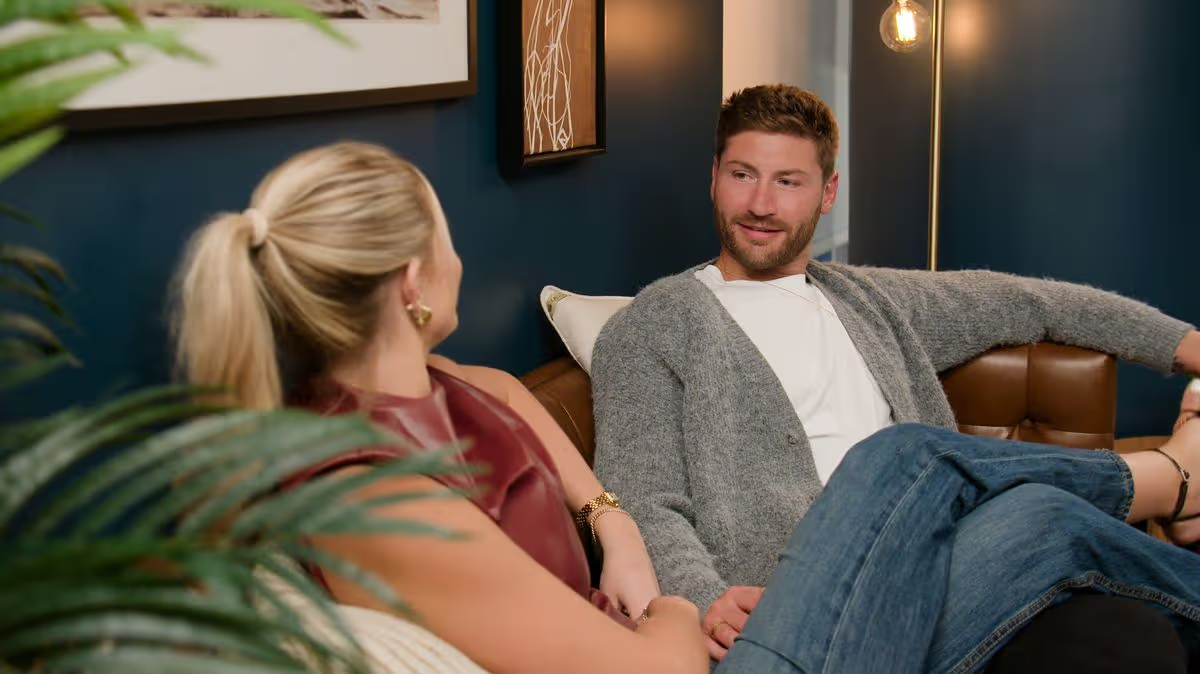
YaleUniversity announced that a prominent computer science professor will no longer teach classes while the university reviews his conduct. This follows the release of documents showing he emailed Jeffrey Epstein describing an undergraduate as a “good-looking blonde” while recommending her for a job.
The communication between David Gelernter, who gained national attention in 1993 after being injured by a mail bomb sent by “Unabomber” Theodore Kaczynski, and the late, disgraced financier was part of the Epstein-related documents released by the U.S. Justice Department at the end of last month. The documents reveal that Gelernter and Epstein exchanged messages on a range of topics, from business to art.
In one email to Epstein in October 2011, years after Epstein pleaded guilty to soliciting prostitution from an underage girl, Gelernter wrote that he had an “editoress” in mind for a job, a Yale senior whom he described as a “v small good-looking blonde.”
Gelernter defended the email last week in a message to Jeffrey Brock, dean of Yale’s School of Engineering & Applied Science, according to the Yale Daily News. The professor also reportedly forwarded the email to the student newspaper.
Advertisement
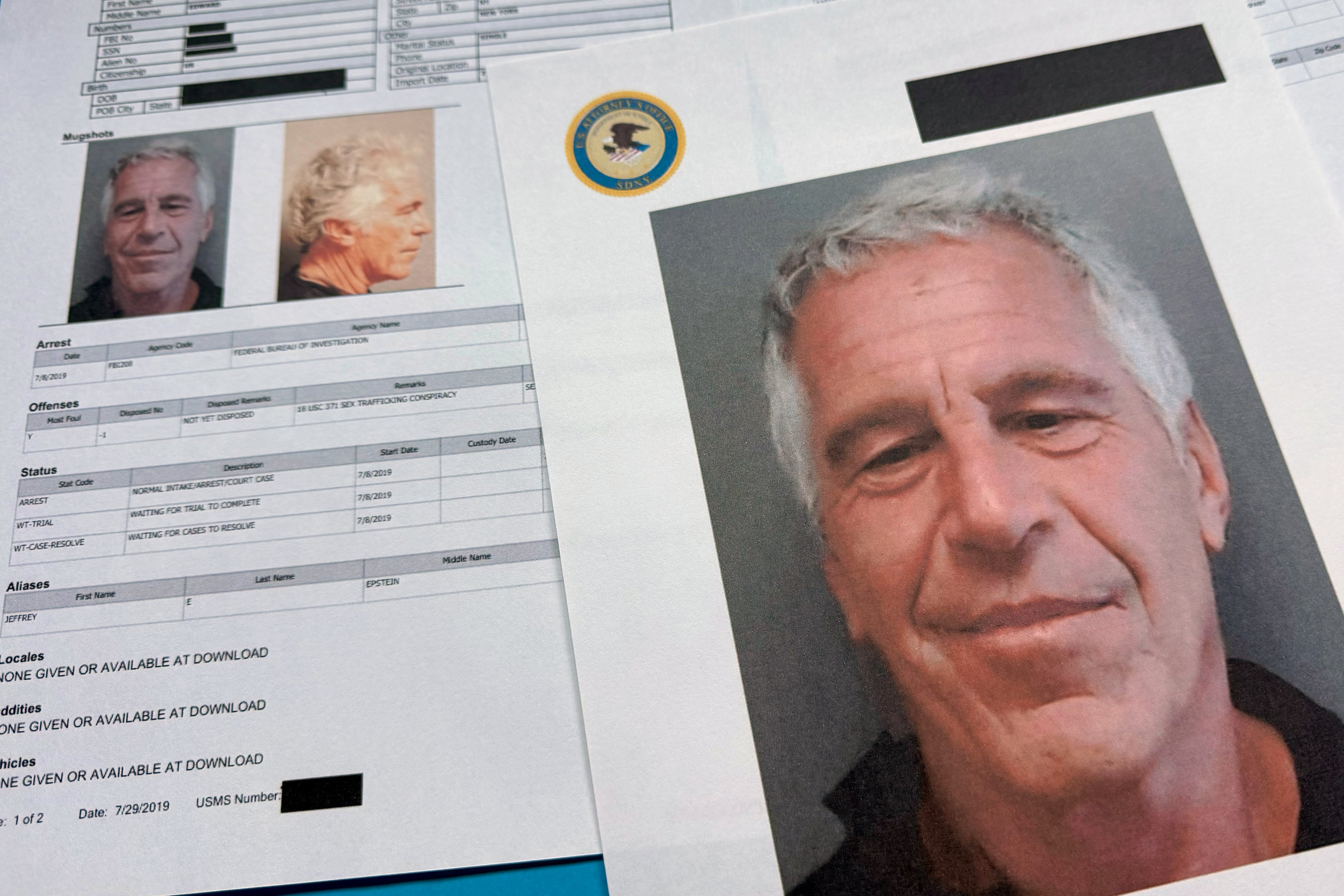
The documents reveal that Gelernter and Epstein exchanged messages on a range of topics, from business to art. (AP Photo/Jon Elswick)
He noted that Epstein was “obsessed with girls” — “like every other unmarried billionaire in Manhattan; in fact, like every other heterosex male” — and he was keeping “the potential boss’s habits in mind.”
“So long as I said nothing that dishonored her in any conceivable way, I’d have told him more or less what he wanted,” Gelernter wrote to Brock, the paper reported. “She was smart, charming & gorgeous. Ought I to have suppressed that info? Never!”
He added: “I’m very glad I wrote the note.”
Students in Gelernter’s computer science class were notified that he would not be teaching on Tuesday.
“The university does not condone the action taken by the professor or his described manner of providing recommendations for his students,” Yale said in a statement. “The professor’s conduct is under review. Until the review is completed, the professor will not teach his class.”
Advertisement
Gelernter, 70, did not immediately respond to emails and a message left at a phone listing for him in public records. A message to Brock was returned by Yale’s Office of Public Affairs & Communications, which provided the statement by the university and a letter to students by Brock. Yale declined to provide a copy of Gelernter’s email to Brock.
Gelernter joins a list of people in the U.S. and Europe, including prominent politicians, facing scrutiny because of the Epstein files.
In a message to students on Tuesday, Gelernter again defended his emails to Epstein and said they were the reason he was suspended from teaching the class. The message, sent on Yale’s course management system, was first reported by Hearst Connecticut Media Group.
In the message, Gelernter discussed his 2011 email to Epstein about the undergraduate student, saying he was recommending the student for a job with Epstein’s private bank and the student wanted the recommendation, Hearst Connecticut Media Group reported. He said he and the student did not know at the time that Epstein was a convicted sex offender.
Advertisement
“The university’s Smoking Gun is a personal, private email, dug out of the dump of Epstein files,” Gelernter wrote, according to Hearst. “(If someone handed you a stack of other people’s private correspondence, would you dive in and read them? Of course not. Gentlemen and ladies don’t read each other’s mail. (Courtesy 101.)”
In 2008 and 2009, Epstein served jail time in Florida after pleading guilty to state charges of soliciting prostitution from someone under the age of 18. He died by suicide in a jail cell in 2019, while awaiting trial in New York on U.S. federal charges accusing him of sexually abusing dozens of girls.
On the Yale faculty since 1982, Gelernter is known for his work in parallel computation — the use of multiple computer processes to solve complex problems — and for helping develop the Linda computer programing system, beginning when he was a doctoral candidate in the late 1970s. His 1991 book “Mirror Worlds” foreshadowed the World Wide Web and inspired the Java programming language, according to his biography on the Yale website.
On June 24, 1993, he suffered extensive wounds to his abdomen, chest, face and hands when he opened a package that exploded in his Yale office. Authorities later determined the package was mailed by Kaczynski, who ran a 17-year bombing campaign that killed three people and injured 23 others.
Tonight’s the night (Sony Interactive Entertainment)
The Thursday letters page looks forward to tonight’s State of Play showcase, as one reader argues for an official demake of Pokémon Scarlet and Violet.
Games Inbox is a collection of our readers’ letters, comments, and opinions. To join in with the discussions yourself email gamecentral@metro.co.uk
Mind-blowing rumour The idea that Sony could start making its first party games multiformat is crazy to me. I know they’ve done it with a Lego game (because most Lego players are on Switch) and a couple of old remasters but the idea that you’d do it with a brand new God Of War game, even if it is a spin-off, blows my mind.
My main question is: why? Why do you want to give less reasons to buy your console? I realise, obviously, they’ll make more money on overall sales, but at what cost? You just diminish the point of the console further and if you carry on along that path it just becomes no different to a mid-range gaming PC. Unlike the Switch 2, which is the only place to buy Nintendo games.
Advertisement
Even if they only stick with doing it with lower profile games, to me it just dilutes the whole point of what PlayStation is. Do they really want to turn into Xbox? Are they looking at them right now and wishing they were them? Sony hasn’t made sense to me all generations and while I hope today’s State of Play will be good, I’ve now got a bad feeling about it. Crassus
First among equals So it’s looking pretty likely that we’ll see a new God Of War game today, but I hope the State of Play is firmly focused on first party games and not just random third party stuff. As people have been saying, this is an opportunity to turn a corner and get back to what people loved about the PlayStation 4.
Expert, exclusive gaming analysis
Sign up to the GameCentral newsletter for a unique take on the week in gaming, alongside the latest reviews and more. Delivered to your inbox every Saturday morning.
Advertisement
Whether that’s going to happen I don’t know but I expect to see Saros, Marvel’s Wolverine, and ideally at least two new games. I’ll settle for a God Of War spin-off but I can’t say the idea of a 2.5D Metroidvania excites me very much.
PlayStation used to stand not just for the console but great games and we just have not seen enough of them in recent years. One big exclusive a year is not enough, especially when you usually have only one or two others even announced. We’ll see what today brings but if it’s just time-wasting fluff I won’t be happy. Grando
Positive thoughts I want to be positive about Thursday’s State of Play, so let’s hope that we get plenty of new announcements and not just 20 minutes a piece on games we already know plenty about, which is how a lot of these things seem to work out.
Advertisement
There’ll definitely be Saros, because it’s out soon, but I’ll be fine if there’s no Wolverine or Intergalactic, because they’re a way out and will probably have dedicated showcases. I’d much rather see some new games, ideally a new non-God Of War game from Santa Monica Studio, a new IP from Bluepoint, and a new Uncharted from someone else – maybe Bend Studio.
New, new, new is my wish and positivity. We’ll see how it turns out but I feel this one is Sony’s to lose now, in terms of good publicity. Kiefer
Pokémon unmade I can very easily imagine Nintendo charge for re-releases of Pokémon FireRed and LeafGreen, and I might even buy them, but that doesn’t mean I approve of it. I don’t know what else they could’ve done though, does anyone want them to remake the games again with the graphics of Scarlet and Violet? It’s not a very appealing thought, is it?
Advertisement
To be honest, I’d rather they demake Scarlet and Violet to look like FireRed and LeafGreen. For me Pokémon only really works as a 2D, top-down game. You have to use your imagination then but when it’s 3D the low-tech graphics and weak open worlds end up making things look kind of embarrassing and broken.
To live up to the potential a 3D game would have to have a huge budget and it’s obvious by now that Nintendo is not going to pay for that. So I’d rather have a state-of-the-art 2D game than a shonky 3D one. Tacle
State of team-up I’m wondering what the chances of GTA 6 turning up at the State of Play is? We keep getting these rumours of Rockstar having a marketing deal with Sony, which I easily believe, but we don’t see any evidence of it. If anything, Sony has gone out of their way to ignore GTA 6 so far.
Advertisement
None of the GTA 6 marketing so far has involved another company but I think if that was going to change it would be to announce a PlayStation 5 (and PS5 Pro) bundle. I am almost certain this will happen and the only real question is if it gets revealed this week or not. I could see it being the mic drop at the end, especially if there’s a bit of new footage. That would be cool. Trepsils
Hardware emulation I’m really curious to see what Nintendo will do about emulating DS and 3DS games because I don’t see how plugging in a second screen to the bottom of the Switch 2 would work. It’d make it massive and heavy, and how would you hold it exactly?
The obvious way to do it is to turn the Switch vertically and have both screens showing that way. They’d be pretty small but probably the same size as the actual thing and I’m not sure you really want to be showing off those lo-res graphics on a big giant screen.
The only other obvious thing to do is have some kind of special made device, like the Virtual Boy thing, but then you’re still putting the Switch 2 inside it, which is also going to make it clunky and heavy. Maybe you could make the device and have the Switch 2 stream to it, but then it wouldn’t be very portable.
Advertisement
It’s a problem but I hope they work out something good, because there are so many great games that are trapped on the DS and 3DS that are going to fade from history very quickly, because no one can play them anymore. Some are digital downloads too, so you can’t even buy an old cart off of eBay.
I see that it was necessary, but I miss Nintendo having a separate, dedicated portable. Those games had to be small and compact and I appreciated that. Apart from anything else it meant they never took that long to make, so there was always a steady stream of new games. You definitely don’t get that anymore and it’s a shame. Oscar
Absolute Zero Great suggestion from Wotan about the Xbox name. I think there will be three versions: Zero, Ultimate Zero, and Complete Zero.
Strangely, Zero will be the most powerful and the other two will be less so. Complete Zero won’t have a compatible controller, as you can control it just by holding your breath. Ed
Advertisement
Don’t miss Gaming news! Add us as a Preferred Source
As a loyal GameCentral reader, we want to make sure you never miss our articles when searching for gaming stories. We have all the latest video games news, reviews, previews, and interviews, with a vibrant community of highly engaged readers.
Click here and tick Metro.co.uk to ensure you see stories from us first in Google Search.
GameCentral has been delivering unique games news and reviews for over a decade
Household names It looks like Nioh 3 has followed its predecessors and completely passed under everyone’s radar. I know it apparently did some decent numbers on Steam when it first came out but after that I haven’t heard a single word about the game. I’ve definitely not talked to anyone that’s played it or is even aware of it.
Advertisement
It makes me wonder how popular some games really are. Are they selling in the thousands or even just hundreds, if you take into account even a big population like the UK. Getting to a million sales, which is apparently the minimum to be a ‘hit’, sounds like a lot but it’s really not when you consider how many gamers there are in the world, let alone people in general.
It’s funny how few games can be trusted to be 100% recognisable to any age. I’d say Sonic and Mario are probably the only ones, since they need to be old too. Probably most people have heard of Fortnite and Minecraft, but unless they have kids I wonder how well they understand them. Kind of similar thing for Call Of Duty.
This is why Nintendo does so well, because even it’s spin-offs, like Mario Kart, are globally recognised and that does so much work for them. No matter how many awards it might win Nioh is never going to be a household name, and that’s a shame given its quality. Hysteve
GC: Those weren’t Steam numbers, the game sold over 700,000 copies on PlayStation 5 and PC in four days, which is really good for a game like that. We agree it doesn’t get talked about much, but it didn’t get two sequels because it doesn’t sell. Up until last May the first two games had sold over 8 million copies.
Advertisement
Inbox also-rans My wish for the State of Play is a Dino Crisis remake. If you can get two Code Violet games, surely Capcom can give us one official game? Korbie
I can never hear the name Mega-CD and not think of the ads in Viz calling them mega seedy, with a picture of S&M guy. Those were the days. Cobalt84
The small print New Inbox updates appear every weekday morning, with special Hot Topic Inboxes at the weekend. Readers’ letters are used on merit and may be edited for length and content.
Advertisement
You can also submit your own 500 to 600-word Reader’s Feature at any time via email or our Submit Stuff page, which if used will be shown in the next available weekend slot.
You can also leave your comments below and don’t forget to follow us on Twitter.
Slattery’s original fusion gateaux combined four different delicious sections – chocolate and Baileys mousse sponge, orange mousse with orange sponge, Tia Maria‑soaked sponge with coffee mousse and strawberry mousse with sponge.
Each section was designed to serve several people who may want something different, making it a popular choice for sharing.
Following its success, the bakery later introduced a summer fruit version, further cementing the product’s popularity.
The new release has been developed after the increasing demand for the firm’s ‘Ultimate Brownies’.
Advertisement
Confectioner Jeanette, part of the Slattery team, wanted to offer something lighter than a brownie but “still indulgent” and adapted the flavours into a lighter, mousse‑based dessert.
The new Chocolate Bar Fusion Gateaux includes four distinct flavours – Biscoff, chocolate mint, chocolate orange and Bueno – and is freshly made to order.
The new fusion gateaux launched this month (Image: supplied)
Jo Naven at Slattery said: “We’ve been making fusion gateaux for over 20 years now.
“The original idea was always about having one cake that suited everyone. Our original fusion gateaux have four different sections: Chocolate and Baileys mousse sponge, orange mousse with orange sponge, Tia Maria-soaked sponge with coffee mousse, and strawberry mousse with sponge.
Advertisement
“Each section is cut into three slices, so it’s always been a really popular sharing dessert. Because that idea worked so well, we later did a summer fruits version too, which proved people really like the choice and variety in one gateaux.
“More recently, we’ve seen just how popular our Ultimate Brownies have become, especially the different chocolate bar and Biscoff flavours.
“One of our talented confectioners Jeanette, wanted to take those flavours and turn them into a proper dessert version – something lighter than a brownie, made with fresh cream mousse, but still indulgent.
“That’s where the Chocolate Bar Fusion Gateaux came from. It’s designed as a sharing dessert, with four different flavours Biscoff, chocolate mint, chocolate orange and Bueno, so everyone can choose what they like.
Advertisement
“It’s ideal for families or for when you’ve got guests round, and it follows the same idea we’ve always had with fusion gateaux – one dessert, lots of choice.”
The Chocolate Bar Fusion Gateaux costs £44 and orders must be placed 48 hours in advance.
Founded in 1967, Slattery has grown from a traditional craft bakery into one of Greater Manchester’s best-known patisseries, operating its shop, chocolatier and tearoom on Bury New Road.
The attack is the second-deadliest school shooting in Canadian history after 14 students were killed at Montreal’s L’Ecole Polytechnique in 1989.
A chilling photograph, shared by Australian news site news.com.au, shows Van Rootselaar smiling and holding a rifle. It is unclear how old Van Rootselaar was in the photograph.
Those killed at the school include three 12-year-old girls, two boys aged 12 and 13, and a 39-year-old female teacher, police said. Two others, a 39-year-old woman named Jennifer Strang and an 11-year-old boy were identified by police as Van Rootselaar’s mum and stepbrother. They were shot by Van Rootselaar before the attack on the school.
Authorities said Van Rootselaar, who identified as transgender and went by female pronouns, died by a self-inflicted gunshot on the school premises, bringing the death toll to nine.
Residents of Tumbler Ridge, a remote town of about 2,400 people in the foothills of the Rockies, were sent a text alert on Tuesday afternoon with instructions to shelter in place due to an active shooter. The Mirror reported that the alert described the suspect as a “female in a dress with brown hair”.
Officers entered the school to locate the threat and within found the shooter deceased. He said the suspect has been identified as Van Rootselaar, a resident of Tumbler Ridge.
Advertisement
Two firearms, a long gun and a modified handgun, were recovered.
Asked by reporters if Van Rootselaar was transgender, Deputy Commissioner McDonald said police were identifying the suspect “as they chose to be identified in public and in social media”.
“I can say that Jesse was born as a biological male who approximately six years ago began to transition to female and identified as female, both socially and publicly,” he added.
John Scanlon, chair of the Environmental Services Association, said: “We’ve seen a shift from people using small canisters to much larger ones holding 600, 700g of nitrous oxide, which become a ticking time bomb when they’re disposed of and find their way into our waste and recycling facilities.”
Healthcare workers have been told to stop discouraging first cousin marriages, as parents only have a “slightly increased” risk of having children with genetic disorders
The NHS has been instructed that medical professionals must not issue blanket warnings against marriages between first cousins.
Advertisement
The National Child Mortality Database (NCMD), a government-funded monitoring organisation, has advised healthcare workers against routinely discouraging such unions. They now assert that parents face only a “slightly increased” risk of having children with genetic disorders.
The guidance stated: “Action at community level may help people to understand and act on [our] advice; but this is only acceptable if information is balanced, non-stigmatising and non-directive.”
First cousin marriages remain legal across the UK, with no laws preventing cousins from marrying or having children together.
Consequently, under British law, they are not classified amongst the prohibited relationships for marriage but there have historically been concerns about a higher rate of birth defects.
Advertisement
Section 1 of the Marriage Act 1949 sets out that any marriages that take place within prohibited degrees of relationship are void. Under the legislation, prohibited degrees of relationship for marriage include marriages to a sibling, parent or child, but not marriages between first cousins.
Such marriages occur more commonly within the British-Pakistani community than amongst white British parents.
Operating from the University of Bristol, the NCMD has been allocated over £3.5m in taxpayer funding to collect and analyse data on child deaths. The document was published in 2023.
In 2024, Richard Holden, then a backbench MP and now shadow transport secretary, put forward proposals to ban first-cousin marriages.
Advertisement
Mr Holden told The Times: “Our NHS should stop taking the knee to damaging and oppressive cultural practices. This guidance turns basic public health into public harm.
“First cousin marriage carries far higher genetic risk, as well as damaging individual liberty and societal cohesion.
“Pretending otherwise helps no one, least of all the children born with avoidable conditions and those trapped in heavy-handed patriarchal power structures they can’t leave for fear of total ostracism.”
Cambridge City Council is considering introducing new charges on developers building in the city, in order to raise more money to be spent on infrastructure projects.
Developers building in Cambridge could face new charges to make sure they pay their “fair share” towards the city’s infrastructure. Cambridge City Council is considering introducing Community Infrastructure Levy (CIL), charges, which would see developers pay fixed amounts towards infrastructure in the city.
Advertisement
Other councils in the area already have these charges, including in Huntingdonshire and East Cambridgeshire. Councillor Katie Thornburrow (Labour), cabinet member for planning and transport, said there is not currently enough money available to deliver “all the necessary transport improvements” the city needs.
She said: “Simply put, CIL is a fixed charge that developers must pay to build new homes or commercial spaces. The money raised is pooled together to fund essential infrastructure, such as transport and community facilities, that our growing city needs.
“Cambridge currently relies on Section 106 contributions, which are negotiated site by site. Moving to CIL will secure more funding and speed up the planning process.
“There is a funding gap for transport issues, the Greater Cambridge Partnership has identified it does not have enough funds to deliver all the necessary transport improvements. If we introduce CIL we will have a more reliable way to reduce that gap and ensure developers pay their fair share towards what the city needs.”
Advertisement
The proposed charges developers could face include £175 per square metre for offices and research and development projects; £60 per square metre for houses, flats, retirement homes, and student accommodation; £50 per square metre for shops, restaurants, financial and professional services, and hotels; and £35 per square metre for industrial buildings and data centres.
A report published by the city council said if these proposed charges are introduced, based on previous levels of growth, it could generate at least £25million over the next five years.
The city council’s cabinet agreed this week (February 10) to move forward with the plans by holding a four week public consultation about the proposals, which is due to take place between February 16, and March 16.
Councillor Anna Smith (Labour) said she was “very much in favour of holding developers to account and making sure they pay their fair share”.
Advertisement
Councillor Naomi Bennett (Green Party) highlighted that CIL was introduced as an option for planning authorities in 2010, she asked why the city council held off introducing it.
She also raised concerns that it could be “avoided” by developers and asked what steps the city council plans to take to prevent developers from avoiding the charges.
Cllr Thornburrow said the city council had considered introducing CIL charges in the past, but had paused this work to see if the national government would be replacing it with a different system.
She said the government had confirmed in 2024 that CIL would not be scrapped, which she explained had offered the authority the “opportunity to rethink”.
Advertisement
Stephen Kelly, joint director of Greater Cambridge Shared Planning and 3C Building Control, said there was actually “quite widespread avoidance through Section 106 regime”.
He explained that there are enforcement measures available under CIL, which he said included being able to stop developments if a developer has failed to pay any up front CIL charges required.
To get more breaking news and top stories delivered directly to your phone, join our new WhatsApp community.Click this link to receive your daily dose of CambridgeshireLive content.
We also treat our community members to special offers, promotions, and adverts from us and our partners. If you don’t like our community, you can check out any time you like. If you’re curious, you can read ourPrivacy Notice.
Chancellor Rachel Reeves will face questions from the press during a visit on Thursday, while other Labour figures, including former deputy leader Angela Rayner and Greater Manchester mayor Andy Burnham, who both expressed support for the Prime Minister despite recent speculation about their own ambitions, will also attend a public-facing event in Liverpool.
It was the image that launched a cultural icon. In 1967, in the northern Californian woods, a seven foot tall, ape-like creature covered in black fur and walking upright was captured on camera, at one point turning around to look straight down the lens. The image is endlessly copied in popular culture – it’s even become an emoji. But what was it? A hoax? A bear? Or a real-life example of a mysterious species called the Bigfoot?
The film has been analysed and re-ananlysed countless times. Although most people believe it was some sort of hoax, there are some who argue that it’s never been definitively debunked. One group of people, dubbed Bigfooters, are so intrigued that they have taken to the forests of Washington, California, Oregon, Ohio, Florida and beyond to look for evidence of the mythical creature.
But why? That’s what sociologists Jamie Lewis and Andrew Bartlett wanted to uncover. They were itching to understand what prompts this community to spend valuable time and resources looking for a beast that is highly unlikely to even exist. During lockdown, Lewis started interviewing more than 130 Bigfooters (and a few academics) about their views, experiences and practices, culminating in the duo’s recent book Bigfooters and Scientific Inquiry: on the borderlands of legitimate science.
Here, we talk to them about their academic investigation.
Advertisement
What was it about the Bigfoot community that you found so intriguing?
Lewis: It started when I was watching either the Discovery Channel or Animal Planet and a show called Finding Bigfoot was advertised. I was really keen to know why this programme was being scheduled on what certainly at the time was a nominally serious and sober natural history channel. The initial plan was to do an analysis of these television programmes, but we felt that wasn’t enough. It was lockdown and my wife was pregnant and in bed a lot with sickness, so I needed to fill my time.
Bartlett: One of the things that I worked on when Jamie and I shared an office in Cardiff was a sociological study of fringe physicists. These are people mostly outside of academic institutions trying to do science. I was interviewing these people, going to their conferences. And that led relatively smoothly into Bigfoot, but it was Jamie’s interest in Bigfoot that brought me to this field.
The Insights section is committed to high-quality longform journalism. Our editors work with academics from many different backgrounds who are tackling a wide range of societal and scientific challenges.
Advertisement
How big is this community?
Lewis: It’s very hard to put a number on it. There is certainly a divide between what are known as “apers”, who believe that Bigfoot is just a primate unknown to science, and those that are perhaps more derogatorily called “woo-woos”, who believe that Bigfoot is some sort of interdimensional traveller, an alien of sort. We’re talking in the thousands of people. But there are a couple of hundred really serious people of which I probably interviewed at least half.
Many people back them. A YouGov survey conducted as recently as November 2025, suggested that as many as one quarter of Americans believe that Bigfoot either definitely or probably exists.
Were the interviewees suspicious of your intentions?
Lewis: I think there was definitely a worry that they would be caricatured. And I was often asked, “Do I believe in Bigfoot?” I had a standard answer that Andy and I agreed on, which was that mainstream, institutional science says there is absolutely no compelling evidence that Bigfoot exists. We have no reason to dissent with that consensus. But as sociologists what does exist is a community (or communities) of Bigfooting, and that’s what interests us.
Bartlett: One of the things that at least a couple of people reacted to once the book was published was the way we phrased that. On the blurb on the back of the book we say something along the lines of “Bigfoot exists if not as a physical biological creature then certainly as an object around which hundreds of people organise their lives”. A couple of people took that to be some kind of slight against them. It wasn’t.
Advertisement
Do these people have any sort of shared personality traits or other things that connected them?
Lewis: The community is very white, male, rural and blue collar – often ex-military. I think Bigfooting is growing among the female population, but there’s a sense of the kind of ‘masculine hunter in the dark’ persona.
Bartlett: In America, you find a lot more veterans in the general population. But I think there’s also the issue of how they like to present themselves, because when you’re dealing with witness testimony, you’ve got to present yourself as credible. If you can say something like, “I was in the service” or “I was in the armed forces”, then at least you’re not likely to be spooked by a moose.
What surprised you the most about them, did they challenge any stereotypes?
Lewis: Some were very articulate, which did surprise me a little. I guess that’s my own prejudice. I was also very surprised about how open people were; I expected them to not tell me about their encounters. But a fair few of them did. Many of them wanted to be named in the book. I was also surprised about how much empirical data they collect and how much they attempt to try and analyse and make sense of it. And how they were willing to admit that a certain idea was bunk or a hoax. I expected them to be defending bad evidence.
Bartlett: There are extracts of this in our book, people saying “I was fooled by these tracks for ages. I thought they were real and then I found this and that and the other out about it and I revised my opinion.” So that did surprise me too.
Advertisement
If they collect empirical evidence, does that make what they do science?
Bartlett: When you’re working in institutional science you’re working to get grants, you’re working to get good quality publications. You might want your name associated with particular ideas, but you do that through peer-reviewed papers and by working with PhD students who go off to other labs. In Bigfooting, you’ve got self-published books, you’ve got Bigfoot conferences, you’ve got YouTube channels, you’ve got podcasts and things like this, and they’re not necessarily a good way of making and testing knowledge claims. This is an aspect where Bigfooting is quite different to mainstream science.
It was interesting to study the fringe physicists and seeing where the common deviation from science was. And that’s a focus on individualism; the idea that an individual alone can collect and assess evidence in some kind of asocial fashion. The physicists I studied were quite clear that ideas like consensus in science were dangerous, when in reality consensus, continuity and community are the basis of most of science.
What is the most common form of evidence in this community?
Lewis: Witness testimonies. Without those reported testimonies, Bigfooting would not exist. A large part of the work of a Bigfooter is to collect and make sense of these testimonies. They get upset when these testimonies don’t have much weight within institutional science. They’ll make the comparison to court and how testimonies alone can put someone on death row. So they don’t understand why testimonies don’t have much weight in science. Beyond the testimony, footprint evidence is probably the most famous and also the most pervasive sort of trace evidence.
Photograph of an alleged Bigfoot footprint taken in Hoopa, California in September 1962 and featured in a Humboldt Times newspaper article. wikipedia
Bartlett: One of the reasons footprints are so important is that there’s the legacy of the Yeti and footprint evidence which proved to be relatively persuasive, convincing some institutional scientists that there was something in the Himalayas. And then there was the fact that the sort of two major academic champions of Bigfoot were persuaded by the footprint evidence: the late Grover Krantz (around 1970) and Jeffrey Meldrum (in the 1990s).
Lewis: These days you also see camera traps, audio recorders even DNA testing of hairs and those sorts of things. They’re capturing anomalous sounds and often blurry images. Some believe that a Bigfoot communicates through infrasound, although that is certainly disputed within the community. So what you’re getting now is more and more different types of evidence.
How can you know whether an image or a sound really points to Bigfoot?
Bartlett: What they do is go out into the forest and record a sound, for example, and compare it to databases of birds and other animals. And they may find there is nothing that matches it. Is it something that doesn’t sound like a car or a person or a bear or a moose? In which case, there’s the space for Bigfoot. And it’s the same with images to some degree.
Would you say that this interpretation is the biggest weakness or contradiction in their evidence?
Lewis: It allows them to create space for Bigfoot. Because if you can’t match it to something else, what could it be? You have this absence and then from that absence you create a presence. They believe it’s a scientific argument. In fact, it’s kind of interesting how Bigfooters will always enrol other kinds of magical beasts to strengthen the case for Bigfoot. So, one sentence I hear quite a lot is “it ain’t no unicorn”.
Jeffrey Meldrum. wikipedia
What’s the hierarchy in this community? Who’s at the top?
Lewis: A-listers tend to be anyone associated with academia. So Andy’s already mentioned Jeff Meldrum, unfortunately he passed away very recently, but he was their route to contemporary academia. So in any conference, if Jeff Meldrum was speaking, he’d be last. Anyone who’s on TV, such as the Finding Bigfoot and the Expedition Bigfoot presenters would also be in the A-list category. And then you’ve got various different groups just below. For example, the Bigfoot Field Researchers Organization, which is probably the most well known group.
What could Bigfooters learn from scientists and vice versa?
Lewis: From reading books and from discussing it with people, there was a sense that Bigfooters are anti-science. We did not find that. What we argue in the book is that they’re not anti-science. In fact, I would say a lot of them are pro-science, but they’re counter establishment. I think academia should be thinking about these people as citizen scientists and what they’re doing as a kind of gateway into understanding your local area.
Advertisement
For example, they found an animal, I think it was a pine marten, on a camera trap that was not supposed to be in the area. So they are collecting lots of data. They are not irrational. It’s different from, for example, ghost hunting, because you don’t have to imagine there’s something entirely new in the world. It’s just an animal that exists out there that hasn’t been found. Implausible, yes. But not impossible. What they do lack, however, is academic discipline; anyone can be a Bigfooter.
Was there a specific encounter you heard about that was particularly compelling?**
Lewis: Did I get caught up in the moment? Sometimes, of course, you do, just as you do in a film. If you’re in the pitch dark night and you’re watching a horror film, you take it away with you for a while until you settle back down. I often went to bed buzzing, thinking I don’t know what I just heard; they were great stories at the end of the day. But I learned to separate the interview from my thoughts on the interview.
If you encountered Bigfoot in the woods, how would you go about convincing others?**
Lewis: A lot of Bigfooters would begin with qualifiers like, “My dad doesn’t believe in Bigfoot,” or “I have questioned myself for years thinking about this incident and what it was.” So, they would set themselves up as a rational, logical individual. That then created a connection between me and them. And of course, I’d probably be doing the same.
Bartlett: If I were to encounter Bigfoot, I would probably draw on all the techniques of proving that I’m a credible, hard-headed, rational person that we see in those witness encounters. I would expect to be disbelieved. And so therefore I would stress I was putting my credibility as an academic on the line here. So I’d deploy all those kinds of rhetorical techniques that are used by Bigfooters, aside from just the description of the encounter.
To hear about new Insights articles, join the hundreds of thousands of people who value The Conversation’s evidence-based news. Subscribe to our newsletter.
The slow rise in the number of dead from the demonstrations adds to the overall tensions facing Iran both inside the country and abroad as it tries to negotiate with the United States over its nuclear program. A second round of talks remains up in the air as Israeli Prime Minister Benjamin Netanyahu pressed his case directly with U.S. President Donald Trump to intensify his demands on Tehran in the negotiations.
“There was nothing definitive reached other than I insisted that negotiations with Iran continue to see whether or not a Deal can be consummated. If it can, I let the Prime Minister know that will be a preference,” Trump wrote afterward on his TruthSocial website.
“Last time Iran decided that they were better off not making a Deal, and they were hit. … That did not work well for them. Hopefully this time they will be more reasonable and responsible.”
Advertisement
Meanwhile, Iran at home faces still-simmering anger over its wide-ranging suppression of all dissent in the Islamic Republic. That rage may intensify in the coming days as families of the dead begin marking the traditional 40-day mourning for the loved ones.
Activists’ death toll slowly rises
The U.S.-based Human Rights Activists News Agency, which offered the latest figures, has been accurate in counting deaths during previous rounds of unrest in Iran and relies on a network of activists in Iran to verify deaths. The slow rise in the death toll has come as the agency slowly is able to crosscheck information as communication remains difficult with those inside of the Islamic Republic.
Iran’s government offered its only death toll on Jan. 21, saying 3,117 people were killed. Iran’s theocracy in the past has undercounted or not reported fatalities from past unrest.
The Associated Press has been unable to independently assess the death toll, given authorities have disrupted internet access and international calls in Iran.
Advertisement
The rise in the death toll comes as Iran tries to negotiate with the United States over its nuclear program.
Diplomacy over Iran continues
Senior Iranian security official Ali Larijani met Wednesday in Qatar with Foreign Minister Sheikh Mohammed bin Abdulrahman Al Thani. Qatar hosts a major U.S. military installation that Iran attacked in June, after the U.S. bombed Iranian nuclear sites during the 12-day Iran-Israel war in June. Larijani also met with officials of the Palestinian Hamas militant group, and in Oman with Tehran-backed Houthi rebels from Yemen on Tuesday.
Larijani told Qatar’s Al Jazeera satellite news network that Iran did not receive any specific proposal from the U.S. in Oman, but acknowledged that there was an “exchange of messages.”
Qatar has been a key negotiator in the past with Iran, with which it shares a massive offshore natural gas field in the Persian Gulf. Its state-run Qatar News Agency reported that ruling emir Sheikh Tamim bin Hamad Al Thani spoke with Trump about “the current situation in the region and international efforts aimed at de-escalation and strengthening regional security and peace,” without elaborating.
Advertisement
The U.S. has moved the aircraft carrier USS Abraham Lincoln, ships and warplanes to the Middle East to pressure Iran into an agreement and have the firepower necessary to strike the Islamic Republic should Trump choose to do so.
Already, U.S. forces have shot down a drone they said got too close to the Lincoln and came to the aid of a U.S.-flagged ship that Iranian forces tried to stop in the Strait of Hormuz, the narrow mouth of the Persian Gulf.
Trump told the news website Axios that he was considering sending a second carrier to the region. “We have an armada that is heading there and another one might be going,” he said.
___
Advertisement
Associated Press writer Melanie Lidman in Washington contributed to this report.
Thirty five community groups and charities took part in the latest Volunteering Fair at the Dolphin Centre, in Darlington.
Seth Pearson, Director of Darlington Cares, which organizes the event, said: “Despite poor weather, it’s a great turnout that really showcases volunteering opportunities in the Darlington area. It’s a fantastic way for voluntary organisations to network and to recruit new volunteers.”
Julia Bean, trustee of Darlington Town Mission, which tackles isolation among elderly people, described the Volunteering Fair as “invaluable”.
Advertisement
“We recruited new volunteers last year and one of them was a retired accountant who went on to become our treasurer,” said Julia.
“It’s a very relaxed atmosphere with great footfall, so it’s a great opportunity to connect with people who want to do some volunteering but aren’t sure what type of charity they want to be part of. The Volunteering Fair gives a real flavour of what’s on offer.”
Rachel Parry, of Darlington Oxfam, cited the example of a man who came forward as a volunteer at last year’s event and has gone on to train as a PAT (Portable Appliance Testing) specialist.
He has now helped generate thousands of pounds in revenue by PAT testing a stockpile of electrical items donated to the charity.
Advertisement
“It’s a great example of the value of the event,” said Rachel.
Darlington Lions President, Denis Pinnegar, added: “The real value for us is being able to network with other local charities and learn from each other.”