

Politics
DWP admits Youth Job Grant is actually nonsense

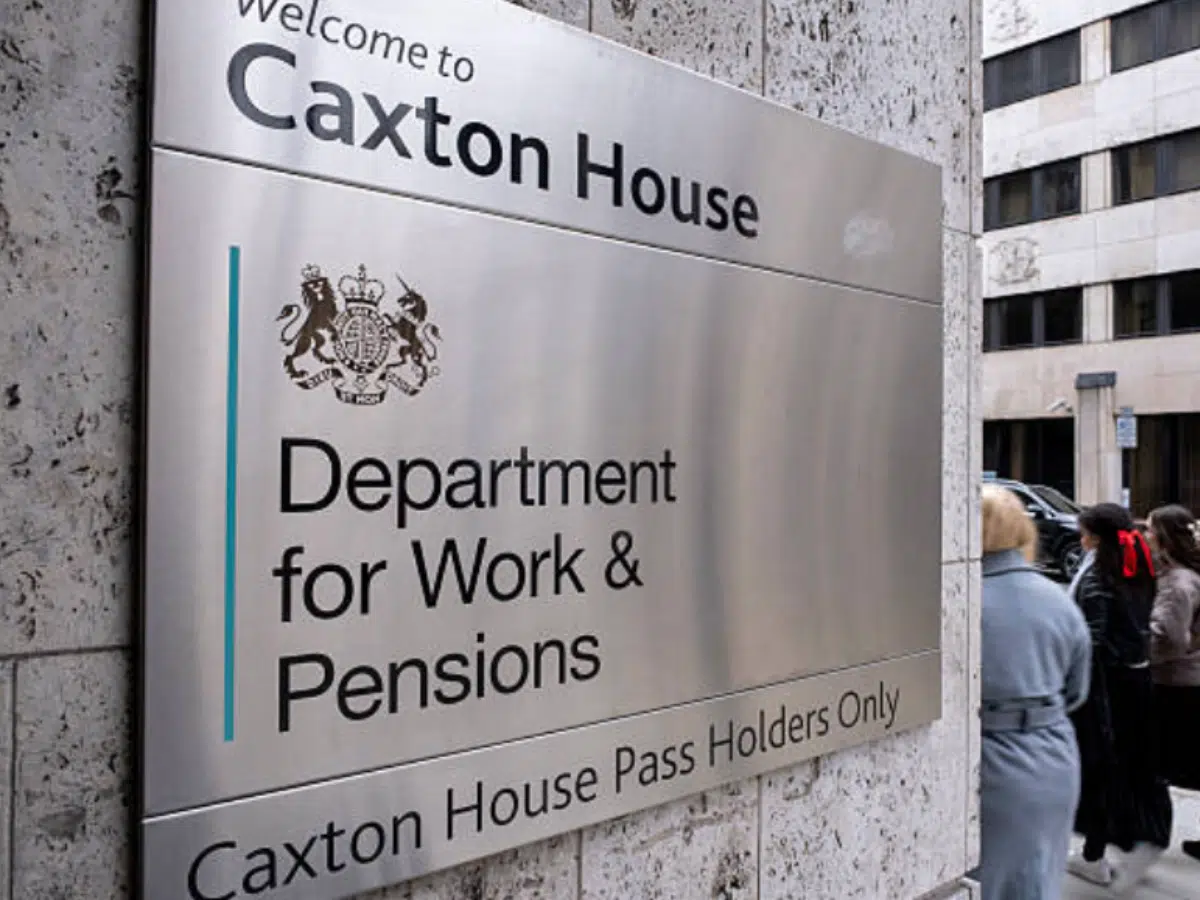
The Department for Work and Pensions (DWP) announced its flagship new “Youth Jobs Grant” scheme in March. It did so alongside a package of new policies to tackle the so-called rise in young people “not in education, employment, or training” (NEET). But now, it has admitted that all is not what it seems.
DWP Youth Jobs Grant
The grant scheme offers employers £3,000 for every young person aged 18-24 they hire who has been claiming universal credit for over six months.
The DWP will issue the grant irrespective of the claimant’s conditionality regime. It means that this could also apply to young disabled people claiming limited capability for work-related activity (LCWRA), who the DWP has assessed as not fit for work.
Alongside its new Youth Jobs Grant, the DWP is also introducing a £2,000 “Apprenticeship Incentive” to encourage small and medium-sized businesses to employ 16-24 year-olds into new apprenticeship roles.
It also announced an expansion to its so-called “Jobs Guarantee“. This will now make the fully funded six-month wage subsidy available to employers hiring young people aged 18 to 24.
However, the Canary’s Rachel Charlton-Dailey has highlighted how the government’s raft of youth employment policies risks coercing young chronically ill and disabled claimants into low-waged and unsuitable work.
Cat out of the bag
Now, in response to a series of parliamentary written questions, the DWP has admitted that the Youth Jobs Grant will “not require employers to demonstrate” that they have hired young people into any roles that wouldn’t have already existed without the new incentive funding.
Independent MP James McMurdock asked “what steps” the DWP “plans to take to help ensure that jobs created through the Youth Jobs Grant are additional to existing positions”.
The answer came amid a lengthy response addressing 14 separate written questions McMurdock had tabled probing the government’s youth employment plans.
On 27 March, DWP minister Andrew Western wrote:
The scheme will not require employers to demonstrate that roles are additional.
Meanwhile, the Institute for Fiscal Studies (IFS) has separately said:
Offering £3,000 to all employers without checking for additionality would result in substantial dead weight.
In particular, it has highlighted how “DWP statistics from 2022–25 show that only 19% of 16- to 24-year-olds on UC who have been unemployed for 6 months are still on the benefit 18 months later”.
It said this “implies that the majority are likely to find work even in the absence of wage subsidies”.
Barriers to employment
Disabled young people face significantly greater barriers to employment, so the grant’s lack of an additionality requirement could fail to ensure employers offer accessible roles for 18-24 year-olds well enough to work and/or not in the LCWRA group.
Western told McMurdock that the DWP would pay the grant in “staged instalments”. The department has yet to specify what these will be. It also hasn’t confirmed the length of time these instalments will span in total.
But Western admitted that the government isn’t planning to place any minimum retention requirements on employers for the grant.
He said that the staged instalments would “encourage sustained employment during the early months without requiring a formal retention period”.
Elsewhere in the response, he stated that the scheme’s “purpose is to reduce the barriers young people face when entering the labour market”.
According to Western, the grant aims to do that “by helping employers with the early costs of recruitment and training, rather than placing conditions on wider staffing decisions and how long an employer must retain someone”.
The revelations call into question the government’s claims that its new package of employment policies will create 200,000 new jobs for young people.
More DWP nonsense?
The DWP anticipates that the Jobs Guarantee and the Youth Jobs Grant will create 30,000 and 20,000 new job roles for young people respectively. However, the IFS has said that in tandem, even if these are additional, the policies will “directly benefit a small percentage of the almost 1 million 16- to 24-year-olds who are NEET”.
Now, Western’s response has confirmed that the DWP can’t guarantee these will be genuinely additional.
The government has been citing its programme of employment support, including these employer incentives, to justify widespread cuts to welfare.
From 6 April, DWP will slash the universal credit health element in half for new claimants.
The cut exempts existing claimants, those who meet the department’s “severe conditions criteria”, and those who are terminally ill.
In its Pathways to Work green paper, the government also floated plans to restrict the health element of universal credit to over 22s. It has yet to make a decision on the proposal.
However, in November work and pensions secretary Pat McFadden referred to former Labour health secretary Alan Milburn’s “independent” investigation into Young People and Work.
He said that he did not “want to make a decision” on the minimum age requirement proposal until Milburn had looked at “the whole issue of young people, sickness, unemployment and work”.
The inquiry’s terms of reference show that it will solely target chronically ill and disabled claimants.



A new poll has shown that most NHS workers think health secretary Wes Streeting is failing the NHS, badly.
The NHS is suffering, and Streeting is making things worse
YouGov has reported that:
87% of NHS staff describe the NHS as currently being in a weak state
- Wes Streeting specifically has been doing a bad job (53% – up 13% from last year).
- Labour is handling healthcare badly (66% – up 13% from last year).
- A continuation of Labour’s current policies will make the NHS even worse (40% – up 14% from last year).
Streeting — who has the support of millionaire donors and private healthcare lobbyists — has long coveted the job of Labour Party leader. But he barely won his own constituency in 2024, and his race-baiting local party has been haemorrhaging votes ever since.
The new poll of NHS workers, meanwhile, is a damning assessment of Streeting’s record as health secretary. And it should make any Labour MP think twice before trying to force him onto the country as prime minister.
NHS staff increasingly believe Wes Streeting is doing a bad job as health secretary and that the Labour government is handling the NHS badly
Streeting as health secretary Labour handling of NHS — YouGov (@YouGov) May 13, 2026
Good job: 22% (-3 from 19-28 Feb 2025)
Bad job: 53% (+13)
Well: 24% (-6)
Badly: 66%… pic.twitter.com/HCTlxa1kMQ
Stop Wes Streeting. Stop the privatisation.
Only 22% of NHS workers think Streeting has been doing a good job. And most essentially perceive there to have been almost no difference between conditions under the previous Conservative government and conditions under the current Labour government.
That’s hardly surprising when even the Guardian has been saying:
Labour is privatising the NHS in plain sight
EveryDoctor, meanwhile, has been insisting:
The NHS is being privatised, and it is so important that we pay attention to the way money is moving through Westminster…
And if we follow the money, we see that Wes Streeting is at the top of the list, having received at least £224,575 from people and corporations with private healthcare interests. EveryDoctor adds that:
Labour MPs received almost five times as much in donations from donors connected to private healthcare as all other MPs combined, according to EveryDoctor’s analysis of the MPs’ register of financial interests. We must ask why this is happening, at the same time as the Labour government has chosen to divert billions more into the private healthcare sector
Streeting has also been schmoozing with big technology firms, being particularly secretive about the dodgy NHS contract with evil tech giant Palantir.
As NHS staff know all too well, a Streeting government is bad news for the NHS. Because just like Tony Blair’s Labour previously, Labour today is also siphoning money away from the NHS and into the pockets of private healthcare corporations.
To stop this privatisation and save the NHS, we need to stop Wes Streeting.
Featured image via the Canary
By Ed Sykes


Nigel Farage could finally face his comeuppance as the Parliamentary Standards Commissioner launches one investigation, while a further probe may follow after a complaint from the Conservatives.
Following reports and widespread coverage of Farage taking a ‘gift’ of £5m from foreign-based crypto-billionaire Christopher Harborne, which he failed to declare, the commissioner is now finally investigating the Reform UK leader for breaching the code of conduct.
Nevertheless, the millionaire’s woes likely won’t end there — as the Guardian’s Pippa Crerar has said a second investigation by the Electoral Commission might indeed be on its way.
Whether that will take place will be known by the end of this week.
— Politics UK (@PolitlcsUK) May 13, 2026
 BREAKING: Nigel Farage is now being investigated by the Parliamentary Standards Commissioner for not declaring the £5m gift he received from billionaire Christopher Harborne
Followed by:
NEW: A second investigation into Nigel Farage could be on the cards – I'm told the Electoral Commission has told the Tories they are still looking at their complaint and will come back by the end of this week.
— Pippa Crerar (@PippaCrerar) May 13, 2026
When it rains, it pours — eh, Nigel?
This is sure to be a week that the Reform leader would like to forget — not that we will let him, that’s for sure. After all, Farage is well overdue for an investigation and with any justice, be kicked out of British politics. Nevertheless, we will have to see how the investigations play out as to whether we will see this super-rich racist facing accountability in our democracy.
However, officials only agreed to take up this investigation after pretty significant pressure. For instance, we have been reporting for quite a while on the huge, and questionable, funding going into this billionaire-interested business of a party.
Our own Alex/Rose Cocker wrote in March — way before the local elections on May 7:
On 5 March, the Electoral Commission published its records of political donations in the last quarter of 2025. And, surprise surprise, Reform UK has taken yet another massive crypto donation from Thai-based billionaire Christopher Harborne.
Last quarter’s £3m donation joins the record-breaking £9m that the cryptocurrency investor already gifted to the far-right party. Likewise, on top of the £3m, Reform also received a further £2.5m from other sources.
Back in May [2025], Farage told the Las Vegas Bitcoin Conference that his party would launch a “crypto revolution”. On the same day, Reform announced that it would start accepting donations in crypto.
Then, in the very next financial quarter, Harborne’s major £9m donation to Reform rolled in on 1 August. It was the largest ever gift from a private individual to a political party.
At the time, the Canary highlighted that Harborne also donated millions to the Brexit Party in 2019, as well as to the Conservatives between 2001 and 2022. While Harborne is British, he’s now based in Thailand.
Sky News spoke to political donation expert professor Justin Fisher, who told them:
It exposes the fact that this is a person who is a British citizen but is able to influence British politics without being subject to the laws that any Reform government might bring in, any tax arrangements that a Reform might bring in.
This is foreign money by any other name.
When the crypto donation revelation surfaced, Farage insisted that Harbourne “wants nothing from me”.
Farage facing investigation is a welcome sight
Consequently, this announcement of an investigation — and another possibly to come — has come as good news for quite a few.
Not Nige, obviously:
The sun is breaking through the dark clouds ….. https://t.co/RanA87wKo1
— Alan Thompson (@AlanThompson58) May 13, 2026
This would only seem strange to the small minority of people who have never received a no strings attached £5m cash gift from a friend.
It surely can’t be a political bribe…… https://t.co/5YiC2J9fp7
— Brian (@FrenScottish) May 13, 2026
Our own Willem Moore reported on a possible impending by-election in Nigel Farage’s constituency after complainants, including the Tories, submitted allegations to the Electoral Commission and the Parliamentary standards watchdog.
He wrote:
Clearly, voters should know that Farage took £5m from a wealthy crypto-enthusiast given his recent support for the scam-linked financial tech. And as the Observer reported, he now faces:
two possible probes: one by the Electoral Commission, which has been considering whether his failure to declare the sum may have breached electoral law; and a standards commissioner investigation to see whether Farage has breached the members’ code of conduct.
The Electoral Commission will decide whether to launch a formal investigation as early as this week, The Observer understands, with the team weighing up the extent to which the cash was used for Reform party purposes.
No one ‘gifts’ millions for nothing in return
We understand, as it’s pretty obvious, that the super-rich have precious little appreciation for the value of money. However, it’s abundantly clear to everyone else that no one donates over £10m to a political leader unless they are going to get something of far greater value in return. The fact that he was ‘gifted’ it prior to him becoming MP is surely just indicative of the intention to get the far-right businessman a foothold in British politics.
Subsequently, it clearly worked as Farage became an MP. More recently, the millionaire worked to get huge numbers of abusive, racist men — and women — made councillors in the recent local elections. As a result, Reform UK has brought huge instability and division to the UK, and we already know how the super-rich profit from destabilised societies and economies.
Furthermore, we mustn’t forget how super-rich corporates dodge taxes and social justice, whilst the budgets of ordinary people continue to tighten ever further.
Therefore, it is good news that Farage now faces
Featured image via the Canary

(Alamy)
2 min read
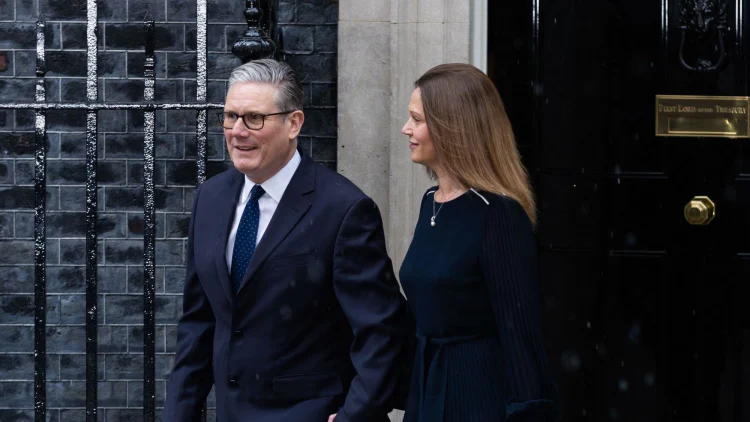
Exclusive: A junior minister called for Keir Starmer to step down as Prime Minister and set out a departure timetable in a private meeting on Wednesday afternoon, PoliticsHome understands.
It is understood that Josh Macallister, Labour MP for Whitehaven and Workington, told the Prime Minister to set out a timetable for his departure during a meeting with ministers. Starmer told the meeting that if there was a challenge, the NEC would set out an appropriate timetable.
When approached for comment, Macallister refused to comment on a private meeting.
There have been reports that other ministers have called for Starmer to set out a timetable for departure, including Shabana Mahmood, the Home Secretary.
Wes Streeting, the health secretary, is expected to launch a leadership bid on Thursday and formally challenge the Prime Minister. He met Starmer in Downing Street on Wednesday morning for a meeting which lasted less than 20 minutes.
To date, more than 90 MPs have called on Starmer to step down, while four ministers have resigned from government in protest.
Meanwhile, Andy Burnham is in the process of lining up a seat in Greater Manchester. Afzal Khan told PoliticsHome he would not be standing aside, but it has been reported that he is considering vacating his seat to let the Manchester Mayor into Parliament.
Ed Miliband has the numbers to stand in a leadership contest if Andy Burnham is unable, his allies have told PoliticsHome. The Energy Secretary is understood to be considering running for Labour leader if Streeting triggers a contest.


A chronic condition which affects 1 in 8 people with ovaries worldwide is to be renamed to better reflect symptoms and hopefully lead to a higher diagnosis rate. Following a fourteen-year patient-led campaign, polycystic ovary syndrome (PCOS) will be renamed polyendocrine metabolic ovarian syndrome (PMOS).
The name change was announced in a paper published in The Lancet and presented at the European Congress of Endocrinology in Prague. Experts said that by focusing only on cysts, the previous name meant many struggled to get a diagnosis and have their condition treated.
The paper says:
The term PCOS is inaccurate, implying pathological ovarian cysts, obscuring diverse endocrine and metabolic features, and contributing to delayed diagnosis, fragmented care, and stigma, while curtailing research and policy framing.
PCOS gets a new name
PMOS will be characterised by fluctuations in hormones, affecting metabolic and mental health, skin, and the reproductive system, irregular menstrual cycles, difficulty getting pregnant, and links to type 2 diabetes and cardiovascular disease, not just ovaries and cysts.
What is often missed is that because it affects hormones, people with the condition often have a higher resistance to insulin. This can mean a higher chance of type 2 diabetes, and it can be harder to treat.
Despite the condition previously having the word ‘polycystic’ in it, experts were particularly keen to change the name as it’s been proven that people with PMOS don’t have any increase in abnormal cysts on the ovaries.
By including polyendocrine, the new name recognises that it’s a condition that affects the endocrine system, the network which creates and releases hormones around the body, not just the reproductive system.
The name change was the result of 14 years of global collaboration, led by endocrinologists working with 56 patient and professional organisations around the world. After a survey answered by 22,000 people and multiple international workshops, 86% of participants agreed the condition needed a new symptom-based name.
Professor Helena Teede, endocrinologist and director of Monash University’s Monash Centre for Health Research & Implementation, spearheaded the campaign after decades of researching the condition.
What we now know is that there is actually no increase in abnormal cysts on the ovary, and the diverse features of the condition were often unappreciated. It was heartbreaking to see the delayed diagnosis, limited awareness and inadequate care afforded those affected by this neglected condition.
While international guidelines have advanced awareness and care, a name change was the next critical step towards recognition and improvement in the long-term impacts of this condition.
Supporting ALL women
While participants and experts knew a name change was needed, it was important that the new name reflected all involved from all over the world and didn’t create further stigma.
As Teede explained at the conference:
While ‘reproductive’ may be a more accurate direct term to cover all of the abnormalities in the ovary, but also in the endometrium and in the reproductive health during pregnancy, it also carries very significant stigma,” Teede said.
There are parts of the world where labelling a woman as having a reproductive condition is directly related to her value and worth in society, where cultural implications were enormous. For that reason, we spent a great deal of time on this, both in the surveys and also in the workshops. The terms that were agreed on were polyendocrine, metabolic, and ovarian. The next step was to bring them together in a new name.
Professor Terhi Piltonen, International Androgen Excess and Polycystic Ovary Syndrome Society (AE-PCOS Society) President, said:
It was essential that the new name was scientifically correct but also considered across diverse cultural contexts to avoid certain reproductive terms that could heighten stigma and be harmful for women in some countries
Rachel Morman, of Verity, the UK PMOS charity, said:
This shift will reframe the conversation and demand that it is taken as seriously as the long-term, complex health condition it is.
There will be a three-year transition period for the new name, which will be supported by a global education and awareness campaign aimed at health professionals, governments and researchers around the world. The new name will be fully implemented in the 2028 International Guideline update.
Featured image via Tribune
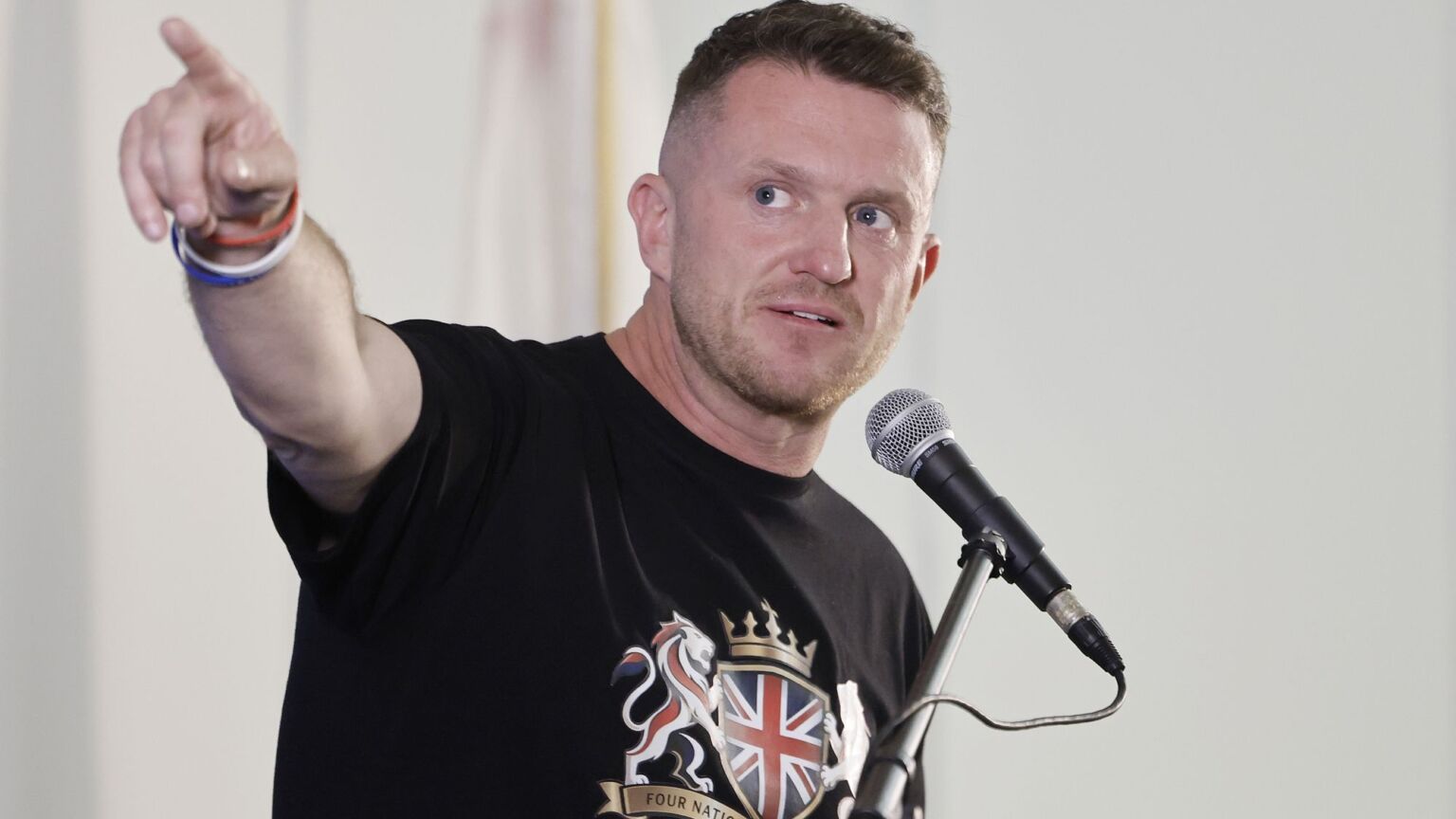
The controversial hard-right activist Tommy Robinson has been invited to an Oxford Union debate on whether Islam is a threat to the West, alongside British Muslim MPs and scholars opposing the motion. Yet there is no guarantee he will be allowed to speak at the debate, scheduled to take place on 28 May. Ever since news of the invitation was leaked, pressure has mounted for the event to be cancelled. Stand Up To Racism Oxford, the Oxford Labour Club and several other student organisations have objected, while some speakers are said to have withdrawn in protest.
There are, of course, valid reasons why many people object to Robinson. He has spent years making contentious arguments about Islam’s deleterious impact on the UK, and is often accused of encouraging anti-Muslim sentiment. Then again, many who feel disenfranchised by elite consensus regard him as one of the few public figures willing to speak openly about Islamist extremism, Muslim grooming gangs and the consequences of large-scale immigration.
But that isn’t the point. What matters is whether students and academics still believe arguments should be confronted publicly, rather than suppressed before they can be heard.
For more than 200 years, the Oxford Union has hosted debates in an adversarial forum, exposing controversial arguments to scrutiny, criticism and rebuttal. In 1992, for instance, it hosted Enoch Powell without the kind of organised campaign for disinvitation now surrounding Robinson.
Then again, it would be misleading to pretend attempts to prevent controversial speakers appearing on campus are entirely new. In truth, something changed quite a while ago.
If we were looking for an origin story, we might point to the National Union of Students (NUS) 1974 No Platform policy against ‘openly racist or fascist organisations’. As so often with speech restrictions, what began as a tactic against fascists specifically gradually evolved into a much broader hostility to free speech. By the late 1970s, Conservative ministers, anti-abortion advocates, opponents of sanctions against apartheid South Africa and others were being physically attacked or prevented from speaking at universities across the country.
A recent Higher Education Policy Institute survey suggests this instinct remains deeply embedded within campus culture: 81 per cent of students support the NUS No Platform policy, including 35 per cent who say it should apply to those who ‘may cause offence’ to certain student groups.
A more interesting question than when this began is how a policy to oppose organised fascism came to be applied to an ever-wider range of lawful but contentious speech.
One answer lies in our impoverished understanding of listening. Would-be censors are fond of imagining ‘listening’ in crude behaviourist terms: the audience hears a view so dangerous that it is either harmed or infected by it. As a result, democratic culture comes to be viewed with suspicion – less as JS Mill’s marketplace of ideas, where individuals reason and choose freely, than as BF Skinner’s dismal world of behaviourism, where human beings are merely conditioned by external stimuli.
That places remarkably little trust in the intellectual agency of ordinary people. And yet, as anyone who has actually engaged in debate knows, listening can be forensic, hostile, sceptical, adversarial, amused, analytical, morally alert and readily converted into argument. It isn’t mere absorption, with the audience reduced to empty vessels into which ideology is poured.
Oxford Union president Arwa Elrayess has made precisely this point in defending her decision to invite Robinson. Reflecting on a previous Oxford Union debate with an Israeli soldier, she noted that others had argued he should not have been allowed to speak. But as a Muslim Gazan, she disagreed, wanting the chance to challenge his arguments directly. Many audience members, she says, ‘left changed, not because I asked them to stay away, but because I asked them to listen’.
Elrayess is right. What the behaviourist impulse offers, by contrast, is an easier way out, with censorship masquerading as compassion. If listeners are treated as psychologically vulnerable, then the freedom not to listen – not to buy a ticket, not to attend – quickly curdles into the supposed moral duty to suppress dangerous ideas before anyone can be harmed by them.
What Robinson’s detractors would do well to remember is that objectionable views driven out of public debate don’t simply disappear. They retreat into spaces where their ideas face less or no scrutiny, beyond the reach of open challenge and rebuttal, where they find eager adherents.
After all, what has half a century of No Platforming actually achieved? Robinson has millions of followers. The hard-right Restore Britain, the recently launched party he has endorsed, is already polling at around four per cent nationally.
Perhaps it’s finally time for campus censors to spend less energy cancelling their adversaries and more explaining, in public, how and why they might be wrong.
Freddie Attenborough is director of research for the Committee for Academic Freedom.


The ‘Freedom Flotilla Coalition‘ (FFC) of humanitarian boats has launched further vessels bound for Gaza, in response to Israel’s terrorist pirating of ships and boats attempting to deliver aid to starving Palestinians.
The vessels — the Adalah, Kyriakos X, Lina Al Nabulsi, PERSEVERANCE and Tenaz Love Aqsa Bangladesh — have set sail from a Greek island today, 13 May 2026. They form part of the broader international flotilla effort to break Israel’s illegal siege of Gaza and challenge Its impunity in enabling genocide, starvation, and the wholesale erasure of the Palestinian people.
These boats will join approximately 55 additional vessels departing from Marmaris, Türkiye, sailing under French, Italian and Polish flags. The flotilla will carry food and medicine in defiance of Israel’s brutal and criminal blockade of oppressed Palestinians in Gaza. The so-called ‘international community’ has failed to challenge Israel’s blatant war crimes and crimes against humanity as part of its Gaza genocide.
A flotilla of humanitarian aid
The FFC has sailed dozens of vessels to challenge to Israel’s blockade, building on the historic missions of the Free Gaza Movement, which first broke the blockade by sea in 2008. After the June 2025 voyage of the Madleen, international participation in flotilla initiatives expanded significantly, reflecting growing global civil society’s refusal to accept the normalisation of siege and genocide.
On 29 April, Israel attacked 22 civilian vessels off the western coast of Greece. The occupation military abducted and tortured two Global Sumud Flotilla (GSF) organisers and abused other crew members. Israel and the United States have attempted to smear and criminalise the GSF. Following the same pattern as the Starmer regime in the UK, the terror regimes have made baseless allegations attempting to delegitimise civilian resistance and manufacture public consent for further attacks on the mission.
Palestinians in Gaza have endured two decades of a deadly blockade, repeated military assaults, forced deprivation, sexual violence and ongoing genocide. They see the flotilla as an act of international civilian resistance against settler colonial violence and the global machinery that sustains it. To their shame, the UK and other western governments have only enabled this criminality and piracy, doing nothing to protect their citizens who are taking part in the humanitarian effort.
Featured image via GreenPeace
By Skwawkbox


In response to the call from Palestinian trade unions to escalate pressure to end complicity in Israel’s genocide and apartheid, three major trade union federations representing over 80 trade union affiliates across the islands of Ireland and Britain have announced support for workplace actions this Thursday 14 May, coinciding with the 78th anniversary of Nakba.
The Palestinian Boycott, Divestment and Sanctions (BDS) National Committee, the largest coalition in Palestinian civil society including almost all trade unions, salutes the three trade union federations – all affiliated to the International Trade Union Confederation.
In Ireland and Scotland— the Irish Congress of Trade Unions and the Scottish Congress of Trade unions are supporting the upcoming workplace day of action in solidarity with Palestine on Thursday 14 May.
The UK Trades Union Congress is also supporting the upcoming workplace day of action in solidarity with Palestine on Thursday 14 May.
Many trade unions are longstanding supporters of Palestine
Major British trade unions affiliate to the Palestine Solidarity Campaign and have been supporting the workplace days of action since the beginning of the genocide in Gaza, to build solidarity with the people of Palestine and to challenge UK complicity with Israel.
Under the banner of “Workplace Day of Action for Palestine,” all three federations have worked with Palestine solidarity organisations to answer the call of support for workplace solidarity action.
The BDS movement calls on all trade unions, student organisations and wider civil society organisations, across Ireland, Scotland, England and Wales, to take action this Thursday 14 May.
National demonstrations marking 78 years since the Nakba are organised by solidarity networks for Dublin and London with local demonstrations organised for Belfast and Edinburgh this Saturday 16 May.
Omar Barghouti, co-founder of the BDS movement said:
Of all people, workers understand well what solidarity means. The Palestinian labour movement has called for meaningful solidarity with our struggle to end Israel’s genocide and dismantle its underlying, decades-old regime of settler-colonial apartheid. Ending all complicity in Israel’s crimes is a profound moral obligation and a necessary first step of solidarity.
14 May will be a powerful statement of solidarity in this respect. When workers from across Ireland and Britain take real action to end the complicity of their respective states, corporations and institutions, they recall the best traditions of international workers’ solidarity. They also contribute considerably to building the critical mass of people power we need to affect real policy change.
Amongst the calls issued by Palestinian trade unions on May Day was the call to organise, join and amplify peaceful actions to mark the 78th anniversary of the Nakba, on or around 15 May.
The workplace day of action coincides with the 78th anniversary of the Nakba: the planned ethnic cleansing and expulsion of most of the Indigenous people of Palestine and the destruction of hundreds of our towns and villages to create Israel as a settler colony premised on supremacy and apartheid.
The BDS movement calls on all trade unions, student organisations and wider civil society organisations, across Ireland, Scotland, England and Wales, to take action on Thursday 14 May.
Peter Leary, deputy director of Palestine Solidarity Campaign, said:
This workplace day of action comes as we prepare to march to commemorate the Nakba, the catastrophe inflicted on the Palestinian people by Israel since 1948.
Workers and trade unionists have a vital role to play in building solidarity with Palestine. Israel can only carry out its crimes, including genocide, ethnic cleansing and apartheid, because of the assistance it receives from governments, companies and institutions in countries like the UK.
By organising in support of the Palestinian-led call for boycott, divestment and sanctions, workers can help to end this complicity in grave violations of international law.
We urge everyone to take action this Thursday and join us at 12noon on Exhibition Road in London on Saturday when we march in solidarity with the Palestinian people and their ongoing struggle for freedom and justice.
Featured image via the Canary
By The Canary


Sudan — Heavy fighting is being reported between Rapid Support Forces (RSF) fighters and Sudanese government forces. The outbreak comes days after the UN reported drones were the leading cause of civilian deaths in the genocidal conflict to which the British are a party.
Drop Site News picked up on a story by local journalist @Bsonblast:
Heavy fighting and drone strikes across western and central Sudan killed and wounded civilians on May 12. In South Kordofan state, near Sudan’s border with South Sudan, RSF and SPLM-N al-Hilu forces shelled the town of Dilling, causing civilian casualties.
Drone strikes hit a market, civilian vehicles, and a water well that served as a primary source of water for the community in Kornoi, North Darfur, killing civilians. Additional drone strikes were reported in El Geneina near the Chad border and in Al-Daein, the capital of East Darfur state.
Today's quick update [May 12]:
– RSF/SPLM-N (Alhilu) shelling on Dilling, South Kordofan; civilian deaths & injuries reported.
– Drone strike on a market and civilian vehicles in Kornoi, North Darfur; civilian deaths reported.#KeepEyesOnSudan pic.twitter.com/RgcNcOZ5IE
— Munchkin (@BSonblast) May 13, 2026
The three-year war has killed thousands and displaced millions. RSF, backed by the UAE, is fighting the Sudanese government. Gold interests and regional influence are at stake. Numerous foreign actors, including the UK, have caused the war to fester through active participation and/or outright passivity. Israel, too, is a major player in the war.
As the Canary has reported, the war in Sudan is theoretically between Arab-majority RSF and the Sudanese government. But foreign states pursuing their own interests are backing the combatants.
Egypt backs the government, alongside Russia, Turkey, Iran, Saudi Arabia, and Qatar. Israel has backed both sides at different times. RSF has killed Sudanese civilians in vast numbers. And some estimates say 150,000 people have died overall, with over 10mn displaced by fighting.
Sudan — Drones are killing civilians
The UN reported on 11 May:
Drones caused more than 80 per cent of civilian deaths in Sudan’s war during the first four months of 2026, killing at least 880 people.
UN High Commissioner for Human Rights Volker Türk condemned both sides for their use of unmanned aerial weapons:
Armed drones have now become by far and away the leading cause of civilian deaths.
This increasing reliance on drones allows hostilities to continue unabated in the approaching rainy season, which in the past has brought about a lull in ground operations.
The UN said vital health facilities have been targeted a dozen times in 2026:
Health facilities have been hit at least 12 times during the four-month period. Some have closed their doors, which has forced civilians to travel long distances for care or to go without.
There are also reports that aid can’t get to those in need due to combatants making delivery a political game. All Africa reported:
UN estimates indicate that more than 33 million Sudanese, including millions of people in Darfur, Kordofan and Blue Nile, are in urgent need of humanitarian assistance.
This assistance is now at risk after the humanitarian file has turned into a political battleground between the warring parties: the Rapid Support Forces (RSF) and the Sudanese Armed Forces (SAF), which vie for the legitimacy of granting work permits to organisations.
The Canary reported on 31 March that the UK had downgraded the Sudan crisis on key monitoring lists in order to avoid “pissing off” the Emiratis. The UAE, a major arms customer of the UK, is fueling the conflict by arming RSF. The people of Sudan — itself a former British colony — find themselves living and dying at the meeting point of naked regional ambitions and cold western indifference.
Featured image via the Canary
By Joe Glenton


(David Fuentes/Alamy)

14 min read
As consensus grows around the need for social media and smartphone restrictions for under-16s, Sienna Rodgers reports that campaigner mums across the country are now bringing the fight to edtech
For Bridget Phillipson, Britain’s embrace of edtech – educational technology – is exciting.
“I’m so proud that the UK is an edtech powerhouse,” the Education Secretary declared in a speech in January. Announcing a £23m expansion of the government’s edtech pilot programme, she continued: “AI can deliver the biggest leap forward for learning in centuries – perhaps even since the invention of the printing press”.
As the Department for Education boasts that it is “heralding a digital revolution in education”, £187m has been put into a ‘TechFirst’ skills programme to bring AI into the classroom and a commitment has been made to roll out AI tutoring in schools for disadvantaged pupils.
For an increasingly vocal group of parents, however, edtech is an unwelcome development in their children’s education – one that is being foisted on them, both at school and at home, without their consent. They suspect that the government’s enthusiasm for edtech is based on the push for economic growth via tech investment, but believe that children’s education and attainment is being harmed in a way that will do little good for our economy in the long term.
Those parents have recently scored victories in other areas of education policy. The government has agreed, ahead of the results of its consultation on a ban, to put restrictions on the social media use of under-16s. And in March, it released new guidance urging parents to limit the screen time of under-5s – avoiding it altogether under two years, and no more than one hour a day for children aged two to five.
“Parents of young children are facing a constant battle with screens,” the press release unveiling the guidance empathetically states. Yet the guidance, while putting the onus on parents, does not apply to education settings – even though many parents complain that edtech is making that constant struggle over screen time harder.
“The next battlefield is in education,” confirms Arabella Skinner, policy director at Health Professionals for Safer Screens. She is delighted by the screen time guidance but says: “There is no point doing any of this work unless they look at it holistically across the whole day.”
Her group comprises thousands of concerned health professionals from paediatricians, psychiatrists and psychologists to speech and language, occupational and physical therapists, plus ophthalmologists, opticians, audiologists and hundreds of GPs.
“The conversation has been around the mental health of a 15-year-old – that’s where it got stuck,” she says, when in fact resulting health problems extend much further, in both age and conditions. One A&E consultant in her group recalls a child presenting with swollen legs: “You think it’s kidney failure. Turns out he’d been sitting for a week, pretty much, playing games, 17 hours a day with his legs up.”
Skinner is training health professionals to spot such signs, and wants questions around digital devices to become standard: “In the same way you ask people about how much alcohol they have, we should be thinking about asking about their screen time.”
“We came in here more worried about teens. We are now more worried about early years,” she adds. Recent research findings are stark.
The latest report by the 1001 Critical Days Foundation – an organisation founded by Andrea Leadsom to emphasise the importance of the period from pregnancy to two years old – found that more than two-thirds of under-2s use screens. According to their data, nearly 20 per cent of infants aged four to 11 months watch them for over an hour a day.
Ofcom data has identified that 98 per cent of British two-year-olds are watching TV or online videos, on average for more than two hours a day. And early years charity Kindred Squared found that 28 per cent of UK children starting primary school do not know how to use a book – with many attempting to swipe or tap on them, as they would on a tablet.
Education minister Baroness Smith has argued in the Lords that, when it comes to digital devices, “it is important not to conflate personal and educational use”. The contention of edtech advocates is that children must be taught digital literacy.
But critics question what skills young children are really building when they scroll YouTube shorts or play games on the iPad. Many of these apps look less like genuine learning and more like limbic capitalism – the term coined by historian David Courtwright to refer to products that exploit the brain’s pleasure centre to maximise profit through dopamine hits.
The House put out a call in one of the many WhatsApp groups for parents concerned about screens to hear first-hand experiences of edtech; a flood of eager responses soon came.
Ex-childminder Dimitriya, a mum of three girls who lives in the North West, recalls her eldest daughter coming back from school in reception – when the children are aged four to five – with a QR code for her maths homework. It linked to NumBots, a learning platform dedicated to addition and subtraction. The game allows users to choose a character and rewards them with stars when they answer questions correctly and quickly enough.
“We’ve experienced anger issues with our daughter that we haven’t seen before. She started throwing and hitting and screaming,” says Dimitriya. The behaviour left them confused. “Do we have a child that’s just naturally competitive and we haven’t noticed up until this moment, or is it something to do with the platform and what she’s experiencing?” they wondered. “I believe that it’s the platform – it’s the gamification of the learning process.”
She also noticed – as this House writer has found while visiting local state schools – that reception classrooms feature big interactive boards. “Massive tablets, basically,” she says. “I have tried to understand how long exactly they spend on that thing – nobody can tell me.”
At the start of every school year, Dimitriya now explains to the teachers that they have no one-to-one devices at home, and her kids won’t be using the apps for homework. Despite other parents at the school reporting similar stories, such as kids breaking iPads when they can’t do the required number of maths equations in 50 seconds, the school is pushing back.
“We’ve been told that if we don’t sign the user agreement for next year, our children will be left out from their computing lessons,” she reports. The headteacher has been firm: “She basically said to us, ‘If you don’t like the school and what we’re doing, you can leave.’” Unable to find schools nearby that take a screen-free approach, she is now seriously considering homeschooling.
Annaliese, a former primary school teacher who used to work for Westminster think tanks and now campaigns against smartphones in schools, has children of primary school and preschool ages.
“My main concern is that they are highly addictive,” she says of the homework apps. “You give the kids the device, and they’re doing this fun game, and they might be meant to do 10 minutes of it, but getting that device off them afterwards is incredibly difficult.”
Her children were told to use Times Table Rock Stars, another popular app promoted by schools but aimed at those aged six and above, for their maths homework. It similarly offers avatars and users are encouraged to collect virtual coins, allowing them to personalise their characters.
“It was with great trepidation that I would give over the laptop to do Times Table Rock Stars, because I knew that whilst the requirement was to do 10 minutes, it was going to take an hour out of that afternoon to wrangle that device off the child and then to put up with the inevitable tantrum meltdown afterwards,” says Annaliese.
It was not only behavioural consequences that worried her but also their effectiveness in terms of learning.
“I noticed that, with my daughter, she might actually be doing quite well with her times tables on an app, but if I asked her orally, she’d find it really difficult. It’s almost like she couldn’t transfer the learning into a different context. And it was at that point that I opted out of her using it.
“I created the analogue alternative, which was literally just to print out the Times Table Rock Stars worksheets and get her to do those with a timer that I bought for a fiver, and she’s doing really well.”
Kifah has encountered problems at an earlier age still. She is based in Scotland, where the use of edtech is even more intense than in England as a result of direct mandates by councils.
You think it’s kidney failure. Turns out he’d been sitting for a week, pretty much, playing games
When Kifah’s son started nursery part-time, she found he became disoriented and overstimulated. “We couldn’t work out for a really long time why he was so distressed; why he was so violent and dysregulated,” she says. Then she discovered they were handing iPads to the kids daily.
“I had asked them not to use screens with him, so I was in shock, obviously. I approached them, and their argument was that the council would withhold funding if they did not have technology as part of their curriculum. I said, ‘But he’s two?!’” Kifah recalls.
“We withdrew him, and all these behaviours stopped.” But at the next early years setting, she found they refused to stop showing them YouTube Kids. Next, she tried an outdoor nursery – but again found that council policy meant they had to use tech, so were giving her son a phone on which to select songs to play.
“It’s really been quite upsetting for us and really difficult. We’re trying to give our child the best start in life. A lot of what we do is evidence-based in our home, and we’re just getting told, ‘Well, this is how it’s done now.’ And that’s not really evidence,” she says. “We’re a one-income family now, which we never, ever expected to be.”
While Sweden, Denmark, Madrid and Los Angeles are rolling back digital learning, there has been a major push in Scotland for all primary and secondary pupils to have one-to-one devices. This has led to safeguarding problems, with pupils bypassing safety filters on school iPads to access violent and sexual content.

Politicians on the left often focus on equitable access to digital tools – and yet ironically, there is anecdotal evidence that parents who can afford fees are turning to private schools (such as the famous Heritage School in Cambridge) for screen-free education.
Private schools are not forced to undertake the reception baseline assessment, for example, to which the government introduced a digital element in 2025. This is the mandatory test that all reception pupils – aged four – must take in their first six weeks, designed to measure student progress between the start and end of primary school.
Dr Mandy Pierlejewski, a nursery and reception teacher turned academic, led a team that carried out a study on the assessment – first, looking at two schools in 2024; then, three schools in 2025, when a touchscreen aspect was brought in. Filming pupils from behind to preserve anonymity, they analysed their body language and found signs of stress in some of the 2024 children and every one of the 17 children studied last year when they were given a tablet for a 20-minute test.
“A lot of the children didn’t have the digital literacy they needed to complete that test,” she recalls. “Not all children, for instance, realise that you could diagonally drag and drop.” The test asked the four-year-olds to move three pictures into boxes above, in the correct order, to make a story. Many got it wrong – but not because they didn’t understand sequencing.
“Some children really didn’t have the digital skills needed at all. They were tapping on things multiple times. Some of them kept shutting the iPad down by pressing the Home button, and they had to be all started up again.”
In 2024, the maths questions involved moving concrete materials. For subtraction, they were presented with six little plastic bears, told to take two away, then asked how many were left.
The 2025 digital version was more abstract: presented with a picture on the screen of a tree with four leaves on, the teacher says “three leaves fall to the floor – how many leaves are left?” Of the 17 children the study watched, 16 incorrectly counted “1, 2, 3, 4”, not realising they had to move three leaves on the screen themselves before counting.
“The last thing they heard was, ‘how many leaves are left on the tree?’, so they just counted all the leaves. Now, for 16 out of 17 children to get that wrong, there is something wrong with that question,” Pierlejewski says. “I teach primary school teachers mathematical development.
We’ve experienced anger issues with our daughter that we haven’t seen before. She started throwing and hitting and screaming
You start with concrete materials, then you proceed to pictorial representations of the concrete thing, then you move to abstract. It has to go in that order, because that’s how children’s brains develop.”
She predicts that the latest cohort’s results will be worse than previous years. There is no mention of testing digital skills – the assessment is still supposed to be focused on numeracy and literacy only – yet Pierlejewski’s study suggests otherwise. It raises questions about the purpose of edtech and whether it is being used with intention.
Skinner, of Health Professionals for Safer Screens, concludes: “They need to separate educational technology that frees up teachers’ time to be able to teach – because nothing is better than a teacher who’s inspired and delivering it – versus technology that is in front of the student, and takes them away from proper teaching.”
SafeScreens co-founder Jane Rowland, who provides resources to help parents fighting schools to opt out, argues: “What parents are repeatedly being told by schools is ‘we’re preparing the children for a digital workplace’, which, to me, is just nonsense. A digital workplace doesn’t use gamified applications for their employees.”
She is asking government to pause edtech, conduct a review and establish certification for platforms that are shown to be educationally beneficial for children.
Her demands are echoed by the Conservatives, who put forward amendments to the Schools Bill to protect pen-and-paper exams, give parents the right to opt out of screen-based homework, and ensure children would not be required to complete the reception baseline assessment on screens. Although ministers have agreed to introduce a legal ban on smartphones in schools and deliver age restrictions on social media, they have not so far changed course on edtech.
“The government really need to get a grip on the screen creep happening in our classrooms,” shadow education secretary Laura Trott tells The House. “When it comes to screens in schools, we should be guided by the evidence. Research shows that writing by hand supports memory and deeper learning in a way that screens simply don’t.”
“We need to pause and review the evidence before driving any more technology into our schools,” she adds. “We need to end this uncontrolled experiment on our children. Until there is clear evidence that screens improve learning, the focus should be back on books, not devices.”
A Department for Education spokesperson said: “Technology plays an important role in broad, rich learning experiences in classrooms across the country, and it is essential that children learn to use technology confidently and safely, so they can gain the skills they’ll need as they move through life.
“Equally, we understand concerns about excessive screen time and that unmonitored or unlimited personal use can carry risks and recognise that we must get the balance right.
That’s why we are supporting children and young people to develop healthy relationships with technology, including through our new guidance to help families build good screen habits from a young age, banning mobile phones in schools and consulting on the next measures on online safety for children.”
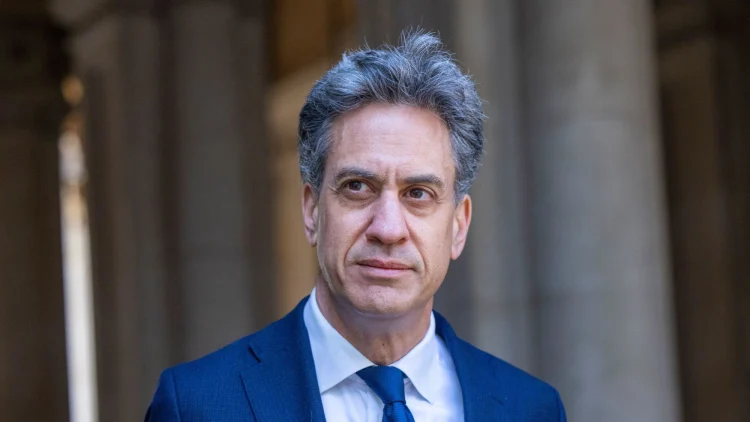

12th May, 2026. Ed Miliband, Secretary of State for Energy Security and Net Zero, in Downing Street for a Cabinet meeting. | Alamy

2 min read
Ed Miliband has the numbers to stand in a leadership contest if Andy Burnham is unable, his allies say.
The Energy Secretary is understood to be considering running for Labour leader if Health Secretary Wes Streeting triggers a contest in the coming days.
According to Streeting’s allies he plans to resign and mount leadership challenge against the Prime Minister as early as tomorrow.
“If Miliband wants to run he has the numbers,” an ally told PoliticsHome.
Pressure is mounting on Keir Starmer to resign after 93 of his MPs, including four ministers and several junior aides, called for him to set out an orderly timetable for departure.
The Times reports Starmer told his allies he will stand and fight if Streeting succeeds in triggering a leadership contest. The Prime Minister has met with ministers tonight to shore up support.
The Greater Manchester Mayor is one of the candidates favoured among Labour MPs to replace Starmer, but would first have to return to Parliament as an MP.
It is still unclear which Greater Manchester MP will stand aside for Burnham and if the NEC would block him from standing again. There’s also no certainty Burnham would be able to find a route back to Parliament before a contest is triggered.
Miliband and Angela Rayner are seen as the likely soft left candidates to run against Streeting if a contest is triggered. Miliband previously led the party from 2010 to 2015, but lost decisively to David Cameron’s Conservatives in 2015 including all but one of its Scottish MPs.
A Rayner ally told PoliticsHome: “The left / soft left want Andy but most do want Angie if that doesn’t happen but Ed has growing support.”
LabourList polling in February found Ed Miliband is the most favoured member of the Labour Cabinet among party members with a net favourability of +70.
A Labour MP on the centre right told PoliticsHome that Miliband becoming Labour leader again would be a “catastrophe”.

Beer demand stumbles as gas prices surge, data shows

Ahead of Sentencing, US Seeks $1M Forfeiture From Ex-Celsius Exec

Vaibhav Sooryavanshi vs Sanju Samson

Manchester United reach agreement with Casemiro over contract clause amid transfer speculation

US brings back mandatory military draft registration

Steven Gerrard disagrees with Gary Neville over ‘shock’ Chelsea and Arsenal claim | Football


-
 Crypto World5 days ago
HarrisX Poll Found 52% of Registered Voters Support the CLARITY Act
-

 Fashion5 days ago
Weekend Open Thread: Marianne Dress
-

 Crypto World7 days ago
Upbit adds B3 Korean won pair as Base token gains Korea access
-
 NewsBeat7 days ago
NCP car park operator enters administration putting 340 UK sites at risk of closure
-

 Fashion2 days ago
Coffee Break: Travel Steam Iron
-

 Tech4 days ago
Auto Enthusiast Carves Functional Two-Stroke Engine from Solid Metal
-

 Fashion3 days ago
What to Know Before Buying a Curling Wand or Curling Iron
-

 Politics2 days ago
What to expect when you’re expecting a budget
-
 Business4 days ago
Ignore market noise, India’s long-term story intact, say D-Street bulls Ramesh Damani and Sunil Singhania
-

 Politics5 days ago
Politics Home Article | Starmer Enters The Danger Zone
-

 Tech3 days ago
GM Agrees To Pay $12.75 Million To Settle California Lawsuit Over Misuse Of Customers’ Driving Data
-

 Politics6 days ago
Simon Cowell Says He Was ‘Horrible’ To Susan Boyle During BGT Audition
-

 Entertainment7 days ago
Sarah Paulson Called Out For Met Gala ‘Hypocrisy’
-

 Entertainment6 days ago
General Hospital: Ric & Ava Bombshell – Ric’s Massive Secret Exposed!
-

 Crypto World7 days ago
Robinhood says Wall Street is building onchain
-

 Sports7 days ago
UEFA Champions League final schedule, teams, venue, live time and streaming | Football News
-

 Entertainment6 days ago
Why David Letterman Called CBS ‘Lying Weasels’
-

 Fashion7 days ago
The Best Work Pants for Women in 2026
-
 Sports7 days ago
Mike Tyson speaks out on status of Floyd Mayweather fight
-
Entertainment7 days ago
Hayden Panettiere reveals she's estranged from mom, addresses brother Jansen's sudden death: 'I was floored'
You must be logged in to post a comment Login