
Politics
1 In 4 Primary School Children Have Shared Names Or Addresses Online


Almost one-quarter (24%) of primary school-aged children have shared their real name or address online, according to new research, with eight and nine-year-olds most at risk of doing so.
Just over one in five (22%) have shared personal information such as health details with AI tools and over one-third (35%) of parents believe their child would share personal information in exchange for game tokens or rewards.
Yet the same survey of 1,000 parents, from the UK’s data protection regulator, the Information Commissioner’s Office (ICO), found a fifth of them have never spoken to their kids about online privacy and three in four fear their child can’t make safe online privacy choices.
To bridge this gap and kickstart conversations about protecting personal information online, the ICO has launched a Switched On To Privacy campaign for parents of children aged four to 11 years old.
Parents don’t know if they’re doing enough
The research found 46% of parents don’t feel confident protecting their children’s privacy online and 44% say they try to do so, but aren’t sure they’re doing enough.
ICO research shows online privacy is one of the least discussed online safety topics: 21% of parents have never spoken to their children about it, and 38% discuss it less than once a month.
By contrast, 90% of parents have discussed screen time in the past month.
Experts warn that if children’s sensitive information is shared online, it can put them at risk from grooming and radicalisation.
Emily Keaney, ICO deputy commissioner, said: “We wouldn’t expect our children to share their birthdays or address with a stranger in a shop, because we’d explain stranger danger to them from a very young age, but kids these days are growing up online.
“We know that where children’s details – like their name, interests and pictures – aren’t protected, the potential risks are serious: unwanted contact from strangers, grooming and radicalisation.”
While tech companies need to be held accountable for children’s safety, Keaney said parents also have a role to play, “but the problem is that many families have never been shown how to talk to their children about online privacy”.
“We want parents to feel empowered and children to feel digitally confident, because only then will they be able to start to trust in how their data is used and be part of the whole society solution that is needed for online safety,” she added.
Teaching children about online privacy
Most parents (88%) think children should start learning about online privacy between ages four and 11 years.
ICO has shared a guide for parents of children to navigate this learning. Pointers include:
- Chat regularly with your child about online privacy. Ask them about what they like doing online and talk about what they are sharing and who with. Look at the privacy settings section together. What information is it tracking? What can you control from the settings?
- Help your child start thinking carefully about what they choose to share online. Review who can see posts, tag them or direct message them, and look at which apps or games are accessing location data. Be clear with your child what your family’s rules are about sharing personal information.
- Check the settings whenever your child uses a new device or app.
Rachel Huggins, CEO of Internet Matters, said: “Online privacy is a vital part of keeping children safe in a digital world, and so is empowering parents and carers with the tools, knowledge and resources they need to support their families.
“Open conversations build trust and give children the confidence and tools needed to navigate digital spaces safely. Alongside regular check-ins we also encourage parents to review their child’s privacy settings and make use of parental controls across the devices, apps and platforms their children use.”


Donald Trump has falsely accused the BBC of using AI to fake his comments in a Panorama programme about January 6.
The US president has a multi-billion dollar lawsuit out against the corporation after it spliced together different sections of a speech he gave on the day of the 2021 Capitol riot.
Trump is suing for defamation, claiming the edits suggest he had directly encouraged his supporters to storm the government building.
The lawsuit, filed in the US, already accuses the BBC of “intentionally, maliciously and deceptively doctoring” the president’s speech.
Trump has now insisted AI was used to alter his words altogether.
“The BBC has me – actually AI.” he told CBS’s 60 Minutes. “They have me saying a horrible statement. I said, ‘I never said that.’
“It turns out they gave me an AI. They had my lips speaking words of hate, tremendous hate, which I never said.
“They don’t know what to do. They’ve admitted they’re wrong, they just don’t know what to do.
“They actually had me making a major statement, and it wasn’t me. It was my face, it was my lips. My lips were perfectly in sync with the words.
“I said, ‘I can’t believe it, I can’t believe it.’”
The Panorama clip showed the president as saying: “We’re going to walk down to the Capitol… and I’ll be there with you. And we fight. We fight like hell.”
Trump did say those words during his speech – but in two separate segments.
He told the crowd: “We’re going to walk down to the Capitol, and we’re going to cheer on our brave senators and congressmen and women.”
More than 50 minutes later, he said: “And we fight. We fight like hell.”
The BBC has been approached for comment.
The corporation has previously apologised to the White House over the edit but rejected calls for compensation.
Subscribe to Commons People, the podcast that makes politics easy. Every week, Kevin Schofield and Kate Nicholson unpack the week’s biggest stories to keep you informed. Join us for straightforward analysis of what’s going on at Westminster.
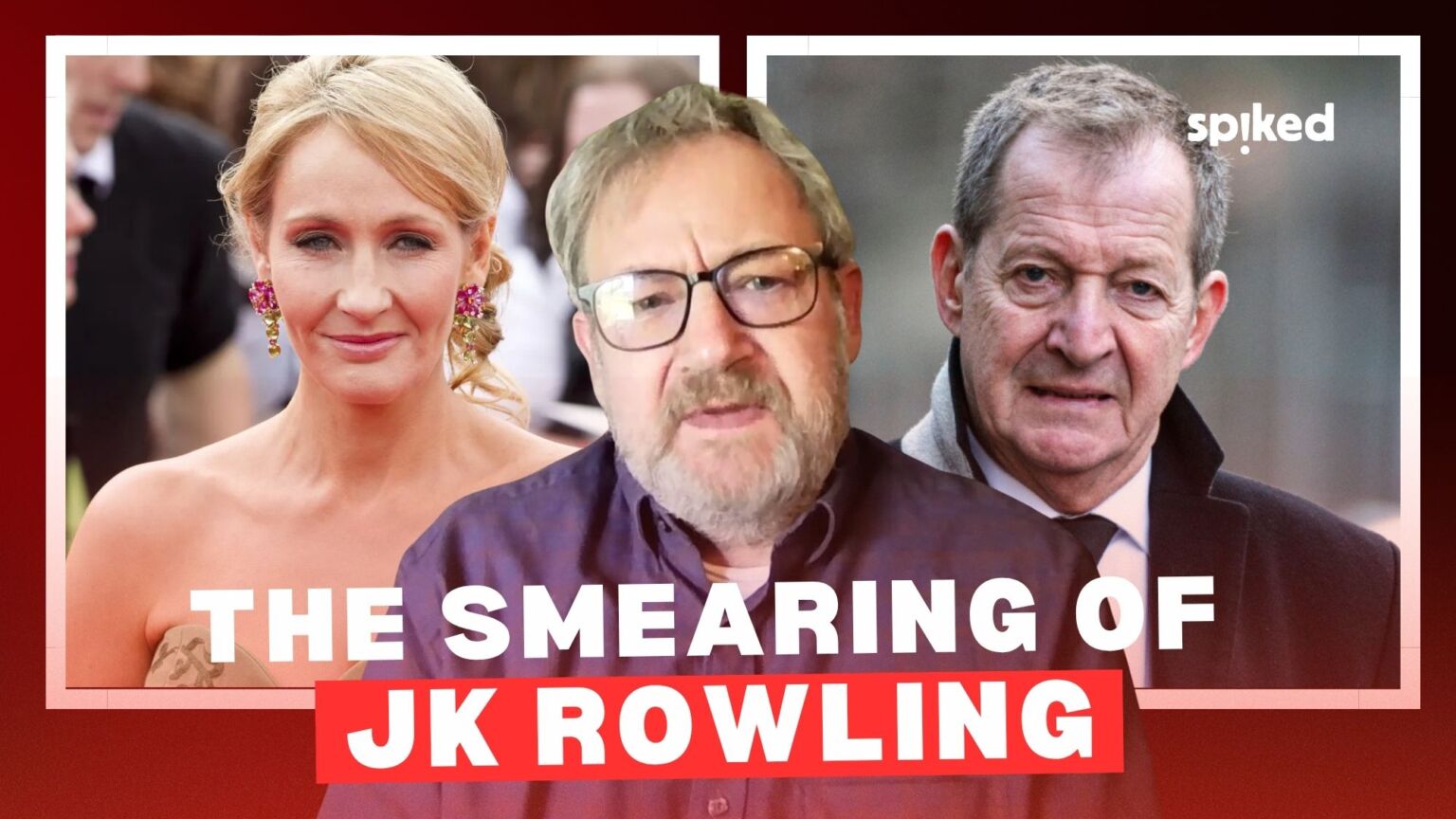
The post JK Rowling vs Alastair Campbell: the lies aren’t working anymore appeared first on spiked.
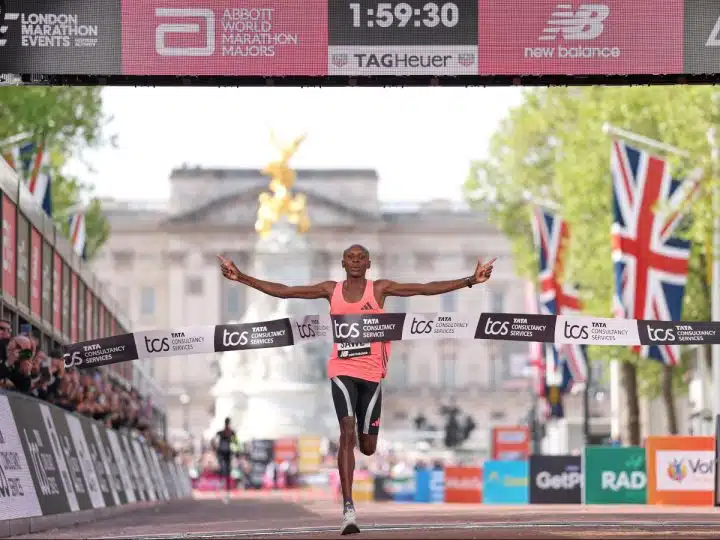

On a sunlit Sunday in April, the London Marathon rewrote the limits of human endurance. Sabastian Sawe of Kenya crossed the finish line in 1:59:30, becoming the first man to record an official sub-two-hour marathon. He shaved 35 seconds off the previous world record.
The race that changed the record books
From the gun, the elite men’s race unfolded as a high‑precision experiment in pacing and resolve.
Sawe and a small group of rivals pushed a relentless tempo across the 42.195‑kilometre course.
Making a decisive solo move in the final two kilometres, Sawe sprinted down The Mall past Buckingham Palace to seal history. Yomif Kejelcha of Ethiopia, making his marathon debut, finished a breath behind in 1:59:41. Jacob Kiplimo took bronze in 2:02:28.
The numbers underline how extraordinary the performance was: Sawe averaged roughly 2:50 per kilometre and reached the half-marathon split in about 59:45 – a pace that demands both physiological excellence and tactical courage.
Reaction
Sawe’s reaction captured the mixture of humility and conviction that often accompanies epochal sporting moments. Reflected on the generational shift in marathon running and the preparation that made the run possible, Sawe said:
for the new generation, to run a record is possible.
He added that he had been “well‑prepared” and “had a lot of courage to push.”
Kejelcha, who had shadowed Sawe for much of the race, praised Sawe’s stance on clean sport. He noted the example Sawe set by undergoing extra voluntary drug tests before previous victories. He also described the approach as “very important for clean sport”, suggesting he might adopt similar measures in future.
A Marathon like no other
Breaking two hours in a marathon has been a long‑standing milestone.
Eliud Kipchoge famously ran 1:59:40 in Vienna in 2019 during the Nike‑backed 1:59 Challenge. This was a controlled event that used rotating pacemakers and other aids, and therefore was not eligible for an official world record.
Sawe’s run in London, by contrast, came in an open championship setting on a largely flat city course. It is now recorded in the official annals of the sport.
The progression of the men’s world record over the past quarter century, from times in the 2:05 range to the sub‑two barrier, reflects advances in training, nutrition, shoe technology, and race strategy. Sawe’s performance will be studied for how those elements combined on a single day to produce a new benchmark.
Women’s race and wheelchair events
The elite women’s race produced its own headline: Tigst Assefa of Ethiopia retained her London title and lowered her own course record to 2:15:41, improving on the mark she set the previous year.
Assefa pulled away in the closing stages to hold off Hellen Obiri and Joyciline Jepkosgei, who finished within seconds of one another.
In the wheelchair divisions, Switzerland’s Marcel Hug extended his dominance with a sixth consecutive and eighth overall men’s win. Meanwhile, Catherine Debrunner claimed her third straight women’s wheelchair title after an electrifying sprint finish.
Record-Breaking Aftermath
Sawe’s sub‑two performance will ripple through elite distance running. Coaches and athletes will dissect splits, fuelling strategies, and environmental conditions to understand how to replicate or counter such a run.
Race organisers and governing bodies will also face renewed scrutiny over course certification, pacing rules, and anti‑doping safeguards as the sport adapts to a new normal where the two‑hour barrier is no longer theoretical but an official milestone that has been passed in championship conditions.
Going Forward
For the public, the moment is special. It was a reminder that athletic boundaries are porous and records are not untouchable.
Sawe’s run in London will stand as a defining chapter in marathon history – one that reframes what the next generation of distance runners will consider possible.
By Faz Ali
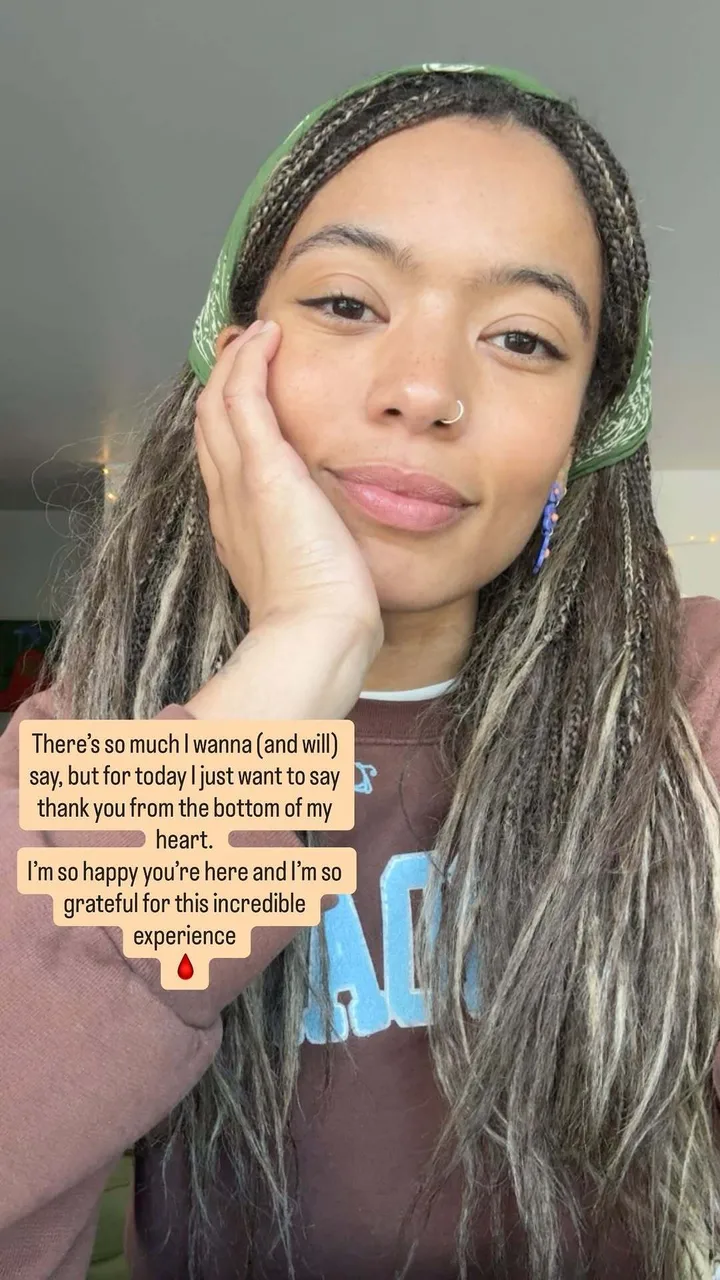
Gen V star Jaz Sinclair has spoken out following the news that the show has been dropped by Prime Video.
Jaz played Marie Moreau in both seasons of the The Boys spin-off, sharing the screen with the likes of Lizze Broadway, London Thor, Derek Luhn and the late Chance Perdomo.
However, over the weekend it was announced that, despite glowing reviews for both seasons of Gen V, the satirical superhero series would not be getting a third outing.
Reacting to the news on Sunday night, Jaz told her Instagram followers: “There’s so much I wanna (and will) say, but for today I just want to say thank you from the bottom of my heart.
“I’m so happy you’re here and I’m so grateful for this incredible experience.”

Although Gen V will not be moving forward, executive producers Eric Kripke and Evan Goldberg have said in a statement that its central characters will be back in action in the ongoing fifth season of The Boys, as well as other projects set in the same universe.
“While we wish we could keep the party going another season at Godolkin, we’re committed to continuing the Gen V characters’ stories in The Boys season five and other VCU projects on the horizon,” they insisted.
“You’ll see them again.”
Season five of The Boys is currently airing on Prime Video.
Like previous seasons, The Boys’ latest run has once again been a hit with critics, receiving a coveted score in the high 90s on the reviews aggregation site Rotten Tomatoes.
It was previously reported that this fifth season would be the last outing of The Boys, although more spin-offs are still in the works.
Most notably, a new off-shoot of The Boys titled Vought Rising is expected to arrive on Prime Video in 2027.
Aya Cash and Jensen Ackles will take the lead as Stormfront and Soldier Boy, respectively, having both previously played the characters in early seasons of The Boys.
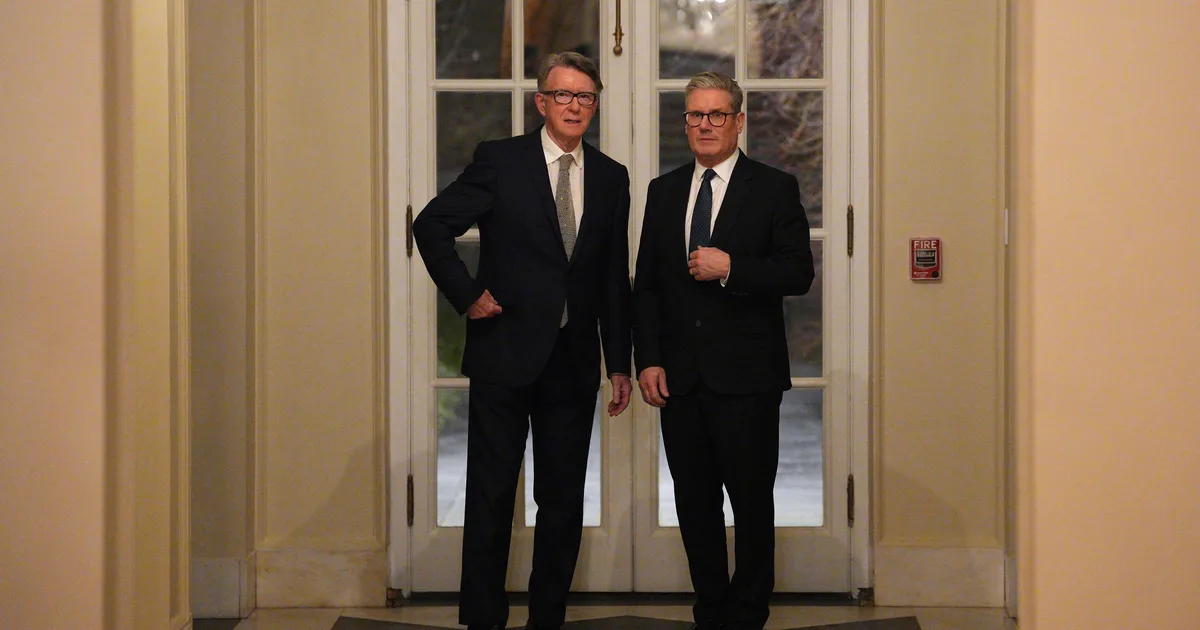
Keir Starmer is facing yet another bruising week over the Peter Mandelson vetting scandal.
Parliament’s Foreign Affairs Committee will continue its probe into the affair, with the prime minister’s former chief of staff, Morgan McSweeney, giving evidence on Tuesday.
But it is the possibility of Starmer being investigated by the cross-party Privileges Committee for misleading parliament which is causing most concern inside 10 Downing Street.
Commons Speaker Lindsay Hoyle is expected to announce on Monday afternoon if MPs will be given a vote tomorrow on whether the PM should be referred to the powerful committee.
Here, HuffPost UK explains the background to the latest controversy to hit Starmer and assesses the damage it could do to the beleaguered PM.
What Is Starmer Accused Of?
There are two strands to the accusations against the PM.
His critics say he misled the Commons by previously insisting that “due process” was followed when Mandelson was vetted for the role of UK ambassador to Washington.
It has subsequently emerged that UK Security Vetting had recommended the then Labour peer be denied clearance to take up the role.
However, the Foreign Office decided that the risks highlighted over his business links to Russia and China could be mitigated, and he was given the highest security clearance, known as “developed vetting”.
The second accusation centres around comments Starmer made at prime minister’s questions last week.
He said that “no pressure existed whatsoever” in getting the Foreign Office to give Mandelson security clearance.
But that had been contradicted the previous day by Sir Olly Robbins, who was sacked by Starmer for not telling him about UK Security Vetting’s concerns.
Giving evidence to the Foreign Affairs Committee, Sir Olly said there was “constant pressure” on his department from No.10 and there was an “atmosphere of constant chasing”.
What Has Starmer Said?
In a Sunday Times interview, the PM insisted there was no inconsistency between his comments and Sir Olly’s.
He said there was “different types of pressure” in government.
“There’s pressure – ’Can we get this done quickly?’ – which is not an unusual pressure. That is the everyday pressure of government,” he said.
Starmer said a pressure “essentially, to disregard the security vetting element and give clearance” would be something different, and that Sir Olly “was really clear in his mind that wasn’t pressure that was put on him”.
Will He Face A Sleaze Probe?
Even if Hoyle grants MPs a vote on referring the PM to the Privileges Committee, it would require a huge Labour rebellion for it to pass.
According to The Times, No.10 is planning to whip Labour MPs to vote against a probe, making it a major test of the under-fire prime minister’s authority.
One Labour MP told HuffPost UK the issue was a “complete waste of time” and insisted there was no comparison with the Privileges Committee investigation Boris Johnson faced over partygate.
He said: “Boris Johnson’s parties in breach of lockdown rules were of a wholly different magnitude of severity. Besides, the PM has been truthful about due process throughout.”
Emily Thornberry, the Labour MP who chairs the Foreign Affairs Committee, accused the Tories of playing political games ahead of the elections on May 7.
She said: “It may be that at some stage in the future some of the questions haven’t been answered and it is decided that they are of sufficient importance that the Privileges Committee should be involved but I don’t really see why we are doing it at the moment apart from potentially people trying to score points in advance of the local elections.
“I’m sorry to say that and I’m not supposed to be partisan on this but it is plain as the nose on my face what’s going on here.”
Subscribe to Commons People, the podcast that makes politics easy. Every week, Kevin Schofield and Kate Nicholson unpack the week’s biggest stories to keep you informed. Join us for straightforward analysis of what’s going on at Westminster.
Though people with dementia tend to face sleep disruptions, it’s a bit of a “chicken and egg” link: “Does poor sleep increase dementia risk, or does dementia lead to poor sleep?” Alzheimer’s Society said.
“Some researchers believe that both of these theories could be true, and the relationship could be circular.”
Whatever the direction of the link, though, one paper found that those who got fewer than six hours of sleep in midlife were less likely to develop dementia.
And a new paper published in PLOS One, which involved data from dozens of other studies, says there may be a “sweet spot” for reducing dementia risk.
Seven to eight hours’ sleep may be best for reducing dementia risk
The data the researchers used came from millions of people aged 35 and over across decades of research. It looked at day-to-day habits, like rest and movement, and compared those to the rate of dementia among participants.
Parmis Mirzadeh, who helped to write the study, said these studies “provided an opportunity to better understand how daily habits like physical activity, sedentary time and sleep collectively shape brain health over time”.
They found that seven to eight hours’ sleep was linked to a lower dementia risk, while both more and less sleep were associated with an increased likelihood of developing the condition.
The longer sleep pattern (regularly getting more than eight hours’ sleep) was most associated with higher dementia risk.
Previous research has shown that people who sleep more than nine hours a night are more likely to develop dementia 10 years later.
Any other links?
Yes. These researchers also looked at how physical activity and sedentary behaviours seemed to be linked to people’s dementia risk.
They found that people who stuck to the recommended 150 minutes of physical activity a week were 25% less likely to face dementia.
“One of the more surprising findings was how sparse the data remains for sedentary behaviour, despite it being recognised as a distinct health risk for more than a decade,” Mirzadeh stated.
Nonetheless, researchers think sitting for more than eight hours a day may increase dementia risk.
“We hope this work helps raise awareness that everyday behaviours such as physical activity, sedentary time and sleep are associated with brain health,” Mirzadeh added. “Because these are modifiable, they represent practical targets for interventions aimed at reducing dementia risk at the population level.”
It’s worth noting, however, that this paper only looked at associations and did not prove a causal link.
The BBC has issued an apology for inadvertently broadcasting a racial slur twice in one day on Radio 1.
Earlier this month, Radio 1 producers put together a Newsbeat package about the new Super Mario movie, which was soundtracked by a song from the rapper Childish Gambino.
However, the clip of the song, which aired at 12.45pm, contained an uncensored use of the N-word, which went undetected before it was aired again five hours later.
A BBC spokesperson told The Sun: “We are very sorry this was broadcast. We should not have included this clip in this news report, and we removed the clip from Sounds when we realised the error.”
This latest controversy comes just months after the BBC faced widespread condemnation for including another uncensored utterance of the N-word in its coverage of the 2026 Baftas.
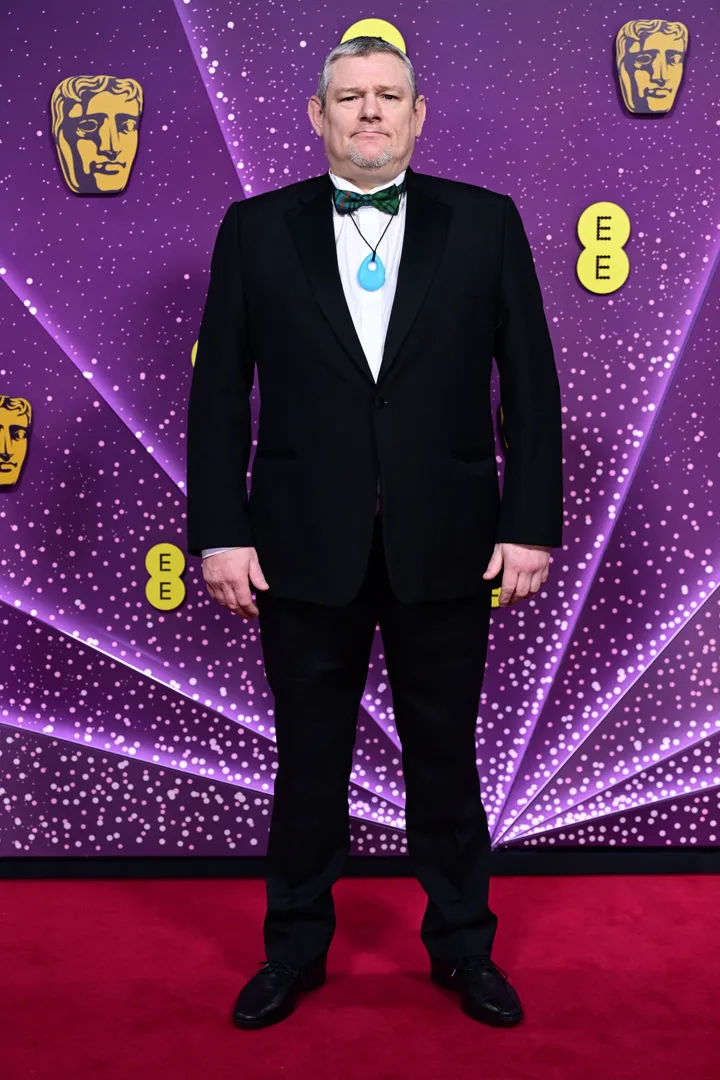
During the Baftas ceremony in February, Tourette’s campaigner John Davidson – attending the event alongside the cast and crew of I Swear, which was inspired by his life – experienced an involuntary tic while Sinners actors Delroy Lindo and Michael B Jordan were presenting on stage, resulting in him shouting the slur from his seat.

Anthony Harvey/Shutterstock
After a clip of this was included in the BBC’s broadcast of the event, despite it airing on a two-hour time delay, an investigation was “fast-tracked” by outgoing director-general Tim Davie.
Earlier this month, the BBC’s executive complaints unit concluded that “the inclusion of the N-word in the broadcast (which was also streamed live on iPlayer) was highly offensive, had no editorial justification and represented a breach of the BBC’s editorial standards”, even if the breach in question “was unintentional”.
The morning after the Baftas, chief content officer Kate Phillips sent an internal memo to BBC employees, which read: “The edit team removed another racial slur from the broadcast. This one was aired in error and we would never have knowingly allowed this to be broadcast.
“We take full responsibility for what happened.”
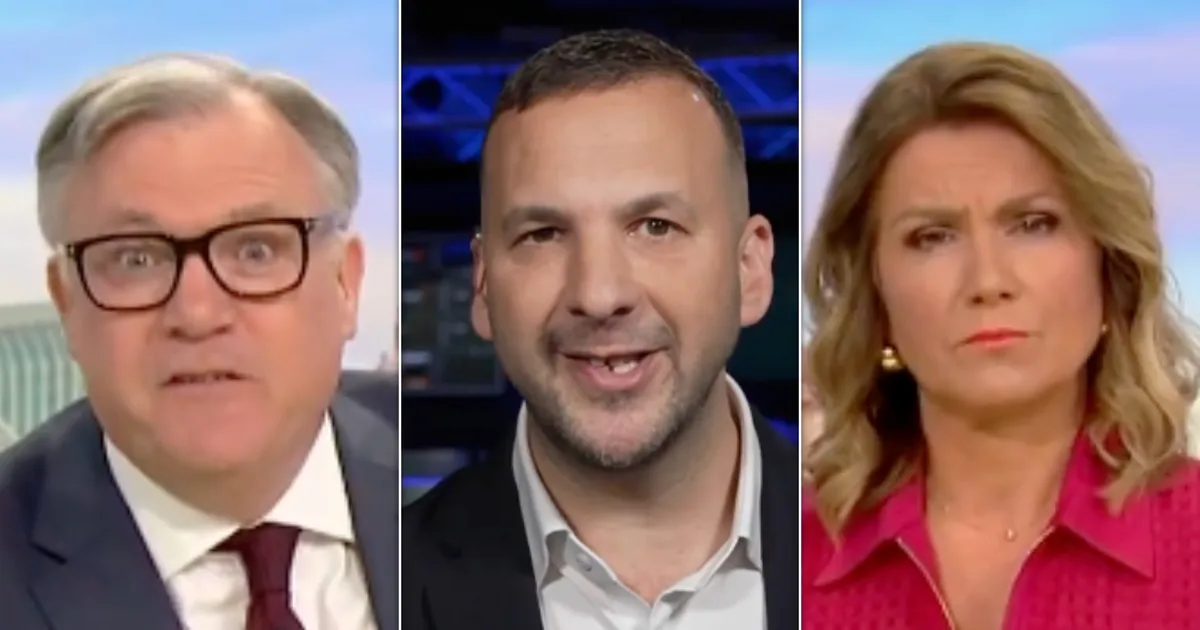
Zack Polanski clashed with presenter Ed Balls on Good Morning Britain and declared “people hate the media” in a tense interview.
The Green Party leader was speaking to the ITV programme on Monday when he hit back at Balls over his Labour Party background.
After a clash over reports from the Daily Mail that Polanski wants to change certain party policies, the party leader said: “Do you know what I’m enjoying?
“The fact that a Labour politician who is married to a senior Labour minister is allowed to ask questions to the leader of the Green Party.”
Balls, who is married to foreign secretary Yvette Cooper, said: “Are you accusing me of being a Labour politician?”
“You might have been a Labour minister fairly recently, in the last 20 years..” the Green leader replied.
Balls cut in: “Unfortunately Mr Polanski, I lost my seat in 2015 and I’ve not been a Labour politician for 10 years.”
After more back and forth with Balls, the Green leader interrupted: “I think you’re really struggling here.
“Ten days until local elections and today I’m announcing that I want to bring buses into public control, and reducing bus fares in cities and rural communities.
“I also want to talk about what’s happening in Manchester, Newcastle, London, and in Wales in the Senedd, where the Greens are picking up incredible momentum.
“It’s interesting that you don’t want to ask me about any of these things. You want to just do shock-jock tactics.
“And by the way, this is why people hate the media.”
Balls’ co-presenter Susanna Reid then tried to ask about Polanski’s previous claims that hypnosis could enlarge women’s breasts.
“You can accuse us as much as you like for not asking the questions that you want to answer – that is absolutely your prerogative,” she said.
“I think it is reasonable to ask you about something you said back then which was demonstrably untrue and to ask you about when you did actually change your mind.”
Polanski said: “This feels very much like this has been a set-up, where the Green Party hasn’t been able to talk about our actual plans at these local elections. That’s what I’m exposing.”
“I don’t think it’s unreasonable Zack Polanski to ask you about your integrity, about your beliefs, about what you say and whether that is the case or not,” Reid replied.
“You can be as angry as you like at the media. You might take issue –″
He hit back: “I’m not angry! This is what I expect sometimes when coming on this programme. But this is what I hear over and over again when speaking to the public, that they think political discourse has been eroded in this country.”
He ended the interview by adding: “You can annoy GMB by voting Green.”
Subscribe to Commons People, the podcast that makes politics easy. Every week, Kevin Schofield and Kate Nicholson unpack the week’s biggest stories to keep you informed. Join us for straightforward analysis of what’s going on at Westminster.
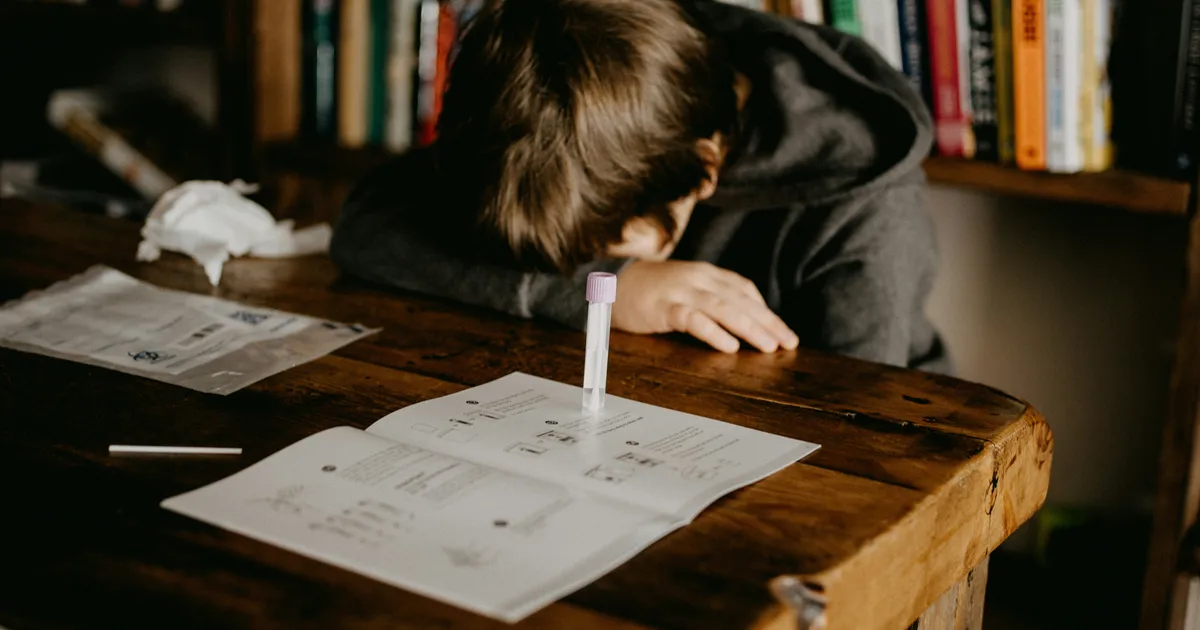
It probably won’t come as a surprise that May is the peak season for children to call Childline about exam stress.
Between 1 April 2025 and 31 March 2026; the free, confidential service for kids delivered 1,679 counselling sessions where exam or revision stress was mentioned.
These sessions peaked in May, coinciding with the start of exam season. There were 359 counselling sessions about exam stress in May 2025, making up 21% of all counselling sessions about the topic.
In England, Wales and Northern Ireland, GCSEs start in early May, while AS and A Level exams take place from mid-May into June. In Scotland; National 5, Higher and Advanced Higher exams are already underway, finishing on 1 June.
The majority of concerns about exam stress were from children aged 12-18 years old, however younger students are also impacted, with 11% of contacts coming from children aged 11 and under.
One young person, aged 16, told the service: “If I’m not revising for exams, I feel this panic in my chest, but the panic also stops me focusing on the revision when I try and do it.”
Another 16-year-old girl said they have plans for their future, but have completely lost motivation to revise. “I have no idea why, my friends are trying to help get me back on track but I’m so overwhelmed,” they said.
A 15-year-old boy said when they list everything they need to revise, they get “immediately” overwhelmed. “My parents don’t get why I’m so stressed but also aren’t helping me. I need someone to tell me where to even start,” they explained.
Which themes are emerging when children seek support for exam stress?
Here are the common themes Childine counsellors identified:
- Young people are putting pressure on themselves to do well.
- Young people are struggling to balance revision and other life pressures, like caring responsibilities or housing issues.
- They are feeling pressure from parents, family members and teachers.
- They feel they have to miss out on friends, hobbies and relationships due to revision and exam pressures.
- They struggle with knowing how to revise and where to get information on how to do this.
- The stress and worry of upcoming exams makes it hard to focus on revision.
- They are losing sleep over revision, exams and the idea of failing.
- They are feeling upset that some subjects are harder for them than others.
- They are comparing themselves with friends in regards to how well they’re doing in class/mock exams and how much revision they’re doing.
- They are losing motivation to revise or confidence around exams based on comments from teachers and friends that they won’t do well.
- They are feeling hopeless about the future if they don’t do well in exams.
- Their parents and teachers are being dismissive about exam stress.
Childline Service Head, Cormac Nolan, noted many children feel guilty about taking breaks and worry about letting people down if they don’t achieve the results they hope for.
“We want to remind young people that no matter what happens, exam results do not define worth or future prospects,” Nolan said, adding that Childline is available 24/7 to support any child who may be struggling.
How can parents support kids through exam season?
- Reassure your child that you are here to support them.
- Talk to them over text or on the phone if they don’t feel able to talk in person.
- Recognise that their feelings are valid and let them know it’s OK for them to be honest about what they’re feeling.
- Help them think of healthy ways to cope. You could try things like yoga, breathing exercises or mindfulness together.
- Help your child maintain perspective about their exams. Remind them that while it’s important to try their best, their self-worth isn’t defined by their grades.
Help and support:
- Childline – free and confidential support for young people in the UK – 0800 1111
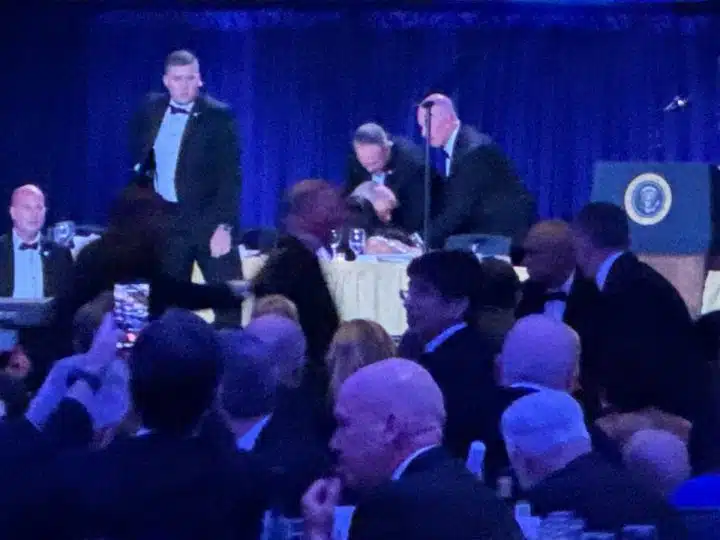

The US Fox News channel cut off one of its own reporters just as she seemed about to give away what people are saying is foreknowledge among Donald Trump’s inner circle about the ‘assassination attempt’ at this year’s White House Correspondents Dinner.
White House Correspondents Dinner ‘shooter’
Trump had said, for the first time ever, that he would attend. An alleged shooter then tried to rush past guards before being detained.
View on Threads
But many people on social media are wondering if Trump knew about it beforehand. This is because Fox correspondent Aishah Hasnie was seated with Nicholas Riccio, the husband of Trump’s press secretary Karoline Leavitt.
Riccio, she said, told her “You do a good job… you need to be safe tonight” then looked around the room suggestively. But Fox stopped Hasnie even finishing the sentence:
View this post on Instagram
That was far from the only weird aspect of the event. Several journalists talked about the lack of security at the event. Bags were not even being checked, and at least two correspondents said they left almost as soon as they arrived because it “felt wrong”:


Trump looked entirely unconcerned, even smirking, as the White House Correspondents Dinner ‘attack’ happened:
Chaotic footage of President Trump being evacuated pic.twitter.com/KzageVO0h0
— Acyn (@Acyn) April 26, 2026
The lack of urgency among bodyguards to remove Trump was clear, with vice-president JD Vance rushed out relatively quickly – before anyone went to remove Trump:
Pro-Israel Trump figures seemed to know the identity of the alleged shooter before the name had been announced:
View this post on Instagram
A photo of Allen, face down and handcuffed, was given to Trump within moments so he could post it on his ‘Truth Social’ platform, as political commentator Tom Santos observed:
Active crime scene. Alleged shooter in the same building as the President and Vice President of the United States.
And someone gets to snap pictures like this of the shooter and then send them to Trump so he could use them on his socials moments later.
Totally legit. pic.twitter.com/gBNU2AhkRv
— Tom Santos (@tommysantos14) April 26, 2026
Trump later took the opportunity to say the attempted shooting justified his ridiculous new White House ballroom – and was amplified by dozens of MAGA accounts in a clearly coordinated campaign.
Build the White House Ballroom. pic.twitter.com/3CBVZtf4cK
— The White House (@WhiteHouse) April 26, 2026
Santos found it all a bit too much to swallow:
You want me to believe that:
– This is something like the 3rd or 4th Secret Service failure.
– Tump boycotts the correspondence dinner every year.
– He’s pitching an unnecessary ballroom no one asked for.
– And there happens to be a shooter incident at the event when a large…— Tom Santos (@tommysantos14) April 26, 2026
He’s surely not the only one.
Featured image via the Canary
By Skwawkbox

What to expect from Q1 2026 earnings

Ethereum Price Just Hit a Level It First Touched 5 Years Ago: Is This the Bottom or the Beginning of More Pain?

Trump Claims BBC Used AI To Doctor His Capitol Riot Speech

Manchester United reach agreement with Casemiro over contract clause amid transfer speculation

US brings back mandatory military draft registration

Steven Gerrard disagrees with Gary Neville over ‘shock’ Chelsea and Arsenal claim | Football


-

 Politics7 days ago
Gary Stevenson delivers timely reminder to register to vote as deadline TODAY
-

 Fashion3 days ago
Weekend Open Thread – Corporette.com
-
 Crypto World2 days ago
Hyperliquid $HYPE Rally Builds Momentum as AI Sector Enters Prove-It Phase
-
Crypto World7 days ago
Bank of Hawai’i (BOH) Q1 2026: Net Income Drops to $57.4M as Net Interest Margin Expands
-

 Politics5 days ago
Making troops accountable for war crimes threatens US alliance, ex-SAS colonel warns
-

 Politics5 days ago
Disabled people challenge government SEND proposals over segregation concerns
-

 Business5 days ago
Rolls-Royce Voted UK’s Most Iconic Trade Mark as IPO Register Hits 150
-

 Business3 days ago
Patterson-UTI Energy, Inc. (PTEN) Q1 2026 Earnings Call Transcript
-

 Politics5 days ago
Zack Polanski responds to home secretary’s taser threat
-
 Crypto World6 days ago
Five Value Stocks with Recovery Potential in 2026: PayPal (PYPL), Nike (NKE), and More
-

 Politics5 days ago
Starmer handler McSweeney to be dragged from shadows by Foreign Affairs Committee
-
 Sports23 hours ago
IPL 2026: Ruturaj Gaikwad registers slowest fifty of the season, enters all-time unwanted list | Cricket News
-
Politics5 days ago
Wings Over Scotland | How To Get Away With Crimes
-

 Crypto World6 days ago
New York sues Coinbase, Gemini over prediction market offerings
-
Entertainment6 days ago
Sydney Sweeney cameo cut from “The Devil Wears Prada 2”, source explains why (exclusive)
-
 Crypto World6 days ago
Crypto’s great hope in Senate’s Clarity Act still has a path to survive tight calendar
-
 Business5 days ago
HCL Tech share price tank over 9% after weak Q4. JPMorgan, HSBC & 3 others cut target price
-

 Politics5 days ago
‘Iran is still a nuclear threat’
-
 Sports4 days ago
Tim Bradley names the current best in the world: “Better than Inoue and Usyk”
-

 NewsBeat1 day ago
LK Bennett closes all stores after entering administration
You must be logged in to post a comment Login