

Politics
A warning from Britain’s Iranian diaspora

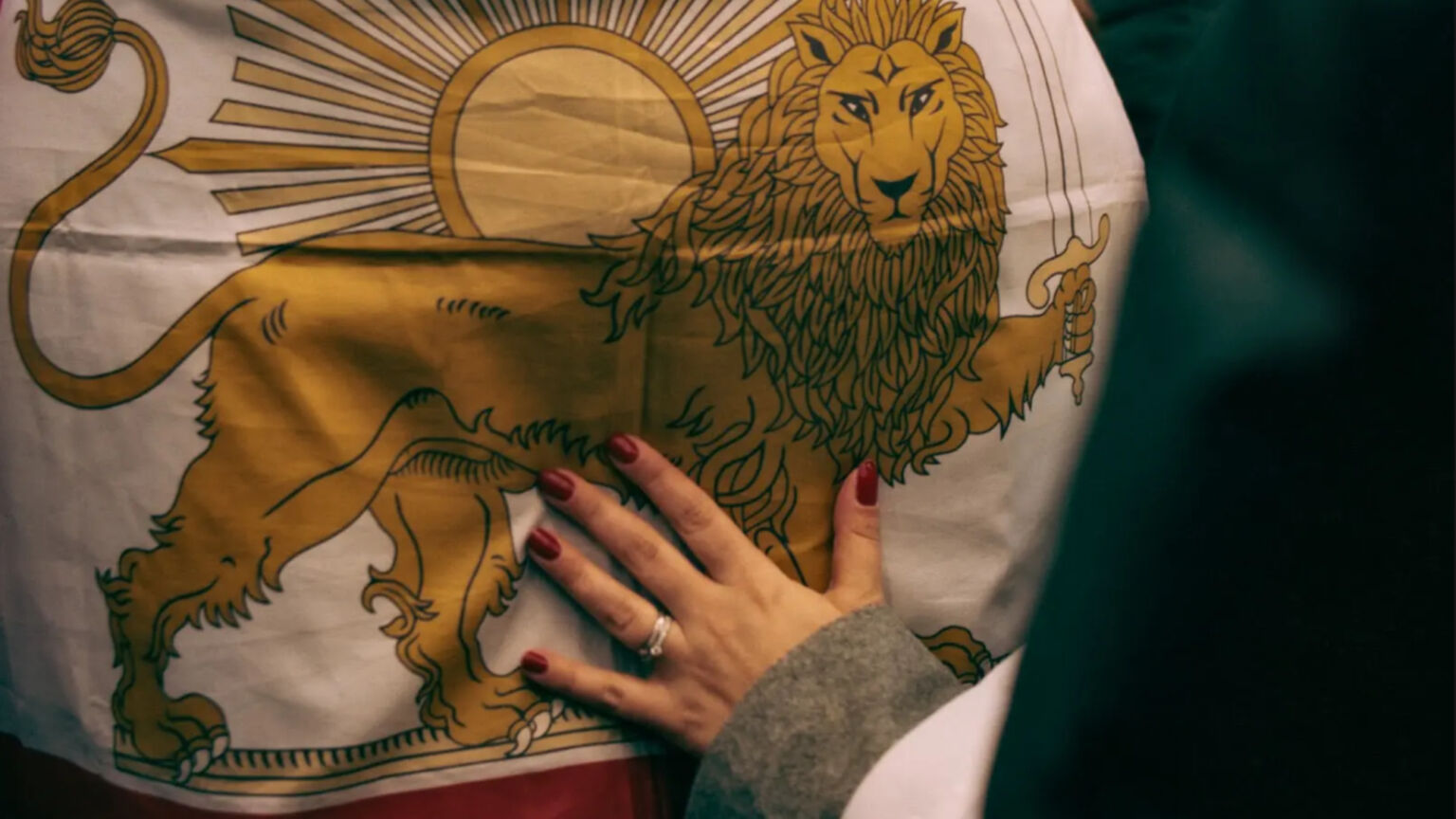
Walking through central London as part of the Free Iran protest movement a couple of Sundays ago, I kept noticing the faces of bystanders. There was certainly very little in the way of support. But equally, open hostility wasn’t the predominant response either. Many of the expressions were marked by something harder to discern – a kind of consternation, an ill-disposed bemusement, as though what was in front of them couldn’t quite be metabolised, not without a certain level of discomfort anyway.
The marchers, among them actual survivors of imprisonment and torture, were carrying the traditional Iranian lion-and-sun alongside the flags of America and Israel. They have been calling for the same freedom that Britain has, for the longest time, claimed to represent in the world. And yet there on the faces of onlookers was not recognition, but something else entirely.
I have spent a great deal of time with the Iranian diaspora. I have photographed them during their Nowruz (Persian New Year) celebrations in Golders Green, at the permanent encampment outside the Iranian Embassy in Knightsbridge, and at their Sunday protests on Whitehall, where they gather outside Downing Street, calling on the government to proscribe the Islamic Revolutionary Guards Corps (IRGC). They are, in my experience, some of the most serious and clear-eyed people living in the UK at the moment. They have seen political Islam from the inside, not as a theoretical proposition but as a lived system of repression and coercion. A system that has disappeared friends, imprisoned family members and attempted to overwrite a truly great civilisation. The country of Hafez and Rumi has in their exile become a byword for extremist and authoritarian terror and a nation that is now ranked 145th out of 148 for the treatment of women. Some of these protesters literally have the scars.
Unusually for people coming from the part of the world they do, and increasingly Britain, these protesting Iranians appear to be largely free of anti-Semitism too. Not carefully managed about it or judiciously restrained. It just doesn’t seem to be there. When they speak of Jews and Israel, there is none of the loaded hesitation, the over-careful neutrality or the strained balancing act one detects in even the most educated and well-meaning of British liberals. These Iranians see Jews really as cousins. And not without good reason. The relationship between Persians and Jews is probably the oldest and most honourable in the Bible. Cyrus the Great, who put an end to the Babylonian captivity and sponsored the rebuilding of the Temple in Jerusalem, is the only non-Jew ever to receive the title, Mashiach (Messiah).
This Persian-Jewish bond was forged long before Christianity or Islam existed and continued into the modern era. During the time of the last Shah, Iran was among the first nations to recognise the state of Israel, and the Israeli airline, El Al, flew between Tel Aviv and Tehran almost daily. Something of that long-standing familial recognition has quietly re-emerged in the Iranian protest movement that has grown up in cities all across the West in recent months. Among Iranians and Jews there, one finds an ease and immediacy of understanding that requires no translation. They know what the other has experienced and there is no need to establish first principles.
The Islamic Republic, which took power after the Iranian Revolution of 1979, completed this inoculation. It made anti-Semitism central to state doctrine. Friday sermons, school curriculum, even how Iran addressed itself to the world. How could any of us forget Iranian president Mahmoud Ahmadinejad’s illustrious world symposium of Holocaust denial in 2006? For Iranians who have managed to escape the regime, anti-Semitism was never one detachable prejudice among others. It characterised the whole fraudulent package – the lies, the coercion, the false sense of moral grandeur. When they rejected the Islamic regime, naturally they rejected anti-Semitism, too.
The mullahs produced something else which has become genuinely rare in contemporary Britain – people with an acute instinct for the early signs of coercive ideology in a society, an awareness of the gap between a society’s stated values and what it is actually becoming. These are men and women who understand what freedom costs because they have already paid for it with theirs. And they know how quickly a country can be lost.
That is why, when the conversation turns from Tehran to London, as so often it does, what they say carries a weight that is absent from so much of the commentary that now passes for serious discourse in the UK. Their insights are drawn from bitter experience. They recognise a familiar pattern – and they care. The Iranians feel they are watching, for a second time in their lifetimes, a society that is moving, with surprising speed, from the liberal moral consensus of 20 years ago, towards something much more confused – and considerably more dangerous. What has become known as the red-green alliance, a convergence of left-coded moral language with Islamist political energy, ended, in their own country’s history, in the destruction of a free society.
The Iranians have watched on as a political class has been increasingly willing to indulge sectarian religious grievance, while slowly abandoning the civilisational inheritance that made tolerance so valued in the first place. They watch as Keir Starmer grows furious during Prime Minister’s Questions at those expressing concerns about the recent Trafalgar Square ‘Open Iftar‘, claiming people with views very similar to their own are trying to create divisions in British society. They see the PM warmly embracing Hasam Zomlot, the Palestinian ambassador, at a separate Ramadan event in Westminster Hall – the same man who, on a favoured centrist political podcast, free-wheeled a semi-fictional account of Middle East history and has repeatedly refused to condemn 7 October; a man who has called terrorists, victims. The Iranians watch as blasphemy laws creep back into British life via the ever-more strained definitions of ‘Islamophobia’ or ‘anti-Muslim hate’ as it is now being called. And they hear the jargon of diversity deployed as a veto on very well-founded fears. They recognise this atmosphere and they know where it goes…
Outside Downing Street, alongside the demand to proscribe the IRGC, the Iranians have a second refrain. ‘Shame on you BBC’ – or, as they also call it, ‘Ayatollah BBC’. BBC Persian is their obvious target. Its former head, Sadeq Saba, noted that many Iranians feel the service has lost credibility in its attempt at ‘balanced’ coverage over the years, as it increasingly leans in towards more of the Islamic Republic’s perspective, while ignoring the very clear antipathy so many ordinary Iranians feel towards it. For them, BBC Persian does not represent balance but something more like an acquiescence. For others it is craven timidity. Much of this is likely a product of the fact the service’s ranks have historically been drawn from the ‘reformist’ current within Iran – people shaped within the Islamic Republic’s own media ecosystem. Many of them arrived in the UK with well-rehearsed habits of managed distance from the regime’s worst realities.
This was brought home in BBC Persian’s coverage of Ayatollah Khamenei’s death at the end of February. As Iranians poured into the streets to celebrate, everywhere from Tehran to Finchley (now home to a diaspora community of many thousands), BBC Persian struck quite a different tone. Announcing his death, Farnaz Ghazizadeh, a lead presenter, appeared to seriously lose her composure on air. And something similar had happened after President Raisi’s death in 2024.
This, it should be said, is not evidence of some sort of conspiracy or duplicitous coordination on the part of BBC Persian with the regime. But it does reveal something about the proclivities of the Persian service – and why, for people who have actually lived under these men, that much-vaunted BBC impartiality has been seriously compromised.
It is not just BBC Persian either – BBC News suffers similar problems. The widespread and popular protests against the Islamic regime from the end of December into the New Year were under-reported or often ignored. And the subsequent lethal regime crackdown, resulting in the massacre of protesters took too long to meaningfully register. When it finally did, the broadcaster’s estimates of likely casualties were overcautious – putting the death toll in the thousands, rather than the likely figure of tens of thousands. In terms of BBC News’s analyses too, it painted protesters’ grievances as stubbornly economic, even as the little footage that was escaping Iran suggested almost immediately, far broader, more terminal frustrations.
As it has for many in the Jewish community, the corporation’s position on Israel has felt more like activism than journalism. Right up until her departure as BBC head of news last year, Deborah Turness had repeatedly proclaimed the BBC’s solidarity with ‘journalists’ in Gaza – a position that would have been unthinkable in any previous era of BBC editorial culture. Its coverage of the war in Gaza has been consistent with that posture: obsessive in its focus, imbalanced in treatment, and in common with much of the British establishment, marked by a chronic unwillingness to name plainly the theocratic, annihilationist ideology, at the heart of Gazan political and social life. The same Islamist ideology, in its essential character, that the Islamic Republic has spent decades imposing on Iran.
The genuine menace of Islamist ideology is all around us today. Two Jews were murdered outside a Manchester synagogue on Yom Kippur last year. Not long after, two Muslim men were convicted of plotting what police believe would have been the deadliest terror attack in British history – an ISIS-inspired plan to massacre hundreds of Jews, again on the streets of Manchester. In 2024, Israeli musician Itay Kashti had been lured to a remote cottage in Wales, handcuffed to a radiator and brutally beaten. In February, a Gail’s bakery in North London was trashed for tangential links to Israel; the Guardian ran a piece that fell just short of justifying why. And then the burning of those four Hatzola ambulances.
And now, it’s not just Jewish people under attack. Iranian opposition supporters have begun to see their cars and homes targeted for arson and over the past week, we can add to that list an attack on an Iranian TV station, two more London synagogues (one in Kenton and one in Finchley), a Jewish charity’s offices and the Israeli Embassy, which was apparently targeted twice last week.
The official response to all this is depressingly familiar. Statements are made. Security outside synagogues is apparently tightened. ‘Antisemitism has no place in Britain’, the Prime Minister seems to imagine… Meanwhile the attacks keep coming and the online sewer continues to flow – a vile stream of hatred across social media that no government has seriously confronted and no platform meaningfully checks. And the ideas themselves, of course, remain entirely and lethally untouched – the ideology behind all this managed scrupulously out of sight.
Only a moment’s reflection takes us back to the protests and unrest after the awful Southport killings in the summer of 2024. Starmer could not have been more outraged or urgent in his response – concerning, as it happens, communities of mainly working-class white Brits. The law was deployed with unusual speed and severity, court hearings were fast-tracked, anyone and everyone even remotely connected to these events seemed to be prosecuted and in many cases imprisoned, often for longer than the same conduct in a different, less political atmosphere.
And meanwhile, here in 2026, when Jews are placed in increasing physical danger, with two already murdered just for being Jews, better security feels about as serious as it’s going to get. Where is that same personal contempt from Starmer for these people? Where is his zero-tolerance response to the escalating anti-Semitic violence which is happening now? And while the political classes sneer at Trump’s supposed messianic delusions and condemn Israel’s action against Hezbollah, actually committed religious fundamentalists in our own society are increasingly doing their worst on an almost daily basis – and seem somehow forever to dodge the political agenda.
The Iranian cause could have hardly been more legible. Freedom from theocratic tyranny, freedom for women and minorities, and that special freedom – not to be gunned down by your own government in the thousands. A generation or so ago, their plight would have been so obvious to us.
And if we did not know the response they’d actually received was in large part the result of Europe’s oldest pathology, we might be tempted to read their lack of popular appeal as the inevitable fate of darker-skinned people telling an uncomfortable story in contemporary Britain. They are, after all, from a Muslim-majority country and refusing the script assigned to them. They should, by the logic of the culture around them, be the recipients of progressive solidarity – not its critics. But they are supposed to be talking about Islamophobia and not Islamism. And they should be on the Gaza march, not outside Downing Street demanding the proscription of the IRGC. Their inconvenience is layered: they carry the wrong flag, the wrong narrative and are in the wrong skin.
What has changed is not the Iranians. It is us. The solidarity that should have been extended to them was always conditional on accepting certain articles of faith that Western progressivism now implicitly requires. When the Iranian diaspora naturally and proudly aligned with Israel, they found themselves irreconcilably at odds with this worldview, one cultivated by activists and institutions over many years – and one in which the word genocide now travels freely, stripped of its meaning and singularly indicting one people, and one state, alone.
By the time of the Islamic Republic’s massacres in January, the flag of that state was no longer seeable, its name, Israel, no longer sayable. The blue and white Star of David had become the purest kind of trigger – loaded with a presumed and totalising injustice and the weight of everything the culture had learned, or remembered, to deplore. By hoisting Israel’s colours the Iranians found themselves utterly immiscible with the reigning narrative and so, in a very real way, genuinely invisible, too.
There is a profound difference between not knowing and refusing to know. The Iranian diaspora arrived in this country with a cause that should have felt unmistakably just and historically grounded. But they chose truth over indulging one of the West’s oldest and most persistent prejudices, and truth also over the lie of diversity at any cost. That is their distinction. It is also, for now, the cause of their continued invisibility.
The question this poses is not really about Iran. It is about what kind of society cannot recognise, in the people standing directly in front of it, the values it still claims to hold.
Max Sadie is a photographer who has been documenting the Iranian diaspora and its protest movement in London.

!function(n){if(!window.cnx){window.cnx={},window.cnx.cmd=[];var t=n.createElement(‘iframe’);t.display=’none’,t.onload=function(){var n=t.contentWindow.document,c=n.createElement(‘script’);c.src=”//cd.connatix.com/connatix.player.js”,c.setAttribute(‘async’,’1′),c.setAttribute(‘type’,’text/javascript’),n.body.appendChild(c)},n.head.appendChild(t)}}(document);(new Image()).src=”https://capi.connatix.com/tr/si?token=8b034f64-513c-4987-b16f-42d6008f7feb”;cnx.cmd.push(function(){cnx({“playerId”:”8b034f64-513c-4987-b16f-42d6008f7feb”,”mediaId”:”9619599e-9e06-4431-a69b-57c837ce7a80″}).render(“6a04353ce4b040d76f63eec3”);});
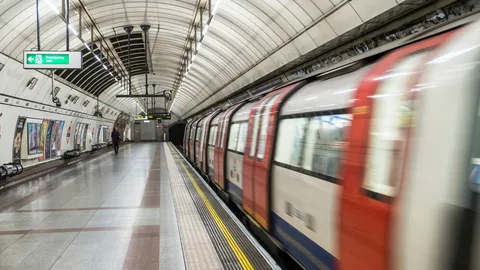
More tube strikes are set to take place in London next week, bringing fresh disruption to commuters.
Last April, tube strikes took place as members of The National Union of Rail, Maritime and Transport Workers (RMT) expressed their unhappiness with a compressed work week that they claim Transport for London (TfL) are trying to “impose” on its members.
For their part, TfL said the four-day change was completely optional.
RMT’s latest strikes are planned in May and June, with the next ones being just days away. These “disruptions” have been planned for weeks.
When are the next Tube strikes this May?
They are:
- Tuesday, 19 May (midday) until Wednesday, 20 May (midday).
- Thursday, 21 May (midday) until Friday, 22 May (midday).
On its website, TfL said to take those start and end times with a grain of salt.
It warned that disruptions are expected to continue into the afternoons and evenings following these periods.
On Tuesdays and Thursdays, services will finish early. Previous advice recommended trying to finish your journey by 8pm on these days.
Which Tube lines will be affected?
The strikes are expected to affect the entire Tube network, though “service is expected on most Tube lines”.
But “Tube services that do run “will start later than normal”.
What other transport links are open?
Services including buses, the Elizabeth line, the DLR, and the London Overground aren’t going to be on strike during these days. They are, however, predicted to be incredibly busy.
Why are these strikes happening?
It started with a four-day work week.
The Associated Society of Locomotive Engineers and Firemen (ASLEF), a train drivers’ union which represents thousands of Tube drivers, previously campaigned for a four-day work week, which the TfL recently began trialling on an optional basis in their Bakerloo line.
But RMT, a trade union covering the public transport sector more broadly, has said that they’re not on board with the “compressed” work week, claiming it packs five days’ work into four in a manner which could impact the safety of drivers and passengers.
RMT members are the ones striking in these upcoming cases.
The union also claimed it could mean drivers only get 24 hours’ notice before their shifts are announced and that TfL “U-turned” on negotiations.
In response, TfL pointed out that the four-day offering is completely optional and said it could help to make services more reliable and flexible.
We have shared the full statements the RMT, ASLEF, and TfL have released on the topic in a previous article.
Related…

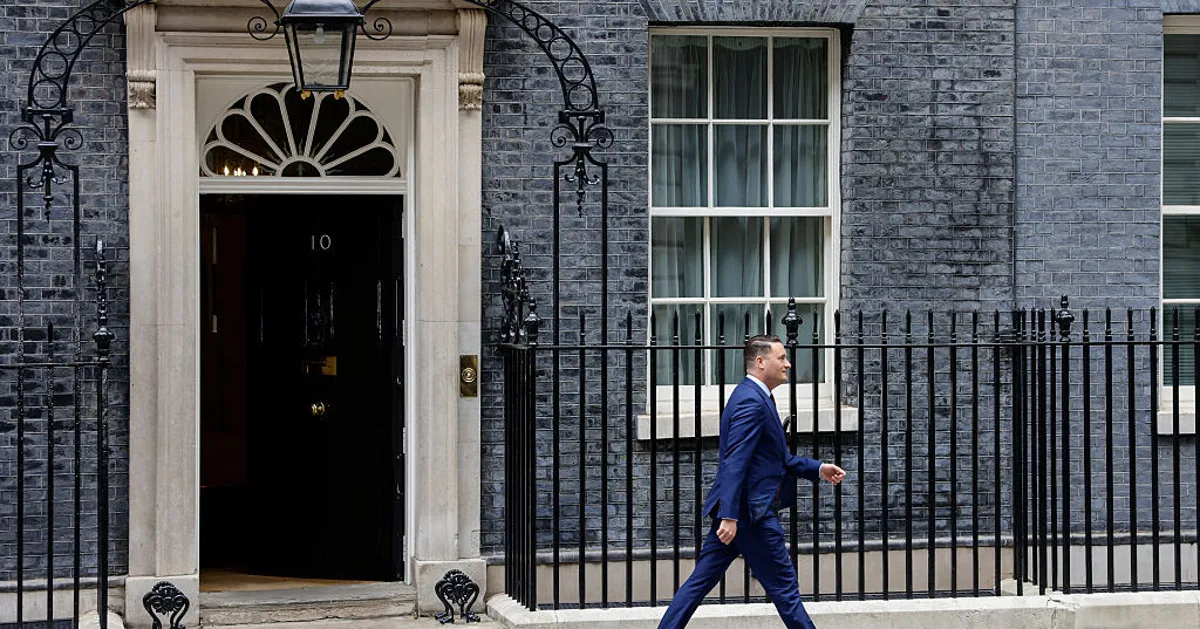
Labour leadership hopeful Wes Streeting’s big showdown meeting in Downing Street with Keir Starmer lasted barely 15 minutes.
The grim-faced health secretary said nothing to waiting reporters as he left No.10 shortly less than 20 minutes after walking in.
Both the prime minister’s and Streeting’s teams were remaining tight-lipped about the talks as they do not want to overshadow the King’s Speech later this morning.
Streeting had been expected to demand answers from the PM on how he plans to turn around Labour’s fortunes after the party suffered a drubbing in last week’s elections.
The health secretary has made no public comments since Starmer told his cabinet rivals to put up or shut up at their weekly meeting on Tuesday amid mounting speculation he was set to face a leadership challenge.
Starmer said: “The country expects us to get on with governing. That is what I am doing and what we must do as a cabinet.”
More than 80 Labour MPs have called on the PM to quit, and four of his ministers resigned on Tuesday.
They included junior health minister Zubir Ahmed, a former aide to Streeting.
On Radio 4′s Today programme this morning, he called on cabinet ministers to speak publicly about their true opinions of Starmer.
He said: “I think it’s very telling – just as ministers in the junior ministerial ranks have stepped forward to articulate their dissatisfaction, some of us publicly but more of us privately – that the whole of the cabinet has not, on this occasion, been able to articulate support for the prime minister in the full-throated way that would have perhaps had happen in the past.
“I think there is a responsibility on all of us in parliament and ministerial office to be honest with ourselves and the prime minister at this time.”
Cabinet Office minister Nick Thomas-Symonds, a close ally of the PM, told the same programme that none of Starmer’s rivals have the required amount ofd support from Labour MPs to challenge him.
He said: “The evidence of the last two days is there isn’t an alternative candidate with those 81 names.”
Subscribe to Commons People, the podcast that makes politics easy. Every week, Kevin Schofield and Kate Nicholson unpack the week’s biggest stories to keep you informed. Join us for straightforward analysis of what’s going on at Westminster.
Politics
The House | The right to protest is precious, but there is no right to shout racist slogans
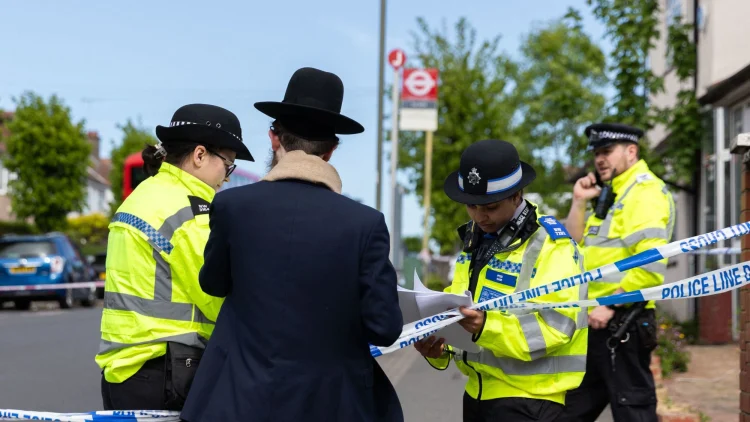

Area of Golders Green cordoned off after stabbing attack 29 April 2026 (ZUMA Press, Inc./Alamy)
3 min read
The Jewish population of England is less than 0.5 per cent.
Most people simply don’t know any Jews and perhaps know even less about Jewish British history; about the infamous English blood libel originating in Norwich in 1144; about the slaughter of 57 Jews in Bury St Edmunds in 1190, which is commemorated by a teardrop memorial in Bury’s Abbey Gardens; and about the expulsion, by King Edward I in 1290, of the Jews of England, who did not return until 1656, the time of Cromwell – 366 years later.
Yet there have been Jews in England for almost 1,000 years, and hatred of them is nothing new. Now we are witnessing in our time another terrible surge in anti-Jewish racism. A man is accused of attempting to murder two Jewish citizens in north London last month. We have seen attacks on ambulances and synagogues, and last Yom Kippur two Jews were killed in an attack in Manchester.
This latest surge in anti-Jewish hatred on our streets follows the war in the Middle East, yet the actions of the elected government of the State of Israel are no more the responsibility of England’s Jews than the actions of the Vatican are the responsibility of British Catholics, or the actions of the Chinese government the responsibility of the British Chinese community.
The murder suspect in Golders Green did not stop to inquire whether the men in black coats and hats were supporters of the policies of the Israeli government. Their kippah alone seemed enough to make them a target.
Hatred on our streets, seemingly unfettered, has been weaponised by those, including foreign powers, who stir division. All right-minded people in our country have been appalled by the scenes of destruction in Gaza and now in Lebanon, and they have a right to protest, peacefully, in opposition to those acts of violence. The right to protest and our freedom of speech are precious principles in this country.
But there is no right, and nor should there be, to intimidate or to chant racist slogans designed to incite hatred. The expression “globalise the intifada” is not confusing. We have seen where it leads. It leads to Manchester, to Bondi Beach and to Golders Green.
The expression ‘globalise the intifada’ is not confusing. We have seen where it leads
If there were a sustained campaign of terror against another distinctive group in our country, Sikhs or Buddhists, would there not be outrage and street protests? Would it not be viewed as a national emergency?
Where are the anti-racists who march for peace and goodwill? Where is the solidarity with this small British community currently under attack? What will each of us do now, because what starts with the Jews never ends with the Jews?
Now, more than ever, it is time for us to come together to say clearly and loudly that we British are a tolerant and compassionate people, and that anti-Jewish racism will not prevail.
In 1190, those few Jews who had escaped slaughter in Bury St Edmunds were expelled by Abbot Samson, earning the town the dubious honour of being the first in England to expel its Jews.
Almost 1,000 years later, I am the first Labour MP for Bury St Edmunds but also its first Jewish MP. History has come full circle. But so too has the oldest form of hate. Learning the lessons of history must come full circle too.
Peter Prinsley is the Labour MP for Bury St Edmunds and Stowmarket

We’re still months away from Christopher Nolan’s The Odyssey hitting cinemas, but that certainly hasn’t stopped people from sounding off about it on social media.
Since the first trailers for the big-screen epic debuted last year, people have been raising questions about its historical accuracy over everything from its costumes to the American accents used by its cast.
Indeed, during a new interview with Time magazine, it was pointed out that some critics had taken issue with the suit of armour worn by Benny Safdie as King Agamemnon, showcased in The Odyssey’s latest trailer, which was compared to Batman’s costumes in his Dark Knight trilogy.
Nolan insisted that research was thorough when putting together every aspect of his new movie, pointing out that our knowledge of the Bronze Age is based on “very fragmentary archeological records”.

As he put it: “There are Mycenaean daggers that are blackened bronze. The theory is they probably could have blackened bronze in those days. You take bronze, you add more gold and silver to it and then use sulfur.
“With Agamemnon, Ellen [Mirojnick], our costume designer, is trying to communicate how elevated he is relative to everyone else. You do that through materials that would be very expensive.”
The Oscar winner continued: “The oldest depictions of Homeric characters tend to be depicted in the manner of people living in Homer’s time.
“So there’s a pretty strong case there for portraying things that way because that’s the way the first audience received the story.”
Of the sceptics among classicists, he added: “Hopefully they’ll enjoy the film, even if they don’t agree with everything. We had a lot of scientists complain about Interstellar. But you just don’t want people to think that you took it on frivolously.”
The Odyssey is Nolan’s first film since the mammoth success of Oppenheimer, which was a box office smash as well as winning seven Oscars, including Best Picture, Best Director and Best Actor for Cillian Murphy.
His adaptation of the ancient Greek story boasts an all-star cast including Nolan regulars Matt Damon, Anne Hathaway and Robert Pattinson, as well as Tom Holland, Zendaya and Oscar winners Charlize Theron and Lupita Nyong’o.
The Odyssey will hit cinemas worldwide on 17 July. Read Christopher Nolan’s full interview in Time here.
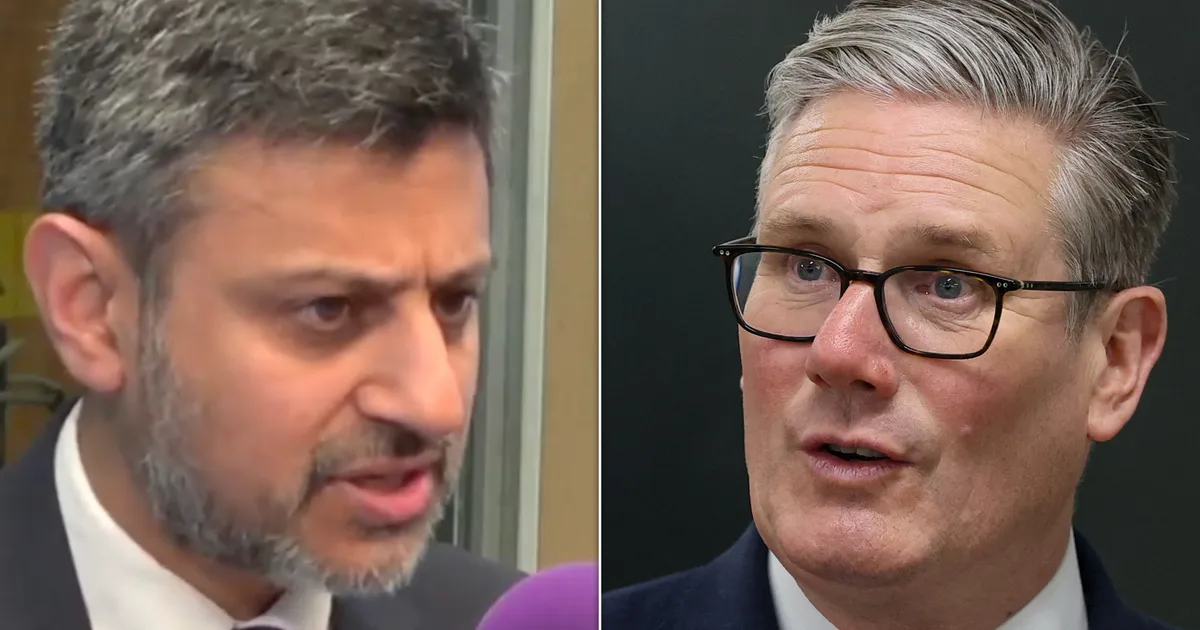
A minister who resigned over Keir Starmer’s leadership has called on cabinet members to speak out against the prime minister.
Zubir Ahmed left his government role on Tuesday, saying Starmer’s “continuation in office is wholly untenable.”
He urged him to set a timetable for “an expedient and orderly transition to new leadership that commands the confidence of our country.”
He was the fourth minister to resign on Tuesday, after Miatta Fahnbulleh, Jess Phillips and Alex Davies-Jones.
Four ministerial aides also quit on Monday and more than 80 Labour MPs have publicly urged the prime minister to step down following the party’s drubbing in last week’s elections in England, Wales and Scotland.
However, no one in the cabinet has joined the dissenting voices just yet.
Speaking to BBC Radio 4′s Today programme on Wednesday, Ahmed called on the senior members of Starmer’s government to “articulate their dissatisfaction” with the prime minister.
He said: “I think it’s very telling – just as ministers in the junior ministerial ranks have stepped forward to articulate their dissatisfaction, some of us publicly but more of us privately – that the whole of the cabinet has not, on this occasion, been able to articulate support for the prime minister in the full-throated way that would have perhaps had happen in the past.
“I think there is a responsibility on all of us in parliament and ministerial office to be honest with ourselves and the prime minister at this time.”
He added: “We have been put in these positions by the public, to govern the country and to lead, and I think this is a moment for leadership and everyone, to articulate, with honesty, their opinion on the prime minister.”
Ahmed is a known ally to health secretary Wes Streeting, who is a potential rival to the prime minister.
He had a private coffee with the prime minister on Wednesday morning, allegedly to ask Starmer how he was going to turn his party’s fortunes around.
The health secretary left after less than 20 minutes.
Subscribe to Commons People, the podcast that makes politics easy. Every week, Kevin Schofield and Kate Nicholson unpack the week’s biggest stories to keep you informed. Join us for straightforward analysis of what’s going on at Westminster.
The ten-year UK gilt yield briefly hit 5.13%, approaching highs last seen during in 2008. A 3 p.m. gilt market snapshot: 2-year: 4.585% (+11.0bp), prev close 4.475% 10-year: 5.130% (+12.5bp), prev close 5.004% 30-year: 5.806% (+13.1bp), prev close 5.676% The 30-year briefly touched 5.81%, the highest since 1998. The pound slid 0.7% to $1.3517, FTSE…
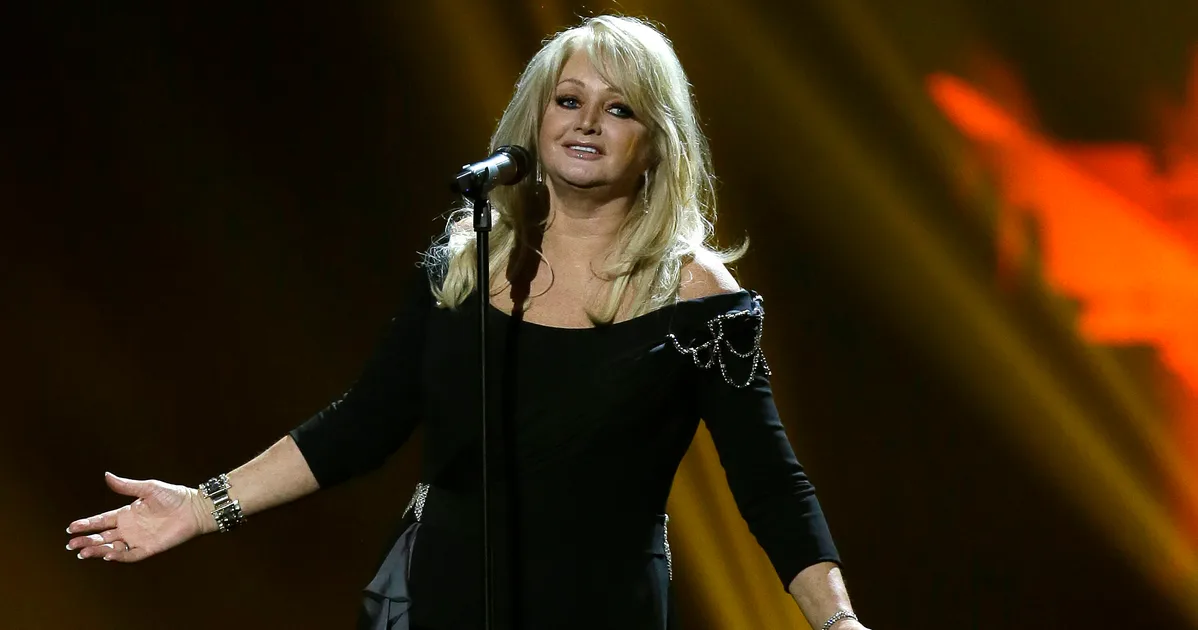
Doctors are confident that Bonnie Tyler will make a “full recovery” following her recent health issues.
Last week, the chart-topping musician was rushed to a hospital near her home in Faro, Portugal, to undergo an emergency intestinal operation.
Initially, Bonnie’s spokesperson assured fans that the surgery had gone “well” and that she was “recuperating” in hospital.
A day later, another statement was issued, explaining: “Bonnie has been put into an induced coma by her doctors to aid her recovery. We know that you all wish her well and ask for privacy at this difficult time please.
“We will issue a further statement when we are able to.”
On Tuesday, the Holding Out For A Hero singer’s team gave an update on Bonnie’s health to BBC News, which read: “As of this morning, Bonnie remains seriously ill but stable in hospital in Faro, however, her doctors are still positive that she will make a full recovery.
“When there is any further news of Bonnie’s condition, then we will issue another statement.”
Bonnie – whose legal name is Gaynor Hopkins – first shot to fame in the late 1970s thanks to singles like Lost In France and It’s A Heartache.
In the years that followed, she became known for hits like Holding Out For A Hero, the number one single Total Eclipse Of The Heart and a cover of Creedence Clearwater Revival’s Have You Ever Seen The Rain?.
Over the course of her music career, Bonnie has released 18 studio albums, most recently in 2021, and has been nominated for three Grammy Awards and three Brit Awards.
The 74-year-old also represented the United Kingdom at the Eurovision Song Contest in 201 with her song Believe In Me, and was awarded an MBE by the late Queen Elizabeth II for her services to music in 2022.
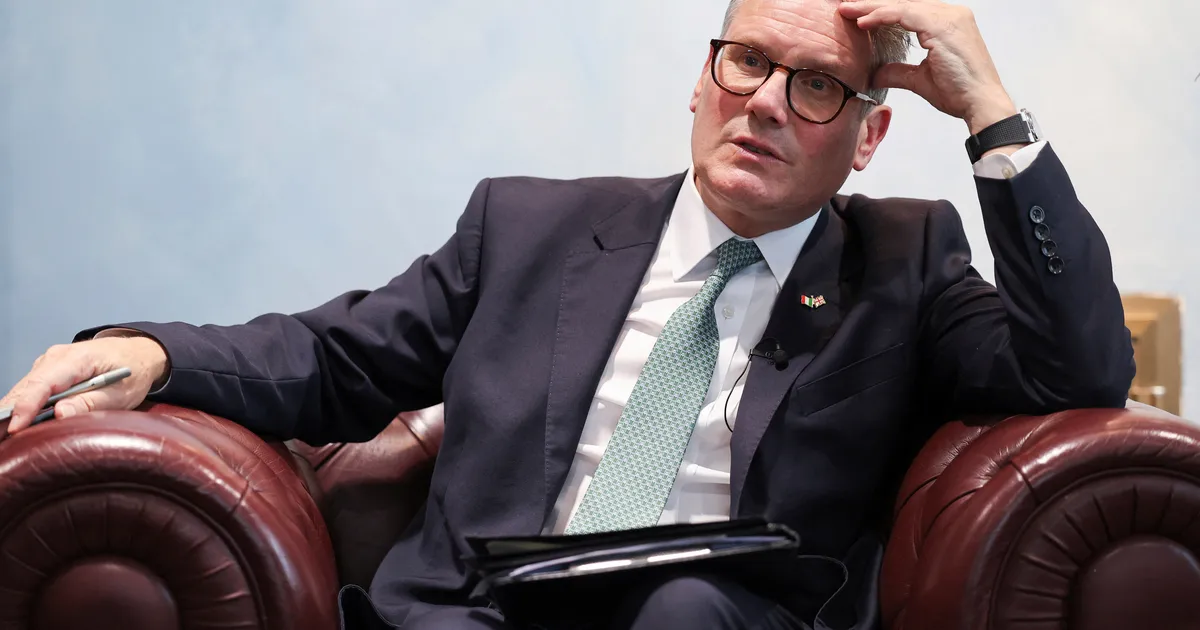
Keir Starmer cannot lead Labour into the next general election, according to the party’s trade union backers.
In a huge blow to the prime minister, they said the party “cannot continue on its current path” and that change is needed at the top.
The intervention by the Trade Union Labour Organisation (TULO) comes as Starmer clings onto power despite more than 80 MPs calling on him to quit and four of his ministers resigning.
The PM is holding showdown talks with leadership rival Wes Streeting in Downing Street, where he will be asked how he plans to turn the government around after Labour’s humbling in last week’s elections.
In a statement, TULO said: “It’s clear that the prime minister will not lead Labour into the next election, and at some stage a plan will need to be put in place for the election of a new leader.
“This is a point where the future of the party we founded will be debated and determined, and we are working closely as unions to shape a shared vision on policy, political strategy and economic policy that will re-orient Labour back to working people.”
Subscribe to Commons People, the podcast that makes politics easy. Every week, Kevin Schofield and Kate Nicholson unpack the week’s biggest stories to keep you informed. Join us for straightforward analysis of what’s going on at Westminster.
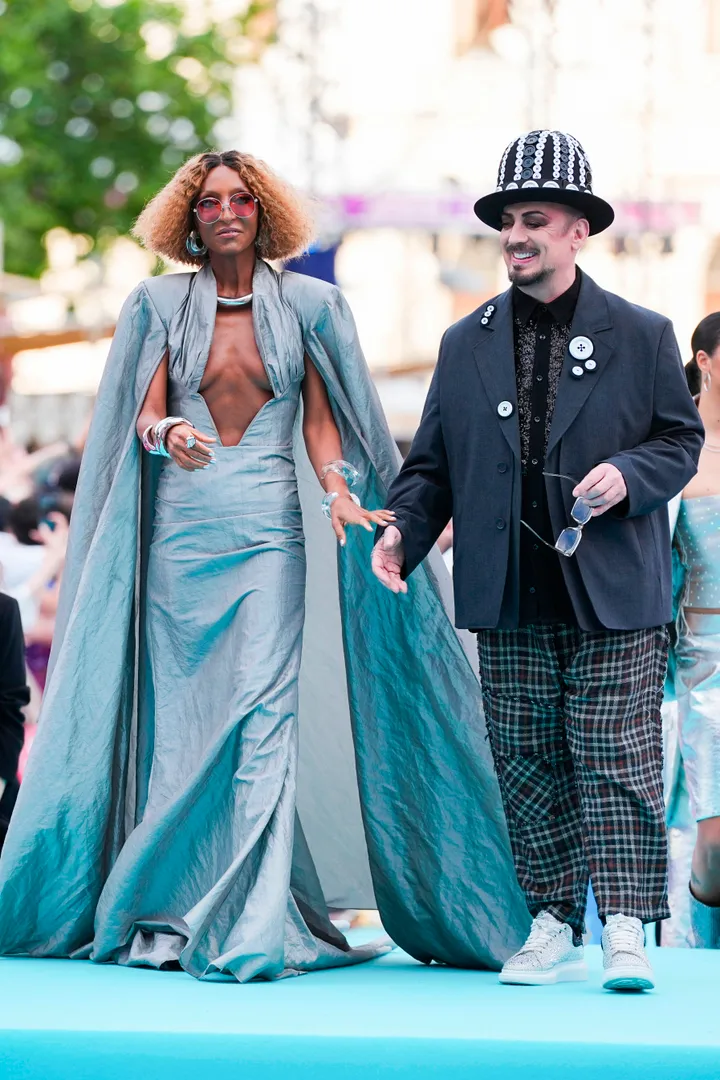
Boy George will not be performing at this year’s Eurovision final after failing to secure a place in the next stage of the competition.
On Tuesday night, the Culture Club frontman joined San Marino’s Eurovision entrant Senhit on stage at the semi-finals, where they performed their song Superstar together.
However, towards the end of the night, it was revealed that San Marino had not landed enough support to send them through to the final, which is due to take place in Basel this weekend.
Posting on X after the semi-final was over, the Karma Chameleon singer thanked his supporters and those who voted for himself and Senhit, before lamenting: “I was sad we didn’t get through to the final but my Eurovision experience has been fabulous. I wouldn’t take a minute of it back.”
He added: “Thanks to Senhit and the entire San Marino delegation. What a fun bunch. We will perform together in Milan in July. At the Culture Club show.”
Senhit previously competed at Eurovision in 2011 and 2021, the latter of which saw her sharing the stage with the American rapper Flo Rida.
He claimed: “I am so affiliated with Jewish people. I am not necessarily affiliated with Israel. I don’t really have an opinion on that. But the job of music is to unite people.”

Israel’s act Noam Bettan did make it through to the Eurovision finals after his performance on Tuesday, although one audience member was removed from the event after loudly protesting during the song.
Three more people were also ejected from the arena due to what the European Broadcasting Union (EBU) and Austrian broadcaster ORF described as “disruptive behaviour”.
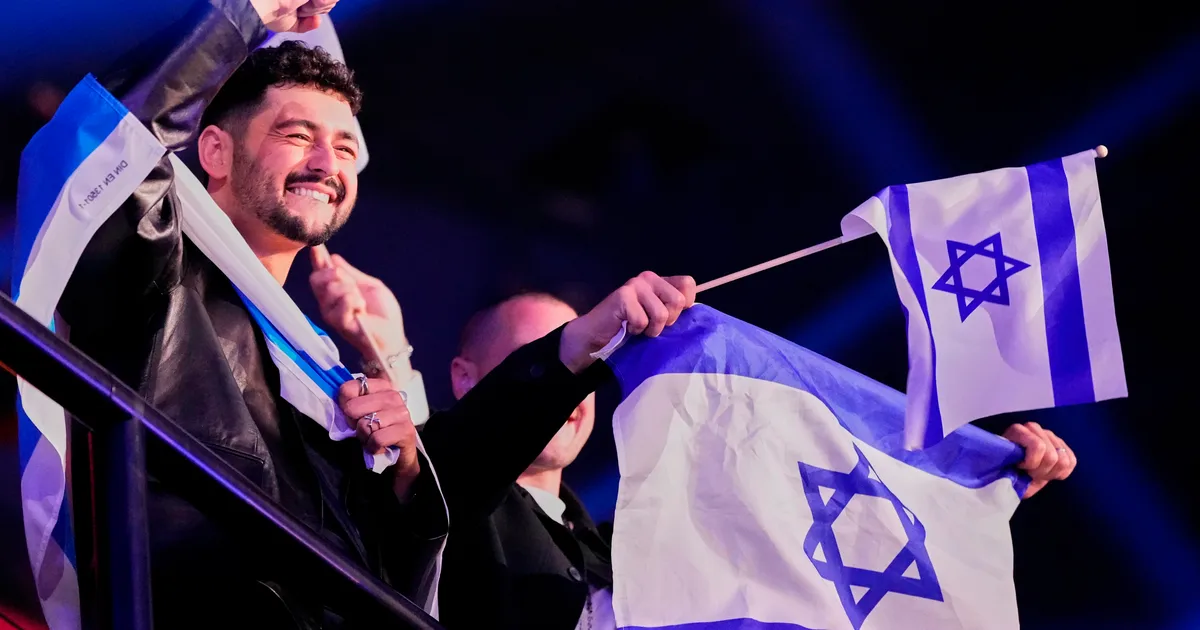
Eurovision bosses have confirmed that audience members were removed from the competition’s first live semi-final after political chants were heard during the broadcast of the Israeli act’s performance.
On Tuesday night, singer Noam Bettan represented Israel at the semi-final with his song Michelle, where he was chosen to go through to the next stage of the song contest at the weekend.
During the opening moments of the performance, chants of “stop the genocide” could be heard coming from the audience, particularly towards the beginning of the song.
“As previously announced, ORF is broadcasting a clean audio feed live from audience microphones before and during every performer’s song,” they said.
“One audience member, close to a microphone, loudly expressed their views as the Israeli artist began his performance, and during the song, which was heard on the live broadcast.
“They were later removed by security for continuing to disturb the audience.”
It was also confirmed that three more audience members “were also removed from the arena by security” for what the EBU and ORF described as “disruptive behaviour”.
Notably, Eurovision’s YouTube upload of Israel’s semi-final performance does not include the “stop the genocide” chant.

Two Tube Strikes Are Set To Take Place This May, And They're Days Away

AI security is broken at runtime: Most enterprises don’t realize it yet

KERALA FINANCIAL CODE /higher exam /12/5/2026 provisional key

Manchester United reach agreement with Casemiro over contract clause amid transfer speculation

US brings back mandatory military draft registration

Steven Gerrard disagrees with Gary Neville over ‘shock’ Chelsea and Arsenal claim | Football


-
 Crypto World5 days ago
HarrisX Poll Found 52% of Registered Voters Support the CLARITY Act
-

 Fashion5 days ago
Weekend Open Thread: Marianne Dress
-

 Crypto World6 days ago
Upbit adds B3 Korean won pair as Base token gains Korea access
-
 NewsBeat6 days ago
NCP car park operator enters administration putting 340 UK sites at risk of closure
-

 Fashion2 days ago
Coffee Break: Travel Steam Iron
-

 Fashion2 days ago
What to Know Before Buying a Curling Wand or Curling Iron
-

 Tech3 days ago
Auto Enthusiast Carves Functional Two-Stroke Engine from Solid Metal
-

 Politics1 day ago
What to expect when you’re expecting a budget
-
 Business4 days ago
Ignore market noise, India’s long-term story intact, say D-Street bulls Ramesh Damani and Sunil Singhania
-

 Politics4 days ago
Politics Home Article | Starmer Enters The Danger Zone
-

 Crypto World7 days ago
BlackRock CEO Larry Fink Discusses a New Asset Class
-

 Tech2 days ago
GM Agrees To Pay $12.75 Million To Settle California Lawsuit Over Misuse Of Customers’ Driving Data
-
 Sports7 days ago
NBA playoff winners and losers: Austin Reaves is not loving Lakers vs. Thunder matchup, but Chet Holmgren is
-

 Entertainment6 days ago
Sarah Paulson Called Out For Met Gala ‘Hypocrisy’
-

 Entertainment6 days ago
General Hospital: Ric & Ava Bombshell – Ric’s Massive Secret Exposed!
-

 Politics6 days ago
Simon Cowell Says He Was ‘Horrible’ To Susan Boyle During BGT Audition
-

 Crypto World6 days ago
Robinhood says Wall Street is building onchain
-

 Sports6 days ago
UEFA Champions League final schedule, teams, venue, live time and streaming | Football News
-

 Entertainment7 days ago
Bold and Beautiful Early Spoilers May 11-15: Steffy Revolted & Liam Overjoyed!
-
 Entertainment6 days ago
Why David Letterman Called CBS ‘Lying Weasels’
You must be logged in to post a comment Login