
Politics
A warning from Britain’s Iranian diaspora


Walking through central London as part of the Free Iran protest movement a couple of Sundays ago, I kept noticing the faces of bystanders. There was certainly very little in the way of support. But equally, open hostility wasn’t the predominant response either. Many of the expressions were marked by something harder to discern – a kind of consternation, an ill-disposed bemusement, as though what was in front of them couldn’t quite be metabolised, not without a certain level of discomfort anyway.
The marchers, among them actual survivors of imprisonment and torture, were carrying the traditional Iranian lion-and-sun alongside the flags of America and Israel. They have been calling for the same freedom that Britain has, for the longest time, claimed to represent in the world. And yet there on the faces of onlookers was not recognition, but something else entirely.
I have spent a great deal of time with the Iranian diaspora. I have photographed them during their Nowruz (Persian New Year) celebrations in Golders Green, at the permanent encampment outside the Iranian Embassy in Knightsbridge, and at their Sunday protests on Whitehall, where they gather outside Downing Street, calling on the government to proscribe the Islamic Revolutionary Guards Corps (IRGC). They are, in my experience, some of the most serious and clear-eyed people living in the UK at the moment. They have seen political Islam from the inside, not as a theoretical proposition but as a lived system of repression and coercion. A system that has disappeared friends, imprisoned family members and attempted to overwrite a truly great civilisation. The country of Hafez and Rumi has in their exile become a byword for extremist and authoritarian terror and a nation that is now ranked 145th out of 148 for the treatment of women. Some of these protesters literally have the scars.
Unusually for people coming from the part of the world they do, and increasingly Britain, these protesting Iranians appear to be largely free of anti-Semitism too. Not carefully managed about it or judiciously restrained. It just doesn’t seem to be there. When they speak of Jews and Israel, there is none of the loaded hesitation, the over-careful neutrality or the strained balancing act one detects in even the most educated and well-meaning of British liberals. These Iranians see Jews really as cousins. And not without good reason. The relationship between Persians and Jews is probably the oldest and most honourable in the Bible. Cyrus the Great, who put an end to the Babylonian captivity and sponsored the rebuilding of the Temple in Jerusalem, is the only non-Jew ever to receive the title, Mashiach (Messiah).
This Persian-Jewish bond was forged long before Christianity or Islam existed and continued into the modern era. During the time of the last Shah, Iran was among the first nations to recognise the state of Israel, and the Israeli airline, El Al, flew between Tel Aviv and Tehran almost daily. Something of that long-standing familial recognition has quietly re-emerged in the Iranian protest movement that has grown up in cities all across the West in recent months. Among Iranians and Jews there, one finds an ease and immediacy of understanding that requires no translation. They know what the other has experienced and there is no need to establish first principles.
The Islamic Republic, which took power after the Iranian Revolution of 1979, completed this inoculation. It made anti-Semitism central to state doctrine. Friday sermons, school curriculum, even how Iran addressed itself to the world. How could any of us forget Iranian president Mahmoud Ahmadinejad’s illustrious world symposium of Holocaust denial in 2006? For Iranians who have managed to escape the regime, anti-Semitism was never one detachable prejudice among others. It characterised the whole fraudulent package – the lies, the coercion, the false sense of moral grandeur. When they rejected the Islamic regime, naturally they rejected anti-Semitism, too.
The mullahs produced something else which has become genuinely rare in contemporary Britain – people with an acute instinct for the early signs of coercive ideology in a society, an awareness of the gap between a society’s stated values and what it is actually becoming. These are men and women who understand what freedom costs because they have already paid for it with theirs. And they know how quickly a country can be lost.
That is why, when the conversation turns from Tehran to London, as so often it does, what they say carries a weight that is absent from so much of the commentary that now passes for serious discourse in the UK. Their insights are drawn from bitter experience. They recognise a familiar pattern – and they care. The Iranians feel they are watching, for a second time in their lifetimes, a society that is moving, with surprising speed, from the liberal moral consensus of 20 years ago, towards something much more confused – and considerably more dangerous. What has become known as the red-green alliance, a convergence of left-coded moral language with Islamist political energy, ended, in their own country’s history, in the destruction of a free society.
The Iranians have watched on as a political class has been increasingly willing to indulge sectarian religious grievance, while slowly abandoning the civilisational inheritance that made tolerance so valued in the first place. They watch as Keir Starmer grows furious during Prime Minister’s Questions at those expressing concerns about the recent Trafalgar Square ‘Open Iftar‘, claiming people with views very similar to their own are trying to create divisions in British society. They see the PM warmly embracing Hasam Zomlot, the Palestinian ambassador, at a separate Ramadan event in Westminster Hall – the same man who, on a favoured centrist political podcast, free-wheeled a semi-fictional account of Middle East history and has repeatedly refused to condemn 7 October; a man who has called terrorists, victims. The Iranians watch as blasphemy laws creep back into British life via the ever-more strained definitions of ‘Islamophobia’ or ‘anti-Muslim hate’ as it is now being called. And they hear the jargon of diversity deployed as a veto on very well-founded fears. They recognise this atmosphere and they know where it goes…
Outside Downing Street, alongside the demand to proscribe the IRGC, the Iranians have a second refrain. ‘Shame on you BBC’ – or, as they also call it, ‘Ayatollah BBC’. BBC Persian is their obvious target. Its former head, Sadeq Saba, noted that many Iranians feel the service has lost credibility in its attempt at ‘balanced’ coverage over the years, as it increasingly leans in towards more of the Islamic Republic’s perspective, while ignoring the very clear antipathy so many ordinary Iranians feel towards it. For them, BBC Persian does not represent balance but something more like an acquiescence. For others it is craven timidity. Much of this is likely a product of the fact the service’s ranks have historically been drawn from the ‘reformist’ current within Iran – people shaped within the Islamic Republic’s own media ecosystem. Many of them arrived in the UK with well-rehearsed habits of managed distance from the regime’s worst realities.
This was brought home in BBC Persian’s coverage of Ayatollah Khamenei’s death at the end of February. As Iranians poured into the streets to celebrate, everywhere from Tehran to Finchley (now home to a diaspora community of many thousands), BBC Persian struck quite a different tone. Announcing his death, Farnaz Ghazizadeh, a lead presenter, appeared to seriously lose her composure on air. And something similar had happened after President Raisi’s death in 2024.
This, it should be said, is not evidence of some sort of conspiracy or duplicitous coordination on the part of BBC Persian with the regime. But it does reveal something about the proclivities of the Persian service – and why, for people who have actually lived under these men, that much-vaunted BBC impartiality has been seriously compromised.
It is not just BBC Persian either – BBC News suffers similar problems. The widespread and popular protests against the Islamic regime from the end of December into the New Year were under-reported or often ignored. And the subsequent lethal regime crackdown, resulting in the massacre of protesters took too long to meaningfully register. When it finally did, the broadcaster’s estimates of likely casualties were overcautious – putting the death toll in the thousands, rather than the likely figure of tens of thousands. In terms of BBC News’s analyses too, it painted protesters’ grievances as stubbornly economic, even as the little footage that was escaping Iran suggested almost immediately, far broader, more terminal frustrations.
As it has for many in the Jewish community, the corporation’s position on Israel has felt more like activism than journalism. Right up until her departure as BBC head of news last year, Deborah Turness had repeatedly proclaimed the BBC’s solidarity with ‘journalists’ in Gaza – a position that would have been unthinkable in any previous era of BBC editorial culture. Its coverage of the war in Gaza has been consistent with that posture: obsessive in its focus, imbalanced in treatment, and in common with much of the British establishment, marked by a chronic unwillingness to name plainly the theocratic, annihilationist ideology, at the heart of Gazan political and social life. The same Islamist ideology, in its essential character, that the Islamic Republic has spent decades imposing on Iran.
The genuine menace of Islamist ideology is all around us today. Two Jews were murdered outside a Manchester synagogue on Yom Kippur last year. Not long after, two Muslim men were convicted of plotting what police believe would have been the deadliest terror attack in British history – an ISIS-inspired plan to massacre hundreds of Jews, again on the streets of Manchester. In 2024, Israeli musician Itay Kashti had been lured to a remote cottage in Wales, handcuffed to a radiator and brutally beaten. In February, a Gail’s bakery in North London was trashed for tangential links to Israel; the Guardian ran a piece that fell just short of justifying why. And then the burning of those four Hatzola ambulances.
And now, it’s not just Jewish people under attack. Iranian opposition supporters have begun to see their cars and homes targeted for arson and over the past week, we can add to that list an attack on an Iranian TV station, two more London synagogues (one in Kenton and one in Finchley), a Jewish charity’s offices and the Israeli Embassy, which was apparently targeted twice last week.
The official response to all this is depressingly familiar. Statements are made. Security outside synagogues is apparently tightened. ‘Antisemitism has no place in Britain’, the Prime Minister seems to imagine… Meanwhile the attacks keep coming and the online sewer continues to flow – a vile stream of hatred across social media that no government has seriously confronted and no platform meaningfully checks. And the ideas themselves, of course, remain entirely and lethally untouched – the ideology behind all this managed scrupulously out of sight.
Only a moment’s reflection takes us back to the protests and unrest after the awful Southport killings in the summer of 2024. Starmer could not have been more outraged or urgent in his response – concerning, as it happens, communities of mainly working-class white Brits. The law was deployed with unusual speed and severity, court hearings were fast-tracked, anyone and everyone even remotely connected to these events seemed to be prosecuted and in many cases imprisoned, often for longer than the same conduct in a different, less political atmosphere.
And meanwhile, here in 2026, when Jews are placed in increasing physical danger, with two already murdered just for being Jews, better security feels about as serious as it’s going to get. Where is that same personal contempt from Starmer for these people? Where is his zero-tolerance response to the escalating anti-Semitic violence which is happening now? And while the political classes sneer at Trump’s supposed messianic delusions and condemn Israel’s action against Hezbollah, actually committed religious fundamentalists in our own society are increasingly doing their worst on an almost daily basis – and seem somehow forever to dodge the political agenda.
The Iranian cause could have hardly been more legible. Freedom from theocratic tyranny, freedom for women and minorities, and that special freedom – not to be gunned down by your own government in the thousands. A generation or so ago, their plight would have been so obvious to us.
And if we did not know the response they’d actually received was in large part the result of Europe’s oldest pathology, we might be tempted to read their lack of popular appeal as the inevitable fate of darker-skinned people telling an uncomfortable story in contemporary Britain. They are, after all, from a Muslim-majority country and refusing the script assigned to them. They should, by the logic of the culture around them, be the recipients of progressive solidarity – not its critics. But they are supposed to be talking about Islamophobia and not Islamism. And they should be on the Gaza march, not outside Downing Street demanding the proscription of the IRGC. Their inconvenience is layered: they carry the wrong flag, the wrong narrative and are in the wrong skin.
What has changed is not the Iranians. It is us. The solidarity that should have been extended to them was always conditional on accepting certain articles of faith that Western progressivism now implicitly requires. When the Iranian diaspora naturally and proudly aligned with Israel, they found themselves irreconcilably at odds with this worldview, one cultivated by activists and institutions over many years – and one in which the word genocide now travels freely, stripped of its meaning and singularly indicting one people, and one state, alone.
By the time of the Islamic Republic’s massacres in January, the flag of that state was no longer seeable, its name, Israel, no longer sayable. The blue and white Star of David had become the purest kind of trigger – loaded with a presumed and totalising injustice and the weight of everything the culture had learned, or remembered, to deplore. By hoisting Israel’s colours the Iranians found themselves utterly immiscible with the reigning narrative and so, in a very real way, genuinely invisible, too.
There is a profound difference between not knowing and refusing to know. The Iranian diaspora arrived in this country with a cause that should have felt unmistakably just and historically grounded. But they chose truth over indulging one of the West’s oldest and most persistent prejudices, and truth also over the lie of diversity at any cost. That is their distinction. It is also, for now, the cause of their continued invisibility.
The question this poses is not really about Iran. It is about what kind of society cannot recognise, in the people standing directly in front of it, the values it still claims to hold.
Max Sadie is a photographer who has been documenting the Iranian diaspora and its protest movement in London.


Grassroots organisations, community leaders and changemakers across London are being encouraged to secure one of the final remaining places at an upcoming gathering hosted by Surviving Universal UK. This is the UK’s only Black-led organisation specialising in culturally competent safeguarding, advocacy and support for individuals affected by high-control and coercive environments.
In This Together: A Grassroots Gathering
Taking place on Thursday 23 April 2026 at the iconic House of MOBO, ‘In This Together: A Grassroots Gathering’ will bring together a curated mix of grassroots leaders, allies, funders and decision-makers for an afternoon of meaningful connection and collaboration.
Unlike traditional conferences, the event has been intentionally designed as an intimate, high-impact space, prioritising genuine relationship-building between those working on the ground and those influencing funding, policy and safeguarding responses.
Founded by MOBO Awards founder Kanya King, House of MOBO provides a culturally significant backdrop for a gathering centred on elevating under-represented voices and strengthening grassroots networks.
Confirmed and anticipated contributors include:
- A representative from London Community Foundation.
- A visit from local MP Helen Hayes.
- A special address from a high-profile Member of Parliament.
- Special address from Dawn Butler.
- Three recent Civic Award winners, recognised for their contribution to local communities.
Attendees will also benefit from:
- A curated networking environment with grassroots organisations and allies.
- Opportunities to connect with funders and decision-makers.
- A culturally rooted venue centred on Black British excellence.
- Complimentary goodie bags for attendees, featuring contributions from supporting brands.
With capacity intentionally limited to maintain the quality of the experience, tickets have now been released to the public via Eventbrite following an initial private allocation to community partners.
Rachael Reign, founder and CEO of Surviving Universal UK, said:
This isn’t about numbers, it’s about impact. We’ve intentionally created a space where grassroots leaders and community groups can be in the same room as people who hold influence and resources. That kind of access doesn’t happen often, and that’s why this matters.
The event is expected to draw a diverse mix of attendees from across London’s community sector.
There’s still time to book, but remaining tickets are limited and expected to sell out. Find more details and book tickets here.
Featured image via Surviving Universal UK
By The Canary
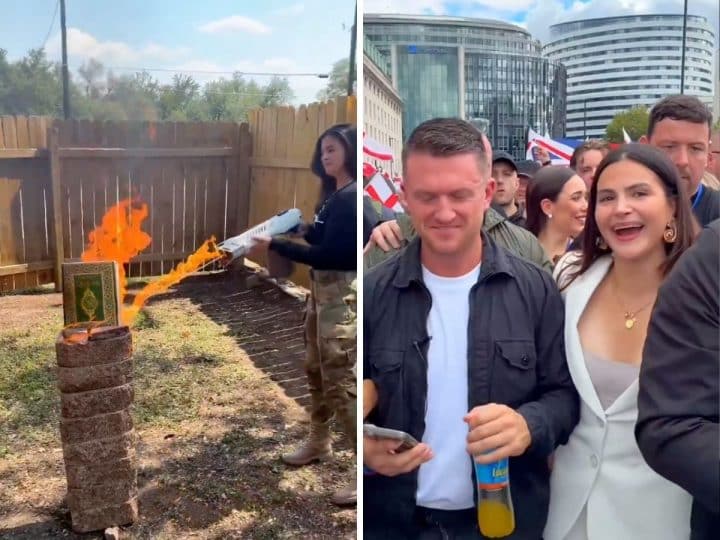

Here at the Canary, we’re very supportive of people coming to the UK. The exception is people whose sole purpose is driving a wedge between the citizens of Britain — including Valentina Gomez, the disgraced and defeated MAGA congressional candidate best known for her racist and Islamophobic vitriol.
As such, we weren’t disappointed to read the following:
Her Electronic Travel Authorisation has been revoked. https://t.co/4HG5sGX10p — Ben Bloch (@realBenBloch) April 20, 2026
 NEW: The Home Office has barred Valentina Gomez from the UK on the grounds that her presence would not be conducive to the public good, Sky News understands.
Stop the boat
In the aftermath of Donald Trump’s 2016 win, acting like an unhinged demon became a viable path to political power. This worked for politicians like Lauren Boebert and Matt Gaetz; it hasn’t worked for Valentina Gomez, despite her many desperate attempts.
Islam has no place in Texas.
Help me to Congress so we can end the Islamization of America.
I only fear God. pic.twitter.com/NxjsNlZSGo
— Valentina Gomez (@ValentinaForUSA) April 29, 2025
Gomez sought to satisfy her need for attention with a US political career, but she was too much of a freak for the Yanks — and at this point, that’s really saying something.
Valentina Gomez, the extremist MAGA candidate for Texas’s 31st congressional district, lost the Republican primary and received only 10% of the vote.
She is now like a typical Trumper claiming the primary was “rigged”:
“I have video evidence that my election has been RIGGED to… pic.twitter.com/pFxF6ypvAp — Republicans against Trump (@RpsAgainstTrump) March 4, 2026
In the video above, Gomez burns a Quran with some sort of toy flamethrower while claiming the “one true God” is the “God of Israel”. This strange wording makes more sense when you learn that Christian Zionist Gomez has ties to the nation of Israel. This includes waxing lyrical about Israel’s genocidal military and in-person visits to the Gaza border facilitated by the genocidal power.
Watching Valentina Gomez prostitute herself out to a foreign nation is absolutely disgusting. pic.twitter.com/uw2zqqFeQz
— Stew Peters (@realstewpeters) October 22, 2025
To give you an idea of how rancid Gomez is, here are some recent posts of hers:
I’m coming to England whether the pedophiles muslims like it or NOT.
Idk why muslims are obsessed with me.
I’m not 6 years old OR a goat.
Don’t forget, this is a goat, NOT a wife. https://t.co/s6rNPZ2AmN pic.twitter.com/NeWLXMNcQa
— Valentina Gomez (@ValentinaForUSA) April 19, 2026
The Home Office and Shabana Mahmood need to be consistent.
They revoked Kanye West’s visa. Why not revoke Valentina Gomez’s for her bigotry? pic.twitter.com/SKe5mAtIwE
— Mukhtar (@I_amMukhtar) April 9, 2026
Valentina posted the following in preparation for her visit to the UK:
England, see you SOON May 16th. England will be ENGLISH again. pic.twitter.com/JvCgXQilr0
— Valentina Gomez (@ValentinaForUSA) April 17, 2026

Since having her visa revoked, Gomez has vowed to travel to the UK by boat:
I’m coming to England on a boat.
They can try to ban me, but they cannot ban the TRUTH.
See you on May 16th — Valentina Gomez (@ValentinaForUSA) April 20, 2026
pic.twitter.com/dnvyPJbzZ4
If history has taught us anything, it’s that hostile hispanic invaders do well when they travel to Britain by sea.
This is a joke, obviously. Because unlike Gomez and her bedfellows, we do not support drowning people at sea.
Even when they’re really, really annoying.
Not the first
Gomez was set to appear at this year’s Unite the Kingdom rally. As we reported 15 January, a speaker at last year’s rally was also banned from entering the UK:
Vlaardingerbroek is part of Generation Remigration, which is a group that advocates for — you guessed it — ‘remigration’. For those who don’t know, Remigration is the plan to deport non-white people from European countries. This includes those who were born here.
We added:
According to the last Census, the number of people who aren’t ‘white’ is over 10 million — many of whom were born here. Indeed, many may be second, third, or fourth generation. How many of those people would oppose being deported? How many white people do you think would join them? Going off the global George Floyd protests, we can assume ‘a shit tonne’.
What do you call a situation in which one section of the country goes to war with the other?
As we argued, if agitators like Gomez and Vlaardingerbroek got their way, Britain would descend into civil war.
In other words, why would we grant them a visa?
If they want to fuck up a country, they can start at home.
In Gomez’s case, there won’t be much left to fuck up by the time Trump is done with America.
Featured image via X/Valentina Gomez
By Willem Moore

Liberal Democrat MP and environment spokesperson Sarah Dyke has led a cross‑party letter to the Department for Environment Food and Rural Affairs (Defra). It calls on the government to bring forward mandatory, clear and consistent animal welfare labelling on meat products. And it urges stronger enforcement against misleading claims in food marketing.
22 cross-party MPs and peers signed the letter to Angela Eagle, minister for food security and rural affairs. Leading animal welfare organisations are supporting it. They include the Animal Law Foundation, Compassion in World Farming and Humane World for Animals UK.
Clarity over animal welfare
The signatories urge Defra to implement fairer food labelling without delay. They say clearer standards would reward responsible farmers, restore trust in food labels, and strengthen the UK’s reputation for high animal welfare standards. These are criteria that must sit at the heart of the government’s food strategy.
The MPs and Peers warn that misleading and inconsistent labelling is preventing shoppers from making informed choices and undermining animal welfare. Polling commissioned by Humane World for Animals UK found that two-thirds of UK consumers mistakenly believe that common labels such as “welfare assured” protect animals from common cruel practices, such as caging and gassing.
Reports from the Food Standards Agency show that over 70% of consumers care deeply about animal welfare. Yet the current labelling system offers little clarity about the reality of how animals such as pigs, cows and chickens are farmed.
The UK-EU relationship
The UK-EU agrifood trade deal, currently under negotiation, will cut red tape and ease food trade. But it could also bind the UK to ongoing alignment with EU meat labelling laws.
Charities are urging the government to secure clear carve-outs that would ensure that the UK could unilaterally adopt a method of production labelling. The agreement is expected to be finalised later this year in order to enter into force in mid 2027.
The letter cites the government’s own 2024 Fairer Food Labelling consultation. This showed overwhelming public support for mandatory method‑of‑production labelling, with 99 per cent of respondents in favour.
Defra’s impact assessment found that such measures could improve the lives of 111 million animals on farms. They could deliver a net societal benefit of £140m over ten years, and increase UK farmers’ profits by more than £46m a year.
Dyke is the MP for Glastonbury and Somerton and the Liberal Democrats’ rural affairs spokesperson. She said:
People want to buy food that matches their values, but right now it’s too easy for shoppers to be misled by vague welfare claims on meat products that are masking low-welfare practices like caging.
This is not fair on families trying to make informed choices or on farmers who are trying to improve their standards.
The government must act without delay to introduce clear, consistent, mandatory method-of-production labelling and to enforce existing consumer protection laws. Shoppers, farmers and animals all deserve markets to be driven by the truth, not marketing spin.
Claire Bass, senior director of campaigns and public affairs at Humane World for Animals UK, said:
Mandatory animal welfare labelling would present facts rather than marketing spin on supermarket shelves. If consumers are able to make informed buying choices that reflect their values, market forces could play a decisive role in driving genuinely higher welfare standards in farming.
But lockstep alignment with EU labelling laws will massively constrain the UK’s freedom to protect consumers and animals from ‘welfare washing’. We urge the government to prioritise SPS [UK-EU Sanitary and Phytosanitary agreement] carve-outs that preserve the UK’s right to mandate meat labelling in the interests of consumers, farmers and animals.
The relevant regulators and law enforcement bodies also need adequate resources and direction to ensure the enforcement of existing laws to prevent the misinformation that surrounds animal farming and animal products in the UK.
Edie Bowles, executive director of The Animal Law Foundation said:
Consumer protection, media and advertising laws exist to protect the public and consumers from being given misleading or partial information. But there is a clear compliance issue where data from The Animal Law Foundation shows 100% of supermarkets and 100% of TV shows use images and footage of healthy animals outside, yet in reality 85% are kept on factory farms.
Just as regulators are cracking down on greenwashing, we need urgent action to address ‘humane-washing’ in animal agriculture. Consumers and the public must be able to trust the claims made and authorities must ensure that those who partake in misleading practices are held to account.
Anthony Field, head of compassion in World Farming UK, said:
The vast majority of UK farmed animals are reared in factory farms, but this shocking fact is frequently hidden behind misleading food labels. Idyllic images of healthy farmyard animals, picturesque countryside or meaningless phrases like ‘farm fresh’ or ‘all natural’ provide a false sense of security and conceal the truth.
Britain is a nation of animal lovers and consumers deserve to know what really lies behind the label. The government’s own research has shown that mandatory method of production labelling would be more profitable for farmers as well as benefiting the UK economy and the welfare of hundreds of millions of farmed animals.
The government must introduce honest labelling to improve transparency and support higher welfare farmers.
Featured image via the Canary
By The Canary
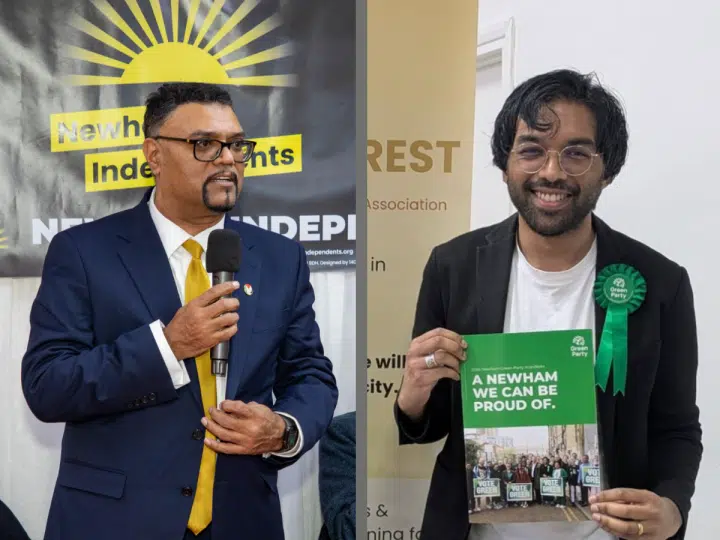

The London borough of Newham will see a direct face-off between Greens and Newham Independents in the 2026 local election. Both parties will seek to eat away at Labour’s longstanding domination in the area, and the council could realistically switch to “no overall control” — a scenario in which no single party secures a majority of council seats.
Double push against Labour in Newham
Newham Independents — who have received an endorsement from Your Party — are currently the main opposition but the Greens are close behind. Both have claimed they’re “the only party” able to defeat Labour locally.
However, in a borough where around 50 percent of residents live in poverty, why isn’t there a progressive coalition to defeat Labour outright? One possible answer is that the area is highly diverse and where the far-right has no chance. Opposition groups are fighting it out to see which challenger to the left of Labour has the best chance of prevailing in Newham.
The BBC reported earlier in April that:
The borough’s directly-elected mayor has significant powers over local services such as housing, including local regeneration schemes and affordable housing targets, planning and waste collection.
The main candidates challenging Forhad Hussain, the Labour candidate, are Newham Independents councillor Mehmood Mirza and Green councillor Areeq Chowdhury.
Mirza and the Newham independents
Mirza, a self-described socialist, has called out Labour’s wastefulness in office, asserting that:
Reform & Labour are two sides of the same rotten system that has been failing residents for decades!
Labour’s support for Israel’s genocide in Gaza and warmongering throughout the Middle East is another burning issue for Mirza, insisting that:
Britain must stand for international law, diplomacy, and democratic accountability
Newham Independents have also emphasised the effort they’ve put into challenging Labour ahead of the vote:
The numbers speak for themselves, we will work tirelessly every day of every week of every month to serve you the people of Newham.
Vote Newham Independents on May 7th — Newham Independents

 pic.twitter.com/31C7IAFp0B
(@NewhamIndParty) April 17, 2026
pic.twitter.com/31C7IAFp0B
(@NewhamIndParty) April 17, 2026
They’ve also outlined in a manifesto the priority issues they would tackle if elected, such as:
- Freezing council tax
- Ensuring all secondary school children get free school meals
- Introducing free first parking permits
- Offering “a no-charge bulky waste collection”
- Improving public spaces like parks
Our Little Ilford park is a direct link to crime & antisocial behaviour
Neglected parks often become hotspots for: — Tahir Mirza 4 East Ham (@TahirMirzaPTI) March 31, 2026
• Drug use
• Vandalism
• Intimidation and loitering
This is backed by the “broken windows theory” when an area looks abandoned, it signals that no… pic.twitter.com/yQMzOhTzAf
A full list of Newham Independents candidates can be accessed here.
Chowdhury and the Greens
Riding the wave of increasing Green popularity across the country, Chowdhury has called the Newham elections “a straightforward choice” between Labour and the Greens. The councillor has also been receiving high-profile support from within the party.
Chowdhury has highlighted a council house controversy surrounding Labour candidate Hussain, and called into question Labour’s reliability after the leak of its manifesto. He has also underrated and ignored the Newham Independents, despite admitting they “will do well in some wards“.
Locally, the Greens have three key missions:
to ensure we have the best possible environment to live in; to root out corruption at Newham Council; and to radically reform Newham’s housing department, so that it serves residents properly.
Their manifesto also insists that:
If elected, Green Party councillors and I will meet regularly with community groups, campaigners, academic experts, and residents to consider further ways to support our communities and achieve the three key missions.
The main plan, it stresses, is to:
alleviate poverty, drastically improve our environment, and tackle the housing crisis
The Green Party's manifesto, published today, sets out our plan to build a Newham we can be proud of.https://t.co/nxL2CpLfZl pic.twitter.com/2fpp3J5Ca1
— Areeq Chowdhury (@AreeqChowdhury) April 16, 2026
Is an anti-Labour coalition possible?
Labour seems to be fully aware of the challenge it’s facing in Newham, sending numerous high-profile figures to campaign in the borough. But it might feel the burn even more if the opposition on the left were more unified and less fractious.
As the Canary has previously reported, it’s perfectly possible for left-wing independents and Greens to collaborate and challenge Labour together via a cooperative alliance. And with some people in Newham predicting a strong result for independents, an anti-Labour coalition would certainly seem like common sense.
Newham Independents and Greens have a lot in common. But for now, they’re competing with each other to end Labour’s domination.
Hopefully, once the election results are in, there’ll be more cooperation across the left to bring the people of Newham the meaningful change they deserve.
Featured image via the Canary
By Ed Sykes
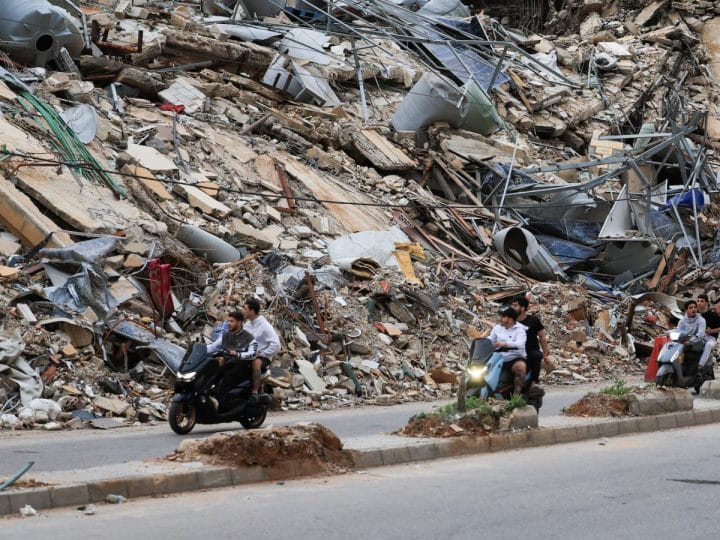

Israeli occupation forces (IOF) have been told to kill Lebanese civilians attempting to return to their stolen or destroyed homes in southern Lebanon during Israel’s ‘ceasefire’ with Iran.
The IOF: blaming the civilians it has displaced
According to Israeli media coverage, this is the fault of the desperate civilians, and their attempts to return home threaten the supposed ‘ceasefire’ – not the murderous actions of the occupation:
Despite IDF warnings, civilians in southern Lebanon are trying to cross into their villages, raising questions about the future of the ceasefire.
The IOF command’s orders to its troops are explicit:
IDF: ceasefire only applied North of the Litani River
This latest effort appeared to be directed at deterring Lebanese civilians who may have remained in or penetrated into southern Lebanon from nearby areas where the IDF is establishing new positions and clearing out Hezbollah weapons.
Although the IDF has given general orders to open fire within southern Lebanon even if an approaching unidentified person is not armed, based on the idea that there are no civilians left in southern Lebanon, this approach may be difficult to maintain over time.
Rather than denouncing it as a war crime, Israeli reports claim killing civilians is merely ‘controversial’. The IOF invaders have listed at least seventy villages in southern Lebanon where it will kill any civilians attempting to approach their homes.
Israel continues to breach the ceasefire – its classic ‘you cease, we fire’ crime – by bombing and shelling defensive Lebanese militia positions that have stood down in honour of the agreement. Israel had massively escalated its attacks on Lebanon, killing hundreds of civilians, to sabotage Trump’s supposed two-week truce with Iran.
Featured image via the Canary
By Skwawkbox
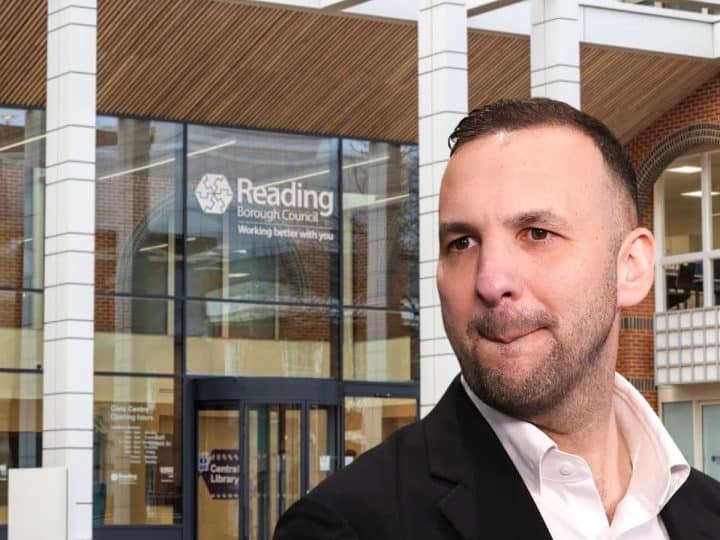

A Green Party councillor in Reading has highlighted how his party pushed for a 10:1 pay ratio, but the Labour council found a way to avoid it.
In Reading we forced the Labour council to implement this for council employees, but now they circumvent it by hiring employees like cleaners through contractors as though they don't count. Still claim to be a 10:1 employer though. Cannot be trusted. https://t.co/UldMrmqL6x
— Cllr Dr Dave McElroy (@DaveJMcElroy) April 19, 2026
And of course telling us that they're sorry, but it's pretty much out of their control when we raise it.
— Cllr Dr Dave McElroy (@DaveJMcElroy) April 20, 2026
The Green Party is pushing for:
the introduction of a 10:1 pay ratio which would help increase wages for those on lower incomes while limiting the salaries of high-paid executives.
The party wants this popular measure in order to:
end the ‘normalisation’ of food banks and tackle the ‘affordability crisis’.
Other measures include energy bill support, free school meals, rent controls, and a customs union with the EU.
The High Pay Centre and Equality Trust have previously insisted that a 10:1 pay ratio would help:
to tackle an economy that prioritises excessive rewards at the top over sustainable investment and fair wages
New Economics Foundation project Change the Rules, meanwhile, has said such a ratio is necessary because of the:
toxic levels of inequality which damages people and imposes significant costs on society.
Green Party ‘leading the way’ in opposition on Reading Council
In 2025, Reading Council Green Party leader Rob White said in a letter that his party had “led the way” on this issue because it:
successfully pushed for the council to agree to a 10:1 pay ratio. That means the top council officer cannot earn more than ten times the lowest-paid worker. This is about fairness, respect, and recognising the contribution of every worker.
As “the main opposition party”, the Greens made a difference. And the council website states that:
We aim to maintain a ratio of no more than 1:10 between our lowest and highest paid staff.
But as Green Councillor Dave McElroy said the Labour council avoids implementing this properly:
by hiring employees like cleaners through contractors as though they don’t count.
This is a tactic Greens elsewhere in the country are familiar with too:
Yeah Labour here outsourced the toilet cleaners, longer hours and shite pay.
When we took administration out Cllrs brought them back in house and raised their pay.
— Alexander Louis Sallons (@sallonsax) April 20, 2026
McElroy stressed that the pledge to back the 10:1 pay ratio is very popular, apart from among people intent on:
leaping to the defense of the masters
This 10:1 palaver is triggering all the right people and giving hope to the rest of us.
Always stunned by the amount of people leaping to the defense of the masters they seem to love more than they love themselves. pic.twitter.com/ZxFvgxRWra
— Cllr Dr Dave McElroy (@DaveJMcElroy) April 15, 2026
And with a long list of Green candidates from Reading and beyond also pledging to oppose austerity at a local level, the Greens really are outflanking Labour from the left.
Featured image via the Canary
By Ed Sykes
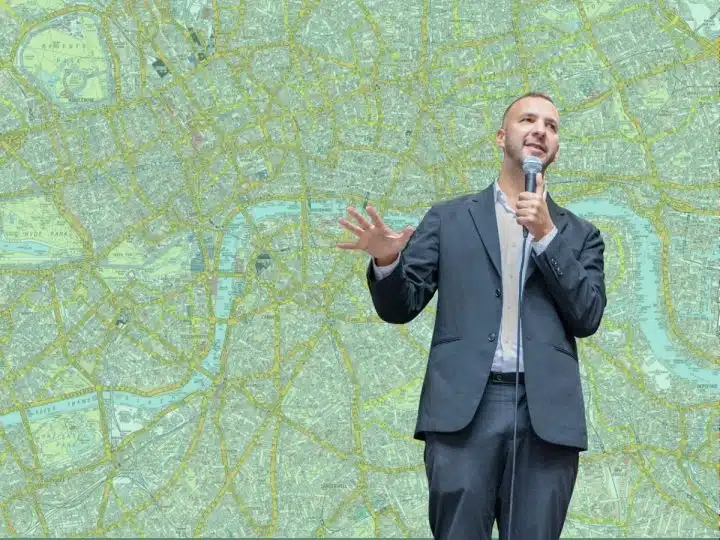

According to new polling from Ipsos, more than half of Londoners are considering a switch to the Green Party. This is good news for it, but it’s also a sign that they need to keep fighting to earn every vote.
Excl: Half of Londoners are considering voting for Zack Polanski's Green Party in the upcoming local elections according to new polling by @Ipsos, shared with the @NewStatesman pic.twitter.com/p1O0lJ0kwk
— megan kenyon (@meganekenyon) April 21, 2026
And this isn’t the only positive poll for the Greens either.
The Green Party on the up
As Kenyon notes, the Gorton & Denton by-election proved to voters that the Green Party aren’t a wasted vote. That by-election showed us something else too; namely that polling tends to underestimate the Green Party.
The following was the final tally in Gorton & Denton:
Green GAIN from Labour (26.5% swing) pic.twitter.com/s49MGW8Uom
— Stats for Lefties
 Gorton and Denton by-election result:
 Grn: 40.7% (+27.5)
 Ref: 28.7% (+14.6)
 Lab: 25.4% (-25.4)
 Con: 1.9% (-6.0)
 Lib: 1.8% (-2.0)

 (@LeftieStats) February 27, 2026
In the runup to election day, some polls had the Greens in the lead, but they didn’t have them outperforming the runner up by 12 percentage points:
Green GAIN from Labour (+/- vs GE2024) pic.twitter.com/xO5zyhef02
— Stats for Lefties
Final estimate for Gorton and Denton:
Grn: 31% (+18) Ref: 28% (+14) Lab: 27% (-24)
(@LeftieStats) February 26, 2026
While the latest poll is good news, leader Zack Polanski is urging his fellow Green Party members to keep up the energy:
This is all really promising – but there's no space for complacency at all. Nothing is certain.
We will be out campaigning for every single vote in the next couple of weeks.
Join us: https://t.co/Q27Jy5eX7z https://t.co/2MqpRPGOlW
— Zack Polanski (@ZackPolanski) April 21, 2026
The Greens have had other favourable polls too:
There’s a scenario here where the Greens gain more seats than reform on May 7th?? That would be absolutely wild. More in common polls don’t even usually put the Greens as high as other pollsters. https://t.co/iyf8mb8tMP
— Zoe Gardner (@ZoeJardiniere) April 21, 2026

In full, the post Gardner is replying to reads:
More in Common Locals Seat Projection Scenarios:
Low Estimate:
Reform: +1,273
Green: +573
Lib Dem: +148
Labour: -1,867
Conservative: -692Middle Estimate:
Reform: +1,437
Green: +926
Lib Dem: +327
Labour: -1,738
Conservative: -627High Estimate:
Green: +1,741
Reform: +1,603
Lib Dem: +503
Labour: -1,597
Conservative: -368Source:
@Moreincommon_
May 7 Briefing
In other words, the Greens could do well in May, or they could do really well, or they could do really, really fucking well.
The poll story
Of course, polls don’t actually predict the future, and not every poll is brilliant for the Green Party. As we reported earlier today, the latest YouGov poll presents a favourable picture for Reform, but they also had positive predictions in Gorton & Denton.
The Greens are clearly persuading voters that they’re worth considering, and that’s a victory regardless of how many seats they ultimately win.
We deserve better.
And we can vote for it on May 7th. https://t.co/SLQItLk61O
— Zack Polanski (@ZackPolanski) April 17, 2026
Featured image via Barold
By Willem Moore
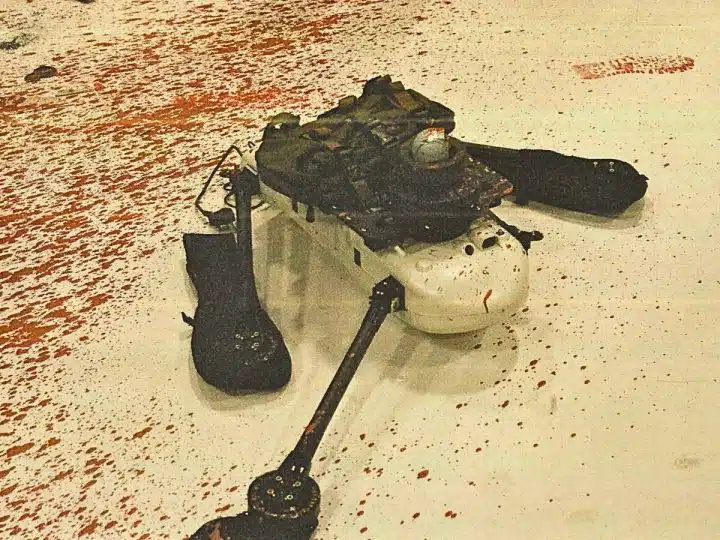

In the retrial of six activists charged under the ‘Filton 24‘ case, the defence begins its case on 21 April. This comes after jurors have seen images of the damage caused to Israeli military equipment and weapons in the Filton site.
The prosecution alleges that the six activists caused millions of pounds’ worth of damage during an August 2024 ‘raid’ of the premises. The site is owned and operated by Elbit Systems, Israel’s largest weapons firm.
The images form part of the jury bundle, and are viewable here.
Together, the pictures demonstrate the extent of damage caused to Israeli military drones and drone controllers, computer equipment, and facilities.
After a prior trial from November 2025 to February 2026 returned acquittals on nine charges and no verdicts on ten, the retrial commencing this week is on a reduced list of charges.
Speaking in the previous trial, defendant Zoe Rogers described having seen footage of Elbit’s ‘THOR’ drone model deployed in Gaza. This is the same drone which is shown damaged after the action at the Elbit factory. Rogers spoke about how Israeli forces use these drones in Gaza to drop explosive grenades, which shoot out pellets which bounce around in bodies, ripping through multiple organs.
The activists are facing trial on charges of criminal damage. In the first trial, all six were acquitted by jury of aggravated burglary, and three of violent disorder, with the CPS subsequently acquitting the other three of the charge. One defendant, Samuel Corner, faces an additional charge of GBH with intent for which no verdict was returned previously.
Featured image (enhanced) supplied
By The Canary


Ten years ago, Leicester City commenced building its status as the club with the most strident and uplifting story in modern football.
This sports entity that had once been marooned in League One rose through the divisions, built a team of improbable champions, and produced a Premier League title that felt like an act against the sport’s natural order. Their performance became a moment that seemed to rewrite what was known as possible in football.
Leicester wasn’t just winning; they were redefining the landscape.
Now the story is changing direction. The club that once seemed unstoppable through its ability to redefine gravity laws is now learning how fast things can fall apart.
Leicester, relegation and 2023
Leicester City’s struggle commenced with relegation from the Premier League in 2023 and having to stumble through the Championship with the weight of financial strain and a lack of institutional direction. To further the doom, they now face the unthinkable: back-to-back relegations and a drop to the third tier, marking an ending few thought would come this soon.
This is not a collapse that presented itself in a vacuum. Instead, it is the product of years of eroding circumstances, some visible and some hidden, all converging at once. Prompting the theory that Leicester’s decline is due to a series of small fractures that eventually split the club open.
The first signs of trouble surfaced in the years after the title. Leicester maintained an attempt to grow into a club built for Europe, but the margins were thin. Recruitment, which once was their greatest strength, began to misfire, causing the stream that delivered Kanté, Mahrez and Vardy to run dry.
It became a vicious circle as their success raised expectations, expectations drove spending, and spending increased the risk. When the Champions League income disappeared, their model began to falter.
Arguably, the pandemic years accelerated the decline. Leicester doubled down on a squad that was ageing, expensive and increasingly brittle. With the club’s wage bill having ballooned and margins shrunk, the slide further inclined leading to an inevitable dip in results. The entire structure felt exposed.
Prem League expectations, Championship weaknesses
By the time the 2022–23 season unravelled, Leicester became a club caught between eras: too talented to be in a relegation fight, yet too fragile to escape one.
Dropping into the Championship was meant to forward their reset. It offered the club a platform to rebuild their identity, refresh the squad and rediscover the clarity that once defined them. Instead, the second tier became a trap as financial restrictions tightened. The squad remained uneven and the pressure to return immediately became suffocating. As the season wore on, the club’s once defining confidence evaporated.
Many overlook that the Championship is a brutal environment to clubs who arrive with Premier League expectations but Championship vulnerabilities. Leicester were caught in that in-between: top-flight infrastructure, second-tier doubt. For their entity, each defeat weighed more, each error cost more, and the aura that once shielded them subsequently vanished.
What makes this moment so striking is the symmetry of the events.
Will the Foxes save themselves before they slip?
Leicester was in League One in 2008–09, emerging from administration and years of poor management. Despite predictions, they rebuilt with purpose, rose with belief and reached heights few thought possible. That climb was not incidental and was prompted by a deep sense of clarity surrounding who they were, and who they were meant to be.
The current slide feels like the opposite. Not a collapse of effort but a collapse of direction. A club that once moved with certainty now moves with hesitation. Decisions feel reactive rather than strategic. The identity that once made Leicester unique — aggressive recruitment, fearless football, a unified structure — has blurred.
If Leicester drop into League One again, the consequences will be profound: a sharp financial blow, a broken-up squad, and long-term plans torn up and rewritten. Yet it would prompt a new chance to clear the slate, return to basics and rebuild their identity with the same clarity that once carried them forward. Because beneath the noise, Leicester remain a club with real potential: a strong academy, a loyal fanbase, a stadium that can still spark and a history of resilience.
They have rebuilt before and faith must be preserved in their ability to do it again. However, the next rebuild will demand what’s been missing in recent years: alignment, patience and the honesty to accept where they truly are.
Now, with the club on the edge of another drop, the tale feels less like a fairy story and more like a lesson where it is reaffirmed that in football, nothing lasts, neither success nor failure, not even miracles.
Featured image via PA/ Yui Mok
By Faz Ali

The post Can Reform stop Britain’s decline?, with David Frost appeared first on spiked.

Why MrBeast Is Going All In On Ethereum (DEAL CONFIRMED)

Josie Gibson visits Joiners Arms in Hunwick for new TV show

US Senate Republicans to move forward with budget plan for Trump immigration enforcement

Manchester United reach agreement with Casemiro over contract clause amid transfer speculation

Steven Gerrard disagrees with Gary Neville over ‘shock’ Chelsea and Arsenal claim | Football

US brings back mandatory military draft registration


-

 News Videos6 days ago
Secure crypto trading starts with an FIU-registered
-

 Fashion4 days ago
Weekend Open Thread: Theodora Dress
-

 Sports4 days ago
NWFL Suspends Two Players Over Post-Match Clash in Ado-Ekiti
-

 Politics4 days ago
Palestine barred from entering Canada for FIFA Congress
-

 Business2 days ago
Powerball Result April 18, 2026: No Jackpot Winner in Powerball Draw: $75 Million Rolls Over
-

 Crypto World4 days ago
Russia Pushes Bill to Criminalize Unregistered Crypto Services
-
Entertainment2 days ago
NBA Analyst Charles Barkley Chimes in on Ice Spice McDonald’s Fiasco
-

 Politics21 hours ago
Gary Stevenson delivers timely reminder to register to vote as deadline TODAY
-

 Tech3 days ago
Auto Enthusiast Scores Running Tesla Model 3 for Two Grand and Turns It Into Bare-Bones Go-Kart
-
 Business5 days ago
Creo Medical agree sale of its manufacturing operation
-

 Tech6 days ago
‘Avatar: Aang, The Last Airbender’ Leaked Online. Some Fans Say Paramount Deserves the Fallout
-

 Politics2 days ago
Zack Polanski demands ‘council homes not luxury flats for foreign investors’
-

 Crypto World4 days ago
Russia Introduces Bill To Criminalize Unregistered Crypto Services
-

 Tech7 days ago
Microsoft adds Windows protections for malicious Remote Desktop files
-
 Entertainment7 days ago
Dave Portnoy Slams Dianna Russini: ‘Makes Zero Sense’
-

 Crypto World7 days ago
X Launches New Cashtag Feature for Stocks and Crypto: X
-

 Sports6 days ago
British climbers complete new route in Swiss Alps
-
 Entertainment7 days ago
Prince Carter Brings Fans Front Row and Backstage at Boys 4 Life Tour
-
 Crypto World7 days ago
Paxos Labs Raises $12M to Launch Crypto Yield and Lending Platform
-
 Crypto World7 days ago
Bitcoin surpasses halfway mark in current halving cycle
You must be logged in to post a comment Login