Connect with us
DAPA Banner
DAPA Coin
DAPA
COIN PAYMENT ASSET
PRIVACY · BLOCKDAG · HOMOMORPHIC ENCRYPTION · RUST
ElGamal Encrypted MINE DAPA
🚫 GENESIS SOLD OUT
DAPAPAY COMING

Politics

After Heartstopper Forever, 9 More Queer Romance Shows To Stream Now

Published

on

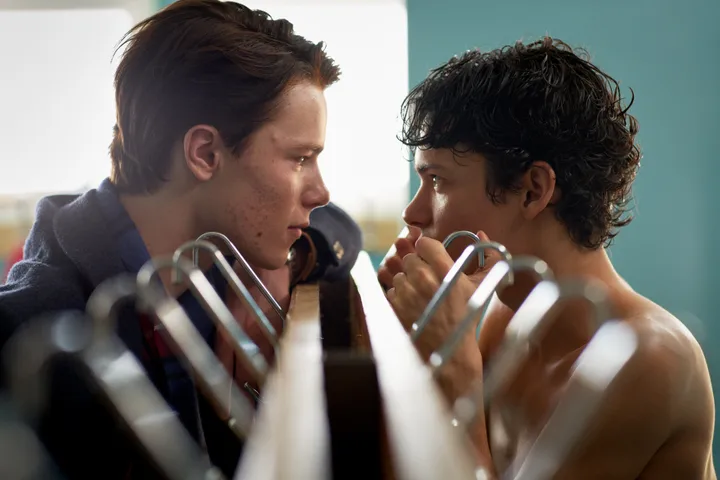
Edvin Ryding and Omar Rudberg in Young Royals

In the new Netflix movie Heartstopper Forever, one of the 2020s’ most popular love stories reached its bittersweet final chapter.

For the last four years, fans the world over have been engrossed in the romance between Kit Connor’s Nick Nelson and Joe Locke’s Charlie Spring, with the final instalment in the saga taking the form of a feature-length movie, which sees the central couple heading into the next stage of their adult lives.

If you’ve now found yourself grieving the fact that the teen drama will not be returning, we’d suggest taking this time to branch out and check out some more of the best queer romances that TV have to offer.

Here are nine of our top suggestions to get you started…

Advertisement

Young Royals

Edvin Ryding and Omar Rudberg in Young Royals

Effectively a mix of Heartstopper, Red, White & Royal Blue and another popular Scandinavian teen series, Skam, Young Royals takes place at an elite Swedish boarding school, where the crown prince suddenly finds he’s fallen for a scholarship student in his class.

Wille and Simon’s love story is every bit as gripping as Nick and Charlie’s, but while Heartstopper has repeatedly been both praised and criticised for its wholesome sheen, Young Royals offers a grittier look at young life more in keeping with other popular teen dramas such as Sex Education or Skins.

Young Royals is now streaming on Netflix.

Heated Rivalry

Advertisement
Connor Storrie and Hudson Williams in Heated Rivalry

The Heated Rivalry fandom definitely matches Heartstopper’s in terms of viewers’ sheer devotion to its central couple.

What started out as a low-budget Canadian series adapting a cult queer romance novel rapidly snowballed into an international sensation when it debuted last year, making overnight sensations of its lead actors Connor Storrie and Hudson Williams.

And while much has been made of Heated Rivalry’s racy sexual scenes (and rightly so, because the show really has done a great job with them), it’s important not to overlook how fantastically Connor and Hudson bring Ilya and Shane’s romance to life on the small screen, portraying two burgeoning ice hockey players on competing teams, who are hiding a secret love affair away from the rink.

If you’ve been putting off watching Heated Rivalry, maybe take this as your sign to finally check out what all the fuss is about.

Heated Rivalry is now streaming on HBO Max and Now in the UK.

Advertisement

Love Victor

Michael Cimino and George Sear in Love Victor

Originally intended as a TV spin-off of the hit teen film Love Simon, Love Victor eventually went on to take on a life of its own over its three seasons.

In season one, we’re introduced to the titular teen Victor Salazar, who is settling into a new school in Atlanta, where he’s moved with his family, all while getting to grips with themes like sexual identity, coming out and the highs and lows of first love.

Much like Heartstopper, Love Victor also explores ideas around difficult family dynamics and the importance of friendship, with many of our hero’s close-knit group going through unconventional romantic situations of their own.

Love Victor is now streaming on Disney+.

Advertisement

Atypical

Brigette Lundy-Paine and Fivel Stewart in Atypical

The Netflix original series Atypical ran for four seasons, with Keir Gilchrist taking the lead as a young man with autism who announces he’s ready to begin dating.

A high school comedy unlike any other, Keir’s lead character Sam is in the spotlight for most of the series, but as the years progressed, fans became engrossed in the blossoming love story that slowly developed between Casey, his younger sister, and Izzie, a girl at her school who is introduced in the second season.

Be warned, though, despite an initial renewal for a fifth season, Netflix eventually threw the brakes on Atypical prematurely, citing the Covid pandemic as its reasoning at the time, though many fans are hopeful they may one day see a resolution to Casey and Izzie’s romance.

All four seasons of Atypical are now streaming on Netflix.

Advertisement

A League Of Their Own

Abbi Jacobson and D’Arcy Carden in A League Of Their Own

Based on the hit 90s film of the same name, A League Of Their Own centres around a female baseball team in 1940s America, and the various relationships between its members.

Upon its release in 2022, the series was praised by critics for spotlighting queer themes that were barely alluded to in the original movie, and went on to win a prize at the GLAAD Media Awards the following year.

While its core romance is between teammates Carson Shaw and Greta Gill (played by Broad City’s Abbi Jacobson and The Good Place’s D’Arcy Carden), the series showcases a range of characters navigating queer life at a very different time in history to the likes of many of today’s popular LGBTQ+ shows.

Sadly, like Atypical, A League Of Their Own was cut short despite its popularity, this time owing to the Hollywood strikes of 2023.

Advertisement

A League Of Their Own is now streaming on Prime Video.

Feel Good

Charlotte Ritchie and Mae Martin in Feel Good

If Heartstopper Forever’s turn of events has got you in the mood for a queer romance that’s decidedly more mature, we’d definitely recommend Feel Good.

Mae Martin takes the lead in this dark rom-com, playing a struggling comedian in London loosely inspired by themself, who becomes quickly infatuated with a woman she meets at one of her stand-up shows, played by You’s Charlotte Ritchie.

Central duo Mae and George’s romance is definitely a rollercoaster, but it’s one you can’t help but root for, as they overcome many relatable hurdles in new relationships, such as family drama, culture clashes and sexual compatibility, as well as tackling more serious issues including addiction, mental health struggle and gender difference.

Advertisement

Running for just two seasons, Feel Good is perfectly binge-able, and despite its acclaim (including Bafta recognition) is still criminally underrated.

Both seasons of Feel Good is now streaming on Netflix.

Smiley

Carlos Cuevas and Andrea Resmini in Smiley

Smiley is a Spanish romantic comedy about two men who meet by chance, when one messages the other by accident.

Despite being different in almost every way, the two have undeniable chemistry, and spend the course of the series debating whether or not that’s a strong enough foundation to build a relationship on, set against the colourful backdrop of Barcelona’s queer scene.

Advertisement

One thing we would point out is that it is technically set over the festive period, but given its sun-drenched setting, it shouldn’t jar too much if you can’t wait until December to hit play on it.

Smiley is now streaming on Netflix.

Fellow Travelers

Jonathan Bailey and Matt Bomer in Fellow Travelers

Alright, if Heartstopper’s more tame approach to queer love always felt a little on the sanitised side, Fellow Travelers might well be more your taste.

Jonathan Bailey and Matt Bomer won huge critical acclaim (and an Emmy nomination each) for their work in this limited series, playing two men who become embroiled in a passionate decades-spanning love affair.

Advertisement

Over the course of the episodes, their tumultuous romance that takes viewers on a journey through 20th century queer history, beginning at the height of McCarthyism in the 1950s and carrying on right through till the AIDS crisis of the 80s – interspersed, it should be noted, with some of the most talked-about sex scenes of 2020s TV.

Fellow Travellers is now streaming on Paramount+.

Source link

Advertisement
Continue Reading
Click to comment

You must be logged in to post a comment Login

Leave a Reply

Politics

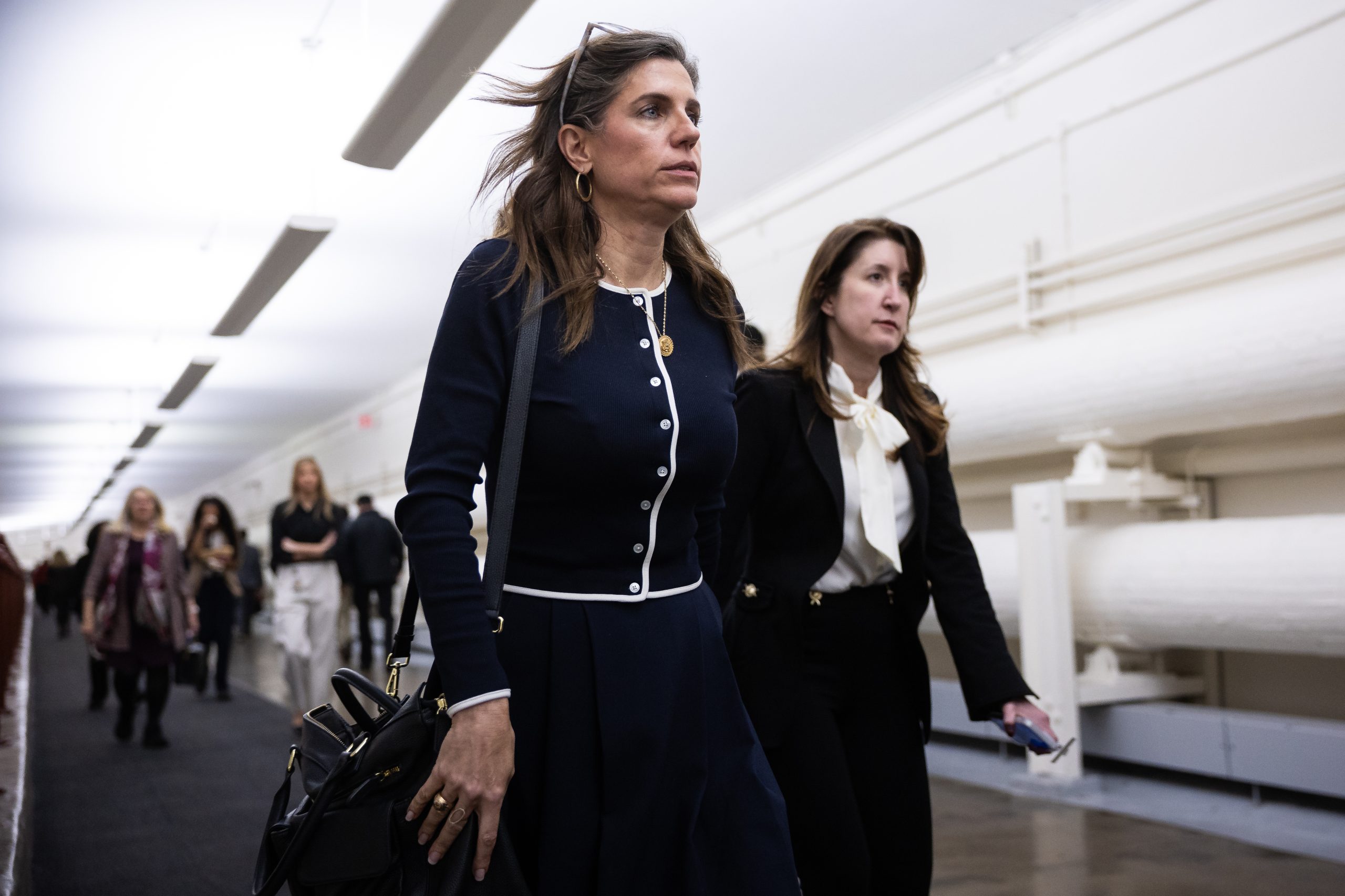
Nancy Mace won’t run for Lindsey Graham’s Senate seat

Published

on

Nancy Mace won’t run for Lindsey Graham’s Senate seat

Firebrand Republican Rep. Nancy Mace announced Monday that she will not run for the South Carolina Senate seat held by the late Lindsey Graham.

“I’m not running for the U.S. Senate, not because I’m backing down from a fight, but because the one I’m already in matters right now,” she said in a video announcement.

Her decision comes after a fifth-place primary finish in her run for governor earlier this year and as the race to succeed Graham is already taking shape.

Mace began exploring the viability of a potential bid just hours after Graham’s death became public, two people familiar with her thinking told POLITICO at the time, but decided against a second statewide bid in as many months.

Advertisement

Her decision effectively guarantees she will not be serving in elected office once her term ends early next year.

Source link

Continue Reading

Politics

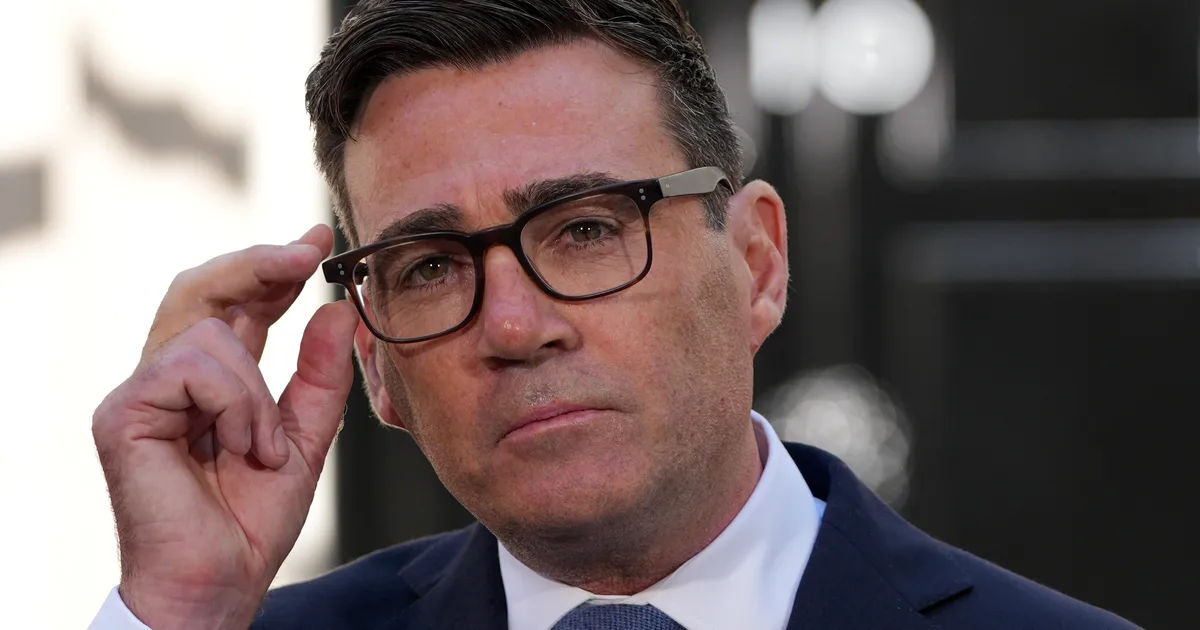
Andy Burnhams Labour Factionalism Pledge Lasts 3 Days

Published

on

Andy Burnhams Labour Factionalism Pledge Lasts 3 Days

Andy Burnham was very clear when he became Labour leader last Friday.

“Factionalism has bedevilled us,” he said. “Today we moved beyond it.”

It was the correct diagnosis, and a noble ambition.

Keir Starmer’s government had undoubtedly been one of the most factional in living memory, with anyone not viewed as a loyalist banished to the backbenches.

Advertisement

The former PM’s supporters would argue that his ultra-strict approach was effective, rescuing Labour from the chaos left behind by Jeremy Corbyn and delivering a landslide election victory.

But it also bred intense resentment among Labour MPs, meaning that when Starmer’s back was up against the wall, he had few true allies he could rely on to support him.

So Burnham was right to call an end to the self-defeating schisms which have long been a part of Labour tradition.

However, when presented with the opportunity to put his fine words into action, the new prime minister flunked it.

Advertisement

Throughout Monday afternoon, those cabinet ministers seen as loyal to his predecessor were informed that their services were no longer required.

Chancellor Rachel Reeves – once integral to the entire Starmer project – was axed, although sources close to her insisted she was offered “a big job” as consolation and turned it down.

David Lammy, Starmer’s deputy, was also removed from cabinet, as were Darren Jones, Steve Reed, Peter Kyle, Nick Thomas-Symonds and Jenny Chapman.

In their place came key Burnham supporters like new foreign secretary Ed Miliband and Chancellor of the Duchy of Lancaster Louise Haigh, two MPs who did more than most to get Starmer out.

Advertisement

Of course, every new PM is entitled to fill their cabinet with as many allies as they wish.

But having made such a virtue of unity and harnessing all the talents of the Parliamentary Labour Party, the message from PM Burnham was clear: ending factionalism can wait until tomorrow.

Listen to Commons People, the podcast that makes politics easy. Every week, Kevin Schofield and Kate Nicholson unpack the week’s biggest stories to keep you informed. Join us for straightforward analysis of what’s going on at Westminster.

Advertisement

Source link

Continue Reading

Politics

Politics Home Article | Andy Burnham Makes John Healey His Chancellor

Published

on

Andy Burnham Makes John Healey His Chancellor

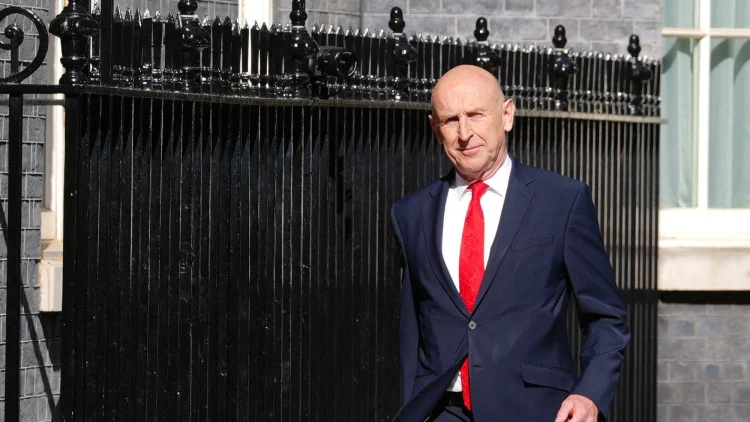
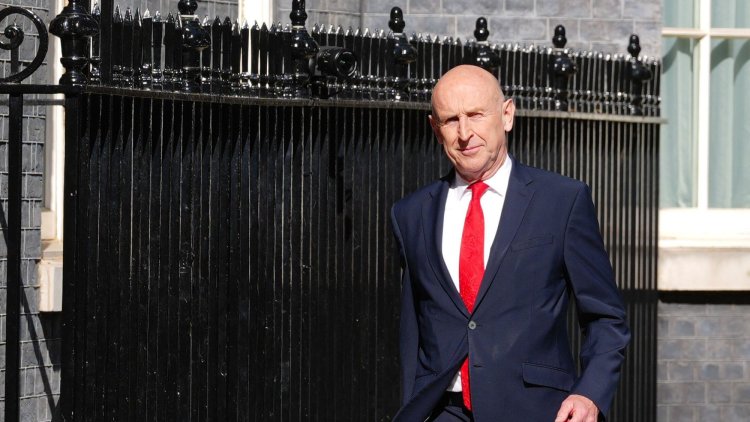
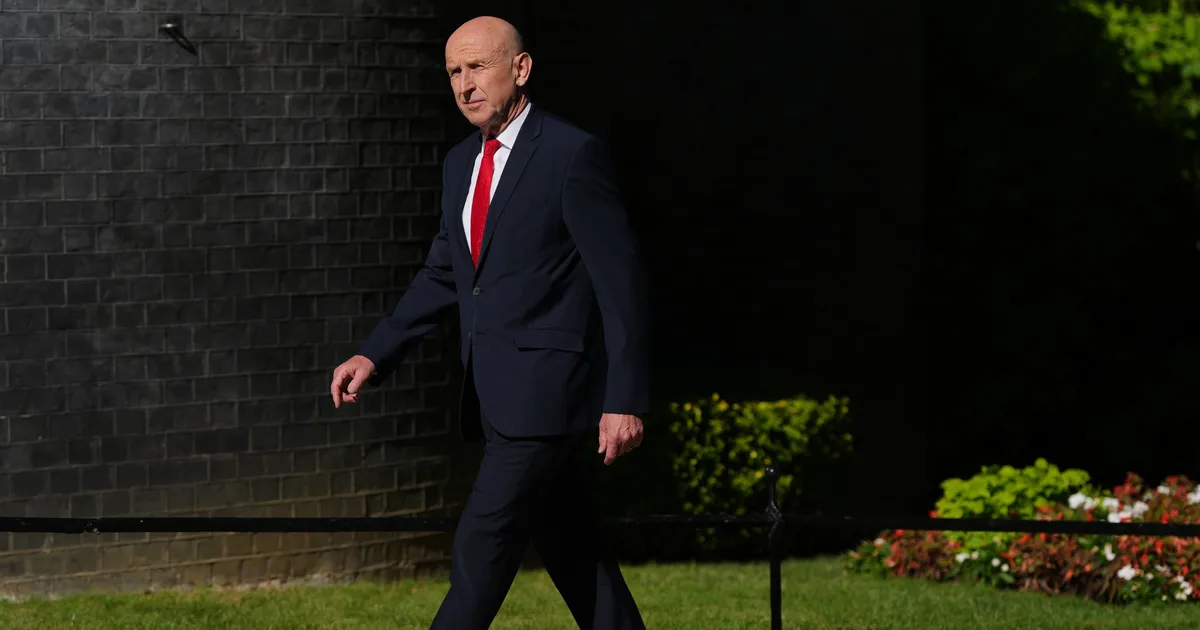
New Chancellor John Healey walks up Downing Street (Alamy)


1 min read

Andy Burnham has appointed John Healey as his Chancellor of the Exchequer.

Advertisement

Healey, who resigned as defence secretary in June over former prime minister Keir Starmer’s planned defence spending, was Burnham’s first Cabinet appointment on Monday.

The Yorkshire MP has said that Britain should increase its decrease spending to reach 3 per cent of GDP by 2030 in response to global threats, up from the current planned level of 2.7 per cent.

Healey replaces Rachel Reeves, who has left government along with other close Starmer allies to make way for the new administration.

Advertisement

Burnham officially became prime minister earlier today, succeeding Starmer.

The former Greater Manchester mayor is expected to give senior ministerial positions to Shabana Mahmood and Ed Miliband, as well as his allies Angela Rayner, Lou Haigh and Lucy Powell.

Burnham’s decision to put Healey in the Treasury came somewhat as a surprise, with Mahmood and Miliband seen as frontrunners for the job.

More follows…

Advertisement


Advertisement

Source link

Continue Reading

Politics

John Healey: who is the new chancellor and what does he believe?

Published

on

MDU logo

John Healey has been appointed as the new chancellor of the exchequer.

Healey’s appointment came as Andy Burnham announced his cabinet hours after becoming prime minister on Monday afternoon. 

Healey is the Labour MP for Rawmarsh and Conisbrough, having first been elected to parliament at the 1997 general election. In the 2024 general election, Healey won 16,612 votes, representing 49.0% of the vote. The Reform UK candidate, Adam Wood, received 9,704 votes (28.6%), while the Conservative candidate, Oliver Harvey, secured 4,496 votes (13.3%). Healey was duly elected with a majority of 6,908 votes.

Healey served as defence secretary from July 2024 to June 2026. He resigned in June 2026 over a dispute regarding military spending and the defence investment plan (DIP) specifically.

Advertisement

In his resignation letter to Keir Starmer, then the prime minister, Healey said the proposed defence investment plan “falls well short of what is required for defence and the country at this dangerous time”.

Healey said Starmer had been “unable” and the Treasury “unwilling” to “commit the resources that the nation needs to defend the country at this time of rising threats”. Healey’s resignation came at a time of acute pressure for Starmer in the wake of the May 2026 local elections.

Prior to the 2024 general election, which saw Labour returned to power after 14 years in opposition, Healey served extensively in the shadow cabinet. He was shadow secretary of state for defence from April 2020 to May 2024, shadow secretary of state for housing from October 2016 to April 2020, shadow housing and planning minister from September 2015 to June 2016, shadow secretary of state for health from October 2010 to October 2011, and shadow housing minister from May to October 2010.

In June 2016, Healey was among those to resign from the shadow frontbench in protest at Jeremy Corbyn’s leadership and his approach to the referendum on Britain’s membership of the European Union (EU).

Advertisement

In his resignation letter, Healey criticised Corbyn’s “failure to recognise the turmoil” that had followed the referendum campaign.

He added: “Whilst we all have a responsibility to help maintain a unity of Labour purpose and provide a strong Labour voice at this time of unprecedented national uncertainty and lack of government leadership post-Brexit, you are clearly not prepared to accept the special responsibility you have in acting to meet these challenges.”

In a November 2020 interview with LabourList, shortly after becoming shadow defence secretary, Healey outlined his mission to “develop an authoritative Labour voice on defence again”. As shadow defence secretary, Healey was seen to be a crucial force in re-establishing the party’s credibility on national security. His overarching message was that Labour was an unconditionally patriotic party, dedicated to both a strong defence and the welfare of service personnel. In this capacity, he repeatedly stressed his and Labour’s support for Ukraine after Russia’s invasion in 2022.

In May 2015, Healey announced his intention to run for the Labour Party’s deputy leadership. At the time, Healey said he had not originally intended to stand but was “dismayed at how narrow and shallow the debate has been so far”.

Advertisement

In an article for the Guardian, Healey wrote: “I know I’m a late entrant when others have been up and running for some time. But the scale of the defeat, the complexity of the lessons and the huge task of holding things together while we rebuild requires a unifier – someone who can work across the political breadth of the party and with the unions.”

He added: “Our new leader must be able to give their total attention to establishing themselves and re-establishing Labour with the country.

“Labour’s internal affairs have to be left largely to others but their deputy must be much more than a party manager and motivator.”

Healey said Britain should be “leading as a force for good in the world within an outward-looking Europe, embracing our international obligations on both military and aid spending, as well as on climate change. Labour has more than a century’s proud history as an internationalist party.”

Advertisement

Healey announced his withdrawal from the race in June 2015, professedly “to make sure we get the range and number of candidates that party members deserve.” Before dropping out of the race, he had secured 20 nominations, including Sarah Champion, Clive Efford, Andy Slaughter, Clive Betts and Ruth Cadbury. He went on to support Angela Eagle’s candidacy.

In July 2013, Healey introduced the Letting Agents (Competition, Choice and Standards) Bill to parliament – an early attempt to regulate the private rented sector by proposing a mandatory national licensing scheme for all agents and, significantly, seeking to ban letting agent fees charged to tenants. The government later introduced a ban on most tenant fees in the Tenant Fees Act 2019.

Introducing the bill under the 10-minute rule procedure, Healey argued that a “silent crisis” was affecting the nine million people in “generation rent”, who had better consumer rights when “buying a fridge” than when renting a home.

He told the House: “The private rented market is now failing too many despairing tenants who feel let down by low standards and ripped off by high fees. This sector has been called the property market’s wild west.

Advertisement

“It is high time parliament brought the rule of law to bear on the cowboys, and my bill would do just that.”

The Surrogate Parents (Leave, Pay and Allowance Arrangements) Bill, introduced by Healey in April 2012, sought to modernise parental rights by giving parents of children born via a surrogate the same legal entitlement to paid leave from work as adoptive parents.

Healey was instrumental in the “Shout” (Social Housing Under Threat) campaign – a movement that formed after Healey wrote a 2013 Guardian blogpost warning that social housing would be lost unless people stood up to defend it. In the piece, Healey paraphrased Aneurin Bevan’s famous description of the NHS, saying that public housing will “last as long as there are folk left with the faith to fight for it”.

In a 2014 article, again for the Guardian, Healey wrote: “If anyone doubts the urgency of Shout’s cause, they need only read the latest Homes and Communities Agency prospectus.

Advertisement

“After coalition ministers cut grant funding for new social homes by more than 60% in 2010, their new prospectus starkly confirms the marginalisation of genuinely affordable housing: ‘social rent provision’, it says, ‘will only be supported in very limited circumstances’.

“The campaign is a challenge not just to the Conservatives but to all parties. Each has said they want to end the housing crisis but none so far have made a commitment to the measures needed to achieve this goal. That’s why the time has come to Shout about social housing.”

Under the last Labour government, Healey held several ministerial positions, including minister of state for housing and planning from June 2009 to May 2010, minister of state for local government from June 2007 to June 2009, financial secretary to the Treasury from May 2005 to June 2007, economic secretary to the Treasury from May 2002 to May 2005, and parliamentary under-secretary of state for adult skills from June 2001 to May 2002.

Healey was parliamentary private secretary (PPS) to the chancellor of the exchequer, Gordon Brown, from 1999 to 2001. A PPS acts as an unpaid parliamentary assistant, providing a link between the senior frontbencher and backbench MPs.

Advertisement

Healey was a member of the House of Commons public accounts committee from July 2005 to November 2007, and the education and employment committee from July 1997 to November 1999.

During his time as a backbencher, Healey campaigned for Suez veterans to be awarded the General Service Medal. In a March 2001 Westminster Hall debate, Healey stated: “This year is the 50th anniversary of the deployment of our troops in the Suez canal zone.

“I urge [the government] to make this year the one in which we allow the committee on the grant of honours, decorations and medals finally to give the case a full and fair hearing.”

In July 2001, Healey was among a group of “up and coming young” Labour MPs and ministers to call on the government to abandon its “control-freak” policy towards public services. A report, published in the Labour journal Renewal, argued that a “second-term [New Labour] government needs to control and measure less, but explain and inspire much more.” The MPs urged the government to be “more upfront” with its goals of social justice, calling for a commitment to “devolve ever more responsibility and power from central government” in order to thwart the “perils of centralisation”.

Advertisement

Healey delivered his maiden speech on 19 May 1997. 

In it, he said: “I am proud to be part of a party committed to govern in the interests of the many, not the few. It is right that we reflect the concerns of middle England, but our greatest responsibility as a one-nation government is to close the widening gap between the haves and the have-nots. 

“Our biggest challenge is to bring new opportunities to those who have been left out or overlooked.”

He added: “We must not take for granted those who have stayed loyal to Labour through the dark decades. They are looking to Labour for a fresh start. They are looking to us for a fair deal. My job is to help to make sure that a change in government brings change in the lives and prospects of people in Wentworth.”

Advertisement

Healey previously stood unsuccessfully as the Labour candidate for Ryedale in the 1992 general election, finishing third to Conservative incumbent John Greenway on 9,812 votes (13.8%).

John Healey: political views and notable votes

Leadership elections and loyalty

Healey was one of 82 Labour MPs who nominated Keir Starmer for the party’s leadership in early 2020. The election was triggered by the resignation of Jeremy Corbyn following the party’s defeat in the 2019 general election, which resulted in Labour’s fewest seats in the House of Commons since 1935.

Starmer’s 82 nominations were the highest of any candidate. The shadow Brexit secretary won a decisive victory in the first round with 56.2% of the vote, defeating Rebecca Long-Bailey and Lisa Nandy.

Advertisement

Healey nominated Yvette Cooper for the party’s leadership in June 2015. The election followed the resignation of Ed Miliband after the party’s defeat in the 2015 general election. It was the first contest held under the “one member, one vote” system, which replaced the previous electoral college.

Cooper, the shadow home secretary, secured 59 nominations from the Parliamentary Labour Party (PLP), comfortably exceeding the 35 required to reach the final ballot. She ultimately finished third in the contest with 17% of the vote.

In March 2016, Healey was labelled as “neutral but not hostile” by the Corbyn leadership in a leaked list which categorised Labour MPs by their perceived loyalty.

Healey was one of 162 Labour MPs who nominated Owen Smith for the party’s leadership in July 2016. The election was triggered by a challenge to Jeremy Corbyn following the EU referendum, which led to a wave of shadow cabinet resignations and a vote of no confidence supported by 172 MPs. Smith, the former shadow work and pensions secretary, was ultimately defeated by Corbyn, who won with an increased mandate of 61.8% of the vote.

Advertisement

Healey was one of 33 Labour MPs who nominated Ed Balls for the party’s leadership in May 2010. The election followed the resignation of Gordon Brown, who stepped down as prime minister and Labour leader after the 2010 general election.

Balls, the former children, schools and families secretary, was regarded as the ultimate “Brownite” candidate, having served as Brown’s chief economic adviser for a decade before entering parliament. He secured 33 nominations from the Parliamentary Labour Party, the minimum required to reach the final ballot. He ultimately finished third with 16% of the vote

Factional identity and party tradition

In 2017, Healey was listed among the supporters of the Tribune parliamentary group – a caucus generally described as representing the party’s “soft left”. The Tribune group was initially formed in 1964 to support the newspaper of the same name. It served as a prominent forum for those parliamentarians situated on the left of the Labour Party – but it split over Tony Benn’s campaign for the deputy leadership in 1981. Benn’s supporters founded the Campaign group – which evolved into the Socialist Campaign Group (SCG). Today, the Bennite SCG is strongly associated with the Labour left tradition. During the 1980s, the Tribune group emerged as a more natural home for those on Labour’s “soft left”. In 2017, the group was re-launched with a new mission statement calling for “opportunity and aspiration” to be placed at the heart of the party’s programme.

Advertisement

In a November 2016 article for LabourList, written shortly after Paul Nuttall became leader of the UK Independence Party (Ukip), Healey argued that Labour must urgently prove it could once again be the voice of “blue-collar Britain”.

He argued that the first step to rebuilding this trust was to unequivocally accept the result of the EU referendum and to develop a policy for managed migration.

He wrote: “Base one is accepting the EU referendum vote and fighting for the best deal for Britain based on that result, including managed migration. That alone won’t win back support among blue collar voters who have given up on Labour or who are leaning to UKIP – but without that we won’t even get a hearing.”

Brexit and Europe

Advertisement

Healey supported the Remain campaign in the 2016 Brexit referendum, and therefore disagreed with a majority of his constituents, 70.3% of whom voted to Leave.

In February 2017, Healey voted in favour of the European Union (Notification of Withdrawal) Bill. The legislation empowered the prime minister to notify the Council of the European Union of the UK’s intention to withdraw, formally triggering the process set out in Article 50 of the Treaty on European Union. MPs supported the bill by 498 votes to 114 at second reading.

Social values and conscience issues

Healey voted in favour of the Terminally Ill Adults (End of Life) Bill, better known as the assisted dying bill, at both second reading (November 2024) and third reading (June 2025).

Advertisement

Healey voted in favour of a backbench amendment to the Crime and Policing Bill that sought to decriminalise abortion in England and Wales in June 2025. The amendment, which was passed by a majority of 242 votes, removed women from the threat of prosecution for ending a pregnancy at any stage. As an issue of conscience, MPs were allowed to vote according to their personal beliefs.

In February 2013, Healey voted in favour of the Marriage (Same Sex Couples) Bill at its second reading. The landmark piece of legislation, which received its second reading by 400 votes to 175, legalised marriage for same-sex couples in England and Wales.

Foreign policy and security

Healey voted in favour of a government motion calling for the renewal of the Trident nuclear deterrent system in July 2016. The motion, which was passed by 472 votes to 117, committed the UK to constructing a new fleet of submarines to carry the nation’s nuclear weapons. Labour was split over the issue with 140 of its 230 MPs going against leader Jeremy Corbyn and backing the motion.

Advertisement

Healey voted against a government motion to extend UK airstrikes against Isis from Iraq into Syria in December 2015. The motion, which was passed by 397 votes to 223 after a ten-hour debate in the House of Commons, authorised the RAF to conduct strikes against Isis targets in Syria.

In October 2014, Healey voted in favour of recognising Palestine as a state. The motion, passed by 274 votes to 12, called on the government to “recognise the state of Palestine alongside the state of Israel as a contribution to securing a negotiated two-state solution”.

Healey voted against the government’s motion on the principle of military intervention in Syria in August 2013. The government motion was defeated by 285 votes to 272, a move which effectively ruled out UK participation in any US-led military strikes.

In March 2003, Healey voted in favour of the government motion authorising military action against Iraq. The vote, one of the most contentious in recent parliamentary history, gave the prime minister, Tony Blair, the authority to join the US-led invasion.

Advertisement

In a March 2024 Guardian interview, Healey was reluctant to describe the Iraq War as a mistake. “I can’t say that, you know, the decision that was taken at the time, that I was part of, wasn’t sound at the time”, he said.

He added: “I mean, having made that decision [military intervention], we didn’t have the fully fledged, beyond the military, sort of plan for the future. We didn’t follow through with the diplomatic, economic redevelopment regeneration and long-term security for Iraq or that wider region, which was required.

“And, you know, some of the consequences of instabilities now do have roots in that period.”

He said that the decision to go to war “wasn’t sound at the time”, arguing that the lesson was that military intervention could not be successful outcome without sufficient diplomatic, economic and security planning.

Advertisement
John Healey: background and career before politics

Born on 13 February 1960 in Wakefield, West Yorkshire, Healey studied at Lady Lumley’s School, Pickering, and the independent St Peter’s School, York. He studied social and political science at Christ’s College, Cambridge, graduating in 1982.

Healey worked briefly as a journalist as editor of The House.

He then worked for several national charities as a disability rights campaigner from 1984. He was head of communications for the Manufacturing, Science and Finance (MSF) trade union (1992-1994) and campaigns director for the Trades Union Congress (TUC) from 1994 until his election in 1997. He was also a tutor at the Open University Business School.

John Healey: personal life and trivia

Healey married Jackie Bate in 1993. They have one son.

Advertisement

Healey once kept a hard hat in his office – a souvenir from his visits to construction sites during his time as housing minister under Gordon Brown.

Source link

Advertisement
Continue Reading

Politics

Andy Burnham Appoints John Healey As Chancellor

Published

on

Andy Burnham Appoints John Healey As Chancellor

John Healey has been appointed Chancellor of the Exchequer as Andy Burnham carried out a major shake-up at the top of government.

Other big names returning to the backbenches include David Lammy, Darren Jones, Peter Kyle and Steve Reed.

Healey’s appointment came as a major surprise as it was understood that Shabana Mahmood and Ed Miliband were the two frontrunners for the role.

It is thought that Mahmood may remain home secretary, with Miliband becoming foreign secretary.

Advertisement

Downing Street sources said Burnham wanted “an experienced, trusted figure” to deliver his economic vision.

“Andy Burnham and John Healey have the same outlook – not only on the need to maintain economic stability and the current fiscal rules, but on re-industrialisation, devolution, helping people with the cost-of-living crisis and backing British jobs and British industry to drive growth across the country,” a source said.

Listen to Commons People, the podcast that makes politics easy. Every week, Kevin Schofield and Kate Nicholson unpack the week’s biggest stories to keep you informed. Join us for straightforward analysis of what’s going on at Westminster.

Advertisement

Source link

Continue Reading

Politics

Andy Burnham appoints new cabinet: who’s in and who’s out

Published

on

MDU logo

Andy Burnham has begun appointing his cabinet, hours after entering Downing Street as Britain’s new prime minister.

Burnham was formally appointed by King Charles at Buckingham Palace on Monday afternoon, succeeding Keir Starmer, who resigned as Labour leader last month.

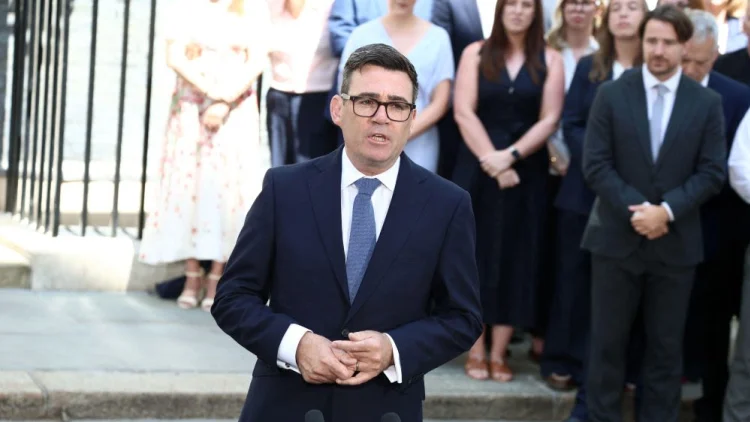
Speaking outside No 10 in his first address as prime minister, Burnham promised to “make this moment a circuit breaker for Britain” and to bring forward “the biggest changes in the last 40 years, a new political model and a new economic model”.

So far, the reshuffle represents a sweeping clear-out of ministers closely associated with the Starmer government. 

Advertisement

Rachel Reeves has left as chancellor, David Lammy has departed as deputy prime minister and justice secretary, and housing secretary Steve Reed and business secretary Peter Kyle have also left government.

Read the full list of confirmed departures and appointments below. 

Appointments:

  • Andy Burnham – prime minister

*This article will be updated as further appointments are announced.*

Departures:

Advertisement
  • Rachel Reeves – formerly chancellor of the exchequer
  • David Lammy – formerly deputy prime minister and justice secretary
  • Steve Reed – formerly housing secretary
  • Darren Jones – formerly chief secretary to the prime minister and chancellor of the Duchy of Lancaster
  • Peter Kyle – formerly business and trade secretary
  • Liz Kendall – formerly science, innovation and technology secretary
  • Hilary Benn – formerly Northern Ireland secretary
  • Jo Stevens – formerly Wales secretary
  • Lord (Richard) Hermer – formerly attorney general
  • Jenny Chapman – formerly international development minister (attending cabinet)

*This article will be updated as further departures are announced.*

Starmer ally leaves government with parting shot at ‘disloyal’ MPs

Source link

Advertisement
Continue Reading

Politics

Burnham talks football and Strait of Hormuz in first call with Donald Trump

Published

on

MDU logo

Andy Burnham has held his first call with Donald Trump as prime minister, congratulating the US president on a “successful World Cup” and floating a future presidential visit to Manchester.

The call took place on Monday afternoon, shortly after Burnham was appointed prime minister by King Charles at Buckingham Palace following Keir Starmer’s resignation.

According to a readout issued by No 10 Downing Street, the new prime minister opened the conversation on football, with the United States having co-hosted the World Cup that concluded in New York on Sunday.

A Downing Street spokesperson said: “The prime minister began by congratulating the president on a successful World Cup and agreed that England had an excellent tournament.”

Advertisement

England finished third at the tournament, their best World Cup result in 60 years, beating France 6-4 in Saturday’s bronze final after a semi-final defeat to Argentina.

The spokesperson added: “The prime minister also hoped that he would be able to show the president what Manchester had to offer during a visit in the future.”

Burnham, who served as mayor of Greater Manchester for nine years before returning to the House of Commons in last month’s Makerfield by-election, used the call to set out his domestic agenda to the president.

The spokesperson said: “Setting out his vision as prime minister of the United Kingdom, the prime minister said he would be focused on ensuring reindustrialisation up and down the country to ensure good growth in every postcode.”

Advertisement

The readout continued: “The prime minister also underlined his commitment to defence and security and said ensuring the security of the UK and its Allies was at the top of his agenda.

“The president then updated on the situation in the Middle East, and the prime minister outlined the UK’s commitment to securing the movement of shipping in the Strait of Hormuz to support global supply chains and drive down costs for businesses and families across the country.

“They looked forward to speaking again soon.”

Burnham used his first speech as prime minister outside No 10 to promise to “make this moment a circuit breaker for Britain” before beginning a sweeping cabinet reshuffle that has seen Rachel Reeves, David Lammy and Steve Reed leave government.

Advertisement

Politics.co.uk is the UK’s leading digital-only political website. Subscribe to our daily newsletter for all the latest news and analysis.

Source link

Advertisement
Continue Reading

Politics

How PacSun Went From Bankruptcy To Gen Z Favorite

Published

on

How PacSun Went From Bankruptcy To Gen Z Favorite

!function(n){if(!window.cnx){window.cnx={},window.cnx.cmd=[];var t=n.createElement(‘iframe’);t.display=’none’,t.onload=function(){var n=t.contentWindow.document,c=n.createElement(‘script’);c.src=”//cd.connatix.com/connatix.player.js”,c.setAttribute(‘async’,’1′),c.setAttribute(‘type’,’text/javascript’),n.body.appendChild(c)},n.head.appendChild(t)}}(document);(new Image()).src=”https://capi.connatix.com/tr/si?token=19654b65-409c-4b38-90db-80cbdea02cf4″;cnx.cmd.push(function(){cnx({“playerId”:”19654b65-409c-4b38-90db-80cbdea02cf4″,”mediaId”:”95050fa1-9cd6-40c6-9944-2dae856431f2″}).render(“6a5e4877e4b06bbe43f25de1”);});

Source link

Continue Reading

Politics

14 Thoughtful Gifts That New Parents Will Actually Appreciate And Use Every Day

Published

on

14 Thoughtful Gifts That New Parents Will Actually Appreciate And Use Every Day

We hope you love the products we recommend! All of them were independently selected by our editors. Just so you know, HuffPost UK may collect a share of sales or other compensation from the links on this page if you decide to shop from them. Oh, and FYI — prices are accurate and items in stock as of time of publication.

When your loved one is having a baby, there’s an urge. That is, you immediately want to stockpile them with baby nappies, clothes, and everything you can think of to welcome their baby into the world.

Many parents bemoan the woes of being given way too many nappies and clothes for their newborn, but one thing we don’t think about enough is them.

Advertisement

Between recovering from childbirth and getting to grips with their new role, new parents barely have a second to think about themselves.

And while they can do all the preparation they like – and stock up on what they think are the essentials – when the baby comes it’ll be nothing but chaos, and all the baby clothes in the world aren’t going to solve that.

If you want to give them a gift that they’ll remember as taking some worries off their hands during a stressful time, we’ve consulted social media, friends, and family to find out the best gifts you can give a new parent.

Best gifts for new parents

Advertisement

They’re about to have a few years– at least – of running around after their little one, so anything you can give them to make their life easier when they’re out of the house will win you brownie points. This milk warmer has a 17 ounce capacity, and will heat milk and water to the perfect temperature in under five minutes. The charge lasts the entire day, and it has enough to heat milk up to eight times throughout the day, so they won’t have to worry about finding a microwave or a plug socket at any point when they’re out and about.

A significant amount of your loved one’s time is about to be spent feeding. To help reduce their arm strain, this nursing pillow sits precisely at the correct height for breastfeeding or bottle feeding. It not only has an arm rest for the parent, but is also safe and comfortable for their baby, and it can even grow with them.

The last thing they’ll want to think about is what to cook or eat when they’re newly responsible for another life. So trust us, they’ll be grateful for this set of healthy, filling, and mostly importantly quick meals that will last them a week.

When all the new parent food packages run out, they’ll still want something to turn to. Deliveroo gift cards are valid for up to a year, meaning you can provide them with enough to cover a few emergency takeaways, for those nights when things get a bit much.

In the rush of getting a nursery ready, it’s unlikely they’ll think of picking a nasal respirator ready for their newborn. This one is medical grade, and will save them from a lot of time trying to figure out why their little one is screaming.

In that same vein, a thermometer that can accurately read their baby’s temperature is something they might not think of until they need it. This one from Braun is loaded with age precision, so it works for both babies and adults, and it doesn’t need to be stuck in their ear to get a reading – which they’ll thank you for later.

They could have a million muslins, and it wouldn’t be enough. Multipacks in cute patterns can never go amiss, and these ones come covered in baby ducklings. Sweet!

Anything that will help with even a couple of hours of shut eye won’t go unappreciated. These headphones from Soundcore are designed specifically for sleep, as they’re smaller than most earbuds so they sit flush against your ear and don’t feel bulky while you’re lying down. They’re also loaded with noise cancellation that does a great job of blocking audible noise – whether that’s their baby crying or their partner snoring besides them. Plus, the Soundcore app comes full of sleep meditation music and white noise, if they need something extra to doze off.

They’re obviously not old enough to read yet, but what they can appreciate is the crinkly sound these pages make. With a ton of topics to choose from, Jo and Nic have created a sensory reimagining of cloth books, for the perfect distraction to keep babies busy.

Neal’s Yard Remedies

Any excuse for pampering will be a gift, so why not give them the tools to do it right? This collection comes with everything to keep a new family smooth and clean. As well as a baby skin-safe collection of shampoos, oils, and balms, there are a few treats in there for parents, including a bath oil, massage oil, and a balm for stretch marks.

Looking for a present that will last? This high chair from Stokke comes set with the works for a newborn chair, so they can sit at meals from an early age. But it’s much more than just a baby chair: in fact, the chair can be adjusted throughout the child’s life from a high chair to a toddler chair, and it’s even sturdy enough for a fully-grown adult, so it’ll become a true heirloom.

You’ll never know how many things you can do one-handed until you become a parent; drinking is one of the quick and easy ones. So they can easily carry their baby and their drink with them from room to room, a drinking bottle with a handle like this Stanley cup will come in handy. As well as coming in a ton of colours, the cup is coated in two walls of insulation, so it can keep drinks cold or iced up to 48 hours.

On the theme of doing things one-handed, you could also stock them up with a grab and go snack. Kind bars are healthy and delicious, and they can be eaten when standing, strolling, or even feeding.

After a certain point, TV simply doesn’t cut it. If they’re sick of finding a new show to watch, keeping a Kindle stashed near where they feed could help while away the time. It’s lighter than a book, and of course can store as many of them as you want, so you won’t have to keep remembering where you’ve put it down.

Source link

Advertisement
Continue Reading

Politics

The House Opinion Article | Burnham must embrace the politics of trying

Published

on

Burnham must embrace the politics of trying

Andy Burnham became Prime Minister on Monday (Alamy)


4 min read

To call Britain ungovernable is to give up.

Advertisement

On Monday, Andy Burnham became the sixth prime minister of the post-Brexit decade. In recent weeks, the familiar argument has resurfaced that Britain has become ungovernable: the public’s expectations fail to match reality, ‘cakeism’ has become ingrained, and voters’ impatience makes long-term change impossible.

But to blame voters for Downing Street’s revolving door is, frankly, a cop-out.

Look back at the leaders who have come and gone, and it’s hard to blame the public for largely self-inflicted errors: Liz Truss’s mini-budget; Boris Johnson’s Partygate; Theresa May boxing herself in on Brexit. 

Advertisement

For Keir Starmer: his inability to connect with the public; freebiegate; the Winter Fuel Allowance; and his appointment of Peter Mandelson.

Each one faced challenges, yet they also each sowed the seeds of their own destruction.

In each case, the public felt these leaders didn’t respect them and didn’t “get it”. As one Makerfield focus group participant said of Starmer: “He’s in his own little room in No 10, he’s not in the real world.” The first thing Burnham must do is show he genuinely respects the public – and that he’s actually trying to make a difference.

Advertisement

Public patience is wearing thin. Britain is by nature a nation of gradualists: even after giving Starmer his landslide and booting the Tories out, Britons in 2024 were still more likely to want smaller gradual changes to how the country works (52 per cent) than radical change (38 per cent).

Just two years later, More in Common’s research with the UCL Policy Lab finds those numbers have flipped: 42 per cent now want radical change, and just 36 per cent prefer gradual change. As this demand for radical change has grown, expectations have dropped. In 2024, 54 per cent expected the incoming Labour government to improve their lives; that fell to below a quarter under Starmer. Burnham gets those numbers back up to 41 per cent, but some of the political capital spent by Starmer won’t immediately come back.

Smaller, tangible interventions cut through, and again show voters that – even if fundamental change takes time – you are trying

Advertisement

That is why Burnham cannot count on a honeymoon. Our polling shows most Britons expect his government to have radically changed Britain within a year, and want to see progress on everything from NHS waiting times to small boat crossings. On the cost of living, the timeline is even shorter: a plurality wants progress within six months. Voters who have moved to the Greens and Reform UK demand immediate progress on the cost of living as the price of return.

In short, unless the Prime Minister can immediately show he gets it on cost of living, his window for a rehearing will slam shut. The good news for Burnham: he does not need to transform the economy in his first hundred days to pass that test. Mooted measures such as removing charges on energy bills will help to demonstrate the politics of trying. Asked to choose, Britons narrowly prefer smaller, targeted measures on the cost of living over a focus on growth, even if they make less long-term difference to the economy.

In our Makerfield focus groups, the Greater Manchester bus fare cap was raised repeatedly as one of Burnham’s top achievements. “It saved me about 60 quid a month, just by him capping the bus fare,” Ella, a nurse from Highfield, told us, “and I think everybody in whatever wage bracket you’re in is feeling it.” Smaller, tangible interventions cut through, and again show voters that – even if fundamental change takes time – you are trying.

Burnham’s signature agenda – devolution – resonates with voters. There is clear support across every party for moving power away from Westminster elites. But rewiring in the long term has to be accompanied by action in the short term on bread and butter issues. Voters will judge the policies like No 10 North by whether it actually improves their lives.

Advertisement

To call Britain ungovernable is to give up. To blame the public means we don’t look back at the people who have tried to lead Britain over the past decade, and ask what they might have done differently. It suggests that on the issues the public care most about –  public services, the NHS, migration, crime, job opportunities and, most urgently, the cost of living –  the government is powerless to deliver. It risks becoming self-fulfilling.

More than anything, the public wants to see that the government is trying.


Luke Tryl is the Executive Director of More in Common UK

Advertisement

Source link

Continue Reading

Trending

Copyright © 2025