Skip James did not make blues designed to make anyone feel comfortable.
His high, spectral voice, minor-key guitar tunings and unusual sense of rhythm gave his recordings an almost unsettling quality that still sounds unlike most Delta blues nearly a century later. There was nothing casual about the atmosphere, even when the instrumentation consisted of nothing more than one man, a guitar or piano, and a microphone.
That makes Devil Got My Woman a particularly strong candidate for the revived Bluesville series.
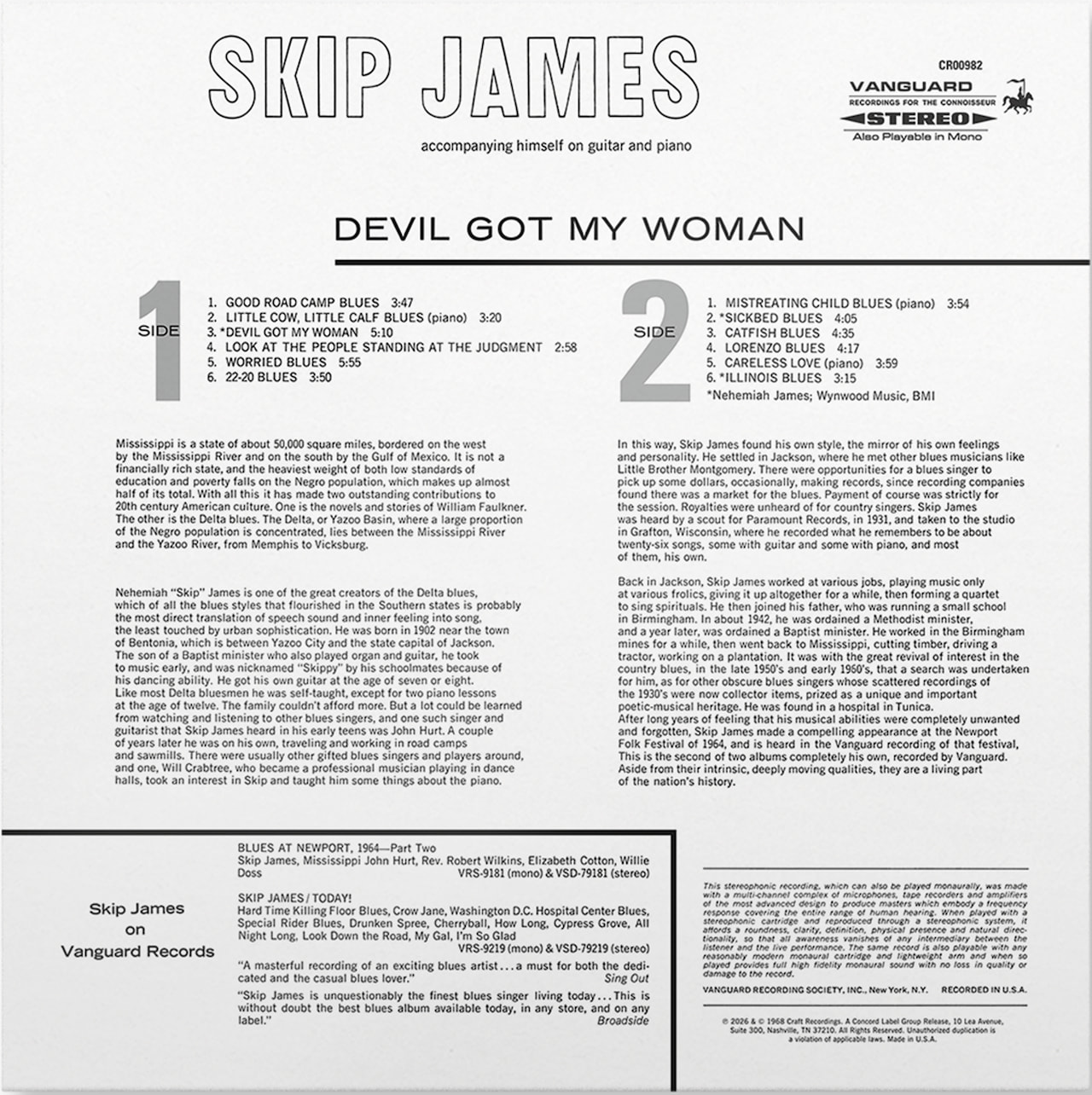
Craft Recordings will release the 1968 Vanguard album on August 21, 2026, as part of its revived Bluesville series. Priced at $33, the AAA edition was remastered from the original analog tapes by Matthew Lutthans at The Mastering Lab and pressed on 180-gram vinyl at Quality Record Pressings. The package includes a tip-on jacket and an obi with new reflections from Grammy-winning producer, songwriter and blues musician Scott Billington.
Advertisement
There is very little on this record for mediocre mastering or a noisy pressing to hide behind.
Related Reviews:
The Bentonia Sound
Nehemiah Curtis “Skip” James was born on June 9, 1902, near Bentonia, Mississippi, and developed a style that would become closely associated with that small part of the state.
James learned piano as a child and took up guitar as a teenager, drawing heavily from local musician Henry Stuckey. His playing eventually incorporated an open D-minor tuning, intricate fingerpicking patterns and harmonic structures that helped define what became known as the Bentonia school of blues.
The description is useful, but it does not fully explain why James sounds so strange beside many of his contemporaries. His guitar often creates tension rather than simply establishing a groove. Chords ring against one another in ways that feel unresolved, while the vocal seems to float above the instrument rather than lock neatly into it.
Advertisement
James could also sound considerably more delicate than the subject matter suggested. That combination became his signature.
Paramount and Disappearance
James traveled to Grafton, Wisconsin, in 1931 to record for Paramount Records, producing an extraordinary group of performances that included “Devil Got My Woman,” “I’m So Glad,” “Hard Time Killin’ Floor Blues,” “22-20 Blues” and “Cypress Grove Blues.”
They arrived at an exceptionally bad time to be selling records.
The Great Depression had devastated the market, Paramount itself was approaching collapse, and James’ recordings sold poorly. He subsequently withdrew from the commercial blues world, worked a variety of jobs and became involved with the church, including performing gospel music.
Advertisement
Advertisement. Scroll to continue reading.
For more than three decades, that appeared to be the end of his recording career.
His records, however, had begun attracting the attention of blues collectors and younger musicians who recognized that there was something highly unusual buried in those old Paramount sides.
The Rediscovery of Skip James
John Fahey, Bill Barth and Henry Vestine located James in Mississippi in June 1964, by which point he was receiving treatment in a hospital. Within weeks, he was appearing at the Newport Folk Festival.
Advertisement
The rediscovery arrived during a period when younger American and European audiences were becoming fascinated with prewar blues musicians whose original records had disappeared from circulation. Son House, Mississippi John Hurt and other artists suddenly found themselves performing for college students and folk audiences decades after their first recording careers had stalled.
James was a particularly odd fit for the revival, which probably helped.
He did not return sounding like an elderly musician attempting to recreate an old act for a new audience. The voice was still unmistakable, and the music retained its eerie quality. Vanguard Records eventually signed him, and the sessions that produced Devil Got My Woman were recorded in New York City from March 22 through March 24, 1967. Vanguard released the 12-track LP the following year.
It became the final album issued during James’ lifetime. He died on October 3, 1969.
Advertisement
The Devil in Two Different Eras
The title track creates one point of historical confusion worth clearing up.
The performance of “Devil Got My Woman” on this album is not the famous Paramount master recorded in 1931. James returned to the composition decades later and recorded it again for Vanguard.
It is the earlier recording that was inducted into the Blues Hall of Fame in 2006 and the Grammy Hall of Fame in 2020. That original performance also gained a much later audience through Terry Zwigoff’s 2001 film Ghost World, where its inclusion sent another generation looking for Skip James records.
Anyone who then decided an original Paramount 78 might be an affordable way to hear it learned something useful about the collector market.
Advertisement
James’ influence had already travelled far beyond blues scholarship. Cream recorded “I’m So Glad” for Fresh Cream in 1966, transforming his composition into something much louder and more obviously designed for people standing near amplifiers. Going from Cream back to James is roughly the musical equivalent of leaving Piccadilly Circus and waking up alone on a Mississippi road at midnight.
Advertisement. Scroll to continue reading.
One Man, Two Instruments
Devil Got My Woman also demonstrates why describing James primarily as an acoustic guitarist misses part of the story.
He accompanies himself on guitar for “Good Road Camp Blues,” “Devil Got My Woman,” “Look at the People Standing at the Judgement,” “Worried Blues,” “Sickbed Blues,” “Catfish Blues,” “Lorenzo Blues” and “Illinois Blues.”
Advertisement
The piano takes over on “Little Cow, Little Calf Blues,” “22-20 Blues,” “Mistreating Child Blues” and “Careless Love.”
The change of instrument alters the weight and movement of the performances without changing their emotional character. James’ piano playing can be more percussive and grounded, while the guitar material frequently feels suspended in space. There is no backing ensemble softening the edges or providing additional scale.
That makes this a particularly exposed recording. Voice, strings, keys, room sound and tape are essentially the entire presentation, which puts considerable pressure on any reissue to preserve texture without artificially brightening the recording or adding unnecessary weight.
James does not need modern hi-fi cosmetics. He needs to sound like Skip James.
Advertisement
The material is spare, frequently bleak and almost aggressively uninterested in making itself easy to digest.
That is part of its appeal.
There is a rawness and purity to Devil Got My Woman that immediately separates it from a lot of modern remastering work. You do not hear heavy EQ trying to make James’ voice larger, darker or more dramatic than it already is. He sounds like he is supposed to sound, which is really the only sensible goal with music this exposed.
We have no way of knowing exactly where the microphone was positioned during these sessions, but the guitar has both clarity and resonance without either quality overwhelming the other. Individual notes have definition, but they also bloom naturally and occupy their own space. Nothing feels artificially sharpened or shoved toward the listener.
Advertisement
Haunting is an overused word in music criticism, but it applies here.
This is one man, his guitar, his piano, whatever sorrow or inner hell he was carrying, and whatever life had already thrown at him by the time he walked into the studio. The presentation is clean without becoming clinical, and James is not pushed unnaturally far forward in the soundstage. The recording lets you move toward him rather than dragging him into your lap.
Advertisement. Scroll to continue reading.
The piano is handled equally well. It sits in line with his vocals, has enough tonal weight to sound convincing, and never becomes bloated or detached from the rest of the performance. There is body to the instrument, but the mastering does not attempt to turn an intimate blues recording into something grander than it was.
Advertisement
You either connect with the blues or you don’t.
Maybe you need to be slightly damaged as I am, and know what it means to trade your soul with the devil in the backseat of a 4Runner in a Westchester parking lot to understand what all of this means. The blues has never been about perfection. It is about regret, bad judgment, loneliness, survival and occasionally realizing that the bill has finally arrived.
The pressing itself is excellent. My copy was clean, centered and quiet enough that nothing distracted from the performances.
If you can listen to Skip James pouring all of this into a microphone and feel absolutely nothing, perhaps you are better suited to watching adults dance on TikTok while explaining things nobody needed explained in the first place.
For me, Devil Got My Woman is one of the best Bluesville reissues I have heard so far.
Microsoft has started rolling out a Classic Outlook theme for users of Outlook on the web and the New Outlook for Windows.
This new Outlook theme is rolling out as part of a targeted release beginning mid-August and expected to complete by the end of September. The theme will become generally available worldwide between late September and late October.
“When enabled, the setting applies coordinated changes across the Outlook experience, including visual styling, layout, typography, icons, and selected interactions,” Microsoft said in a Microsoft 365 Message Center update.
Once rolled out, the feature will not override any existing administrator configurations and will not automatically migrate users from classic Outlook to the new Outlook.
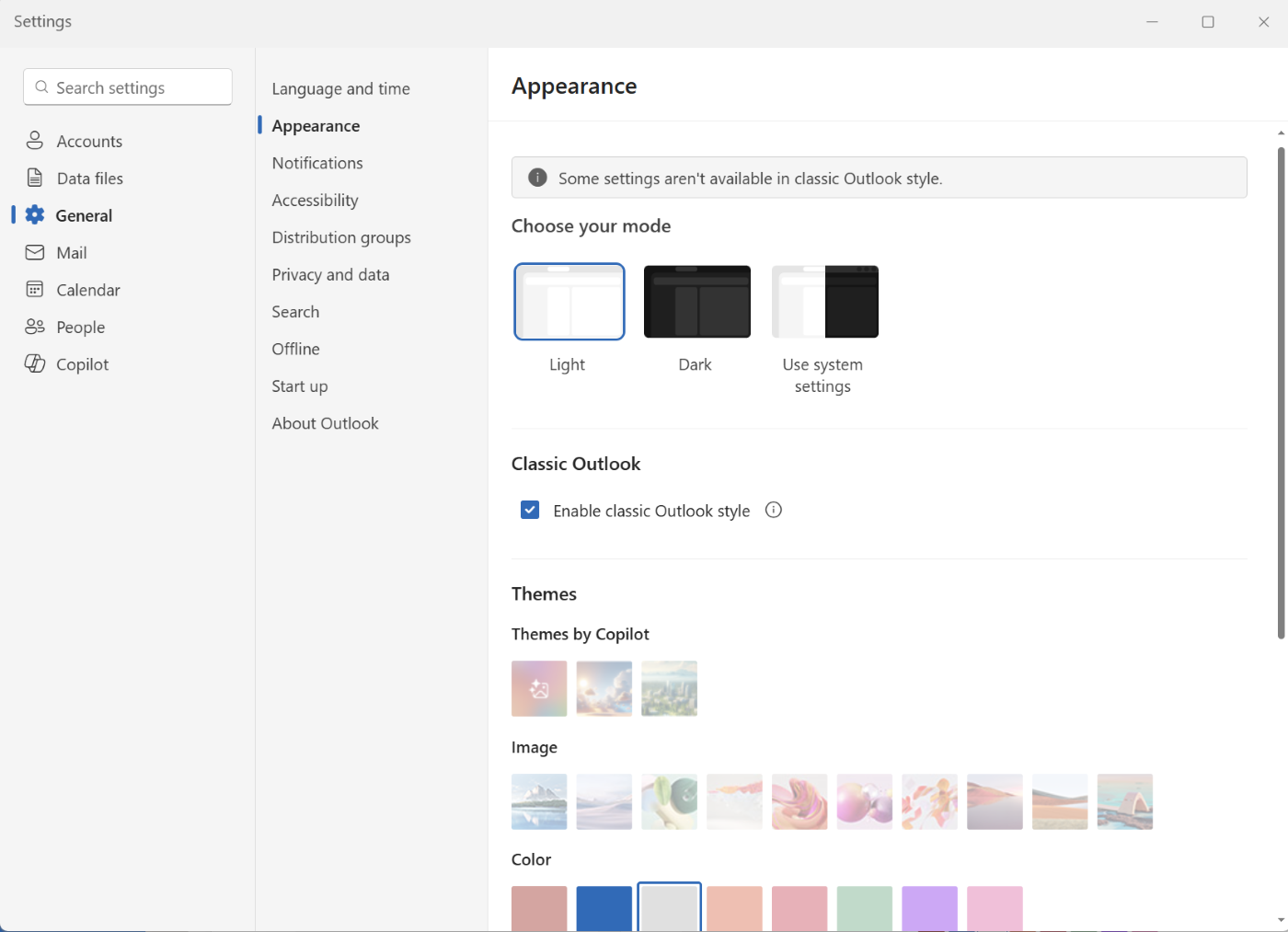
Microsoft also added that the new user interface style will be enabled by default for some users, but they can toggle it off to switch to the standard theme from Settings > General > Appearance.
Advertisement
“This update is designed to help users who are transitioning from classic Outlook by providing a more familiar experience while maintaining the capabilities of the new Outlook,” it added.
“The setting will be available to all users and can be turned on or off at any time. It will be off by default for most users. As part of a phased rollout, Microsoft will enable the setting by default for some users moving from classic Outlook to the new Outlook. Those users can change the setting at any time.”
Classic Outlook theme toggle (Microsoft)
New Outlook (also known as Outlook for Windows), which still lacks some Classic Outlook features, replaced Windows Mail as a pre-installed app on Windows 11 and Windows starting in October 2023 and January 2025, respectively.
In February, Microsoft announced that it would postpone the new Outlook opt-out phase for businesses from April 2026 to March 2027, giving enterprise admins 12 additional months to prepare a staged migration to the new client.
Advertisement
Microsoft made this decision even though, according to the company, it was “seeing strong and accelerating adoption of new Outlook.”
In July, Microsoft also said that it would disable Outlook Web Access (OWA) Light, a lightweight version of the Outlook Web App email client introduced roughly two decades ago as an alternative to OWA Premium, in a future Exchange Server update.
Overall prevention scores can hide what happens after initial access. Once attackers are using valid credentials, prevention drops sharply.
The Blue Report 2026 measures defenses technique by technique across 338 million simulations run in customer production environments.
Decades of archive hunting recover downlinks, silent reels, and footage once thought lost
The team behind the Searching for Skylab documentary is releasing almost every surviving piece of video it could find from the mission.
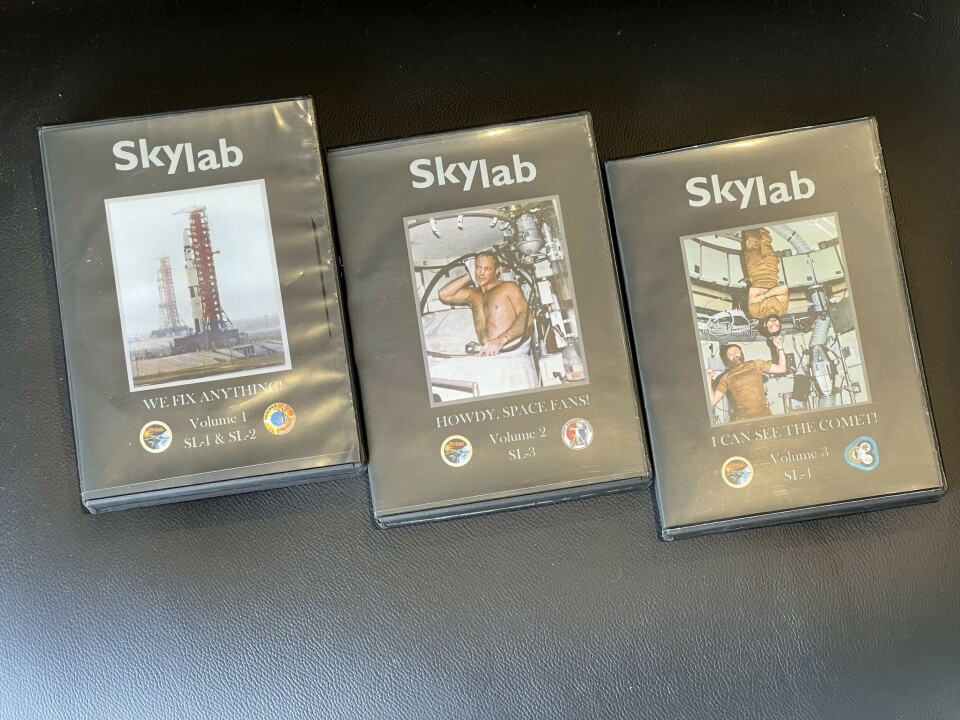
The collection will span three volumes and 26 DVDs, including an updated version of Searching for Skylab, which we reviewed in 2019. It gathers almost everything the team could find that was downlinked from the station or returned to Earth aboard the three Apollo spacecraft that visited it.
Advertisement
Interested in the prelaunch preparations, briefings, and launch itself? It’s all there. How about the efforts to make the station habitable after a solar array and shield were torn off during launch? Yep – that’s there too. That time the crew tested maneuvering equipment inside Skylab that would become the Manned Maneuvering Unit used during early Shuttle missions? Also there.
Skylab was NASA’s first space station. Launched in 1973 aboard the final Saturn V to fly, its orbital workshop was based on the S-IVB rocket stage. The mission almost ended in disaster when one solar array and the station’s micrometeoroid shield, which also served as a sunshade, were torn away during launch. The first crew deployed a parasol to protect the station from the Sun and freed the remaining solar array, which had been pinned down by debris. Three crews visited the station, with the last returning to Earth in 1974. Skylab re-entered in 1979, scattering debris across a sparsely populated part of Western Australia.
Rather than an expanded cut of Searching for Skylab, the collection is a companion archive aimed squarely at completists. Those seeking an accessible introduction to the missions should start with the documentary; these discs are for viewers who want the surviving footage in all its raw detail.
The collection is a labor of love for Dwight Steven-Boniecki, who told The Register that material gathered for Searching for Skylab supplied about half of its footage. “Intense searches uncovered a lot of previously forgotten footage. Things like rollout and launch TV were a crucial discovery to round out the sets. As it turns out, some of the footage comes exclusively from kinescopes in my possession.”
Advertisement
Steven-Boniecki recalled tracking down footage of a tour conducted by the SL-2 crew during the first crewed mission. “I located the footage but sans audio,” he said. “I got in touch with a collector who had a copy of the downlink, but no technical means of recording the audio, other than recording it on their mobile phone.
“So I had them point their iPhone at the screen and hold it near the loudspeaker from the projector. Using the off-the-screen footage, I was able to synchronize the audio with the pristine footage I had. I had to apply noise reduction using a learned noise print of the projector to eliminate as best as possible all extraneous noise. To top it off, the audio was already bad when it was sent down in 1973, due to signal strength during the telecast.
“I opted to have subtitles for that particular segment, as understanding what the crew were saying proved to be difficult.”
Most experiments aboard Skylab were recorded and transmitted later. Conferences, spacewalks, and the crews’ initial entry and setup tended to be broadcast live, while film canisters containing several reels from each mission returned with the astronauts.
Advertisement
“One instance for SL-2 had me dancing for joy,” recalled Steven-Boniecki. A set of observations from the Apollo Telescope Mount did not show up on any data cards in any of the official archives he searched.
“It turns out a kinescope I had won in an auction years earlier contained nearly 30 minutes of solar observation TV. It was silent, so I used mission audio recorded on the same day, that closely matched the point at which this TV feed was recorded.
“A similar situation arose with one of the training films where tests were done transporting items via an EVA. This reel has not been located anywhere, and I suspect the film is the only surviving master, as the reel specifically states ‘Do not Project’ on it.”
Indeed, some clips lack audio, and the video quality reflects the era. Blu-ray would have required fewer discs, but, as Steven-Boniecki noted, “the benefit of HD is lost on the sequential color TV kinescopes.”
Advertisement
We looked at Volumes 1 and 2, which cover SL-1 (the launch), SL-2 (the first crew, comprising Pete Conrad, Joseph Kerwin, and Paul Weitz), and SL-3 (the second crew, which consisted of Alan Bean, Owen Garriott, and Jack Lousma). The forthcoming Volume 3 covers the final Skylab crew, SL-4 (Jerry Carr, Ed Gibson, and Bill Pogue). A physical copy of Searching for Skylab can be found in the Volume 1 case.
Steven-Boniecki isn’t quite done with the story of Skylab. After plans to use the Space Shuttle to boost Skylab’s orbit came to nothing, controllers reactivated the station and attempted to control its attitude ahead of re-entry.
“The planned Vol. 4 set will cover the reactivation and subsequent re-entry of Skylab over Western Australia,” he said. “There is some outstanding footage, including the Channel 9 Australia TV of Skylab breaking up in the night sky!”
Volume 4 is still several months away while Steven-Boniecki transfers the footage and masters the discs. “Plus,” he added, “it will give people time to save for it.”
Advertisement
An important factor: the sets are not cheap, although they contain a great deal of material. Each physical DVD volume costs £89.99 plus postage. Digital editions cost $69.99 for Volume 1 and $79.99 each for Volumes 2 and 3.
As the team notes, this is very much for “hardcore space fans.”
After Volume 4, Steven-Boniecki plans to gather footage from another often-overlooked mission and Apollo’s last hurrah: the Apollo-Soyuz Test Project (ASTP). “Work has already begun,” he said. “There is a LOT of unseen footage there!” ®
Watch Nottm Forest vs Leeds live streams to see if two sides with mutual animosity — and differing views on Brian Clough — can start their Premier League 2026/27 campaign with a victory. There was little to separate them last season, with Daniel Farke’s side finishing just three points and two places above the Tricky Trees.
After a season comprising four permanent managers — Nuno Espirito Santo, Ange Postecoglou, Sean Dyche and Vitor Pereira — Forest fans will be hoping for a more settled campaign under Oliver Glasner. The Austrian arrives having won three trophies in hs final two seasons at Crystal Palace and is looking to put his 3-4-3 mark on the East Midlanders. Forest beat Bayer Leverkusen and Brest in pre-season, but Xaver Schlager and Ousmane Diomande are the only outfield arrivals so Glasner will need much more from a now Elliot Anderson-less squad that spent much of last season just outside the bottom three.
It was a job well done for Farke last season as he guided Leeds to survival after they’d won just three of their first 13 league games. Now the German manager will be hoping to build on that base after an excellent summer in which the club secured statement pre-season wins over Liverpool, RB Leipzig and Augsburg. Dominic Calvert-Lewin has looked especially sharp and will be keen to improve on his haul of 14 league goals last season, while the signing of Harry Wilson brings an additional attacking threat. Signing James Trafford from Man City is an upgrade in goal, too.
Advertisement
Read on for our dedicated guide on how to stream Nottm Forest vs Leeds in the Premier League, live and from anywhere in the world.
Nottm Forest vs Leeds team news
TBC
Advertisement
How to watch Nottm Forest vs Leeds from anywhere
A VPN is handy piece of software that can make your device appear as if it’s back in your home country, so you can unlock your usual service. The best VPN right now? We recommend NordVPN – it does everything and comes with up to 75% off.
How to watch Nottm Forest vs Leeds live streams in the US
Nottm Forest vs Leeds is being televised on Peacock in the US.
Peacock plans start from $12.99 a month, or $129.99 a year.
Advertisement
Outside the US for the game? Use NordVPN to access your usual coverage.
Can I watch Nottm Forest vs Leeds live streams in the UK?
In the UK, Nottm Forest vs Leeds isn’t on TV due to the Saturday 3pm ‘blackout’, which means that games kicking off at that time can’t be broadcast live.
UK viewers can catch the game’s highlights on the Sky Sportsapp shortly after the final whistle.
Advertisement
Match of the Day will also provide highlights and analysis of this game on BBC One.
Traveling to the UK? If you’re an American, Canadian, or Aussie traveling to the UK during the game, you can use NordVPN to access your local Premier League streams.
How to watch Nottm Forest vs Leeds live streams in Canada
Nottm Forest vs Leeds is available to watch on Fubo in Canada.
Advertisement
Prices start at CA$31.49/month for Fubo’s Sports Monthly package. However, the best option right now is the Quarterly Package, which works out at just CA$27.99 CA$14.99 for each of the first three months.
You can also access Fubo’s Premier League coverage through an eligible DAZN subscription.
Not in Canada? Use NordVPN if you’re away from home, in order to tap into your preferred Nottm Forest vs Leeds coverage from anywhere.
Advertisement
How to watch Nottm Forest vs Leeds live streams in Australia
Stan Sport is showing the Nottm Forest vs Leeds game in Australia.
Stan Sport costs AU$20/month on top of a Stan subscription, which itself starts at AU$9.99/month. In addition to all 380 Premier League games, it’s also showing Rugby’s Greatest Rivalry, Super Rugby, the Six Nations and the Rugby Championship.
Not in Australia right now? You can simply use a VPN like NordVPN to watch all the action as if you were back home.
What is the Nottm Forest vs Leeds start time?
The scheduled Nottm Forest vs Leeds kick-off time on Saturday, August 22 is 3pm BST local time in England, which is 7am PT / 10am ET.
Advertisement
That’s 12am AEST on Sunday, August 23 in Australia.
What is the Nottm Forest vs Leeds head-to-head?
Nottm Forest and Leeds have contested 105 competitive games. The Tricky Trees have won 37 of them, and the Whites 33. A further 35 have ended all square.
Can I watch Nottm Forest vs Leeds on my mobile?
Of course, most broadcasters have streaming services that you can access through mobile apps or via your phone’s browser.
You can also stay up-to-date with all the key Premier League 2026/27 moments on the official social media channels on Instagram (@PremierLeague), TikTok (@PremierLeague) and YouTube (@PremierLeague).
Advertisement
We test and review VPN services in the context of legal recreational uses. For example: 1. Accessing a service from another country (subject to the terms and conditions of that service). 2. Protecting your online security and strengthening your online privacy when abroad. We do not support or condone the illegal or malicious use of VPN services. Consuming pirated content that is paid-for is neither endorsed nor approved by Future Publishing.
Our phones have become do-it-all gadgets. They enable us to keep in touch with one another, track how many steps we’re taking each day, snap photos of everything, and access the collective knowledge of humanity. All that universal functionality extends across both our work and personal lives.
The gadget that pings you on Slack when your colleague has a question is the same one that alerts you when your friend has just outscored you at Wordle. That blurring of boundaries can be a problem.
There is actually a solution to this, at least if you’re using an Android phone. Android supports the use of multiple profiles (based on Google accounts), so you can switch between two different ones as needed. The most obvious use case for this is to split up your work and personal usage.
It’s essentially like having two phones on the same physical device: The profile that’s active dictates the apps you can use, the notifications you see, the browsing history you can dig into, and the files you’ve got access to, all dictated by the Google account.
Advertisement
Note that while this feature has been around in Android for a long time and is available on many handsets (including Pixel phones), not every Android manufacturer has implemented it. It’s not available on Galaxy phones, for example, though Samsung does offer something similar with the Secure Folder.
Get Started
Adding a new user.
Photograph: Courtesy of David Nield
To begin with, you’re going to need two Google accounts, but many of us already have a Google account managed by work anyway. If not, you can set up a new Google account, free of charge, to use as the basis of the work profile on your phone: Head to the Google account portal on the web, then click Create an account.
The details you’ll need to provide include a first name, your birthday, and a Gmail address you’d like to register to use with the account—this is what you’ll use to sign in to this account on your phone and on the web. You get some suggestions for an available address based on your name, but you can also come up with something custom as long as no one else has taken it first.
Advertisement
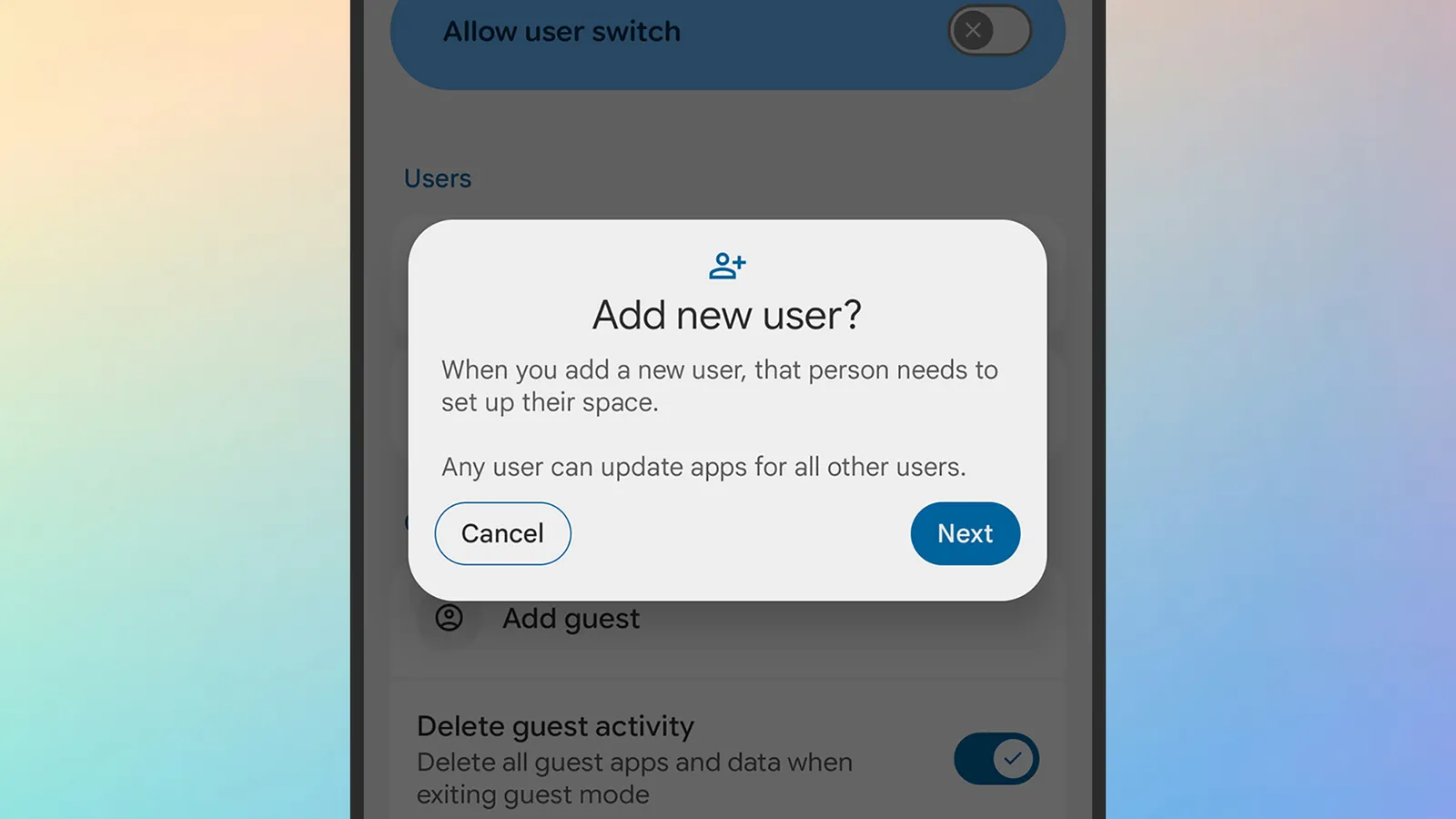
Once you’ve got a second account you can use, open Settings, then choose System > Users. Tap Add user, then Next, and you’re able to give a name to the second user account. With that done, select it from the Users screen, choose the Switch to… option, and you’ll be taken through the process of signing in to your secondary Google account.
The DoJ said the app has made significant strides in privacy protections since the 2024 suit.
Mario Tama/Getty Images
TikTok and ByteDance have reached an agreement with the Department of Justice to settle a lawsuit that claimed the app broke children’s privacy laws. The settlement is one of the “largest recoveries ever obtained” for a case related to the Children’s Online Privacy Protection Act (COPPA), the DoJ said in a statement.
The settlement dates back to a 2024 lawsuit brought by then-President Joe Biden’s Justice Department. The DoJ alleged that the company had violated the terms of an earlier FTC settlement related to its acquisition of Musical.ly. It further accused the app of violating COPPA by allowing children under 13 to create TikTok accounts and wrongfully collecting data about children who used it in “Kids Mode.” The company also “frequently failed” to comply with requests from parents to delete their children’s data, the DoJ said at the time.
In announcing the settlement, the Justice Department noted that the app has since “undergone significant changes to its ownership, management, compliance functions, and privacy practices.” TikTok finalized a deal earlier this year that created a new entity for its US business. Known as TikTok USDS Joint Venture, the new company is controlled by a group of investors, including Oracle, Silver Lake and MGX. ByteDance retained a 19.9 percent stake in the company.
Advertisement
“The company has implemented extensive measures designed to strengthen safeguards for younger users, improve age-related controls, and enhance parental oversight,” the DoJ said in a statement. “Those developments have materially advanced the public interests underlying the Department’s litigation and have strengthened protections for millions of American families.”
Under the terms of the settlement, “TikTok will pay $300 million immediately,” and pay another $100 million after its prior agreement with FTC is vacated, the DoJ said. TikTok and ByteDance didn’t immediately respond to a request for comment.
The settlement is the latest hurdle the company has cleared after years of intense scrutiny over its privacy practices and ties to China. Earlier this month, the Office of Management and Budget (OMB) officially cleared the way for federal workers to once again use the app after a 2022 law banned it from most government-issued devices.
The past few years have been rough for gamers, with AI-driven price hikes on memory, GPUs and SSDs hitting PC and console gamers’ wallets hard. Unfortunately, there’s no respite for Xbox fans if a new rumor is true about Microsoft’s special-edition translucent green Xbox — it could allegedly retail for around $900, which is even higher than how expensive the console has become after multiple price hikes.
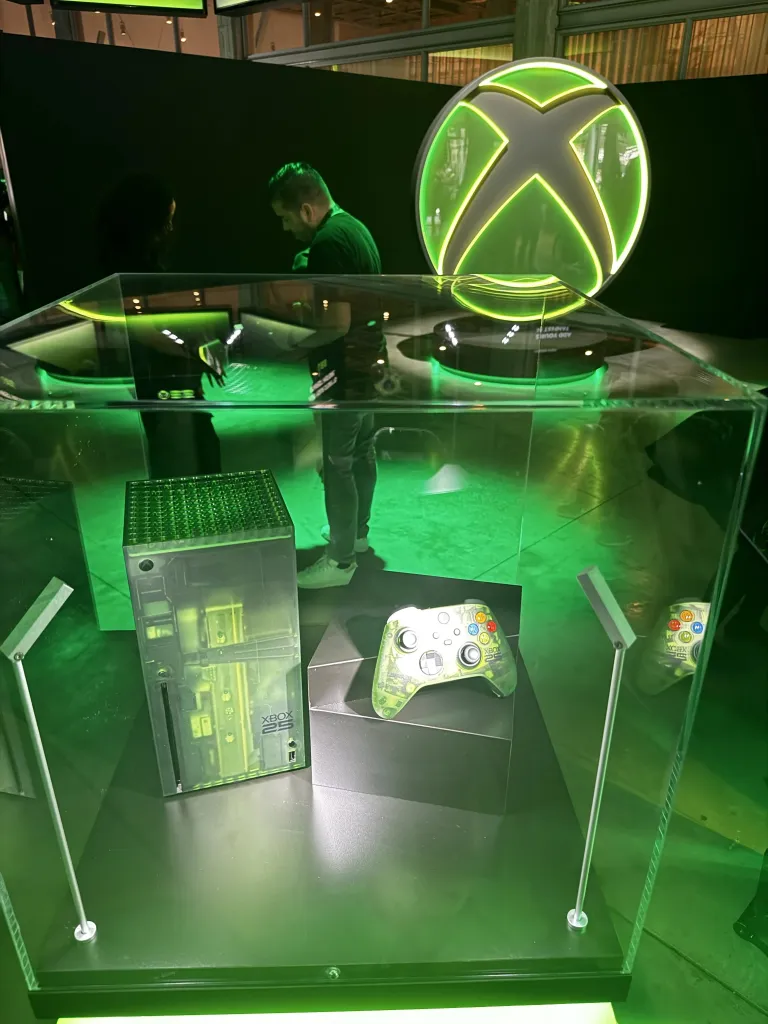
The 25th Anniversary Edition Xbox Series X on display at Microsoft’s Xbox Showcase at the Academy Museum in Los Angeles.
French site Dealabs, which is typically reliable for these kinds of leaks, lists the unit at a €900 price. Given Microsoft’s tendency to match British and US prices despite conversion differences, we’d expect the special-edition console to retail for $900. Dealabs also suggests it will have a Nov. 27 release date, which puts the launch right around Black Friday, though you likely won’t be getting much of a discount during it.
A Microsoft Xbox representative did not immediately respond to a request for comment.
“Presuming the special 25th anniversary edition is otherwise identical to a stock Xbox Series X console, the rumored price is $100 extra for green plastic on top of the current $800 price after hikes. It would be a staggering $400 on top of the Xbox Series X’s launch price of $500,” said CNET Managing Editor David Lumb, who got to see the console in person at Microsoft’s Xbox event during Summer Game Fest in June.
CNET’s sister site IGN (also owned by Ziff Davis) noted that it’s a $100 more than the standard Xbox Series X with a disc drive ($800) and the same price as a standard PlayStation 5 Pro ($900). With the more classic design elements giving gamers a throwback to the original Xbox console that launched 25 years ago, it’s likely that Microsoft will still see brisk sales from gamers driven by nostalgia.
Advertisement
The unfortunate truth is that price increases for gaming hardware are a reality of the games industry right now, due to rising component prices resulting from the RAM shortage, as well as tariffs and logistical issues. Nintendo hasn’t been immune, either, with a price hike for the Switch 2 starting Sept. 1, expected to bring the unit up to $500, a $50 increase since the console launched last June.
Sony also raised the prices of its entire console lineup on April 2, with across-the-board increases that brought the PlayStation 5 Pro to $900 (up from $700), the PlayStation 5 with disc reader to $650 (up from $500) and the handheld PlayStation Portal up to $250 (up from $200).
The 25th Anniversary Edition Xbox Series X on display at Microsoft’s Xbox Showcase at the Academy Museum in Los Angeles.David Lumb/CNET
Microsoft increased the price of its consoles twice since the recent RAM shortage and tariff woes, seeing jumps that make its systems far more expensive six years after they launched; In every previous generation, consoles have gotten substantially cheaper over time.
The first hike was back in Sept. 2025, which raised prices of its Xbox console lineup with the digital-only Series S 512GB reaching $400 (up from $300), the regular Series X with disc drive got hiked to $650 (up from $500), and the Series X 2TB Galaxy Black Special Edition raised to $800 (up from $730, itself having gotten a price bump in May 2025 from $600 where it started).
The second round of Xbox price hikes was announced back in June, raising the Series S 512GB to $500 and 1TB option to $600, the Series X (digital-only) to $750 and the Series X (disc drive) to $800. In the same swath of price increases, Microsoft announced it would discontinue the 2TB special edition of the Xbox Series X console, leaving only 1TB versions left.
Advertisement
As we’ve noted before, gaming over the past year or two has increasingly felt like a luxury hobby, and there doesn’t seem to be an end in sight, even though RAM price increases did slow in late March and early April.
In the meantime, gamers may simply have to either pay the new, higher prices or continue using older hardware.
Ajay Kumar
Smart Home & Robotics Editor
CNET’s Smart Home & Robotics Editor covering robot vacs, home appliances, smart home, and yard & outdoors. Built CNET’s lab-exclusive testing methodology and lab awards.
See full bio
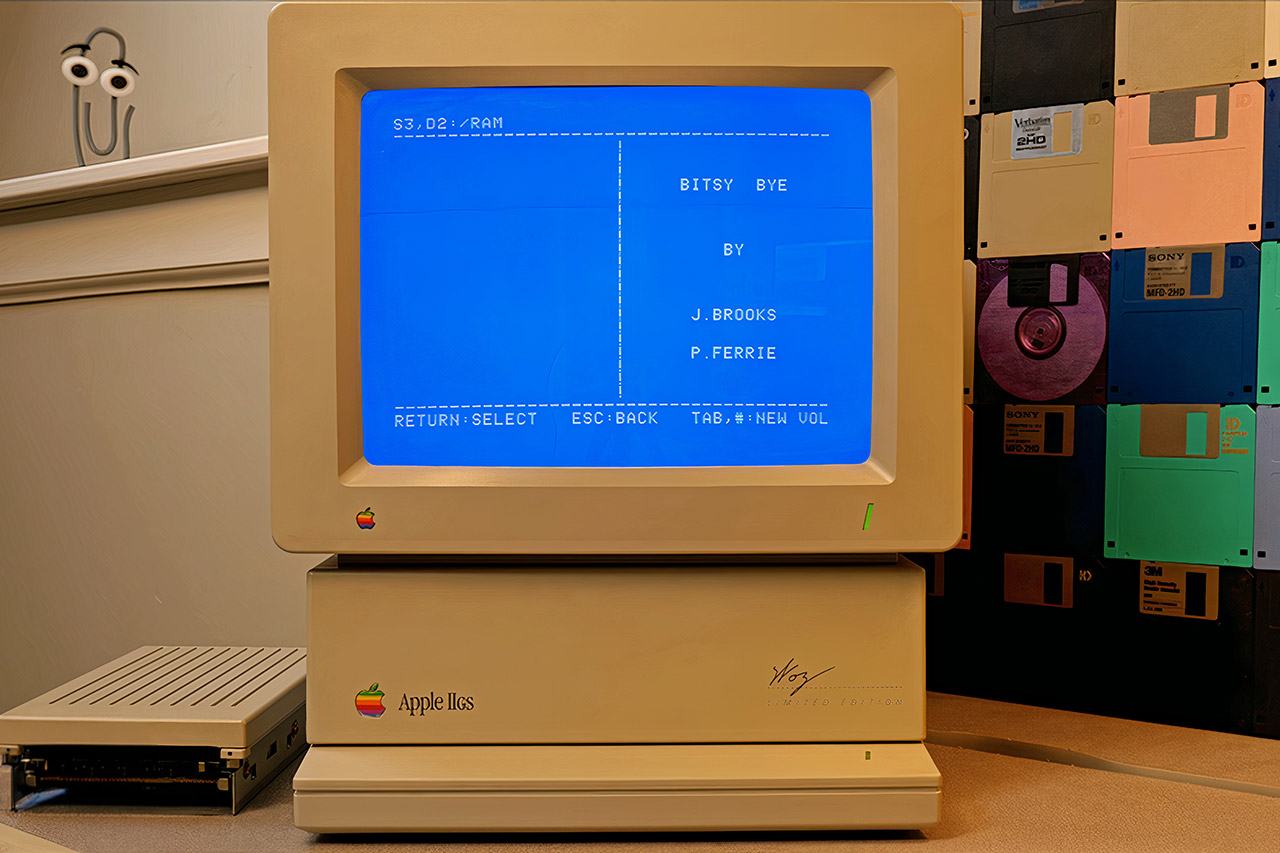
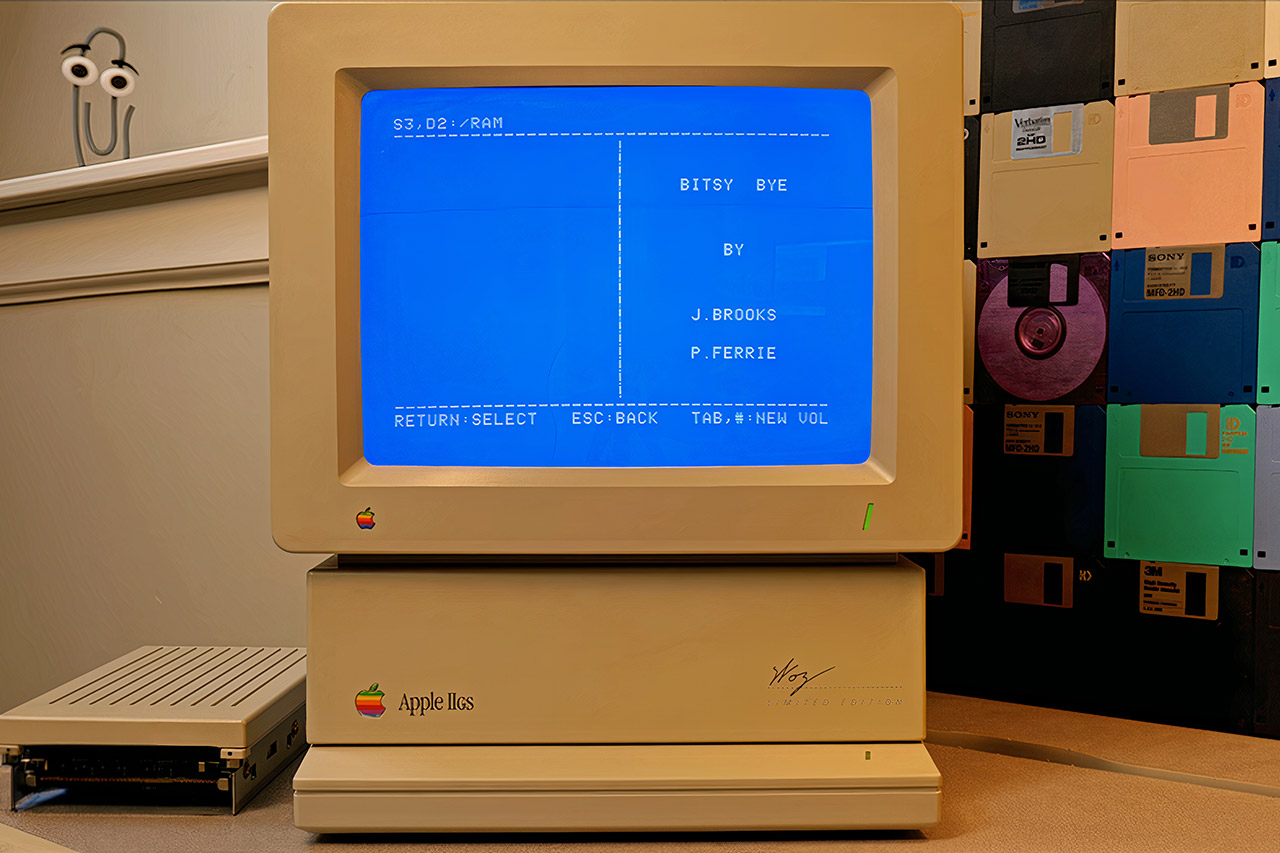
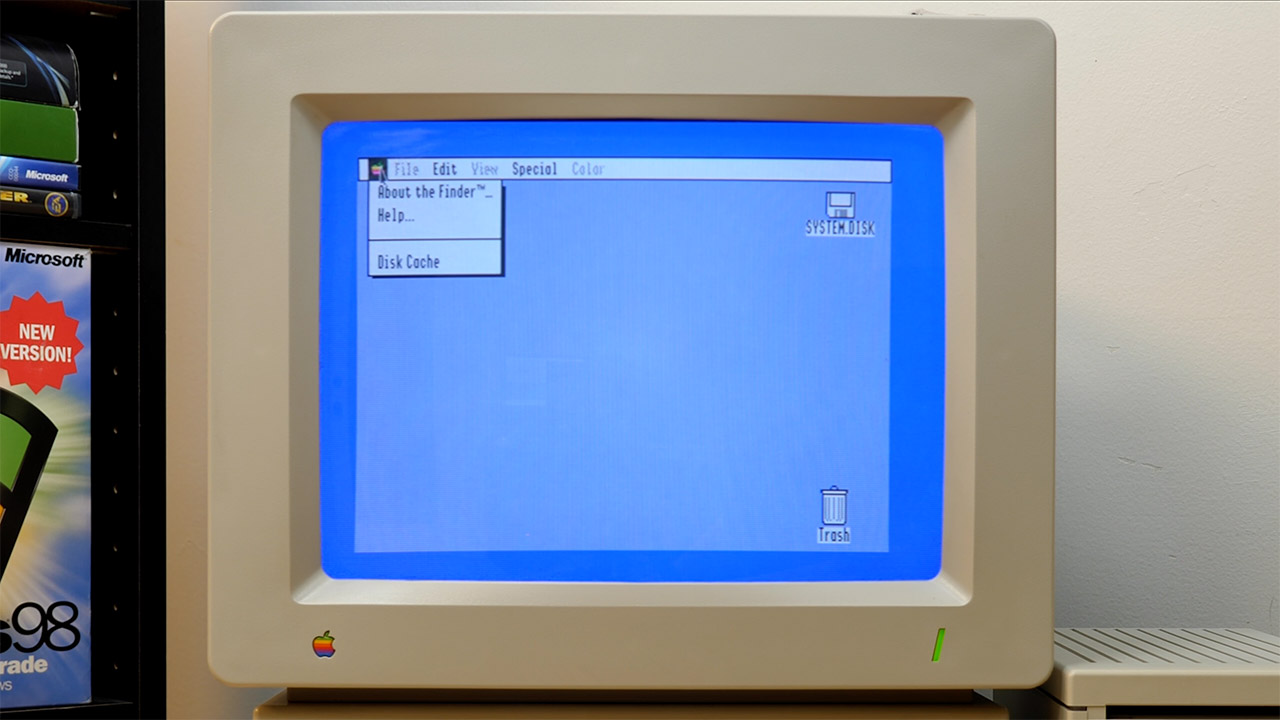
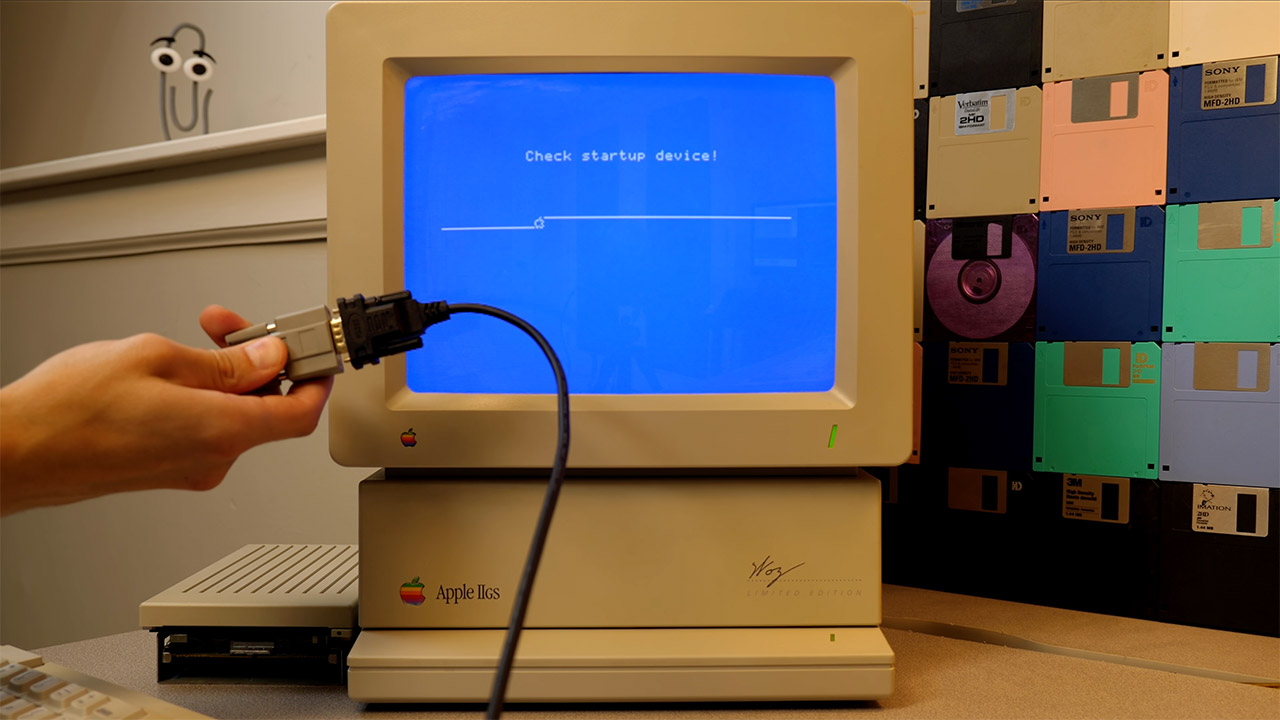
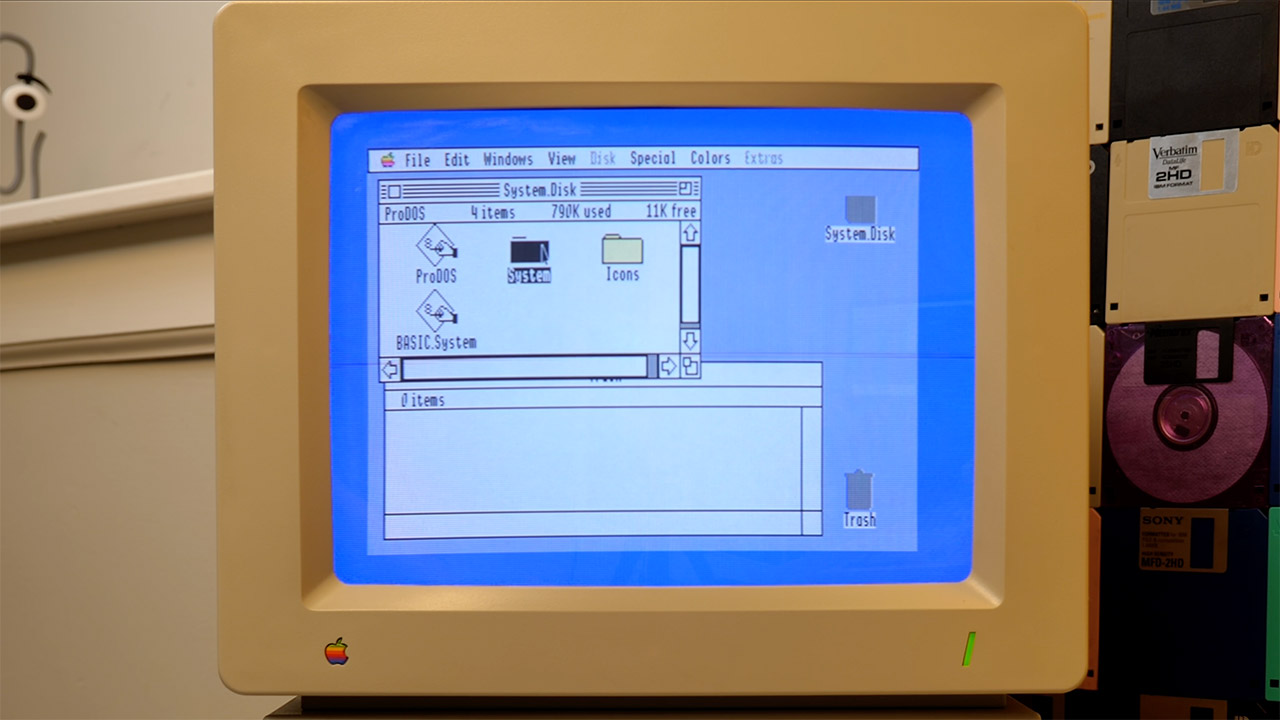
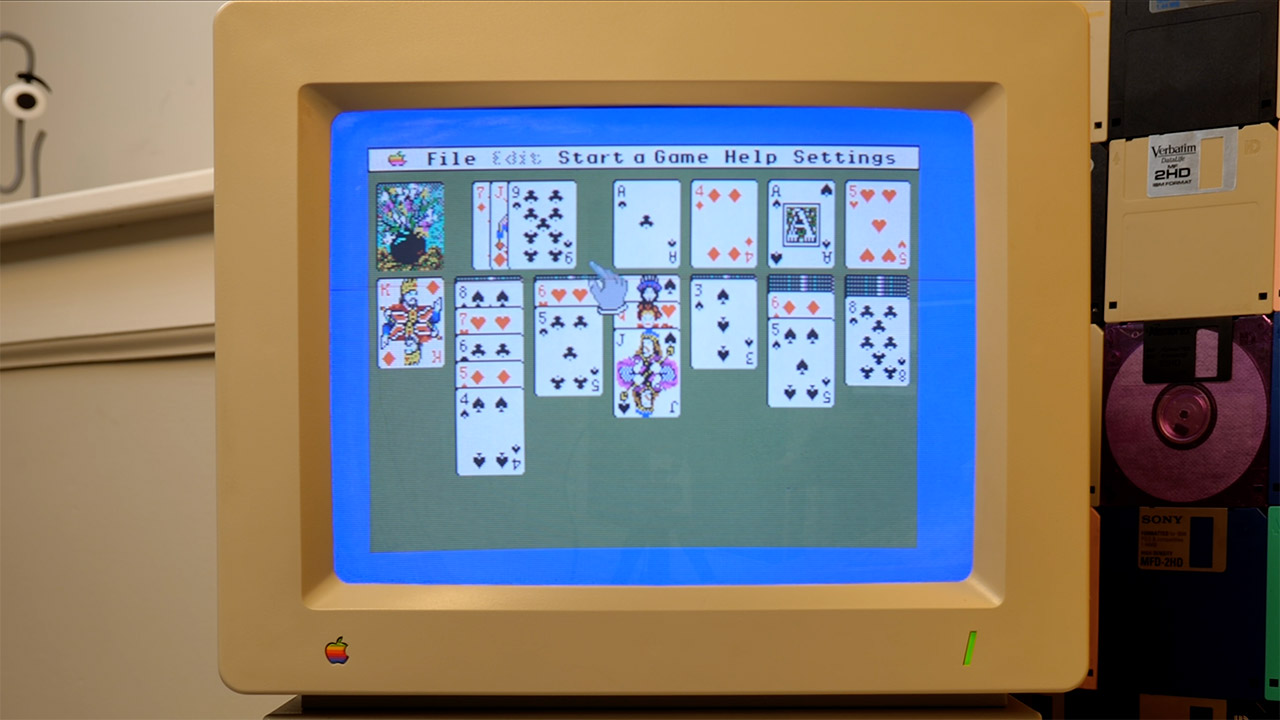
Most people who remember personal computers from the late 1980s think first of the Macintosh and its clean black-and-white interface. Apple had already shipped something that looked and behaved a lot like it, only this version ran in color on a machine that still carried the Apple II name. That system was GS/OS, and it arrived in 1988 as the heart of Apple IIGS System Software 4.0.
GS/OS was built from the start in 100% 16-bit code for the 65816 CPU inside the IIGS, which was a significant shift from previous versions. Most other software on this computer was still inadequately optimized for 8-bit routines carried over from the previous Apple II generation. The improved code resulted in significantly faster disk access, screen rendering, and program loading. Customers who had upgraded from ProDOS 16 were particularly affected.
BUILT FOR COLLEGE. AND BEYOND — MacBook Air with the M5 chip packs blazing speed and powerful AI capabilities into an incredibly portable design…
TEAR THROUGH TOUGH ASSIGNMENTS — With its faster CPU and unified memory, the M5 chip delivers even more performance and fluidity across apps, making…
MAKE QUICK WORK OF YOUR TO-DO LIST — Apple Intelligence helps you write, express yourself, and get things done effortlessly — whether it’s for…
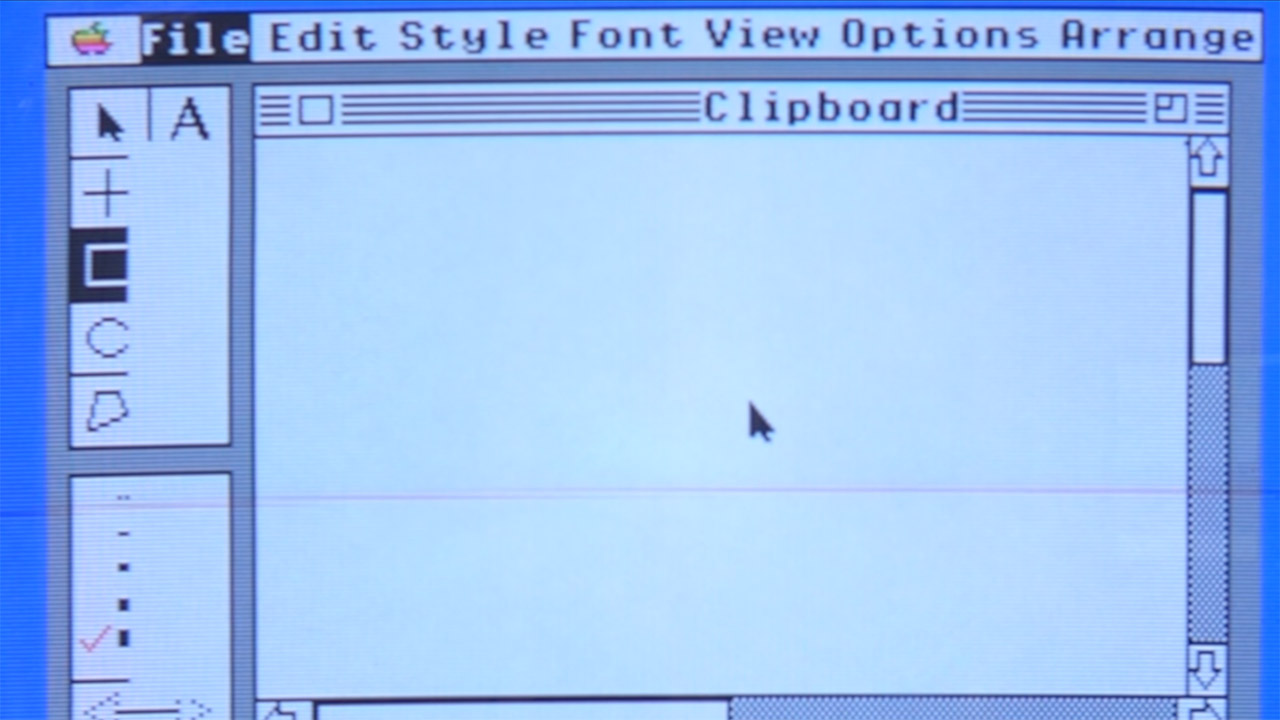
GS/OS’s Finder was crucial to the system. Do you remember those desktop icons? Windows that can be moved around, resized, and stacked? Pull-down menus at the top of the screen and a trash can waiting patiently for files you no longer wanted, as it all looked pretty familiar to anyone who’d used an early Mac, but here’s the thing: all of this was happening in glorious color on hardware capable of displaying thousands of different hues on screen at any given time. The control panels allowed you to change all of the minor settings without leaving the desktop, such as mouse speed and clock.
The system’s technical foundation was especially impressive, as the modular architecture drew on many brilliant ideas from prior Apple systems. You could add or uninstall device drivers without rewriting the entire operating system. File System Translators allowed you to access disks formatted for other machines, such as Mac HFS volumes and various MS-DOS formats. Even resource forks appeared, allowing applications to store extra data alongside the main file, and let’s not forget those progress bars that filled up like a thermometer and proportional scroll bars, which are now considered standard features but were a real novelty at the time.
As you might expect, storage support increased with each subsequent iteration. Later versions of the system could handle hard disks containing hundreds of megabytes, eventually supporting volumes of up to four gigabytes. Then there was AppleShare, which added networking to the IIGS, allowing it to connect to the same office network as Macintosh machines and share files. Installation and disk utilities were eventually made far less onerous than the previous command-line approaches.
Apple continued to update the software into the early 1990s. System 5 improved the networking and speed even further. System 6, which was released in 1992 and completed with version 6.01 in 1993, introduced some polish to the Finder, improved font handling, and a slew of other tweaks that made day-to-day use a little easier, but that was the extent of the official revisions. By the end of 1992, the IIGS was no longer on Apple’s pricing lists, and the focus had turned entirely to the Macintosh series.
The hardware behind GS/OS was rather remarkable. The IIGS included a mouse, Apple Desktop Bus connectors, and a sound chip capable of playing sounds that was far more fascinating than anything previously available on the Apple II. Its graphics modes offered far more colors than the original Macintosh, but the system itself couldn’t escape the shadow of its more famous sibling. Software developers were focusing their efforts on the Mac, and the IIGS was really a niche product, even if its operating system silently packed in capabilities that felt current at the time.
Nobody appears to have informed the Compact Disc that its funeral was held years ago.
U.S. CD sales increased 16% to 16.3 million units during the first half of 2026, according to Luminate, and that growth still reached 6.7% when K-pop sales were removed from the equation. At the same time, the hardware industry has suddenly developed a serious case of silver-disc fever, with new CD players and transports arriving from Marantz, NAD, FiiO, Quad, Shanling, Cayin, Mission, TEAC and others at prices ranging from under $200 to several thousand dollars.
The latest manufacturer to join that increasingly crowded party is hardly some Kickstarter operation with a transparent plastic lid and Bluetooth.
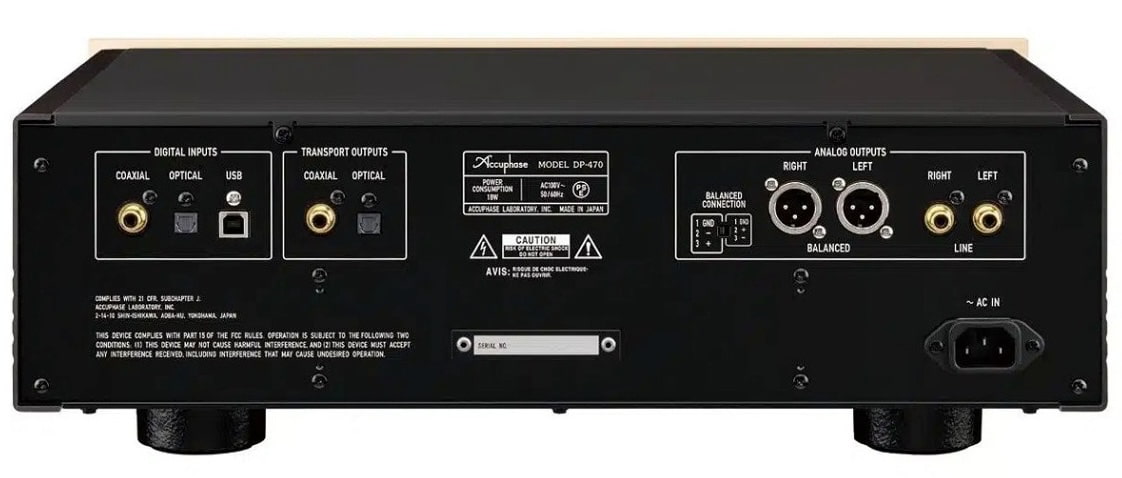
Accuphase has introduced the DP-470, a dedicated high-end CD player that replaces the DP-450 and borrows technology from the considerably more ambitious DP-570S SACD/CD player. It goes on sale in Japan in late August for ¥528,000 including tax. Accuphase has not announced U.S. pricing or availability, and we will update this article when those details become available.
Advertisement
There is something wonderfully 2026 about one of Japan’s most traditional high-end manufacturers introducing a new machine whose primary purpose is extracting 16-bit/44.1kHz audio from a plastic disc introduced in 1982.
Apparently progress occasionally involves finding your jewel cases again.
This Is Not Just a DP-450 With a New Number
The DP-470 remains a CD-only player. It does not play SACDs, which Accuphase reserves for models such as the DP-570S higher in the range. But calling it a conventional Red Book player understates what Accuphase has done with the digital section.
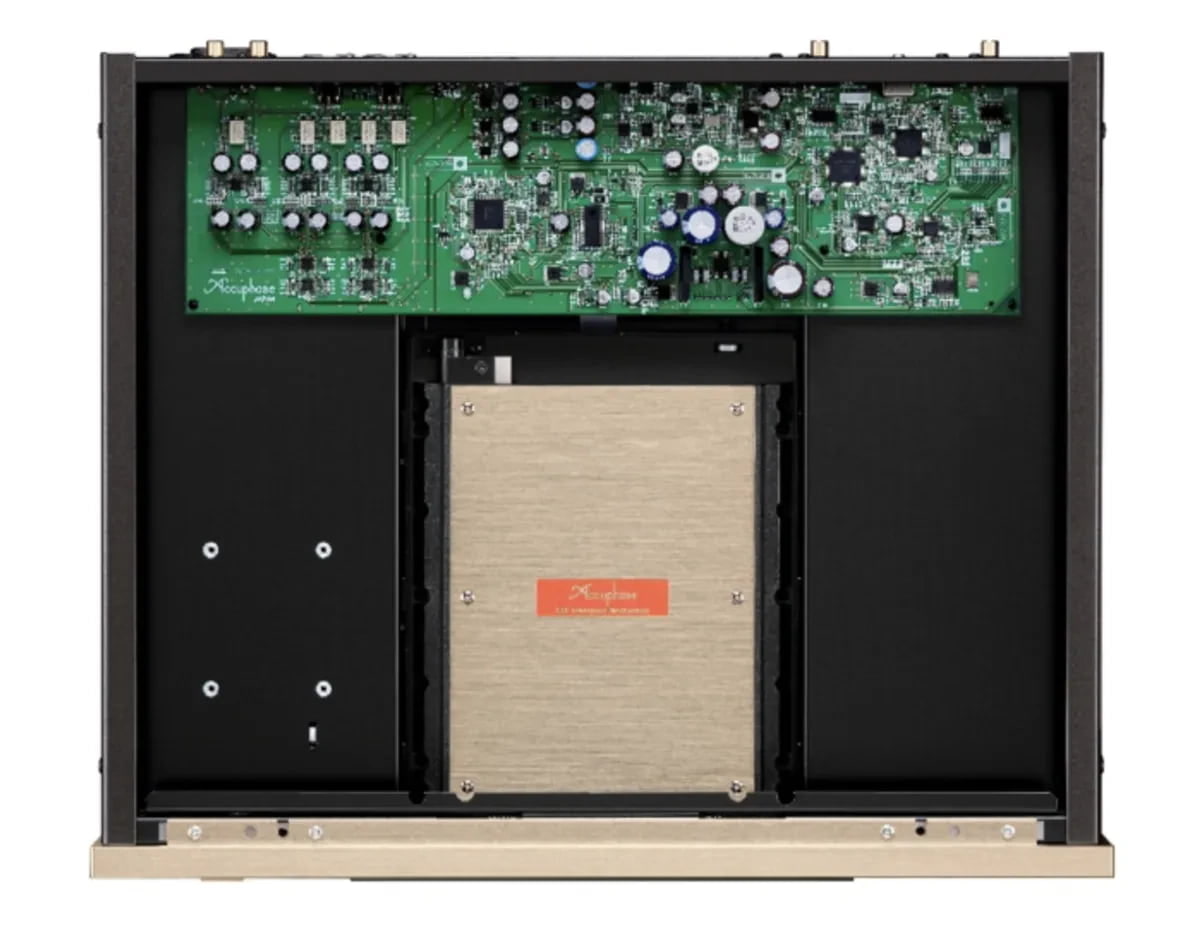
The mechanical side starts with a high-rigidity, low-center-of-gravity CD drive designed to isolate the optical pickup from vibration. Accuphase uses an elastic damping system between the transport and loading mechanisms, an eight-pole neodymium magnetic disc clamp and a three-layer bridge structure intended to suppress chassis resonance and noise generated by the spinning disc. The tray itself is machined from an aluminum block.
Advertisement
None of that makes the disc contain more data. The objective is to give the optical system the quietest and most mechanically stable environment possible while it reads what is already there.
This is Accuphase, after all. Nobody was expecting the transport to be held together with two screws and optimism.
The More Important Changes Are Inside the DAC
Accuphase retains the ESS ES9026PRO used by the DP-450, but employs it through the company’s four-circuit parallel MDS+ conversion architecture. Accuphase says operating four DAC circuits in parallel improves characteristics including noise, distortion and linearity compared with using a single circuit.
Advertisement. Scroll to continue reading.
The more significant change is the addition of ANCC — Accuphase Noise and distortion Cancelling Circuit — in the I/V conversion stage. The circuit uses a secondary amplifier to cancel noise and distortion generated by the main amplifier. The company has also redesigned the DAC board and optimized the power supply architecture. ANCC is technology already used in the more expensive DP-570S, so this represents some meaningful trickle-down rather than changing the display font and calling it a new generation.
Advertisement
Accuphase also uses its Direct Balanced Filter architecture with independent signal paths for the RCA and balanced XLR analog outputs, reducing interaction between them. Output level can be adjusted from 0 dB to -60 dB in 1 dB increments, and the balanced outputs include a phase selector.
ANCC noise and distortion cancellation in the I/V conversion stage
High-rigidity, low-center-of-gravity CD transport
Machined aluminum disc tray
Independent Direct Balanced Filter circuitry for RCA and XLR outputs
RCA and balanced XLR analog outputs
Coaxial and optical digital outputs
USB Type-B, coaxial and optical digital inputs
USB PCM support up to 384kHz/32-bit
USB DSD support up to 22.5MHz using ASIO Native
DSD up to 11.2MHz using DoP
Coaxial PCM input up to 192kHz/24-bit
Optical PCM input up to 96kHz/24-bit
Adjustable analog output level from 0 to -60 dB
465 x 151 x 393mm
13.7kg / approximately 30.2 pounds
Five-year warranty in Japan
Your Streamer Is Invited Too
This may be the most important thing separating the DP-470 from purist machines such as the Hegel Viking.
Accuphase has turned the DP-470 into a high-resolution standalone DAC as well as a CD player. A computer can feed the USB input, while a network streamer or other digital source can use the coaxial or optical connections. Owners can therefore use the same Accuphase DAC and analog output stage for both physical discs and other digital sources.
That makes considerably more sense in a modern high-end system than requiring someone to buy an expensive CD player and then duplicate its DAC circuitry in another box for streaming.
The irony is difficult to miss. Streaming was supposed to eliminate the CD player. The new generation of CD players is responding by becoming the DAC for the streamer.
Advertisement
Who Is the DP-470 Competing With?
Until Accuphase announces U.S. pricing, positioning the DP-470 precisely against American-market competitors requires some restraint. Converting ¥528,000 into dollars and pretending that figure represents a U.S. MSRP would be misleading because distributor margins, tariffs, freight and regional pricing can substantially alter the final number.
But the competitive neighborhood is already obvious.
The Hegel Viking, currently selling for about $5,500 in the U.S., takes the opposite approach. It is unapologetically devoted to 16-bit/44.1kHz Red Book CD playback and does not provide digital inputs for using its DAC with outside sources. Hegel’s argument is purity; Accuphase’s is versatility without abandoning serious mechanical engineering.
The Luxman D-03X is probably the closest conceptual rival. It is another Japanese dedicated CD player with balanced outputs and a high-resolution DAC section that accepts USB, coaxial and optical sources. Its USB implementation supports PCM up to 384kHz/32-bit and DSD to 11.2MHz.
Advertisement
Further down the price ladder, products such as the Rotel DT-6000 combine dedicated CD playback with a high-quality DAC, while the new Marantz CD 70 at $750 demonstrates just how quickly the category is filling up at more attainable prices. The point is not that a $750 Marantz buyer is cross-shopping an Accuphase. It is that manufacturers at almost every level have reached the same conclusion: people are buying discs again, and quite a few of them would apparently like something better than the DVD player hiding in the basement.
Why the DP-470 Is Interesting
The DP-470 is unusual because Accuphase is not treating the CD revival as retro fashion.
Advertisement. Scroll to continue reading.
There is no Bluetooth transmitter, transparent lid, rechargeable battery or attempt to make the player resemble something that escaped from a 1997 Sony catalog. Accuphase has instead applied some of its current high-end digital engineering to a format with a fixed 16-bit/44.1kHz specification and then made the DAC useful enough to justify its existence in a system that probably streams as well.
Advertisement
That tells us something about where the CD revival is going.
The first wave was inexpensive used discs and younger buyers rediscovering physical ownership. The next brought portable players from FiiO, Shanling and Cayin. Marantz, NAD, TEAC and Mission followed with new home components. Now Accuphase is willing to invest in an entirely new high-end player.
Nobody builds a 30-pound CD player with a machined aluminum tray because they expect the format to disappear next Tuesday.
The Bottom Line
The Accuphase DP-470 is not interesting because CD playback suddenly required DSD 22.5MHz support. It is interesting because the company is investing serious engineering resources in a dedicated CD player at the exact moment the supposedly obsolete format is showing unexpected sales growth.
Advertisement
U.S. CD sales rising 16% in the first half of 2026 does not mean streaming is in trouble, and it certainly does not mean vinyl has been dethroned. It does mean that millions of listeners still want physical music they actually own, while manufacturers have recognized that those listeners range from teenagers buying $200 portable players to audiophiles willing to put an Accuphase on the equipment rack.
The DP-470 gives the latter group a substantial transport, balanced analog stage and high-resolution DAC without trying to turn itself into a music server or streaming platform.
Thirty-four years after people started predicting the death of the Compact Disc, Accuphase has built another one.
The CD remains extremely poor at following instructions.
Advertisement
Price & Availability
The Accuphase DP-470 will be released in Japan in late August 2026 for ¥528,000 including tax. Accuphase’s Japanese website officially lists the player, while the company’s international site currently identifies the DP-470 as a forthcoming product.
U.S. pricing and availability have not been announced. We have not converted the Japanese price into a speculative U.S. MSRP because that would not accurately reflect Accuphase’s regional distribution and pricing structure.
We will update this article as soon as official U.S. pricing and availability become available.
The memory crisis has already pushed up prices across phones, laptops, consoles, and cameras, and now it is starting to reach smaller everyday gadgets. Amazon has raised prices on several Echo, Kindle, Fire TV, and Eero products, and Fortune reports that the company has blamed the increases on rising memory and storage component costs.
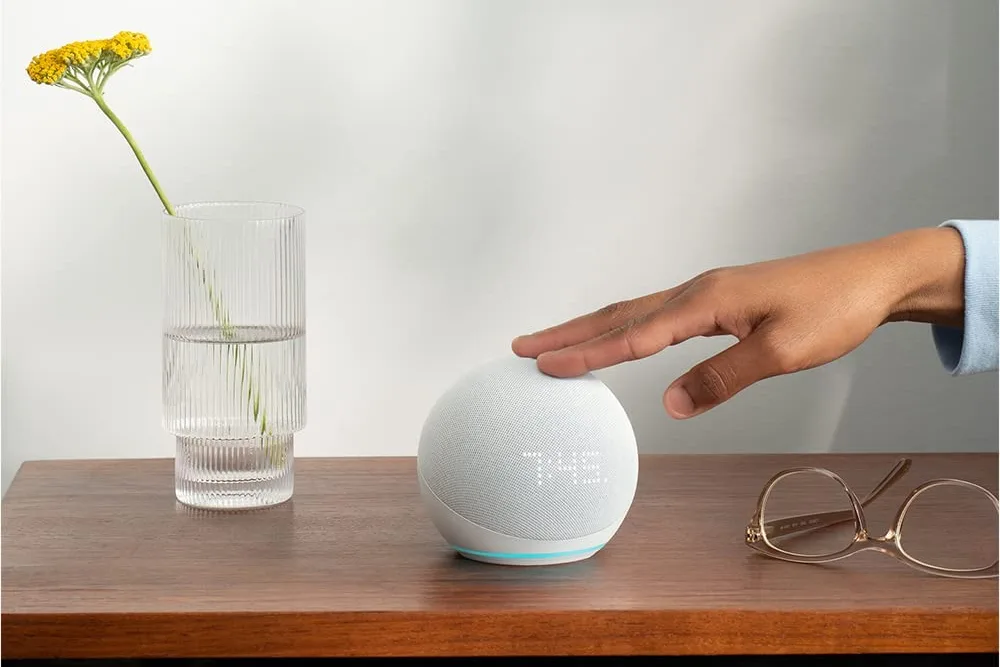
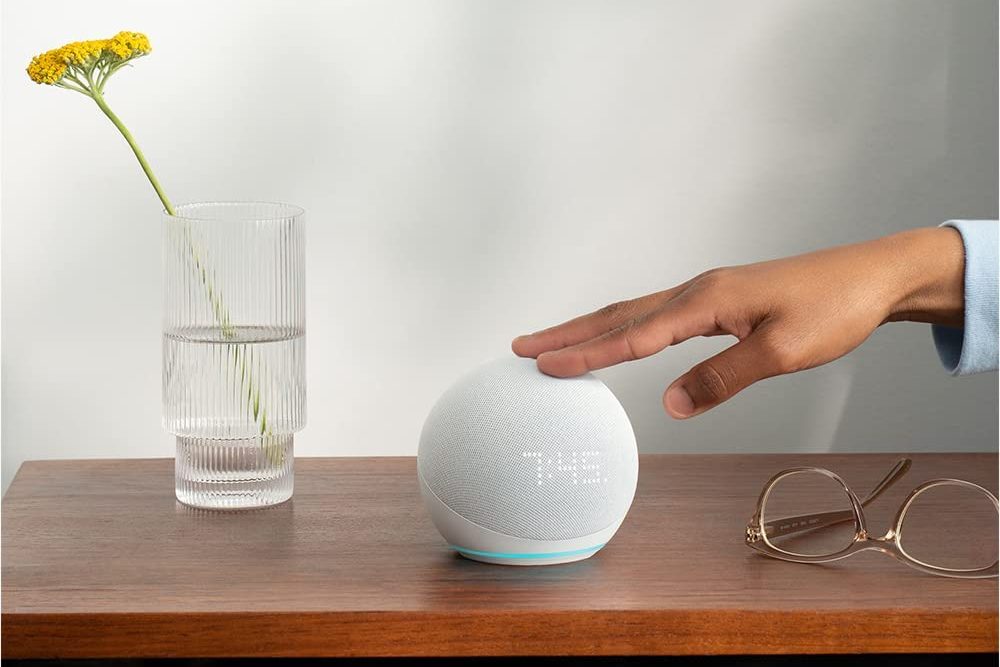
Some of the jumps are pretty steep. The Echo Dot, which previously cost $49.99, is now $79.99. That is a 60% increase on a device that was supposed to be one of the cheapest ways into Amazon’s smart home ecosystem.
Amazon
Even the cheap stuff is getting caught up in it
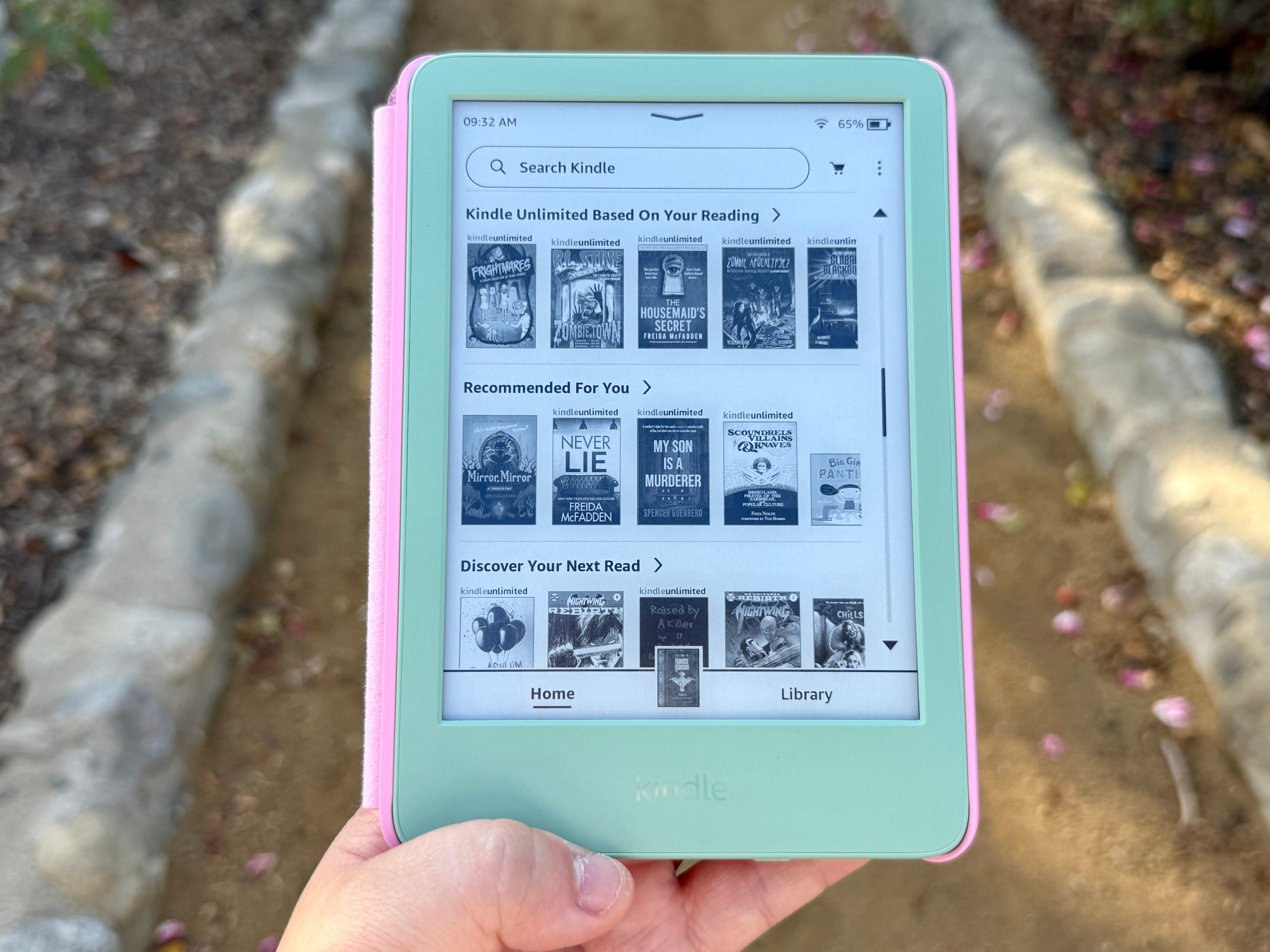
Amazon’s streaming hardware is feeling the pressure too. The Fire TV Stick 4K Max has climbed from $59.99 to $84.99, while the cheaper Fire TV Stick HD is now $39.99 instead of $34.99. The 16GB Kindle has gone from $109.99 to $149.99, and the Kindle Paperwhite is up another $40 to $199.99. Home networking gear has not escaped either, with the Eero Pro 7 rising by $100 to $799.99.
Christine Romero-Chan / Digital Trends
Amazon confirmed the increases, saying the consumer electronics industry is facing “significant increases in memory and storage component costs.” The company says it held off on passing those costs to customers for as long as it could.
The RAM crisis is spreading well beyond PCs and phones
Most of the damage from rising memory prices has so far been easiest to spot in products where RAM and storage make up a noticeable part of the hardware cost. But smart speakers, streaming sticks, e-readers, and Wi-Fi systems still need memory and storage to function.
For months, analysts and industry executives have warned that skyrocketing memory costs would eventually spread beyond smartphones, computers, and consoles to the wider consumer electronics market. We are now seeing more of those warnings play out, with Amazon’s latest price hikes showing how far the memory crunch has started to spread.
Nvidia published some interesting new research on Friday suggesting it’s the harness, more than the underlying model, that is far more important when asking an AI to do long-horizon tasks. A harness is the software wrapper around an AI model — the tools, memory management, and rules that turn a raw model into something that can act on its own.
The TL;DR: Simply by using a custom harness tweaked to handle memory well and including a “supervisor” boss-like component, researchers got Claude Opus 5 to achieve a 100% score on the interactive reasoning benchmark ARC-AGI-3 — a set of 2D games with no instructions, where the model has to figure out how to play and win, similar to how a human would. (That’s a benchmark that has particularly irked rival frontier lab OpenAI.) Without the harness, Opus 5 scored 30%, which was the top result among all the models tested.
Nvidia’s research is another indicator that, while model choice does matter, the model itself — the part that acts as the agent’s “brain” — is a smaller part of an agentic system than many AI users realize, especially for long-horizon tasks. The harness is what makes a model an agent: It handles memory, context, and feedback.
“Generally speaking, the world interprets an agent almost as an API of the model,” Adel El Hallak, vice president of product in Nvidia’s AI unit (pictured above), tells TechCrunch. But an agent is actually more than that. “It is the model. It is the scaffolding around the model, which we call the harness, i.e. the set of tools that it utilizes. It is the runtime and the associated skills and libraries that we give it access to.”
Advertisement
Long-horizon tasks are those that require stringing many decisions together, sometimes over days, to produce completed work. This is in contrast to an AI just spitting out a response to a prompt. Figuring out how to get an AI to do long-horizon tasks without getting distracted and going off in la-la land is one of the holy grails in agentic research.
For example: Microsoft published research in April that tested 19 LLMs on long-horizon tasks involving document editing and discovered that all the models, including frontier ones, filled the documents with errors. (If humans produced work like that, they would be promptly fired.)
The choice by Nvidia researchers to use this interactive reasoning benchmark for their tests is particularly meaningful, almost funny. A 100% score means that the model can beat the games as well as humans.
Advertisement
OpenAI was so flustered by its models’ abysmal scores (less than 10%) on ARC-AGI-3 that it conducted its own research last month. Like Nvidia, OpenAI discovered that simply by tweaking two settings on the harness, its models tripled their scores.
But none of the models came close to hitting a 100% score, like Nvidia’s researchers achieved. They showed that the harness needs a “supervisor” component that prods the agent in the right direction if it gets stuck.
“The more interesting part was introducing a supervising agent in addition to your main agent that’s doing the work,” El Hallak said. It “almost acts like a CEO to nudge the agent when it goes off direction or starts exploring a path that it might lead to a dead end, or re-explore a path that it had previously trod.”
While the concept of the supervising agent isn’t exactly new, today most agent users are relying on only one layer for their harness, like Claude Code, Codex, or Hermes. Nvidia researchers created their own souped-up harness called the Agentic Variation Operators (AVO).
Still, Nvidia’s results add to the growing evidence that model choice is far from the only factor in agentic performance. In July, for instance, Databricks published some stunning research that shows that the harness, more than the model, dramatically impacts AI costs.
“You can pick the same model but different harnesses, and you get significantly more cost if you use the wrong harness,” Databricks CEO Ali Ghodsi told TechCrunch. “So you think, oh, this is an expensive model. This is a cheap model. But wait, which harness are you using? That itself can 2x your cost.”
Nvidia’s larger point is to show that open harnesses, like open models, put users in control far more than they realize.
Advertisement
“We believe, and we’re demonstrating with the ecosystem, how open harnesses allow you to turn a lot more knobs to drive up that accuracy,” El Hallak said. “It relates to OpenAI slowing down the training of their models,” as a result of models creating security breaches.
“We believe in having an open agent stack — where you have control across the harness, across the infrastructure, across the runtime — is what’s required for us to usher the ecosystem forward and securely,” he added.
When you purchase through links in our articles, we may earn a small commission. This doesn’t affect our editorial independence.



























































You must be logged in to post a comment Login