
Politics
An increasing number of British police forces are using Palantir technology



Numerous UK police forces are now using Palantir technology for surveillance and tracking. The far-right genocide-linked tech firm has been capturing UK public bodies at pace – and shows no signs of slowing down. The new Good Law Project and Computer Weekly investigation claims:
that these projects involve, “tracking, monitoring or surveillance”, as well as data on “racial or ethnic origin, political opinions” and even people’s “sex life”.
As the Canary has repeatedly warned, Palantir’s close relations with the Labour government have assured the firm’s foothold in Britain:
The UK military is currently locked into a multi-billion pound contract with Palantir. The statement makes no mention of Palantir, despite the genocide-linked firm’s role being the source of most controversy.
The UK military, police, NHS and, allegedly, the Telegraph have started using Palantir technology. The firm maintains a permanent desk in southern Israel, and is deeply involved in Israel’s genocide in Gaza, as well as Trump’s paramilitary immigration operations, ICE, whose officers use the firm’s gear.
And it doesn’t end there:
On 2 June, the Canary reported that UK officials have even been using Palantir software to decide what Palantir technology to buy to fight future wars. On 4 June, we also heard how former spy chief David Omand had been promoting the idea that integrating AI into warfare is somehow be ethical.
During the same week, we reported that Palantir had won a contract to manage UK firearms, explosives, and related stockpiles.
The Good Law Project, a legal NGO, reported on 13 August:
six police forces have processed data with Palantir software, spending £7.8m since 2023.
County forces in Lancashire, Bedfordshire, Hertfordshire, Cambridgeshire and others have all been implicated. But the problem is even deeper than that:
According to a data protection impact assessment (DPIA) seen by Good Law Project and Computer Weekly, one of the data sources integrated into Bedfordshire’s Palantir project is Athena – a data sharing system which covers nine forces: Kent, Essex, Bedfordshire, Cambridgeshire, Hertfordshire, Norfolk, Suffolk, Warwickshire, and West Mercia police.
The NGO added:
The DPIA declares that data “recorded on existing platforms like Athena” will be used to “populate content in applications developed on the Foundry platform”.
Foundry is Palantir’s data integration platform. It unifies data from many sources so the user can wield that data for their own ends.
Tracking and surveillance via Palantir
The DPIA also declared:
the project processes personal data “on a large scale” and will “involve tracking, monitoring or surveillance of individuals in areas accessible to the public”.
It will include a wide range of sensitive data, including “racial or ethnic origin, political opinions, religious or philosophical beliefs, trade union membership, health data, data relating to a person’s sex life, data relating to a person’s sexual orientation, and criminal convictions or offences”.
The negative implications for civil liberties, especially in a period of spiralling state repression in the UK, are clear.
Good Law’s tech lead Duncan McCann said:
Palantir’s systems depend on bringing together vast quantities of data and unless great care is taken in cleaning that data, biases which put people at risk are baked in
Gathering different datasets into one place paves the way for authoritarian surveillance and control.
The steady match of Palantir through British public bodies is worrying indeed. And Labour’s brazen collusion is unforgivable. In a moment already shaped by increased state surveillance and crackdowns on basic rights, it is essential we expose and oppose this firm’s presence in Britain.
Featured image via the Canary
By Joe Glenton

Politics
10 years on, 41 organisations call for authorities to review the convictions of the Birmingham 4
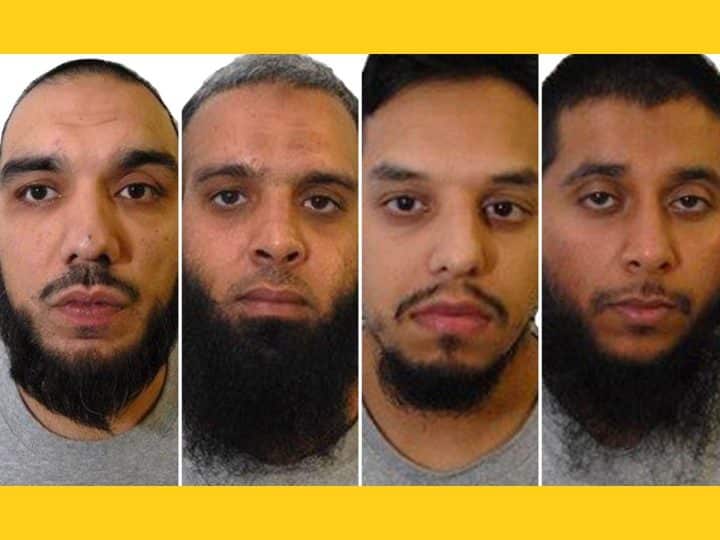

CAGE International and 40 other organisations have signed a call for an immediate review of the convictions of the ‘Birmingham 4’. First arrested over 10 years ago, these four men were convicted of terrorism offences back in 2017.
The courts sentenced Naweed Ali, Khobaib Hussain, Mohibur Rahman and Tahir Aziz to life in prison following a joint undercover operation by MI5 and West Midlands Police. However, all four men and their legal teams have maintained their innocence throughout.
Now, the 41 organisations have highlighted serious concerns, including:
allegations of evidence being improperly introduced, police being in contempt of court during the trial, and the absence of clear forensic or video evidence linking the defendants to the items in question. Taken together, these issues raise significant questions about whether the men received a fair trial.
You can read the full joint statement here.
Birmingham 4 — ‘Police fabrication and mendacity’
The day after the jury’s original verdict, Gareth Peirce — the solicitor who represented the Birmingham 4 — took the unusual decision to publish a public statement. The Justice Gap reported her words:
We register our unqualified respect for the system we have of trial by jury in this country. But jurors can on occasion get things wrong.
She went on to state that:
There were cases in the 1970s and the early 1980s where West Midlands Police planted and fabricated evidence to such an extent that the squad responsible was completely disbanded and dozens of defendants convicted, one by one had their convictions quashed. This case rests on police fabrication and mendacity in the clearest way.
Accusations of a setup
Now, CAGE and organisations including the Justice Gap, Black Lives Matter UK and APPEAL have put their weight behind a call for authorities to re-examine their convictions and release the Birmingham 4.
They’re demanding that the Criminal Cases Review Commission (CCRC) use an exceptional circumstances provision to reopen the case immediately. The special power allows the CCRC to accept a new appeal even without the usual requirement of new evidence.
Likewise, the 41-organisation coalition also questioned the conduct of the West Midlands Police, calling for a full and independent investigation. They explained that:
The convictions rested almost entirely on evidence produced through an undercover operation where the men were set up. West Midlands Counter Terrorism Unit, working with MI5, established a fake courier company – Hero Couriers – with the aim of ensnaring the men. On Naweed Ali’s first day of work, a ‘kill kit’ was discovered in his car after he had handed his keys to the undercover officer, known only as ‘Vincent’, who had sole and unobserved access to the vehicle for over an hour.
To make matters worse, no DNA, fingerprints or prior surveillance could link any of the four men to the items the police found. Likewise, the court withheld CCTV footage of the period when Vincent was alone with Ali’s car from the jury.
The judge presiding over the trial also found the West Midlands Police officers to have behaved in contempt of court. The officers claimed before the jury that they had never been in contact with one another. However, the evidence of 1,000 deleted messages between the undercover officers belied this falsehood.
History repeating itself?
Over two years ago, a formal application was submitted to the CCRC regarding the treatment of the Birmingham 4. However, to date, the commission has failed to action that complaint. CAGE stated that:
The CCRC was itself established in the wake of the Birmingham Six miscarriage of justice, a case bearing striking similarities to this one, making its continued inaction all the more concerning.
The Birmingham Six were six Irish men who were convicted of pub bombings in Birmingham back in 1975. In 1991, after 16 years in prison, their convictions were overturned due to the flawed and inconsistent nature of the evidence.
Regarding the Birmingham 4, Naila Ahmed — the head of campaigns at CAGE — said:
These four men have been unjustly imprisoned for ten years. There are major concerns about West Midlands Police’s conduct in a joint operation with MI5, especially regarding their undercover officers who have so far evaded any accountability. Any impartial assessment of the facts will recognise this as a gross miscarriage of justice. We urge the CCRC to do the same, and to use the exceptional circumstances provision to refer this case back to the Court of Appeal without further delay.
Featured image via the Canary
By The Canary
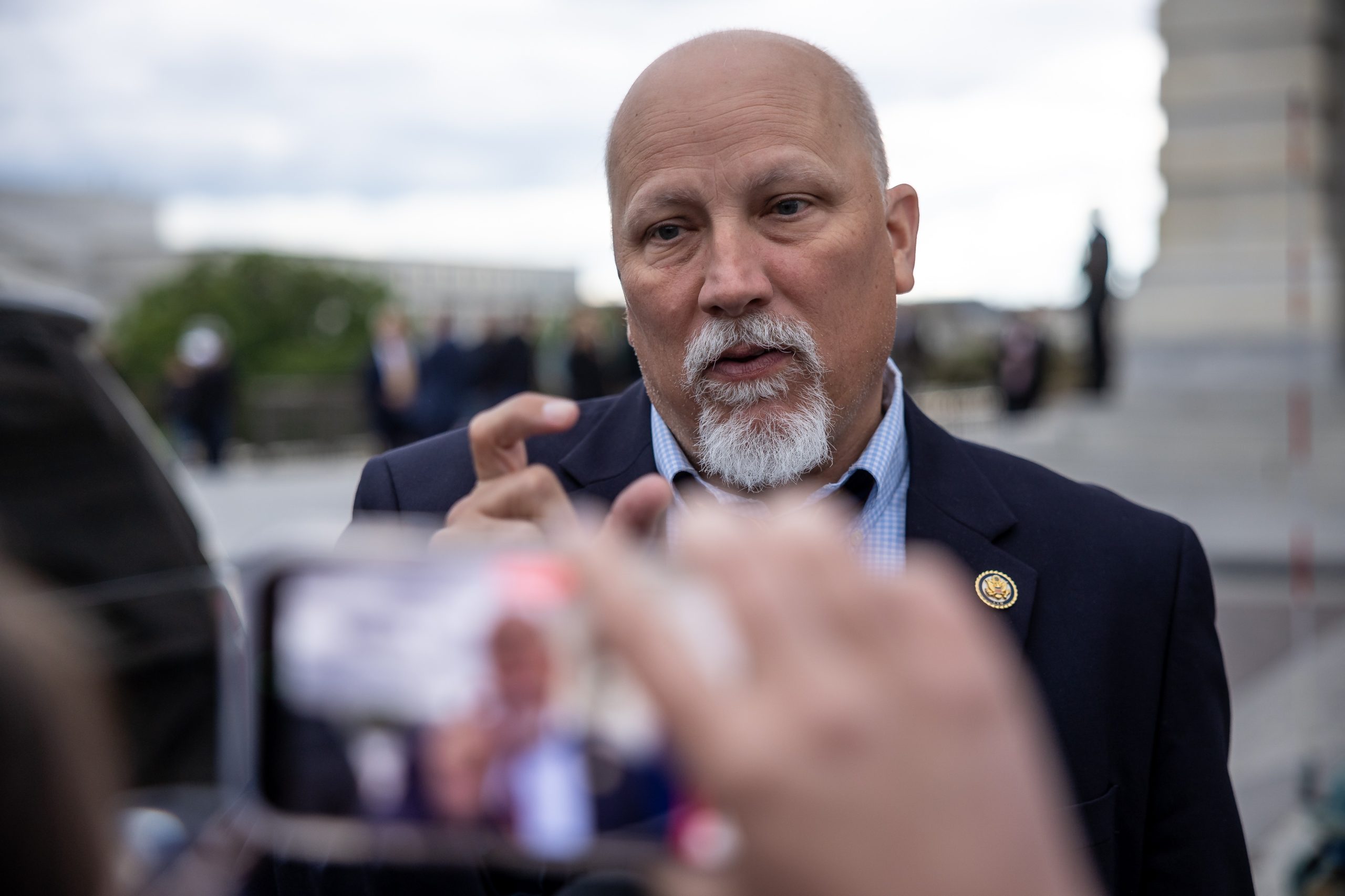

The hard-right Freedom Caucus is having a rough primary season.
Candidates with backing from the caucus and its allies flopped in primaries from Florida to Wyoming on Tuesday, adding to a string of recent losses for the group.
In Florida, Catalina Lauf lost in a House GOP primary to replace Freedom Caucus member and Florida Rep. Byron Donalds — despite backing from President Donald Trump as well as a late, small ad buy from the Freedom Caucus Fund and millions from other groups supporting her.
Hours later, more than a dozen Wyoming Freedom Caucus candidates in the state’s legislature lost to moderates. The group’s chair, Rachel Rodriguez-Williams, lost to a moderate in the secretary of state race, as did Freedom Caucus candidates for state superintendent and treasurer.
Those losses followed Rep. Andy Ogles’ (R-Tenn.) ouster earlier this month, Rep. Chip Roy’s (R-Texas) defeat in his run for Attorney General and Rep. Ralph Norman’s third-place primary finish in the race for South Carolina governor — all candidates who the Freedom Caucus Fund, the federal campaign apparatus of the House Freedom Caucus, spent hundreds of thousands of dollars to boost.
The State Freedom Caucus Network, which backed the Wyoming legislative candidates, is not officially affiliated with the House Freedom Caucus, but its website says its mission is “building on the success of the House Freedom Caucus” to bring the fiscally conservative principles of the group to statehouses nationwide.
While there have been some wins for Freedom Caucus members this cycle, the combined pattern suggests that the ultra-conservative group’s name and influence is waning with GOP voters, and it comes as the factions of the party battle for relevancy when Trump’s presidency ends.
“They became largely an island of misfit toys: problematic in their party, and not for reasons that are necessarily popular with the public,” said GOP strategist Matthew Bartlett, who served in Trump’s first administration. “So you’ve seen diminished influence, and you’ve seen them losing seats, losing stature.”
In Wyoming, Robert Short, a moderate Republican, defeated Rodriguez-Williams by campaigning on a slogan of “make the secretary of state’s office boring again.”
“What Wyomingites were not and still are not is extremists,” Short told POLITICO, arguing that by pushing an “extremist agenda” in the state, the local Freedom Caucus tried to “usher in a national-driven agenda that really does not have a home in Wyoming. And I think the voters of Wyoming responded resoundingly last night in saying, ‘not up in here.’”
The Wyoming losses were especially notable given how conservative that state is. Just two years ago, Freedom Caucus-aligned members took control of the state legislature and the state and gave Trump the highest vote share of any state in the nation. Two years before that, the state’s GOP primary voters resoundingly ousted former Rep. Liz Cheney (R-Wyo.), who defied Trump over his false claims that the 2020 election was stolen. It’s still one of only a handful of states where Trump’s approval rating is still positive. So for the Freedom Caucus to get thumped there is particularly notable.
Wyoming’s Freedom Caucus members struggled to pass its priorities and tried to axe broadly popular programs, from public media funding to dismantling the state’s economic development agency. In proposing those changes, the caucus often sparred with more traditional conservatives.
The caucus aimed to secure a supermajority through Tuesday’s primaries to ram its agenda through the legislature. Instead, voters resoundingly rejected them.
“It was a butt-whoopin,” said Wyoming GOP state Rep. Andrew Byron, who ran unopposed on Tuesday and is not a member of the Freedom Caucus. “It was a huge statement by the Wyoming voters that shows that if you’re not willing to govern and listen to your constituents, they react.”
Multiple Republicans in the state, including Byron, pointed to big spending from national outside groups backing the Freedom Caucus that made Wyomingites feel like out-of-staters were trying to influence their politics as reason for the sweeping losses.
“Wyoming people live in Wyoming because we like our way of life,” Byron said. “We’re not good at getting told what to do, and we really appreciate the Wild West out here.”
In a statement posted to social media, the Wyoming Freedom Caucus said it “IS NOT GOING ANYWHERE.”
“Last night’s results will not undo the policy wins we’ve delivered on behalf of the people,” the group wrote.
Their struggles are part of a broader pattern. The Freedom Caucus Fund has failed to elevate its candidates in four of the five races it spent in this year, spending a combined $1.5 million dollars to boost Lauf (who got just $30,000 in support from the group), Ogles, Norman, Roy and Nevada Republican David Flippo (who is the only candidate the group spent for and won).
These candidates didn’t all lose for the same reasons. Ogles had been plagued by various scandals, was running in a newly redrawn district with a number of new voters unfamiliar to him, and had limited campaign resources. Roy was hammered for his past support of Florida Gov. Ron DeSantis and criticism of Trump in the 2024 presidential primary. Norman was running in a crowded field in which Trump was backing another candidate (and he is again in the South Carolina special Senate primary). For her part, Lauf struggled to break out in a crowded 10-way primary in a ruby red seat.
But observers say there’s often a common through-line: The candidates have been mired in controversy.
“In a day and age where candidates matter, they tend to create their own headaches,” Bartlett said. “Sometimes behavioral, sometimes ideological.”
Neither the Freedom Caucus Fund nor a spokesperson for Freedom Caucus Chair Andy Harris (R-Md.) responded to a request for comment on Wednesday. Multiple Wyoming Freedom Caucus members who lost on Tuesday also did not return calls.
The only victory for the group where it spent money this cycle was in Nevada’s 2nd District, where it elevated Flippo in the race to replace retiring Rep. Mark Amodei (R-Nevada), who has declined to support Flippo in the general election for the deep-red seat. In other races where the campaign arm didn’t spend, Donalds and Reps. Andy Biggs (R-Ariz.) and Tom Tiffany (R-Wis.) cruised to their states’ GOP nominations for governor, and Rep. Barry Moore (R-Ala.) won the primary to succeed Sen. Tommy Tuberville in the upper chamber.
Some of those candidates, like Biggs and Tiffany, will face tough general election bids in battleground states — providing another test for the Freedom Caucus among a broader swath of voters.
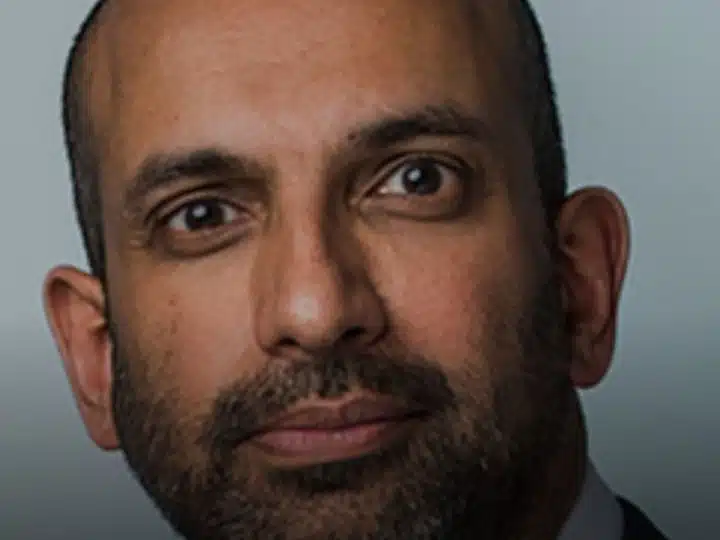

Filton 24 — Lawyers have issued a statement on behalf of barrister Rajiv Menon KC about the contempt of court proceedings brought against Menon by intelligence service-aligned judge Jeremy Johnson. Johnson is pursuing Menon for the closing speech he gave to the jury in defence of his client, Filton 24 defendant Charlotte Head.
Menon went public for the first time this week about the charges, giving an interview to news website Democracy Now. Lawyers want to remind the public that Menon denies any wrongdoing, but is currently in a phase of the case for technical challenges rather than direct argument on the merits of his case, judicial bias and the prosecution’s lack of merit.
Jenny Wiltshire, Head of Serious and General Crime at law firm Hickman & Rose, said:
Rajiv is grateful for the many messages of support he has received and is continuing to receive in relation to the contempt of court proceedings he is facing in respect of the closing speech he gave to the jury in defence of his client, Charlotte Head.
The legal challenges that Rajiv has so far made are necessarily procedural and jurisdictional. The pending appeal before the Court of Appeal (Criminal Division), which is awaiting a hearing date, concerns the legality of the Crown Court having purported to invoke a summary procedure on 22 June and 29 June 2026, more than five months after Rajiv’s speech, and further alleges that the proceedings against Rajiv raise apparent prejudice/bias.
That the nature of the challenges thus far have been largely procedural and jurisdictional means that there has been no forum in which to set out Rajiv’s strong legal and factual challenges to the allegations of contempt themselves.
As the proceedings are currently ongoing, it is not appropriate to set out the details of his challenges now. What can be said at this stage is that Rajiv’s defence is not limited to the issue of jury equity but includes the nature and extent of the trial judge’s orders themselves which are alleged to have been in force and breached. If the time ever comes when the details of Rajiv’s challenges need to be presented, this will be done in full.
Nevertheless, it is important that all of those showing any interest in this matter know that Rajiv strenuously denies that the speech he gave breached any order of the trial judge, was intended to do so, or was in any way in contempt of court.
This is separate from the profoundly concerning decision by several senior judges to pursue this matter as a potential contempt of court and the procedure which has now been adopted on two separate occasions, which must be having a chilling effect upon other barristers and advocates.
Featured image via the Canary
By Skwawkbox


An Australian court has rejected the Israel’s ‘IHRA definition‘ of antisemitism as “verbose and imprecise” and “detached from reality”. The New South Wales Supreme Court ruling aligns with the findings of legal experts — and even the creator of the ‘definition’.
Judge Desmond Fagan rejected the state government’s attempt to impose a terrorism supervision order on a Sydney man for vandalism. The attempt mirrors the UK government’s move to treat anti-genocide activists as terrorists. However, unlike the suborned UK court system the NSW court has, at least so far, embraced justice rather than political lawfare.
Fagan’s damning description of the (non) definition was only the start. He went on to describe the so-called IHRA definition as incompatible with Australia’s established meaning, concluding that it is an attempt to “repurpose” the term to repress criticism of Israel.
IHRA — Israel lobby tactics
As in the UK, Australia’s Israel lobby — well entrenched in government — is trying to force the ‘IHRA’ onto all areas of government, education and media. Again mirroring the UK, ‘Labor’ PM Anthony Albanese has used the Bondi massacre – whose perpetrators were not linked to Palestine and which was stopped by a Muslim man — to wage war on anti-genocide protest.
But Fagan threw a spanner in the works when he ruled that the IHRA is “preposterous” if it is used to demonise opposition to Israel’s genocide in Gaza:
the IHRA proposal is detached from the reality of the common usage and understanding of antisemitism in this country…
…it would be preposterous to suggest that 79% of Australians are antisemitic because they disapprove of Israel’s treatment of the Palestinians.
Anti-Zionism ≠ antisemitism
The judge also turned his fire to the lobby’s tactic of trying to equate opposition to the racist political ideology of Zionism with antisemitism:
As an ideology of Jewish nationalism, Zionism is open to political discussion and criticism, notably on grounds concerning the rights of the Palestinians.
This is a blow for the so-called ‘antisemitism plan’ of Australia’s Zionist ‘antisemitism tsar’ Jillian Segal, who frequently treats the two as interchangeable and used this to push for the blanket adoption of the IHRA. Fagan was having none of that, pointing out that being Jewish is not the same as being Zionist:
It may well be correct that ‘most, but not all Jewish Australians’ regard Zionism as ‘a core part of their Jewish identity’. That does not mean that anti-Zionists are hostile to that majority of Jews on account of their Jewishness; only that they hold a negative view of a political ideology with which the majority of Jews have chosen to identify.
And he correctly identified the fact that Israel’s supporters push the ‘IHRA’ specifically to conflate Jews and Israel:
Its tendency, and the apparent purpose of promoting it, is to graft onto the community’s abhorrence of antisemitism, understood as hostility to Jews for their Jewishness, a parasitic rejection of protest against Israel.
Fagan warned the federal government that it couldn’t change the real meaning of a word by means of a definition that “fails the first test of any definition: it is indefinite”. He said that courts had to work with real meanings and added a rebuke for the government’s lawyer:
You are treating all Jews as monolithic. It’s quite wrong to treat all Jews as supporting Israel, because they don’t.
Featured image via the Canary
By Skwawkbox
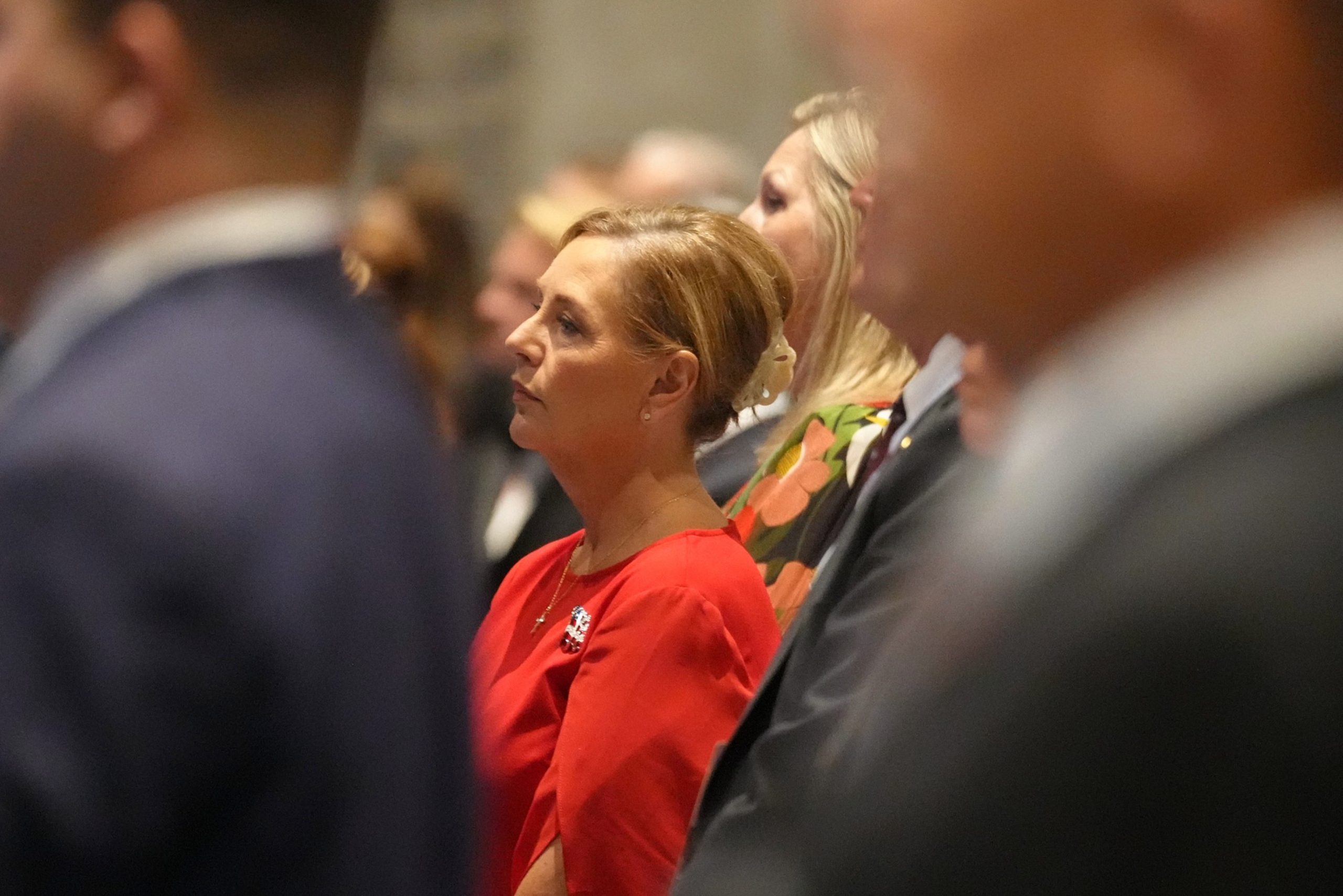

South Carolina Sen. Darline Graham has given opponents fresh ammunition to attack her on her biggest vulnerability: her inexperience.
She revealed a major blindspot in her understanding of a critical foreign policy issue, U.S.-Taiwan relations, during Tuesday’s debate for the Aug. 25 snap Senate primary runoff to replace her late brother Lindsey Graham. Her response spread like wildfire on social media, with critics saying it proves she is “unprepared” to take office.
Asked whether Taiwan and the South China Sea are relevant national security priorities, Graham responded: “I’m just going to be honest here … I’m not that informed on national security, so.” She added that “national security is not my thing, not my area of expertise, but I do support the military.”
It was a notable acknowledgement from a sitting senator, as tensions rise between China and Taiwan — and as the U.S. preoccupation with the Iran war calls into question how reliable a supporter it might be amid fears of a possible future invasion of Taiwan.
The gaffe exposed the exact weakness that her runoff opponent, GOP Rep. Ralph Norman, has been eager to highlight: the senator’s lack of tenure.
His allies immediately piled on.
Norman supporter and former U.N. Ambassador Nikki Haley wrote in a post on X that foreign policy experience is “not something you inherit” — a swipe at Graham’s appointment to fulfill her brother’s current term. Ken Cuccinelli, a former Trump administration official, expressed support for Norman, writing that Graham has “worked hard to hide any firm positions, and here she is at least being honest.”
“It very much confirmed many of our suspicions that while she might be a very nice lady, she is woefully underprepared or unprepared to be one of the 100 U.S. Senators in the Senate,” state Rep. Jordan Pace, who is supporting Norman in the runoff, said in an interview.
Norman said in a statement that South Carolinians deserve a senator with “know-how” on foreign policy: “Whether it’s spy balloons flying overhead or buying up land near South Carolina military bases, China continues to prove that it is a threat to the United States.”
Graham’s campaign, asked to clarify her response on U.S.-Taiwanese relations and her critics’ attacks over her misstep, pointed toward comments she made in the spin room after the debate: “What’s important are the people of South Carolina. They’re worried about their pocketbooks more than they’re worried about the South China Sea, quite honestly.”
Graham’s answer is also raising eyebrows among some of her own allies, with less than a week before next Tuesday’s election. And it increases the pressure on President Donald Trump, who had championed Graham’s appointment in July, encouraged her to run for a full term and is even planning to rally with her on Friday to boost her election chances.
“[Darline] just doesn’t have the experience of executing, you have to be able to deliver a story about herself and right now her story is that she’s Lindsey Graham’s sister,” said a former Trump administration official, granted anonymity to speak openly about private conversations.
The White House is still backing Graham, this person said, because the president had a close relationship with the late senator but also sees her as a better alternative to Norman, who endorsed Haley over Trump in the 2024 Republican presidential primary.
A second person familiar with the White House’s thinking, granted anonymity to speak candidly, said, “POTUS is still all in on the endorsement.”
The White House declined to comment on Trump’s support for Graham.
Still, the flub highlighted the danger for Trump, as he seeks to propel a political novice into a six-year term in the Senate and avoid yet another stain on his endorsement record. His high-profile rally for Graham in Myrtle Beach later this week is a particularly notable step in a year otherwise marked by a decrease in his explicit campaign travel.
Norman, for his part, said during the debate that Taiwan is a “definite ally” and that Trump is right to enable them to “defend themselves against China.” He declined to take a swipe at Graham over her comment in real time, but that hasn’t stopped his supporters from hammering the newcomer for the embarrassing misstep.
Graham’s stumble was a far cry from her late brother’s hawkish defenses of Taiwan, in which Lindsey Graham had openly criticized the expansionist aims of Chinese President Xi Jinping, called allies of China “dirtbags” and stressed the need to maintain the status quo between Beijing and Taipei to protect U.S. national security interests.
“Anyone running for a seat in Congress should be able to explain to the American people why Taiwan is important to American interests. Taiwan is a vibrant democracy of 23 million people and the source of over 90 percent of the world’s advanced semiconductors,” said Bonnie Glaser, managing director of the German Marshall Fund’s Indo-Pacific program. “A Chinese takeover by force would shatter U.S. credibility with its allies across the Indo-Pacific.”
American intelligence has long suggested that China’s People’s Liberation Army will be sufficiently capable of seizing the island starting in 2027.
Trump in June said he was open to speaking with Taiwan’s President Lai Ching-te, despite China’s warnings against doing so, in what would be the first direct dialogue between American and Taiwanese leaders in decades.
But the U.S.’ war with Iran is casting doubt on how effective an ally the Trump administration will be if China does invade Taiwan. Extended naval deployments to support airstrikes against Iran and a corresponding blockade of its ports have left the U.S. without a deployed aircraft carrier in the Indo-Pacific, as the USS George Washington steams toward the Middle East to relieve the extended Abraham Lincoln carrier, for instance.
The heightened risks and the rapid race to replace Lindsey Graham have left some in South Carolina’s GOP circles feeling less than optimistic about the choice they have to make to select a key proxy in Washington.
“It was shocking how we’re gonna give someone who was on stage last night six years in the U.S. Senate, and I think that’s the overall impression people are having today” said one South Carolina-based Republican operative who has stayed neutral in the Senate race and was granted anonymity to speak candidly. “One of these two is gonna get six years in the Senate? Like, big hanging question mark.”


The chair of the Conservative party has called for the failed, racist Rwanda scheme to be reinstated. Kevin Hollinrake was quoted in the press arguing it was a better option than housing asylum seekers in a Yorkshire RAF base.
The Tory Rwanda scheme would have seen asylum seekers relocated to the African state. One of former PM Keir Starmer’s first moves upon taking power in 2024 was to scrap the scheme.
Hollinrake said:
We, in a previous government, decided where to put them, we said they should be detained and deported back to their home country, or if they couldn’t go to their home country they should go to Rwanda.
His comments followed an alleged Home Office attempt to apply:
for planning permission to house asylum seekers at former RAF Linton-on-Ouse near York, and two other Ministry of Defence sites.
They say this will help them close asylum hotels. The Yorkshire Post reported:
locals have reacted in uproar at the prospect of 1,300 men being housed in a small village of 650 people.
Rwanda scheme redux?
Hollinrake said:
Illegal migrants should not be in anybody’s community. That’s the reality. Whether it’s in hotels, houses of multiple occupation or air bases or military bases.
I set about a campaign with others in the local community in a village near me in my constituency in the last Parliament, because I think it’s totally wrong they should be in these communities.
Hollinrake, who is the current MP for Thirsk and Malton, said:
These people coming across the Channel should be detained in detention centres pending their immediate deportation back to their home country or a safe third country.
He invited the new Labour PM to work with the group:
That’s what should happen — Andy Burnham could work with us tomorrow to do exactly that.
As the Canary reported way back in 2022:
This scheme comes alongside the inhumane and discriminatory Nationality and Borders Bill, which seeks to criminalise vulnerable people seeking refuge in the UK. The European Court of Human Rights is questioning the lawfulness of plans to ship asylum seekers to Rwanda, a country with a poor human rights record.
For the Tories, violent deportations and a general love for anything carceral are eternal brain-worms. These kinds of dog-whistles allow them to appear relevant and appeal to the very worst tendencies in British public life. The Rwanda scheme encapsulated the current reactionary state of UK politics. And it completely failed to address the global instability which drives desperate refugees to come to the UK.
Featured image via the Canary
By Joe Glenton
The post The lethal folly of the early prisoner release appeared first on spiked.

In 2011, with the glass barely swept up after the London riots, the think-tank Demos measured Britain’s pride in itself and found it obstinately intact. A net 74 per cent of us were proud to be British. Last week, Demos ran the ruler over us again. The figure is 47 per cent. Pride in Britain’s role in the world stands at 13 per cent. The BBC, which 15 years ago enjoyed a net pride score of 48 per cent, now sits at minus-11, meaning more Britons are ashamed of the corporation than proud of it. That last number is, I suppose, at least evidence that the public can still see straight.
The Times called the findings sobering. Miserable they certainly are, but nobody who has spent a working life in and around our institutions has any business being surprised. Shame on this scale is a harvest. The sowing took the better part of half a century, and the crop is now coming in.
Look where the collapse runs deepest. Not among the poor, and not among the old, but among the prosperous middle aged of the upper classes – the cohort that passed through our universities in precisely the years when those universities stopped transmitting our civilisation and began apologising for it. Their children now report a fresh distaste for British history, the Union Jack and the armed forces, which are the three things you would teach a nation’s young to despise if despising the nation was the point of the lesson. The old still love England. It is the people who govern her they no longer trust.
French philosopher Julien Benda named the problem in his 1927 book, La Trahison des Clercs – ‘The Treason of the Intellectuals’. He referred to the treason the learned class committed when it abandoned truth for political theory. Our intellectuals went further than Benda imagined. They kept the gowns, the chairs, the studios and the grants, and turned the whole apparatus of cultural transmission into an apparatus of cultural repudiation.
George Orwell observed the seedling of our current woes during the Blitz. ‘It is a strange fact’, he wrote in 1941, ‘but it is unquestionably true that almost any English intellectual would feel more ashamed of standing to attention during “God Save the King” than of stealing from a poor box’. He also described what he believed they could never reach. English patriotism was not the shouting kind. It lived in the texture of ordinary life – in the bitterness of the beer and the weight of the coins, in solid breakfasts and gloomy Sundays. What Orwell did not reckon with was patience. A quiet patriotism can be quietly starved. It takes decades, but decades were available.
Roger Scruton gave the disease its clinical name: ‘oikophobia’, the repudiation of home as a badge of sophistication. In his 2001 book, England: An Elegy, he wrote up the patient’s notes with a breaking heart. The long march that Antonio Gramsci imagined never needed to seize a parliament. Instead, it targeted the institutions where real meaning was found: the schools, the broadcasters, the churches, the museums, the law. The curriculum was to be decolonised and the family problematised, while the faith of Thomas Cranmer and George Herbert dwindled into a heritage asset with a safeguarding policy. No conspiracy in a cellar was needed, only a class with a shared sneer – the nowhere people, at home in Brussels and Davos and nowhere else. The same class that gave us the EU, mass immigration without consent, the failed experiment of multiculturalism, an armed forces cut to the bone and then investigated and pilloried for winning.
The Church of England’s own hierarchy has joined in the work. For decades, the bishops have been quietly dismantling the parish system that built England, amalgamating benefices until one exhausted priest serves 10 villages, while the bureaucracies swelled with advisers for everything except the cure of souls. The commissioners sit on a fortune of some £10 billion while bleeding the pews dry. In the midst of this, the Church is also determined to pay £100million in slavery reparations, for the sin of existing in the 18th century. There now exists a movement called Save the Parish, a name that would have been unintelligible to any previous generation. Imagine needing to save the parish from the Church.
And yet. One line on the Demos chart rises. Pride in the local community is higher than it was in 2011. We trust our neighbours more even as we trust the national institutions less. The Times reads this as a curiosity. I read it as hope. The nation is not dead, only withdrawn to the parish, where England began. This country was assembled out of parishes, out of vestries and benches and lifeboat crews, long before Whitehall existed to be ashamed of it. What was assembled once can be assembled again.
Which is why winning an election is only the start of the work. Four hundred MPs and a Lords willing to pass the government’s legislation give you a bridgehead, nothing more. The real territory is the institutions themselves, the quangos and commissions through which the clercs have ruled for decades without once standing for office. They marched through the institutions. We must now fan out through them – patiently, lawfully, cheerfully, and hand the meanings of England back to the people who never stopped believing in them.
It will take discipline and hard work, and it must be done with joy in our hearts, because sourness is their patrimony and cannot be ours. Britain has not fallen out of love with herself. She has been talked out of love, and what has been talked out can be talked back in, and sung back in. There is no greater cause than this.
Except, perhaps, romantic love. But a man who will not fight for his country was never much use fighting for his beloved, and the two loyalties have always kept each other’s company.
Gawain Towler is a commentator and an elected board member of Reform UK. This is an edited version of an article that originally appeared on his Substack.
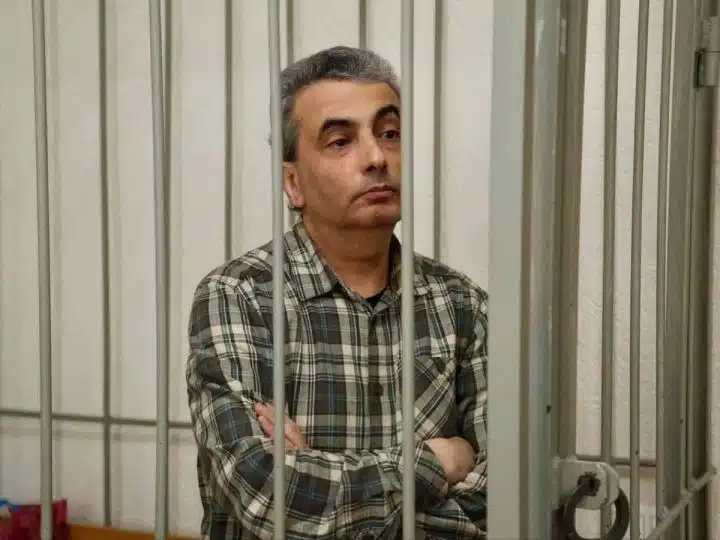

Amnesty International has highlighted the recent conviction of Russian anti-war politician, journalist and human-rights activist Lev Sholsberg. On 17 August 2026, the Pskov City Court sentenced Shlosberg to over 11 years in a penal colony for spreading false information and discrediting the Russian Armed Forces.
Shlosberg is the deputy chair of the Yabloko Party. Amnesty described Yabloko as:
the only registered Russian political party which has consistently opposed Russia’s war of aggression against Ukraine and campaigned for a ceasefire.
Sholsberg — ‘I am the Russian Federation’
In particular, the Pskov City Court sentenced Shlosberg under Article 280.3(1) of the Russian Criminal Code for “repeated discreditation” of Russia’s armed forces, and Article 207.3(2)(d) for “dissemination of deliberately false information” regarding the armed forces.
Shlosberg previously participated in an online debate centering on Russia’s war on Ukraine. He then shared a publication that included a Daily Mirror front page via social media. That front page depicted both a Ukrainian woman covered in blood, along with an image of Russian president Vladimir Putin.
In the trial itself, Shlosberg stated that Russia is persecuting “thousands and thousands” of people for their “peaceful, non-violent, and humanistic beliefs”. He went on to say:
In reality, in this courtroom I am the Russian Federation, which has been put in a cage and which they want to force into silence.
The anti-war politician rejected all of the charges against him. Whilst the prosecution demanded a sentence of 12 years, the court sentenced Shlosberg to 11 years and one month in a penal colony.
‘Blatant reprisals’
However, it’s not just Sholsberg that the Russian state is targeting — they’re going after his opposition party, too. On 10 August 2026, the Russian Supreme Court barred Yabloko from running in the next State Duma election.
Whilst the party tried to appeal the decision in court on 17 August, Russian law enforcement arrested over 30 supporters outside the Moscow courthouse.
Amnesty International’s director for Eastern Europe and Central Asia, Marie Struthers, said:
For nothing more than taking part in an anti-war debate and sharing a social media post, Lev Shlosberg faces more than 11 years behind bars. His arbitrary prosecution and sentencing are blatant reprisals for exercising his right to freedom of expression to call for peace.
The Yabloko party’s disqualification from running in the September State Duma election is further proof that political pluralism and anti-war expression have no place in Russia today.
The Russian authorities must immediately and unconditionally release Lev Shlosberg and quash his conviction. They must repeal legislation criminalizing peaceful anti-war expression, end the persecution of Yabloko members and supporters, and respect the rights to freedom of expression, association, peaceful assembly and political participation for all Russians.
Featured image via the Canary
By Grace
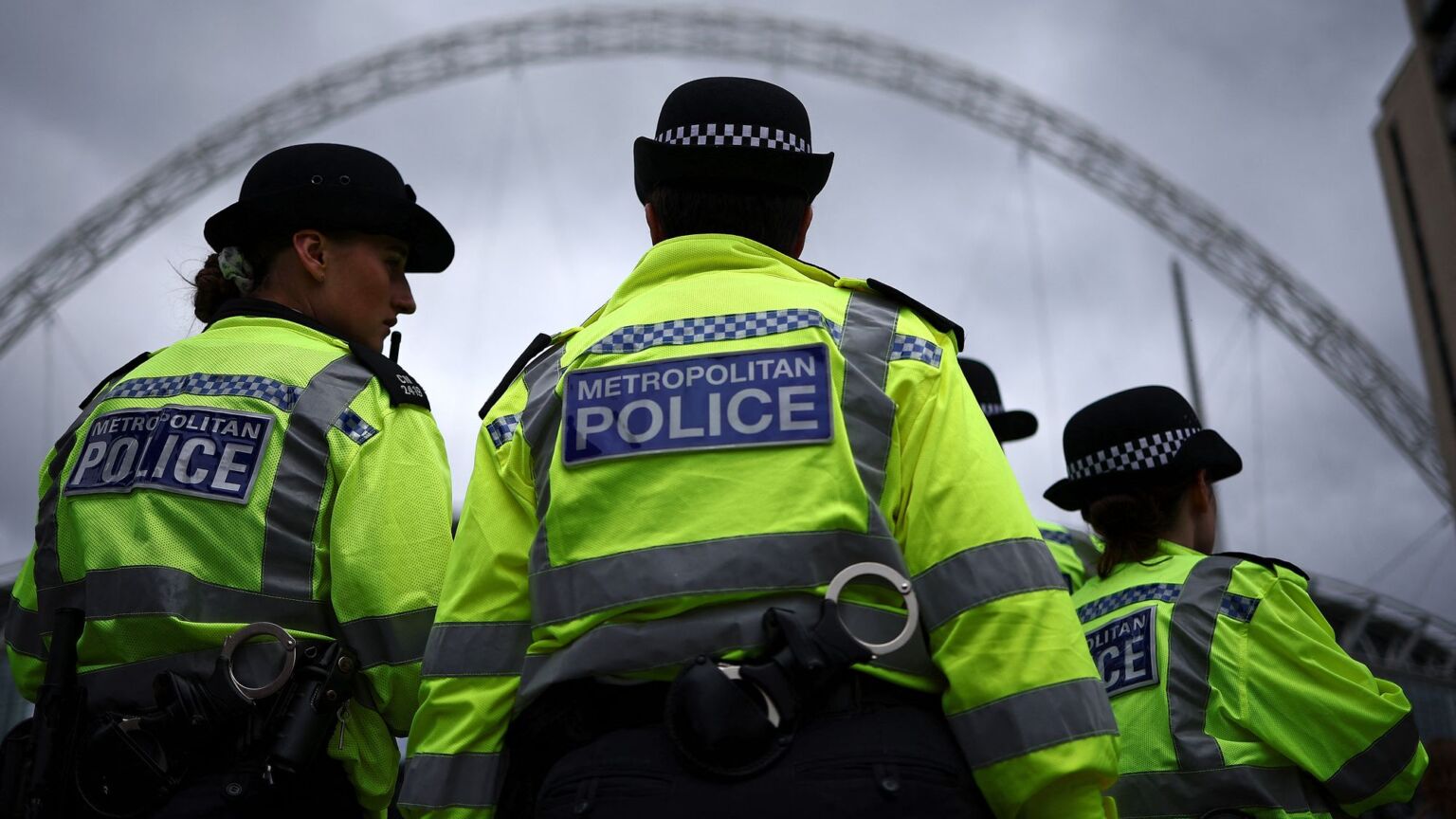
In January, the British government published its policing white paper, From Local to National: A New Model for Policing. This promises the biggest shake-up of policing in England and Wales since Sir Robert Peel invented local police forces in 1829. And yet nearly half the population has no idea it is even happening.
The government plans to scrap our existing 43 local police forces and replace them with potentially as few as 12 regional ‘mega’ forces alongside a new souped-up National Police Service. At the same time, it promises to give the home secretary unprecedented powers over policing priorities and senior police leadership.
This looks like a very bad idea. Trying to police vast areas just doesn’t work. Scotland amalgamated its local police forces just over a decade ago, and the resulting Police Scotland now suffers from deep financial deficits, falling public confidence, fewer police officers and decreased community visibility.
The government has consulted neither the public nor even the police themselves about its plans. So earlier this month, I organised a public meeting in Leigh-on-Sea, alongside Essex Police, Fire and Crime Commissioner Roger Hirst, to give the public the thing they have been denied so far: a voice. The prime minister would do well to listen.
Nobody seriously believes that British policing is perfect. There are forces that are too small and need to improve, and serious organised crime does not stop at county borders. A greater degree of national coordination makes obvious sense. The question is whether abolishing local forces and creating giant regional ones is actually the answer. There is remarkably little evidence that it is.
Consider the scale being contemplated. In the East of England, Essex is likely to be merged with Norfolk, Suffolk, Cambridgeshire, Bedfordshire and Hertfordshire, creating a police organisation serving more than six million people. A chief constable responsible for six million people cannot have the same knowledge of the communities under his charge as one responsible for a county of two million. Local priorities inevitably become regional priorities. The further decision-making moves from the community, the harder it becomes for residents to influence what their police force does.
This isn’t an abstract constitutional argument. Local knowledge can save lives. Police officers know the roads, estates, businesses, schools, coastline and communities they patrol. They know where tensions are building and which local organisations can help solve problems. A former Southend chief superintendent at the meeting described how knowing local businesses, residents and officers creates a sense of personal responsibility and accountability. That relationship is impossible to replicate from a regional headquarters potentially hundreds of miles away.
There is an irony to the government’s plans. It appears to be trying to solve the perceived problems of policing by creating organisations so large that they risk reproducing the very management problem it has identified in the Metropolitan Police – that it is too large an organisation for too large a population. The performance of Essex Police relative to that of the Met illustrates the problem. As Hirst explained at the meeting, the much smaller Essex Police has a crime-solving rate around twice the national average and more than three times that of the Met.
As the saying goes, if it ain’t broke, don’t fix it. If a particular force is failing, deal with that force. If a particular function would benefit from national coordination, nationalise that function. But don’t use a sledgehammer to crack a nut.
There are obvious areas where greater collaboration makes sense. Terrorism, cybercrime and ‘county lines’ drug dealing traverse borders. Essex already works closely with Kent and regional organised-crime colleagues. Last year, Essex’s own units disrupted around 220 county-lines operations.
That demonstrates the importance not of amalgamation, but of collaboration between police forces. The same applies to back-office functions. Forces already work together on procurement, training and technology. If a genuinely national function makes sense – policing aviation, for example – there is an obvious case for bringing it together nationally. But bigger organisations are not automatically more efficient.
The Association of Police and Crime Commissioners has estimated the government’s proposals could cost around £500million. As Hirst suggests, this is not new money for policing. It is being taken from the existing policing budget. Imagine what that could be spent on: more neighbourhood officers, more detectives, greater forensic capability and so on.
In other words, that half-a-billion pounds could be spent on tackling crime. After all, residents don’t wake up in the morning worrying about whether their police force has the optimum organisational structure. They worry about car theft, burglary, drug dealing, anti-social behaviour, shoplifting and whether anyone will come when they call the police.
Then there is the problem of political control. The proposed reforms would give the home secretary powers to direct the commissioner of a National Police Service, who could then direct local chief constables. Local policing could therefore be directed from the centre of government. That should concern everyone, irrespective of party.
British policing has traditionally operated on the fundamental Peelian principle that police officers enforce the law on behalf of all of us, independently of the government of the day – ‘The police are the public and the public are the police’. Ministers set the legal framework and police leaders decide how policing is operationally delivered.
The distinction between government and the police protects both the police and the public. Giving a home secretary greater powers to direct policing priorities – alongside greater influence over the appointment and removal of senior police leaders – risks changing that constitutional settlement. Today’s home secretary may be responsible. Tomorrow’s might not be.
Incredibly, there has been no meaningful national public debate about any of this. If there were, it is likely the majority would be arguing against the proposed changes. An Essex-wide survey of around 1,700 residents delivered a striking verdict: nearly 70 per cent opposed regional police forces and 85 per cent regarded visible local policing responding to Essex’s particular problems as extremely important.
That is not proof that the public overwhelmingly opposes police reform. But it does show that people need to be properly consulted.
The government should pause its plans. It should be making policing more visible and more accountable to communities – not creating vast bureaucracies and a state-controlled police force. A police force serving six million people may look efficient on a Whitehall spreadsheet. It could prove disastrous on the ground.

Winx Stakes 2026: Derby winner Green Spaces on a spring mission

Peacock Is Testing Out a Rewards Program for Subscribers

Hundreds of overdue fire safety actions at Darlington flats





-

 Fashion5 days ago
Weekend Open Thread: Ann Taylor
-
 Sports6 days ago
This U.S. Amateur is a glimpse into golf’s future in more ways than you think
-

 Tech6 days ago
11 Ways to Rank Your Videos
-
 NewsBeat5 days ago
Myanmar says over 300,000 Rohingya refugees verified for repatriation as exodus enters ninth year
-

 Sports5 days ago
Birmingham 2026: Day 6 Timetable for Irish Athletes
-

 Politics4 days ago
SEQ Code: The Three Letter Boarding Pass Code That Could Give You The Worst Seat
-

 Tech6 days ago
DeepSeek Harness launches as open source rival to Claude Code, alongside V4-Pro on API with higher prices
-

 Crypto World2 days ago
OCC Greenlights Trump Family Crypto Firm for Trust Charter
-

 Tech2 days ago
Qwen3.8-27B runs frontier-class coding agents and reasoning locally, no cloud API required
-

 Fashion7 days ago
The Details Do the Dressing
-
 Entertainment6 days ago
10 Netflix Shows That Quietly Became Modern Classics
-

 Fashion5 days ago
Weekly News Update, 8.14.26 – Corporette.com
-

 Tech4 days ago
Every fusion startup that has raised over $100M
-
 Entertainment5 days ago
Marvel Studios Reveals New X-Men Cast Including Adam Driver and Sadie Sink
-

 Business5 days ago
Facebook Down Now? Users Report Login And Loading Problems As Outage Trackers Monitor Ongoing Issues
-

 Business1 day ago
SMA Solar Technology AG (SMTGY) Q2 2026 Earnings Call Transcript
-

 Business6 days ago
15 Ways to Make Money From Your Phone (2026 Guide)
-

 Crypto World6 days ago
Robinhood Chain Approaches $1B TVL as Uniswap Integration Boosts Liquidity
-

 Fashion5 days ago
Cart Confidential Vol. 44 – Julia Berolzheimer
-
 Business5 days ago
Monarch Mutual Fund set to enter MF space with maiden overnight fund; files draft with Sebi
You must be logged in to post a comment Login