

Politics
Andrew Gilligan: Northern Powerhouse Rail won’t help the North, or power better transport. The Tories have got this wrong

Andrew Gilligan is a writer and former No10 adviser.
Kemi Badenoch’s Conservative Party likes to see itself as the hard-headed teller of difficult truths, the fearless critic of bad ideas and the maker of tough decisions. That’s exactly what it should be, what the country needs it to be, and what it sometimes actually is.
Not always, though. The Tory front bench’s first response to several seismically bad Labour ideas has been either fence-sitting (for instance, on digital ID) or feeble acquiescence (on the “Hillsborough law,” which risks making Whitehall ungovernable.)
The periodic woolly-mindedness of our time in government lingers. As we did then, we’re still backing some stupid policies because they “look good,” because some lobby group or celebrity wants them, or because opposing them might make us “look bad.”
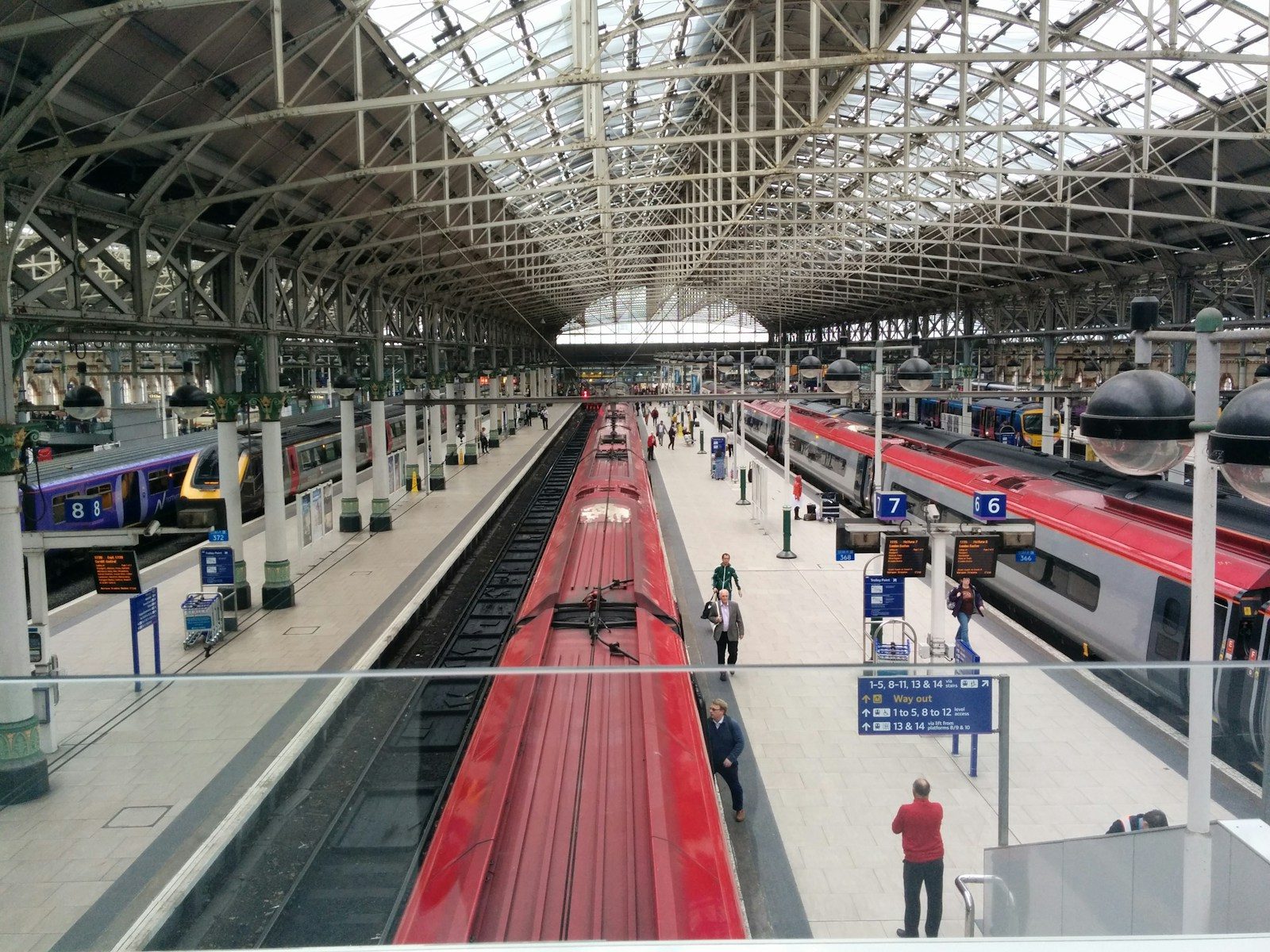
The frontbench toughened up on rejecting digital ID – helping cause a swift government U-turn – but it now seems to be embracing a new stupid policy, a new politicians’ magic answer: “Northern Powerhouse Rail” (NPR). This project achieves the difficult feat of making HS2 seem quite sensible. It will be a high-speed line, from Liverpool to Manchester and possibly Leeds, on which trains can never reach high speeds, because the stations are too close together.
The Liverpool-Manchester stretch – Labour’s priority – will cost at least £17bn, almost certainly closer to £30bn, but journeys between the two cities will actually take longer than the existing service. That’s because it runs via Manchester Airport – sort of. The “airport” station will actually be a mile from the airport; you’d have to transfer by bus.
Yet in last month’s Commons debate on carrying over the bill to build NPR – or part of it, at least – Jerome Mayhew, the shadow rail minister, criticised the Government for the “lack of progress” it was making on the scheme and asked accusingly: “What cuts will [the Transport Secretary] be forced to make, and are they to the high-speed section?”
Maybe we’re worried that opposing NPR would look anti-North. But NPR – though understandably beloved of the profit-scenting construction lobby, and the Labour mayors it has captured – is in fact a huge obstacle to giving the North the better transport it badly needs.
Public transport is a network. Creating better public transport does not mean grafting one new high-speed line, serving a handful of places, onto an otherwise still decrepit system. It means creating a better network, through hundreds of small and medium improvements as well as some large ones: bus, tram and local rail, not just inter-city.
The North’s main rail capacity problem is not on links – lines between cities – but at nodes: places where the trains converge, above all central Manchester. NPR would do little to fix this.
Most importantly, NPR is a fantasy: there will never be enough money, perhaps £70-100bn, to build the whole thing (Labour has just cancelled the northern half of the Midland Main Line electrification to save £1bn). It is described as “unachievable” by the Government’s own infrastructure watchdog. Every pound and every month wasted on a scheme that will never happen is time and money not spent on the things that will help more passengers, in more places, more quickly – and that have a chance of actually coming to pass.
Yes, I know – Boris Johnson, the PM I worked for, supported NPR. His view was that we could do that and all the other things as well. I opposed it, then and since, because I knew that at high-speed prices, you simply can’t. You have to choose, or at least to sequence – which is, in fact, what France and Germany did do, fixing their urban services before turning to the comparative luxury item of high-speed rail. On our current path, we’ll end up with neither.
And yes, I know – my other PM employer, Rishi Sunak, though he cancelled the northern section of HS2, said he would fund a new Liverpool-Manchester line and let the metro mayors decide the route. That was intended to give them scope to choose something better – such as a Manchester version of the “Elizabeth Line” to fix the city’s rail congestion – but they went for the lobbyist option instead.
Reform has come out against NPR. Maybe that’s another reason (an equally bad one) why the Tories appear for it. But if you think it’s a votewinner, you’re mistaken. The North has never wanted high-speed rail. It is transport for the few, not the many. As Richard Tice has said, the political elites’ obsession with high-speed schemes – rather than the services that most people actually use – is another symbol of how mainstream British politics became estranged, in so many ways, from ordinary voters’ real wishes and needs.
There’s still time for the party to get this right – and for Northern England to get more than a Labour press release.

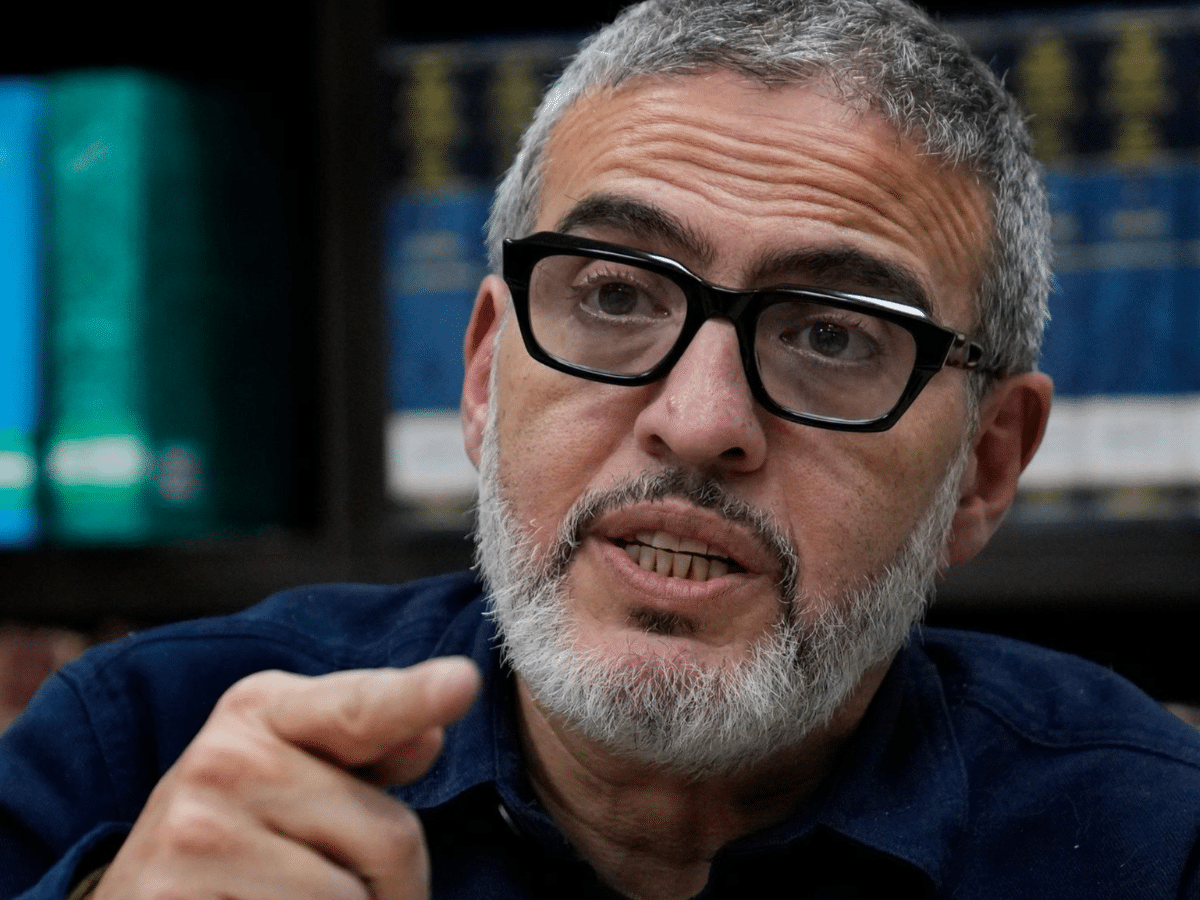
The General Medical Council (GMC) is continuing its shameful collusion with the Israel lobby by again trying to remove the medical licence of British-Palestinian surgeon Dr Ghassan Abu-Sittah.
For the 11th time.
In January 2026, Abu-Sittah defeated the tenth attempt by UK Lawyers for Israel (UKLFI) and the GMC to have him struck off. UKLFI has been described as one of the two main Israel lobby “apartheid apologist” groups, alongside front-group ‘CAA’. His supposed ‘offence’ has been to speak out about what he saw as a volunteer doctor in Gaza: Israel’s genocide, war crimes, and the suffering, injury and death of its Palestinian victims.
This, according to UKLFI and the GMC, discriminated against his Jewish patients – itself a grossly antisemitic claim given the prevalence of Jewish people among opponents of Israel’s crimes.
‘Politically acceptable’ harassment
But the GMC, to its indelible disgrace, has now appealed the tribunal’s decision to dismiss its tenth attack. This is forcing Abu-Sittah to again crowdfund for legal costs – this time estimated to be around £150,000. He said of the GMC’s decision:
When the MPTS rejected the allegations, I felt that a two-year period of continuous harassment and attempts to undermine my credibility, including my evidence before the ICC and ICJ, had finally come to an end.
What the GMC is saying is that it will keep going until it gets the decision it deems politically acceptable.
The significant cost of pursuing this appeal, borne by fee-paying GMC members, raises serious questions about the degree of external political pressure being exerted on the regulator.
I do not, and have never, supported violence against civilians. The allegations made against me were rejected by the tribunal and, in my view, form part of a broader attempt to discredit my professional and humanitarian work.
He added that he has received an “outpouring of support” from Jewish colleagues.
McCarthyite foreign interest group
UKLFI, whose name makes clear it serves the interests of a foreign power, has attacked everything from a display of plates painted by Palestinian children to Netflix — is well known for its attempts to suppress pro-Palestinian speech and solidarity, particularly in the NHS and in the media-cultural sector.
It recently intimidated a gallery owner into ending a smash-hit art show.
UKLFI has forced the resignation of a university museum director for daring to host a display by technical experts who exposed Israeli lies during the genocide.
Despite being thoroughly discredited, the genocide-shielding group UK Lawyers for Israel still managed to persuade the General Medical Council to pursue a lawfare-style antisemitism complaint against Dr Ghassan Abu-Sittah.
The surgeon has incensed Israel’s apologists by…
— Jonathan Cook (@Jonathan_K_Cook) March 2, 2026
It tried to force Tower Hamlets Council in London to take down Palestinian flags put up by residents in solidarity with Gaza, by claiming that local Jewish residents felt threatened.
Along with its fellow apartheid apologist group, the so-called ‘Campaign Against Antisemitism’ (CAA), UKLFI has fallen foul of regulators. CAA has been subjected to regulatory action for its political smears and humiliated in court for false accusations against comedian Reginald D Hunter. UKLFI is currently being investigated for vexatious threats.
Featured image via the Canary
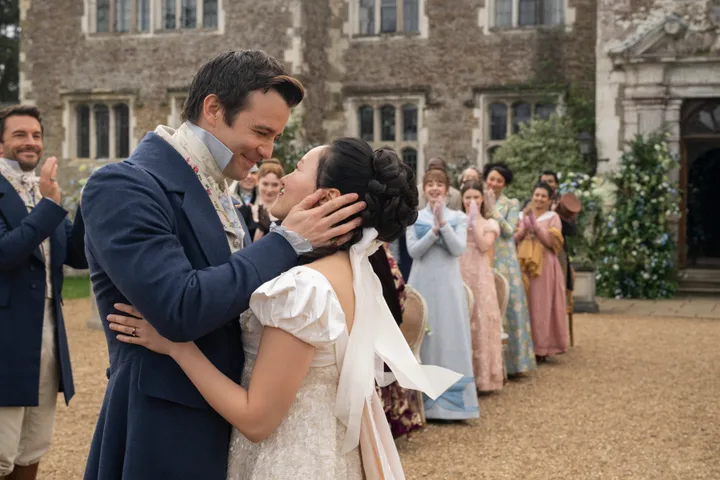
The latest season of Bridgerton has received widespread praise for its touching coming out scene, which sees Benedict opening up to Sophie about his sexuality.
Luke Thompson’s character was confirmed to be queer during the show’s third run, where he was seen engaging in trysts with both men and women.
Benedict is Bridgerton’s first openly queer lead character, and his coming out scene took the show’s writers into new territory.
“I am capable of caring for you, just as I have cared for women I have known who are of the Ton,” he told Yerin Ha’s character, Sophie, in season four’s sixth episode, which premiered on Netflix last week.
“Just as I have cared for some men whom I have known intimately,” he added. “And I refuse to be at all ashamed about that.”
Since the episode’s release, showrunner Jess Brownell has explained why it was “hugely important” to her that this scene be included.
“I think any queer person knows that no matter who you end up with, queerness is a part of your identity,” Jess told Business Insider. “It never goes away. And I think one of the messages of this show every season is that the only way to truly be loved is to be your true self.”
After Benedict’s coming out, Sophie assures him: “Love is always a thing to be proud of. The world needs more of it.”

But to Jess, there was never any doubt about how the character would react.
“Sophie is someone who’s been through so much and has lived in the downstairs world and been friends with people of all different classes,” she claimed. “And I do think she’s probably encountered people of different sexualities.”
Before the series was released, Jess stressed that it was “really important” to her that Benedict’s queerness remain a key part of his character, including after he began to pursue a romantic relationship with a woman.
“There is a really harmful and untrue stereotype that bisexual men are actually just gay men. More often, we see bisexual men ending up in media in homosexual-presenting relationships,” Jess told Variety last year.
“And it felt fresh and important to see a bisexual man ending up in a heterosexual-presenting relationship and still owning the fact that he is still queer.”
Benedict is not the only queer character in the world of Bridgerton.
Jess has previously said that Hannah Dodd’s Francesca will enter a same-sex relationship in a future season.
At the end of Bridgerton’s third outing, Francesca is introduced to her husband John’s female cousin, Michaeala Stirling.
Fans of Julia Quinn’s Bridgerton book series will know that in the novels, this character is written as a man called Michael, with whom Francesca finds love after John suddenly dies.
However, he has been gender-swapped for the TV adaptation, with Michaela being played by Masali Baduza.
All four seasons of Bridgerton are available to watch on Bridgerton now.
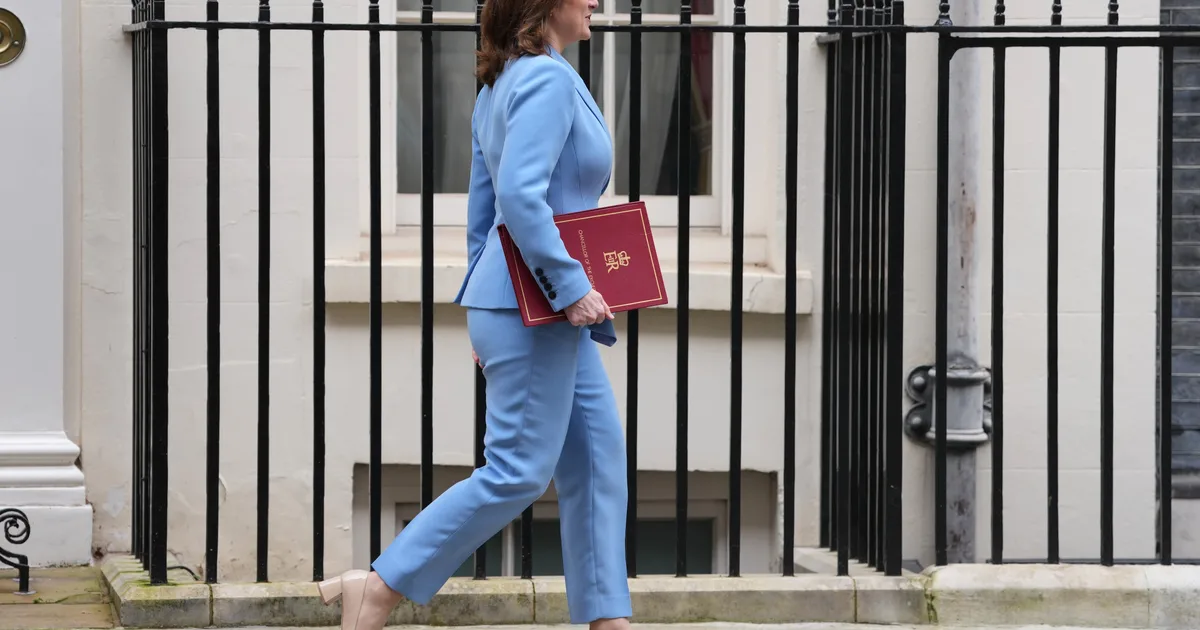
Rachel Reeves looked as though she was enjoying herself as she took aim at Labour’s political opponents while delivering her Spring Statement.
With no new policies to announce, the chancellor decided to use a decent chunk of her time at the despatch box attacking Reform UK, the Conservatives and the Green Party.
“The Tories left our country, our people and our allies exposed: They had no plan and no intention to fund their pledge to spend 2.5% of GDP on defence,” she said.
“Reform would go one step further by ditching our allies and siding with Russia, while the Green Party wants to take us out of Nato and jeopardise our alliances.
“So let me be clear: It is Labour and only Labour that can provide social justice, national security and fiscal responsibility.”
In another section, she dismissed Reform as “a Tory tribute act” following the defections of the likes of Robert Jenrick and Suella Braverman.
“They may have changed the colour of their rosettes, but the British people won’t forget that they are the exact same people that wrecked our public services and wrecked our public finances in the last Tory government,” she said.
“The same people, the same policies and the same disastrous outcomes for working people.”
But behind the political knockabout, the chancellor must know that the fate of the UK economy – and perhaps even the Labour government – depends on the outcome of the latest war in the Middle East.
The Office for Budget Responsibility (OBR) may have forecast that inflation will come down, but that was before the US and Israel’s bombing of Iran sparked an energy crisis which has seen gas prices soar in the past 48 hours.
If that ends up feeding through into people’s bills, Labour will pay a huge political price.
The same goes for the OBR’s forecasts on economic growth, as well as government borrowing and national debt.
A prolonged conflict in the Middle East, and the accompanying economic turmoil which would ensue, would blow another huge hole in the already-stretched public finances.
With unemployment set to be higher than expected this year and the tax burden set to hit another post-war high, yet more economic uncertainty is the last thing the chancellor needs.
“This government has the right economic plan for our country,” Reeves insisted.
“A plan that is even more important in a world that in the last few days has become yet more uncertain.
“With the unfolding conflict in Iran and the Middle East, it is incumbent on me and on this government to chart a course through that uncertainty, to secure our economy against shocks and protect families from the turbulence that we see beyond our borders.”
She may have talked a good game, but the chancellor knows that events thousands of miles away have the potential to destroy her economic plans and plunge the government into political crisis they may not recover from.

Israel’s ground invasion of Lebanon appears to be underway as US-Israeli aggression threatens to pull the entire region into open war. Israel mobilised 100,000 reservists on 2 March and issued threats to civilians. Hezbollah, their primary adversary in southern Lebanon, has said the age of patience is over.
Hezbollah is a Shia political party and paramilitary force. It is distinct from the Lebanese army and has seats in the country’s parliament. The US and Israel launched unprovoked attacks on Iran on 28 February. Hezbollah is a regional ally of the Iranian regime.
Middle East Eye (MEE) reported on 3 March that Israeli forces had pushed deeper into Lebanon:
In a statement on Tuesday, Katz said that he and Prime Minister Benjamin Netanyahu had authorised the army to “advance and hold additional dominant terrain in Lebanon”.
He said the aim was to “prevent the possibility of direct fire on Israeli communities”.
MEE added
The Lebanese group began launching rockets at northern Israel on Monday, which it said was in retaliation for the assassination of Iran’s Supreme Leader Ali Khamenei.
Israel responded with heavy air strikes in southern Lebanon and in Beirut’s southern suburbs, killing dozens and triggering a fresh wave of displacement.
Hezbollah said the ‘era of patience’ is over:
BREAKING: Hezbollah official says’ era of patience has ended’
🔴 LIVE updates: https://t.co/ZGG7iEbuuE pic.twitter.com/9v5ITQrPCf
— Al Jazeera Breaking News (@AJENews) March 3, 2026
And there were reports an Israel tank was hit by a guide missile near the border:
Israeli media reported that an Israeli tank was struck by a guided missile along the border with #Lebanon. pic.twitter.com/NtkSPBfamz
— Al Mayadeen English (@MayadeenEnglish) March 3, 2026
Displacement crisis
Reports suggest locals are fleeing north in droves. The Intercept’s Seamus Malekafzali warned:
The whole displacement crisis has become a footnote amidst all of this.
Almost everyone I know in Lebanon is posting appeals to find housing for their relatives, or relatives of friends, who have become displaced from south Lebanon and south Beirut amidst the intense IDF attacks. The whole displacement crisis has become a footnote amidst all of this.
— Séamus Malekafzali (@Seamus_Malek) March 3, 2026
Israel has also intensively bombed Beirut:
Israel claims it is responding to Hezbollah firing rockets into its territory on 2 March:
Yesterday, Hezbollah chose to join the Iranian regime in their terrorist fight against Israel.
Today, they have begun to see the consequences. pic.twitter.com/shNsoo85Ec
— Israel Defense Forces (@IDF) March 3, 2026
In theory, Hezbollah breached a US-brokered ‘ceasefire’ with Israel which had held since their last war in 2024. In practice, the US has given Israel carte blanche to strike Lebanon ever since. Israel has done so constantly since the deal was struck.
You can read about the secretive Israel-US ‘side letter’ pact here. And our extensive coverage of Israel’s ceasefire breaches here.
Let it be open war
Middle East Observer reported Hezbollah is moving to a war footing:
⚡️🚨 Deputy Head of the Political Council of Hezbollah, Mahmoud Qomati:
The enemy wanted it to be an open war, so let it be an open war pic.twitter.com/vRUE4eTy07
— Middle East Observer (@ME_Observer_) March 3, 2026
The Lebanese government has also banned Hezbollah’s “military activities”:
#Lebanon’s President Joseph Aoun says the decision to ban #Hezbollah’s military activities is “irreversible,” as the Iran-backed movement claimed responsibility for new attacks targeting Israeli positions.https://t.co/qBhrAV36M7
— Al Arabiya English (@AlArabiya_Eng) March 3, 2026
And Lebanese forces in the south have been seen pulling out in anticipation of an Israeli assault:
⚡️🚨 Under the orders of the Lebanese Government, The Lebanese Army withdraws from borderpoints to allow the safe entry of the Chosen People of God’s army and the occupation of Lebanese territory. The Lebanese Government consider the lives of Israeli soldiers as sacred and worth… pic.twitter.com/IeakWNTafS
— Middle East Observer (@ME_Observer_) March 3, 2026
The legacy media seems to be mincing its words about Israel’s actions. Associated Press (AP) reported on 3 March:
The Israeli military said it has sent additional troops into southern Lebanon and took new positions on several strategic points close to the border, while Lebanon’s state-run National News Agency said the Lebanese army was evacuating some of its positions along the border.
They posted on X:
The Israeli military says soldiers are operating in southern Lebanon as part of a broader effort to increase security for residents in northern Israel near their shared border. It says troops are positioned at several points near the border in what it described as a “forward
But Middle East historian and author Assal Rad put more plainly:
So many words to avoid saying invasion. https://t.co/oPE4CG08H8
— Assal Rad (@AssalRad) March 3, 2026
Israel is now bombing Iran and Lebanon at the same time. It’s genocidal assault on Gaza and the West Bank is also still underway. Opening a new front in the war will stretch the settler-colonial state further, but only time will tell what the long term implications are.
Featured image via the Canary
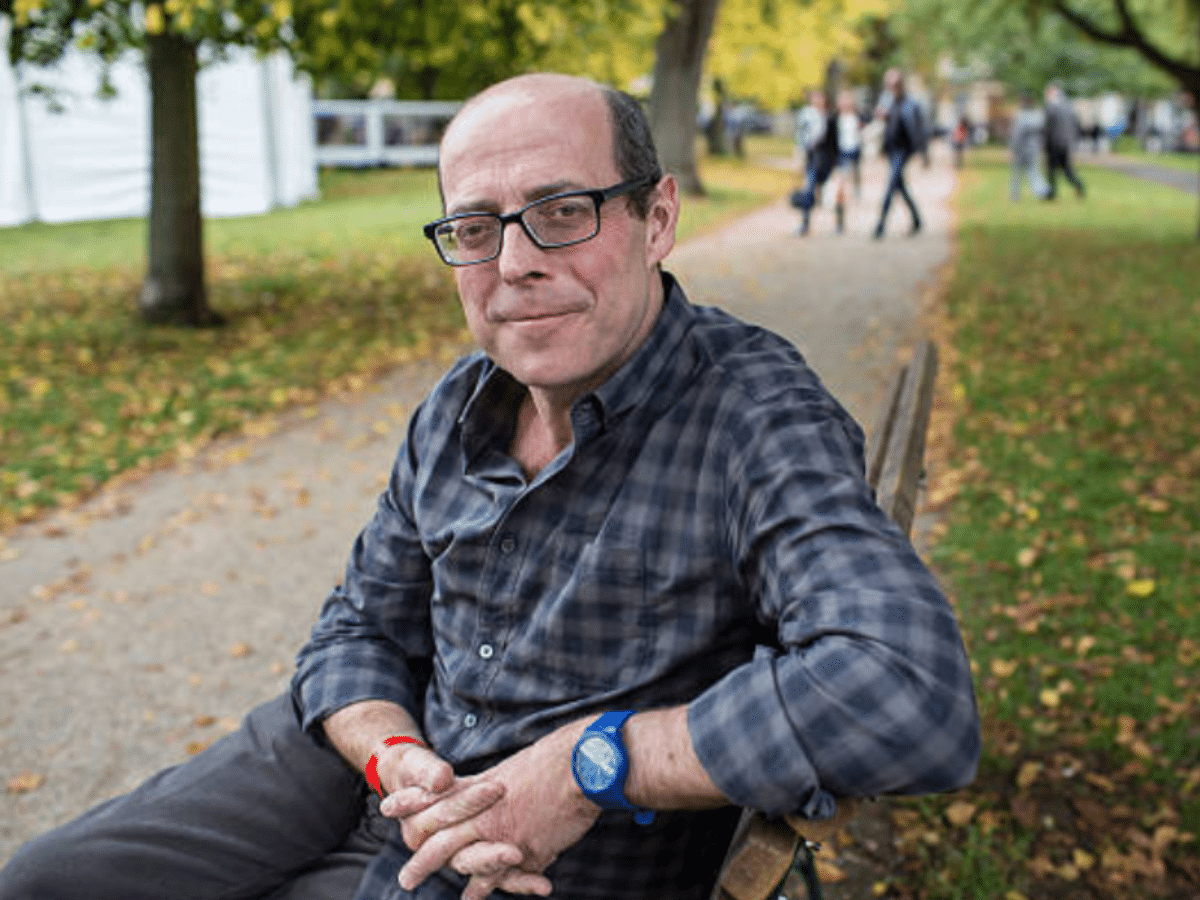
The BBC’s Nick Robinson has asked a guest whether anti-war protests should be “allowed to go ahead” or treated as some kind of treason.
Robinson is a former Tory student president and has a long record as an establishment mouthpiece. In 2017, he blamed the collapse of public trust in ‘mainstream’ journalism on left independent media. In the run-up to that year’s general election, he projected faux-horror that Jeremy Corbyn should say that police cuts – and Britain’s foreign military interventions – were making Britons less safe. He also misquoted Corbyn and then tried to cover it up.
BBC stooge
Robinson is also craven on the topics of Israel and Islamophobia. After the Bondi beach attack in 2025, he scrambled to make clear that he hadn’t really meant to “equalise the suffering of Muslims and Jews”. And in 2024, when he slipped and asked then-foreign secretary David Cameron about Israel’s “attacks and murders” in Gaza, he rushed to X to make clear that:
I should have been clearer that I was not expressing my own view let alone that of the BBC when I used the words “murders”.
But he wasn’t finished. He also wanted to remind his critics that he had also pressed Cameron on the UK “support[ing] Israel in confronting Iran”:
In this 15 minute long interview I asked the Foreign Secretary why ministers had supported Israel militarily; why they didn’t go further & support Israel in confronting Iran.
That’s not how protests work, Nick
Which brings us to this morning, 3 March 2026. Robinson interviewed British-Iranian actor Elika Ashoori. He asked her, with no apparent sense of shame or embarrassment, whether protests against the (illegal) war on Iran should be “allowed to go ahead”:
Ashoori has publicly propagated US-Israeli talking points that the people of Iran celebrated Israel’s murder of Iranian leader Ali Khamenei and his family, despite abundant evidence of mass protests against the murder both in Iran and internationally. She claims to be anti-war. But she didn’t slap Robinson down and tell him not to be such a warmonger and stooge for the terror states that are attacking her country.
No. Instead, she appeared to agree with Robinson’s proposition, implying that attacking Iran was the only option because the “situation” of the Islamic Republic has been “ignored for so long”:
I have been against war all my life. But the war has happened and the reason it has happened is because this situation has been ignored for so long.
In response to Robinson asking her to agree that she wants the Islamic Republic “destroyed”, however, she did at least note that its destruction would not lead to democracy. But, she did not contradict his suggestion of a ban and appeared to endorse it by saying that people should be “studying” Iran instead of protesting against the attacks.
The Starmer regime continues to wage war on freedom of speech and protest in the UK. This applies nowhere more than against speech and protest against Israel’s murders and land theft. Establishment stooges and enablers are all too happy to smooth the path for both kinds of war.
Featured image via the Canary
Green Party leader Zack Polanski has slammed prime minister Keir Starmer’s weakness as war criminals Donald Trump and Benjamin Netanyahu wage war on Iran. He rightly said the UK overwhelmingly opposes the reckless, unprovoked, regime-change war. But establishment voices, including Reform’s Nigel Farage, think differently.
Zack Polanski, “The majority of people in this country do not want our UK bases used by US military (to attack Iran)”
“Starmer can’t stand up to Trump” pic.twitter.com/6AFkt608KG
— Farrukh (@implausibleblog) March 2, 2026
The UK opposes US-Israeli terror in Iran
As is often the case, it seems the far right wants war and everyone else doesn’t. Even Labour voters, despite the flailing leadership of Trump–bootlicker Keir Starmer, oppose it:
Britons likewise oppose the government’s decision to allow US aircraft to use UK airbases to launch attacks against missile sites in Iran
Support: 32%
Oppose: 50% pic.twitter.com/ZQylMG6yQv— YouGov (@YouGov) March 2, 2026
So that’s half the people surveyed that oppose US-Israeli terror in Iran, which has already killed 555 people (including “about 180 young children”). And while many people want the UK to step carefully to avoid provoking the volatile Trump or appearing to support Iran’s government, they’re pretty confident that the UK should just stay out of it.
Israel-lover and posh-boy Trump-imitator Nigel Farage, however, unsurprisingly seems to think the UK should waste money and risk lives on another unwinnable conflict abroad. But considering the amount of opposition in British society to such military interventions, some suggest this position could end up being a problem for Farage:
Farage’s commitment to backing UK involvement in another US led war could prove to be his biggest mistake yet. https://t.co/Hr2O0ZWc1b
— Sangita Myska (@SangitaMyska) March 2, 2026
The establishment media doesn’t seem to be far behind either. It’s already debating, for example, whether the increasingly authoritarian Labour government should ban anti-war protests:
https://t.co/vdwzickt9Q pic.twitter.com/9qeUXVLFgT
— Saul Staniforth (@SaulStaniforth) March 3, 2026
The Green Party – the UK’s main opposition to Reform in the polls – has been clear in its opposition of Trump’s illegal attacks on Iran. And as Polanski has said, political reactions show the choice voters face:
Reform are the party of foreign wars and high bills.
The Greens want de-escalation and energy security through renewables.
Solar and wind prices don’t fluctuate when rogue US presidents launch illegal bombing campaigns.
The choice is stark. Reform are the party of foreign wars and high bills.
The Greens want de-escalation and energy security through renewables.
Solar and wind prices don’t fluctuate when rogue US presidents launch illegal bombing campaigns. https://t.co/NwAAcehJir
— Zack Polanski (@ZackPolanski) March 3, 2026
There’s little faith that Starmer will stand up to Trump. But the Greens have been pushing him to anyway:
.@Keir_Starmer when you were running for Labour leader you promised to introduce this legislation to stop the UK being dragged into illegal wars – it’s time to show you were serious about that. https://t.co/0QTUeu97ki
— Zack Polanski (@ZackPolanski) March 3, 2026
If the UK really doesn’t want another repeat of disastrous past interventions, we need to say loudly and clearly: we do not want this war! And we need to make sure the government can’t ignore our voices again.
Featured image via the Canary

From “shrekking” to breadcrumbing, ghosting, and “situationships”, there are an awful lot of ways for daters to make the mire of dating even muddier.
That can be true of “stashing,” too, which happens when one partner effectively hides the other from their inner circle.
Speaking of the phenomenon in a YouTube video, relationship coach Susan Winter said that being “stashed” is akin to being a “sidechick”.
What does “stashing” look like?
It means “you’re kept at a distance” from your partner’s friends and family, Winter explained.
Maybe, she wrote, “You’ve been seeing your date for a while, but never met his or her friends. You rarely go out together”.
Perhaps your partner keeps your relationship a secret from their colleagues and/or family.
Or they could keep your presence off their social media – a move some think could be a way to maintain the appearance of being single, while reaping the benefits of companionship.
The Guardian wrote that “stashing” can feel “humiliating”.
Indeed, writing to Reddit’s r/relationship_advice, site user u/em_79 s, who believed she’d been “stashed”, said, “it’s killing me feeling like my boyfriend is so ashamed of me that he can’t invite me to gatherings or even introduce me to a single person in his life”.
Basically, if you’ve been “stashed,” your partner maintains a level of plausible deniability about your relationship, whether they mean to or not.
What should I do if I’ve been “stashed”?
Winters said communication is key, especially if your feelings are hurt.
“I would talk about it. I would say, ’Here’s what I’m experiencing… we see each other three, four times a week… I don’t know any of your friends or family. This is making it very unexciting for me to continue.”
She added that stashing can often show a “lack of respect”, however, and urged “we should feel that our partner is proud of us”.
If chatting to your partner doesn’t help the issue, experts think it might be time to consider letting your “stasher” go.
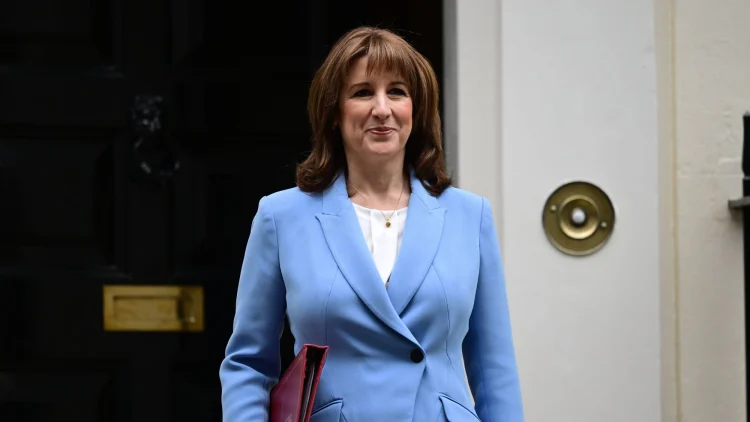
Chancellor Rachel Reeves delivered her second Spring Statement on Tuesday afternoon. (Alamy)

4 min read
As expected, Rachel Reeves’ Spring Statement was a relatively low-key affair — but there was a major elephant in the room in the form of conflict in the Middle East.
On Tuesday, the Chancellor made a House of Commons speech on the state of the economy, which contained no new policy announcements.
It had been no secret that the government had wanted this year’s Spring Statement to be low on drama, with Treasury sources telling PoliticsHome in the run-up to today that the aim was for little excitement, in contrast to the chaos of the November Budget, which saw a U-turn on income tax and the Office for Budget Responsibility (OBR) accidentally disclose details of government policy before Reeves could announce them to MPs.
The Labour government has sought to stress the importance of economic stability at a time of international tumult.
“My plan is the right one; I’m in no doubt about how great the rewards we can be if we stay the course,” Reeves told MPs in the House of Commons on Tuesday.
“Stability in our public finances; interest rates and inflation falling; living standards rising; more children lifted out of poverty; more appointments in our NHS; more investment in our infrastructure; a growing economy; and more money in the pockets of working people.
“These are the right choices.”
However, while there were some signs of green shoots in the UK economy, the latest OBR forecasts, published on Tuesday, also highlighted some of the challenges facing the government, not least how war in the Middle East could soon impact prices in the UK.
What did we learn in the Spring Statement?
One piece of good news for the Labour government is that borrowing is expected to fall from 5.2 per cent of GDP in 2024-25 to 1.6 per cent in 2030-31, according to the OBR. This is faster than the independent watchdog previously forecast in November.
Inflation is also expected to continue coming down, from 3.5 per cent in 2025, to 2.3 per cent in 2026, to 2 per cent in 2027.
You can expect the Keir Starmer government to make a big deal of this projection, with tackling the cost-of-living being a key part of its agenda.
In less positive news, however, the OBR expects growth to remain broadly unchanged overall between now and 2030, at levels which the Chancellor herself admits she is determined to outperform. Growth has been downgraded from 1.4 to 1.1 in 2025 by the OBR, before hitting levels slightly higher than expected later in the forecast period.
The watchdog also said that unemployment would continue to rise and hit 5.3 per cent later this year, driven by a fall in demand for new hires. However, the level is expected to decrease every year until reaching 4.1 per cent in 2030.
Reeves told MPs: “I’m not satisfied yet with these forecasts; I know that the economy is not yet working for everyone, and that the deep economic scars left by the party opposite [Conservatives], and their mates in Reform, are still blighting the lives of too many people.”
The latest data on welfare spending will also provide a headache for Reeves. According to the OBR, welfare spending will rise by nearly 6 per cent to £330bn this year, driven by pensions and health-related benefits. It is expected to hit £407bn in 2030-31.
The government tried to reform benefits last year but was forced to abandon the plans in the face of a large Labour backbench rebellion.
The elephant in the room
Crucially, the OBR analysis was carried out before the eruption of war in the Middle East, meaning its economic projections could quickly become out of date.
The watchdog itself acknowledged this uncertainty in its report published on Tuesday, writing: “Conflict in the Middle East, which escalated as we were finalising this document, could have very significant impacts on the global and UK economies.”
The escalating conflict in the region, centred on Iran, has already resulted in major spikes in global energy prices. These rises could later be felt by consumers in the UK in ways similar to when Russia’s invasion of Ukraine triggered significant inflation. UK wholesale gas prices had risen by around 100 per cent in the last 48 hours at the time of writing.
Reeves told MPs the government’s emphasis on economic stability was “even more important” given the rapid developments in the Middle East.
“It is incumbent on me and on this government to chart a course through that uncertainty, to secure our economy against shocks and protect families from the turbulence that we see beyond our borders,” the Chancellor said.

First came the news that I’m not putting enough water into my pasta pot. Then, I found out that, despite Gordon Ramsay’s advice, there really is no place for olive oil in the cooking liquid.
But those seem tame compared to a more recent revelation: it turns out some chefs, including Alton Brown, swear by starting their pasta off in cold water.
This, he claims, leads to “quicker cook times and extra-starchy pasta water that’s perfect for finishing sauces”.
In fact, Brown said, “although I may be blocked from ever entering Italy again for saying this: I have come to prefer the texture of dry pasta started in cold water”.
Why would cooking pasta in cold water be better?
The chef wrote that it has multiple benefits. First of all, he said, it means the pasta boils at the same time as the water does – that saves you time compared to boiling the water on its own and then letting the pasta cook in it.
As he said before, the pasta also releases more starches when it starts cooking in cold water. That can make sauces extra-creamy and ensure they stick perfectly to the carbs.
“Just be sure to remove your pasta with a spider strainer rather than draining it into the sink,” Brown said.
He even stated that he liked the texture of pasta cooked in cold water more.
It’d be one thing if he were alone in the preference.
But after testing five different pasta-cooking methods, the staff of The Kitchn found themselves agreeing with the cook.
“The noodles were al dente, right on schedule, after just 4 minutes and 30 seconds of simmering,” they wrote (that’s certainly inmpressive).
They found that the sauce was extra-starchy and that the technique “resulted in really great tasting pasta”.
And writing for Serious Eats, chef and food writer J. Kenji López-Alt said that, despite his initial trepidation, he found the method “the fastest, most energy-efficient way I know to cook dry pasta”.
A little caveat, though: that word “dry” is important. This won’t work as well for fresh pasta, which is more hydrated than its dried cousins.
Why does the cold water method work?
J. Kenji López-Alt wrote that “cooking pasta is actually a two-phase process: hydration and cooking.″
Hydration refers to the amount of water pasta contains and/or takes on. And if pasta is overcooked, it can feel mushy and limp.
Some worry that this will happen if you start pasta off in cold water. But if it’s dry, and therefore has a lower hydration – the chef says the pasta can handle it.
After testing dry pasta cooked in both cold and boiling water, he found that both absorbed the same amount of water (75% of their dry weight). And the taste was “indistinguishable”.
Looks like I have some changes to make…
Matthew Jeffery is one of Britain’s most experienced global talent and recruitment leaders, with more than 25 years advising boards and C-suite executives on workforce strategy, skills, and productivity.
Margaret Thatcher’s legacy is now claimed by almost every strand of British politics.
Conservatives invoke her as a model for renewal after defeat, Labour selectively borrows her language of growth and national confidence, and Reform UK increasingly argues that Thatcherism survives outside the modern Conservative Party altogether. At a moment when many centre-right voters feel politically displaced, the question has become unavoidable: would Margaret Thatcher, confronted with Britain’s political and economic circumstances today, have joined Reform UK?
The conditions behind Reform’s rise are real. Britain faces sluggish growth, historically high taxation, regulatory expansion and declining confidence in governing institutions despite more than a decade of Conservative-led government. Voters shaped by Thatcher’s emphasis on enterprise, ownership and limited government increasingly see a political system that appears managerial rather than reforming. Reform presents itself not simply as protest but as correction, claiming to complete an economic project left unfinished.
The question, however, is not whether Reform borrows Thatcherite policies, but whether it reflects Thatcher’s understanding of how political change is achieved. This article argues that it does not. Thatcherism was never merely a policy programme. It was a philosophy of how political authority should be exercised.
For many, Margaret Thatcher remains Britain’s greatest post-war Prime Minister. Bold in conviction and decisive in execution, she reshaped the economic and political landscape of the United Kingdom at a moment of profound national decline. She confronted inflation, restored fiscal discipline, curbed union dominance and re-established Britain as a serious economic power. Privatisation broadened share ownership, revitalised stagnant industries and encouraged individual aspiration. Britain moved from being labelled the “sick man of Europe” to one of the most dynamic economies in the Western world.
As Thatcher herself understood, ideas mattered only insofar as they could be translated into governing authority. Winning arguments was inseparable from winning power.
Understanding why Thatcher would not have joined Reform requires recognising what Thatcherism actually prioritised in practice. Britain again faces conditions that make many Thatcherite principles newly relevant. Lower personal and corporate taxation to stimulate enterprise, deregulation to unlock investment, and a reduced role for the state remain powerful tools for economic renewal. Expanding privatisation, cutting bureaucratic barriers and restoring competitiveness would help stem the accelerating flow of talent and capital to lower-tax economies abroad. Strong law and order, an economically grounded immigration system and sustained investment in defence would reinforce national confidence and security. These ideas are not relics of the 1980s but responses to enduring economic realities.
Thatcher would likely have viewed Brexit sympathetically in principle, grounded in her belief in sovereignty and democratic self-government. Yet she was never an isolationist. A committed advocate of free trade and global markets, she would have regarded Brexit primarily as an opportunity to expand international economic relationships. She may well have been critical of its implementation, particularly the slow pace of securing new trade opportunities and the failure to communicate clear economic benefits to the public. The concept aligned with her philosophy; the execution has struggled to demonstrate its promise.
The Covid pandemic profoundly altered Britain’s fiscal landscape. Extraordinary borrowing stabilised the economy but left a legacy of debt that constrained subsequent governments. Political leadership became increasingly cautious, prioritising fiscal management over structural reform. In doing so, successive administrations drifted away from a central Thatcherite insight: economic growth, not sustained tax burden, ultimately restores public finances. The absence of growth-driven reform prolonged stagnation and contributed to today’s political frustration.
Yet the debate about Reform UK cannot be resolved through policy comparison alone. Thatcherism was defined less by policy detail than by governing instinct.
Reform’s claim to Thatcherite heritage is not purely rhetorical. Its economic positioning has evolved through 2025 and into early 2026, with greater emphasis on fiscal restraint, deregulation and supply-side reform. Senior figures such as Richard Tice increasingly reference the financial liberalisation of the 1980s, while Nigel Farage has shifted messaging toward credibility, investment confidence and state reduction.
Recent Conservative defections have reinforced Reform’s attempt to project governing seriousness. Commitments to respect Bank of England independence, consult investors on fiscal rules and delay tax cuts until borrowing falls reflect an effort to appear economically responsible. Yet these developments also expose a paradox. As Reform absorbs figures associated with recent Conservative governments, it risks becoming less an insurgent alternative and more a reconfiguration of the political establishment it criticises.
The deeper distinction lies elsewhere. Thatcherism sought to transform an existing governing party rather than replace it. When Thatcher became Conservative leader in 1975, she inherited a divided and intellectually exhausted party widely viewed as unelectable. She did not abandon it in favour of ideological purity. She captured it, reshaped it and used it as a vehicle for durable reform.
Her conviction was clear. Political change required institutions capable of governing, and governing required broad electoral coalitions. External insurgencies, however energetic, risked dividing supporters of reform and unintentionally strengthening political opponents.
The early 1980s provide an instructive parallel. The Social Democratic Party’s breakaway from Labour generated enormous excitement and polling momentum. Many predicted a permanent realignment of British politics. Thatcher remained focused on party unity while managing internal ideological divisions. The SDP ultimately fragmented opposition support, contributing to her 1983 landslide victory. Thatcher understood electoral arithmetic as clearly as economic theory. Dividing the centre-right rarely produces reforming government.
Reform’s rise risks recreating a similar dynamic. Strong polling built largely on attracting Conservative voters may weaken the broader centre-right without replacing it as a durable governing coalition. Tactical voting behaviour among Labour, Liberal Democrat and Green voters further complicates Reform’s path to parliamentary power despite headline support.
Understanding this divergence requires recognising that Reform belongs to a slightly different political tradition. What might be termed Faragism places greater emphasis on democratic sovereignty and political realignment than on classical economic liberalism. Where Thatcherism sought primarily to free markets from state direction, Faragism seeks to restore political control to voters who feel existing institutions no longer represent them adequately. The overlap in rhetoric masks a difference in diagnosis.
Another distinction is less visible but equally important. Thatcherism did not emerge suddenly in response to political frustration. It stood within a long intellectual tradition that shaped both Conservative and liberal economic thought in Britain.
Thatcher’s ideas were grounded in a lineage stretching back well before the crises of the 1970s. Conservative philosophy from Edmund Burke emphasised institutional continuity and gradual reform, while Victorian liberal thinkers such as Samuel Smiles championed self-reliance, responsibility and social mobility through individual effort. Twentieth-century figures including Winston Churchill combined national confidence with openness to markets and international engagement.
Economically, Thatcher drew directly from modern liberal scholarship. She maintained personal correspondence with Friedrich Hayek and Milton Friedman, whose work on monetary discipline, market competition and the limits of state planning helped shape the intellectual foundations of her programme. These ideas did not provide slogans but a coherent framework explaining why certain policies worked and others failed.
Because Thatcherism rested on an established body of thought, it possessed an internal coherence that extended beyond immediate political pressures. Policy decisions were anchored in a broader philosophy about markets, institutions and human behaviour.
Reform UK, by contrast, does not yet rest on a comparable intellectual inheritance. Its programme draws energy from political dissatisfaction rather than from a settled philosophical tradition. Without a clear intellectual lodestar, positions can appear reactive or internally inconsistent, visible in tensions between commitments to economic liberalisation and proposals that imply greater state direction or intervention.
This difference helps explain why Thatcherism prioritised predictable rules and institutional stability. It was guided by a theory of government as much as by electoral strategy. Movements built primarily around political realignment often struggle to achieve that same coherence because political energy alone cannot substitute for an underlying philosophy of government.
For Thatcher, ideas were valuable precisely because they enabled durable government rather than perpetual opposition. This principle shaped her reforms in practice. Privatisation dispersed ownership, monetary discipline constrained political spending, and deregulation removed barriers to competition. The financial reforms of the City of London were designed to free markets from political management rather than redirect them toward national objectives.
Reform’s programme, by contrast, combines liberalising economics with a stronger language of national economic direction. Proposals to reshape institutional mandates or prioritise domestic sectors introduce an element of political guidance that Thatcher would likely have viewed cautiously. Her nationalism rested on confidence that Britain could succeed through open competition in global markets, welcoming foreign investment and international integration. Reform’s rhetoric reflects a more defensive instinct centred on sovereignty and control.
The contrast can be summarised clearly:
Thatcherism vs Reform UK (2026)
| Aspect | Thatcherism | Reform UK |
| Vehicle for change | Transform existing party | Insurgent realignment |
| Institutions | Stabilise predictable rules | Retain but reshape mandates |
| Economic direction | Disperse power from the state | Liberalisation with national objectives |
| National outlook | Open-market confidence | Sovereignty and control emphasis |
| Electoral strategy | Broad governing coalition | Risk of vote fragmentation |
| Political appeal | Aspiration and ownership | Dissatisfaction and correction |
Perhaps the most overlooked difference lies in political psychology. Thatcherism appealed primarily to aspiration. Council house sales expanded ownership, privatisation created individual investment in capitalism and tax reform aligned personal ambition with national success. Voters were encouraged to see themselves as participants in renewal rather than opponents of a failing system.
Reform articulates dissatisfaction effectively, but Thatcher’s achievement was to replace one economic settlement with another capable of commanding sustained governing authority. Thatcher entered politics to exercise power responsibly, not to express discontent more forcefully.
For that reason, Margaret Thatcher would not have joined Reform UK. Nor are voters who genuinely think in Thatcherite terms likely to find their long-term political home there. Thatcherism was never defined by rhetoric alone. It rested on trust in markets over governments, stability over impulse and governing authority over permanent insurgency.
Thatcher did not change Britain by standing outside power demanding ideological purity. She changed it by winning authority, building institutions capable of reform and persuading a sceptical nation to accept change. Thatcherism was never the politics of protest. It was the politics of government, grounded in ideas strong enough not only to win power, but to sustain it once won.

Hampshire Flag Company revamps Port Solent marina in one month
Poland stocks lower at close of trade; WIG30 down 4.35%

Iranian Exchange Outflows Jump 700% as USDT Sanctions Alert Intensifies


-

 Politics5 days ago
ITV enters Gaza with IDF amid ongoing genocide
-

 Fashion4 days ago
Weekend Open Thread: Iris Top
-

 Politics8 hours ago
Alan Cumming Brands Baftas Ceremony A ‘Triggering S**tshow’
-

 Tech3 days ago
Unihertz’s Titan 2 Elite Arrives Just as Physical Keyboards Refuse to Fade Away
-

 Business7 days ago
True Citrus debuts functional drink mix collection
-

 NewsBeat6 days ago
Cuba says its forces have killed four on US-registered speedboat | World News
-
Sports3 days ago
The Vikings Need a Duck
-
 NewsBeat3 days ago
Dubai flights cancelled as Brit told airspace closed ’10 minutes after boarding’
-

 Tech7 days ago
Unsurprisingly, Apple's board gets what it wants in 2026 shareholder meeting
-
 NewsBeat6 days ago
Manchester Central Mosque issues statement as it imposes new measures ‘with immediate effect’ after armed men enter
-
 NewsBeat3 days ago
The empty pub on busy Cambridge road that has been boarded up for years
-

 NewsBeat2 days ago
‘Significant’ damage to boarded-up Horden house after fire
-

 NewsBeat3 days ago
Abusive parents will now be treated like sex offenders and placed on a ‘child cruelty register’ | News UK
-
 NewsBeat7 days ago
Police latest as search for missing woman enters day nine
-

 Entertainment1 day ago
Baby Gear Guide: Strollers, Car Seats
-

 Business6 days ago
Discord Pushes Implementation of Global Age Checks to Second Half of 2026
-

 Business5 days ago
Only 4% of women globally reside in countries that offer almost complete legal equality
-
 Tech4 days ago
NASA Reveals Identity of Astronaut Who Suffered Medical Incident Aboard ISS
-
Politics3 days ago
FIFA hypocrisy after Israel murder over 400 Palestinian footballers
-

 Crypto World7 days ago
Entering new markets without increasing payment costs