
Politics
Binge-Watching TV Linked To Brain Differences Associated With Dementia


If you’re a fan of a nightly binge-watch session on the sofa (hey, who isn’t?), it might be worth rethinking exactly how much time you spend passively gazing at the TV.
A recent study found people who watched TV ‘very often’ during midlife showed smaller volumes in brain regions linked to memory and areas of damage in the brain’s white matter that are associated with ageing, cognitive decline and even dementia.
Senior author David Raichlen, professor of biological sciences and anthropology at USC Dornsife, said: “For years we’ve focused on how much people sit. Our findings suggest we should also pay attention to what they’re doing while they’re sitting.”
The researchers suggested the results aren’t just because of people sitting still on the sofa for ages, as other types of sedentary activities (like sitting to work) did not have the same associations.
What did the study involve?
They looked at data from 1,700 adults, with an average age of 53, who had enrolled in the Atherosclerosis Risk in Communities (ARIC) Study between 1987 and 1989.
Participants were asked to report how often – on a scale ranging from “never” to “very often” – they watched TV during their leisure time. They were also asked how much of their workday they spent sitting.
After more than 20 years, participants had brain MRI scans. Compared with those who reported “never” or “seldom” watching TV, those who watched TV “very often” showed widespread structural differences across the brain.
In this group, the researchers found smaller volumes in brain areas that were associated with early signs of Alzheimer’s disease.
They also identified indicators of blood vessel disease associated with cognitive decline and dementia, as well as smaller occipital and frontal lobes, regions associated with vision and movement.
Differences persisted even when the researchers considered factors such as physical activity, diabetes, body mass index (BMI), smoking, and how much alcohol participants consumed.
Sitting didn’t seem to be the problem, passively watching TV did
The study found those who reported high amounts of sitting at work had larger frontal and occipital lobes, as well as reduced white matter hyperintensity volumes.
Researchers noted this indicated better brain health in work-sitters than among TV-sitters. This could be due to the intellectually stimulating nature of their sit-down jobs, they hypothesised.
Their not alone in their thoughts. Dr Soma Sengupta, a neurologist at Tufts Medical Centre, suggested that unlike reading, learning a new skill, or working, watching TV “often requires little active mental engagement”.
She told Prevention: “Over many years, less cognitive stimulation could contribute to less ‘exercise’ for brain networks involved in planning, memory and attention.”
When the MRI scans were separated by sex, researchers found that men were most impacted – most of the changes to the brain, both from TV watching and occupational sitting, were seen in this group.
The study authors suggested that, in future, MRIs should be taken at the start and end of the study so they can monitor changes over time.
They also suggested a different approach to health guidance around sedentary activities might be needed, focusing on reducing TV-watching.
Natan Feter, postdoctoral scholar in the Human and Evolutionary Biology program at USC Dornsife, added: “We frequently encourage the public not to spend too much time sitting down, but experts may want to expand that recommendation to encompass the activities done while sitting, since those seems to have distinct impacts on brain health.”
How to protect brain health as you age
One study published in the American Academy of Neurology found that a decline in thinking skills and memory can be staved off by regularly reading and writing.
Drinking less, exercising more, eating a balanced diet, and avoiding smoking can benefit brain health and lower your risk of dementia, too.
In 2018, a 44-year-long study published in the journal Nature showed a link between cardiovascular fitness, as measured by a cycling test, and an 88% lower incidence of dementia among women.
Even walking regularly can benefit your brain. A 2022 paper found that just 3,800 steps a day may lower your likelihood of developing dementia by 25%, with increasing benefits up to 9,800 steps.


Weeks after US President Donald Trump renewed his demand that the United States get control over Greenland, he assured a right-wing TV host that it’s a safe bet it will happen.
“You’re also still looking at Greenland,” Real America’s Voice host Steve Gruber asked Trump by phone on Friday. “I made a prediction on this program that before you left office, that Greenland would be under our operational control. It’s still incredibly important to defending the Western hemisphere, isn’t it?”
“Yeah, you’ll be right,” Trump answered. “No, they wanna do something very important. Greenland’s important, you know, from our standpoint. Not from their standpoint. But from our standpoint. Uh, yeah, you should make that bet, actually.”
Trump has long floated taking control of Greenland, a semi-autonomous territory of Denmark, asserting that the US needs it for strategic defense purposes. Though at one point he said he wouldn’t rule out using force to take Greenland, he later said he wouldn’t use force.
The president had been relatively quiet about his designs on Greenland over the past few months, but re-upped the topic at the NATO summit last month, saying that Greenland “should be controlled by the United States, not by Denmark.”
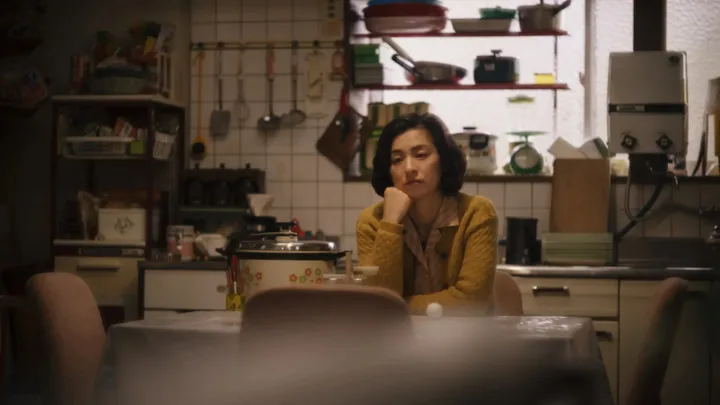
What is it about choosing a new TV show that feels so torturous?
Too much buzz paradoxically puts me off a series – “if everyone’s telling you that you must watch something, part of your brain sort of goes ‘actually maybe I won’t,’” consultant psychiatrist Dr Mosun told HuffPost UK previously.
But I’m not exactly delighted with my habit of rewatching the same five programmes, either.
Which is why, for me, finding an underrated gem offers the best of both worlds.
And according to critics, Netflix series Asura is a particularly glittering example.
Released in 2025, the seven-episode’s synopsis reads: “In 1979 Tokyo, four distinct sisters uncover their ageing father’s affair, causing their happy facades and bottled-up emotions to slowly unravel”.
Food is a force of nature in the show. Ever-present and frequently sumptous, it stands in for all kinds of moods, dynamics, hurts, and triumphs.
Each of Asura’s “strikingly beautiful” hour-long episodes contains “snappy jokes, deep intimacy, physical wrestling, meal-planning and petty but profound complaints about family dynamics,” critics say.
It’s directed by Palme d’Or-winning Hirokazu Kore-eda, and is an adaptation of a novel by Kuniko Mukôda.

Asura has earned a perfect 100% Tomatometer critic score on review aggregation site Rotten Tomatoes, and 94% from its audience-generated Popcornmeter.
The Guardian said the series could be “the best drama [Netflix] has put out in years,” asking, “how has it gone almost unnoticed?”.
The New York Times, meanwhile, called it the “full package: a detailed, human-scale domestic drama with plenty to say, fascinating characters to say it and the stylishness to make it sing.
“The downside is that other shows feel paltry and thin in comparison. The upside is everything else.”
For their part, Slate called Asura “the best new show of 2025,” describing it as a “compassionate yet incisive dissection of family, betrayal, and 1970s Japan”.
One note, though: Guardian writer Rebecca Nicholson said that for those who don’t speak Japanese, the show “urges a second watch, to catch those delicate moments you may have missed when reading the subtitles”.
A rewatch of one of the highest-rated releases on Netflix? Oh noooo…
All seven episodes of Asura are available on Netflix.
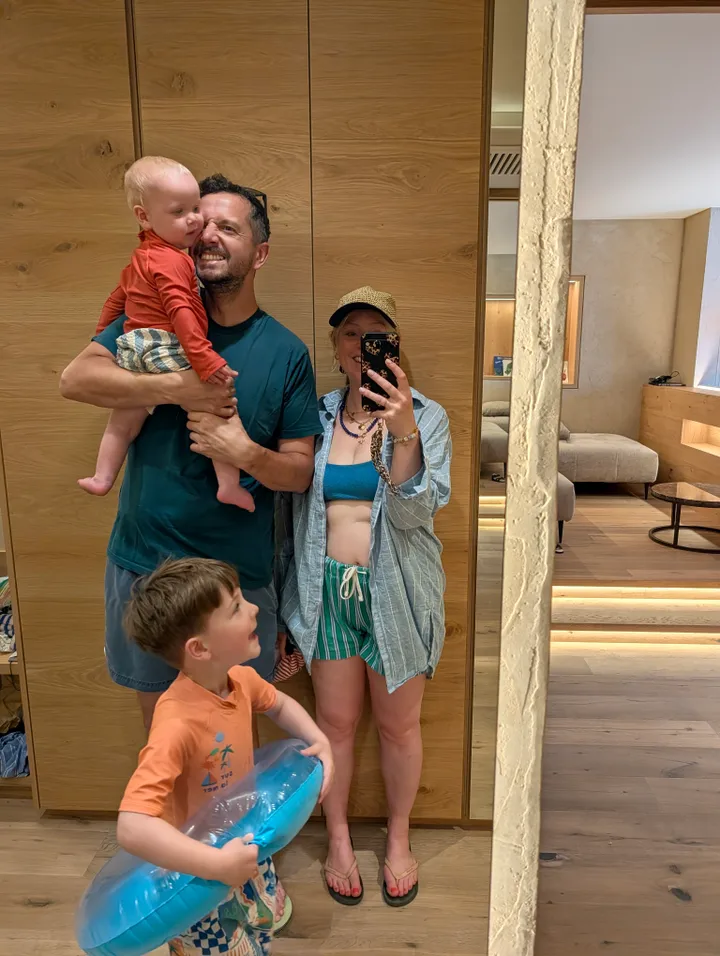
They say the definition of madness is doing the same thing over and over and expecting a different result.
And that’s me when it comes to family holidays. I keep booking beach breaks, hoping for a relaxed and magical time away – and then overstimulation, heat and sugar come into play and suddenly we’re all arguing.
But, I may have found the secret to a less stressful family holiday. I won’t gatekeep: it’s one without a beach.
When you think of a ‘holiday’ – especially an Italian summer holiday – your mind probably conjures up visions of sparkling sea and soft white sand.
But this year, we decided to do something different and headed to Italy’s South Tyrol instead, swapping sandy shores for mountain views.
And honestly? Not having to worry about losing my kids on a packed beach or having them cry because they’ve got grit in their eyes immediately made the trip way more enjoyable.

We didn’t miss the beach at all
We headed to The Dolomites, a mountainous region in northeastern Italy, and stayed in two different locations during our six-day trip.
The first place we ventured to was Hotel Feldhof in Naturno, a village about 40km from Bolzano airport with stunning mountain views.
Part of the Dolce Vita Hotels brand, Hotel Feldhof is their family and wellness hotel, with facilities like a family spa, 80-metre indoor slide and kids club, but plenty of touches for the grown-ups too like a rooftop infinity pool, fitness classes and spa treatments.
The hotel has 10 different pools, so I can honestly say we didn’t miss the beach at all. My four-year-old spent every waking moment he could in the pools (or, racing down slides), and the baby and toddler pool was perfect for my one-year-old to splash about in safely.
There’s a kids club with childcare for those aged three and over, and the additional playroom with a bouldering wall, playhouses and soft-play area is open all day for guests to use. If we ever managed to peel ourselves from the pools, you could usually find us there instead.

Family-friendly without compromising on aesthetics or service
The facilities at Hotel Feldhof were seriously impressive and absolutely perfect for a family holiday, but I liked that everything was still stylish and chic. Sometimes you can go away with kids and feel like everything is geared up for them, from pool foam parties to mascots singing the Macarena.
Here, there was none of that – it was a luxurious, Instagrammable setting that understood adults’ needs as well as children’s, and it was family-friendly without compromising on aesthetics or service.
When you stay at one of the Dolce Vita hotels, your booking gives you access to any of the other hotels in the group, meaning you can use their facilities – like pools, restaurants and spas – too. During our trip we walked to the five-star Lindenhof resort nearby (which is equally as gorgeous, but feels less geared up for families with younger children).
I did have the chance to try out their spa treatments though, one of which involved a very relaxing facial which sent me to sleep.
We also ventured out into Naturno and took a ride up into the mountains on a cable car. It’s a definite 10/10 for views and for the chilled beer at the mountainside pub, but be warned if you’re travelling with little ones – there are some very steep inclines and if you’re pushing a pushchair up to the viewing platform you will get sweaty (but the reward of a cold beer makes up for it).

I didn’t get to spend as much time in the bar as I’d have liked, but they did serve an excellent Aperol Spritz
On day four of our trip we made our way up to Soprabolzano, a village 1,200 metres above sea level and up some pretty steep roads, where we checked into Parkhotel Holzner, a family run Alpine Art Nouveau hotel with more than 100 years of history and an array of impressive awards.
We stayed in one of the hotel’s family suites which had two bedrooms, light and bright modern wooden decor, and seriously stunning views. Plus, slightly cooler mountain air, which was welcome during Europe’s sweltering heatwave.
Parkhotel Holzner has a gorgeous, authentic charm about it, and I loved how the house and grounds still had lots of original features, from the furniture to the light fittings.
My favourite place was the panoramic terrace where we ate all our meals, and The Green Parlour Bar, a charming wood-panelled space with Art Nouveau touches. Sadly, kids and stylish bars don’t really mix so I didn’t get to spend as much time in there as I’d have liked, but I can confirm they make an excellent Aperol Spritz.
During our stay here we (again) spent a lot of time in the pool, and also made use of the kids club, the on-site playground and took a cable car trip down to Bolzano, which is just a 15-minute journey.
The hotel had a really lovely, family feel to it and I loved all the little touches like the wicker baskets they provided to put your pool towels and robes into. Obviously ours was immediately filled with pool toys, balls and snacks – but the thought was appreciated.

How do you get there?
When you think of mountain escapes you might be put off by visions of a long, arduous journey to get there – especially with young kids in tow – but actually, it was really easy.
We flew from London Gatwick to Bolzano with SkyAlps. The route is fairly new but it makes getting to South Tyrol much simpler. The flight time is under two hours, you get snacks on board and Bolzano airport is tiny so the security queues are minimal.
We had private transfers arranged to get us from the airport to our hotel, and then back to the airport for our return.
The roads are quite steep (being in the mountains and all) so you could hire a car, but I preferred having a local who knows the roads taking us.
The drive to Hotel Feldhof was about an hour from Bolzano airport, and Parkhotel Holzner was around 30 minutes – it would have been even quicker by cable car, but I’m not sure you’d want to lug your suitcases on one…
What’s the food like?
Both hotels had excellent food offerings, but because South Tyrolean cuisine is predominantly Alpine-Austrian, there were lots of traditional dishes that you wouldn’t typically expect when booking an Italian holiday. Basically, more game meats and fewer pizzas!
This didn’t pose a problem for my husband or I, but even though both hotels had children’s menus, there wasn’t always a great deal that my two would eat. Now that we’re home, I think I need to up my game (sorry) and work on refining their palettes before the next trip. I can confirm though that both hotels had ice cream for dessert, so the kids seemed pretty satisfied.

Hotel Feldhof offers a 3/4 board dining plan including a breakfast buffet, complete with Prosecco (necessary when parenting abroad!), lunchtime snacks and an eight-course gourmet evening menu.
At Parkhotel Holzner there’s 1908, a Michelin star restaurant on site, although we didn’t try it as introducing the kids to venison was a challenge enough! We did however give the half-board dining experience a whirl, featuring excellent breakfast buffets (also with Prosecco, in case you were wondering) and dinner, which included a multi-course gourmet menu with a separate ‘little gourmets’ menu for kids.
How much does it cost?
If you fancy booking a trip for yourself, here’s the lowdown:
- Hotel Feldhof: from €177 per person per night, (approx. £152) and includes 3/4 board – breakfast included, afternoon buffet and dinner.
- Parkhotel Holzner: from €300 per room, per night, based on two people sharing with half-board.
Mountain holidays might be my new favourite break
This region of Italy had never really been on my radar before, but I can wholeheartedly say mountain holidays might be my new favourite destination.
No paying for sunbeds, no struggling to find a toilet, no carrying your kids miles across sand dunes because their legs are tired… just delicious food and drink, fresh air, activities galore, thermal waters and stunning views.
What’s not to love? South Tyrol, you have my heart.
Charlie Bond visited as part of a press trip.

There is no doubt that Naomi Osaka is blossoming again. During media day ahead of the Mubadala Open in Washington, D.C., this week, she spoke with renewed confidence about trusting herself. And she should. Osaka has put together one of the strongest stretches of tennis since becoming a mother.
This is despite struggling with a bout of postpartum depression she called “extremely bad” in her documentary, Naomi Osaka: The Second Set.
She said: “…During those early months, I felt like a shell of myself at all moments of the day. I no longer knew who I was anymore. It felt like everyone else had moved on and they were living in colour. Meanwhile, my world was stuck in grey.”
Call it a parasocial relationship, but as Osaka continues to reclaim herself after childbirth, I find myself celebrating far more than her victories on the tennis court. Every outfit, every hard-fought match, every smile with Taylor Townsend is a reminder that Black mothers, like Osaka, like me, can make it through postpartum depression.
July is National Minority Mental Health Awareness Month, a reminder that while conversations around mental health have become more common, too many Black women continue to suffer in silence. We are less likely to be diagnosed and treated for postpartum depression and anxiety despite facing higher rates of stress, barriers to care and cultural expectations that tell us to just keep “locking in”.
Before my daughter was born, I knew motherhood would change me. I expected sleepless nights, breastfeeding and shifting personal dynamics. But I didn’t expect the world to feel dull or to look in the mirror with tears in my eyes because a stranger was staring back at me.
Not just because my body was different, but because who I was had changed forever. It felt like the brightest parts of me were gone. The self-confidence I’d worked to garner dissipated.
My favourite metaphor for motherhood is the flamingo. After giving birth, flamingos lose their vibrant pink colour because every nutrient in their bodies is redirected toward feeding their babies. It can take up to a year before their feathers regain their signature colour. The flamingo survives, but it is transformed.
That was motherhood for me. But it took me much longer than a flamingo to get my colour back.
There are whole stretches of time from my daughter’s earliest years that I cannot remember. My husband will show me pictures, and it’s as if someone removed pages from a photo album. Those missing memories still grieve me because I know I was physically there, yet I cannot access that time. I desperately want to revisit them, but they are simply gone.
That is what postpartum anxiety and depression can do to the mind. It’s not simply mood swings, but a change in the brain’s cognitive ability and health.
People often assume Black women go untreated because we don’t have access to care. That wasn’t my story. I had a therapist. I had physicians. I had family and friends who loved me. I had a husband who wanted to support me.
I was consumed with social media videos where mothers of all races and ages make it seem like motherhood comes naturally, and that women simply “figure it out.” So when I found myself anxious, disconnected and emotionally exhausted, I convinced myself I just wasn’t cut out for motherhood.
My daughter did not in fact have the right mama, I decided. She had a broken one.
The truth is, motherhood in America asks an extraordinary amount of women, particularly Black women. I wish we could be like the flamingo, where all of our efforts go to feeding our babies. In reality, breastfeeding our children barely scratches the surface of the labour and anxieties that come with our new role.
The disproportionate rates of Black maternal death reflect the constant threat of neglect and violence Black women face before and during childbirth. Once our children are earthside, we have less means to navigate skyrocketing child care costs and soaring inflation. The recent death of Nolan Wells, a young Black boy who went missing and then was found dead, is every mother’s worst nightmare.
Black children go missing without urgency from law enforcement, and too many are never found – or are found too late. Among all of this, his mother, Christine Wonsley, is receiving hate mail and online harassment, a case study in vilification of Black mothers.
All of these factors would drive any sane person insane.

KIRILL KUDRYAVTSEV via Getty Images
When Osaka reflected on her return to tennis after motherhood, she gave voice to feelings I hadn’t been able to name, saying, “I struggled with constant fear and anxiety, and an overall lack of self-confidence in every decision I made.” Before she ever put words to it, though, I thought I could see it in her – the sadness behind her eyes, the uncertainty, the search for herself.
As I watched her compete, I realised I wasn’t simply following one of the greatest athletes of her generation. I was watching another Black mother work through postpartum struggles to find her new colours. In her vulnerability, I finally recognised my own reflection.
I had language for feelings buried beneath guilt and unrealistic expectations. And Osaka’s healing journey made room for me. I started taking anti-anxiety medications, going to the gym and finding community with other mothers who understood that motherhood could be both beautiful and incredibly lonely.
Little by little, I got my colour back. I became more confident in my role, not just as a mother, but as a friend, wife and my own person.
That is why Naomi Osaka’s comeback matters so much.
We often talk about representation in terms of Black women breaking barriers and shattering glass ceilings. We talk less about representation in healing. Watching another Black mother survive something we’ve endured gives us permission to believe survival is possible for us, too – and to seek the help that makes it possible.
Julienne Louis-Anderson is a Black mother who writes about the intersection of culture and politics with education and human development. She is also a Public Voices Fellow of The OpEd Project in partnership with the National Black Child Development Institute.
Do you have a compelling personal story you’d like to see published on HuffPost? Find out what we’re looking for here and send us a pitch at pitch@huffpost.com.

The post Jason Arday: the Forrest Gump of DEI? appeared first on spiked.


It is a question any parent with a conscience has no doubt asked themselves at this point: what will I tell my child when they one day ask what I did during the Gaza holocaust?
If he has any offspring, Allianz Ireland’s chief customer officer, Geoff Sparling, now has an answer he can give them: “I wrote a column in a national newspaper defending my company’s ongoing funding of the ‘Israeli’ war machine.”
Researchers have identified the Allianz crime family as the biggest foreign financier of the Zionist entity. Pro-Palestine campaigners in Ireland have placed particular focus on the company due to its sponsorship agreement with Ireland’s largest sporting body, the Gaelic Athletic Association (GAA).
Sparling might continue: “Not only that, kids, the column in question was an utterly shambolic effort, riddled with non sequiturs and facile nonsense.”
The primary target of Sparling’s ineptitude is the meticulous Economy of Genocide report from the brilliant UN special rapporteur, Francesca Albanese. Despite the man’s attempt to claim Allianz Irelands dealings with so-called ‘Israel’ are “legal”, Albanese made clear that pumping money into the apartheid settler-colony amounts to “joint criminal enterprise“.
Allianz Ireland can’t be separated from criminal parent company
Starling goes on to abdicate responsibility by saying:
Allianz is cited primarily through Allianz-owned asset manager PIMCO’s holdings of Israeli sovereign bonds and alleged investments in multinational companies identified in the report. Allianz Ireland has no investments or underwriting activities in the Middle East.
This pathetic attempt at sleight of hand won’t wash, however.
PIMCO might be the main player in funding the Tel Aviv terror regime, but as an Allianz-owned company, it is making money for Allianz. Furthermore, the fact that Allianz Ireland doesn’t invest in ‘Israel’ themselves is irrelevant. As part of the Allianz corporate entity, the insurance company benefits from the success of the entire company.
It promotes the Allianz brand, most notably through the GAA’s shameful partnership with the German finance behemoth.
Sparling proceeds to paint a rosy picture of Allianz’s role in Irish society. He said:
It is the claims handler helping a family rebuild after Storm Éowyn, the underwriter supporting local businesses and the volunteers coaching under-age GAA teams every weekend. That has been Allianz’s place in Irish life for almost a century.
Millions of people entrust Allianz with their savings, pensions and investments. Our responsibility is to manage them professionally, prudently and within the law.
Firstly, Allianz Ireland receives largely middling reviews from the Irish public. It is not the beloved institution outlined above. Furthermore, this is all utterly irrelevant to the matter at hand: Allianz’s funding of Zionist atrocities.
The company’s Irish arm could spend every millisecond of every day helping old ladies across the road and rescuing cats from trees; it wouldn’t make up for the fact that it is promoting, making money for, and receiving money from, a global corporate entity that is financially aiding the worst crimes imaginable.
Allianz executive misleads again and again
Sparling goes on to repeatedly frame campaigners’ primary grievance as being that Allianz is “responsible for” the actions of the ‘Israeli’ regime, as if Allianz executives are whispering prospective strategies into Benjamin Netanyahu’s ear. This is not the claim.
Once again, the argument made by experts like Albanese and Irish campaigners is that entities like Allianz are culpable by providing the funding to the settler-colony’s economy. Funding that can then be used to buy the bombs used to wreck Gaza, and pay the salaries of the Israeli Occupation Forces (IOF) — the murderers that drop those bombs.
A straightforward thought experiment proves the point — were the likes of Allianz, and all other companies not to pump money into the apartheid entity, would it have the financial means to continue its crimes?
A straightforward look at history confirms what one ought to conclude when doing the above — the collapse of apartheid South Africa stemming from boycotts. That effort really gained pace when previously complicit financial institutions like Barclays Bank pulled out of the racist state.
Govt inaction doesn’t excuse corporate criminality
Sparling went on to say:
None of the relevant institutions – including the United Nations, the European Union, the United States or the Government of Ireland – has prohibited the activities at the centre of this debate.
This shameful abdication of responsibility is precisely why grass-roots campaigners have focused attention on local complicity by the likes of the GAA. It is why they attempt to hold companies to account, in the hope that with enough low level pressure, eventually states will start to fulfil their responsibilities. That would mean enacting sweeping sanctions against the criminal pseudo-state squatting on historic Palestine.
Sparling might have thought finally breaking cover to defend Allianz Ireland was a smart move, but all this feeble effort has done is heap embarrassment upon the existing shame. That the Irish Independent was willing to publish this shit is a damning indictment of its editorial standards. Facilitating an attempt to whitewash holocaust funding is an indictment of its moral standards.
It is a disgrace it too will struggle to explain to future generations.
Featured image via Irish Times
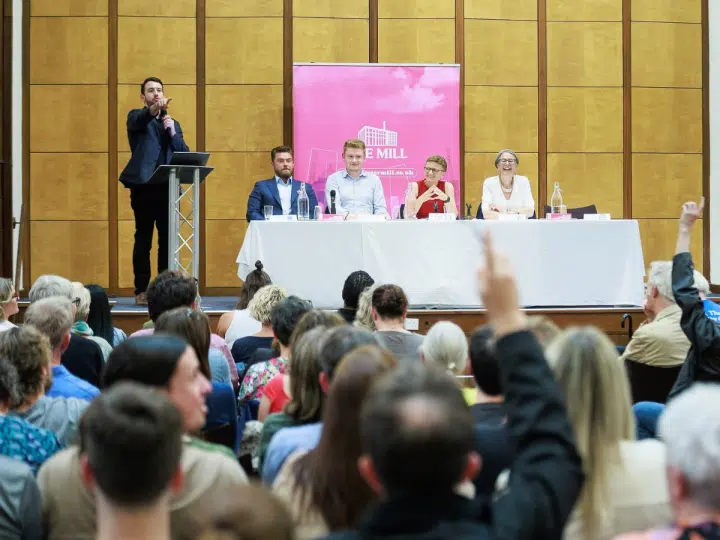

Two phrases — housing and affordability — sung out across Greater Manchester’s mayoral election. Perhaps unsurprisingly, they’ve dominated more than anything else in manifestos, hustings and social media alike.
In my view, these two terms are polished, neoliberal-era euphemisms for what we’re really talking about. These underlying, harder-hitting phenomena are actually: property (ownership) and poverty (often, lack of ownership). I think it’s time that we collectively note that point, first things first.
But even if there’s a hesitation to talk about property and poverty as such, they are still being discussed. One more remarkable aspect of my weeks covering this mayoral by-election is just how much different parties agree on this. It seems, no matter who you ask, politicians know this really matters to ordinary voters.
This year’s dramatic, fiery parliamentary by-elections clearly became proxies for national politics. Gorton and Denton became an outlet for dissatisfaction with Labour among younger, professional, urban and Muslim voters. Makerfield became a referendum on Keir Starmer, leading to his swift replacement. Both results, thankfully, showed far-right Reform UK and further-right splinter Restore/Advance where to go.
But unlike national or even local elections, or especially those by-elections, Greater Manchester apparently agrees on plenty in this mayoral race. All parties sing from similar hymn sheets on material issues.
@TheCanaryUK Greater Manchester Mayoral Election 2026@ManchesterMill election hustings
pic.twitter.com/x4Q9DO0lvE
— C.J.Mc. Baillie (@cjmbaillie) July 27, 2026
Manchester-ism meets materialism
Imagine my pleasant surprise when Conservative mayoral candidate, Phil Eckersley, said at the Mill hustings we must “build affordable housing across Greater Manchester”.
And that Labour, in power and if given another mayoral term needs to do something about the housing crisis across the region.
Eckersley also said that we must keep community spaces and not just sell them off. This is somewhat rich, coming from a councillor of the party of Thatcher and Cameron, but it’s still a very welcome point.
Lib Dem candidate, councillor Richard Kilpatrick, likewise put “affordability” central in his opening pitch and “vulnerability” central in his closing speech. These are both proxy terms for poverty — the latter gets slightly closer to being on the money.
Again, for a representative of the party which used its only time in power under Nick Clegg to raise VAT and lower high earners’ taxes, this is a bit rich. Not to mention saddling a generation of young, educated workers with hefty student loan debts. But still, the point stands.
Labour mayoral hopeful Bev Craig, who began sharing her Belfast-area council estate credential recently, made similar points during the debate. In her opening speech, she presented a plan that is “ambitious [and] radical” which “puts money in people’s pockets”.
That phrase — “putting money in people’s pockets” — was used repeatedly throughout her campaign.
Unfortunately for Craig, her top pledge of a continued £2 bus fare cap was pinched by Andy Burnham for national rollout. This left Craig offering a less ambitious 11-18 year-old free bus policy, compared to the Green Party’s promise of free buses for all under-22s. Not sounding too “radical” then.
Speaking of Greens, candidate Geraldine Coggins was ahead of the others with their committed plans to put affordability central in the campaign and manifesto. This involved public transport policies, help for town centres, charities and small businesses, and most of all an affordable public housing scheme.
Reform’s landlord candidate, Sian Astley, dramatically dodged the Mill‘s hustings. However, Mill staff say that her policy platform centred around immigration policies which fall outside the mayor’s remit. Desperate though Reform is to wedge immigration into every debate, this one clearly missed the mark.
Labour and Reform dodge Manchester mayoral election community hustings
Labour’s pitiful property record
Where Bev Craig lacks ambition in her bus policy proposal, she appears to be trying to outdo the Greens on addressing housing. Craig has promised 50,000 new homes as mayor, with 10,000 “in the pipeline” by 2028.
By contrast, Coggins is promising 20,000 — 10,000 built over time, and 10,000 bought and retrofitted more immediately. Importantly, Coggins commits to keeping these as council homes. On the surface, it seems less ambitious, but if Labour’s record is anything to go off, that change could be needed.
Here’s the thing: Craig and Labour have a housing record in Manchester. It’s not good. Note that the Times has described Craig as the “brains behind Andy Burnham.” If it’s his record, then it’s hers — she “worked really closely” with Burnham since she was elected City Council leader in 2021. So it’s their joint Labour record which has given rise to Coggins’ repeated promise to “take Greater Manchester back from ‘big money’”.
Across Greater Manchester, and nowhere more than in the city centre, rent is the number one outgoing cost for many households. Rent costs an average of 38% of an average household’s salary in the region. That’s up from 29% just a decade ago, when Burnham took office.
In the city centre borough, that figure has risen from 39% to a whopping 44% in the same period. No other council area in England or Wales has been hit harder than Salford during that timeframe. It’s a shameful direction of travel: private landlords profit at ordinary people’s expense.
This is where relations of property — who owns and who doesn’t — creates conditions for poverty. It’s where housing and its possession creates ‘cost-of-living’ or ‘affordability’ crises of dispossession.
Who is Manchester’s development for?
Craig says that more affordable homes were built across the city in 2024 alone than in any other year in the previous 15. That’s not a particularly high bar as only a few hundred have been built in a decade.
As chair of Greater Manchester Combined Authority (GMCA), Burnham handed nearly £1 billion in loans to private developers. For that, the GMCA development fund has received only 500 affordable homes out of some 11,000 built. Relatedly, homelessness levels have risen to the same peak they were when Burnham took office.
Notoriously, Burnham’s close ally, Daren Whittaker of Renaker, was given more than £600 million and built nothing affordable. Not a single affordable home, only luxury flats. Even the Tory candidate picked this up:
Two-thirds of GMCA money has gone to luxury developments.
Something about the Tories’ £10 billion in VIP fast-track Covid contracts comes to mind, but even he is right on this. The centi-million-pound Renaker loan is now even facing a Supreme Court challenge from a competitor for how it was awarded. (In fairness, this means the challenge didn’t win at the Court of Appeal.) On top of that, one barrister has alleged that the No.10 North deal might be unlawful too.
Apparently, Craig’s team just “picked a big number” — 50,000 homes — “because it sets an ambition” (see circa 43 mins here). Not because she believes it’s achievable, or because it provides the necessary affordable housing, seemingly. Any hopes for much change are not looking promising either.
Asked how she would differ as mayor from a man who is synonymous with the role, Ms Craig told The Independent: “There will always be an element of continuity.”
So, between suspect contracts and a record of failure, it’s quite a lot to expect much change with Bev Craig. And we can be certain that landlord Sian Astley, whose Reform PLC boss Richard Tice is a property development mogul, isn’t coming to save Manchester either.
Coggins: ‘Equal societies are happier societies’
Property and poverty will continue to dominate Manchester’s politics until someone is willing to address them as they exist. Though she won’t be Manchester mayor, Coggins at least saw this clearly. As one of only two mayoral candidates to show up to a cost-of-living/ housing/ affordability hustings, she said:
We hear so much about period poverty, bed poverty, fuel poverty, or food poverty. But at what point do we admit that these are all just about poverty and inequality?…
Equal societies are happier societies…They work for us all.
@TheCanaryUK Greater Manchester Mayoral Election 2026@ManchesterMill election hustings
— C.J.Mc. Baillie (@cjmbaillie) July 27, 2026
Featured image via Joel Goodman/ the Mill
Politics
It might take ‘a lightning bolt from God’ to get these Senate Democratic hopefuls to bow for independents
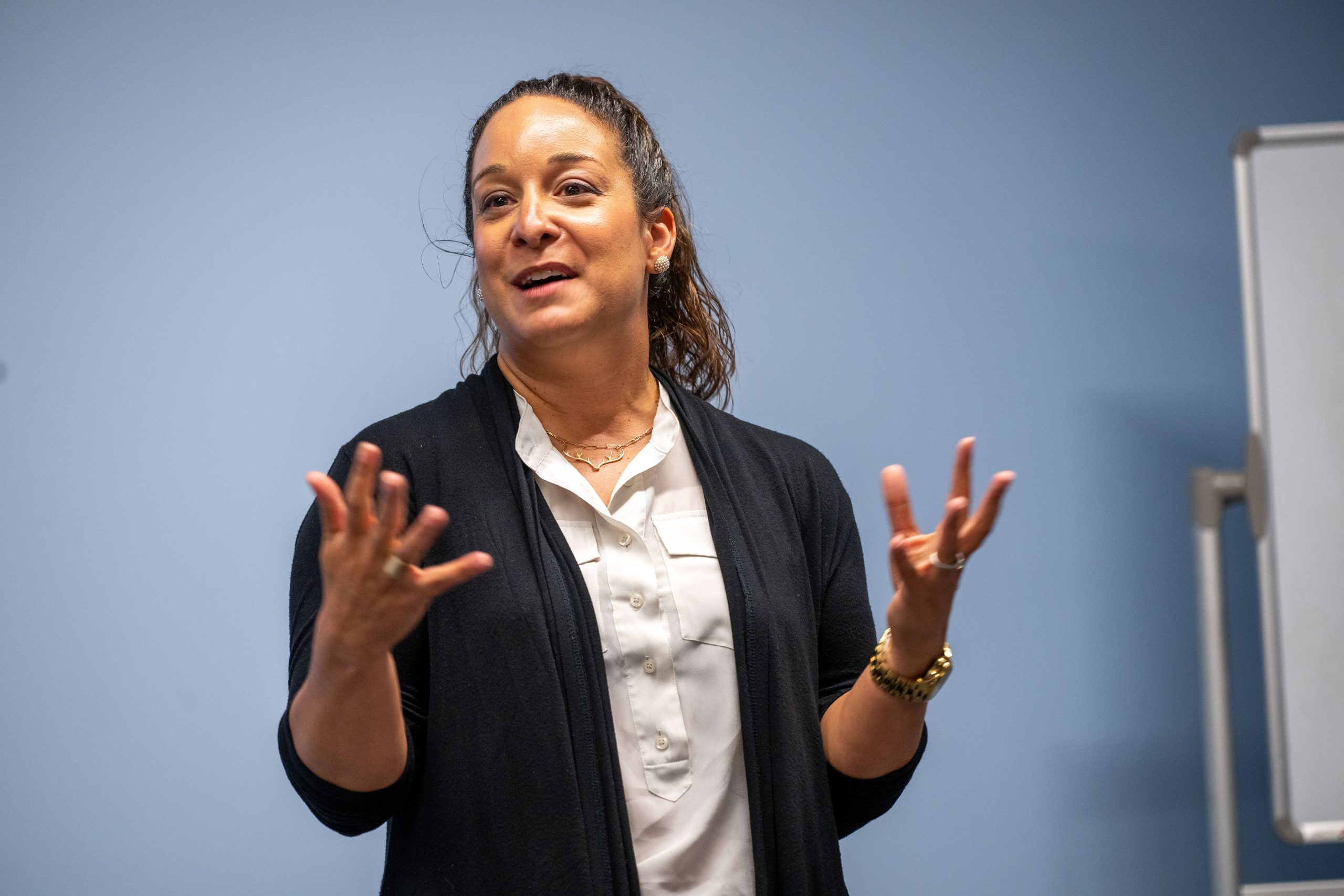

Democrats vying for a pair of deep-red Senate seats are facing increasingly desperate calls from within their party to step aside for more promising independent candidates.
But they say they won’t drop out — unless there’s divine intervention.
Democrats Alani Bankhead of Montana and Julian Beaudion of South Dakota both told POLITICO they have no plans to exit the race, despite pressure from national — and even some state — Democrats to step aside. Numerouspolls, coupled with strongerfundraising and campaign operations, show independents Seth Bodnar and Brian Bengs have a stronger — if still muddied — path to victory in November.
If the Democrats stay on the ballot, it will be almost impossible to claw these seats away from Republicans in Mountain West states that President Donald Trump dominated in 2024.
“I’m a person of faith. If a lightning bolt from God struck me and was like, ‘Alani, get out of the race,’ sure,” Bankhead told POLITICO when asked if anything would change her mind. Otherwise, she said there’s “absolutely nothing.”
Beaudion has a similar resolve: “To be clear, we are not considering dropping out of the race,” he told POLITICO.
By digging in, the Democrats could imperil their party’s hopes of regaining Senate control in an already uphill cycle. There’s broad agreement across the many factions of the Democratic Party that a crowded race relinquishes any hope of victory. Bengs has argued that Beaudion remaining on the ballot jeopardizes his chance of winning this fall against GOP Sen. Mike Rounds. Bodnar has maintained he has a viable path either way, and he could be helped out if the Libertarian candidate in the race pulls votes from Republican Kurt Alme.
The deadline to withdraw in South Dakota is Tuesday, and Montana’s is shortly after, on Aug. 10. Democrats across the ideological spectrum in Washington and their home states are calling on Bankhead and Beaudion to step down to help their party bank-shot a Senate majority, with the idea that a victorious independent candidate could caucus with a future Democratic majority — or at least not party up with Republicans.
“The math is inescapable. If it’s impossible for a Democrat to win, it is vital that the Democrats step aside and give the independent at least a shot of beating the Republican,” said Matt Bennett, a co-founder of the centrist Democratic think tank Third Way. “Beating the MAGA Republicans is priorities one, two and three. Who we beat them with is pretty far down the list.”
Democrats have already had some luck setting up one-on-one independent vs. Republican matchups in other Trump-won states. The Democratic candidate in Nebraska withdrew to pave the way for independent Dan Osborn — though an ongoing court case from a Democratic anti-abortion pastor could complicate things. And Idaho’s Democratic nominee recently dropped out in favor of independent Todd Achilles.
“Knowing that your campaign is not gonna break through, and just being able to recognize that is probably the hardest thing of all,” Achilles said of Democrat David Roth’s decision to step down. “I do appreciate what David did in Idaho.”
Bankhead and Beaudion insist they can win, even despite the headwinds. Bankhead expects to ride the anti-incumbency and pro-outsider wave into office, and Beaudion credits his relationships with voters throughout the state.
“Nobody ever knows what’s actually going to happen in an election,” Bankhead said. “The people decide on November 3.”
But Idaho and Nebraska Democrats reached a conclusion that Bankhead and Beaudion did not: The party’s brand is so tarnished in their states that the “D” label on the ballot line provides no viable path to victory.
“I am a professional partisan Democrat, and I have every incentive to be on the Democrat’s side here,” said Pat Dennis, president of American Bridge 21st Century, an opposition-research firm. “But ultimately, the priority is to take the Senate majority away from Republicans. In some states, that path is very difficult to impossible for a Democrat. In those cases, it is both strategically and morally correct to take the path that is most likely to achieve the goal we’re going for.”
Faiz Shakir, a longtime adviser to Sen. Bernie Sanders (I-Vt.), did not go as far as to call for Bankhead and Beaudion to step aside. But he agreed that there’s real opportunity for independents who aren’t stuck with the Democratic brand’s baggage.
“Being someone who’s not associated with the two-party system right now helps you greatly in many parts of this country, particularly those that have much more rural and conservative tendencies,” said Shakir. “There’s frustration and anger with Trump, and there’s not as much of a love and appreciation for the Democratic Party.”
Shakir also said that competitive races in these red areas — even if the independents can’t pull off a win — could force Republicans to pull much-needed resources out of battleground races in order to defend their turf.
But he also offered a warning to his party: Talking too much about the independents’ strong fundraising and establishment backing risks tying them to the “donor class” and turning them “into a worse version of what people assumed of a Democrat.”
“You gotta give them the space to be both independent in mind and in spirit,” he said. “The argument for them is truly that they are building a movement in the state that people are hungry for, and that in the support of those people, they’re finding resonance. And that would be the argument for a Democrat to step aside.”
Republicans, meanwhile, are working to paint the independents and Democrats as one and the same. They’re also trying to elevate the Democrats in an attempt to stop the independents from gaining more traction: Trump on social media attacked Bankhead in July, ignoring Bodnar entirely.
“Democrat-backed independents all support the same socialist policies and middle-class tax hikes that made Democrats toxic across the country,” Joanna Rodriguez, the communications director for the National Republican Senatorial Committee, said in a statement. “Republicans will defeat them in November.”
The inside calls for Beaudion and Bankhead to step aside aren’t just coming from Washington. Many local Democrats in Montana and South Dakota have said publicly they should not continue their campaigns. Nancy Keenan, the former executive director of the Montana Democratic Party who has endorsed Bodnar, wrote in a June op-ed that “there is not a viable path for a Democratic victory in this race.”
Bennett, the Third Way co-founder, went further, saying if Democrats fail to flip the Senate in November, the blame would lie at the hands of Bankhead and Beaudion.
“If we fumble away a majority because these no hope candidates are too vain to get out of the race, that’ll be a political calamity,” he said. “These people need to understand that they will become pariahs.”
Bankhead doesn’t see it that way.
“I’m not swayed by it because I’m not here for power and money,” she said. “It’s still the old, rich D.C. powerful political circles that are trying to keep more progressive candidates out of the fight so they can maintain the status quo.”


A US government delegation to an AIDS conference mislabelled every nation in Africa on a map it used during a presentation.
Audience members at the conference in Brazil naturally snapped the bizarre map and shared it online.
A Reuters analysis found:
The image of the map included in the presentation contained an artificial intelligence watermark that signals it was made with OpenAI tools. The company said it was investigating the report.
The state department said it took “full responsibility” for the confusion caused and that the map had been produced by a team member who hastily changed the slide deck before the event.
What a Reuters headline: "US government map of Africa mislabels every country at global conference" https://t.co/QcIf2JY6Rv pic.twitter.com/3kEYndmlle
— John Hudson (@John_Hudson) July 30, 2026
While the Guardian said:
The map showed Nigeria, where the US currently has several hundred troops deployed, as landlocked in the Sahara desert. Mozambique, which is in south-eastern Africa, was relocated to the Horn of Africa, while Côte d’Ivoire in west Africa was placed on the other side of the continent.
Africa map created ‘confusion and misrepresentation’
The US State Department told reporters:
We take full responsibility for the confusion and misrepresentation it caused for attendees, including our African partners.
Democratic member of the US Foreign Relations Committee, Jeanne Shaheen, wrote:
What an embarrassment. This is what happens when [the State Department] fires career experts and tries to have AI conduct diplomacy.
The Atlantic Council’s Matt Petit, who was at the conference, added:
This is beyond embarrassing. It shows a profound lack of professionalism and care for the subject.
Problem is, none of these countries are right. In many places, they are comically wrong.
Petit continued:
I strongly suspect this is an AI-made slide. Whoever created and approved this slide did not know where countries in Africa are and did not care to check their work. That latter point means they also *did not care enough* about the subject matter to bother.
On a more serious note, Donald Trump’s administration cut aid to AIDS programmes in January 2025. A move which NGO workers described as seeing “progress slip backwards”.
Considering the US’ role as global hegemon, one might think it’d look at a map once in a while. And given that some of the nations misplaced on this AI map currently have US troops in them, Marco Rubio’s state department has questions to answer.
Featured image via Yan Krukau/ Pexels
By Joe Glenton


Gianni Infantino has officially announced he is scrapping the controversial FIFA Forward Enterprise (FFE) following widespread objections to the commercial project.
In an official statement attributed to Infantino, he confirmed that FIFA would not proceed with the project, noting that consultations with member associations and stakeholders had revealed a lack of sufficient consensus to support selling shares to private investors.
However, it emphasised that the dialogue would continue regarding any future initiatives aimed at boosting revenue and developing international football.
Statement attributable to the FIFA President
The FIFA Forward Enterprise project was intended to provide a basis for further strengthening our FIFA Member Associations and our sport worldwide, especially in those countries where support is most needed. And more so, as we said…
— FIFA Media (@fifamedia) July 31, 2026
FIFA didn’t anticipate such backlash
The FFE project was one of the largest investment initiatives launched by Infantino, aimed at establishing a new commercial entity to manage the commercial rights of FIFA tournaments.
Foremost among them was the World Cup, with the possibility of selling up to a 20% stake in the company to external investors.
Opponents argued that bringing in external investors to manage the commercial rights of the sport’s most important tournament could pave the way for the privatisation of some of FIFA’s assets. There were also fears this would grant the private sector unprecedented influence over the future of international competitions.
UEFA led the opposition, arguing that it undermines the independence of the football governing body. Several national associations also raised similar objections, amid warnings that pressing ahead with the plan could lead to an unprecedented split within the football community.
Even Andy Burnham lent his voice to the opposition, claiming that Infantino “is not the right person to lead FIFA”.
The prime minister called for his resignation and emphasised that football “belongs to the fans and is not the property of investors”.
However, Infantino has always maintained that the FFE was not a plan to sell off the World Cup.
A blow for Infantino and his future
The decision to backtrack is seen as a major setback for the FIFA president and now there are doubts as to whether he will continue in this role after March 2027.
By scrapping the plan, FIFA has succeeded in containing a crisis that was on the verge of escalating. However, this U-turn has simultaneously exposed the limits of Infantino’s ability to push through strategic initiatives without securing broad consensus within the global football community.
Featured image via Central FM
By Alaa Shamali

Trump says parameters met for a deal to end Iran war
Ukrainian drones kill two in Russia, strike Wildberries warehouse, governors say

Sopranos Star Found Inside Home


-
 Sports6 days ago
Commonwealth Games boxing: Jadumani Singh seals dominant 5-0 win over Pakistan’s Sumama Rehman to enter quarter-finals | Commonwealth Games News
-

 Business3 days ago
Why Trees Belong on the Risk Register
-

 Fashion2 days ago
Weekend Open Thread: Wit & Wisdom
-

 Tech6 days ago
Intel is reversing course and bringing hyper-threading back to its server chips
-

 Politics1 day ago
Meta enters AI-training agreement with far-right ‘propaganda rag’ Newsmax
-

 Politics6 days ago
Luke Littler dismantles Gerwyn Price to retain title in Blackpool
-

 Crypto World16 hours ago
MicroStrategy Post-Earnings CLARITY Act Push Could Add New Catalyst for Its Stock
-

 Politics5 days ago
The Part of the Electric Transition Nobody Wants to Discuss
-
 Entertainment5 days ago
‘Stargate’ Creator’s New Sci-Fi Series Returns for Season 3 Tomorrow
-

 News Videos6 days ago
BITCOIN JUST ENTERED THIS CRITICAL ZONE…
-

 Business4 days ago
Major shareholder moves on Canyon
-

 Crypto World7 days ago
XRP Ledger adds $2.6B as RWA inflows rank second
-

 Politics7 days ago
Spain sweeps the board at 2026 World Cup with individual awards
-

 News Videos3 days ago
Bitcoin Enters the 3rd Stage of the Bear Market
-
Crypto World1 day ago
XRP Ledger v3.3.0 brings five institutional features
-

 Crypto World4 days ago
Kraken Enables Retail Access to Jersey Mike’s IPO via Tokenized Shares
-

 Tech5 days ago
New macOS Sequoia & Sonoma security updates for older Macs
-

 News Videos4 days ago
Claude: Build Financial Dashboards in Minutes (2026)
-

 Politics3 days ago
Luke Littler’s dominance sparks GOAT debate
-

 Sports2 days ago
Seema Kaliramna Wins Discus Throw Bronze, Takes India’s CWG Medals Tally To 17
You must be logged in to post a comment Login