
Politics
Binge-Watching TV Linked To Brain Differences Associated With Dementia


If you’re a fan of a nightly binge-watch session on the sofa (hey, who isn’t?), it might be worth rethinking exactly how much time you spend passively gazing at the TV.
A recent study found people who watched TV ‘very often’ during midlife showed smaller volumes in brain regions linked to memory and areas of damage in the brain’s white matter that are associated with ageing, cognitive decline and even dementia.
Senior author David Raichlen, professor of biological sciences and anthropology at USC Dornsife, said: “For years we’ve focused on how much people sit. Our findings suggest we should also pay attention to what they’re doing while they’re sitting.”
The researchers suggested the results aren’t just because of people sitting still on the sofa for ages, as other types of sedentary activities (like sitting to work) did not have the same associations.
What did the study involve?
They looked at data from 1,700 adults, with an average age of 53, who had enrolled in the Atherosclerosis Risk in Communities (ARIC) Study between 1987 and 1989.
Participants were asked to report how often – on a scale ranging from “never” to “very often” – they watched TV during their leisure time. They were also asked how much of their workday they spent sitting.
After more than 20 years, participants had brain MRI scans. Compared with those who reported “never” or “seldom” watching TV, those who watched TV “very often” showed widespread structural differences across the brain.
In this group, the researchers found smaller volumes in brain areas that were associated with early signs of Alzheimer’s disease.
They also identified indicators of blood vessel disease associated with cognitive decline and dementia, as well as smaller occipital and frontal lobes, regions associated with vision and movement.
Differences persisted even when the researchers considered factors such as physical activity, diabetes, body mass index (BMI), smoking, and how much alcohol participants consumed.
Sitting didn’t seem to be the problem, passively watching TV did
The study found those who reported high amounts of sitting at work had larger frontal and occipital lobes, as well as reduced white matter hyperintensity volumes.
Researchers noted this indicated better brain health in work-sitters than among TV-sitters. This could be due to the intellectually stimulating nature of their sit-down jobs, they hypothesised.
Their not alone in their thoughts. Dr Soma Sengupta, a neurologist at Tufts Medical Centre, suggested that unlike reading, learning a new skill, or working, watching TV “often requires little active mental engagement”.
She told Prevention: “Over many years, less cognitive stimulation could contribute to less ‘exercise’ for brain networks involved in planning, memory and attention.”
When the MRI scans were separated by sex, researchers found that men were most impacted – most of the changes to the brain, both from TV watching and occupational sitting, were seen in this group.
The study authors suggested that, in future, MRIs should be taken at the start and end of the study so they can monitor changes over time.
They also suggested a different approach to health guidance around sedentary activities might be needed, focusing on reducing TV-watching.
Natan Feter, postdoctoral scholar in the Human and Evolutionary Biology program at USC Dornsife, added: “We frequently encourage the public not to spend too much time sitting down, but experts may want to expand that recommendation to encompass the activities done while sitting, since those seems to have distinct impacts on brain health.”
How to protect brain health as you age
One study published in the American Academy of Neurology found that a decline in thinking skills and memory can be staved off by regularly reading and writing.
Drinking less, exercising more, eating a balanced diet, and avoiding smoking can benefit brain health and lower your risk of dementia, too.
In 2018, a 44-year-long study published in the journal Nature showed a link between cardiovascular fitness, as measured by a cycling test, and an 88% lower incidence of dementia among women.
Even walking regularly can benefit your brain. A 2022 paper found that just 3,800 steps a day may lower your likelihood of developing dementia by 25%, with increasing benefits up to 9,800 steps.



Donald Trump has admitted that the US’ attempt to destroy the International Criminal Court (ICC) is about protecting wanted Israel’s Prime Minister and wanted war criminal, Benjamin ‘Bibi’ Netanyahu.
Trump makes admission at press conference
Trump’s Secretary of State Marco Rubio first tried to spin a tale about US sovereignty and a supposedly arrogant court. But Trump blew his confection out of the water in one sentence, as journalist Ahmed Eldin spotted.
At a White House press conference on Friday (31 July), the US president said that they’re not “after me”, but that it was about “protecting Bibi”.
Like pretty much everything he does, then.
View this post on Instagram
Just as Trump is destroying international law to protect the genocidal settler state and its criminal leaders, Keir Starmer is destroying UK laws and rights. And his successor Andy Burnham shows no sign of slowing down that war.
Featured image via the Canary
By Skwawkbox
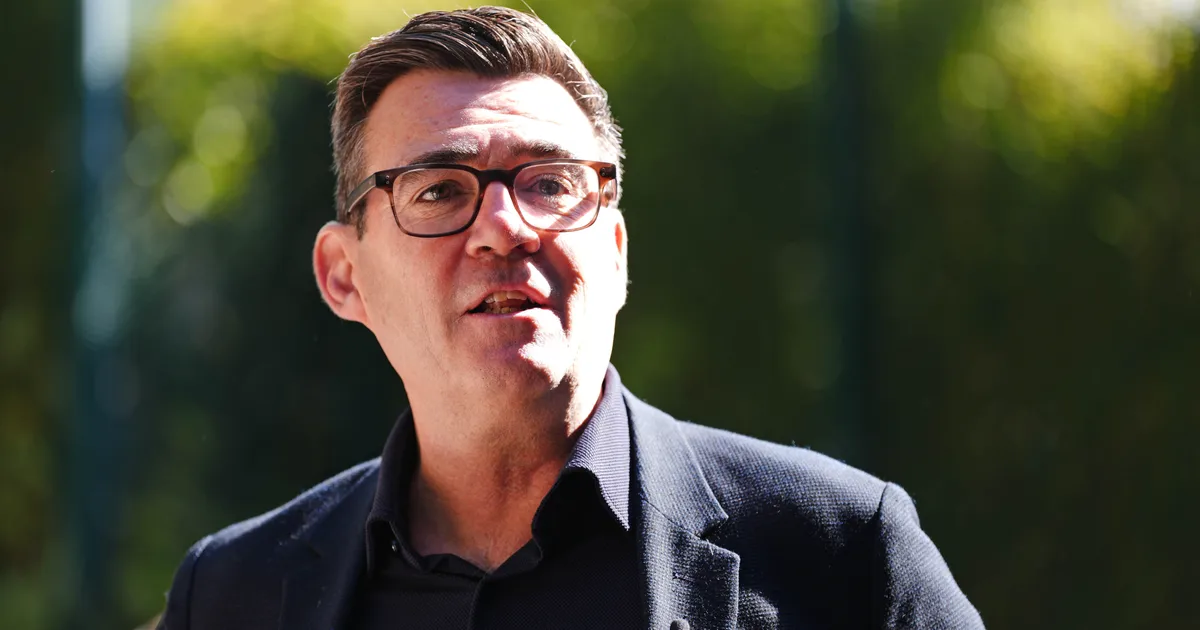
Andy Burnham has promised cost of living relief is “on its way” and hinted he might look at trying to bring down utility bills and rail fares.
Speaking to the Sunday Mirror, the prime minister said the worries of voters have been on his mind from his first moment in the job two weeks ago.
Alluding to his campaign to win the Makerfield by-election, Burnham said he was thinking of the “people on whose doors I was knocking only about five, six weeks ago… They did get over to me how tough life was. Can’t go for drink anymore. Can’t take the kids out. Not having a holiday this year.”
He added: “I heard those type of things being said throughout the campaign, and those comments were still ringing in my ears as I arrived in Downing Street.”
Burnham said he would not make “false promises” to the public but will do “whatever I can” to “take a little bit of pressure down”.
The prime minister indicated that he is looking at rail fares – some of which he described as “outrageously” high – and said water bills are an essential issue.
Burnham said: “I think rail fares are too high, outrageously so in some instances. So that’s something that’s in my sights.
“I mentioned VAT and electricity bills. It’s a short-term measure at this moment, but let’s see where we can go with that.
“Water is an issue as well, where I think the public pay high bills and they don’t see that money then going into infrastructure. There’s another area that needs reform.”
In his first fortnight as PM, Burnham has already promised to cap bus fares at £2 for journeys outside of London and announced plans to cut VAT from energy bills, saving approximately £45 from the energy price cap.
He also revealed pubs, social clubs and live music venues would get a 20% cut to business rates from April.
The chancellor John Healey also wrote in The Sunday Telegraph he would be watching for any supermarkets’ attempts to rip off customers.
He said: “We’ll be watching closely for any suggestions that customers are being taken for a ride at the pump or the till.”
He said Labour would not be afraid to “clamp down” in price-gouging begins.
However, the chancellor also warned that the government “can’t completely stop the squeeze that families and businesses will feel with a global shock of this scale”.
It comes after war in Iran triggered a 13% increase in household energy bills for Britain at the start of July.
Even so, Healey vowed the government will have a “ruthless focus on our own national interests” and work with allies to ease the impact from the crisis in the Middle East.
Ministers will also have to decide whether it wants to intervene and help Brits in the winter when the price cap is expected to rise again.
Burnham told the Sunday Mirror: “We’ll keep monitoring that situation and make sure we’re doing everything that we can do. People have raised issues like the standing charges on bills, and they kind of pushed me to go further on that.
“So I’ll take a look at that issue, alongside other issues and other things that we might be able to do to help people with the cost of living.
“It remains a very tough time for people, and I know the main thing people would like me to do if I can do it is to ease that pressure a little bit.”
Listen to Commons People, the podcast that makes politics easy. Every week, Kevin Schofield and Kate Nicholson unpack the week’s biggest stories to keep you informed. Join us for straightforward analysis of what’s going on at Westminster.
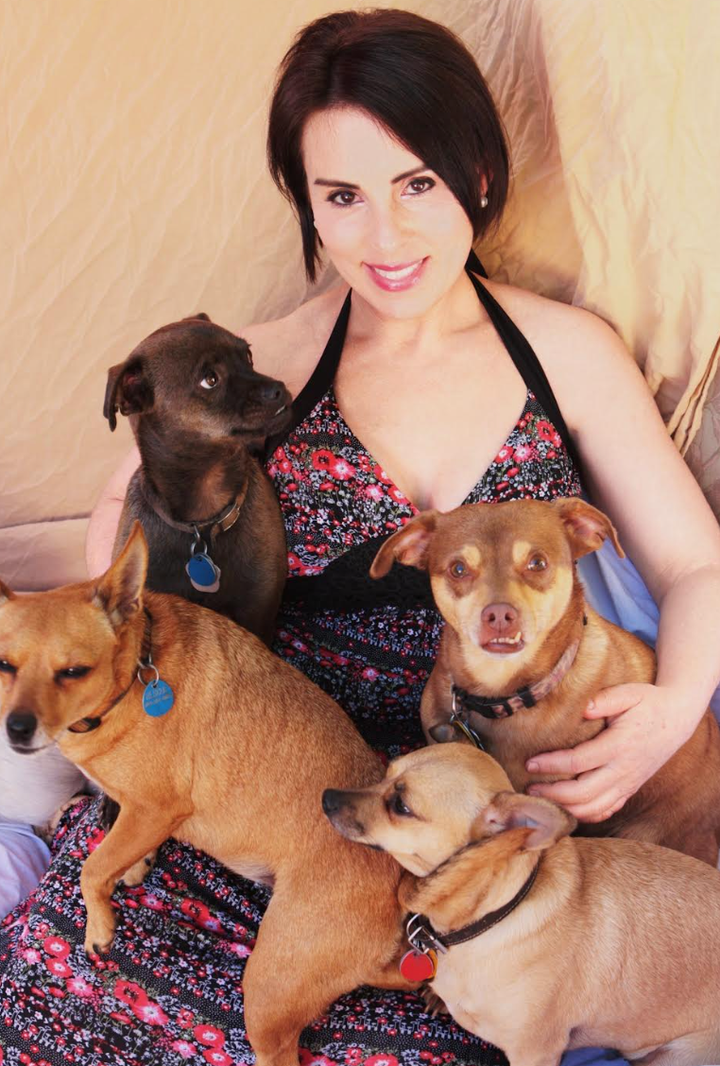
As I was sitting in my living room, engrossed in a self-help book about finding the perfect partner to complete me, I got a call from my teenage daughter Jordan that changed everything.
I was in my mid-40s and felt extremely low about myself and my life. I was divorced, had a few unsuccessful relationships in recent years, and I felt I’d failed at finding true love.
“Please, Mom, it’s so cute and tiny!” Jordan was at a photo shoot in Hollywood. The makeup artist had a puppy with her, and its sibling still needed a home.
“Just our three cats – that’s what we’re allowed,” I reminded her. The apartment rules I had signed 11 years ago after my split with her dad were ironclad.
“No one will know! I’ll never ask for anything else ever again!” she promised, and because she was my only child, she always got her way.
Within a week, a tired-looking lady from a dog rescue organisation brought a fit-in-your-palm-sized black chihuahua to our home. We named him Preston, and we soon discovered he had a big bark!
When we were told to move out or get rid of the dog, the decision was easy. We moved. Ironically, Preston never became my daughter’s dog. He was mean and bit everyone except me. My love for him was plain and true. He slept under my left arm every night for almost 19 years.

Months after moving to a dog-friendly place, I saved a big black terrier boy. I found him caked with dirt in the middle of a street with a broken rope around his neck. I lifted him into my car and rushed to the vet. When he was cleared to leave, we brought him home and named him Alfie. Next came Maddie, a sweet little spaniel mix from a high-kill shelter.
And so, I began to save them – one dog at a time.
When my daughter went off to college, mutts took the place of men. It seemed the more I missed my only child, the more dogs I saved. The chaos and their constant need for my attention filled the void.
The fact that I lived in a house full of animals was not completely surprising.
“I’m never, ever getting married, and when I grow up, I’m going to live in a castle with a hundred cats and dogs and monkeys and goats!” I used to tell everyone as a child. Playing with dolls and wearing frilly tutus were never my thing. Animals were.
Today, I’ve been in the trenches of dog rescue in Los Angeles for over 20 years. I’ve also had three major back surgeries. My lower back is all titanium now.
“When are you going to stop lifting crates and heavy bags of dog food?” my spine surgeon asked after my second back surgery.
“Soon. I’m slowing down, I swear – less rescue, health comes first.”
As I told him that, I wanted to believe what I was saying, but I knew deep down it was never going to happen. The number of animals needing help is seemingly infinite.
There’s always another urgent email plea about a pit-mix puppy thrown from a car window, or a Facebook post about a matted poodle, limping, on the side of the road, or, in recent months, a frantic phone call about two senior terriers left in a home after the owners were deported after an ICE raid.
How can I stop? How do I say no? How do I look the other way?

“Rescue is like quicksand,” a seasoned rescuer told me years ago. “Once you get in, you’ll never get out.”
I didn’t fully understand what she meant at the time, but she was right.
After I sold the little jewellery and paintings I had to pay for my rescued dogs’ medical expenses, I decided to become a legit operation. It’s been 16 years since I formed my own nonprofit dog rescue foundation. I now have an indispensable right hand, Gina, who matches me in commitment and enthusiasm (and exhaustion), as well as a community of wonderful volunteers, foster parents, groomers, rescue partners and donors. It takes a pack of passionate people to save lives.
My morning often starts something like this. A text at 7:30am pings on my phone with an image of nine large-breed puppies abandoned in an orchard – their terrified faces peering out of the wagon they were dumped in.
My adrenaline kicks in, and the only thing that matters is getting those poor babies to safety. I’m holding my phone and texting with one hand, and with the other, I’m filling dog bowls with my home-cooked mix and haphazardly throwing them down for my waiting pack.
We have nowhere to put these nine pups, so I scroll down to Lori, one of my trusted go-to rescuers, who has a big property and takes larger pups. She’s my first rapid-fire text and, luckily, in this case, my last.
It’s a bartering game sometimes.
I’ll take them if you can take the Chiweenie family we picked up yesterday.
I have a foster who likes small-breed moms and babies, so I text back, No prob, done deal.

Miriam, who often transports dogs for me, is my next call. Within two hours, the orchard puppies are saved. Later that week, I’ll get pics of the litter happily frolicking. We’ll never know who the uncaring people who abandoned these helpless pups were, and sadly, this kind of cruelty happens often.
I have spent days working in last night’s pyjamas until whatever crisis we’re facing has been resolved. As for the mama Chihuahua/Doxie and babies, they’ll be groomed, vet-treated, spayed/neutered, given toys, collars and tags, and trained, if needed, before we place them into forever homes.
I think of myself as the passer of the baton. My job is to love them all like they are my own and give them the best of everything to make up for the trauma they’ve been through, and then place them into the arms of great adopters who’ll give them the lives they deserve.
I have a ritual – a way of saying goodbye to every dog that comes into our organisation that I’ve fostered. When I drop a dog off at their new home after the house and yard are secure and checked, I take a walk with the new owners and pup, who’s sniffing and enjoying the unfamiliar surroundings. I’ve prepared the adopters, so they know what’s coming next. After a block or so, I quietly peel off and head in the opposite direction back to my car. There are no confusing goodbyes for the dogs because I’ve learned that works better.
This is the “movie moment” that I’ve repeated hundreds of times: taking a last look at that prancing dog with her gleaming coat and tail up, who is now a loved pet. It’s that image, as they head into the proverbial sunset, that I keep imprinted in my mind. The dog that I spent four hours taking 50 ticks off its tiny body. The dog that came trembling out of a high-kill shelter three hours before it was set to be euthanised. The dog that was chained to an RV bumper 24/7. All of those dogs are now somebody’s best friend, best snuggler and best hiking buddy.
I often drive away from dropping these dogs off with tears in my eyes, but I also feel a deep sense of calm because I know I’ve fulfilled my commitment to each one of them. I’ve fulfilled my promise of great new lives – even if it takes weeks, months or sometimes even years to deliver it to them.

There is a well-known expression in the rescue community: “Saving one dog won’t change the world, but it will surely change the world for that one dog.” This is the mantra I live by, but for me, it goes one step even further. It’s also about how those new adopters’ lives have been changed for the better.
I couldn’t have gotten through my husband’s death without Bruno. He’s my rock.
Our 9-year-old son was so shy until we adopted Skye. She’s brought him out of his shell.
Messages like these are what keep me going. Taking a skinny, filthy pup and transforming him into a happy, healthy dog who is then adopted and loved forever. That’s powerful magic.
In our current world, where it’s easy to feel that we have no agency, being able to have a positive impact on a life, two-legged or four, matters. We can make beautiful things happen one creature or person at a time.
While I don’t have much time to think about my love life, others seem to.
I think I found your next husband! reads a recent late-night text from a friend, who has also sent along the Instagram post of a smiling guy sitting in the middle of a canine-covered couch.
Right, so we can have 100 dogs together! I text back.
Never mind, looks like he’s married.
I’m not disappointed. I’m in bed surrounded by my current assortment of rescue dogs. It’s a melting pot of smooth and scruffy, white, tan, black, brown and grey older ones, and two pink-nosed puppies. They are all pushed up close, nuzzling against me, paws across my legs and arms, offering little licks to my fingertips. Their round eyes are looking at me with such open, pure love. It is in that moment that it comes to me – that profound aha! realisation.
What I have in my life is not a soulmate, but a soul–purpose, and that’s what completes me.
Linzi Glass is a published author with Henry Holt and Company, HarperCollins, Penguin UK, and Scholastic, and the founder and executive director of The Forgotten Dog Foundation, a Los Angeles–based rescue that has saved thousands of dogs over the past 16 years. She is currently working on a memoir about her years in dog rescue. For more info, visit
www.theforgottendog.org/ and www.linziglass.com.
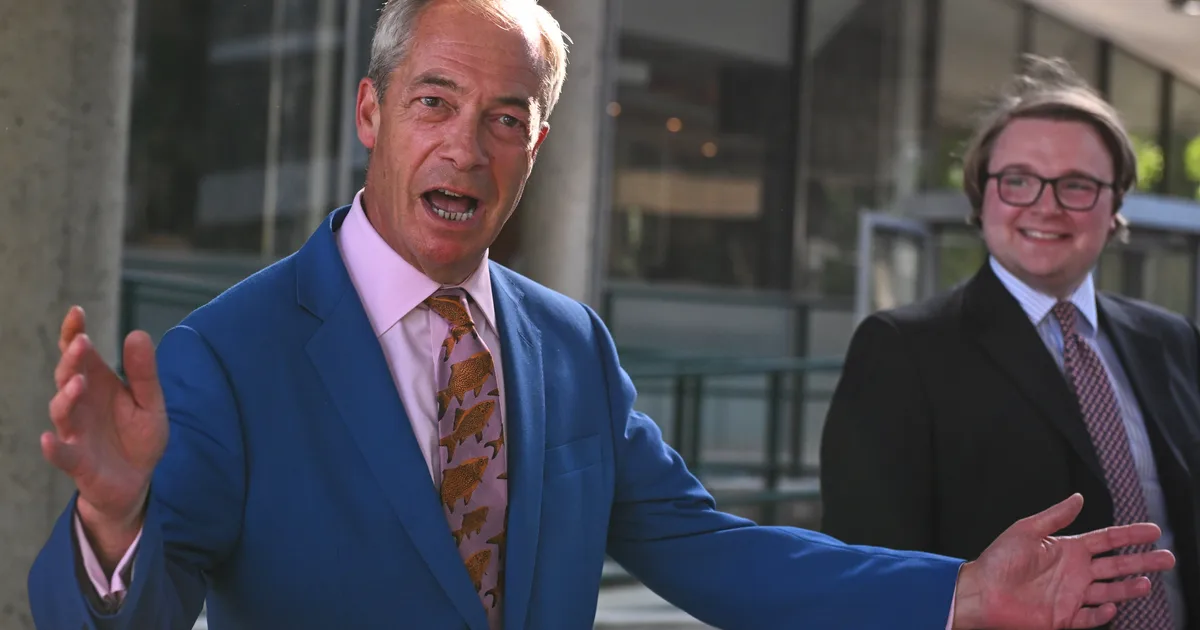
Nigel Farage struck a secret deal to return as Reform UK’s leader months before the general election, according to reports.
The Sunday Times claims Farage negotiated a pact with Richard Tice, then-party leader, in March and April 2024.
George Cottrell, the convicted fraudster known as “posh George” who reportedly bankrolled Farage, supervised the conversations.
The newspaper reports that once Farage became leader, he would repay or write off more than £1 million in loans Reform had received from Tice’s firm.
If accurate, the existence of this pact casts doubt on Farage’s previous claim that he did not intend to return to frontline politics until June 2024 when he announced his plan to run to be the Clacton MP.
Farage has used this claim to defend his failure to declare a £5 million gift to parliament in the year before he was elected to the Commons.
The Reform leader has repeatedly claimed the lump sum from crypto-billionaire Christopher Harborne was not for political purposes and so did not need to be added to the register of MPs’ interests.
He told the Triggernometry podcast last month that he was a broadcaster when he received the donation, describing himself as “an influencer” who wasn’t in politics.
A parliamentary probe into the donation was launched earlier this year but was paused after Farage chose to trigger a by-election in Clacton over what he described as an “establishment stitch-up”.
Asked about this supposed deal with Tice, Reform sources told HuffPost UK Farage was trying to find out the party liabilities and what loans would have to be repaid if he did return to frontline politics.
They claimed he decided he would not come back, before changing his mind, and said he was essentially trying to keep his options open.
Farage is currently fighting the Clacton by-election, but all major parties have refused to stand a candidate calling it a political stunt.
His main opponent is comedy character, Count Binface.
If Farage wins and returns to the Commons, the probe into his £5 million donation will resume.
The investigation could still punish him for failing to declare the lump sum to parliament and trigger a second by-election in Clacton.
Labour Party chair Bridget Phillipson slammed the Sunday Times report, saying: “Farage and Reform think the rules don’t apply to them. But as more of the truth comes out, the net is closing in.
“If accurate, this revelation blows Nigel Farage’s story apart. It would mean Farage was privately negotiating his return to frontline politics while publicly presenting as someone who hadn’t decided whether to return. That raises even more questions about the secret £5 million gift from crypto billionaire Christopher Harborne, further undermining his account of why he kept it secret.
“Grubby pacts, secret gifts, support from a convicted fraudster, attempted cover-ups and police investigations – it all adds up to a stench of sleaze the public can smell from miles away.”
Listen to Commons People, the podcast that makes politics easy. Every week, Kevin Schofield and Kate Nicholson unpack the week’s biggest stories to keep you informed. Join us for straightforward analysis of what’s going on at Westminster.
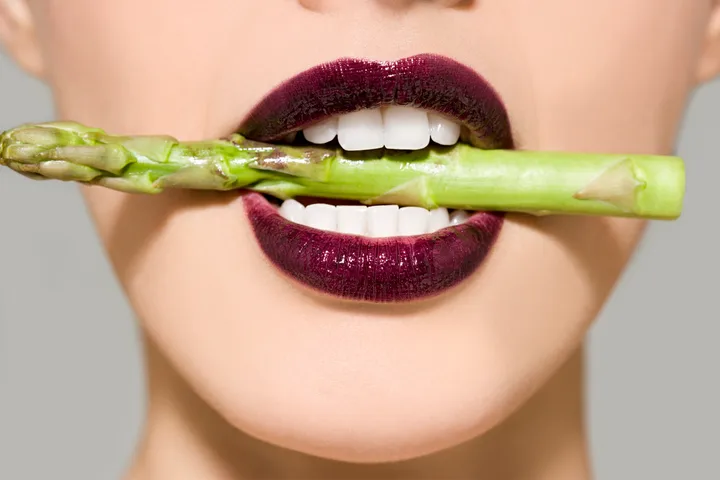
Oral sex is one of the most intimate sex acts – because your partner is literally tasting you in a way that you yourself have probably never experienced.
Wanting to taste good for your partner is perfectly normal, too. After all, the thought of someone grimacing the moment they put their mouth on you or fretting about how you taste is certainly enough to kill the mood.
While many people believe certain foods can dramatically improve the way you taste – like the old wives tales around pineapple we’ve all heard for years – the actual science is less convincing.
“There isn’t enough scientific data on one type of food alone to cause a dramatic improvement in taste or sexual experiences,” Dr. Kezia Joy, a medical adviser at Welzo, told HuffPost.
“On the other hand, consuming an optimal amount of fruit (and vegetables) and hydrating adequately will help to create a healthy oral environment, provide you with fresh breath and a general feeling of wellness that could both contribute to an improved experience during sex.”

Connect Images via Getty Images
That said, while there’s little evidence that any one food can make you taste significantly better, some foods may still influence or change your natural scent and flavour more than others.
But if you’ve got oral sex on the agenda and have concerns about your own smell and taste, these are the foods experts say you may want to avoid beforehand.
Garlic and onions
Garlic and onions are among the biggest offenders because their odour doesn’t just linger on your breath – it can linger on your body all night.
“When we ingest strong odorants (garlic, onions, certain spicy dishes, heavily seasoned meals), these chemicals remain in the bloodstream for some time after we brush our teeth and can continue to produce odor even long after we have cleansed our mouth,” Joy said.
Sex and intimacy coach Annette Benedetti, host of the podcast Talk Sex With Annette, agreed, adding that “heavy garlic and onion … can all shift how you taste and smell”.
“None of it is dangerous; it’s just stronger and more bitter,” she said.
Asparagus
Asparagus has long had a reputation for affecting body odour, and Benedetti said there’s a reason it’s worth mentioning.
“Asparagus is the big one. The sulfur compounds show up fast in body fluids, and the smell is unmistakable,” she said.
Alcohol
A drink or two may help settle first-date nerves, but too much alcohol can have the opposite effect in the bedroom.
“Excessive alcohol use will dry out the mucous membranes of your mouth, which reduces saliva production, allowing odour-causing bacteria to thrive,” Joy said.
Dietitian Karen E. Todd added that “dehydration from alcohol can cause dry mouth and make oral sex uncomfortable for the recipient and less enjoyable for the giver”.
Spicy foods
If you’re planning on getting intimate, you may want to think twice before ordering the extra-spicy dish on the menu.
“Hot, spicy foods (particularly jalapeños) can cause irritation on the lips and in the mouth, and it may last for some time,” Todd said,
Sugary foods
Ordering dessert might not be the best choice either. You might have to skip it and savour your time in bed as your sweet treat.
“Additional sugars may temporarily provide environmental conditions for bacteria to grow more rapidly in the mouth,” Joy explained, which wouldn’t make for the most pleasant experience if you’re giving oral.
Coffee and cigarettes
If you’re relying on caffeine and your smoke break to get through the workday, moderation may be your friend before a hookup.
Benedetti said that “too much coffee, alcohol and cigarettes can all shift how you taste and smell”.
Heavy or rich meals
It’s not just what you eat but how it makes you feel afterward.
“We are all at risk from large or over-richly prepared meals that may cause gas, acid reflux and/or general uncomfortable feelings of illness, which could make intimate activity less pleasant for either partner,” Joy said.
So, what should you eat?
Unfortunately, there’s no magic food that’s guaranteed to make you taste better.
In fact, Benedetti said, social media has oversold the idea that certain foods – especially pineapple – can improve the way you taste.
The idea that “pineapple works like a magic potion” is one of the biggest myths she’d like to see disappear.“Eating pineapple an hour before does not transform anything,” Benedetti said. “Diet influences taste modestly and over time – think hours to days, not minutes.”
Todd agreed that the evidence is limited: “There is not a lot of scientific evidence to support or refute the claims of food altering taste in oral sex,” she said. “The most influential factor on taste would possibly be hydration, but this has not been proven or disproven.”
She added that while there’s little research backing specific foods, fruits – including “fresh pineapple, citrus fruits, berries and melons” – are the ones most commonly reported to improve taste.
Joy echoed that hydration may be the most important factor. She noted that fruits with a high water content may temporarily freshen breath, but “claims regarding specific foods that greatly alter body fluid dynamics are largely anecdotal and do not have strong support from medical literature.”
So, if you ordered spaghetti and meatballs with a side of asparagus before heading to your date’s place, don’t panic.
Benedetti’s advice is refreshingly reassuring: “Nobody has ever pulled away mid-oral because you had pasta. Your partner is there because they want you. Shower, hydrate, relax.
“Anxiety kills more oral sex than asparagus ever has.”

2 min read
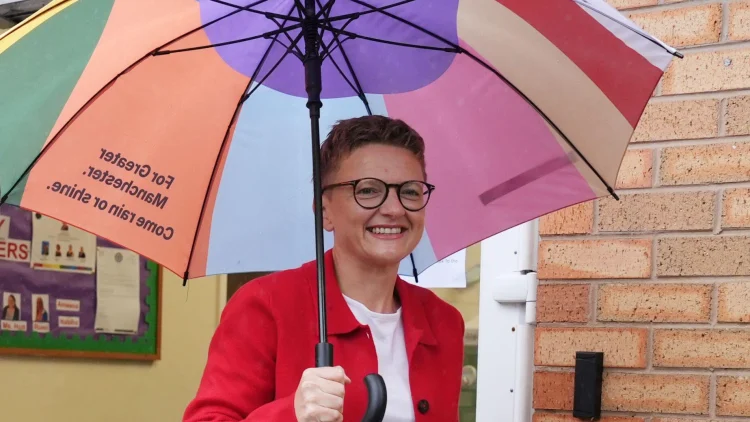
Labour candidate Bev Craig has been elected as the next Mayor of Greater Manchester, securing a comfortable victory to succeed the new Prime Minister, Andy Burnham.
She won 309,525 votes (around 66 per cent), with Reform UK candidate Sian Astley receiving 157,178 (around 34 per cent), once first and second preferences were taken into account.
Craig, a close Burnham ally who has led Manchester Council since 2021, said: “I am honoured, I am humbled, and I stand ready to serve the three million people that live across this fantastic city region.”
The turnout was relatively low at just over 25 per cent.
Labour will now need to choose a new leader of the council to succeed Craig.
The by-election in Manchester was triggered after Burnham won a parliamentary by-election in Makerfield, returning to Westminster as an MP and becoming PM just weeks later.
The Greens were initially confident of success in Greater Manchester, following their victory in the Gorton and Denton parliamentary by-election in February.
Former leader of the Green Party Caroline Lucas told The House in June that the party would be “throwing everything” at the contest.
However, after the first round of voting in Greater Manchester, the Greens were in third place on 12 per cent. Rupert Lowe’s Restore Britain got 9 per cent, the Conservatives 8 per cent, and the Liberal Democrats 3 per cent.
The election used a more proportional voting system than first-past-the-post, in which voters express a first and second choice. Under the system, if no candidate secures 50 per cent of the votes after the first round, then the top two candidates will be given the second preference votes from the defeated candidates.
4 min read
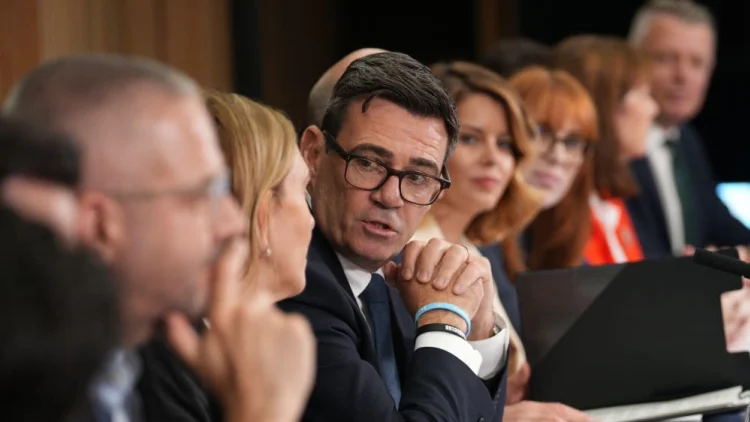
Privately educated Londoners still dominate decision-making. We now have a chance to reverse that trend.
Someone who attended a private school in London or the South East is 24 times more likely to become a permanent secretary than someone educated at a state school in the North. For a seat in the House of Lords, the gap is 23-fold.
That is not class inequality plus regional inequality. It is what happens when they multiply.
It is also the case for No 10 North: The North does not just need a stronger presence in Whitehall. Britain needs another route into national power.
Sutton Trust research into the regional backgrounds of top government officials reveals just how narrow the existing route remains. London and the South East account for 28 per cent of the population, but half of permanent secretaries, 52 per cent of special advisers and 46 per cent of peers went to school there. Just 17 per cent of permanent secretaries and peers were educated anywhere in northern England.
MPs offer a revealing counterexample. Their regional backgrounds almost mirror the population: 29 per cent were educated in London and the South East, compared with 28 per cent nationally; 24 per cent in the North, compared with 23 per cent. When voters choose, Britain looks like Britain, at least geographically. The distortion is greatest where access to power depends on less visible processes of recruitment, progression and appointment.
That tells us something important. Britain does not lack talent outside London and the South East. Its institutions are failing to find, develop and promote enough of it.
Location acts as a hidden credential. Proximity brings access; access brings relationships and sponsorship; those advantages compound. A government concentrated in one city naturally draws its leaders from those who study, live and work within its orbit.
I attended a state school in County Durham and, like many northerners, my route into national life ran south. Yet our figures classify people by where they went to school, not where they later worked. Northerners have moved to London for generations but remain scarce at the top. Even when talent moves south, it is too often overlooked, while the places it has left lose it anyway.
A privately educated Londoner is 24 times more likely than a state-educated northerner to reach the top of the civil service. If that gap remains in a decade, No 10 North will have changed the state’s address, but not its character
No 10 North could break that cycle. But we have been here before. The Treasury’s Darlington campus and Places for Growth moved thousands of civil service jobs out of London without moving decision-making. Jobs relocated; power stayed put.
To avoid the same fate, No 10 North must become a genuine second centre of government, with responsibility for major priorities, control over budgets and direct access to the Prime Minister. When the next spending review settles regional transport and regeneration funding, will those decisions be made in Manchester, or just announced there? Civil servants should be able to reach the top without moving south, with recruitment extending into local government, business, and civil society.
Getting this right would benefit the whole country. Leaders drawn disproportionately from one region give the state a narrower understanding of the nation it governs. Burnham rightly frames the idea not as a prize for the North, but as a way to make power flow into the Midlands, South West and East of England too. The goal is a state that draws talent from every part of Britain, rather than treating regional background as an implicit signal of who belongs at the top.
No 10 North should complement, not replace, devolution: local leaders still need the authority and resources to shape their places, while national government must distribute its own power more widely.
The initiative should ultimately be judged by where decisions are made and who makes them. Our research offers a benchmark: today, a privately educated Londoner is 24 times more likely than a state-educated northerner to reach the top of the civil service. If that gap remains in a decade, No 10 North will have changed the state’s address, but not its character.
The North does not need a better hearing in Westminster. It needs a greater hand in running Britain.
Nick Harrison is the Chief Executive of the Sutton Trust

WASHINGTON ― President Donald Trump on Friday offered a 645-word string of incoherent non-sequiturs to explain whether he is honoring a previous commitment to let Ukraine build its own Patriot anti-missile interceptor factory to defend itself against Russian attacks.
“We have not agreed to that. We’re talking about it. But it’s a hard thing to give away that kind of technology. And I don’t think this would ever happen, but, you know, you give that technology, they can someday turn on you. You know, that is possible. You look at war, it’s happened a couple of times over the years, right,” Trump said, answering a reporter’s question about whether he was now reneging on his pledge from just three weeks ago.
His lengthy response included explosion noises, an attack on former President Joe Biden’s mental acuity, an exploration of whether high-tech computer chips could be copied, and an acknowledgment that the US copies technologies in the same way as China, among various other topics. In his answer, he twice mentioned Tomahawks, a completely different missile that was not asked about.
At the end, even after an attempted follow-up ― the 283-word answer to which inexplicably detoured to India, Pakistan, Congo and Rwanda ― it was unclear what Trump meant.
His White House officials did not respond to requests for clarification.
Ukrainian officials, meanwhile, said they were proceeding based on the commitment made earlier this month, which was reaffirmed at the Oval Office meeting between Trump and Ukrainian President Volodymyr Zelenskyy on Tuesday, and further affirmed in a phone call between Zelenskyy and Vice President JD Vance on Friday morning.
“We followed up on our recent meeting with President Trump in Washington, which was positive and productive,” Zelenskyy wrote in a social media post after the call. “As Russia’s air attacks on our country continue unabated, air defense – specifically Patriot interceptors against ballistic missiles – remains a top priority.”
Trump publicly announced at the NATO summit in Ankara, at a photo opportunity with Zelenskyy, that Ukraine would be granted a licence to manufacture interceptors for its Patriot anti-missile system, which are currently scarce because so many have been used in Trump’s war against Iran.
“We’re going to give a license to you to make Patriots. That’s pretty cool, right? This way he can’t complain that we’re not giving them enough. Make them yourself,” Trump said on July 8.
Questions about Trump’s commitment to that pledge, though, arose after his interview with the Financial Times on Thursday, during which he said the following about the Patriot license: “It’s a very extraordinary weapon, and we have to be a little bit careful of who we license to.”
Ukraine’s ambassador to the United States, Olga Stefanishyna, on Thursday told reporters that officials from US defence contractors that make the Patriot system have already visited Ukraine and plans were proceeding. She said an interceptor factory could be up and running inside of a year, and that Russian dictator Vladimir Putin is now using more ballistic missiles to target civilians in her country because those are the only weapons Ukraine has not been able to counter with its home-grown defense industry.
“We have been effective in every domain except in an anti-ballistic missile technology,” Stefanishyna said.
Trump has long admired Putin, who has been charged with war crimes for his actions against Ukraine, and at the start of the invasion praised it as “genius” and “savvy.” Since then he has blamed Putin and Zelenskyy equally for the war’s continuance and drawn a moral equivalence between Putin’s murder of civilians and Zelenskyy’s attacks against Russian oil infrastructure.
The president repeated that argument Friday at the photo opportunity before a Cabinet meeting he was hosting at Camp David, suggesting that Russia’s war of conquest is still going on because of the personal animosity between Zelenskyy and Putin.
He said, “There’s a lot of dislike, as you probably notice.”
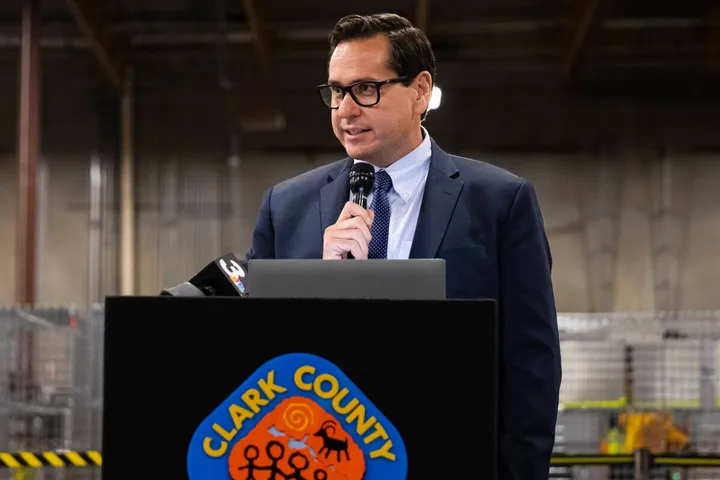
When President Donald Trump tried to steal the 2020 election, he tried to bully Georgia Secretary of State Brad Raffensperger, a Republican, into changing the vote total to put him one vote ahead of Joe Biden.
“What I want to do is this. I just want to find, uh, 11,780 votes, which is one more than we have, because we won the state,” Trump said to Raffensperger in a phone call on Jan. 2, 2021.
But Raffensperger refused. Trump attempted a coup that failed a few days later, but his lies about the 2020 election became cant among Republican politicians.
All Republicans who seek a Trump endorsement or nomination must affirm, in some manner, Trump’s false claim that he won the 2020 election. There are no Republicans like Raffensperger running and winning their primaries anymore. (Raffensperger himself earned just 15% of the vote in the Republican primary when he ran for governor this year.)
That makes the elections for secretary of state in swing states like Georgia, Arizona, Nevada and Michigan — all states that Trump attempted to steal in 2020 — vital for Democrats to win in 2026 if they hope to protect their citizens’ right to vote from the president’s interference in 2028.
“We must win Arizona, we must win Nevada, we must win Michigan and we have to try to take Georgia, because ’26 is about ’28,” said Nevada Secretary of State Cisco Aguilar, who is currently running for reelection. “If we can elect strong Democratic secretaries of state, we know that our elections in ’28 are going to be protected from the federal government.”
In Arizona and Nevada, the Republican candidates are outright election deniers who worked tirelessly to steal the 2020 election for Trump and, in Arizona, to steal the 2022 gubernatorial election for Republican Kari Lake.
In Georgia and Michigan, the Republican candidates are not explicit election deniers, but have lent support for Trump’s push to federalize elections, seize voter data and spread fears of mass noncitizen voting. None of the four Republican candidates immediately responded to HuffPost’s request for comment.

Chase Stevens/Las Vegas Review-Journal via Getty Images
Democratic incumbents Adrian Fontes and Aguilar are running for reelection in Arizona and Nevada, respectively. Fontes faces Republican state lawmaker Alexander Kolodin, while Aguilar is in a rematch with his 2022 opponent Jim Marchant.
In Michigan, Lt. Gov. Garlin Gilchrist (D) is running against Macomb County Clerk Anthony Forlini (R) to fill the office that Secretary of State Jocelyn Benson (D) is vacating as she runs for governor.
Judge Penny Brown Reynolds (D) faces state lawmaker Tim Fleming (R) in Georgia, the only one of the four swing states where Democrats do not currently hold the secretary of state’s office. In fact, no Democrat has held the office in 20 years.
“Nothing else matters at this point if we don’t get the secretary of state’s office right in Georgia,” Reynolds said. “My opponent is a MAGA extremist who has been endorsed by Donald Trump, and we know that with that endorsement comes a fidelity to everything that he wants done.”
Trump has already shown why these races are so important by continuing to meddle in them and undermine faith in the electoral process.
The Department of Justice has sued to obtain full voter rolls, including sensitive personal information, from each state in order to allow the Department of Homeland Security to match the rolls with a noncitizen database — a process that routinely turns up false positives and ends up kicking rightful citizens off the voter rolls.
“Nothing else matters at this point if we don’t get the secretary of state’s office right in Georgia.”
– Judge Penny Brown Reynolds, Democratic candidate for Georgia secretary of state
The DOJ has also sent letters to municipalities in Michigan questioning the maintenance of the state’s voter rolls and stating it would send election monitors for the Aug. 4 primaries. Trump also singled out Michigan in a primetime address to the nation where he repeated long-discredited claims of fraud in 2020 related to improperly filled-out voter registrations.
The stakes are even higher in Arizona and Georgia, where Trump has pursued criminal investigations into his false claims about the 2020 election. These investigations led to an FBI raid on Fulton County election offices in Georgia where federal agents seized election materials from the 2020 election. Arizona Republicans, meanwhile, provided similar materials from Maricopa County to the Department of Justice under a grand jury subpoena.
“They have been so aggressive right now, in the lead-up to 2026,” Gilchrist said. “That’s going to be even more aggressive in 2027 ahead of the 2028 presidential election.”

REBECCA NOBLE via Getty Images
That is why the Democratic nominees and incumbents believe that electing their GOP opponents poses a threat to the integrity of future elections.
In Arizona, Fontes’ challenger, Kolodin, who won his primary with the backing of Turning Point USA, previously worked with former Trump lawyer Sidney Powell in 2020 and represented Lake when she challenged her 2022 loss to Gov. Katie Hobbs, a Democrat, with unproven claims of fraud. Kolodin was sanctioned by the State Bar of Arizona for bringing meritless cases and filing lawsuits primarily for the purposes of harassment.
“The danger is foundational,” Fontes said about electing Kolodin. “You’ve got here an individual who has outrageous viewpoints across the board.”
Aguilar faces the same kind of election denier in his rematch with Marchant in Nevada. Back in 2022, in a less-favorable electoral climate, Aguilar beat Marchant by a slim 23,000-vote margin.
Now, Marchant is back with the same belief that most of Nevada’s recent elections have been fraudulent and with radical plans to upend the state’s voting system. Among his proposals? Unregistering every voter in the state and forcing them to re-register while using biometric data, including their heartbeat, to confirm their identities.
“Nevada runs some of the safest, most secure and most accessible elections in the country,” Aguilar said. “He will rip this all apart to do what he’s publicly stated in the past that he would deliver the results to President Trump.”

Weeks after US President Donald Trump renewed his demand that the United States get control over Greenland, he assured a right-wing TV host that it’s a safe bet it will happen.
“You’re also still looking at Greenland,” Real America’s Voice host Steve Gruber asked Trump by phone on Friday. “I made a prediction on this program that before you left office, that Greenland would be under our operational control. It’s still incredibly important to defending the Western hemisphere, isn’t it?”
“Yeah, you’ll be right,” Trump answered. “No, they wanna do something very important. Greenland’s important, you know, from our standpoint. Not from their standpoint. But from our standpoint. Uh, yeah, you should make that bet, actually.”
Trump has long floated taking control of Greenland, a semi-autonomous territory of Denmark, asserting that the US needs it for strategic defense purposes. Though at one point he said he wouldn’t rule out using force to take Greenland, he later said he wouldn’t use force.
The president had been relatively quiet about his designs on Greenland over the past few months, but re-upped the topic at the NATO summit last month, saying that Greenland “should be controlled by the United States, not by Denmark.”

WATCH: Trump admits US war on ICC is to protect Netanyahu

Jim Crowley: Ex-champion jockey retires 10 months after serious fall at York

Ayaneo Reveals Its Game Boy Advance Remake Called The Konkr Pocket Advance


-
 Sports7 days ago
Commonwealth Games boxing: Jadumani Singh seals dominant 5-0 win over Pakistan’s Sumama Rehman to enter quarter-finals | Commonwealth Games News
-

 Business4 days ago
Why Trees Belong on the Risk Register
-

 Fashion2 days ago
Weekend Open Thread: Wit & Wisdom
-

 Tech6 days ago
Intel is reversing course and bringing hyper-threading back to its server chips
-

 Politics2 days ago
Meta enters AI-training agreement with far-right ‘propaganda rag’ Newsmax
-

 Politics6 days ago
Luke Littler dismantles Gerwyn Price to retain title in Blackpool
-

 Crypto World19 hours ago
MicroStrategy Post-Earnings CLARITY Act Push Could Add New Catalyst for Its Stock
-

 Politics5 days ago
The Part of the Electric Transition Nobody Wants to Discuss
-
 Entertainment5 days ago
‘Stargate’ Creator’s New Sci-Fi Series Returns for Season 3 Tomorrow
-

 News Videos7 days ago
BITCOIN JUST ENTERED THIS CRITICAL ZONE…
-

 Business4 days ago
Major shareholder moves on Canyon
-

 Politics7 days ago
Spain sweeps the board at 2026 World Cup with individual awards
-

 News Videos3 days ago
Bitcoin Enters the 3rd Stage of the Bear Market
-

 Crypto World1 day ago
XRP Ledger v3.3.0 brings five institutional features
-

 Crypto World4 days ago
Kraken Enables Retail Access to Jersey Mike’s IPO via Tokenized Shares
-

 Tech5 days ago
New macOS Sequoia & Sonoma security updates for older Macs
-

 News Videos5 days ago
Claude: Build Financial Dashboards in Minutes (2026)
-

 Politics3 days ago
Luke Littler’s dominance sparks GOAT debate
-

 Sports2 days ago
Seema Kaliramna Wins Discus Throw Bronze, Takes India’s CWG Medals Tally To 17
-

 Business5 days ago
Johnson & Johnson agrees to $5.5B settlement over talc cancer claims
You must be logged in to post a comment Login