
Politics
BP oil announces ‘exceptional’ profits after unprovoked US-Israel attack on Iran



This morning, BP announced oil trading results in 1Q 2026 are expected to be ‘exceptional’ compared to the ‘weak’ performance of the previous quarter.
BP said that the “ongoing situation in the Middle East” had “heightened volatility in crude oil, natural gas and refined products prices.” So, yes, the price shock and volatility have helped its profits.
The surge comes with Brent crude averaging $81.13 per barrel in the first quarter of 2026. That is up from $63.73 per barrel in the fourth quarter of 2025.
BP hails ‘exceptional’ quarter for oil traders as Iran war stokes volatility https://t.co/gjME3EpQMD
— Financial Times (@FT) April 14, 2026
Shell expects a similar boost from the war. Also, TotalEnergies traders made more than $1bn in March by hoarding crude from the UAE and Oman.
BP and others are wart profiteers
Five leading oil companies, BP, Shell, Chevron, ExxonMobil, and TotalEnergies, have recorded profits of almost half a trillion dollars (US$467 billion) between 2021 and 2026, according to an analysis from Global Witness.
Already in March, professor Nick Butler, a former Downing Street energy adviser who worked at BP for almost three decades, said on LBC that the closure of the Strait of Hormuz could create a physical oil shortage, leading to rationing.
Meanwhile in the UK, Starmer announced £53m for vulnerable households who rely on heating oil in making from the very same crisis mid-March – a pittance if compared to the profits BP and its rivals are expected to make and already made this decade.
So, the winners of the US/Israel/UK war on Iran, Lebanon, and Gaza are the oil and arms traders.
West Asia burns. BP counts its “exceptional” profits.
Featured image via the Canary
By The Canary


DAYS THE BUDGET IS LATE: 35
VORNADO CHIEF SLAMS MAMDANI: Billionaire real estate magnate Steve Roth is standing strong with fellow billionaire Ken Griffin in his spat with Mayor Zohran Mamdani.
Instead of being singled out and scorned in viral videos, Roth, CEO of Vornado Realty Trust, thinks the ultra-rich should be “praised and thanked,” and said calls to tax them more are akin to some racial slurs.
“I must say that I consider the phrase tax the rich — quote tax the rich — when spit out with anger and contempt by politicians both here and across the country, to be just as hateful as some disgusting racial slurs, and even the phrase ‘from the river to the sea,’” Roth said, referring to the controversial rallying cry used by pro-Palestinian activists, during a Tuesday earnings call.
Roth decried Mamdani’s social media video on the proposed pied-à-terre tax — in which the mayor used Griffin’s $238 million second-home as a backdrop — as “irresponsible and dangerous.” Griffin, CEO of the hedge fund Citadel, was offended by the video, and according to The Wall Street Journal, his chief operating officer suggested Citadel may pause its $6 billion plan to develop a Midtown office tower with Vornado and Rudin Management.
“We are all shocked that our young mayor would pull this stunt in front of Ken’s home and single him out for ridicule,” said Roth, who brought up the “blunder” unprompted before launching into a six-minute rant about the mayor.
On the planned office redevelopment at 350 Park Avenue, Roth said “it’s a good bet that we will go all in.” But he added that “this fence cannot be mended by a short, terse, insincere private apology.”
City Hall did not immediately return a request for comment. Mamdani ran on a pledge to raise taxes on corporations and the wealthiest New Yorkers, but Gov. Kathy Hochul has resisted that push — save for the pied-à-terre tax.
Griffin further blasted Mamdani at a conference Tuesday while voicing fears the video could spark political violence, noting the CEO of United Healthcare was “killed just a few blocks from my house.”
Roth on Tuesday stressed the significant contributions of the city’s wealthiest residents to its tax base and said these members of the so-called one-percent are “not enemies” and are “at the top of the great American economic pyramid for a reason.”
Roth, who donated generously to Mamdani’s opponent — former Gov. Andrew Cuomo — in last year’s election, went on to ponder: “Maybe we can draft Ken to become active and lead an effort to educate New York voters and to elect right-minded candidates.”
For now, he wants the city’s democratic socialist mayor — who, he allowed, is “young, smart and energetic” — to be friendlier to billionaires.
“What I beg my mayor to do is to begin every day being business-welcoming and business-friendly as his first priority,” Roth said. “That’s the only way to get the growth and financial wherewithal to accomplish his programs, some of which I must say are interesting and valid.” — Janaki Chadha
From the Capitol

CHECKING IN ON LAWLER LAND: The crowded and competitive Democratic primary to replace Republican Rep. Mike Lawler just got a pulse check — and the out-of-district military vet who’s wooed party insiders with her compelling biography has some ground to make up.
A new poll of likely Democratic primary voters commissioned by left-leaning underdog Effie Phillips-Staley shows Rockland County Legislator Beth Davidson leading the pack with 26 percent of the vote, an 11-point lead over Cait Conley, who served in the Army for 16 years and netted 15 percent of the vote. Still, 48 percent of those polled were undecided.
The poll was shared with Playbook and first reported in left-leaning outlet Zeteo. It was conducted by the left-leaning firm Data for Progress from April 17 to 24, about a week after former Briarcliff Manor Mayor Peter Chatzky dropped out of the race. The survey has a margin of error of plus-or-minus 5 percentage points, and respondents were quizzed online and via text.
“This Democratic primary clown car keeps producing surprises, but Conley’s flameout might be the biggest yet,” Lawler’s campaign manager Ciro Riccardi said in a statement to Playbook.
But beyond NY-17, the poll also provided some interesting tea leaves for Democrats weighing where to land on one of the most contentious issues ahead of the midterms: the conflict in the Middle East. Even in this suburban, heavily-Jewish congressional district outside New York City, Israel is increasingly unpopular with Democratic voters.
The poll found 44 percent of Democratic voters sympathize more with Palestinians than Israelis, with 18 percent favoring the Jewish state. Twenty-three percent of respondents sympathized with both equally and 11 percent sympathized with neither.
And if that wasn’t surprising enough, Mamdani is so far not proving to be the political pain point for swing district Democrats that Republicans had hoped. In the hills of Rockland and Westchester counties, Mamdani has an 80 percent favorability rating with Democratic voters, with just 16 percent of respondents viewing him unfavorably, per the poll.
In the survey’s initial polling question on the primary, Phillips-Staley trailed behind Conley and Davidson at 8 percent. But after respondents were flooded with messaging on her opponents, Phillips-Staley’s support jumped to 31 points, just above .
The poll also tested negative messaging on Phillips-Staley, including the fact that she apparently “owns stocks in casino companies, defense contractors, and other industries that profit off the backs of working Americans,” according to one of the messages tested in the poll. — Jason Beeferman
NOT FONDA THIS IDEA: Actress and activist Jane Fonda is weighing into the politics of the Northeast Supply Enhancement pipeline.
The Williams Co. project, which was boosted by the Trump administration last month during a ceremonial groundbreaking event, would deliver fracked gas from Pennsylvania to New York City and Long Island. Despite rejecting water quality permits for the project in prior years, both New York and New Jersey awarded those permits last November, sparking ire from environmentalists. Advocacy groups sued both states over the about-face.
On Wednesday, the New Jersey Tidelands Resource Council will consider awarding a permit to the pipeline project. It is unclear what the project’s fate will be if the council does not approve the permit.
“You have the opportunity to exercise leadership on this issue that will resonate all over the United States,” Fonda wrote in a letter to Sherrill this week.
“If the pipeline is rejected by the Tidelands Resource Council, that rejection will be a giant victory for New Jersey’s environment and the world’s climate,” the letter later added.
A spokesperson for Sherrill declined to comment on the letter.
While Sherrill, like Hochul, supports an all-of-the-above approach to energy policy, Hochul has cited affordability concerns in her defense of the Department of Environmental Conservation’s decision to issue the water quality certification, arguing that she needs to “govern in reality” amid skyrocketing bills and the Trump administration’s antipathy to renewables.
Sherrill, while also focused on affordability, is in a tough spot as the pipeline would not deliver any energy to New Jersey. She has not weighed in on the project since taking office, but she criticized the pipeline while she was governor-elect for doing “nothing to lower electric bills for New Jersey residents.” — Mona Zhang
FROM CITY HALL

IT’S IN THE BAG: Carl Wilson was officially crowned the winner of a high-stakes City Council race today after ranked-choice tabulations put him more than 2,000 votes ahead of Lindsey Boylan, his closest competitor whose defeat is seen as a black eye for Mamdani.
Wilson’s victory was already all but certain after Election Day on April 28, as he trounced Boylan by a wide margin in early ballot returns.
But since no candidate secured a simple majority in the April 28 results, the city Board of Elections needed to run ranked-choice tallies.
Those tabulations, released by the board this afternoon, show Wilson won after three rounds of ranked choice tallying with 7,863 ballots, or 59.4 percent of the vote total.
That put him well ahead of Boylan, who netted 5,373 ballots, or 40.6 percent of the vote total, the ranked-choice tallies show. The other two candidates in the special election for the 3rd Council District, Layla Law-Gisiko and Leslie Boghosian Murphy, were eliminated in the third and second ranked-choice rounds, respectively.
“This victory belongs to all of us,” Wilson said in a statement after the release of the ranked-choice results. “From the start, this was a true grassroots effort powered by neighbors, volunteers, unions and supporters who showed up day after day. We build something real together, and these results reflect that.”
Last week’s special election was called because former Council Member Erik Bottcher, who used to count Wilson as his Council chief of staff, vacated his seat after being elected to the state Senate in February.
After initially being seen as a shoo-in for Wilson, the race was scrambled in mid-April when Mamdani endorsed Boylan, a onetime adviser to former Gov. Andrew Cuomo who became the first woman to accuse him of sexual misconduct in 2020 (Cuomo has denied the accusations). Mamdani’s move made the race the first true test of his endorsement power since his inauguration and created a proxy war between him and more moderate Democrats backing Wilson, including Council Speaker Julie Menin.
Read the story from Chris Sommerfeldt in POLITICO Pro.
ACCESS DENIED: The city’s Department of Investigation released a report today outlining several ways its oversight of the Administration for Children’s Services is stymied by both state law and a state agency, leaving the municipal watchdog unable to properly probe some of the most sensitive work done in government.
The problem is twofold.
First, a provision in state law prohibits investigators from accessing ACS records of unfounded accusations of child abuse or maltreatment. A second provision ices out the department if a case is put into a deferral program that avoids a full-blown investigation of a caretaker.
Often, that is the very information investigators need to draw a conclusion in instances where children are harmed.
“If there is a history of unfounded investigations by ACS, we’re unable to go back and look and see: Were these investigations conducted properly? Was there some misconduct? Was there a home visit that a caseworker said they did but never actually did?” DOI’s newly installed commissioner, Nadia Shihata, said in an interview. “We can’t look into it because we can’t even access the records.”
The rules can have tragic consequences: In 2025, DOI was prohibited from accessing the full case history in 17 out of 18 child deaths it was notified of. In 2024, it was denied full records in 13 out of 16 child fatalities. And the year before that, the same thing happened in 19 out of 25 cases, according to the department.
The state Office of Child and Family Services at times can present its own roadblocks. State law requires DOI to obtain authorization from that office before receiving nearly any type of record relating to children who have encountered ACS, placing a drag on inquiries. And DOI has found the state office often goes above and beyond what the statutes lay out, excessively delaying or limiting records in a way that limits DOI’s ability to investigate potential shortfalls in city service delivery.
“What we want to look into affects the most vulnerable children in the city,” said Shihata, who noted the department is supporting state legislation that would alter the rules and allow DOI more access. “It’s frustrating.”
The state countered that limitations on data sharing exist to protect the children involved but that it cooperates with DOI to the extent it can. Spokesperson Daniel Marans noted investigators are entitled to full records in criminal cases via law enforcement bodies and can obtain unredacted files with permission from the affected family.
“OCFS is deeply committed to the wellbeing of children and families and takes seriously its obligation under New York State law to protect the identities of children experiencing abuse and maltreatment or institutionalization,” Marans said in a statement. — Joe Anuta
FROM THE CAMPAIGN TRAIL

FIRST IN PLAYBOOK: Progressive organizer Darializa Avila Chevalier is homing in on Spanish-speaking voters as she vies to unseat Democratic Rep. Adriano Espaillat in next month’s primary.
Avila Chevalier’s campaign is going up with its first broadcast ad of the primary, backed by an initial buy of more than $165,000. The Spanish-language spot leans into an issue that Democrats have been using in primaries across the country to activate their base: Immigration and Customs Enforcement.
In the spot, Avila Chevalier touts her work to release people detained by ICE, and vows to abolish the agency in Congress. She also takes a swipe at Espaillat, whom she claims aided President Donald Trump by funding ICE — a reference to votes he took in line with many other Democrats approving DHS funding.
During the latest DHS funding standoff, Espaillat was adamant about not providing funding for immigration enforcement without guardrails.
Hispanic residents make up around half of Espaillat’s district, which covers parts of Manhattan and the Bronx, according to Census data. The five-term incumbent is chair of the Congressional Hispanic Caucus.
Avila Chevalier, who is backed by the city chapter of the Democratic Socialists of America, is running to Espaillat’s left and looking to harness the progressive energy that got Mamdani elected last year. The mayor has not endorsed in this race. — Madison Fernandez
IN OTHER NEWS
— ‘NOT MY BOSS’: Brooklyn police captain James Wilson has been transferred following a video capturing him trashing Mamdani at the scene of anti-immigration enforcement protests. (Gothamist)
— JUDGE OF CHARACTER: The opaque, party-controlled and patronage-driven system that selects and assigns New York City judges raises concerns about accountability and persistent abuses. (Hell Gate)
— GETTING SQUEEZED: New York’s budget woes are forcing upstate cities to implement government layoffs and service cuts as officials say state and federal funding are not meeting rising costs. (Syracuse.com)
Missed this morning’s New York Playbook? We forgive you. Read it here.
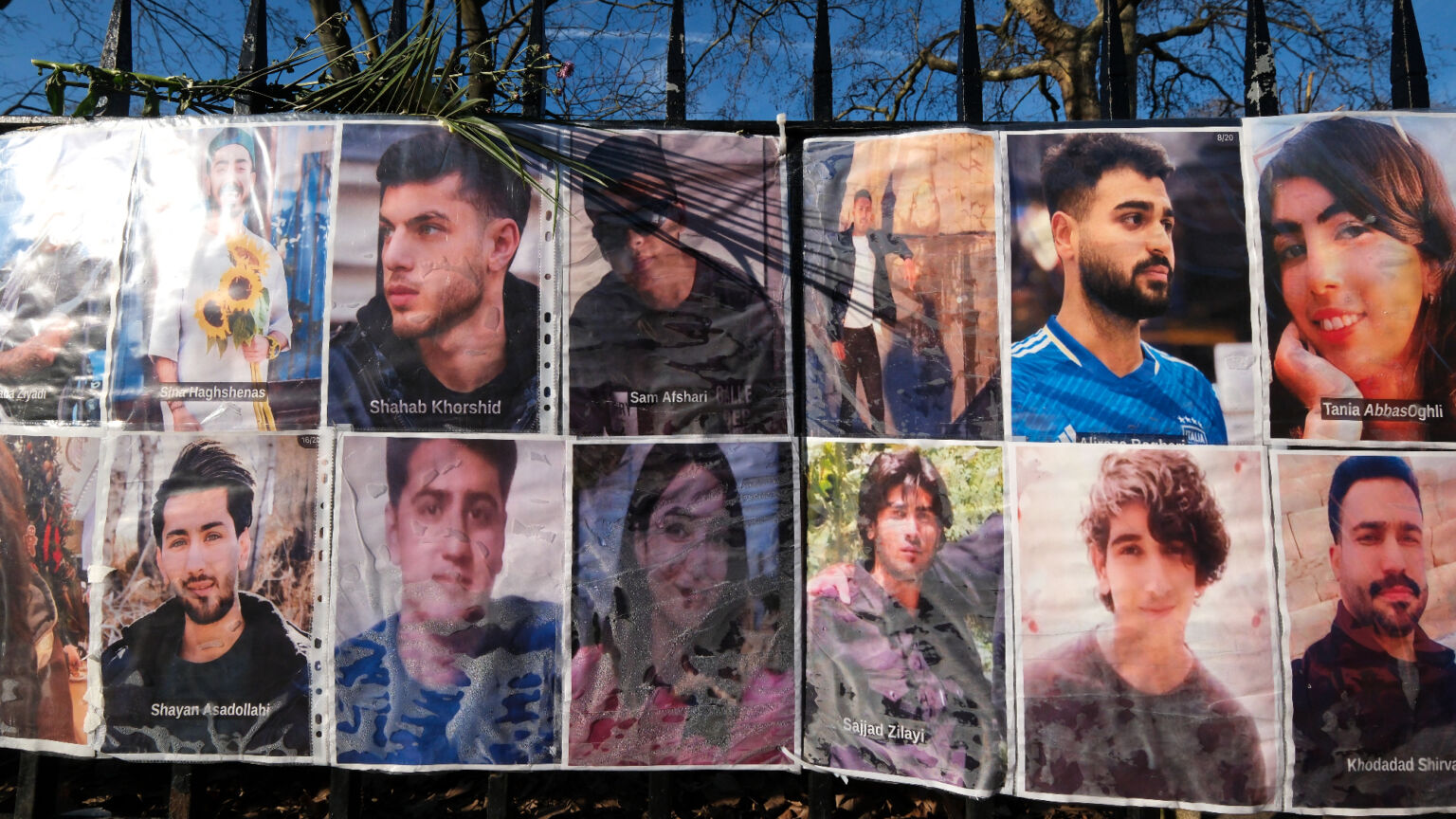
There is something slightly otherworldly about watching 30 police officers prepare to dismantle temporary plywood walls covered with the faces of young Iranian men and women protesters massacred by their own government just a few months ago.
I arrived at the memorial outside the Islamic Republic’s embassy in Knightsbridge late afternoon on Friday to find five or six large police vans emptying themselves on to the pavement opposite. A senior officer approached the 10 or so Iranian protesters to deliver the news: the memorial wall – featuring handwritten messages, posters and the carefully arranged photographs of some of the tens of thousands of people murdered by the regime whose embassy stands just yards away – was to be removed. All of it. Right now. They had had their orders.
The protesters had maintained this memorial with extraordinary care. Mahan, its principal organiser, had been at the site virtually around the clock since January – four months of continuous vigil, sleeping there, guarding it against attacks, refusing to abandon the faces of his countrymen to our country’s indifference.
One of the protesters, Mary, was already making her case to the officer in charge. She had been in ongoing discussion with someone at the council and had not yet received a formal written response. I decided to interject, for whatever it was worth – probably not much. I pointed out that whatever authority the police were acting under, the obvious question was whether there was any meaningful obstruction to the highway, and clearly there wasn’t. The combined effect of these remonstrations was eventually sufficient. After a lot of back-and-forth and a call to the superintendent who had apparently ordered the removals, the officer overseeing the operation granted the Iranians a temporary reprieve, and the police, one by one, looking rather more indifferent now, filed back into their vans.
But the following morning, the police were back. The wooden hoardings were forcibly removed. And Mahan was arrested.
This did not come from nowhere. In the brief few months the protesters have been opposite the embassy, they have come under sustained pressure – permitted hours curtailed, the structure of the protest repeatedly scrutinised, even the playing of music challenged. It is worth setting those few months against what the Metropolitan Police have tolerated for over two years on the streets of London with the pro-Palestine protests: crowds chanting ‘Globalise the Intifada’, ‘From the River to the Sea’ and ‘Khaybar, Khaybar ya Yahud’ (an Arabic battle cry calling for the massacre of Jews) have been allowed to march unimpeded through the capital week after week. Not to mention countless violent incidents against other members of the public and the police, too.
Counter-protesters peacefully holding signs reading ‘Hamas are terrorists’ have been repeatedly arrested and even prosecuted for breaching the peace. And in one incident, Gideon Falter, chief executive of the Campaign Against Antisemitism, was stopped by a Met police officer from crossing a public road, and told that his presence, described by an officer as being ‘quite openly Jewish’, risked being inflammatory.
That two-year tolerance has undoubtedly contributed to a very different climate in the UK, felt most acutely by Jewish and Iranian communities. Less than a week ago, an arsonist attacked the Iranian memorial wall on Limes Avenue in Golders Green – part of a wave of violence targeting Jewish and Iranian dissident sites across north London. The wall itself survived, but a wooden display case was burned and photographs were charred. Community members have since been sleeping in their cars beside it at night because, as one of them put it, they do not feel the memorial site is safe.
Two days after that, two Jewish men were subjected to a frenzied knife attack on Golders Green Road. They were stabbed repeatedly in the street, and were lucky to escape with their lives, in what was declared a terrorist incident and suspected attempted murder. The government has since raised the national terrorism threat level to critical. On Thursday, prime minister Keir Starmer stood up and promised more muscular action against the pro-Palestine protests.
On Friday evening, one day after Starmer’s announcement, that muscularity found its first expression outside the Iranian embassy – not against those chanting for the killing of Jews, but against Iranians protesting the horrors of the Islamic Republic, the very regime that funds, arms and promulgates the extremism Starmer had just pledged to face down. The Met cleared away a memorial maintained by a handful of grieving diaspora Iranians, while the embassy of the regime that killed their relatives continues to operate freely on British soil. That embassy represents a government that funds proxy militias across the Middle East, that supplies the drones used to kill Ukrainians, that rapes female prisoners before executing them, and that British counter-terrorism investigators strongly suspect of orchestrating the very arson campaign currently terrorising north London.
This is what muscular action looks like in practice. This is what the police consider their most pressing priority in the wake of Golders Green and the prime minister’s words.
The Iranian diaspora occupies a stunningly awkward position in the official British imagination. For a constellation of reasons, they are just not the right kind of oppressed and their oppressors still aren’t quite the right kind of oppressors. We seem to have far more to say about Trump than about a regime that massacres thousands of its own citizens and hangs children from cranes. When Iranians march through central London carrying pictures of blinded and executed girls, they receive a fraction of the media coverage granted to other causes. When their memorials are attacked, the news cycle barely registers it. And when police arrive to enforce what arsonists had attempted in Golders Green just days before, there is no outcry from the organisations that have spent years insisting the right to protest is non-negotiable.
And look what was torn down. Pictures of victims of the Iranian regime. Of Mahsa Amini, 22 years old, killed for not covering her hair. Of Sarina Esmailzadeh, 16, beaten to death at a protest. Of the thousands imprisoned in 2019, hundreds of whom were subsequently executed. The wall was a very dignified act of witness – the kind of thing a civilised society ought to protect.
Since the Islamic Republic began massacring its own people, the Iranian community here has been asking a simple question: whose side are you on? The answer from the British state was writ large in the hoardings taken down on Saturday and the young man led away in handcuffs.
Max Sadie is a photographer who has been documenting the Iranian diaspora and its protest movement in London.

spiked is funded by readers like you. Only 0.1% of regular readers currently support us. If just 1% did, we could grow our team and step up the fight for free speech and democracy.
Become a spiked supporter and enjoy unlimited, ad-free access, bonus content and exclusive events – while helping to keep independent journalism alive.

Two things can be true at once. One, that those regular, relentless ‘pro-Palestine’ demos that pose as rallies for peace are hotbeds of Jew hate. Two, that banning the so-called hate marches would do nothing to solve Britain’s anti-Semitism crisis.
The question of what to do about the hate marches has inevitably resurfaced in the wake of the Golders Green atrocity in which two Jewish men were stabbed in a suspected terror attack. Although this was merely one incident in a sustained campaign of terror that has been waged against Britain’s tiny Jewish community since 7 October 2023, pretending there is no problem is no longer sustainable.
Keir Starmer, who once accused critics of the marches of ‘sowing hatred and mistrust’, said last weekend that there may be ‘instances’ where it is appropriate to prevent Palestine marches from taking place. ‘Tougher action’ would also need to be taken, the UK prime minister said, against chants such as ‘globalise the intifada’. Conservative leader Kemi Badenoch, meanwhile, has called for a ‘moratorium’ on the demos, which she says are ‘used as a cover to promote violence and hatred against Jews’.
At this stage, to pretend that these protests and the movement behind them are totally unproblematic is to engage in wilful blindness. This is a movement that embraces chants calling for ‘intifada’ (referencing violent terror attacks against Israeli Jews) and the erasure of the world’s only Jewish state (‘from the river to the sea’). The Arabic war chant ‘Khaybar, Khaybar, ya yahud!’, threatening the slaughter of Jews, is also a staple on these so-called peace marches. On every demo of a certain size, you will see placards proudly displaying overt anti-Semitism, usually branding ‘the Zionist entity’ as demonic, its leaders as the puppeteers of world affairs, and Jews as bloodthirsty baby-killers.
What’s more, the right to protest is not absolute. Not every restriction placed on a protest is an attack on free expression. Central London would struggle to function if police were not able to impose some conditions on the location, frequency and duration of demos, and to ensure protests are not used as thinly veiled forms of intimidation. Nor should the ‘right to protest’ be extended to otherwise illegal activity, whether that’s blocking roads, or engaging in vandalism or violence.
Even with those caveats, though, it is always better to err on the side of free expression – to allow people to express views that society finds offensive or objectionable. Hateful, bigoted and even fascistic speech should not be silenced by the state, either by bans on certain protests or by making arrests for hate speech. Whenever the authorities are empowered to police ‘hate’, there is no telling what it could soon become illegal to say or protest against. In a nation where over 30 people are already arrested every day for ‘grossly offensive’ speech online, the police hardly need any more encouragement to limit people’s expression.
It’s not as if the British authorities aren’t already cracking down on some pro-Palestine protesters. Take the Labour government’s proscription of Palestine Action as a terrorist group, which makes it illegal to say, ‘I support Palestine Action’. There is no doubt that Palestine Action is a genuinely menacing outfit. Four of its activists were found guilty today of criminal damage, one of grievous bodily harm for shattering a police officer’s spine with a sledgehammer. But we must make a sharp distinction between words and violence. And even the threat of arrest and prosecution under the Terrorism Act has not deterred pro-Palestine types from declaring their support for Palestine Action. At least 2,400 arrests had been made as of November 2025 following Palestine Action’s proscription, the main achievement of which has been to make martyrs out of scumbags.
We should, of course, note the outrageous double standards of those who only ever pipe up about free expression when it involves the right to yell for intifada. Green Party leader Zack Polanski, who cheered the state’s persecution of comedy writer Graham Linehan, has accused Starmer of threatening ‘authoritarian restrictions’ on protest. But the flaming hypocrisy of the anti-Israel zealots does not invalidate their right to speak their minds, no matter how hideous the content.
The only way to challenge bigotry is by confronting it head on, by exposing it to sunlight, by defeating it politically. A moratorium on the hate marches may seem like a quick, easy fix, but it doesn’t begin to scratch the sides of the hatred that is now festering in our midst.
The task of challenging the new anti-Semitism is far, far too important to be left to a police crackdown.
Fraser Myers is deputy editor at spiked and host of the spiked podcast. Follow him on X: @FraserMyers.
Politics
The House | The Supported Housing Act is welcome progress, but the government must go further


4 min read
We must not let what could be a landmark piece of legislation be a missed opportunity.
Last month, I spoke at the launch of Emmaus UK’s Rebuilding Lives report – peer-led research carried out with, and by, people who have experienced homelessness and now live in supported housing. Their testimony was powerful and timely: this is a high-stakes moment for supported housing, and one we must get right.
Supported housing is perhaps easy to overlook until you hear about its impact from the people who know best. At the launch, I heard directly from residents about what it means to them: a stable base from which to rebuild, a sense of purpose, community, and belonging. One resident described how the work opportunities and activities at their Emmaus community had transformed their mental health in ways that simply having a roof over their head never could. That is what good supported housing does. It helps people to heal, recover, and rebuild their lives.
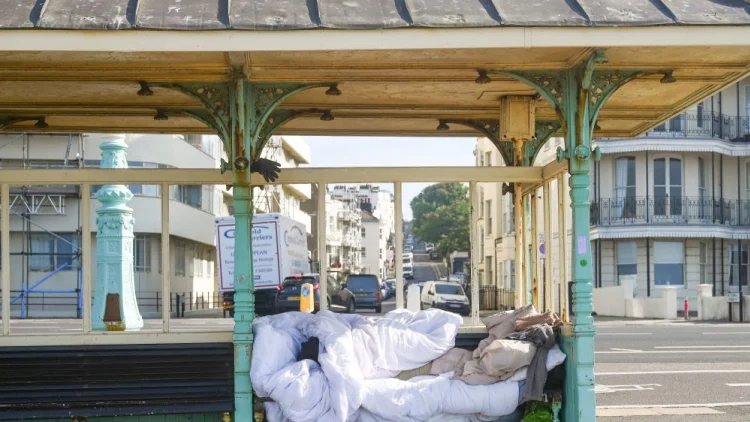
The Supported Housing (Regulatory Oversight) Act is introducing the most significant reform to this sector in a generation – new national standards, a licensing regime, and changes to Housing Benefit. At the same time, rough sleeping is at record levels, one in three supported housing providers closed schemes last year due to funding pressures, and thousands of people are trapped in temporary accommodation with nowhere suitable to move on to.
This is a critical moment for supported housing that has the potential to safeguard the delivery of quality provision for generations to come – but only if we can get implementation right.
There has been welcome progress. The government has just published its long-awaited consultation response on implementing the Act, which shows that some genuinely important concerns have been listened to.
The scheme definition has been amended so that dispersed housing providers won’t face a separate licence application for each postal address. The list of exemptions for providers already regulated elsewhere has been expanded. Local authorities have lost the ability to impose discretionary licensing conditions, preventing a damaging postcode lottery of requirements. And the ‘local need’ standard has been clarified to exclude local connection tests – which, as the Rebuilding Lives report highlights, can actively block access to support for people who need it most.
However, some notable gaps remain, and if left unaddressed, they risk turning a landmark piece of legislation into a missed opportunity. Residents and providers are both clear that good quality supported housing is about much more than just a roof over someone’s head. Yet the national standards still do not fully reflect what drives recovery: purposeful activity, community, and flexibility of stay.
The two-year intended duration for transitional accommodation risks being read as a fixed ceiling rather than a guide. There is still no standardised methodology for local needs assessments, or a nationally set licence fee rate for providers to pay. And cost-cutting motivations could still permeate local licensing decisions, particularly with local authorities facing a continued subsidy loss when reclaiming Housing Benefit from national government for supported housing providers who are non-registered. These areas need addressing to achieve a fair, consistent, and person-centred system.
Another glaring omission is funding. With many supported housing providers already under financial pressure, layering new compliance burdens on a sector with no transitional support is a serious risk. Providers may be forced to divert resources away from frontline support simply to evidence that they are delivering frontline support.
On resident protection, the government has confirmed a three-month improvement period before licence refusal. This is welcome, but only half the six months organisations, including Emmaus UK, called for. Guidance will be issued on re-housing residents where schemes close, but guidance alone does not guarantee outcomes. For people who have experienced homelessness, the statutory rehousing duty may not apply. Without robust safeguards, licence refusal could lead to homelessness, which would be a tragic unintended consequence of the Act.
And none of this works without affordable homes for residents to move on to after supported housing: an average gap of £200 a month between local housing allowance and median private rents traps people in supported housing long after they are ready to leave, while we urgently need to work toward 90,000 social homes built per year.
The message from residents and providers is clear: we know what good quality supported housing looks like. The government has the foundations in place – now it needs to go further.
Paula Barker is the Labour MP for Liverpool Wavertree and Co-Chair of the All-Party Parliamentary Group on Ending Homelessness
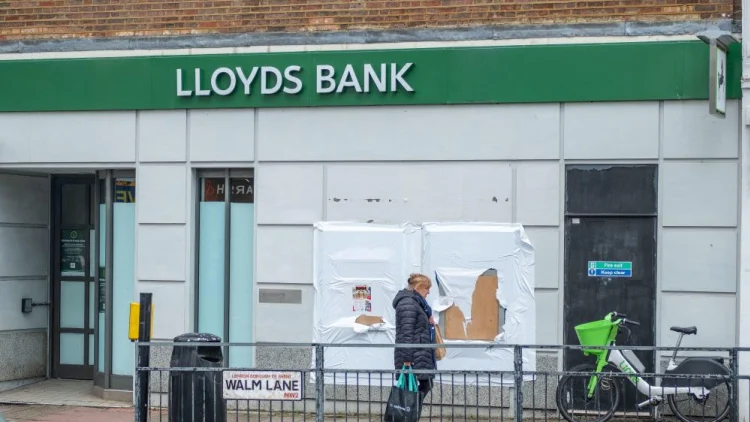

Today, nearly 50 Parliamentary constituencies have no bank branch left (Alamy)

3 min read
Since 2015, more than 6,600 bank branches have closed, with some communities losing over 90 per cent of their network. Today, nearly 50 Parliamentary constituencies have no bank branch left, and more than 90 are down to their last one.
For many people, that is not just an inconvenience. It has meant losing the ability to bank at all. In coastal and rural communities such as Hayling Island or towns like Emsworth in my Havant constituency, the reality is straightforward: if you cannot bank online and cannot easily travel elsewhere, you are effectively cut off.
The last Conservative government took an effective and important step in response. The Financial Services and Markets Act 2023 legally mandated access to cash and supported the rollout of banking hubs, a single shared space where multiple banks operate on a rota basis. That was a good start and is already making a big difference. LINK, the organisation responsible for assessing local provision of hubs, has already carried out more than 1,600 community assessments, leading to 276 banking hubs being recommended and delivered.
But the current framework does not go far enough. It defines the problem too narrowly – solely around access to cash. But this is not the same as access to face-to-face banking.
Being able to withdraw or deposit money is only part of what people need. Banking is also about resolving a blocked card, fixing a failed payment, getting help after fraud, or simply speaking to someone when something has gone wrong. All of these are everyday problems raised by constituents to their MPs from across the House.
In particular, there are now over three million cases of banking and payment fraud each year, and the majority begin online. When something does go wrong, being able to speak to someone face-to-face can make the difference between stopping fraud early and losing life savings.
According to the Financial Conduct Authority’s Financial Lives Survey, 3.3m people in the UK do not use online banking. More broadly, a significant minority still relies on physical services, particularly older people, small business owners, people living in rural, suburban and coastal communities, and those who are less digitally confident.
The current rules do not fully reflect this. Under the existing framework, communities are often judged to have sufficient banking provision (and therefore won’t get a banking hub) if there is access to cash – for example, a Post Office or ATM within one kilometre of the high street – despite no access to wider in-person banking services.
As a result, some communities still fall through the cracks: they have access to cash, but not wider banking services. This is not a failure of the model. Banking hubs are working. Instead, it’s a gap in the design, which now needs to be closed.
That’s why I introduced the In-Person Banking Services Bill before Parliament prorogued. It built on the existing framework by ensuring that access to face-to-face banking services, not just access to cash, were put on a statutory footing for the first time. I hope the government will support my Bill – or its aims – in the new session of Parliament, for example via the next Financial Services Bill.
This is not about reversing progress or resisting digital innovation. Online banking works well for many and will continue to do so. But a modern financial system must work for all its users. That means ensuring that those who need in-person support are not left behind as the system evolves.
Securing access to cash was an important first step – and a Conservative success story. Now we need to ensure that people can access in-person banking – reliably, locally, and when they need it. Because no one should be excluded from managing their own money simply because they cannot do it online.
Alan Mak is Conservative MP for the Havant Constituency and a former Treasury minister
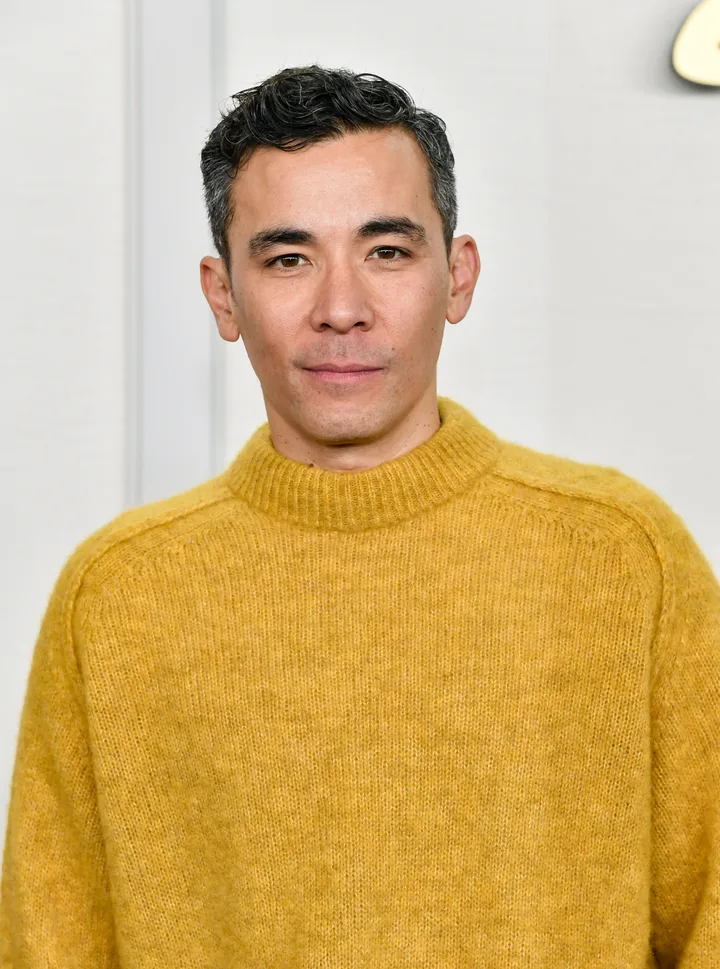
US actor Conrad Ricamora has spoken out after his character in The Devil Wears Prada 2 was completely cut from the final film.
The How To Get Away With Murder star was originally supposed to play the roommate of Anne Hathaway’s Andy in the new sequel, which arrived in cinemas last week.
In the lead-up to the release, Variety reported that all of Conrad’s scenes had been cut, citing “sources” who claimed that test audiences were not sold on his character, or why Andy would have needed a roommate at the stage of her life that she was at.
Conrad later confirmed this to be the case, posting pictures of himself and his Oscar-winning co-star on set on Instagram.

“Just like the rest of you, I can’t wait to see The Devil Wears Prada 2 this weekend,” he enthused.
“Filming The Devil Wears Prada 2 was one of the best working experiences of my life. Getting to work with the icon Anne Hathaway and the genius [Aline Brosh McKenna, the screenwriter of The Devil Wears Prada and its sequel] all the while being directed by the steady hand of David Frankel will forever be on the highlight reel of my life.”
“However, in the end, my character didn’t make sense in the grand scheme of the film (something about me being too sexy and hott and my muscles being too big… story of my life),” he joked.
Though Conrad’s scenes were eventually scrapped, there is a nod to him left in The Devil Wears Prada.
In Andy’s apartment, merchandise for the hit play Oh Mary! can be seen, in which Conrad originating the role of Abraham Lincoln, earning him a Tony nomination.
Meanwhile, an extended scene featuring Euphoria star Sydney Sweeney was also revealed to have been axed in the lead-up to The Devil Wears Prada 2’s release.
The Devil Wears Prada 2 is in cinemas now. Read HuffPost UK’s review of the film here.

!function(n){if(!window.cnx){window.cnx={},window.cnx.cmd=[];var t=n.createElement(‘iframe’);t.display=’none’,t.onload=function(){var n=t.contentWindow.document,c=n.createElement(‘script’);c.src=”//cd.connatix.com/connatix.player.js”,c.setAttribute(‘async’,’1′),c.setAttribute(‘type’,’text/javascript’),n.body.appendChild(c)},n.head.appendChild(t)}}(document);(new Image()).src=”https://capi.connatix.com/tr/si?token=19654b65-409c-4b38-90db-80cbdea02cf4″;cnx.cmd.push(function(){cnx({“playerId”:”19654b65-409c-4b38-90db-80cbdea02cf4″,”mediaId”:”dd823778-08ec-4ae2-97dd-623358fa5856″}).render(“69f9df93e4b055e1a496c76d”);});
Let’s get this out of the way: no, I am not as good at reviewing sticky toffee puddings as STP Reviews. I have neither the expertise nor the drive to assess 60+ of the cakes, and certainly have not refined a marking system so good it’s earned me tens of thousands of fans.
But I do like the dessert, and I’m generally strict about baked goods (woe betide anyone who gets me started on fudgy vs cakey “brownies”). I demand plenty of glossy, rich, buttery sauce, a moist sponge, and a molasses-y mass of dates.
Which might lead some to wonder why I tried a microwave STP recipe last week. All I can say is that it was late, the recipe had hundreds of five-star reviews, and I craved it. Even Nigella has “emergency” baked goods for such urgent cases.
How do you make a microwave sticky toffee pudding?
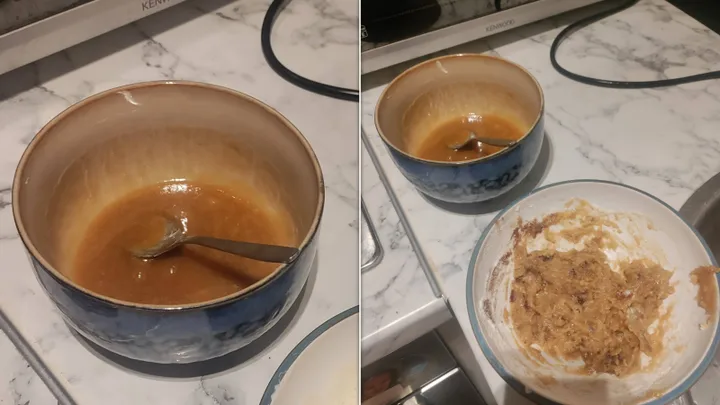
I followed the New York Times’ recipe. It starts with a mug of melted butter, to which you add brown sugar, salt, and cream before zapping for 30-second increments: that’s your caramel sauce.
Mine took me about a minute. It’s important to really thoroughly stir the sauce between microwave sessions, or else it could become gritty and split.
The recipe asked for dates, butter, cream, and baking soda to be mixed in a bowl next. I microwaved these before mashing them; the dates turn into an earthy-smelling puree remarkably quickly.
(Side note: they make a great caramel if you’re ever in a bind or can’t have dairy).

Then, add flour, cinnamon, sugar, and salt, and microwave the lot for about 45 seconds.
Pour the thickened sauce over the cake, add cream if you like (I do), and you’re done!

The final verdict
I was impressed by how quickly the whole job was done. It took me 10 minutes, as promised. The process is both easy and gloopily satisfying (the dates in particular were fun to make).
It’s not gorgeous to look at, but come on: who cares? This is a 10 pm, over-the-kitchen-sink eat if ever I saw one.
The standout is the caramel sauce. The recipe authors said it’d thicken as the cake cooked, which it did; by the end, it was velvety, thick and smooth. If you’re ever in a dessert-mergency, I do recommend making that sauce and smothering anything vaguely cake-y in it.
That said, I don’t believe the sponge in an STP should be relegated to the role of sauce carrier, and this one felt that way. The cake was a little rubbery and dry; its crumb was indistinct and far from tender. Still, nobody else said that in the comments, so maybe I left mine in too long.
Regardless, for ten minutes and a microwave, I was pretty wowed. It hit a lot of the marks of a great sticky toffee pudding (luxurious sauce, date-y stickiness, and rich butter flavour), and it more than exceeded my expectations.
It’s not going to score highly on a pro’s account, I reckon. But when you’re in a rush and/or have a craving, its value rockets to at least an 8/10. Reviewers have given it five stars for good reason.
Every year, the Met Gala gathers together some of the most famous faces from across the world of music, cinema, sport and, of course, fashion for a star-studded fundraiser in aid of the Metropolitan Museum Of Art’s Costume Institute.
This year’s event was held on Monday night, and proved to be as A-list as ever.
Co-chaired by Beyoncé, Nicole Kidman, Venus Williams and, as ever, Anna Wintour, the themed dress code of 2026’s Met Ball was “Fashion Is Art” – really allowing the famous guests to think outside the box and let their imaginations run wild when putting together their red carpet looks.
And what do you know – some of them actually did.
On that note, we’ve pieced together some of the must-see looks from this year’s Met Gala, from some of the biggest stars on the planet…
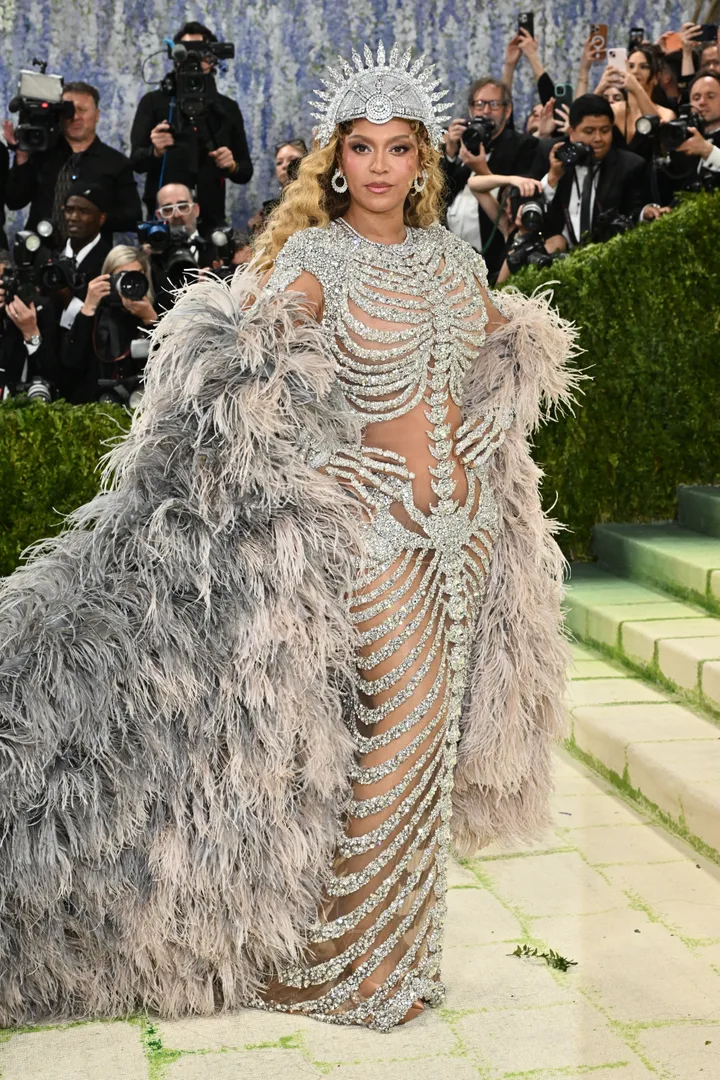
Beyoncé

As one of the organisers of the Met Gala this year, Beyoncé will have known that all eyes were on her on the red carpet.
Leaning into the elaborate theme, the Break My Soul singer sported this glittering, skeletal-inspired look on the red carpet, where she was joined by her husband Jay-Z and eldest daughter Blue Ivy Carter, marking the 14-year-old’s Met Ball debut.
Sam Smith

Sam Smith has become renowned for their dramatic approach to fashion in recent history, and this year’s Met Ball really afforded them the chance to go all out.
Channelling Norma Desmond, the British star gave us old school Hollywood glamour in a floor-length black dress complete with bejeweled adornments, billowing sleeves and a feather headpiece.
Madonna

Madonna’s Met Gala look was a real departure from what we’re used to seeing the Queen of Pop in, opting for something more gothic, dark and, frankly, weird that we’re totally here for.
The Bring Your Love singer’s ensemble was directly inspired by a Leonora Carrington painting, in one of the night’s more literal interpretations of “Fashion Is Art”.
Janelle Monáe
Janelle Monáe brings it every single Met Ball, and a theme like “Fashion Is Art” was always going to be in their wheelhouse.
The 10-time Grammy nominee mixed the old and new with their imaginative look, which incorporated elements of nature and technology, merging moss and butterflies with wires and microchips.
Luke Evans

Dressed in head-to-toe leather, Luke Evans’ look was an obvious nod to Tom Of Finland.
Speaking to Entertainment Tonight on the Met Ball red carpet, the Welsh actor said that “playing such an iconic character on stage” in the current Broadway revival of The Rocky Horror Show made him want to put a “twist” on an “iconic gay artist who has influenced so much”.
Gwendoline Christie

Former Game Of Thrones star Gwnendoline Christie has never been one to shy away from leaning into a Met Gala theme.
On Monday night, her look consisted of a massive feathered hat and a floor-length red dress nodding to faded glamour – but our favourite part of the whole ensemble was the hand-held mirror, adorned with a recreation of her own face.
Katy Perry

John Salangsang/Shutterstock
Perhaps inspired by her own trip to space last year, Katy Perry’s Met Gala look consisted of what appeared to be a fencing mask, with a shiny and opaque face covering on the front.
As she made her way down the red carpet, Katy revealed that the mask also swung open, adding even further to its futuristic elements (and putting us slightly in mind of a Star Wars villain).
Emma Chamberlain

We’re going to be very honest and say that content creator Emma Chamberlain was not exactly the person we thought was going to turn it out the hardest at Monday night’s event – but you can’t argue with this look can you?
In fact, the influencer may have just given us our favourite Met Gala look of 2026, with the dripping paint effect creating an optical illusion that really served the night’s theme.
Chase Infiniti
Fresh from her Oscar nomination and leading performance in the new Handmaid’s Tale spin-off The Testaments, Chase Infiniti’s Met Gala debut was also one of our favourites from this year’s event.
The One Battle After Another star’s colourful dress almost put us in mind of painting-by-numbers (in the best way!), with its graphic design.
Sarah Paulson

On its own, Sarah Paulson’s expansive, red carpet look would have been show-stopping enough, putting us in mind of a presidential ball as much as an event like the Met Gala – but that dollar bill blindfold accessory really gives it something extra.
Sadly, even though Madonna was there too, we didn’t get a recreation of one of our favourite moments in Met Ball history.
Ben Platt

One of the more literal “Fashion Is Art” ensembles came from Ben Platt, wearing a colourful suit inspired by one of Georges Pierre Seurat’s most famous works.
The Seurat painting, of course, was also the basis of the iconic Stephen Sondheim production Sunday In The Park With George, which makes Tony winner Ben wearing it all the more fitting.
SZA

SZA’s Met Gala look consisted of a layered gown in this absolutely gorgeous yellow colour, as well as a floral headpiece and some beaded face jewellery for the evening.
Our favourite part of the whole look, though, was just how much of a blast the Good Days singer was clearly having wearing it.
Lisa

Extra body parts always go down well on the Met Ball red carpet, and Lisa’s look was no exception.
The jury’s out on whether “Fashion Is Art” really came into play here, but we just think the Blackpink and White Lotus star looks really cool, to be honest.
Skepta

Another big name doing the UK proud on the Met Gala red carpet was Brit Award nominee Skepta.
The rapper made a big impression in this matching white co-ord, which he later revealed was adorned with embroidery inspired by his own tattoos, as well as his own song lyrics.
Nicole Kidman

Listen, Nicole Kidman never misses on the red carpet, but given how imaginative some people were with their looks, this feels a little out of place.
We’ve mostly mentioned it in this round-up so we can include her explanation for it.
“Fashion is art and I wanted something red, because I wanted to embrace the way in which red has been used in art through the years,” she apparently claimed.
Kim Kardashian

Kim Kardashian’s latest Met Ball look consisted of a molded bodysuit in an eye-catching shade of orange.
Again, it wasn’t exactly our favourite outfit of the evening, but given just how synonymous with the Met Gala that Kim K has become, we just had to include her, alright.
Heidi Klum

This year, Halloween came early, with Heidi Klum unveiling one of her trademark dramatic transformations six months before her usual spooky season bash.
For the 2026 Met Ball, Heidi transformed herself into a living artpiece, paying homage to 19th century sculpture with the aid of prosthetics and unconventional materials to deliver one of the night’s most talked-about looks.
Bad Bunny

And speaking of prosthetics – Bad Bunny’s look was certainly an unconventional one, too.
The recent Super Bowl headliner walked the red carpet as an older version of itself, which it’s been pointed out was a probable nod to “The Aging Body”, a key element of the Met’s Costume Institute’s exhibit this year.
Rihanna

Rihanna’s position as Queen of the Met Gala is safe for another year.
Her latest Met Ball look was another mix of the old and new – offering an unconventional silhouette and undoubtedly the night’s most intricate adornments.
We absolutely love what she did with her hair, too, with her partner A$AP Rocky also joining her on the red carpet later on, sporting a baby pink overcoat and tuxedo.

Today’s Quordle Answers and Hints for May 06, 2026

Valve Releases Design Files For Its Out-Of-Stock Steam Controller

MG ups its game as sleek IM6 takes on heavyweight rivals

Manchester United reach agreement with Casemiro over contract clause amid transfer speculation

US brings back mandatory military draft registration

Steven Gerrard disagrees with Gary Neville over ‘shock’ Chelsea and Arsenal claim | Football

The U.S. is Unknowingly Building Bitcoin’s Biggest On-Ramp!

#1 Leverage Analysis – Concept – Financial Management ~ B.COM / BBA / CMA

IRON CASH 3 (AKI & PAWPAW) – Nigerian Movies 2026 Latest Full Movies | OSITA IHEME, CHINEDU IKEDIEZE
-

 NewsBeat2 days ago
Channel 5 – All Creatures Great and Small series 7 new post
-
 Tech4 days ago
Trump’s 25% EU auto tariff breaches Turnberry Agreement that also covers semiconductors and digital trade
-
 Business6 days ago
Tesla Officially Registers Elon Musk’s Stock: What Investors Need to Know
-
 Sports4 days ago
Paul Scholes issues Marcus Rashford reality check as agreement emerges over Man United star
-

 Business7 days ago
Barclay Brothers Avoid Bankruptcy: HSBC Drops High Court Petitions After IVA Deal
-

 Entertainment4 days ago
Met Gala 2026 Rumored Guest List Is Turning Heads
-

 Entertainment6 days ago
Celebrities Who Are Attending the 2026 Met Gala Event
-
 Entertainment6 days ago
Insider Claims Reason Behind Key & Peele Split
-

 Tech6 days ago
Texas Instruments made a new flagship graphing calculator: the TI-84 Evo
-

 Crypto World6 days ago
Meta (META) starts stablecoin payout to creators in Circle’s USDC on Polygon, Solana via Stripe
-

 Business5 days ago
Two Powerball Tickets Split $143 Million Jackpot in Indiana and Kansas
-

 Business6 days ago
Strait of Hormuz Remains Heavily Restricted on April 29 Amid Iran Conflict
-
Business5 days ago
Strait of Hormuz Blockade Persists Amid US-Iran Standoff, Sending Oil Prices Soaring
-

 Entertainment4 days ago
Kylie Jenner Hit With Second Lawsuit From Ex-Housekeeper
-
Business2 days ago
Winning Numbers Drawn as Jackpot Resets to $20 Million
-

 Sports6 days ago
Saudi Arabia set to withdraw LIV Golf funding after 2026 season, per reports
-
 Crypto World5 days ago
CoreWeave (CRWV) Stock Climbs 8% Despite $45M Insider Share Dump
-
 Crypto World6 days ago
Securitize and Computershare Enable Tokenized Equity Issuance for Over 25,000 U.S.-Listed Stocks
-

 Sports4 days ago
Cavaliers vs. Raptors Game 6 live score, updates, highlights from 2026 NBA playoffs first-round series
-
 Sports4 days ago
David Benavidez responds to team Canelo saying the fight will never happen
You must be logged in to post a comment Login