
Politics
Brandon To: A country that sacks heroes will never beat crime


Brandon To is a Politics graduate from UCL and a Hong Kong BN(O) immigrant settled in Harrow
When Mark Hehir, a London bus driver, helped chase down a thief who had just snatched a passenger’s necklace, he probably assumed he was doing the right thing.
He was wrong. At least according to modern Britain.
Instead of thanks, Hehir was sacked by Metroline. His crime? “Excessive force” while stopping a fleeing robber.
Let’s be clear about what this means: Stopping a thief is now, apparently, too much.
So what is acceptable? A polite request? A strongly worded suggestion? Perhaps a hymn, sung gently, in the hope that divine intervention persuades the criminal to hand the necklace back?
This case would be funny if it weren’t so revealing.
A new chilling message is now being sent to the public: do not intervene. If you help, you may be punished. If you step in, you may lose your job. If you act decisively, you may be accused of doing more harm than the criminal himself.
Is it any wonder that bystanders look away?
TfL staff are told not to challenge fare evaders. Passers-by hesitate before helping victims. Even the police, in countless videos circulating online, appear reluctant to chase criminals, paralysed by the fear of complaints, and accusations that have little to do with justice.
Put it frankly, this is cowardice, dressed up as “compassion”.
Behind it lies a justice culture warped by liberal and “woke” ideology. In this worldview, criminals are endlessly contextualised, even sympathised with, as it’s always the “system” that failed them.
But who is there to sympathise with the victim? Or in this case, the hero who stood for them?
And heaven forbid if identity politics can be dragged into it. Suddenly, the act of stopping a thief is no longer about theft at all, but about race, systems, or abstract theories dreamed up in universities, far from the bus stop where the crime actually happened.
Against this backdrop, Kieran Mullan, the Shadow Justice Secretary, deserves credit for speaking up and standing with Mark Hehir. This is precisely what Conservatives should be doing — drawing a clear moral line and refusing to apologise for it.
But words are not enough.
If Conservatives are serious about restoring order, and about shedding the legacy of a government that was too weak and overly liberal on crime, then we must go further and be explicit about protection.
We should introduce clear legal safeguards for citizens who intervene, in good faith, to stop crime. If someone acts to prevent theft or violence, they should not later discover that the real punishment comes from their employer or a compliance department.
Employers who sack staff for intervening should be required to publicly justify their decision. Where dismissal occurs, it should be treated as a no-fault dismissal, with enhanced compensation. And if a company refuses to reinstate or explain itself, the state should step in. Not to micromanage, but to send a message: those who stand up for public order will never be abandoned.
This is how culture changes. Not through slogans, but through real actions.
At this point, defenders of the status quo raise a familiar objection: people don’t intervene because it’s dangerous. Criminals might be armed. It’s safer to do nothing.
But this argument collapses the moment one looks at reality.
Take the recently viral footage of thieves smashing a jewellery shop in Richmond in broad daylight. Dozens of people stood nearby. Not one intervened. Not one shouted. Not one tried to distract or deter. Most simply filmed.
I’m not suggesting reckless heroics. But shouting, calling the police, or trying to throw things at the thieves from a safe distance? Yes, they may not be immediately helpful, but at least we created pressure that might urge them to leave earlier. At least we tried hard, and fulfilled our civic responsibility.
The problem is not fear of weapons. The problem is a culture that has trained people to believe that any involvement is dangerous. That culture exists because, time and again, the heroes are punished.
Mark Hehir’s case lays this bare.
He should not be unemployed. He should be thanked. Better still, he should be held up as an example of civic responsibility, of what a noble Britishman should be like.
But of course, we won’t see a “good citizen” award from City Hall. Under a mayor like Sadiq Khan, we might have to be grateful that he’s not arresting Mark Hehir for “systematic injustice “, or whatever new jargons he and his team invented.
And Conservatives should not miss the moment.
This case exposes exactly what happens when a country becomes more afraid of offending criminals than protecting citizens. If stopping a thief is now “excessive”, then the system itself has become excessive. Excessive in weakness, and excessive in its contempt for common sense.
Britain deserves better. And Mark Hehir deserved a medal, not a dismissal.


Mint tea may have benefits for our digestive system, while passionflower tea can help us sleep.
And there’s some evidence to suggest that rooibos tea, a South African variety made from the fermented leaves of the Aspalathus linearis shrub, can help with everything from reducing inflammation to controlling blood sugar and boosting our gut health.
Green rooibos is made from the same leaves, but they’re unfermented.
Here are some of the potential health benefits of the caffeine-free tea:
1) It’s brimming with antioxidants
Green rooibos tea is the only source of aspalathin (which helps to maintain cell health), and it’s high in other antioxidants, like quercetin (potentially anti-inflammatory, anti-histamine, and immune-boosting), too.
Antioxidants help to protect our DNA from harmful free radicals. They may also assist in protecting against chronic illness, heart disease, and cancer.
A 2023 review found that drinking rooibos tea seemed to be linked to higher antioxidant levels in our bodies.
2) It could be good for our gut health
According to a 2024 paper, green rooibos tea appears to help to keep our guts moving.
It could also help the integrity of a single-cell gut layer, which helps us to absorb nutrients and keeps toxins and disease out.
3) It could help to manage inflammation
Inflammation isn’t always a bad thing. We need it to build muscle and recover from some illnesses.
But when inflammation becomes chronic and happens when the body doesn’t need it, it can lead to “inflammaging”. That can “contribute to conditions such as heart disease, type 2 diabetes, dementia, and frailty,” GP Dr Suzanne Wylie previously told HuffPost UK.
A 2021 paper said that rooibos tea might help to limit the growth of angiotensin converting enzymes (ACEs), linked to inflammation and high blood pressure.
4) It may help to manage blood sugar
Remember the rooibos tea-specific aspalathin we mentioned earlier? A 2023 paper suggested that it could help to explain why rooibos tea seemed to help control blood sugar levels in both healthy and at-risk individuals.
Still, more research is needed to work out how, why, and to what extent that’s true.
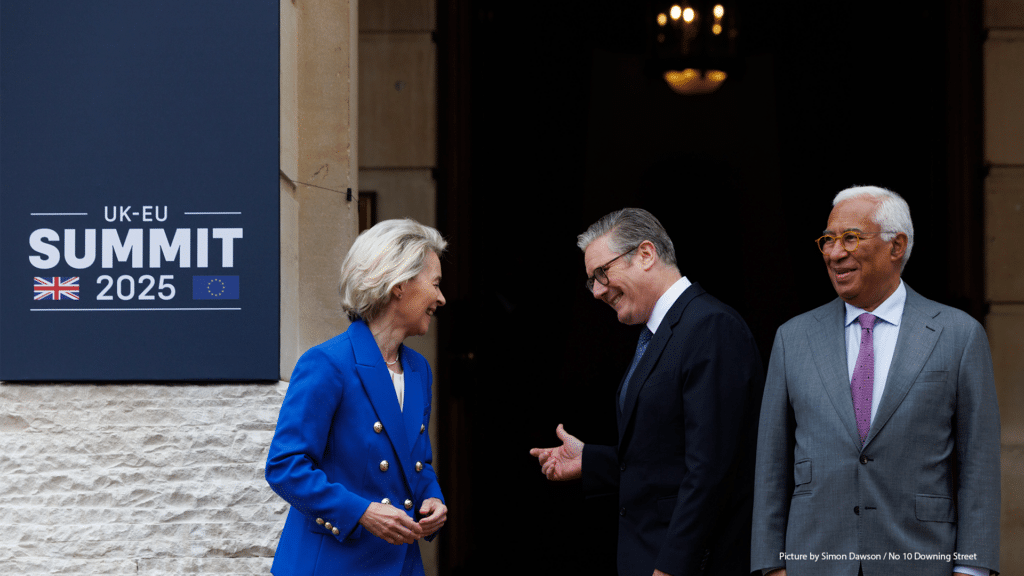
Jannike Wachowiak offers some insight into the EU’s perspective on UK-EU relations.
Brits spend an inordinate amount of time discussing what they want from the EU. They spend far less, however, pondering what the EU and its member states might want from them. This is perhaps understandable. Brexit has been a central fault line in British politics and has divided our political parties for more than a decade. Consequently, from the Malthouse Compromise to more recent calls for a customs union, the intended audience is often domestic. That said, this is hardly a recipe for a successful negotiation between the two sides.
So, where does the EU stand on all this? Perhaps the first thing to note is that the UK no longer features prominently on the EU’s list of priorities. European leaders simply don’t spend much time thinking about relations with the UK. The war in Ukraine, relations with the US and China, and the competitiveness of the single market have long replaced Brexit at the top of the council’s agenda.
A window of opportunity opened when Labour came to power in July 2024. There was genuine curiosity about the promised reset. However, European leaders quickly grew impatient over the perceived lack of clarity and drive from London. As ever, they felt the ball was in the UK’s court. That it was up to London to decide what it wanted and communicate this. This view still holds. As the commission’s chief spokesperson put it as recently as February, the forthcoming summit (presumably in July 2026) would be “the occasion to discuss with UK what, exactly they, have in mind, and how they propose to go about it.”
Partly, this is due to a sense that it should not be the EU’s responsibility to fix what the UK broke; partly, the EU’s institutions still remember past attempts at closer cooperation being rebuffed by the UK. Most significantly, the EU remains wary of offering a ‘privileged’ relationship to the UK which could then unravel established relationships with other third countries, such as Norway or Switzerland.
None of which is to say that the EU is not interested in closer relations with the UK. There is a recognition that times have changed since the TCA negotiations of 2020, and that the UK is an important partner in a more dangerous world. The commission’s 2024-29 political guidelines make it clear that the EU wants to strengthen relations ‘on issues of shared interest, such as energy, security, resilience and people-to-people contacts’.
The UK government might be well advised to focus on these areas. While talks are already underway on UK participation in the EU’s electricity market and youth mobility, cooperation on security and resilience remains, at present, underexplored. However, as in the case of the failed Safe negotiations, there is no guarantee of success even in areas of mutual interest. Nevertheless, both sides appreciate the need for cooperation. Importantly, the EU recently decided to leave the door ajar for UK companies to benefit from the €90bn loan for Ukraine.
Conspicuously absent from the Commission’s list of ‘shared interests’ is trade. More than five years into the application of the Trade and Cooperation Agreement, its most recent assessment maintains that it is a ‘very good’ agreement for the EU. This indicates a high threshold for reviewing the economic elements of the deal. What is more, the British Prime Minister’s expressed interest in exploring alignment in certain areas of the single market comes up against the EU’s red lines: no cherry-picking, and the need to maintain the balance of rights and obligations in agreements with other third countries. While the EU’s willingness to negotiate agreements on food and drinks and electricity shows some flexibility, it is unlikely that this will extend to further areas of the single market unless there is a wider discussion around freedom of movement and significant cohesion payments.
An additional difficulty is that the EU is currently discussing ‘Made in EU’ targets which might shut out certain British products and technologies from European supply chains. It will be up to member states (and the European Parliament) to define whether ‘Made in EU’ extends to trusted partners outside the single market.
While excluding the UK would be bad news for Europe’s resilience, there is no unified EU view. Some, like Germany, advocate more permissive conditions for a partner which they deem strategically important (‘Made with Europe’ rather than ‘Made in Europe’).However, others, like France, are pushing back – wanting to favour their own industries – or are simply less concerned by how a third country like the UK may be impacted.
All of which means the UK must invest time and resources in understanding the evolving priorities in Brussels and in member states. London needs to consider what contribution the UK can usefully make to strengthening Europe’s resilience and security. This would also make it easier to test British proposals in other areas, in dialogue with the EU and member states, ultimately increasing their chances of success.
By Jannike Wachowiak, Research Associate, UK in a Changing Europe.
This piece was originally published by the Fabian Society in their report Pressing reset: our relationship with Europe.

Protests across at least 10 cities have highlighted the harms of ‘touristification’.
Particularly through its reliance on aviation, the tourism industry is driving displacement, deepening housing crises and fueling climate breakdown worldwide.
Demonstrations were seen in Barcelona, Palma and San Sebastián (Spain), Belfast (Northern Ireland), Lisbon (Portugal), Malolos (Philippines), Marseille and Paris (France), Mexico City (Mexico) and Vienna (Austria).
Worldwide action
From marches and performances to blockades and direct actions, communities resisted the transformation of neighbourhoods into ‘playgrounds for the rich’.
Across the world, long-term residents are being priced out. Urban and coastal areas are also reshaped for tourists and multinational companies.
International tourism relies heavily on air travel, one of the fastest-growing sources of carbon emissions. Backed by cheap flights and expanding air routes, this model privatises public land, drives up rents and undermines local economies, pushing communities into increasingly precarious conditions.
Protesters stressed that touristification and aviation are intertwined crises, driven by a system that prioritises profit over people and the planet.
World Cup of dispossession
In Mexico, protesters denounced the impacts of large-scale events like the FIFA World Cup. They called it the “World Cup of dispossession”, promoting local displacement, private interests and megaprojects instead of human rights, such as housing, water and dignified work.
In Barcelona, Palma, San Sebastián, Belfast and Vienna, demonstrators called for an end to the expansion of short-term tourist accommodation. This includes listings on platforms like AirBnB, which they argue drive up housing costs and accelerate gentrification.
In Marseille, protests highlighted the social and environmental impacts of overtourism.
In Malolos, fisherfolk and community members opposed the construction of the new Manila International Airport, which is driving displacement and the loss of livelihoods.
‘Fewer planes, more homes’ was a slogan seen in Paris and in Lisbon, where protesters formed a red line to oppose the conversion of a city-centre building into a hotel.
Drawing a red line
Inês Teles, spokesperson for the global network Stay Grounded, said:
We need to draw a red line. We must stop airport expansion, reduce air traffic, limit short-term tourist accommodation and make housing a right, not a commodity. We are united in the fight for affordable, accessible housing for all and against the forces that profit from our homes, displace people and destroy our planet. Our communities and the planet are not for sale.
These actions took place during the Housing Action Days (23–29 March), a global week of mobilisation with over 150 actions in 96 cities, demanding housing justice on a liveable planet.
Featured image via Stay Grounded

Keir Starmer has shrugged off Donald Trump’s threat to leave Nato by defending the alliance and insisting Britain will not be joining the Iran war.
The US president told The Telegraph America’s membership within the organisation is “beyond reconsideration” after his allies refused to back his offensive in the Middle East.
Trump said: “I was never swayed by Nato. I always knew they were a paper tiger, and Putin knows that too, by the way.”
He expressed disbelief that his allies have not backed the US’s attacks, saying: “Beyond not being there, it was actually hard to believe. And I didn’t do a big sale. I just said, ‘Hey’, you know, I didn’t insist too much. I just think it should be automatic.
“We’ve been there automatically, including Ukraine. Ukraine wasn’t our problem. It was a test, and we were there for them, and we would always have been there for them. They weren’t there for us.”
“You don’t even have a navy,” the president said of the UK. “You’re too old and had aircraft carriers that didn’t work.”
Asked if he thinks Starmer should spend more on defence, the president said: “I’m not going to tell him what to do. He can do whatever he wants. It doesn’t matter.
“All Starmer wants is costly windmills that are driving your energy prices through the roof.”
But in a press conference on Wednesday, the prime minister made it clear that he still supports the defence alliance – and wrote off Trump’s attacks as “noise”.
He said: “Nato is the single most effective military alliance the world has ever seen, and it has kept us safe for many decades and we are fully committed to Nato.
“Whatever the pressure on me and others, whatever the noise, I am going to act in the British national interest in all the decisions that I make.
“That’s why I have been absolutely clear that this is not our war and we are not going to get dragged into it.
“I am equally clear that when it comes to defence and security and our economy future, we have to have closer ties with Europe.”
He confirmed that the government will soon announce a further summit with EU leaders as the UK works closer with its allies on the continent.

Chancellor Rachel Reeves has admitted she is “angry” at Donald Trump for starting the war in Iran.
Iranian troops have effectively closed the Strait of Hormuz ever since the US president decided to bomb Iran in late February.
Closing the major oil shipping lane has sent oil prices rising and rocked the global economy.
The president has attacked allies, particularly the UK, for not supporting his efforts.
He has called the Royal Navy “too old” and threatened to pull out of Nato after claiming the defence organisation has not given him “automatic” backing.
But Keir Starmer has held his own, reiterating on Wednesday that Britain would not be “dragged” into the conflict – while also warning that economic strains lie ahead.
Speaking to Radio 2′s Jeremy Vine, Reeves went further and said she was “angry” over Trump’s decision to bomb Iran.
She said: “I’m angry that Donald Trump has chosen to go to war in the Middle East – a war that there’s not a clear plan of how to get out of it.
“It’s why we didn’t want to enter this.
“Yes it will have implications for our economy, I get that.
“We are monitoring very closely what’s happening – trying to bring the oil and gas into the UK so that those supplies are there and get the prices down. We are monitoring the situation very carefully.”
“We are preparing – as you would expect me to be – for every single eventuality to make sure there alongside people, standing beside them, keeping costs down for everyone.”
The White House is trying to find an off-ramp to end the conflict and Trump claims Iran has asked for a ceasefire.
The president also told Reuters that the US will be “out of Iran pretty quickly” now Iran are supposedly “incapable” of using a nuclear weapon.
Iran has denied the claim and say the strait is “fully” under the control of the Islamic Revolutionary Guard Corps (IRGC).
Subscribe to the Commons People podcast
The HuffPost UK politics team take a look at the week in Westminster and the repercussions of the motions and personality clashes. Listen on Apple Podcasts, Spotify, Audioboom, Google Podcasts, Deezer and more.

We hope you love the products we recommend! All of them were independently selected by our editors. Just so you know, HuffPost UK may collect a share of sales or other compensation from the links on this page if you decide to shop from them. Oh, and FYI – prices are accurate and items in stock as of time of publication.
That’s right, dear reader – if you want to get your Easter egg shopping done, it’s getting down to the crunch (pun intended).
It’s now officially less than a week until Easter, and you’d best believe the eggs will be flying off the shelves.
But when it comes to picking the right one, we’re all virtually drowning in different choices.
Between half eggs, loaded eggs, traditional eggs, and eggs that aren’t even really shaped like eggs at all, it’s a mountainous task.
That’s why we at HuffPost UK have bravely put our blood sugar levels on the line to test as many supermarket eggs as we possibly could before Easter.
Want to know which we thought were the best? We’ve laid it all out right here for you, ranked by taste, texture, and value for money.
M&S Easter Eggs – Reviewed by Lifestyle Writer Amy Glover

“Loved the contrasting textures (caramel-y, chewy, crispy, crunchy), and the flavour had a nice balance of sweet and salt. The size was a little smaller, but the quality was definitely there. However, I might have wanted a little more for £12.”
Flavour: 8.5
Texture: 9
Value: 8
Overall score: 8.5

“Incredible texture – crunchy, and chewy. The chocolate has a real flavour and bite too, and I love the salty bits. Bonus points: it’s massive for your money.”
Flavour: 9
Texture: 9.5
Value: 9
Overall score: 9

“This egg has a deliciously creamy finish – very smooth chocolate, perfect contrast of textures, and it’s very big. A great failsafe option.”
Flavour: 9
Texture: 9
Value: 9
Overall score: 9

“I was skeptical. I was wrong. This viral custard cream-shaped ‘egg’ smells amazing, and the clotted cream flavour of the inside is properly delicious; like nothing I’ve eaten. The crushed custard creams inside made a perfect texture contrast, too.”
Flavour: 9.5
Texture: 9.5
Value: 9.5
Overall score: 9.5

“The speckled eggs are reassuringly crunchy and creamy, but the main egg could have been a little thicker for my taste.”
Flavour: 7.5
Texture: 7.5
Value: 7.5
Overall score: 7.5

“This smelled amazing, and the buttons themselves were huge, creamy, and silky. Though the egg itself was quite thin, it made the chocolate even more meltingly delicious.”
Flavour: 8
Texture: 8
Value: 8.5
Overall score: 8

“I mean, just look at him: this is absolutely adorable. The chocolate, perhaps, wasn’t my favourite, but it was reasonably thick and quite creamy. Perfect for little ones or anyone obsessed with sloths.”
Flavour: 7
Texture: 8.5
Value: 8
Overall score: 8

Amy Glover / HuffPost UK
“Another very, VERY cute choice, though I do have to say it had my least favourite taste. But none of the offerings from M&S are anything approaching bad, and this was so cute to look at I almost couldn’t bear to eat it.”
Flavour: 6
Texture: 7Value: 7.5
Overall score: 7
Tesco Easter Eggs – Reviewed by Contributor Aidan Milan

“I like the double-layer idea, but this egg is still a bit on the small side, considering it costs £14. The flavour is really smooth, and very indulgent, but it’s a scooch too rich for me, with nothing to cut through it.”
Flavour: 7Texture: 8.5Value: 7
Overall score: 7.5

“Another double-layer egg that’s a little on the small side, given it costs £14. But I always love a little salted pretzel situation, and the crunch of it all is satisfying. It helps cut through all the richness, too.”
Flavour: 8Texture: 8.5Value: 7
Overall score: 8

“Admittedly, chocolate orange isn’t my favourite flavour, so I recruited a pal and my husband to help test this one. They told me they thought the dark chocolate is smooth, but the flavour could be more orangey. Overall, the flavour is a bit flat.”
Flavour: 7Texture: 7Value: 5
Overall score: 6
Waitrose Easter Eggs – Reviewed by Parents Editor Tasha Hinde

“First up, this isn’t really an egg. It’s more like a flat slab of chocolate in an oval shape. This looks expensive (like something you’d get from a posh chocolatier), and it tastes it too. I loved the creaminess of the ruby chocolate juxtaposed with the tanginess of the cherries and raspberries. It’s not sickly, just a fruity slab of deliciousness – in fact, very moreish. The texture might feel a little odd to milk chocolate egg purists thanks to the addition of fruit, but the flavour more than makes up for it.”
Flavour: 9Texture: 7Value: 6
Overall score: 7.5

“Fans of almond croissants will enjoy this Easter egg, which is certainly the most eye-catching of the bunch thanks to its unique croissant shape. The almond flavour is there, but it’s subtle. I like the crunch of the nutty bits buried among the rich blonde chocolate. This is an extravagant one for sure, but also quite sickly, so it’ll last you a good few weeks.”
Flavour: 8.5Texture: 9Value: 6.5
Overall score: 8

“I think this is my favourite as it’s not too sickly and it’s the one I find myself coming back to whenever I walk past the kitchen. The egg itself is smooth milk chocolate with a decorative section of crunchy salted caramel pearls on the front. The chocolate also has bits of salted caramel pieces within it, so even when you’ve polished off the delicious pearls, you still get that caramel hit in amongst the rest of the chocolate. This isn’t trying too hard, and IMO, that’s the best way to be. It’s also the best value Waitrose egg at just over a fiver.”
Flavour: 10Texture: 10Value: 9.5
Overall score: 10
Morrisons Easter Eggs – Reviewed by Contributor Aidan Milan

“This is a really solid egg with a failsafe flavour combo – who doesn’t like salty pretzel, caramel, and honeycomb? Unfortunately, I taste-tested it at the same time as another caramel, pretzel and honeycomb flavoured egg that blows this one (and most of the other eggs I tried) out of the water.”
Flavour: 8Texture: 9Value: 9
Overall score: 8.5

“I’m a big-time coffee-lover, so this egg went right to the top of my favourites list. It’s crunchy, the coffee flavour is really nicely balanced with the chocolate, and it’s very moreish. It kept me constantly coming back for more.”
Flavour: 9.5Texture: 9.5Value: 9
Overall score: 9.5

“With 70% cocoa and sea salt on top of that, this egg is a scooch too bitter for me. If you like your chocolate strong and your sweet tooth is weak, this could be the egg for you.”
Flavour: 6Texture: 7.5Value: 9
Overall score: 7.5

“Now this egg is great if your sweet tooth knows no bounds. For me, it’s a little too much, between the layers of chocolate and the thick caramel sitting at the bottom. But the crunch is very satisfying, and it’s one I’m sure I’ll plug away at one bite at a time.”
Flavour: 6.5Texture: 9Value: 8
Overall score: 8
Lidl Easter Eggs – Reviewed by Lifestyle Writer Amy Glover

“This one’s good – the filling is fun, but the chocolate flavour is quite weak.”
Flavour: 7Texture: 7.5Value: 6
Overall score: 7

“The caramel is the best part about this egg: it’s rich, velvety, and not too sweet. The chocolate isn’t the star of the show IMO, but it’s still tasty.”
Flavour: 8Texture: 8Value: 7
Overall score: 7.5

“Creamy, crunchy, chewy, thick: I loved the little fudge chunks.”
Flavour: 8.5Texture: 8.5Value: 7.5
Overall score: 8
ASDA Easter Eggs – Reviewed by Contributor Aidan Milan

“This is a pretty simple, straightforward egg – the dark chocolate complements the raspberry, which is no surprise at all. If dark chocolate is your favourite flavour and you like to keep things unfussy, you could do a lot worse! Unrelated: They really missed a trick not calling this range ‘eggceptional.’”
Flavour: 8.5Texture: 8.5Value: 5.5
Overall score: 7.5

“Even with the salt, this egg is a bit too sickly sweet for me, so it’s not moreish like lots of the other eggs on this list. The pistachio flavour is also very subtle. If you’re really into white chocolate, this is the egg for you.”
Flavour: 5Texture: 6.5Value: 10
Overall score: 7

“This is quite possibly my favourite ever Easter egg. Sizeable, moreish, crunchy, and oh so delicious, I kept coming back to this sweet and salty egg even though the pile of eggs I still had left to taste was staring me down from the dinner table.”
Flavour: 10Texture: 10Value: 10
Overall score: 10

“This vegan egg was another firm favourite of mine – yes, even compared to all the other non-vegan/free-from eggs I tried. Granted, without the milk, the flavour of the chocolate was a little on the thin side, but I’ve always had a weakness for cherry bakewells, and this egg has the flavour and the texture down pat.”
Flavour: 9Texture: 9.5Value: 9.5
Overall score: 9.5

“Again, I’m not the biggest chocolate orange lover, but I did actually like the flavour of this egg. It’s giving more crunchy candy orange than actually fruity orange rind. Think Jaffa Cake more than Terry’s Chocolate.”
Flavour: 8Texture: 9.5Value: 8.5
Overall score: 8.5
Aldi Easter Eggs – Reviewed by Parents Editor Tasha Hinde

“This is oddly my fave Aldi egg (although maybe it’s not that odd as I bloody love a biscuit). It’s visually a treat to look at, and the white chocolate is creamy and goes really well with the raspberry flavour layer. It’s not sickly – even my partner comments on how tasty it is. Big fan!”
Flavour: 9.5Texture: 9Value: 9
Overall score: 9

“Expect Belgian milk chocolate with an extremely sweet biscuity centre where you’re hit with caramel, blond chocolate and fudge flavours with crunchy biscuit textures. There’s a lot going on – I’m not a huge fan of the milk chocolate, but the centre is tasty if you love all those sweeter ‘millionaire’ flavours. It’s sickly though (and I’m a sweet tooth!). It’s just as well there’s only half an egg in there, as it’ll take me weeks to get through this. One bite at a time is enough for me.”
Flavour: 5Texture: 6.5Value: 6.5
Overall score: 6

Joanna Kosinska via Unsplash
Moser Roth Pistachio Layer Egg
[Editor’s note: there’s no online link to this yet!]
“If you love pistachio everything, this is the egg for you. Expect a thick layer of smooth milk chocolate, followed by a white chocolate and pistachio inner layer. The pistachio is nutty and creamy, with a touch of sweetness thanks to the white chocolate. The flavours work well and don’t overpower each other. As the chocolate is thick, you might need a hammer to crack it open, but once you’re in, you won’t be disappointed.”
Flavour: 7.5Texture: 9.5Value: 7
Overall score: 8

Football in Italy is experiencing one of its darkest periods after the national team failed to qualify for the 2026 World Cup, missing the tournament for the third consecutive time. This has been described by international media reports as an unprecedented ‘historic collapse’ for one of the pillars of the game.
According to Reuters, the latest elimination has sparked grief and anger in Italy, with reports of ‘tears and national shock.’ The Associated Press, meanwhile, considers this a ‘new normal’ for a team that was once the world’s dominant force.
Italy face a deepening crisis
Italy’s failure is no longer a passing event, but rather a continuous decline since their 2006 World Cup victory. They were eliminated in the group stage in 2010 and 2014, before failing to qualify for the 2018 and 2022 tournaments, culminating in their third consecutive absence in 2026.
This downward trajectory has prompted major Italian media outlets to use harsh descriptions, with local newspapers speaking of a ‘footballing disgrace’ and a ‘systemic collapse,’ arguing that the problem has transcended mere results and reached the very core of the country’s football structure.
The greatest paradox lies in the fact that this decline comes after Italy’s Euro 2020 triumph, which analytical reports have deemed a:
clear disconnect between momentary success and the absence of a long-term project.
Just when the Italian national team seemed poised to reclaim its continental glory, it encountered a different reality on the world stage, repeatedly failing to advance through the qualifiers and playoffs.
Structural flaws and a decline in talent
International reports suggest that the Italian crisis has deeper dimensions than just technical ones, pointing to a range of factors.
Most notably, there has been a decline in the country’s player development system and an increasing reliance on foreign players for Italian clubs, which has negatively impacted opportunities for developing local talent.
The reports also highlighted the lack of administrative and technical stability, along with the national team’s lack of leadership figures capable of handling the pressure in crucial matches – a deficiency clearly demonstrated by the successive failures during the qualifying rounds.
The recent elimination sparked widespread criticism within Italian sporting circles, with calls growing for a comprehensive review of the football system, from the national federation to the league structure and youth development programs.
In this context, reports quoted officials and former players confirming that “Italy is no longer just losing matches, but losing its footballing identity,” indicating the depth of the crisis the Azzurri are experiencing.
An uncertain future and open questions
Amid this situation, the Italian national team faces a real challenge to regain its historical standing, especially as it is one of the most decorated teams in World Cup history.
However, the repeated failures raise serious questions about Italy’s ability to break what has become known in the media as the “World Cup curse” and return to the global stage after years of absence and decline.
Featured image via the Associated Press

The Good As Hell singer is the latest guest on the Friends Keep Secrets podcast, where she disclosed that she was a “late bloomer” when it came to having sex for the first time.
Admitting that this was something she “lied about” for “a long time”, Lizzo eventually said that her first time was in 2020, when she was in her early 30s.
“Isn’t that crazy?” she remarked, admitting that sex was a subject she “wasn’t even thinking about” until that point.
The chart-topping star noted: “I promised myself when I was younger that I wouldn’t have sex until I won a Grammy.”
In January 2020, Lizzo picked up her first Grammy Awards in the Best Pop Solo Performance category for her hit Truth Hurts, Best Traditional R&B Performance for the album track Jerome and Best Urban Contemporary Album (now known as Best Progressive R&B Album) for her release Cuz I Love You.
She added during her podcast that while her first time “was not the night of the Grammys”, it was not too long afterwards.
Three years later, her signature song About Damn Time picked up Record Of The Year at the Grammys, one of the awards show’s top honours.
“I feel a weight off of my chest right now,” she said during her Friends Keep Secrets interview, recalling: “I was in a friend group of girls. We were all girling one night, and it was like, ‘Wait, Lizzo are you a virgin?’. I remember it was so embarrassing, I said, ‘I love the D’ – and it held me over for a little while.”
Lizzo also said that her first kiss was at the age of 21, after someone “forced it on me” at a New Year’s Eve celebration.
“It was religious for me too. Like, when we were teenagers at my church, we all made a pact that we wouldn’t do anything before marriage,” she claimed.
“And then, I was just so scared. Like, nobody wanted to kiss me.”
Last year, Lizzo released the mixtape My Face Hurts From Smiling, featuring guest appearances from SZA and Doja Cat, predominantly made up of rap performances.
She’s expected to release her third full-length album, titled Love In Real Life, later this year.

Easter is coming, and that means chocolate.
I’m eagerly anticipating unwrapping my stash of eggs. But according to the dentist and founder of Dimples, Dr Pippa Nicholls, some methods of eating them might affect our teeth worse than others.
“Naturally, many people assume it’s healthier to nibble a corner of an Easter egg or grab a handful of mini eggs throughout the day,” she said.
But if you want to look after your teeth, she advised an approach similar to Sweden’s lördagsgodis.
What is lördagsgodis?
The Swedish tradition literally translates to “Saturday sweets”.
It limits the consumption of sweets to Saturday, when kids (and, presumably, sweet-toothed adults) can go to town on their favourite sugary snacks. The only catch is that they steer clear of candy for the rest of the week.
Designed to limit tooth decay, it seems to have had some benefits. Though a typical Swedish family of four consumes about a kilo of sweets a week, Swedish children have better dental health, on average, than their European counterparts.
What’s that got to do with my Easter eggs?
“When it comes to your teeth, it’s actually much better to enjoy sweet treats in one sitting,” Dr Nicholls said.
It doesn’t have to be on Saturday, though, so long as you’re not constantly grazing on sweets throughout the day, which can damage your enamel.
Adopting the more Swedish approach “Gives your teeth time to recover, rather than constantly exposing them to sugar, and can even help prevent the cycle of grazing that often leads to eating more overall, particularly in children.”
The dentist added, “I always recommend [eating Easter eggs] at the end of a meal. Not only will it help crush the sweet treat craving, it also is when the saliva flow is increased and will be the most protective to your teeth.”
Any other rules?
Yes. You might think that brushing your teeth immediately after consuming chocolate is the best way to flush the sugar away, but Dr Nicholls said that could actually backfire.
“Try to wait around 30 minutes before brushing your teeth after eating chocolate or sugary treats. Brushing immediately can actually strip minerals from the enamel while the mouth remains acidic, so giving your teeth time to rebalance helps protect them,” she explained.
Lastly, “Choosing dark chocolate or treats made with less refined sugars, such as unrefined cane or coconut sugar, can help reduce the amount of refined sugar available for bacteria in the mouth to feed on. Dark chocolate is also often more satisfying due to its rich flavour, which can naturally help limit how much we eat.”

Starting today, 1 April, MPs’ basic salary will rise to £98,599. For comparison, the average full-time worker in the UK made £39,039 a year, as of April 2025.
The pay bump marks a 5% increase in MPs’ basic wage. For comparison, average inflation stood at 3% as of January 2026.
Likewise, MPs’ salaries are expected to continue to rise to around the £110,000 by 2029, which marks the end of the current parliament. For comparison, even chancellor Rachel Reeves’ promise that people will be £1,000 better off by then is looking shaky at best.
However, the basic salary is only the beginning of the story. MPs also get an expenses allowance to cover absolute necessities like their second homes in London, their offices, and travel. Likewise, if an MP also sits on a committee or holds an additional role, they of course receive extra money.
Meanwhile, teachers in the UK are still buying classroom supplies out of their own pocket.
MPs pay rise has to be a joke
If all of this is setting your blood to boiling, please calm down. Don’t be like the the Taxpayers’ Alliance said, who rushed to state that people will be:
seething to see politicians receive an inflation-busting pay rise, all while they suffer a personal recession.
Likewise, take care not to follow the example of the group’s chair John O’Connell, who said that:
After years of broken promises, falling living standards and deteriorating public services, MPs are being rewarded for failure with a princely pay boost.
You see, it’s not like MPs are setting their own salaries or anything – that would be monstrously corrupt.
Instead, politicians’ wages are determined by the Independent Parliamentary Standards Authority (IPSA). IPSA makes its decision based on a number of factors, including 3.5% cost-of-living increase, along with a 1.5% benchmarking adjustment.
The watchdog compares MPs’ salaries to other politicians in similar democracies, as well as senior figures in the public sector and the NHS. Public sector salaries are, in turn, set by review bodies and, ultimately, by MPs.
Fortunately, MPs’ salaries are not compared to lower-ranking public sector workers, as this would look less favorable. For example, most NHS staffers will receive a 3.3% pay rise this year. Similarly, Civil Service workers received pay awards of up to 3.25% on average for 2025/26.
‘The wider economic context’
The independent head of IPSA is Richard Lloyd. An interesting an unrelated fact about Richard Lloyd is that he worked as a special adviser to prime minister Gordon Brown.
Explaining his decision, Lloyd said:
The role of an MP has evolved. They are dealing with higher levels of complex casework, and abuse and intimidation towards MPs and their staff has been growing.
In reaching our decision for 2026-27 we have benchmarked MPs’ pay against other responsible, senior roles in civic society and similar worldwide democracies, as well as considering our own core principles and the wider economic context.
In future years we will continue to consider prevailing economic and fiscal conditions when confirming annual pay decisions taking into account the experience of people outside of parliament.
When more work has been added to my jobs for the same pay as before, managers have called it a ‘necessary adjustment’ and ‘good business sense’. It’s nice that this kind of good business doesn’t apply to MPs.
It’s also nice that, despite their increasing casework and full-time jobs as MPs, parliamentarians are still finding time to work other jobs like appearing on the news in exchange for hundreds of thousands of pounds. Some even work extra jobs like appearing in cameo videos saying hi to neo-Nazis.
Growing levels of abuse, often factually accurate
Likewise, it’s also completely true that MPs are facing ever increasing levels of abuse. I know this, because I’m one of the cunts writing the abuse, and I’m writing more and more of it by the day.
However, I’m calling snivelling toerags like Starmer ‘snivelling toerags’ because he sucks up to fascist dictators like Donald Trump. I call Kemi Badenoch a racist horror because she talks about slashing human rights so that she can attack migrants. And, of course, I call Farage a far-right neo-Nazi shill because of the video evidence that he is a far-right neo-Nazi shill.
If MPs would like to receive less abuse, many would benefit from considering whether this abuse is linked to their being contemptible scum.
Until that point, they can kindly go fuck themselves – I imagine it’s covered by expenses.
Featured image via the Canary

Stanley Druckenmiller Doubles Down on Alphabet (GOOGL) and Amazon (AMZN) Stock Amid AI Cloud Boom

All The Health Benefits Linked To A Cup Of Rooibos Tea

Terence Crawford admits there is one man he wishes he’d faced before retiring


-

 News Videos7 days ago
Parliament publishes latest register of MPs’ financial interests
-

 Business6 days ago
Instagram, YouTube Found Responsible for Teen’s Mental Health Struggle in Historic Ruling
-
 Tech6 days ago
Intercom’s new post-trained Fin Apex 1.0 beats GPT-5.4 and Claude Sonnet 4.6 at customer service resolutions
-

 NewsBeat5 days ago
The Story hosts event on Durham’s historic registers
-

 Sports5 days ago
Sweet Sixteen Game Thread: Tide vs Michigan
-
Entertainment2 days ago
Fans slam 'heartbreaking' Barbie Dream Fest convention debacle with 'cardboard cutout' experience
-
 Entertainment4 days ago
Lana Del Rey Celebrates Her Husband’s 51st Birthday In New Post
-
Crypto World1 day ago
Dems press CFTC, ethics board on prediction-market insider trades
-

 Sports1 day ago
Tallest college basketball player ever, standing at 7-foot-9, entering transfer portal
-

 Tech3 days ago
The Pixel 10a doesn’t have a camera bump, and it’s great
-

 Entertainment7 days ago
HBO’s Harry Potter Series Will Definitely Fail For One Big Reason, And It’s Not J.K. Rowling Or Snape
-

 Crypto World2 days ago
U.S. rule change may open trillions in 401(k) funds to crypto
-

 Fashion6 days ago
En Vogue in Brown Leather and Tailored Neutrals by Atelier Savoir, Styled by J Bolin
-

 Tech1 day ago
EE TV is using AI to help you find something to watch
-

 Tech1 day ago
How to back up your iPhone & iPad to your Mac before something goes wrong
-

 Fashion6 days ago
What Are Your Favorite T-Shirts for the Weekend?
-

 Fashion5 days ago
Weekly News Update, 3.27.26 – Corporette.com
-

 Politics2 days ago
Should Trump Be Scared Strait?
-

 Fashion4 days ago
Amazon Sundays: Soft Spring Layers
-

 Tech3 days ago
Elon Musk’s last co-founder reportedly leaves xAI
You must be logged in to post a comment Login