
Politics
Britain’s energy nightmare is of our own elites’ making

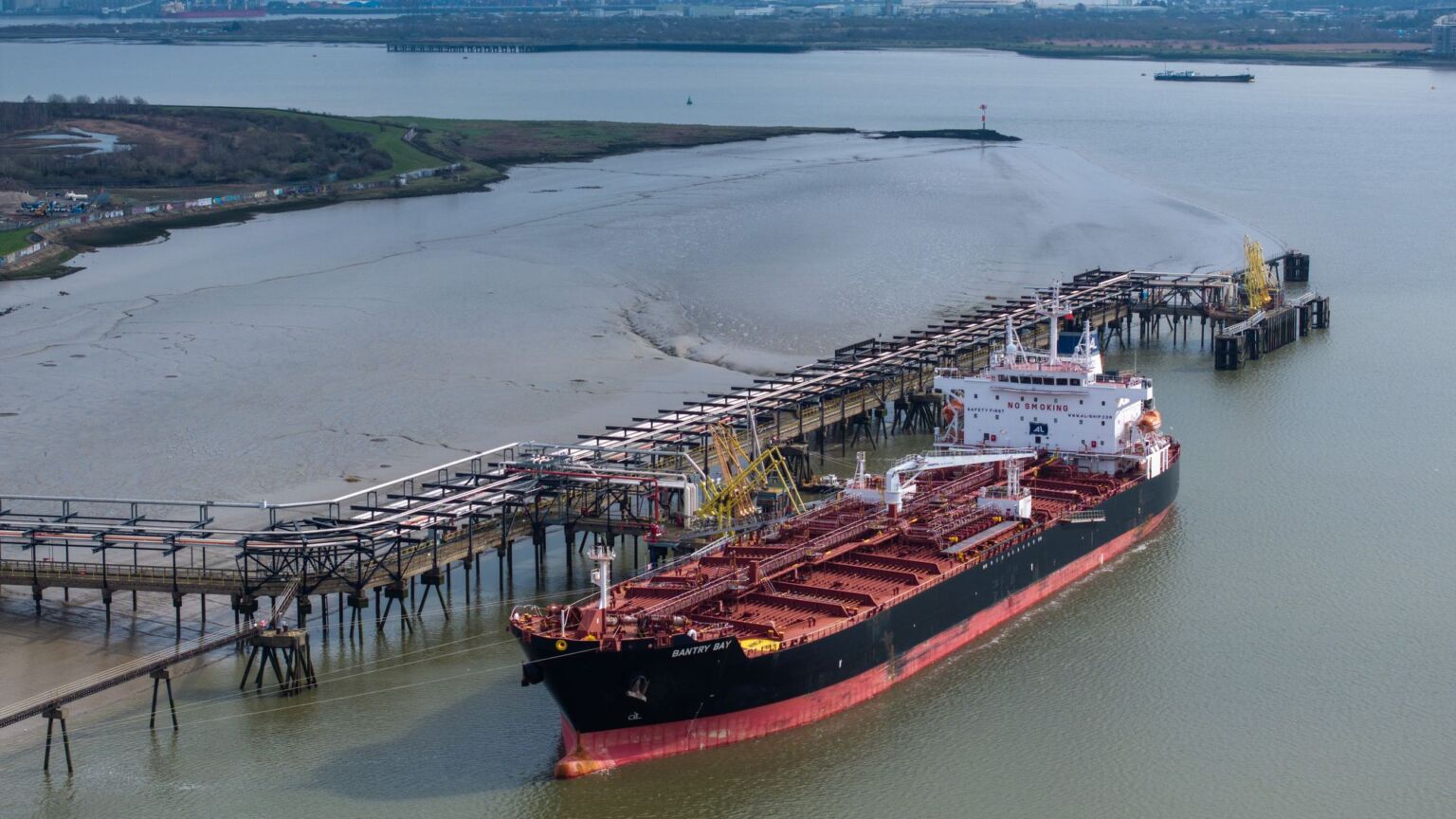
For the second time in four years, Britain is staring down the barrel of a major energy crisis. Since America and Israel began bombarding Iran, the prices of oil and gas have soared across the world, and Britain is especially exposed. This week, even as talk of a potential ceasefire has calmed the markets somewhat, global oil prices remain 45 per cent higher than before the war began, and 60 per cent up on the start of the year. Whatever happens next between Trump and the ayatollahs, whether the US ‘unleashes hell’ or ceases fire, the UK is in for a very rough ride.
The outlook is beyond bleak. The typical household energy bill in the UK is expected to climb by 20 per cent in July, when a new energy price cap comes into effect. Industry is already feeling the strain, with input prices for British factories surging at the fastest pace since the Black Wednesday market crash in 1992 – thanks to the soaring costs of energy, transport and oil- and gas-derived products. Investment bank Morgan Stanley has warned of a ‘pronounced recession’ later in the year.
Of course, there is no scenario in which modern Britain could have been immune from such seismic events in the Middle East. Iran has effectively closed the Strait of Hormuz, through which 20 per cent of the world’s oil flows. For every day the strait is closed, more barrels of oil are being taken out of circulation than in the 1973 and 1979 oil crises combined. Added to that has been the Islamic Republic’s attacks on LNG (liquified natural gas) facilities across the Gulf. Iranian strikes on Qatar’s Ras Laffan gas facility have wiped out 17 per cent of Qatari LNG exports. All in all, the Iran War has prompted what the International Energy Agency considers to be the single ‘largest supply disruption’ to the world’s energy supplies in history.
So no, Britain was never going to escape the headwinds of this crisis. But it could have been far better prepared for weathering the storm. It could – and should – have learned at least some lessons from the last energy-price crisis in 2022, when Russia’s invasion of Ukraine sent gas prices soaring. Not least as Britain is blessed with abundant oil and gas reserves of its own, in both the North Sea and as frackable shale gas beneath the ground. Yet unless Keir Starmer and his energy secretary, Ed Miliband, radically change course on decades of perverse policies, the UK is only set to become even more vulnerable to future external shocks beyond our control.
The Labour government insists the crisis underlines the need for Britain to ‘get off’ oil and gas, and switch to ‘clean power’. According to Miliband, fossil fuels cannot be produced domestically at scale. And even if they could, he claims, we would still be prisoners of a volatile global energy market.
The energy secretary is wrong on all fronts. Catastrophically so. As a new report by Offshore Energy UK (OEUK) confirms, North Sea oil and gas drilling has indeed fallen sharply in recent years. But this has been driven by government policy, not the supplies in reserve beneath the sea. Miliband’s ban on new North Sea oil exploration, and his continuation of the Tories’ windfall tax on the sector, are by far the greatest constraint on domestic drilling. As a result, according to OEUK, imports of LNG – which currently account for 14 per cent of the UK gas supply – are set to soar to 46 per cent by 2035. Under Miliband’s North Sea shutdown, Britain will become more dependent on suppliers like Qatar, and thus more vulnerable to external energy shocks.
And what might domestic protection mean for the price of energy? While nobody expects reopening the North Sea to instantly rescue the UK from the current price hikes, more domestic drilling could indeed lower costs in the long run. Miliband’s insistence that prices are set ‘internationally’, and so domestic production would ‘not take a penny off energy bills’, is straightforwardly untrue. If prices really were set globally, the UK would not be paying six times more for gas than energy-rich America.
It is, however, true that Britain buys and sells gas on a European market, but this doesn’t mean exploiting the North Sea would be a fruitless endeavour. For one thing, more domestic production would mean fewer LNG imports – avoiding the costs of liquefaction, shipping and regasification that shipping gas around the world entails. This is also why it is unlikely that all new oil and gas produced in the UK would simply be sold abroad, as foreign markets pay a premium for transport costs. In any case, as energy expert Dieter Helm explains, there is no reason why, with enough ‘imagination’, the UK government could not secure favourable treatment from North Sea firms as a condition for granting new drilling licences.
Even if Miliband were somehow correct, that any new oil and gas would immediately leave the country, keeping the North Sea alive would still be a no-brainer. It would provide billions in tax revenue at a time of fiscal crisis. It would vastly improve the balance of payments, at a time when Britain is importing far more goods and services than it exports. And it would keep alive an industry that supports hundreds of thousands of mostly well-paid, unionised jobs. There is simply no rational, let alone progressive, argument for throttling the North Sea.
For the past decade or so, the big bet made by the establishment has been that renewables can replace energy derived from fossil fuels. Wind and solar, they claim, are not only cheaper, but offer more security of supply, too. Again, these are sheer delusions. The only time British consumers have ever paid less for wind power than for gas was when the gas price went into the stratosphere at the start of the Ukraine war. After 2030, should Miliband hit his target for a ‘clean-powered’, renewables-heavy grid, energy supplier Centrica expects prices to be higher than at the peak of the Ukraine energy crisis. Britain is set to exit what Miliband calls the ‘rollercoaster of fossil fuels’, only to lock in crisis-level energy costs in the longer run.
As well as being exorbitantly expensive, renewables are inherently insecure. Wind and solar are intermittent sources, as they can only provide electricity when the wind blows and the Sun shines. When the weather is unfavourable, gas needs to be purchased (at an inflated price) as a backup, or there is a risk of blackouts. What’s more, renewables can’t even mitigate against geopolitical risks. Several large offshore wind projects are facing delays, as components made in the United Arab Emirates are also stuck behind the blockade of the Strait of Hormuz.
Britain’s energy policies are nothing short of suicidal. Blinded by Net Zero zealotry, Miliband and his predecessors have made our energy supplies more costly, less secure and more reliant on foreign imports. The result is an almost permanent energy crisis that will long outlast the current conflict in the Middle East. If the economic pain of the next few months doesn’t change the establishment’s thinking then perhaps nothing ever will. It will confirm, beyond any shadow of a doubt, that our current trajectory of deindustrialisation and decline will have been actively chosen by our rulers.
Fraser Myers is deputy editor at spiked and host of the spiked podcast. Follow him on X: @FraserMyers.


DiEM25’s landmark event united Yanis Varoufakis, Jeremy Corbyn, Zack Polanski, Grace Blakeley, Laura Pidcock and Brian Eno in an electrifying night of radical politics. It proved that cross-party, cross-movement solidarity is not a distant dream, but something that can begin tomorrow.
On the night of 24 March, the historic Troxy in London’s East End was packed to capacity, with an audience that was treated to a mix of poetry and provocation, moments of grief and speeches of passion.
DiEM25’s Resistance Is Existence brought together some of the top minds of the political Left, who offered both warnings about the current situation but also practical solutions on how to get involved and bring about tangible change.
The evening opened with comedian and DiEM25 Coordinating Collective member Francesca Martinez. She brought the house to life with a searingly funny and deeply personal account of what resistance means to someone who has spent years fighting for a more humane world.
Following her was Nigerian poet and playwright Inua Ellams. Her performance cut to the heart of the contradictions of our age.
In the first panel, DiEM25’s political director Erik Edman brought together co-founder Varoufakis, former MP Pidcock, and musician and long-time DiEM25 supporter Eno. The message from all three was urgent and unambiguous. Eno warned:
We are dealing with fascism now. It intends to end the game of democracy, it intends to smash it.
Reflecting on a decade of political upheaval, Eno called on everyone in the room to stop watching from the sidelines. Find someone doing something you admire, and help them. Pidcock echoed the call in her own register. She urged the audience to reimagine democracy beyond the ballot box in workplaces, in communities, in every space where people organise together. She said:
We have to widen our conception of democracy… let us expand our imagination for everywhere we can build power for ourselves.
DiEM25 brings together Polanski and Corbyn
The second panel produced a very significant moment for British politics.
Eno had said it plainly in the first half. The climate movement, the anti-war movement, the fight for democracy, these are not separate battles. They are the same fight, wearing different faces.
Former Labour leader Corbyn and Green Party leader Polanski took the stage together, where recognition and threads connected. Polanski set the tone from his very first words, reframing what resistance actually means:
Resistance is making things more accessible, more inclusive, making sure we are talking to friends, family, even strangers sometimes…
Resistance is joy, is art, is culture. And resistance is saying: what is happening in this country, where 50 of the wealthiest families own more wealth than the bottom 50% of the population. That’s not right, that’s a political choice. Let’s make different political choices.
From there, the conversation moved outward to electoral reform, a wealth tax, an end to homelessness, and accountability for Britain’s role in Gaza. Corbyn named it without flinching:
If the ICJ [International Court of Justice] has decided that acts of genocide are taking place… that makes the British government complicit in genocide.
Alongside them, DiEM25 Coordinating Collective member and author Grace Blakeley delivered the structural analysis. That all the hope in the room counts for nothing without rebuilding worker power from the ground up. Blakeley stated:
For the first time in a long time I do see some hope that we might be able to come together and translate it into something that really scares those at the top.
Varoufakis, who anchored both panels, drew the threads together: democracy is not something we inherit. It is something we have to make, again and again, in the face of those who would unmake it.
You can watch the full event on YouTube here.
Featured image via Chloe Chia (Haych) / DiEM25

Leading UK civil society organisations have called on the Chancellor to increase levies on corporate profits to help address the cost of living crisis. This follows predictions that numerous sectors will make huge profits from the economic fallout of the US-Israeli war on Iran.
War with Iran set to increase household bills
In a joint letter to Keir Starmer and Rachel Reeves, 40 organisations are urging the government to take action and curb profiteering.
The signatories represent organisations across various sectors, demonstrating the breadth and depth of support for action to tackle corporate profiteering and the affordability crisis. They include the Cost of Living Action coalition, Global Witness, Women’s Budget Group, National Education Union, New Economics Foundation, Patriotic Millionaires UK, and many more.
The signatories say that the Iran war crisis should be a “turning point for the UK” as “energy bills, fuel costs, and essentials are set to increase in costs for households and businesses already struggling with affordability after years of a cost of living crisis”.
The letter goes on to say that “It is not right that extraordinary profits, generated off the backs of ordinary people during periods of crisis, are siphoned off into private hands and corporate bank accounts.” The letter also notes that the government’s own cost of living champion has called for measures to prevent profiteering.
Faiza Shaheen, executive director of Tax Justice UK, said:
Too often UK governments have failed to protect households and small businesses from the profiteering corporates and super-rich individuals who circle around crises like vultures. Spain has already frozen rents, yet our government fails to show urgency. The Chancellor needs to get a grip on the situation to help people already struggling, and show that this will not be yet another crisis where the rich get richer, while everyone else foots the bill.
Profits increase across sectors
New data recently released suggests that North Sea energy firms are already set to make extra profits.
Areeba Hamid, Co-Executive Director of Greenpeace UK, said:
The oil-majors are set to make gargantuan profits from global instability while ordinary people pay the price of Trump’s war in Iran. Calls to scrap the windfall tax early are not just misguided—they are a slap in the face to people struggling with rising energy costs, and more drilling in UK waters won’t cut bills or protect UK households. The fossil fuel industry should be contributing more tax, not less.
Banks and mortgage providers will also increase revenue as a result of increased mortgage costs. Meanwhile, costs for agricultural inputs have risen extraordinarily. Defense contractors have already posted record revenues recently.
It is not the first time these sectors have profited from crises. The letter notes that previous moments, like the Covid-19 pandemic and invasion of Ukraine, “saw the wealthiest households and super-rich amass even greater fortunes … while millions were left struggling.”
Simon Francis, Coordinator of End Fuel Poverty Coalition, said:
Gas prices have more than doubled since late February, and households are already struggling with energy bills that have been stuck at elevated levels for five years. The latest global disruption is a stark reminder of the cost of our dependence on imported fossil fuels. Every time conflict or instability strikes overseas, ordinary households pay the price through their energy bills.
The Government must act urgently to protect households from the impact of rising prices and ensure that the billions in excess profits energy companies are making during this crisis are redirected to support the people who need it most. Wiping out household energy debt, strengthening the Warm Home Discount and accelerating investment in home insulation would all help cushion the blow.
New policies needed
The policies put forward by the organisations are a strengthening of the existing energy profits levy on North Sea oil and gas companies. They are also calling for a new levy on UK bank profits made from the British public.
Additionally, excess profits taxes are specifically called for on industries such as defense, big agribusiness, and associated artificial intelligence and big tech firms, which are predicted to make bumper profits as a direct result of the war on Iran.
As well as providing direct cost of living support, they propose the tax revenue is used to invest in the long-term resilience of the UK economy. This will make the economy less susceptible to fuel price shocks in the future.
Featured image via the Canary

Sula Sgeir is Scotland’s worst-performing gannet colony. But the body responsible for protecting it is still allowing hunters to kill gannet fledglings. A freedom of information request has exposed the colony’s collapse, even as the nature agency continues to permit the controversial seabird hunt.
Each year a group of men from the Isle of Lewis travels to the remote uninhabited island of Sula Sgeir. They go there to kill young gannet seabirds, known as “guga”, as part of a traditional hunt. It is the last legal seabird hunt in the UK. The activity is carried out under licence from NatureScot, and the bird’s flesh is eaten as a local delicacy.
The hunt has become increasingly controversial, triggering protests, political pressure in the Scottish Parliament, and even a dramatic rooftop occupation by activists calling for it to be banned. 45,000 people have now signed a petition against the guga hunt.
Last year, NatureScot allowed the killing of 500 birds and said this number is unlikely to affect the long-term stability of the gannet population.
An underperforming gannet colony
But wildlife advocacy group Protect the Wild obtained relevant documents via a freedom of information request. And the data shows Sula Sgeir is uniquely underperforming relative to every other comparable gannet colony in Scotland.
In a scientific assessment used to inform the 2025 licence, NatureScot’s adviser warns that Sula Sgeir is the only Special Protection Area (SPA) for gannets in Scotland whose population has shrunk.
Between 2001, when the island first became an SPA, and 2024, the number of apparently occupied nesting sites at Sula Sgeir fell by almost 2%. Meanwhile, all other colonies showed increases between 9% and 314%.
Highly Pathogenic Avian Influenza (HPAI) outbreaks caused a further 23% crash in 2023. But the decline was already in progress.
As NatureScot’s adviser states:
This indicates that the population growth rate has been suppressed compared to other gannet populations outwith the influence of HPAI.
In other words, bird flu didn’t cause the gannets’ decline – it only worsened a problem that was already underway.
Devon Docherty, Scottish campaigns manager at Protect the Wild said this shows the Guga hunt is driving the colony’s decline:
NatureScot says the Guga hunt does not negatively impact the gannet population. But their own data says otherwise. Sula Sgeir is Scotland’s worst performing gannet colony – the only one in decline while every other comparable colony grows.
This is not a coincidence. The hunters slaughter hundreds or thousands of chicks every year at their most vulnerable and critical life-stage, while causing chaos and distress throughout the entire colony.
NatureScot must use their discretionary power and stop licensing this cruelty immediately.
Featured image via John Ranson / the Canary
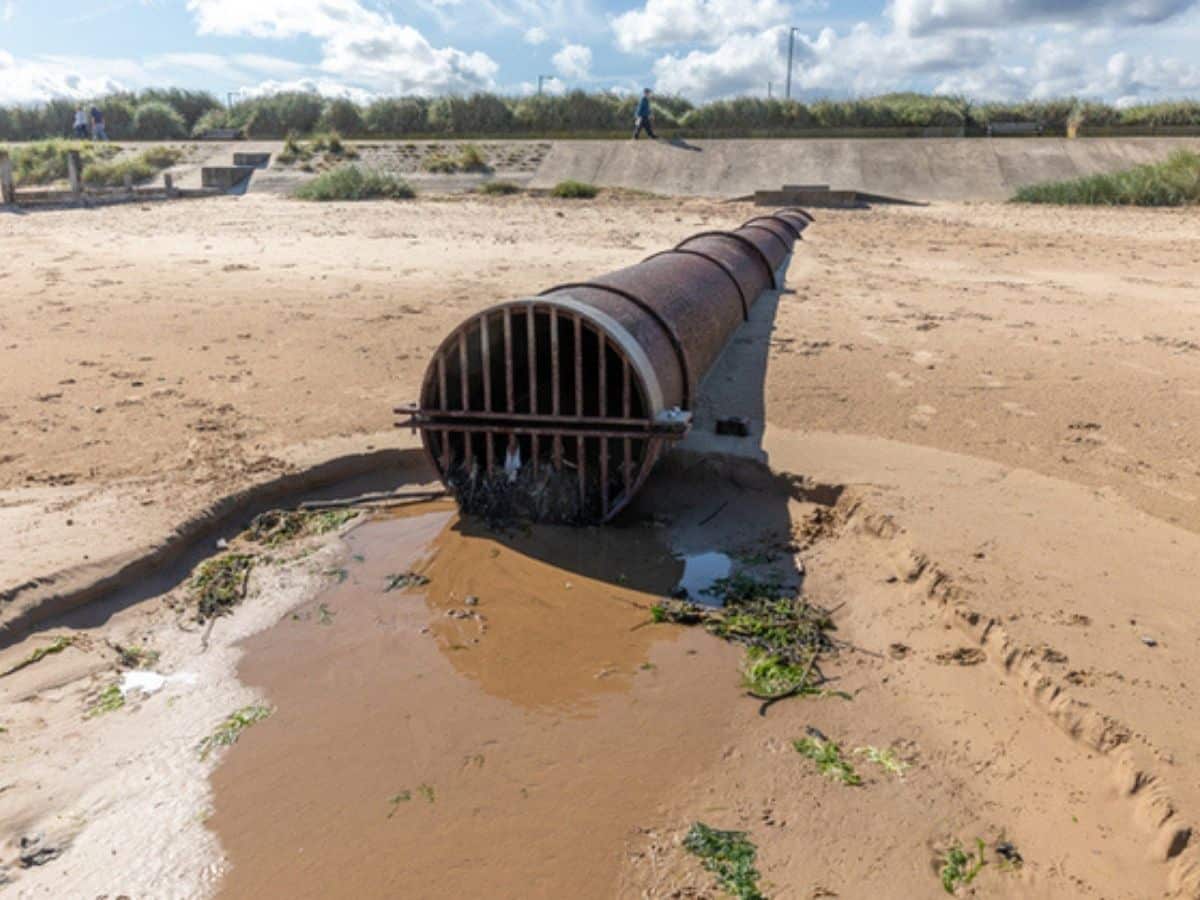
Today, 26 March, the government released its latest sewage spill statistics, as gathered by the Environment Agency (EA). The banner headline boasted “Fewer and shorter storm overflow spills” over 2025. Well, that’s just marvellous, isn’t it?
However, once we get about a third of the way into the document, we get to the meat of the matter:
Much of this improvement reflects unusually dry conditions in 2025 following a particularly wet 2024.
So, the water companies are dumping less sewage, not because they’ve done their goddamn jobs, but because they got lucky with the weather.
Or, to put that another way, companies dumped untreated sewage once every two minutes over 2025. However, the UK water industry is such a (literal) shitshow that this constitutes a genuine improvement on 2024. And we’re chalking this up as a fucking win?
Laying cover for the polluters
The EA announced that 2025 saw 291,492 monitored spill events. That represents a 35% drop in storm overflow spills compared to the previous year. It also means that each individual overflow experienced an average of 20.5 spills, down from 31.8 in 2024.
Likewise, the overall duration of those spills also fell massively, by around 48%. Depending on the company, the durations decreased by between 40% and 70%.
However, these drops are to be expected, given that 2025 was an unusually dry year. Storm overflows will naturally see less use when the UK experiences fewer storms. Consequently, we’ll get a more accurate idea of whether the water companies have done their job when we get another year of heavy rain.
It also means that, in spite of the fact that storm overflows should only be used in extreme weather events, the water companies were still making regular use of them. Spring 2025 was the driest in over a century, and the year was the warmest on record overall.
Some water companies even instituted hosepipe bans for the public, and then continued to dump sewage themselves. Yorkshire Water, for example, imposed a 5-month hosepipe ban. Meanwhile, the company’s official performance rating was downgraded because it actually increased its pollution incidents.
Karen Shackleton, representing the Ilkley Clean River Group, said:
Today’s report creates a cover for water companies’ illegal pollution and neglect of our infrastructure. The figures for last year, in drought conditions, take us back to the level of pollution we had two to three years ago in normal weather. This is not a good news story. Yorkshire Water is still polluting illegally and the government is still failing to hold them to account.
Sewage — £6.9m in fines isn’t enough
2025 also brought with it an increase in the monitoring of sewage spills. In particular, all storm overflows in England are now fitted with ‘event duration monitors’ (EDM), giving us a more accurate picture of the extent of individual water companies’ crimes.
Along with this, the EA has also updated its online map of storm overflow monitoring. The EDM Data Portal publishes open-access monitoring information for overflows across England.
Along with this increased level of scrutiny, water companies have been slapped with numerous fines for their crimes. In 2025, these enforcement undertakings ran to a total of £6.9 million for breaches of environmental law.
However — and flogging a dead horse here for a minute — these fines clearly aren’t working. Sophie Conquest, lead campaigner at anti-privatisation pressure group We Own It, said:
Under our privatised system, pollution is rewarded with profit. Less money invested in crucial infrastructure means more of billpayers’ money lining the pockets of shareholders.
Sewage pollution is a dire threat to public health, and has decimated our rivers and seas. This government must stop rearranging the deckchairs on the titanic, and bring water into public ownership without delay – starting with the collapsing Thames Water.
This is a cycle, and by now it’s a familiar one:
- The water companies don’t maintain their infrastructure.
- They dump sewage into our lakes, rivers and seas.
- Then, the Environment Agency slaps them with fines and sanctions.
- But the water companies go and jack up their prices, ostensibly so that they can fix their shoddy infrastructure.
- Return to Step 1.
So tell me again who’s actually paying the fines here?
Featured image via the Canary
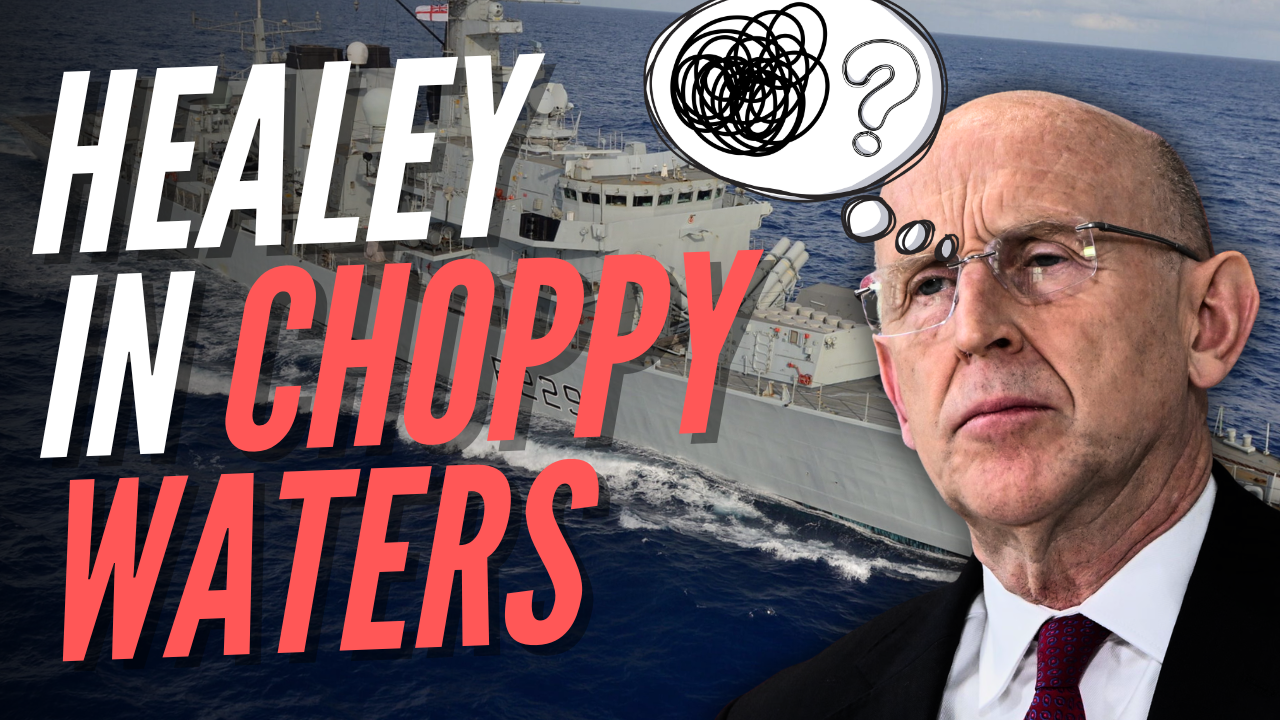
Painful… UPDATE: Per GB News, the correct answer is 12 frigates.

Donald Trump has repeated his favourite piece of misinformation about Nato as he took another swipe at the military alliance.
The US president said the organisation – of which America is a founding member – “will never come” to the Unites States’ rescue, despite the fact it did just that after the September 11 terror attacks on New York in 2001.
That remains the only time Nato has invoked Article 5 of its constitution, which obliges all member states to help defend another if it comes under attack.
Trump also repeated his criticism of Nato for not sending warships to help re-open the Strait of Hormuz to shipping traffic – even though it is a purely defensive alliance.
Speaking at a meeting of his cabinet in the White House, Trump said: “We’re very disappointed with Nato because Nato has done absolutely nothing.
“And I’ve always said, 25 years ago, I was somebody that wasn’t a politician but I was always involved in politics and I understood politics.
“I said 25 years ago that Nato’s a paper tiger, but more importantly that we’ll come to their rescue but they will never come to ours.
“And I want you to remember that we said this. They never came to our rescue. Now they all want to help when the other side is annihilated.
“They made a statement a couple of them that ‘we want to get involved when the war’s over’. No, you’re supposed to get involved when the war’s beginning, or even before it begins.”
Trump sparked a furious row in January when he said Nato troops had “stayed a little back, a little off the frontlines” during the war in Afghanistan which followed 9/11.
Keir Starmer urged the president to apologise for the “insulting and frankly appalling” remarks.

Frustrations are growing, and fast…

Donald Trump has described Britain’s two aircraft carriers as “toys” in another swipe at the UK over the Iran war.
The US president insisted America “doesn’t need” the UK’s help in the conflict, despite repeatedly criticising Keir Starmer’s reluctance to get involved.
Trump has been angry with the prime minister ever since he refused America permission to launch its initial strikes on Iran from RAF bases.
Starmer has also rejected the president’s request for warships to help re-open the vital Strait of Hormuz shipping lane.
He made his latest comments during a cabinet meeting in the White House.
Trump said: “We had the UK say that we’ll send our aircraft carriers – which aren’t the best aircraft carriers, by the way. They’re toys compared to what we have.
“We’ll send our aircraft carrier when the war is over. I said ‘oh that’s wonderful, thank you very much’. Don’t bother, we don’t need it. And we don’t need them.”
The UK’s two aircraft carriers, HMS Queen Elizabeth and HMS Prince of Wales, cost around £6 billion each to build and weigh 65,000 tonnes. They are the largest warships ever built for the Royal Navy.
Senior UK government sources have previously insisted that America has never requested aircraft carriers, and that the government has never offered to send any either.
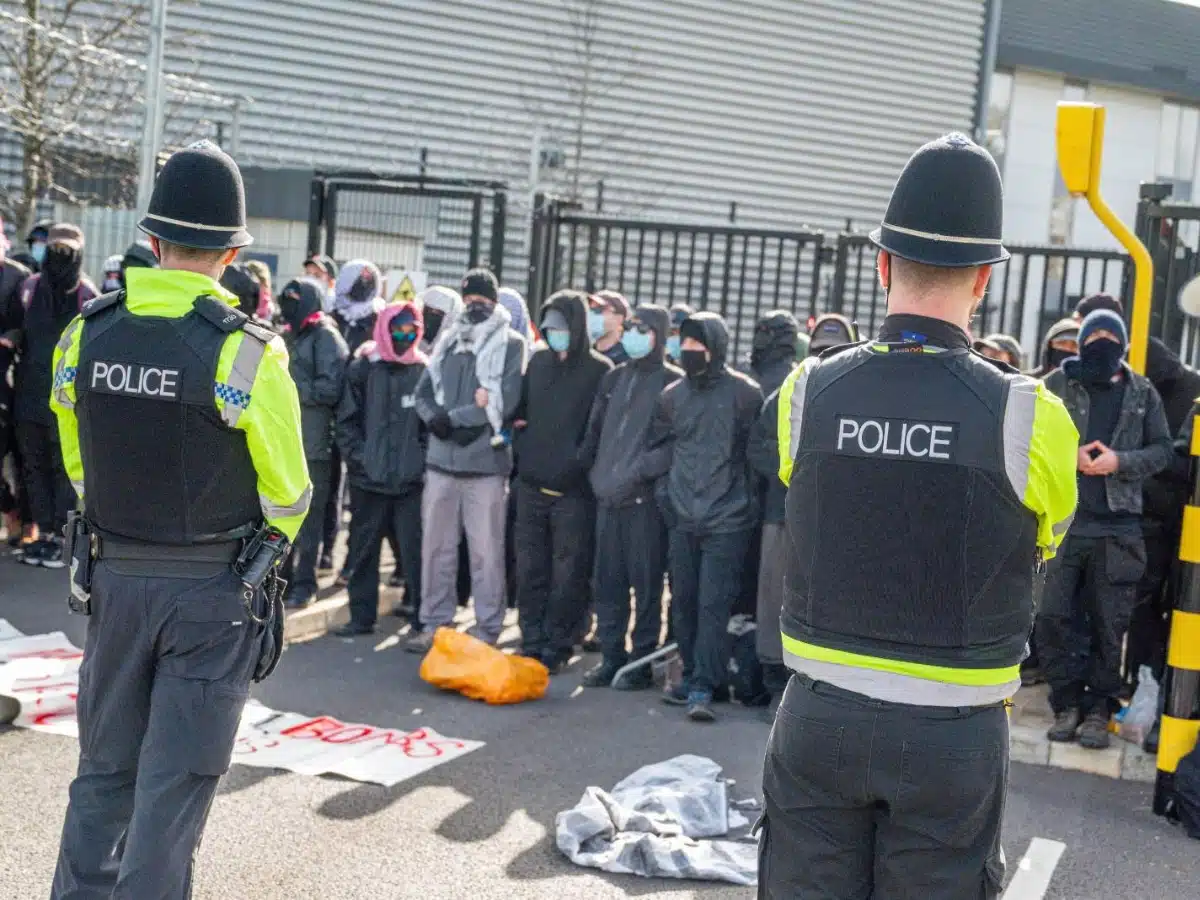
On the morning of 26 March in Filton, Bristolians immobilised a weapons factory of Israeli arms contractor Elbit Systems. The building, used for the production of “battle-tested” drones used for strike missions on men, women and children in Gaza, was forced to a halt by a chain of around 60 people.
The picket line formed at 6.50am, prior to workers arriving, and remained firm for at least 90 minutes. Actionists chanted “Shut Elbit Down!” and “Free Palestine!”, and held Palestinian flags and banners demanding ” STOP ARMING GENOCIDE”.
The protest indicated a clear message: Bristol’s people want to drive contractors like Elbit Systems out of their city. Protesters pushed past barriers blocking access to the main gate, which has 24/7 security guards. And they stood with their arms linked, blocking any workers or vehicles entering the site.
Elbit Systems fuelling and profiting from genocide
Elbit Systems is Israel’s main weapons provider and self-proclaimed “backbone” of the Israeli Defense Fleet through supply of drones, armoured vehicles, and munitions. The company’s UK subsidiary UAV Engines Ltd manufactures the engine of the Hermes 450 drone. Israel used such a drone to murder UK aid workers in Gaza in 2024.
As the actionists’ banner stating “ELBIT PROFITS FROM MURDER” highlights, in 2024, at the height of the ongoing genocidal campaign in Palestine by Israel, Elbit announced revenues of US$ 6.8bn.
Like other Elbit Systems facilities, activists have targeted this site several times since October 2023. Its sister site in Aztec West closed down last September, years before its lease expiry. It’s likely that direct action had rendered it financially unviable.
The recent US-israeli strike on Iran has further lined Elbit’s pockets. According to the company’s chief exec, Bezhalel Machlis, Elbit Systems supplies Israel with long-range guided munitions and equipment for electronic warfare.
A spokesperson for the actionists said:
In January, Elbit was denied a £2 billion contract with the MoD. In February, the high court ruled the proscription of Palestine Action unlawful on two grounds.
Most of our brothers and sisters, imprisoned for resisting genocide, have been granted bail and able to return to their loved ones.
These victories are symptoms of a bigger shift. Thousands have signed up to a direct action training to resist companies like Elbit. Its doors in Bristol will shut for good, not because of the government, but because of the people
Another protester said:
Bristol, through hosting military contractors such as this one we’re outside the gates of, is covering itself in the blood of Palestinian men, women and children. I am horrified to see my city again and again on the wrong side of history. Complicity is no longer an option.
It is our duty as workers with pension pots, payers of tuition fees, parents of children at schools. Where companies like Elbit get free entry to careers fairs, by the way. It is our duty as people of Bristol to disturb the workings of this factory yesterday, today, and tomorrow, until it is forced to shut down.
Featured image via Barold / the Canary

We hope you love the products we recommend! All of them were independently selected by our editors. Just so you know, HuffPost UK may collect a share of sales or other compensation from the links on this page if you decide to shop from them. Oh, and FYI — prices are accurate and items in stock as of time of publication.
In the grand old year of 2026, you’d think we’d have orgasms down to a fine art. Look around you, sex tech is everywhere: on screens, in supermarkets, chemists, and even airports.
Yet for some reason, the orgasm gap still exists. Of course, women are on the (non) receiving end of it. While 95% of straight men orgasm ‘most’ or ‘every time’ they have sex, only 65% of straight women can say the same.
No wonder, because new research by Lovehoney shows that despite 90% of adults thinking they know where the clitoris (AKA the female pleasure hub) is, only 30% can correctly label it on a diagram.
Plus, a mere 3% can identify its full internal structure – which, if you don’t know, looks something like a wishbone and extends deep into the pelvis. The original proof that it’s not just what’s on the outside that counts!
Even more worryingly, women (30%) are only slightly more able to identify it than men (29%), which can’t bode well when trying to direct a partner to the right spot.
Whether you know where the C-spot is or not, one thing is for sure: oral sex is a sure fire way to bring vulva owners to orgasm.
Considering we’re in the middle of a sex recession (read: no one is shagging), this is easier said than done. But good news for you solo players out there: the clit suction vibrator is here to save the day.
Designed to mimic the greatest head of your life, clitoral suction vibrators use one of the latest vibrator technologies on the market.
Sucking and slurping thanks to Lovehoney’s patented Pleasure Air Technology, once held over the clit, these toys will almost certainly result in one of the most (ahem) instant orgasms of your life. Even better, you won’t have to keep asking it to move a millimeter to the right.
These oral imitators can also make a great bedmate for those who find direct clitoral stimulation painful or intense, as they hover slightly above the external portion of the clit to create a vacuum for the air waves to push and pull.
For those of you looking to level up your sex toy game, both with a partner or without, here are the best Lovehoney clit suction toys to wrap your legs around now.

Lovehoney Rose Clitoral Suction Stimulator
The suction toy that got thousands through lockdown – because it’s blooming good!

Womanizer Enhance
Uhhh… a 100% orgasm rate? A two in one toy? This dual vibration and suction toy is a no-brainer.

ROMP Free X
With its own built-in case, this toy makes the perfect travel companion. Don’t be fooled by its size, the suction packs a punch.

ROMP Reverb
You’ve heard of the rabbit – this is that on steroids. Think: penetrative sex while your partner is going down on you. Oof.

Lovehoney Passion Pod
Come on now, this sex toy is just so fricking cute. It’s no bigger than an airpod, and it comes in its own charging case. Okay, thrills on the go.

Lovehoney mon ami Pleasure Air Rose
Essentially the same as the OG rose, but cheaper. We’ll never turn our noses up at saving £8!

Womanizer Next
No one’s doing it better than Womanizer, and this toy proves it. It’s silent until it touches your skin, and you can control the depth of the suction waves. Mwah.

Lovehoney Indulge
If you’ve never had a blended orgasm, this toy is about to blow your mind. The combo of clit and G-spot stimulation is something you won’t ever come back from – prepare to have your life changed.

Womanizer Liberty 2
When you truly love a sex toy, you don’t want to go anywhere without it. Thanks to this travel-sized Womanizer, you won’t have to. Phew!

Lovehoney Clitoral Suction Stimulator
It might look like a misshapen egg, but that’s forgivable considering it sits neatly in the palm of your hand so you can hit the spot without a thought.

Womanizer Pro
Lilac, shiny, and waterproof, oh my! But even then, the best part is the soft silicone removable head, which makes it easy to clean.

Wales fans just pulled off epic version of national anthem as huge night unfolds

Building a Career Through Growth and Transition

OKX says it won’t go public until it can deliver returns to investors


-
 Crypto World6 days ago
NIO (NIO) Stock Plunges 6.5% as Shelf Registration Sparks Dilution Worries
-

 Fashion6 days ago
Weekend Open Thread: Adidas – Corporette.com
-
 NewsBeat1 day ago
Manchester United reach agreement with Casemiro over contract clause amid transfer speculation
-

 Politics6 days ago
Jenni Murray, Long-Serving Woman’s Hour Presenter, Dies Aged 75
-

 Crypto World5 days ago
Best Crypto to Buy Now: Strategy Just Spent $1.57 Billion on Bitcoin During Fear While Early Investors Quietly Enter Pepeto for 150x Potential
-

 Crypto World5 days ago
Bitcoin Price News: Bhutan Sells $72 Million in BTC Under Fiscal Pressure, but the Smart Money Entering Pepeto Sees What the Market Does Not
-

 Tech7 days ago
inKONBINI Lets You Spend Summer Days Behind the Register
-

 News Videos18 hours ago
Parliament publishes latest register of MPs’ financial interests
-

 Sports3 days ago
Remo Stars and Kano Pillars Strengthen Survival Hopes in NPFL
-

 Business4 days ago
No Winner in March 21 Drawing as Prize Rolls to $133 Million for Next
-

 Sports3 days ago
Gary Kirsten Accuses Pakistan Cricket Board Of ‘Interference’, Mohsin Naqvi Responds
-

 Tech4 days ago
Give Your Phone a Huge (and Free) Upgrade by Switching to Another Keyboard
-

 Sports6 days ago
2026 Kentucky Derby horses, odds, futures, preview, date: Expert who nailed 12 Derby-Oaks Doubles enters picks
-

 Tech4 days ago
AI enters the chat: New Seattle dating app relies on tech to facilitate meaningful human connections
-

 Business7 days ago
DLocal: Entering 2026 At Escape Velocity
-
Business6 days ago
Columbia Sportswear enters $500 million credit agreement with JPMorgan Chase
-

 Tech5 days ago
Today’s NYT Connections Hints, Answers for March 22 #1015
-

 News Videos3 days ago
Ch 9 Financial Management Part 1 | Detailed One Shot | Class 12 Business Studies Boards 2026
-

 Business4 days ago
Will Duke Basketball Win It All? Duke Basketball Enters Second Round as Third Favorite to Claim NCAA Title
-

 Sports4 days ago
2026 Kentucky Derby horses, odds, futures, preview, date: Expert who hit 12 Derby-Oaks Doubles enters picks
You must be logged in to post a comment Login