
Politics
Brits Must ‘Guard Against Normalisation Of Racism’, Minister Warns

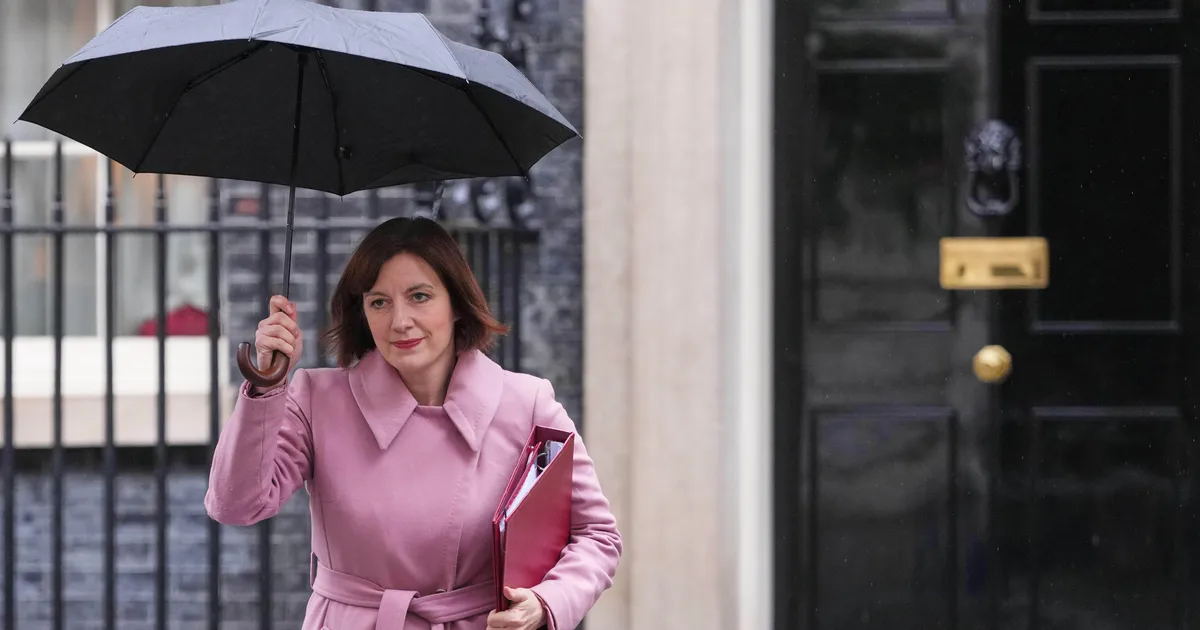
A cabinet minister has urged Britons to “guard against the normalisation of racism” coming from some right-wing politicians.
Bridget Phillipson accused prominent members of both Nigel Farage’s Reform UK and Kemi Badenoch’s Conservative Party of questioning Brits’ identity “on the basis of their skin colour”.
The equalities minister’s remarks come after former Tory prime minister Rishi Sunak warned in The Sunday Times there is a risk “we start equating skin colour with nationality”.
Sunak, the UK’s first non-white PM, said immigration debates are starting to focus on “trying to turn Britishness into a DNA test”.
“Once we say that this or that person isn’t really English or British because they are not white, then we are on a very slippery slope,” he said.
“Some people will argue that English is an ethnic identity and British a civic identity. Though if you think those nuances are heard by most people, I fear you are being rather — perhaps even wilfully — naive.”
Phillipson told BBC’s Sunday with Laura Kuenssberg: “We are a fantastically successful country in terms of integration, in terms of the real strength we draw from that.
“But I find it extremely disturbing that it has become normalised in frontline politicians, both in Reform and the Conservatives, to question people’s British identity on the basis of their skin colour.”
Both Reform and the Conservative Party have been approached for comment.
The Labour Party chair continued: “My family come here from Ireland, built a life here, work in our NHS, and made such a big contribution but no one questions my identity, and that’s because I’m white.
“I’m really worried about what we are seeing around the questioning of the integrity and the identity of people who have a different skin colour.
“I think that is profoundly un-British, it is not in keeping with our traditions and I’m really pleased to see people like Rishi Sunak standing up and making very clear that actually it’s a good thing he could be the prime minister for our country – and I do believe with that.”
“We have to really guard against the normalisation of racism that we are seeing in our country,” she added.
The debate comes after Reform’s home affairs spokesperson Zia Yusuf was accused of “straight-up racism” by a minister earlier this month.
Yusuf had questioned Labour’s candidate in the Holborn and St Pancras by-election, a Labour council leader, because she was born in Somalia.
The Conservative’s first Muslim chair, peer Baroness Warsi, called the party “institutionally xenophobic and racist” back in 2024.
Listen to Commons People, the podcast that makes politics easy. Every week, Kevin Schofield and Kate Nicholson unpack the week’s biggest stories to keep you informed. Join us for straightforward analysis of what’s going on at Westminster.

I was not born into a body so much as positioned within one.
I was assigned female at birth. Assigned. The word has always fascinated me. Assigned as if gender were a slot on a bureaucratic spreadsheet, an administrative designation attached to skin before a child has spoken a single word about who they are. Assigned as if identity were a fixed destination rather than a lifelong process of becoming.
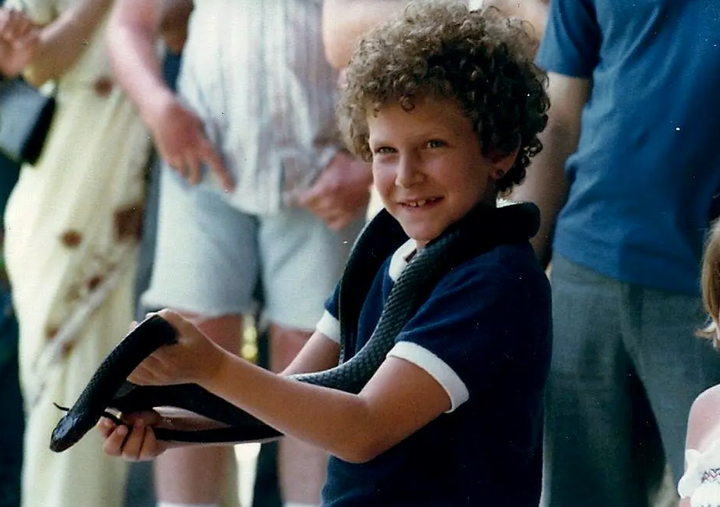
When I was five years old, I ran into the house and announced, “I want to be a boy.” Back then, my family called me Blue.
Blue rode a Huffy BMX bike through the neighborhood, chased birds across vacant lots, played football shirtless with the boys, and smeared toothpaste across my face while pretending to shave like my father.
I watched men move through the world and felt an undeniable pull toward them. It wasn’t because I wanted to imitate them. It was because I believed I was one of them.
Looking back, I realise the problem was not what I said. The problem was that I said it decades before most Americans had the language to hear it.

That was the early 1970s. Gender identity was not part of public conversation, school curriculum, pediatric care, or family life. No teacher ever discussed it. No counsellor pulled me aside. No book in the school library reflected anything remotely close to my experience. There were no role models and no roadmap.
My father fought my masculinity whenever he could. Dresses appeared. Expectations appeared. Rules appeared. Every attempt to force me into girlhood pushed me further away from myself. I remember being wrestled into dresses for family gatherings only to throw myself into the yard and roll through dog excrement rather than wear them. It sounds absurd now. It was not absurd then. It was resistance before I had language for resistance.
I searched elsewhere for recognition. Music became one refuge. David Bowie, Boy George, Tracy Chapman, and Annie Lennox challenged assumptions about gender long before I had words for my own experience. Films offered glimpses of lives that seemed to exist just beyond the boundaries of what I had been told was possible.
Sports became my camouflage. Football, swimming, and running helped me mask the breasts, waist, and broad hips that intensified my dysphoria and reminded me daily of a body I never experienced as my own. Athletics kept my body lean and offered relief from a struggle I could not yet name; movement allowed me to outrun the confusion waiting for me everywhere else.
As I moved through college and into adulthood, the gap between who I knew myself to be and who the world expected me to be widened. I became adept at performing a version of myself that others could understand while carrying a growing sense of dislocation.
By my 20s, that dislocation became unbearable.
I attempted suicide twice.
It wasn’t because I lacked strength or ambition. I was building a career, earning advanced degrees, teaching students, and creating what looked from the outside like a successful life. However, success and survival are not the same thing. Outwardly, I was thriving. Internally, I was disappearing.

Then, during the 1990s, something began to shift. Language that had once existed only at the margins slowly entered public conversation. For the first time, the word “transgender” entered into public discourse and health care.
The word positioned and grounded experiences I had carried my entire life. What I had once understood only as confusion began to take shape as recognition. The word did not solve everything, but it gave me a framework for understanding myself. At 40 years old, after years of reflection, therapy, and struggle, I began medically transitioning. The day after receiving tenure, I started testosterone.
Shortly afterward came the first signs of liberation: a double mastectomy, hysterectomy, and oophorectomy. Six months later, I underwent a metoidioplasty and pelvic release. At 51, I underwent phalloplasty and scrotoplasty. I will inject testosterone every week for the rest of my life. The cumulative billed value of my transition-related healthcare exceeds $5.5 million.
I recognise that access to healthcare is a privilege. I paid co-pays and deductibles while insurance absorbed costs that would have been impossible for many people to shoulder. Every time I think about those numbers, I think about the countless transgender people denied the same opportunities that allowed me to survive.
But the greatest costs were never financial.
Transition cost me more than 90% of my family. Relationships that had defined entire chapters of my life disappeared. Phone calls stopped. Invitations stopped. Some relatives chose distance. Others chose silence. The losses accumulated slowly, then all at once. I grieve them still. Yet if the choice was between preserving those relationships and preserving my life, I would make the same decision again.
Over time, I came to understand that transition was never simply about altering a body. We are not operating on people so much as operating on histories. Surgery, language, community, and self-recognition become ways of rewriting narratives imposed upon us long before we could speak for ourselves. Surgery is about sculpting gender from within, not because we were broken, but because we knew how to wield a chisel. My body carries those histories. Some scars are faint. Others zigzag across flesh, thickened by time. They carry more history than any policy document ever could.

Several years after beginning my transition, I decided to amend my Louisiana birth certificate from female to male. The process became one of the most humiliating experiences of my life. Louisiana required me to appear before a court-approved physician whose role was to verify my transition. In his office, I was instructed to remove my clothing so he could inspect my body and confirm that I had undergone a mastectomy and metoidioplasty. Afterward came notarised letters from physicians, therapists, and surgeons, operative reports, legal filings, photographs, identification records, attorney fees, and court costs. Standing there, I understood that the state was not asking me to identify myself. It was auditing me.
My body became evidence. My scars became exhibits. My surgeries became supporting documentation. My therapist’s letters, physician affidavits, operative reports, photographs, and court filings became part of a bureaucratic ledger through which strangers evaluated whether I qualified for recognition.
Looking back, I realise Louisiana was never the beginning of the audit. It was simply the moment I recognised it. The audits had followed me for decades. Family members audited my masculinity. Schools audited my behaviour. Medical professionals audited my certainty. Insurance companies audited my eligibility for care. Courts audited my legitimacy. At every turn, institutions demanded proof that I was who I said I was. Diagnoses, evaluations, signatures, approvals, surgeries, and legal documents all became part of a system that repeatedly asked the same question: prove yourself.
In 2005, I became the first openly trans*+ academic in teacher education. Around the same time, I began noticing something else. There was almost no positive discussion of queer or transgender lives in teacher preparation programs. The absence I had experienced as a child was still present. It had simply become institutionalised. That realisation eventually led me to write my forthcoming book, We Refuse to Disappear: Resistance Amid Anti-Trans Policy.
While researching it, I watched anti-trans legislation move from a political fringe project to a national movement. During the final years of the Obama administration, anti-trans bills remained relatively uncommon. Under President Trump, they steadily increased. Under President Biden, they exploded. Then, in 2025 alone, lawmakers introduced more than 1,000 anti-trans bills nationwide, with 126 becoming law. As of 2026, hundreds more are already (predictably) moving through state legislatures. What began as isolated legislative efforts has become a sustained campaign to regulate healthcare, athletics, names, pronouns, curriculum, bathrooms, and public existence itself.

I think often about Bidzii and Juno (pseudonyms), two young people whose family I encountered during my research. Bidzii, a transgender girl, lost access to gender-affirming medical care after Texas Senate Bill 14 prohibited such treatment for minors. Juno, her intersex sibling, watched Senate Bill 12 reshape what could be discussed, taught, or acknowledged in school.
Every evening, their family gathered around the kitchen table and studied maps of New Mexico. They compared rental prices, searched for healthcare providers, and researched school districts. They were not planning a vacation. They were planning survival.
At school, one teacher quietly refused to abandon them. When Bidzii submitted a worksheet asking what happens when your body begins changing and then is forced to stop, the teacher refused to erase the question. When students raised developmental questions that exceeded what state law comfortably allowed, the teacher refused to treat those questions as violations. When fear narrowed the classroom, the teacher refused to surrender curiosity. When the family needed support beyond what the school could legally provide, the teacher connected them to a community wellness circle outside district control.
These acts did not make headlines. They preserved humanity.
When I look at Bidzii and Juno, I do not simply see two young people caught in the crosshairs of legislation. I see a generation inheriting possibilities my generation fought to create. The language they have access to did not appear on its own.
We must honour the generations who came before us – the trans elders who forged the path we now walk with their bodies, their scars, their silence, and their courage. They paid dearly for the possibilities my generation inherited. Some underwent surgeries when procedures were still developing and carried the complications that followed. Some protested in small marches, wrote from the shadows, or survived through lives of stealth. Some were murdered, their deaths unreported and their names faded into obscurity. Some lost families. Some lost careers. Without them, there would have been no path for us to follow.
We became the next experiment. Not because we wanted to be, but because of those very few went undetected before us. We learned publicly, survived publicly, and challenged institutions that often had no framework for understanding us. The surgeries, scars, amended documents, and medical records became pathways future generations could follow.
Today, Bidzii and Juno face a familiar pattern. Their healthcare is questioned. Their identities are questioned. Their schools, teachers, and families are questioned. Different generation. Same demand for proof.
The audit never really ended.

Today, my driver’s license carries an X marker. So does my passport. Those documents reflect who I am far more honestly than the ones I carried for decades, yet they also create new vulnerabilities. In the current political climate, travelling internationally with those documents means accepting the possibility of additional scrutiny simply for existing outside a binary some governments find easier to administer than understand.
As a result, I remain here, but not passively. I remain as a teacher, a scholar, an advocate, and someone who refuses to disappear. The same systems that once audited my body now seek to regulate the lives of a new generation of young people. The difference is that I am no longer standing alone. I stand alongside educators, families, healthcare providers, librarians, journalists, faith leaders, and students themselves.
Coalitions are the realisation of refusals.
A teacher refuses to erase a student. A librarian refuses to remove a book. A counsellor refuses to abandon a child in crisis. A physician refuses to withdraw care. Parents refuse to stop fighting. Journalists refuse to let misinformation go unchallenged. Faith leaders refuse to close their doors. Students refuse disappearance itself. Together, those refusals become something larger than any individual act. They become protection. They become community. They become the conditions through which future generations can determine themselves.
I know this because I was once Blue. I know this because I survived. And I know this because every child deserves the right to become.
Trans people are often portrayed as controversies, threats, or political problems to be solved. We are none of those things. We are human beings. We are children who grow up. We are neighbours, teachers, parents, artists, nurses, scholars, and friends. And despite every attempt to erase us, we continue to exist.
We are like gazelles crossing an open plain, vulnerable because we are visible yet moving forward anyway. We leap. We run. We build. We love. We remain. That is not weakness. That is trans joy. That is persistence.

Note: Trans*+ combines the historical inclusion signifier (*) with a superscript plus (+) to represent expansive, evolving, nonfixed, and unbounded gender identities that resist/ed essentialized and binary gender dichotomies.
sj Miller, Ph.D., is an award-winning scholar-activist, Learning Specialist 3 at Los Alamos National Laboratory, and part-time faculty at the University of Washington-Bothell. Their work centers gender identity justice, the pedagogy of refusal, and inclusive educational frameworks. Miller has authored eight books, over 50 peer-reviewed articles, and over 30 book chapters. Miller serves as senior associate editor of The International Journal of LGBT Youth and co-editor of the series Social Justice Across Contexts in Education. Miller has received numerous awards in the fight for gender identity justice including the 2019 Distinguished Contributions to Gender Equity Award from the American Education Research Association. Miller’s forthcoming book, “We Refuse to Disappear: Resistance Amid Anti-Trans Education Policy” with Harvard Ed Press is due out later this month. For more on sj see; www.sjmiller.info.
Note: This essay was updated to clarify some details of the author’s experience.
Do you have a compelling personal story you’d like to see published on HuffPost? Find out what we’re looking for here and send us a pitch at pitch@huffpost.com.
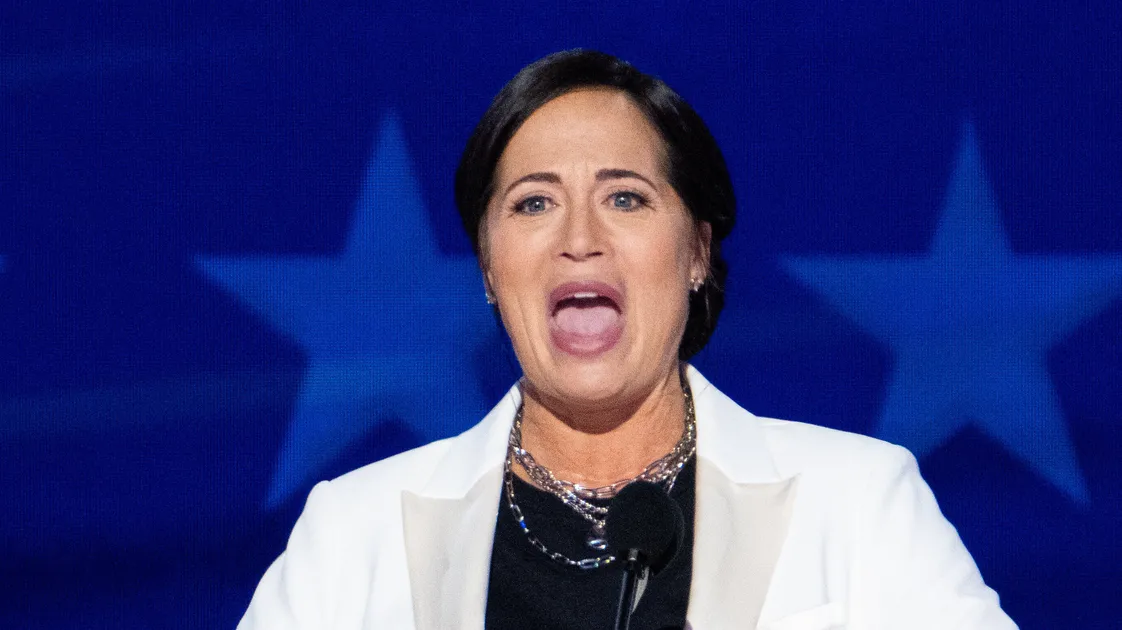
US President Donald Trump’s former White House Press Secretary Stephanie Grisham tore into her old boss Friday night after he banned news outlets CNN, MS NOW and Politico from the White House in a move she said “didn’t surprise” her at all.
Grisham told CNN’s Brianna Keilar that during his first term, Trump “tasked” her with “getting the press corps off the White House grounds.”
“He had me looking at places that they could go that were off the White House grounds because he wanted everybody kicked out, not just the few that you guys are dealing with right now. I’m sure it’ll get bigger,” she said.
See Grisham’s comments below:
Grisham said would “push it off and stall him” when Trump made the request, but she predicted he would pursue the goal again when he came back into power.
“That’s something that I knew was going to happen, watching him and the way he’s just tearing down East Wings and doing whatever he wants,” she said. “He clearly feels very, very empowered right now. So it didn’t surprise me at all.”
The president announced his ban on Truth Social, accusing the three media outlets of being “FAKE NEWS!”
“They purposely write negative news. And they do that because they want to try and diminish the Republicans and a Republican administration,” he said at a press conference Friday.
Grisham said she had hoped there would be someone in the White House telling him not to pursue the media ban.
“But it seems like he has really surrounded himself with sycophants and doesn’t have the guardrails that we kind of had in Trump 1.0,” she said.
“And so I think everybody’s laughing and thinking it’s a great idea, but you know, as always, he’s missed it, the point,” she said before railing against his administration’s handling of the economy.
“People don’t care that the White House isn’t, or that the press can’t be on the White House grounds, because they’re suffering, and he’s not doing anything, but these silly projects and these silly little vanity, you know, issues that he’s doing,” Grisham continued. “And so once again, it’s just not good. It doesn’t look good. He’s so out of touch, and he’s melting down.
Listen to Commons People, the podcast that makes politics easy. Every week, Kevin Schofield and Kate Nicholson unpack the week’s biggest stories to keep you informed. Join us for straightforward analysis of what’s going on at Westminster.

Sleep and heart health seem to be linked, with one paper suggesting that 11 extra minutes of kip a night could lower your heart attack risk.
Obstructive sleep apnoea, meanwhile, is associated with higher blood pressure, and insomnia seems connected to worse cardiovascular outcomes too.
And according to a new paper published in the European Heart Journal, even the lighting setup you have while snoozing might be consequential.
Too much light during sleep could create heart health risks
This research involved over 11,000 participants who made their health data available to scientists through the UK Biobank.
Those involved in the research wore a light sensor wristband for a week to measure how bright their surroundings were at night.
And three years after that, researchers checked their hearts with an MRI scan.
Compared to those who were exposed to dark conditions at night, people whose environment was more than three lux bright (a dim light level that nonetheless seems to suppress sleep hormone melatonin) saw a thickening of the walls in their heart’s left ventricle.
It also looked like their hearts were less able to bend during a heartbeat, an early indicator of cardiovascular issues.
Study author Professor Qi said that this “shows that exposure to higher levels of light at nighttime is linked to cardiac remodelling. This is where the structure and function of the heart changes and we typically see it in response to chronic stress or injury to the heart.
“It’s our body’s way of adapting to that stress, but ultimately it weakens the heart and can lead to heart failure.”
He suggested this could mean light pollution is “a new risk factor for cardiovascular disease”, and said we should start considering darker environments as a possible heart disease prevention strategy.
A solution is “simple and inexpensive”
In an editorial related to the paper’s release, Professor Thomas Münzel, who was not involved in the study, said that clinicians working with patients who have heart issues should start asking them about their sleeping conditions.
Questions could include how dark their room is, how much screen time they get after bedtime, and whether they work the night shift (a factor already linked to increased heart disease risk).
“The advice is simple and inexpensive: blackout curtains, warm-coloured bedside lighting, and covering the small standby LEDs on household electronics,” he said.
And on a policy level, we should start to tackle light pollution, he added.
“Ultimately, this study is more than an interesting observation. It provides a crucial link between what satellites already show us, i.e., a planet glowing ever brighter at night, and the clinical reality unfolding inside our chests: hearts that are becoming stiffer, weaker, and less efficient.
“The relationship is biologically coherent, the effect sizes are clinically meaningful, and the dose-response is unambiguous: more light, worse outcomes. The takeaway is clear: darkness deserves recognition as a vital sign, as essential to cardiovascular health as blood pressure control and clean air.”

Donald Trump’s “historic and special” Greenland deal has already been met with mockery in Denmark.
He insisted its Arctic location was essential for defence against rivals like China and India – and expressed interest in the island’s mineral wealth.
Trump threatened to take it by force, even though the semi-autonomous territory belongs to the Kingdom of Denmark which is a Nato ally like the US.
But he suddenly announced on Friday evening that he had reached a new deal with Denmark and Greenland to give America “permanent control of security” on the Arctic island and resolve “all of our many US concerns”.
He claimed it would come at “no cost to the United States” and that America would be able to “do what is necessary” to “secure and defend the security of Greenland”.
The president said no US adversary would be able to maintain a military presence in Greenland or “make sensitive investments in Greenland without our express written approval”.
Trump wrote on TruthSocial: “This is a dream come true for the United States of America, one that is very important, historic, and special.
“At my direction, we worked with representatives of Denmark and Greenland to guarantee that the United States will FOREVER have the complete ability to do what is necessary in Greenland in order to secure and defend the security of Greenland, and the United States of America.”
Nato said the deal would stabilise the region, while Denmark’s prime minister Mette Frederiksen and Greenland’s prime minister Jens-Frederik Nielsen said the deal “strengthens our common security”.
The agreement is expected to be signed next week at the UN General Assembly but the details are yet to be released.
It’s currently unclear how the agreement is different from the US’s 1951 deal with Denmark which allowed America to send as many troops as it wants to Greenland.
No territory is expected to actually change hands.
So, unsurprisingly, Trump is already being mocked over his claim that this is a “dream come true”.
Danish newspaper Berlingske ran with the headline: “Don’t tell Trump that it’s the Kingdom of Denmark that has won.”
A Danish member of the European Parliament for the Liberal Alliance, Henrik Dahl, also suggested the deal had not really changed anything.
“A wise Danish politician once said that you can achieve almost anything if you are willing to let others take the credit,” he said.
“So let us give Donald Trump the credit for something very close to the status quo. From a Danish and Greenlandic perspective, it could hardly be much better.”
Meanwhile, US commentator for broadcaster TV2, Torsten Jansen, said: “Even though Trump is trying to blare it out as a victory, it is, as I see it, a spectacular defeat.”
“In terms of rights, they [the US] were already allowed quite a lot under the original agreement,” Mikkel Runge Olesen, a researcher at the Danish Institute for International Studies in Copenhagen.
He told the New York Times: “Is there anything here that one could not have achieved without this crisis?”
Danish commentator Sophie Plutz also told LBC: “It does sound like the Americans have accepted a re-packaging of old deals and agreements, but overall there’s not a lot of new stuff in here.”
Watch reactions from people in Denmark and Greenland here:
Listen to Commons People, the podcast that makes politics easy. Every week, Kevin Schofield and Kate Nicholson unpack the week’s biggest stories to keep you informed. Join us for straightforward analysis of what’s going on at Westminster.

Rod Mitchell, the oldest child in his family, remembers being nine when his seven-year-old sister reached for a large Lego tower he’d spent all afternoon building.
When he grabbed it back, a piece flew off, and she started crying. Instead of asking what happened, their parents said: “You’re older. You should know better.”
“That’s the same sentence I now coach parents to replace,” said Mitchell, who is a registered psychologist and clinical director at Emotions Therapy Calgary. “I clearly remember anger at feeling unfairly treated, and underneath that a lesson formed in my mind: her tears were proof of something, and my account of what happened wasn’t.”
As a parent, it may seem like you’re teaching your kids responsibility or how to get along, but you could also be assigning them roles within the family without realising it.
When certain expectations repeatedly fall on the same child, they can shape how siblings see themselves, and each other, long after childhood, influencing sibling relationships for years to come. Here, family therapists break down what they want parents to know about these patterns.

Anastasiia Sienotova via Getty Images
The Sibling Roles That Can Take Shape In Families
Role assignment is common in families. Patterns naturally develop when you start dividing responsibilities, managing differences between children and keeping daily life running smoothly.
Over time, these patterns can become familiar sibling roles, from the responsible child and caretaker to the peacemaker, the rebellious child or one who avoids creating additional stress.
“Sibling roles typically emerge organically in response to personality, birth order, family stress and the ways parents react to each child,” said Emily Waitt, clinical director of Kincove, an adolescent, young adult and family-focused mental health and wellness centre.
“One of the most common dynamics occurs when one sibling becomes the family’s identified ‘problem,’ while another is viewed as the ‘easy’ child or the one who ‘has it all together.’ The child perceived as easy typically receives less attention or support because adults assume they’re doing fine.
How You’re Unintentionally Reinforcing Sibling Roles
As a parent, you may not mean to assign roles to your children, but it can happen unintentionally. The language you use and expectations you place on them can reinforce those roles over time, even when you’re trying to teach responsibility, empathy or consideration.
Parents often give the youngest more leeway, excusing their behaviour because of their age rather than asking them to take responsibility.
Meanwhile, the oldest might hear, “You’re so much more mature than your brother, so I need you to let it go” during a conflict.
“This may sound like praise, but it can teach one child that their feelings and needs matter less because they’re expected to be more accommodating,” Waitt said.
That expectation can also show up in the pressure placed on the oldest to set an example for younger siblings. Mitchell, who was labelled the responsible one in his family, remembers: “My parents used to say things like, ‘We expect better of you,’ and ‘Your sister is watching you.’ My behaviour was never just mine; it was a demonstration, graded on what it taught my sister. My parents stopped saying things like that as we grew older, but I had already internalised the role.”
Parents might also give the oldest more responsibility than they’re ready for, such as expecting them to make sure a younger sibling gets ready for school or remembers their homework.
Waitt notes that it becomes problematic when the child feels responsible for preventing a younger sibling’s distress, managing their behaviour, keeping them safe or ensuring they make good choices, particularly at the expense of their own needs, activities or well-being.
“At that point, the child is no longer simply helping or fulfilling an age-appropriate role as an older sibling; they’re being placed in a parental role,” Waitt said.
How Role Assignment Can Create Sibling Resentment
Experts agree that assigning and reinforcing sibling roles can create resentment, particularly when children feel compared with one another, fuelling emotions like anger, fear and jealousy.
“If one child is seen as the favourite, the responsible one, the mature one and the other one is labeled less favourably, it inevitably sets up competition between them for parental love and attention,” said Raffi Bilek, family therapist and director of the Baltimore Therapy Center.
Role assignment can also leave siblings carrying burdens they never asked for. One sibling might resent always having to be the caretaker, while another might feel unfairly labelled as the troublemaker.
“They may have held these roles throughout their childhoods against their will, and yet they may perceive the other sibling as having wanted and benefited from their particular role,” Bilek said. “That’s fertile ground for long-term bitterness.”
![“When [you] come back together for family events, the same old patterns play out, and the same pain points get triggered,” Bilek said.](https://img.huffingtonpost.com/asset/6aa030d21700002b1e200d65.jpeg?ops=scalefit_1440&format=webp)
Why Roles Can Be So Hard To Break Free From
Because parents have years of experience interacting with their children in particular ways, it can be hard to see them outside of their assigned roles, even as their personalities, abilities and circumstances change with age.
“On the whole, knowing which children play what role and having a predictable system has kept the family going, and considering something different risks upending that structure,” Bilek said.
It can be just as difficult for siblings to see each other outside of those roles, even as adults living apart. They may have internalised childhood expectations, while past hurts and unresolved resentment can make it harder to see a sibling as they are today rather than through the lens of those experiences.
“When [you] come back together for family events, the same old patterns play out, and the same pain points get triggered,” Bilek said.
Signs You May Be Reinforcing Sibling Roles
There are a few signs that can help parents recognise when they’ve assigned or reinforced sibling roles, like knowing which child you’re about to correct before you’ve even asked what happened, for example.
“Parents can often hear this reflected in the language they use to talk about their children. Phrases like ‘as usual,’ ‘typical,’ or ‘once again’ are common,” Mitchell said.
Another is hearing those labels come directly from your kids. “A child who says ‘I’m the bad one’ or refers to their sibling as ‘the smart one’ has internalised the roles you’ve assigned them,” Mitchell said.
How To Help Your Kids Break Out Of Their Sibling Roles
If you think the dynamic between your kids could use a reset, experts say change is possible, even when roles have become entrenched. Start by naming the pattern clearly: “We’ve been treating you like the responsible one, and you like the wild one. That wasn’t fair. It’s changing.”
“Keep it under two minutes and don’t beat yourselves up,” Mitchell suggested. “Stating the pattern out loud is important … kids don’t renegotiate a role no one has admitted exists.”
Mitchell also suggests telling your kids that a particular role is getting a vacation, saying something like, “I’m taking care of your brother tonight, you’re on vacation!”
“Then assign the other child something concrete to manage: pet food or family movie choices are good options. The announcement is what tells both kids the roles can move,” Mitchell added.
Finally, consider your language so you don’t inadvertently reinforce those labels. “Praise the effort, not the identity, like ‘you worked so hard on that,’ instead of ‘you’re my responsible one,’” said Mitchell, adding that parents should also swap “You’re the older sibling, so you should know better” for “You knew our rule about grabbing, and I need you to follow it.”
“You can still ask them to act responsibly; just drop the reference to birth order,” he said.
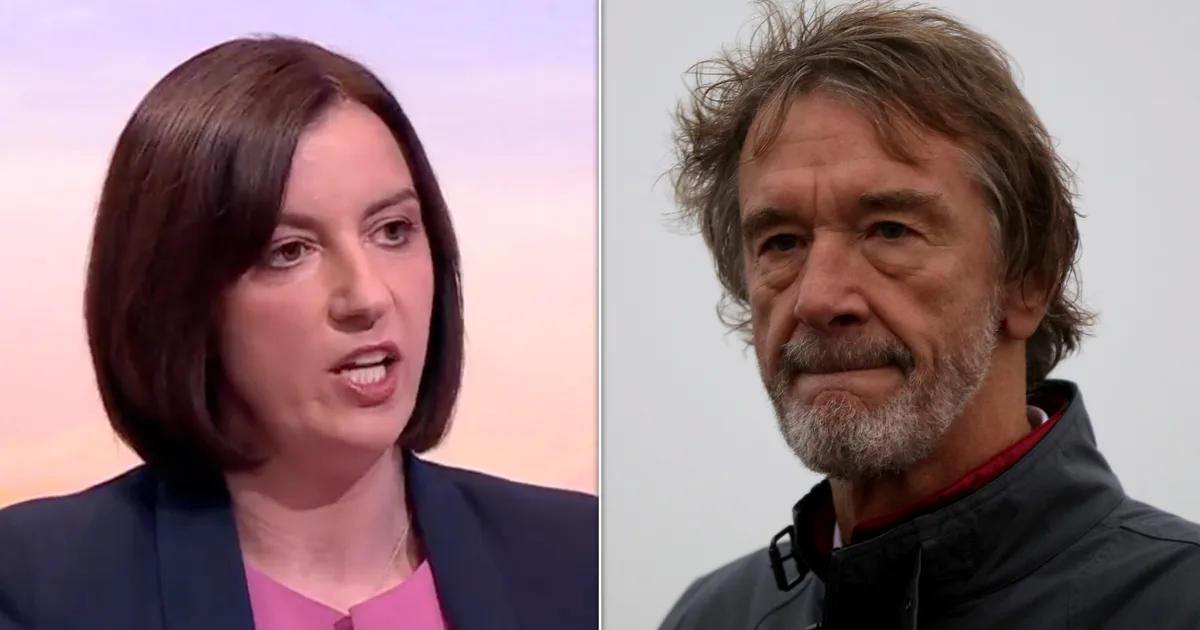
Bridget Phillipson tore into Jim Ratcliffe after the British billionaire claimed the UK is “on the slide”.
Ratcliffe, who owns Manchester United football club and has lived in tax-free Monaco since 2020, claimed: “If you continue to tax everyone to death, they’re all going to leave. And that’s what’s happening.”
“I think the UK is on the slide,” he told the BBC, insisting “tough” politicians have to make decisions which are good for the country rather than their parties.
Ratcliffe, worth an estimated £17bn, alleged that high immigration and high taxes have forced Britain into a state of decline and that he would only return if things improved.
However, Labour Party chair Phillipson told BBC: “You’ll forgive if I do take with a pinch of salt what someone who is a tax exile has to say about our country.
“I am optimistic about our country’s prospects,” the minister said, while acknowledging there are large international headwinds in reference to the ongoing Iran war.
“But I fundamentally believe we are in a strong position going into this Budget because of decisions taken over the last two years,” she added.
The minister claimed “you lose the moral high ground” over such economic arguments if one “becomes a tax exile”.
Phillipson, who is also the equalities minister, tore into Ratcliffe’s history of supporting the UK’s exit from the EU.
“He was also someone, as I understand it, who was a big supporter of Brexit,” she said.
“That was over a decade ago now, but we’ve seen the impact of Brexit on our economy, and that’s why this government is committed to making sure we do have a better trading relationship with the European Union, which will be a central part of how we make sure we do see stronger growth.”
Her remarks come after Treasury minister Torsten Bell claimed on X Ratcliffe “hates his own country while complaining he doesn’t get big enough subsidies from it” and “laments the hit to manufacturing driven by a Brexit he supported”.
Chancellor John Healey is expected to hike taxes to close funding gaps in his Budget next month.
Listen to Commons People, the podcast that makes politics easy. Every week, Kevin Schofield and Kate Nicholson unpack the week’s biggest stories to keep you informed. Join us for straightforward analysis of what’s going on at Westminster.
Politics
Phillipson to Piddington Women Concerned About Their Safety: ‘All Women in Society Are Unsafe’
Phillipson to Piddington Women Concerned About Their Safety: ‘All Women in Society Are Unsafe’

“Where does the time go?” and “time goes by too quickly” are common refrains at the end of a weekend or calendar year.
While there is no way to actually slow down time, there may be a reason why it flies by so fast – and your strict weekly routine may be the culprit. Rigidity and a lack of novelty can actually make it feel like your life is going by faster than you want.
In a viral post on X, retired neurosurgeon Dr. Brian Hoeflinger shared insight on routine’s impact on the passage of time and ways to make it feel like it’s moving slower.
“Repetitive daily routines stop the brain from recording clear detailed memories,” Hoeflinger wrote on X. “When every day looks the same, your brain does not track time the same as a clock does. It tracks change. If nothing new happens then days, months, and years start to blur together.”
“This is known as time compression. When life lacks variety, your brain compresses past days together, making it feel like time is sped up,” he continued.
To make time feel like it’s passing more slowly – and like your days are not so mundane – you can simply try new things “or change up your routine,” Hoeflinger told HuffPost.
Novelty is the answer to “time compression”
According to Hoeflinger, the best way to disrupt time compression is by doing new things. This could be trying a new hobby, travelling to a bucket-list destination, taking a new route home or simply making a different recipe for dinner.
“You’ve got to change things up in your life a little bit … so it’ll stick in your brain and be put into your permanent memory,” he said.
When you do something different, “it makes an incident in your brain, so you remember it. And by remembering that, it helps you feel like your day was longer, like there was more going on in your day,” Hoeflinger said.
Think about it: When you look back on a year with lots of events and travel, you probably say something like “wow, I did so much” versus a year of nothing where the days melt into each other.
It may sound counterintuitive since days that involve more activity tend to fly by in the moment, but these days seem slower when you look back because your brain makes a note of each of the occurrences, Hoeflinger explained.
Compare this to when you do the same things again and again. There is no individual memory that sticks out, which makes it feel like the day went by and you weren’t even in it.
“When you experience something new … your brain responds with a release of dopamine, and that can help us focus in and pay more attention to the experience that we’re having,” added Tim Bono, a lecturer in psychological and brain sciences at Washington University in St. Louis. “So, you can think of novelty [as] interrupting the daily schema or expectation of life.”
You’ll also have more memories of your life if you take an active role in it, Hoeflinger said. “The day will feel slower and more meaningful as opposed to if you’re not actively doing new things.”
Bono said, “We can’t change the actual passage of time. The days and months are going to go by … but we do have some agency and control over the depth and meaning of the experiences of how that time feels to us, especially when we were looking back.”
You don’t need to do anything drastic to infuse more novelty into your days
The first step to creating more memories and slowing down the passage of time is to simply break up your routine.
“Try to do something different – go to a different restaurant or try new meals at home … change up your wardrobe instead of dressing the same,” Hoeflinger suggested.
Any amount of novelty will create new memories and make your days feel longer and more action-packed, even if that new memory is simply joining a different gym class or working from a coffee shop instead of your home office.
“I think that the most important way to increase our happiness is to savor whatever time we do have,” Bono said.

Maki Nakamura via Getty Images
Instead of sticking to your weekly routine of errands, chores and work, be sure to add in time with family and friends.
“That’s the kind of novelty that allows you to slow down and savor life versus feeling like you’re on this treadmill and that you’re just constantly having to run from one thing to the next,” Bono said. “Those are usually the mundane things that we’re chasing.”
“We have to give ourselves permission to … get a little bit behind on those, so that we can prioritize the stuff that’s more important. And I would put social connection and social experiences at the top of that list,” Bono added.
This may look like making happy hour plans with a co-worker instead of immediately rushing home or inviting your cousin and their kids over for dinner and a playdate.
Mindfulness and relaxation can also help slow time.
Focusing on the moment in front of you is an important way to savor time, too. This is true whether you are trying something new or not.
It isn’t easy. Many of us are on our phones while watching TV or thinking about a long to-do list as we play with our kids and grandkids – “but I think if you find that you focus on that moment more … that’ll form a memory in your mind that will stick with you more, and it’ll make your day more meaningful,” Hoeflinger said.
Focusing on a moment allows your brain to create an incident in your day, which then makes your day feel longer and like you accomplished something, he said.
This type of focus is a form of mindfulness, which allows you to slow down and home in on what’s happening now.
Along those same lines is relaxation. If you are always rushing around, the day flies by, Hoeflinger said. “So, slow down.”
Switching up your routine and trying new things helps it feel like you have more time in a very finite life, and it also helps you live a more enjoyable life.
“Just do something exciting or something different,” Hoeflinger stressed. “That all helps you feel like time’s not slipping by so fast because those incidents, those memories, will stick in your mind. And when you look back upon it, you’ll go, ‘Wow, that was a great day.’”
“I heard some quote a long time ago – ‘the biggest lie we can tell ourselves is that we’ll always have more time,’” said Bono.
The reality is we don’t always have more time. You likely think you can visit that new restaurant next month (and then never go) or you can see that friend in the winter instead of the fall (and then never do that, either). “Being reminded that time is a scarce resource, as uncomfortable as that might feel, is actually good for our mental health,” Bono said.
This helps inspire people to get out and do the thing they’ve been putting off.
“Being reminded of that reminds us that life is precious, and there’s no time like the present to seize the opportunities to reach out and have those meaningful experiences in our lives,” said Bono.
Zia Yusuf has attacked former “deadbeat Tory ministers” in what appears to be a swipe at his Reform UK colleagues.
The party’s home affairs spokesperson claimed a Conservative pact with Reform would only work “over my dead body” in a slap down to the rival right-wing party.
More than 20 former Tory MPs have defected to Reform since the Conservatives were kicked out of government in the 2024 general election.
Yusuf’s remarks revive the existing tensions within Reform between the former Conservatives who defected over to Nigel Farage’s party and those who have been part of the group since before it became a dominant force in mainstream politics.
Mimicking a popular social media format, Zusuf slammed an unnamed “deadbeat Tory minister” who “promised to cut immigration”, only to “throw open Britain’s borders and then “write articles constantly pleading for a ‘pact’ with Reform so you can try and suffocate us from within.”
He added: “OVER MY DEAD BODY!”
Yusuf is not an MP. But, of Reform’s eight representatives in the Commons, four used to be Tory MPs and two were ministers.
Suella Braverman, now Reform’s education spokesperson, was the home secretary under Rishi Sunak while Robert Jenrick, Reform’s Treasury spokesperson, was the immigration minister.
Many on social media suggested Yusuf was directing his criticism towards Jenrick and Braverman, who have tried to distance themselves from their past in government.
Yusuf has been frequently criticised for his outspoken social media takes in recent months.
He has been accused of racism after slamming a former child refugee and a Labour council leader because she was born in Somalia.
The prominent politician also called former Tory defence secretary Ben Wallace – who served in the Army – a “traitor” to the UK.
His remarks have drawn criticism from within his own party, including from Farage who previously said he would give Yusuf a “ticking off” for his “over the top” language.
Former Tory cabinet minister and now Reform member Nadine Dorries also told Times Radio earlier this month: “I think Zia’s got a problem with Twitter. Someone needs to take his phone off him.”
Reform is also grappling with heightened scrutiny over its finances after receiving £72 million in donations from crypto-billionaires last week.
Listen to Commons People, the podcast that makes politics easy. Every week, Kevin Schofield and Kate Nicholson unpack the week’s biggest stories to keep you informed. Join us for straightforward analysis of what’s going on at Westminster.

Potatoes have had a rough go of things.
Most recently, the high-protein, anti-carbohydrate people have spread the message that potatoes are full of fattening carbs. Back in the anti-fat ’80s, we were told that mashed or fried potatoes were too rich, guaranteed to pack on the pounds. Before that, there were the anti-nightshade adherents, who believed that potatoes were laced with poisons.
In the United States, where a 5-pound bag of potatoes was in every pantry when I was a kid, we are eating fewer spuds these days. U.S. annual consumption of fresh potatoes fell from 48 pounds per person in 1982 to 28 pounds per person in 2024, while frozen potato consumption rose from 41 pounds to 58 pounds per person over the same period, respectively.
That means we aren’t cooking with potatoes, but we’re eating a whole lot of French fries and tater tots. Here’s how nutritionists want us to start thinking about potatoes in our everyday diets.
Potatoes are a whole food
Like other vegetables, potatoes have a spectrum of nutrients, not just carbohydrates.
According to Toby Smithson, a registered dietitian nutritionist (RDN) and the senior manager of Nutrition and Wellness at the American Diabetes Association, “they are a rich source of vitamin C, vitamin B6, potassium and fiber, especially when the skin is left on. Potassium is particularly important for heart health and healthy blood pressure”. In fact, potatoes are a potassium superstar and even have some protein.

“Potatoes rank highest in potassium of the top-selling fruits and vegetables. Potatoes are delicious and a good quality carb – that even offers a little bit of plant protein too (3 grams per serving),” Barbara Ruhs, a registered dietitian (RD), said.
Yes, they are called a starch for a reason
It’s true that potatoes contain carbohydrates. You may have heard of the Glycemic Index, a scale devised to help diabetic patients manage their carbohydrate intake. It rates foods on a scale of 0 to 100 based on how quickly the foods break down and raise your blood sugar after eating them. In recent years, the glycemic ratings of certain foods have entered the lexicon of weight loss, as people strive to lower their sugar intake.
The highest-GI potato is a plain baked Russet potato, scoring at 111. A boiled white potato scores 82, a boiled New Potato is 58, and French fries 73. Russets have more of a starch called amylopectin, which digests quickly, while waxy potatoes have more amylose, which burns more slowly. New potatoes have the most amylose and, when eaten with the skins on, are the lowest GI. But GI is just part of the picture.
Potato salad, on the other hand, has a GI of 45, which is low. How does that work? There are two important factors in how a potato affects your blood sugar. One is the way it is cooked, and the other is what you eat with it.
How you cook them matters
The same potato, which has a GI of 82 when cooked and refrigerated overnight, now has a GI of 49. That’s because of the phenomenon of resistant starch.
“The flesh contains resistant starch that increases in content when potatoes are cooked and cooled and actually works to blunt the glycemic effect of potatoes, meaning your blood sugar levels are lower than if eating hot potatoes,” Carolyn O’Neil, RDN, said.
The resistant starch remains even when you reheat a chilled, boiled potato, so cooking your potatoes the day before and then reheating them lowers their GI, even if you sauté them for breakfast.
Most foods are eaten in a dish, as part of a meal. That high-GI baked potato is usually topped with butter, sour cream or cheese. Adding cheese to that high-GI Russet potato brings the GI down to 39, which is considered low. Making that boiled and chilled potato into potato salad, with added acids, fat and fiber, drops the GI to 45.
“Who knew that potato salad was the way to go?” O’Neill said. “Turns out that by adding acid and fat to the cooled potatoes you can blunt the glycemic response even further.”
Even diabetics can enjoy potatoes
The people who really need to monitor their blood sugar are diabetics, and experts still recommend potatoes as part of the diabetic diet.
“Potatoes are often misunderstood when it comes to diabetes, but they can be part of a healthy eating pattern,” Smithson said.
“Potatoes are a quality carbohydrate and fit into the carbohydrate portion of the Diabetes Plate, where about one-quarter of the plate is filled with carbohydrate foods and the remainder includes non-starchy vegetables and lean protein.”
How many of the nutrients are in the skins?
You’ve probably heard that all the nutrients are in the skin of the potato, especially the fibre. The flesh may seem creamy, but it also has its share of cholesterol-lowering fibre, too.
A medium Russet potato has 3-4 grams total dietary fibre, and “30-50% is in the peel, 50-70% is in the flesh,” O’Neil said.
The dietary fibre in the skin is primarily insoluble or indigestible fibre “that works like ‘nature’s broom’ to support gut motility,” and “the flesh of the potato contains soluble fibres, like the type in oatmeal, that slows down glucose absorption and helps manage cholesterol levels,” she added.
Why you don’t need to avoid carbs
While the rest of us are trimming carbs, endurance athletes are carrying packets of carbohydrate gels to slurp down during long runs or bike races. A 2019 study showed that Russet potatoes are as effective as packaged carbohydrate gels for fueling endurance athletes. The trend of carrying a baked potato along while training continues to this day.
The overall takeaway? If you’re concerned about carbs, boil, chill and then eat your potatoes. Lean toward new potatoes when appropriate, and make sure to enjoy them with some fat and acid to counter the blood sugar boost.

My Transgender Life: What It’s Like To Be Trans Masc

Asiad 2026: India open shooting campaign with women’s 10m air rifle silver | Asian Games 2026

Who Makes Cafe Appliances And Where Are They Manufactured?

Weekend Open Thread – Corporette.com

Weekend Open Thread: Talbots – Corporette.com

Memory prices are slowing because buyers ran out of money

Airdrop Digger Community #airdrop #telegrambot #airdrops #cryptocurrency #shorts #earnmoneyonline

#meaning #marriage #hardwork #money

BTC & ETH live crypto trade #trading #crypto #live #foryoupage #shortvideo #cryptocurrency #shorts
-
 Fashion2 days ago
Weekend Open Thread: Talbots – Corporette.com
-
 NewsBeat2 days ago
Trump says US has reached an agreement to take permanent control of Greenland’s security
-

 Crypto World2 days ago
Circle launches Arc Studio AI agent for building onchain apps
-

 Crypto World6 days ago
Revolut Attackers Warn of Ongoing Daily Customer Data Leaks
-

 Crypto World6 days ago
Kraken Lets xStocks Holders Earn Yield Through DeFi
-

 Crypto World5 days ago
Robinhood engineers charged over $50K crypto scheme
-

 Crypto World5 days ago
What Is the Status of the U.S.-Iran Peace Talks? Here's What Both Sides Are Saying
-

 Crypto World4 days ago
US Charges Robinhood Engineers Over Crypto Listing Trades
-

 Crypto World2 days ago
Bitcoin price breaks channel as RSI climbs to 63
-

 Crypto World6 days ago
Elon Musk Drops a Bombshell: Grok 5 Could Be the AGI Breakthrough
-

 Crypto World7 days ago
New Tesla Roadster Uses SpaceX Tech. Will It Impact the Stock Price?
-
 NewsBeat6 days ago
‘Sick conspiracy’: Trump says only guardrails AI needs is ‘a strong and smart (High IQ!) president’ in all-caps rant
-

 Crypto World5 days ago
NVIDIA Analysis: Attempted Rising Wedge Breakout Amid Pressure on the AI Sector
-
Business6 days ago
SK Hynix ADRs Fall More Than 6% as Memory Rally Breaks on Fears of Slower AI Spending
-

 Tech5 days ago
Webb’s IC 348 Mosaic Includes Two-Jupiter Dwarfs, Twin Jets, and a Nursery Still Making Worlds
-

 Crypto World6 days ago
3 Token Unlocks to Watch in the Third Week of September 2026
-
Crypto World6 days ago
Can Circle’s Arc Repeat Robinhood Chain’s Meme Coin Boom?
-

 Crypto World6 days ago
DOJ Seeks to Seize $61M in Iran Oil Funds From Binance Accounts It Vouched For
-

 Crypto World7 days ago
AI Safety Burden Falls on Chief Executives as Trump Prioritizes China Race
-
 NewsBeat2 days ago
US was ‘on brink of war’ with China over false AI report of nukes moving in Middle East
You must be logged in to post a comment Login