
Politics
Brits tighten their belts, cash-strapped amid cost of living crisis


The neoliberal system leaves 40 percent of Britons with less than £25 at the end of each week, a survey by the Cost of Living Action (COLA) group has found. This is pittance and unlikely to stretch far under the cost of living crisis, where even employed people are finding themselves out of pocket.
Manufactured cost of living crisis
Privatised essentials like energy and extractive supermarket chains are driving the cost of living crisis. British Energy companies alone have accrued £125 billion since 2020, according to the End Fuel Poverty Coalition.
Meanwhile, profits for the German-owned supermarket, Lidl, rose by 297% since 2021. As for Aldi, its operating profit has risen by 50% and 72% since 2020.
While costs have increased due to climate change and other factors, supermarkets are using these pressures to break even but to fatten profit margins — otherwise known as ‘greedflation’.
In other words, the fuel feeding the cost of living fire is the ‘privatisation tax’ on common essentials — not a natural disaster but a manmade problem.
Public ownership
A publicly owned Green New Deal could tackle the cost of energy. Just 1.2% of the Sahara Desert would be necessary to power the entire world’s energy needs. Solar is gradually replacing oil because of cheaper costs. It does not appear to be happening fast enough to mitigate climate catastrophe.
Plus, energy is an essential service that would be cheaper under public ownership.
What’s more, non-profit supermarkets could dramatically lower the cost of food and alleviate the pinch for ordinary Brits.
Holistic approach
Speaking about the latest survey, Labour MP Yuan Yang, co-convenor of the Living Standards Coalition, articulated the need for a holistic (all hands to the pump) approach.
The Cost of Living Action campaign has identified a critical challenge for those of us in Westminster to grapple with: that we need a holistic approach in order to create growth while tackling the cost of living crisis. As their campaign has correctly identified, this approach requires increasing incomes, reducing costs, and fairer taxation.
Conor O’Shea, campaign coordinator of COLA, spoke of the grating impact of these inflationary pressures on British society.
Millions of people are struggling with sky-high costs, and left in debt or with next to nothing left after paying bills each month. It’s no wonder people are feeling so worried and angry. The government must deliver transformational change that truly responds to the scale of the crisis. That means making the essentials affordable for everyone, ensuring everyone has access to the income they need to live well, and rebalancing the tax system with more and better taxes on wealth.
If these issues are not tackled at the root, Brits will have to tighten their belts — as if they haven’t done exactly that over the past decade.
Featured image via Unsplash/the Canary

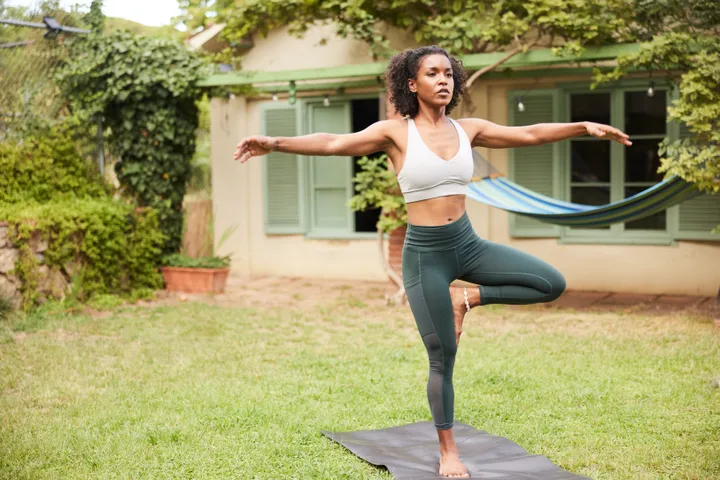
There are many important factors to consider when thinking about healthy ageing, not the least of which is fall risk.
One in four adults over 65 falls each year, according to Centers for Disease Control data from the US, and many of those people require hospitalisation, medical attention or lifestyle changes due to injury.
“One of the biggest issues that we worry about as geriatricians in older adults is falls because they can cause a lot of injuries,” said Dr. Maureen Dale, an associate professor of geriatric medicine at the University of North Carolina at Chapel Hill School of Medicine.
Falls can cause hip fractures, vertebral fractures or worse, all of which can hugely impact day-to-day life for older adults, she added. “And so preventing falls is really important in our patients as we age, and one of the best ways to prevent falls is to make sure people have good balance.”
This is particularly important for post-menopausal women who may have low bone density, said Dr. James F. Wyss, a spine and sports medicine physiatrist at the Hospital for Special Surgery in New York.
“Lots of times, the focus on preventing a fracture is addressing bone density and strength training. But the greatest way to prevent a fracture is to prevent a fall,” Wyss said. “Sure, it’s great if you can get your bones stronger through strength training or a medication, but if you don’t fall, you’ve eliminated the risk altogether.”
Being able to balance for a few seconds is fine, but research shows that adults should be able to balance for longer. Here’s what to know.
You should be able to balance on one foot for at least 10 seconds
“People should be able to stand on one foot for about 10 seconds and be able to hold their balance,” Dale said. “If they can’t do that, that’s worth talking to their primary care provider or physician about to think about things that they can do.”
There are often medical interventions that can improve balance, she noted.
While 10 seconds is the goal, the longer you can balance – even up to 30 seconds – the better, noted Janice McGrail, a physical therapist at Mass General Brigham’s Spaulding Rehabilitation.

Not being able to balance for 10 seconds can signal potential health issues
Research shows that if you can’t balance for 10 seconds, you’re at a higher risk of falls, according to Wyss. And if you can’t hold your balance for five seconds, you are at an even higher fall risk.
Being unable to stay steady on one leg can also be a sign of other medical issues.
“Sometimes it’s just that people have a little bit of weakness in their leg muscles and need to work on an exercise program or a physical therapy program that focuses on strengthening those leg and core muscles that help support our balance,” Dale said.
Stability issues may be caused by medications, Dale noted. Certain vitamin deficiencies can also be the culprit, Dale added, such as a vitamin B12 deficiency.
“And then sometimes we find that people have sensory changes, so decreased sensation in their feet and legs that can impact their balance as well,” Dale noted.
Your doctor can help determine the cause of your balance issues and work with you toward a solution.
“There are a lot of things that we can do to help support and promote healthy balance in people. So that’s why the starting point really is talking to your primary care provider,” Dale explained.
There are ways to safely practice balancing at home and ways to prioritise it throughout your life
It’s simple to start working on your balance – as long as your doctor says it’s safe to do so.
You can begin by building balance work into daily habits such as standing on one foot as you brush your teeth or as you wait for your lunch to heat up in the microwave, according to McGrail.
Depending on how steady you feel, you can also try standing with one foot in front of the other like you’re walking on balance beams.
It’s important to practice this safely so you don’t end up falling, McGrail said.
“When I’m giving someone an exercise to do at home for balance, I always tell them to stand at the kitchen counter [if you’re microwaving food] or at the sink counter if you’re brushing your teeth … so that you have something in front of you that you can hold on to if you need to,” McGrail said, adding that you should also put a chair behind you so that if you fall backwards, you “can just sit in the chair rather than ending up on the floor.”
If you aren’t ready to try standing on one foot, you can practice balancing by walking on your toes or heels throughout your house, Wyss said.
Folks who can easily balance on one leg while brushing their teeth or microwaving food can take it one step further and incorporate balance into their workout regimen, such as doing bicep curls while balancing on one foot, Wyss suggested.
“It’s 40s, 50s that I start tell people, ‘All right, start incorporating a little more balance training into your routine,’” Wyss explained.
Regular exercise three times a week is also a good way to improve and maintain your balance, according to Dale. Additionally, programs like tai chi, yoga and a physical therapy program known as Otago have been shown to also improve stability.
It’s never too late to work on your balance, McGrail stressed. As long as you’re up and moving, you can make small steps to improve it.
If you need support from a doctor or physical therapist, reach out and they can help prescribe you a safe balance-building program. Even if you’re not yet at an age where you worry much about balance, it’s still important to see your doctor regularly and manage any chronic medical issues that could contribute to balance issues down the road, Dale said.
“Making sure that we’re managing diabetes and heart disease and vascular disease are important things to keep us healthy now and to keep us healthy and well-balanced later,” Dale said.
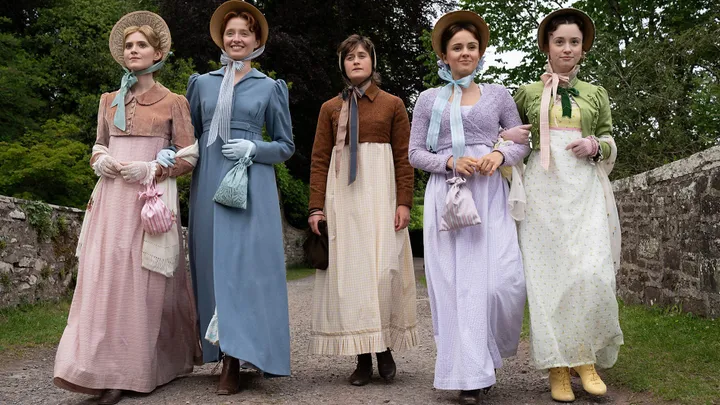
Additional comment from Dr Shelley Galpin, a lecturer in Media, Culture, and Creative Industries at King’s College London.
Adapting a book for a TV show or movie means some readers are sure to be disappointed (take, for instance, Emerald Fennell’s controversial Wuthering Heights).
The BBC’s The Other Bennet Sister is no exception. Focused on Mary, the largely forgotten sibling in Jane Austen’s Pride and Prejudice, the series takes significant enough liberties with the author’s original work for some readers to dub it “fanfic”.
Personally, I’ve never seen that as much of an insult (what are Clueless or Bridget Jones if not very well-done Austen fan fictions?).
If anything, though it has its flaws, I think The Other Bennet Sister is a fun, highly watchable series that fits as neatly into the book’s premise as a mid-2020s TV show can.
It’s not the best screenwriting, I grant you. But the 1940 Pride and Prejudice film adaptation, which included the lines “At this moment, it’s difficult to believe that you’re so proud.” “At this moment, it’s difficult to believe that you are so prejudiced”, made a (clunky) point.
The book is all about how we see and unfairly judge one another, including as a reader. And speaking to HuffPost UK, media, culture, and creative industries lecturer Dr Shelley Galpin said, “The [BBC] series works well as a development of those ideas”.
Of course, Lizzie misunderstands Mr Darcy and Wickham in turns, and Mr Darcy is unkindly snobbish about the Bennets.
But we know that because Austen explicitly paints the picture for us. Her real art is in making us question the characters the book itself portrays negatively: if Mrs Bennet is so irrational and silly, how come the far better-off Mr Bennet married her – and why do some of her schemes, like sending a rain-sodden Jane off to sneeze over the nearest herd of poshies, kind of work out?
Why didn’t Lizzie, or most readers, trust Charlotte Lucas when she (rightly) said Mr Collins was perfect for many of her needs?
Not to pummel the remains of a long-dead horse further into the ground here, but the book makes us ask: were we proud, or prejudiced, when we read it?

I was pleased to see that the Richared E. Grant Mr Bennet’s head-in-the-sand approach to raising children is a lot more explicit than in, say, the 2005 film (even if Mrs Bennet, played by Ruth Jones, is more flatly harsh – both Dr Galpin and I felt the speech she gives at the end of the show was not quite enough to redeem her being “such a nightmare” the rest of the time).
Other characters were reframed, too.
“I definitely felt that some of the more irritating or comic character elements were softened a little [in The Other Bennet Sister] – Mary and Mr Collins were both a little less ‘preachy’ and lacking in social awareness than in their original iterations, so I felt that some artistic license was taken with the characterisation, but this is perhaps consistent with the show centring on Mary’s view of the world more,” said Dr Galpin.
“I… liked the slight rehabilitation of Mr Collins, who is, at the end of the day, trying to do the right thing, even if he is far from the ideal romantic hero.”
Mary, whom I always saw as quite similar to the shy, bookish, devout Fanny Price protagonist in Mansfield Park, was well overdue for a similar reinterpetation, though Dr Galpin pointed out that her TV self might be closer to the original novel than I realised.
“It struck me as I watched it that Mary is essentially playing the ‘Lizzie’ role from P&P. In Austen’s novel, Lizzie is supposed to be a little awkward and lacking in social niceties (in comparison to perfect Jane!) and less attractive than her sister.
“She also continually irritates her mother by making supposedly imprudent marriage choices. Mary essentially steps into this persona in the series. The rivalry with Caroline Bingley also echoes Lizzie’s role in the original novel,” she said.
So, when the BBC show depicts Mary as strong-willed, ambitious, self-aware, and bloomingly confident once she reaches London, it’s not a correction of Jane Austen’s book but a natural extension of it.
It makes as much sense as a spin-off TV series as Mr Collins’ (relatively) successful marriage, or Caroline Bingley’s genuinely well-meaning Wickham warning, do in the novel; not what we were led to expect initially, but hey, what sucker doesn’t question their first impression?
That’s Austen, baby – and in my opinion, the witty, touching, and fun BBC adaptation has bottled it perfectly.
On Tuesday the resident doctors start a six day long strike. It’s the 16th strike since this pay and conditions dispute started. At the beginning, there was a lot of public sympathy for the doctors, but I think that sympathy is waning. They saw Wes Streeting award a 29.4 per cent increase last year and now question why the resident doctors are coming back for another 22 per cent when no other group of public sector workers, including nurses, have had anything other than a low single digit increase. Don’t get me wrong, I think doctors do deserve to be paid well – they do a tremendous, high pressured job. But so do teachers. So do police officers. So do prison officers, and none of those groups are paid as well as doctors.
The government offered them a good deal, which the BMA negotiators recommended the BMA should put to their members, but the left wing clique that now control the BMA doctors committee refused to. It’s about time the BMA members revolted. The BMA, contrary to their perception, is not a professional body, it is a left wing trade union. The doctors are lions who are being led by donkeys, and very soon I suspect the ordinary BMA members will come to realise this. I wonder how solid this latest strike will be. It could be that quite a few doctors have had enough and will decide to go into work. That is often the way a strike will crumble.
The starting year one salary for a resident doctor is £38,800. Under the government’s pay deal that would go up by more than £2,000 to £41,200. Teachers start at £30,000. Police start far lower than that. And what’s more, the pay progression for doctors is much faster than for other public sector employees. And no one mentions to outstanding pension entitlements, which also ought to be factored in.
Now get this. The BMA itself has offered its own staff a pay rise of 2.75 per cent. This is lower than inflation. Quite how they can look their staff in the eye. I do not know. There is a word for the BMA. Hypocrites.
Wes Streeting is absolutely right to be resolute. I suspect he rather regrets bowing to their demands last year now.

If protein is a building block of hair, it can only be a good thing to load up on lots of products that contain protein, right?
Popular hair repair options these days include keratin, collagen, peptides and bond-building complexes that claim to improve the health of your hair. But don’t load up on them too fast…
While protein helps maintain strong, healthy hair, strands can actually become stiff and brittle when topically applied protein builds up faster than hair can handle it, leading to breakage, frizz and tangling.
Here, experts explain what protein overload is, how to spot it in your hair and how to rebalance your routine.
Why too much protein can backfire
Protein is made primarily of keratin, which gives each strand of hair strength and structure. Bonds, also known as crosslinks, between keratin chains within the hair allow it to stretch.
“Healthy hair is the state where this protein matrix and its crosslinks are intact enough that fibres resist traction, yet still show good elastic return and cosmetic shine,” explained Caroline Ruggiero, a certified trichologist and CEO at Truly You Hair & Scalp Clinic in Mississauga, Ontario.
But when protein-based shampoos, conditioners, masks and styling products – which are often marketed as strengthening or repairing – are layered too frequently, the result can be protein overload.
“Like anything, more isn’t always better,” said Emmanuel Mroczka, a trichologist and co-owner at The Hair & Scalp Specialists in Fairview Park, Ohio. “Hair impacted by protein overload typically feels stiff or straw-like, rough even after conditioning, prone to tangling and static and brittle – snapping easily instead of stretching.”

Boy_Anupong via Getty Images
He adds that breakage also often appears in areas that typically remain intact, such as closer to the scalp or around the crown, because the hair has lost elasticity from root to tip.
Protein overload can closely resemble simple dryness, but the key difference is elasticity. “Dry hair often softens with moisture and still has some stretch. Hair affected by excess protein tends to feel rigid and snaps easily, even after conditioning,” Mroczka said, noting that an easy at-home test is to gently stretch a damp strand.
Healthy hair should have a little give and bounce back, and knowing the difference can help you choose the right treatment and avoid overcorrecting.
Why hair absorbs too much protein
Chemical treatments, like bleach, relaxers, perms and repeated colouring, along with heat styling and UV or pollution exposure, can damage the hair cuticle, which is the protective outer layer, and increase shaft porosity.
“When the cuticle is disrupted, hair loses internal proteins and lipids, the cortex becomes more exposed, which causes more hair porosity,” explained board-certified dermatologist and hair transplant surgeon Dr. Divya Shokeen, noting that this is why hair absorbs products more aggressively, making protein buildup more likely.
When hair feels damaged, reaching for protein-repair products is a common instinct. While the ingredients in protein-forward products, such as hydrolysed keratin, collagen, amino acids, keratin peptides and bond-building complexes, aren’t inherently harmful, Shokeen notes that the real risk lies in overcorrecting.
“Damaged hair needs a balance of protein, moisture and lipids, not just high-protein products alone,” Shokeen said. Repeated use of protein-heavy treatments, especially layered in the same routine and paired with infrequent washing, can leave already fragile strands feeling even more brittle.
“Clinical rule of thumb: the more styling layers used, the more important periodic clarifying washes become,” Shokeen said.
How protein overload affects your hair
Protein overload doesn’t typically stop hair growth at the follicle, but it can affect how long and full your hair looks by increasing brittleness and breakage. “If protein-based products are applied directly to the scalp, which, like conditioner, generally isn’t recommended, they can contribute to buildup and irritation around the follicle,” Mroczka said. “Over time, chronic scalp irritation or inflammation can interfere with a healthy growth environment.”
It can also blur the line between shedding and breakage. “Many people think they’re shedding excessively, when in reality they’re experiencing mid-shaft breakage that appears as shorter hairs,” Mroczka said, noting that the typical daily hair shedding is around 80 to 100 strands as part of the natural growth cycle.
“When protein overload is present, breakage often layers on top of this normal shedding, making hair loss feel more dramatic than it actually is.” The good news is that this is often fixable once the routine is rebalanced.
Hair types that are most vulnerable
Fine, chemically treated and low-density hair are especially prone to protein overload. Shokeen said fine strands have less inherent strength and a smaller shaft diameter, which limits flexibility, so protein-heavy products can quickly cause stiffness and breakage.
Porosity also matters. High-porosity hair absorbs protein quickly, due to gaps or damage in the cuticle, making overload likely. This hair type benefits from occasional protein paired with consistent moisture and lipid support. Low-porosity hair, with a tightly closed cuticle, resists absorption. Protein often sits on the surface, causing coating, stiffness and dryness. “Low-porosity hair usually does better with lighter hydrolysed proteins or minimal protein use,” Shokeen said.
Because the ideal frequency of protein treatments depends on both your hair type and the specific formula, experts recommend following label directions closely for best results. “In general, I recommend intervals. For instance, one month on and three months off,” Ruggiero said. “More is not more.”
How to reset your routine
“First, pause all protein-based products, including conditioners, masks, leave-ins and styling treatments labelled ‘repair,’ ‘strengthening’ or ‘bond-building,’” Mroczka said, noting that in some cases, this may also include protein-heavy shampoos.
Next, switch to a hydrating shampoo. Gently cleanse the scalp, letting the lather rinse through the lengths without aggressive scrubbing, and follow with a moisturising conditioner to improve slip and flexibility. “A lightweight hydrating or conditioning spray throughout the day can help support moisture, especially on dry ends,” he added.
If buildup is present, a clarifying shampoo can help, but no more than once every other week. “These formulas use stronger cleansers, and overuse can strip natural oils and worsen dryness or irritation,” Mroczka noted. During this reset, limit heat styling and chemical treatments for a few weeks to allow elasticity to recover.
“Once hair begins to feel softer and more flexible again, protein can be slowly reintroduced,” Mroczka advised. “Balance is the goal, not eliminating protein entirely.”
Having standards when dating is important. But sometimes we get so caught up in the pursuit of the perfect partner that we let those standards get in the way of meeting quality people.
When you’re swiping through a dating app and find yourself rejecting person after person, it’s worth asking: Are your standards too high?
“With dating apps, it is easy to dismiss someone in seconds with a swipe,” Bonnie Winston, celebrity matchmaker and relationship expert, told HuffPost. “You are looking at a human being, but we get used to not realising it is an actual soul, a living and breathing person.”
It happens to the best of us; no one wants to risk another failed relationship. And with the right mindset, standards can actually help you weed out the wrong potential partners.
But what kind of high standards are actually self-sabotaging, and which ones are worth keeping? Here’s what dating experts want you to know.
The Most Common High Standards Dating Experts See
From physical traits to lifestyle preferences, dating experts have heard just about every standard one could set.
Winston has had clients arrive at her sessions with exhaustive checklists resembling a child’s Christmas list. Once, she had a male client who refused to go on a second date with a beautiful, highly educated woman who shared his values and hobbies. His reason? She was 5-foot-1, and he wanted his future children to have a shot at playing basketball.

MelkiNimages via Getty Images
For Emma Hathorn, dating expert at Seeking.com, the standards themselves aren’t the problem. It’s when people associate their specific standards with perfection and refuse to engage with people who are otherwise really compatible that it becomes an issue.
“I actually push back on the idea of having standards that are ‘too high’ entirely,” she told HuffPost. “Most of the standards people criticise, such as wanting emotional maturity, ambition, or financial stability, are not unrealistic. They are signals of compatibility and shared values.”
When High Standards Can Actually Work For You
“Standards are healthiest when they reflect self-respect,” Hathorn said. For example, ask yourself whether a person shares your values or wants similar things in life. Those core values are key to a long-lasting relationship.
Lifestyle standards, such as being “outdoorsy,” an adventurous eater or preferring city life over the suburbs, can also be healthy because they often reflect how someone wants to live day to day, Hathorn adds. Relationships are built around everyday habits, and these factors usually point to compatibility in routines.
Then there’s emotional effort, which includes communication, maturity, and how one can invest in the relationship.
“A lot of people focus on surface traits like looks, but one of the most important predictors of a healthy relationship is how much effort someone puts into showing up consistently,” said Hathorn. “Those qualities determine whether a connection actually grows over time.”
When These Standards Work Against You
Aside from shrinking the dating pool, some high standards can become a form of avoidance, Hathorn said: “A standard should help you identify alignment, not disqualify someone who might otherwise be a great partner.”
“The difference between someone with high standards and someone who is emotionally unavailable is willingness,” Hathorn continued. “High-standard daters are ready to build something meaningful with the right person. An emotionally unavailable person might actively avoid the right person.”
Sometimes high standards have nothing to do with finding the right person. “People set rigid criteria because they’re trying to avoid vulnerability,” Hathorn said. “In those cases, the standard isn’t about finding the right person; it’s about protecting themselves from risk.”

xavierarnau via Getty Images
How To Tell Whether Your Standards Are Sabotaging You
So how do you know if your standards are working for you or against you? Hathorn suggests asking yourself this question: Do your standards represent a value or an image? “Wanting a partner who is emotionally mature, financially responsible, or ambitious reflects values,” she explained. “Wanting someone who fits a very specific aesthetic or status symbol is usually about image, and not always something someone can change.”
Also, remind yourself to think realistically about what you want out of a match. “Some people come to me wanting a 10 in looks, a 10 in intelligence, a 10 in professional success, and a 10 in personality,” Winston said. “That is just not possible, and no one can embody that.”
When meeting someone new, ask yourself if your hesitations are based on values or fear.
“When it’s genuinely not a match, the disconnect usually shows up in core areas like goals, lifestyle, communication style, or emotional availability,” Hathorn explained. “When it’s self-sabotage, people often walk away because things feel unfamiliar, vulnerable, or ‘too good to be true.’”
And when in doubt, remember that standards should serve as guidelines, not gospel. Take another one of Winston’s clients, who she said narrowed her original list of standards to three important ones, only to end up marrying her first match. The kicker? “He didn’t have anything on the list!”
Following the mammoth success of The Celebrity Traitors last year, bosses have their work cut out for them making sure the second run lives up to the first.
Luckily, it sounds like they’ve already snagged some exciting names.
During a recent interview on The One Show, host Claudia Winkleman was asked if there were any “big dogs” on the season two line-up, to which she affirmed: “There certainly are.”
“They had to repeat the people [in the cast] twice to me, because I was like, ‘huh? Are you joking? Come again?’,” she enthused. “So we’re incredibly lucky.
“We’re so grateful that people want to come and play the game! And the people who said yes for series one, I still can’t believe it…”
“I’m very excited but I can’t say anything else,” Claudia added. “Don’t make eye contact with me.”
With filming on the new season rumoured to be getting underway later this month, producers are remaining tight-lipped about the famous faces who could be donning that iconic cloak for a trip up the turret later this year.
Here’s a quick round-up of all the stars rumoured so far…
Bob Mortimer

Ken McKay/ITV/Shutterstock
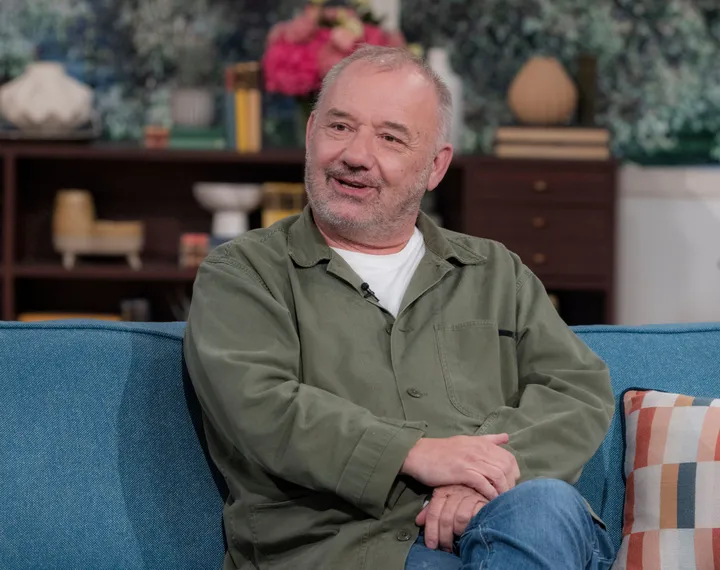
If you cast your mind back, there were a lot of rumours first time around suggesting that comedy legend Bob Mortimer would be taking part in The Celebrity Traitors, with the man himself going as far as saying it was the “the only show of its kind on TV that I would agree to get involved with”.
While in the end, he proved not to be on the line-up, executive producer Sarah Fay recently told Metro last month: “Of Bob wanted to do it next year, we would absolutely love it.”
This is definitely a case of watch this space…
Ruth Jones

Around the time season one of Celebrity Traitors came to an end, The Sun published an article claiming that Celebrity Traitors were already “quietly approaching potential contestants” for a new series, with Gavin & Stacey creator Ruth Jones said to be “in talks to appear”.
However, an undisclosed “insider” told the tabloid: “Ruth would only consider taking part on the proviso she would be a ‘Faithful’.”
Danny Dyer

Danny Dyer has long been on producers’ wishlist, even turning down an offer to appear in the first series of The Celebrity Traitors.
He confirmed on the Live And Let Dyers podcast: “They did sniff round me about it. It was a no from me because, for one, I hadn’t seen it.”
According to The Sun, though, he has had a change of heart after watching the first season of Celebrity Traitors, and is now reportedly in talks to join the next series.
Danny claimed: “If you’re going to do it, if you’re famous, it needs to be an indulgence project — you have to love the game. It’s quite a simple game. I thought it was too complicated, but it’s actually just about people manipulating each other and a lot of lying.
“So if the money’s right, I might get involved in the next series. I think I’d want to be a Traitor, there’s triple bluffs, double bluffs – it’s more fun to be a Traitor, you’ve got a job.”
Alison Hammond

Great British Bake Off and This Morning fave Alison Hammond has also reportedly been approached by producers, who are said to have targeted her hoping she’ll be “comedy gold” because she is so “naturally very funny”.
Alison herself is reportedly “keen” to appear in season two of The Celebrity Traitors, having previously said as much during a discussion on This Morning in November 2026, where she expressed her desire to be one of the Faithful if she were to be cast.
The daytime star is no stranger to reality TV, having first found fame on Big Brother in 2002 and has since appeared as a contestant on I’m A Celebrity… Get Me Out Of Here, Celebrity Masterchef, Strictly Come Dancing, Let’s Dance For Sport Relief, Celebrity Stars In Their Eyes and Celebs Go Dating.
Amanda Holden
Reigning Celebrity Traitors winner Alan Carr’s TV BFF Amanda Holden is also said to be vying for a spot on the second series.
According to The Sun, Amanda is on producers’ radar, and she has previously been vocal about her desire to enter the Scottish castle.
“I’d absolutely love to do it. I’d have to be a Faithful though – everyone would assume I’d be a Traitor, but I don’t think I could pull that off,” she said on her radio show during the first series of the celebrity spin-off.
It seems Amanda’s busy schedule may hold her back from appearing on the show, though. The Sun’s source notes that The Celebrity Traitors is filmed at the same time as Britain’s Got Talent semi-finals are filmed live in London.
However, that same source also suspected she may be given time off from her various commitments to film the hit reality show.
Daisy May Cooper

Like Danny Dyer, Daisy May Cooper was first rumoured to be part of the cast of the first season of The Celebrity Traitors, but reportedly backed out at the last minute due to family commitments.
However, it now looks like Daisy may get a second chance in the castle as she is in talks to join the second series.
A source told The Sun that producers are apparently “pulling out all the stops” to encourage the writer and star of This Country to join the show.
Her brother Charlie had also been tipped to appear on season one before it was reported that he and his sister had pulled out, but it is unclear if he, too, has been approached for series two.
Considering the drama that having family members on the show brings, let’s hope Daisy and Charlie can be reunited in the castle.
Cheryl Tweedy

Former Girls Aloud star and X Factor judge Cheryl Tweedy was among the earliest stars rumoured to be on the next Celebrity Traitors cast.
Back in January, The Sun claimed she’d been “approached” to sign up for the new series, and while the chart-topping singer has been taking time out of the spotlight in recent history, following the death of her son’s father, Liam Payne, the tabloid cited a “source” who said she had been approached for was taking “baby steps” towards returning to our screens.
Stephen Graham

Fresh from the success of his hit series Adolescence and A Thousand Blows, it sounds like Stephen Graham’s next TV venture could be a little more light-hearted in nature.
The Mail On Sunday reported in March that producers were “absolutely desperate” to book the Emmy winner as their “star signing” on the new season of Celebrity Traitors.
An “insider” claimed: “The nation adores him, but no one really knows what he’s like as a person, so there is a definite hunger among viewers to see what he is like in a more reality-based setting.”
Steve Pemberton

Another early rumour began circulating in January, when the Daily Mail claimed that Steve Pemberton was “being lined up” for a stint in the iconic TV castle.
Steve is best known for his work in comedies like The League Of Gentlemen, Psychoville and Benidorm, as well as the anthology series Inside No. 9.
Back in 2024, he also won praise for his performance in the imaginative Robbie Williams biopic Better Man, in which he appeared as the legendary British singer’s dad.
Michael Sheen

After being confirmed as the new host of House Of Games, it’s also been rumoured that Michael Sheen will be joining another beloved BBC show.
A source told The Sun in March that the Bafta nominee was The Celebrity Traitors’ “big dog signing” for 2026.
“Michael has had a lot of practice playing lying, duplicitous and scheming men,” they added, referencing his many villainous film and TV roles, and claiming that, in comparison, “Traitors should be a breeze”.
Richard E Grant

Another Hollywood star the producers of The Traitors reportedly have their eye on is Richard E Grant.
The Oscar nominee was reported by the Daily Mail to be in talks with producers, having previously made no secret of the fact he’s “obsessed” with the show.
However, the Withnail And I star’s family don’t exactly fancy his chances.
“I’d love to go on it,” he previously told The Observer. “My daughter said I’d be thrown out after half an hour because you’re incapable of hiding what you feel about somebody in any way shape or form.”
Hugh Bonneville

That same Daily Mail article also named Hugh Bonneville as a possible candidate for the next season of The Celebrity Traitors.
Best known for his work in W1A, Downton Abbey and Paddington, Hugh has apparently been approached by producers, who believe his “charming and funny” personality will make him the perfect contestant.
Hugh Grant

And Hugh Bonneville is not the only Hollywood Hugh rumoured to be sitting around that roundtable.
In February, it was reported by The Sun that Hugh Grant was being circled by The Traitors team, who are apparently keen to live up to season one by avoiding the “same tired reality stars who sign up to every series going” by getting some real A-listers involved.
Amol Rajan

Ken McKay/ITV/Shutterstock
After stepping down as one of the hosts of BBC Radio 4’s Today programme, The Sun claimed that University Challenge host Amol Rajan had agreed to appear on The Celebrity Traitors.
In March, the tabloid went as far as saying Amol had already “signed up” for season two, with a “TV source” suggesting he’d be putting his journalistic skills to good use in the castle.
“Producers know he won’t be easily fooled by his fellow celebrities. He has the perfect poker face and the academic brains to go all the way, whether Claudia taps him on the shoulder to be a Traitor or leaves him as a Faithful,” they suggested.
Joanne McNally

Brian J Ritchie/Hotsauce/Shutterstock
Irish comedian Joanne McNally has also been rumoured to be entering the castle.
The stand-up – known for her work on QI and Taskmaster as well as the podcast My Therapist Ghosted Me – is said to be in demand by The Traitors team as she represents “the bridge between old and new media”.
In February, the Daily Mail claimed she was being “lined up” for the series, which will air in the autumn.
Jason Mansford
Comedian, actor and West End star Jason Mansford revealed in February that he’d already had “conversations and stuff” with producers about appearing on The Traitors.
“I think I’m waiting for them to come down the ladder of show business,” he quipped, referring to the success of the first run.
While the comic admitted there were “not many” reality shows he’d say yes to, he’d make an exception if The Celebrity Traitors did end up making him an offer.
Liam Gallagher

Back in February, Liam Gallagher surprised his social media followers when he claimed that he’d already been approached to appear on The Celebrtiy Traitors.
When one fan on X asked if he’d be willing to “go on The Traitors if they asked”, he responded that he had, in fact, “been asked” – but unfortunately stopped short of saying what his answer was.
Watch this space, we suppose…
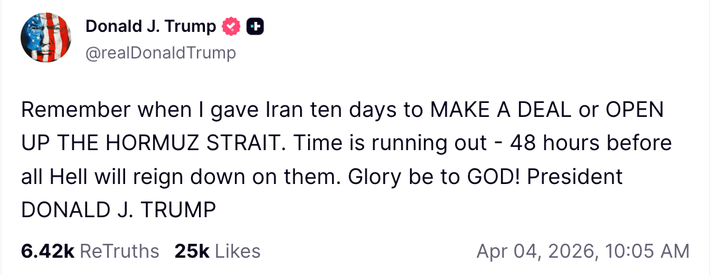
President Donald Trump posted a menacing reminder of his April 6 deadline he set for Iran to open the Strait of Hormuz.
“Remember when I gave Iran ten days to MAKE A DEAL or OPEN UP THE HORMUZ STRAIT,” Trump wrote Saturday morning on Truth Social. “Time is running out — 48 hours before all Hell will reign down on them.”
It wasn’t immediately clear if spelling the word “reign” and not “rain” was intentional.
The president added, “Glory be to GOD!”

TruthSocial/@realDonaldTrump
Trump originally gave Iran a two-day timeframe last month to reopen the strait, a pivotal global shipping lane that the country effectively shut down in response to being bombed by the U.S. and Israel. The closure of the strait, which provides passage for about a fifth of the world’s oil and a fifth of the world’s natural gas, has made oil prices skyrocket worldwide.
Trump wrote in a March 21 Truth Social post that the U.S. would “hit and obliterate their various POWER PLANTS, STARTING WITH THE BIGGEST ONE FIRST!” if Iran didn’t open the strait.
He subsequently announced he was “pausing the period of Energy Plant destruction,” and would give Iran until April 6 at 8 p.m. Eastern time.
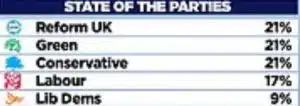
The local elections are fast approaching, and it’s the Green Party which seems to have all the momentum. A fresh example of this is a poll which has put the Greens level with Reform UK in first place:
Remarkable poll this evening from Lord Ashcroft. The Greens in joint 1st place.
We are replacing Labour and ready to take on Reform in the local elections on 7th May.https://t.co/0qbagSvIYp pic.twitter.com/9leBG92kPd
— Zack Polanski (@ZackPolanski) April 5, 2026
If the above image is clipped off for you, here it is in full:

Moving on up
As ever, it’s worth noting that a single poll can never tell the full story. It’s also the case that some pollsters can be wildly off. By looking at all the polls combined, however, we can see how opinions are shifting over time (source: Politico):

The above data tells the following stories:
- Reform have peaked and now seem to be in decline.
- Labour has mostly just lost support.
- The Tories have stabilised.
- The Greens have risen.
The Greens have got where they are with a positive message about what an ambitious, forward-thinking, people-powered movement can achieve:
“We have got to get off fossil fuels”.
✅️ Lower bills
✅️ Tackle the #ClimateCrisisTessa Khan from Uplift explains more on @ZackPolanski‘s @_BoldPolitics podcast.@Ed_Miliband – are you listening? pic.twitter.com/zQpztDIY5R
— Bradford Green Party (@bradfordgreens) April 4, 2026
What a fantastic day canvassing with @MothinAli ! He gave us a brilliant pep talk emphasising the value of people power. We may not have billionaire donors, but we have all of our wonderful members and supporters with their £5, smiles and enthusiasm. pic.twitter.com/dilhlHlIpl
— Swindon Area Green Party (@SwindonGreens) April 4, 2026
“If we work together, if we find common ground, if we mobilise, make a plan and stick together – we can defeat the far-right” Hannah Spencer at the @UKTogetherAll march discussing how we defeat the far right in the local and general elections. pic.twitter.com/gCNQRlggOU
— The Green Party (@TheGreenParty) April 4, 2026
The above isn’t the only poll where the Greens are performing well, either, as Stats for Lefties reported:
‼️POLL AVERAGE | Net approval of leaders:
🟢 Polanski -8
🟠 Davey -8
🔵 Badenoch -14
➡️ Farage -16
⚪️ Corbyn -36
🔴 Starmer -44Farage enjoys the highest approval figure (32%), whilst Keir Starmer has the lowest (19%). pic.twitter.com/hevSO4etMq
— Stats for Lefties 🍉🏳️⚧️ (@LeftieStats) April 3, 2026
Hilariously, Keir Starmer’s -44 rating is actually his highest since September.
Much as with his efforts in March 2025 to drag us into a war with Russia, his imperialist war in Iran has temporarily boosted his numbers with bloodthirsty rightwing boomers.
It won’t last. pic.twitter.com/kfi2YgaagT
— Stats for Lefties 🍉🏳️⚧️ (@LeftieStats) April 3, 2026
Of course, the Greens have had some significant help when it comes to juicing their polling. The Starmer government has failed to get much of anything done; Reform, meanwhile, are having daily scandals in the runup to the local elections. For an idea of what that looks like, here are some recent examples:
The Green Party — Forwards
None of this is to say we don’t have criticisms of the Greens, of course (the most recent being the party’s handling of their anti-Zionism motion).
Credit where it’s due, though; the party is building a coalition, and its naming the people who are responsible for the state of this country — i.e. the billionaires and their lackeys in the political and media classes.
Because this stuff is so obvious to voters now, the Greens will continue to grow as long as they stay honest to this message.
Featured image via Barold
You’re cordially invited to The Drama, a new movie starring Robert Pattinson and Zendaya that looks set to become one of the year’s most talked-about films.
The comedy-drama follows a groom-to-be who discovers a dark secret about his fiancée in the lead-up to their wedding, which tests their relationship and leads them both to ask some big questions.
Before he found himself walking down the aisle with Zendaya (with whom he’s set to star in two more films later in 2026), Robert already had a long and varied career.
After first finding fame as Cedric Diggory in Harry Potter, he became a global heartthrob off the back of his role as Edward Cullen in the Twilight series.
Since then, Robert has gone on to appear in a range of different projects, from big-budget studio films to more left-of-centre indies, frequently taking on unexpected roles that have played against his heartthrob status.
Fans of the acclaimed English actor are in luck, as he has four films coming out in the next few months alone.
After his leading work in The Drama, he’ll be reuniting with Zendaya in The Odyssey and Dune: Part Three later this year, as well as appearing in Here Comes The Flood, a heist film co-starring Denzel Washington and Daisy Edgar-Jones.
Before Robert takes on Greek mythology and battles Paul Atreides on Arrakis, here are 17 more roles from his past that you might have totally forgotten about…
Little Ashes

Met Film Prods/Kobal/Shutterstock
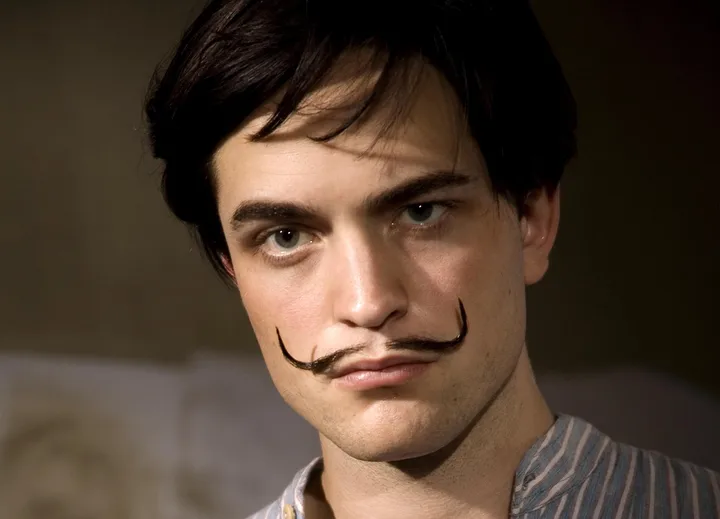
A year after he made his Twilight debut, Robert starred as the Spanish artist Salvador Dalí in the romantic drama Little Ashes.
Shot before his work as Edward Cullen, Little Ashes saw Robert take on the role of the eccentric painter in a movie which chronicled Dalí’s friendship with the filmmaker Luis Buñuel – and possible love affair with poet Federico García Lorca.
While the film wasn’t universally well-received – and was criticised by some for being tonally uneven – it did earn a GLAAD Award, and sparked Robert’s interest in working on more niche projects. It also hit headlines at the time for its graphic sex scenes, allowing cinemagoers to see a different side of the actor (quite literally).
Remember Me

Summit Entertainment/Kobal/Shutterstock
The 2010 coming-of-age drama Remember Me was poorly reviewed upon its release, and may well have been completely forgotten by audiences if not for its unexpected twist ending.
Robert played Tyler, a troubled young NYU student struggling to cope in the wake of his brother’s death, who falls in love with a detective’s daughter, played by Lost actor Emilie de Ravin, after being arrested.
All in all, it was a pretty run-of-the-mill romance – that is, until its questionable closing moments, which are still what come to mind when most of us think of Remember Me.
Love & Distrust

You’d think you’d remember a film starring film greats like Robert Pattinson, Amy Adams and Robert Downey Jr., but the straight-to-video Love & Distrust has mostly been lost to time.
The romance film follows five completely separate love stories, with Robert appearing alongside Talulah Riley as a man who follows his ex to a French summer house in the hopes of winning her back.
Love & Distrust landed an enviable 12% Rotten Tomatoes score, with its more scathing critics calling the project “slow” and “meaningless”.
Water For Elephants

In 2011, Robert starred alongside Reese Witherspoon in the period romance Water for Elephants, based on the popular 2006 novel by Sara Gruen.
He played a veterinary student who abandons his studies after the death of his parents to join the circus, where he falls in love with Reese’s character, Marlena.
While the film received mixed reviews from critics, it was a box-office success, and proved that Robert could be a draw for audiences beyond the Twilight fanbase.
Bel Ami

For Bel Ami, Robert shared the screen with Kristin Scott Thomas and Uma Thurman in the 2012 adaptation of Guy de Maupassant’s 1885 French novel.
Robert played Georges Duroy, a former soldier-turned-social climber who uses his wit to charm older, wealthy ladies.
Upon its release, the film set tongues wagging due to its sexual content, with Robert allegedly filming an orgy scene with as many as 40 people, as well as having steamy scenes with several of his A-list co-stars.
Cosmopolis

Alfama/Prospero/Kinology/Talandracas/Leopardo Filmes/Canal+/Rai Cinema/Rtp/Kobal/Shutterstock
These days, Robert is known for his work with auteurs, and it all started when he teamed up with David Cronenberg for Cosmopolis.
Based on Don DeLillo’s novel of the same name, Cosmopolis saw Robert play Eric, a Wall Street golden boy witnessing the fall of his empire from the back of his private limo.
Co-starring Samantha Morton and Sarah Gadon, Cosmopolis is like if The Odyssey starred American Psycho’s Patrick Bateman.
Released the same year as the last Twilight film, it proved to film fans that Robert was shedding his vampire fangs to become a more risk-taking actor.
The Rover

In 2014, Robert and Guy Pearce took their film The Rover to Cannes, where it received critical acclaim.
The Australian film is set in the outback in a not-too-distant dystopian future, and takes place after humanity’s collapse.
Robert stars as a thief, Rey, who finds himself in a robbery gone wrong. When he is shot and abandoned by his friends, the man whose car they stole forces Rey to lead them to the gang of criminals.
As The AV Club puts it, the film “represented a turning point in Robert Pattinson’s career, being the first of a series of roles in which the English actor subverted his charisma and good looks to play desperate, mentally frazzled characters with criminal pasts”.
Maps To The Stars

Robert teamed back up with David Cronenberg for 2014’s satirical black comedy Maps To The Stars.
The film explored the dark side of modern-day Hollywood, following a neurotic ageing film star and her young personal assistant.
Co-starring Mia Wasikowska, Julianne Moore and Olivia Williams, the film featured Robert in a minor role as a chauffeur and wannabe screenwriter.
Queen Of The Desert

Benaroya Pictures/Kobal/Shutterstock
A year later, Robert took on the role of the real-life archaeologist and diplomat T.E. Lawrence (the inspiration behind Lawrence of Arabia) in Queen Of The Desert, Werner Herzog’s biopic about the writer Gertrude Bell, played by Nicole Kidman.
Talking about casting Robert, the filmmaker said he “needed an Englishman who still looks like a schoolboy” but who is still “very smart”.
With a score of just 18% on Rotten Tomatoes, it’s not exactly the best work of anyone involved, but Robert was singled out for praise for doing what he could with his modest role.
Life

See-Saw/Barry/First Generation/Kobal/Shutterstock
Later in 2015, Robert appeared in another biopic, this time playing the lead in Life, about the photographer Dennis Stock.
The film followed Dennis’ relationship with the screen icon James Dean, portrayed by Dane DeHaan, after he was assigned to photograph the Hollywood star.
Set just before the release of East Of Eden, Life follows the friendship between the actor and the photographer as they travel from Los Angeles to New York City and Indiana.
The Childhood Of A Leader

Perhaps the most underrated film on this list is 2016’s The Childhood Of A Leader, the feature-length debut of The Brutalist director Brady Corbet.
The film explores the rise of fascism in the early 20th Century, focusing on a young American boy living in France in 1918, whose father is working for the US government during the creation of the Treaty of Versailles.
Robert plays a dual role in the movie, first appearing as a jaded journalist friend of the young boy’s parents, then later transforming into a mysterious, villainous role that we won’t spoil here.
It’s a psychedelic, experimental work that was unexpected for a star who found fame in such family-friendly films.
The Lost City Of Z

James Gray’s historical epic featured Charlie Hunnam as the real-life British explorer Percy Fawcett.
Robert co-starred as fellow adventurer, Henry Costin, who accompanied Percy to Brazil to find a lost ancient city filled with gold.
The Lost City Of Z marked one of Robert’s biggest on-screen transformations, with his face buried under a bushy beard, wide-brimmed hat and round spectacles.
Damsel

Magnolia Pictures/Moviestore/Shutterstock
Robert reunited with Mia Wasikowska for the 2018 Western black comedy, Damsel, which follows an affluent pioneer who journeys across the American frontier to marry the love of his life.
The quirky Western has since earned cult status for offering a fresh and thoughtful take on the genre.
Critics also praised Robert’s performance for disrupting the traditional macho role in Westerns by “serving up a naive and troubled anti-hero entirely out of place among the gunslingin’ and whiskey-drinkin’ rough necks of the Frontier lands”.
High Life

BFI/Thunderbird Releasing/Kobal/Shutterstock
The Claire Denis-directed High Life is considered by cinephiles a career highlight for Robert, although it’s perhaps lesser known to the average cinema-goer.
High Life follows a group of criminals sent on a space mission toward a black hole, while being subjected to scientific experiments.
Robert plays a celibate prisoner who is serving life for the manslaughter of a child, in one of his darkest and most surprising roles to date.
The King

Based on Shakespeare’s group of historical plays, known as The Henriad, the Netflix film covered the major events of the life of the 15th-century English monarch Henry V, including the Battle of Agincourt and his strained relationship with his father.
Robert makes a small – but notable – appearance in the historical epic as a dim-witted, ego-centric Frenchman.
Those who have seen The King will remember Robert’s eccentric French accent as Louis, Duke of Guyenne, with Timothée Chalamet taking the lead as King Henry.
Waiting For The Barbarians

Iervolino/Samuel Goldwyn/Kobal/Shutterstock
Robert has a minor role alongside Mark Rylance and Johnny Depp in the 2019 adaptation of JM Coetzee’s 1980 novel.
The action-drama follows Mark Rylance’s ageing magistrate, who governs the peace of a remote outpost of an unnamed Empire.
His world is disrupted when the Empire becomes paranoid, and Johnny Depp’s Colonel starts capturing and torturing so-called barbarians from beyond the borders.
Robert plays a cruel officer working for the regime’s harsher side and represents a colder, more chaotic form of authority.
The Devil All The Time

Glen Wilson/Netflix/Kobal/Shutterstock
In 2020, Robert partnered with his The Drama co-star Zendaya’s real-life partner, Tom Holland, for the psychological thriller The Devil All The Time.
The Netflix film follows several characters in post-World War II Ohio and West Virginia, with an all-star cast including Bill Skarsgård, Sebastian Stan and Riley Keough.
Robert plays a charismatic but corrupt preacher, a deeply unsettling role that won over critics despite some criticism of his exaggerated Southern accent.
The Devil All The Time came out the same year as Christopher Nolan’s Tenet and The Lighthouse, which marked a turning point in the actor’s career. Two years later, he would don the black cape in The Batman, cementing him as one of the hottest properties in Hollywood.
The Drama is in cinemas now.

An American airman missing after his jet was shot down over Iran has been rescued, Donald Trump has announced.
The US president declared “we got him” in a post on Truth Social in the early hours of Sunday UK time.
The pilot had been missing since his F-15E Strike Eaglejet was downed on Friday.
Trump said the “highly respected colonel” was now “safe and sound” after a daring rescue mission.
He said: “This brave Warrior was behind enemy lines in the treacherous mountains of Iran, being hunted down by our enemies, who were getting closer and closer by the hour, but was never truly alone because his Commander in Chief, Secretary of War, Chairman of the Joint Chiefs of Staff, and fellow Warfighters were monitoring his location 24 hours a day, and diligently planning for his rescue.
“At my direction, the U.S. Military sent dozens of aircraft, armed with the most lethal weapons in the World, to retrieve him.”
Trump also revealed that a second airman who had also been in the downed jet was rescued on Saturday.
He added: “This is the first time in military memory that two US Pilots have been rescued, separately, deep in Enemy Territory. WE WILL NEVER LEAVE AN AMERICAN WARFIGHTER BEHIND!”
Subscribe to Commons People, the podcast that makes politics easy. Every week, Kevin Schofield and Kate Nicholson unpack the week’s biggest stories to keep you informed. Join us for straightforward analysis of what’s going on at Westminster.

MSCI Stock: AI Is Changing The Model, Not Breaking The Business (NYSE:MSCI)

Algorand Hits Regulatory and Quantum Milestones as Institutional Adoption Accelerates in 2026

Experts Share What The 10-Second Balance Test Reveals About Your Health


-

 NewsBeat3 days ago
Steven Gerrard disagrees with Gary Neville over ‘shock’ Chelsea and Arsenal claim | Football
-

 Business3 days ago
No Jackpot Winner and $194 Million Prize Rolls Over
-

 Fashion2 days ago
Weekend Open Thread: Spanx – Corporette.com
-
Entertainment6 days ago
Fans slam 'heartbreaking' Barbie Dream Fest convention debacle with 'cardboard cutout' experience
-

 Crypto World4 days ago
Gold Price Prediction: Worst Month in 17 Years fo Save Haven Rock
-

 Tech6 days ago
The Pixel 10a doesn’t have a camera bump, and it’s great
-
Crypto World5 days ago
Dems press CFTC, ethics board on prediction-market insider trades
-

 Tech6 days ago
Avatar Legends: The Fighting Game comes out in July and it looks pretty slick
-

 Business3 days ago
Login and Checkout Issues Spark Merchant Frustration
-

 Sports15 hours ago
India men’s 4x400m and mixed 4x100m relay teams register big progress | Other Sports News
-

 Tech6 days ago
Apple will hide your email address from apps and websites, but not cops
-

 Sports5 days ago
Tallest college basketball player ever, standing at 7-foot-9, entering transfer portal
-

 Tech5 days ago
EE TV is using AI to help you find something to watch
-

 Politics6 days ago
Should Trump Be Scared Strait?
-

 Tech5 days ago
Flipsnack and the shift toward motion-first business content with living visuals
-

 Fashion6 days ago
The Best Spring Trends of 2026
-

 Tech5 days ago
How to back up your iPhone & iPad to your Mac before something goes wrong
-
Crypto World7 days ago
Bitcoin’s Six-Month Losing Streak: What On-Chain Data Says About the Market’s Next Move
-

 Politics6 days ago
BBC slammed for ignoring author of The Fraud
-
Tech5 days ago
Daily Deal: StackSkills Premium Annual Pass
You must be logged in to post a comment Login