
Politics
Burnham backs ‘conditional’ welfare support in first PM interview

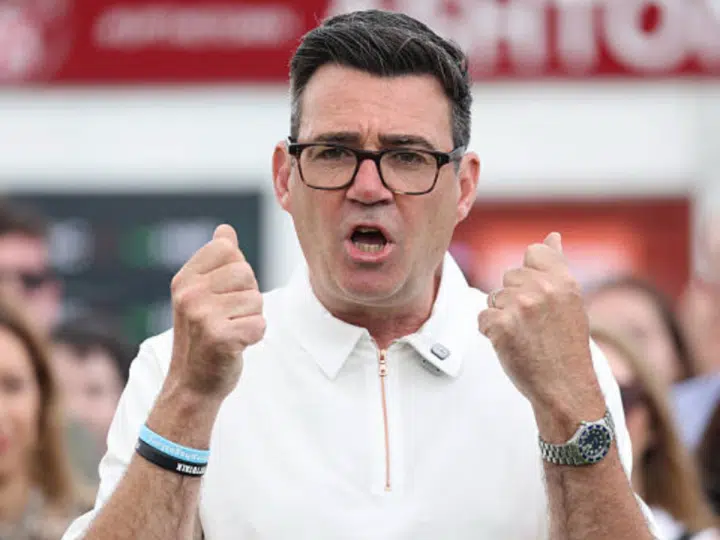
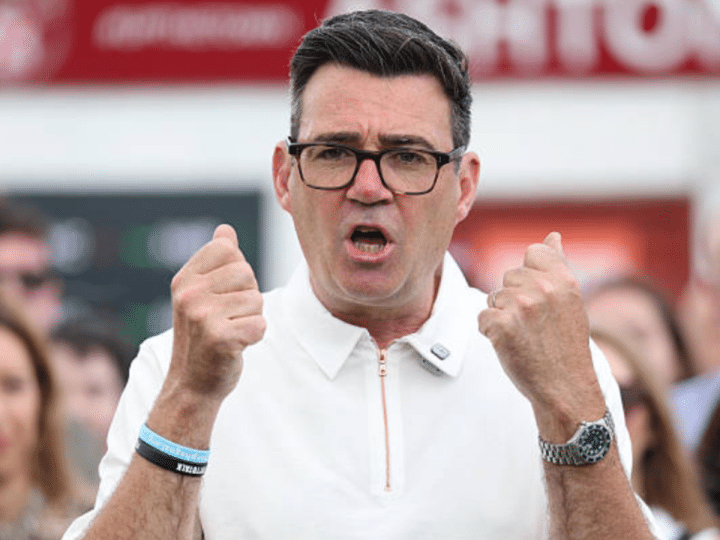
In Andy Burnham’s first interview as PM, the newly-minted Labour leader spoke about the need to “get really serious as a country” about “getting the welfare bill down”.
And how exactly does he plan to accomplish this feat? Well, Burnham claimed that he didn’t want to “blame” people on benefits, before adding:
It’s about changing the nature of the support, and making some of the support conditional upon people taking opportunities that are presented.
Implying that people on benefits having been taking the “opportunities that are presented” sounds an awful lot like blame, to us.
Blame by another name
The BBC recorded its interview on Thursday 23 July, and plans to air it this evening (Monday 27 July). Toeing the current mainstream media attack line, the show hammered the idea of phantom benefits cheats.
Presenter Laura Kuenssberg asked the PM about whether some people were claiming support they don’t need, in his opinion. Burnham replied:
Well, I wouldn’t necessarily go straight to blaming those people. What I would say is that there are people in the benefits system, young people in their 20s, who have been, I would say, quite seriously let down because the support wasn’t there for them when it should have been there.
So I don’t blame them. I don’t think the support has been there for them in the way that it should have been.
Aww, well that’s nice isn’t it? He’s singling out young people on benefits, but he’s also saying it’s not their fault. That’s some fairness and balance for you right there.
‘Changing the nature of the support’
Kuenssberg pressed the issue, asking if he planned to remove or reduce any benefits from anyone. The PM answered:
It’s about changing the nature of the support, and making some of the support conditional upon people taking opportunities that are presented.
I think it’s a good thing that the government has given guarantees of opportunities for young people. I think we need to continue down that approach. Where mental health support is needed, for instance, it’s provided in work to support people in an opportunity.
Wait a minute, we’re confused. Are people not being supported, or are they being offered opportunities and turning them down in favour of benefits?
Surely, if making benefits conditional on “taking opportunities” would make an appreciable difference, then Burnham is very much blaming benefits claimants. He’s just trying to find a ‘polite’, interview-friendly way of phrasing it (and hoping that no-one listens too closely).
Likewise, making benefits conditional on “accepting opportunities” (like a job, for example) only actually works if the likes of the Department of Work and Pensions (DWP) can be relied upon to discern whether or not somebody is fit to accept that opportunity. And, naturally, we know for a fact that we can’t rely on the DWP for fairness.
No ‘crude cuts to benefits’
Of course, there’s also another reason why the new PM is tiptoeing around the subject of benefits ‘reform’. His predecessor, Keir Starmer, faced a rebellion from his own back-benchers when he tried to implement cuts of around £5bn to welfare spending in 2025.
As such, Burnham has stated that he doesn’t plan on:
a kind of crude approach, crude cuts to benefits to get the welfare bill down.
Unfortunately, finessed, graceful cuts to benefits are still benefits cuts. He continued:
Often that just pushes people into even more crisis and then even more public spending in another part of the system.
We need a system that sets people up for success rather than pays for failure.
It’s almost as if the people claiming benefits actually need them. So, when the government slashes them, “other parts of the system” have to pay instead. For example, if people don’t have enough money to eat, suddenly hospitals are filled with patients suffering from malnutrition.
If only our shiny new prime minister had enough wherewithal to think how that might pair with his desire to “get really serious” about bringing the welfare bill down. Spoiler: the other government bills go up instead. That’s what happens when people don’t have enough money to live.
Burnham’s “way forward”
Earlier this month, the interim report from the Timms Review into Personal Independence Payments (PIP) acknowledged the benefit’s inadequacy to meet disabled people’s needs.
It also stated that PIP can punish people for coping with their disability, or use the fact that they have a job as evidence that they aren’t disabled enough to need support.
If we want to talk about welfare reform, let’s talk about welfare reform. We can start with working to create a system that truly acknowledges that people need help – and one that isn’t working actively to snatch that support away at the earliest excuse.
And yes, that does cost money. It won’t bring the benefits bill down. Of course, it may save money in other parts of the system, but in a society that actually cared about its citizens, that would be a secondary concern at best.
That’s a system that “sets people up for success”, as Burnham put it. It’s also the exact opposite of making benefits more conditional.
Featured image via the Canary
By Grace

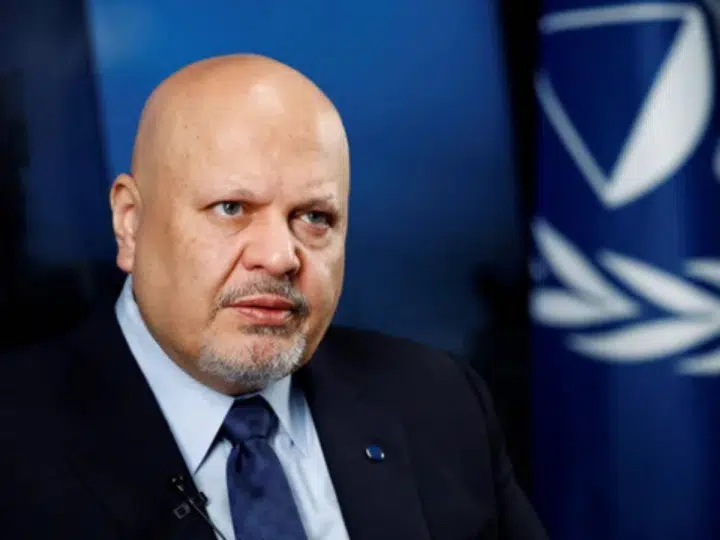
Benjamin Netanyahu and now-dead Israel-fanatic, US senator Lindsey Graham, conspired to use sexual misconduct claims against ex-International Criminal Court (ICC) prosecutor Karim Khan.
Khan was removed last week by the ICC’s political ‘Bureau of States Parties’ over allegations of sexual misconduct after an intense pressure campaign by the US and Israel.
A panel of judges appointed by the bureau found no evidence of any such misconduct, but the states voted to ignore the judges’ findings and dismiss Khan.
For issuing arrest warrants for Netanyahu and former Israeli defence minister, Yo’av Gallant, for crimes against humanity in Gaza, Khan and his family had faced a campaign of threats.
ICC removed Khan from his role over allegations
In a phone call on 29 October 2024, just before the warrants were issued, Graham — who died last week after visiting a Ukrainian weapons factory — discussed the impending warrants, the New York Times reported.
Netanyahu told Graham to send a letter to the ICC about a “great cloud” of allegations against Khan and demand a delay to the issuance of the warrants.
It is possible to have to appeal to the court to say, ‘OK, we want to review this before you do anything, before you issue an arrest warrant. There has to be a review about this entire process…
And I suggest that you send a letter, with, maybe some other senators.
Graham then confirmed that he had two other senators on board and that Netanyahu should “pay me for all this. I should get tons of shekels”.
During an attempt to pressure Khan into abandoning his warrant application, Graham had dismissed the ICC as “made for Africa and thugs like [Russian President Vladimir] Putin, not democracies like Israel”.
The senators’ letter did not manage to delay the arrest warrants. But the same accusations have now removed Khan, and put the ICC and the whole notion of international law on the edge of an abyss.
Featured image via Piroschka Van De Wouw/ Reuters
By Skwawkbox
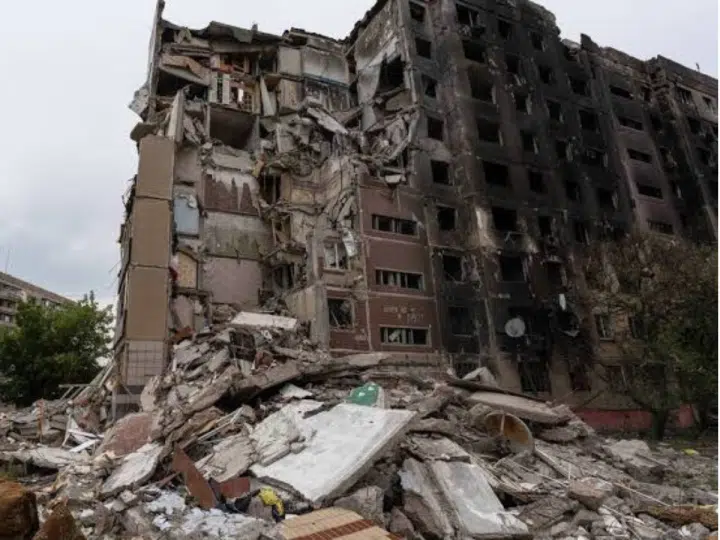

Neocon lobbyist, Victoria Nuland, was US Under-Secretary of State — one of Joe Biden’s highest foreign affairs officials — as the Russia-Ukraine war started.
And she has just admitted (perhaps ‘boasted’ is a better word) that the US sabotaged the 2022 peace deal Ukraine was about to sign with Russia.
Former prime minister, Boris Johnson, was the US’ tool, Nuland has claimed.
Victoria Nuland finally admits it
US officials and Boris Johnson killed the 2022 peace talks so the war could continue.
Everything they’ve told you about Russia/Ukraine is a lie. pic.twitter.com/tLM2eYPnDH
— Chay Bowes (@BowesChay) July 29, 2026
Russia-Ukraine foil: New ‘old news’
Nuland’s admission is not the first time the US-UK role in sinking the peace deal has been confirmed. Former Ukrainian ambassador, Oleksandr Chalyi, who was a leader of Ukraine’s negotiating team in the deal, admitted in 2023 that a deal was in place and sabotaged by Johnson.
Fellow Ukrainian diplomat, Davyd Arakhamia — Volodymyr Zelenskyy’s party leader — has said that the US and UK’s interference was to prevent Ukraine agreeing to political neutrality. Therefore, exposing the nonsense of Nuland’s claim it was because of technical issues with weapons types and buffer zones.
The Russia-Ukraine war has caused about 1.5 million casualties (probably far more as the West misrepresents events), and wrecked Ukraine’s military. Ukrainian military press-gangers are kidnapping men from Ukraine’s streets to send into the meat grinder.
The war could have been ended almost as soon as it began. The US’ and UK’s hands are stained with needless bloodshed.
Featured image via Audacy
By Skwawkbox
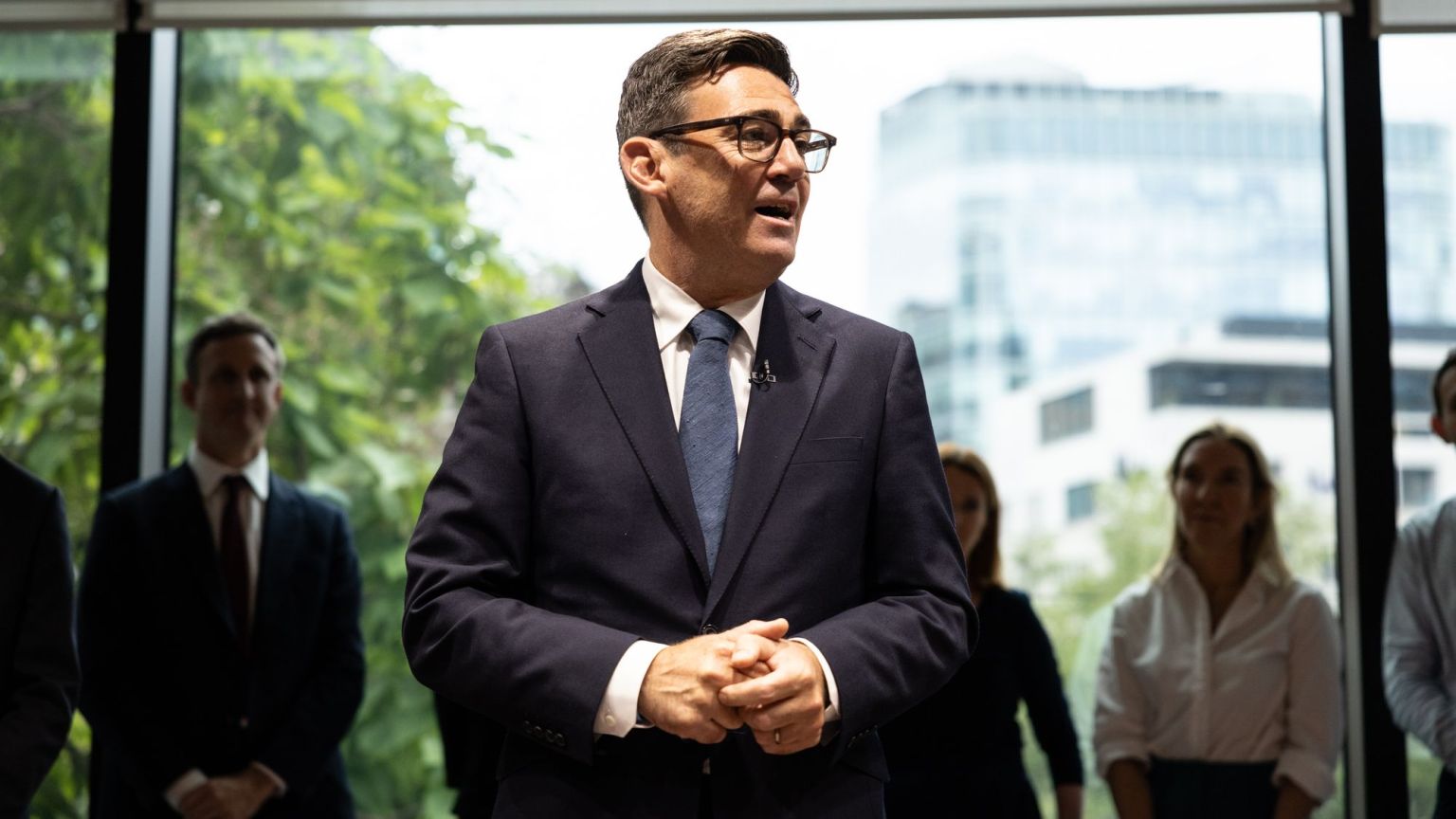
The first days of Andy Burnham’s premiership have given the entire country a taste of what was previously the preserve of Manchester alone. Since taking office last Monday, we have watched his speeches from Downing Street, read his social-media pronouncements and witnessed the first removal of his court from London to Number 10 North in Manchester. Through it all, Burnham has displayed a curious combination of ordinary-bloke affability and the kind of seigneurial self-aggrandisement that Britain supposedly left in its feudal past.
Ordinary Joe he may be, but someone who underestimates his own abilities he is not. After he was elected MP for Makerfield, Burnham’s return to London took on the air of a restoration. His arrival at King’s Cross lacked the historical grandeur of Lenin stepping on to the platform at the Finland Station or Ayatollah Khomeini landing in revolutionary Tehran. Yet the media and the parliamentary Labour Party treated it as a watershed. Rolling news followed his train south, before Labour MPs assembled in Westminster Hall for a mass selfie.
Hot on the heels of his return from the wilderness, Burnham posted about the grooming-gang ringleader, Shabir Ahmed: ‘Like everyone, I want this vile criminal out of the country… I will ask the home and foreign secretaries to review all possible options – and they should consider nothing is off the table.’ Some may have thought this a bold statement from a backbench MP elected less than five minutes earlier. Yet note the repeated first person: ‘I want… I will…’
This tendency to announce policies as if they were his own fiats has become a striking feature of Burnham’s communication strategy as prime minister. ‘I’m choosing to end rough sleeping’, he announced. ‘I’ve done it before and I will do it again now: a £2 cap on bus fares for millions across the country’, he declared. ‘I’m giving thousands of pubs, clubs and music venues a 20 per cent cut in business rates’, he offered as largesse. ‘I have instructed my team to put a pause on the sentencing changes that were due to start in September’, he stated. Every policy appears to flow directly from Burnham himself, rather than from a cabinet, a parliament or even a government.
Nor is this merely a quirk of language. Watch Burnham move through the raggle-taggle crowd of Labour activists, lickspittles and drooling campaigners on Downing Street, after their new king’s audience with the actual sovereign. He advances as a liege lord extending his hands to the local squirearchy. Unlike his recently deposed predecessor, he can bask in the adulation, untouched by collapsing poll ratings. The crowd delighted in a man who, like Monty Python’s King Arthur, ‘hasn’t got shit all over him’.
In the same vein, there are Burnham’s much-vaunted weekly trips to Number 10 North, which have much in common with the Tudor royal progresses. These journeys allowed ordinary subjects to see their monarch, cultivating loyalty in regions distant from the court while simultaneously reinforcing the sovereign’s authority. Burnham’s own progress between Westminster and Manchester performs a similar function. For all his talk of devolution, he is hardly about to risk loosening his grip on the power base that made him.
Everything has to become part of the Burnham story. The occasion of his first visit to the ugly brutalist block chosen to house his northern away-days was marked by his telling the gathered staff that this ‘might be the best day of my life’. It’s all biography and buying into ‘me’ with little Lord Andy.
Yet what substance lies beneath this? Pronouncements and progresses are good for the time being, but time is fleeting. Promises remain contingent. No matter what Burnham says, prisoners will have to be released unless he recalls parliament, repeals the Sentencing Act and ultimately builds more prison space. The tax cuts and fare caps will need to survive a budget. Pakistan will have to have its chin tickled, or its arm twisted, before the charming Mr Ahmed wings his way home. None of this will happen just because Andy Burnham speaks it into being.
Burnham is playing a dangerous game. If ‘my government’ or ‘we’ are promising these wonders, then one minister or another can take the blame when they fail. But if ‘I’ promise them, then ‘I’ may fail to deliver. And then ‘I’ must take the fall.
The new PM clearly believes that, after the Starmer disaster, he must rebuild trust between the office and the electorate. To do so, he offers himself. The curious Instagram montage issued by Downing Street last week showed Burnham, then his ministers, first as children and then as adults. We see an ordinary boy (happy knowing nothing?) in cricket whites, followed by the equally ordinary politician who now occupies the highest office in the land. Burnham seems determined to build a cult around that boy turned man. But given the studied dullness of the bloke himself, it amounts to a cult of no personality, barely masking the same old substance-free politics.
James Martin Charlton is an English playwright and director. Follow him on X @jmc_fire.
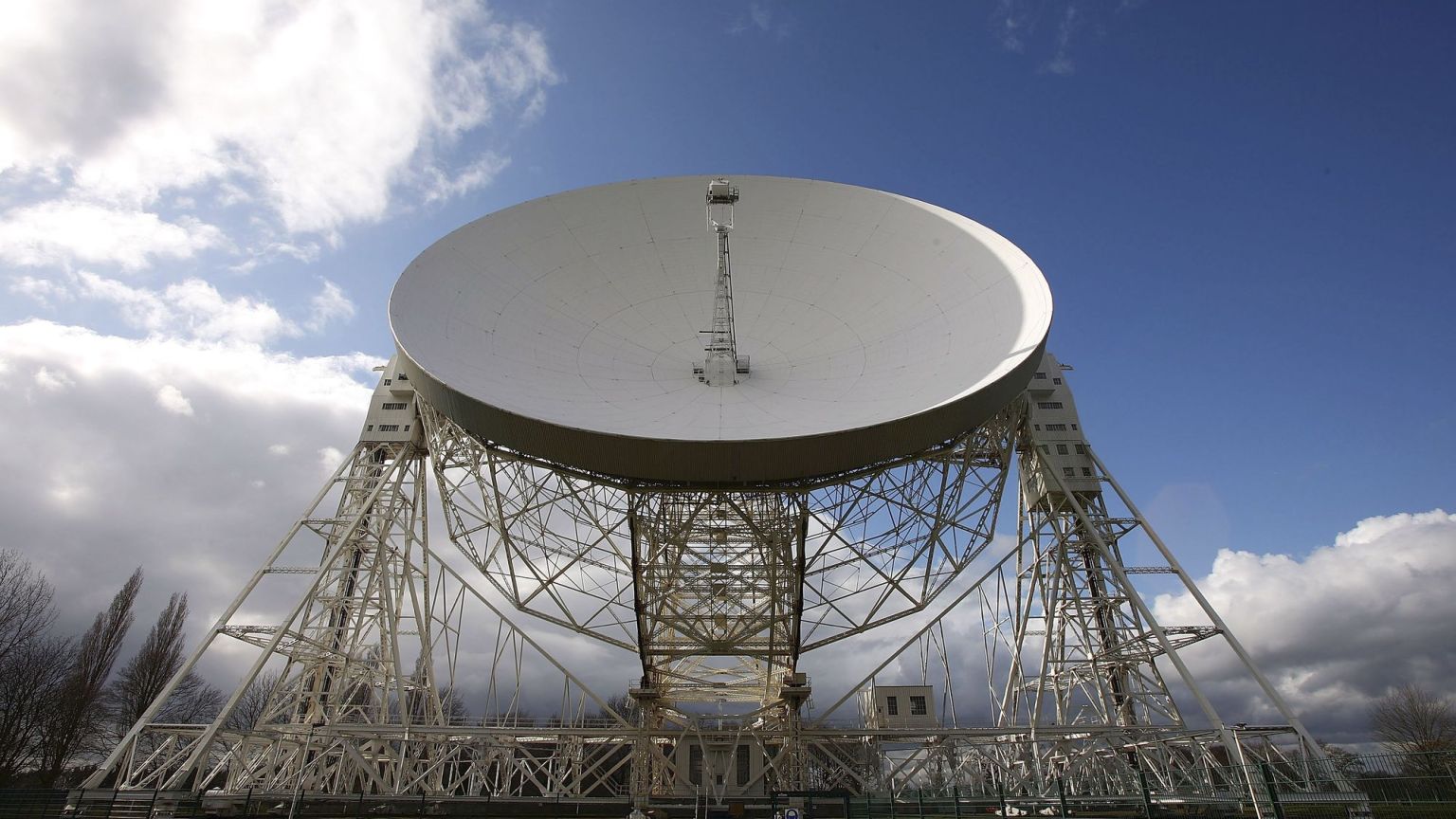
Why is the UK shutting its iconic space telescope? The news that Jodrell Bank, which hosts the largest telescope in Britain, is to be closed, after the government scrapped funding for the facility, has been greeted with widespread outrage. The Royal Astronomical Society said it was ‘shocked and dismayed’. I’m angry and depressed.
Jodrell Bank is a serious bit of kit. The Lovell Telescope – 76 metres in diameter – is the world’s third-largest, fully steerable dish radio telescope. In the Cold War, it tracked Sputnik. Just last year, GCHQ revealed the secret role Jodrell Bank played in the space race, working with the intelligence agency to intercept signals from satellites, orbital weapons and space probes. The dish continues to conduct world-leading radio astronomy. It has researched black holes and the afterglow of the Big Bang. Just last week, experts demonstrated that the telescope could track space debris.
The mooted closure is reportedly the result of cuts to the government’s physics and astronomy research budget. The UK Research and Innovation (UKRI) has decided that, when the current funding agreement ends in March 2028, it will stop supporting the entire e-Merlin network – a group of seven UK radio telescopes, including the Lovell at Jodrell Bank. Together, they make up one of the world’s most important networks for astronomical observation. Manchester University, which helps run the observatory, said it would be ‘difficult to sustain’ the telescope without replacement funding.
At present, Jodrell Bank receives just £2.8million a year. That is peanuts. Never mind that the facility represents just 0.03 per cent of UKRI’s annual budget. As a country, we recently spent £100million on a bat tunnel for HS2. We spend £300million a day on debt interest. By the time you’ve read this article, Britain will have spent more servicing its national debt than it would cost to keep Jodrell Bank operating for an entire year. We spend £9million a day on asylum accommodation. But then, who needs to search for alien life when we have illegal aliens arriving on the south coast who need housing?
The decision to close such an iconic facility, which costs such a measly amount to run and which clearly punches so significantly above its weight, provokes genuine bafflement. Perhaps, as one weary soul on X suggested, it had been given the chop because the telescope is white.
But seriously, how can the UK credibly claim to be the best place in the world to do science, let alone want to lead the technologies of the future, while choosing to close internationally respected research infrastructure that costs what amounts to a rounding error? The UK has managed to become a significant global player in radio astronomy thanks to just a handful of globally significant sites, including Jodrell Bank and the Mullard Radio Astronomy Observatory near Cambridge. That leadership is now seriously imperilled. And how is it that UKRI, an organisation whose budget will reach £10 billion by 2030, cannot find a couple of million for one of its most iconic and important facilities?
When I was growing up, getting my hands on a telescope came second only to a metal detector (so I could go up and down the garden looking for buried treasure). Big telescopes are the sort of thing that capture children’s imagination. If Andy Burnham really wants to encourage kids from working-class communities to dream big and reach for the stars, being able to see them would be a good start.
Of course, the message this sends internationally is pitiful. As China expands its scientific capability and the US continues to invest heavily in frontier science, we are scrapping what assets we have to fund ever more handouts and international aid, including to countries like Pakistan – which has its own space programme.
Like death by a thousand cuts, national decline comes through many small choices that quietly signal a scaling back of ambition. Closing Jodrell Bank is that sort of choice. One waits to see whether Burnham will step in, in response to the backlash – the facility is, after all, just outside Manchester and near his constituency.
We need to decide whether we still want to be the sort of country that dreams big and plays its part in discovering the great questions of life – or just be a welfare state with a country attached. We should stop lowering our sights and instead look to the stars.
Ameer Kotecha is CEO of the Centre for Government Reform. He was formerly a senior diplomat, serving as the head of the British consulate in Russia from 2023 to 2025.
Politics
Politics Home | Government “Strongly Supports” UEFA Threat To Boycott World Cup Over FIFA Sell Off Plan
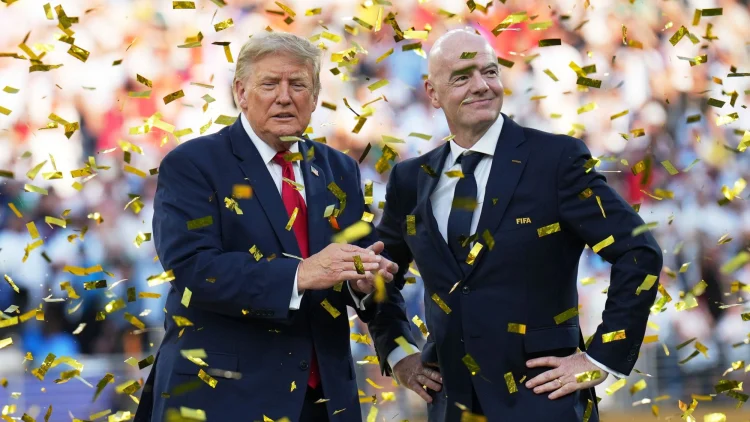

The government has backed UEFA’s plans to boycott the World Cup over plans to sell FIFA to private investors. (Alamy)

3 min read
Culture Secretary Lisa Nandy has backed UEFA’s plan to boycott future World Cups if FIFA goes ahead with selling shares in the competition to private investors.
“This is a principled decision that we strongly support. Football belongs to the fans, not billionaire investors. Enough is enough. It’s time to take a stand to protect our game,” Nandy said on Thursday afternoon.
Earlier this week, The Financial Times reported that plans to sell FIFA would be led by Joshua Kushner, brother of Jared Kushner, US President Donald Trump’s son-in-law, and could raise around $20bn from private investors.
On Wednesday, FIFA President Gianni Infantino wrote to all 211 member associations of FIFA, including the UK Football Association (FA), with the ultimatum of accepting the proposals and receiving $40m each in additional funding by September as a result, or failing to and instead recieving a significantly smaller amount.
The proposals have sparked outrage across football, prompting comparisons to the 2021 plan by a handful of elite clubs to break away into a European Super League. The plan quickly collapsed after a widespread backlash, with clubs involved in the talks accused of greed and betraying their domestic competitions.
In a statement on Thursday afternoon, following an emergency meeting of members, UEFA, which represents European football, said its member nations would boycott future FIFA competitions, including the World Cup, if plans to sell shares were not dropped.
“Europe’s position is clear. We will never lend this model our legitimacy. No one has the moral authority to sell what they merely hold in trust for the next generation,” said UEFA in a statement.
“As a result of today’s discussion, no UEFA national teams will participate in any FIFA competition for so long as these proposals remain alive, unless this proposal has been abandoned in its entirety and binding assurances have been given that FIFA will never again open its governance or competitions to private ownership.”
UEFA also accused FIFA of “intimidation” and of “an act of coercion unworthy of an institution entrusted with the stewardship of the global game”.
It added: “Some things are simply too important to sell. The FIFA World Cup belongs to football. It always will. And so long as Europe has a voice, it will never be for sale.”
Following UEFA’s statement on Thursday afternoon, an FA spokesperson said: “We stand shoulder to shoulder with our European colleagues and fully support the collective view. We oppose FIFA’s plans – the FIFA World Cup belongs to football and always will.”
Prime Minister Andy Burnham swiftly condemned the plans on Tuesday night when the story broke of Infantino’s plans.
“Football does not belong to investors. It belongs to the people who fill the stands and who stand on the touchline week in, week out, rain or shine,” said Burnham.
“The World Cup is not a product. It is the greatest competition in world sport, and it was never anyone’s to sell. Dress the deal up however you like. Once you have sold a piece of it, you have sold out. Football belongs to the fans. It always has, and it always will.”
Speaking to PoliticsHome on Wednesday, the shadow culture secretary, Nigel Huddleston, said Infantino’s conduct as FIFA president “calls into question his judgement and his ability to do the right job”. He also accused the president of treating FIFA like a “fiefdom”.
UEFA’s plans to withdraw from the World Cup are now widely expected to force Infantino to ditch his plans by making the World Cup a less attractive prospect to prospective investors, with six of the final eight teams in the 2026 World Cup from European nations, including the tournament’s winner and planned 2030 co-host country, Spain.

There were once moral red lines. Children were not to be used to gratify adult desires, and the state certainly wasn’t supposed to facilitate such behaviour. In today’s Scotland, those lines have been erased. LGBT Health and Wellbeing – which receives hundreds of thousands of pounds per year from the Scottish government, the NHS and local councils – runs weekly Edinburgh support sessions where men are encouraged to give ‘human milk to their babies’.
Called ‘Queer Milk’, the group welcomes LGBTQ+ parents ‘breastfeeding, chestfeeding or giving human milk to their baby in any amount… no matter what your feeding journey looks like’.
Let’s be clear: men cannot breastfeed. Some can, after extensive hormone treatment, produce a small amount of fluid. As Susan Smith, director of For Women Scotland, told The Times: ‘Whatever hormone-induced gloop their bodies might be chemically engineered to produce, it is not human milk.’
Even setting aside the obvious medical questions about feeding babies hormone-induced secretions, a more fundamental question remains: why do some men want to breastfeed at all?
Readers of a delicate disposition may wish to stop reading now, because what I’m about to explain is grim. Some men have a keen sexual interest in the functions of women’s bodies, and many who identify as transwomen become aroused by everything from menstruation to the menopause. At the time of writing, on a major porn site accessible in the UK, there are 48,163 videos tagged ‘lactating tits’, and some of the most popular within that genre involve men leaking liquid from their nipples. The male performers in these videos have artificially enlarged their moobs with hormones or the use of breast pumps. What they do not possess is the female breast anatomy and physiology designed to nourish an infant.
Yet claims of male breastfeeding are nothing new. Nearly a decade ago, a man called Dana Fried wrote in the Stranger that a ‘queer lactation consultant’ had given him drugs in the week before his partner gave birth. He reflected: ‘When my baby attached to my breast, there was an incredible chemical cascade that ran through my entire body like lightning. Imagine the most electric thing a partner has ever done to you, then multiply it by 10.’ He then added: ‘And yeah, I kind of got off on it. Don’t judge.’
For years, this fetish remained the preserve of creeps online. Now it is steadily being sanitised by mainstream institutions. Breastfeeding organisations increasingly speak of ‘chestfeeding’, ‘bodyfeeding’, ‘feeding parents’ and ‘human milk’. This is to avoid excluding men who identify as mothers or women who are apparently triggered by words such as ‘breast’ but not by giving birth.
The ideological capture of infant feeding has already claimed some of the profession’s most respected voices. The desexing of breastfeeding proved so divisive that it tore apart La Leche League GB, one of Britain’s best-known breastfeeding charities. Long-serving trustee Miriam Main resigned after the organisation adopted transgender-inclusive policies, saying she refused to help biological men ‘perform a poor imitation of breastfeeding’, which she said put babies’ safety at risk. Meanwhile, Marian Tompson, one of the charity’s founders, walked away from the international movement she had helped build, warning: ‘This shift from following the norms of nature, which is the core of mothering through breastfeeding, to indulging the fantasies of adults, is destroying our organisation.’ In Australia, former Australian Breastfeeding Association counsellor Jasmine Sussex now faces legal proceedings simply for stating that men cannot breastfeed. The message to professionals is unmistakable: affirm men’s identities or risk your reputation and livelihood.
Sometimes the narcissism of trans activists can be bloody funny; the wails of indignation when a 6’3” rugby player in a frock is misgendered, the mad fantasies about bonding over swapping lippy in the ladies’ loo, or hyperbolic claims of genocide despite a conspicuous lack of corpses. It is easy to laugh when the fantasy harms only the dignity of the adults involved. But when children are co-opted into these often deeply sexualised fantasies, there is no comedy angle.
Today, behaviour that would once have prompted safeguarding concerns is not merely tolerated but actively promoted, while those who object are denounced as extremists. We have come to the point where the Scottish government and public bodies are supporting what amounts to a grotesque experiment on babies, in order to validate the identities and feelings of adult men. The red lines have not vanished overnight –; they have been rubbed out deliberately, one linguistic concession, one rewritten policy and one hefty donation at a time.
Jo Bartosch is co-author of Pornocracy. Order it here.
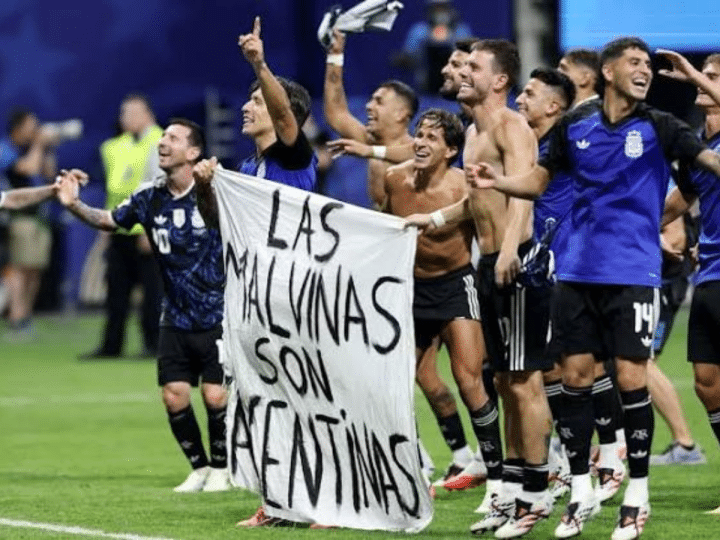

FIFA has launched disciplinary proceedings against Argentina following several alleged breaches during the 2026 World Cup, with the governing body examining incidents from both the semi-final win over England and the final defeat to Spain. The case centres on discriminatory behaviour, team misconduct, protocol failures, and the use of an inappropriate political message. Specifically the Falklands banner displayed after Argentina’s 2-1 semi-final victory in Atlanta.
The banner, which read “the Falklands are Argentine” is being treated as a potential breach of article 13 paragraph 2 c) of the FIFA disciplinary code, which prohibits demonstrations of a non-sporting nature at football events. FIFA’s investigation also covers late kick-offs, racist abuse allegations, security lapses, object throwing and other protocol violations attributed to both players and supporters.
Fallout from England semi-final
The semi-final in Atlanta is central to the case. After beating England, Argentina players held the Falklands banner in front of their supporters and then placed it on the pitch for several minutes. According to FIFA’s charge sheet, the banner had been brought into the stadium by some Argentina fans before being picked up by players at full-time. it remained visible on the turf until members of the squad folded it and handed it to a backroom staff member.
The display is being treated as a serious breach because FIFA’s regulations explicitly forbid political messaging inside stadiums. The governing body is examining whether Argentina’s players knowingly contributed to the display and whether the federation failed to prevent the banner’s appearance.
Argentina escalate tensions after final
The second major flashpoint came in New Jersey, where Argentina lost the World Cup final 1-0 to Spain. The closing moments and aftermath were marked by confrontations between players from both sides, prompting further disciplinary action.
Leandro Paredes is facing proceedings for three breaches of article 14 paragraph 1 i), relating to assault. He was involved in multiple altercations, including grabbing and pushing Spain players. Nahuel Molina is also under investigation after striking Rodri at full-time. Thiago Almada and assistant coach Roberto Ayala have had cases opened against them for their roles in the post-match disorder.
Spain midfielder Gavi is facing separate proceedings for unsporting behaviour, with FIFA reviewing his conduct during the same chaotic scenes.
Wider context for FIFA
The timing of the disciplinary announcement comes as FIFA faces scrutiny over other issues, including controversial proposals attributed to Gianni Infantino regarding commercial changes to the World Cup. The governing body’s decision to release details of Argentina’s charges may shift attention back to on-field behaviour and tournament conduct.
The investigation highlights FIFA’s ongoing efforts to enforce strict behavioural standards at major tournaments. political messaging, discriminatory behaviour and violent conduct are treated as serious offences, and the governing body has shown a willingness to pursue cases even after the competition has concluded.
Argentina consequences
If found guilty, Argentina could face a range of sanctions, including fines, warnings, suspensions for individuals and potential restrictions on future matchday operations. players such as Paredes, Molina and Almada could receive bans, while coach Ayala may also face disciplinary measures. the federation itself could be penalised for failing to prevent the banner display and for broader misconduct involving supporters.
By Faz Ali
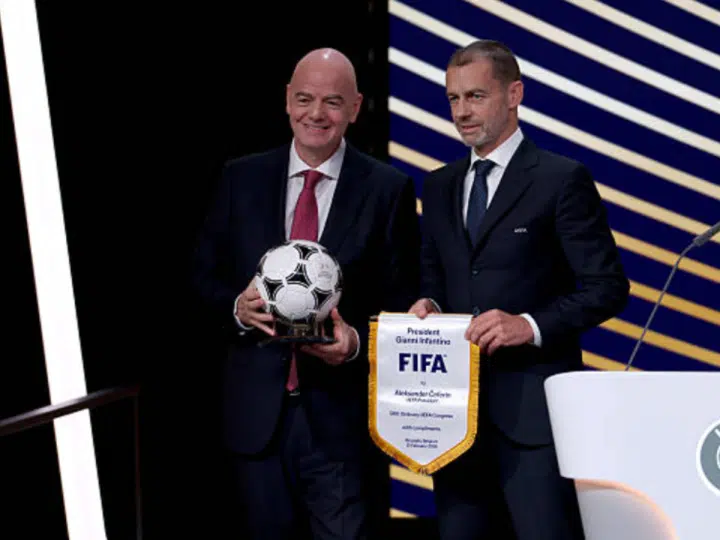

World football has entered its most serious institutional crisis in decades, after the 55 national associations that are members of the Union of European Football Associations (UEFA) announced their unanimous agreement to boycott all FIFA tournaments, foremost among them the World Cup, should FIFA President Gianni Infantino proceed with his plan to privatise FIFA competitions and sell stakes in them to private-sector investors.
The decision followed an emergency meeting convened by UEFA amid mounting European opposition to the proposal, which officials on the continent regard as a threat to the future of the game and to the nature of international tournaments – which they view as belonging to the national associations and the fans, rather than as assets available for sale and investment.
Unanimous European rejection
UEFA, in an official statement issued on behalf of the 55 national associations, confirmed that all members stand united in rejecting FIFA’s proposal to transfer ownership of shares in the World Cup and its other competitions to private-sector investors, emphasising that European associations will not participate in any tournament organised by FIFA should the plan go ahead.
They said:
We unanimously and unequivocally reject FIFA’s proposal to transfer ownership interests in the World Cup and other FIFA competitions to private investors.
The World Cup cannot be treated as an investment product. It is one of football’s greatest sporting legacies. It has been built over generations by players, national teams and supporters across every continent. No part of it should ever be surrendered to private investors. The World Cup is not for sale.
UEFA has called on FIFA to withdraw the proposal entirely and to provide binding guarantees that no similar project will be put forward in the future, arguing that ownership of global tournaments must remain in the hands of football governing bodies rather than investors.
UEFA views FIFA’s corporate takeover plans a radical shift in the nature of global football governance, granting the private sector unprecedented influence over the most important international tournaments, which threatens the independence of the game and prioritises commercial considerations over sporting values.
Repercussions that could threaten the World Cup
The European decision has significant implications for the future of FIFA tournaments, as the UEFA system includes the world’s leading national teams and those with the most titles, meaning that a boycott would directly affect the sporting and commercial value of the World Cup and other international competitions.
UEFA is also seeking to rally support from other continental federations to join its stance, amidst reports of reservations within some Asian federations, whilst others continue to consider their position on the proposal before making a final decision.
Although FIFA has so far stood by its plan, the European consensus presents the world governing body with its greatest political and administrative challenge under President Gianni Infantino, and threatens to cause an unprecedented split within the global football system if a settlement is not reached in the near future.
Featured image via the Canary
By Alaa Shamali
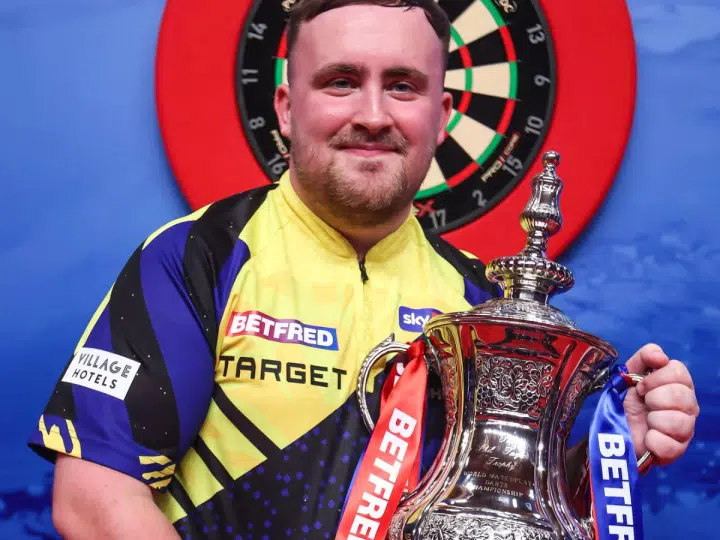
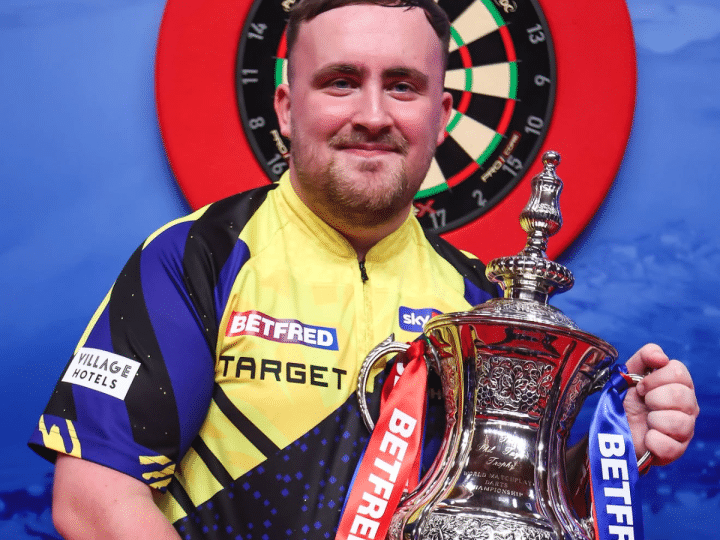
Luke Littler’s latest triumph has pushed a familiar question back into the centre of darts: is anyone, in any sport, operating at his level of control right now? His World Matchplay defence in Blackpool, sealed with an 18-9 win over Gerwyn Price, was another reminder of how far ahead he is of the field. It was his second straight Matchplay title, another major added to a season in which he has already swept every PDC ranked crown available.
Littler’s numbers in 2026 make the argument difficult to resist. He has won every major, controlled every long‑format match, and produced averages that have redefined what is possible on the biggest stages. His Matchplay performance, built on relentless scoring and clinical finishing, has only widened the gap between him and the rest of the PDC.
Cross‑sport comparisons
Luke Littler’s dominance is measurable through titles. Darts offers more majors than most sports, but even if you strip it down to the biggest four, Littler still holds them all. That clean sweep, combined with the manner of his victories, places him at the top of the global conversation.
Only two athletes who come closest to matching Littler’s level: world No 1 Jannik Sinner in tennis and world No 1 Scottie Scheffler in golf. Both have been the standout performers in their sports across the past year, with Sinner’s rise to the top of the ATP rankings and Scheffler’s sustained run of elite finishes on the PGA Tour. But neither has matched Littler’s total control of their competitive landscape.
Sinner’s dominance has been impressive, but tennis spreads its majors across different surfaces and conditions, making sustained superiority harder to maintain. Scheffler’s consistency has been remarkable, but golf’s variables, with course setups, weather, fields of 150 players, make absolute dominance almost impossible. Littler, by contrast, has controlled every major stage he has stepped onto in 2026.
Beau Greaves’ parallel rise
Littler’s case is strong, but Beau Greaves’ has also had an extraordinary run in women’s darts. Greaves won the Women’s World Matchplay in Blackpool and has been on a streak that includes 17 titles from 24 qualifying events and a run of 114 consecutive match wins. Fallon Sherrock ended that streak with a 102 average, underlining how high Greaves’ level has been.
It is very rare for one nation to have two players dominating both the men’s and women’s circuits at the same time. Littler and Greaves have reshaped the competitive landscape in their respective fields, producing levels of consistency that are difficult to match in any other sport.
The Taylor question
Taylor’s record was 16 world titles, sustained across multiple eras. Which remains the benchmark. He reinvented his game repeatedly, adapted to new formats, and maintained superiority over different generations of opponents. Littler, by contrast, has two world titles, both won in 2025 and 2026 after his breakthrough in 2024.
Littler has the potential to challenge Taylor’s legacy, but the gap remains significant. Dominance in the present does not automatically translate to all‑time greatness. Taylor’s longevity, adaptability and title count still define the sport’s historical hierarchy.
Littler’s rise has brought new fans into darts, many of whom did not experience Taylor’s peak years. Taylor’s achievements across decades still place him at the top of the sport’s all‑time list.
Littler’s current form, makes him one of the most dominant athletes in any sport right now, but greatness requires sustained excellence over many years. Taylor’s record remains unmatched, and Littler’s challenge is to maintain his level long enough to close that gap.
Luke Littler mindset
Littler has made no secret of his ambition. After his Matchplay win, he spoke about wanting to become the greatest darts player of all time and about chasing the feat of winning every major in a single calendar year. His performances in 2026 suggest that goal is realistic, but the sport’s calendar is demanding and the margins at the top are tight.
His ability to maintain high averages across long‑format matches has been the defining feature of his season. He has produced consistent scoring power, controlled the pace of matches, and delivered under pressure with a maturity beyond his age. Those qualities have made him the sport’s dominant force and placed him at the centre of the global debate.
Greaves, Sherrock and the women’s landscape
Sherrock’s performance to end Greaves’ winning streak showed that the top players are capable of producing elite numbers. Greaves’ consistency, however, remains the standout feature of the women’s game.
Her ability to win titles across different formats and maintain long winning runs mirrors Littler’s dominance in the men’s game. The parallel rise of both players has given darts a unique narrative in 2026, with two English athletes controlling their respective circuits.
The wider sporting picture
The comparison with Sinner and Scheffler places Littler’s dominance in a broader context. Tennis and golf reward consistency, but their structures make absolute control difficult. Littler’s ability to win every major in a single season, combined with the manner of his victories, sets him apart.
His performances have reshaped expectations within darts and forced analysts to reconsider how dominance is measured across sports. The debate will continue, but his current form makes him the leading candidate for the title of the world’s most dominant sportsperson.
What comes next
Luke Littler now turns his attention to the BoyleSports World Grand Prix, where he will defend another title. With the Grand Slam and World Championship still to come later in the year, the possibility of a full sweep remains alive.
If he maintains his current level, the debate over cross‑sport dominance will only intensify. For now, his performances place him at the top of the conversation, with Sinner, Scheffler and Greaves forming the closest comparisons.
Featured Image courtesy of Luke Littler Instagram
By Faz Ali
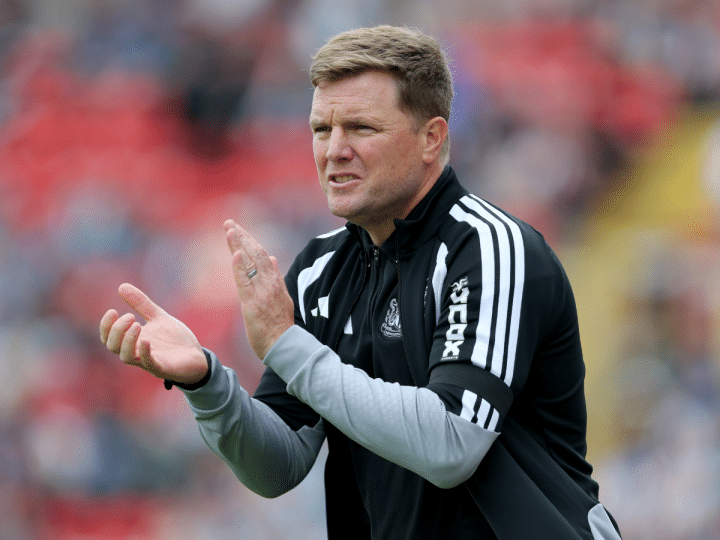

Eddie Howe’s time at Newcastle United is over. After nearly five years in charge, the head coach has stepped down following discussions with the club’s hierarchy over the past 48 hours. The move, however, did not come out of nowhere. Howe had already begun contemplating a departure weeks earlier, even as he continued preparing the squad for their Premier League opener against Liverpool on August 23.
His exit lands just 25 days before that fixture. It also arrives at a moment when Newcastle are attempting to stabilise after a turbulent summer of major sales, shifting priorities and growing uncertainty around key players. Howe leaves with the club still to issue a formal statement, but the decision is his, not theirs. Newcastle wanted him to stay. He felt he had taken the project as far as he could.
Matthias Jaissle lined up
Newcastle are moving quickly. Matthias Jaissle, currently at Al Ahli, set to replace Howe. The club hope to appoint the 38‑year‑old German within 24 hours, allowing him to take charge of the upcoming pre‑season camp in La Manga. Jaissle’s current employers, Al Ahli, are one of four clubs owned by Saudi Arabia’s Public Investment Fund. This is the same ownership group behind Newcastle, which has helped accelerate discussions.
Kieran McKenna and Antonio Conte were also considered, but Newcastle have settled on Jaissle as the preferred candidate to take the squad forward.
Howe and a summer of doubts
Newcastle’s summer has already been defined by major outgoings. Sandro Tonali has joined Tottenham in a £100m deal. Anthony Gordon has moved to Barcelona for close to £70m. Captain Bruno Guimaraes wants to leave and is wanted by Arsenal. Last summer, Alexander Isak departed for Liverpool in a British‑record £125m transfer.
Those departures have shaped Howe’s thinking. He believed he could take Newcastle forward again this season, but only if the club recruited strongly. Instead, the squad has been stripped of several of its most influential players, leaving Howe concerned about what the team would look like by the start of the campaign.
Newcastle have made additions, with winger Bazoumana Toure from Hoffenheim for £42m, midfielder Sean Steur from Ajax for £23m, and goalkeeper Ewen Jaouen from Reims for £18.5m. Yet they also missed out on Johan Manzambi, who chose Aston Villa. The balance of the squad remains in flux.
Howe’s final days
Howe’s final match was a 4‑1 pre‑season defeat to Bristol City on Wednesday night. The result did not trigger the decision, but it framed the timing. Upon returning from the game, Howe informed his coaching staff. He will now take a break from football. The players have not yet been told; they were given a day off and will fly to Spain for the training camp on Friday.
There is no acrimony. The club believe Howe has done an exceptional job. He simply feels the project has reached its natural limit under his leadership.
Howe’s reign: five years of progress
Howe’s tenure is one of the most significant in Newcastle’s modern history. Appointed in November 2021 to replace Steve Bruce, he inherited a team winless in its first 14 Premier League games. By May 2022, he had guided them to safety and an 11th‑place finish. The first team ever to stay up after failing to win any of their opening 14 matches.
In August 2022, he signed a new long‑term contract. By February 2023, he had taken Newcastle to their first final in 24 years, losing the Carabao Cup final 2‑0 to Manchester United. Three months later, he delivered a fourth‑place finish and Champions League qualification for the first time in more than two decades.
January 2024 brought an FA Cup Tyne‑Wear derby win. Newcastle’s first victory over Sunderland in almost 13 years. In May 2024, they finished seventh, scoring 85 goals and posting their highest Premier League goal tally ever.
March 2025 delivered silverware: a 2‑1 win over Liverpool in the Carabao Cup final, ending a 56‑year wait for a major trophy. Two months later, Howe secured another Champions League qualification with a fifth‑place finish.
The 2025‑26 season brought challenges. Isak left for Liverpool on deadline day. Newcastle reached the Champions League knockout stages via the play‑offs but were beaten by Barcelona. They finished 12th in the league. Gordon left for Barcelona in May 2026. Tonali followed in July. Guimaraes expressed his desire to leave. The squad was shifting faster than Howe believed was sustainable.
July 2026, after months of reflection, Howe has stepped down.
Howe’s final words on Guimaraes
Before news of his departure broke, Howe addressed the uncertainty around Guimaraes. He refused to offer assurances over the midfielder’s future, noting that neither the club nor the player fully controlled the situation. He emphasised Guimaraes’ commitment and quality, but acknowledged that external forces were shaping the saga.
His comments were calm, measured and consistent with his approach throughout his tenure: clarity without theatrics.
There are fears Newcastle could slip into a relegation battle without Howe, pointing to the scale of player departures and the reliance on unproven replacements. Supporters have expressed shock, frustration and sadness. Some believe Howe was not backed sufficiently. Others feel the timing is difficult but accept the decision. Many simply thank him for the memories.
Howe’s legacy
Howe leaves as one of Newcastle’s greatest managers. He delivered Champions League football twice, ended a decades‑long trophy drought, rebuilt the club’s identity and raised standards across the squad. His work was defined by consistency, clarity and a refusal to indulge in noise.
Newcastle now enter a new phase. A new head coach is expected imminently. A reshaped squad awaits. The project continues, but the architect of its revival has stepped aside.
Howe departs with respect, appreciation and a legacy that will endure long beyond the turbulence of this summer.
Featured Image via The Independent
By Faz Ali

Commonwealth Games 2026 Day 8 Live Updates: Heartbreak For Lovepreet Singh, India Denied 4th Gold By Opponent’s Gamble

Amazon wants to launch over 5,000 satellites to build new mobile networks

Crypto Manipulation FINALLY REVEALED (Watch Immediately)


-

 Fashion6 days ago
Weekend Open Thread: Brooks Brothers
-
 Sports4 days ago
Commonwealth Games boxing: Jadumani Singh seals dominant 5-0 win over Pakistan’s Sumama Rehman to enter quarter-finals | Commonwealth Games News
-

 Business23 hours ago
Why Trees Belong on the Risk Register
-

 Tech4 days ago
Intel is reversing course and bringing hyper-threading back to its server chips
-

 Crypto World5 days ago
Ripple bought a bank in pieces. The $4 billion audit
-

 Politics3 days ago
Luke Littler dismantles Gerwyn Price to retain title in Blackpool
-
 Entertainment6 days ago
A New Post-Apocalyptic Gundam Anime Series Blasts Into SDCC
-

 Politics2 days ago
The Part of the Electric Transition Nobody Wants to Discuss
-

 News Videos4 days ago
BITCOIN JUST ENTERED THIS CRITICAL ZONE…
-

 Fashion7 days ago
16 Dresses for the High Summer Event
-

 Sports7 days ago
2026 3M Open leaderboard: Scottie Scheffler finds putter in Round 1, sits three back
-

 Business2 days ago
Major shareholder moves on Canyon
-

 Crypto World4 days ago
XRP Ledger adds $2.6B as RWA inflows rank second
-

 News Videos8 hours ago
Bitcoin Enters the 3rd Stage of the Bear Market
-

 Politics4 days ago
Spain sweeps the board at 2026 World Cup with individual awards
-
 Entertainment2 days ago
‘Stargate’ Creator’s New Sci-Fi Series Returns for Season 3 Tomorrow
-

 Crypto World2 days ago
Kraken Enables Retail Access to Jersey Mike’s IPO via Tokenized Shares
-

 Tech6 days ago
Anthropic launches Claude Opus 5, a cheaper AI model for coding, agents and enterprise workflows
-

 Entertainment5 days ago
Sara Gilson Killed By Husband After Viral “Pedophile” TikTok Video
-

 News Videos2 days ago
Claude: Build Financial Dashboards in Minutes (2026)
You must be logged in to post a comment Login