Connect with us
DAPA Banner
DAPA Coin
DAPA
COIN PAYMENT ASSET
PRIVACY · BLOCKDAG · HOMOMORPHIC ENCRYPTION · RUST
ElGamal Encrypted MINE DAPA
🚫 GENESIS SOLD OUT
DAPAPAY COMING

Business

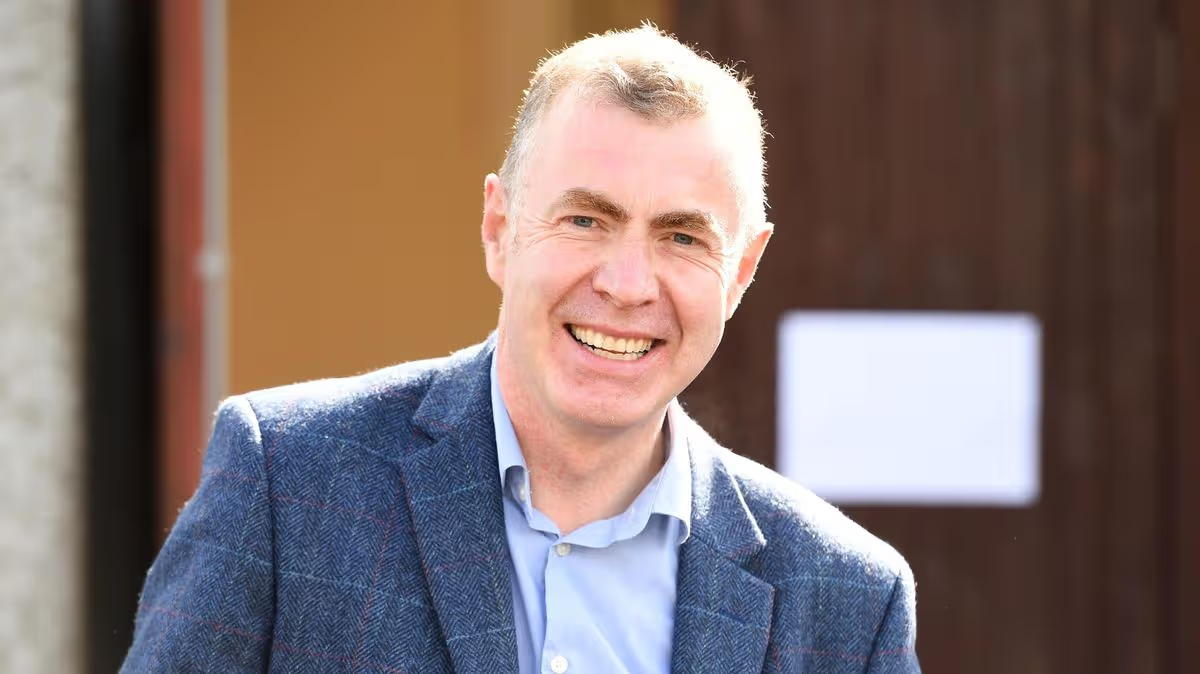
Economy Minister Adam Price on a new development agency the Development Bank of Wales and economic targets

Published

on

Business Live

The Economy Minister said that driving the competitiveness of the Welsh economy has to be a collective effort

(Image: Ben Evans/Huw Evans Agency)

A new national development agency, which will deliver business support and seek to attract inward investment at arm’s length from the Welsh Government, will bring in expertise from the private sector to help drive the competitiveness of the economy.

Cabinet Minister for the Economy, Connectivity and Energy, Adam Price, also confirmed that the new administration will have a new key economic target based on improving productivity – on which Wales languishes at around a fifth below the UK average.

Advertisement

In his first major interview, the economist said he will also carry out a full review of the Development Bank of Wales, which is wholly-owned by the Welsh Government, and its suite of financial products, to assess any gaps in its provision of capital to support Welsh firms to scale-up.

Before the election, Plaid set up a number of working groups to scope how a new national development agency could operate at arm’s length from the Welsh Government. It has been touted as a new version of the Welsh Development Agency (WDA), which was abolished by the then Labour Welsh Government of Rhodri Morgan in 2006 with its staff and economic support functions brought directly into government.

At the time, it had a workforce of more than 1,000, with a remit ranging from business support and inward investment to land reclamation and commercial property, and a budget of £200m (worth around £400m today). That scale and reach, even if the money could be found, is not envisaged. Instead, a smaller and more agile body with innovation at its heart is planned.

The agency’s precise remit, staffing levels, and, importantly, budget allocation, will be thrashed out over the coming weeks and months. This will include the potentially thorny issue of having to transfer some existing civil servants into the new body, combined with the desire to bring in fresh blood and thinking from the private sector.

Advertisement

The Welsh Government will also need to consider how it will end existing contracts for outsourced business support under its existing Business Wales brand – although the new agency could have external delivery partners.

Speaking at the Welsh Government’s office in Cathays Park, Mr Price said: “It will be a driver of our economic strategy and it’s going to be the key engine for that.”

On the pre-election work he said: “We tapped into the collective intelligence that is out there. We have some knowledge and expertise from the old WDA, which is still important to draw upon, and also many of the economists we’re very fortunate to have in Wales, and some leading-edge thinkers. We are also speaking to key figures in the business community in shaping our early outline plan, if you like.

“It will be phased, so there will be a design and build phase, but we want to work at velocity – and the kind of velocity that business expects. There is a lot of detailed work, and we want to involve experienced senior people who have founded, run, and in some cases turned around businesses, and that knowledge is very key, as are some of the other knowledge sets.

Advertisement

“So we are putting a team together working with us and creating a process and a structure to deliver that as soon as we can. So that work is already going on.”

When asked when it could become operational, he said it was too early to give any timeframe, whether that be next year or possibly into 2028.

Mr Price said: “It’s absolutely the question to ask, but I can’t give you a definitive answer. The question we’re asking is how quickly we can do this. You probably cannot set everything up at once and be operational across every area.

“We’re going to have to build a critical path here, we’ve got to sequence this, and we are mapping out what those steps are now. I don’t think that just creating a development agency on its own is some kind of panacea, but what it does is absolutely key. So if you create an arm’s-length agency it can work with a degree of agility and dynamism, which in its culture and way of operating is close to business.

Advertisement

“So we’re not just looking at designing a new institution, we are also asking ourselves a very pertinent question: what difference will this institution make through its activities?”

He pointed to Transport for Wales, under its chief executive James Price, as a model that could be emulated as a company of government. It not only operates the Wales & Borders rail network, but is overseeing a new bus franchise model across Wales and is responsible for electrification of the Core Valley Lines.

Mr Price said: “You have a combination of existing skills and knowledge bases, but also specialist knowledge from people in the private sector. We will definitely want to attract the best to work on this very exciting challenge that we are going to set ourselves, which is closing the productivity gap between Wales and the rest of the UK.”

WDA

He was asked if the WDA name could be resurrected for the new agency. While it is more than two decades since its demise, it is still a recognised brand.

Advertisement

Laughing, he said: “It will have a name, as we are a nation of poets after all, but it will be important (name) because it will encapsulate the vision and the mission.

” So, we will probably want a name that communicates its purpose, which may reference some of the heritage that we have. We were the nation that built one of the world’s first development agencies, which others were modelled on, but we want to create something that is very much built for now and for the future, so we will have more to say about that in due course.”

How will the development agency ensure it doesn’t add complexity to the current business support landscape across Wales, with its four statutory body corporate joint committees (CJCs), including the Cardiff Capital Region, two freeports and investment zones, local authorities, and a significant role for the UK Government in areas like export assistance and credit support, as well as government back agencies such as UK Research and Innovation (UKRI)?

Mr Price said: “I think alignment is absolutely what we need in every sense. I think we should always ask ourselves whether the landscape of economic development is the one that is going to deliver most efficiently for us.

Advertisement

“But I think any national development agency and the government at a national level wants to work with local and regional partners. So we look forward to working with the corporate joint committees.”

The Cardiff Capital Region is the most advanced CJC and the most successful in securing UK funding for economic development, such as £30m from the UKRI’s Local Innovation Partnership Fund.

While the four CJCs are exploring a voluntary best practice working relationship, there is an inherent competitiveness in seeking to secure backing from government funding streams. Does this help raise standards or create unnecessary duplication of effort?

Mr Price responded: “It’s certainly a good question for us to collectively ask, not just us as a national government, but also speaking with the CJCs and all of the different initiatives, to ask whether this is the best landscape for us. If it is, fine. If it isn’t, then we have the ability to shape that. I think in the initial stages we want to work with all of those partners. We want to avoid any duplication, but also ask how we can add value.

Advertisement

“There are complementary roles, strengths, and skills in there, but what we want to create is an economic development system where we’re all working together, all contributing maybe in different ways. It is not a competition, and what we want to build is cooperation, and that includes the UK Government as well.

“The Welsh Government and the UK Government are committing to driving economic growth and prosperity. So we are very keen to have conversations with all the relevant UK Government ministers to see how we can actually achieve our common goals in a quicker way.”

Plaid Cymru’s manifesto did highlight relatively low jobs created by the city and growth deals across Wales, although they have a long-term target.

The minister said: “I think that we certainly need within every region a regional growth plan, in the same way that we’re going to build an economic development plan for the whole of the nation. So what we want to do there is obviously work with local and regional partners to craft that.”

Advertisement

“And I think in the initial stage, let’s work within the structures that we have. That’s the pragmatic approach. We are creating a national development agency that will work throughout Wales and will have strong regional divisions. Those divisions will work with local government, it will work with business on a local and regional basis, and with those regional structures as well.

“I think it’s a conversation for us to have for another day, and an important one, once we’ve built the development agency, to say, right, okay, with our local and regional partners, is this the right landscape then for us going forward? That is a conversation that we can have collectively. There are no predetermined answers to that question, and it is something that should always evolve.

“There is scope for joint working as well, where different CJCs have different strengths in different areas, and we would want to be part of that conversation, but we see ourselves working very collaboratively with those regional bodies.”

Development Bank of Wales

Advertisement

Development Bank of Wales.(Image: Matthew Horwood)

In its manifesto Plaid committed to a review of the Development Bank of Wales and its financial products, which range from debt to equity. It also manages specific Welsh Government funds, as well a funds in England for the British Business Bank.

He said: “We as a party for many years called for the creation of a development bank, and so it’s good that we have that lever and that institutional capacity.

“What we want to do is to make sure that institution is absolutely able to deliver its very important mission in terms of ensuring access to capital and plugging any gaps that are within a financial system that, as we know, has not historically always been well calibrated in the interests of Wales.

“So we want to build on the experience and the success in many areas of recent years, but obviously, as a new government, we are keen to review what is going well and whether there are areas where there could be further improvement and whether there are gaps in the funding offer, which is key.

Advertisement

“I think it is fair to say the Development Bank of Wales has plugged some important gaps in terms of access to capital, and that is part of its primary function. One of the key questions is what are the gaps now? To what extent is finance, and we like to think that in all of our economic analysis we are trying to prioritise by identifying the key barriers which are holding us back.

“Obviously, we want progress in all areas, but any government has to prioritise and sequence things. So I think one of the questions we are going to ask is to what extent is access to finance still a key constraint in terms of business growth, and we need to be very specific.”

Will that mean a new independent access to finance review that led to the creation of the Development Bank of Wales back in 2018, although in personnel there was no change from its predecessor, Finance Wales?

Mr Price said: “The mechanism that we will use to do that work we have not decided yet, but we will want to sit down with the bank and with the business community and look at this question: what are the gaps now?

Advertisement

“In conversations that I have had with businesses, venture capital specifically, and what you might call active capital more broadly, has been identified as an area where we still need to create a mechanism in Wales.

“What do I mean by active capital? Passive capital is basically where you get the money, but with active capital – and venture capital is a principal form of that (though not the only one) – you are given some money, but also some know-how to make sure that you as a business succeed and that the investment works well.

“So that is just one example of an area we would be keen to look at: so where are we, and what more can we do in terms of access to capital? And part of the question is what would be the role of the development bank and the development agency.”

Asked whether equity could come out of the development bank and sit within the new development agency, with fund managers sought to run specific funds with requirements on match funding and leverage investment levels, he said: “At this stage we cannot rule anything out, but that should not be read as meaning that is going to happen, as we need to carry out the work (review).

Advertisement

More broadly he added: “It’s a technical question and not a theological one, so we basically need to do the analysis on that. We have identified, as I said, that active capital is an area where businesses tell us there is more that we need to do. Let’s test that against the empirical data. Then if we do find this is an issue, then we need to think about what form that intervention should take.”

Economic targets

Productivity

The new government will also establish a fiscal and economic commission to support the collection and analysis of Welsh economic data, and the setting of clear targets on the economy, as well as critical thinking, including around innovation. It will also conduct a skills audit to identify the needs of Welsh employers.

On economic targets, he said: “I think we need a single headline goal, and we will have one. It has to be a meaningful one and something that crystallises. We can say the words ‘close the prosperity gap’, but you have to make that specific. And it has to be ambitious but achievable. So I think stretch targets are good, as they catalyse you and keep you focused. But you also have to have a reasonable basis for believing it is achievable

Advertisement

“We are not yet able to say what the target will be, but in terms of the measure I think what is important there is that it is a measure where you hold more of the levers. With GVA more broadly and including GVA per capita, there are so many macroeconomic and demographic factors you could be blown off course through no fault of your own.

” However, if you look at productivity, by which I mean GVA per hour worked (the rate in Wales is currently around 84% of the UK), that is where we do control many of the levers… like skills for example and education more broadly, also innovation, particularly the adoption of technology and innovation etc.

“So I think in terms of the measure, it is the productivity gap and how fast we can close that productivity gap. We are doing work on that now as we speak, and we will have a target which will be ambitious.

On the fiscal and economic commission he said he isn’t yet able to identify members. He added: “We are still at the scoping stage with that, but, you know, and it really is parallel with the development agency.

Advertisement

“But in terms of the general principle, it mirrors exactly what the Basque Country did in the early 1980s and early 90s. They created economic development agency SPRI, which was modelled on the Welsh Development Agency. They also created Orkestra, their economic institute of competitiveness.

“So they set up at the same time what is fairly universally seen as the most successful development agency in the last 30 years, as the Basque Country went from pretty much where we were in the 1980s to now at the top level both in Spain and across the EU in terms of economic development.

“But they created deliberately an economic institute independent of government in order to keep them focused and keep them honest, and also to make sure that the programmes of the government and of SPRI were aligned with leading-edge thinking.

“Obviously what you do is absolutely critical, but thinking is also part of this, and having alongside a development agency a leading-edge institution which is able to capture in data terms where we are, not just the single headline goal, but also some of the secondary indicators which are leading indicators, as well as keeping us in line as closely as possible with leading-edge thinking.

Advertisement

“I think that innovation is absolutely central to our economic development strategy and to closing that productivity gap.

“It is key, not just in terms of new product development, which people tend to instantly think of, which is absolutely important, of course, commercialising knowledge from a university base etc. But actually the other bit of innovation, which is its spread, diffusion, and adoption of technology and other forms of innovation.

“So innovation is going to be right at the heart of what we do. I think in terms of the institutional design, we see the development agency as a national innovation body. We want to build on the classic strengths of a development agency in many areas, so being very good at inward investment will be part of it. But there are things as well which are more oriented to the economy of today and tomorrow, and innovation.

“There are things that only governments can do, and we need to step up to the plate and realise our own responsibilities for the part that we play in closing the prosperity gap. But governments cannot do it on their own, and so on a target that we talked about, closing the productivity gap, it has to be a collective endeavour.

Advertisement

“As a government we need to tap into the collective intelligence of the nation. That is what we are going to do in designing the development agency and the economic commission.”


Continue Reading
Click to comment

You must be logged in to post a comment Login

Leave a Reply

Business

(VIDEO) Allen Iverson Downplays Legendary Crossover on Michael Jordan as Just Another Move

Published

on

Former Philadelphia 76ers star Allen Iverson spoofs his infamous "practice" rant in a new Reebok "Retro Shop" commercial.

PHILADELPHIA — Allen Iverson, the electrifying former Philadelphia 76ers guard known for his fearless style of play, has long been associated with one of the most iconic moments in NBA history: his crossover dribble on Michael Jordan. Yet Iverson maintains the play was not even among his sharpest, attributing its enduring fame largely to the opponent on the receiving end.

The sequence unfolded on March 12, 1997, during Iverson’s rookie season. Facing Jordan, then with the Chicago Bulls and widely regarded as the game’s premier defender, the Georgetown product executed a hesitation crossover at the top of the key. Jordan lunged, and Iverson blew past him for a basket. The moment, replayed endlessly on highlight reels, symbolized the passing of the torch from one generation’s superstar to the next.

In a 2022 conversation with Dan Patrick, Iverson reflected on the play with characteristic candor.

Advertisement

“I always told my friends growing up that if I ever got an opportunity to try my move on the best that ever played the game, I would,” he recalled. “It just happened. You know, I backed him up, and I did it. I really didn’t know the significance of it when it first happened because I was just into the game, just playing the game.”

Iverson, who idolized Jordan growing up and emulated his moves on neighborhood courts, emphasized that the crossover’s legend grew because of Jordan’s stature.

“But thinking back on it, I had gotten guys way worse than that,” Iverson said. “It was just the fact that it was him.”

The 1997 encounter came at a pivotal time. Jordan was in the midst of his second three-peat with the Bulls, while Iverson, the No. 1 overall pick in the 1996 draft, was injecting new energy into the league with his crossover and scoring prowess. The move, though not invented by Iverson — Tim Hardaway popularized an earlier version — became synonymous with his game due to his speed and ball-handling flair.

Advertisement

Iverson’s career was defined by such audacity. Standing at 6 feet tall and weighing around 165 pounds, he routinely took on bigger defenders and emerged as one of the NBA’s most dynamic scorers. His four scoring titles, 11 All-Star selections and MVP award in 2001 underscored a relentless competitive fire that resonated with fans.

The crossover on Jordan quickly entered basketball lore. Analysts and players alike marveled at the rookie’s willingness to challenge the six-time champion. Jordan, never one to shy away from competition, reportedly showed respect for Iverson’s talent in subsequent years.

Years after both had retired, the two Hall of Famers shared a lighthearted moment. Iverson recounted the exchange during a visit to a Charlotte Hornets game.

“I went to a Hornets game. Me and him were in an area in the back where he chilled at halftime. He had me back there and we were just talking. And I just kept telling him how much I loved him and how much he meant to my life and my career,” Iverson said.

Advertisement

“And he was like, ‘You don’t love me that much. You wouldn’t have crossed me like that,’” Iverson added. “We laughed about it.”

Jordan’s response highlighted the mutual respect between two competitors who pushed each other and the league forward. Iverson frequently cited Jordan as a major influence, blending admiration with the drive to carve out his own legacy.

Beyond the highlights, Iverson’s career encompassed far more. Drafted by the 76ers, he led the franchise to the 2001 NBA Finals, falling to the Los Angeles Lakers in five games. His playoff performances, including a memorable step-over of Tyronn Lue, became etched in franchise history.

Off the court, Iverson’s impact extended to fashion and culture. His cornrows, tattoos and baggy shorts influenced a generation of players and fans, challenging NBA dress codes and broadening the league’s appeal.

Advertisement

The 76ers retired his No. 3 jersey in 2013, honoring his contributions. Iverson was inducted into the Naismith Memorial Basketball Hall of Fame in 2016, cementing his place among the all-time greats.

Today, discussions about Iverson often circle back to moments like the Jordan crossover. While he downplays its technical difficulty, the play endures as a symbol of fearlessness. In an era dominated by Jordan’s excellence, Iverson represented a new wave of guard play emphasizing quickness and creativity.

Analysts note that Iverson’s crossover technique — holding the ball high to freeze defenders before whipping it across — built on predecessors but added unmatched explosiveness. His battles with Jordan, Kobe Bryant and other stars defined an exciting period of NBA history.

Iverson’s post-playing life has included broadcasting appearances and community work. He remains a revered figure in Philadelphia, where fans still chant his name at games.

Advertisement

The 2022 remarks to Patrick offered a rare glimpse into Iverson’s mindset. Far from dwelling on past glories, he contextualized the crossover within a career full of similar maneuvers against lesser-known opponents. The difference, he suggested, was the spotlight Jordan’s presence created.

Jordan, for his part, has spoken sparingly about the play but has acknowledged Iverson’s skill. Their hallway conversation underscored a bond forged through competition.

As the NBA continues to evolve with new generations of guards, Iverson’s influence persists. Players like Kyrie Irving and Stephen Curry have cited elements of his game, from handle wizardry to scoring mentality.

The crossover on Jordan stands as more than a single highlight. It represents Iverson’s arrival as a star capable of challenging the league’s established order. Decades later, it continues to inspire, even as its architect views it with humility.

Advertisement

For basketball fans, the moment captures the essence of the sport: one player testing limits against the greatest, creating a memory that transcends statistics. Iverson’s reflection reminds observers that legends often grow from context as much as execution.

Continue Reading

Business

No-fly zone for Iran talks disrupted flights at Zurich airport, authorities say

Published

on

No-fly zone for Iran talks disrupted flights at Zurich airport, authorities say


No-fly zone for Iran talks disrupted flights at Zurich airport, authorities say

Continue Reading

Business

GPIQ: The Ultimate 9%+ Covered Call Choice For Long-Term Compounding

Published

on

Dynex Capital: Intact Earnings Engine Supports A Buy Despite Rising Yields (NYSE:DX)

GPIQ: The Ultimate 9%+ Covered Call Choice For Long-Term Compounding

Continue Reading

Business

Nifty 50 Falls 0.64% as IT Stocks Slide on Accenture’s Weak Guidance

Published

on

FTSE 100 Surges 0.8% Today as Oil Eases and Markets

Indian benchmark indices closed lower on Friday, June 19, with the Nifty 50 falling 154.90 points, or 0.64%, to settle at 24,013.10, halting a five-session winning streak as weakness in technology stocks dragged down the broader market.

A Broad Decline Led by Tech

India’s BSE Sensex closed about 0.8% down at 76,803 on Friday, halting a five-day advance, pressured by weakness in tech stocks following revenue growth guidance cut by Accenture. The SENSEX Index decreased 607 points, or 0.78%, to close at 76,803, with the decline led by Infosys, down 6.48%, Tata Consultancy Services, down 3.04%, and HCL Tech, down 2.73%.

The selloff in technology shares was particularly steep during the morning session. India’s BSE Sensex fell about 0.9% to 76,684 at the open on Friday, retreating from a five-day advance as information technology stocks led losses after Accenture’s latest results raised concerns about demand prospects for the sector. Shares of Tata Consultancy Services, Infosys, Tech Mahindra, and HCL Tech fell between 5.1% and 8.1% during the session.

Advertisement

Broader Market Sentiment Also Under Pressure

Beyond the technology-specific concerns, several macro factors contributed to the day’s weaker sentiment across Indian markets. Market sentiment was also hit by foreign outflows, renewed geopolitical uncertainties and the prospect of higher U.S. interest rates.

That pressure was reflected in foreign and domestic institutional investor activity for the session. Foreign institutional investors recorded net activity of 4,859.07 crore rupees, while domestic institutional investors posted net outflows of 1,159.64 crore rupees on June 19.

Other Notable Decliners

Advertisement

Beyond the major IT names, weakness extended across several other sectors during Friday’s session. Other notable laggards across sectors included HDFC Bank, down 2.1%, Meesho, down 1.0%, Vedanta, down 1.9%, Bata India, down 4.5%, and Ola Electric, down 2.6%. HDFC Bank and Mahindra & Mahindra were also among the session’s broader laggards, down 2.3% and 2.1%, respectively.

Stocks That Bucked the Trend

Despite the broad-based decline, several companies posted gains during the session, particularly in the defense and infrastructure sectors. On the upside, MTAR gained 3.1%, IFCI rose 5.7%, Paras Defence advanced 6.0%, and HFCL climbed 5.0%.

Among larger-cap names, top gainers included Eternal, up 2.2%, Bharti Airtel, up 1.8%, Power Grid, up 1.3%, and NTPC, up 1%. A separate measure of the session’s strongest performers similarly pointed to Bharti Airtel, up 1.61%, Power Grid, up 1.35%, and Nestlé India, up 1.22%.

Advertisement

Still Near Recent Highs Despite the Pullback

Despite Friday’s losses, the broader trend for Indian equities over the past week remained positive. Despite Friday’s decline, the benchmark indexes remained near recent highs after gaining in each of the previous five sessions. The index remained on track for a weekly gain of 1.5%. For the week overall, the Sensex advanced by 1.7%, even after accounting for Friday’s pullback.

A Notable Corporate Development: Bajaj Auto Buyback

Beyond the broader market movements, several individual corporate announcements drew investor attention during the session. Bajaj Auto’s board approved a 5,632.8 crore rupee buyback of shares, setting a record date of June 24 — a significant capital return move that gives shareholders a clear date to track ahead of the buyback’s execution.

Advertisement

Other Corporate News Driving Individual Stocks

Several other company-specific developments also factored into Friday’s trading. Geojit BNP upgraded Ramco Cements to a “Buy” rating, citing higher demand from government spending on infrastructure. Separately, analysts forecasted Prestige’s first-quarter revenue to grow 114% year-over-year, amid higher collections across markets, while Reliance Industries’ subsidiary Jio Platforms approved an IPO draft via a fresh issue of 27 crore shares.

Early Signals From Gift Nifty

Looking ahead to the next trading session, early indicators from Gift Nifty pointed to a modest rebound. Gift Nifty was trading 0.30% higher, at 24,042.00, suggesting at least a partial recovery may be in store when Indian markets reopen, though such early indicators can shift considerably before the regular session begins.

Advertisement

With Accenture’s revenue guidance cut continuing to weigh on sentiment toward India’s large IT exporters, market participants will be watching whether weakness in technology shares spills over into other sectors in the sessions ahead, or whether Friday’s decline proves to be a temporary pause within the broader five-day uptrend that had carried the market to recent highs. Investors will also continue monitoring foreign institutional investor flows and developments tied to U.S. interest rate expectations, both of which contributed to Friday’s broader risk-off tone across Indian equities alongside the sector-specific pressure from the technology space.

Continue Reading

Business

5 States Losing the Most Big Companies in 2026, and 5 States Cashing In on the Exodus

Published

on

Long Beach California

A wave of corporate headquarters relocations continued reshaping the American business landscape in 2026, with high-tax blue states bleeding major companies to lower-cost, business-friendly Sun Belt destinations. Here are five states posting the steepest losses, and five capitalizing the most on the migration.

The Biggest Losers

1. California

No state has felt the corporate exodus more acutely than California. California suffered the nation’s steepest corporate losses. The San Francisco Bay Area posted a net loss of 163 headquarters as Texas posted gains over the same period. Companies leaving California frequently cited taxes, labor rules and soaring living costs as reasons for relocating elsewhere, according to CBRE.

Advertisement

The Bay Area specifically has emerged as the hardest-hit market nationally. The San Francisco Bay Area lost 156 corporate headquarters between 2018 and 2024, fueled by high taxes and stringent regulations. In just 2024 alone, California lost 17 headquarters, of which 12 moved to Texas. California has lost at least 275 headquarters since 2018, a figure tied to homes at least 50% more expensive than in Texas, along with the fifth-highest tax burden in the country.

High-profile recent examples include Public Storage’s relocation from Glendale to Frisco, Texas, ending a half-century run in California, and Yamaha’s planned shift of its U.S. headquarters from California to Georgia after nearly 50 years in the state.

2. New York

New York has experienced its own accelerating wave of departures, particularly in the financial sector. A wave of high-profile companies has accelerated its departure from New York in 2026, citing soaring taxes, burdensome regulations and a shifting political climate under Mayor Zohran Mamdani as key drivers behind the ongoing business exodus.

Advertisement

Dallas Mayor Eric Johnson predicted the trend would only intensify. “What was already a trickle is going to turn into a flood,” he said in early 2026 interviews, referring to an anticipated wave of New York finance firms relocating south. Among the firms shifting significant operations away from New York are Elliott Management, AllianceBernstein, and Citadel, each moving key functions or talent to Florida as part of what’s increasingly being called the “Wall Street South” migration.

3. Illinois

Beyond California and New York, other higher-tax states have continued to see corporate departures as companies cite similar concerns over operating costs and regulatory burden. Losing regions faced potential erosion of tax revenue and leadership presence, though many retained substantial employment bases, a pattern consistent with broader departures from states perceived as having heavier regulatory and tax environments.

4. Massachusetts

Advertisement

Higher-cost metro areas including the Boston region have also factored into the broader relocation pattern, with companies departing in favor of lower operating costs elsewhere. Six companies sought Miami from other U.S. metros such as Los Angeles, the Bay Area, and Boston specifically, according to CBRE’s tracking of relocation patterns into South Florida.

5. New Jersey

Rounding out the states most affected by the relocation trend, New Jersey has continued to see companies migrate toward lower-tax Sun Belt destinations as part of the broader northeastern corporate exodus, following a regional pattern in which businesses cite high operating costs and tax burdens as primary motivating factors for relocation.

The Biggest Winners

Advertisement

1. Texas

No state has benefited more from the corporate migration than Texas. Texas emerged as the clear winner in corporate headquarters relocations during 2026, attracting dozens of major companies seeking lower taxes, lighter regulation and business-friendly policies. Dallas-Fort Worth led the nation with 111 headquarters relocations between 2018 and 2025, according to a CBRE report, while Austin added 88 and Houston gained 31.

Dallas-Fort Worth in particular has become the nation’s fastest-growing headquarters market, gaining 100 relocations between 2018 and 2024. Today, public companies based in Dallas-Fort Worth hold a combined $1.5 trillion in value — a figure doubling in the past five years. Goldman Sachs, for instance, plans to grow its headcount in Dallas to 5,000, up from 970 in 2016.

2. Florida

Advertisement

Florida ranked as the other major gainer. The state benefited from its no-income-tax environment, warm climate and appeal to finance and wealth-management firms. Miami continued to brand itself as “Wall Street South,” drawing hedge funds, private equity players and tech executives.

Foot Locker planned to move its headquarters from New York City to St. Petersburg, Florida, in late 2025, with effects carrying into 2026 planning. Two international companies selected Miami due to its strong industry-specific concentrations, including a cosmetics company attracted by Miami’s position as a leading hub for medical spas and dermatological aesthetic clinics.

3. North Carolina

Charlotte continues rising as a major contender for corporate relocations, due to a pro-business environment, tax benefits, growing and diverse talent pools and supportive infrastructure, placing North Carolina among the most active emerging destinations for companies leaving higher-cost states.

Advertisement

4. Tennessee

Tennessee has also captured meaningful relocation activity, with Nashville continuing to rise as a major contender alongside Charlotte, Miami, and Phoenix. Lumber Liquidators relocated to Tennessee, joining other companies drawn by the state’s favorable tax and business climate.

5. Arizona

Phoenix has also emerged as a significant beneficiary of the broader relocation trend. One international company relocated its headquarters to Phoenix from Canada, part of a broader pattern of Arizona capturing companies seeking lower costs and business-friendly policies, often as an alternative destination for companies leaving nearby California.

Advertisement

The Scale of the Overall Trend

The cumulative scope of this migration has been substantial. According to a report by CBRE, 561 companies have relocated their headquarters nationwide since 2018, with the research showing many companies reassessing tax climates, operating costs, and growth prospects as they consider a move.

A Nuanced Picture for the “Losing” States

Despite the headline-grabbing departures, some analysts caution against overstating the economic damage to states like California. States like Texas, Florida, and Georgia are winning the war for corporate HQ relocations, but the losses in other states may not be as catastrophic as reported. California suffered a net loss of eight Fortune 500 company headquarters in the past six years, with seven of those losses going to Texas. However, California is still home to 53 Fortune 500 firms, behind only Texas and New York, and its state economy remains the largest in the U.S., with a gross state product of $3.89 trillion.

Advertisement

Why Companies Are Moving

Industry analysts and officials point to several consistent factors driving the migration pattern. New York’s high corporate and personal income taxes, combined with elevated operating costs, commercial rent pressures and regulatory hurdles, have made southern states attractive. Florida and Texas boast no state income tax, lighter regulations and aggressive economic development campaigns.

Economist Steve Moore offered a blunt assessment of the underlying logic driving the trend. “It is common sense for business leaders to pick places for future financial success rather than economic suffocation,” Moore told Fox News Digital, describing the migration as companies “voting with their feet.”

With proposed tax measures, including California’s potential billionaire tax and continued policy debates in New York, still working their way through state legislatures, analysts expect the relocation trend to continue at a similar or potentially accelerated pace through the remainder of 2026. While CBRE has described recent activity as a “reset” compared to the pandemic-era peak, the underlying directional momentum — favoring low-tax, low-regulation states like Texas, Florida, North Carolina, Tennessee, and Arizona over historically high-cost hubs like California, New York, and other northeastern states — shows no clear signs of reversing in the near term.

Advertisement
Continue Reading

Business

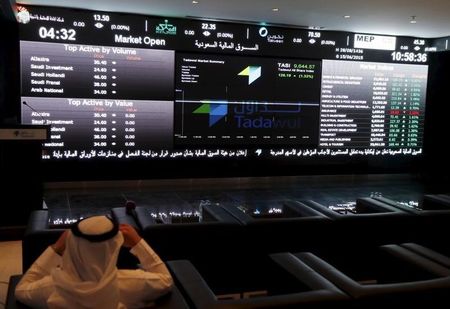
Saudi Arabia stocks lower at close of trade; Tadawul All Share down 0.40%

Published

on


Saudi Arabia stocks lower at close of trade; Tadawul All Share down 0.40%

Continue Reading

Business

These 9 penny stocks rallied up to 125% in six months. Do you own any? – Hidden Multibaggers

Published

on

These 9 penny stocks rallied up to 125% in six months. Do you own any? - Hidden Multibaggers

In the last six months, nine penny stocks delivered impressive gains ranging from 25% to 125%. These outperformers were identified using specific filters: a market capitalisation below Rs 1,000 crore, a share price under Rs 20, and a minimum latest trading volume of 5 lakh shares. This approach helped spotlight low-priced, actively traded micro-cap stocks exhibiting strong upward momentum.

Penny stocks continue to draw interest due to their low price points and high return potential. However, they come with substantial risks, including low liquidity, sharp volatility, and limited transparency. For investors, success in this space requires more than luck—it demands discipline, thorough research, and a firm grip on risk management. (Data Source: ACE Equity)

Continue Reading

Business

Blake Lively Spotted Solo in New York as Taylor Swift Pre-Wedding Buzz Swirls in Rhode Island

Published

on

Blake Lively

Blake Lively was photographed walking alone in Pound Ridge, New York, on Friday, pushing a shopping cart while dressed casually in a white floral long-sleeve top, as rumors intensified around a possible pre-wedding gathering for her longtime friend Taylor Swift at the pop star’s Rhode Island estate.

Photographers captured Lively out by herself amid heightened speculation that Swift’s Rhode Island mansion was hosting an all-female event, potentially a bachelorette party ahead of Swift’s reported wedding to Kansas City Chiefs tight end Travis Kelce. The sighting has fueled discussions about the current state of the friendship between the “Gossip Girl” actress and the global music superstar.

Lively, 38, did not appear distressed during her outing, according to images published by TMZ. However, the solo appearance stands in contrast to reports of Swift being surrounded by close friends at her Watch Hill property this week. Activity around the mansion, including sightings of vehicles and guests, has prompted speculation that the gathering could mark a significant pre-wedding celebration.

The two celebrities have shared a high-profile friendship for years, often appearing together at events and supporting each other’s projects. Lively and her husband, actor Ryan Reynolds, were once part of Swift’s inner circle, frequently joining double dates with Swift and Kelce. Their bond appeared particularly close around the time of Lively’s 2024 film “It Ends With Us,” for which Swift contributed the song “My Tears Ricochet” to the trailer.

Advertisement

Tensions reportedly emerged following Lively’s high-profile legal dispute with her “It Ends With Us” co-star and director Justin Baldoni. Lively filed a complaint alleging a hostile work environment, which Baldoni denied. Court documents later revealed text messages in which Lively referred to Swift as one of her “dragons,” drawing a “Game of Thrones” analogy in communications related to the production.

While some reports suggested the friends had reconciled after an exchange of messages, Lively’s absence from what appears to be an intimate pre-wedding event has led observers to question the depth of their current relationship. Sources close to the situation have indicated that the friendship may not be as tight as it once was, though no official statements have been made by either party.

Swift, 36, has maintained a relatively private approach to her personal life in recent months as wedding rumors continue to circulate. Speculation points to a possible July 3 celebration at Madison Square Garden in New York, with a guest list reportedly exceeding 1,000 people. Whether Lively and Reynolds will attend remains unclear, though the large scale could accommodate a wide range of invitees.

The entertainment industry has closely followed developments in Lively’s legal matters, which have drawn significant media attention. Baldoni has countersued, leading to the unsealing of various communications. Swift was mentioned in some documents, though she has not been directly involved in the litigation. A settlement was reportedly reached earlier this year between Lively and Baldoni, avoiding a trial.

Advertisement

Lively has continued her professional work amid the personal and legal scrutiny. She has been involved in various projects, balancing family life with Reynolds and their four children. The couple’s public appearances have been limited as they navigate the aftermath of the publicized dispute.

For Swift, the focus has remained on her music career and relationship with Kelce. The couple’s high-profile romance has been a frequent topic, with fans and media speculating about engagement and wedding plans for months. Swift’s Rhode Island home has long served as a private retreat, hosting gatherings with close friends over the years.

The current buzz around the estate echoes past events where Swift has celebrated milestones with her inner circle. Reports of ladies-only activities align with traditional bachelorette festivities, though details remain unconfirmed. A black SUV was reportedly seen leaving the property, adding to the intrigue.

Industry watchers note that celebrity friendships often evolve under public pressure, particularly when legal or professional conflicts arise. Lively’s reference to Swift in texts during the film production highlighted their closeness at the time, but the ensuing publicity may have strained dynamics.

Advertisement

Despite the speculation, both women have careers that continue to thrive independently. Lively has upcoming projects in fashion and acting, while Swift’s “Eras Tour” and recent album releases have solidified her status as one of music’s most influential figures.

As wedding rumors for Swift and Kelce persist, the spotlight on their social circle is unlikely to fade. Lively’s solo outing comes at a time when many of Swift’s associates are reportedly converging in Rhode Island, making the contrast noteworthy for fans tracking the stars’ lives.

Observers will continue to monitor public interactions between the pair. For now, Lively appeared to be enjoying a quiet day of errands in her suburban New York community, far from the coastal excitement surrounding her friend.

The situation underscores how personal relationships among high-profile figures play out against a backdrop of intense media scrutiny and professional obligations. Whether this marks a temporary distance or a more significant shift remains to be seen.

Advertisement
Continue Reading

Business

Celtics Legend Cedric Maxwell Affirms LeBron James Belongs in NBA All-Time Top 5

Published

on

LeBron James

BOSTON — Boston Celtics great Cedric Maxwell has weighed in on one of basketball’s most enduring debates, declaring that Los Angeles Lakers superstar LeBron James deserves a place among the NBA’s all-time top five players.

Maxwell, a two-time NBA champion with the Celtics, made his comments during a recent appearance on FanDuel’s “Run It Back.” He pushed back against skepticism from some in his generation, citing James’ remarkable longevity, on-court achievements and off-court professionalism as reasons he cannot be excluded from the elite group.

“LeBron James one of my favorite players because of the longevity and what he’s done,” Maxwell said.

“He is one of the top players of all-time. So, I don’t think that you can have five greater players in the NBA than LeBron James and what he’s done for the league and how he’s really handled himself,” Maxwell added.

Advertisement

The endorsement from the Celtics legend carries particular weight given the historical rivalry between Boston and James’ teams. Maxwell’s perspective stands out in discussions often dominated by comparisons to legends from earlier eras such as Michael Jordan, Magic Johnson, Larry Bird and Kareem Abdul-Jabbar.

James, now in his 40s, continues to defy age as he enters another season with the Lakers. The four-time NBA champion, four-time MVP and four-time Finals MVP became the league’s all-time leading scorer in 2023 and has shown no signs of slowing down significantly. His ability to maintain elite production while adapting to new teammates and systems has fueled arguments for his place in the pantheon.

Maxwell highlighted James’ consistency and character as key factors.

“A guy who has been no trouble, won championships, and you think about the personnel that have been around him and other personnel that have been around him – you don’t have that with LeBron,” Maxwell said.

Advertisement

This assessment underscores a broader shift in how some former players view James’ career. While debates about the greatest of all time remain subjective, Maxwell’s comments reflect appreciation for sustained excellence over more than two decades. James has led teams to the NBA Finals with three different franchises — the Cleveland Cavaliers, Miami Heat and Lakers — demonstrating versatility rarely seen in the sport’s history.

The 21-time All-Star’s statistical dominance is unparalleled in many categories. Beyond the scoring record, he ranks high on the all-time lists for assists and steals. His playoff performances, including multiple comebacks from 3-1 deficits, have cemented his reputation as one of the most clutch performers the game has produced.

Off the court, James has built a significant business empire and maintained a relatively scandal-free public image, which Maxwell noted as part of his legacy. This professionalism has allowed him to remain a global ambassador for the NBA while navigating the intense scrutiny that comes with being one of the league’s faces for over 20 years.

The timing of Maxwell’s remarks adds interest as the NBA offseason continues. Speculation around James’ future, including reports of teams like the Golden State Warriors showing interest, keeps him in the headlines even as he prepares for what could be another competitive chapter with the Lakers.

Advertisement

Maxwell’s viewpoint contrasts with those who argue that players like Wilt Chamberlain, Bill Russell or Kobe Bryant might edge James out due to era-specific achievements or stylistic preferences. Yet the Celtics alum focused on tangible contributions and durability.

James’ career trajectory includes four championships, but also notable individual honors that span different phases of his evolution. From his early days as a high school phenom in Akron, Ohio, to leading the Heat to back-to-back titles and delivering a long-awaited championship to Cleveland in 2016, his resume features moments that transcended basketball.

Analysts and fans continue to dissect these accomplishments. Some emphasize rings, while others point to advanced metrics showing James’ efficiency and impact on winning. His high usage rates combined with low turnover percentages over extended periods highlight a level of basketball IQ that has only improved with experience.

For Maxwell, who won titles with the Celtics in 1981 and 1984, the respect for James appears rooted in an understanding of the physical and mental demands of the modern NBA. The league today features a faster pace, greater emphasis on three-point shooting and more rigorous travel and recovery schedules compared to previous decades.

Advertisement

James has not only adapted but thrived, often playing heavy minutes in both regular season and postseason while maintaining MVP-caliber production. His influence extends to player empowerment, as his decisions in free agency helped reshape how stars approach their careers.

The broader conversation about the top five typically includes Jordan, often ranked first by many, followed by a mix of Abdul-Jabbar, Johnson, Bird and others. Inserting James requires displacing one of these icons, a proposition that sparks passionate disagreements among fans and media.

Maxwell’s comments may not settle the debate, but they add a credible voice from a champion of a previous generation. His willingness to elevate James speaks to the cross-era respect that the Lakers forward has earned through consistent performance.

As James approaches the twilight of his playing days, these discussions are likely to intensify. Whether he adds to his championship tally or not, his place in history appears secure according to observers like Maxwell. The longevity Maxwell praised has allowed James to rewrite records while remaining a focal point for his team.

Advertisement

Lakers fans and NBA followers alike will watch closely as the next season unfolds. James’ leadership continues to be a cornerstone for a franchise with championship aspirations. His work ethic and preparation have become benchmarks for younger players entering the league.

Maxwell’s endorsement also reflects evolving criteria for greatness. In an era of superteams, load management and expanded playoffs, measuring impact requires nuance. James’ ability to elevate teammates and sustain excellence amid constant change stands out.

The Celtics-Lakers rivalry, one of the NBA’s most storied, adds another layer. Maxwell’s comments bridge that divide, offering praise from a Boston icon for a player who has frequently faced off against Celtics teams in the playoffs.

Basketball historians will continue weighing these arguments for years. For now, Maxwell has made his position clear: LeBron James belongs in the conversation with the greatest to ever play the game.

Advertisement

His perspective contributes to a rich tapestry of opinions that keep NBA discourse vibrant. As the league prepares for another season, James remains a central figure whose legacy continues to grow.

Continue Reading

Business

Ahead of Market: 10 things that will decide stock market action on Monday

Published

on

Ahead of Market: 10 things that will decide stock market action on Monday
The sharp rally in Indian equities lost momentum on Friday, with the Sensex and Nifty slipping deep into the red and snapping a five-session winning streak, as heavy selling in IT stocks, weak global cues and other headwinds weighed on investor sentiment. Sensex tumbled 607 points to close at 76,802.90, while Nifty 50 declined 155 points to end the session at 24,013.10. This came after the benchmark indices had jumped up to 5% over the past five sessions.

Here’s how analysts read the market pulse

The equity market witnessed profit booking following the recent relief rally, as investor sentiment was dampened by the unexpected cancellation of peace talks between the US and Iran, said Vinod Nair, Head of Research at Geojit Investments. He noted that the IT index experienced a sharp correction, driven by Accenture’s softer outlook, which has heightened concerns over discretionary and digital spending. “In the near term, investors are likely to adopt a cautious tone, with participants awaiting greater clarity on the peace deal and monitoring the slow progress of the southwest monsoon. Nevertheless, a buy-on-dips strategy appears prudent, supported by the current comfort in oil prices and expectations of an earnings revival in H2FY27,” he added.

US Stocks

Advertisement

US markets remained closed on Friday for the Juneteenth holiday. In the previous session, Wall Street had rebounded sharply, with the S&P 500 gaining 1.1 per cent, the Dow industrials rising 0.1 per cent and the Nasdaq Composite surging 1.9 per cent on strong technology-led buying.

European markets
European markets ended lower on Friday as investors remained cautious amid geopolitical uncertainty and delayed talks between Iran and the United States. Germany’s DAX slipped 0.16 per cent to close at 24,985.82, while France’s CAC 40 declined 0.55 per cent to 8,421.14. Britain’s FTSE 100 also fell 0.35 per cent to end at 10,363.27, reflecting subdued sentiment across the region.
Tech view
The Nifty snapped its five-session winning streak and formed a small-bodied bullish candle on the daily chart, Nilesh Jain, VP and Head of Technical and Derivative Research at Centrum Finverse, highlighted. Despite the intraday weakness, the index witnessed a strong recovery from lower levels and managed to close above the 24,000 mark on a weekly basis, he added.
“The broader trend remains positive as the index continues to trade above its short-term 50-DMA, placed at 23,840, keeping the possibility of a gradual move towards 24,400 intact in the near term. Momentum indicators also remain supportive, with the MACD sustaining a buy crossover and the RSI holding above the 60 mark, indicating a bullish undertone. Meanwhile, India VIX declined 13% during the week to settle below 13, and any further moderation in volatility could provide additional support to the market’s positive sentiment,” the analyst said.

“Overall, the technical outlook remains bullish, with support placed at 23,900 and positional support at 23,800, while resistance is seen in the 24,200–24,250 zone. A buy-on-dips strategy should be adopted,” said Vatsal Bhuva, Technical Analyst at LKP Securities.

Most active stocks in terms of turnover
Infosys (Rs 4,767 crore), Reliance Industries (Rs 3,279 crore), Bharti Airtel (Rs 3,034 crore), TCS (Rs 2,776 crore), HDFC Bank (Rs 2,639 crore), New India Assurance (Rs 2,366 crore), and IFCI (Rs 1,773 crore) were among the most active stocks on the NSE in value terms. Higher activity in a counter in value terms can help identify the counters with the highest trading turnovers in the day.

Most active stocks in volume terms
Vodafone Idea (Traded shares: 41.62 crore), IFCI (Traded shares: 20.58 crore), Suzlon Energy (Traded shares: 13.99 crore), Yes Bank (Traded shares: 13.25 crore), New India Assurance (Traded shares: 11.96 crore), Ola Electric (Traded shares: 10.91 crore) and Zee Entertainment Enterprises (Traded shares: 7.5 crore) were among the most actively traded stocks in volume terms on NSE.

Advertisement

Stocks showing buying interest
New India Assurance, Transformers & Rectifiers, Berger Paints, Schloss Bangalore, Caplin Point, ITC Hotels and Aafhar Housing Finance were among the stocks that witnessed strong buying interest from market participants.

52-week high
Among the ones which hit their 52-week highs on the NSE were Schloss Bangalore, Caplin Point, GE T&D India, HFCL, Carborundum Universal, Anand Rathi Wealth and Craftsman Automation.

Stocks seeing selling pressure
Stocks which witnessed significant selling pressure were FACT, Infosys, Bata India, Adani Wilmar, ICICI Pru Life, LTI Mindtree and Balrampur Chini.

52-week low
Among the ones that hit their 52-week lows on the NSE were Infosys, LTIMindtree, TCS, EID Parry, Tata Elxsi and Wipro

Advertisement

Sentiment meter favours bulls
Out of the 3,401 stocks that traded on the NSE on June 19, Friday, 1,760 stocks witnessed advances, 1,522 saw declines, while 119 stocks remained unchanged.

(Disclaimer: Recommendations, suggestions, views and opinions given by the experts are their own. These do not represent the views of The Economic Times)

Continue Reading

Trending

Copyright © 2025