

Politics
Cooking Once A Week Could Slash Dementia Risk


By 2024, Alzheimer’s Society said that they expect the number of people with dementia in the UK to rise to 1.4 million.
We still don’t fully understand how conditions like Alzheimer’s develop. But researchers think that up to 45% of dementia cases are “potentially preventable” by addressing 14 lifestyle factors.
These include more obvious choices, like not smoking and staying active. And a new paper published in the Journal of Epidemiology & Community Health had suggested that another, simpler step – cooking, even as little as once a week – could significantly reduce dementia risk, too.
Cooking once a week appeared to reduce risk by as much as 67%
In this research, which involved 10,978 over-65s, the study authors compared people’s self-reported cooking rates and skill levels to their dementia incidence over time.
They tracked them for six years.
Compared to cooking less than once a week, cooking once a week was linked to a 23% lower dementia risk among men and 27% for women.
For those who weren’t experienced cooks, making a homemade meal once a week was associated with a 67% lower likelihood.
People who cooked at least five times a week saw the best results, however. And those who were highly competent in the kitchen also saw benefits, though these didn’t seem to rise with cooking frequency.
These findings seemed to hold true after accounting for other factors we know can affect dementia risk, like income level and education.
“Creating an environment where people can cook meals when they are older may be important for the prevention of dementia,” the study authors concluded.
Expertise might lower dementia risk
A birdwatching study found that those who were really, really skilled at the hobby saw lower dementia risk than less-skilled peers. “High-level expertise in a complex hobby can provide a protective ‘cognitive reserve’ as we age,” the authors wrote.
However, speaking to the Science Media Centre, Dr Susan Kohlhaas, an Executive Director of Research and Partnerships at Alzheimer’s Research UK, stressed that this was an observational study that couldn’t prove causation.
She added, “People who cook regularly may also have healthier diets, be more physically active, and be in better overall health, all of which are linked to better brain health. It’s also possible the reverse is true: people with early memory and thinking problems might lose the ability or motivation to cook, leading them to cook less often”.
She also noted that though the study lasted six years, participants only reported their cooking habits once.
She continued that while this study may not be conclusive, “there is good evidence that keeping active, eating well, and staying socially connected can help support brain health”.

Politics
The House | Lord Heseltine: “We Must Not Have Reform Or Restore Anywhere Near The Corridors Of Power”


Photography by Tom Pilston

10 min read
Lord Heseltine speaks to Noah Vickers about regenerating Britain’s cities, the devolution agenda and why Margaret Thatcher ‘would have hated’ Nigel Farage
In Lord Heseltine’s sitting room, which offers a view of his estate’s sloping lawns and serpentine lake, a bookcase is lined with Nikolaus Pevsner’s 46-volume series The Buildings of England. The Northamptonshire edition has been bookmarked, possibly on the page describing Heseltine’s 261-year-old Palladian manor, Thenford House, as “decidedly conservative for its date”.
The former deputy prime minister, now aged 93, is perhaps known less for what he conserved, and more for what he tore down and built anew. His most enduring legacy can be found in two of 20th-century Britain’s most significant regeneration projects: the redevelopment of Liverpool and the creation of Canary Wharf. Both were instigated during his time as environment secretary under Margaret Thatcher.
As the Labour government plans to build seven new towns across England, along with potential development corporations to deliver thousands more homes in Oxford and Cambridge, ministers could do worse than look to Heseltine, who overcame significant opposition within Whitehall to get his projects off the ground.
“Turkeys don’t vote for Christmas,” the peer points out. “Every aspect of the British administrative system was opposed to what I was trying to do.
“The Treasury were against because it cost money. Keith Joseph, who was the great intellectual guru of the Thatcher years, was against because it was interventionist. My department was against because it was interfering with local government. The spending departments were against because it was a challenge to their monopolist, functional power structure.
“But I knew enough about government across the world to know that we were a top-heavy, centralised, functionally divided, administrative country – and that is the least effective way to run a country.”
In Liverpool particularly, Heseltine took what now seems a remarkably hands-on approach. Every Thursday for about 18 months, he would meet with a team of secondees from the public and private sectors in the city. They would update him on any political or logistical blockages hindering the scheme – and each Friday, he would ensure they were unblocked.
“For 18 months under Mrs Thatcher, I was [part of] the most interventionist government in British history,” he declares.
Heseltine later set his sights on getting new homes and infrastructure built in the “east Thames corridor” of south Essex and north Kent – a vision never fully realised in the years since. But the peer has not let go of the idea, and in a call for action from ministers, he urges them to resurrect his plan for ‘Hezzaville’, as it was dubbed by the media.
“The biggest potential growth area in Britain is the Thames Estuary,” he says. The problem that governments face there and elsewhere, he believes, is one of political and economic geography. He argues that England’s local government is still far too fractured and should be simplified along the lines recommended in the 1969 Redcliffe-Maud report.
“You need about 60 authorities, with directly elected mayors. Instead of doing a development corporation for a new town in a particular area, you should let the mayor of the county create the necessary structures. The important thing is to have the local person in charge and with resources,” he says.
To get ‘Hezzaville’ off the ground, the peer has a roadmap at the ready: “Essex and Kent should have unitary mayors – full stop. They should then set up a development corporation with roving powers over the estuary. They don’t need to take away the whole power structure – they should simply determine where growth is relevant in the estuary and then work with any development corporation to accelerate that potential.”
Some of the infrastructure need is already being met. The government is pressing ahead with the Lower Thames Crossing, and it is thanks to Heseltine that the High Speed 1 rail route already includes a stop at Ebbsfleet.
The peer was a big supporter of its successor, High Speed 2, and accused Rishi Sunak of committing a “gross act of vandalism” by scrapping the route’s ‘northern’ leg to Manchester in 2023.With an estimated cost now stretching potentially above £100bn, Heseltine laughs when asked what can be done to rescue HS2.
“I have a simple slogan in life: show me a problem, show me the person in charge. It’s not a bad slogan. You need somebody with the skill, tenacity and frankly the determination to make the thing work.”
Comparisons with road and rail projects on the continent, he caveats, are not entirely fair.
“We are a very small, tightly-developed island, so the problems here are quite different to building great motorways on the continent – but it is a national disgrace.”
The scheme will be one of several to watch if Greater Manchester mayor Andy Burnham becomes prime minister. In his campaign to become Makerfield’s MP, Burnham lays the blame for Britain’s ills squarely at Thatcher’s door, as he condemns her government for the “privatisation of life’s essentials”.
Heseltine refuses to get into a sparring match over this. He knows the Labour leadership hopeful “very well” and praises him for having “made a success of the Manchester mayoralty”.
In his 2025 book From Acorns to Oaks, however, Heseltine argued that privatising each public utility “required careful examination to ensure the proposed structure would deliver a wider spread of wealth in a more competitive environment”.
He wrote: “Judged against the above criteria, it can be argued that water privatisation failed both of these tests, for example.”
It is a point he reiterates to The House: “It’s very difficult to see how you have competition with the water industry, so I think there is a legitimate case to ask questions there.”
What he wants, he says, is “the maximum amount of competition and accountability in the management of resources”, while emphasising that the private sector “is an absolutely fundamental bastion of freedom”.
Does he see any case for renationalising the water industry, then? “I would be very reluctant to do that,” he says. “Look, I have not studied the water industry in the last week, month or year or so, so I don’t know what I would do.
“All I know is, whenever I looked at any of these things – and I certainly did privatise more of the state than anybody else ever has, or ever will – I’ve never regretted [it].”
Even if the formal mechanisms for one haven’t yet been triggered, a Labour leadership contest is effectively underway. Would Burnham or Wes Streeting make a better PM than Keir Starmer?
“I actually like Keir Starmer,” the peer replies. “I think he’s a nice guy and a good guy – and he’s got a terrible job.”
Starmer is struggling, he points out, amid problems caused by Donald Trump’s US administration, the war in Ukraine, conflict in the Middle East and the impacts of Brexit.
“Every aspect of the British administrative system was opposed to what I was trying to do”
While the PM is “undoubtedly culpable” for the effects of his government’s tax policies, Heseltine argues there is “very little he can do” about those other four issues, calling it an “absolutely non-win” situation.
“In many ways, any prime minister would be in this present situation, because the underlying malaise affecting this government is the one that always affects governments: living standards are falling and people want change. It’s as simple as that.”
He will not be drawn further on the question of Labour’s leadership, but adds: “My preoccupation with the Makerfield by-election is very simple. We must not have Reform or Restore or anything like it anywhere near the corridors of power in this country. I’ve seen it all before. [Oswald] Mosley in the 30s, Enoch Powell in the 60s.”
He claims that “the Reform and the Restore generation” are making “the most sinister, antisemitic, extremist appeal to a very nasty side of the human character”.
Reform UK leader Nigel Farage has always admired Thatcher, saying after her death that she was a “great inspiration” to him. What might the Iron Lady have made of Farage, had she been alive to see the rise of his political project?
“She’d have hated him,” Heseltine replies without hesitation. “Nigel Farage will assimilate himself with anyone he thinks has got a resonance in public opinion. He is Donald Trump’s vicar in Britain…
“But the origins of ‘Nigel Trump’ are a guy with a beer tankard and a fag. Then the farmers get into trouble, and he turns up looking like a farmer – and this is all a communications process.
Successful, but based on opportunism, based on a degree of prejudices which I find abhorrent. She would have had nothing to do with him.”

If Farage’s party is as dangerous as he claims, should the Tories have stood down in Makerfield and endorsed Burnham?
“I don’t think you can stand aside. I think you attack Reform. You throw everything into the battle.”
So far, the Tories have distanced themselves from Reform on fiscal policy, but have made little attempt to do so on areas like immigration.
“There will come someone,” is all Heseltine says in response to this point, with a slight smirk. Is he saying someone in the Conservative Party will have to start making that case?
“There will come someone, yes,” he repeats. “David Cameron came from not a totally different background.”
What then of the party’s current leader, Kemi Badenoch? Has he been impressed by her performance over the last 18 months?
“Well, I think she is beginning to climb the ladder,” he offers, cryptically.
Has his opinion of her changed at all?
“I had no opinion. I’ve never met her.”
Does he think she’ll win the next general election?
“I think she’s got a very challenging journey, and I’m not going to make any simplistic statements.” Not exactly a ringing endorsement.
At an age when most people would be looking to retire from public life, Heseltine clearly enjoys his status as an elder statesman – and he stands ready with a prescription to deliver Starmer’s elusive “decade of national renewal”.
“I know what this country needs to do,” he says. “First to get rid of its punitive tax policies, secondly to rejoin the European Union and thirdly to go for a devolution agenda.”
Devolution, he argues, has stalled outside England: “What Scotland and Wales did was to replicate Whitehall in Cardiff and Edinburgh.
“I come from South Wales, Swansea. We didn’t think that Cardiff was all that special. Why can’t Swansea be its own self-governing unit? Pembrokeshire, mid-Wales, north Wales [too]. If I was a Conservative in those principalities, that’s what I’d be saying.”
Rejoining the EU, meanwhile, has returned as a serious long-term prospect. If rejoining would be so beneficial for everyone concerned, should Brussels be making a compelling offer to Britain that even Farage would find hard to argue against? For example, one that would give the UK all of the opt-outs it had before?
“If I was the EU, I wouldn’t do that, because I wouldn’t want to look silly. You’ve got to wait until this country has people who are prepared to say, ‘This is what we want to do,’ and carry the public support with them. If I was the EU, I would be waiting for that to happen; I would do everything I could to encourage that to happen. That’s what diplomacy’s about; that’s what private conversations are about.
“If I was a European today, I would know that Britain is an invaluable part of the European power structure. When I see what Donald Trump is saying, it’s a vital part of the defence of Europe.
“But it’s for the young people. It’s for the opportunity to be part of the only credible power structure which can offer us the avenue to research and development on a relevant scale in the modern world.”
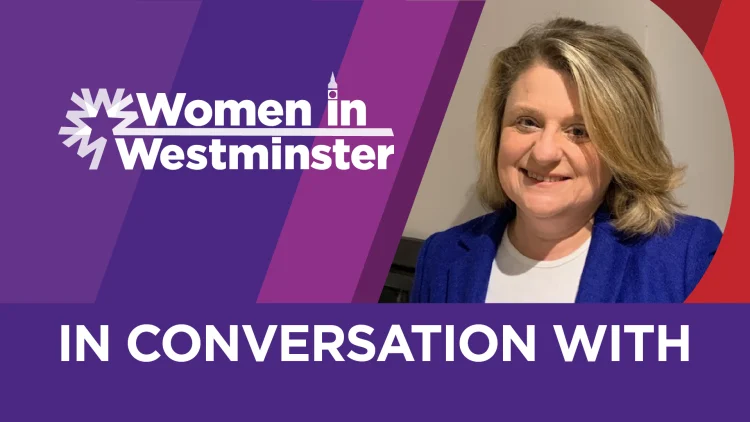

Following her daughter’s murder, Carole Gould OBE found herself navigating a criminal justice system that seemed to care more about the needs of perpetrators than victims. As part of our Women in Westminster series, we sat down with Gould to learn why she believes violence against women is still not taken seriously enough by the courts
In May 2019, Ellie Gould was murdered in her home by an ex-boyfriend. She was 17 years old. Because her killer was also 17, he received a prison sentence much shorter than if he had been older. That injustice motivated Carole Gould, Ellie’s mother, to campaign for changes to the law and catapulted her into the public eye.
“Ellie had such a bright future ahead of her,” her mother tells us. “She would have given so much to society. She was so caring and kind and bright, vivacious, and intelligent. She was an amazing young woman.”
At the start of our sit-down conversation with Gould, I describe what she has experienced as “unimaginable”. As the words come out, I apologise for it being a cliché. But some things are clichés precisely because they are true. Having to deal with the murder of your child is something that few of us can imagine.
But Gould is clear that it was not something that she ever contemplated either. Instead, a single act of violence ripped through the fabric of an entirely ordinary life.
“I just quite enjoyed our little life in Wiltshire,” Gould tells us. “You know, we were happy.”
That life was turned upside down when Ellie was killed. Gould was thrust into a new and entirely unfamiliar world of police liaison officers, courtrooms and barristers. Having to navigate that system felt like stepping inside a hidden world where the voices of victims were often coldly disregarded.
“We understood it that victims were meant to be first and central to the criminal justice system,” she tells us. “Well, they’re really not. It’s all the perpetrators. It’s all about them.”
Gould often felt a huge sense of powerlessness in the face of a legal system that she describes as “cold.” Because Ellie’s killer was 17, he was not sentenced as an adult. Instead, he was handed a life term of twelve-and-a-half years in prison.
“I just remember saying to our barrister, ‘That can’t be right. That’s immoral. That’s unjust. You’ve got to appeal it,’” Gould remembers. “He just said, ‘I’ve told you once, and I’ll tell you again, that is the law. It’s sentenced within the guidelines. The law is cold, and there’s nothing more I can do.’ And off he went. That was it.”
But for Gould, that was certainly not “it”. Fuelled by a sense of injustice, she began to publicly speak out about the inequity of sentencing guidelines that made no distinction between the actions of a 10-year-old and those of a 17-year-old.
“I think it was the injustice, how immoral the outcome was,” she tells us. “Ellie was an amazing young woman. For the state to say, your life is only worth twelve-and-a-half years was just shocking.”
She contacted her local MP and began to raise the issue in the media. Other families who had experienced loss through homicide contacted her. Soon, a new campaign was born. Killed Women was co-founded by Gould and Julie Devey, whose daughter Poppy was murdered in 2018. The campaign has supported families, pressed for sentencing reforms and given a voice to those who felt let down by the legal system.
And as Gould learnt more about the rules around sentencing for domestic homicide, the angrier she became, leading her to campaign for tougher sentences for teenage killers.
“When they introduced Ellie’s Law, they said that the youth sentencing would be a percentage of the adult sentencing. Then I looked into the adult sentencing and thought, how can it be right that if you’re murdered in the home, that’s 10 years less than if you’re murdered in the street? It just felt like you unpick one thing and then you have to unpick another.”
When Ellie’s Law was first announced, Gould spoke out against it because it perversely led to a starting point that would actually have been lower for her own daughter’s murderer. Arguments that it would increase sentences for terrorists, and some other killers missed the central point that the driving force behind the campaign was speaking up for women killed by men.
“Ellie was a victim of male violence, so it felt like a huge insult and that we were used as a poster family to make the government look good,” Gould says. “I think at the time, Sir Robert Buckland [the then Justice Secretary] was horrified that his civil servants had not looked into the detail enough.”
The law was subsequently revised so that a 17-year-old can now receive 90 per cent of an adult sentence. With other campaigners, Gould has also been successful in having a range of new aggravating factors applied to sentencing. It now means that if a woman is murdered because of the end of a relationship, if there is strangulation, overkill, or a history of coercive control, then extra time can be added by a judge.
However, Gould believes that having those factors in the sentencing guidelines is not yet delivering the longer sentences that she and others would like to see.
“Even though it’s written into the sentencing guidelines, they are not adding any extra time for these new statutory aggravating factors,” she explains. “I just think there needs to be a huge cultural shift within judges and the judiciary to start taking crimes against women and girls seriously.”
Coincidentally, the week that we spoke with Gould, the headlines were again dominated by a story about youth sentencing. Three teenage boys had just received non-custodial sentences for the rape of two girls in Hampshire. Ellie’s Law applies only to murder, but Gould told us that the Hampshire case illustrates an ongoing disregard for the seriousness of offences against women and girls.
“I think what it exposes is a judge, a male judge, once again, not taking violence against women and girls seriously,” she told us. “And not understanding the huge impact that it will have on those young girls for the rest of their lives.”
Throughout our conversation, it is clear that Gould remains angry. It would be easy to conclude that this is what motivates her. But that would be a mistake. Above all else, her campaigning is driven not by anger but by love.
“Ellie was worth so much more, and this is what she would have wanted,” she says. “She would have wanted proper justice and accountability. I have to be that voice.”
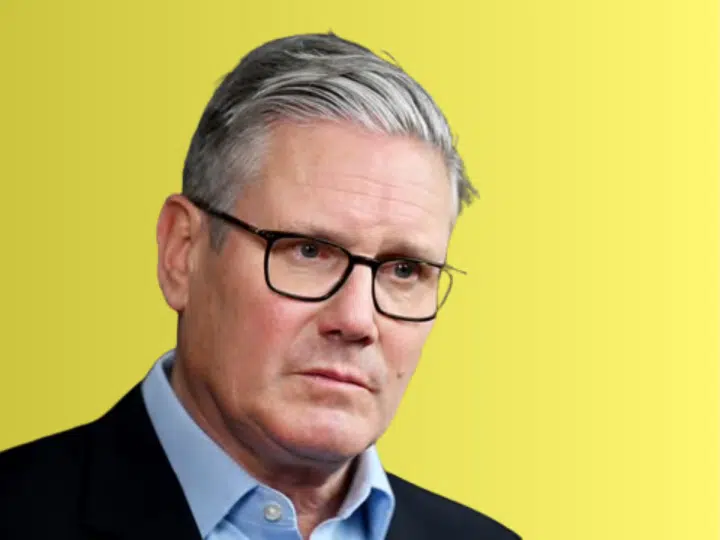

The Masjid-e-Quwwatul Islam mosque in Blackburn was set on fire last weekend. Keir Starmer, his government and the state-corporate media have been deafeningly silent about the arson attack. It was the latest of countless Islamophobic attacks in the UK.
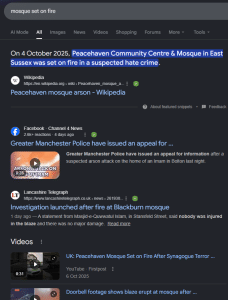
No ‘COBRA’ meeting. No emergency funding. Not even a word of condemnation from Number 10. ‘Mainstream’ media coverage was limited to a mention in the local press. Google’s search results show only a 2025 arson attack and an article about a separate attack on an Imam’s home:
State contempt
The Muslim Social Justice Initiative (MSJI) pointed out the stark difference in the state machinery’s reaction when Muslims are targeted by violence:
Another mosque in the North has been set on fire. Alhamdulillah, no one was injured.
This comes days after the family home of an Imam in Bolton was firebombed while his loved ones were inside.
Where is the urgency?
The state has spent decades surveilling, criminalising and dehumanising Muslims. It has created the conditions our communities are now being asked to survive.
Muslim communities should not have to continue to beg for care or protection while our mosques and families continue to be targeted.
If your politics oppose state violence, war, policing and empire, then anti-Muslim racism must be central to that struggle. We cannot keep stressing the urgency that is missing.
The Starmer regime only cares about even British Jews when they can be used as an excuse to attack those opposing Israel’s crimes. When Jewish people oppose those crimes too, as they prominently do, the state targets them — and it routinely shows its contempt for Muslims, their rights and their safety.
The Starmer government and the machinery of the British state are fundamentally racist and elbow-deep in murder and colonialism.
Featured image via the Canary
By Skwawkbox
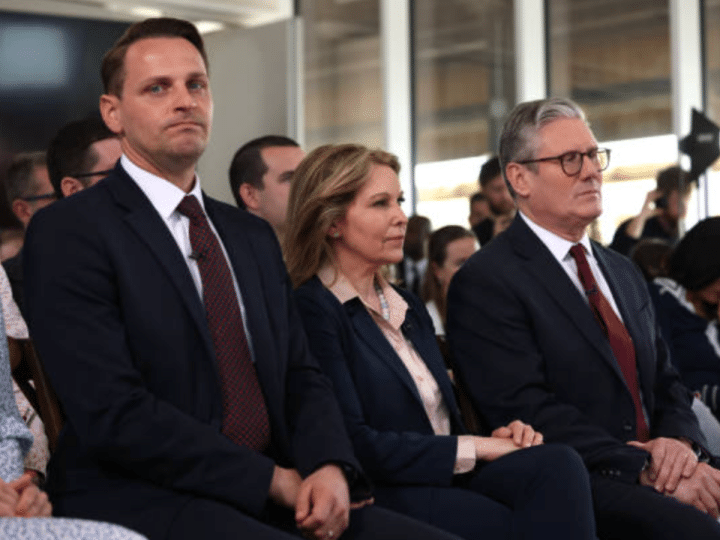
Israel-fanatic and Labour Friends of Israel (LFI) vice-chair Labour MP Mike Tapp isn’t the brightest — or most moral — bulb in the box.
Tapp thinks it’s great for police to beat the crap out of a helpless suspect. So maybe it’s no surprise he didn’t see what a door he was opening when he tried to taunt Green party leader Zack Polanski about the arrest of grannies and vicars opposing genocide. But asking Polanski what a convicted terrorist should look like? Come on.
Who’d ever have guessed?
But that’s exactly what Tapp did. Polanski had rightly pointed to the Starmer regime’s war on freedom of speech and Tapp thought he was being clever:
Tell me, Zack, what should someone who is convicted of a terror related offence look like? I’m intrigued.
— Mike Tapp MP (@MikeTappTweets) June 15, 2026
It wasn’t rocket science. Cue the part of X that has humanity to point out the genocidal terror state that Tapp fanboys:
Oh, you know it, don’t be shy pic.twitter.com/erfVnSj41j
— Malaria Before The Neolithic (@MalariaIn) June 15, 2026
Lots of people had a similar idea. Like pointing to the actual wanted war criminal who runs the terror state:
A bit like this I’d imagine pic.twitter.com/ZPuTDsvlqH
— Solma Ahmed #betterworld
(@solma_ahmed) June 15, 2026
The wanted war criminal who was the target of much toadying by Starmer’s government:
— AddLies (@AvidFan4u) June 15, 2026
And his president, who received a warm welcome from Tapp’s boss Keir Starmer:
— AddLies (@AvidFan4u) June 15, 2026
Or the supposed ‘most moral’ army’s predilection for dressing up in the lingerie of Palestinian women it has murdered or ethnically cleansed:
— Rest in Pissinger
From the River to the Sea. (@Shanksponie) June 15, 2026
Others pointed to the welcome shown by Starmer to the now re-branded Syrian president, Ahmed al-Sharaa, a former member of Hayat Tahrir al-Sham (HTS). The terrorist group was on the UK’s banned list until Keir Starmer removed their name in October 2025, and rolled out the Downing Street red carpet for al-Sharaa:
You should know. Your PM welcomes all sorts of war criminals into his office. pic.twitter.com/lCb2btEcCw
— monaktrix (@monaktrix) June 15, 2026
The double standards that build up the shaky credibility of who the government labels terrorists are clear for all to see:
Well he was one a few months ago according to this government. Apparently according to this government, now he’s not.
You use proscription as a political tool rather than a legal one and apply it where it’s convenient and where geopolitical interests dictate. pic.twitter.com/MtGnct8zMf
— ZK (@xk_machine) June 15, 2026
Others went for Tapp’s own odiousness directly, with unflattering comparisons to genitalia featuring prominently:
Definitely not like that, you sweaty little ball-bag.
It looks more like a UK MP supporting a genocidal regime, currently engaged in terrorism on the Palestinian people.
— MOCHA (@MOCHARTY) June 15, 2026
Fuck off you genocide terrorist supporting cunt
— Liam (@lc02848) June 15, 2026
And for his own eager collusion in Israel’s terror:
Go check the shiny thing above your bathroom sink
— Negative Zero (@KilValmer) June 15, 2026
And that of his whole Quisling parliamentary group:
Like this
pic.twitter.com/4ZYUsgCezC
— Osita Mba (@DrOsitaMba) June 15, 2026
Some arguably got the wrong flag in the background, though:
— Harry (@SomeLargeRats) June 15, 2026
And of course, some simply pointed out whom the Starmer-Tapp axis does consider a terrorist while turning a blind eye to the whole terror state and its racist ideology:
Well this, according to Labour. pic.twitter.com/9qkbLR8VLq
— Nelson
Yes, the average box of Palestinian dates could have seen it coming, but Tapp didn’t. But then, Israel and its supporters are a lot more famous for their arrogance than their brains.
Featured image via Dan Kitwood / Getty Images
By Skwawkbox

Iran and the US are set to sign a new peace deal this Friday. The US has been humiliated on multiple fronts, to say the least. The Oman-brokered deal, as we have often repeated, offered unprecedented concessions, but the US and Israel attacked Iran anyway.
The full terms of the new deal are not yet clear. But we are being told the details are finalised, to be formally signed on 19 June. Here is what the news agency Reuters has reported:
STRAIT OF HORMUZ:
* Iran immediately reopens the Strait of Hormuz to all commercial vessels, while the U.S. lifts its naval blockade on Iranian ports. The lifting of the U.S. blockade would begin immediately after the memorandum is signed and be completed within 30 days.
It is worth noting that Iran has said that there will be a toll charged for navigating the strait. Iranian Foreign Ministry spokesman Esmaeil Baghaei said on 15 June:
Our goal is to pave the way for a secure passage in this waterway. We need a certain period of time to discuss with the other sides this important matter.
It’s full services that will be offered in order to keep and maintain the environment. So many other services will be offered by Iran and Oman, and this will cost money. Accordingly, the fees will be there, and this is clear.
Baghaei also made it clear a ceasefire in Lebanon was integral to any deal for Iran.
Iran, sanctions, and the post-war economy
Here is where the parties are on economic matters, according to Reuters:
FINANCIAL:
* The U.S. agrees not to impose any new sanctions on Iran until a final deal is reached.
* Following a final agreement, all U.S. and U.N. sanctions on Iran would be lifted according to an agreed timetable.
* The U.S. will waive oil sanctions on Iran for a specified period, allowing Tehran to sell oil and receive revenue.
And:
* The U.S. agrees to release $25 billion of Iran’s frozen assets, including via direct cash transfers, cooperation among regional countries, and financial credit lines.
* Washington, in coordination with its regional allies, would prepare a reconstruction and development plan for Iran, to be negotiated and agreed with Iran within 60 days.
The questions of nuclear power and weapons
And this appears to be the agreed position on nuclear issues, a subject of ongoing negotiations for Iran:
NUCLEAR:
* Tehran agrees that it will neither produce nor acquire nuclear weapons.
* Pending a final agreement, Iran would maintain the current status of its nuclear programme, refraining from further uranium enrichment and expansion of nuclear facilities.
* The United States agrees to allow Iran to dilute its stockpile of highly enriched uranium on Iranian soil under a future comprehensive agreement.
* Iran’s nuclear programme, uranium enrichment activities and mechanisms for handling its stockpile of highly enriched uranium would be negotiated within 60 days of the memorandum and addressed in a final agreement.
There is understandable scepticism in Iran about whether the deal is real. The US has repeatedly used talks as a cover to continue its war. Even the legacy media has accepted this.
Here is the Guardian on the day the war began:
In June last year, Israel, with the US later in tow, launched a 10-day attack on Iran just three days before Iran and the US were due to meet for a sixth set of talks.
So this assault, in the middle of a second negotiation process, must torpedo the chances of the Iranian regime ever taking a US offer of talks seriously. They have been stung twice.
Middle East Eye has interviewed Iranians on the ground, and cited a man named Mohammed saying:
Just look at how long it took them to reach this small understanding, which is really more of a ceasefire extension than anything else.
During that time, the United States attacked, Israel attacked and Iran attacked.
All of that makes it difficult for me to be optimistic. People want to believe all their problems are over, but I don’t think Iran and the United States will be able to reach an agreement on difficult issues like the nuclear programme and sanctions relief.
The jig was up a long time ago. US journalist Spencer Ackerman called the US loss as early as 31 March:
So You Lost A War To Iran. And you’re going to try to convince us you… won. Wow. Wow, OK.
He followed up in mid-May with a piece titled:
Not A Stalemate With Iran, An Unambiguous Loss.
Read them both for a clear-eyed view of where the US is, as this war — we hope and pray — finally closes out.
US self-delusion to the last minute
On the US side, vice president JD Vance praised Israel as a “good partner”:
CBS: Is Israel on board with this? It doesn't appear so at this time
JD VANCE: Israel has been a good partner, but we do expect everybody in the region to honor this agreement. There are always bumpy moments with these ceasefires pic.twitter.com/gFl6ayFT5p
— Aaron Rupar (@atrupar) June 15, 2026
He then tried to recast America’s war objectives to excuse Trump’s failure to achieve any:
JD Vance on Iran:
What Trump really wanted to do—not just over the last six weeks, but really over the last year and a half of Iran policy—was get us to a place where we could fundamentally change our relationship with the Iranians and ensure that they never have a nuclear… pic.twitter.com/GfdIptzQmT
— Clash Report (@clashreport) June 15, 2026
Vance also denied the claim by Iran that it’s frozen billions would be restored. He went as far as saying the Iranians need the deal to be palatable to unwitting hardliners — making a glib point about political optics inside iran.
CBS: The Iranians are saying they're gonna get $24 billion in frozen funds if they hit certain benchmarks. Is that true?
JD VANCE: We're open to a lot of things that are on the table but that doesn't appear anywhere in the text pic.twitter.com/lfyOEmGfJm
— Aaron Rupar (@atrupar) June 15, 2026
A Reuters exclusive, published on 13 June, cited four anonymous sources, saying that the UAE had agreed to unlock $10 billion of frozen Iranian funds.
One source described the move as a face-saving backdoor option for the US:
that the agreement would be a way for Iran to obtain the payoff it sought in return for a ceasefire, while allowing the Trump administration to claim it did not pay.
Of these sources, two told Reuters that $3 billion had already been released. The Emirati foreign affairs ministry issued a statement to deny these claims, in characteristic fashion. Anyone reminded of their denial of Netanyahu’s “secret” visit in mid-May…
Meanwhile an anonymous Iranian official told Drop Site News that the government has drafted in psychologists to craft communications with Trump’s erratic tendencies:
We added two senior psychologists to the negotiations’ advisory circle so that we can shape messages intended for President Trump from the perspective of managing what we regard as psychopathic behavior pattern.
[Trump’s] reactions have improved noticeably since we began incorporating the recommendations of these advisers into our messages and written communications.
As Iran and America debate the terms and fine print, one key measure of the deal is whether it is better than the terms offered before Trump and Israel started pummelling Iran on 28 February.
For that, we’ll have to wait until Friday 19 June.
Featured image via Chip Somodevilla / Getty Images
By Joe Glenton

Sweden opened their World Cup campaign with a ruthless performance, easing past Tunisia 5-1 in a match that underlined the attacking depth Graham Potter has built. It was not flawless — but what mattered was control, clarity and a front line that looked sharp from the first whistle.
Gyökeres strikes early
Viktor Gyokeres and Alexander Isak, the two strikers Sweden have long hoped would peak at the same time, delivered exactly what Potter wanted: movement, power, and goals. Between them, they set the tone for a night that rarely drifted from Swedish hands.
Tunisia had their moments, especially early on, but once Sweden settled, the gulf in quality became obvious.
Sweden started with a touch of tension, misplacing passes and allowing Tunisia to press high. But the breakthrough came quickly enough to settle things down.
Gyokeres, drifting into the left channel, burst past his marker and finished low across the keeper. It was a goal that summed up his performance — direct, decisive, without hesitation. Sweden needed that early punch, and he delivered it.
From there, the rhythm changed. Sweden began to play with more patience, more width, and more confidence. Tunisia, who had looked lively in the opening minutes, suddenly found themselves chasing shadows.
Tunisia strike back
If Gyokeres brought the aggression, Isak brought the calm. His goal was Sweden’s second and it came from a move that Potter will have been delighted with. It was quick combinations, midfielders stepping between the lines, and Isak finishing with the kind of composure that makes everything look simple.
He didn’t need power. He didn’t need to force anything. One touch to set himself, one touch to guide the ball into the corner. Sweden were 2-0 up and playing with a freedom that Tunisia struggled to disrupt.
Isak’s influence went beyond the goal. He dropped deep, linked play, and created space for Gyokeres to run into. It was the kind of partnership Sweden have been waiting years to see consistently.
Tunisia pulled one back with a well‑worked move that exposed Sweden’s right side. It was a reminder that Potter’s team is still a work in progress, still learning the defensive demands of tournament football.
But the response was immediate. Sweden didn’t panic, didn’t retreat. They moved the ball with more care, and patiently waited for the next opening. It came through Gyokeres again, a header this time, powered in from close range. Sweden restored their cushion and never looked back.
Midfield balance holds
Much of the conversation will focus on the forwards. However, Sweden’s midfield deserves credit for the way the game unfolded. The balance was right — one sitter, one passer, one runner — and they kept Tunisia from building any sustained pressure.
Potter has spoken often about wanting a team that can adapt within games, and this was a good example. When Tunisia pressed, Sweden played around it. When Tunisia dropped, Sweden pushed their full‑backs higher and stretched the pitch.
In the second half, Sweden didn’t chase the game. They managed the tempo, waited for Tunisia to tire, and struck again. Isak added another, guiding in a low finish after a neat passing move. The fifth came late, a scrappy goal that summed up Tunisia’s frustration as much as Sweden’s persistence. By then, the contest was settled. Sweden had taken charge.
This was the kind of performance that reflects a manager’s influence. Potter spent months trying to blend Sweden’s traditional strengths — organisation, discipline, physicality — with a more fluid attacking style. Against Tunisia, the balance looked right.
The pressing was coordinated. The transitions were sharp. And the team played with a confidence that suggested they believe in the plan. There will be tougher tests ahead, but this was a strong opening marker.
Endgame
A 5-1 victory in a World Cup opener is more than just three points. It gives Sweden momentum, belief, and a platform to build from. It also sends a message to the rest of the group: this is a team with goals in it, a team that can hurt opponents in different ways.
For Tunisia, the scoreline will sting. They competed in spells but couldn’t match Sweden’s efficiency in both boxes. Their tournament is far from over, but they will need a response.
In the end, the story of the night was simple: Sweden’s forwards were too good. Gyokeres brought the force, Isak brought the finesse, and together they gave Sweden exactly the start they wanted.
It wasn’t over‑the‑top or dramatic. It was a well‑executed win for a team with ambitions of going deep into the tournament, which is exactly what matters.
Featured image via David Ramos / Getty Images
By Faz Ali


WINTRY MIX: The Knicks ticker-tape parade. World Cup festivities. Pride Month. America 250. The Taylor Swift-Travis Kelce wedding.
It’s all happening this summer in New York City — and those events and more may coincide with a surge in federal immigration enforcement at the direction of President Donald Trump’s administration.
The convergence of events as an ICE crackdown looms has not gone unnoticed by Gov. Kathy Hochul, New York City Mayor Zohran Mamdani and immigrant-rights advocates who are already bracing for a hectic summer in the city.
Hochul last week warned that a surge would “create chaos” especially as the World Cup was getting underway. The mayor told reporters earlier today that the city — and especially the NYPD — is prepared to handle the uncertainty.
“We are the biggest city in the country,” Mamdani said at a press conference in Queens. “We are used to big events, and we are incredibly excited for this one.”
Yet the potential operation — teased repeatedly by Trump border czar Tom Homan — adds a different dimension to the center-of-the-world festivities and celebratory atmosphere that’s pervasive in New York at the moment.
“We’ve just had a lot of practice with being in the streets — thankfully celebrating,” said state Sen. Pat Fahy, a Democrat. “It’s New York. People are not going to tolerate any type of surge here.”
Homan has insisted the federal government’s New York campaign will be much different than the Minneapolis crackdown six months ago, which ultimately led to civil unrest and the deaths of two U.S. citizens.
He told SiriusXM’s Chris Cuomo last week that federal immigration agents would take a refined, precision-based approach.
“Every day we leave the office and we know exactly who we’re looking for, more likely where we will find them, because we have a targeted operation,” Homan said. “We have a folder on each target. It’s not gonna be driving around looking for people that we have no idea who we’re looking for. It’s gonna be a well-planned, targeted operation.”
Trump’s aggressive deportation campaign led Hochul and the Democratic-led Legislature this year to approve a package of measures meant to protect undocumented immigrants.
Law enforcement officers are banned from wearing masks, federal immigration authorities cannot execute civil deportation warrants in so-called sensitive locations like houses of worship, and the state moved to end cooperative agreements between local police and ICE.
“We’re much better prepared as a result of that legislation,” Fahy said. “We’ve sent a very clear and strong message that ICE is not welcome.”
It’s those very same laws, though, that stoked Homan’s plans to focus on New York. He’s warned that, without cooperation with local law enforcement, ICE will need to take a much more expansive approach to deportations.
It’s all led immigration advocates to ready communities for an unpredictable summer.
“New Yorkers are going to stand up for their neighbors,” said Murad Awawdeh, president of the New York Immigration Coalition. “You’re going to see local communities organizing more, potentially protests, people standing up for New York and New Yorkers. This is an attack on all 19 million New Yorkers.” — Nick Reisman with Gelila Negesse
FROM CITY HALL

POLICING PARTY CITY: Days after being sworn in as mayor, Mamdani declared that his promise to abolish the NYPD’s Strategic Response Group wasn’t up for debate.
“We need to disband the SRG,” he said on Jan. 28 after the unit had been involved in arresting anti-ICE protesters. “I’m currently in conversations with the police commissioner about the ways in which we do so that are operational.”
Six months later, the SRG remains intact — and Mamdani is singing a very different tune.
When asked today if it was appropriate for the police department to deploy the SRG in response to the chaos following the Knicks’ NBA Finals victory, the mayor had this to say: “The NYPD handled themselves appropriately in delivering safety across the five boroughs.”
Mamdani told reporters he remains committed to the idea of “decoupling” the SRG’s protest responsibilities from its counterterrorism duties and that he continues to talk with his NYPD commissioner, Jessica Tisch, about how “to disband SRG to ensure that we have responses to each.” He did not give a timeline for how soon that could happen or elaborate on the nature of the holdup, though.
Mamdani’s thumbs up for the SRG’s response to Saturday’s Midtown mayhem speaks to the awkward terrain he’s navigating as his more politically moderate police commissioner continues to reject his push for breaking up the unit.
Tisch, in fact, has continued to publicly and privately praise the SRG as a critical tool in the NYPD toolbox. On Sunday, she gave members of the unit a salute in a department-wide email thanking officers for their work the night before, when frenzied Knicks fans set fire to or destroyed several school buses in Midtown, smashed NYPD vehicles with bats and even fired shots in Times Square, wounding a 17-year-old.
“You managed to meet the challenges that came with one of the most closely watched periods this city has seen in years,” Tisch wrote in the email obtained by Playbook that included a shoutout to those engaged in “SRG disorder-control response.”
While pushing for breaking up the SRG as a mayoral candidate last year, Mamdani noted the unit’s members face disproportionately high rates of misconduct claims, especially as it relates to violating protesters’ First Amendment rights.
In dragging his feet on the SRG issue, Mamdani has put himself at odds with his own political base.
The local chapter of the Democratic Socialists of America issued a rare public rebuke of the mayor Friday for not making good on his campaign pledge to eliminate the SRG.
The DSA’s statement also knocked Mamdani for not fulfilling a separate campaign pledge to abolish the NYPD’s gang database (which critics say is a “drag net” for young Black and Latino New Yorkers, but which Tisch touts as a necessity). On top of that, the DSA — Mamdani’s “political home” — also took aim at him for supporting an increase to the NYPD’s uniformed headcount this year despite having promised as a candidate to keep it flat. — Gelila Negesse and Chris Sommerfeldt
From the Capitol

GUN BILL SURVIVES: The U.S. Supreme Court declined to hear a challenge to a New York law aimed at opening up gun companies to civil liability suits.
Federal law has made the firearms industry generally immune to lawsuits since 2005. But state Sen. Zellnor Myrie proposed a workaround in 2021, authoring a statute to expand New York’s ability to sue manufacturers and dealers whose “reckless” actions endanger public safety.
The law that passed was quickly challenged by the gun industry. A series of lower courts have upheld the law in recent years, and the Supreme Court has now decided it won’t consider an appeal.
“For New Yorkers and residents of the ten other states that have adopted similar laws — covering close to 117 million Americans — this serves as affirmation for victims, survivors, and communities across the nation that live with the realities of gun violence on a daily basis,” Myrie said in a statement. “We are not helpless. Gun violence is not inevitable.” — Bill Mahoney
IN OTHER NEWS
— ELEPHANT IN THE ROOM: Progressives Champions PAC, which has spent nearly $400,000 in attack ads against NY-17 Democratic candidate Cait Conley, is reportedly funded by Republican groups. (Popular Information)
— MAKE IT MAKE CENTS: Mamdani’s administration will no longer delay billions of dollars in repayments to contracted nonprofits. (NBC New York)
— INSURANCE SCRAMBLE: Federal cuts will leave 450,000 New Yorkers enrolled in the state’s Essential Plan without healthcare coverage beginning next month. (New York Focus)
Missed this morning’s New York Playbook? We forgive you. Read it here.


TikTok user Carl Fairhurst has recorded an agitated encounter between Reform UK and Restore Britain. It’s yet more evidence the two parties are very, very upset with one another.
Restore and Reform are beefing in Makerfield. pic.twitter.com/Z94a0CYm01
— Mukhtar (@I_amMukhtar) June 15, 2026
Let them fight
Restore is a Reform breakaway party which exists because the latter party wasn’t right-wing enough. In the video above, a Restore-branded Land Rover has pulled up in front of a Reform-branded bus. It’s hard to make out what’s going on, but men from each camp are yelling at one another.
At one point, a man wearing a ‘Restore Britain’ t-shirt says:
We’re Restore, mate. We’re Restore Britain.
Either he forgot he had the t-shirt on, or he assumed the guy filming couldn’t read. Either way, it’s not the best look.
One Farage fanboy responded by crying, saying that they’d been bullied:
This isn't the look that Restore thinks it is.
Bullying an ordinary bloke who is simply driving a Reform bus, is utterly embarrassing.pic.twitter.com/N9jCFWFv7z
— Ben Graham (@BenGrahamUK) June 15, 2026
Not sure this is the strongest argument, given that Reform is a ‘might-makes-right’ party.
We all know the Farage-led party can give it, so why can’t they take it?
Here's another example. Isabel Oakeshott complaining some Restore members are aggressive on social media. I had Nigel Farage's good friend Raheem Kassam taunting me about being glassed in the face a couple of weeks ago… https://t.co/N4rs0IcmB9
— (((Dan Hodges))) (@DPJHodges) June 15, 2026
Breakaway
As Dan Hodges noted, it’s difficult for Reform to attack Restore, because Restore is just Reform on Berocca:
Something quite surreal about watching Reform's current strategy for dealing with Restore. "They're racists. They're going to split the vote. They only exist on social media. They're not a national party. They don't have serious policies". Identical to the attacks on Reform…
— (((Dan Hodges))) (@DPJHodges) June 15, 2026
Honestly, it’s like watching I Can’t Believe It’s Not Butter criticise butter.
Reform is trying to paint its rivals as an extremist far-right party:
I am absolutely disgusted by this Brendan!!! We sat for 45 mins talking. You have let me down. You promised me you would be fair and honest about our conversation. We had a lovely, open and honest discussion and shared practically the same views. We come from similar backgrounds…
— Orla Minihane (@orlaminihane) June 15, 2026
The problem with this line of attack is who is it for? Because the voters who want Reform/Restore style politics are going to see it and think: ‘Oh, so I guess Restore is the real deal, and Reform is just another controlled opposition party‘.
The leader of Advance UK — another Reform breakaway party — had this to say:
All eyes now on the Makerfield result.
If Restore polls over 5% that would be a first in British political history. If it polls over 10% that would be seismic.
There can be no bleating from Reform. Restore’s existence is Reform’s fault.
— Ben Habib (@benhabib6) June 14, 2026
And this is true. As we reported, Restore exists because of the inherent contradictions in Reform’s policy platform:
As an example of this, take Zia Yusuf. Yusuf is one of Reform’s most prominent politicians, and he’s constantly arguing that white people are the most oppressed group in the UK…
If you’re a far-right voter who buys into this, why would you vote for the party with Zia Yusuf and Suella Braverman in it? Why wouldn’t you vote for the all-white Restore Britain, which is more obviously following through on Reform’s propaganda?
If Restore didn’t exist, voters would possibly just ignore these contradictions. Because it does, it’s impossible for many to buy into what Farage is selling. And that’s why Restore might be on the verge of preventing a Reform victory in Makerfield:
Via @Moreincommon_, 28 May – 12 June — Stats for Lefties
 Makerfield | Burnham leads by 5pts:
 Lab: 45% (-)
 Ref: 40% (+8)
 Res: 8% (+8)
 Grn: 3% (-1)
 Con: 2% (-9)
 Lib: 1% (-6)
—
+/- vs GE2024 pic.twitter.com/2wQdBsZ3fL

 (@LeftieStats) June 13, 2026
The shift
The problem with pursuing a political project that constantly shifts right is the ground can shift beneath your feet. It happened to the Tories in 2024, and it’s happening to Reform now.
In other words, it’s no wonder it’s all kicking off.
Featured image via X (Twitter) / the Canary
By Willem Moore

Today the UK government has confirmed it will implement a long-anticipated ban on social media use for under-16s in the UK. As Maddison Wheeldon wrote for the Canary, this move does little for young people while letting big tech companies off the hook.
And girls’ rights charity Plan International UK has added that the ban won’t keep girls safe. Because it fails to tackle the underlying causes of misogyny online.
Morgan Griffith-David is senior influencing lead for UK Girls’ Rights at Plan International UK. Reacting to the confirmation of the ban on under-16s using social media in the UK, he said:
Banning children does nothing to tackle the dangerous misogyny and sexism that has become so rampant across social media.
Harmful gender norms are being constantly reinforced by social media algorithms and addictive features driven by profit, not safety – and blocking access for children lets tech companies off the hook by not forcing them to address these issues.
We all want children to be safe online, but under this ban, one day a young person will have no access to social media, and the next they turn 16 and find themselves in online spaces with no experience, preparation, or safeguards.
The ban also risks pushing children towards dangerous and unregulated corners of the web, potentially exposing them to far more harmful content.
Instead of removing access for young people, the government should focus on ensuring social media companies are properly regulated and held responsible for creating safe spaces for children online. Girls deserve to feel joyful and safe online, not shut out of the spaces that help them learn, connect and belong.
We await the details but proper regulation, not an outright ban, of social media – with the safety of children at the forefront of any decision making – is the most appropriate way to keep young people safe online.
Featured image via Adrian Dennis – WPA Pool / Getty Images
By The Canary
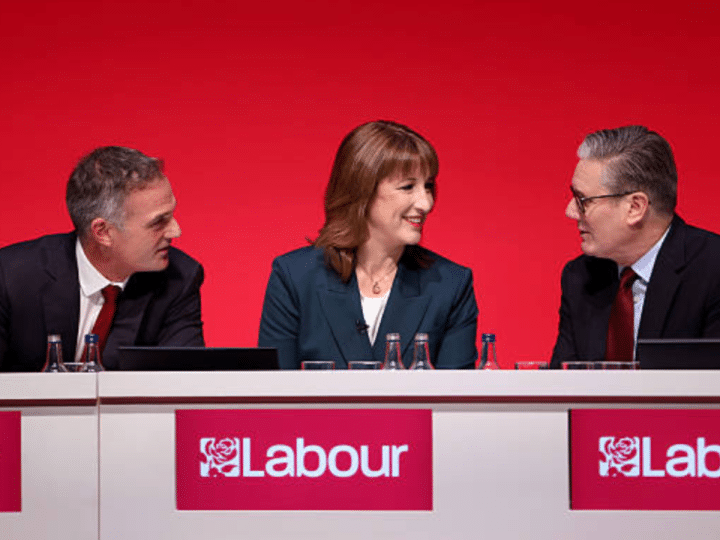
Starmeroid MP Peter Kyle and state prosecutors have been humiliated today after a constituent resoundingly defeated Kyle’s attempt to criminalise her for emailing him about Israel’s Gaza crimes.
Claire Kerrison had copied Kyle — her constituency MP — in on emails to Keir Starmer and his ministers about Israel’s criminal abduction of humanitarian volunteers trying to sail aid to Gaza during Israel’s illegal starvation blockade. Kyle took exception to this and complained to Sussex Police. Following the regime’s usual pattern, the police arrested Kerrison in a 4am raid.
The state charged Kerrison with ‘persistent misuse of a communication system to cause annoyance, inconvenience or needless anxiety’, for emailing her MP. She told Skwawkbox that Kyle knows who she is, as she has previously emailed him for help with standard ‘local MP’ issues. Kyle, a ‘Labour friend of Israel‘, clearly took exception to emails about Israel’s appalling crimes.
But the case has ended in failure, much worse than failure, in fact. Magistrate Paul Goldspring is no friend of the left. He has controversially released a neo-nazi on the basis of his A-level results and been disciplined for appearing to endorse “contentious” political views during a case. But he sent the crown’s lawyers away with a flea in their ear over the prosecution of Kerrison.
Litany of failure
In a “litany of failure’,” the prosecution failed to prepare its case properly in time and begged Goldspring for an adjournment. Goldspring refused and the crown presented no case. Goldspring dropped the charge. And as the icing on the cake, he ordered the prosecution to pay Kerrison’s legal costs.
Ms Kerrison said after the result that the case had been “lawfare,” “disingenuous at best” and brought by an MP with an appalling record of “support[ing] and assist[ing] Israel” in its genocide in Gaza. And she ended by bringing attention back to the people of Palestine facing Israel’s genocide and ethnic cleansing:
To suggest that my emails were sent for any other reason than to express my absolute disgust and horror at what is happening in Gaza and the Middle East is disingenuous at best.
Peter Kyle MP and the UK Government have supported and assisted Israel throughout the Gaza Genocide with little or no regard for the lives of Palestinians or indeed any of the victims of Israel’s murderous activities throughout the Middle East.
Lawfare is increasingly being used to silence our voices and quell our dissent. This is not only a waste of time and public money, it is also an infringement of our rights and freedom of speech.
Palestinians continue to be terrorised, dehumanised and murdered every day at the hands of the Israelis. The very least we can do is raise our voices in each and every way possible to let them know: ‘We see you’
“FREE PALESTINE!”
One small justice for Gaza
Her lawyers, Doughty Street Chambers, said in a bulletin about the result:
Brighton woman acquitted on charge of persistent emails to cause annoyance to Prime Minister, Foreign Minister and local MP about Israel’s conduct in Gaza
A Brighton woman, CK, was charged with a single offence under s. 127(2)(C) and (3) of the Communications Act 2003, for emails she sent on 10 and 11 June 2025 to senior politicians. The charge concerned emails sent by CK to the Prime Minister, Foreign Minister, and her local MP Peter Kyle MP, expressing concerns about the conflict in Gaza.
By 17 June 2025, the office of Peter Kyle MP had alerted the police in Brighton about the above emails, triggering the arrest and detention of CK at 04:33am. A skeleton argument was filed on behalf of CK, denying the emails were persistent or that their purpose was to cause annoyance, and that her communications were protected by her rights under Article 10(1) of Schedule 1 of the Human Rights Act 1998.
On 15 June 2026, the date of trial, the prosecution applied to amend the charge to include additional emails between 12 and 16 June 2025. On submissions on behalf of CK, the Chief Magistrate refused the prosecution application, and a further application to adjourn. The prosecution offered no evidence. The case against CK was dismissed.
One small justice to celebrate on a day in which the legal system has completely failed the people of Palestine and betrayed the rights of British people.
Featured image via Dan Kitwood / Getty images
By Skwawkbox

We Make Too Much For My Daughter To Receive Financial Aid

Woman was worried about husband days before he killed her
Siegfried shares down 3% at UBS on weak H1 local currency growth trend


-

 Business2 days ago
No Jackpot Winner as $257 Million Prize Rolls Over to $269 Million Monday Draw
-

 Crypto World5 days ago
Oppenheimer backs SpaceX as $70 billion retail frenzy builds
-

 Crypto World5 days ago
Markets Rally as SpaceX IPO Looms Amid Iran Tensions and Inflation Surge
-

 Fashion4 days ago
Weekend Open Thread: Tuckernuck – Corporette.com
-
 Crypto World1 day ago
Zimbabwe Requires Crypto Businesses to Register Annually Under New FIU Regulations
-
 Entertainment7 days ago
The Ryan Gosling True Crime Thriller On Netflix That Gets Even Stranger, Stream It Now
-

 Tech3 days ago
NanoClaw integrates JFrog registries to secure AI agent downloads
-
 Sports7 days ago
Bangladesh beat Australia after 20 years in ODIs, register only their second win over six-time world champions | Cricket News
-

 Crypto World3 days ago
Bitget enters Argentina’s regulated crypto market through PSAV registration
-

 Tech4 days ago
This Week In Security: Microsoft On Microsoft, Register Your Domains, Linux On ARM, And FreeBSD Joins The File Cache Club
-
 Tech5 days ago
Dutton Ranch star claims they ‘didn’t see any disruption’ on set following Chad Feehan’s exit from Yellowstone spinoff fueled by Taylor Sheridan clash rumors
-

 NewsBeat4 days ago
El Nino has formed in the Pacific and could set records, forecasters say
-

 Politics5 days ago
Politics Home | Healey Resignation Is “Colossal Failure Of Government”, Says Former Labour Defence Secretary
-
 Tech6 days ago
‘This is Seattle’s position on AI’: City Council votes unanimously to pause big new data centers
-

 Business6 days ago
Thailand Ranks Second Worldwide for AI Adoption Growth, Microsoft Reports
-
 Entertainment5 days ago
Donnie Wahlberg & More Heat Up Las Vegas at Circa’s Barry’s Downtown Prime
-
 Tech5 days ago
Opendoor Ends India Operations, Fueling a Bigger Conversation About AI and Outsourcing
-

 Sports5 days ago
First Time Since 1971: Australia Register Historic Low In ODI Cricket
-

 Politics5 days ago
Belfast burns, while Met chief points finger at Iran and Russia
-

 NewsBeat4 days ago
FBI searches office of Ohio voter registration group
You must be logged in to post a comment Login