
Politics
Cyprus rebukes UK – again

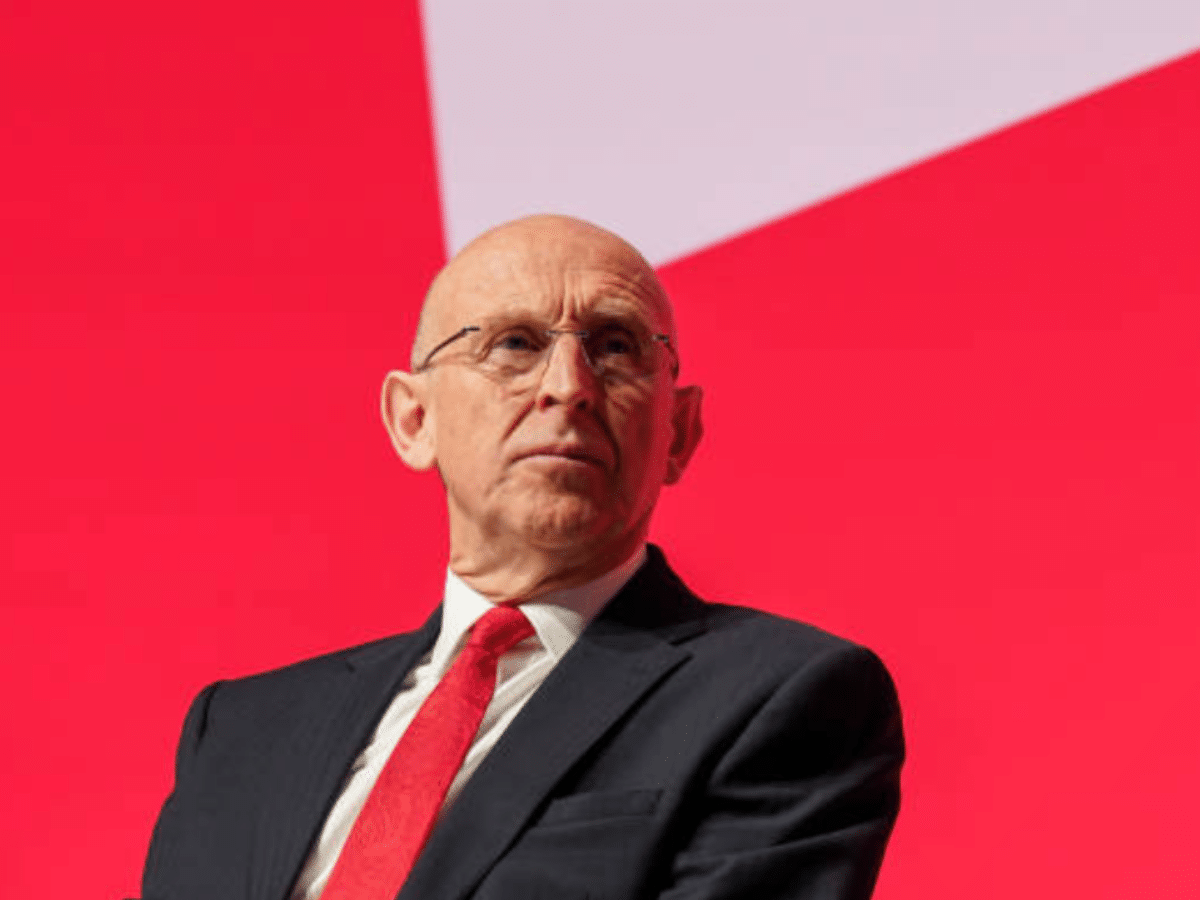
In an interview with BBC Newsnight, the Cypriot government have challenged the UK government’s response to drone strikes on the airbase on Monday 2nd March. The drone attack targeted an RAF base in Cyprus, RAF Akrotiri, a couple of days after US-Israel’s initial strikes on Iran on Saturday.
The base has long faced scrutiny for its involvement in Israel’s genocide on Gaza. Now it appears to be at odds with the British government, as Healey scrambles to address the collateral damage borne as a result of the US and Israel waging an illegal war of aggression on Iran.
Cyprus criticises UK response to drone strikes ahead of Healey visit https://t.co/GKukqNN9Z8
— BBC News (UK) (@BBCNews) March 5, 2026
Cyprus: “Disappointed”
Cypriot High Commissioner to the UK Dr Kyriacos Kouros spoke to BBC Newsnight and said Cypriots were “disappointed” with the quality of information the UK government shared with residents. Kouros said people in Cyprus were left “scared” and would “expect more” from the UK, adding that he would be grateful if UK Prime Minister Keir Starmer “paid attention to their worries”.
Home Office Minister Alex Norris told the BBC today that the UK was “resolute” in its commitment to protect our interests in the region and that “significant” efforts are being put into strengthening defensive capabilities in the Eastern Mediterranean.
According to the BBC:
Norris told BBC Breakfast on Thursday that defensive systems set up in the eastern Mediterranean have had a “really significant impact in recent days”.
The UK has announced that British warship HMS Dragon – which has air defence capabilities – will be deployed to Cyprus, although it is not due to sail until next week.
“We are absolutely resolute in protecting the nation’s interests – and that’s what we’re doing and we’re working of course with our partners of which Cyprus is obviously a really close one,” Norris said.
Following the drone attack at the weekend, Cyprus was quick to criticise Starmer’s government. They even refused to rule out going back to the table in deciding how the base can be used:
Cyprus today suggested that poor communication by the U.K. government led to the drone attack on the British airbase in Akrotiri, and didn’t rule out renegotiating the use of the base.https://t.co/x9EhthLcQs
— POLITICOEurope (@POLITICOEurope) March 2, 2026
UK Defence Secretary John Healey arrived in Cyprus today to meet with his counterparts and discuss potential UK air defence support:
BREAKING: Defence secretary John Healey has met with his Cypriot counterpart to discuss air defence support from the UK.
@AliBunkallSKY reports from Akrotiri, Cyprus ⬇️https://t.co/zXdxAhODKf📺 Sky 501, Virgin 602, Freeview 233 and YouTube pic.twitter.com/qiEor0pnAQ
— Sky News (@SkyNews) March 5, 2026
“Strictly humanitarian role”
Our own Joe Glenton wrote about the issues being brought to surface between the UK and Cypriot counterparts. As divides are growing and consent on the island appears to be diminishing, Glenton wrote:
UK PM Keir Starmer effectively announced to parliament on 2 March that the UK would be a party to the war. He tried to insist the UK’s role would be defensive – but said the US would use British bases to hit Iran.
The UK has two bases in Cyprus at Akrotiri and Dhekelia. Britain has used the bases to launch hundreds of spy flights over Gaza over the course of Israel’s genocide against the Palestinians.
Letymbiotis said the UK had failed to take into account Cyprus’s wish to be a humanitarian hub. He added that the UK had communicated poorly.
The damage inflicted is reported to be a little more than ‘minimal’, as the UK government have sought to convince the wider public. However, it also appears the attack was towards US military on the island. Simply highlighting the threat inherent in our support of the US-Israel flagrantly breaking international law:
🚨 SCOOP: Photo of damage to secret US spy site on RAF Akrotiri.
The drone hit a hangar for US U-2 spy planes on Operation Olive Harvest
Is this “minimal” as per John Healey?
UK Home Sec Yvette Cooper claimed the drone hit the runway. Not true.https://t.co/RsWYSDy9De
— Jerome Starkey (@jeromestarkey) March 5, 2026
RAF Akrotiri has long faced criticism for its use in the mass murder and suffering of Palestinians in Gaza. Declassified UK’s Matt Kennard has investigated the flights from the base since the genocide began:
Labour sent this UK spy plane over Gaza for Israel yesterday
I propose we use same Shadow R1 (ZZ419) to take Starmer, Lammy, Healey, Sunak, Shapps, Cameron to The Hague when they are charged for Gaza war crimes
We should fly them from RAF Brize Norton via RAF Akrotiri on Cyprus pic.twitter.com/oPZcSk9Kl3
— Matt Kennard (@kennardmatt) July 24, 2025
Careful the company you keep
This escalating military situation has a common thread weaving throughout. This can be seen in the reports of attacks on Gulf states and those against the UK military base in Cyprus. Choosing to be bedfellows with genocidal war criminals and the compromised US president have understandably made those territories fair game in the eyes of Iran.
Under international humanitarian law, Iran’s response may be valid. After all, military bases that play a direct and active role in military operations against Iran may be considered legitimate military targets. Nevertheless, any attack by Iran must still comply with the principles of distinction, proportionality, and necessity.
However, the British government’s spineless refusal to prioritise international law is dangerous. It cannot be understated that our stance is making us a villain on the world stage.
Therefore, it cannot be clearer: breaking ties with the US and Israel will ultimately be safer for all involved.
Featured image via the Canary

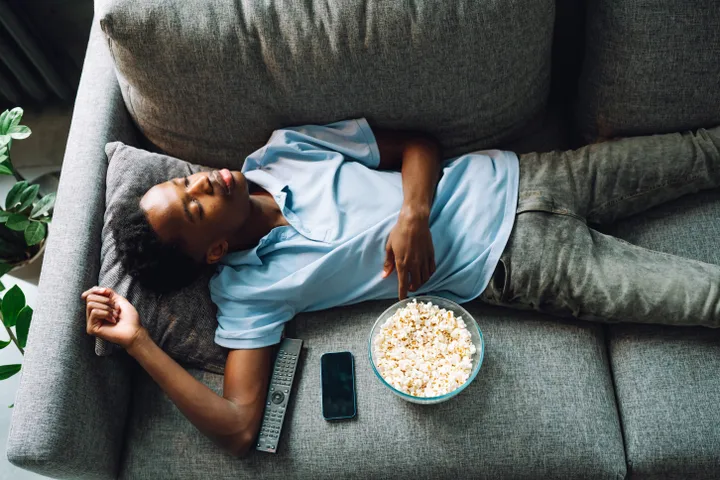
If you’re like most people, you’ve probably drifted off to sleep as soon as you put on a movie or show at night.
It’s a common occurrence – you sit down with your partner to finally watch the season finale of the show everyone is talking about, only to fall asleep, jolt awake, pretend you didn’t fall asleep and keep on watching until you fall asleep again.
Sleep experts told HuffPost there are many reasons this happens, and some are more concerning than others. Here’s what to know:
When you’re watching TV or movies at night, you’re often in a good sleep environment.
“There’s a couple of environmental factors to the fact of watching TV, watching a movie that promotes sleepiness,” said Dr. Neal Walia, a sleep specialist at UCLA Health in California. “When you wake up in the morning, you develop something called a sleep drive, which is how much your body wants to sleep.”
As you go about your day, your sleep drive goes up before peaking at bedtime, he explained. “And that drive is what gets you into sleep and carries you to sleep,” Walia noted.
“Usually, people are watching movies and TV in the evening after a long workday. This is when their sleep drive is at the highest,” he said. So your body naturally wants to sleep at this time.
“And then sometimes it’s just a lack of stimulation,” said Dr. Molly Atwood, the director of clinical training in the behavioural sleep medicine program at Johns Hopkins Medicine in Baltimore.
If you find yourself feeling tired throughout the day, you may notice that your fatigue disappears when you interact with something, whether that’s scrolling on your phone or getting up to make dinner.
Why? “Your body has a system of overcoming whatever sleepiness you have with stimuli,” according to Walia. And watching TV and or a movie is, generally, a low-stimuli activity, he noted. TikTok or even a task like folding laundry are more high-stimuli.
“If you’re lying down, it is dark – so your body’s kind of getting that signal that it’s nighttime and if the movie is not very stimulating or boring, it might be a lot easier, too, for any sleepiness that is there to take over,” Atwood added.
“Another big thing is that, especially patients with insomnia, a lot of times what they’ll say to me is ‘I just can’t turn my brain off.’ And most of our day, our attention is preoccupied by something – probably a screen, most likely – but something is taking our attention away,” Walia said.
We don’t often just sit with our thoughts. That is, until we drift off to sleep at the end of the day. And if you’re stressed about work or anxious about money, sitting with your thoughts can make it difficult to fall asleep.
“But if you’re watching something like a show, you’re not really in your own head for the most part,” Walia said. Your attention is drawn to the show or movie you’re watching, not the taxes you still need to do. This encourages your body to drift off to sleep.
Morning people are more likely to fall asleep while watching TV at night.
Your body’s natural circadian rhythm can play a role in whether you’re prone to falling asleep on the couch or not.
“In some circumstances, if you’re more of a morning person, your body naturally makes you alert early in the morning and it shuts down alertness early at night,” Atwood said.
Folks in this group are just naturally more tired at night. For morning people, their body is giving them signals that it’s time for bed, which makes it more likely that they’ll drift off while watching TV.
It’s also more common if you re-watch shows.
Many people turn on their comfort shows after a long day. And according to Atwood, it’s more likely that you’ll fall asleep during a show you’ve seen several times.
“Our nervous systems are super calm and comforted, versus like an action movie or a horror movie,” Atwood said.
You also don’t have to pay much attention to the show to know what’s going on, which allows your body to drift off easily, too.

Olga Rolenko via Getty Images
Most people are also sleep-deprived, which makes it easy to fall asleep while watching TV.
“A lot of our population is sleep deprived,” said Walia, who explained that most people aren’t getting the seven to nine hours of sleep they need each night.
Everyone has different individual sleep needs. But no matter how much sleep your body requires, most folks aren’t getting it.
Because of busy days, family demands and high-stress jobs, you may not even notice you’re sleepy until you’re interacting with something that’s low-stimuli, like a movie. This is when your sleep deprivation can catch up with you and cause you to fall asleep.
Even people who sleep the recommended seven to nine hours a night may not be getting good quality sleep, which can also result in sleepiness on the couch.
“There’s many people out there with untreated or under-treated sleep disorders that disrupt the quality of sleep,” Walia said, adding that sleep apnea is one example of this.
If you fall asleep during a movie once in a while, there isn’t much cause for concern ― but if this is a regular habit, it’s worth evaluating your sleep.
It’s understandable if you fall asleep on the couch after a busy day of travel or after a late night out, but if you’re falling asleep in front of the TV frequently, you should take notice.
“If you’re sitting upright, the lights are on, it’s an engaging movie … and you still can’t keep yourself awake, that might be more of like, ‘OK, I should reevaluate how much sleep I’m getting overall,’” Atwood said.
If you think you’re getting enough sleep but still falling asleep during engaging shows and movies, it’s worth talking to a sleep specialist, she added. A professional can help test you for underlying conditions that could disrupt your sleep.
Being able to stay awake during movies and TV shows at night could be a sign of good sleep health.
If you can usually stay awake while watching TV or movies at night, it’s “probably a good indication that [you’re] not sleep deprived or they’re not having disruptions in their sleep,” Walia said.
This nighttime energy reflects relatively good sleep health, he added.
Some sleep disorders can keep people from napping or falling asleep during shows and movies, but, overall, if you are getting enough high-quality sleep, you likely have good sleep health, he said.
At last, the left has found something to get angry about following the anti-Semitic attack in Golders Green in London this week. No, not the actual burning of four Jewish ambulances, don’t be silly. It’s the sight of angry Jews that has pissed them off. The frothing Israelophobes of the digital left have shown more fury over the behaviour of London’s exasperated Jews than they did over the savage act of arson that caused them such exasperation.
Over the past 48 hours, ‘Golders Green’ has finally trended in the digital hovels of the keffiyeh classes. But it’s not the setting alight of those four Hatzola ambulances in the early hours of Monday morning that has got them chatting and seething. It’s the fact that local Jews responded angrily to the presence of Al Jazeera reporters and basically told them to fuck off. Burning Jewish charity ambulances? Meh. Being rude to Al Jazeera hacks? How dare you.
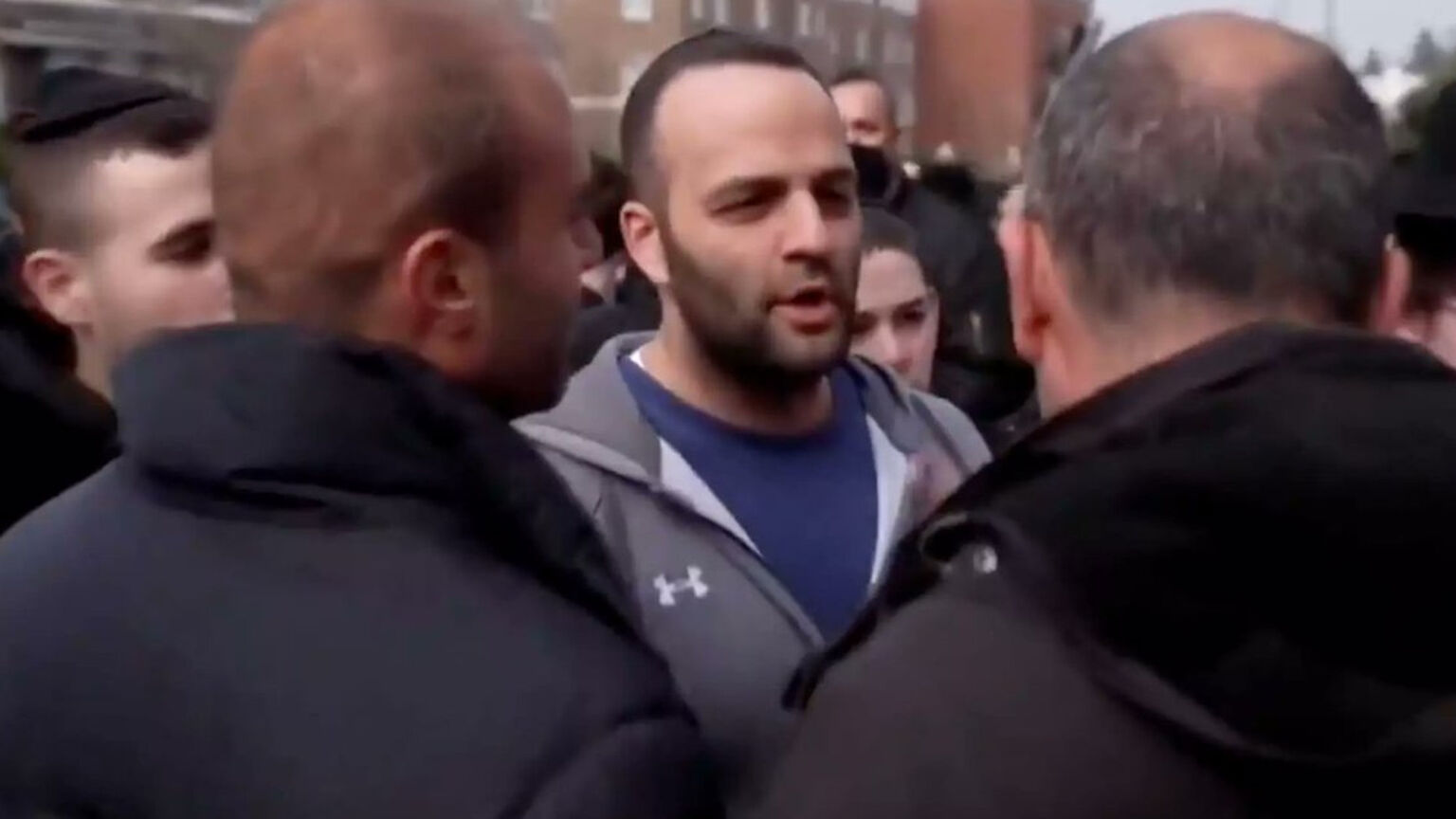
It was in the daylight of Monday morning, as the wreckage of the ambulances still smouldered, that Jews in Golders Green bristled at the sight of Al Jazeera. They gathered around its reporters. They told them to leave. They made an impromptu chant: ‘Al Jazeera off our streets!’ No fists were thrown, which is more than can be said for Islamist gatherings, where ‘disagreeable’ journalists are frequently threatened and forced out. It was just an angry protest by a community that only hours earlier had been invaded by anti-Semitic arsonists.
One man in particular has got leftists spluttering into their iced coffees. His name is David Soffer. Video footage appears to show him speaking in Arabic to the Al Jazeera reporters, calling them ‘dogs’ and ‘donkeys’ and telling them to ‘go back to Qatar’ (where Al Jazeera is based). It has since been revealed that he is a volunteer officer in the Metropolitan Police. There’s now a wild digital clamour for him to get the boot. The Met has referred him to its department of professional standards.
I can’t be the only person who finds it sickening that the activist class has expended more energy on naming and shaming an angry Jew than they did condemning the fascistic act that made him angry. We seriously need some perspective on the behaviour of Mr Soffer and the other people in Golders Green. This was not ‘a mob’ hell-bent on shutting down foreign journalists. They were just worried Jews who weren’t best pleased to see a media outlet that has been accused of anti-Semitism covering an anti-Semitic attack in their neighbourhood.
Some are calling the angry Jews a ‘racist mob’. Grow up. ‘Donkey’ is an incredibly common insult in the Arabic language. And funnily enough in Irish culture, too. My brother called me a donkey on WhatsApp just last week. Perhaps I should report him for racial hatred. It is shameless Orwellianism and grotesque victim-shaming to damn as ‘racist’ a community that had just suffered a racist assault. It wasn’t enough that Jewish Golders Green was violently attacked – it had to be libelled, too. The salt of defamation rubbed into the wound of racist violence.
The true narrative of Golders Green – which is that Britain’s Jews have suffered a bloody wave of racism since Hamas’s pogrom of 7 October 2023 – has been utterly turned on its head by the ghouls of the Islamo-left. The British Muslim website 5Pillars put out a video titled ‘Golders Green attack and [harass] Arab journalists’. And so, courtesy of the twisted morality of that unholy alliance of foolish socialists and nutty Islamic hardliners, the story of Golders Green is no longer one of Jewish pain but of Jewish menace. The victims of racism reimagined as racists – the final grim accomplishment of the Jew-baiters in our midst.
What we are witnessing is the theft from the Jews of their moral status. Under the regime of identitarianism, the Jews can never be victims. They’re too ‘white’ for that. So their every claim to victimisation must be dismantled. Almost instinctively – but no less brutishly for that – the Islamo-left swarms on any story about Jewish suffering and seeks to disprove or dampen it. They must, in order to maintain their hierarchy of oppression in which Jews are hyper-privileged and suspect, and Muslims are oppressed and noble. Hence the events in Golders Green are twisted from a story of Jews being beleaguered by anti-Semites to Arabs being beleaguered by Jews.
This digital mobbing of concerned Jews is in keeping with the regime of moral inversion we have been living under since 7 October 2023. Time and again, the Jews are cast as perpetrators, even where they are the victims. Hamas subjects Israelis to genocidal violence and yet it’s Israel that is called genocidal. British Jews suffer an unprecedented spike in anti-Semitic incidents and yet they’re damned as ‘privileged’. Golders Green is subjected to the fires of racial hatred and yet it is Golders Green that gets called racist and hateful. This is the violent gutting of the truth in the service of keeping Jews in their place – that is, as symbols of ‘whiteness’ and ‘privilege’ that leftists and Islamists might righteously hate.
Someone needs to say it: it is perfectly logical that Jews waking up to news of anti-Semitic terror would be annoyed to see Al Jazeera skulking around. This is the media empire that is described by some as the mouthpiece of Hamas. Its digital channel, AJ+, has called into question the Holocaust. It has hawked conspiracy theories about the Jews controlling the porn industry and hating Jesus Christ. I’m not Jewish but if I had been in Golders Green that morning, with the smoke of Jew hatred getting in my eyes, I might also have invited the Al Jazeera guys to sling their hook.
There is nothing the left and its Islamist allies hate more than an angry Jew. They don’t mind them when they’re meek, when they just shut up and put up with anti-Semitism. But when they push back, when they hit the streets, when they shout, when they ‘weaponise’ their experiences of racism, as the left loves to accuse them of doing – that’s unacceptable. Listen, if Jewish anger grosses you out more than anti-Jewish violence, then you are further down the road of fascism than you might think.
Brendan O’Neill is spiked’s chief political writer and host of the spiked podcast, The Brendan O’Neill Show. Subscribe to the podcast here. His latest book – After the Pogrom: 7 October, Israel and the Crisis of Civilisation – is available to order on Amazon UK and Amazon US now. And find Brendan on Instagram: @burntoakboy.
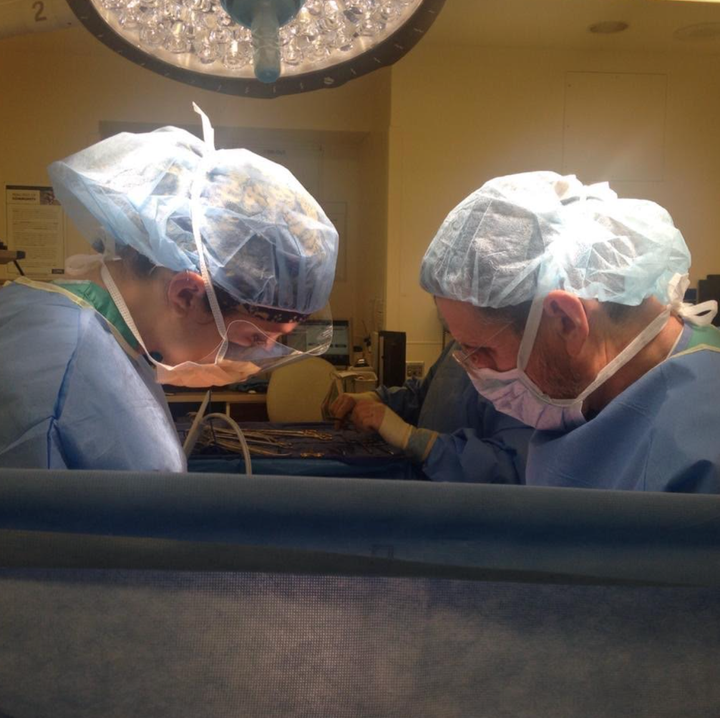
I published an essay entitled, “I’m A Surgeon. I’m Also Child-Free — And 6 Words From A Colleague About My Life Left Me Stunned,” on HuffPost Personal in 2024.
The morning it went live, my alarm jolted me from sleep well before sunlight filled the sky. I grabbed my phone, swiped it open to see the headlines, and there, smack dab in the middle of my news feed, I saw my name. The day had hardly begun… and I was already trending.
I had revealed my most private feelings about my reproductive life and detailed how my choice not to have children was repeatedly called out in professional settings. I was confident that whether I had kids or not did not determine my worth as a person. In the 21st century, it should not be controversial to say that some women choose other paths. And, still, that morning, I was nervous about sharing all this in such a public way.
Those nerves only proved my social conditioning. Women without kids are still viewed within the context of rigid stereotypes. I was anxious about how my essay – and I – would be perceived, and I worried it wouldn’t be good.
Then something unexpected happened. I was inundated with messages. Over the next week, my Instagram, the essay’s comment section, and even my work email were flooded with a huge outpouring of gratitude and positivity. Women wrote to thank me for sharing what they felt but couldn’t vocalise, for helping dispel the myth that women without kids are selfish and cold, and for making it clear that women don’t need to apologise for choosing not to have children. More people felt like me than I ever would have guessed.
Most of these messages were from women who, like me, did not want to be mothers. Women who knew that their reproductive freedom was hard fought and well deserved, but still wrestled with strong societal expectations. Some of the messages I received, however, were from women with kids who wished they had been told at some point in their lives that they had other options. I even received notes from men who had witnessed their partners’ or wives’ value reduced to whether or not they were a mother. What united all of these people was a simple wish: for women to be valued beyond their reproductive choices.
I would be lying, though, if I said all the responses I received were positive. A proportion of these notes were filled with anger and resentment. A few of them even veered into harassment. Like the positive messages, these all had a unifying theme.
“You stupid idiot,” wrote one person, “will feminism take care of you when you’re old and dying?” Feminism, responses like these implied, was to blame for my decision to pursue a life as a successful surgeon, to follow the instincts that told me I did not want children of my own and that my life could be complete without motherhood.

Courtesy of Caitlin A. Smith
To some degree, I expected to receive messages like these from men, but I was surprised to find that many of the negative replies were, in fact, authored by women. They insisted my own take on my own life could not be trusted and that I was lying about feeling fulfilled. I would never be happy, they insisted, and never know true love or joy. My life would always be incomplete, they said, since I had been misled by a wolf in sheep’s clothing into a life without meaning. That wolf was, apparently, feminism.
These sentiments are not new, even if they have been emboldened by the current presidential administration. Feminism has long been a societal scapegoat. The wave of feminism championed by figures like Gloria Steinem encouraged women to free themselves of society’s expectation that all women must have children and stay in the kitchen. However, in recent years, this narrow definition has been heavily critiqued for the way it may appear to overlook and undervalue the labour involved in motherhood. This version of feminism has also estranged women from different backgrounds by centring the experiences and priorities of only white middle class women.
Women who find deep meaning in child rearing and significance in their work at home have felt alienated by mainstream versions of the movement. Some have even fled progressive politics because they found more alignment in conservative platforms, which often embrace domestic life and labour as a woman’s truest calling. There are even those who have argued that feminism has “ruined” motherhood by allowing women to pursue alternative paths in life and by encouraging the declining birth rate. Furthermore, the experiences, voices, and struggles of marginalised, non-white, and queer women have not always been included in the mission of some approaches to / forms of feminism, leaving many searching for alternative frameworks to fight for all women’s rights.
As the derogatory messages I received in my inbox show, the societal skepticism of women without children is not going anywhere, especially now that we have high-powered conservative think tanks pushing regressive gender roles and opposition to feminist movements. They, too, take the stance that feminism has damaged the traditional family structure by allowing women to believe their lives can be fulfilled without motherhood and marriage.
At the same time, conservatives like JD Vance, who is well known for his animosity towards single women without children, are using their large platforms to claim that women who pursue professional careers are causing social unrest.
Instead of addressing the real lack of support mothers face in this country, Trump is also making an explicit play to push motherhood on American women. Since my essay was published, we have seen proposals for a baby-bonus cash payout for new mothers, childbirth medals, and a federally funded tax-advantaged savings account seeded with $1,000 for any child born between 2025 and 2029, all aimed at selling women on partaking in a traditional nuclear-family lifestyle.
As a paediatric surgeon who helps children every day, I do not understand how I could be viewed as an enemy of the state. Unfortunately, I still see this belief play out – even at work.
In fact, a mother recently asked me a series of personal questions to suss out whether I was capable of performing her child’s routine surgery. After inquiring about my qualifications, she asked me directly whether I was a mother. “No,” I told her, and I asked her why she wanted to know. After a bit of rambling, she concluded with an unconvincing apology, noting, “But I think women should be able to do all kinds of jobs… or whatever.”
I don’t mind questions, and I understand parents put a huge amount of trust in their children’s doctors, especially when it comes to surgery. However, this specific encounter was yet another reminder that even a woman’s value in professional settings can be tied back to their reproductive choices.
I knew a question like this didn’t belong in that hospital exam room and had nothing to do with my skill as a surgeon, but it’s no surprise women feel this way. After all, we are all taught to view women without children as less capable and less committed to the care of others.
At the time I wrote my original essay, I had hoped such sentiments about women without children were declining. But in the weeks after it was released, I watched Kamala Harris’ choice to not have children of her own get repeatedly dragged through the mud. The derogatory rhetoric about women without children has, sadly, only accelerated since I awoke to find myself trending on my phone screen.
I, however, have never wavered in my belief in my value as a childfree woman. Because of the women who have come before me, I have been able to live a life full of joy, meaning, and fulfilment – on my own terms. I will continue to use my voice to ensure others can do the same.
Caitlin A. Smith is a surgeon and writer in the Pacific Northwest. Her personal essays on surgical training and experiences have appeared on Doximity. She is currently writing her first book, a firsthand account about the life and experiences of women in medicine. Find her at @miseducationofaknife on Instagram and Substack.
Do you have a compelling personal story you’d like to see published on HuffPost? Find out what we’re looking for here and send us a pitch at pitch@huffpost.com.
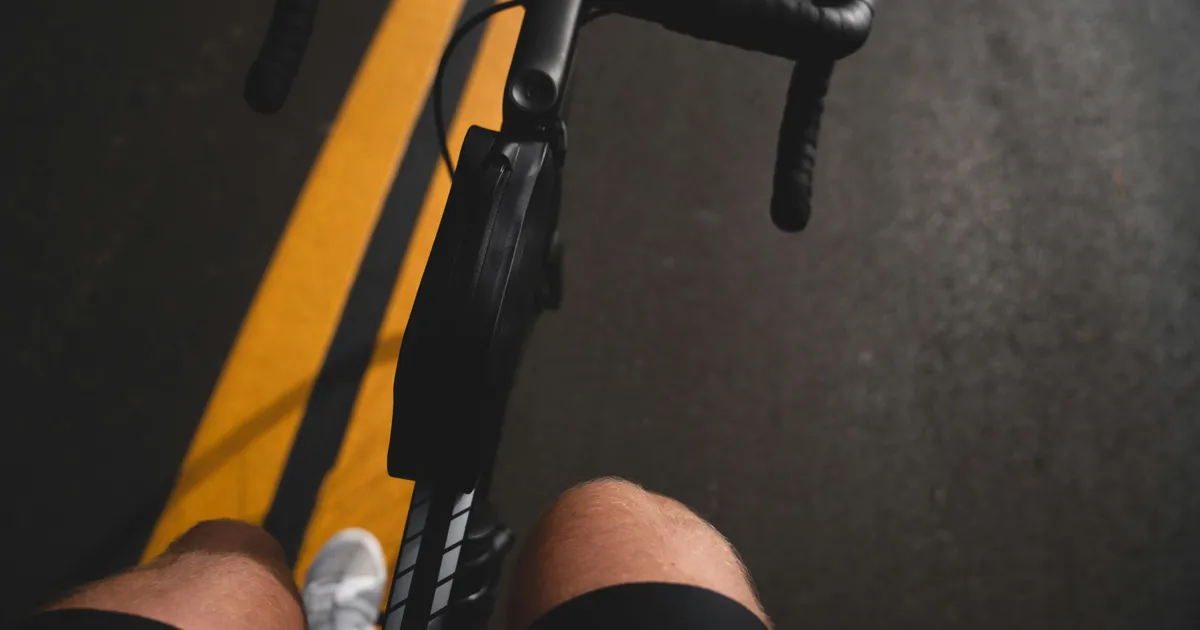
We already know that exercise seems to reduce dementia risk (a 2022 paper found that walking 3,800 steps a day may lower your likelihood of developing dementia by 25%, with increasing benefits up to 9,800 steps).
Even when it’s not directly dementia-related, movement appears to improve memory and thinking skills.
A recent paper, published in Brain Communications, has found that 20 minutes of cycling a day can create “ripples” in the brain that might help us to process and store information more efficiently.
How did cycling seem to affect participants’ memory?
The research involved 14 participants aged from 17-50. They tracked their brain activity before and after 20-minute stationary cycling sessions through an intracranial electroencephalography (iEEG).
The iEEG measures electrical activity in the brain, which provides an added layer of detail.
Previously, scientists had noticed “ripples” in the minds of rats, which were believed to improve their memories after exercise, though these had not been seen in humans before.
But the iEEGs in this research saw similar results after the participants completed their exercise.
Speaking to Medical News Today, study author Dr Juan Ramirez-Villegas said, “Ripples are very brief bursts of highly synchronised electrical activity in the brain’s memory centre, the hippocampus.
“In animals, they are known to play a key role in stabilising memories after an experience. You can think of them as moments when the brain rapidly ‘reviews’ information, helping convert recent experiences into lasting memories.”
They might also help to regulate blood sugar in animals, the study added.
The study found that the higher someone’s heart rate got during the cycling session, the stronger those “ripples” seemed to be.
“This suggests that the intensity of physical activity may influence how strongly the brain’s memory circuits respond,” stated Dr Ramirez-Villegas.
That might not be the only benefit
Aside from the “ripple” effect, this research also seemed to help different parts of the brain communicate better, potentially leading to improved memory.
“It is surprising how after a session of acute exercise, hippocampal-cortical communication seems to be enhanced, a phenomenon thought to be strongly linked to memory processing,” Dr Ramirez-Villegas said.
“This suggests that even a brief bout of physical activity can influence the neural dynamics involved in learning and memory.”

Donald Trump set off a wave of irony on Thursday when he declared during a Cabinet meeting: “I don’t want a stupid person being president.”
The remark came amid a lengthy attack on Democrats, whom he branded “a party of insanity” that “will destroy our country.”
Trump singled out California Governor Gavin Newsom, a potential 2028 Democratic presidential candidate who has spoken publicly about his dyslexia, the brain-based learning difference that affects reading and language processing.
“I believe he took himself out of the running when he says he suffers from mental disability,” Trump said, referring to Newsom by his derogatory nickname “Newscum.”
“A reporter said it was terrible that I talked that way about somebody with mental disability,” he added, before calling Newsom “actually a very stupid person.”
“I don’t want a stupid person being president,” Trump continued, later boasting about acing multiple cognitive tests — which he claimed proves he is smart, even though such tests are designed to detect cognitive decline, not measure intelligence.
Newsom’s press team fired back: “Wow. Trump is going to resign?”
Politics
The House | Sonia Kumar MP On Training Physiotherapists In A War Zone And Why She Quit The NHS
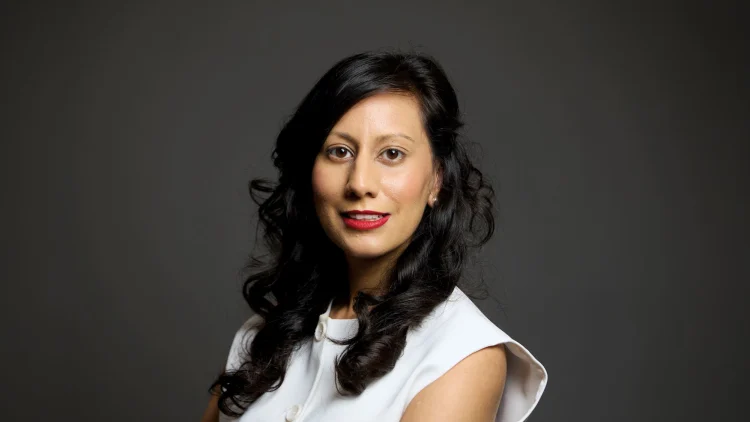

Sonia Kumar, Labour MP for Dudley (UK Parliament)

9 min read
Labour MP Sonia Kumar tells Sienna Rodgers about travelling to Ukraine with a team of British clinicians to train local therapists, helping injured soldiers recover faster
Your phone is buzzing. It’s not a work message on WhatsApp, nor the latest surreal news story trending on X. It’s an air raid app telling you to take shelter in the nearest bunker – a telltale sign, these days, that you are presently in a war zone.
Physiotherapist-turned-politician Sonia Kumar travelled to Ukraine in February. Going against Foreign Office advice, but briefed on safety and armed with burner phones provided by Parliament, she brought with her a group of hand-picked clinicians. They were all there to make a direct impact on the war by delivering practical healthcare training to Ukrainian clinicians.
“The hospitality of Ukrainians was second to none. They made sure that we were looked after; that we knew where the security was. We all had the app on our phones,” she explains. “It would tell you when to… well, to run, essentially.”
Kumar kept the schedule tight and timed the trip with the four-year anniversary of Russia’s invasion, which she thought would be safest, as lots of foreign dignitaries would be visiting then. She turned out to be spot-on: there was just a single 10-minute air raid during their stay, but an uptick as soon as they left: “They had five or six on that Wednesday night, when we’d come back.”
The idea for the mission had come to her during an earlier trip to Ukraine, in September last year, as part of a delegation of MPs to see Save the Children. “I spoke to children who had been stolen from Ukraine by Russia, and I just saw the devastation that had caused,” she recalls.
One stop on the visit was a rehab centre. “I spoke to a gentleman who’d had a bilateral amputation, and he sat up in his bed, clearly in a lot of pain, and said, ‘I’d do it all over again.’ He goes, ‘If I could go back on that frontline and fight, I would do that.’ I was struck by the resilience, the strength and the courage that was coming through in every conversation.”
I only had two days of training. That’s when I knew that the NHS needed to change
When Kumar spoke to the clinicians, she found them easy to relate to and thought: “We’re back to my bread and butter.” She realised that physiotherapists in Ukraine (called ‘physical therapists’ there), unlike the UK, are not chartered – there is little governance and they have minimal autonomy. Here, physios do full university courses, whereas they receive only short courses before being deployed.
“We have a very big scope,” she says of NHS physiotherapists, who are first-contact practitioners. “I was doing MRIs, nerve conduction studies, bloods… In Wales, in particular, there’s someone who has started doing surgery. You’ve got those who do surgery, like carpal tunnel release. Then we’ve got people who do injections, and some who prescribe.” Their counterparts in Ukraine, she learned, still go through GPs for prescriptions.
“So, I floated the idea. I said, ‘What would you think about clinicians coming over to do some teaching?’ And they bit my arm off!”
The group of British clinicians flew from London to Poland, then took the overnight train to Kyiv. They stayed at a hotel but conducted the two-day training course in a “very deserted” place that looked “quite rundown”.
“I won’t go through the exact details for obvious reasons,” Kumar says, wisely showing more caution than the Ministry of Defence, which recently had to pull down a video – featuring a minister – that showed the outside of a facility in Ukraine and risked allowing the Russians to geolocate it.
“It has been a logistical nightmare to say the least,” she adds. “Things evolve so quickly that you never know whether you’re definitely going or not.”
When she asked what kind of clinicians they wanted, they requested musculoskeletal (MSK) care, which was fortunate as she has a wide network of physios. Training of this type would enable their clinicians to treat soldiers without pulling them off the frontline.
The soldiers often get the same type of injuries as sportspeople, she explains, because they do similar repetitive movements. The Ukrainians are seeing ankle sprains; back or spinal pain from heavy lifting; shoulder pain from holding up drones.
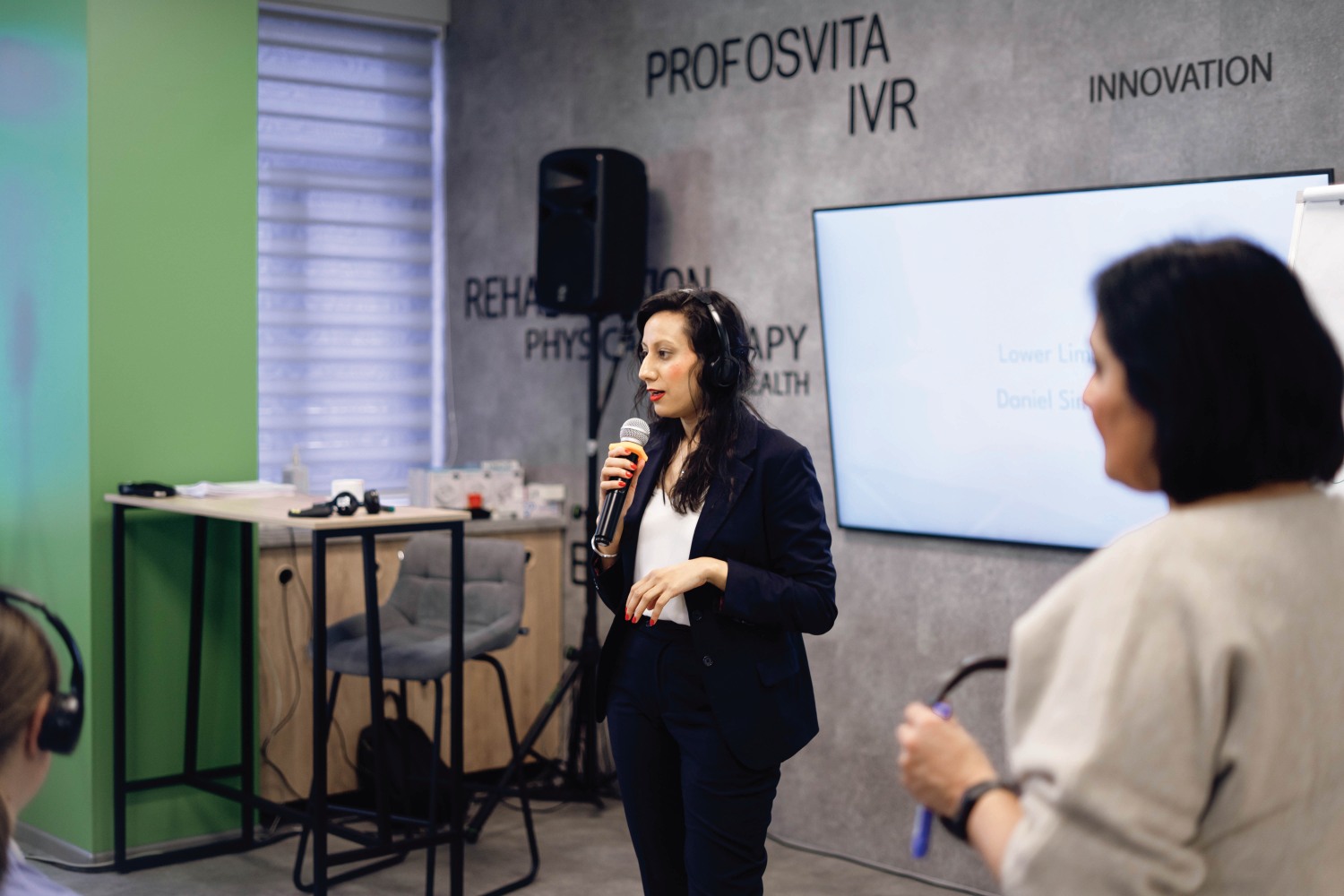
Ukrainian soldiers also suffer neurological conditions, which UK physios can address as they look for those symptoms too. “We’ll look at your sensation, strength, reflexes, tone, facial nerve testing. We also look at masqueraders – something that can come in looking like a shoulder pain but could be a tumour or a cancer.” And the soldiers on the frontline in Ukraine are all ages, so acquire all the conditions seen in the general population.
Kumar says the Ukrainians have concluded, from the number of such injuries, that the Russians are deliberately shooting at the sciatic nerve area in their legs so that they lose their limbs.
Of the 300 clinicians who applied to attend the Continuing Professional Development-accredited course, there was space for just 25 to take part. “They travelled in from all over the place to come, risking their safety as well.”
The MP believes the exercise was forward-looking for Britain too: “They’re dealing with really high-level burns and plastics. Now, I did do that in my training session, but that might be important if we were ever to go into a war, for us to be war-ready… There’s a lot to learn from Ukraine.”
Kumar is the daughter of greengrocers, though she professes to have nothing else in common with Margaret Thatcher.
“My mum and dad came from India with nothing, and I think that story probably resonates with lots of ethnic minorities in the UK. My mum and dad were extremely thankful for all that Britain gave us: education to me and my siblings; the NHS; community; love and support.”
They worked “day and night” to be successful. And while politics was “never presented as a career option”, she knew she wanted to pursue something meaningful. “I didn’t want to just make money.”
She summons a memory of being aged 10 or 11, on a train in India: “I was looking at the poverty there and all the shacks that people had built. And I remember having this really vivid moment in my head that I wanted to make more of a difference. That’s always stayed with me.”
She settled on healthcare. “I knew I didn’t like blood”, though, so physiotherapy it was. Reality was more complicated, however.
A band-five junior physiotherapist, 21 years old and fresh out of uni, Kumar was put on the on-call rota. She had two call-outs.
“One was a woman I could hear soon as I walked into the ward. I didn’t think she was going to make it.” The doctor on call asked her to “make the patient comfortable”, saying: “She’s not going to make it. We can’t escalate her. There aren’t any beds. So, this is what you’ve got. This is your patient.”
“You could hear her barely breathing. It was that awful sound I will never forget,” Kumar continues. She had a cardiac condition and pneumonia. “We ended up stabilising her, and she actually went back to a care home, which was brilliant. But that hour and a half of my life…”
The other call-out was for a young baby in intensive care with an undiagnosed neurological condition.
“I was doing respiratory care on the ward at that time. It was two o’clock in the morning. The consultant called me out to help with her breathing, and it was quite devastating to go out as a junior physiotherapist – I only had two days of training. That’s when I knew that the NHS needed to change… You have to be a certain type of person to manage children that unwell.”
“I was horrified that that was all I was going to get,” she adds, referring to the mere two days of training. “I had some shadowing, but even so. I don’t think any mother or father or guardian would want their child to have only a physiotherapist managing their critically unwell child, at two o’clock in the morning, after a couple of days of training.”
Kumar walked out of the hospital, burst into tears and realised: “This is not for me.”
She moved on from that NHS trust, which she won’t name, and worked at King’s, “a phenomenal hospital”. (They had digital notes there from the 1990s, she notes, whereas in the West Midlands it was all handwritten even just a few years ago.) “And then they tried to put me in ITU – that’s when I left!” she laughs.
After securing other jobs, including at London’s Royal Free Hospital, where she did admin then led the physio team, she wanted something different. One day she simply quit and returned home to live with her parents.
I have no political blood… I just wanted to make more of a difference than seeing my 16 patients a day
“I joined the party. I thought maybe that’s one avenue to go through. Absolutely loved the 2019 general election – maybe not great for Labour, but I just really enjoyed the experience of campaigning. I then stood for council two years later, and that was it. It was incredible to have two people mentoring me.”
She will not name the pair of Labour mentors – “one of them is very high profile” – but The House already knows she is close to Pat McFadden and Seema Malhotra; she offers only another giggle in response.
Having become Labour MP for Dudley in 2024 with a majority of less than 2,000, Kumar has now reached the rank of parliamentary private secretary, which she calls “an honour”. Being avowedly non-factional, she is not a member of any Labour parliamentary group, even the middle-of-the-road Tribune. “I’m just me.”
Instead, her politics are clearly rooted in her upbringing. Describing her childhood above a shop in Stockland Green, which she calls “one of the worst areas in Birmingham”, she stresses: “I have no political blood. I haven’t had a dynasty of Labour giants or any politicians prior to coming in. I just wanted to make more of a difference than seeing my 16 patients a day.”
“I’m a Labour MP, I have Labour values, I believe in the NHS,” is how she sums up her outlook. “If you said to me about touching the NHS, there would be a riot.”
She is being forced to give up chairing the Allied Health Professional and Osteoporosis APPGs as a result of her promotion to the frontbench, but Kumar is hoping to pick up clinical shifts while serving in Parliament. “I’d like to keep my hand in – I think it’ll keep me humble.”
In an age where everyone’s a critic, it’s increasingly rare for a TV series to come along and hoover up near universal acclaim.
But ever since The Pitt debuted in the US in January 2025, it’s been hailed as a hit that has “revolutionised the medical drama”, scooping up Emmys and Golden Globes in the process.
Perhaps even more surprisingly, it’s also been praised for its accuracy by many doctors in its gritty depiction of the US healthcare system, in a genre that has traditionally favoured outrageousness over credibility (who remembers Grey’s Anatomy’s ghost sex storyline?).
With The Pitt finally arriving in the UK this week, you might be currently working your way through the series (if you’ve not already binged it, that is!) and clocking a few familiar faces along the way.
Here’s where you’ve seen the cast of The Pitt before…
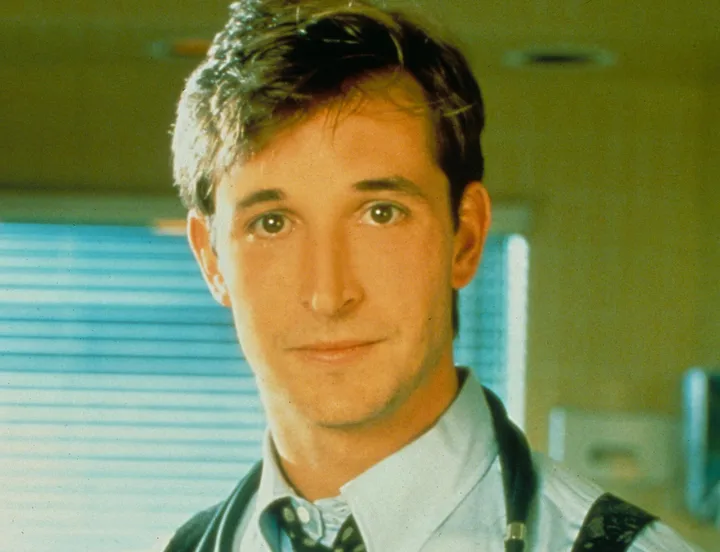
Noah Wyle

Noah Wyle is no stranger to a medical drama, after his breakthrough moment in the 1990s as Dr John Carter on ER.
He later leant into his role when he popped up in an episode of Friends, to cameo as dishy doctor opposite fellow ER alum George Clooney back in 1996.
As well as his penchant for playing medical professionals, Noah starred as Steve Jobs in Pirates Of Silicon Valley and has also appeared in a range of films including Donnie Darko, A Few Good Men and W.
TV remains his main stomping ground, though, with appearances in series including Falling Skies, The Librarians, The Red Line and Leverage: Redemption.
Tracy Ifeachor

British actor Tracy Ifeachor is best-known for her work as Aya Al-Rashid in Vampire Diaries spin-off series The Originals.
Whovians will know her from the 2009 Doctor Who Christmas special, in which she appeared as Abigail Naismith, while she has also starred in US series including Crossbones, Quantico, Legends Of Tomorrow, Treadstone.
She was also introduced as a new character, Thema, in the most recent series of Netflix hit series The Diplomat.
On this side of the Atlantic, you might have seen Tracy in BBC shows like Showtrial, Mayflies or Netflix’s British miniseries Treason.
Patrick Ball

While his role as Dr. Frank Langdon in The Pitt is Patrick Ball’s biggest yet, eagle-eyed viewers might recognise him from an appearance in Law & Order back in 2023.
He’s a far bigger name in the stage world, and is currently in Broadway production Becky Shaw after roles in theatre productions including Hamlet, All My Sons and Cat On A Hot Tin Roof.
Katherine LaNasa

Katherine has had a long TV career over in the US, starting out with brief appearances in classics like Seinfeld, 3rd Rock From The Sun and ER, before landing regular roles in Miss Match and Judging Amy.
Her most recognisable roles are in series including Two And A Half Men – where she played Charlie Sheen’s on-screen love interest, Lydia – as well as Big Love, Three Sisters, Deception, Imposters, Truth Be Told and Satisfaction.
Over on the big screen you might have spotted Katherine in Valentine’s Day, The Campaign or Alfie.
Supriya Ganesh

Landing the role of medical resident Dr Samira Mohan in The Pitt is Supriya’s biggest acting gig so far.
Having said that, you might have caught her in one of her small roles in popular US series Billions, Law & Order: SVU and Grown-ish.
Shawn Hatosy

NBC-TV/Kobal/Shutterstock
Known for playing complex characters, Shawn is probably best known for playing eldest Cody son Pope in crime series Animal Kingdom.
You might also recognise him from Dexter, Southland, Fear The Walking Dead, Flaked, Chicago P.D. or Numb3rs – and like many other members of The Pitt cast, Shawn also previously cropped up in an episode of ER.
Movie fans could have seen him in In & Out, The Faculty, Outside Providence, Anywhere But Here, The Cooler, Alpha Dog or the recent horror sequel Ready Or Not 2: Here I Come.
Fiona Dourif

Chances are, horror buffs will have seen Fiona before.
She’s most well-known for her role as Nica Pierce in the Child’s Play franchise, starring in the films Curse Of Chucky and Cult Of Chucky, as well as the 2020s TV spin-off.
Fiona has also appeared on our TV screens in Deadwood, Shameless, Dirk Gently’s Holistic Detective Agency, The Blacklist, The Purge, Utopia, When We Rise and The Stand.
She’s also had small appearances in movies like Christopher Nolan’s Tenet and Paul Thomas Anderson’s The Master.
Taylor Dearden

Taylor’s first on-screen role was in Breaking Bad where she appeared opposite her famous dad, Bryan Cranston, as the fleeting “Sad Faced Girl” back in 2010.
Since then, she’s enjoyed larger roles in MTV series Sweet/Vicious as well as American Vandal, For All Mankind and movies Heartthrob and The Last Champion.
Isa Briones

After a small part in The Assassination Of Gianni Versace: American Crime Story, Isa broke through in sci-fi series Star Trek: Picard, before picking up a main role in the 2023 Disney+ Goosebumps series.
Isa is also a popular face in the theatre world, having appeared in Hamilton as well as the Broadway production Hadestown and most recently, Off-Broadway’s All Nighter.
Gerran Howell

Welsh actor Gerran cut his teeth on CBBC series Young Dracula before going on to star in series including Emerald City, Catch-22, Suspicion, Ludwig and Out There.
He’s also appeared in This Country, Casualty, Drifters and Some Girls, as well as the war epics 1917 and Freedom’s Path.
Shabana Azeez

Aussie actor Shabana starred in homegrown series including In Limbo, Nautilus, Metro Sexual and Why Are You Like This before her international breakthrough moment in The Pitt.
You’re perhaps most likely to recognise her from her small role in Netflix series Apple Cider Vinegar, or for her appearance as Nowa in the Sarah Snook horror Run Rabbit Run.
Season one of The Pitt is now streaming on HBO Max, with new episodes of season two streaming weekly.
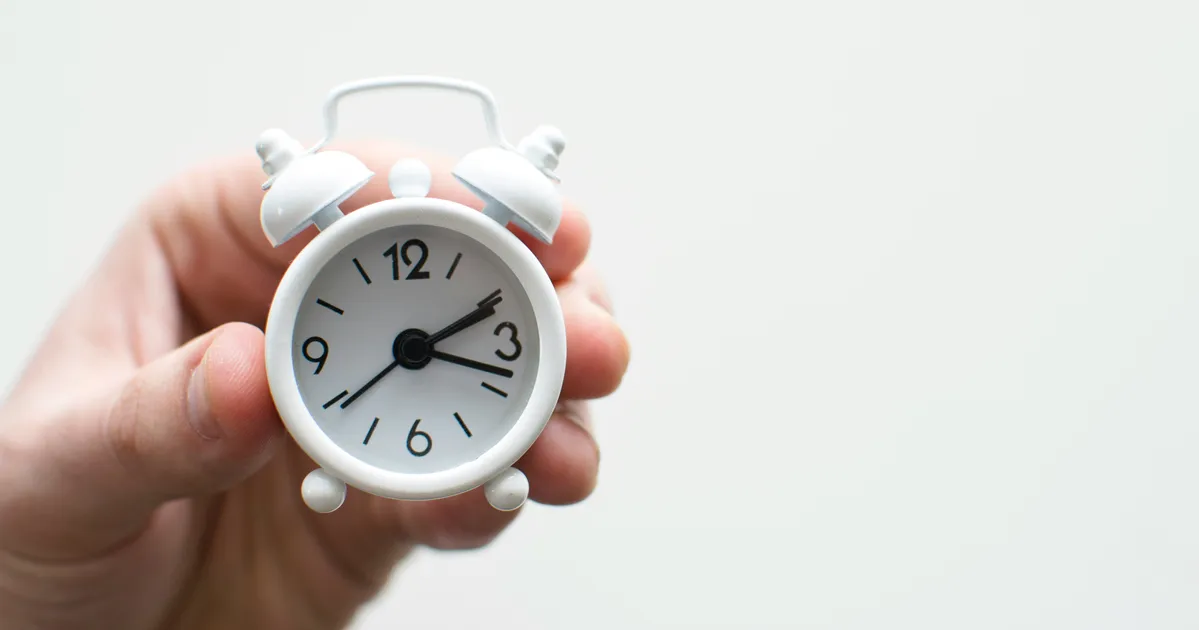
We’re about to enter British Summer Time (BST).
This year (2026), it kicks in at 1am on Sunday, 29 March (in the UK, always happens on the last Sunday of March, thanks in part to Chris Martin’s great-great-grandfather).
And while the shift is linked to lower incidences of car accidents, it’s also associated with worse sleep and even a higher risk of heart attacks.
So, we thought we’d share the best advice we’ve heard about coping with the change:
1) Eat dinner an hour earlier on Sunday, 29 March
Speaking to HuffPost UK previously, Dr Tim Mercer, an NHS GP partner, said, “On Sunday, 29th March, eat dinner an hour earlier than usual.”
That’s because “Where we’re losing an hour, eating too close to your bedtime can disturb your sleep and cause indigestion,” he explained.
2) Get some morning sunlight
Clock changes can wreak havoc on our Circadian rhythm, or body clock, which is key to a good night’s sleep.
But sunlight can help to regulate your sleep-wake cycle, and morning light seems most effective of all. That’s because it may encourage something called a “phase advance,” which means you fall asleep faster, potentially making an earlier wakeup more bearable.
3) Consider your age when working out how to handle the sleep change
Dr Tim Mercer, an insomnia specialist, shared that different generations have their own ways of handling clock changes.
Gen Z may be the “most disadvantaged” group after the clock changes, he added, as their natural sleep patterns tend towards being night owls. And Millennials might be more likely to deal with “orthosomnia,” where anxiety about perfect sleep can (paradoxically) keep you up all night.
These groups all need to take different approaches, he added.
4) Be patient with yourself
It takes a lot of people several days to acclimatise to the clocks changing. And even if your sleep routine and daytime activity are perfect, it’s possible you might still struggle with the shift.
Speaking to the Oxford Health Biomedical Research Centre, Dr Rachel Sharman, a researcher in Sleep Medicine, said, “Recognise that it may take time for your body to adjust to the new schedule and be gentle with yourself during this transition period”.
Stressing about it may only make any sleep issues worse.
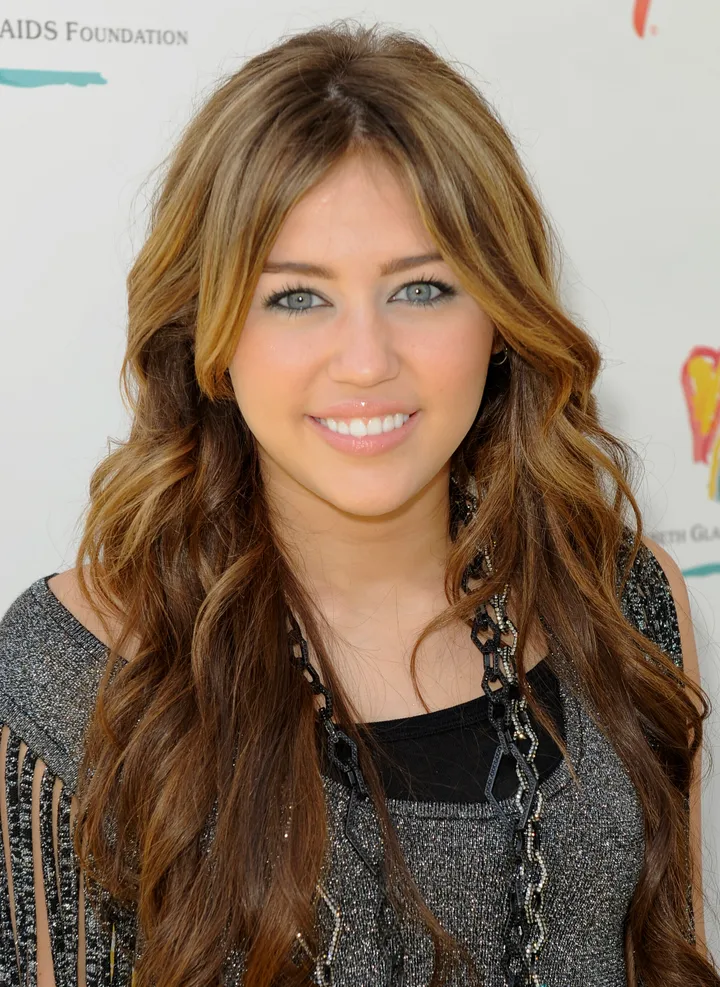
Miley Cyrus is celebrating 20 years since she first transformed into fictional popstar Hannah Montana for the beloved Disney Channel series that became appointment viewing for tweens everywhere in the mid-2000s.
To mark the occasion, Miley put together a suitably epic anniversary special for Disney+, featuring Miley’s own recollections from her time as Hannah, as well as appearances from stars like Selena Gomez and Chappell Roan, who opened up about what the show meant to them.
After launching in 2006, Hannah Montana quickly became one of Disney’s most successful shows, drawing in global audiences in the hundreds of millions and launching Miley’s career as a star in her own right.
Young viewers across the world became enchanted by the blonde-wig-donning teen with a secret life as a global pop star, as the lines between Hannah and Miley became increasingly blurry.
With Hannah Montana now back in the spotlight thanks to the anniversary special, we’ve gathered some little-known facts about how the whole thing came together that even the most devoted Smilers might not have known…
Miley Cyrus was originally ruled out of playing Hannah Montana for one crucial reason
When Disney first envisioned Hannah Montana, they were on the look-out for a rising teen actor to play the lead character.
This didn’t deter Miley Cyrus, just 11 at that time, who decided to try out anyway, even though she was too young for the part (she’d previously gone for the role of Lilly, which eventually went to Emily Osment).

Indeed, while they were impressed with her audition, the Hannah Montana team initially turned Miley down due to her age, but a year later, still struggling to find a young star who impressed them as much as her, invited her back to try out again.
Famously, Miley spotted a t-shirt emblazoned with the slogan “I should have my own TV show” to wear for her audition while mall shopping with her mum – and the rest is history.
But even after convincing the higher-ups at Disney she was mature enough for the part, a young Miley Cyrus still almost missed out on the role of Hannah Montana entirely
These days, it’s impossible to imagine anyone but Miley as Hannah, but during the anniversary show, former Disney executive Gary Marsh shared some fascinating lore about how the title character was nearly played by an entirely different actor.
“We were down to the last two girls, and you were this 12-year-old pistol, raw and real, and fresh out of Tennessee,” he told Miley. “And you both left… there [were] 10 people in the room, and we took a vote. It was not a landslide.
“People put forth their real opinion, and I had made a decision, and I wrote an email to the team. It said, ’we pride ourselves not just on creating great television, but on creating stars. I’m ready to pull the trigger on Miley. Is she a risk? Unquestionably true. Is she a potential star? Absolutely.
“’And whatever comes of this decision, I’m thrilled that all of us will be able to sit down over a drink in a few years and remember this moment when we decided to forsake the safe route for the riskier one and the greater reward’.”
This, combined with the fact Miley was originally considered too young to play Hannah makes it even more miraculous that the stars aligned.

Byron J Cohen/Disney Channel/Kobal/Shutterstock
There were some interesting young actors in the mix to play Hannah Montana before Miley Cyrus was officially cast
Speaking of which, before Miley was cast as Hannah there were several other stars in consideration for that infamous blonde wig .
One of them was Taylor Momsen, who was only seven when she appeared in How The Grinch Stole Christmas opposite Jim Carrey in 2000 (six years before Hannah Montana launched).
Taylor apparently got down to the final two, but doesn’t sound too cut up about not getting the role, going on to star in Gossip Girl and form her band The Pretty Reckless.
She previously admitted: “Honestly, if I’d ended up as Hannah Montana, I don’t know if the show would have gone as well. I probably would have told them all to go fuck themselves by the time I hit 11.”

Nickelodeon and Victorious star Daniella Monet also made it down to the final few, as well as Mexican singer and actor Belinda, as did teen singer JoJo, now best known for her hits Too Little Too late and Leave (Get Out).
Miley Cyrus’ mum Tish helped refine Hannah Montana’s eye-catching look
Hannah’s bedazzled popstar wardrobe was one of the key reasons tweens loved tuning in to see her in action, and Miley explained that her mum Tish played a big part in shaping her on-screen persona’s style.
Tish was a key voice in whether something was “very Hannah” or “very Miley” with Miley often going with her mum’s suggestions over Disney’s.
Miley’s dad – and co-star – Billy Ray Cyrus didn’t exactly have his heart set on his role in Hannah Montana
Miley’s real dad Billy Ray Cyrus famously played her character’s on-screen father in Hannah Montana.
However, in the newly-released 20th anniversary show, it emerged that he was practically giving the part away before officially signing up.
She recalled: “He goes out into the parking lot, grabs other dads, brings them into Disney and is like, ‘You should hire this guy! He’s a great actor!’.”
The Grammy winner added: “Me and mom were both like, ‘Shut up!’. You were always the guy trying to give the other guy the job.”

Disney Channel/Kobal/Shutterstock
Filming Hannah Montana was a pretty grueling experience at times
In a 2015 interview with Marie Claire, Miley opened up about the intense schedule when working on Hannah Montana.
She claimed that she and her co-stars often worked 12-hour days, and that her mum Tish suggested bringing in certain lights to deter seasonal affective disorder.
“Every morning, I was getting coffee jammed down my throat to wake me up,” Miley said. “I just had to keep going, be tough, be strong. Everything happened to me on that set.”
Surprisingly, Taylor Swift was cast in the Hannah Montana movie because she wasn’t a huge star at that time
It’s hard to remember a time when Taylor Swift wasn’t one of the biggest pop stars on the planet, but when she appeared in the Hannah Montana movie in 2009, it was for very different reasons.

Disney/Kobal/Shutterstock
Taylor cameos in the movie, performing her song Crazier, while also contributing You’ll Always Find Your Way Back Home to the soundtrack.
“The way that Taylor Swift ended up in the Hannah Montana movie was because this was kind of the beginning of her career, and they were looking for someone that would authentically – no shade, I guess – be performing in a barn,” Miley explained.
“Credit where credit’s due. Banger,” she added of Taylor’s contribution to the movie.
Hannah Montana: 20th Anniversary Special is now streaming on Disney+.
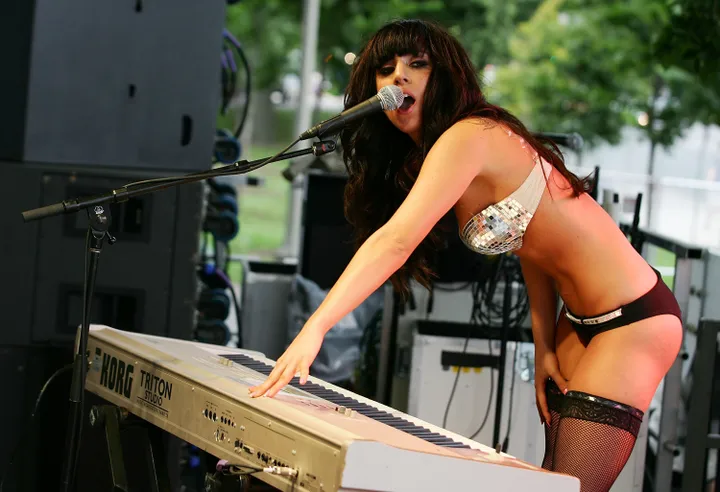
With six hit studio albums, six UK number one singles, 16 Grammys, three Brit Awards, an epic Super Bowl Halftime Show, three lead movie roles, at least 17 Guinness World Records and an Oscar to her name, there’s no arguing that Lady Gaga has cemented her place as one of the biggest stars of the 21st century.
Yes, that young woman who started out performing in nightclubs, setting hairspray cans on fire, making her own costumes and even providing her own fog machine has come a long way.
As the pop icon celebrates her 40th birthday this weekend, we’re looking back at the beginnings of her career, to recognise just how far she’s come from those early years to international superstardom.
So, get yourself a cup of tea (in a china cup, naturally), stick on The Fame (both the album and the perfume) and join us for a brief strut down memory lane…
The artist once known as Stefani Germanotta’s life changed when she signed to Interscope Records in 2007, the same year she performed at the Lollapalooza music festival under the moniker Lady Gaga And The Starlight Revue

Around this time, she frequent collaborated with cabaret icon Lady Starlight, with whom she was pictured in October 2007 after debuting what would become her signature blonde hair

Veronica S. Ibarra/FilmMagic/Getty
As she geared up for the release of her debut album, Gaga performed in Miami Beach in March 2008
Even though she was very much a star on the rise, she still managed to squeeze in time for some fun with her old pals, including Lady Starlight
A month before The Fame’s US release, Gaga put in a suitably dramatic appearance at a Michalsky fashion show…
…and also performed at the show’s after-party, where she showed off the imaginative DIY aesthetic that would become her trademark around this period
Speaking of early Lady Gaga signatures, here she is rocking a snood in August 2008 while promoting The Fame on MTV’s TRL in her hometown of New York City
As her profile grew, she was booked for international gigs, including this show at the Dome 47 at Germany’s SAP Arena in August 2008
In October 2008, she headlined then-bestie Perez Hilton’s One Night In… concert at NYC’s Highline Ballroom

John Sciulli/BEI/Shutterstock
Here she is on stage that same night
Around this time, she made it all the way to Australia, brandishing her iconic ‘disco stick’ during a performance of LoveGame

We can’t be certain, but we think Lady Gaga might have been sporting some false lashes when she performed at the Z100 Jingle Bell Ball in December 2008

Peter Kramer/ASSOCIATED PRESS
And if you loved that homemade dress, you’d have been overjoyed to discover that she had it in multiple colours

Larry Marano/Shutterstock
Gaga then kicked off 2009 with an appearance at G-A-Y at London’s iconic nightclub Heaven

Edward Hirst/Shutterstock
During this London trip, she was also snapped DJing with Paris Hilton (and yes, that’s teen BGT winner George Sampson lingering in the background)

Alan Davidson/Shutterstock
A month later, Lady Gaga made her Brit Awards debut, joining Brandon Flowers on stage as guests of the Pet Shop Boys

Richard Young/Shutterstock
By March 2009, she’d racked up two UK number ones and had ascended to become one of the biggest stars on the planet

Chris Pizzello/ASSOCIATED PRESS
Lady Gaga soon began making headlines the world over with her bold fashion statements, including the famous ‘bubble dress’ which she wore while performing at the House Of Blues in April 2009

Christopher Polk/FilmMagic
We don’t have much to say about this photo of Lady Gaga and Kelly Clarkson at a Grammys event in May 2009 other than we’re obsessed with it

Chris Polk/ASSOCIATED PRESS
That same month she made an appearance on Australian TV that we have to say was particularly… busy

Brendan Beirne/Shutterstock
She was also still opening for the Pussycat Dolls on their tour during this time, too

David Rowland/Shutterstock
Another of her head-turning wardrobe moments came in June 2009, when she wore this flaming bustier during a performance at Canada’s MuchMusic Awards

Cj Lafrance/Southcreek Global/ZUMA Press Wire/Shutterstock
And her outfit backstage was the very definition of hair-raising

Cj Lafrance/Southcreek Global/ZUMA Press Wire/Shutterstock
That summer she also made her first – and, to date, only! – appearance on the Glastonbury Stage
The Glastonbury 2009 set saw Lady Gaga throwing it back to her pre-fame days by wearing a mirror ball homage dress

Mark Large/ANL/Shutterstock
If ever there were one night that proved to be a turning point in Lady Gaga’s career, it was the 2009 VMAs. She began the evening by making a grand entrance alongside Kermit The Frog…

…before livening up the red carpet with this kooky ensemble…

…and ending up suspended from the ceiling covered in fake blood (are we still gagged by Lady Gaga’s 2009 VMAs performance almost 20 years later? Obv.)

Jason DeCrow/ASSOCIATED PRESS
Among all of that, she also won her very first VMA in the Best New Artist category…
…and even managed to grab a photo with one of her idols, Madonna, long before the two stars kicked off a very public war of words (we’re pleased to say they’ve long since buried the hatchet)

Patrick McMullan via Getty Image
If ever you wanted to know what Minnie Mouse might wear on her wedding day, Gaga gave us a glimpse in September 2009
Even when all she was doing was chucking some flowers in the direction of her fans, she almost made sure to turn a look

Philippe Blet/Shutterstock
She also gave this homage to The Saturdays at the launch of her Monster Beats headphones
In October 2009, she took part in a march in favour of repealing the Don’t Ask, Don’t Tell policy, which forbade LGBTQ+ people from serving openly in the US military

Jim Lo Scalzo/EPA/Shutterstock
As Gaga’s budget ballooned, the fashion grew even more elaborate and glamorous, as evidenced by this appearance at the ACE Awards in November 2009
Lady Gaga kicked off her performance at the 2009 American Music Awards with this skeletal costume…

Matt Sayles/ASSOCIATED PRESS
…closing things out in dramatic fashion by smashing bottles while performing on a flaming piano

Matt Sayles/ASSOCIATED PRESS
Within the space of two years, Gaga had gone from making appearances in tiny clubs to performing for royalty in December 2009
By the end of 2009 she was a global mega-star headlining her own arena tour
And with Bad Romance at the top of the charts, she performed on The X Factor dressed, of course, as a mechanical bat

Ken McKay/Talkback Thames/Shutterstock

F&O Talk | Sudeep Shah on why cash market trades better versus derivatives, for now. Strategy on HEG, IDBI, 4 more stocks

Top crypto trends this week as markets turn risk-off

Ashlon Jackson’s buzzer-beating trey lifts Duke past LSU


-
 NewsBeat3 days ago
Manchester United reach agreement with Casemiro over contract clause amid transfer speculation
-

 News Videos2 days ago
Parliament publishes latest register of MPs’ financial interests
-

 Crypto World6 days ago
Best Crypto to Buy Now: Strategy Just Spent $1.57 Billion on Bitcoin During Fear While Early Investors Quietly Enter Pepeto for 150x Potential
-

 Crypto World7 days ago
Bitcoin Price News: Bhutan Sells $72 Million in BTC Under Fiscal Pressure, but the Smart Money Entering Pepeto Sees What the Market Does Not
-

 Sports5 days ago
Remo Stars and Kano Pillars Strengthen Survival Hopes in NPFL
-

 Sports5 days ago
Gary Kirsten Accuses Pakistan Cricket Board Of ‘Interference’, Mohsin Naqvi Responds
-

 Business6 days ago
No Winner in March 21 Drawing as Prize Rolls to $133 Million for Next
-

 Tech6 days ago
Give Your Phone a Huge (and Free) Upgrade by Switching to Another Keyboard
-

 Tech6 days ago
AI enters the chat: New Seattle dating app relies on tech to facilitate meaningful human connections
-

 News Videos5 days ago
Ch 9 Financial Management Part 1 | Detailed One Shot | Class 12 Business Studies Boards 2026
-

 Tech6 days ago
Today’s NYT Connections Hints, Answers for March 22 #1015
-

 Business2 days ago
Instagram, YouTube Found Responsible for Teen’s Mental Health Struggle in Historic Ruling
-

 Business6 days ago
Will Duke Basketball Win It All? Duke Basketball Enters Second Round as Third Favorite to Claim NCAA Title
-

 Sports5 days ago
2026 Kentucky Derby horses, odds, futures, preview, date: Expert who hit 12 Derby-Oaks Doubles enters picks
-

 NewsBeat12 hours ago
The Story hosts event on Durham’s historic registers
-
 NewsBeat6 days ago
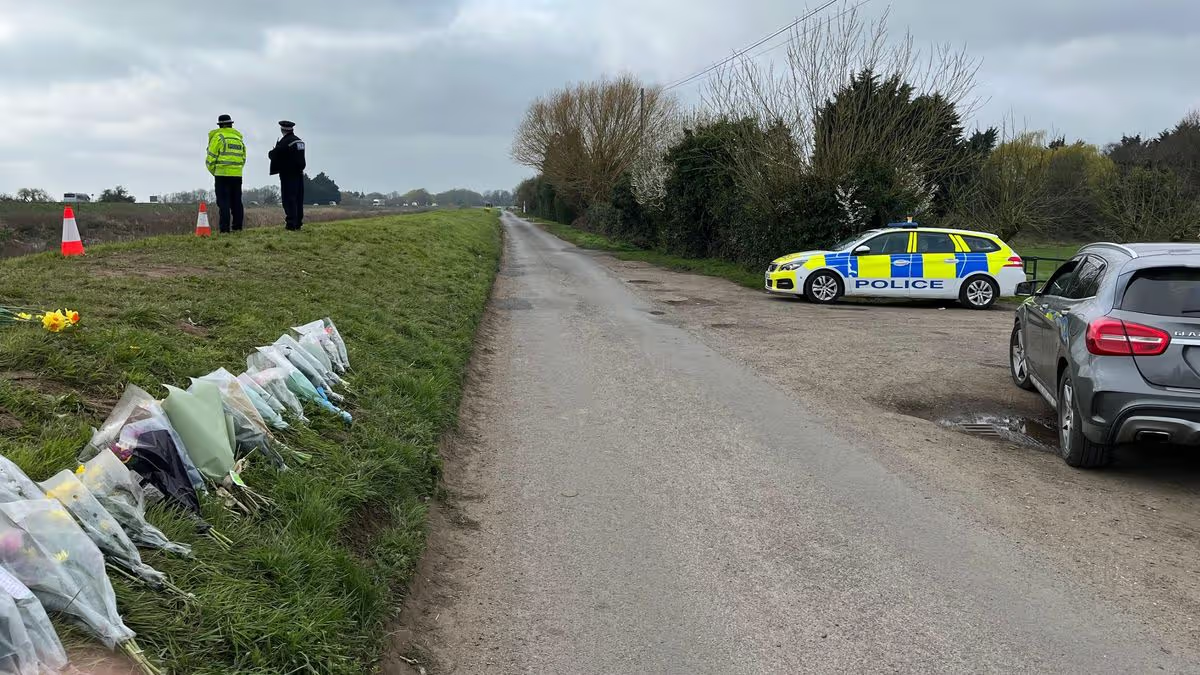
Update on Wisbech river crash as search for teenage boy enters fifth day
-
 Entertainment5 days ago
Cynthia Bailey Dishes on ‘RHOA’ Season 17, Discusses Kandi
-

 Tech5 days ago
Samsung will soon let you control smart home devices from your car’s dashboard
-

 Tech6 days ago
SteamOS update adds support for Steam Machine and other non-Valve hardware
-

 Business4 days ago
More women enter wealth management, but few in advisory roles: study
You must be logged in to post a comment Login