

Connect with us
DAPA Banner
DAPA Coin
DAPA
COIN PAYMENT ASSET
PRIVACY · BLOCKDAG · HOMOMORPHIC ENCRYPTION · RUST
ElGamal Encrypted MINE DAPA
🚫 GENESIS SOLD OUT
DAPAPAY COMING

Politics

England squad’s boots, equipment, and balls stolen before start of 2026 World Cup

Published

on

England

England

The England national team suffered an unexpected setback before the start of their 2026 World Cup campaign after a portion of their training equipment was stolen following the squad’s arrival in Kansas City, USA.

According to a report by The Guardian, special boots belonging to several players, along with official balls and other training equipment, were lost during the transport of the team’s gear to their designated headquarters in the city.

Kansas City police have launched an investigation into the incident, while the authorities supervising England’s national team have initiated urgent measures to provide replacements for the missing equipment and ensure the team’s preparatory schedule is not affected before the start of the tournament.

Kansas City police opened an investigation into the incident, and the newspaper reported that authorities detained two individuals suspected of involvement in the event, with investigations continuing to determine the full circumstances of the case and the extent of the losses.

Advertisement

The incident occurs at a time when the area surrounding the team’s training camp is experiencing heightened security attention, following a shooting incident near the team’s residence a few days prior. Authorities confirmed at the time that the shooting did not target the England delegation and did not result in injuries among its members, as reported by Reuters.

Although there are no indications linking the two incidents, the repetition of security events during the first few days of the team’s stay in Kansas City highlights the challenges faced by participating teams off the field, coinciding with the kick-off of the 2026 World Cup.

Featured image via Richard Pelham/Getty Images

By Alaa Shamali

Advertisement

Source link

Continue Reading
Click to comment

You must be logged in to post a comment Login

Leave a Reply

Politics

Minister deploys ‘homophobic innuendo’ to defend Palestine Action ban

Published

on

Owen Jones, Mike Tapp, and police arresting a Palestine Action supporter

Owen Jones, Mike Tapp, and police arresting a Palestine Action supporter

On 15 June, we reported that Labour minister Mike Tapp was gloating about the decision to maintain Palestine Action’s ‘terrorist’ proscription. A day later, we reported he was trying to ensnare Zack Polanski into saying he supports Palestine Action – something which would have landed him with a lengthy prison sentence. In other words, he’s a nasty piece of work. And the nastiness has only continued:

Palestine Action ‘debate’

The Tapp tweet above was in response to this:

Advertisement

The “unhinged law” in question has led to scenes like the following:

Advertisement

In the UK, it’s now a terror offence to peacefully sit down holding a sign.

Advertisement

Do you feel terrified by the above images?

No?

Because Mike Tapp does, as he made clear with the tweet that kicked it all off:

Advertisement

And as many have pointed out:

Advertisement

Tapp is a flagrant example of this, because – as Skwawkbox reported:

Advertisement

Labour Friends of Israel made Tapp an honorary vice chair. This group exists to forward Israel’s interests in the UK, which is a problem, because Israel’s interests include:

  • Subjecting Palestinians to decades of apartheid.
  • Committing genocide.
  • Doing everything possible to break the ceasefire between the US and Iran, pushing the world ever closer to a fuel crisis that crashes the global economy.

When the non-Jewish Tapp says he’s faced ‘antisemitism’, what he means is people called out his political affiliations. This is how Zionist propaganda works. You can’t say a politician takes money from Israel’s backers – even if they do – because it sounds like ‘Jews control politics’. It’s a ‘get-out-of-jail-free card’, in other words; a way of using the sins of the past to obscure the sins of the present.

Yes or no?

In response to Tapp’s ‘yes or no, do you support Palestine Action?’ question, PhD researcher Thanos Angelopoulos asked the following:

Advertisement

nine questions. Each yes or no.

1) Did the International Criminal Court issue arrest warrants on 21 November 2024 against Benjamin Netanyahu for war crimes and crimes against humanity in Gaza, including the use of starvation as a method of warfare? Yes or no.

2) Is the United Kingdom a state party to the Rome Statute, legally obligated to arrest Netanyahu if he enters British territory? Yes or no.

3) Has the UK government continued to license arms exports to the State of Israel since those warrants were issued? Yes or no.

4) Has the UK government continued diplomatic and political cooperation with the government headed by Benjamin Netanyahu since those warrants were issued? Yes or no.

Advertisement

5) Does the United Kingdom’s existing criminal legislation, including the International Criminal Court Act 2001, contain offences applicable to those who provide assistance to persons under ICC arrest warrant for war crimes? Yes or no.

6) Could a UK government minister who has personally and publicly endorsed the continuation of arms exports and political cooperation with a government headed by an ICC indictee face individual legal exposure under those same provisions? Yes or no.

7) Is it the case, as documented by the Campaign Against Arms Trade and Transparency International UK, that the United Kingdom maintains an extensive and ongoing revolving door between government and the arms industry, including the movement of former ministers and senior Ministry of Defence officials into companies that profit from continued UK arms exports to the State of Israel? Yes or no.

8) Does Section 53 of the International Criminal Court Act 2001 require the consent of the Attorney General, a political officer of the government, before any prosecution under that Act can be brought? Yes or no.

Advertisement

9) Does the availability of procedural or constitutional defences to government ministers acting in their official capacity alter the underlying factual conduct of those ministers? Yes or no.

If the answer to each of the above is yes, the following should be happening under the United Kingdom’s own legal and policy framework.

The Strategic Export Licensing Criteria requires the government not to issue or maintain licences where there is a clear risk that the items might be used to commit or facilitate serious violations of international humanitarian law. The government has already made that assessment for around thirty licences.

The ICC arrest warrants, and the charges they contain, materially strengthen the case that this risk applies more broadly. Full suspension of the remaining relevant licences is the only position consistent with the UK’s own published rules.

Advertisement

Continued authorisation of exports in these circumstances also raises serious questions about potential ancillary liability under the International Criminal Court Act 2001. An investigation by the Attorney General into ministerial decision-making, with knowledge of the ICC warrants, would be the appropriate next step.

Parliament has a duty to hold individual ministers to account for these decisions.

None of this is happening.

Tell us, Tapp, why none of this is happening?

Advertisement

No politics here!

Tapp also accused his critics of ‘student politics’:

Advertisement

Under Keir Starmer’s sensible, grown-up politics, the party has gone from winning a substantial majority to this:

We’ll stick with the student politics thanks, Mike.

Featured image via the Canary

By Willem Moore

Advertisement

Source link

Continue Reading

Politics

Anderson busted using AI to lie about Reform’s Saville controversy

Published

on

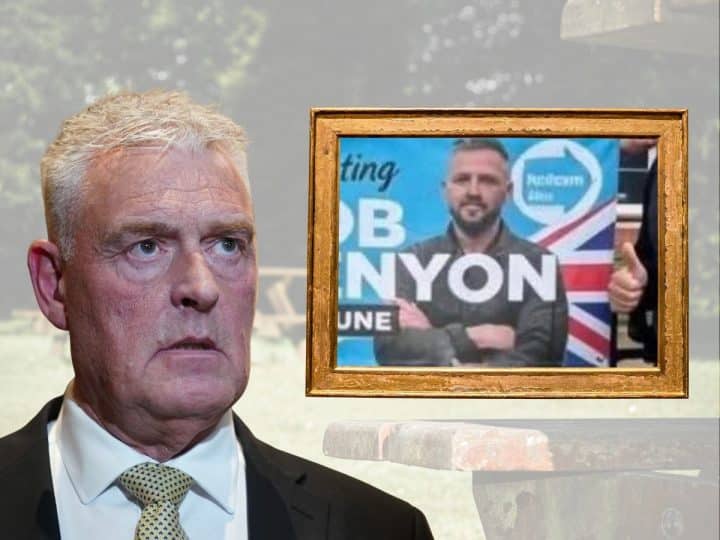
Lee Anderson looking at an AI image of Rob Kenyon of Reform

Lee Anderson looking at an AI image of Rob Kenyon of Reform

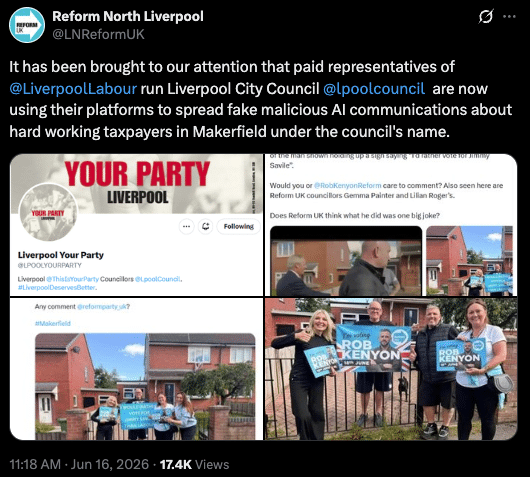
On 16 June, we reported on a grim story from the Makerfield by-election concerning Reform. Local Reform councillors posted a picture which suggested they’d vote for Jimmy Saville if it allowed them to replace Keir Starmer. The problem is this means they would vote for Jimmy Saville – one of Britain’s most notorious sexual predators.

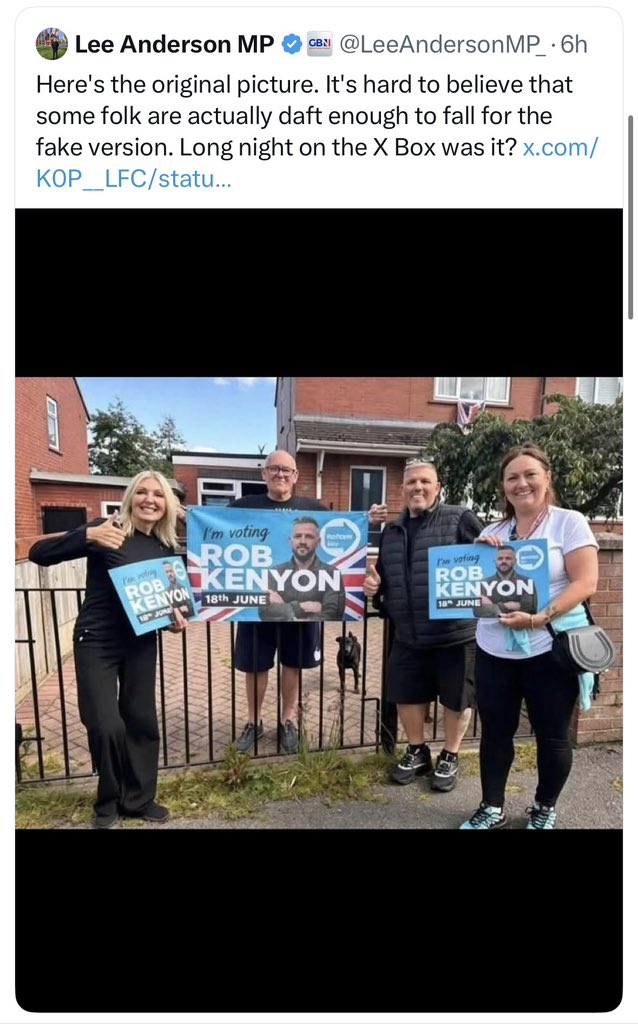
Since then, Reform have done what they can to distance themselves from the controversy. The problem is their attempts only made things worse. This is why a defensive post from Lee Anderson now looks like this:

Reform distraction tactics

As we reported on 16 June, Saville was a serious offender:

450 people accused him of sexual abuse. 82% of the victims were female; 80% of them were children. Saville used his position as a children’s entertainer to get away with this, as well as his connections within the media and charity sectors. He was a plague on this country, and no one should forget that.

It’s one thing for private individuals to make edgy jokes about paedophiles; it’s quite another for a political party which is arguing that the establishment doesn’t take issues like ‘grooming gangs‘ seriously.

Advertisement

The offending image from Reform UK was this:

While the defensive post from Reform chair Lee Anderson is now deleted, we can still get an idea of what he posted from the replies:

Advertisement

There’s also this post from Reform North Liverpool making the same claim as Anderson (screengrabbed in case they delete):

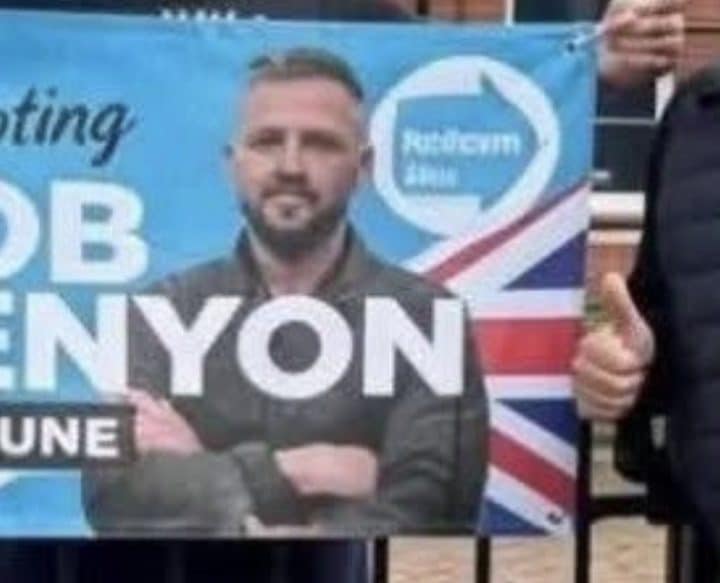
Here’s a closeup of that AI Rob Kenyon. As you can see, he’s running for a party which seems to be called ‘Rafcvim *INDECIPHERABLE*’:

Advertisement

Almost as robotic as the real thing.

Reform Party Exposed UK said this following the deletion:

And they captured Anderson’s tweet for posterity:

Knowing how the right-wing mind works, we assume this means Anderson was up all night playing “X Box”.

Reputational damage

Reform politicians have tried to paint themselves as protectors of women while simultaneously not taking crimes against women seriously. We saw this when Farage insulted grooming gang survivors, and they demanded an apology from him. We saw it when Reform politicians pushed to end no-fault divorce, which would trap many women in abusive marriages. And we’ve seen it with the accusations of sexism in the party, which come from Reform politicians themselves.

Advertisement

Given all this, it’s unsurprising Reform councillors would think Saville is a big joke. Their whole party is a joke, so why not make it obvious to everyone?

Featured image via the Canary

By Willem Moore

Advertisement

Source link

Continue Reading

Politics

Iran foreign minister Araghchi says no truce unless Israel leaves Lebanon

Published

on

iran

iran

Iran foreign minister Abbas Araghchi has responded to Israel’s attempts to reject Donald Trump’s supposed ceasefire ‘memorandum of understanding‘ with Iran. Araghchi warned Israel – and Trump – that there is no prospect of any agreement to end the illegal US-Israel war unless Israel gets out of Lebanon completely:

The end of the war will not be complete without the withdrawal of Israeli forces from the territories they occupied in Lebanon. Any military attack by Israel on Lebanon and the continued occupation of Lebanese territories from now on, in our opinion, is a violation of the MoU.

Araghchi continues to warn Israel that any attacks on Beirut will be punished by heavy missile and drone bombardment of the northern occupation. Israel continues to slaughter civilians in southern Lebanon while the occupation military takes a pounding from ‘first-person view’ drones.

Iran are in control

The ‘MOU’, even if the Iranians agree to it, has sent the US Israel lobby into a meltdown with Israel-firsters accusing Trump of surrendering to Iran.

Featured image via the Canary

Advertisement

By Skwawkbox

Source link

Continue Reading

Politics

‘Stare At A Wall: Pupil’s Response To Social Media Ban Goes Viral

Published

on

'Stare At A Wall: Pupil's Response To Social Media Ban Goes Viral

After the UK’s prime minister announced under-16s are to be banned from using social media, reactions came in thick and fast.

But one that’s left many people bemused is that of a pupil from Preston’s Tarleton Academy, who revealed that her screen time over the weekend can reach up to nine hours.

When a BBC presenter asked what she’ll do with her spare time (in lieu of the ban), school pupil Isabella responded, completely straight-faced: “Stare at a wall.”

The clip was shared widely on social media, including on the Archbishop of Banterbury Instagram account with the caption: “What a diva.” At the time of writing, the clip had almost 2,000 comments and over 83,000 likes.

Advertisement

“She’ll have to read the back of shampoo bottles like we had to,” said one commenter.

“There is strong research that shows being bored makes better problem solvers and more creative thinkers,” added another.

I doubt any teen will be spending nine hours staring at a wall once they’re booted off social media (in fact, I imagine many of them will be figuring out how to get around the ban – as has happened in Australia).

While her response was clearly dripping in sarcasm, the comment about “staring at a wall” highlights something often missing from the whole social media ban debate: that teens have far fewer physical places to go than generations before them.

Advertisement

If we scrap social media, what replaces it?

My parents often tell me about their youth, when it was completely normal for them to play out in the streets and surrounding fields (which seemingly weren’t owned by anyone?!) and stay out for hours and hours.

When I was growing up, we’d do the same – albeit a bit closer to home. Roads were far quieter for bike rides. There also seemed to be more clubs and activities to get involved with, whether at school, the local youth club or even places of worship (ie. church groups).

But experts have been warning for some time of the disappearance of physical spaces for young people to go amidst a growing issue of ‘social thinning’.

Advertisement

Between 2010 and 2023, more than 1,200 council run youth centres closed across England and Wales, and local authority spending on youth services in England plummeted by just over 70%.

Research suggests that today’s children have significantly less freedom to roam, play outdoors, or gather with friends than previous generations.

You’ve got the cinema (although that doesn’t come cheap), the park, the football fields. There are still some places teens can hang out, but it’s not as easy as it once was. “No ball games” signs still dominate neighbourhoods. Groups of teens are also, let’s face it, likely to be moved on or branded a “nuisance” for loitering on street corners.

One in three young people say they do not feel part of their local community, and young people in Britain are more likely to report feelings of loneliness than any other age group, with 70% of 18- to 24-year-olds reporting they feel lonely at least some of the time.

Advertisement

Banning social media for under-16s is coming from a place of wanting to help and protect children, but there have to be places for kids to go instead. Places where it’s not going to cost parents hundreds or thousands of pounds a year to keep them occupied (because god knows with the cost of living being the way it is, many of us simply can’t afford it).

Fiona Yassin, a family psychotherapist and the founder and clinical director of The Wave Clinic, which offers specialist mental health support to teens, told me that adolescence is defined “by a drive for validation, belonging, connection and independence”.

“Social media didn’t create those needs, it simply became the place where many of them now play out,” she explained. “So legislation can restrict access to platforms, but it cannot remove the developmental needs that underpin young people’s behaviour.”

She noted this leaves us with some important questions. For starters, will removing access to social media genuinely reduce harm, or simply push it underground? But also, crucially, what are we putting in its place?

Advertisement

The latter question is one that I think the government needs to think long and hard about – and come up with some answers, fast.

Source link

Advertisement
Continue Reading

Politics

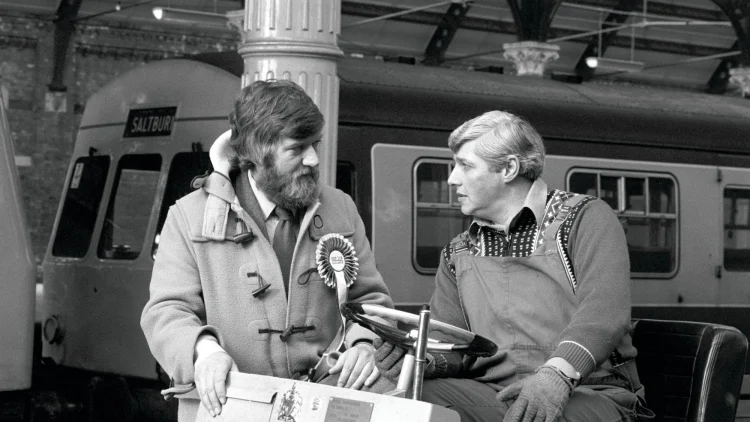
The House Article | Makerfield and the long history of by-election upsets

Published

on

Makerfield and the long history of by-election upsets

Darlington by-election 1983 SDP-Liberal Alliance candidate, Tony Cook (l) out campaigning


4 min read

The Lib Dems love a good by-election – but, as Alistair Carmichael ruefully acknowledges, the favour is not always returned

Advertisement

The Lib Dem love affair with by-elections probably started in 1963, when Eric Lubbock stormed to victory in Orpington. After decades in the electoral doldrums, we snatched a formerly safe Conservative seat and we have been hooked ever since.

Of course, in Lubbock’s days it was possible for a by-election result to come as a genuine surprise. In an age before 24-hour news channels, social media and internet polling, a big by-election swing would genuinely come out of the blue and, with the element of surprise, could also bring political oxygen and a bounce in the polls.

The predictions that come with big by-elections are rarely borne out. Sadly, the boast following by-election wins –  for greats like Shirley Williams and Roy Jenkins – that the mould of British politics had been broken, turned out not to be true.

Advertisement

Thankfully, however, the predictions of a Lib Dem demise – after we finished behind the Hamilton Academicals’ Fan Club candidate in the Hamilton by-election of 1999 – were equally overstated.

To say that they don’t always meet their billing is not to deny their occasional lasting impact. By-elections can often be the coup de grâce for unpopular policies or struggling leaders.

The poll tax may have sparked riots on the streets of London, but it was a string of by-election losses in previously safe Tory seats that finally persuaded the then Conservative government to ditch it and later their leader, Margaret Thatcher.

Advertisement

So, will we be adding Makerfield to that list of memorable by-election dramas? Almost certainly, although, as I write this, the reason is still to be determined.

Future political histories may give it a chapter to itself, recounting the bold and gutsy move of the man who went on to become prime minister. Alternatively, it may become a footnote referencing a long-forgotten figure who reached for the stars and failed. There will, I suspect, be nothing between the two extremes.

That a by-election should be the path to 10 Downing Street is rare, but not without precedent. In 1963, it was a by-election in Perth that allowed Alec Douglas-Home to move from the red benches to the green and hence to No 10.

The by-election circus is a tame affair these days compared to the contests of yesteryear. Gone are the days of daily press conferences and packed-out public meetings. No longer are we entertained by the likes of the late Vincent Hanna skewering some poor unsuspecting and unprepared candidate. Like real circuses, the big beasts are no longer there.

Advertisement

By-elections can often be the coup de grâce for unpopular policies or struggling leaders

In 1983, the SDP-Liberal Alliance campaign in the Darlington by-election came to grief when its candidate was caught on TV nodding in agreement with Screaming Lord Sutch (Monster Raving Loony Party). The campaign stalled, never recovered and he finished a distant third.

As a footnote to that particular incident, let me now reveal that, a week or so afterwards, I was in the overspill audience of a public meeting where Shirley Williams was speaking. From behind me there came repeated “hear hear” and “good point”. Turning to identify the source I was surprised to find that it was none other than Lord Sutch himself.

Advertisement

For a Social Democrat to agree with a loony was the political kiss of death but for a loony to agree with a Social Democrat did no harm whatsoever.

Lord Sutch went on to feature in by-election campaigns for many years after that and ultimately finished off the Owenite SDP by beating them in the 1990 Bootle by-election.

Life is rarely fair. Always true but never more so than in a by-election.

Andy, Keir, Nigel et al – you have been warned. 

Advertisement

Alistair Carmichael is the Liberal Democrat MP for Orkney and Shetland

Source link

Continue Reading

Politics

Politics Home Article | PM Says He Wants Andy Burnham To Have A “Big Role” In Government

Published

on

PM Says He Wants Andy Burnham To Have A 'Big Role' In Government

Starmer was speaking ahead of the by-election on Thursday (Alamy)


2 min read

Keir Starmer has suggested that he would offer Andy Burnham a cabinet job if the Greater Manchester Mayor wins the Makerfield by-election on Thursday.

Advertisement

The Prime Minister also reiterated that he would not walk away from Downing Street, saying that the Labour Party should focus on winning the Manchester mayoral election that would be triggered by Burnham becoming an MP, not a leadership contest.

On Thursday, voters in Makerfield will head to the polls in what is widely seen as the most significant by-election of recent times, with Burnham widely expected to launch a bid to replace Starmer in No 10 if he is victorious. 

Speaking to Sky News at the G7 in France, the Prime Minister described Burnham as a “huge asset”.

Advertisement

“I’m sure I’ll talk to Andy after the weekend, of course I will. I’ve spoken to him many times in recent weeks,” he said.

“He’s a huge asset. He’s been a fantastic mayor in Manchester. If he comes back into Parliament…He’ll be a fantastic asset for our party and for the country.”

Asked if he would bring Burnham into his cabinet if the mayor wins in Makerfield tomorrow, Starmer said: “Oh, Andy is a great asset. And, yes, I want him to have a big role in government.”

Advertisement

Starmer could face a formal leadership challenge within days of a Burnham victory in Makerfield, with not just Burnham but also former health secretary Wes Streeting expected to launch bids. The resignation of John Healey as defence secretary over defence spending last week put added pressure on the PM’s precarious position.

The PM has said he would fight any bid to replace him, but accepted that he has “got to turn things round” following bruising local election results in May.

“That’s what I want to do. And I’ve been very clear about that. Okay. Do I recognise that? That means we’ve got to turn things around. Yes, I do, but that’s what I want to do. But, yes, I recognise ahead of local election results. So we’ve got to turn that around.”

Burnham’s biggest obstacle to victory in Makerfield on Thursday is Nigel Farage’s Reform UK. A More In Common opinion poll published last week put candidate Robert Kenyon five percentage points behind Burnham (45 vs 40).

Advertisement


Advertisement

Source link

Continue Reading

Politics

The House | Regenerate the coast: let development corporations borrow outside the fiscal rules

Published

on

Regenerate the coast:  let development corporations borrow outside the fiscal rules

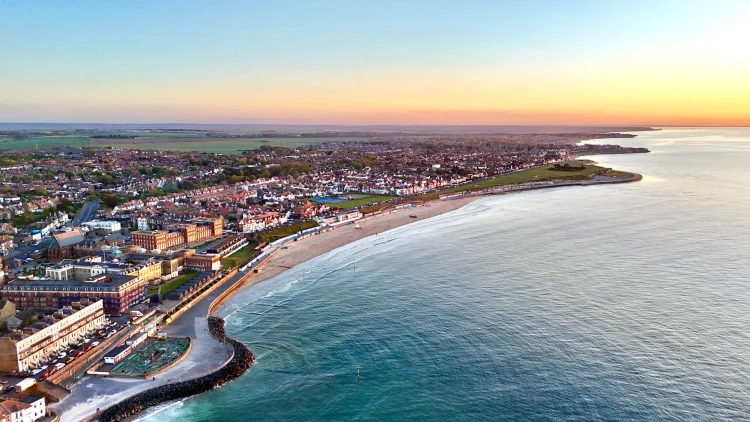
Aerial drone view of Westbrook Bay, Margate Kent (Alice Baddeley/Alamy)


4 min read

Britain under this Labour government faces a major challenge: how can we deliver economic transformation in left-behind communities at a time when money is tight?

Advertisement

As the MP for a coastal constituency that has often been overlooked by Westminster, I believe this question must be central to Labour’s mission in government.

The economic case is clear. Coastal economies have grown at half the national average since the financial crisis, yet they possess enormous potential that is currently being squandered – from port and renewable energy potential, to the creative economy and fantastic people crying out for better opportunities. If we could match that potential with institutions and capital capable of turning it into sustained economic growth, it could be a huge gamechanger for our whole economy.

That is why development corporations deserve far greater attention. Widely used across Europe, these bodies operate outside of short-term political cycles while remaining accountable to local leaders and communities. Their purpose is simple: to bring together public and private capital, assemble land, deliver infrastructure and unlock long-term regeneration.

Advertisement

For many left-behind areas, development corporations could be transformative. They offer a way to move beyond the piecemeal funding competitions and short-term grant schemes that have too often characterised centralised government thinking.

Yet their potential is currently being held back by the way Britain treats borrowing. Under existing arrangements, borrowing undertaken by development corporations is counted as public debt under the Chancellor’s fiscal rules, effectively treating it in the same way as borrowing directly undertaken by the Treasury. This creates a powerful disincentive for ambitious regeneration projects, even when those investments are commercially viable, low-risk and capable of generating substantial long-term returns.

This constraint is increasingly being recognised by investors themselves. Last year, some of Britain’s largest pension funds and insurers urged the government to allow development corporations greater borrowing flexibility for major regeneration schemes. They argue that the current system makes it harder to acquire land, invest in infrastructure and bring forward housing and growth projects that would ultimately strengthen the economy. Giving development corporations the ability to borrow responsibly would unlock a powerful mechanism for growth.

Advertisement

These organisations can capture the increase in land values created by planning decisions and infrastructure investment, then turn those gains into housing, transport improvements, public spaces and further economic development. Rather than relying on repeated injections of central government funding, they can help create a virtuous cycle of regeneration.

This is not an argument for abandoning fiscal discipline. Fiscal rules exist to ensure governments can meet their obligations and maintain market confidence. But those rules should not prevent well-governed investment vehicles from pursuing commercially sound projects that expand the tax base and strengthen local economies.

For many left-behind areas, development corporations could be transformative

Advertisement

We already rightly distinguish between day-to-day spending and capital investment because they have fundamentally different economic effects. The same principle should apply here. If bond investors trust that development corporation borrowing will deliver strong economic returns, this shouldn’t impact government borrowing costs.

Many European countries make far greater use of publicly backed development bodies in this way, but Britain remains unusually centralised, both in how investment decisions are made and how they are financed. Too often, projects that could deliver economic transformation are delayed not because they lack economic merit but because of Whitehall accounting conventions. Imagine what locally accountable development corporations could achieve if given the tools to act.

Britain’s economic future depends both on the success of its cities and on the renewal of places like those at the coast that have too often been left behind. Development corporations offer a vehicle for that renewal. Giving them the ability to borrow outside the fiscal rules, within clear parameters and for clearly defined regeneration purposes, would not weaken our growth strategy – it would strengthen it.

If we are serious about tackling Britain’s regional inequalities, we must stop treating regeneration as a cost and start recognising it as an investment in our country’s future. 

Advertisement

Polly Billington is Labour MP for East Thanet

Source link

Continue Reading

Politics

The 9 Best Early Amazon Prime Day Tech Deals, From Bose To Huawei

Published

on

The 9 Best Early Amazon Prime Day Tech Deals, From Bose To Huawei

We hope you love the products we recommend! All of them were independently selected by our editors. Just so you know, HuffPost UK may collect a share of sales or other compensation from the links on this page if you decide to shop from them. Oh, and FYI — prices are accurate and items in stock as of time of publication.

We’re lucky enough to live in an era where there are endless tech developments being released all the time.

It might be exciting to witness these from afar, but actually participating in them gets expensive pretty fast.

Advertisement

That’s why here at HuffPost, we’re always on the lookout for opportunities to invest in tech for less.

There’s no better time to do that than during Amazon Prime Day, which sees savings across hundreds of brands.

And it’s fast approaching, so ahead of the sale launching next week, we’ve rounded up the best early Amazon Prime Day tech deals to shop now.

Keep reading for the best TVs, tablets, and more to grab at a discount now.

Advertisement

When is Amazon Prime Day?

Amazon Prime Day launches on 23rd June and will run until late on 26th June. While the sale usually lands in July, this year Amazon has moved it forward to June to mark its 20th anniversary.

How can I get involved in Amazon Prime Day?

Ahead of the sale launching on 23rd June, you’ll want to become an Amazon Prime member if you’re not already. That way, you’ll get instant access to the best deals on Amazon when Prime Day starts next week, and you can even start saving some of your favourite products now to prepare.

Advertisement

Best early Amazon Prime Day tech deals to shop now

21% off

Athletes, listen up! If you’re looking for another excuse to get to know your body better, this watch from Huawei will keep you busy. Constantly monitoring your heart rate and blood oxygen levels, it will track your performance and help boost your training, whether you’re swimming, running, golfing, or hiking. It’s fully waterproof for up to 40 metres of submersion, and the battery lasts for three weeks, so you won’t have to worry about missing out on a big work out. Once it arrives, you’ll get a free three month subscription to Huawei Health, which offers workouts and AI fitness advice, while it’s easily synced with third party apps like Clue, FiiT, and Komoot. And of course, it looks supremely sleek, so you won’t have to worry about it ruining your outfits when you’re not in sports mode.

19% off

Best wallet tracker

Always losing your wallet? Thanks to this tracker, you’ll never have to cancel your cards ever again. Simply slide this slimline device into your wallet, sync it with Find My on your iPhone, and you’ll have a built-in tracker for next time you misplace it while out and about. Whether it’s in a bar or at a festival, you’ll be able to find it, as it plays a loud sound, and hopefully you’ll never get far before you realise your mistake, as your phone will send you a ‘left behind’ alert to let you know.

Advertisement

12% off

PC crew, stand up! If you’re looking for an ultra-light laptop, look no further than this one from Samsung that comes in at under 2kg. Whether you’re coding, gaming, or making your latest reel, the AI chip on this laptop is designed to make your workflow completely seamless. It connects to other Galaxy devices in a second, and you can even use your Galaxy phone as your webcam. Plus, it has speedy charging that gets you to 33% in as little as 30 minutes, and the battery provides up to 19 hours of video runtime for endless fun on the go.

39% off

Living your best analogue life? For a reading and note-taking experience with zero distractions, this Kindle has it all. As well as the regular functionality of a Kindle, it has a built-in notepad, so you can draw or write as you would on a pad (but keep it organised) or add your thoughts into the margins of books as you go.

12% off

Whether you’re trying to get a jog in or simply attempting to survive the morning commute, no one wants headphones that fall out every few seconds, so Shockz has created these specifically for premium sound and to make sure you don’t lose one of your precious belongings. Unlike other headphone models, these lightweight clip on buds won’t budge even an inch when you’re running or jumping.

No matter if you’re bingeing the latest season of your favourite show, gaming, or delving into a great book, you want to be able to immerse yourself in it, not just experience it. Set with quad speakers that support Dolby Atmos, this tablet has all the makings of a portable entertainment centre. As well as offering sound that transports you into another world, it has a 2.5k ‘crystal-clear display’ that reviewers praise for its quality, as well as the fact it doesn’t lag during streaming.

25% off

Best charging port

Advertisement

I hate to break it to you, but extension cables are so 10 years ago. Tangled wires and running out of sockets is a thing of the past, because we’ve evolved on to bigger and better things. Namely, this socket that can charge your tablet, phone, and laptop all at once – and fast. Simply plug this port into the wall and insert your cables for speedy charging, so you’re in full control of your charging process. No more wondering how long your phone will take to charge, or if you’re overheating your socket – it’s all built in to that smart display on the back. Phew!

44% off

Best TV for streaming

Gone are the days where a TV is just a TV. This one from Amazon is designed to be part of your digital ecosystem: not only does it come with a Fire TV remote, which is voice-controlled, but it holds every streaming service you could want in one place. If you’re not in the mood to watch, you can also play by downloading games from the App Store, or AirPlay whatever you want to look at from your phone – there are no limits!


Advertisement

Source link

Continue Reading

Politics

Stephen Spielberg Confirms E.T. Is ‘Moist’

Published

on

Stephen Spielberg Confirms E.T. Is 'Moist'

Speaking to the New York Times recently, director Steven Spielberg answered an E.T. question he said he’d never been asked before.

Host of NYT podcast The Daily, Rachel Abrams, said: “The question is not original, and it’s probably only for me, but, was E.T. slimy or dry?”

The Disclosure Day director laughingly replied, “That’s a wild question.

“E.T. was a little moist,” he smiled, “but never slimy”.

Advertisement

He continued, “E.T. was only dry when E.T. got sick, and then E.T was dry…

“When I hear the word ‘slimy’, I think it’s… Ridley [Scott, the director of sci-fi flicks like Alien]’s, you know… alien, when the teeth come out. That’s slimy.

“E.T. never had the tendrils of drool,” Steven added (well, at least that’s… something?). “We didn’t go that far.”

Steven pushed back on Abram’s comment about the question not being original, too.

Advertisement

“I’ve never been asked that question before. Ever,” he stated.

The Standard has previously explained that the on-screen model was made from a metal animatronic base covered in foam latex. Whether Spielberg meant the actual model or the theoretical species to which E.T. belongs remains a mystery.

For those who still have questions about the on-screen alien – we have many – there’s more E.T. trivia.

We’ve written before at HuffPost UK about the fact that E.T. isn’t his real name.

Advertisement

Instead, he’s officially called Zrek.

We know this because of a nine-page treatment that Steven Spielberg and co-writer Melissa Mathison wrote to pitch a sequel for the movie called E.T. II: Nocturnal Fears.

The name Zrek was mentioned three times in the document, referring to E.T..

But alas, Spielberg said it was never meant to be.

Advertisement

“Sequels can be very dangerous because they compromise your truth as an artist,” he shared.

“I think a sequel to E.T. would do nothing but rob the original of its virginity. People only remember the latest episode, while the pilot tarnishes.”

If he were ever to make a follow-up film, though, it looks like he wouldn’t use artificial intelligence (AI) to render E.T.’s “moist” (shudder) skin.

Speaking to ITV recently, he said, “I would never have used AI” to create sounds in Disclosure Day.

Advertisement

He’d previously stated, “I’m not willing to substitute, because I don’t really believe in sentience… I don’t believe there is any substitute for the soul. I don’t think that is an algorithm that is inventible.

“Use AI as a tool, but do not use AI as the final word on anything creative. That’s where I draw the line.”

Source link

Advertisement
Continue Reading

Politics

I’m A Doctor: Shut Down The ‘Manosphere’ Before It’s Too Late

Published

on

I'm A Doctor: Shut Down The 'Manosphere' Before It's Too Late

For the young men of 2026, the internet has become a dangerous soup of misinformation and misogyny repackaged as self-improvement tips peddled by bad actors.

Across all platforms, a growing ecosystem of ‘manosphere’ influencers are promoting harmful and extreme “health” trends to millions of people too young to know the difference between clickbait and genuine advice.

Content in this space normally begins innocently: advice on fitness, dating, and socialising, for instance. However it can quickly spiral into darker themes.

The promotion of unlicensed drugs sold on shady websites, misusing steroids rebranded as ‘biohacking’, starvation diets, and the pernicious “looksmaxxing” trend (where participants have been encouraged to alter their faces using hammers) are all encouraging physical harm in the pursuit of a perfect appearance.

Advertisement

Young men are actively encouraged to partake – and can be either shamed or cast out of the circle if they do not toe the line.

The manosphere as a public health issue

Most of the online personalities promoting such behaviour have no medical qualifications or understanding of the risks involved in what they are encouraging people to do.

They speak, however, as a voice of total authority to vulnerable and insecure audiences who have come to them looking for guidance.

Advertisement

Young men who are struggling with body image, self esteem, and loneliness find themselves particularly susceptible to their promises of quick fixes, instant desirability and success.

The problem is only exacerbated by a social media algorithm which rewards shock and outrage. The more outlandish the content, the more attention it receives, and the more money the creator makes.

Social media has become a dangerous echo chamber in which ludicrous ideas are amplified and go viral long before a qualified professional is able to give their opinion.

Online harm, real world consequences

Advertisement

Increasingly, the young men snared into this world are following through on the advice they receive online and purchasing medications either by deceiving legitimate providers or from the black market.

By taking drugs such as anabolic steroids or weight loss medication from unlicensed sellers, men are putting themselves at real risk from contaminated batches, incorrect dosing, or the drug simply being something else entirely.

Besides the physical dangers, there are psychological risks as well. Toxic online masculinity culture pushes unattainable body standards and encourages shame, anxiety, and obsessive behaviour.

The body is viewed as a project which needs to be worked upon constantly – and the moment it reaches the desired standard, the goalposts are moved so that more ideas and products can be sold to them.

Advertisement

What needs to be done

A coordinated and strong response is urgently needed if we want to keep boys and young men safe.

Schools need to provide better education on how to spot medical disinformation on the internet and to remind people that health information should be coming, first and foremost, from doctors – not influencers.

There must also be tougher action on social media influencers who are found to be spreading this harmful misinformation online.

Advertisement

People should not be allowed to continue to profit from encouraging dangerous behaviour simply because they have worked out that the algorithm rewards scandal.

While the social media ban for under-16s, due to come in next year, will offer some protection from this kind of content; meaningful penalties such as removal from platforms, and thus loss of income, would go some way towards shutting down these dangerous online communities.

The government must also tighten controls on the expanding black market for medications.

It is not acceptable that substances which should only be in the hands of licensed doctors and their legitimate patients are widely available via back door channels and are being taken by those with no medical need.

Advertisement

When vulnerable people are able to access such medication and take it without supervision, they risk coming to real harm.

Dr Zak Zafrani is a GP and Men’s Health Specialist at Numan.

Source link

Advertisement
Continue Reading

Trending

Copyright © 2025