
Politics
Epstein’s notes mark “JAIL OUT = 10”. Guess what date he ‘died’?

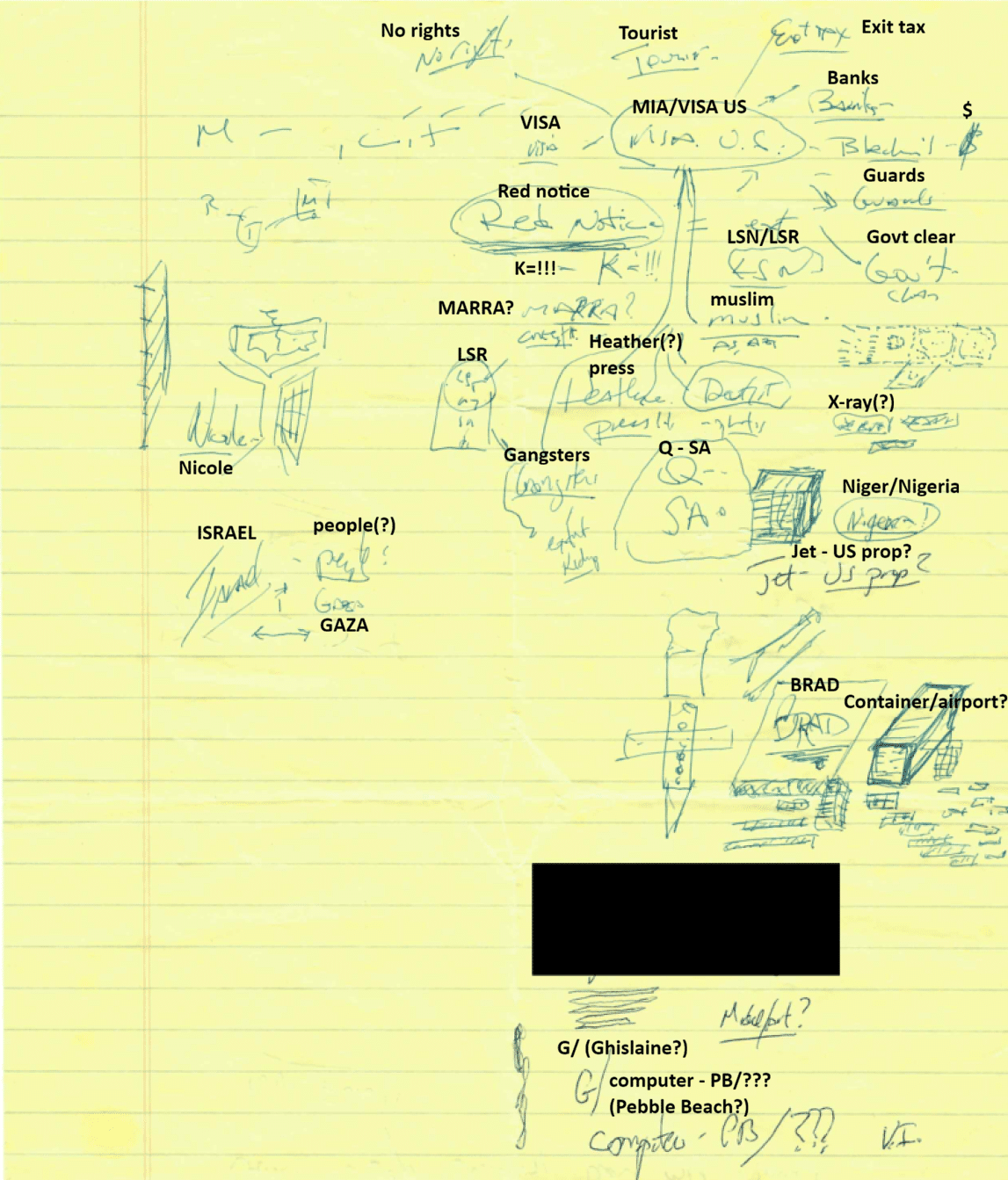
Handwritten notes made in prison by serial child-rapist Jeffrey Epstein show him writing “jail out = 10”. It may well indicate that Epstein expected to be out of prison on the 10th day of a month, which is, of course, the day he allegedly died. Or, it could be the ramblings of a predatory child rapist who was becoming increasingly unhinged.
Epstein’s handwritten notes: clues or ramblings?
Epstein’s ‘death’ has now been cast into doubt by evidence found in the latest release of US government files. Prosecutors prepared an announcement of his supposed suicide a day before it happened. A subpoena revealed that an anonymous message board post describing Epstein’s removal from prison – posted before his ‘death’ was announced – had been written by a prison guard on duty that night.
The latest discovery will only fuel suspicions that Epstein is still alive.
File EFTA00134596 and its adjacent release EFTA00134597 contain notes scribbled on a yellow pad in Epstein’s spidery handwriting. While much of it is either coded or difficult to read, much also is not.
One of the pages, alongside sketches that may show containers or building layouts, has clear mentions of:
• Israel
• Jet – US prop
• Guards
• govt clear
• Niger/Nigeria
• Visa
• Red notice (a request to law enforcement worldwide to locate and provisionally arrest a person pending extradition, surrender, or similar legal action).
• Gangsters
• Banks
• Computer
• Tourist
• Gaza
• Muslim
Along with several names:

But the other is briefer. Shown upside down in the file, when rotated it shows, among initials:
• JAIL OUT = 10

What all of this means when put together is unclear – but it could be that Epstein was laying out his train of thought around some kind of plan. Or, it could be the desperate and deranged scribblings of a man who, even then, did not care about his victims – only himself. All of this will only add to speculation the child rapist’s death was not all that it seemed.
For more on the the Epstein Files, please read our article on how the media circus around Epstein is erasing the experiences of victims and survivors here.
Featured image via the Canary

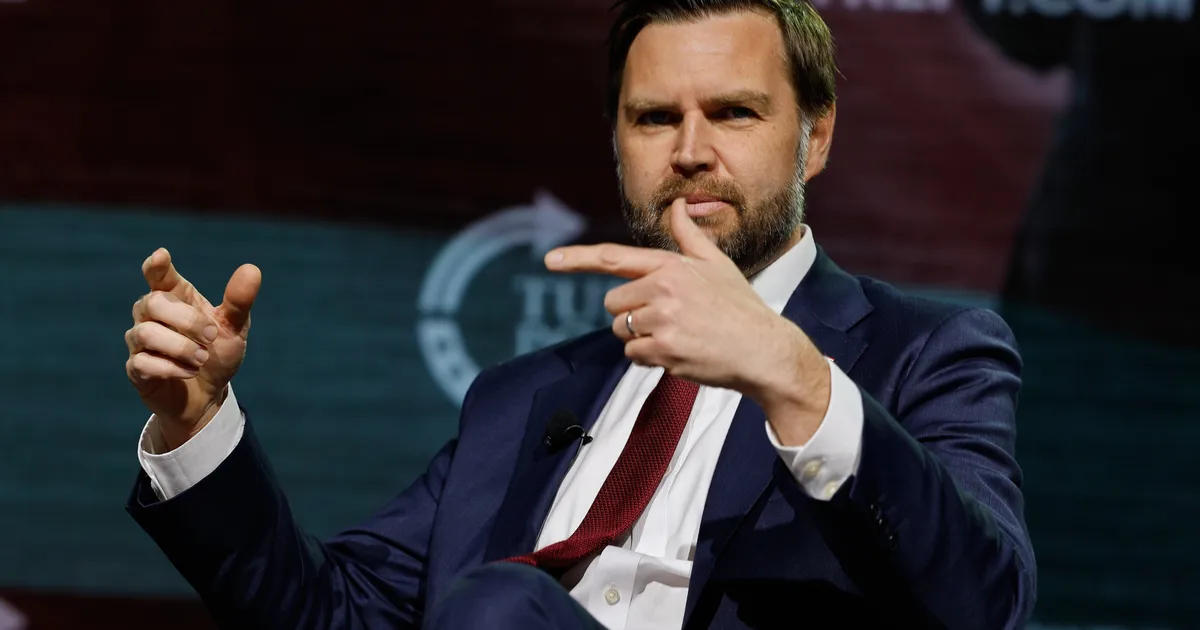
JD Vance has said stopping funding for Ukraine is one of the “proudest” things he has done since entering government.
The US vice-president’s comments are likely to be welcomed in Russia, which has been waging war on their neighbours since the 2022 invasion.
Donald Trump, who vowed to end the war within 24 hours of being re-elected president in 2024, has been a consistent critic of Ukrainian president Volodymyr Zelenskyy.
But despite holding a peace summit with Russian leader Vladimir Putin in Alaska last year, Trump has failed to keep that campaign pledge and the war continues.
Nevertheless, Vance said he was pleased that the US had withdrawn the support for Ukraine which had been in place under Trump’s predecessor Joe Biden.
Speaking at a Turning Point USA event on Tuesday, he said: “It was during a Senate event that I had done, where I had somebody who came up to me, and I’m sure a great person, it was a Ukrainian American, and this person got really agitated at me because I was saying we should stop funding the Ukraine war.
“And I still believe that, obviously, and it’s one of the things I’m proudest that we’ve done as an administration, is we’ve told Europe if you want to buy weapons you can, but he United States is not buying weapons and sending them to Ukraine any more.”
Social media users were quick to condemn Vance over his remarks.
Subscribe to Commons People, the podcast that makes politics easy. Every week, Kevin Schofield and Kate Nicholson unpack the week’s biggest stories to keep you informed. Join us for straightforward analysis of what’s going on at Westminster.
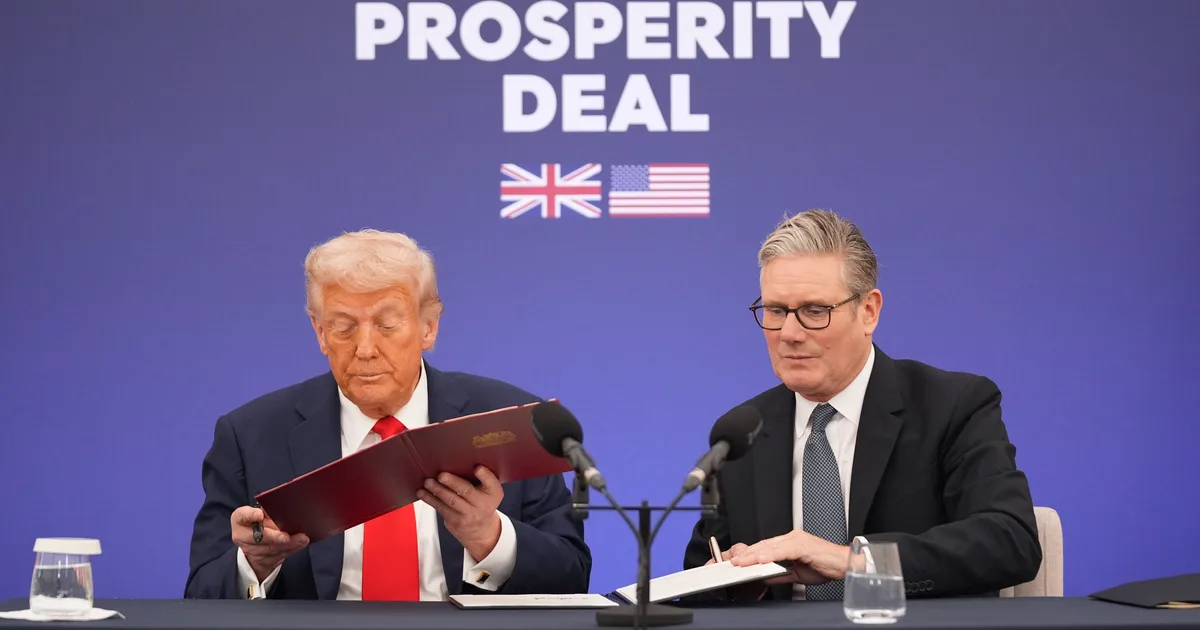
Donald Trump has threatened to rip up the US-UK trade deal as he launched yet another attack on Keir Starmer.
The US president said the agreement “can always be changed” as relations between the two countries remain in the deep freeze.
Trump has made a series of jibes at the prime minister after Starmer initially refused to let US jets use RAF bases to bomb Iran.
He was again repeated them in an interview with Sky News, as he also condemned the PM’s policies on North Sea oil and immigration.
The president said: “I think I like Starmer, but I think that he’s made a tragic mistake in closing the North Sea oil. You see your energy prices are the highest in the world and I think he’s made a tragic mistake on immigration.
“I love your country and I would love to see it succeed, but if you have bad immigration policies and bad energy policies you have the worst of both. You can’t succeed, it’s not possible.”
He added: “A lot of people ask me what I think of [Starmer’s policies] and I think they’re insane … your country is being invaded.”
Asked who the UK is being invaded by, Trump said: “By illegal immigrants from all over the world, including those from prisons, drug dealers, people from mental institutions. Your country is being invaded.”
Last May, Trump said America and Britain had agreed a “full and comprehensive” trade deal that would “cement the relationship between the United States and the United Kingdom for many years to come”.
But the president told Sky News: “We gave them a good trade deal, better than I had to, which can always be changed. We gave them a trade deal that was very good because they’re having a lot of problems.”
His comments come as the UK government tries to agree closer economic ties with the European Union.
Subscribe to Commons People, the podcast that makes politics easy. Every week, Kevin Schofield and Kate Nicholson unpack the week’s biggest stories to keep you informed. Join us for straightforward analysis of what’s going on at Westminster.

Lena Dunham is lifting the lid on the end of her relationship with Grammy-winning music producer Jack Antonoff.
The two were an item for around five years, before going their separate ways in 2017.
In her new memoir Famesick, the Girls creator has written candidly about how things ended for herself and Jack, revealing that she slept with an old boyfriend while they were going through a rough patch.
Lena claimed that after undergoing her hysterectomy – which she had due to severe endometriosis – she tried to talk to Jack about her increasing reliance on pain medication, after which they got into the “worst” fight of their relationship.
She wrote that Jack then “angrily flush[ed] all my pills down the toilet, which necessitated a call to the doctor and a late-night trip to the pharmacy to get more so that I wouldn’t go into withdrawal – from any one of the drugs – overnight”.
The former Fun. musician apparently then addressed Lena in ways she said she had “never been spoken to” before, which she said opened up old needs for her “to be wanted”.
At this point, Lena texted an ex she’d known since school, telling him: “I’ve been through something awful. I don’t want to talk about it, but I need you to fuck me and I need you to do all of the work.”
When Jack went on tour, Lena recalled embarking on a two-week affair with her ex, before eventually ending her relationship.
In her book, Lena also spoke about Jack’s closeness with a fellow musician, who she does not name, but heavily suggests is Lorde, with whom he collaborated on her hit 2017 album Melodrama.
The Emmy nominee wrote that as things in her relationship with Jack began to falter, he was spending an increasing amount of time with a “teen pop star”, once coming home from a doctor’s appointment to find her “sprawled across our sectional couch, weeping into Jack’s lap as he told her that ‘your teens are for experimenting’”.
She noted that his “comforting” tone of voice “almost brought tears to my eyes”, as it had been “so long since he’d spoken to me with that kind of expansive generosity”.
“I had never stopped flirting – I mean, I wasn’t dead yet,” she said. “But I had observed careful boundaries, never taking it far enough that I could be declared out of bounds.”
Lena continued: “If I’d wanted to look, perhaps I may have seen that Jack was not observing them as closely as I was. I wasn’t paying attention, but the internet sure was, and they made some pretty amazing PowerPoints on the issue, so convincing they had me rethinking events that I myself had been present for.”
HuffPost UK has contacted Jack Antonoff’s team for comment.

Jack and Lorde were previously the subject of an expansive viral PowerPoint presentation, speculating about the nature of their relationship.
At the time, Jack dismissed the rumours as “dumb heteronormative gossip”, while Lena later told The Cut after her break-up that she found the speculation “awful”.
“I don’t think anything happened between them,” Lena insisted in 2018. “I can never know someone else’s life. I have never spoken to [Lorde] about it. We haven’t talked since Jack and I broke up.”
She added: “It was awful, and I couldn’t do anything about it except trust that what he was saying to me was true.”
Lorde also made it clear around this time that she and Jack were not an item, insisting: “I love him. He’s awesome, but we’re not dating!”
Elsewhere in her book, Lena also made some surprising revelations about her working relationship with Adam Driver, and his apparently “aggressive” outbursts on the set of Girls.
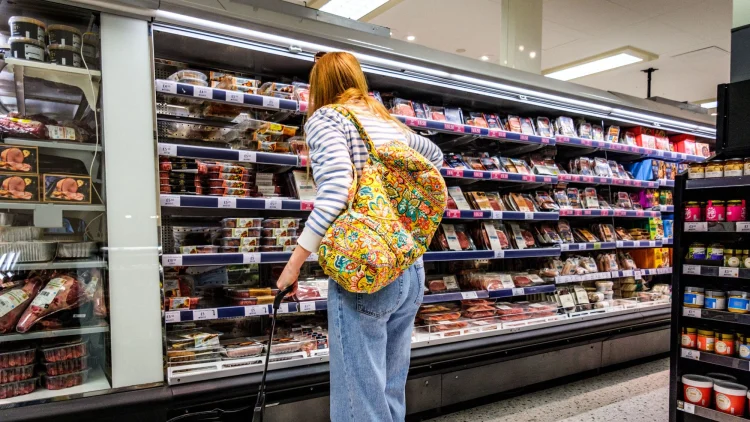
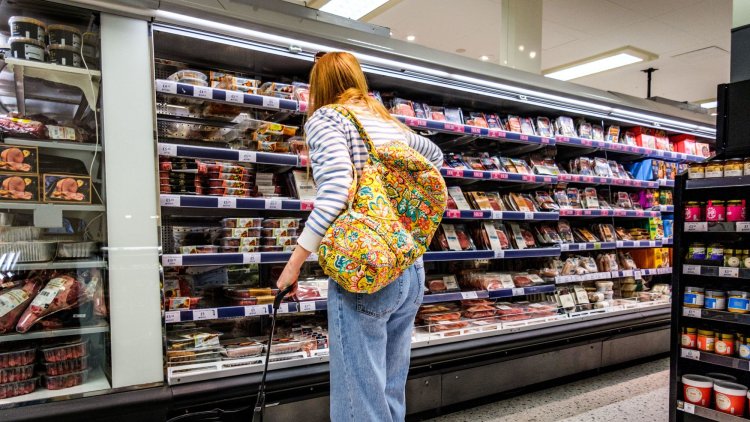
The British Retail Consortium expects food inflation to rise sharply to around six to eight per cent by next year. (Alamy)

5 min read
Fuel and energy are not the only essentials impacted by the Iran war, with experts warning that grocery prices could rise sharply in the next 12 months.
Last week, Chancellor Rachel Reeves met with supermarket bosses to discuss the impact of the ongoing conflict in the Middle East on supermarket prices.
On Tuesday, Reeves expressed her strongest criticism yet of the US decision to launch strikes on Iran, saying it was “folly” to attack the country without a clear strategy.
“Obviously, no sensible person is a supporter of the Iranian regime, but to start a conflict without being clear what the objectives are and not being clear about how you are going to get out of it, I do think that is a folly, and it is one that is affecting families here in the UK but also families in the US and around the world, she told The Daily Mirror.
Reeves is dealing with inflation across the board as a result of disruption to global trade caused by the war.
Petrol prices climbed shortly after the US and Israel first launched strikes on Iran, while Tehran’s threat to attack ships passing through the Strait of Hormuz, a vital shipping lane responsible for significant portions of the world’s gas and oil, has led to a sharp rise in global energy prices.
The government has made support available for people reliant on heating oil, but is under increasing pressure to announce a wider package of support to protect household bills.
But the cost-of-living headache doesn’t stop there. The Food and Drink Federation (FDF) trade body recently warned that UK food inflation could reach as high as 9 per cent by the end of 2026 as a result of the conflict in the Middle East.
Why is the Iran war affecting UK food prices?
The disruption to vital trade flows in the Middle East is not just impacting oil and gas, which food producers use for energy and transport, but also a key nitrogen-based fertiliser called Urea.
Urea, which relies on gas, is vital to global food production as it is widely used in the agriculture sector to grow crops — particularly at this time of year, spring.
Pressure on urea supplies means farmers will have to pay more for it, which in turn will lead to higher prices for the consumer.
According to Harvir Dhillon, economist at the British Retail Consortium (BRC), “you can already see an uptick in food price inflation” in the latest United Nations data, “and it will likely continue”.
He explained that it will take a few months before the impact is properly felt, telling PoliticsHome: “If we assume that the trajectory of food prices will follow something similar to what we saw following Ukraine-Russia… food inflation pretty much starts to increase more or less three or four months after that point.”
The National Farmers’ Union (NUF) has warned that farmers are “under immense pressure”.
“Farmers and growers are having to shoulder increased costs of fuel and fertiliser, often only being made aware of the price they will pay once products have been delivered onto farm,” said NFU president, Tom Bradshaw.
“If these cost pressures persist — which span the whole food supply chain — food inflation could rise, as recent reporting suggests.”
The Bank of America has estimated that global urea prices have increased by up to 40 per cent since the start of the Iran war.
In the UK, estimates vary in terms of how this will impact the cost of food at home.
The FDF, which represents 12,000 food and drink manufacturers nationwide, has predicted that food inflation will hit 9 per cent by the end of the year.
The BRC currently believes that it will peak slightly lower, between 6 and 8 per cent, and slightly later, in early 2027.
What action could be taken?
The government continues to argue that the best way to protect people from the economic impact of the Iran war is to re-open the Strait of Hormuz as soon as possible.
Later this week, Prime Minister Keir Starmer and French President Emmanuel Macron will co-host a meeting of world leaders to discuss restoring freedom of navigation in the vital shipping lane as soon as conditions allow it.
The UK government has said it does not support President Donald Trump’s decision to blockade ships entering or exiting the strait after peace talks between the US and Iran failed to produce an agreement.
Ultimately, ninisters have no direct control over food prices in the UK as they are largely driven by global forces.
Affected sectors say the government can ease the overall financial pressure by providing relief elsewhere, with the BRC calling for retailers to be given support with their energy bills, and the NFU urging ministers to reduce electricity charges for farmers using glasshouses to grow.
In the long-term, MPs like Alistair Carmichael, chair of the food and rural affairs select committee, argue that the UK must think seriously about improving its food security so that it isn’t “left swinging in the wind” every time there is a global supply shock.
“I have been banging on about food security and resilience in supply chains for a long time, and we have always spoken about that in the context of production,” the long-serving Lib Dem MP told PoliticsHome.
“Why we need to have a critical mass of livestock, why we need to have land for cultivation, and the rest of it.”
He said boosting domestic food production should be a key priority for the government as it seeks to bolster national defence.
The MP was echoed by the NFU’s Bradshaw, who told PoliticsHome: “In the long-term, it all comes down to resilience.
“We need to find ways to prevent UK farm businesses from becoming collateral damage of global politics. This is about ensuring we have a stable homegrown food sector which can withstand shocks from global volatility and continue to produce food for the 70m consumers of the UK.”
A government spokesperson said: “We are taking the effects of the Iran war very seriously and are actively monitoring the potential impact of the conflict on the food and farming sector.
“We expect no change to food availability and are continuing to meet with stakeholders, including farmers’ unions, to share information on rising fuel and oil prices – ready to act to protect our rural communities.”
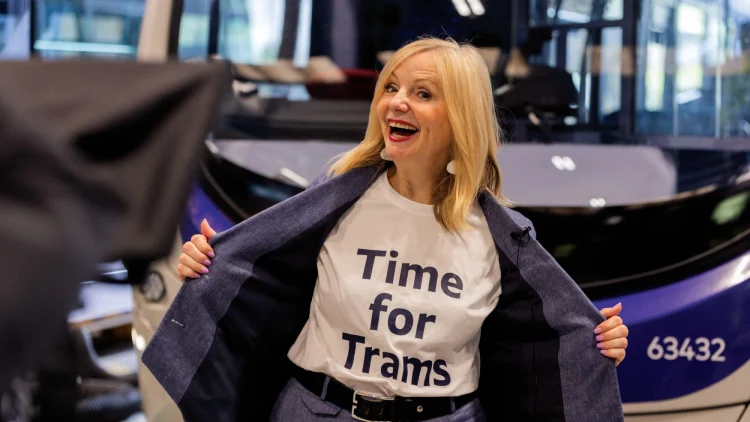

West Yorkshire mayor Tracy Brabin insists mass transit ‘will be a tram’ (Credit: Milo Chandler / Alamy)

10 min read
The long wait in Leeds for a tram network was recently extended yet again. Noah Vickers uncovers the real reasons for the latest delay
It looked as if the stars were finally in alignment. Leeds had been waiting decades for a tram network of the kind enjoyed in Sheffield, Manchester and Nottingham, and in July 2024 it looked as if one was closer than ever before.
West Yorkshire’s Labour mayor, Tracy Brabin, had just won re-election promising to start work on the scheme and her party had now taken office nationally on a mission to “forge ahead” with new infrastructure.
To top it off, Leeds now even had local MP Rachel Reeves in post as Chancellor. With £2.1bn committed to it in June 2025, the project’s future looked bright.
But just days before Christmas, an announcement was made. Brabin confirmed that following “an independent review” held in September 2025, the scheme was now being progressed at a slower pace. Instead of services starting in the mid-2030s, they will instead begin in the late 2030s.
The reason for this was that while Brabin’s West Yorkshire Combined Authority (WYCA) had previously been progressing the business case and the route planning simultaneously, they had now agreed to take a “sequential” approach by submitting the business case first.
The announcement did not make clear why the review was held, other than it being “part of the usual process for projects of this size and scale”.
And while calling the review “independent” might suggest its authors have nothing to do with those funding the scheme, it quickly emerged that the report was in fact written by the National Infrastructure and Service Transformation Authority (Nista), a joint unit of the Treasury and Cabinet Office.

Speculation mounted that the project was in trouble. Leeds has been disappointed not just by a litany of failed plans for trams and trolleybuses over the last 40 years but also by Boris Johnson’s 2021 decision to the axe the city’s High Speed 2 route.
Admitting that people in West Yorkshire have become “cynical” about such promises, Brabin insisted the new timeline would “offer certainty for the scheme”, as ministers had “committed to working with us to cut red tape and put tracks on the ground as quickly as possible”.
Tom Forth, a Leeds-based expert in transport data who has been a vocal advocate for the tram, was not convinced: “We have had about eight delays before to this type of thing in Leeds. All of the previous delays have resulted in cancellation… Maybe we’ll get a hovercraft to Mars and we’ll call it ‘West Yorkshire Tram’, I don’t know, but it’s not good.”
A Leeds Labour activist meanwhile tells The House: “Leeds residents think it’s cancelled. It doesn’t matter who I speak to. If it’s not somebody hyper-involved in local government policy or transport policy, [they think] it’s not happening.”
Both WYCA and the government have refused Freedom of Information requests for the Nista review, with the former citing an exemption to protect “the free and frank exchange of views” between officials.
The House, however, has obtained a copy and can for the first time reveal its contents. The 45-page document sets out 19 separate risks relating to the project’s governance, assurance and planning, but one key recurring theme is the extent to which WYCA is said to have allowed the scheme to be shaped “around a political agenda rather than a recognised programmatic approach”.
The review specifically refers to Brabin’s 2024 manifesto pledge to get “spades in the ground by 2028”, which is the year that she intends to stand for a third term in office.
One source who has been following the project closely says: “They were rushing so much to try and get something approved, to meet the political timescale of doing something in this mayor’s mandate by 2028. The whole point of the HS2 learning is you’re not supposed to do that, because that’s what leads you to make bad decisions.”
The review says of Brabin’s 2028 pledge: “This date has been driving the planning for WYMT [West Yorkshire Mass Transit] and while it is vitally important to drive pace into delivery and also challenge current ways of thinking, there are elements of Managing Public Money, that government needs to adhere to.
“This has generated a tension for WYMT between planning a major project in line with current Green Book Business Case Approval and seeking to achieve a manifesto pledge.
“Lessons from other major projects have identified that options appraisal for investment, robust project planning and risk management are critical ingredients for successful delivery and should not be compromised for unrealistic milestones.”
It cautions that there is a risk of “political embarrassment if there was a large disconnect between a lauded ‘spades in the ground’ date and the start of actual work” and warns that money could be wasted, saying: “The risk of nugatory spend is high.”
The likely cost of a Bus Rapid Transit mode is significantly less than for trams
In addition to concerns about staff capacity in both WYCA and the Department for Transport (DfT), the review also highlights the need for WYCA to take a “mode-agnostic” view of the project. In plain English, the government has not actually said it will fund a tram system in West Yorkshire. It has said it will fund a “mass transit” system, which might consist of trams, but might not.
The review found there was a “clear mantra” among those working on the scheme that “the term WYMT is synonymous with ‘tram’” and that “anything less than” a tram would be considered “second-class”.
Nista said that while “it may be the case that trams are the right modal choice”, the review team were “concerned that the lack of unbiased thinking about the best solution for delivering the objectives has hampered the development of an evidence-based demonstration of the most effective and efficient scheme”.
It adds: “There is a need to build the case for trams which has not been completed. This is particularly important because the likely cost of a Bus Rapid Transit (BRT) mode is significantly less than for trams and the BRT benefits:cost ratio is significantly better.”
Staff working on the project told Nista that trams “will be transformational, more resilient and more acceptable to the public” than a bus network, but Nista asserted that “the evidence for this has not yet been developed”.
Martin Hamilton, CEO of the Leeds Civic Trust, tells The House that trams would attract a higher ridership than buses, as “people who wouldn’t think about getting a bus do consider getting a tram”. He adds that as well as offering increased speed, trams would also bring wider economic benefits.
“If you look at some of the examples within the UK, but also internationally, you can see how it’s possible to use a tram route as a way of bringing brownfield sites into play in terms of housebuilding and in terms of industry along the route. It can really act as a catalyst for regeneration in a way that simply running a bus down a road just won’t do.”
WYCA has consulted on several different possible alignments for the scheme’s initial two routes.
The first would run from central to south Leeds, and could potentially call at Elland Road, the home of Leeds United. The club is expanding its stadium in a £650m redevelopment project, with LUFC director Peter Lowy suggesting mass transit could make a big difference for fans on match days.
The other route would link Leeds with Bradford, despite the fact that the two cities are already connected by train.
The House understands that, at the time of the review, WYCA’s preferred alignment for this second route involved running the tram on main roads between the two cities, because that would enable planning consent to be granted most quickly. But this would have caused significant disruption to traffic during construction, and would also not have enabled much new housing development compared with options which took the tram off-road.
A source familiar with the scheme said that by taking this approach, the mayor had been putting “political expediency in front of what’s probably in the best interests of taxpayers, bluntly”.
In a February letter, rail minister Lord Hendy told Brabin: “It is important to carefully consider the cost, effects and benefits/disbenefits of ‘street running’ vs utilising reserved track where available or running through brownfield land.”
The Nista review similarly warns that “there are risks in committing to a specific route and mode before full approval and which may not be supported by all senior stakeholders”, in addition to “the risk of nugatory spend, litigation and public embarrassment for WYCA if works are started out of sequence and there is a subsequent need for reversal”.
A WYCA source told The House no decisions had yet been made on routes.

Since the review, Brabin has refused to resile from her manifesto pledge, insisting that spades will still go in the ground in 2028, though she now specifies these will enable “preparatory works”.
WYCA’s website explains: “This will not involve laying tracks, but it will prevent issues in any new developments or on our road network that could cause problems for the project, helping to advance future delivery.”
The mayor has also doubled down on her claim that mass transit will mean a tram network, despite the review’s findings on that question. “It’s going to be a tram,” she told WYCA’s scrutiny committee in March this year, adding that the Chancellor has made clear her support for trams.
But the scheme’s business case is being submitted to the DfT, not the Treasury. Asked just a few weeks ago whether she could rule out a bus-only scheme in Leeds, Transport Secretary Heidi Alexander said that while Brabin was making the case for trams “very powerfully”, it is the DfT’s job to ensure public funds are “spent wisely”.
Brabin told the committee: “We are now in a process where we have to prove it can’t be a bus – and that’s fine, we’ll do that, because it will be a tram. My approach is, the case has been proven that light rail is a solution to connectivity in Manchester, in Nottingham, in Birmingham, in Edinburgh, in all of the cities across Europe [that have trams].”
A WYCA spokesperson told The House: “We have bold ambitions for West Yorkshire and that includes addressing long-standing connectivity issues that are holding our region back.
“Beginning preparatory construction works by 2028 has been an ambition for the combined authority for some time because the people of West Yorkshire have waited long enough for this investment. Delivery of major infrastructure projects in the UK is too slow, and in the spirit of devolution we want to innovate to deliver mass transit more quickly.
“Nista’s predecessor body, the National Infrastructure Commission, set out clearly in 2023 that Leeds needs a tram. A review at this stage of a project of this scale is completely normal, and the majority of its recommendations have already been addressed by the combined authority.”
The DfT said: “While we do not comment on details of leaked reports, the government fully supports mayor Brabin’s ambitions for a world-class mass transit system for West Yorkshire. We look forward to receiving WYCA’s initial business case for the project later this year.”
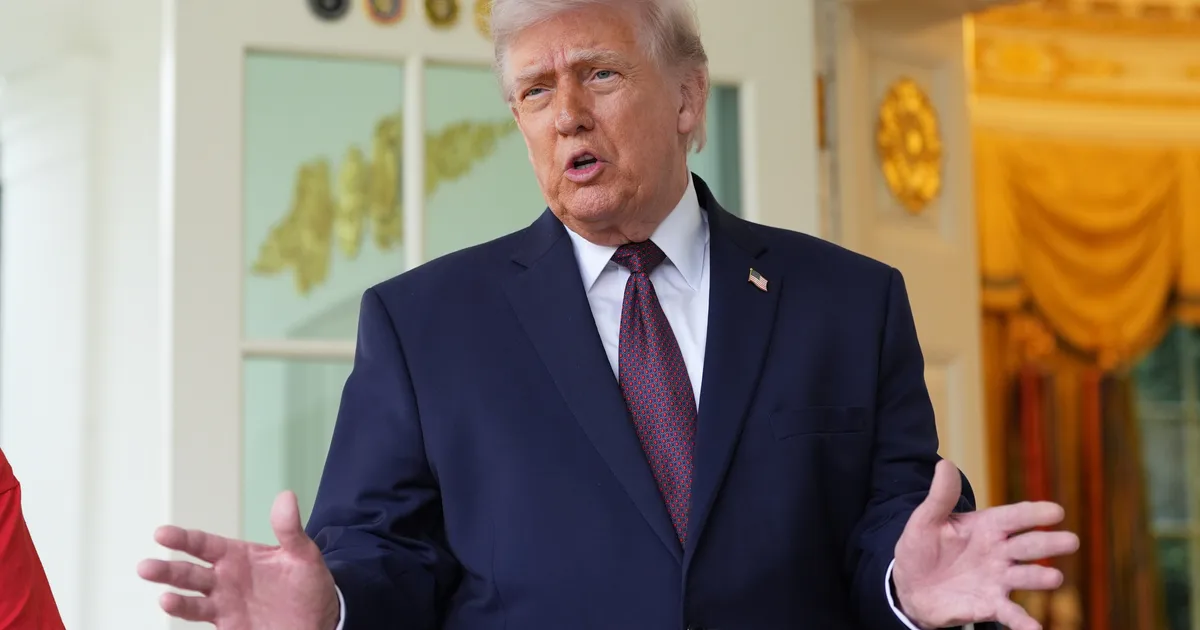
Donald Trump has slammed the UK for refusing to drill for more oil in the North Sea in a fresh takedown of the government’s “tragic” decision.
In a post on TruthSocial, the president took aim at Labour’s focus on renewable energy, writing: “Europe is desperate for Energy, and yet the United Kingdom refuses to open North Sea Oil, one of the greatest fields in the World. Tragic!!!
“Aberdeen should be booming. Norway sells its North Sea Oil to the U.K. at double the price.
“They are making a fortune. U.K., which is better situated on the North Sea for purposes of energy than Norway, should, DRILL, BABY, DRILL!!! It is absolutely crazy that they don’t… AND, NO MORE WINDMILLS!”
The US president keeps finding new ways to criticise Britain after prime minister Keir Starmer decided not to let American forces use UK military bases to launch pre-emptive strikes on Iran at the end of February.
Britain then refused to send its Navy to help keep the Strait of Hormuz open as the Iranian forces effectively closed the major oil shipping lane.
Now, after peace talks failed with Iran, Trump has decided to also blockade the waterway.
The chaotic conflict has had major economic consequences for the rest of the world as oil prices soar.
According to the International Monetary Fund (IMF), Trump’s war in Iran will damage the UK economy more than any other major country.
The Labour government is now scrambling to organise a contingency plan before the upcoming cost of living shock.
Starmer has made it clear the UK will not be “dragged” into the conflict while his chancellor Rachel Reeves lashed out at Trump for the “folly” of starting a war without any exit plan.
The president’s unprompted attack on UK energy is just his latest criticism of Britain.
He compared Starmer to former PM Neville Chamberlain – who championed the Nazi appeasement policy before World War 2 – and accused the UK of trying to join a conflict which the US had already won.
Subscribe to Commons People, the podcast that makes politics easy. Every week, Kevin Schofield and Kate Nicholson unpack the week’s biggest stories to keep you informed. Join us for straightforward analysis of what’s going on at Westminster.


Andy Burnham and Manchesterism (Illustration by Tracy Worrall)
7 min read
What would Burnham’s Britain look like? Ros Taylor explores the Manchester mayor’s governing philosophy – derided by some as more a vibe than a replicable political model, but celebrated by others as key to the city’s recent success
The first hint of Manchesterism in the public consciousness came at an outdoor press conference in October 2020, when Andy Burnham heard about the latest Covid restrictions to be imposed on the city and the money available for it. In a moment that launched a thousand memes, the mayor looked down at his adviser’s phone bearing the news and grimaced. “I mean, it’s brutal, isn’t it?” he said. “This is not right. They should not be doing this – grinding people down: £22m to fight the situation we are in is frankly disgraceful.”
Boris Johnson was the prime minister then, but the refrain has persisted: ‘Manchester is being done down by Westminster and Whitehall, deprived of the autonomy it needs to thrive and I, the city’s elected mayor, will not roll over and keep quiet about it.’ As Burnham has grown more confident – poised, were he able to do so, to challenge Keir Starmer – Manchesterism has become a way for him to express how he would run the country differently.
What, then, is Manchesterism? What relevance does an idea rooted in one city have for governing a nation of 70 million? Does it owe anything to Manchester Liberalism, the other big political idea to have emerged from the North West? And given how little power British mayors have, how much has Burnham been able to do to flesh out his philosophy?
Doubters say it is mostly vibes and boosterism, rooted in a belief in Manchester’s thwarted potential (axing HS2 to Manchester fuelled that disaffection) and relies on a bottom-up localism that would be hard to translate to the national stage. Enthusiasts believe it would permanently reshape the relationship between Britons and their elected representatives. Rachel Reeves’ tentative plans to share income tax revenues with local government, mentioned in her recent Mais Lecture, hint that Burnham’s message is getting through.
Yet Manchesterism is a “governance rather than an economics question”, says Marc Stears, director of the Policy Lab at UCL, and a former adviser to Ed Miliband. He describes it as “an essentially collaborative way of working” where government allies with trade unions and business to “dismantle roadblocks”. He says this approach is impossible when the country is governed overwhelmingly from Westminster: “The short-termism and antiquated nature of our governing stops you having a growth plan which is going to be successful.”
Stears, who has spent time in Australia, admires the “healthy rivalry” between cities like Sydney, Melbourne, Perth and Adelaide, compared with the relatively unproductive British cities beyond the capital. “If we’re reliant only on London and the South East, we won’t be able to get growth above 1.5 per cent.”
In practice, working more closely with unions and business has meant trying to bring services back into public control. Burnham’s signature reform has been to bring Manchester’s buses back into local authority control, calling them the Bee Network. He has also been planning more social housing to replace the stock lost to sell-offs. “It’s been difficult,” says Ryan Swift of the think tank IPPR North. “There’s been a mix of local government taking the lead on that and financially empowering social housing companies.” Efforts to reform skills and education have been less successful, largely because of the limited powers a city mayor has and difficulties in bringing opportunities and transport to some of Greater Manchester’s outlying boroughs, like Wigan.
Burnham has fleshed out Manchesterism by calling for constitutional changes like abolishing the House of Lords and replacing it with a senate of the nations and regions. Gordon Brown championed this plan, but very few of his proposed reforms survived contact with the Starmer government. Burnham also wants to reform the whipping system so that MPs can vote in the interests of their constituencies, and he has “come round” to proportional representation.
Critics ask how much of what makes Manchester relatively prosperous today is down to Burnham himself
Last autumn he called for higher taxes on the better-off, the renationalisation of utilities and more government borrowing, telling the New Statesman: “We’ve got to get beyond this thing of being in hock to the bond market.” It was a bold move for a “governance” rather an economic project and raised questions about the cost of Burnham’s aspirations. With borrowing unlikely to get cheaper until the war in the Middle East is resolved, Manchesterism looks even more expensive. The market’s lack of confidence frustrates him. “The focus on the longer-term returns on delivery is something that’s held back investment in the North in recent years,” says Swift.
Critics ask how much of what makes Manchester relatively prosperous today is down to Burnham himself. The Labour-controlled council took several key decisions in the decade before he became mayor. It welcomed foreign investment in property, especially from the Abu Dhabi United Group investment fund, a lot of it unaffordable to most Mancunians. By 2011, the BBC was already moving into Salford and the Beetham Tower, for a while the tallest UK building outside London, had gone up. Burnham’s focus on the ‘social economy’ is in part a reaction to the feeling that central Manchester has prospered from a huge injection of oil money, not necessarily to the benefit of locals. “Kids can’t see a path to those skyscrapers,” he told the Social Mobility Commission.
Abu Dhabi still owns Man City, but Burnham has attracted foreign direct investment from the US, EU and India. The UK Biobank and a GCHQ base have moved in. Universities are heavily involved in the planned ‘Atom Valley’ in Rochdale. They represent the scientific, trade and manufacturing side of Manchesterism – an echo of the Manchester Liberalism of the mid-19th century and the emancipation of workers through international trade. Burnham is notably enthusiastic about reindustrialisation. Asked whether he identifies more with Richard Cobden or Friedrich Engels, he chooses Cobden, the Mancunian Radical and free-trader.
The Greens’ by-election victory in Gorton and Denton shows that Labour’s record in Manchester has not been enough to counter Keir Starmer’s unpopularity. Burnham will take comfort from the fact he was barred from standing, and that the Greens won through a very Labour appeal to working-class solidarity and the pain of the cost of living. Should he become PM and need to govern in coalition after the next election, Burnham is ideologically flexible enough to do it: for his part, Zack Polanski has said he could work with him.
But ‘Manchester’ localism carries risks. Regional and fiscal devolution means taking power away from Westminster – perhaps even a devolved England of German-style Länder. What if, as in Scotland, some regions choose to entrust it to parties that are not Labour? The prospect of, say, the East Midlands being run by Reform makes many on the left shudder. “There would have to be a change in the way people feel about politics,” says Swift, “and an acceptance of different politics in different areas. The argument still needs to be made for why devolution is a good thing in the longer term.”
Manchesterism is partly a howl of civic pride, an echo of The Fall’s “big, big, big, wide streets; those useless MPs”. “The wiring of the country isn’t right,” says Burnham, who couldn’t get a job in journalism in Manchester when he graduated. But it is also a model for radical devolution and a renationalisation and reindustrialisation project. Where it breaks from some of the early 21st century left is its lack of interest in expanding individual rights.
Social mobility is vital to Burnham, but industry, education and infrastructure drive it forward, not rights-based law. Tellingly, the foreign cities to which he compares Manchester are outside Europe: Austin, Texas and Osaka in Japan.
To its fans, Manchesterism’s possibilities lie in the aspiration for an England that is not defined by the capital’s appetites, where “people feel settled and at ease with themselves”, as Stears puts it. It remains a work in progress – and that might suit Andy Burnham very well.
Politics
The House | Recent history proves that ministers have the power to do serious public service reform

4 min read
Taking decisions in Whitehall to reform public services is one thing, but tangibly improving those services is another. Our new report sets out how ministers can achieve both.
Labour came into office with big ambitions for public service reform. Health, education and public order were three of the Keir Starmer government’s five initial missions, and while we don’t hear the M-word as often as we used to, ministers are still keen to improve the performance of public services across the country.
Public service reform is never easy – making a decision in Westminster does not magically lead to change in how people experience the service in their day-to-day lives. Ministers can feel removed from the services they oversee. But as the leaders of the system, there are some things that only ministers can do. Our recent Institute for Government (IfG) paper looked at lessons from successful reforms by recent governments that will be of use for any ministers today trying to improve how public services work.
Have a clear – and clearly thought-out – goal for your time in office
The most effective ministers have a clear idea of what they want to achieve in office. This will help them to articulate their vision to their civil servants and ensure that the department is pulling in the same direction to implement their objectives.
Nick Gibb, as minister for schools for much of the 2010-24 period, was relentlessly focused on his vision for reform. Having shadowed his post for five years, he entered office with an excellent knowledge of his brief and a clear idea that he wanted to improve the standards of teaching in schools. He is perhaps best known for pushing the synthetic phonics method for teaching children how to read, and introducing the phonics screening test to check how well schools were using this method. Not all ministers will have the same opportunity to shadow their posts, but it is crucial that they set out their priorities early and communicate them effectively to guide action throughout the system.
Build the team to achieve that goal
Once ministers know what they want to do, they need relationships inside and outside government – the strength of these relationships can determine whether reform is successful or not.
The success of the previous Labour government’s Sure Start programme – the inspiration behind the current government’s Best Start programme – relied on a cross-government coalition of support. Sure Start was overseen by a ministerial steering group that brought together several departments, including ministers responsible for health, education and social security. The idea was based on work by a senior Treasury official, and support from Gordon Brown as chancellor was crucial to its success.
During the coalition, Norman Lamb was particularly skilled at building networks outside government as minister for care and support. He saw himself as a campaigner and an advocate for mental health in government, which lent him credibility and authenticity with the sector. Open engagement across government and the wider sector is therefore essential for ministers to secure buy-in for their agenda.
Choose the right tools to achieve the goal
To deliver tangible change in real-world outcomes, ministers need to use the right tools to embed their reforms. One way to help keep momentum on delivery and monitor progress effectively is by using accountability mechanisms.
As home secretary tasked with completing the rollout of the Neighbourhood Policing Programme, Jacqui Smith stripped back an array of inherited top-down targets for the police and focused instead on retaining one target, which measured public confidence in policing. Policing is operationally independent from the government, but Smith was able to negotiate targets collaboratively with police chiefs and use them to hold local police forces to account from the centre.
By using the right tools, ministers can maintain strategic oversight of reform without trying to solve every problem themselves. These are useful lessons for Home Office ministers, who have recently announced a set of targets for policing in England and Wales and a Neighbourhood Policing Guarantee to restore confidence in policing.
Public service reform is an ongoing slog for ministers and their teams. They will inevitably face criticism from inside and outside government, so they need to be prepared to dig in and defend their objectives. Having a clear goal, communicated to the right team and delivered with the right tools, will make this task much easier.
Megan Bryer is a research assistant at the Institute for Government, and Tim Durrant is programme director of the IfG’s Ministers team.
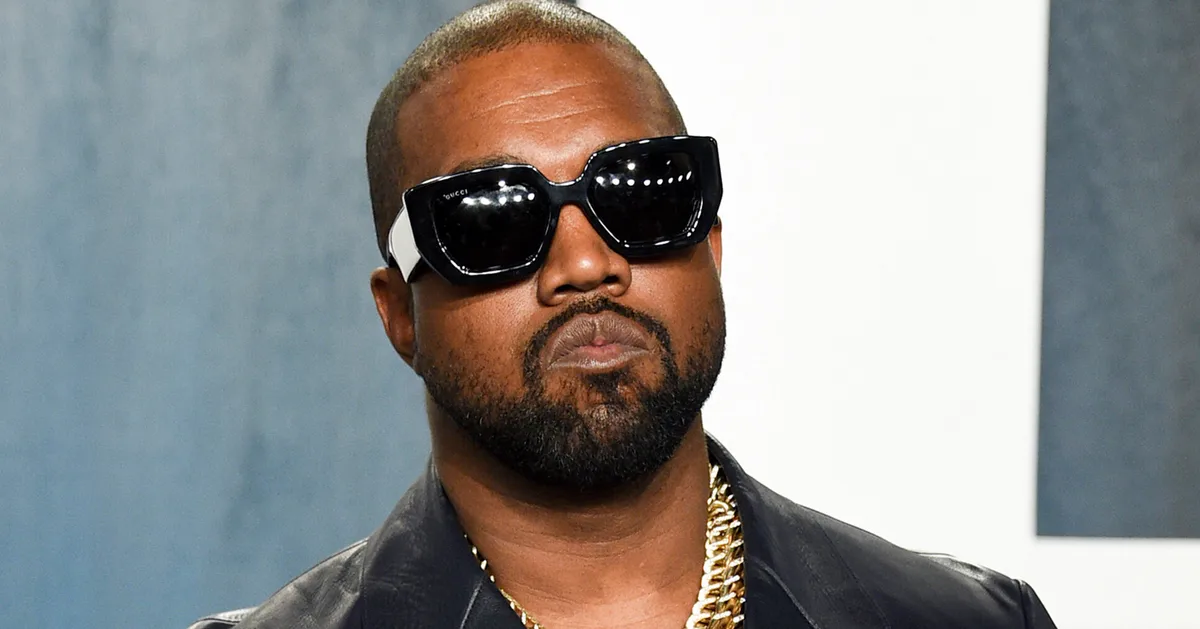
Ye – the rapper previously known as Kanye West – has made the decision to postpone an upcoming show in the south of France.
Last week, the Touch The Sky performer found himself at the centre of controversy yet again when his scheduled headlining sets at the Wireless music festival were cancelled as a result of his right to travel to the UK being blocked.
This booking had been met with backlash due to a series of antisemitic comments and behaviour from the musician in 2025, including praising Adolf Hitler, declaring himself to be a Nazi and selling a t-shirt on his web store emblazoned with a swastika.
He also released a unanimously-derided single titled Heil Hitler, resulting in his Australian work visa being cancelled.
Ye – who was diagnosed with bipolar disorder in 2016 – issued a public apology for his behaviour in a full-page magazine ad earlier this year, addressed “to those I’ve hurt” with his antisemitic outbursts, claiming they occurred during a months-long manic episode in which he had “lost touch with reality”.
Earlier this week, it was reported in the Agence France-Presse that interior minister Laurent Nuñez was also looking at “all possibilities” of banning Ye from performing at a show in Marseilles that had been scheduled for later this year.
In the early hours of Wednesday morning, Ye wrote on X: “After much thought and consideration, it is my sole decision to postpone my show in Marseille, France until further notice.”
He added: “I know it takes time to understand the sincerity of my commitment to make amends. I take full responsibility for what’s mine but I don’t want to put my fans in the middle of it. My fans are everything to me.
“Looking forward to the next shows. See you at the top of the globe.”
Before his Wireless set was cancelled, Ye said: “I’ve been following the conversation around Wireless and want to address it directly. My only goal is to come to London and present a show of change, bringing unity, peace, and love through my music.
“I would be grateful for the opportunity to meet with members of the Jewish community in the UK in person, to listen. I know words aren’t enough – I’ll have to show change through my actions. If you’re open, I’m here.”
Back in January, he dismissed the suggestion that his magazine ad apology was a “PR move” intended to help him “release music” and “operate [his] businesses” as he had before the backlash he sparked controversies 2025.

The cast of the new Lord Of The Rings film has been announced, with some exciting new faces set to share the screen with the franchise’s most recognisable stars.
In the early hours of Wednesday morning, it was finally confirmed that Elijah Wood and Sir Ian McKellen will be reprising their roles as Frodo Baggins and Gandalf in The Hunt For Gollum.
Andy Serkis will also be back as the titular villain, in addition to directing the new movie, which will serve as a prequel to the first Lord Of The Rings movie.
Joining them will be new additions Kate Winslet, Lee Pace and Leo Woodall as Marigol, Thrandul and Halvard, respectively.
However, perhaps the most intriguing announcement is the news that Jamie Dornan is also joining the franchise as Strider, a character who Middle Earth fans will know is later revealed to be Aragorn.

Aragorn was played in the first three Lord Of The Rings movies by three-time Oscar nominee Viggo Mortensen, who it was confirmed earlier this month would not be returning for the new film.
During an interview with ScreenRant, Andy Serkis teased: “I don’t know what’s out there at the moment, but I know there’s a lot of speculation, but let’s just say we are recasting the role and we are on the way to finding someone.”

Pierre Vinet/New Line/Saul Zaentz/Wing Nut/Kobal/Shutterstock
Letting fans know what they were in for, he added: “Our film takes place between The Hobbit and The Lord Of The Rings, and it’s The Hunt For Gollum, and it is a physical hunt for the character, but also a psychological hunt for himself.
“So, we’re just about on the launchpad now, and it’s very exciting. And yeah, it’s going to be a big ride.”
Filming on The Hunt For Gollum is due to get underway next month, with the movie hitting cinemas in December 2027.
Meanwhile, another Lord Of The Rings instalment written by US comedian and Tolkien superfan Stephen Colbert is also in the works.

Brits warned of ‘summer of chaos’ over new EES system if ‘warning sign is ignored’

New malware scam targets crypto users through Obsidian notes app
Unsigned Viking Could Be on Dolphins’ Radar


-

 Politics5 days ago
US brings back mandatory military draft registration
-
 Sports5 days ago
Man United discover Nico Schlotterbeck transfer fee as defender reaches Dortmund agreement
-

 Fashion5 days ago
Weekend Open Thread: Veronica Beard
-

 Politics5 days ago
Malcolm In The Middle OG Turned Down ‘Buckets Of Money’ To Appear In Reboot
-

 Politics3 days ago
World Cup exit makes Italy enter crisis mode
-

 Crypto World6 days ago
Canary Capital Files SEC Registration for PEPE ETF
-

 Business5 days ago
Tesla Model Y Tops China Auto Sales in March 2026 With 39,827 Registrations, Beating Cheaper EVs and Gas Cars
-

 Crypto World2 days ago
The SEC Conditionalises DeFi Platforms to Be Avoided for Broker Registration
-

 Crypto World1 day ago
SEC Signals Exemption for Crypto Interfaces From Broker Registration
-

 Crypto World7 days ago
Bitcoin recovers as US and Iran Agree a Ceasefire Deal
-
 NewsBeat2 days ago
Pep Guardiola and Gary Neville agree over Arsenal title problem that benefits Man City
-

 Business5 days ago
OpenAI Halts Stargate UK Data Centre Project Over Energy Costs and Copyright Row
-

 Business4 days ago
Ireland Fuel Protests Enter Day 5 as Blockades Spark Shortages and Government Prepares Support Package
-

 Politics5 days ago
LBC Presenter Mocks Trump Over Iran War Failures
-

 Crypto World4 days ago
Federal judge blocks Arizona from bringing criminal charges against Kalshi
-
 NewsBeat3 days ago
JD Vance announces ‘no agreement’ with Iran over nuclear weapons fear
-

 Tech5 days ago
A version of Windows 10 released a decade ago is now eligible for additional security patches
-

 Crypto World1 day ago
SEC Proposes Certain Crypto Interfaces Don’t Need to Register as Brokers
-

 NewsBeat23 hours ago
Trump and Pope Leo: Behind their disagreement over Iran war
-

 Business4 days ago
IMF retains floor for precautionary balances at SDR 20 billion
You must be logged in to post a comment Login