
Politics
Farage ridiculed for complaining Burnham is ignoring him

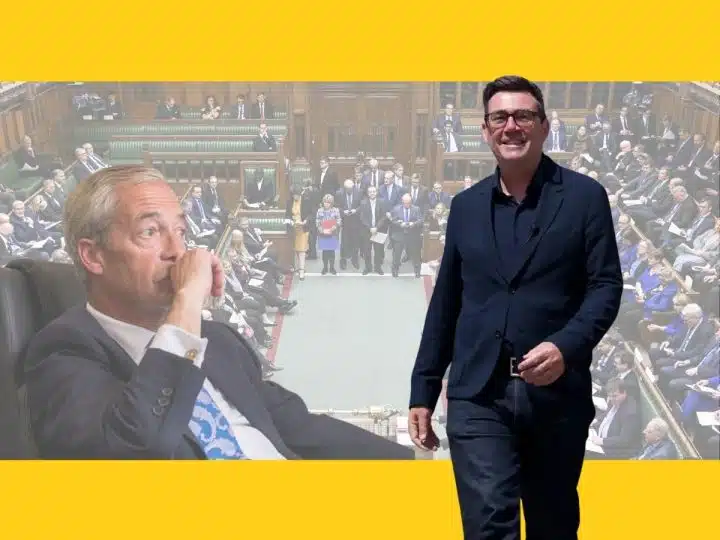

On 7 July, Nigel Farage stepped down as an MP. As a consequence of this, he was no longer an MP, and could no longer perform the duties of a Member of Parliament.
Anyway, here he is complaining about the consequences of his own actions:
"It’s now clear that Burnham is conspiring behind closed doors to foist further tax rises on the country. The fact Davey and Badenoch are going tells you all you need to know… this is the uniparty in action" https://t.co/Wt6mSbpwPG — Politics UK (@PolitlcsUK) July 28, 2026
 NEW: Nigel Farage hits out at Andy Burnham for not inviting him
Farage reaping
As we reported, many believe that Farage stepped down as an MP to draw attention away from his ongoing financial scandals. If so, it didn’t really work, because the move attracted more attention if anything – especially as his main opponent is a man who pretends to be an alien with a bin for a head:
Labour, Tories, Lib Dems and Greens: I demand you stand down in Clacton. I will be a unity candidate and pledge to build at least one affordable house.
Nigel Farage says he wants The People versus the Establishment. So be it.
Leave him to me.
— Count Binface (@CountBinface) July 7, 2026
You’ll note that Farage isn’t the only political leader left out. Andy Burnham failed to invite Zack Polanski of the Green Party too, and understandably so. Polanski isn’t an MP; he’s a London Assembly Member. Similarly, SNP leader John Swinney and Plaid Cymru leader Rhun al Lorwerth aren’t MPs either.
To be a bit fairer to Farage’s position, the not-invited parties do have sitting MPs. As such, Burnham could have invited a representative of each to attend talks. We know that Burnham will speak to representatives too, because he’ll be doing so with the Tories:
Kemi Badenoch can’t make it, so Shadow Health Secretary Stuart Andrew will attend instead — Politics UK (@PolitlcsUK) July 29, 2026
NEW: Andy Burnham will meet Ed Davey virtually later today to discuss social care reform
It’s still funny that Farage is upset that the government didn’t invite him personally, anyway, because this is a mess of his own making.
Numbers
Being less fair to Farage again, it’s perhaps understandable that Burnham only approached the Tories and Lib Dems when you look at the number of sitting MPs each party has:

The truth is that Burnham doesn’t need to speak to anyone. Speaking on this, Sky’s Sophy Ridge said:
Andy Burnham has a House of Commons majority so he technically doesn’t need opposition party votes – but things could be very tricky without them (remember the “death tax”?) and many other PM’s dreams of lasting social care reform have been crushed by political reality
Burnham says this is the one issue he’s prepared to expend his political capital on… and judging by the early signs he might need to
The Tories are unwilling to back any proposal which involves a tax. Reform politicians and the Daily Mail being similarly incensed about the idea of a “10% levy on ALL inheritances to fund social care”. We suspect people would accept have a 10% tax on their estate if it spares their loved ones from years or decades of free care work, but we’ll see.
Ed Davey of the Lib Dems, meanwhile, has suggested his support may be reliant on the Tories backing it, stating:
The current system is broken. I think everyone can agree to that. I just hope that all parties can go into these talks in a way which is desperately trying to find a solution.
I mean, we’re so determined to make this succeed, if we can find a proposal that both Labour and the Conservatives sign up to, we’ll back it, even if it’s not our preferred option.
Nobody
While it’s funny to laugh at Farage making his involvement impossible, it’s very possible Burnham wouldn’t have invited him either way. Reform doesn’t have that many MPs, and Farage is clearly going to act as a spoiler no matter what’s on the table.
We’ll see what happens when Farage returns to Parliament anyway (if he’s able to beat the bin).
Featured image via the Canary
By Willem Moore

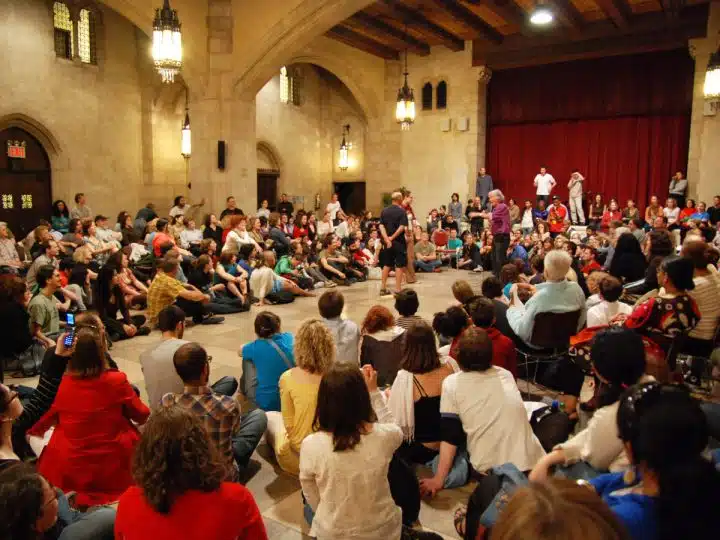

The ideas behind Britain’s Green surge began in a Brazilian jail. In the 1970s, Augusto Boal invented a technique he named Theatre of the Oppressed. It sought to awaken audiences by making them active participants, turning spectators into “spect-actors.”
Theatre of the Oppressed
Boal had drawn the idea from educator Paulo Freire, whose Pedagogy of the Oppressed argued that conventional education was a tool of domination, a “banking” model where teachers deposited facts into passive students.
Jailed by Brazil’s military junta in 1964 and driven into exile, Freire proposed instead that teacher and student examine the world together, aiming at conscientização, or critical consciousness. To exist humanly, Freire wrote, is
to name the world, to change it.
Boal took that idea off the page and put it on a stage.
The technique works by dissolving the boundary between stage and audience. Boal’s best-known form, Forum Theatre, stages a scene of everyday injustice, stops it halfway and invites an audience member to take a character’s place and try differently. The place of theatre, Boal argued, is not to
show the correct path, [but] to offer the means by which all possible paths may be examined.
The shift he and Freire were after was cultural before it was political. Not a transfer of power, but a prior question: had people been so thoroughly treated as spectators that they had forgotten they could take the stage?
Polanski’s theatrics
Half a century later, a British actor trained in that tradition is applying it to Westminster.
Before politics, Zack Polanski worked with a production company staging Forum Theatre shows – a rather different training ground than the PPE-to-think-tank pipeline that produces most British politicians. His campaign slogan, “make hope normal again“, puts a Freirean ring on a more infamous populist catchphrase: politics as an invitation to agency, rather than a return to past glory.
His political style is less about class struggle than participation. But that is a theory of the room, not of the state. It explains why Polanski fits the Greens better than Labour – a party built around discipline and lines for members to follow. But what comes next for the Greens?
A green politics of participation
Before the Greens, Polanski was a Liberal Democrat – a party not known for revolutionary politics. He joined in 2015, drawn chiefly by its support for proportional representation – a cause about widening who gets a say in politics, rather than about any economic programme. He left in 2017 over the party’s foreign-policy compromises.
The detail matters. Polanski was never a left-wing ideologue working his way toward the correct party. He was someone preoccupied with participation, who happened to find that preoccupation served better by the Greens than by the Lib Dems. But whether a theatrical method translates into a governing one is a question his career has not yet had to answer. The harder question is what the tradition is worth when the rehearsal ends.
Green Party membership has grown from the tens of thousands into the hundreds of thousands since Polanski became leader. In February, the party won its first parliamentary by-election ever, overturning a Labour majority in a seat held since the Second World War. The winner was Hannah Spencer, who weeks earlier had been in college, a plumber learning how to plaster.
Before politics, Polanski performed in a Forum Theatre production playing a leader who steered his audience astray, and his spect-actors overthrew him. The tradition was built for exactly that moment: the audience discovering it could act, the protagonist discovering he could be removed.
Polanski is still in rehearsal. What comes after is another question entirely, and one he will have to answer himself: is a theory of stagecraft ready for the test of statecraft?
Featured image via Wikimedia
By Hugo Harvey
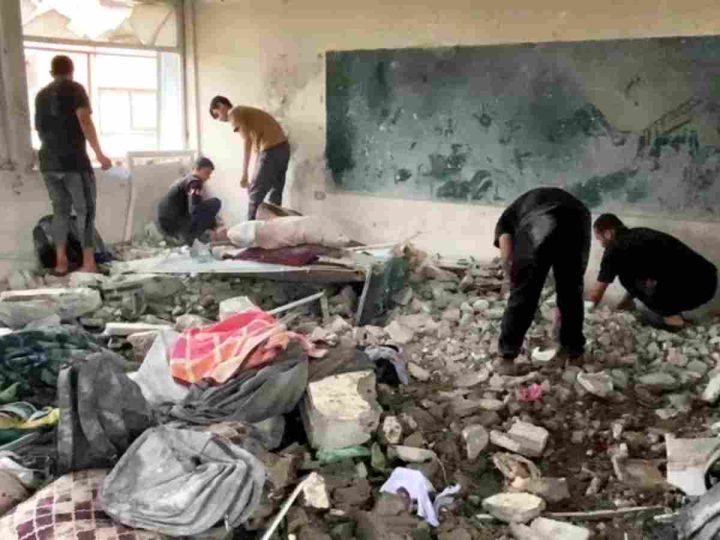

In a move that is as farcical as it is shameful, Irish immigration authorities have refused large numbers of study visas for students from Gaza seeking to enrol at universities.
RTÉ say that:
…upwards of 20 Gazan students, who have all been accepted onto fully funded scholarships for third-level courses, have had their visa applications turned down by Irish immigration authorities. Others are awaiting outcomes.
The farce lies in the nature of the refusal letters, which read like a sort of cruel joke. RTÉ reports the reasons given for refusing applications to study include:
…not supplying original bank statements, a failure to account for gaps in their education, and a failure to supply strong evidence that they will return home once their course of study is completed.
Gaza students face inhumane rejection letters
Many of us have trouble digging out old bank statements from wherever we left them several months ago. That task becomes harder still when a genocidal terror force like the Israeli Occupation Forces has turned virtually everything around you to dust and rubble, dropping the equivalent of more than six atomic bombs on your tiny strip of land.
Gaps in education become more understandable when the same murderous ‘army’ has committed scholasticide — the attempt to annihilate all education in Gaza.
Indeed, as one of the students told RTÉ:
…the gap in their education is accounted for by the war and destruction in Gaza over the past two-and-a-half years, which included their family’s displacement, the destruction of the family home, and the wholesale destruction of universities and other education infrastructure across Gaza.
As for returning to the occupied territory, the Irish universities in question are adamant they intend to help Palestinians develop the skills needed for rebuilding the wrecked territory. A source from Trinity College told RTÉ one of their potential students would have the chance to qualify as an engineer, and could go back to help rebuild Gaza.
They went on:
This is not about a brain drain. We are ethically recruiting in Gaza. We want to continue people’s education so that they can hopefully go back and rebuild Gaza, as engineers, nurses, the next generation of policy makers and politicians.
A University College Dublin (UCD) source said:
None of these places have been given to Palestinian students out of charity. They are all extraordinary students who have achieved outstanding grades in the most despicable of circumstances.
Gaza has no postal service, applicants told to use mail
And if a Palestinian didn’t want to return to Gaza in the event of so-called ‘Israel’ continuing the holocaust it shows no signs of ending, then would that be so wrong either? Under international humanitarian law, no one is obligated to return to an extermination camp.
Any student wishing to remain in Ireland after study would have every right to claim asylum. That Irish immigration authorities seem intent on ushering them back into the jaws of death immediately upon completion of study shows an utter moral bankruptcy at the Department of Justice, Home Affairs and Migration, not that this should be a surprise.
Like rubbing salt in a wound inflicted on some of the most desperate people on the planet, the refusal letters state that appeals must be submitted in writing. It goes on to say that those sent by email and fax “will not be processed”. It goes on:
You must submit appeals by post only.
As RTÉ points out, there is no functioning postal service in Gaza. One of the students described the demands as “completely impossible to do”.
Zionist lobbying or immigration panic maybe to blame
The refusals mark a shift from the previous year, when authorities granted 80 study visas for students from Gaza. Quite what prompted the shift is hard to say.
The Irish government has doubled-down on its Zionist policies this year. It has rejected sanctions on the Zionist entity as its own citizens were being tortured in IOF captivity. Additionally Micheál Martin, the Taoiseach (Prime Minister) of Ireland, and his sorry crew have also demanded that the Irish football team fulfil its fixture against the terrorist pseudo-state.
They have also watered down the Occupied Territories Bill which restricts only a small amount of trade with “illegal settlements”. The latter is an arbitrary distinction given all of so-called ‘Israel’ is land stolen from Palestinians. They previously reassessed the bill under direct pressure from the US ambassador. It’s not implausible that something similar is afoot here.
The other possibility is that this is a fresh capitulation to the far right’s continuing confection of immigration panic. These racists continue to gain traction, using more overtly hateful rhetoric.
Martin’s government has been happy to embolden them with their policy stances, such as Minister for Justice, Jim O’Callaghan, refusing to rule out potentially illegal off-shore “asylum seeker return hubs”. Martin offered only meek criticism of former Taoiseach Bertie Ahern’s vile racist ramblings on a voter’s doorstep.
Some combination of these inexcusable factors is surely to blame, as no logic or morality could justify the rejection of salvation for people suffering under one of history’s great crimes.
Featured image via the Canary
On Thursday 30 July, voters in Greater Manchester will vote to elect a new Mayor in a by-election triggered by Andy Burnham’s return to Westminster. Here, Rob Ford reflects on the by-election and what’s at stake for the different parties.
One of the knock-on effects of Andy Burnham’s return to Westminster was the triggering of a by-election to replace him as Mayor of Greater Manchester (GM). By law, the vacancy must be filled quickly, which is why voters in Greater Manchester, who may well be weary of casting ballots after two by-elections and a full set of local elections this year, return to the polls on Thursday to elect Burnham’s successor. There has never been a Mayoral by-election before, and with over 2 million eligible voters, this is by far the largest by-election Britain has ever seen. Yet you would be forgiven for not noticing it was even happening.
To be fair, it has been a busy month. One Prime Minister has departed, and GM’s former Mayor has replaced him following a leadership contest which mutated into an extended coronation. And the Mayoral by-election does not look that exciting – the three polls conducted since the candidates were known all suggest Bev Craig will hold the Mayoralty comfortably for Labour, though with a much-reduced vote share.
Opinion polling on the 2026 Greater Manchester Mayoral by-election, first preferences
Labour lead Reform by an average of nearly 20 points on first preferences and are further helped by a change in the voting system from first past the post (FPP) to supplemental vote (SV). Under the old system, an even split between Labour and the Greens could have let Reform through the middle. Under SV however, voters can cast a second ballot, and the second preferences of the Greens are likely to go overwhelmingly to Labour. All three polls have Labour at well over 60% in a run-off against Reform.
But while the likely result looks clear, there is still a lot at stake. Labour want a show of strength in a city region where the party has long been politically dominant. A big win in his former stomping ground will provide a significant boost for Andy Burnham. It is also important for Bev Craig, who will have a much easier job negotiating with the ten boroughs in her combined authority if Labour can retain control of most of them in next year’s local elections. A big win this week will be an early sign this can still be achieved, despite a disastrous set of local election results in May.
Reform’s hopes of landing an early blow on Burnham may have faded, but the party is still keen to secure a strong second place. Reform topped the poll in seven of GM’s ten boroughs in May’s local elections, making sweeping seat gains across the region. The by-election is a valuable opportunity for the party to consolidate in boroughs such as Salford and Wigan where it could potentially take control with a strong showing next year.
The Greens have also seen their high early hopes dashed, but they too have much to gain from turning out as many votes as possible. Their advance in May’s locals was concentrated, with a huge surge in support in city centre wards, particularly those in or near Gorton & Denton, the Westminster seat the party gained from Labour in February. So the by-election provides a valuable opportunity to keep the new Green electorate mobilised and engaged, hold off a resurgent Labour, and build towards next year’s local elections where further gains could bring real power and influence in the central boroughs.
There is less at stake for the other two parties in England’s current five party system – the Conservatives and the Liberal Democrats – though both will see the campaign as an opportunity to gather information in their GM stronghold areas (Trafford and Stockport respectively). But this is also a big by-election for the newest player on the political scene, the far right Restore Britain party. Restore Britain was only founded (by former Reform UK MP Rupert Lowe) a few months ago, but it has already notched up strong showings in some national polls, and a third place finish in the Makerfield by-election. The party is polling at an average of 8% in this contest, a remarkable showing for a brand-new party with perhaps the most extreme far right agenda ever seen in British politics. Restore may find a receptive audience in the ethnically divided former mill towns on the fringes of Greater Manchester where the BNP won substantial support in local elections twenty years ago. A strong performance in such boroughs this week may be an early warning sign of exceptionally polarised local election campaigns to come next year.
All by-elections provide useful information on the shifting sands of voter sentiment, and this giant contest, held over a sprawling, politically and socially diverse city-region, will be more informative than most. Even if the outcome proves to be predictable, it will be well worth sifting through the detailed results for early signs of the next twists to come on the great British political rollercoaster.
By Professor Rob Ford, Professor of Politics, University of Manchester.
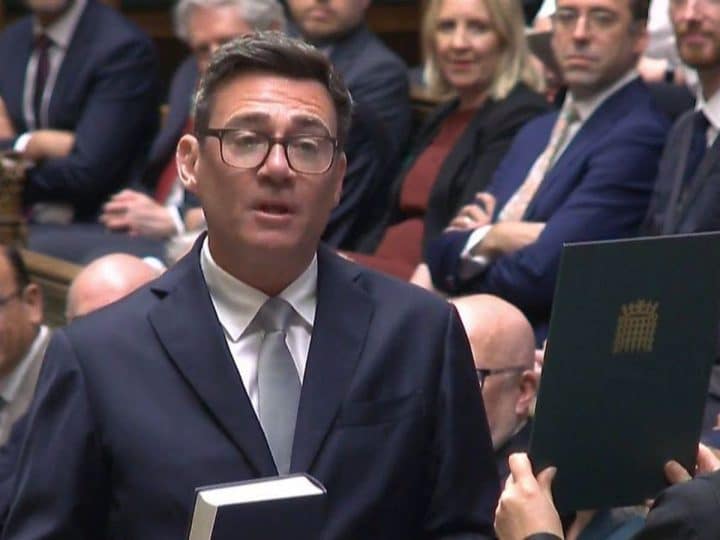
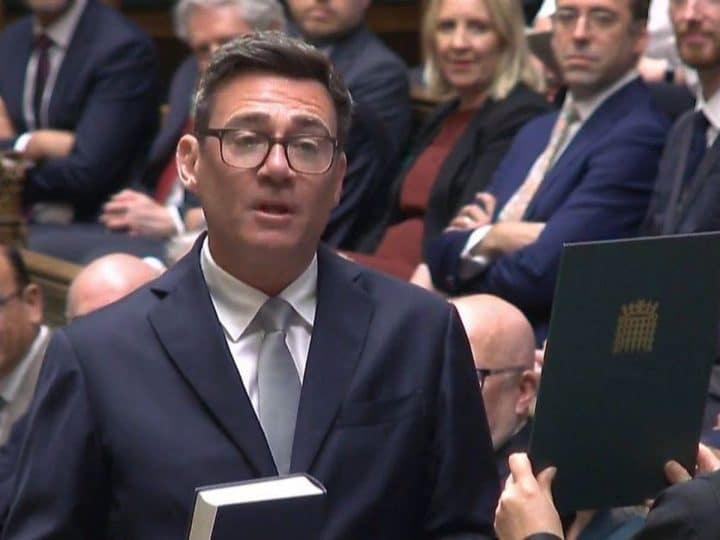
Andy Burnham may have set up “No. 10 North” in record time, but he has also brought in a team of unelected officials to run the show at Downing Street.
“Hope Not Hate”
This month, Alison Phillips resigned as CEO of Labour Together to join Team Burnham. She was soon appointed as his deputy chief of staff.
Until July 16th, Philips was also a director of Hope not Hate, who campaigned heavily for a Burnham victory in the Makerfield by-election, which had been triggered by Josh Simons’ resignation. Now, their staff are occupying key positions at Number 10.
Matthew McGregor, another former Hope not Hate director, is Burnham’s new head of political strategy. In 2021, McGregor contributed to Hope not Hate’s annual report alongside ex-Labour councillor Liron Velleman. Velleman is now a convicted child sex offender.
Velleman, an ex-policy officer for Hope not Hate, sent an explicit video to a police officer he thought was a 13 year-old girl. He served as a Labour councillor in Barnet alongside Jewish Labour Movement national chair and ex-Israeli embassy staffer Ella Rose-Jacobs, who lost her seat at the local elections in May.
Ruth Anderson is yet another ex-Hope not Hate director promoted by Burnham last week. Anderson has worked for a litany of lobby groups, including Labour Friends of Israel, JLM, and BICOM. In 2009, she was named as a “strictly protect” informant in a US embassy cable.
Katz holds the Lords’ whip
Mike Katz has never been elected as a Member of Parliament. Nevertheless, Burnham has re-appointed him as a Labour government whip in the House of Lords. In July 2021, just after Katz was appointed JLM chair, McGregor interviewed him for Hope not Hate’s podcast.
Meanwhile, James Purnell is Burnham’s new chief of staff at Downing Street. In 2002, Purnell met with then Israeli Prime Minister Ehud Barak in Tel Aviv, praising him as a “rational” man. He also described his visit to a:
conference of the great and the good of Israeli politics.
Barak is known to have visited notorious paedophile Jeffrey Epstein’s New York townhouse more than thirty times.
Graeme Cooke was previously a special adviser to Purnell, and the two men remain close allies. Purnell previously served as chair of the Labour Friends of Israel lobby group. Burnham just made Cooke director of policy at Number 10.
Burnham’s Friends of Israel
Ian Austin, another unelected life peer, will now serve as Andy Burnham’s UK Trade Envoy to Israel, with the role being overseen by Jonathan Reynolds, Burnham’s pick for Trade Secretary. Reynolds is also a former vice-chair of Labour Friends of Israel.
Varun Chandra, previously a special adviser to Keir Starmer, has been re-appointed by Andy Burnham. Chandra was a founding chairman of Hakluyt, a corporate intelligence firm founded by ex-MI6 officers. Hakluyt’s advisory board is now led by former Conservative Foreign Secretary William Hague.
Hague met with wanted fugitive Benjamin Netanyahu in 2013, saying at the time:
I am pleased to be back in Israel.
Hayden Munro will be Burnham’s new political director at Number 10. Munro previously worked for lobbying firm Arden Strategies, which was run by ex-Labour MP Jim Murphy. Murphy was James Purnell’s predecessor as Labour Friends of Israel chair.
Burnham has also given a job to Nathan Yeowell, who comes in as a special adviser at Number 10. Yeowell was quickly congratulated on his appointment by Labour MP and former Israel lobbyist Luke Akehurst, his former co-director at Labour to Win.
Whilst the mainstream media focuses on cabinet appointments, Burnham has quietly assembled a team of unelected lobbyists to dictate government policy. With their help, he is intent on securing his grip on power.
Featured image via the Canary
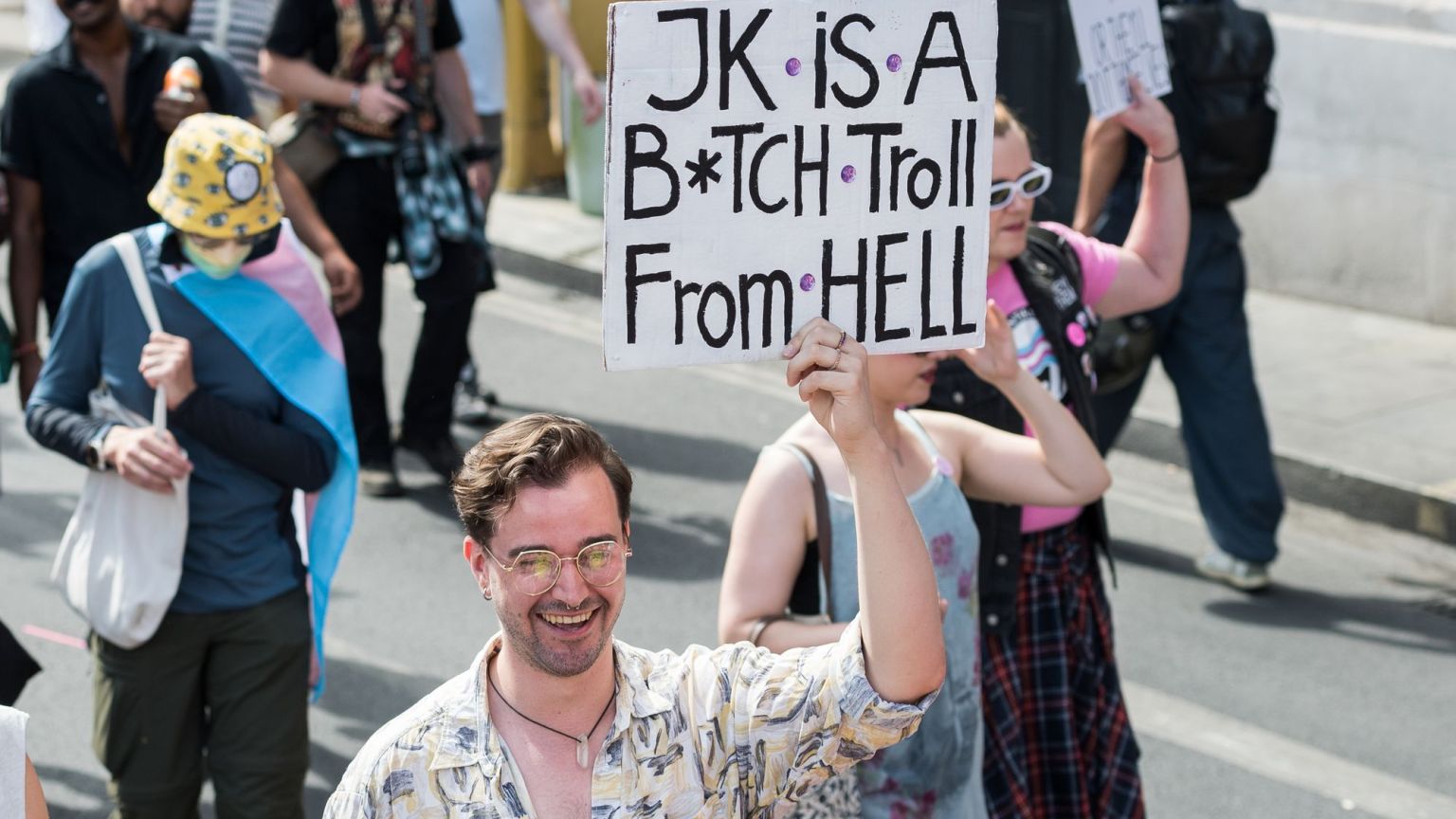
There are protests that expose injustice, and there are protests that expose the protesters. The ‘Trans+ Pride’ march in London was firmly the latter. On Saturday, around 100,000 people – mostly fake men and fake women – marched in search of fake rights.
They cheered a speech by Sarah-Jane Baker, a violent ex-convict who reportedly ate his own testicles. They professed love while holding placards calling for violence against TERFs. Legions of men proudly exposed their hormonally swollen chests, while bearded women bound theirs down to reveal their ‘authentic’ selves.
True to the inverted logic of transgenderism, the organisers celebrated these shameful scenes as a triumph. Lewis G Burton, a founding member of London Trans+ Pride, was jubilant. He told ITV: ‘Every single person who marched today is proof that we are not going anywhere, that our joy is louder than their hate, and that London Trans+ Pride will keep fighting, keep loving and keep growing until every trans person is safe, seen and free.’
That inversion of victim and oppressor is now echoed by Britain’s political class. London mayor Sadiq Khan stopped short of squeezing into a frock himself, but he echoed the sentiment. To ‘every trans Londoner’, he offered this syrupy message:
‘You should be free to live as yourself, without fear or prejudice. You are loved. You are wanted. You belong here.’
Let them march by all means, but no sane society should celebrate this pantomime on its streets. For years, trans activists preferred to wield power behind closed doors, lobbying institutions while avoiding public scrutiny. Now journalists are reporting what they say and do, and the law is beginning to reassert the sex-based rights they sought to erase. The activists have mistaken equality before the law and reasonable pushback from opponents for oppression.
Michael Kerr, founder of Detransition Pathway UK and a gay man who identified as trans for seven years, described the march as ‘heartbreaking’. He said: ‘It was littered with fetishistic, porn-filled males pretending to be women, alongside multiple trans-identified females with physical disabilities that can be attributed to taking cross-sex hormones.’
The footage bears him out. One marcher smiled while holding a placard reading: ’90 per cent of pigs in the UK are gassed to death, but TERFs still exist.’ Another carried an image of JK Rowling and Queen Camilla beneath the slogan ‘Off with their heads’. Most disturbing of all was a marcher, fake blood dribbling from his mouth, carrying a sign reading ‘Vore all transphobes’. For those unfamiliar with the term, ‘vore’ is a pornography genre centred on the sexual fantasy of consuming another person.
As Kerr put it:
‘The signs on display were horrific, vile and dangerous. Some glorified cannibalism directed at women who stand up for their rights in law. To allow the glorification of this kind of behaviour in public is reprehensible and deplorable in the society in which we all live.’
Perhaps the most haunting image to emerge was a phalanx of wheelchairs occupied by bearded, morbidly obese women. To the social-media shock jocks of the US right, they are merely libtards to mock – a checklist of septum piercings, crap tattoos and silly hair. But however odious their views and ridiculous their appearance, these are tragic figures who have been let down.
The prevalence of wheelchairs raises uncomfortable questions. Is this simply another expression of an ideology that encourages people to collect identities and diagnoses as badges of oppression? Has ‘transabled’ thinking blurred the line between disability as a medical reality and disability as an identity? Or are we seeing the long-term physical consequences of cross-sex hormones? The NHS still refuses to release the data that might answer those questions.
Saturday’s carnival of confected grievance revealed two very different groups: men dressed as the pornographic caricatures of women they goon over, and women desperately searching for community. It exposed a bitterly ironic truth: nobody believes in sex more fervently than trans activists. If they didn’t, men wouldn’t grow moobs, women wouldn’t try to hide their breasts, and an entire movement wouldn’t exist to imitate the opposite sex. Every costume, every hormone, every surgery and every slogan is an admission that sex matters. Perhaps that is why they are so furious all the time.
It is hard not to feel a flicker of sympathy for Saturday’s marchers. For decades, they have been sold a ‘trans truth’ about themselves – what most of us would simply call a lie. Now, whether they realise it or not, these deluded activists need politicians with the balls – and the ovaries – to tell them the actual truth: you cannot change sex.
Jo Bartosch is co-author of Pornocracy. Order it here.
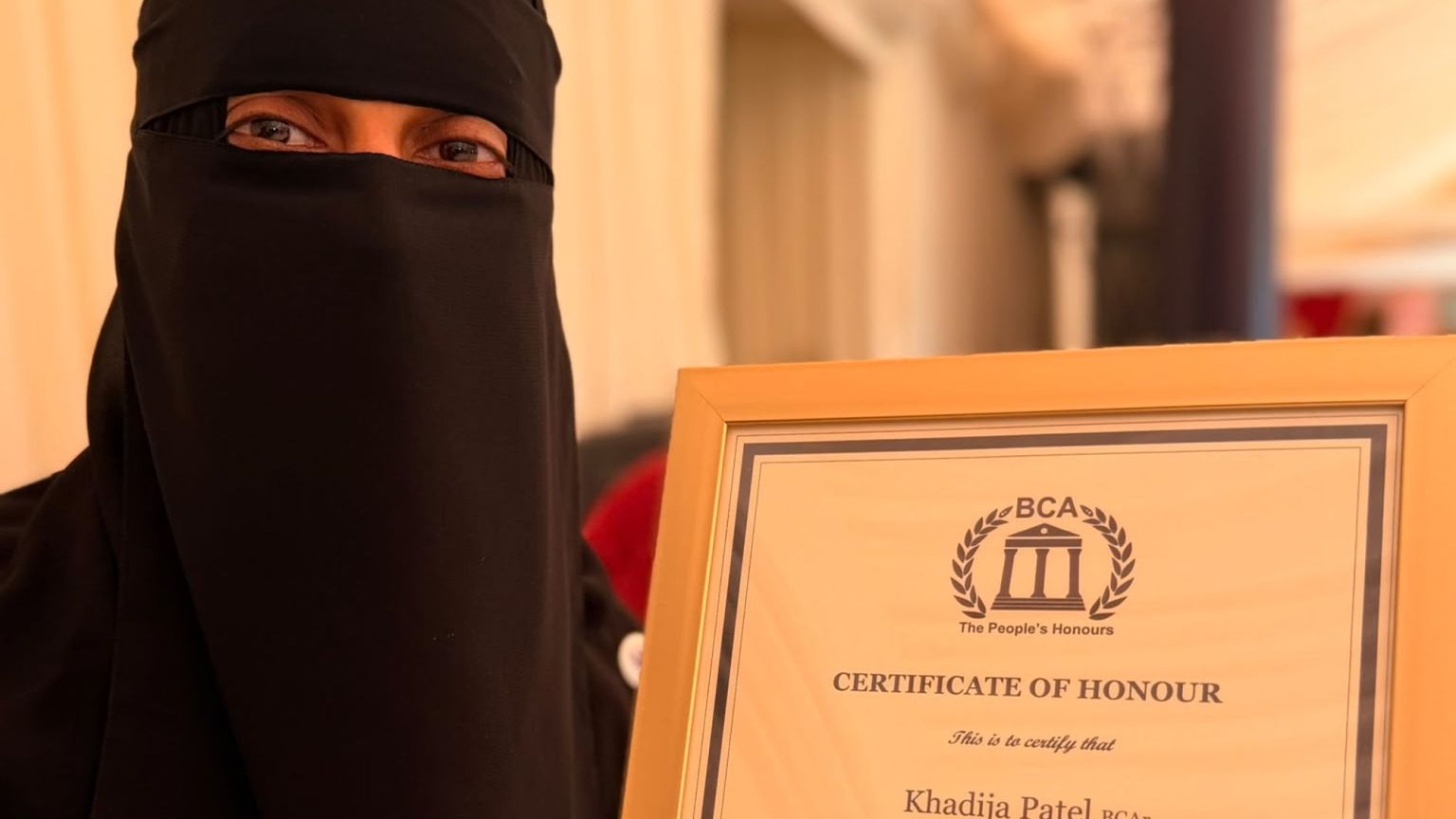
The post There is nothing ‘empowering’ about the Islamic veil appeared first on spiked.
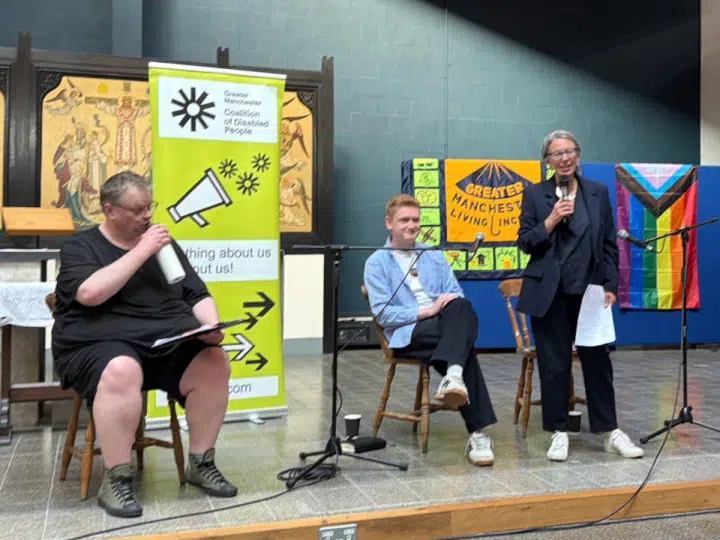

With days to go in Greater Manchester’s historic mayoral by-election, both Labour and Reform candidates stand accused of dodging multiple community hustings.
One was a hustings organised on 26 July by the Forum of Muslim Organisations (FMO). Then there was the Mill hustings on 27 July.
Another was hosted by grassroots community power organisation ACORN, which hosted its cost-of-living and housing hustings on Tuesday 28 July alongside GM Immigration Aid Unit, and the GM Coalition of Disabled People.
There was also an LGBTQ+ hustings, where an audience member at ACORN’s hustings pointed out that “the millionaire parties” failed to show up.
Before these was the ‘Green Hustings’, albeit organised by the Green Party, which challenged candidates:
How will the next Mayor of Greater Manchester build community resilience against flooding and extreme heat, reverse nature’s loss and improve people’s lives by leading on the clean energy transition?
The Green Party event at Manchester Metropolitan University challenged Labour and Reform to
tell us how they can justify drilling in the North Sea while Greater Manchester is literally on fire.
It’s safe to say that neither Labour nor Reform were interested in defending their positions on the raging climate crisis and devastation of our natural world.
Tonight, we’re joining the Big Green Hustings at Manchester Met – and it’s just us!
Geraldine is the only candidate due to appear – because she’s the only candidate who takes the climate crisis seriously. We’re challenging Labour and Reform to show up – and tell us how they can… pic.twitter.com/IPgFaAkwiR
— The Green Party (@TheGreenParty) July 24, 2026
Labour’s candidate Craig ‘snubs’ Muslims
Labour’s candidate for mayor, Bev Craig OBE — currently the Manchester City Council leader — was criticised by the Green Party and Muslim community for “failing to show up at the Muslim hustings”.
The Greens’ candidate for Manchester mayor, Geraldine Coggins, went on the attack. Coggins called on Craig who wasn’t in attendance, to apologise to the Muslim community for ‘snubbing’ the hustings organised by the Forum of Muslim Organisations (FMO).
Craig is understood to have told FMO, the hustings’ organisers, she couldn’t attend “because she had a call with the government.” This was supposedly to do with her capacity as city council leader, but clearly demonstrates a lack of prioritisation for the community.
Muslim spaces have been attacked increasingly, with an average of one attack on a mosque every five days. In this context, FMO moderator Jawad Amin said at the hustings, “we are very disappointed”.
Green Party mayoral hopeful candidate Geraldine Coggins told the press:
Bev Craig must apologise to the Muslim community in Greater Manchester for this snub. This just piles on more insult to injury after years of complicity in a genocide they won’t even acknowledge. Bev Craig could have at least had the courage and courtesy to turn up this evening and explain her position.
Instead, she has said she had take a phone call from someone presumably she thinks is more important than the Muslim community. This is a pattern of behaviour from Bev Craig, also not bothering to show up at the Big Green hustings and I’m told isn’t even going to the cost of living hustings, apparently the new Prime Minister’s big priority.
Greens slam ‘unserious’ Labour in Manchester mayoral election
Is Craig really coming for cost-of-living?
Bev Craig has also been invited to ACORN’s cost-of-living and housing hustings on Tuesday 28 July. However, the Canary understands that she is yet to confirm whether she’ll be attending.
In a video shared online, an ACORN Manchester activist said:
Bev Craig, we’re still waiting for you to confirm you’ll be coming to our cost-of-living hustings… We know that you’ve got a £70k salary as leader of Manchester City Council… so the cost-of-living might not be a big deal for you. But we, at ACORN Manchester, have lots of members who are very passionate about the fact that rents are going up in the city, we’ve got a tax on social security, means that the cost-of-living is a real, big deal for our members.
We know you’ve been answering questions on Reddit, from the comfort of your own home, about where you like to go for a run, all these other nice little bits… is this your plan for the rest ofGreater Manchester, these big glass skyscrapers, pushing up rents, pushing people out of their daily lives? …
Make sure you’re there, otherwise, you’re showing that you don’t care about the cost of living…
One spokesperson from ACORN Manchester told the Canary that Craig’s hustings swerve is “extremely disappointing.” They went on to tell the Canary:
The cost of living is a pressing issue for millions across our city-region. The fact some candidates can’t be bothered to attend a hustings on this shows how disconnected they are from the lives of residents of Greater Manchester.
Craig’s campaign website lists her manifesto and priorities, with the cost-of-living crisis listed first. At the top of her promises on the cost-of-living is her pledge to keep the £2 bus fare cap, which is due to expire in the budget in December. Seems great, at first glance — even if it is just more of the same.
However, her predecessor and longtime ally Andy Burnham — the man coronated Prime Minister by the British establishment last week — has shafted Craig’s proposal. Burnham has now promised £2 bus fare caps nationally, robbing Craig of her top-listed campaign promise. So much for political allyship.
View this post on Instagram
Reform refuse to face Greater Manchester voters
Bev Craig isn’t the only candidate being criticised for not turning up to hustings. Perhaps unsurprisingly, Reform UK candidate and serial landlord Sian Astley has been missing at multiple hustings too.
Astley was invited to FMO’s hustings on Muslim community safety. At the time of the event on Sunday, the FMO website still read:
Sian Astley – Reform UK (invited – awaiting response)
Perhaps this is less shocking than Bev Craig’s failure to turn up. Labour has historically enjoyed great support among Manchester’s Muslims. But the lack of even a pretence of wanting to be there speaks volumes. It’s a major failure of both parties to engage with some 13% of Greater Manchester’s population.
It is even less surprising that Astley, a landlord and property salesperson, also wasn’t interested in ACORN’s cost-of-living hustings. For someone who owns dozens of homes across Manchester, the cost of living for ordinary Mancs probably doesn’t factor highly.
For reference, Manchester is the most expensive place to rent in the North West. Astley is talking about checking the admittedly dodgy contract awarded by former mayor and now PM, Andy Burnham. But it seems pretty unlikely — given her party’s cosiness with big business — that it’s anything but that: cheap talk. (Maybe just with a side of anti-Labour retribution politics thrown in.)
Reform’s Manchester mayor candidate is a landlord, because of course
I’ll be Sian you later…
In a more dramatic fashion, however, Astley did show up to the Mill‘s election hustings on Monday 27th June — briefly. When she arrived, Astley found an independent mayoral candidate, Marcus Farmer, being told that he wasn’t invited to participate in the hustings. Astley recorded the ordeal and shared online:
… I have just arrived at The Mill debate in Manchester to see the independent candidate Marcus Farmer being refused entry. He was not even invited to the hustings. He has emailed The Mill several times. …
If we can’t all participate in a fair, inclusive, democratic debate, then none of us should.
So on that basis, I’m out.
However, journalists at the Mill had an explanation. Firstly, they say he wasn’t running when the hustings was set up. Secondly, nobody has heard of Farmer before. More importantly, however, the Mill wanted to shake things up by opening the hustings with policy-relevant questions addressed to individual candidates. (He seems to spend more time making ‘podcast’ videos with conservative Christian political commentator Baraka than making concrete pledges.) Since they didn’t know much about Farmer or his policies, they didn’t have anything specific prepared for him. And it’s this point that perhaps shook Astley.
She didn’t bow out of the debate just because she felt it was rigged against the independent candidate. It’s much more likely that Astley got spooked when they mentioned targeted questions.
The Mill had a question prepared for Astley, although she was unaware of it. It related to the fact that most of her campaign platform centres on stopping “illegal” migration, when these powers lie with the Home Office. She more than likely turned up, discovered that her policies had actually been scrutinised, and found a convenient way out.
View this post on Instagram
Featured image via the Canary


India completed a 3-0 T20I sweep of Zimbabwe in Harare as Vaibhav Sooryavanshi struck another fluent half-century, sealing a result that also returned India to the top of the T20i rankings and nudged England down to second.
The 15-year-old left-hander, already the standout story of India’s white-ball summer, produced an assured and inventive 81 from 49 balls, an innings featuring four sixes and eight fours and underpinned by crisp timing and controlled aggression.
His latest effort followed the 19-ball fifty he hammered in Thursday’s series opener, making this his second half-century in three innings on the tour. It also reinforced the impression that India have unearthed a player capable of reshaping their T20 future. Sooryavanshi’s rise has been rapid, but his form in Harare has made it feel inevitable.
The teenager’s breakthrough came in the 2026 IPL, where he smashed 776 runs in 16 matches for Rajasthan Royals at a staggering strike-rate of 237.30. That tournament showcased his range and temperament, and while his first steps in international cricket were quieter. Previous scores of 14, 13 and 15 during India’s 4-0 T20 defeat in England — now his composure in Zimbabwe has underlined his readiness for this level.
India reclaim top spot
India’s heavy defeat in the UK had allowed Harry Brook’s England to climb to the top of the t20i rankings. But India’s response in Zimbabwe has been emphatic. By securing a 2-0 lead heading into the final match, they had already guaranteed a return to the summit. The only jeopardy was whether a slip in the last game might hand the ranking back to England. That threat disappeared as India delivered another controlled performance, even if their fielding was occasionally untidy.
The margin was 35 runs. This reflected India’s superiority. Zimbabwe competed gamely across the series but lacked the depth to match India’s batting power or their variety with the ball.
Sooryavanshi anchors India
India’s total of 192-5 was built around Sooryavanshi’s innings, which combined fluency with smart tempo management. He was positive from the outset, threading drives through the off side and picking up length early enough to punish anything short. His acceleration was measured, and his shot selection remained disciplined throughout.
His innings ended only due to a moment of brilliance from Brad Evans, who dived forward to complete a superb catch. It was the sort of dismissal that can shift momentum, but India’s middle order ensured the platform was not wasted. With Shreyas Iyer guiding the innings and rotating strike effectively, India maintained pressure through the final overs.
Zimbabwe’s bowlers worked hard but struggled for consistency. Their lengths wavered, and their attempts at variation were often picked early. Against a player in Sooryavanshi’s form, that margin for error was too wide.
Zimbabwe’s reply of 157-7 never seriously threatened India’s total. Ryan Burl was the standout, finishing 54 not out from 43 balls, an innings built on resilience rather than explosiveness. He manoeuvred the ball smartly and punished anything loose, ensuring Zimbabwe avoided collapse. But without meaningful support, the chase was always beyond reach.
India’s next assignments
With the Zimbabwe tour complete, India now turn their attention to red-ball cricket. They travel to Sri Lanka in August for a two-match test series, a contest that will demand a shift in tempo and technique. The squad composition for that tour is expected to reflect India’s broader strategy of blending youth with experience, though Sooryavanshi’s immediate future remains firmly in the white-ball setup.
After the Sri Lanka tests, India return home for a busy stretch across September and October, hosting West Indies for three ODIs and five T20Is. Those fixtures will offer further opportunities to refine combinations ahead of future global tournaments and to continue developing emerging players.
England aim to return to the top
England, displaced from the top of the rankings by India’s sweep, will attempt to regain the no 1 position when they host Sri Lanka for three T20 internationals beginning September 15. The opener is scheduled for the Utilita bowl in Southampton, followed by matches at Sophia Gardens in Cardiff on September 17 and Emirates Old Trafford in Manchester on September 19.
Those fixtures precede a three-match ODI series between the sides. Like India, England also return to test cricket before their next white-ball assignment, facing Pakistan in a three-test series beginning at Headingley.
Featured image via the Canary
By Faz Ali
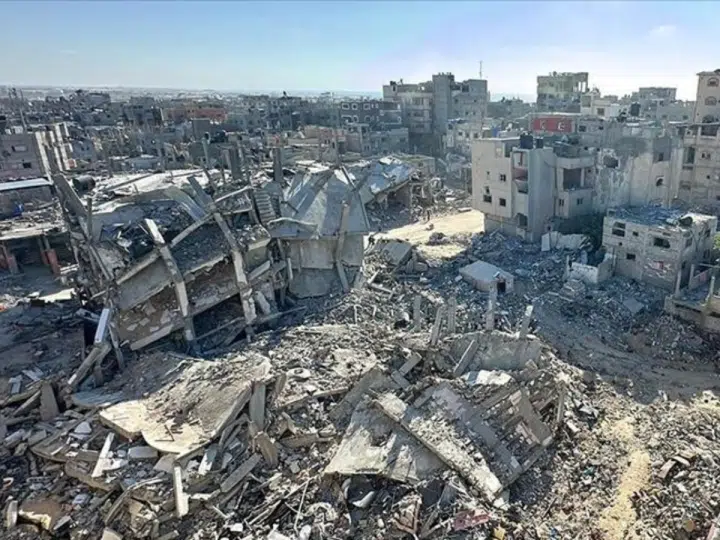
There are no limits to “Israel’s” depravity or genocidal campaign against Palestinians. Its “defence” minister, Israel Katz, has now issued orders to the Israeli occupation forces (IOF) to seize another refugee camp in the occupied West Bank and expel its residents.
New targets
Katz issued the order on 27 July. This was after a security assessment with the heads of the occupation’s military, police, and counterintelligence agency Shin Bet.
It is not yet known which refugee camp Katz is planning to capture and demolish. News reports suggest that the takeover will replicate the model previously used in Jenin, Tulkarem and Nur Shams during Operation Iron Wall.
This military campaign, launched in January 2025, drove tens of thousands of Palestinians from camps spread across occupied West Bank territories. And, to this day, they’re still denied the right of return. The toothless UN has described it as the:
largest population displacement in the West Bank since 1967.
BREAKING: Israel's Defense Minister @Israel_katz has reportedly instructed Israeli forces to destroy an unnamed Palestinian refugee camp and forcibly displace its inhabitants.
The order appears to follow the pattern established in Tulkarm, Jenin and Nur Shams, where more than… pic.twitter.com/FPQezLR0KX
— Itay Epshtain (@EpshtainItay) July 28, 2026
Israel’s exterminationist policies
Katz’s criminal plan comes just days after similar statements were made by ministers Ben-Gvir and Smotrich. They’ve been threatening to take Israel’s exterminationist policies further by destroying more Palestinian residences, including refugee camps.
“Israel’s” campaign to ethnically cleanse the West Bank of Palestinians has been ongoing since 1948. There are 19 official refugee camps in the occupied West Bank, all established after the Nakba of 1948 to house Palestinians expelled from their homes.
During the Nakba, the occupation violently displaced 750,000 Palestinians, and destroyed 500 towns and villages. The families displaced in 1948 and their descendants have since resided in these refugee camps. Now the occupation plans to dispossess them again.
The colonial project of extermination is able to continue because of international complicity and the decades long climate of impunity that accompanies its multitude of crimes. If the inaction and silence of governments around the world continues, the war crimes taking place in Gaza will be replicated in the occupied West Bank.
The time to act is now!
Featured image via the Canary
By Charlie Jaay


March 2027 was due to be a milestone in plastic recycling. But the government has confirmed that it’s no longer the date from which councils in England will have to collect items such as bread bags, crisp packets and plastic film.
Instead this rule will come into force on 1 April 2030. The decision could put up to 846,000 tonnes of potential carbon savings at risk.
Bin boffins at BusinessWaste.co.uk have calculated what the three-year delay could mean if flexible plastics continue to go into general waste rather than recycling.
How much flexible plastic does this impact?
The FlexCollect project, which tested flexible plastic collections across ten council areas, estimated that just over 150,000 tonnes of flexible packaging could have been collected from households during 2027.
Using the 150,000 tonnes figure as a baseline, this means that by 2030, the delay could affect over 450,000 tonnes of plastic.

The carbon estimates use WRAP’s CarbonWARM2 figures for plastic film and DEFRA data on England’s municipal residual waste treatment.
Around 71% of this waste goes to energy recovery facilities, while 29% goes to landfill. Applying that split to the 450,000-tonne estimate produces a potential carbon difference of between 734,600 and 845,800 tonnes of carbon dioxide equivalent, compared with recycling.
However, this is just an estimate, as some councils may introduce flexible plastics collections before 2030, and supermarket take-back schemes may also continue. How much plastic is ultimately affected will depend on household participation and whether enough facilities are available to sort and recycle it.
This estimate does show what could be at stake if the delay continues to see flexible plastic thrown into general waste.
Why the delay to collections?
The waste industry has warned that the UK does not yet have enough sorting and recycling capacity to deal with the amount of material that national collections would generate.
In addition, some councils have also raised concerns about the cost of changing collection services and whether they would have reliable places to send the plastic. Collecting more material would achieve little if recycling plants were unable to take it, so the delay gives the government and the waste industry another three years to address the shortfall.
Mark Hall, Simpler Recycling expert at BusinessWaste.co.uk, said:
The delay makes sense if councils cannot be confident that the plastic they collect will actually be recycled. Asking households to separate material only for it to be rejected or burned would quickly damage trust in the system.
But with over three years until the 2030 deadline, the government needs to set annual milestones for new sorting and reprocessing facilities, alongside clear information on where collected material will go to avoid further delays closer to the time.
For this to be effective, businesses also need certainty, as recycling facilities require time and investment, which may be prevented without clear plans. More can also happen in this time: councils that already have suitable recycling facilities shouldn’t be discouraged from introducing collections earlier, and retailers should make their take-back points easier to find and use.
The packaging itself also needs improvement. Manufacturers should use the extra time to simplify designs, remove unnecessary layers and avoid using hard-to-recycle materials. If the material being placed on the market continues to be difficult or uneconomical to process, simply changing the collection date will not solve the issue.
Featured image via the Canary
By The Canary

Charlie Woods scuffles at Junior PGA, hovering near cut line

AI digs through 3,700 accounts of dreams and waking life, finds method in the madness

North Yorkshire restaurant with jaw-dropping sea views


-

 Fashion5 days ago
Weekend Open Thread: Brooks Brothers
-
 Sports3 days ago
Commonwealth Games boxing: Jadumani Singh seals dominant 5-0 win over Pakistan’s Sumama Rehman to enter quarter-finals | Commonwealth Games News
-

 Tech2 days ago
Intel is reversing course and bringing hyper-threading back to its server chips
-

 Crypto World6 days ago
Ethics, other provisions in crypto Clarity Act to be further discussed
-

 Politics2 days ago
Luke Littler dismantles Gerwyn Price to retain title in Blackpool
-

 Sports5 days ago
2026 3M Open leaderboard: Scottie Scheffler finds putter in Round 1, sits three back
-

 Politics1 day ago
The Part of the Electric Transition Nobody Wants to Discuss
-

 Fashion5 days ago
16 Dresses for the High Summer Event
-
 Entertainment5 days ago
A New Post-Apocalyptic Gundam Anime Series Blasts Into SDCC
-

 News Videos3 days ago
BITCOIN JUST ENTERED THIS CRITICAL ZONE…
-

 News Videos6 days ago
The Peugeot Family: How 200 Years of an “Old Money” Dynasty Died in A Boardroom
-

 Crypto World4 days ago
Ripple bought a bank in pieces. The $4 billion audit
-

 Politics3 days ago
Spain sweeps the board at 2026 World Cup with individual awards
-

 Business5 hours ago
Major shareholder moves on Canyon
-

 Crypto World3 days ago
XRP Ledger adds $2.6B as RWA inflows rank second
-

 Crypto World6 days ago
Uniswap (UNI) pushes deeper into tokenized RWAs with permissioned trading pools
-
 Entertainment15 hours ago
‘Stargate’ Creator’s New Sci-Fi Series Returns for Season 3 Tomorrow
-

 Tech4 days ago
Anthropic launches Claude Opus 5, a cheaper AI model for coding, agents and enterprise workflows
-
Crypto World6 days ago
SEC Agrees to Overhaul Recordkeeping After Settling Coinbase Lawsuit Over Gensler’s Lost Texts
-

 Business5 days ago
Alliance Entertainment Holding Corporation (AENT) Discusses Evolution Into Omnichannel Distribution and Fulfillment Platform for Media and Collectibles Transcript
You must be logged in to post a comment Login