




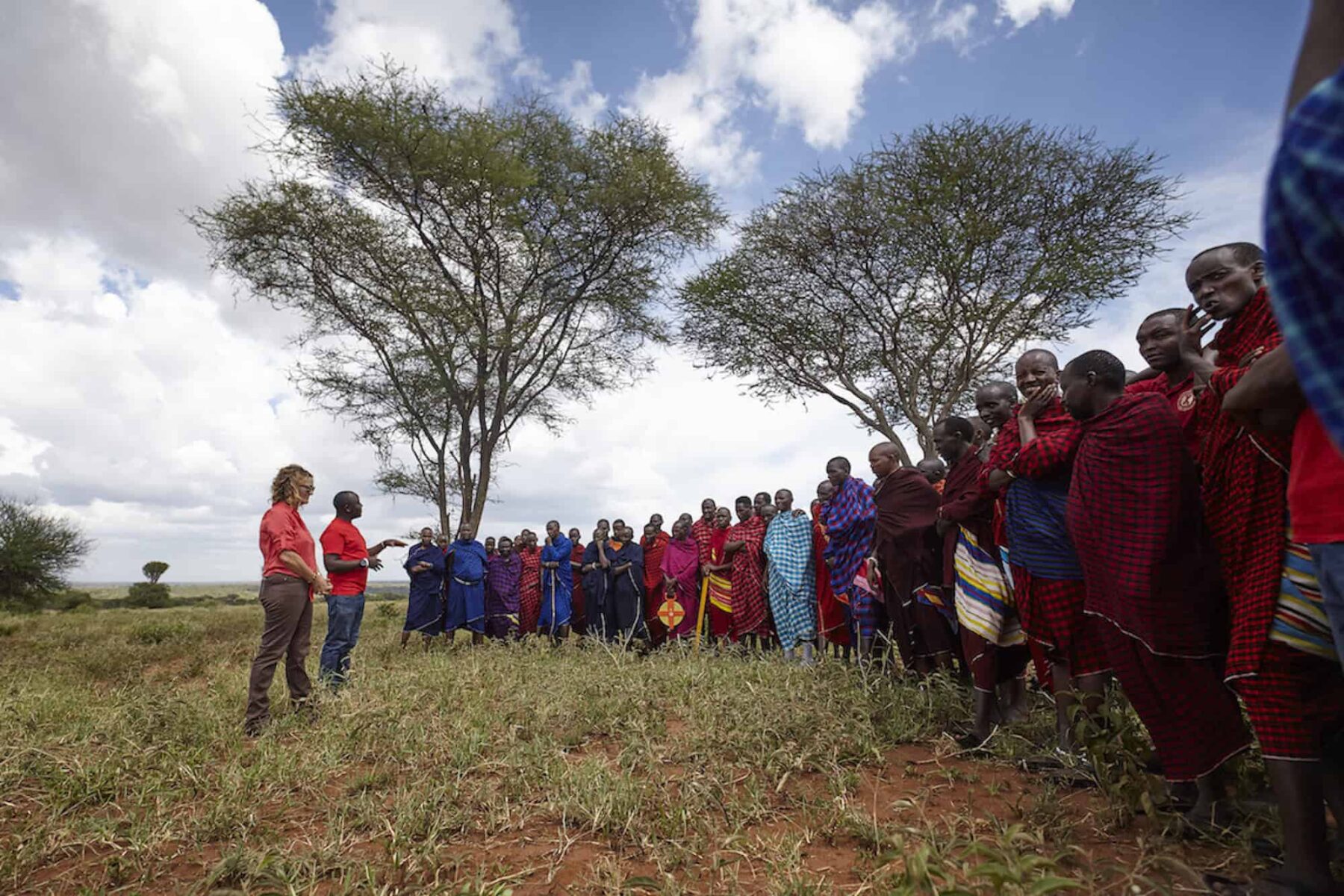
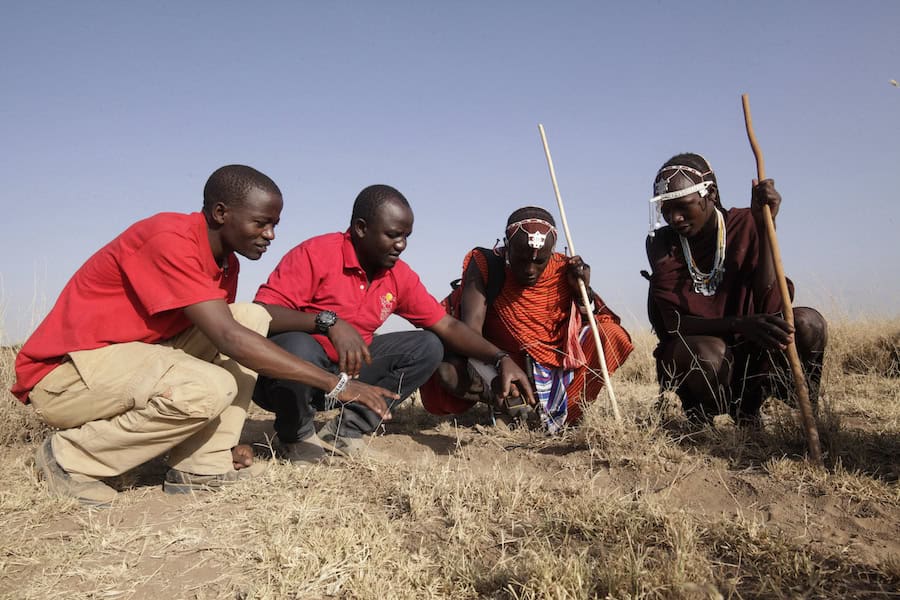
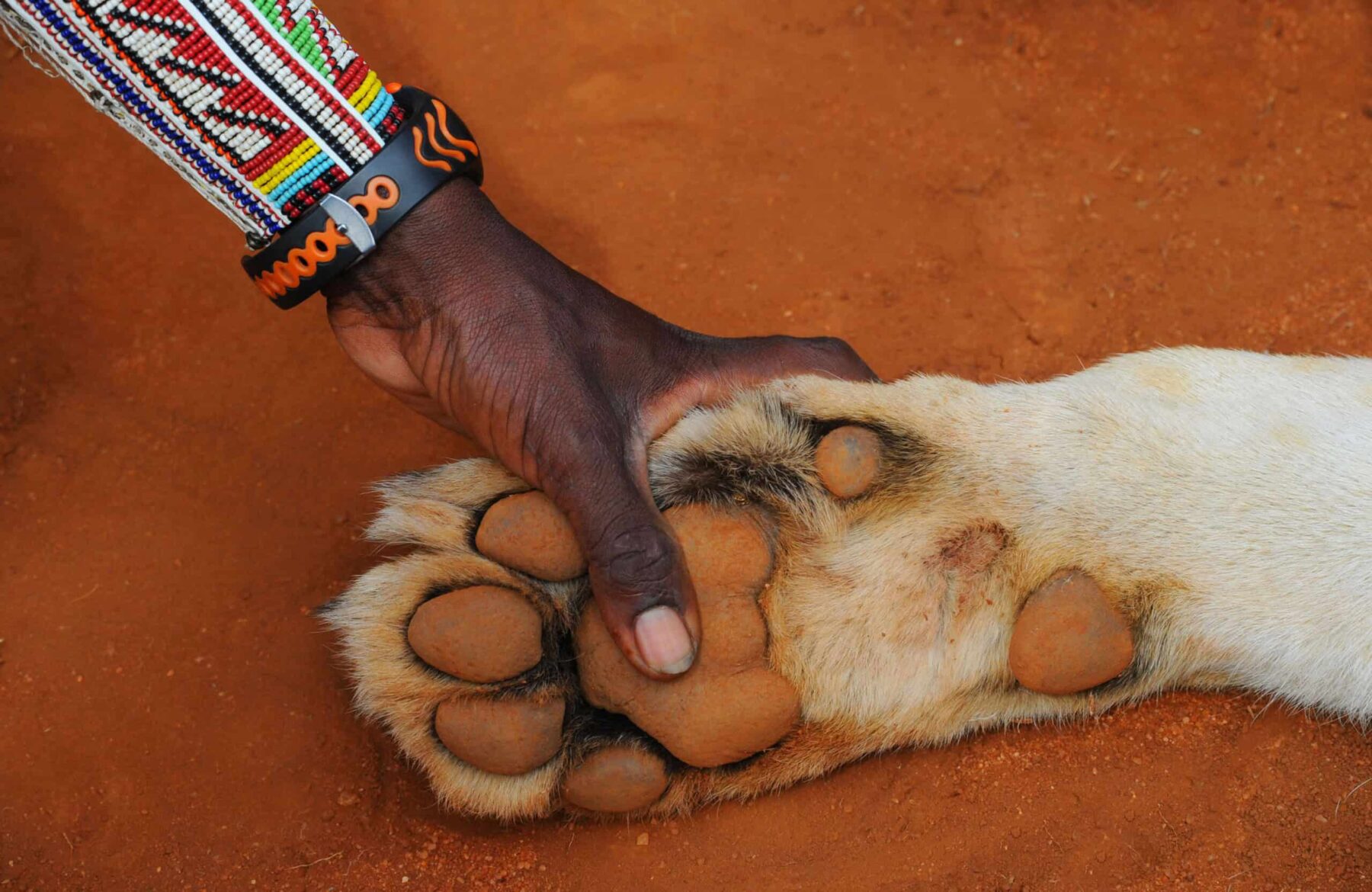






 Portraits of a Shared Land brings readers face-to-face with some of the people reshaping conservation across Africa, exploring approaches that place communities, local knowledge and lived experience at their heart. This series is produced by Positive News and supported through a Human-Centred Conservation Storytelling Grant from Jamma Conservation & Communities.


Experts have warned of ‘exceptionally severe’ wildfires as temperatures are set to soar to 35C today in the fourth heatwave of the year.
A plume of intense heat surging from North Africa is set to reach the UK today, after bringing exceptionally high temperatures to France and Spain in recent days.
Amber heat-health alerts have been issued for the East Midlands, the east, south-east and London as the mercury rises once again this summer.
It has led to fears of wildfires on southern and eastern parts of England’s already bone-dry landscapes.
The Met Office assessment showed any fires could be ‘exceptionally severe’ due to the conditions.
Fire services in England and Wales have already responded to more than 700 wildfires in 2026, with more than 200 recorded in the last two weeks, the National Fire Chiefs Council (NFCC) said.
Fire chiefs said eight wildfires are currently burning across the UK and warned that there remains an ‘elevated risk’ of more igniting.
The Royal Horticultural Society garden in Wisley, Surrey, has been named as the driest place in the UK after going 43 days without any precipitation, turning the gardens to scorched dust.
If rain continues to hold off for another two days, it will equal the national record of 45 days set in the summer of 1976.
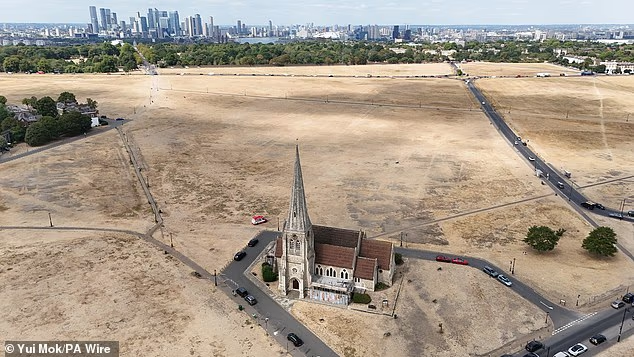
Grass in Blackheath, south-east London, has turned entirely brown

Weeks of minimal rain and the second hottest month on record in the UK has left the fields severely parched

The basin of Grafham Water in Cambridgeshire is visible, where water is receding due to the continued dry weather
Derbyshire Fire and Rescue Service said firefighters were continuing to ‘make progress at the major wildfire incident at Tintwistle Moor’ after 60 personnel were deployed on Tuesday.
Wildfire numbers in England and Wales remain lower than the 788 recorded by the same point last year, but fire chiefs warned that continued dry spells could raise the risk of fires starting and spreading rapidly.
Large-scale wildfires across mainland Europe have demonstrated the threat posed by the dry conditions, with large-scale evacuations carried out in areas of France and Italy.
The NFCC said UK wildfires are typically smaller and different in nature to those seen in southern Europe, adding, however, that the ‘long-term effects of climate change are increasing the likelihood of larger, more complex and more resource-intensive wildfire incidents occurring’.
Phil Garrigan, chairman of the NFCC, said: ‘More than 200 wildfires in just 12 days shows how quickly the risk can escalate when hot, dry conditions take hold.
‘The scenes we’re seeing across parts of Europe are a stark reminder of what a changing climate means for fire and rescue services.
‘We are not seeing fires of that scale in the UK today, but the science tells us we should expect larger, more frequent and more complex wildfires in the future.
‘That’s why we need continued investment in specialist wildfire capabilities, including aerial firefighting support, so we’re prepared for the risks ahead.
‘But prevention remains our strongest defence. Most wildfires are avoidable, and we’re asking everyone to take extra care during the hot weather to help keep their communities safe.’
They called for Brits to be extra cautious with anything that could start a fire, including disposable barbecues and cigarettes.
Photographs showed scenes of Blaenavon in Wales, on Tuesday as a major wildfire left the landscape scorched and blackened.
A blaze which broke out on Mynydd Garnclochdy between Blaenavon and Abersychan on Sunday, July 19, has now been burning for ten days.
Firefighters are continuing to battle flames across more than 220 hectares.
South Wales Fire and Rescue Service has been working around the clock in smoky and humid conditions, using specialist wildfire tactics and equipment to contain the flames.
Portions of Mynydd Garnclochdy and its surrounding upland common land are designated and managed as part of a Site of Special Scientific Interest (SSSI), specifically linked to the broader Blorenge SSSI ecosystem recognized for its vital peatland and moorland habitats.
At the height of the fire, shifting wind conditions carried smoke for miles across south Wales.
Last week, residents reported the smell of burning vegetation from as far as 30 miles away in areas such as Caerphilly, Cardiff and Newport.
A veil of smoke can be seen over the skyline of the World Heritage town.
Up to an estimated 60 per cent of the common land used by local farmers to feed their livestock has been destroyed.
On Saturday, firefighters were seen battling a field blaze in Cambridgeshire, which was sending huge clouds of thick smoke into the sky.

Blackened hillsides show the devastating aftermath of the wildfire surrounding Blaenavon, Torfaen in Wales

Firefighters in Blaenavon are continuing to battle flames across more than 220 hectares after it has burned for ten days

People gather on the brown grass at the very dry Primrose Hill as heatwaves continue

Empty deckchairs on dry grass at Green Park in London

Swithland Reservoir in Leicestershire is currently at less than 44 per cent capacity according to Severn Trent Water

Low water levels are seen at Howden Reservoir, Peak District, after sustained high temperatures and low rainfall

Thick plumes of smoke formed over burning fields near Peakirk, Cambridgeshire

Firefighters doused the burning vegetation with their hoses, stopping it from blowing towards houses
Some 35 firefighters were needed to tackle the blaze, with Peterborough Volunteer Fire Brigade first on the scene at around 3.30pm on Saturday.
There were fears the flames would blow over to houses and allotments across the fields.
A Ministry of Housing, Communities & Local Government spokesperson said: ‘We’re investing nearly £100 million to help replace assets which can be used to tackle wildfires, including dedicated off-road vehicles which are suitable for England’s landscape.
‘This includes rolling out a pilot to place highly trained firefighters who specialise in wildfire response in key locations across England, working with industry experts to ensure this approach is tailored to the unique wildfire risks here.’
Fire chiefs said many wildfires are caused by everyday human activity, adding that ‘disposing of cigarettes safely, avoiding the use of disposable barbecues in open spaces and taking litter home can significantly reduce the risk of fires starting’.
As Britain continues to bake in the hot sun, images revealed the extent of the lack of rainfall in parks across the country.
Brown grass could be seen across Blackheath in London and in many parks across the capital.
Rivers and lakes have dried up, with the Swithland Reservoir in Leicestershire now at just 44 per cent of its capacity.
The flash-in-the-pan heatwave is set to end on Thursday, with conditions cooling further into the weekend.
July has been 3C above average across the UK, according to provisional Met Office data, potentially putting it among the hottest three or four months of July on record.
Fire chiefs said people should report any signs of fire immediately by calling 999 and asking for the fire and rescue service.

Dry fairways and parched fields surround the Kendleshire golf course, south Gloucester

The green square surrounded by parched, dry and yellow grass on the cricket field of Maidenhead & Bray CC during a game, in Bray, west of London

A woman sunbathes on the scorched grass in Wimbledon Park over the weekend

A large wildfire has burned in the Cairngorms national park in northern Scotland for two weeks

This Environment Agency graphic shows how little rainfall there has been since mid-June
The Met Office has also said UK heatwave thresholds will need to be adjusted to account for the consistently high temperatures caused by the warming climate, after records have been broken consistently this year.
Britain’s wild animals have also struggled to adjust to the record-breaking heat, with hedgehogs and foxes being taken to animal rescue centres in their droves across the country as temperatures spiked.
The RSPCA is urging gardeners to create shaded spaces for wildlife struggling to keep cool during the scorching weather as the fourth heatwave of the year looms.
The animal welfare charity said two baby hedgehogs were found ‘in distress’ in a back garden in Somerset and brought into the nearby West Hatch Wildlife Centre, where they are being cared for along with ‘several other recent admissions’ due to the heat.
Recent research from veterinary group Inspiring Vet Care found that in June this year its clinics treated 179 cases of suspected heatstroke – 66 per cent higher than the 108 cases treated in the same month two years prior.
Some 316 hedgehogs were admitted to the RSPCA’s four wildlife centres in June, a 56 per cent rise on the 202 admitted in the same month the previous year.
Amy Ockelford, a senior press officer at the RSPCA, said wildlife centres are operating at ‘maximum capacity’ and are ‘fit to bursting’, and have seen an increase in admissions of hoglets and hedgehogs.
She said: ‘These animals are usually not out in the daytime, but they’re coming out because they’re struggling to find food and water, and ending up with heatstroke.’
The RSPCA employee encouraged people to think about wildlife as well as pets, adding: ‘Keep out clean, cool water for wildlife and try and create shaded areas where you can for them to avoid the direct sun.’
Ms Ockelford advised people to contact the RSPCA when they see wildlife in distress.
Meanwhile, Royal Parks staff have been advised not to leave deckchairs under trees over fears branches will fall during hot weather.
In a statement, a spokesperson for the charity – which looks after green spaces including Hyde Park and Kensington Gardens – said it has introduced the measure as an ‘additional precaution’.
Met Office meteorologist Marco Petagna said that heatwave thresholds for some counties rose by a degree four or five years ago.
‘Going forward they’ll need to be adjusted to take into account… current climate, otherwise we’re going to more frequently go into heatwaves. It’s a moveable thing, really, as we go through a warming world,’ he added.
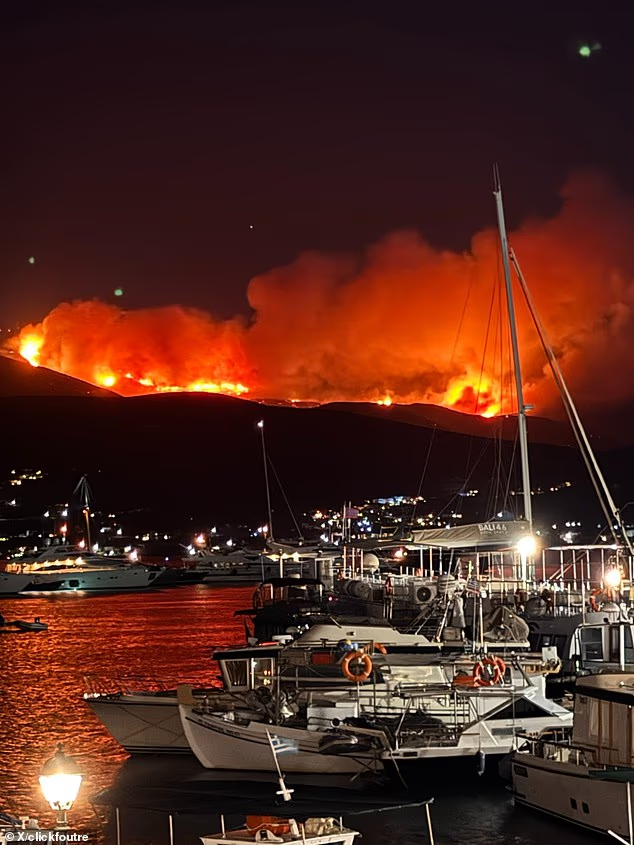
It comes as blazes have wrought destruction in mainland Europe this week, with 220,000 forced out of their homes in south-west France and 116,000 evacuated in Spain.
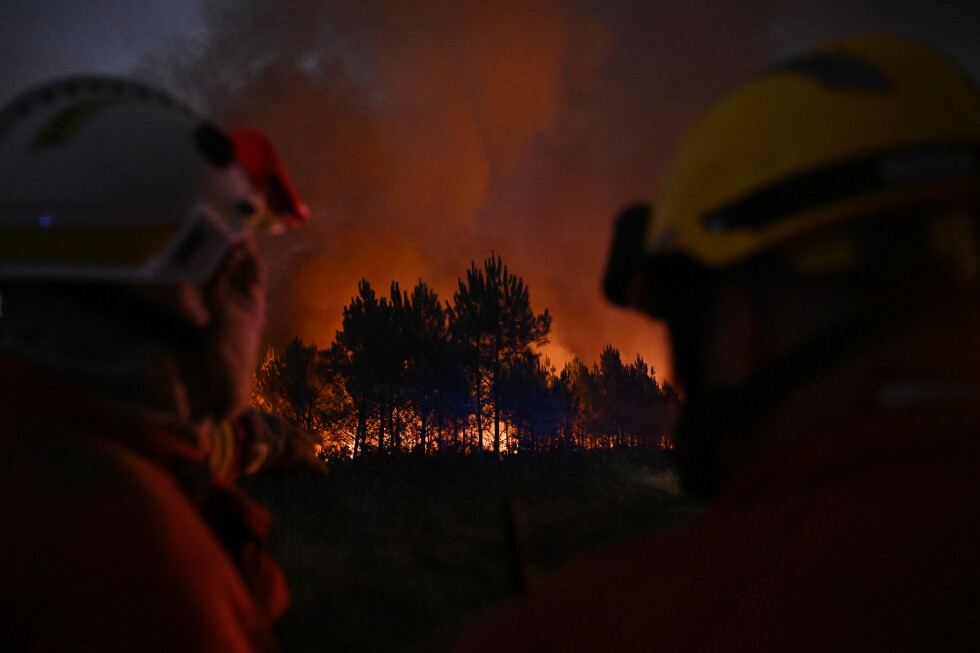
In Bordeaux, an ‘apocalyptic’ fire has grown so large that it is generating its own thunderstorms, with 38C (100F) heat threatening to fan the flames of the terrifying blaze.

Hedgehogs suffering from suspected heatstroke are being taken to animal rescue centres across the country

The RSPCA said two baby hedgehogs were found ‘in distress’ in a back garden in Somerset

French firefighters battle a wildfire spreading in Marcheprime, south-western France, July 26 2026

Smoke from a wildfire spreading on Cap Ferret peninsula is seen over a pine forest in Lege Cap-Ferret, south-western France, July 24 2026
In what represents one of the most devastating events in the country since the Second World War, more than 240 properties have been completely destroyed – many thought to be holiday homes owned by millionaire Parisiennes.
The inferno, which started on July 12 in forests on Cap Ferret, has been steadily approaching Bordeaux ever since, because of the strong winds which have been fanning the flames westwards.
And the return of searing temperatures this week threatens to complicate firefighting efforts.
Emmanuel Macron said on a visit to the wine-making capital: ‘The coming weeks will be tough and we have to hold out.’




















































You must be logged in to post a comment Login