

Politics
From the Coalition of the Willing to the Bayeux Tapestry: how France and the UK renewed their vows

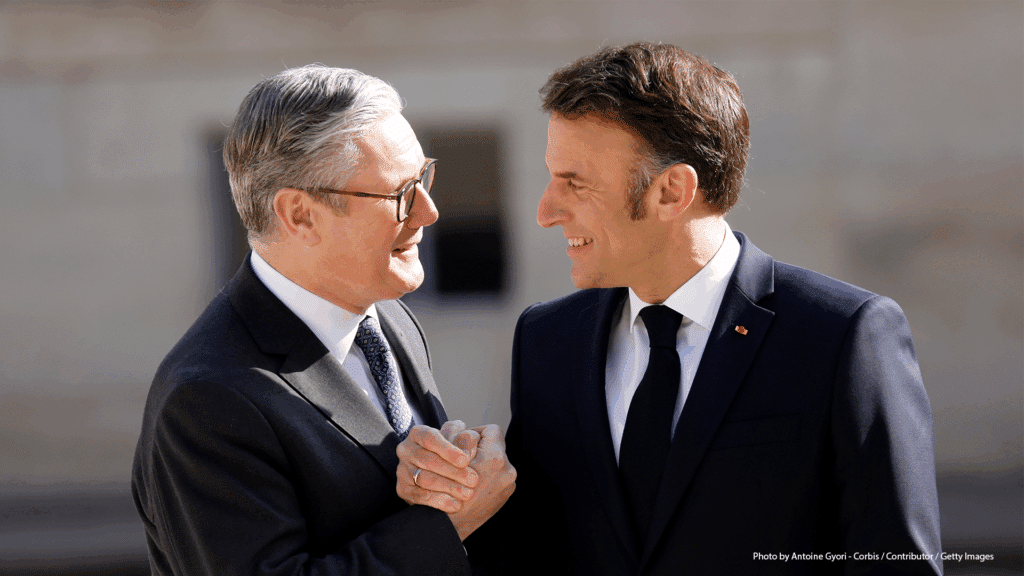
Helen Drake and Pauline Schnapper argue that the rebuilding of interpersonal ties has been integral to the recent improvement in Franco-British relations.
The resilience of the Franco-British couple is quite something to behold. In 2026, one long decade on from the UK’s referendum decision to leave the European Union, France and the United Kingdom are drawing ever closer. Already in May 2025, France and the UK had finalised plans to exchange priceless, historical artefacts: the Bayeux Tapestry would come to the British Museum, which would lend its own Sutton Hoo Treasures to museums in Normandy. The British Museum’s exhibition is expected to draw record numbers of visitors, such is the appeal of the tale it has to tell of the centuries of entwined Franco-British history.
Yet Brexit had pulled at the fabric of that relationship, unravelling diplomatic certainties and routines and fraying interpersonal trust. Indeed, during those Brexit years, Franco-British bilateral relations were variously strained, fractured and frozen, and cross-Channel contacts dwindled. No summits were held in the five years between 2018-2023, and not only because of Covid restrictions; diplomats were barred from speaking to each other following the crisis over AUKUS, and the people-to-people and trade links that had for so long characterised the bilateral relationship were now hindered by Brexit constraints on the free movement of goods, services and people. The cordial personal connections typical of diplomatic exchange between heads of state and government gave way to bad-tempered if not downright rude personal exchanges, reaching their nadir during the Covid pandemic when UK Prime Minister Boris Johnson’s puerile humour landed very badly with his French counterpart President Emmanuel Macron, and when vaccine nationalism stoked mutual hostility and derision.
In 2026, the picture could not look more different. Barely a week goes past, it seems, without a decision or development drawing the two countries into a closer and tighter embrace. Already in 2022, Russia’s full-scale invasion of Ukraine triggered a hasty assembly of a ‘coalition of the willing’, where Paris and London jointly led 34 countries to prepare for a possible deployment of troops on the ground in the case of a ceasefire. Following the re-election of Donald Trump in 2024 and the chaos this unleashed, France and the UK have not only initiated new forms of collaboration but have also carefully unpicked some particularly knotty obstacles in the path towards closer bilateral cooperation, including at UK-EU level. This is the context, for example, of the UK’s grudging willingness to rejoin the EU’s Erasmus scheme (previously popular with French students) and, most recently, to expedite legislation allowing for dynamic alignment with certain EU trading standards.
Work to repair and celebrate the fabric of Franco-British ties had in fact started to take shape before the international environment imploded. In 2022, ephemeral UK Prime Minister Liz Truss’s decision to attend the first meeting of the European Political Community (EPC) in October 2022 in Prague, an initiative of French President Macron, was a first step. Following her departure from office, Rishi Sunak cleared the ground for the signature, in 2023, of the Windsor Framework on Northern Ireland by the UK and the European Commission, a development which itself explicitly paved the way for the first Franco-British summit since 2018, held in Paris on 10 March 2023 (at which, amongst many other things, the two sides reached an agreement to revert to pre-Brexit immigration controls on school visits from France).
In September of that same year, France hosted a state visit by King Charles III to France and, in the following April, the two countries ceremoniously celebrated the 120th anniversary of the Entente Cordiale, a set of agreements first concluded in colonial times. Keeping up the pace, in July 2024, the freshly-elected Labour Prime Minister Keir Starmer and his French counterpart President Emmanuel Macron agreed to hold a summit in July 2025 to be preceded by a state visit to the UK by President Macron, hosted in Windsor Castle by King Charles III. In the Joint Declarations of that 37th UK-France Summit, held on 10 July 2025, the French and British leaders committed themselves to the ‘delivery’ of significant initiatives in the fields of ‘defence, energy, industrial cooperation’, including a refresh of the 2010 defence agreements to cover nuclear and conventional fields, especially cyber and hybrid warfare. Challenges inevitably remain, notably in the context of tightening immigration law on both sides of the Channel, but the capacity and willingness to address them is tangible.
What accounted for the speed and depth of repair to the Franco-British relationship? Shared interests were clearly substantial and pressing, but left gaps in the overall picture. With reference to 14 high-level interviews conducted with diplomats and officials close to the relationship between 2020 and 2025, we propose a number of supplementary observations. We saw that both the practice and the culture of the relationship were disrupted, first by the shock result of the Brexit referendum itself; then by the tenor of the negotiations on the Withdrawal Agreement and TCA, which led to a breakdown in trust and diplomatic normality between the two governments; and of course, in time, by the phasing out of the intra-EU diplomacy that had involved routines of regular diplomatic interactions at different levels, alongside agreed procedures and means of communication.
We observed that the restoration of the relationship occurred not only as a result of shared interests (especially security of all kinds) and the continuity of institutions (especially in intelligence and defence) but via the creation of opportunities – these partly due to the passing of time, and also to the changing of personnel at various levels – for interpersonal contact, the refraining from incendiary language, the creation of friendly gestures and the recognition and repairing of the deep historical, sentimental fabric of the relationship. These viewpoints offer a more complex understanding of post-Brexit bilateral relations, and point to the possibility that the Franco-British relationship has every opportunity to thrive along as-yet uncharted lines, with signs of both sides having learned the lessons of the importance, to diplomacy, of the humanity of international society.
By Professor Helen Drake, Institute for Diplomacy and International Affairs, Loughborough University London and Pauline Schnapper, Professor of Contemporary British Civilisation at the University of Paris III Sorbonne Nouvelle.
For a longer discussion of the themes in this blog, see Drake, H. and Schnapper, P. (2026) ‘Franco-British Bilateral Diplomacy After Brexit, 2020–2025: Mending the Ties That Bind’. JCMS: Journal of Common Market Studies. https://doi.org/10.1111/jcms.70113. Selected wording in this blog is duplicated from that article.



The Tribune Group of more than 100 Labour MPs have called for the prime minister to steer the party back to the left. Meanwhile, 81 MPs have demanded he stand down after Labour came third in the local elections when it comes to national vote share.
Suggested policies
Tribune Labour MPs have said Labour should:
- Introduce free buses for under 25s and universal credit claimers
- Raise capital gains tax
- Proportional property tax instead of stamp duty
- Reformed council tax
- Change government’s fiscal constraints to enable more borrowing
These are generally progressive policies, but they lack the overall economic strategy to significantly change the UK.
Also, encouraging bus use is a greener approach to travel. But why support Labour’s current policy of more expensive fares for the majority of those over 25? Labour rose the Tories’ bus fare cap from £2 to £3.
Further, raising capital gains tax towards the rate for income tax is a positive step. Capital gains is passive income and it doesn’t make sense for it to be lower than taxes on people working. Labour did raise it in its October 2024 budget, but it’s still the lowest in the G7.
Onto the next suggestion, a proportional property tax means that households pay a yearly fixed percentage of their home’s ‘value’ in tax. That’s opposed to the current stamp duty, where people pay a percentage of between 2% and 12% when they are buying a house.
A more robust policy would be to stop treating houses as an asset and for the state to provide them at cost price to the taste of the person or household. Then, the person or household re-pays for the cost of building and designing in affordable monthly payments.
Next, there’s council tax. It isn’t related to income, meaning many households pay more despite earning less. Reforming this would be welcome.
On the government’s fiscal rules, public investment is cheaper than private investment for infrastructure. The private sector pays higher interest and would charge the state or people to make profit. More borrowing, failing the use of debt-free fiat currency, is a better longterm solution.
‘Move left’ isn’t much for Labour
Given Labour is basically a corporate party under its current tragectory, the Tribune Group’s call for a move left may not mean much. But there are some worthwhile policies suggested.
Labour so far cut the winter fuel payment for pensioners then U-turned.
The leadership suspended Labour MPs for voting against the two child benefit cap, then U-turned and reinstated the benefit. The party has administered a huge rise in energy bills.
Any move to the left would be welcome after that.
By James Wright
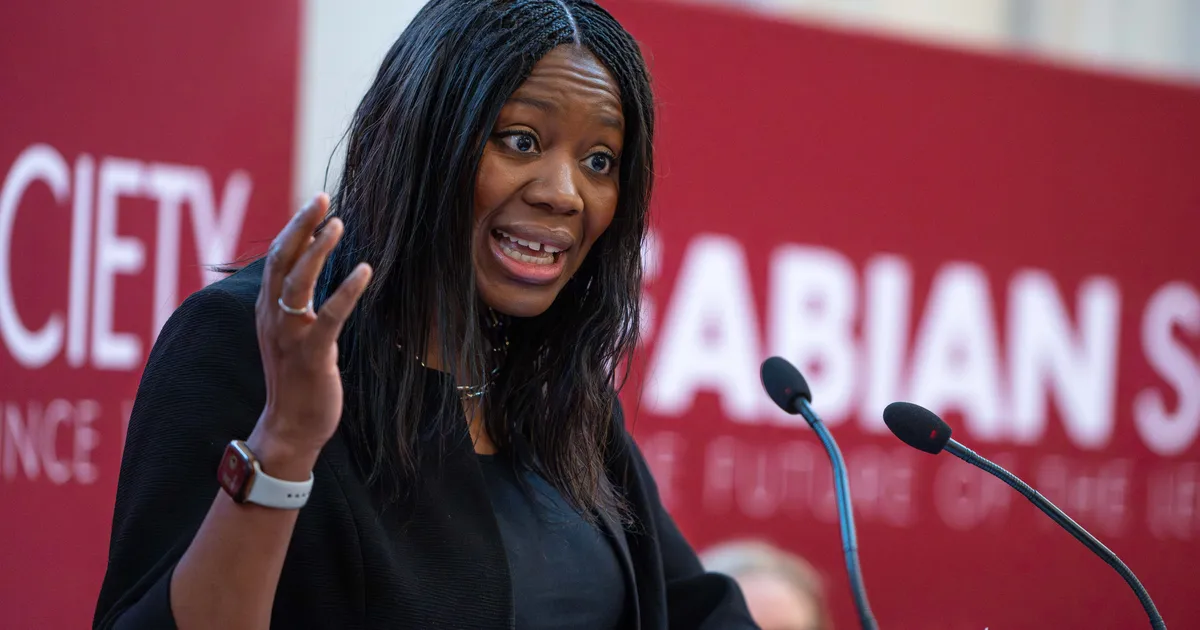
A government minister has resigned and called on Keir Starmer to set out a timetable for his departure.
Miattah Fahnbulleh was the minister for devolution, faith and communities, and has now added to the growing calls for the prime minister to quit.
She told Starmer: “The public does not believe that you can lead this change – and nor do I.”
More than 80 Labour MPs have now called on the prime minister to step down following the party’s drubbing at the elections in England, Scotland and Wales last week.
The prime minister has insisted he will not “walk away” from his job in No.10, and even claimed at the weekend he wants a decade in power.
However, Fahnbulleh has become the first government minister to officially give Starmer the push.
In a letter to the prime minister shared on social media, she said: “We have not acted with the vision, pace and ambition that our mandate for change demands of us. Nor have we governed as Labour Party clear about our values and strong in our convictions.”
She added: “Our country faces enormous challenges and people are crying out for the scale of change that this requires.
“The public does not believe that you can lead this change – and nor do I.
“Therefore I urge you to do the right thing for the country and the Party and set a timetable for an orderly transition so that a new team can deliver the change we promised the country.”
It comes after several senior cabinet ministers reportedly told Starmer to resign in private.
Subscribe to Commons People, the podcast that makes politics easy. Every week, Kevin Schofield and Kate Nicholson unpack the week’s biggest stories to keep you informed. Join us for straightforward analysis of what’s going on at Westminster.
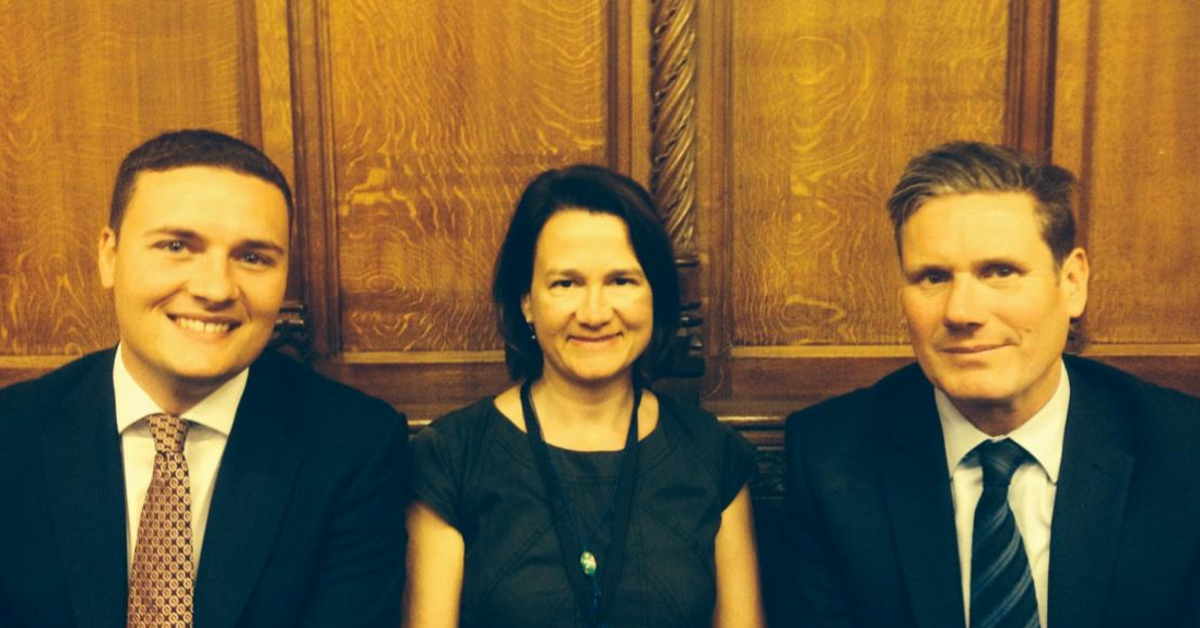
A photo posted by Keir Starmer almost exactly 11 years ago has stunned political pundits after it was unearthed this week.
The prime minister’s job is hanging by a thread as more than 80 MPs call for him to quit following Labour’s drubbing at the elections in England, Scotland and Wales last week.
Catherine West, a former foreign office minister, helped to galvanise the campaign to push Starmer out.
She offered to be a “stalking horse” candidate in a leadership challenge to the prime minister, meaning she would stand against him just to tempt other rivals out of the blocks.
While her bid ultimately failed – as did her subsequent attempt at a no confidence letter – she helped get the ball rolling this week by encouraging MPs to publicly announce they had lost faith in Starmer.
Meanwhile, health secretary Wes Streeting is thought to be one of the frontrunners in the next potential leadership race.
He has made his ambitions to be the next prime minister clear over several months and many of his allies in the Commons have already urged Starmer to resign.
So social media users were stunned when they found a photo of Starmer, Streeting and West together on their first day in the Commons after winning their seats in the 2015 general election.
The now-prime minister shared an image of himself with West and Streeting along with the caption: “Taking our seats for the 1st time.”
The image attracted a huge amount of interest – with many noting just how cruel a game politics can clearly be…
Subscribe to Commons People, the podcast that makes politics easy. Every week, Kevin Schofield and Kate Nicholson unpack the week’s biggest stories to keep you informed. Join us for straightforward analysis of what’s going on at Westminster.


Hull City finished the job at The Den, beating Millwall 2-0 in the second leg to win the tie 2-0 on aggregate and book a place in the championship play-off final.
Mohammed Belloumi opened the scoring midway through the second half and Joe Gelhardt added a second after coming off the bench to seal the victory.
Hull City AFC’s performance
The first leg was a major anticlimax finishing goalless, so the return leg was set for a winner to be decided at Millwall’s ground. Hull made the first breakthrough when Belloumi cut inside and curled a finish into the net.
That goal shifted momentum and Millwall’s plan as they were forced to chase the game. Just fifteen minutes later, Hull scored again with a swift counter that ended with Gelhardt striking low into the net, effectively ending Millwall’s hope.
The goals were the turning points in the game, each goal decisive not because of the quality but also the timings. Two different goals, but executed to perfection. The overall difference was Hull’s ability to land a killer blow whilst Millwall couldn’t find that cutting edge.
Tactical battle
Hull set up to be compact and aimed to be dangerous on the break. They ceded possession at times but organised in midfield to prevent any real danger for their defence.
Millwall tried to press and dominate territory, particularly in the first half, but struggled to make that control count by creating clear cut chances in front of Hull’s goal.
The introduction of the substitutions changed the game. Hull’s bench provided the spark, with Gelhardt’s immediate impact underlining the visitors’ game plan to use pace and power late in the game.
Bottom Line
Hull will now head to Wembley for the play-off final and are one match away from promotion to the Premier League after 16 years.
Their run this season to the play-off final has been notable as they finished sixth in the regular season and have become the first sixth-placed team in seven years to reach the final. A clear indication that form and momentum in May can outweigh league positions.
For Millwall, the season ends with near misses and questions about how to turn home advantage into the results that are needed in knockout scenarios.
Millwall will need to dust themselves off and begin to prepare for the same fight next season, getting to the play-off semi finals is a huge experience for a team that is hoping to reach the echelon of football in the Premier League.
Featured image via Hull Daily Mail
By Faz Ali
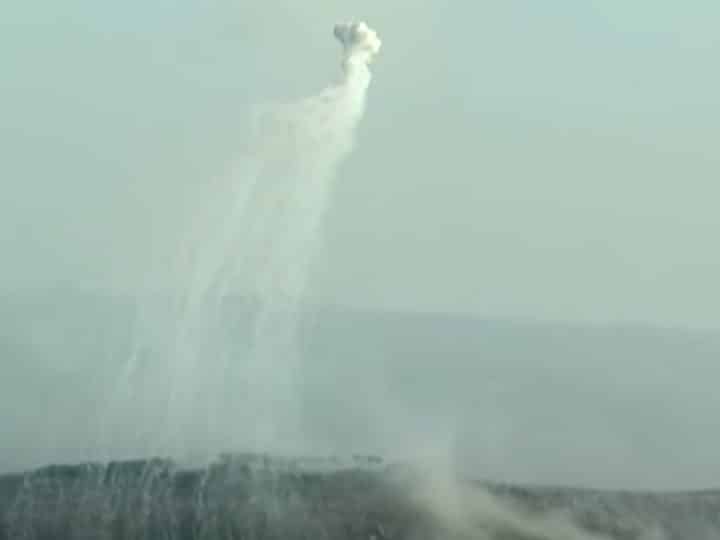

Israel has once again been caught dropping white phosphorus on civilian areas in Southern Lebanon — a blatant war crime — according to local and international human rights monitoring organisations.
This is white phosphorus.
Israel is raining white phosphorus bombs on civilian areas in South Lebanon.
Call it what it is: A WAR CRIME. https://t.co/PRry5wnQLX
— sarah (@sahouraxo) May 11, 2026
Reuters reported on X that:
Plumes of thick smoke were seen rising from southern Lebanon, following a series of Israeli airstrikes.
It’s a shame we’ve reached the stage of journalism where corporate outlets are incapable of stating the facts.
Reuters complicit in the ethnic cleansing of southern Lebanon by deliberately omitting the fact that this is a white phosphorus bomb.
Using white phosphorus near civilian populations is a war crime. https://t.co/J8kAksjCxv— courtneybonneauimages (@cbonneauimages) May 11, 2026
‘Plumes of thick smoke’ are, in fact, white phosphorous — a deadly incendiary weapon.
Dangerous incendiary weapon
As the Canary previously reported, white phosphorus is a highly reactive chemical substance which ignites instantly upon contact with oxygen. It’s incredibly hard to extinguish and sticks to surfaces such as clothing and skin. White phosphorus is extremely harmful to people, no matter the route of exposure. It causes deep and severe burns – often down to the bone, breathing problems, and burning of the eyes and respiratory tract.
The human body can absorb the chemical, causing dysfunction in multiple organs, including the liver, kidneys, and heart.
It burns at more than 800 degrees Celsius — nearly 1,500 degrees Fahrenheit — high enough to melt metal.
Importantly though:
The incendiary effects of white phosphorous can cause death or cruel injuries that result in lifelong suffering.
The use of incendiary weapons in civilian areas is a war crime for exactly this reason. Generations of Lebanese people will now suffer the consequences of Israel’s indiscriminate and illegal attacks.
According to the World Health Organisation:
The use of white phosphorus may violate Protocol III (on the use of incendiary weapons) of the Convention on Certain Conventional Weapons (CCCW) in one specific instance: if it is used, on purpose, as an incendiary weapon directly against humans in a civilian setting.
More war crimes
There is plenty of evidence of Israel’s unlawful use of white phosphorus as far back as 2009. Since October 7 alone, Israel has carried out over 1,000 illegal white phosphorus strikes in Gaza.
According to the Euro-Med Monitor, in 40 minutes alone, the IDF launched 300 white phosphorus strikes on a packed residential square in the northern Gaza town of Beit Lahia.
Journalists reported other attacks in crowded areas of Gaza City, the Al-Shati refugee camp, west of Gaza, and the Jabalia town and camp in the Strip’s north.
The sky above Al Shifa hospital in the north of Gaza, lit up by white phosphorous and war crimes: israelis are barbarians | via @xq_2zx pic.twitter.com/eJyw8GJKmn
— Sarah Wilkinson (@swilkinsonbc) November 10, 2023
Amnesty International first reported that the Israeli army was using white phosphorus in Lebanon in October 2023.
We are reporting on the ground close to the frontline. I$rael has indeed used white phosphorous, and has done so for some time, targeting civilian areas and agricultural land. We have spoken to civilians and local officials over the past two years, including those that have…
— Steve Sweeney (@SweeneySteve) March 17, 2026
Human Rights Watch also verified Israel’s use of white phosphorus on two locations along the Israel-Lebanon border and over Gaza City’s port.
By April 2025, Israel had already committed over 1,000 attacks in Southern Lebanon using white phosphorous.
Ecocide in the 2,000 year old olive tree groves of Marjayoun.
The Israelis have committed over 1k attacks using white phosphorous in south Lebanon. Approx 60k olive trees were damaged, and 2.8 square kilometers were burned.
In this photo you can see a small fraction of the damage https://t.co/K40EFIbBrB pic.twitter.com/w1gRCt9fvM— courtneybonneauimages (@cbonneauimages) April 11, 2025
Since then, Israel has continued to launch white phosphorus over civilian areas of Lebanon.
US origins
As the Canary previously investigated, the US Army supplies Israel with white phosphorus-filled projectiles.
The chemical agent can be deployed through artillery shells, bombs, rockets or grenades.
The white phosphorus itself comes from Israel Chemicals Ltd (ICL), which has a chemical manufacturing plant in St. Louis.
The US government contracted ICL to produce white phosphorus for the US Army, for:
a 5-year, indefinite-delivery, indefinite-quantity, fixed-price contract at $3,342,150.
ICL has 10 illegal quarries in the occupied West Bank, according to a report by the Israeli Ministry of Interior. Notably, ICL is also operating in the occupied Syrian Golan Heights.
Of course, it is no surprise that a country with a history steeped in colonialism is supplying incendiary weapons to a genocidal terrorist state.
Imagine the global outcry if Iran or Hezbollah were using white phosphorus on Israel? We would never hear the end of it. But because Israel is mainly terrorising Muslims, and the entire world is scared of Israel crying ‘antisemitism’, the world turns the other way.
Can Israel do anything within the bounds of international law?
Feature image via the Canary
By HG

We’ve already heard Ryanair CEO Michael O’Leary’s thoughts on the pre-flight pint (though he didn’t share any plans to stop selling booze on his airline).
But what about the food and drink you can bring on board yourself?
I love bringing a Diet Coke (which airline staff reportedly hate pouring mid-flight) and a duty-free sandwich on board if I can. But according to airlines like Jet2, TUI, and Ryanair, refreshments have to follow certain rules.
Here are five that some airlines have said they won’t permit on board:
1) Alcohol above 70%
easyJet said that as long as it’s not open, you can bring booze bought after security on board. But it can’t be 70% ABV or above, and the airline said, it’s “strictly forbidden to drink any alcohol that has not been purchased on board the aircraft”.
Ryanair also bans alcohol of more than 70% ABV on board, as do Jet2 (who allow drinks that “contain more than 24% but not more than 70% alcohol by volume”), British Airways (“Drinks above 70% alcohol volume are not permitted on board our aircraft in either checked baggage or hand baggage”), TUI, and more.
Airlines also routinely ban drinking your own alcohol on board.
2) Hot drinks without a lid
easyJet said that they allow hot drinks on board if they were bought in the airport, if they have a lid on.
Jet 2 and Ryanair have banned bringing outside hot drinks on board altogether.
3) Hot food
Jet2 said that “You can’t bring hot food or hot drinks onboard our planes for safety reasons” on their site.
And as we mentioned above, both they and Ryanair have banned hot drinks from the airport on board too.
4) Stinky cheese and other smelly food
Jet2 says on its site that it won’t allow items that “are fragile or perishable or which may affect the safety, health or comfort of other passengers or crew” on board, adding, “this may include hot or strong-smelling foods and drinks”.
In other words, it might be time to keep that tuna and onion sando at home.
5) More than 100ml of liquid food
easyJet said that though its 100ml limit doesn’t apply to baby food, milk, or sterilised water provided it doesn’t exceed two litres, for the rest, “There’s a 100ml limit for liquid food, like soup or custard. Different countries have different regulations about importing food and drink, so make sure you check the rules for your destination.”

The post ‘The Greens are lunatic, deranged and evil’ appeared first on spiked.

!function(n){if(!window.cnx){window.cnx={},window.cnx.cmd=[];var t=n.createElement(‘iframe’);t.display=’none’,t.onload=function(){var n=t.contentWindow.document,c=n.createElement(‘script’);c.src=”//cd.connatix.com/connatix.player.js”,c.setAttribute(‘async’,’1′),c.setAttribute(‘type’,’text/javascript’),n.body.appendChild(c)},n.head.appendChild(t)}}(document);(new Image()).src=”https://capi.connatix.com/tr/si?token=19654b65-409c-4b38-90db-80cbdea02cf4″;cnx.cmd.push(function(){cnx({“playerId”:”19654b65-409c-4b38-90db-80cbdea02cf4″,”mediaId”:”9619599e-9e06-4431-a69b-57c837ce7a80″}).render(“6a030ba5e4b0b1a48de9198e”);});

We hope you love the products we recommend! All of them were independently selected by our editors. Just so you know, HuffPost UK may collect a share of sales or other compensation from the links on this page if you decide to shop from them. Oh, and FYI — prices are accurate and items in stock as of time of publication.
We know what you’re thinking: there’s a long summer ahead of us. Six weeks of school-free fun for the kids, but then there’s you…
Trying to fill the school holidays with enough things to do to stop the whining, but without breaking the bank, can be an award-worthy task.
And while most of it might be filled with activities to do at home, trips to the park, or sending them off to camp or the grandparents’ so they be someone else’s problem for a few days, it’s fun to sprinkle in a few days out into the mix to keep things exciting.
If you’re already planning ahead to the end of term time, our shopping writer has found just the thing for a trip to the capital city.
To help you plan a day out, or multiple days out, even, London Eye is offering tickets to not one, not two, but five London attractions from just £59 per person.

That’s right: you can visit the London Eye, and your choice of Madame Tussauds, SEA LIFE London Aquarium, London Dungeon, Shrek’s Adventure, and Big Bus Hop-on, Hop-off Sightseeing Tour for as little as £12 per attraction.
That’s up to an impressive 68%, or £133, off the cost of buying individual tickets to each experience.
Just think of the hours of fun to be had from plopping your little ones in front of a birds-eye view of London, staring up at a sand tiger shark, or leading them through Shrek’s swamp.
So you don’t have to tire yourselves out in one go, the ticket lasts for up to 90 days, meaning you can make a meal of stretching out attractions throughout the holidays. And, if your plans change, you can reschedule for free.
Don’t worry, though. If five attractions might be stretching them (or you, let’s be real) too thin, that’s okay, too. London Eye also offers multi-attraction tickets for two or more attractions.
This includes a trip on the London Eye and either tickets to SEA LIFE or Madame Tussauds from just £44 for children and £49 for adults.
While it’s not quite so much of a commitment as the five-attraction ticket, you’ll get more value for money by going to several attractions, rather than one or two.
Not to mention that it’s always a fail-safe plan to fall back on when you eventually get tired of planning new activities towards the end of the holidays.
Just remember to book your time slot ahead of your visit to avoid disappointment!

Zoe Ball has admitted that she has been working through “the seven stages of grief and rejection” after losing out on the job of presenting Strictly Come Dancing.
Last month, she dropped a major hint that she was through to the last stages of auditions on her podcast Dig It, but confirmed during the latest instalment that she “didn’t get it”.
“But it’s OK!” she insisted. “I have worked through the seven stages of grief and rejection over the last couple of days.
“I didn’t get it, but I tell you what, if who I think has got it, we’re in safe hands and our new hosts are going to be fabulous.”
She added: “I’m so thrilled for them, and hopefully at a later date, we’ll be able to talk about them in more detail. I was so chuffed to even be in the mix.”
On Monday, The Sun reported that Emma Willis – known for hosting reality shows including Big Brother, The Voice, The Circle and Love Is Blind UK – had been chosen as one half of Strictly’s new presenting duo.
HuffPost UK has contacted the BBC for additional comment.

The Prettiest Guest in Financial Audit History
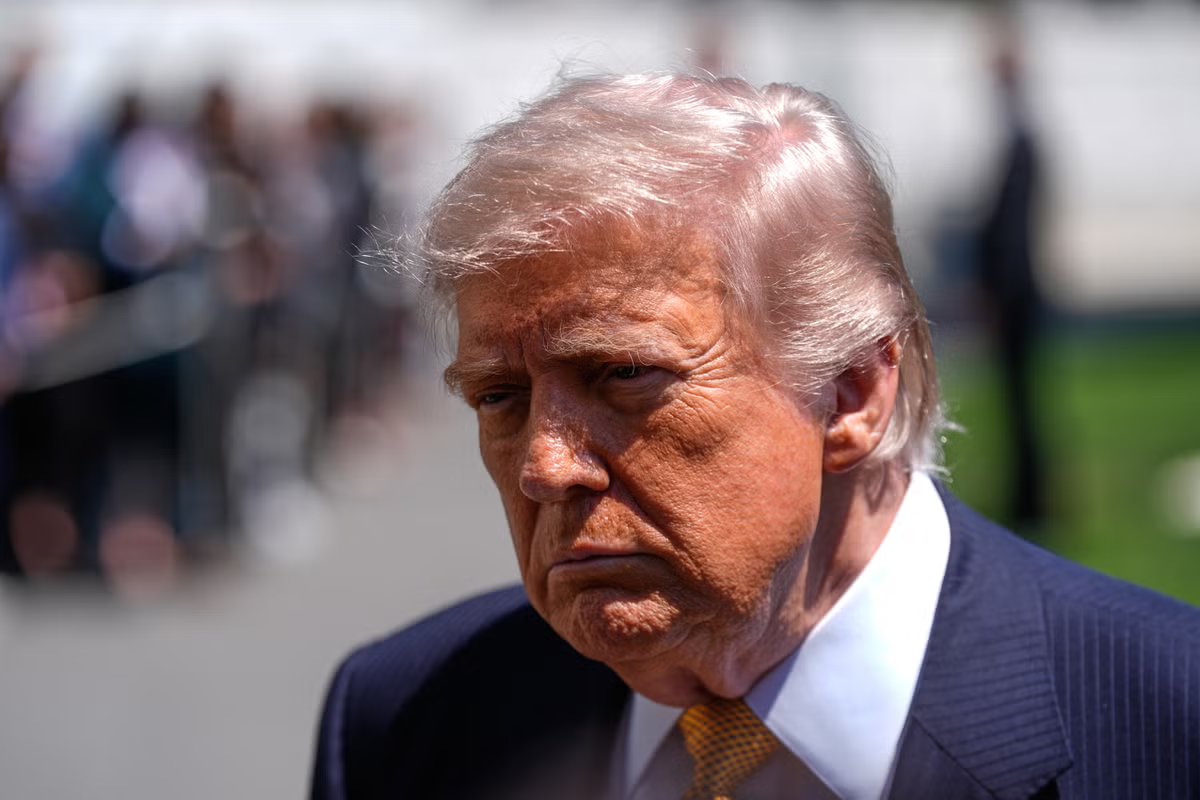
Trump again refuses to rule out troops or ICE at polling stations: ‘I’d do anything necessary’

Withdrawing a job offer can cost you more than you think

Manchester United reach agreement with Casemiro over contract clause amid transfer speculation

US brings back mandatory military draft registration

Steven Gerrard disagrees with Gary Neville over ‘shock’ Chelsea and Arsenal claim | Football
The Prettiest Guest in Financial Audit History

“What I Just Discovered About 2026 Will SHAKE the Entire Crypto Market!” – Raoul Pal

Vishwa Money Babu’s 6-Month Formula for Financial Success! |6 Months & Become Rich Vishwa Money Babu
-
 Crypto World4 days ago
HarrisX Poll Found 52% of Registered Voters Support the CLARITY Act
-

 Fashion4 days ago
Weekend Open Thread: Marianne Dress
-

 Crypto World5 days ago
Upbit adds B3 Korean won pair as Base token gains Korea access
-
 NewsBeat6 days ago
NCP car park operator enters administration putting 340 UK sites at risk of closure
-

 Fashion1 day ago
Coffee Break: Travel Steam Iron
-

 Fashion2 days ago
What to Know Before Buying a Curling Wand or Curling Iron
-

 Tech3 days ago
Auto Enthusiast Carves Functional Two-Stroke Engine from Solid Metal
-

 Politics21 hours ago
What to expect when you’re expecting a budget
-

 Politics4 days ago
Politics Home Article | Starmer Enters The Danger Zone
-
 Business3 days ago
Ignore market noise, India’s long-term story intact, say D-Street bulls Ramesh Damani and Sunil Singhania
-

 Tech2 days ago
GM Agrees To Pay $12.75 Million To Settle California Lawsuit Over Misuse Of Customers’ Driving Data
-

 Crypto World6 days ago
BlackRock CEO Larry Fink Discusses a New Asset Class
-

 Entertainment6 days ago
Sarah Paulson Called Out For Met Gala ‘Hypocrisy’
-

 Entertainment5 days ago
General Hospital: Ric & Ava Bombshell – Ric’s Massive Secret Exposed!
-
 Sports6 days ago
NBA playoff winners and losers: Austin Reaves is not loving Lakers vs. Thunder matchup, but Chet Holmgren is
-

 Entertainment6 days ago
Bold and Beautiful Early Spoilers May 11-15: Steffy Revolted & Liam Overjoyed!
-

 Politics5 days ago
Simon Cowell Says He Was ‘Horrible’ To Susan Boyle During BGT Audition
-

 Sports6 days ago
UEFA Champions League final schedule, teams, venue, live time and streaming | Football News
-

 Crypto World6 days ago
Robinhood says Wall Street is building onchain
-

 Tech7 days ago
Apple and Samsung are dominating smartphone sales so thoroughly that only one other company makes the top 10
You must be logged in to post a comment Login