
Politics
Gary Stevenson: fact-checked – spiked


spiked is funded by readers like you. Only 0.1% of regular readers currently support us. If just 1% did, we could grow our team and step up the fight for free speech and democracy.
Become a spiked supporter and enjoy unlimited, ad-free access, bonus content and exclusive events – while helping to keep independent journalism alive.



New PM Andy Burnham’s left-wing credentials have lasted about as long as left-out milk. Less than a fortnight into his reign, the gimmicky Scouser was spotted bowing to The Holy Nukes in a visit to BAE Systems’ Barrow-in-Furness death factory.
BAE won’t fix what’s broken
Burnham told reporters:
Keeping this country safe is the first responsibility of any government – but security is not only about what we build; it is about who builds it, and who benefits from it.
Nukes, naturally, are well known for bestowing safety. In a press release ahead of the visit on 30 July, the government insisted:
A major £8.4bn investment in the UK’s nuclear deterrent, delivering jobs and opportunity for young people for years to come, is set to be announced by the Prime Minister today.
Tens of thousands of jobs will be supported – from Barrow to Bristol – and hundreds of businesses bolstered by the major tranche of defence investment.
Little mention was made of the fact that military spending is one of worst routes by which to achieve economic growth. Quite the opposite, according to the Transition Security Project, who have warned:
that cuts used to fund the £15 billion in additional military spending in the Defence Investment Plan will lead to around 10,000 net jobs lost in the UK.
Great work, Andy. We’re sure you can obscure all this with a DJ set or something…
Military Keynesianism is a fantasy
And, as the Canary has reported, Labour’s current policy of recruiting the whole of society to so-called military Keynesianism – an economy built around war – is a canard.
But it isn’t the only option. The Campaign for Nuclear Disarmament (CND) has proposed an alternative defence policy rooted in:
…human security and common security—prioritising diplomacy, global cooperation, conflict prevention, and investment in health, education, climate resilience, social care, and the creation of well-paid, secure, unionised and socially useful jobs.
Professor Karen Bell, editor of the proposal, said:
This report offers a credible, democratic alternative to militarism: a sustainable economy grounded in social justice, global solidarity, and the urgent need to build peace—not war—for the 21st century.
Military Keynesianism is an economic ideology Keir Starmer tried to popularise. Burnham has made clear he will continue it. And the winners won’t be workers. Rest assured, arms firms are the ones rubbing their palms together at the sight of massive handouts in public money so that they can fill the armouries to order.
Featured image via the Canary
By Joe Glenton

4 min read
For the first time in almost three decades, a Labour Prime Minister is chairing Cabinet without a dedicated minister – or secretary of state – for international development sitting at the table. The significance of this is not administrative; it is political.
If Britain is serious about global leadership, its institutions must be fit for that role. A smaller development budget makes strategic prioritisation more important, not less. Development should not sit at the margins of foreign policy but at the heart of decision-making, ensuring resources are directed where they can have the greatest impact.
Cabinet-level representation gives a minister the authority to shape decisions across government and the standing to represent Britain internationally. The question is whether development expertise carries sufficient weight when decisions are made on security, diplomacy and Britain’s engagement with the world.
That question matters now more than ever. Andy Burnham has inherited an exceptionally challenging international environment. The war in Ukraine rages on, conflict persists across the Middle East, geopolitical competition is intensifying, climate pressures are accelerating, and humanitarian needs are reaching unprecedented levels. Britain must respond with confidence and purpose, using every tool available to advance its interests and values.
As Foreign Secretary, Ed Miliband has set out an ambitious vision for Britain’s role in the world: defending democracy and the rule of law, standing with Ukraine, strengthening alliances, deepening engagement with the Global South, tackling the climate crisis and reforming international institutions so they work more effectively. These are the right priorities for a more unstable era. But delivering them will require every tool of statecraft.
His decision to take on the role of UK Governor to the World Bank reinforces that message. As he has argued, international development is “not an add-on to British foreign policy; it is central to it”. Today’s challenges are increasingly interconnected: climate change, conflict, economic instability, health crises and humanitarian emergencies demand an approach that brings development expertise together with diplomacy and defence. That, in turn, requires development to have the political authority to shape decisions at the centre of government.
Labour has long argued that international development is not simply an act of charity but a strategic investment in Britain’s security, prosperity and global standing. Burnham captured that principle in 2010 when he argued that international development was “not all about charity; this is good for Britain,” adding that “Labour should proudly defend our record on international development”. As Prime Minister, he now has the opportunity to put that principle into practice by giving development a voice at the decision-making table.
If international development is truly central to Britain’s role in the world, it must also be central to the way Britain governs itself
That authority matters particularly when difficult choices are being made. Among the decisions inherited by the new government are the latest Official Development Assistance (ODA) allocations, which raise serious questions about Britain’s ability to sustain long-term partnerships and respond effectively to global challenges.
The scale of those choices is stark: by 2028/29, ten of the 17 African countries receiving direct UK ODA support will have little or no budget remaining. These reductions will not only affect some of the world’s poorest communities, but also diminish Britain’s influence at a time when other countries are increasingly willing to fill the space we leave behind. That is precisely why development requires a strong voice at the centre of decision-making.
Britain has demonstrated the value of that approach before. During the Ebola crisis in Sierra Leone in 2014, the UK recognised the outbreak not simply as a humanitarian emergency but as a matter of national interest. At the time, Britain was meeting the 0.7 per cent gross national income aid commitment, DFID was a standalone, globally admired department, and the Secretary of State for International Development sat at the Cabinet table. That institutional strength enabled Britain to respond early, helping contain the outbreak before it reached our shores.
The lesson remains just as relevant today. The Ebola outbreak in the Democratic Republic of Congo shows that global crises cannot be managed through emergency response alone. They require investment in resilient health systems, effective governance and long-term partnerships alongside diplomatic and security engagement. Yet Britain now approaches these challenges with a development budget reduced to 0.3 per cent of GN, no standalone department and no dedicated Cabinet-level minister.
The choice facing the government is clear. Britain’s influence has never rested solely on diplomacy or military strength. It has also been built through enduring partnerships, stronger institutions and the trust earned by standing with allies through periods of uncertainty.
Restoring a Cabinet-level Development Minister would recognise that reality. It would ensure that development expertise is represented where Britain’s most important foreign policy decisions are made. If international development is truly central to Britain’s role in the world, it must also be central to the way Britain governs itself.
Libby Smith is Vice Chair of Labour Campaign for International Development and Director of Advocacy at Coalition for Global Prosperity
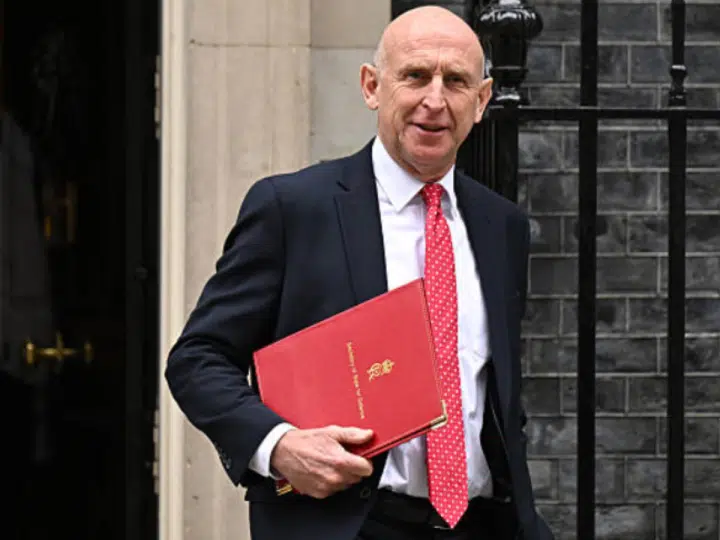

Newly appointed chancellor John Healey has opened the door for the UK military to shape defence budgets. His proposal is another step away from democratic oversight of how public money is spent. And it’s all part of a defence spending ideology that’s full of holes!
Declassified UK reported on 30 July:
Britain’s new chancellor John Healey has asked for a military officer to accompany him at the Treasury, it has emerged.
The move indicates how much weight Healey will place on weapons procurement after resigning as defence secretary last month in protest at Keir Starmer’s military spending plans.
The UK-based outlet pointed out that the move is highly unusual:
Chancellors do not normally have a serving military officer assigned to their private office, with the placements typically reserved for the prime minister and defence ministers.
However, Healey has requested an army major, naval lieutenant commander or air force squadron leader join his top Treasury team for at least the next six months.
Experts were quick to warn that this could amount to undue military influence over budgets which are meant to be democratically accountable.
Notoriously wasteful military
Transition Security Project co-director Khem Rogaly told Declassified:
Stationing a military officer at the Treasury will increase pressure to cut other areas of government spending to fund the soaring military budget. Cuts to fund the Defence Investment Plan were targeted at net zero during a summer of unprecedented heatwaves and severe droughts.
These cuts meant that the £15 billion added to the military budget will lead to net job losses in the UK. Further cuts will be deeply unpopular and damage the economy, taking money from schools and hospitals to fund a notoriously wasteful military.
Rogaly pointed out military spending is bad way to get growth and create jobs:
It should not escape the Treasury’s attention that military spending is one of the worst forms of public investment for jobs and growth. Military largesse is an extremely damaging economic strategy.
Who pulls the defence lever?
And that the military’s:
existing plan to increase military spending pours money into a broken system that already loses billions every year to cancelled contracts and fraud.
Added to this, large parts of the current budget seem to have less to do with national defence and more to do with spreading militarism overseas:
Despite the claim that more military spending is needed for national defence, the Defence Investment Plan commits Britain to military engagement in the Middle East, Indo-Pacific, Africa, Latin America and the Caucuses.
Declassified reported that the Treasure had not responded to questions. But that the head of the military, Sir Phil Knighton, had signed off on the new posting. It seems like the decision has already been made, with no sense that the erosion of democratic control is a concern for the Labour government.
Featured image via the Canary
By Joe Glenton


The UK defence committee has found a data breach which left UK-aligned Afghans exposed to the Taliban was “completely foreseeable”. The 2023 breach, kept secret until 2025 due to a court order, meant that a spreadsheet containing personal details of 18, 500 Afghans was made public.
Afghan resettlement programme
The Taliban took over Afghanistan after the US and UK left in defeat in 2021. The details were part of the UK’s so-called Afghan Relocations and Assistance Policy (ARAP). This British governmental scheme was meant to help relocate Afghans who had worked for the Brits in roles which made them targets for reprisals.
The BBC reported on 29 July:
In a report published on Thursday, the Commons’ Defence Committee said the Ministry of Defence (MoD) had lacked the expertise to run the UK’s Afghan relocation scheme after the fall of Kabul to the Taliban and had used secrecy as a “shield” against proper accountability.
They added that:
The breach came to light in August 2023 but an unprecedented super-injunction prevented it from being reported on until July 2025.
By law, the super-injunction existence could also not be reported.
The committee found:
The leak was not “an individual mistake” but a “foreseeable systemic failure” caused by “inappropriate tools, weak operating procedures, insufficient training, poor organisational continuity, and an inadequate culture of data protection and accountability”.
The BBC said:
The breach, just one of 19 reported between February 2022 and November 2023, was caused by a member of MoD personnel sharing a Microsoft Excel spreadsheet with a “trusted third party”, the committee added.
The BBC previously revealed the breach had originated from UK Special Forces (UKSF) headquarters.
Bizarrely, the UK special forces ended up running what was effectively a refugee scheme. Committee chair Tan Dhesi said:
The Ministry of Defence should stick to defence – it should never have been left to run immigration casework schemes.
Continuing culture of failure
The scathing report found the defence ministry had a “continuing cultural failure” and that the scheme was “utterly and obviously inadequate”.
The committee also found that the injunction went on for far longer than originally intended:
It was originally expected to last four months, the report found, but remained in place for almost two years.
serious costs on accountability and trust.
The Ministry of Defence said:
This incident should never have happened and we acknowledge the significant impact it has had on many people.
Thousands of eligible Afghans have already been safely relocated to the UK, where they can rebuild their lives and we are committed to ensuring that we conclude the Afghan resettlement programme by the end of this Parliament.
We are learning the lessons from this incident and important reforms are already in place, including improved data protection standards, strengthened case-working processes and better programme governance.
We welcome the public and parliamentary scrutiny of our actions, so we can learn more and be held to account, and we’ll continue to work closely with the committee on this issue.
In 2025 it emerged that:
a British Special Forces officer personally rejected 1,585 resettlement applications from Afghans with credible links to special forces in a matter of weeks, in 2023. The UKSF officer did not approve a single application during that period.
The special forces role in the scheme and UK government’s policy of not commenting on their operations compounded a lack of transparency. Tan Dhesi said:
Secrecy has been too easily used as a shield against proper accountability in areas far removed from sensitive operations.
Incompetence and secrecy against the public interest seems to be the order of the day at the MOD. And not for the first time. But this incident also sends a powerful message about a country which often talks up its soft and reputational power… be an ally of Britain at your own peril.
Featured image via the Canary
By Joe Glenton
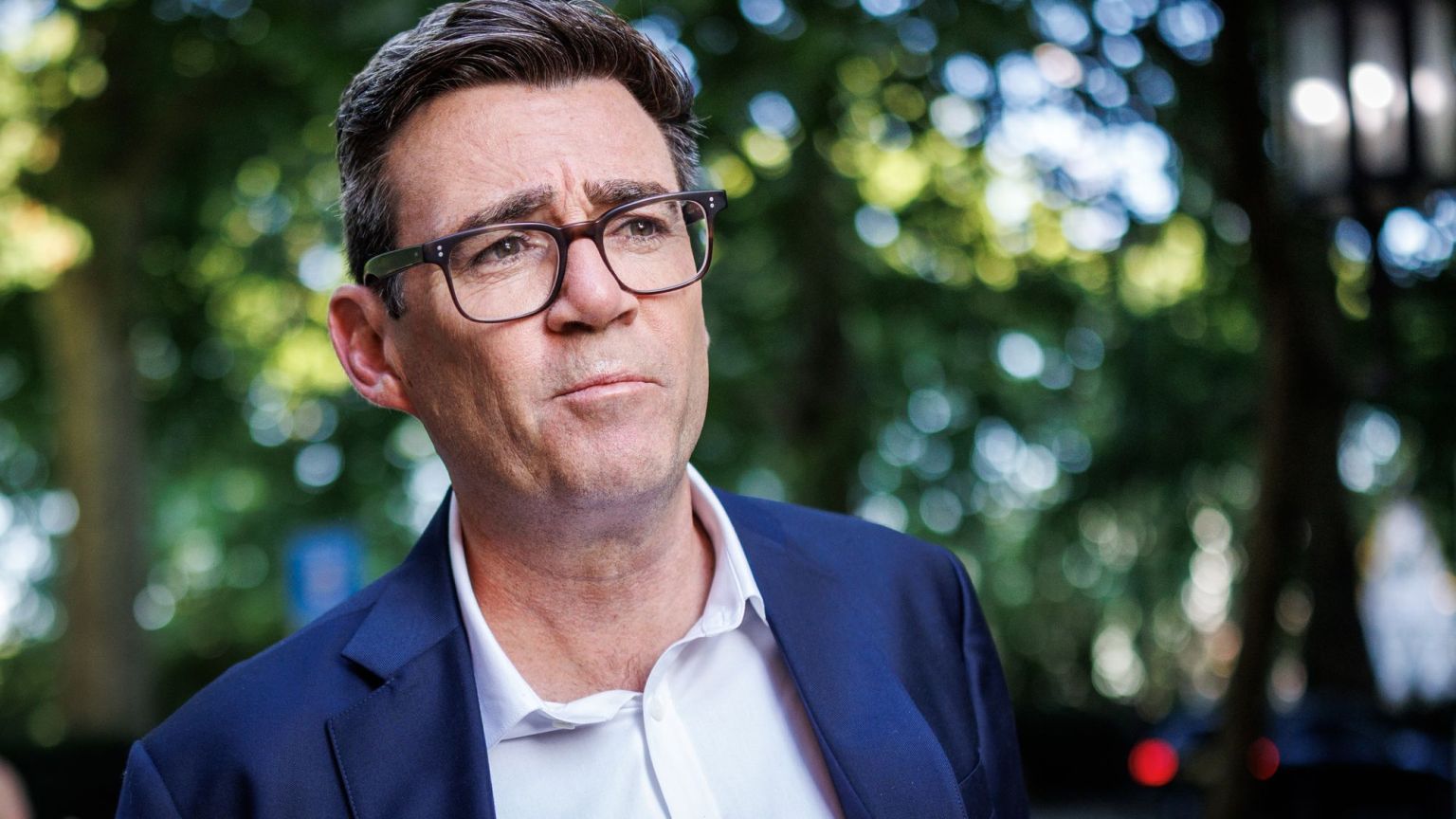
The self-styled ‘King of the North’, Andy Burnham, has shaken hands with His Majesty King Charles and formed a government in his name. After two years of Keir Starmer’s government, the most hostile to free speech in living memory, the British public ought to let out a sigh of relief that Britain’s most unpopular premier’s reign of terror is over. But that would be at best premature, and at worst foolish.
Over the course of the past two years, the Free Speech Union’s membership has ballooned from 14,000 to more than 45,000. This is a testament to the dire state of free speech in Starmer’s Britain, and another scathing epitaph for his political career. But our new prime minister could prove an even greater enemy of free speech than his predecessor. He is more likeable than Starmer, a more seasoned political operative, and has a track record – albeit disputed – of getting things done. But once that bloke-ish charm wanes, and it will, we should expect to find him just as hostile towards free speech and its advocates as Sir Keir. Nowhere is that clearer than in his attitude to the press.
Burnham has long advocated greater state control over Britain’s media. In 2016, as shadow home secretary under Jeremy Corbyn, he campaigned vehemently for the second part of the Leveson Inquiry. This planned follow-up was scrapped after scores of journalists were cleared of any wrongdoing by the criminal courts. Yet Burnham has gone as far as to say that relitigating all this is ‘non-negotiable’.
His appetite to chasten the press is further evidenced by his close relationship with Hugh Grant, who, with campaign group Hacked Off, has spent the past 15 years demanding state regulation of the media. As reported in the Telegraph, at an event hosted by Hacked Off in June, Grant addressed a group in Westminster on his favourite topic. He lambasted Starmer for not dog-collaring Britain’s press and identified a Burnham premiership as his opportunity to muzzle it. Nathan Sparkes, Hacked Off’s chief executive, also told the Telegraph of his disappointment in Starmer and his hopes of Burnham taking up the mantle.
They have every reason to be hopeful that the UK’s new prime minister will be even more censorious than the last. Byline Times has reported that, back in March, Burnham said he hadn’t ‘given up on [Leveson part two]’ and that he would enact it ‘if he had the influence’. Well, Andy most certainly has the influence now.
Burnham’s disdain for the press was also on display during his furious run-in with Christian Calgie of the Daily Mail during the Makerfield by-election, and his studied avoidance of any press scrutiny throughout the farcical Labour leadership ‘contest’.
Ominously, Burnham’s cabinet is just as hostile to the press as the PM himself. Lucy Powell, the deputy leader of the Labour Party, has stated that she wishes to censor social media platforms such as X and Facebook during election periods, and has identified the Representation of the People Bill – paused until September – as her legislative vehicle for doing so.
Then there’s Lisa Nandy. The culture secretary, and Burnham’s constituency neighbour, is the architect of a truly Orwellian green paper – ‘Watch This Space’. Its objective is to force social-media sites to prioritise the promotion of so-called trustworthy public broadcasters such as the BBC, ITV and Channel 4, while demoting other outlets and independent content creators.
This, of course, is the same minister who recently abandoned X altogether. Nandy told followers the platform, while ‘originally designed for free speech’, now ‘favours abuse and misinformation over meaningful debate’ and that she did not ‘want to support it’.
All of this bodes ill for Andy Burnham’s premiership. Already, he has been made leader of the Labour Party and prime minister with no election, no public debate and minimal press scrutiny. He is on a collision course with anyone whose views differ from his own.
Max Thompson is the campaigns officer at the Free Speech Union.
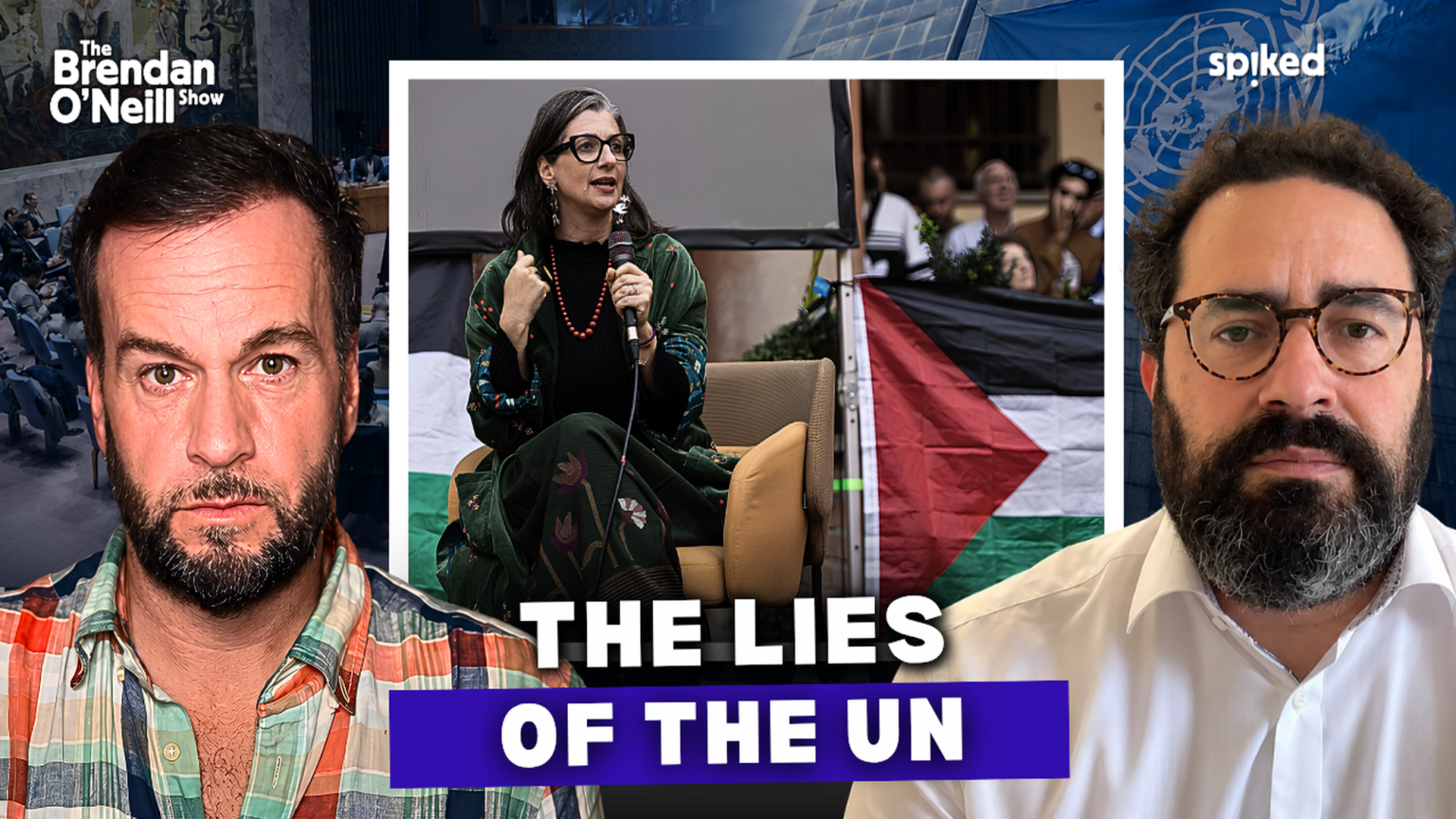
The post ‘The UN has no shame’ appeared first on spiked.

FCC chair Brendan Carr on Trump, free speech and his threats against broadcasters
 lead image


Hackers have stolen huge amounts of personal data from the Department for Education (DfE) and the Police National Legal Database (PNLD), exposing sensitive details online.
The attack reportedly targeted 14 other institutions, with a UK university being among them.
Both the DfE and PNLD have reported the breach to the Information Commissioner’s Office (ICO).
The cybercriminal group claiming responsibility calls itself the ExfilSquad. The group, virtually unheard of before the attack, posted sections of the stolen data, including the names and addresses of parents and staff, on a leak website as proof.
According to screenshots seen by the Guardian, they’re demanding payment from both the DfE and PNLD, or have threatened to leak the entire trove. ExfilSquad stated:
The payment we request of you is simply a rounding error compared to the litigation costs of your data leaking. Be smart and just pay.
Hackers’ released details appear ‘legitimate’
The stolen DfE database information relates to the department’s help desk portal, with hackers also having breached the Turing portal, which concerns students studying abroad.
A DfE spokesperson stated:
The information involved is limited to customer service contact details relating to individuals and organisations. No other data has been accessed.
Meanwhile, the PNLD said the details stolen from it related to:
police officers and those working in criminal justice including their name, the force or organisation they work for and their work email address.
The PNLD claimed that no confidential victim, witness or offender information was stolen. However, the hackers gained access to the names and addresses of individuals who submitted questions to the ‘Ask the Police’ service. The portal allows members of the public to get legally verified answers to frequently asked non-emergency policing questions.
The Guardian reported:
Sophos, a cybersecurity company that provided the screenshots, said the data samples appeared to be legitimate. It added that an account on the social media platform X apparently belonging to the group had been suspended but had been illustrated by a picture of a cybersecurity researcher who had been targeted before by members of the Com, a sprawling ecosystem of native English-speaking hackers.
However, it is understood that the DfE has not seen evidence that ransomware – a type of malicious software that locks up a victim’s IT systems – had been deployed in the hack.
Remember that digital ID scheme?
The news of the significant breach of government databases comes just a week after newly-minted Prime Minister Andy Burnham announced that his administration would scrap his predecessor’s mandatory digital ID scheme entirely.
Starmer had previously announced, back in January, that the scheme would no longer be compulsory for all. However, the right to work in the UK will still be established by fully digital means by 2029.
A spokesperson for Burnham then announced in July that “time and resource that was going to be spent on a national ID scheme will go instead to where it’s most needed, such as helping with the cost of living”.
This reprioritisation of public resource shows a change in direction towards improving everyday life and strengthening local economies over expensive national government schemes.
Critics argued that the database of citizens’ information used to create and manage the digital ID would be vulnerable to hacking and data breaches.
The ExfilSquad leak this week has only served to underscore the truth of that claim: our government cannot (and should not) be trusted to create a secure, centralised database of sensitive public data.
Featured image via Arnold Francisca/ Unsplash
By Grace


Israel has spent more than a billion US dollars on ‘hasbara’ — foreign influence — campaigns since 7 October 2023, according to new analysis by the Quincy Institute.
The figure is calculated from US ‘foreign agent’ registration and represents direct spending by the colony. Indirect spending through pro-Israel groups and billionaires is not included.
In the introduction to its paper, the institute says that it used:
FARA data, Israeli government procurement documents, and interviews with dozens of sources to trace the size and effects of this shift.
But the paper notes that even the $1 billion figure likely falls far short of Israel’s real direct spend.
Organizations conducting clear lobbying activities have failed to register as lobbyists, some new firms working for Israel have openly flouted transparency requirements, and paid influencers have not disclosed their financial relationships with the Israeli government.
Israel squanders cash
Despite this massive spending, Israel’s popularity has sunk like a stone because of its mass murders of innocent Palestinians, wars on civilians and arrogant lies about its crimes. Even the most expensive lacquer can’t polish the turd of Zionism and its racist slaughters.
But alongside its failing propaganda war, the occupation is also driving state repression of speech and protest in Palestine to try to restore popular ignorance of its crimes.
Many western regimes, including successive UK governments, have collaborated in the war on the rights of their citizens to protect the colony.
Shutting that stable door comes long after the horse of global awareness has bolted, but politicians are at least cheaper to buy than airtime and online influence.
Featured image via Саша Алалыкин/ Pexels
By Skwawkbox
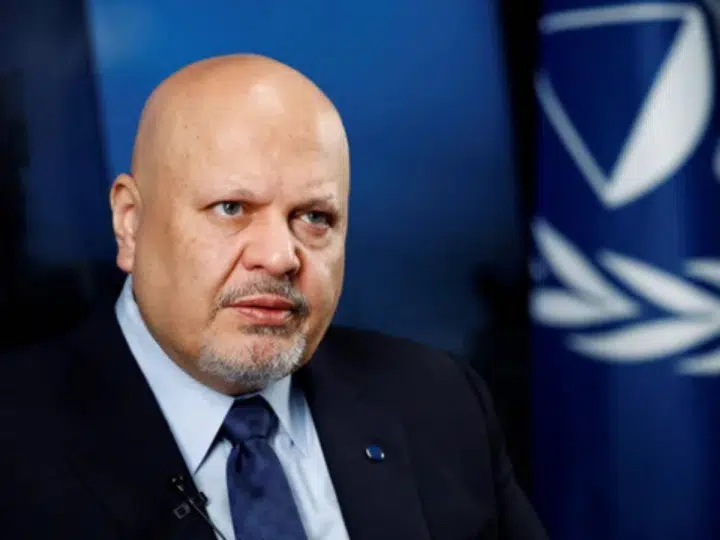
Benjamin Netanyahu and now-dead Israel-fanatic, US senator Lindsey Graham, conspired to use sexual misconduct claims against ex-International Criminal Court (ICC) prosecutor Karim Khan.
Khan was removed last week by the ICC’s political ‘Bureau of States Parties’ over allegations of sexual misconduct after an intense pressure campaign by the US and Israel.
A panel of judges appointed by the bureau found no evidence of any such misconduct, but the states voted to ignore the judges’ findings and dismiss Khan.
For issuing arrest warrants for Netanyahu and former Israeli defence minister, Yo’av Gallant, for crimes against humanity in Gaza, Khan and his family had faced a campaign of threats.
ICC removed Khan from his role over allegations
In a phone call on 29 October 2024, just before the warrants were issued, Graham — who died last week after visiting a Ukrainian weapons factory — discussed the impending warrants, the New York Times reported.
Netanyahu told Graham to send a letter to the ICC about a “great cloud” of allegations against Khan and demand a delay to the issuance of the warrants.
It is possible to have to appeal to the court to say, ‘OK, we want to review this before you do anything, before you issue an arrest warrant. There has to be a review about this entire process…
And I suggest that you send a letter, with, maybe some other senators.
Graham then confirmed that he had two other senators on board and that Netanyahu should “pay me for all this. I should get tons of shekels”.
During an attempt to pressure Khan into abandoning his warrant application, Graham had dismissed the ICC as “made for Africa and thugs like [Russian President Vladimir] Putin, not democracies like Israel”.
The senators’ letter did not manage to delay the arrest warrants. But the same accusations have now removed Khan, and put the ICC and the whole notion of international law on the edge of an abyss.
Featured image via Piroschka Van De Wouw/ Reuters
By Skwawkbox

BCOC131 2023# question paper#2023#financial accounting
Microsoft Profit Jumps 31% as Azure Cloud Sales Surpass $100 Billion
Crypto Price Analysis July-31: ETH, XRP, ADA, BNB, and HYPE


-

 Fashion7 days ago
Weekend Open Thread: Brooks Brothers
-
 Sports5 days ago
Commonwealth Games boxing: Jadumani Singh seals dominant 5-0 win over Pakistan’s Sumama Rehman to enter quarter-finals | Commonwealth Games News
-

 Business2 days ago
Why Trees Belong on the Risk Register
-

 Tech4 days ago
Intel is reversing course and bringing hyper-threading back to its server chips
-

 Crypto World6 days ago
Ripple bought a bank in pieces. The $4 billion audit
-

 Politics4 days ago
Luke Littler dismantles Gerwyn Price to retain title in Blackpool
-
 Entertainment7 days ago
A New Post-Apocalyptic Gundam Anime Series Blasts Into SDCC
-

 Politics3 days ago
The Part of the Electric Transition Nobody Wants to Discuss
-

 News Videos5 days ago
BITCOIN JUST ENTERED THIS CRITICAL ZONE…
-

 Business2 days ago
Major shareholder moves on Canyon
-

 Crypto World5 days ago
XRP Ledger adds $2.6B as RWA inflows rank second
-

 News Videos23 hours ago
Bitcoin Enters the 3rd Stage of the Bear Market
-

 Politics5 days ago
Spain sweeps the board at 2026 World Cup with individual awards
-
 Entertainment3 days ago
‘Stargate’ Creator’s New Sci-Fi Series Returns for Season 3 Tomorrow
-

 Entertainment5 days ago
Sara Gilson Killed By Husband After Viral “Pedophile” TikTok Video
-

 Crypto World2 days ago
Kraken Enables Retail Access to Jersey Mike’s IPO via Tokenized Shares
-

 Tech6 days ago
Anthropic launches Claude Opus 5, a cheaper AI model for coding, agents and enterprise workflows
-

 News Videos3 days ago
Claude: Build Financial Dashboards in Minutes (2026)
-

 Politics18 hours ago
Luke Littler’s dominance sparks GOAT debate
-

 Tech3 days ago
New macOS Sequoia & Sonoma security updates for older Macs
You must be logged in to post a comment Login