

Politics
Gaza: Doctors under Attack wins BAFTA despite BBC censorship only to be censored again

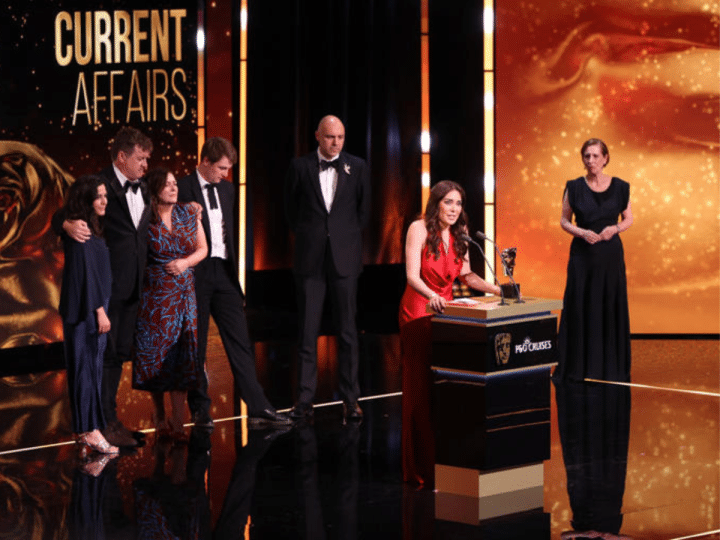

The BBC has once again been exposed as being entirely at odds with the interests of the British public after Gaza: Doctors Under Attack won a BAFTA at the 2026 ceremony.
The previously censored documentary won in the current affairs category — a result that further highlights how biased the licence-funded broadcaster has become in service of a foreign state committing genocide.
After the BBC attempted to block Gaza: Doctors Under Attack from being broadcast, Channel 4 stepped in to ensure it aired.
The BBC justified its decision at the time and said:
We have come to the conclusion that broadcasting this material risked creating a perception of partiality that would not meet the high standards that the public rightly expect of the BBC.
Nevertheless, the broadcaster showed little willingness to learn and continued censoring large parts of the acceptance speech. More specifically, it removed references to the vast and unforgivable number of Palestinian women and children killed, as well as references to the targeting of hospitals in Gaza.
Gaza documentary winners’ speech censored
However, this is far from the first time BBC executives have made highly questionable decisions that damaged both the corporation’s credibility and its privileged position as a national broadcaster tasked with delivering impartial, honest coverage to licence fee payers.
Its blatant censorship at the BAFTAs earlier this year fuelled unnecessary tensions between disabled and Black communities. It also reinforced the view among critics that the BBC is less interested in reporting current affairs than in shaping them within British society.
Cowardly BBC remove parts of the BAFTA acceptance speech delivered by the team behind "Gaza: Doctors Under Attack", after the filmmakers publicly criticized the broadcaster for refusing to air the documentary. pic.twitter.com/nCsqqzP5mW
— PalMedia (@PalMediaOrg) May 10, 2026
This represents an impressively foolish own goal for the national broadcaster, which licence fee payers continue to fund despite reporting that many believe runs directly against the public interest.
In his acceptance speech, executive producer Ben De Pear challenged the BBC asking whether their acceptance speech would face censorship like this award-winning documentary had been.
Clearly the BBC, this time, wanted to somewhat save face — but still, for good measure, censored anything substantial regarding Israel’s genocide in Gaza. That becomes far easier to understand when we recognise just how prolific pro-Israel bias has become, once again prompting renewed questions over whether this broadcaster should fundamentally change its business model.
After all, it clearly is not working as the BBC confuse, incite and manipulate British audiences.
Navia: ‘We refused to be silenced and censored’
This is the acceptance speech the BBC would have you believe occurred, as in the video above:
Journalist Ramita Navia:
This award means so much to us. These are the findings of our investigation that the BBC paid for but refused to show. But we refused to be silenced and censored. And we thank you. And we thank Channel 4 for showing this film.
Exec producer, Ben De Pear:
We also want to dedicate this award to Jabba Badwin and Osama Al-Ashi, the two journalists on the ground who made this film for us. So, I’d like a round of applause for them please.
Just a question to the BBC. Given that you dropped our film, will you drop us from the BAFTA screening later tonight? Thank you. Bye.
From Navia’s powerful and principled speech, these sections were omitted:
Israel has killed over 47,000 children and women in Gaza. So far, Israel has bombed and targeted every single one of Gaza’s hospitals.
It’s killed over 1,700 Palestinian doctors and health care workers. It has imprisoned over 400 in what the UN now calls the medicide. These are the findings of our investigation that the BBC paid for but refused to show. But we refuse to be silenced and censored.
We thank Channel 4 for showing this film. Right now, there are over 80 Palestinian doctors and healthcare workers being held in detention centers that Israeli human rights groups describe as torture camps.
We dedicate this award to them.
What does terrorism mean to you? If it’s no double-tap killings of paramedics, journalists, and today a 12 year old girl, then what is it?
Westerners, where is your humanity? Cameraman: @aliezzedine7 pic.twitter.com/ntXIwz4s6H
— courtneybonneauimages (@cbonneauimages) May 9, 2026
Sometimes, it is far better to look at what someone omits than what they choose to say. The BBC is making clear that whilst it cares about saving face publicly, it will always shield the indefensible genocide and expansionist agenda waged by Zionists in Israel.
Gaza: Doctors Under Attack is awarded the BAFTA for Current Affairs — BAFTA (@BAFTA) May 10, 2026
 #BAFTATVAwards with @pandocruises pic.twitter.com/jZI9Mrsjx2
The BBC has done this before
Let’s face it, impartiality is pretty much impossible. The BBC makes that pretty apparent.
It may claim its reporting is impartial, but its editorial choices — what it broadcasts and what it omits — makes that partiality increasingly obvious. Instead, wouldn’t it be better if they were at least honest about its Zionist tendencies, and its clear politicised coverage in the interests of war criminals wanted by the International Criminal Court.
The Canary wrote extensively about the BAFTA incident in February this year, making clear that the blame for the harm caused lays firmly at the feet of the BBC. It wasn’t the responsibility of disabled and Black communities to unpick, unravel and make sense of what happened.
‘Sinners’ star Wunmi Mosaku weighs in on what happened to her co-stars, Michael B. Jordan and Delroy Lindo, at the BAFTAs last weekend. pic.twitter.com/HLAyitiB7h
— Entertainment Tonight (@etnow) March 2, 2026
The BBC should rely on Zionist funding not licence fee
First, the BBC tried to pit embattled communities against each other and now it stands completely at odds with the public through its shameful coverage of Zionist Israel and its many, many flagrant and murderous breaches of international and humanitarian law.
Therefore, it can no longer be denied that the BBC does not work in the interests of British people. Instead, it works for the establishment which has pushed many of the BBC‘s viewers into poverty, struggle and deprivation.
Consequently, this leaves people feeling hopeless and searching more desperately for honest, accurate reporting. It has also never been more urgent that the public understands who is actively working against their interests.
The BBC has not been living up to its remit for many years. Even when called out for its nefarious censorship as De Pear did yesterday, it still cannot resist cutting pertinent information. As a result, it is time for TV licences to end and the BBC to start earning its funds.
Right now, it is only earning its funding from a country committing genocide, and its Zionist stooges in Starmer’s cabinet.
Featured image via Getty Images for BAFTA/ John Phillips

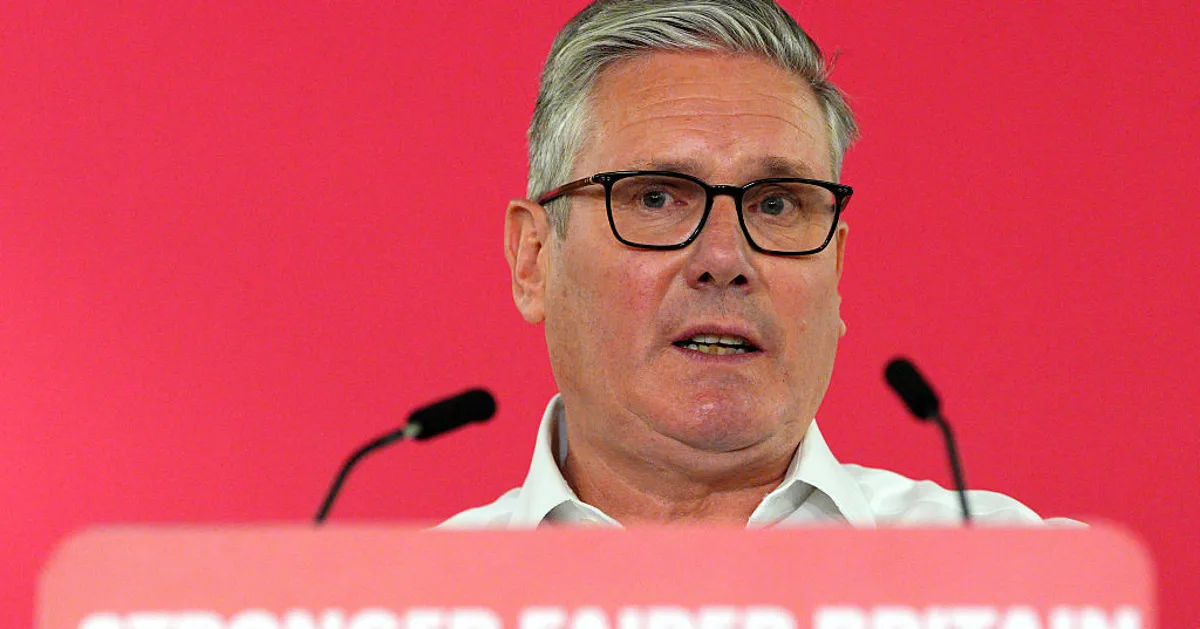
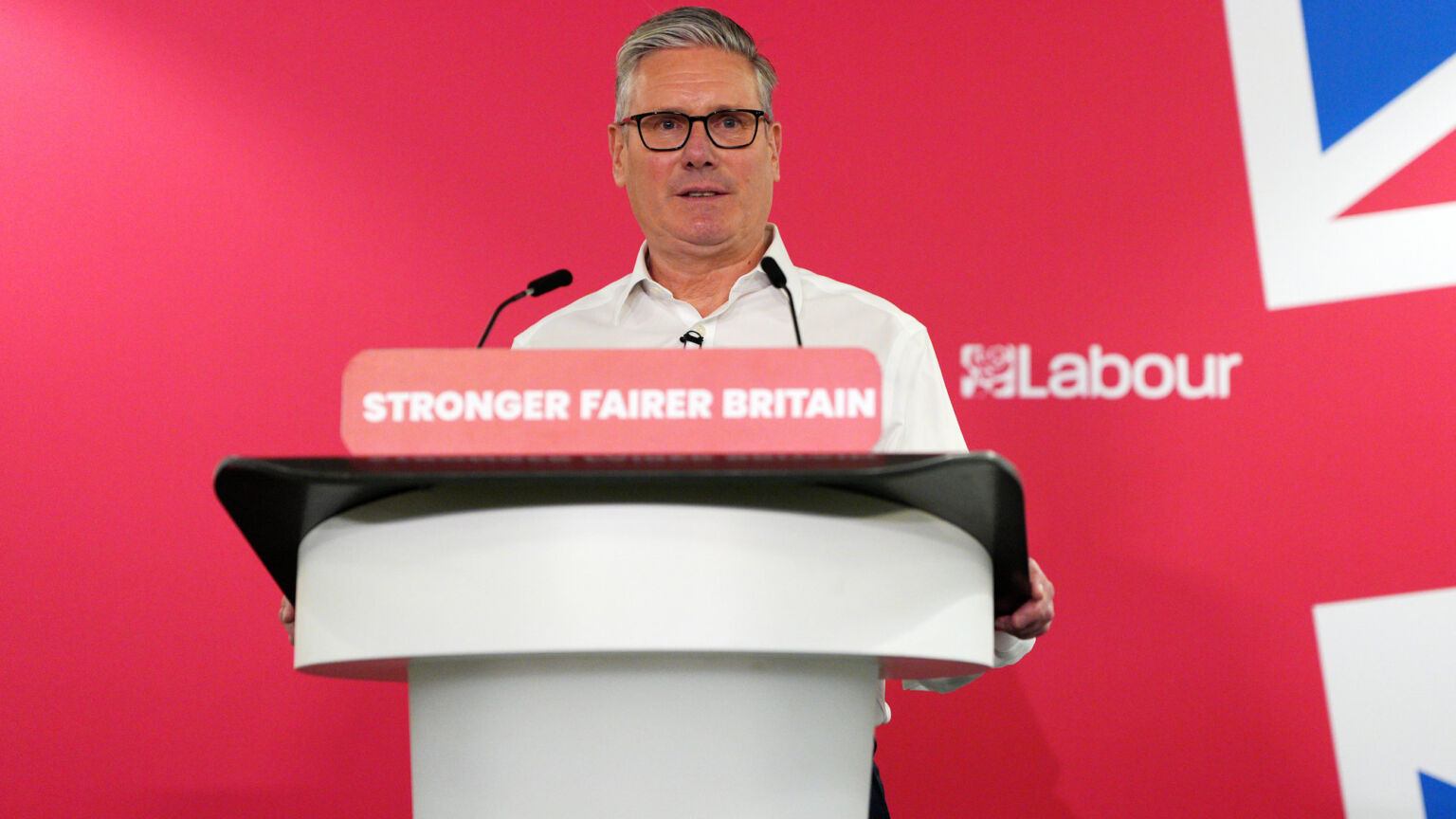
Keir Starmer is clinging on to power despite dozens of Labour MPs joined calls for him to quit as prime minister.
Nearly 60 backbenchers had called on him to quit by Monday evening after a steady stream of MPs joined the rebellion despite Starmer delivering a speech pledging to turn around the party’s fortunes.
In a further blow for the embattled PM, ministerial aides to health secretary Wes Streeting, home secretary Shabana Mahmood and environment secretary Emma Reynolds all quit their jobs calling on him to resign.
Starmer once again vowed not to “walk away” from No.10 and said he would prove the doubters wrong, despite Labour’s drubbing in last week’s elections at the hands of Reform UK and the Greens.
He said: “This is nothing less than a battle for the soul of our nation and I want to be crystal clear about how we will win it because we cannot win as a weaker version of Reform or the Greens.
“We can only win as a stronger version of Labour, a mainstream party of power, not protest.”
Starmer confirmed the government will nationalise British Steel and pledged to put the UK “at the heart of Europe” by agreeing closer ties with the EU.
But his speech was dismissed as “utterly inadequate” by one former minister, and was greeted by a fresh wave of demands from MPs for him to set out a timetable for when he will leave Downing Street.
They included Gower MP Tonia Antoniazzi, who said: “Keir Starmer is a man of great integrity who has led the Labour Party through difficult times.
“There will be those that disagree with me but I think it is genuinely time for him to step aside as PM in an orderly manner.”
Markus Campbell-Savours, the MP for Penrith and Solway, said:“I have listened carefully to the prime minister’s speech. Sir Keir Starmer is a decent, principled and kind man. But his leadership is not working, and it is with genuine regret that I say so.
“His position is now untenable. Colleagues should have the courage to say publicly what many have said privately for months.
“Loyalty matters. Loyalty to him, to the party and to each other. But today loyalty lies with our elected members across the country and with the 1,500 who lost their seats last week. It does not lie in maintaining a course that is not commanding confidence.
“What the party needs now is leadership with a credible vision for the country, a clear sense of direction, purpose and ambition. Those skills exist within our ranks, and I am confident we can find a leader who has them.”
Catherine West, the former Foreign Office minister who on Saturday threatened to challenge Starmer herself, instead wrote to all Labour MPs asking them to support her calls for a leadership contest by September.
Under Labour’s rules, 81 MPs would need to support a candidate to trigger a leadership election.
So far, no one has put their name forward, but the likes of Wes Streeting and Angela Rayner are thought to be weighing up their options.
Meanwhile, speculation is mounting that an MP will give up their seat in order to give Greater Manchester mayor Andy Burnham the chance to return to Westminster and mount his own bid to become PM.
Sharon Graham, the general secretary of Labour-backing union Unite, told HuffPost UK that Starmer’s speech had not “cut the mustard” and said he should quit.
She said: “I don’t think it’s going to happen tomorrow, but there isn’t a cat in hell’s chance that Keir Starmer’s going to lead us into the next election. It would be the death knell if that happened.”
Subscribe to Commons People, the podcast that makes politics easy. Every week, Kevin Schofield and Kate Nicholson unpack the week’s biggest stories to keep you informed. Join us for straightforward analysis of what’s going on at Westminster.
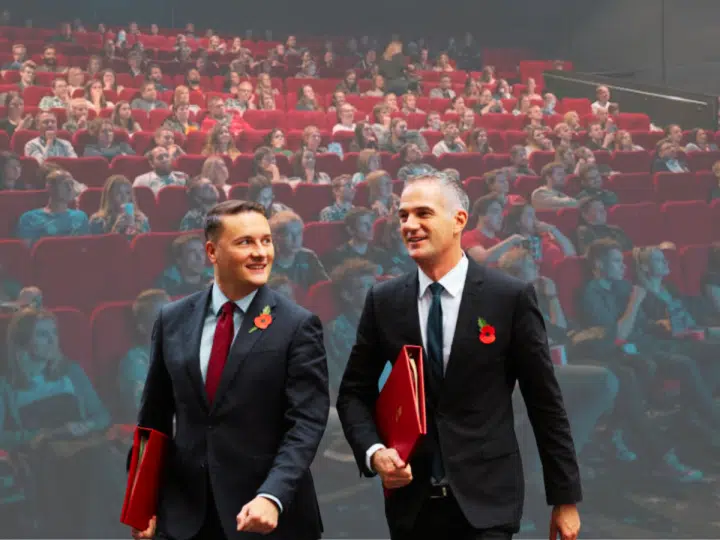

Following Labour’s embarrassing defeat at the polls, business and trade secretary and friend of Israel, Peter Kyle, was the designated fall guy and sent out on the media round.
It was as serious a time as you’d expect, with Kyle saying Wes Streeting is not plotting to overthrow Keir Starmer. The labour ministers were too preoccupied with the release of the Devil Wears Prada 2.
The devil wears cheap Labour suits
For some reason, Peter Kyle was on Sky News this morning. When asked about inevitable Labour leadership bids, he spoke of a cinema outing with his chum, health minister, Wes Streeting, to see the Devil Wears Prada 2. So surely, he couldn’t be launching a leadership bid…
On X, Sky News anchor, Sophy Ridge, said that Kyle had said the following:
Wes and I last weekend we were out campaigning together in Ilford. And let me say, he achieved a stunning result with that whole team in Ilford. That shows what a great campaigner Wes is. After we campaigned, we went for dinner and we went and saw a movie together. Somebody who was planning to pull the plug and launch a leadership bid in a couple of days time, doesn’t go to the cinema with a friend.
When asked what film they went to see, Kyle said they watched Devil Wears Prada 2.
Ridge then asked whether they had spoken about Labour’s leadership, to which Kyle replied:
Wes and I talk about the leadership of the country all the time. Wes and I shared an office together for nine years, we spent so much time talking about the leadership of the country. We almost never spoke about the individual.
Wonder if the Labour duo ever spoke about Peter Mandelson…
Kyle carried on, saying:
Wes and I care so much about the future of the country. We have a very shared view of public services in the modern world. About what Britain’s potential is amongst our competitive countries. We both care deeply about the opportunities that young people have. Also, we were friends going to the cinema and we had a good laugh about other things as well.
If you’re unfamiliar with the film, it’s a series about backstabbing, bitchy cliques, and elitists sneering at working-class people. Sound familiar?
The sequel, in particular, focuses on how the media is being corrupted and how those grappling for power are swayed by those with real power — the fucking tech billionaires.
You can’t help but wonder if Wes Streeting was getting tips. Though, with all his private health care donors, he hardly needs it.
Kyle finished by describing him and Wes as ‘very good friends.”
Wes and I are very good friends but I’m not going to fall into the trap of being his spokesperson. But what I can tell you is that he, like me, is focused on the success of this government. His primary mission in government is making sure the whole government is a success, and he is there for Keir when he needs him.
Definitely, definitely not running
This story was, of course, taken very seriously.
Peter Kyle saying Wes Streeting can’t be planning a leadership coup because they went to see Devil Wears Prada 2 at the weekend is so ludicrous it borders onto homophobia

— Calgie (@christiancalgie) May 11, 2026
It looks to as if Wes Streeting and Peter Kyle have to wait until “The Devil Wears Prada III”…..
— Greg Hadfield (@GregHadfield) May 11, 2026
This wasn’t the only media appearance Kyle made. On the BBC4 Today programme, he said:
It’s one thing [to keep] open the option that you might try to become prime minister one day, and it’s a very different thing to try to unseat a sitting prime minister in the moment we’re in, and Wes Streeting is not doing that.
So that’s that then, he’s absolutely 100% not running. Well, maybe until tomorrow.
Featured image via the Canary
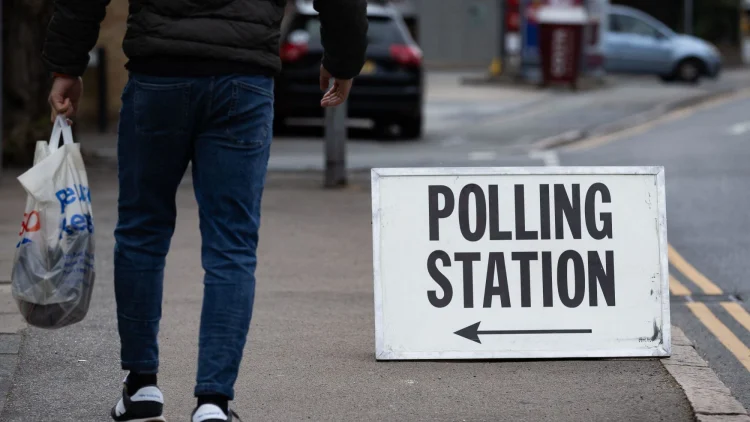

The voter turnout for the English local elections last week was 31.5 per cent (Alamy)

3 min read
The higher-than-expected turnout in these local elections showed voters were ready to demand change. Local leaders need more political and fiscal autonomy than ever to deliver for their residents.
England’s local political map has been transformed. But beyond the sweeping changes in local political control, one notable feature of last week’s local elections in England was that, in many areas, turnout tended to be above the usual low levels associated with local contests.
In my home council area of Calderdale turnout was 45 per cent, up by almost 11 per cent on the last local elections held here in 2024. The pattern was similar elsewhere.
While still not generally ‘high’ by any stretch (there’s much more to be done to improve electoral turnout both locally and nationally), higher than normal turnout is perhaps indicative of current public sentiment.
At first glance, higher turnout seems counterintuitive. Public trust in politics remains exceptionally low, and dissatisfaction with institutions is widespread. But increased turnout may indicate that many voters are increasingly willing to participate when they feel sufficiently motivated to register frustration or demand change.
The causes of voters’ discontent appear both national and local.
Undoubtedly, there’s dissatisfaction with the pace of change nationally, and growing impatience with stagnant living standards, stretched public services and the continuing cost-of-living crisis.
The message to the government in Westminster is clear: it must radically transform what it’s doing if it’s going to succeed. There is a growing demand for visible improvement in people’s everyday lives, particularly in communities that feel economically overlooked.
But interpreting these elections purely as a referendum on the government would miss a crucial part of the story. Beneath the national political turbulence lies a more localised crisis in confidence about the ability of councils themselves to deliver.
After more than a decade of cuts, many local authorities are operating under severe financial pressure, with local spending power much lower than it was in 2010, pre-austerity.
While the current government have provided additional financial support, councils across England remain constrained by a system that leaves them struggling to meet their statutory obligations and adequately fund other services. In many places, residents have seen libraries closing, parks deteriorating, roads going unrepaired, and their high streets declining.
These are the types of things that shape people’s daily experience of government most directly. For many voters, local government no longer seems capable of improving the places where they live. People feel they’re paying more council tax every year while getting less back in return.
As a result, there appears to have been a growing willingness to “roll the dice” electorally and replace incumbent administrations with alternatives promising disruption or change.
Beyond the introspection at the national level, therefore, another key takeaway from these elections should be that local leaders need more political and fiscal autonomy to deliver for their residents.
There’s a growing need to fundamentally reform local government finances so councils can act. This should mean radically reforming the council tax system, fixing social care provision, and delivering bold fiscal devolution.
This should go hand in hand with the government building on the progress it’s made on devolution and going further and faster on decentralising power so that local areas have greater control over things like economic development, transport, housing and public services.
This not only matters for delivery but also for enhancing local democratic engagement. International evidence shows that when local government has the power to genuinely change things, people are more likely to turn out to vote regularly and engage with it positively, enhancing local turnout over the longer term.
Rebuilding confidence in local government, empowering councils to deliver visible change and sustaining higher levels of democratic participation will be essential if trust in local and national politics is to be renewed.
Ryan Swift is Research Fellow at IPPR North, writing on devolution, local democracy, ‘levelling up’, and regional identity
Mike Hedges, one of the final nine Labour Senedd members, blamed the media for his party’s wipeout in a brush-by with ITV. Not taking it well…
Two things seem certain after last week’s local elections in England and parliamentary elections in Scotland and Wales. The first is that the historically incompetent and unpopular prime ministership of Keir Starmer is beyond salvation. The second is that, if the quality of the candidates elected locally and nationally is anything to go by, so too is Britain.
For proof that nothing you say or do in modern times can get in the way of your political dreams, we need look no further than Eden Hills. ‘Cock is one of my favourite tastes’, the newly elected Green councillor said in a social-media post last year. ‘Not only that, but balls smell amazing.’ In a separate post, he said: ‘OKAY [I’m] bored of being woke now, [I] should get back to talking about COCK.’
Hills was one of many trans or nonbinary candidates successfully fielded by the Green Party of England and Wales. The Scottish Greens managed to get two transgender candidates elected to the Scottish parliament, both of whom have some rather questionable views.
Q Manivannan – a self-described ‘queer Tamil immigrant’ – was elected to the Scottish parliament as a member for Edinburgh and Lothians, despite only having lived in Scotland since 2021, the year he arrived in Edinburgh from India on a student visa. It is by no means certain that Manivannan will be able to remain in the country long enough to complete his five-year term.
‘I cannot wait [until] big lizard Lizzie kicks the bucket’, Iris Duane, another of the Greens’ new trans MSPs, said in a social-media post in 2022, referring to the late Queen Elizabeth II. ‘Not because she’s dead but because of the absolute meltdown it will cause [in] the British consciousness.’
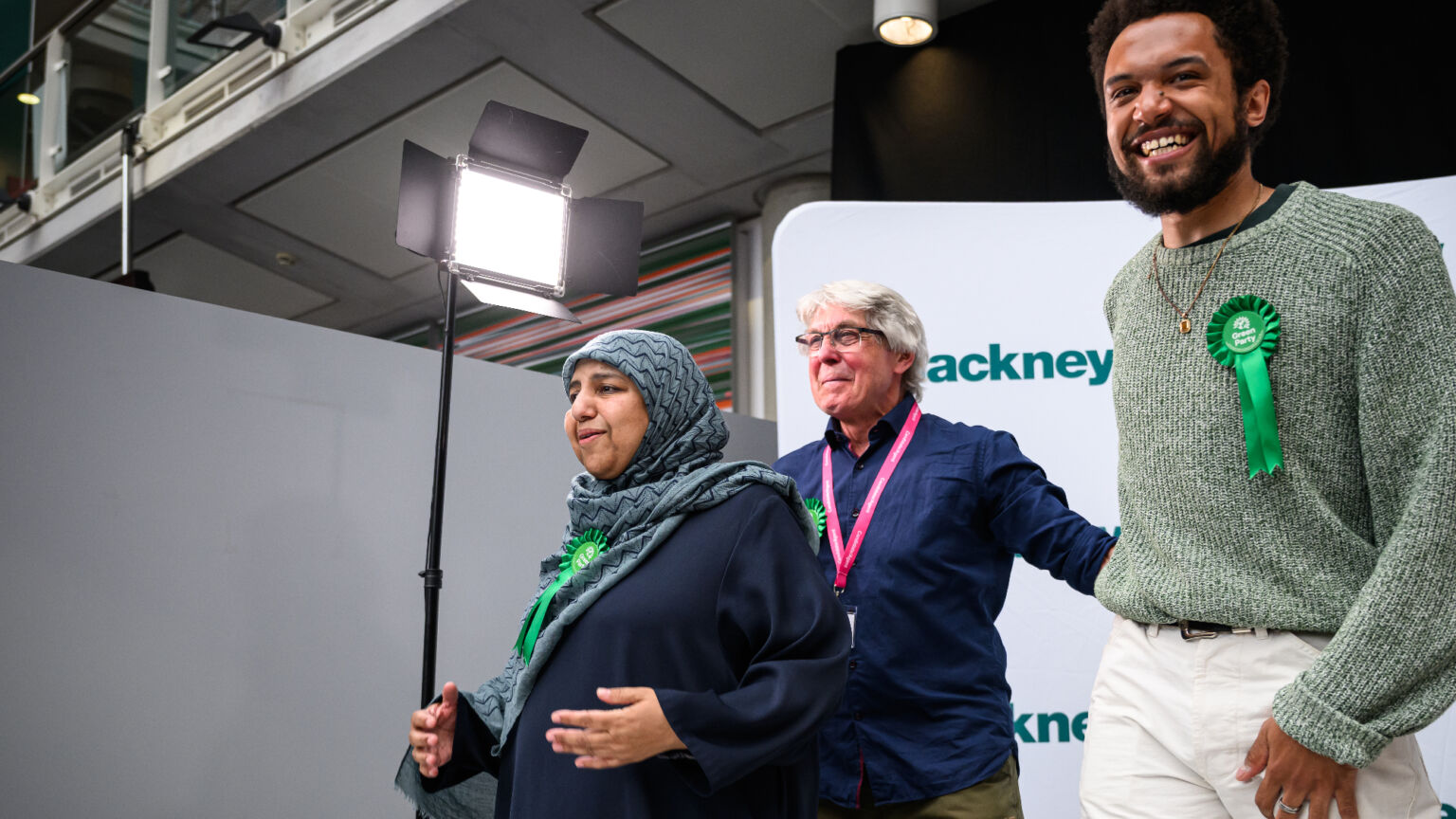
Heading south, the interests of Greens’ politicians undergo something of a transformation. The London borough of Lambeth elected Saiqa Ali, who was arrested last month on suspicion of stirring up racial hatred against Jews. Ali is alleged to have posted pictures on social media of a blue-and-white serpent with a Star of David on its skin coiled around the Earth and to have said that ‘England has a government that is overrepresented with Zionist Jews’. Ifhat Shaheen, who was elected to the Hackney council, came under the spotlight for wondering if ‘Zionists’ might be ‘harvesting’ the organs of dead Palestinians.
Not that the Green Party had any kind of monopoly on dodgy candidates. Glenn Gibbins, who was elected as a Reform councillor in Sunderland, seems to be the incarnation of every fear that the liberal establishment has projected on to the populist right-wing party. His novel suggestion for, er, dealing with the ‘amount of Nigerians in town’ was to ‘melt them all down and fill in the potholes’.
There is much more that can be said about the quality of England’s local councillors. Abdul Monsur, elected to Tower Hamlets, publicly denied the Holocaust in a Facebook post in 2025. The mayor of Tower Hamlets, Lutfur Rahman, was returned to serve yet another term at the helm of the east London borough, despite a well-documented history) of vote-rigging and religious intimidation.
Once, there might have been a darkly funny side to this local-elections freakshow. But with the seriousness of the problems Britain is facing, from economic stagnation to societal Balkanisation, we surely have to ask: is this really the calibre of candidate we deserve?
Hugo Timms is a staff writer at spiked.
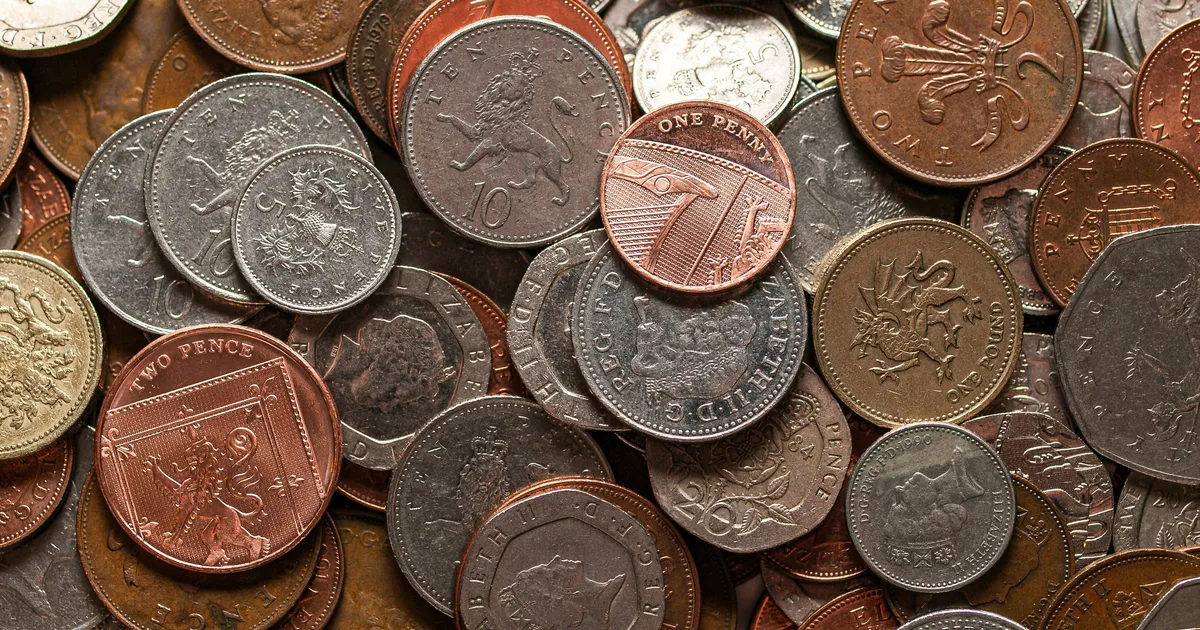
For many households, the “cost of living crisis” has felt inescapable and never-ending.
And now, a PwC report has found that people seem to be bracing for yet another financial shock.
It said that UK consumer confidence has seen its lowest quarterly decline in four years (in 2022, or four years ago, inflation reached a then-41-year high of 11.1%; PwC point out this is the “sharpest quarterly decline in sentiment since the onset of the Ukraine war”).
It’s the lowest overall score since 2023.
“All age groups are concerned about the rising cost of living, with most people planning short-term cutbacks and sentiment among the under-35s the hardest hit.”
What are the most common concerns?
90% of respondents said they were most worried about the cost of living.
80% said they plan to cut household spending in the coming months (food price surges are reportedly expected by some in November 2026).
Twice as many respondents (12% vs 24%) said they planned to drive less to save on fuel costs in the April survey than they did in the January survey. And a majority of under-45s – 65% – said they were worried about their job security and/or prospects.
The 2,000-person-strong survey, conducted after the Easter bank holidays, also found that members of every age group felt less financially healthy than they did in the previous quarter.
“In contrast to previous cost of living shocks, the gap between more and less affluent households has narrowed, while the gap between the young and old has widened,” the accountancy firm said.
What has caused these concerns?
PwC said that “Food prices, which are already on the rise, typically have the biggest influence on cost of living perceptions, and are expected to climb further” later on in the year.
They also pointed out that pay rises are usually given in April. They speculated that if households haven’t been given those by now, they might have begun to budget for a leaner-than-anticipated financial year.
Then, there’s the fact that the energy price cap will be removed in July. Many are expecting price hikes post the closure of the crucial shipping channel, the Strait of Hormuz.
Politics
The Union is weaker after the Welsh Senedd, Scottish Parliament and English local election results. Starmer’s myopic speech ignores the danger.

Sir Kier Starmer’s speech on Monday morning painted an almost apocalyptic picture of the future of his country, were he to be ousted from the Prime Ministership. He said “our country will go down a dark path”. Referencing the gains by Reform UK and the Greens, he stated that Labour is “battling the despair upon which they prey”. “Change cannot come quick enough”. “People need hope”. “Incremental change won’t cut it”.
Starmer described “a battle for the soul of our nation”. There’s the rub. He is Prime Minister of a multi-national country. There was no focus on Scotland, Wales nor Northern Ireland. Indeed, England wasn’t referenced. It didn’t need to be: for Keir Starmer and the Labour bigwigs, Englishness and Britishness appear interchangeable. This was a speech by a decent Englishman which had no resonance for the non-English UK nations.
The election results have seen the annihilation of the old British unionist parties in Wales and Scotland. Together, the Labour and Conservative parties won 22% of Scottish seats, and 17% of Welsh seats. (Remember that, unlike the English-local or Westminster elections, the Scottish and Welsh electoral systems are proportional.) Nothing like this has been seen before, electorally.
These two old parties are sclerotic. They cannot imagine a British government that doesn’t include one of them. They are majoritarian by nature. They won’t trust the people of the UK with a proportional electoral system, believing themselves above the people. They see nothing wrong with a party that gains one-third of the vote winning two-thirds of the seats, as happened in 2024. Their hubris will result in a farrago of Faragistas running the UK into the ground and the departure of Scotland and, possibly, Wales. (Politico poll of polls currently has Scottish independence running at 51% – 46% in favour of independence, the second-highest margin since the 2014 referendum.)
What happens to NI/NoI if the hubris of Labour and Conservatives results in a Reform UK government that antagonizes Scotland sufficiently to lead to its secession and the end of British identity? Reunificationists urgently need to craft a vision for the future of this island that truly cherishes all identities. The failure of separatist violence to achieve unity – and the immense suffering it has caused – must be addressed and acknowledged in a way that is genuinely cathartic for unity-desirous, unity-agnostic and unity-hostile voters. Is that possible? If it is not tried, what will we sleepwalk into?

Philip McGuinness taught at Dundalk Institute of Technology, plays mandolin with the Oriel Traditional Orchestra and loves to walk around and over the wee perfect hills of the Ring Of Gullion.
Discover more from Slugger O’Toole
Subscribe to get the latest posts sent to your email.
We are reader supported. Donate to keep Slugger lit!
For over 20 years, Slugger has been an independent place for debate and new ideas. We have published over 40,000 posts and over one and a half million comments on the site. Each month we have over 70,000 readers. All this we have accomplished with only volunteers we have never had any paid staff.
Slugger does not receive any funding, and we respect our readers, so we will never run intrusive ads or sponsored posts. Instead, we are reader-supported. Help us keep Slugger independent by becoming a friend of Slugger. While we run a tight ship and no one gets paid to write, we need money to help us cover our costs.
If you like what we do, we are asking you to consider giving a monthly donation of any amount, or you can give a one-off donation. Any amount is appreciated.
spiked is funded by readers like you. Only 0.1% of regular readers currently support us. If just 1% did, we could grow our team and step up the fight for free speech and democracy.
Become a spiked supporter and enjoy unlimited, ad-free access, bonus content and exclusive events – while helping to keep independent journalism alive.
Monthly support makes the biggest difference. Thank you.
Labour MPs can’t decide if Keir Starmer is coming or going even as his premiership hangs in the balance.
Despite the party’s horrendous performance in the local elections, the prime minister has made it clear he has no intention of stepping down.
That means it is up to the Parliamentary Labour Party (PLP) to try and unite behind an alternative candidate to oust the PM.
But MPs cannot decide what course of action they want to take, and so the party seems to be falling apart – in public.
1. ‘Wholly Unserious’
Backbencher Catherine West threatened to pose a leadership challenge to Starmer if she got the required backing of 20% of the parliamentary party.
However, after Starmer’s make-or-break speech on Monday, West changed tactics and sent a letter to fellow Labour MPs.
She asked them to back her letter calling on the PM to step down in September.
Fellow Labour MP Sean Woodcock then shared his email response to her on X, writing: “I think this is a wholly unserious way of going about this.”
He added: “Please stop.”
2. ‘By September’ Or ‘With September’?
West’s demand for Starmer to step down caused major confusion over a significant technicality: what was the deadline?
The backbencher’s initial email said she wanted the PM to resign “in September”, but she has since claimed she meant “by September”.
That sparked one of the signatories to withdraw immediately.
3. Who Will Stand Aside For Burnham?
Greater Manchester mayor Andy Burnham is considered to be one of the main rivals to Starmer.
However, he needs a seat in parliament to successfully challenge Starmer.
That has fuelled speculation that a Labour MP could stand aside, giving Burnham a chance of winning the subsequent by-election.
The so-called “King of the North” is rapidly accumulating support – but not many people are willing to actually give up their jobs, it seems.
As Paula Barker, MP for Liverpool Wavertree, told the BBC: “I would be delighted if a seat could be identified for Andy Burnham.”
But, when asked if she would give up her seat for him, Barker said firmly: “No.”
After an awkward pause, she was asked if that meant she was hoping someone else would give Burnham their seat. Barker said: “Yes.”
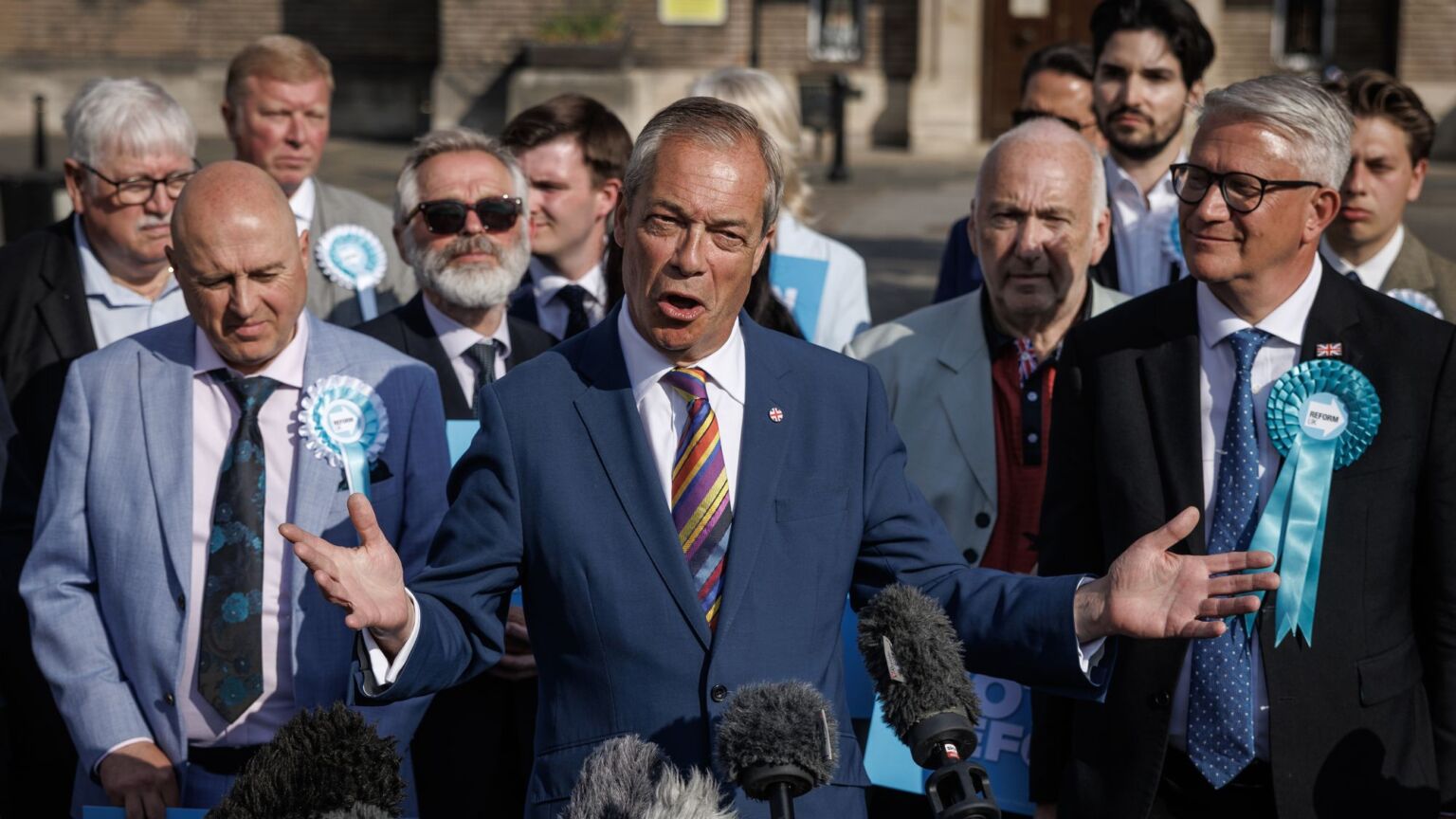
‘Some thoughts on the election results’, began Missan Harriman, the chairman of the Southbank Centre, in a video posted to X on Saturday. ‘The first thing that really comes to mind for me… is when [Kurt Vonnegut] asked Susan Sontag on her thoughts on the Holocaust’:
‘She said 10 per cent of people in any population are cruel no matter what. And 10 per cent is merciful no matter what… The other remaining 80 per cent could be moved in either direction… In the context of yesterday’s election results, it’s something that I feel is really topical.’
Topical? Sontag, a prominent Jewish American essayist, was reflecting on why a population went along with the systematic extermination of Jews. Harriman is reflecting on a population voting for Reform UK. ‘The surge of Reform is real… and it should be a warning’, the arts official said darkly.
He has since clarified that he did not intend to liken Reform voters to Nazis – though, if he had, he would not be without company. The idea that anyone who voted for a party to the right of Labour is at best incredibly thick, and at worst a rabid fascist, has been commonplace since Brexit and during every election since. And these feverish sentiments have been given a renewed airing after local-election results began emerging last week.
‘Yay, Reform have won’, says one TikTok user. ‘That’s us G-A-Ys going to prison and having everything taken away.’ Another mouths along to Taylor Swift as the text flashes up: ‘Reform winning the most in the UK shows how uneducated people are… they’ll never learn.’ ‘Hate this stupid fucking racist miserable fascist island’, another critic writes on X.
Among the most amusing – and the most telling – reactions was a post congratulating Reform voters on their success. This was accompanied by an AI-generated image of several overweight white Brits in teal wifebeaters, smoking and drinking in line at the polling station. ‘BREXIT’ one pot-bellied man has tattooed on his arm – a forever-reminder that the gammon cannot be trusted to know what’s good for them.
Accompanying the snobbish disdain for the voters has been the familiar accusation of racism. ‘Reform voters don’t even know what they’re voting for’, claims an X post viewed by two million: ‘They just don’t like brown people.’
While there will undoubtedly be some people with unpleasant or bigoted views both voting and standing for Reform (just as there are in even the most ‘anti-racist’ of parties, it seems), to insist that swathes of Brits are desperate to quell illegal immigration because they simply cannot stand to live among non-whites is palpable nonsense. Two-thirds of Brits believe the number of people currently entering the country is too high. To dismiss the concerns of the overwhelming majority as racist, to cast the desire to control a nation’s borders as fascist, is as ignorant as it is insulting.
Naturally, those deriding Reform as racist struggle with the cognitive dissonance arising from the fact that a non-negligible amount of the pro-Reform set are actually immigrants – or descendants of immigrants – themselves. ‘The fact that some of these winning Reform candidates are BROWN PEOPLE is genuinely beyond me’, reads a disgruntled TikTok post. The anti-Reform crew are similarly bewildered by the views of gay and bisexual men, among whom Reform is the leading party.
Some seem genuinely convinced that Reform’s rise heralds a dystopian future. ‘Watching the election scared for my daughter’s future’, says one young mother, sorrowful music playing as she poses with her infant. Another woman simply videos herself crying against the backdrop of a results graph. ‘What’s happening?’, she croaks tearfully. In such instances, I can only hope these people find respite from their anguish. I imagine taking a break from the algorithm, heading outside, and recognising that the majority of their compatriots do not, in fact, want them humiliated, locked up, or dead would go a long way.
Georgina Mumford is a content producer at spiked.

Dozens Of Labour M Ps Urge Starmer To Quit

Aberdeen’s Jack Milne alleged racist abuse towards Jeremy Bokila ‘not proven’

Pediatricians say schools need to make time for recess for kids of all ages

Manchester United reach agreement with Casemiro over contract clause amid transfer speculation

US brings back mandatory military draft registration

Steven Gerrard disagrees with Gary Neville over ‘shock’ Chelsea and Arsenal claim | Football


-
 Crypto World3 days ago
HarrisX Poll Found 52% of Registered Voters Support the CLARITY Act
-

 Fashion3 days ago
Weekend Open Thread: Marianne Dress
-

 Crypto World4 days ago
Upbit adds B3 Korean won pair as Base token gains Korea access
-

 Tech7 days ago
Image AI models now drive app growth, beating chatbot upgrades
-
 NewsBeat4 days ago
NCP car park operator enters administration putting 340 UK sites at risk of closure
-

 Tech1 day ago
Auto Enthusiast Carves Functional Two-Stroke Engine from Solid Metal
-

 Politics2 days ago
Politics Home Article | Starmer Enters The Danger Zone
-
 Business2 days ago
Ignore market noise, India’s long-term story intact, say D-Street bulls Ramesh Damani and Sunil Singhania
-

 Crypto World6 days ago
UAE Free Zone Deploys Blockchain IDs to Verify Registered Firms
-

 Tech11 hours ago
GM Agrees To Pay $12.75 Million To Settle California Lawsuit Over Misuse Of Customers’ Driving Data
-

 Crypto World5 days ago
BlackRock CEO Larry Fink Discusses a New Asset Class
-

 Crypto World5 days ago
Robinhood says Wall Street is building onchain
-
Entertainment7 days ago
Serena Williams hits Met Gala in metallic dress after GLP-1 reveal
-

 Tech6 days ago
Apple and Samsung are dominating smartphone sales so thoroughly that only one other company makes the top 10
-

 Tech6 days ago
I tested the Xiaomi 17 Ultra’s camera and I don’t think I’ll ever go back to an iPhone
-

 Fashion5 days ago
The Best Work Pants for Women in 2026
-
 Sports7 days ago
Everton v Man City LIVE: Haaland’s two-word response as visitors collapse to hand Arsenal advantage in Premier League title race
-
 Politics6 days ago
Met Gala 2026: Madonna’s Dramatic Red Carpet Look Steals The Show
-
 Tech4 days ago
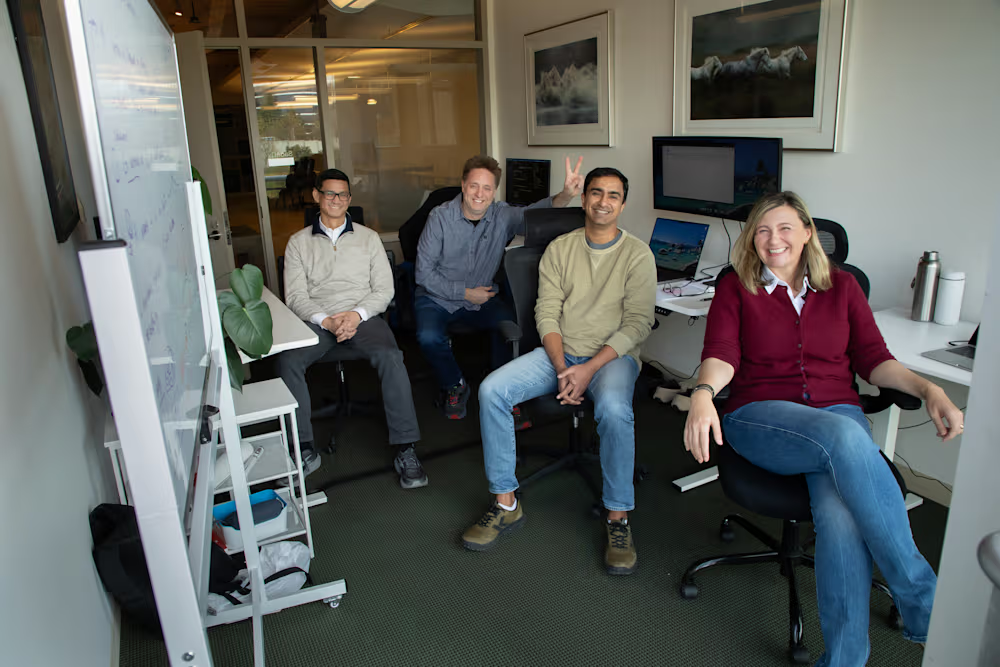
AI agents are missing all the discussions your team is having. SageOX has an answer: agentic context infrastructure
-
Crypto World4 days ago
The FOMO Is Back: Why Bitcoin’s Latest Rally Has Analysts Flashing Warning Signs
You must be logged in to post a comment Login