
Politics
Hackney votes to end 58-year Haifa twinning, citing “anti-racist values”

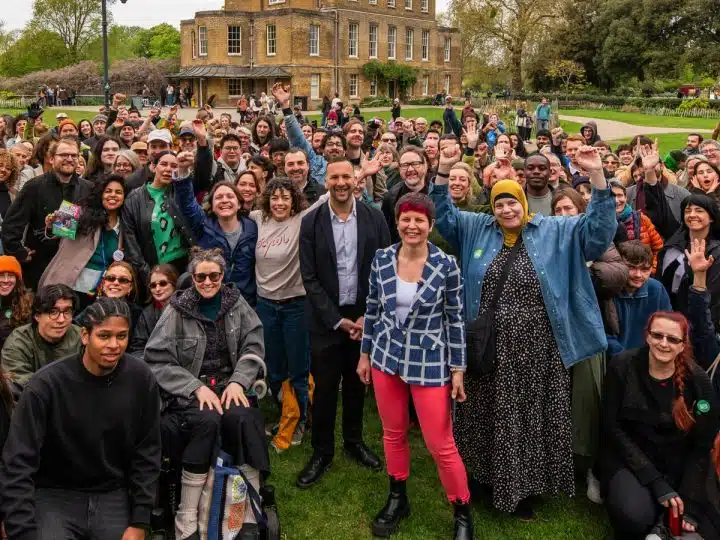

Hackney’s Green Party-led Council has voted to end its 58-year-old twin-city agreement with Haifa, a port city that “Israel” violently captured in 1948.
Councillors have upheld the vote as a commitment in their May 2026 local elections manifesto. They have pledged to end the twinning arrangement at “the earliest possible opportunity,” the details of which are under consideration.
The decision follows years of pressure by Palestine solidarity activists. The decades-long campaign involved a broad coalition of groups. These included the Greens, Stop the War, Hackney Independent Socialist Collective, and the Palestine Solidarity Campaign (PSC). The campaign gathered steam in 2024. At the time, a public petition calling out Israel’s repeated war crimes in Gaza and the occupation of the occupied West Bank received 4,000 signatures.
Tonight all the Green councillors voted to start the process of ending Hackney's twinning with Haifa. All the Labour councillors voted against. The Council will now: set up an all-party committee, consult residents, consult Haifa's Mayor & carry out an Equality Impact Assessment.
— Heather Mendick (@helensclegel) July 28, 2026
“At odds with our anti-racist values”
Hackney Council describes itself as an “actively anti-racist and human rights-respecting local authority,” and says “international partnerships remain relevant and reflect the shared values [of Hackney residents].” Councillor Sam Mathys, responsible for managing the twinning relationship has previously said that:
We want civic partnerships that are about fostering peace, justice, and equality […] For decades, we have witnessed human rights abuses committed by the State of Israel against the Palestinian people, which has escalated to a horrifying and unprecedented scale over the past years.
Raising similar points, Hackney mayor, Zoe Garbett said:
Given the ongoing humanitarian crisis, and the gravity of the UN Commission of Inquiry Reports concluding Israel has committed genocide, maintaining a civic connection with what is widely recognised [as] a military port city is fundamentally at odds with our anti-racist values.”
The city that houses Elbit Systems
Haifa is promoted as a progressive, left-wing model of coexistence — the very rationale used to justify the Twin City agreement six decades ago. However, this isn’t the case. Haifa is one of three Palestinian coastal cities Israel has been occupying since 1948. It is also the site of the first Palestinian ghetto post-Nakba.
Since then, Haifa has functioned as a major logistical hub for seaborne military shipments. It hosts Israel’s main naval base and the headquarters of Elbit Systems Global. Elbit is the occupation’s largest privately owned arms manufacturer, and produces 85 percent of the Israeli Occupation Forces’ (IOF) land-based equipment and drones.
One might wonder how we got here? In 1948, 95 percent of Haifa’s indigenous Palestinian population were violently expelled by Zionist Haganah militiamen. Those Palestinians who survived the exterminationist campaign today face unparalleled discrimination across housing, employment, education and politics, and much more.
A survey published in May 2025 found that 82 percent of Jewish Israeli citizens supported the forced expulsion of Palestinians from Gaza. They also supported wanton killings of Gazans by the IOF. According to Orly Noy, former chair of B’Tselem, it will take “decades of rehabilitation” for Israeli society to rectify and undo these views.
Defenders of “Israel”
The decision, as is to be expected, has ruffled the feathers of Labour party members and affiliates. In 2024, the de-twinning was formally presented to the council. At the time, Labour councillor Michael Desmond described it as an “appalling, abusive tirade,” and defended the agreement as one which promotes:
cultural values, religious freedom, tolerance and peaceful coexistence.
Labour councillor for Hoxton West, Ben Lucas said his party could not support the paper “in all good conscience.” He told the Greens they were punishing the “Israelis” for the actions of their government.
Conservative party councillor Simche Steinberger has also criticised the de-twinning decision. He cited medical exchanges between Hackney’s Homerton University Hospital and Haifa’s Rambam Hospital. At the debate, he said:
It’s probably the only twinning which actually does something because I remember a few years ago where the doctors from Haifa Hospital were here in Homerton teaching them what to do.
A license to kill
Rambam is the biggest Israeli hospital in northern Israel, situated 30 miles from the Lebanese border. For the past three decades there has been “medical cooperation” between these two hospitals. But this is not the type of medical cooperation you might expect, because Ramdam hospital also works closely with the IOF.
Ramdam not only treats tens of thousands of injured IOF, it also trains IOF doctors to treat soldiers who have killed and maimed civilians. This enables the ongoing genocide in Gaza.
The IOF act with total impunity in both the West Bank and Gaza. They detain children, steal Palestinian land, control movement, raid homes, and prevent access of emergency services to the injured. They protect illegal armed settlers, and kill and maim innocent civilians.
Is this the culture of tolerance defenders of Israel have in mind when excusing the genocidal and racist conduct of the colonial-settler project?
Second class citizens
Sussan Rassoulie, a key proponent of the campaign and the leader of the 2024 petition, says there are multiple reasons why Hackney should not be twinned with Haifa. She underlines the second class treatment of Palestinians from Haifa and other cities in and outside of the West Bank. In addition, citing Israel’s 2018 Basic Law, Rassoulie reminds us that the occupation:
recently enacted, explicitly racist death penalty law, passed by the Knesset, also applies in Haifa.
In conversation with the Canary, Rassoulie has this to say:
Hackney Palestine Solidarity Campaign welcomes Tuesday evening’s decision if it marks the start of a swift process to end a twinning relationship with Israel’s third largest city and principal military port. We hope that a move by Hackney’s now Green-led administration will encourage campaigners in other local authorities that may still have twinning relationships with cities or towns in a state engaged in a genocidal war in Gaza and pursuing a brutal policy of ethnic cleansing in the West Bank and East Jerusalem.
Time to Isolate “Israel”
Various other towns and cities in England are also twinned with the Zionist state. Newcastle and Portsmouth are also twinned with Haifa in Northern “Israel,” while Bournemouth is twinned with the resort of Netanya. The borough of Barnet is twinned with the Tel Aviv neighbourhood of Ramat Gan. Meanwhile, the borough of Elstree and Borehamwood in Hertfordshire is twinned with the central town of Shoham.
It is time all ties with the genocidal state of “Israel” were broken, and the Israeli occupation is isolated on the world stage. They only help to legitimise and normalise its horrendous crimes against the Palestinians.
Hackney Council says it will now set up an all-party committee, consult residents, and carry out an Equality Impact Assessment. It has given Haifa’s mayor until 5 October to respond to the decision.
Featured image via the Canary
By Charlie Jaay


According to the experts at BBC Science Focus, we have around two solar eclipses per year. Which might sound staggering because from our perspective, they are incredibly rare, right? How many times in your life can you say you’ve seen one compared to lunar eclipses?
Dr Alistair Gunn, a radio astronomer at the Jodrell Bank Centre for Astrophysics at the University of Manchester explains: “A lunar eclipse, when the Moon moves through the shadow of the Earth, is visible from wherever the Moon is above the horizon, which is over half of the Earth. However, when the Moon appears to move in front of the Sun during a solar eclipse, the shadow cast by the Moon is much smaller than Earth. It’s only about 480km (300 miles) wide when cast onto the Earth’s surface.
“Solar eclipses are therefore only visible from within a narrow path across the Earth, making it difficult to get to a location to see one. This is why they are visible less often from any given location.”
However, in a couple of weeks, some parts of the UK will experience the largest solar eclipse in over 25 years.
Where to see the August solar eclipse in the UK
According to the UK Health and Security Agency (UKHSA): “The solar eclipse will be visible across the whole of the UK.
“People watching in the South West are likely to see the greatest proportion of the Sun covered by the Moon… this will be the most coverage seen from the UK and Ireland since the 1999 solar eclipse – which was total from most of Cornwall and Devon – making it a genuinely special occasion.”
In fact, the BBC states that people in Bristol, Somerset, Gloucestershire and Wiltshire are expected to see around 90% of the Sun obscured, while Cornwall and the Isles of Scilly should get some of the best views anywhere in the UK with 95%.
How to safely watch the solar eclipse
You can actually buy solar eclipse glasses! If you are looking to purchase these, the UKHSA advises ensuring the ones you buy have specially designed filters that meet the international safety standard ISO 12312-2:2015(E).
Alternatively, they advise, you can watch the eclipse indirectly without any specialist equipment at all. Safe options include:
- a pinhole viewer, which you can easily make at home
- viewing the Sun’s image projected through a colander or the gaps between tree leaves
- projecting the Sun’s image onto a sheet of paper using a simple pinhole projector
A Halloween horror…

He’s only two weeks into the job and Andy Burnham has already been hit with his first deadline.
A British commander warned the prime minister on Thursday that he needs to make his defence spending commitments clear by the autumn – or risk losing his support.
General Sir Richard Barrons, who co-authored the 2025 Strategic Defence Review, warned “a much more challenging discussion about what do you really think you’re doing with this government” awaits Burnham if he has not outlined plans by September or October.
His words follow a week where ministers repeatedly refused to commit to the previous target of spending 3% of gross domestic product (GDP) on defence by 2030.
It’s an obstacle which proved fatal to Keir Starmer’s premiership.
John Healey resigned as defence secretary over a lack of spending for his department in June, something which helped to accelerate the former prime minister’s downfall.
By making Healey his chancellor, Burnham has sent clear signals that he will respect demands to hike up the department’s budget.
So why did the new defence secretary, Wes Streeting, only commit to the Nato pledge 3.5% of GDP on defence by 2035 – a date which is in the next parliament – this week?
He told broadcasters that while the government is not “ruling out” the 3% spending commitment by 2030 but added: “It’s really important we set out how it will be paid for.”
While a very reasonable observation – a marker of how the Burnham cabinet is already building a reputation for more transparent communication – worries about defence investment are hardly new.
Russia’s invasion of Ukraine started more than four years ago and the Israel-Hamas conflict in Gaza has been raging since 2023.

Chair of the defence committee, Labour MP Tan Dhesi, told HuffPost UK that the government “must set out a clear plan for meeting its defence spending targets, with specific milestones and deadlines.”
He said the committee has already called for defence spending to reach 3% of GDP in this parliament.
Dhesi warned: “With the prospect of a Russian attack on a Nato ally before 2030, we cannot afford to delay. Investment in the UK’s defence and security must be accelerated as a matter of urgency.”
There’s also the matter of the “black hole” in the £15 billion defence investment plan (DIP) which Starmer failed to fully cost before he left office.
The Treasury only found £10.3 billion in departmental savings, meaning Burnham will have to find £4.7 billion in his autumn budget.
Even if the DIP were fully-funded, it would only take the UK to 2.7% of GDP from 2027-28.
It’s not just Burnham’s defence policies under scrutiny over potential cost, either.
His policy blitz from the last two weeks has seen him live up to his promise of putting the cost of living at the heart of his government.
The PM has promised to cut VAT from energy bills, a move expected to cost £850m.
The government said this would be funded via the cancelled digital ID programme.
However, former cabinet minister Darren Jones said the tax cut was “unfunded” because there had never been an extra pot of money for digital ID.
Burnham also announced a £500m plan to cap bus fares at £2 from January until the end of 2027 outside of London.
Most of the funding will come from money reserved for climate and energy projects, despite worries about the international impact.
The PM revealed a 20% cut in business rates for pubs and clubs too, which will cost £100m a year.
That will be funded by removing business rates relief from businesses which do not “make a positive contribution” to local communities, though the exact details remain unclear.
Burnham’s daily policy announcements have effectively boosted his support among voters and stopped him from looking like Starmer 2.0.
““It is in that sense that his honeymoon may only last so long, before the reality of governing effectively causes him the same problems it has previous Prime Ministers.””
Labour has overtaken Reform in some polls for the first time in 16 months, with Survation putting Burnham’s party on 26% compared to Nigel Farage’s 24%.
Deltapoll and YouGov put the parties neck-and-neck, while More in Common found Burnham’s approval rating has soared to heights Starmer never reached.
But, as Savanta’s political research director Chris Hopkins warned, this could go into decline when the PM has “actual difficult decisions to make”.
He told HuffPost UK: “Burnham has started well, and his policy blitz, well-received by commentators, will begin to trickle down to the public.
“At this stage, though, the bounce is more likely to be less about Burnham the man and more about what he is trying to represent – a break from ‘politics as normal’.”
But he noted: “Where this has the potential to fall down is when he has actual difficult decisions to make.
“He’s already discussed using up his political capital to reform social care, something that has made PMs before him, namely Theresa May, come unstuck with the electorate.
“There is a danger that his popularity will fall, and fall quickly, as soon as he tries to address the challenges his predecessors failed to.
“It is in that sense that his honeymoon may only last so long, before the reality of governing effectively causes him the same problems it has previous prime ministers.”
More in Common’s Louis O’Geran offered a similar warning that his time in the sun might not last very long.
The external affairs manager told HuffPost UK: “There’s no doubt that changing leader mid-term has given Labour and the new PM breathing space.
“After a couple of weeks of popular announcements, Labour’s standing in our latest poll has risen to its highest since the early months of Keir Starmer’s government, and Burnham’s own approval rating now surpasses Starmer’s all-time high.
“However, it’s still very early days, and we’ve only seen a small number of polls so far. What these results tell us most of all is how volatile public opinion has become.”
Burnham will most likely be able to enjoy a few weeks of rising in the polls across the summer.
But, when MPs return from recess, parliamentary scrutiny resumes and pressure rises ahead of his first Labour conference as leader, real life will hit for voters as they realise the money has to come from somewhere.
Will Burnham be able to retain his newfound support once the cost of his promises start to come in?

It is probably fair to say that at this point, we have got self-care DOWN.
Between Red Light Therapy masks, protecting our peace and revelling in the joy of cancelled plans, we definitely are more informed on wellness than any generation before us.
However, I can’t help but wonder if we have potentially taken it a little too far. In our attempts to stay calm during times of political uncertainty, a global pandemic and innumerable weather crises, have we forgotten the joy of having fun?
I truly believe that in these hard times, fun could be exactly what we need to get us through, and that the old millennial mantra of “YOLO” deserves a revival, pronto. We’re only living once and we need to try to find our pockets of real, loud joy wherever we can.
Science says we need fun just as much as children do
Writing for The Conversation, two professors from Auckland University explain: “A recent study suggests a potential neurobiological pathway between playfulness and cognitive health in older adults. At its core, play provides a space to reset, allowing us to step outside pressure and performance. In doing so, it supports not only stress regulation, but sustains emotional balance and quality of life across adulthood.
“The value of playfulness also goes beyond the individual. Playful engagement in social contexts helps build shared emotional resources, shaping how people interact and cope together over time.”
They add: “In a world that demands constant busyness, play offers essential qualities we are at risk of losing: spontaneity, togetherness and the freedom to have fun.”
This has been my experience, too. I am not particularly good at doing crafts but I have found that when I take the time to do little crafts with friends, I come away from it feeling completely enriched. The joy is in the creating, not necessarily of the final creation.
In his book “Don’t Call It Art: 10 Ways to Create Like a Kid Again”, Austin Kleon says: “We’re better at life when we are having fun and keeping things light. On the wall above my desk, I keep a framed picture of actor Bill Murray with a goofy look on his face and a Post-It note stuck to it that says ‘STAY LIGHT’”
This is referencing a speech that Murray gave to baseball players: “If you can stay light, and stay loose, and stay relaxed, you can play at the very highest level—as a baseball player and as a human being.”
Kleon adds: “Look around and ask yourself: ‘who’s having fun?’, it should be you.”

We hope you love the products we recommend! All of them were independently selected by our editors. Just so you know, HuffPost UK may collect a share of sales or other compensation from the links on this page if you decide to shop from them. Oh, and FYI — prices are accurate and items in stock as of time of publication.
Every day should be orgasm day, but today it actually is. Didn’t know National Orgasm Day was a thing? Well, now you do.
I would say I’ll leave you to celebrate accordingly, but unfortunately that’s not achievable for everyone.
In case you didn’t already know, the orgasm gap still exists. Although men orgasm 95% of the time during partnered sex, this goes down to 65% for women.
But, contrary to what we’ve been told until fairly recently, that’s not because it’s ‘harder’ for people with vulvas to orgasm, or because they don’t want to.
In fact, research commissioned by ethical porn platform FrolicMe finds that 65.3% say orgasm is important to them during sex. Fair!
While orgasm doesn’t always have to be the goal, things can get frustrating pretty quickly if you’re consistently not reaching orgasm – or having it prioritised – with the same partner.
Whether you’re in pursuit of orgasm with a lover or by yourself this orgasm day, I’ve rounded up my favourite tools for reaching orgasm as someone with a vulva.
Namely: sex toys and ethical porn. As a sex writer and podcaster, I’ve tested hundreds of sex toys at this point, and (ahem) visited plenty of erotic platforms in my time – not to mention I constantly speak to the brands and owners trying to boost the orgasm rate for women and represent female fantasies in all their wonderful forms.
Keep reading for my go-tos when I want to know for sure that I’m going to have an orgasm.
Best sex toys for vulva owners

If you’re not into internal vibrations, finding a great dildo that you can use alongside a clit vibrator is a great way to get your blended orgasm in.
This one from So Divine is my fave, thanks to being super flexible (and pink).
I love that it’s not realistic, which makes it accessible for anyone who’s not attracted to penises, not to mention it has a strong suction base, so you can attach it to any surface you like for the ride of a lifetime.
Type: Dildo
Features: 6 inches
Material: Silicone
Power: N/A
Waterproof: Yes.

You know that numb sensation you can get in your clit when using a suction sex toy? Yeah, well that doesn’t happen with the SONA.
Instead of the magic other clit suction toys use, this one is loaded with sonic waves, which suck and pulse against your clit without even touching it.
It has 10 built-in suction modes, with an extra two unlocked when you connect it to the app, which means you can enjoy everything from a gentle tickle to a body-shaking tremor, if you so please.
Type: Suction vibrator
Features: 10 vibrations plus 10 via the app
Material: Silicone
Power: Rechargeable
Waterproof: Yes

Should you be wondering the best kind of stimulation for a near-instant orgasm, it’s blended. Just FYI, C-shaped toys are the way to go for that.
This one from Bellesa has a suction end that sits against your clit, while the other end sends deep vibrations against your G-spot.
Each end has five speeds to choose from, which are all controlled via the handy remote, which you can hold yourself or hand over to a partner for a spot of power play.
Type: C-shaped toy
Features: 5 suction and 5 vibration speeds
Material: Silicone
Power: Reachargeable
Waterproof: Yes.

Honestly, sometimes I come too quickly with this thing. If that’s not enough to convince you that you need it, I don’t know what will.
As well as 10 vibration speeds against the clit, that shaft thrusts in five speeds inside of you, so you don’t have to move an inch.
But that’s not all. Oh no, the base of the shaft is filled with rows of beads that rotate around the entrance of your vagina, so you’ll be at the mercy of three kinds of stimulation. BRB.
Type: Rabbit vibrator
Features: 5 thrusting, rotating & vibration speeds, and 10 clit vibration modes
Material: Silicone
Power: Rechargeable
Waterproof: Yes.

How does 100% orgasm success rate sound to you? Yeah, you’re not going to want to put this Womanizer clit suction toy down.
With 10 Pleasure Air intensities, 10 vibration intensities, and 10 vibration patterns, Enhance has over 10,000 possible combinations to play with.
Now that’s something your partner can’t do.
Type: Clit suction toy
Features: 10 vibration speeds, 10 patterns, and 10 suction modes
Material: Silicone
Power: Rechargeable
Waterproof: Yes.
Best ethical erotic platforms for vulva owners

Berlin-based Ersties is run by an all-woman team, which naturally means it prioritises spotlighting female pleasure in all its forms.

FrolicMe centres the spectrum of female fantasies in all their glory. Created by Anna Richards, the site showcases audio and video erotica filmed in the most beautiful, luxurious destinations you can imagine, to give your mind some much needed respite.

With two decades of experience in the adult film industry, Erika Lust makes films described as ‘adult cinema’ for a reason. They’re visually appealing enough to be shown on the big screen, with creative storylines designed to spark imagination and conversation among couples.

If you’re bored of seeing unrealistic storylines play out in porn, Lustery could be just what you’re looking for. It shows real couples having sex how they like it: no frilly storylines, just authentic bodies and couples giving each other pleasure the best way they know how.

If you prefer things short and sweet, RedGIFS shows erotic content in short, digestible videos, akin to scrolling on Reels or TikTok (but much, much sexier).

Here’s a fact that never fails to make me feel more connected to my fellow man: at any given time, about one in seven UK adults is struggling with constipation.
It’s believed to affect twice as many women as men (ladies have a longer colon and more variable hormones), and tends to get worse and is more likely to be chronic as we age.
Experts think that change might be partly down to factors like decreased mobility, drinking less water, slower gut transit time, weaker muscles, certain medications, and a higher likelihood of medical conditions that make getting backed up more probable.
Regardless of its cause, though, there’s lots of research to suggest a relatively simple solution: maybe we should all be trying a poop walk.
Er… what?
We’ve written before about “fart walks,” which involve going for a short stroll after a meal. These have been linked to better blood sugar management and even a lower cancer risk.
And research has shown that walking gets our bowels moving a minute or so after we start, helping to relieve constipation, too.
Speaking to HuffPost UK, Julie Thompson, an Information Manager at digestive system charity Guts UK, said: “One of the roles of the large bowel is to absorb water from the gut contents, so the longer poo stays in the large bowel, the drier it becomes.
“Walking stimulates bowel movements because it increases intestinal motility (increases gut muscle contractions) in people with constipation, decreasing the time it takes for the gut contents to move through.”
She added, “Walking regularly can also improve the variety of the gut microbes, compared with those who are less active, which produces health-related benefits for the large bowel and for wider health.”
How can I take a poop walk?
Thompson told us that it can be hard to work out exactly how far or long we should walk to, er, unclog the pipes.
“Research studies use a wide variety of activity in their publications, so it is difficult to be precise about the combined recommendations, plus there is likely to be some individual variation,” she said.
Still, a little may go a long way. A 2025 paper, which included 21 healthy adults, saw great results after a 20-minute treadmill walk, noting that bowel activity increased pretty much as soon as participants got moving.
And other research from this year, which focused on older adults with Parkinson’s disease, found that increasing participants’ steps by 3,000 daily from their usual baseline “significantly improved constipation” after three months.
Thompson told us that you don’t need to be constipated to take advantage of a poop walk – “the best option is to follow the NHS general guidance on activity, which recommends adults should try to be active every day and aim to do at least 150 minutes of physical activity over a week, through a variety of activities including walking.
“If someone is able to walk, but is not active, it is best to increase the distance gradually,” she added.
Even if you’re not constipated, walking can keep you regular
The NHS says on its site that “A daily walk or run can help you poo more regularly”.
Professor Yohei Otaka, author of a study that found a 20-minute walk improved healthy adults’ gut motility, said, “Walking can serve as an effective, immediate tool for stimulating bowel function.
“The findings also point to potential underlying mechanisms, such as changes in autonomic nervous system activity or reflexes triggered by the body’s natural oscillations during movement.”
Aside from its bowel-based benefits, a stroll can “improve cardiovascular health by strengthening the heart, thereby helping circulation, lower[ing] blood pressure, [and] helping in the prevention of heart disease and stroke,” Matthew Nolan, a chief instructor at Barry’s in New York City, previously told HuffPost.


The Met Police has again arrested dozens of mostly older protesters at Westminster Magistrates’ Court for protesting against Israel’s genocide and the UK’s ‘terror’ ban on protest group Palestine Action.
Activist photographer ‘BetterThanReal’ was on the scene for Skwawkbox and the Canary to capture the events. As always, the protesters were entirely peaceful, good tempered. And they were mostly older, including – again – Jewish Holocaust survivors and retired priests:


But the police gathered in large numbers to drag off their targets:


The victims included an 80-year-old Holocaust survivor, showing once again that the regime’s ‘terror’ clampdown has nothing to do with protecting Jews. She was arrested despite holding only placards against Israel’s genocide:
View this post on Instagram
Palestine Action arrests
The Defend Our Juries group posted footage of long-time Quaker Rajan, who was arrested for supposedly assaulting a police officer, despite his complete Quaker commitment to non-violence and abundant witnesses:
View this post on Instagram
In a statement accompanying the footage, the group said:
DIRTY TRICKS AND FALSE ARRESTS
The Met Police arrested a number of people unlawfully today, not including the unjust arrests of those announcing their support for Palestine Action (which we also are confident will be proven unlawful).
In this clip, Officer Myers accuses a totally nonviolent Quaker of “assaulting a police officer”. Something which categorically has never happened.
Rajan, who has been a supporter of Defend Our Juries since it launched in 2023, has never assaulted or been accused of assaulting anyone in his life. He is devoutly nonviolent, and is a proud member of Quakers for Peace.
It will be of concern to many that they picked a person of colour from a crowd of largely elderly white people and made this false accusation.
This arrest is among a number of seemingly dirty new tactics being used by the Met to attempt to justify their unlawful and irrational treatment of peaceful protesters. Among other false accusations today were breaches of the Serious Organised Crime Act (for speaking on a megaphone) and arrests under Section 12 of the Terrorism Act (for getting the attention of the crowd and not even mentioning Palestine Action).
We will not be intimidated.
Free Rajan. Free all of us. Free Political Prisoners.
Free Palestine.
And while some were arrested for pronouncing their support for the banned group, others were arrested without saying anything at all. Or simply for moving aside to allow poets room to read their work:
The accession of Andy Burnham as PM in place of Keir Starmer has done nothing to reduce the government’s authoritarian police-state behaviour.
Featured image via BetterThanReal
By Skwawkbox


FIFA is considering expanding the men’s World Cup to 64 teams for the 2030 tournament. This would mark the competition’s 100th anniversary.
According to documents seen by Reuters, football’s governing body will begin a formal review of the proposal on 14 August. An independent organisation will be asked to assess whether the expansion is workable. Its findings are due by 11 September, before FIFA decides whether to take the idea any further.
FIFA’s latest light-bulb moment
The proposal came from South America’s football confederation, CONMEBOL. It believes the centenary World Cup should include more nations than ever before.
The review will look at far more than simply adding another 16 teams for the next tournament. FIFA wants to understand what a 64-team tournament would mean for the quality of the competition and player welfare. The review will also consider the already crowded international calendar, and the practical challenges of staging an even bigger event. Furthermore, it will assess the financial impact, including broadcasting rights, ticket sales and sponsorship.
The idea is already proving divisive. The first 48-team World Cup has yet to be played, with that expanded format only due to make its debut in 2026. Even so, FIFA is now weighing up whether the tournament should grow again just four years later.
Not everyone thinks that’s a good idea
UEFA president Aleksander Čeferin has previously described the proposal as “bad”, arguing that continually expanding the tournament could dilute its quality and prestige. Asian Football Confederation president Sheikh Salman bin Ibrahim Al Khalifa has also raised concerns. He warned that adding more teams would put even greater pressure on players and an already packed fixture schedule.
The findings of the review will help FIFA decide whether a 64-team World Cup would bring enough sporting and commercial benefits to justify another expansion. Otherwise, the new 48-team format should remain in place.
The 2030 World Cup will be co-hosted by Morocco, Spain and Portugal. Argentina, Uruguay and Paraguay will each stage one match as part of celebrations marking 100 years since the first World Cup was held in Uruguay in 1930.
Featured image via the Canary
By Alaa Shamali

Protein is a key nutrient made up of tiny building blocks called amino acids. It provides us with energy, helps the body grow and repair, and is typically found in meat, fish, dairy, eggs, nuts, beans and lentils.
For healthy adults, the recommended daily amount of protein is about 0.75g per kg of body weight, notes the British Heart Foundation, adding that’s about 45g a day for a 60kg woman, and 55g a day for a 75kg man.
The reality is we’re easily consuming that. Helena Gibson-Moore, nutrition scientist for the British Nutrition Foundation (BNF), said people in the UK are, on average, “eating more than enough protein”.
Society has become pretty obsessed with protein, evident in the protein-fortified foods popping up everywhere and popularity of protein-rich ‘carnivore’ and ‘boy kibble’ diets touted by influencers on social media.
While protein is good for you, experts have long cautioned that not all protein is created equal. And now, a new study suggests that less – not more – protein could be key to healthy ageing in people who aren’t as active.
“It’s absolutely crystal clear that there are benefits of protein to muscle growth and exercise response of active individuals,” said study author Dudley Lamming, from the University of Wisconsin-Madison.
“But because most people are relatively sedentary, many people are likely consuming more protein than they actually need, which probably has negative health consequences.”

Synergee via Getty Images
What did the study reveal?
The review of 350 existing papers on protein restriction and ageing, published in the journal Cell Press Blue, looked into how protein-restricted diets could improve health and promote longevity.
After analysing these studies, researchers suggested cutting protein intake may slow ageing by improving metabolism, changing how cells respond to nutrients, reducing cellular damage, and preserving healthy cell function.
One of the key players believed to be behind this is a hormone called fibroblast growth factor 21 (FGF21), which can increase the body’s energy expenditure, improve blood sugar control, and reduce inflammation.
Researchers said levels of this hormone rise when protein intake is low. They also pointed to studies in mice, which have shown that animals with higher FGF21 levels lived longer than normal mice.
They also noted that consuming too many of a certain type of amino acid could trigger biological processes that promote growth, increasing the risk of obesity, inflammation, and other age-related diseases.
“These studies show that the amount of protein sedentary people are eating today may have negative health consequences, at least at the population level,” Lamming said.
While some people, like pregnant women and some older adults, have higher protein needs, for most sedentary adults, protein-fortified food may not provide the health benefits people expect, researchers added.
Discussing how athletes manage to consume large amounts of protein without developing metabolic diseases, the experts hypothesised that regular exercise may be protective.
Lamming ended: “We probably need to personalise protein recommendations based not just on age, but also on how physically active people are.”
The protein discussion ‘should consider performance and longevity’
Responding to the findings, Dr Will Hsu, a longevity expert and chief medical officer of L Nutra Health, who wasn’t involved in the review, told HuffPost UK that much of the conversation around protein is focused on physical performance, maintaining muscle, and preventing frailty.
“These are important goals. Protein is essential for supporting recovery, preserving physical function, and maintaining lean mass, particularly in older adults,” he said. “But the protein discussion should consider two objectives at the same time: performance and longevity.”
He stressed that protein and its amino acids “are not simply building materials, they are also biological signals that activate pathways involved in growth, metabolism, and cellular ageing”.
When we’re young, physically active, recovering from illness, or trying to maintain muscle, these pathways are essential.
However, keeping growth pathways continuously activated through a high protein diet “may not be ideal for long term metabolic health, particularly in someone who is relatively sedentary”, he added.
Protein intake should be personalised and plant-forward
Protein’s effects vary depending on many elements – from the amount consumed, to the food source, to your physical activity levels and age.
“The average person should not read this research and immediately start cutting protein,” said Dr Hsu. “A better question is: How much protein do I need, from which foods, at this point in my life?”
He suggested a sedentary adult who already eats plenty of meat, protein bars, shakes, and protein-fortified foods “probably does not need to keep adding more”.
But replacing some animal protein with beans, lentils, nuts, seeds, and other plant foods “may create a more favourable amino acid balance, while also providing fibre and other protective nutrients”.
This advice would then change for an older adult at risk of muscle loss, an athlete, someone recovering from illness or surgery, or a person losing weight rapidly, he noted.
“For these individuals, adequate protein and resistance exercise are critical for protecting muscle, bone, strength, and independence. Pregnant women and people who are already underweight or frail should also not restrict protein without professional guidance,” he explained.
“This is why one protein recommendation cannot work for everyone. Two people of the same age may need very different amounts based on their muscle mass, activity level, health, and risk of frailty.”
He ended: “Ultimately, the goal is not maximum protein or minimum protein. It is enough high-quality protein to preserve strength and function, without assuming that more is automatically better.
“For many people, that means shifting toward a more plant-forward pattern and personalising protein intake based on age, activity, metabolic health, and muscle needs.”

Andy Burnham’s new plan to offer metro mayors a greater proportion of income tax to spend on their local communities has already hit a stumbling block.
In his push for devolution, the prime minister promised that “more of the taxes raised in a community will stay in that community” in plans to be outlined in his autumn Budget.
Conservative mayor of Tees Valley, Lord Houchen, then suggested giving that extra cash back to taxpayers.
But first secretary of state Louise Haigh slapped down the proposal this morning, telling Times Radio: ”Mayors have the ability to spend the money almost as they want now, especially in advanced mayoral authorities like Tees Valley.
“To my knowledge, Ben hasn’t developed a rebate scheme and it’s not in their gift to set income tax or business rates.
“So we would anticipate that the money would be invested into public services and into growth schemes that benefit the community as a whole.”
She added: “Mayors don’t have the ability and won’t have the ability under these plans to set income tax rates at a regional level …
“Those kind of schemes necessitate HMRC to set up full schemes. That’s just not possible at the moment.
“The way that the mayors are set up and to work is to reinvest the money into their public services, into their local economies.”
Houchen later replied on X claiming the proposals do not “sound much like devolution” to him.
He wrote: “So devolution means getting people’s taxes to spend but not being allowed to give it back to them.
“Last time I spoke to the PM, devolution was about Whitehall not dictating what areas can or can’t do.
“Doesn’t sound much like devolution to me? Just an excuse for a tax grab.
“They want to reward mayors for growing the economy but the best way to grow the economy is to let people keep more of what they earn.”
Chancellor John Healey later hit back at the mayor, telling broadcaster: “If mayors want to cut investment, like Ben Houchen says he wants to do, then he’s got to answer for the fact that bus services don’t improve, that jobs aren’t available…
“And I hope he’ll see, like most other mayors see, that this is a big opportunity for them, big opportunity for the businesses in their area and a big opportunity for the people in their area.”
The Conservatives also expressed concerns over the plan, as shadow local government secretary James Cleverly said it would just lead to higher taxes.
He said: “Andy Burnham is right to want to encourage growth in all communities.
“But his top-down Manchesterism will lead to higher taxes, with no guarantee of better outcomes for local people.
“Devolution cannot be imposed from above – it can only work if it’s done in cooperation with local people.
“But Labour’s regionalist approach takes power away from local communities, sidelining local councils and ignoring local identities.
“What works in Manchester won’t be the same for Essex, Cornwall or Cumbria.”
Liberal Democrat leader Ed Davey also claimed: “The need to move power into our communities is undeniable, but this must benefit communities right across the country — not just those with the right postcode.
“The government’s own figures show areas without a strategic mayor are already receiving a fraction of the funding available to mayoral authorities and adding income tax powers on top of that would make a bad situation worse.
“The Liberal Democrats will continue fighting for every community across the country – whether that’s in cities like Hull, seaside towns like Cromer and Torquay, or in suburbs, market towns and villages across England.”
Meawhile, the deputy leader of the Green Party Rachel Millward, said it was a “welcome step” but “fiscal devolution cannot become an excuse for the government to ignore the deep funding crisis facing local councils”.
Reform’s home affairs spokesperson Zia Yusuf said: “Burnham must fully devolve the power to stop the housing of illegal migrants in local communities by the Home Office.
“Time to find out if Burnham means what he says or is just Starmer in jeans.”
Listen to Commons People, the podcast that makes politics easy. Every week, Kevin Schofield and Kate Nicholson unpack the week’s biggest stories to keep you informed. Join us for straightforward analysis of what’s going on at Westminster.

The Vikings Pass Along Wonderful News

A third of physical PS5 games and half of Xbox Series discs need downloads to work properly, report shows

Male Bulimia & Body Image: What I Learned As The Only Man In Eating Disorder Therapy


-

 Fashion7 days ago
Weekend Open Thread: Brooks Brothers
-
 Sports5 days ago
Commonwealth Games boxing: Jadumani Singh seals dominant 5-0 win over Pakistan’s Sumama Rehman to enter quarter-finals | Commonwealth Games News
-

 Business2 days ago
Why Trees Belong on the Risk Register
-

 Tech5 days ago
Intel is reversing course and bringing hyper-threading back to its server chips
-

 Crypto World6 days ago
Ripple bought a bank in pieces. The $4 billion audit
-

 Politics4 days ago
Luke Littler dismantles Gerwyn Price to retain title in Blackpool
-

 Politics3 days ago
The Part of the Electric Transition Nobody Wants to Discuss
-

 News Videos5 days ago
BITCOIN JUST ENTERED THIS CRITICAL ZONE…
-

 Business2 days ago
Major shareholder moves on Canyon
-

 Crypto World5 days ago
XRP Ledger adds $2.6B as RWA inflows rank second
-

 News Videos1 day ago
Bitcoin Enters the 3rd Stage of the Bear Market
-

 Politics5 days ago
Spain sweeps the board at 2026 World Cup with individual awards
-
 Entertainment3 days ago
‘Stargate’ Creator’s New Sci-Fi Series Returns for Season 3 Tomorrow
-

 Entertainment6 days ago
Sara Gilson Killed By Husband After Viral “Pedophile” TikTok Video
-

 Crypto World3 days ago
Kraken Enables Retail Access to Jersey Mike’s IPO via Tokenized Shares
-

 Tech7 days ago
Anthropic launches Claude Opus 5, a cheaper AI model for coding, agents and enterprise workflows
-

 Tech4 days ago
New macOS Sequoia & Sonoma security updates for older Macs
-

 News Videos3 days ago
Claude: Build Financial Dashboards in Minutes (2026)
-

 Politics1 day ago
Luke Littler’s dominance sparks GOAT debate
-

 Sports16 hours ago
Seema Kaliramna Wins Discus Throw Bronze, Takes India’s CWG Medals Tally To 17
You must be logged in to post a comment Login