

Politics
How ‘Money Powers’ manufacture perpetual state of emergency


This article is the second in a two-part series on power consolidation. You can read the first here.
If we have historically witnessed how ruling elites engineered shocking events on the battlefield to steer societies towards total war, the twentieth century gave birth to a far more perilous and invisible weapon: the tyranny of mathematical models.
Today, ‘Money Powers‘ no longer constantly need to blow up a physical ship to manufacture a crisis. Instead, they have learned to deploy scientific hypotheses and virtual computer simulations to engineer a permanent state of emergency.
By transforming academic deception into a tool for population reduction and resource management, the global financial architecture has found a way to quietly break the sovereignty of nations, blueprinting a future where human existence is subjected to absolute central planning.
Power: the Ghost of Malthus and the Ideology of Degrowth
This technocratic war on humanity is not a modern anomaly; its intellectual lineage is deeply rooted in colonial plunder.
Long before computers, the British East India Company required a moral facade to justify the brutal starvation of millions of Indians through coercive agricultural policies. To provide this, they relied on their own instructor of political economy, Thomas Malthus.
Malthus’s famous hypothesis claimed that population expands geometrically while food production grows only arithmetically, rendering catastrophic famines a mathematical certainty. By branding starving populations as ‘useless eaters’ who had simply outgrown the land, Malthus turned an engineered colonial genocide into a cold law of nature.
This ghost of Malthus was institutionally resurrected and modernised in 1971 – a pivotal geopolitical juncture marked by the Nixon Shock and America’s default on the dollar’s gold backing.
Supported by direct funding from the Rockefeller family, the newly formed Club of Rome released its infamous 1972 report, The Limits to Growth. Relying on flimsy, rudimentary computer simulations, the report confidently predicted a looming environmental collapse driven by human expansion. This moment marked the institutional dawn of the ‘degrowth’ ideology, successfully packaging an anti-production, anti-natalist agenda as a secular religion wrapped in pristine mathematical logic.
Ballistic Equations and the Control of Human Cargo
The chilling danger of superimposing these virtual simulation models onto human reality is starkly illustrated by China’s One-Child Policy.
Following the death of Mao Zedong, Chinese leaders sought a path toward rapid industrialisation. To unlock Western tech and markets, they consulted Japanese planners like Saburo Okita, a Club of Rome executive operating under Rockefeller auspices, who quietly slipped the population control agenda into the economic package.
Paradoxically, Beijing did not hand this social experiment to sociologists or economists, but to Song Jian, a military cybernetics expert who spent his days calculating the ballistic trajectories of missiles.
Armed with cybernetic simulation software imported from Western researchers, Song treated human beings as passive projectiles. His rigid military equations claimed that any population growth would doom China’s resources.
Blinded by the cold logic of the computer model, the central leadership enforced the policy coercively, triggering a catastrophic demographic crisis and premature societal ageing based on missile guidance software that could not comprehend human complexity
The Inversion of Nature: Famine as a Weapon of State
This deception via simulation intersects perfectly with the historical blueprint of human-made famines. While mainstream textbooks stubbornly chalk up major famines to administrative negligence or bad weather, structural analysis reveals that starvation is a calculated biological weapon deployed to smash the collective will of independent societies. Crucially, history shows these famines almost always occur during years of exceptional bumper crops.
When Mao Zedong launched the ‘Great Leap Forward‘ in 1958, resulting in a human-made catastrophe that claimed roughly 80 million lives, the biological trajectory was deliberately engineered. By branding the common sparrow an enemy of the revolution that ate grain, Mao mobilised millions to eradicate the birds. This unravelling of nature destroyed the natural predator of insect larvae, unleashing devastating locust swarms that devoured the country’s crops. This was not a failure of planning; it was a deliberate subversion of ecological laws designed to destroy the self-sufficiency of the Chinese countryside, leaving the peasantry entirely hostage to the central apparatus.
To ensure absolute control, Soviet-style logistics were ruthlessly enforced: grain was immediately seized to feed elite party cities, families hiding food were hunted down as ‘bourgeois hoarders’, and massive quantities of grain were shipped to Romania and the Soviet Union to buy military hardware while the local population starved to death. Today, the elite continues to use this exact same practice – establishing unrealistic assumptions to achieve predetermined political outcomes via rigorous mathematical logic – to enforce a permanent global emergency. We see it when international climate bodies deploy extreme, worst-case simulation scenarios to dismantle local industries and impose carbon taxes. We saw it in 2020, when computerized epidemiological models mandated global lockdowns, triggering the largest monetary printing expansion in human history and clearing the path for the final station of the cybernetic empire: the monetary prison.
Choke Points and Overland Arteries: The New Germany
To understand how this incoming financial trap functions, one must look at the historical clash between incumbent maritime empires and rising continental powers.
For centuries, the British Empire ruled by commanding oceanic choke points. When Imperial Germany unified in 1871 and rapidly devoured Britain’s market share through industrial growth, Berlin realised it needed to bypass British naval dominance. Its solution was the Berlin–Baghdad–Basra railway – engineered by Siemens and backed by Deutsche Bank – designed to tap into Gulf oil overland, completely safe from British naval artillery. This continental shortcut was a geostrategic nightmare for London, prompting British planners to help orchestrate the First World War to sever this overland artery and shatter the states hosting it.
Today, the United States has inherited Britain’s maritime crown, patrolling global naval choke points like the Straits of Malacca and Hormuz. In this modern theatre, China has emerged as the ‘New Germany’. Refusing to bow to an international system run by maritime powers, Beijing launched the ‘Belt and Road Initiative‘ – the modern overland equivalent of the Berlin–Baghdad railway.
By pouring hundreds of billions into a massive network of pipelines, railways, and land ports carving through Central Asia to the Middle East, China is effectively neutralizing the strategic leverage of the American naval blockade.
The Strategy of Balanced Shocks: Fattening the Peer Competitor
This reality exposes the ultimate riddle of modern globalization: why did Wall Street and Western mega-corporations willingly transfer their manufacturing bases and advanced technologies to China over the last few decades, hollowing out their own industrial heartlands? It was not short-sighted corporate greed; it was the grand strategy of balanced shocks.
The exact same template was deployed in the 1920s and 1930s, when American banking conglomerates like Brown Brothers Harriman and giants like Ford and General Motors poured capital into a devastated Germany. The Nazi rearmament machine was built under Reichsbank President Hjalmar Schacht, who was appointed with the explicit blessing of the international reparations committee controlled by the J.P. Morgan banking network. The underlying rule is simple: if you intend to shift humanity into a new global monetary system through a total-war shock, you must first fatten the adversary, building them into a peer competitor capable of justifying the ultimate conflagration.
Therefore, the modern proxy wars and sanctions levied against Iran and Venezuela – China’s critical energy allies and vital nodes on the New Silk Road – are not isolated regional conflicts. They are preemptive geopolitical strikes designed by Western financial powers to detonate Beijing’s supply stations, choke its non-dollar corridors, and maintain permanent instability across Eurasia to prevent any sovereign bloc from breaking away from the enforced financial paradigm.
The Petrodollar Blueprint: Shifting the Monetary Paradigm
Every major war is ultimately used as a smokescreen to collapse an old monetary system and inaugurate a new one. In 1944, at the Bretton Woods Conference, America leveraged its post-war gold reserves to decree that all global fiat currencies would be pegged to the US dollar, while Washington alone would back the dollar with gold. This privilege allowed Washington to print unbacked global reserve currency to finance the Vietnam War. When European nations unmasked the fraud and demanded their physical gold, President Nixon executed his famous 1971 shock, severing the gold link entirely and leaving the world holding unbacked fiat paper.
To force nations to keep demanding this floating paper, the petrodollar system was engineered. Washington mandated that its Middle Eastern dependencies price and sell crude oil exclusively in US dollars. This was locked in by an artificially engineered 1,500% oil shock in the 1970s, orchestrated through collusion between oil cartels and central banks. This surge forced nations worldwide into immediate balance-of-payments crises, compelling them to surrender their physical wealth to America or borrow at usurious rates from Wall Street commercial banks just to get the green paper required to buy oil. These surplus ‘petrodollars’ were then systematically recycled, with 80% funneled straight back into New York banking houses – predominantly, the J.P. Morgan network.
CBDCs and the Construction of the Molecular Prison
The current escalation against China, masked beneath the engineered inflationary crises since the 2020 pandemic, is merely the latest link in this long historical chain. It is a system designed to systematically liquidate any sovereign leader who attempts to defect from it, from Muammar Gaddafi to contemporary dissidents. The ultimate destination of this journey is the implementation of Central Bank Digital Currencies (CBDCs).
The defining feature of CBDCs is not that they are digital, but that they are absolutely centralised. They are programmable instruments of total micro-surveillance and social engineering. This is money conditioned upon a digital identity – capable of locking your funds within a designated geographic zone (a 15-minute prison city) and subject to instant freezing if you purchase an unapproved book, voice a dissenting political opinion, or exceed your daily carbon quota.
This is where artificial intelligence and the construction of thousands of hyper-scale data centres converge. Their true purpose is not to increase human productivity, but to solve the immense computational challenge of micro-managing and tracking the daily existence of billions of individuals. By stripping parliaments and politicians of the power to control credit, financial architects intend to establish themselves as the unaccountable rulers of a captured world – a literal realization of Lord Acton’s maxim that absolute power corrupts absolutely.
Decoding the Technocratic Illusion
When we synthesise these historical trajectories, the ultimate truth becomes undeniable: the ultimate weapon of the global Money Powers is not the expansion of military frontiers, but the monopolisation of life-sustaining logistics. From the forced sparrows of the Great Leap Forward to the programmable digital tokens of CBDCs, the mechanism is unchanged – the artificial engineering of dependency.
These centralised elites view humanity through a cold, cybernetic lens where human liberty is merely systemic friction to be ironed out. The survival of human sovereignty now hinges entirely on our collective capacity to decode these computerized deceptions in real-time, refusing to barter the sacred autonomy of our daily lives for the hollow illusion of technocratic security.
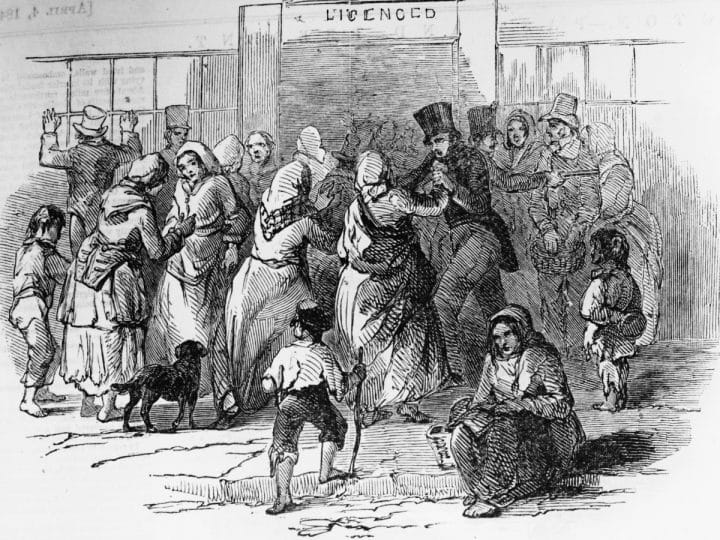
Featured image via Illustrated London News/Hulton Archive/Getty Images


On Monday morning, Sara announced that her first Radio 2 breakfast show broadcast would be airing on Monday 6 July – as well as unveiling the A-lister of all A-listers as her inaugural guest.
For her first show, the presenter will be joined in the studio by two-time Oscar winner Tom Hanks, where he’ll be discussing the latest addition in the Toy Story franchise.
“Roll on the 6 July!” she enthused. “For generations to come people will (probably) say ‘where were YOU when the Sara Cox Breakfast Show was launched on Radio 2 featuring the legendary Tom Hanks?’ (and hopefully they’ll reply ‘listening and laughing along with a nice brew’).”
Back in April, it was announced that Sara would be taking over at the helm of the Radio 2 breakfast show, following the abrupt firing of its previous host Scott Mills.
At the time, Sara said she was “ecstatic, honoured and incredibly chuffed” to be taking on the role, which she said had been her “dream” since joining Radio 2.
“It feels like a bit of a full circle for me,” she admitted.
Sara previously hosted the Radio 1 breakfast show between 2000 and 2003, and had been Radio 2′s teatime host since 2019 before her latest appointment.
“I’ve had the most glorious seven years of my career on teatime so thank you to my brilliant teatime listeners who hopefully will join me at breakfast for excellent music and all my usual nonsense plus some superstar guests,” she added, noting that she “can’t wait to wake the nation up with the biggest most fun breakfast show ever”.
Since Scott Mills’ sudden exit, Gary Davies has been filling in on the Radio 2 breakfast show.

Harry Styles took a moment to share a powerful tribute to the late artist David Hockney on the first night of his 12-show Wembley residency.
Before Harry performed his single Aperture to a packed Wembley Stadium on Friday night, a quote from Hockney appeared on the screens.
“What an artist is trying to do for people is bring them closer to something, because of course art is about sharing,” read the quote, which was met with rapturous applause from the audience.
“You wouldn’t be an artist unless you wanted to share an experience, a thought.”
The pioneering British painter and photographer David Hockney died last week, at the age of 88.
Over the course of his career, he had become known as one of the most prolific and beloved artists of his generation.
In May 2022, the former One Direction star sat for Hockney, travelling to his Normandy studio to be painted by the legendary artist.
The resulting artwork was one of more than 30 new portraits displayed for the first time in the National Portrait Gallery’s exhibit David Hockney: Drawing From Life in 2023.

In the portrait, the Watermelon Sugar singer is depicted wearing an orange and red cardigan, with a pearl necklace and blue jeans.
Harry was a big fan of the Yorkshire-born artist, telling Vogue in 2023: “David Hockney has been reinventing the way we look at the world for decades. It was a complete privilege to be painted by him.”
David was less of a fan of Harry – in fact he had no idea who the Grammy winner was before he arrived for his portrait session.
“I wasn’t really aware of his celebrity then,” Hockney admitted. “He was just another person who came to the studio.”

ANDY RAIN/EPA-EFE/Shutterstock
Friday saw Harry open the first night of his record-breaking residency at Wembley Stadium.
The chart-topper will play the London stadium for 12 nights – breaking records previously held by Coldplay and Taylor Swift.
During the show, he also paid tribute to his X Factor days, recalling how his sister took him to Wembley Arena for his first audition.
“My sister is here tonight,” he said to the adoring crowd. “I want to thank her. I love you and I appreciate you.”

The animals of Ealing’s Paradise Fields have some unexpected new neighbours.
For the last couple of years, beavers have been making an enclosed 10-hectare site their watery home – and since more or less their 2023 arrival, a London Underground ticket office that used to be plagued by flooding has remained dry.
The city’s mayor, Sadiq Khan, has praised Ealing’s beavers for putting an end to soggy conditions in parts of nearby Greenford Tube station on Instagram.
“Beavers are nature’s engineers – we just didn’t realise how efficient they could be,” Khan said in his post, adding, “These incredible creatures have already stepped up to stop flooding at a Tube station and restore local habitats”.
We spoke to Elliot Newton, the director of rewilding at Citizen Zoo, which worked with the Ealing Beaver Project to reintroduce the animals, about why they were brought back to the West London site and how they might help us humans.
Where have beavers been reintroduced to the UK?
It’s not just London. In recent years, beavers have been released across the UK, including other parts of England like Somerset and Cornwall. Scotland has kept the wild beavers spotted as early as the 2000s, the Natural History Museum said, with planned releases in the Glen Affric Nature Reserve and River Beauty set for 2026.
Wales seems keen on bringing beavers back, too. Northern Ireland hasn’t expressed interest yet, but the animals were probably never native there, unlike the rest of the UK.
“The Eurasian beaver is a native British species that was hunted to extinction around 400 years ago (and likely disappeared from London much earlier),” Newton told us.
“Over the past two decades, there has been a growing movement to restore beavers across Great Britain.”
And while the expert argued there’s a strong case for bringing all kinds of native species back to boost our ecosystem – including those we might not love the idea of, like the rat-sized, fish-eating fen raft spider – “beavers also deliver significant practical benefits”.
He continued, “As ecosystem engineers, they create and maintain wetlands that can reduce flood risk, improve water quality, increase drought resilience, and support a huge range of wildlife”.
Why might beavers help to prevent flooding in the UK?
Newton said that flood mitigation was one of the main reasons they secured funding for this project.
That’s because beavers (famously) build dams which stop the rapid flow of water down rivers during, e.g., periods of extreme rainfall. They also form ponds and mini “canals” that can create absorbent wetlands.
“Through building dams and creating wetland habitat, the beavers have increased the site’s capacity to store water and slow flows during heavy rainfall events, helping reduce downstream flood pressure. Interestingly, since the beavers arrived, the local train station ticket hall, which had previously experienced flooding, has not flooded,” Newton said.
“While more research is needed, this is an encouraging example of the potential for nature-based solutions to support climate resilience in urban areas.”
Other benefits people involved in the Ealing Beaver Project have noted include increased biodiversity, better community engagement (leading to a reduction in antisocial behaviour), and a more climate-change-resistant environment.
When I was 41, my therapist handed me photos of every boy in my fourth grade class and instructed me to condemn each one to the paper shredder. It was my first experience of truly being in the driver’s seat, and I felt giddy with control.
From an early age, I’ve carried an acute fear of rejection and abandonment. This has made dating challenging, to say the least. My typical dating pattern used to be the following: I’d meet someone I liked, become enamoured, only to find myself spiralling into persistent anxiety, worried about when and how the relationship would end.
That sense of unease began in middle school.
The night my friend revealed she had a boyfriend, we were bundled in sleeping bags on chalet bunks, up past curfew during our eighth grade ski trip. She was the first in our group to date.
As the girls clamoured for details (“What does he look like? What school does he go to?”), I should have known something was off when the only question I thought to ask was, “Aren’t you terrified that he’s going to break up with you?”
Although it would be years before I experienced romantic heartbreak firsthand, I now realise that even then, I was already bracing for the worst.
By the time I was older, like anyone who frequents pop psychology circles, I was aware of attachment styles and how early childhood experiences can shape adult relationships. Yet, I grew up in a safe, stable home with parents who didn’t always get along but loved and supported me unconditionally, so I never really understood where this anxiety came from.
This confusion persisted until 2021, when a session with my therapist changed everything.
At that time, I’d booked an appointment because I had just started seeing someone new. It was the first person I’d liked since the beginning of the Covid-19 pandemic, and I’d noticed my usual pattern taking hold again. I was overcome with anxiety over whether things would work out, and it was keeping me up at night and distracting me at work. This time, though, I felt exhausted. I was ready for a change.
“I don’t want to feel this way anymore,” I told my therapist.
Her first question was to think back to my childhood and pinpoint when this fear of rejection might have started. One incident immediately stood out.
In fourth grade, we had our first sex education class. Not long after, the boys in my class lined all the girls up against the exterior wall of our school and took turns rating each of our bodies – hot, not or disgusting. Some of the boys took it a step further and pointed out who was “flat as a board.” It was most of us; we were barely 10 years old.
It was such a humiliating and disorienting experience. I don’t remember how each of the boys rated me – not that it mattered – but I felt disgusting.
At that age, I was still very much a kid and hadn’t even started liking boys. My favourite book was Harriet the Spy, and I loved taking ballet classes, reading books and playing with Barbies with my three best friends. I also thought I was pretty cool, being the proud owner of sparkly jelly shoes and an impressive sticker collection.
Suddenly, it was like none of that mattered, and I was now hyperaware of my body and how it was perceived by boys.
Part of my childhood died that day. The message was clear: it doesn’t matter how you feel about yourself; what matters is being chosen and that boys choose you, not the other way around.
For years, I dismissed this firing squad of tween-age rejection as just another weird story from adolescence. But when my therapist prompted me to recall the memory, I finally understood how deeply it fuelled both my fear of rejection and the perfectionism I carried into my romantic relationships.
When I started dating in my late teens and early 20s, I was focused on making myself as likeable as possible, and I became really good at it. I shape-shifted myself into the ultimate “cool girl”. I never asked for too much from my partners out of fear they’d reject me. Instead, I swallowed my feelings and discomfort, shrugging off subpar treatment from the people I dated.
You don’t want to commit, but still want me to act like your girlfriend? That’s OK. I’m the cool girl! I’ll bring you homemade soup when you’re feeling sick, even though I’m not sure you even know my last name.
I felt like I was always proving myself, and being chosen was the reward. It’s only now that I can see I spent years so focused on being what my partners wanted that I rarely stopped to ask whether they were enough for me.
Even in the relationships where I felt safe to show up authentically, I struggled to express my needs. There was always a little voice warning that if I revealed too much of myself, I would be deemed “disgusting” all over again.
Sharing this with my therapist, she helped me realise that my fear of rejection was only part of it. What I struggled with was people-pleasing. In pursuit of being liked by other people, I abandoned myself.
It was time to stop the cycle. My therapist decided on an unconventional approach: reject the boys once and for all.

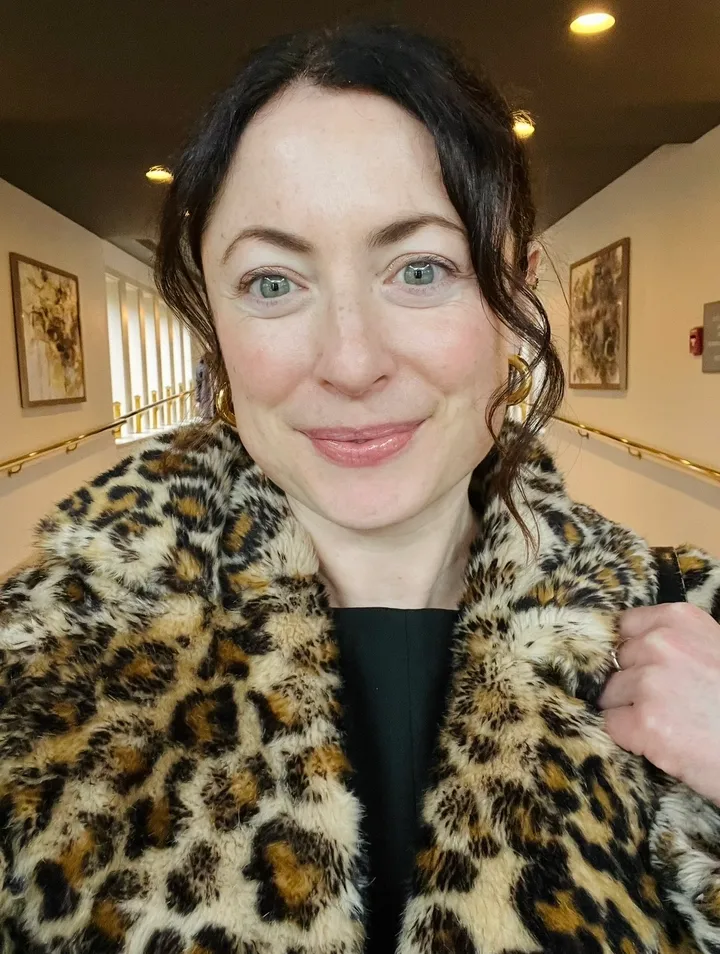
Photo Courtesy Of Simone Paget
As homework, she had me print photos of each of the boys who’d participated in the “lineup” in middle school – an easy task since I grew up in a close-knit community, and I’m still in touch with many of the people I went to school with on Facebook.
When I arrived at her office the following week, photos in hand, we spread them on the floor.
Seeing all of the boys’ photos – now middle-aged men with grey hair and receding hairlines – and rejecting them, out loud, was unexpectedly powerful.
I was finally able to see my tormentors for who they are: a bunch of guys I wouldn’t want to date anyway. In fact, most of them are married, and I’m queer and currently much more interested in dating women.
My therapist had me face each man and reject them one by one.
“Are you ready for the fun part?” my therapist asked.
She led me over to her desk, and together we eviscerated the photos in the paper shredder.
My therapist’s exercise might seem out of the box, maybe even a little mean to some, but it did exactly what she had hoped: it set me free.
It made me realise that I no longer have to play by a middle school rulebook that never served me. I don’t have to wait to be chosen; I can practice discernment and actively choose myself instead.
Unlearning a lifetime of people-pleasing is an ongoing, tricky process. At our core, I think most of us want to be liked and loved by others. It’s why rejection stings.
While I still fear rejection sometimes – I get anxious when I see those three blinking dots after I’ve sent a text to someone I like – I’ve stopped basing my self-worth on what other people think of me.

Photo Courtesy Of Simone Paget
Instead, I’ve made it a habit to boldly show up as myself in my friendships and the communities I frequent. I’m learning that by sharing and being honest about the parts of me that I used to worry were “disgusting” (for example, that I am not cool and detached, but rather sensitive and have very big feelings), the right people are actually drawn to me rather than repelled.
I’ve also gained clarity about what I actually need from a relationship, such as steadiness, consistency and emotional safety, which has made it easier for me to spot when a connection isn’t aligned. As a result, it takes me much longer to get into relationships than it did in the past – and I’m OK with that.
Rejecting people who aren’t a good fit still feels uncomfortable sometimes, but I see it as a form of self-care, like I’m sticking up for that little girl version of me who felt so disempowered.
Now, when I meet someone new, I don’t wonder if they’ll choose me. I ask a different question: Do I even like them? And I let the answer guide me.
Simone is a writer and host of the podcast “We’re Never Doing This Again.” She is a nationally syndicated relationship columnist for the Toronto Sun, and her words and photographs have appeared in Apartment Therapy, Business Insider, The New York Times, The Washington Post and more. You can follow her on X and Instagram at @simone_paget.
Do you have a compelling personal story you’d like to see published on HuffPost? Find out what we’re looking for here and send us a pitch at pitch@huffpost.com.

JD Vance has been hit with an epic community note on X after claiming World War 2 ended with a negotiated peace agreement.
The US president made the bizarre claim as he defended his administration’s attempts to end the Iran war.
Vance said: “This is how wars ultimately get settled. If you go back to World War 2, if you go back to World War 1, if you go back to every major conflict in human history, they all end with some kind of negotiation.”
But a community note on X pointed out that World War 2 ended “with unconditional surrenders by Germany on May 8, 1945, and Japan on September 2, 1945, rather than negotiation.”
Social media users were just as unforgiving about the vice-president’s historical gaffe.
Subscribe to Commons People, the podcast that makes politics easy. Every week, Kevin Schofield and Kate Nicholson unpack the week’s biggest stories to keep you informed. Join us for straightforward analysis of what’s going on at Westminster.
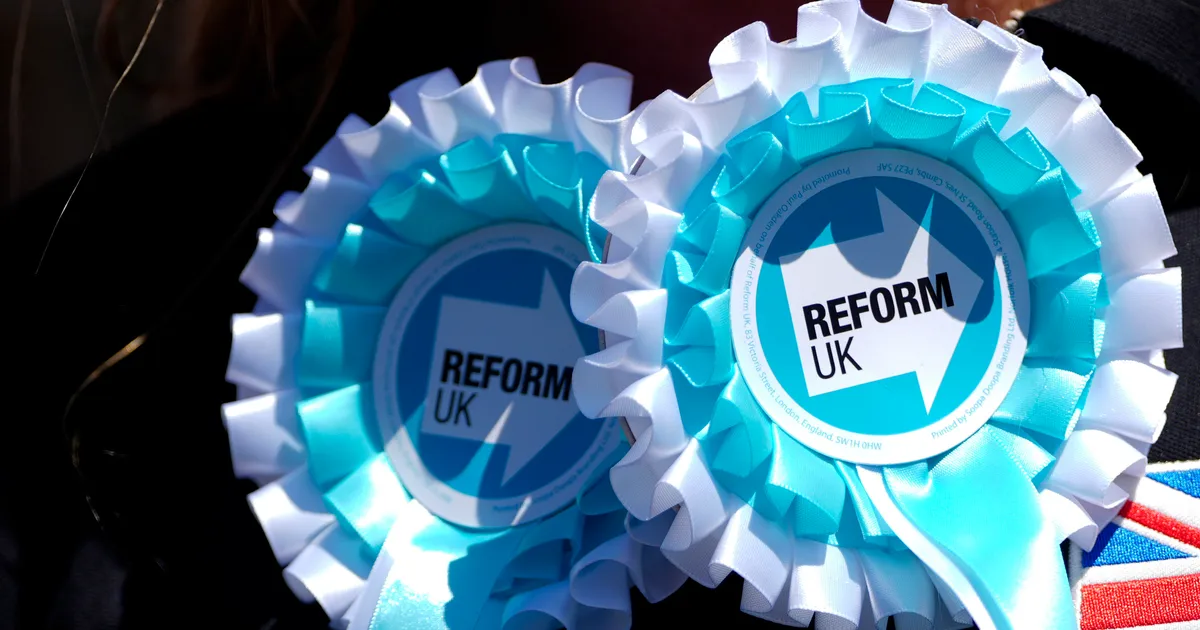
A councillor who left the Conservatives to join Reform UK has called his own defection “the biggest mistake of my life”.
Robbie Lammas, elected as a Medway councillor in 2021, joined Reform in October 2025 – and is already planning to quit Nigel Farage’s party.
“I’m going to leave Reform, I’ve had enough, it’s not what I signed up to, and I feel I’ve been misled,” he told the BBC. “Yeah, I am embarrassed about it. It was a huge mistake.
“Lots of others from Reform have told me they too feel it was a mistake to defect but they’re not in a position to publicly admit it, but for me I’m happy to admit I’ve made a big mistake.”
He said the move was the “biggest mistake of his life”, adding: “I think at the time I was used for a news story.”
Reform announced 20 Conservative councillors had joined its ranks last autumn on the penultimate day of the Tory party conference.
Lammas, who now sits as an independent councillor, said: “I find with Reform they’re good at spin, but struggle with good governance.”
A Reform UK source said: “We rejected him for a job multiple times – a failed Tory is no loss to the party.”
The right-wing party only has eight MPs, but it has frequently pointed to its victories in local elections as proof of its growing popularity.
Reform won the largest number of seats in England in May 2025, securing 41% of all local authority seats (677 in total) being contested at the time.
The party also picked up more than 1,450 council seats this year.
But 21 councillors have been kicked out of Reform since winning their seats, while 33 others have defected, seven have been suspended and one disqualified.
A further 47 have resigned and five have lost their seats.
Subscribe to Commons People, the podcast that makes politics easy. Every week, Kevin Schofield and Kate Nicholson unpack the week’s biggest stories to keep you informed. Join us for straightforward analysis of what’s going on at Westminster.

The clinical psychologist slammed her relative in the latest edition of her Substack newsletter while responding to Sen. Ted Cruz’s (Republican, Texas) questioning of the masculinity of Texas US Senate candidate James Talarico.
“Apparently we are supposed to believe Ted Cruz is now the nation’s foremost authority on masculinity,” she wrote. “Personally, I do not care. It seems like an odd qualification for public office. What are they going to do? Arm wrestle? Challenge each other to duels?”
“Fight in a cage match on the White House lawn?” she added, a sarcastic nod to the controversial UFC fight card that the president hosted on his 80th birthday on Sunday.
“But if we are defining masculinity, I would have thought one basic requirement would be defending your spouse when another man publicly attacks her,” Mary Trump continued, a nod to her uncle’s personal attacks on Cruz’s wife, Heidi, during the 2016 presidential election and the senator’s subsequent endorsement of his onetime rival.
She then delivered a pointed swipe at the president.
“What do I know?” wrote Mary Trump, a fierce critic of the president. “I grew up in a family with Donald Trump, who knows absolutely nothing about being a real man.”
Subscribe to Commons People, the podcast that makes politics easy. Every week, Kevin Schofield and Kate Nicholson unpack the week’s biggest stories to keep you informed. Join us for straightforward analysis of what’s going on at Westminster.

Nigel Farage has been dubbed “the Enoch Powell of the social media age” after he said that Britain was now a “two tier state against white people”.
The Reform UK leader made the incendiary claim in the first of a series of essays he plans to publish on Substack.
He said he had decided to start using the platform because “the mainstream media constantly distorts what I say”.
In the essay, published on Sunday morning, said the “British state is no longer working for everyone in this country”.
That was in reference to the murder of Henry Nowak, who was arrested and handcuffed by police as he lay dying after being wrongly accused of racism by his killer, Vickrum Digwa.
“There is nothing fair about the way white people have been treated by their governments,” he said.
Housing, healthcare, education, policing, the military and the workplace are all listed as being adversely affected by what he describes as “deeply anti-white racism”.
“Anything which is seen to disadvantage a minority group is cracked down on,” he said.
“Anything which benefits a minority and damages the White British is likely to be left alone.”
On housing, he said that during the last century, “rules which gave priority to local people and ties to the area were stripped away”.
Farage said that under a Reform government, foreign nationals living in social housing would be given a three-month grace period to relocate to private rented accommodation, or face deportation.
But Lib Dem leader Ed Davey accused the Reform leader of “pushing the politics of grievance and division”.
He said: “Nigel Farage has turned into the Enoch Powell of the social media age.
“He’s trying to excuse racist disorder and violence against police officers. He’s pushing the politics of grievance and division that goes totally against our fundamental British values of tolerance and decency.
“Farage is desperate to turn our United Kingdom into his version of Trump’s America. We can’t let him.”
Enooch Powell was a Tory minister who sparked outrage with his infamous 1968 speech warning of “rivers of blood” due to mass immigration.
Former defence minister Al Carns, who resigned in protest at the government’s spending plans for the armed forces, said Farage was “a race-baiter in a Barbour jacket”.
Culture secretary Lisa Nandy told Sky News that Farage “should take his nasty hate and anger and division somewhere else”.
“I think people want hope,” she said. “They don’t want more anger, they don’t want more division, they don’t want more hate, and I wish he’d just take it somewhere else.”
Posting on X, Tory MP Ben Obese-Jecty also rejected Farage’s claims.
“Trying to whip up the politics of grievance will be a genie that’s difficult to put back into the bottle,” he said. “Nigel Farage isn’t stupid. He knows that.”
Subscribe to Commons People, the podcast that makes politics easy. Every week, Kevin Schofield and Kate Nicholson unpack the week’s biggest stories to keep you informed. Join us for straightforward analysis of what’s going on at Westminster.

Sunday scaries – or feelings of dread and anxiety that build before the working week – are believed to affect as many as 67% of UK workers.
Psychologist Kia-Rai Prewitt told Cleveland Clinic it’s an “anticipatory anxiety”, meaning it has to do with your expectations of coming stress in the work week.
We’ve written before at HuffPost UK about signs your Sunday scaries may be more than normal work dread. And new research from travel agent SpaSeekers has sought to find the jobs that make us stress the most before Monday even hits.
Workers are losing days of their lives to Sunday scaries
The SpaSeekers study, which polled 1,000 UK workers, found that people spend an average of 2.5 hours a week worrying about their work on the weekend. That amounts to 200 days over a lifetime (woah).
Just over a quarter (26%) of employed adults surveyed said that the Sunday scaries make them lose sleep, while 21% shared it means they can’t enjoy the last day of the weekend at all.
Work stress and busyness are the most common sources of anxiety (29%), while a heavy workload affects 23% of employees.
“Imposter syndrome”, or feelings that you’re not good enough, and worries about being asked to come into the office more often, affected 11% of respondents each.
Which jobs are the worst for Sunday scaries?
Per this survey, the worst jobs for Sunday scaries were revealed as being:
1) Finance
The Sunday scaries were found to regularly affect 95% of those in this category.
2) Human resources (HR)
Affects: 91%
3) Manufacturing
Affects: 87%
5) IT and telecoms
Affects: 84%
8) Healthcare
Affects: 83%
9) Arts and culture
Affects: 82%
10) Building and construction
Affects: 76%.
Don’t ignore your Sunday scaries
Kerry Sutcliffe, a corporate and individual coach at Kerry Sutcliffe Coaching, said: “The Sunday Scaries could be described as a physical alarm bell, telling you that something is not right. It’s a sign, a flashing red light and something you should listen to, pay attention to, and take action on.”
That might include planning your week ahead of Sunday, she added. “I recommend doing this on a Friday afternoon… Once done, you can close the laptop and enjoy your weekend, knowing you’re all set for Monday morning,” she advised.
“Get all of those unhelpful thoughts out of your head and down on paper!”
The NHS suggests you should see a GP about anxiety if you’re struggling to cope with fear and panic, and/or if lifestyle changes like getting enough sleep and exercising don’t help.

The UK government’s decision to ban under-16s from major social media platforms is a significant moment.
It reflects what many parents already know: the online world is exposing children to content and experiences they simply are not equipped to deal with.
But we should be careful not to mistake a step forward for a complete solution.
A social media ban is a bit like putting a lock on the front door while leaving the back door wide open. It will help some children. It will certainly make access more difficult.
But it does not address the wider reality of how young people use technology.
Children are not only spending their time on Instagram, TikTok and Snapchat. They are on WhatsApp. They are on gaming platforms. They are using AI tools. They are communicating through dozens of apps and services that fall outside of the traditional definition of social media.
Harmful content does not magically disappear because one category of app is restricted.
The other uncomfortable truth is that bans tend to work best on children who are already willing to follow the rules. The children most at risk are often the ones most likely to find workarounds, borrow devices, create alternative accounts or simply move to less regulated platforms.
I am not making an argument against action. I am making an argument for the action to go further.
For years, parents have been told that many of the protections they want are technically impossible. We have been told that harmful content cannot be identified. That explicit images cannot be blocked. That meaningful parental controls are unrealistic. The reality is very different.
The technology already exists. At the startup I co-founded, we have built systems that can block explicit content, prevent the sharing of nude images, and give parents meaningful oversight of a child’s digital experience across their entire device, not just one or two apps.
If a startup can build these protections, it is difficult to accept that some of the largest technology companies in the world cannot.
The biggest risk today is not that the government has gone too far. It is that parents are given the impression that the problem has now been solved.
It has not. Legislation will take time. Enforcement will take time. Legal challenges will take time. Meanwhile, millions of children will continue using smartphones every day. Parents need help now, not several years from now.
A social media ban may be part of the answer. But the long-term solution is technology that is designed to protect children from harm wherever that harm appears, not just on a list of banned apps.
The good news is that we do not need to invent that technology. We simply need to use it.
George Bevis is the co-founder of online child safety app Safetymode.com and founder of Tide.
Alas, There Is Another Harrison Smith Theory

NASA’s X-59 Reaches Speed And Altitude Milestones Ahead Of First Quiet Supersonic Flights

Should You Stop Taking Vitamin D Now That It’s Sunny?


-

 Business19 hours ago
No Jackpot Winner as $257 Million Prize Rolls Over to $269 Million Monday Draw
-

 Crypto World4 days ago
Oppenheimer backs SpaceX as $70 billion retail frenzy builds
-

 Crypto World4 days ago
Markets Rally as SpaceX IPO Looms Amid Iran Tensions and Inflation Surge
-

 Fashion3 days ago
Weekend Open Thread: Tuckernuck – Corporette.com
-

 Sports7 days ago
FIFA WC 2026 Group C: Morocco, Scotland challenge Brazil’s hunt for glory | FIFA World Cup 2022
-
 Crypto World7 days ago
Eli Lilly (LLY) Stock Surges 4% Following Breakthrough Sleep Apnea Trial Results
-
 Crypto World11 hours ago
Zimbabwe Requires Crypto Businesses to Register Annually Under New FIU Regulations
-

 Entertainment6 days ago
The Ryan Gosling True Crime Thriller On Netflix That Gets Even Stranger, Stream It Now
-
 Sports6 days ago
Bangladesh beat Australia after 20 years in ODIs, register only their second win over six-time world champions | Cricket News
-

 Tech3 days ago
This Week In Security: Microsoft On Microsoft, Register Your Domains, Linux On ARM, And FreeBSD Joins The File Cache Club
-

 Tech2 days ago
NanoClaw integrates JFrog registries to secure AI agent downloads
-

 Crypto World2 days ago
Bitget enters Argentina’s regulated crypto market through PSAV registration
-

 Politics4 days ago
Politics Home | Healey Resignation Is “Colossal Failure Of Government”, Says Former Labour Defence Secretary
-

 Tech5 days ago
‘This is Seattle’s position on AI’: City Council votes unanimously to pause big new data centers
-
 Tech4 days ago
Dutton Ranch star claims they ‘didn’t see any disruption’ on set following Chad Feehan’s exit from Yellowstone spinoff fueled by Taylor Sheridan clash rumors
-

 NewsBeat3 days ago
El Nino has formed in the Pacific and could set records, forecasters say
-
 Entertainment4 days ago
Donnie Wahlberg & More Heat Up Las Vegas at Circa’s Barry’s Downtown Prime
-

 Sports4 days ago
First Time Since 1971: Australia Register Historic Low In ODI Cricket
-
 Tech4 days ago
Opendoor Ends India Operations, Fueling a Bigger Conversation About AI and Outsourcing
-

 Tech7 days ago
Nvidia and Hyundai deepen their robotics push around Atlas
You must be logged in to post a comment Login