
Politics
“I think the Prime Minister’s position is untenable” – Burghart

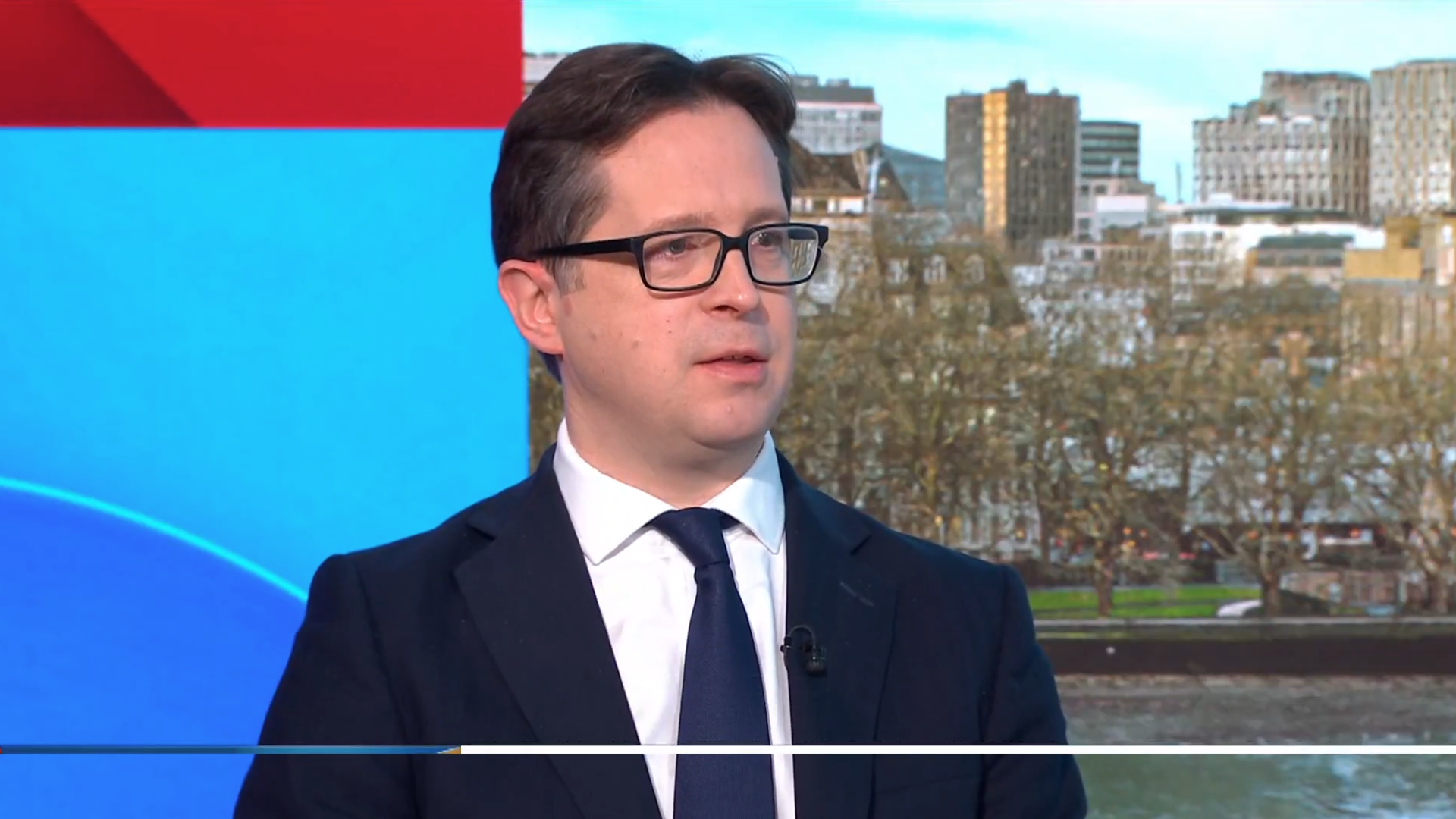
“I think the Prime Minister’s position is untenable”
Senior Conservative Alex Burghart tells @TrevorPTweets his party couldn’t win a vote of no confidence in Keir Starmer – unless Labour MPs turn on their leaderhttps://t.co/Y4GWnTeC08
📺 Sky 501 pic.twitter.com/Qtmr78IuLz
— Sky News (@SkyNews) February 8, 2026


Our clutter doesn’t necessarily reflect messy habits. In many cases, it stems from the stories we tell ourselves.
Think about the items you hold on to not because you truly want or need them, but because of hypothetical or future-focused narratives. “I’d use that if I had more time.” Or “I’d want to wear that because it looks great, but it’s not as comfortable as I’d like.”
That mindset is at the heart of what organisers call the “ifs and buts” rule of decluttering. And by recognising this kind of thinking, people can make meaningful progress when it comes to tidying and organising their homes.
What is the “ifs and buts” rule of decluttering?
“The ‘ifs and buts’ approach focuses on noticing the conditional language people use when they hold on to items – such as ‘if I lose weight,’ ‘but I might need it someday,’ or ‘if we ever have guests,’” said professional organiser Regina Lark. “These phrases often signal that clutter is being kept for a future version of life rather than the one currently being lived.”
Think about that episode of Friends when Monica buys extremely uncomfortable boots, but she feels the need to justify keeping them because they were so expensive.
Ask yourself if the reason you’re holding on to something is because of an “if” or “but” condition. That fancy pizza oven you’ve never even used? Maybe you know you should get rid of it, “but it was expensive”. That “but” is probably not a great justification for letting it take up so much room in your kitchen.
“When you hear yourself making statements like ‘I’d like this sweater if it was a different colour’ or ‘I like the sweater but it doesn’t fit me,’ you know we are leaning more towards letting it go,” said Julie Naylon of No Wire Hangers Professional Organizing.
She added that these statements are usually accompanied by a “yucky” face that indicates how they really feel about the item. Maybe you love those cool accent pillows in your closet – but they don’t actually work with your home’s decor. Instead, they’re just gathering dust and taking up valuable storage space.
“When I work with clients and they start creating ‘if and but’ excuses while we purge, I know that’s fear talking, and deeper down, they know that they’ll never use that item,” echoed Tova Weinstock, the professional organiser behind Tidy Tova. “So if you’re decluttering your space and hear those words come up, acknowledge that that’s fear talking and overcome it. When in doubt, throw it out.”

This framework disrupts the conditional thinking that keeps clutter in your home
“The gist of the ‘ifs and buts’ approach is sound and harks back to one of the earliest recorded organising ‘rules’ – the 19th century quote from William Morris, ‘Have nothing in your house that you do not know to be useful, or believe to be beautiful,’” said Lisa Zaslow, a professional organiser with Gotham Organizers.
“If you’re holding on to something that you’d actually use if it looked or functioned differently, or keeping something that kind of works for you but not entirely, you’re better off letting it go and purchasing something that you truly love and use.”
She believes the “ifs and buts” rule essentially reframes this old guideline: keep the best – let go of the rest. Basically, hold onto the items you don’t need to make excuses for keeping, the ones that don’t require a mental negotiation.
“I remind my clients, if you’re keeping something for ‘some day,’ remember that by definition, ‘some day’ is never today,” Zaslow said. “Ask: What’s the impact on your present life if you’re keeping something for a future that may never arrive?”
With the “ifs and buts” rule, the idea is to simplify the process while also addressing the psychology behind why we hold on to certain items.
“This kind of thinking is closely tied to what I call aspirational clutter, objects connected to who we hope to become rather than who we realistically are right now,” Lark said. “There’s also an element of magical thinking at play, where we unconsciously believe the item itself might help create that future. I find this approach especially insightful because it helps people see that clutter is often carrying emotional meaning – hope, guilt, optimism or unfinished dreams – not just physical belongings.”
Acknowledging the deeper emotions or future dreams behind clutter can help you make more practical decisions.
“Organising works best when we focus on who we are right now, not who we might be someday,” said Katie Hubbard of Turn It Tidy. “The goal isn’t to follow rules perfectly – it’s to create a home that supports your life today.”
There are benefits to the ‘ifs and buts’ rule – but also potential downsides
“The benefit of the ‘ifs and buts’ approach is that it helps people organise around their real, present-day life instead of an imagined future,” Lark said. “It can reduce guilt and create clarity about what truly supports daily routines.”
Increased emotional awareness is another positive effect of following this framework, noted Dina Smith, a professional organiser and founder of Closet Therapy with Dina.
“The ‘ifs and buts’ rule helps people become more aware that they may be holding space for a version of themselves that may no longer fit,” she said.
“Letting go of those items can create a sense of relief, clarity and self-acceptance. This sense of relief can be a form of emotional or mental decluttering.”
This process can also help people overcome their fears around letting go of stuff, which is ultimately empowering.
“Instead of letting fear drive your decluttering session, take a moment to feel proud of yourself for getting rid of an item that felt ‘if or but’-y,” Weinstock said. “It’s kind of liberating, isn’t it?”
On the other hand, the process might also take an emotional toll, so it’s important to be mindful.
“It may bring up grief or disappointment about goals that haven’t materialised,” Lark said. “That’s why this method works best when paired with compassion, reminding people that letting go of an item doesn’t mean giving up on themselves – it simply means making space for what actually fits their life right now.”
For those who struggle to get rid of anything, you might also start by putting your “ifs and buts” items into a “maybe” pile and revisiting later once you’ve tossed things that are easier to purge.
“Those ‘lower-hanging fruit’ will give the client confidence to go back to their ‘maybe’ pile and generally let those things go,” Weinstock said.
If you try the “ifs and buts” rule, try to let go of self-criticism and lead with a sense of curiosity and acceptance.
“This is a gentler approach,” Smith said. “When people understand that their space should support who they are now, not who they think they should be, decluttering becomes less about loss and more about freedom.”
Resist the urge to treat the “ifs and buts” rule like some infallible commandment, however.
“I’ve seen firsthand, after working with thousands of people, how ‘simple’ organising rules can make people feel badly if they can’t follow them,” Zaslow noted. “It reinforces their thoughts that organising is a difficult skill and can exacerbate feelings of shame and inadequacy when they can’t master it.”
She recommended viewing it as an organising “tool”, rather than a rule. “Ifs and buts” can provide helpful guidance or a framework for decluttering decisions, but it’s OK if you’re not vibing with that approach.
“There’s a reason that there’s more than one tool in a toolbox – and countless types and sizes of hammers,” Zaslow emphasised. “Don’t take organising rules too literally, and just use what’s useful to you.”

Things are looking worse and worse for Keir Starmer. This is especially bad, because things were already about as terrible as it’s possible to get for a sitting PM.
Lammy told Starmer
In the latest instance of the badness intensifying, the deputy PM David Lammy has apparently said he told Starmer not to appoint Mandelson. And of course, what we actually mean is “friends of the Deputy Prime Minister” told the Telegraph.
There’s just one problem with all this:
That’s odd because here is David Lammy describing Peter Mandelson as a “man of considerable expertise” and the “right man” to be the US ambassador.
Looks like he is trying to save his own skin. https://t.co/V1vIlscNws pic.twitter.com/Ve8AoJLdMX
— Chris Rose (@ArchRose90) February 7, 2026
Whispers
Here’s what the Telegraph reported:
David Lammy turned on the Prime Minister as allies revealed he had warned against appointing Lord Mandelson as the ambassador to the US.
In a blow to Sir Keir Starmer, friends of the Deputy Prime Minister confirmed on Saturday night that he had not been in favour of bringing the “Prince of Darkness? back into government over his links to Jeffrey Epstein.
Mr Lammy is the first Cabinet minister to break openly with the embattled Prime Minister, whose future hangs in the balance over the Mandelson scandal.
If it was us, we wouldn’t simply have ‘warned’ Starmer; we would have refused to serve in the same government as the ‘Prince of Darkness’. They don’t call him that for nothing, and finally the media is past pretending.
This is what slippery Lammy said in the video above (emphasis added):
Peter Mandelson is a man of considerable expertise. He’s the right man for this moment to be out ambassador. He’s been a business secretary, a Northern Ireland secretary, of course he’s worked in the European Commission, and he brings all of that to bear working as our ambassador, and of course he’s looking forwards to presenting his credentials to Donald Trump.
If Lammy is telling the truth, and he did warn Starmer, then he was lying when he said Mandelson was the “right man for this moment”.
Either way, he’s a liar.
And you can’t trust a liar.
Starmfall
The Telegraph article also reports that Starmer is “devastated” and considering an exit. It further suggests Wes Streeting may have scuppered his own chances of replacing Starmer because of his links to Mandelson (links we’ve reported on). The problem for Labour is that most of the big players in the current government are connected to Mandelson, because he’s been the puppet master behind Starmer’s operation.
In other words, there’s no obvious way out of this mess for Labour.
Featured image via BERR
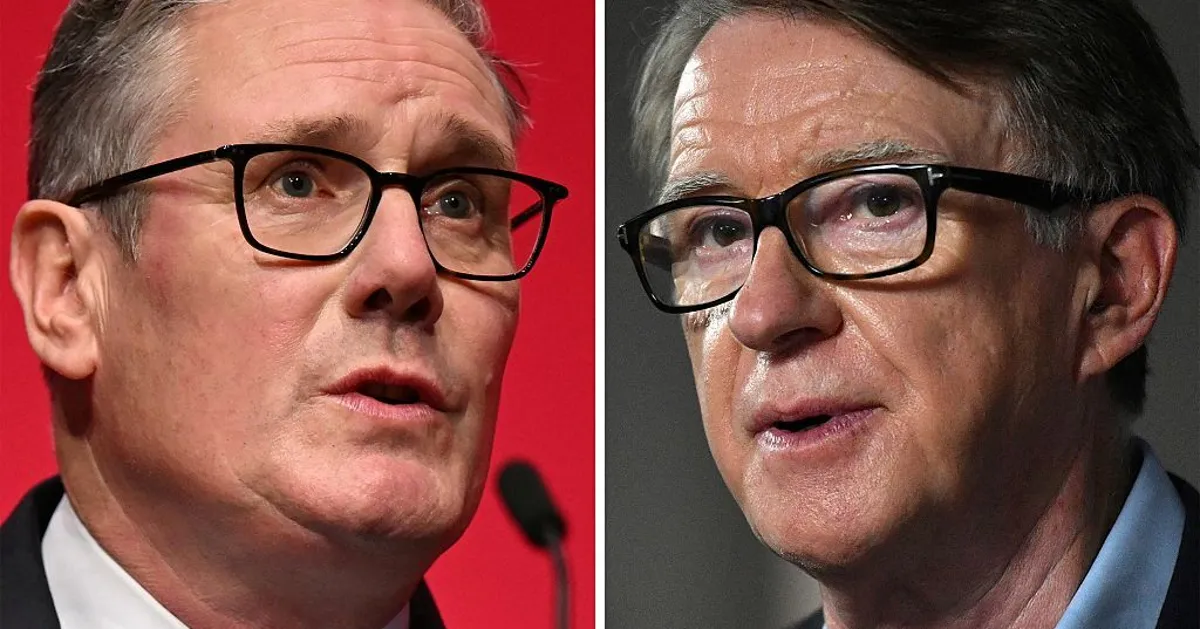
A Labour grandee has accused senior party figures of “acting like ferrets in a sack” as Keir Starmer faces his biggest crisis as prime minister over the Peter Mandelson scandal.
Lord Blunkett pleaded with his colleagues to “get our act together” on another grim day for the PM.
The former home secretary even hinted that Starmer could decide to resign as the fallout continues over his decision to appoint Mandelson the UK’s ambassador to Washington.
Mandelson was sacked after just seven months over his links to convicted paedophile Jeffrey Epstein, and now faces a criminal investigation into allegations he passed government information to the financier when he was business secretary.
Blunkett told Radio 4′s Broadcasting House programme: “Only Keir Starmer and his wife Victoria can decide on their future. No one else this weekend or in the days ahead are going to determine that.”
The Labour peer repeated his call for the PM to sack his chief of staff, Morgan McSweeney, who urged him to give Mandelson the ambassador’s job.
He said: “If people continue to give you the wrong advice, or you’re listening to the wrong people, you can do something about it.”
Making a desperate plea for party unity, Blunkett added: “I appreciate that things are dire, but they’re made more difficult by briefings and counter briefings.
“When see a party acting like ferrets in a sack, they draw the conclusion. Let’s try and get our act together. Let’s speak with a common voice about what we’re about.”
His comments came as a cabinet minister slapped down Angela Rayner and David Lammy over their response to the Mandelson affair.
Allies of the pair have insisted they warned Starmer not to give Mandelson the ambassador’s job a year ago.
Asked about their interventions on Sunday, work and pensions secretary Pat McFadden said: “It’s up to them. They’re over 21, you know, they’ll have to answer for themselves on what they’re saying.”
Meanwhile, Starmer ally McFadden also appeared to acknowledge the possibility that the PM could be removed from office by saying McSweeney should stay in his job “if” Starmer remains PM.
Asked if he should sack McSweeney, he said: “I see no point in that whatsoever. I think if the prime minister stays … I don’t think that would make any difference at all.
“I think the prime minister should continue with what he’s doing. He is focused on the cost of living. He wants to deliver for the British people.”
However, the head of a Labour-supporting union said it was time for Starmer to go.
Steve Wright, general secretary of the Fire Brigades Union, which is affiliated to Labour, said: “I think we need to see change. I think 18 months ago the general public wanted to see that change – and we’re not seeing it, we’re just seeing a continuation of what happened before – and I think that needs to be a leadership change. I think MPs need to be calling for that.”

Keir Starmer has entered the stay of execution phase of his premiership.
On Wednesday, the prime minister instructed Labour MPs to support a government amendment to a humble address tabled by Kemi Badenoch’s Conservative Party. The official opposition called for the release of documents relating to Peter Mandelson’s appointment as Britain’s ambassador to the US; Starmer sought to include exemptions for those papers that might prejudice national security and international relations.
The Parliamentary Labour Party (PLP) mutinied.
Having been marched up and down hills for months by a meandering Downing Street operation, Labour MPs looked elsewhere for guidance. It was left to Angela Rayner to locate a politically sustainable solution and dictate terms to the government Whips’ Office. Ministers agreed, under the threat of greater humiliation, to refer the documents to the cross-party intelligence and security committee.

MDU warns Chancellor clinical negligence system ‘not fit for purpose’

Northern Ireland RE curriculum is ‘indoctrination’ – Supreme Court
The former deputy prime minister filled the PLP power vacuum on Wednesday.
The episode exposes just how thin Starmer’s grip on his parliamentary party has become.
Any prime minister’s fate rests with their parliamentary party. A finer appreciation of this fact might have spared Starmer some of his more spectacular misjudgments – the “noises off” on the backbenches matter. But a prime minister’s dependence on their party is never more apparent than at the end of the road.
On the steps of Downing Street in July 2022, Boris Johnson memorably described the irresistible synchronisation of regicidal MPs. When the herd moves, the outgoing prime minister observed, it moves. Johnson’s obstinate determination to cling to power was no match for the collective might of Conservative MPs.
Johnson attributed the “powerful” herd instinct to Westminster as a whole. But there is an argument to say that, when it comes to ejecting and electing leaders, this instinct is a uniquely Conservative asset.
Over 14 years of government, spanning five prime ministers, the Conservative Party’s leadership election rules were treated as an extension of the British constitution. The key distinction between the Tory rules, formalised in 1998, and those governing any challenge to Starmer lies in the former’s no-confidence procedure.
The Conservative no-confidence ballot is a ruthless, and highly sophisticated, mechanism.
In total, the 1922 committee of Conservative backbenchers has overseen three ‘votes of confidence’: Iain Duncan Smith in 2003, Theresa May in 2018 and Boris Johnson in 2022. Of these votes, only the first has been successful. A total of 90 Conservative MPs voted against Duncan Smith in the standard secret ballot; the outgoing Tory leader could only muster 75 to his defence.
The 2018 and 2022 ballots technically secured the position of May and Johnson respectively. When a leader survives a confidence vote, they are rewarded with a 12-month clemency period. In practice, both May and Johnson were defenestrated mere months later. (Johnson, at least, was warned that the 1922 executive committee would pass a rule change to force a second confidence vote.)
The power of the no-confidence mechanism is that it creates a leadership vacancy. This means that Conservative MPs, who see the incumbent leader as a liability, do not need to resolve on a common path forward – only that the incumbent should go. The defenestrated leader, to round off the ruthless process, is then barred from standing in the subsequent leadership election.
The mechanism has its drawbacks, of course. Creating a vacancy without charting a clear course can produce some unforeseen and unfortunate outcomes – including but not limited to sending Liz Truss to Downing Street. But the Conservative no-confidence ballot remains a precise, and mostly orderly, way of translating mass disaffection into a leadership challenge.
Labour’s system is significantly less precise.
In the event of a vacancy, as we saw with the mostly smooth competition to replace Angela Rayner as deputy leader, the rules are simple enough. But Labour lacks its own in-house assassination bureau; there is no reliable production line of “men in grey suits” who can coordinate a lethal visitation while an incumbent remains in place.
Critically, there is no procedural means of creating a Labour leadership vacancy. In 2016, a PLP motion expressing no confidence in Jeremy Corbyn, tabled by Margaret Hodge, was passed by 171 votes to 40. But there was no obligation for Corbyn to stand down. Instead, both Owen Smith and Angela Eagle declared their leadership candidacies and easily surpassed the 20% threshold (then 50 MPs) to trigger a contest. Corbyn was given a place on the ballot following an 18-14 National Executive Committee (NEC) ruling. And the membership vote restored Corbyn as leader with a refreshed mandate.
According to the Labour rule book, it remains the case that a vacancy can only be created by a resignation. Pretenders cannot exploit a vacuum; they must wrestle the crown from the king’s head while he remains on the throne.
Conservative leaders are felled by a politically amorphous, technically anonymous herd of critics. Keir Starmer’s usurper will have a name, a faction and a wider group of allies – all of whom must make themselves known under party rules. Labour MPs cannot cower in smoke-filled rooms or behind secret letters to a senior backbencher. In this regard, the Labour rule book is plain: “Valid nominations shall be published by the party”.
The rule book, however, is sufficiently ambiguous to allow a challenger to choose the sequencing of their insurrection. The rules suggest that a challenger should surreptitiously sign up a fifth of the PLP (81 MPs) to a coup, before providing the proof of their nominations to the general secretary of the Labour Party, Hollie Ridley. But on a reasonable reading of the rules, an MP could declare their intention to run, and then begin canvassing the parliamentary party.
And yet, whatever approach a would-be challenger takes, they will be forced to place their head above the parapet.
A potential parallel is found in the Conservative Party rules as they existed from 1975 to 1998. Then, as now in the Labour Party, the removal of an incumbent leader required a full frontal assault from a prospective challenger. Margaret Thatcher avoided a challenge under these rules for much of her tenure as Tory leader and prime minister. But she faced two contests successively in 1989 and 1990.
In 1989, Sir Anthony Meyer stepped forward as a “stalking horse” candidate. Thatcher secured a mostly decisive victory over “Sir Anthony Whats’isname” or the “stalking donkey”, as Meyer was dubbed by some in the press, by 314 votes to 33. On that occasion, a serious challenger to Thatcher, such as the former defence secretary, Michael Heseltine, chose not to stand. Meyer stood to test the party’s confidence in the prime minister.
One year later in 1990, in the wake of Geoffrey Howe’s searing resignation statement, Heseltine announced his candidacy for the leadership. Under the party’s then leadership rules, a candidate required a majority of 15% of the total electorate to win outright on the first ballot. Thatcher’s majority was four short of this threshold; she responded by announcing her resignation as prime minister.
But Heseltine’s candidacy famously established the dictum that knife-wielders do not go on to collect the crown. Both John Major and Douglas Hurd put themselves forward for the second ballot, and the former prevailed.
Those considering a challenge to Starmer’s leadership will be acutely aware of this precedent. There are countervailing case studies, of course – examples of would-be candidates missing their moment of maximum opportunity to wait for a cleaner opening that never arrived. Michael Portillo installed telephone lines in 1995, but did not challenge Major; David Miliband chose not to lead an insurrection against Gordon Brown. Both pretenders lost subsequent leadership elections.
Another option for those dissatisfied with Starmer’s leadership would be a symbolic stand, signalling to the prime minister that his time is up. Historically, this is the route the Labour Party has taken when a leader is perceived to be a liability.
An ideal model is supplied by the Blair-Brown leadership transition. On 5 September 2006, 17 Labour MPs issued a letter asking Blair to resign – reports indicated that dozens more were willing to support the call. A coordinated move by Brown’s allies followed, including the resignation of several junior government ministers. Tom Watson, the future Labour deputy leader, was among those to step down. Blair was forced to announce that the party’s upcoming conference would be his last. On 25 September, at the scene of Blair’s final conference, Brown declared his candidacy for the leadership.
Crucially, the relative precision of Blair’s defenestration owed to Brown’s status as his obvious successor (notwithstanding an ill-fated challenge by John McDonnell).
Recent coups have not been so successful. In June 2009, just minutes after the polls had closed in the European and local elections, James Purnell resigned as work and pensions secretary and called on Gordon Brown to step down as prime minister. Purnell, who insisted that he would not seek Brown’s post were it to become vacant, was joined by backbench MPs Barry Sheerman and Graham Allen in calling on Brown to resign. But Miliband, the foreign secretary, and Alan Johnson, the health secretary – Brown’s most likely heirs – rowed in behind the Downing Street incumbent. Purnell’s putsch failed.
In January 2010, two former cabinet ministers, Patricia Hewitt and Geoff Hoon, called for a leadership contest to resolve Brown’s future. The prime minister dismissed the challenge as a “form of silliness” – and the Parliamentary Labour Party agreed. Interestingly, the Hewitt-Hoon coup called for a secret ballot vote in Brown’s leadership, replicating the Conservative no-confidence procedure. Both Johnson and Miliband (eventually) signalled their support for the prime minister.
The 2016 Labour leadership election was the ill-fated consequence of a failed coup, triggered by the dismissal of Hilary Benn as shadow foreign secretary for plotting. Benn’s sacking in the early hours of the morning opened the floodgates to a wave of resignations from the shadow frontbench, precipitating the symbolic no-confidence vote in Corbyn’s leadership. The incumbent stayed put.
At this moment, Starmer is likely more vulnerable than either Brown or Corbyn. In the former case, discontent was more diffuse with a general election nearing; in the latter instance, Starmer does not command the confidence of the grassroots in the way Corbyn did. A symbolic intervention could well be enough to depose Starmer.
But such a stand would have to be fronted by a politician with sufficient political clout – a party grandee or shadow cabinet minister – to signal decisively that Starmer’s time is up. Moreover, if the prime minister refuses to resign, this strategy would still depend on his prospective successors stepping forward to announce their candidacies. They would need to have full faith that their parliamentary colleagues would go over the top with them.
It is likely, therefore, that in the absence of a resignation, the Labour herd will be forced to get creative in order to drive Starmer from office.
The prime minister is also protected, for the time being, by the absence of an agreed successor. Andy Burnham was only recently barred from marching on Westminster by the Labour National Executive Committee (NEC). In September 2025, Angela Rayner resigned from the government over her tax affairs. Wes Streeting is seen as a plotter by Starmer’s allies and with scepticism from the Labour “soft left”. Ed Miliband, the Labour leader from 2010 to 2015, has previously been rejected by the electorate. Shabana Mahmood, the most Blue Labour-coded of the likely contenders, would surely struggle among the party membership.
The Conservative herd moved against Theresa May, Boris Johnson and Liz Truss, in part, because the parliamentary party could conceive of a line of succession. (The choice of Conservative MPs to succeed Johnson was, of course, Rishi Sunak, not Truss.)
The bottom line is that Starmer’s position is terminally vulnerable, but protected by a combination of process and political circumstance.
In July 2022, Johnson referred to his party’s “brilliant Darwinian system”. Labour simply lacks a reliable apparatus for regicide. And so the relative ease with which the Conservatives ditched leaders will not be repeated under Labour. The process will not be precise, and it will almost certainly not be orderly. When Starmer is finally felled, the fallout will be fraught.
The length of Starmer’s stay of execution lies with the Labour herd. The prime minister is only in a position to endure. In the meantime, the destabilising phoney war and the leadership brinkmanship will continue until a future flashpoint. This could be provided by the Gorton and Denton by-election and/or the elections in May.
If Starmer is to go, then at some point, in some way, someone – be they a leadership contender or disgruntled grandee – will have to step forward.
Josh Self is editor of Politics.co.uk, follow him on Bluesky here and X here.
Politics.co.uk is the UK’s leading digital-only political website. Subscribe to our daily newsletter for all the latest news and analysis.
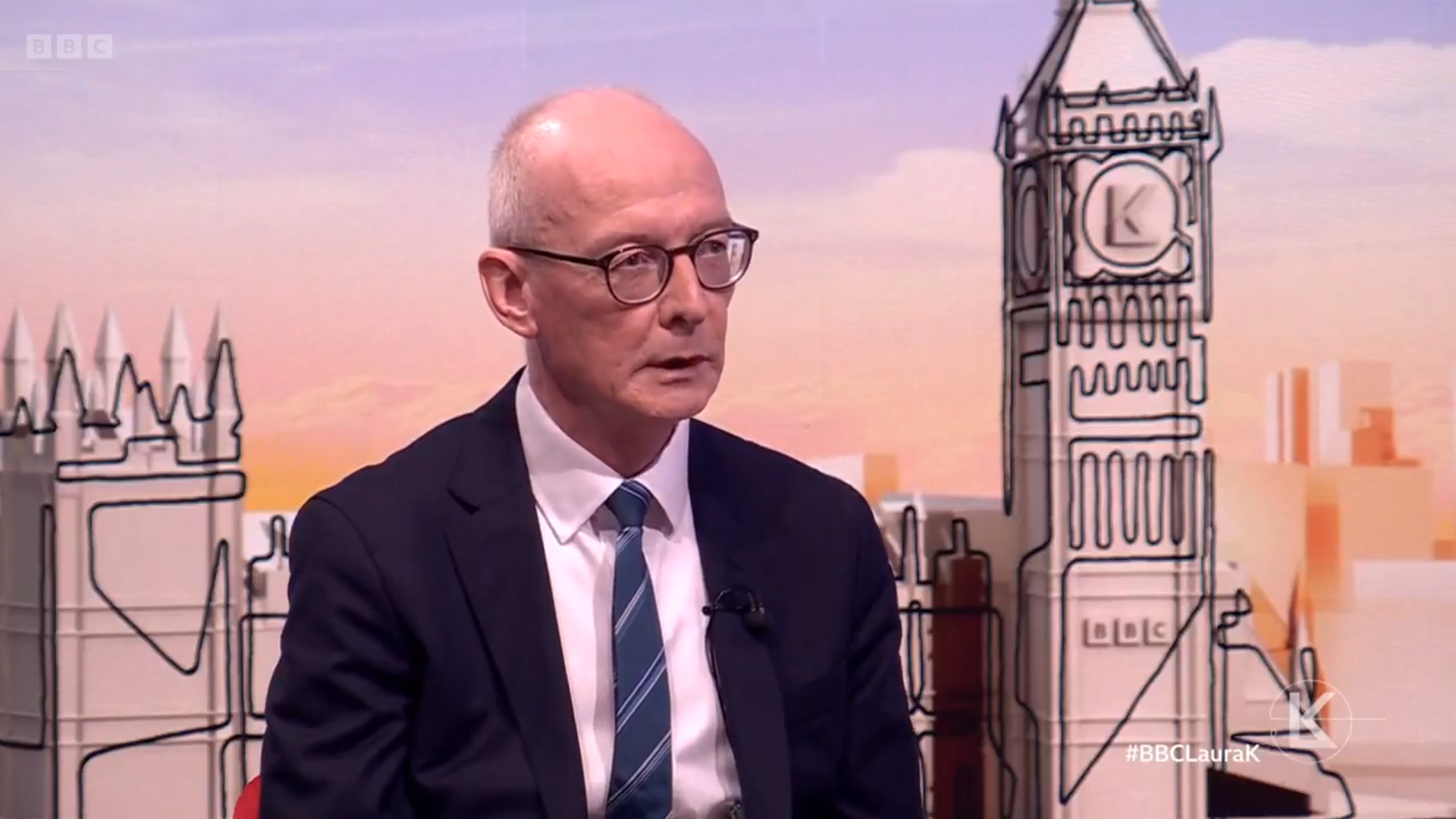
“I see no point in that whatsoever”
Work and Pensions Secretary Pat McFadden says it would be wrong to sack the Prime Minister’s Chief of Staff Morgan McSweeney#BBCLauraKhttps://t.co/fjhbGbz4Up pic.twitter.com/P4o0vk6oym
— BBC Politics (@BBCPolitics) February 8, 2026
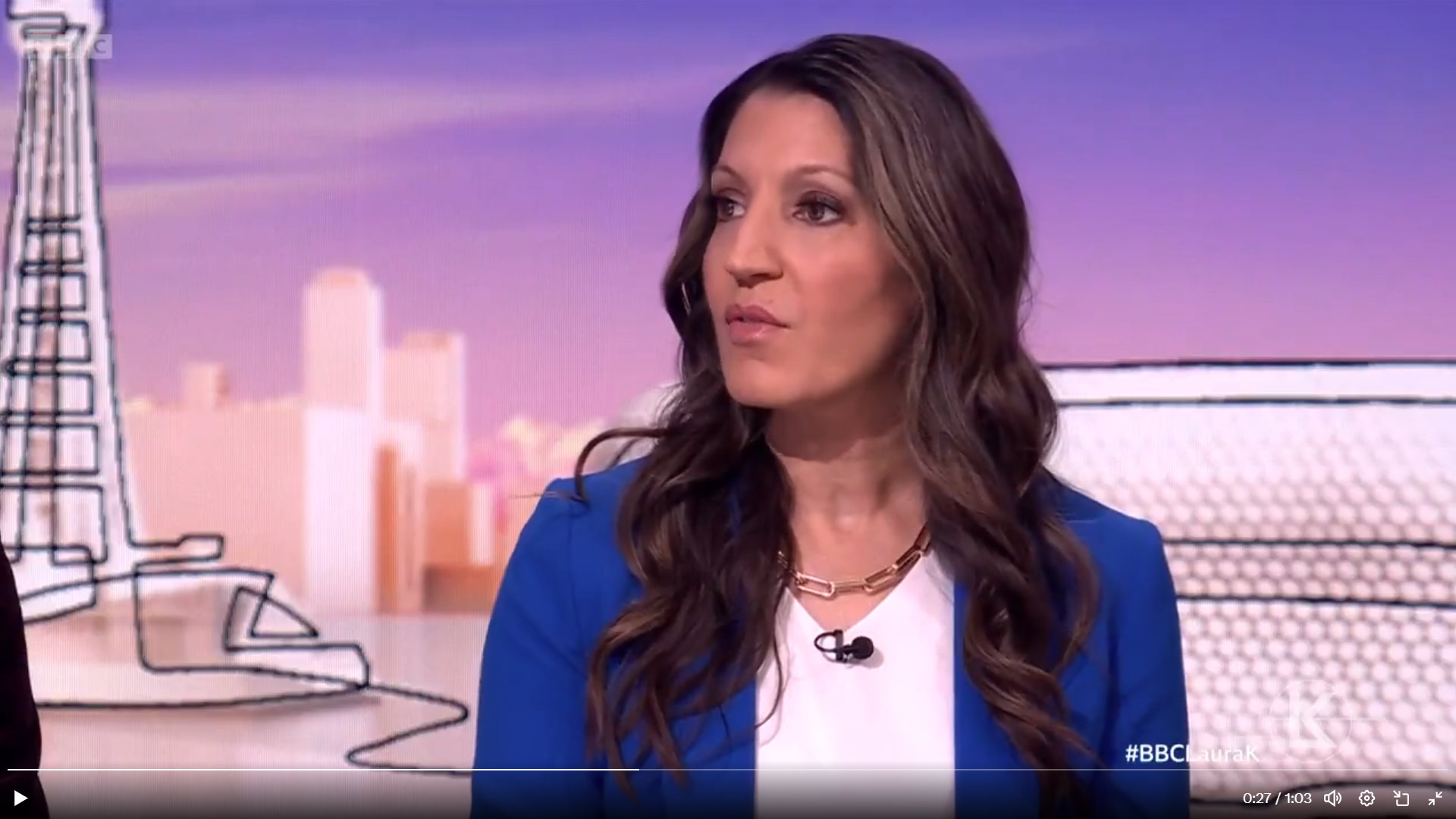
“It’s not working at the moment is it?”
Labour MP Rosena Allin-Khan says “the people that are in [Downing Street] offering advice” should be improved and that the cabinet should be changed to reflect “the broader church of our party”#BBCLauraKhttps://t.co/fjhbGbz4Up pic.twitter.com/syoKgo7pb5
— BBC Politics (@BBCPolitics) February 8, 2026
Politics
“You are getting ahead of yourself” – Tice refuses to confirm Reform UK shadow cabinet plans
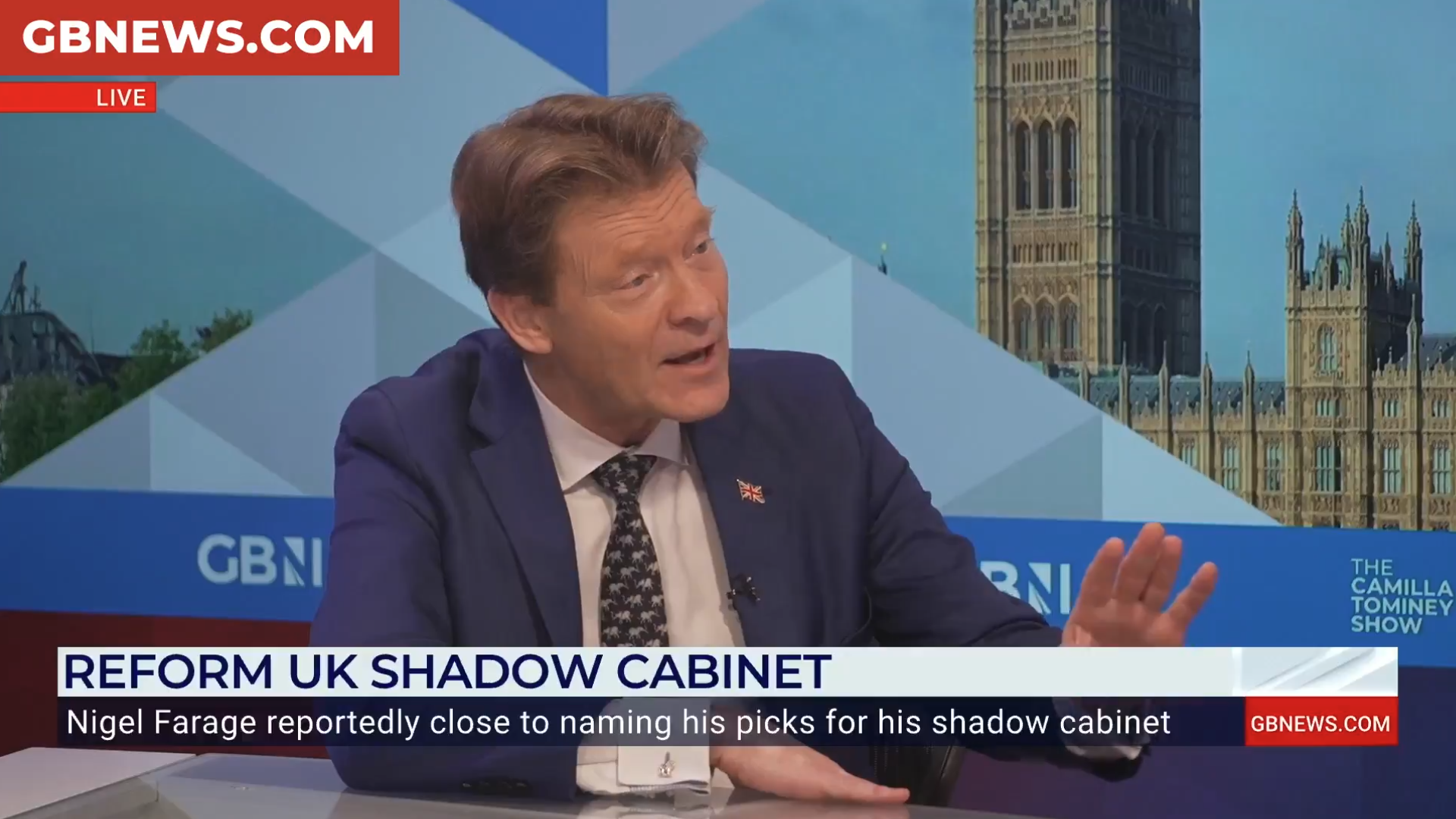
‘Have you accepted that now?’
‘We would all be delighted to help Nigel as Prime Minister.’
Camilla Tominey questions Richard Tice about Reform UK’s potential unveiling of cabinet roles. pic.twitter.com/0wJOIRWsH5
— GB News (@GBNEWS) February 8, 2026
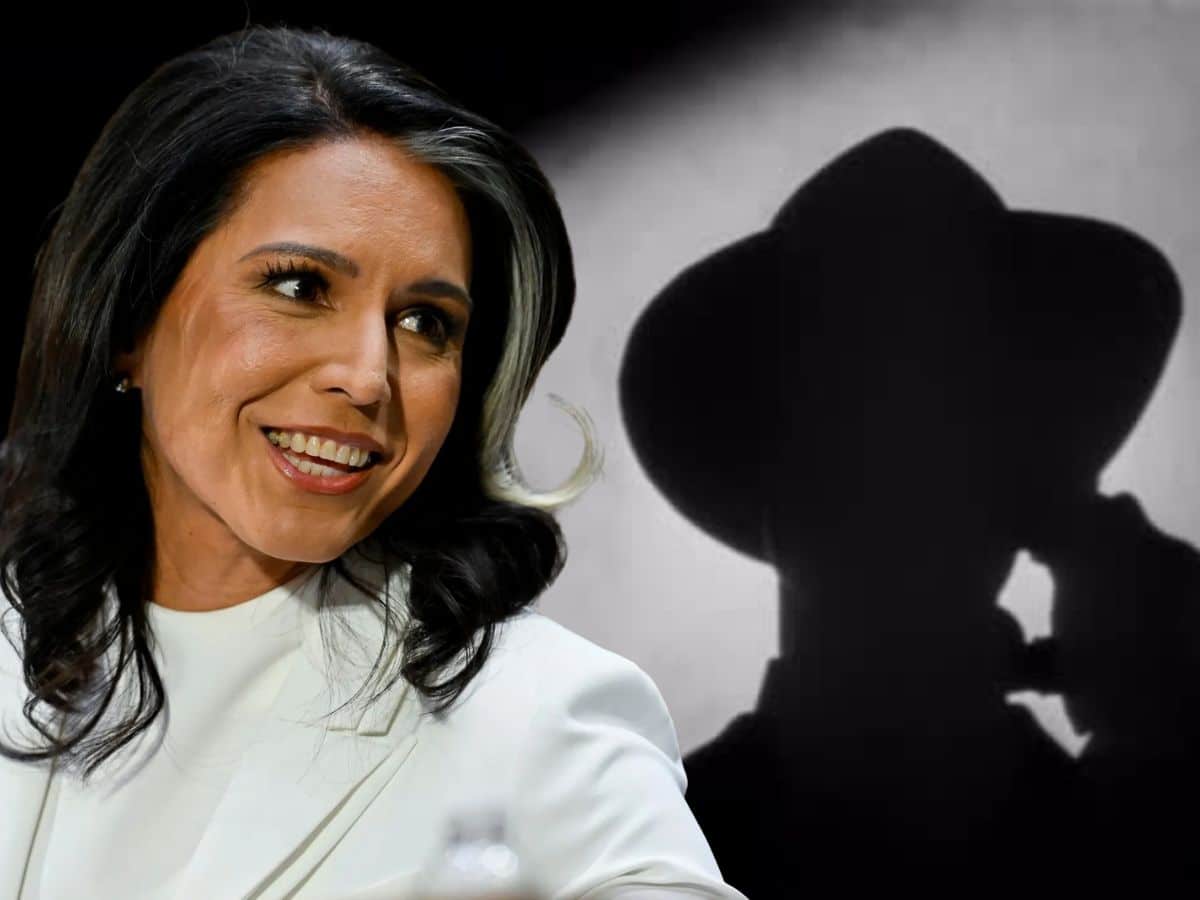
A whistleblower’s allegations against Trump’s Director of National Intelligence (DNI) Tulsi Gabbard have finally been revealed. After a Washington process hid the details for a week following an unnamed whistleblower said he would publish them if they continued to be hidden, the allegations have finally been made public — and they are dynamite.
In spring 2025, the US National Security Agency (NSA) detected a call between a party identified as a foreign intelligence figure and a person described as very close to Trump. The NSA informed Gabbard, but instead of following normal distribution process, Gabbard blocked it. She then printed a copy and took it to Trump’s chief of staff Susie Wiles — all according to Andrew Bakaj, the whistleblower’s lawyer.
After meeting Wiles, Gabbard told the NSA to kill the report’s publication and told it to send all information only to her office.
A spokesperson for Gabbard’s office denied the accusation as “baseless” and claimed it was politically motivated. However, the communications between Gabbard and the NSA — and Wiles’s receipt for the intelligence report — were sent directly to the Guardian. Gabbard was once a Trump critic, but changed her tune after Trump appointed her as DNI.
Joining the dots, many are publicly linking the ‘foreign intelligence’ service to confirmations in the latest Epstein file release that Donald Trump is “compromised by Israel”, including former political candidate Melanie D’Arrigo:
Tulsi Gabbard and the White House killed a whistleblower report that someone close to Trump was talking to foreign intelligence.
Trump and his inner circle are in the Epstein files, and likely controlled through blackmail by foreign intelligence.
The whole Trump administration…
— Melanie D’Arrigo (@DarrigoMelanie) February 7, 2026
Featured image via the Canary
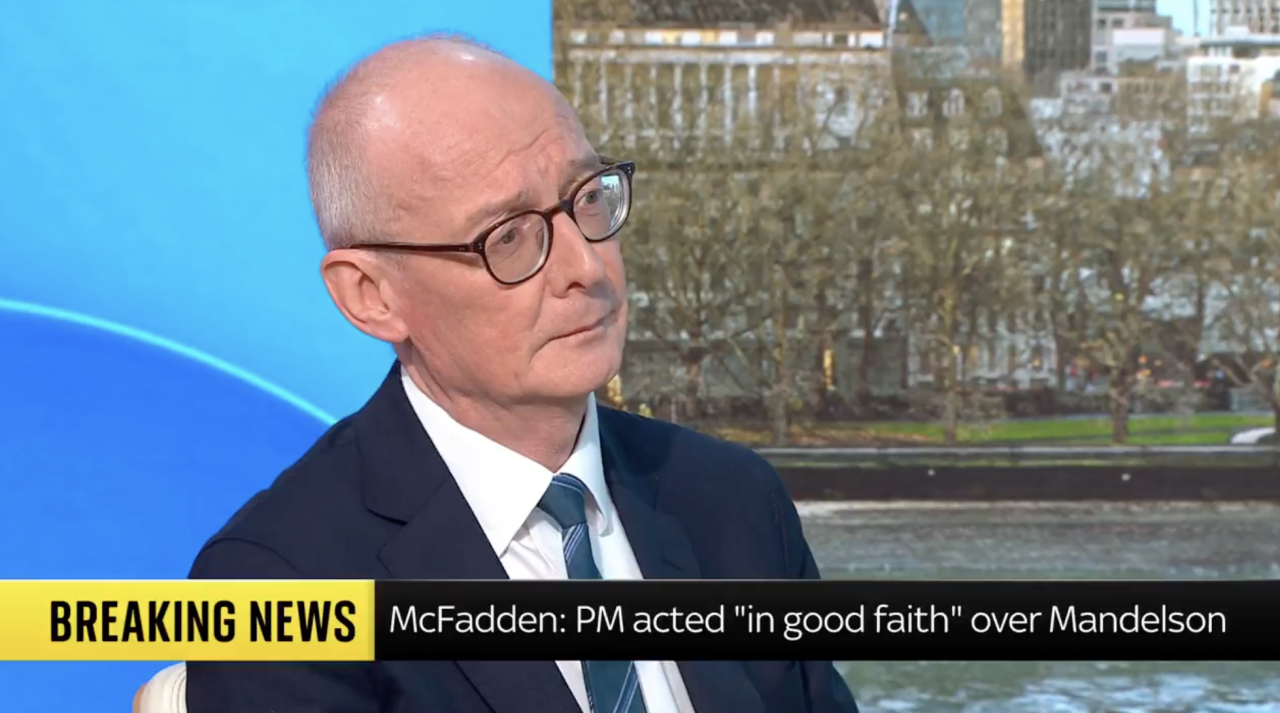
McFadden: It’s Not Good to Change PM Every 18 Months
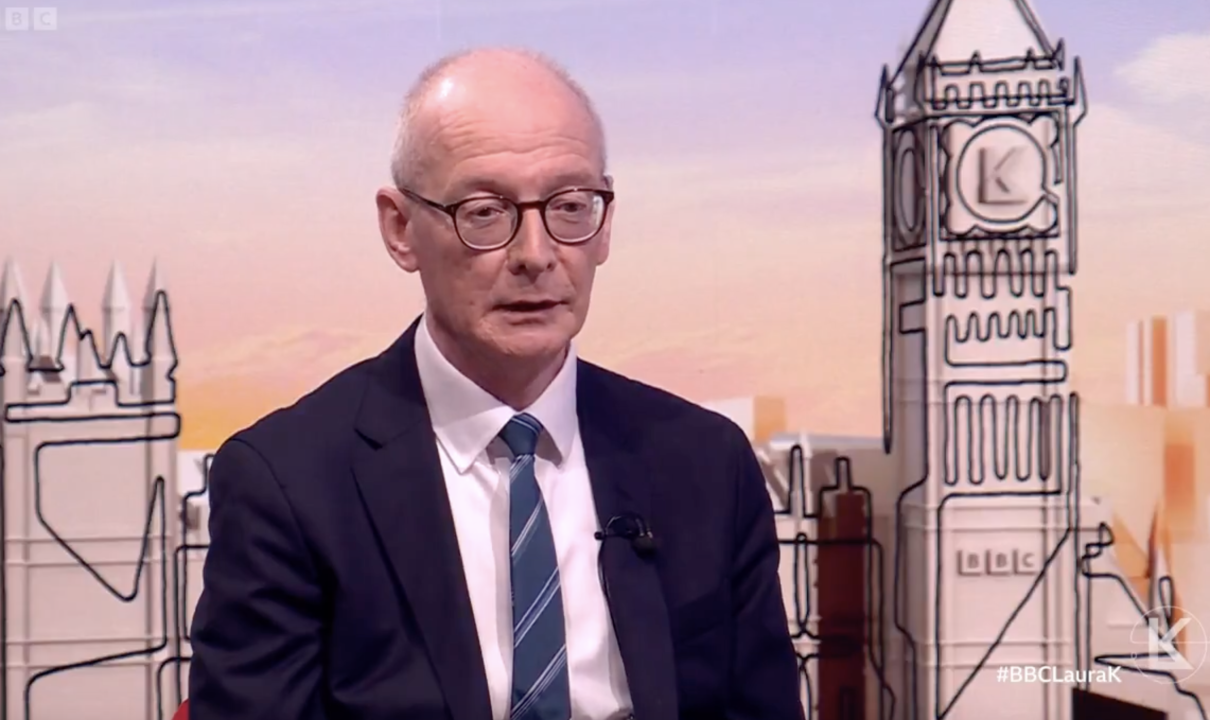
McFadden: No Point in Sacking McSweeney “If the Prime Minister Stays”

Best Wireless Earbuds (2026): Apple, Sony, Bose, and More

Reports of immigration agents in disguise stoke fears in Minnesota

Tech stock shakeout clouds market ahead of economic data deluge


-

 Video6 days ago
When Money Enters #motivation #mindset #selfimprovement
-

 Tech4 days ago
Wikipedia volunteers spent years cataloging AI tells. Now there’s a plugin to avoid them.
-
 Politics6 days ago
Sky News Presenter Criticises Lord Mandelson As Greedy And Duplicitous
-
 Sports1 day ago
JD Vance booed as Team USA enters Winter Olympics opening ceremony
-

 Tech2 days ago
First multi-coronavirus vaccine enters human testing, built on UW Medicine technology
-
Sports1 day ago
Former Viking Enters Hall of Fame
-

 Crypto World6 days ago
Market Analysis: GBP/USD Retreats From Highs As EUR/GBP Enters Holding Pattern
-
Sports2 days ago
New and Huge Defender Enter Vikings’ Mock Draft Orbit
-

 Business3 hours ago
Julius Baer CEO calls for Swiss public register of rogue bankers to protect reputation
-

 NewsBeat5 days ago
US-brokered Russia-Ukraine talks are resuming this week
-
 NewsBeat2 days ago
Savannah Guthrie’s mother’s blood was found on porch of home, police confirm as search enters sixth day: Live
-

 Business3 days ago
Quiz enters administration for third time
-

 Sports6 days ago
Shannon Birchard enters Canadian curling history with sixth Scotties title
-

 NewsBeat6 days ago
GAME to close all standalone stores in the UK after it enters administration
-

 NewsBeat3 days ago
Still time to enter Bolton News’ Best Hairdresser 2026 competition
-
 NewsBeat1 day ago
Driving instructor urges all learners to do 1 check before entering roundabout
-

 Crypto World5 days ago
Russia’s Largest Bitcoin Miner BitRiver Enters Bankruptcy Proceedings: Report
-

 NewsBeat5 days ago
Images of Mamdani with Epstein are AI-generated. Here’s how we know
-
 Crypto World3 days ago
Here’s Why Bitcoin Analysts Say BTC Market Has Entered “Full Capitulation”
-

 Crypto World3 days ago
Why Bitcoin Analysts Say BTC Has Entered Full Capitulation