
Business
(VIDEO) Violence Erupts Across Mexico After Killing of Cartel Leader ‘El Mencho,’ Sparking Widespread Chaos

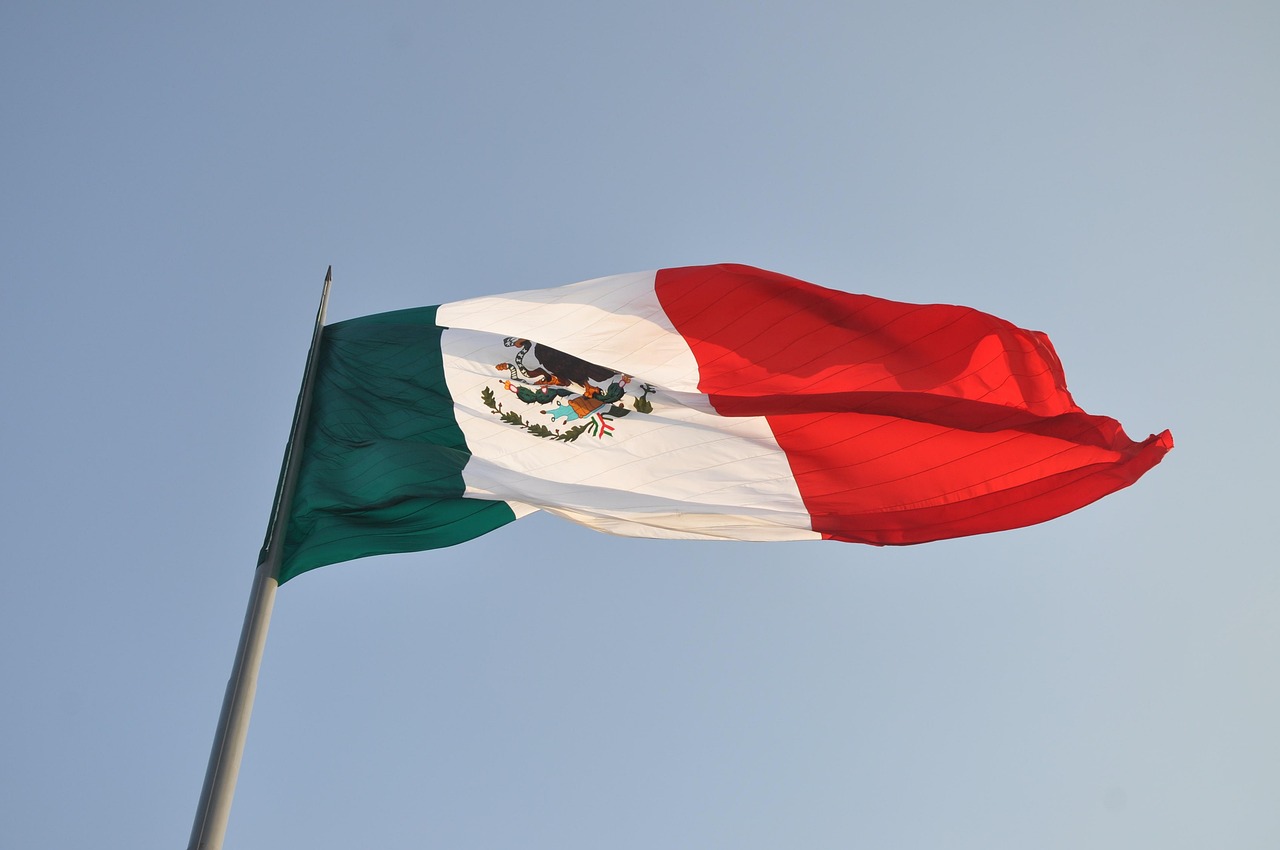
MEXICO CITY — Retaliatory violence exploded across Mexico on Monday following the killing of Nemesio Rubén Oseguera Cervantes, the powerful leader of the Jalisco New Generation Cartel known as “El Mencho,” as suspected cartel members torched vehicles, blocked highways and clashed with security forces in at least 20 states.

The unrest, which began almost immediately after the Mexican military confirmed Oseguera Cervantes’ death Sunday, has plunged parts of the country into chaos, with schools closed, businesses shuttered and foreign governments urging citizens to shelter in place. The wave of attacks has left dozens dead, including at least 25 members of Mexico’s National Guard in Jalisco alone, according to officials.
Oseguera Cervantes, 59, was fatally wounded during a high-risk military operation Sunday in Tapalpa, a small town in Jalisco state about two hours southwest of Guadalajara. The raid, carried out by special forces with support from the National Guard, Air Force and U.S. intelligence, aimed to capture the longtime fugitive. He died en route to Mexico City by air for medical treatment, along with two other injured cartel members, the Secretariat of National Defense said.
Four CJNG gunmen were killed at the scene, and authorities seized weapons, armored vehicles and other equipment. Three soldiers were wounded. Officials revealed that intelligence pinpointing Oseguera Cervantes’ location came from information provided by a romantic partner’s associate, who was detained Friday in Tapalpa.
El Mencho, founder and leader of the CJNG since around 2009, oversaw one of Mexico’s most violent and expansive criminal organizations. The cartel dominates fentanyl production and trafficking to the United States, methamphetamine manufacturing, cocaine distribution, extortion and fuel theft. Known for extreme brutality — including public mutilations and attacks on officials — the CJNG has been designated a foreign terrorist organization by the U.S. State Department, which offered up to $15 million for information leading to his capture.
The operation marked a major victory for Mexican authorities amid pressure from the incoming Trump administration to curb drug flows. U.S. Deputy Secretary of State Christopher Landau called it a “great development,” describing El Mencho as “one of the bloodiest and most ruthless drug kingpins.”
Retaliation was swift and coordinated. Cartel gunmen set up burning roadblocks, torched buses, banks, pharmacies and other businesses, and engaged in shootouts. Violence spread beyond Jalisco to states including Michoacán, Guanajuato, Colima and others, with reports of at least 26 deaths, including civilians such as a pregnant woman caught in crossfire.
In Puerto Vallarta, a key tourist destination in Jalisco, plumes of smoke rose over neighborhoods as vehicles burned and chaos unfolded near the airport. Licenciado Gustavo Díaz Ordaz International Airport suspended operations due to blocked access roads and security threats. Major airlines including Air Canada, United, Delta, Southwest and Alaska canceled or diverted flights, stranding hundreds of tourists. Air Canada advised passengers not to head to the airport, while U.S. carriers issued travel waivers.
The U.S. Embassy and State Department urged American citizens in Jalisco and other affected states to shelter in place, avoid travel and monitor local media. Canada and the UK issued similar warnings, with the British Foreign Office advising against non-essential travel to parts of Jalisco. Taxi and rideshare services halted in Puerto Vallarta, exacerbating difficulties for stranded visitors.
President Claudia Sheinbaum insisted that “peace, security and normalcy” were being restored, with federal forces deployed to key areas. However, analysts warned of potential escalation as CJNG factions vie for control or rivals exploit the power vacuum. Oseguera Cervantes’ son, Rubén Oseguera González (“El Menchito”), remains in U.S. custody after extradition in 2020, leaving succession uncertain.
The violence highlights ongoing challenges in Mexico’s drug war, now spanning nearly two decades with hundreds of thousands killed. While the takedown disrupts a major fentanyl pipeline, experts caution that cartels often splinter or reorganize after leadership losses, potentially leading to more bloodshed in the short term.
As unrest continued into Monday evening, authorities urged residents to stay indoors and report suspicious activity. Restoration of order in hard-hit regions could take days, with economic impacts looming for tourism-dependent areas like Puerto Vallarta.


Krane Funds Advisors, LLC is the investment manager for KraneShares ETFs. KraneShares offers innovative investment solutions tailored to three key pillars: China, Climate, and Uncorrelated Assets. Our team is determined to provide industry-leading, differentiated, and high-conviction investment strategies that offer access to key market trends. Our mission is to empower investors with the knowledge and tools necessary to capture the importance of these themes as an essential element of a well-designed investment portfolio.

Patient engagement plays a vital role in preventive care and achieving improved health outcomes, especially within the Asia-Pacific region. While healthcare has traditionally been reactive, modern medicine emphasizes the need for proactive participation.
Cultural factors significantly influence a patient’s willingness to interact with healthcare systems, and many Asia-Pacific nations are shifting from paternalistic models to patient-centric approaches.
This shift fosters trust, encourages early screenings, and improves adherence to medical advice, ultimately leading to longer, healthier lives and reduced healthcare costs. Enhanced engagement requires building trust and fostering deeper patient-provider relationships.
- Patient engagement is central to healthcare improvement in the Asia-Pacific region, especially for preventative care and better outcomes.
- Traditional reactive models are shifting toward proactive, patient-centric approaches.
- Cultural factors play a major role in how patients interact with healthcare systems, influencing trust and participation.
- Moving away from paternalistic models fosters stronger patient-provider relationships, encourages early screenings, and improves adherence to medical advice.
- Benefits include longer, healthier lives and reduced healthcare costs, driven by trust and active involvement.
- Building trust and deeper relationships between patients and providers is essential to sustain engagement.
Why patient engagement matters in Asia-Pacific
While the ability to engage with the healthcare sector is determined by the availability, accessibility, and efficiency of healthcare systems and infrastructure, people’s willingness to engage with them is tied to culture, trust and beliefs.
In most cases, the challenges in healthcare are seen as access issues – a measure of the supply or availability of healthcare resources – and therefore receive the bulk of stakeholder attention. But in fact, simply making resources available cannot solve the dilemma most health systems face today, of growing patient populations, higher costs as well as insufficient resources.
This is where patient engagement becomes critical. Asia-Pacific bears much of the global infectious disease burden, such as tuberculosis, HIV, malaria, hepatitis and diarrhoeal diseases, while witnessing a rise in non-communicable diseases such as cardiovascular diseases, diabetes and various cancers.
Greater patient engagement creates demand for resources or services available within the health system earlier rather than later. Providing them encourages patients to have an interest in, commitment to and reliance on healthcare resources. All of this in turn helps prevent the onset of serious illnesses, increases the quality and length of patients’ lives, lowers the long-term cost of healthcare, and alleviates the associated economic burden in a given society.
Other People are Reading

The IT major had announced the buyback at a 19% premium to its previous closing price of ₹210 on Thursday. But the move did little to enthuse investors, with the stock falling as much as 4% earlier in the day. It ended at ₹204.30, down 2.8%.
Brokerages said that the effective benefit of the share buyback to shareholders could be limited, with the premium translating into less meaningful upsides.
 Agencies
Stock falls on earnings miss; brokerages flag revenue, margin hit as IT firm lags peers
India’s fourth-largest IT services company posted a 2% decline in consolidated net profit at ₹3,502 crore for the March quarter from the same period a year ago.
Most brokerages struck a cautious note. Goldman Sachs flagged a weaker-than-expected performance and said guidance indicates continued revenue contraction in the near term.

“While Wipro’s margin delivery has been strong, we expect revenue headwinds to translate into a near-term subdued EBIT margin profile,” said the brokerage in a client note. “We see limited signs of Wipro’s revenue underperformance gap closing with peers in the near term, particularly in a subdued macro environment.”
Kotak Institutional Equities said the company continues to lose ground to peers, with deal wins yet to translate into meaningful growth and the gap with competitors remaining wide. “We retain a cautious stance despite cheap valuations, given continued underperformance,” it said.

This is the forum for daily political discussion on Seeking Alpha. A new version is published every market day.
Please don’t leave political comments on other articles or posts on the site.
The comments below are not regulated with the same rigor as the rest of the site, and this is an ‘enter at your own risk’ area as discussion can get very heated. If you can’t stand the heat… you know what they say…
More on Today’s Markets:
Moderation Guidelines:
We remove comments under the following categories:
- Personal attacks on another user account
- Anti-Vaxxer or covid related misinformation
- Stereotyping, prejudiced or racist language about individuals or the topic under discussion.
- Inciting violence messages, encouraging hate groups and political violence.
Regardless of which side of the political divide you find yourself, please be courteous and don’t direct abuse at other users.
For any issue with regards to comments please email us at : moderation@seekingalpha.com.
Seeking Alpha’s Disclosure: Past performance is no guarantee of future results. No recommendation or advice is being given as to whether any investment is suitable for a particular investor. Any views or opinions expressed above may not reflect those of Seeking Alpha as a whole. Seeking Alpha is not a licensed securities dealer, broker or US investment adviser or investment bank. Our analysts are third party authors that include both professional investors and individual investors who may not be licensed or certified by any institute or regulatory body.
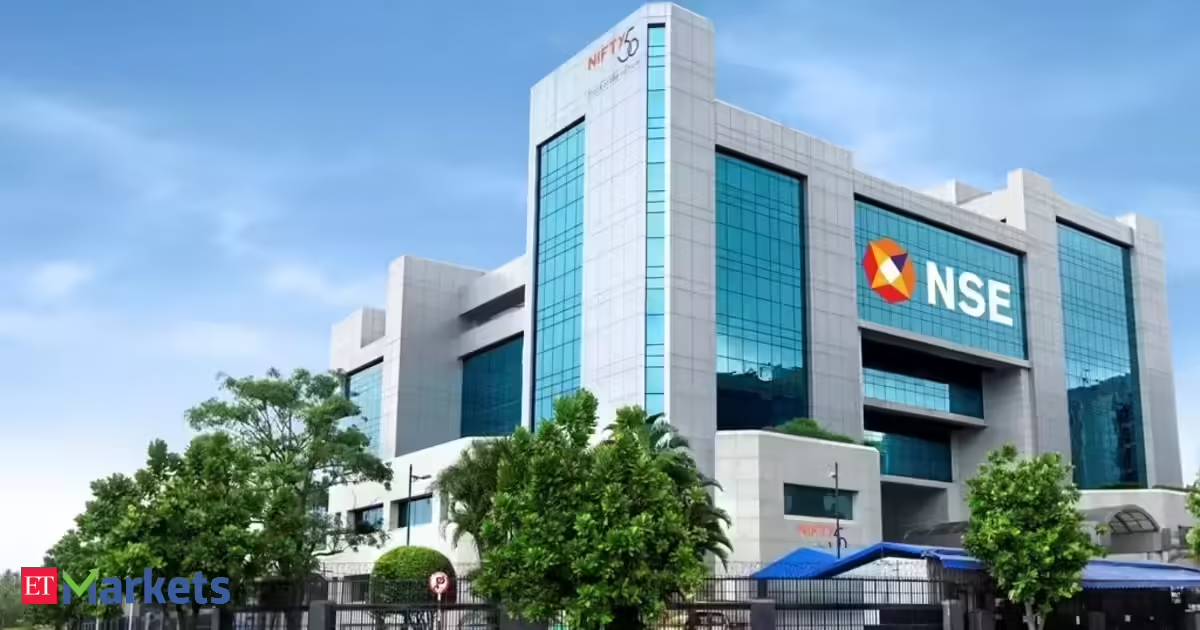
The order came on a petition moved by NSE alleging trademark infringement and passing off against a person identified as John Doe. It also named X Corp and Google LLC as well as administrators of WebsiteBeing, Namecheap and GoDaddy as respondents.
Passing off in intellectual property rights law refers to a false representation that is likely to induce a person to believe that goods or services are those of another.
Agenciescrackdown on false representation
“Considering the fact that an unsuspecting investor can be drawn into investing substantial amounts based on the contents of the infringing accounts purportedly giving guidance pertaining to the stock market and using the plaintiff’s (NSE) registered trademark, the use of such infringing activity is liable to be restrained in the larger public interest,” Justice Sharmila Deshmukh said in her 21-page order.
In its April 10 order, the court granted ad interim relief to NSE in the trademark suit and directed intermediaries, including X and Google LLC, which owns YouTube, to remove infringing content in line with the IT Rules.
Senior counsel Birendra Saraf, along with Parinam Law Associates, appeared for NSE and argued that defendants X Corp and Google-owned YouTube are intermediaries on whose platforms unknown persons have infringed NSE’s registered trademark by creating and operating fake social media accounts.
The counsel said the fake videos misrepresent to the public that the accounts and their content originate from NSE. NSE also argued that the administrators of WebsiteBeing operate the website www.nsetrend.com, which infringes its registered trademark by using the mark in the URL and replicating the exchange’s distinct colour scheme to suggest an association.
Appearing for Google LLC, Charu Shukla argued that while the plaintiff has identified certain YouTube channels, not all content on these channels relates to the stock market, with some being music channels, despite using NSE’s trademark.
“These channels have been in existence for a long time and have thousands of subscribers, and before any order can be passed, it would be appropriate if notice is issued to the YouTubers so that they can respond to the same,” argued the counsel for Google.
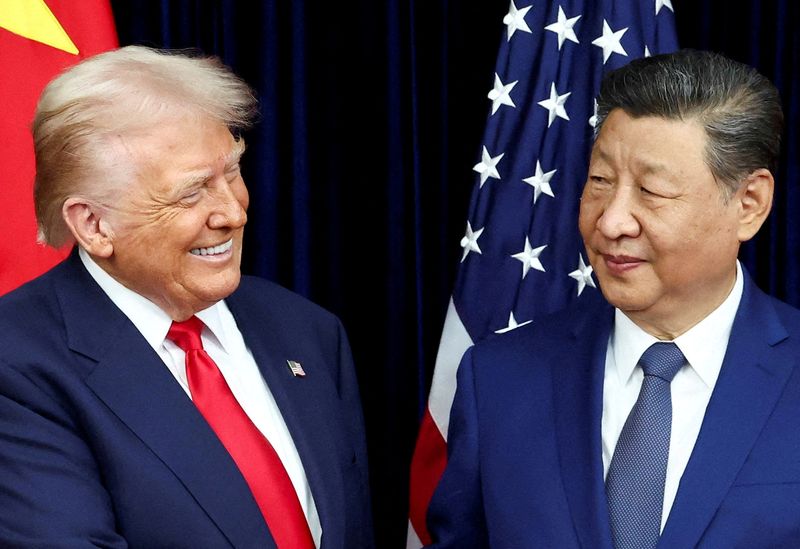

Trump says China’s Xi is ’very happy’ about Strait of Hormuz reopening

Markets Weekly Outlook: A Real Peace Process Or A Fantasy?
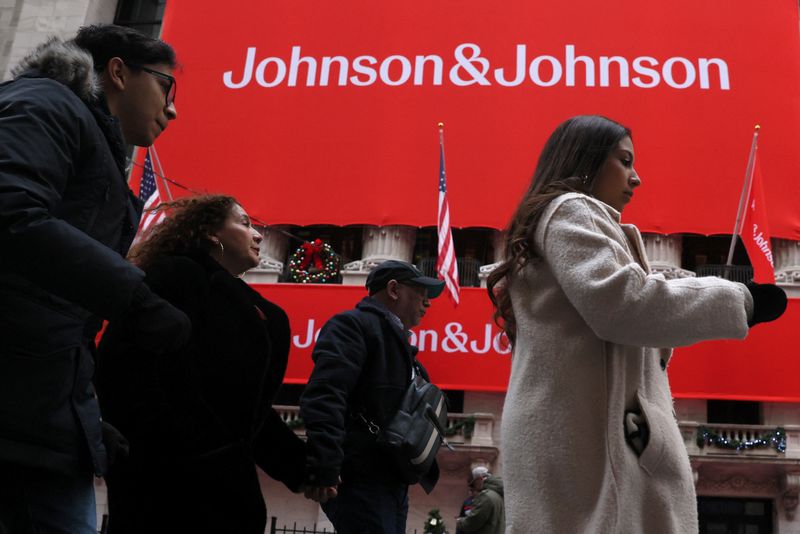

US judge rejects Bayer bid to block Johnson & Johnson prostate cancer drug claims
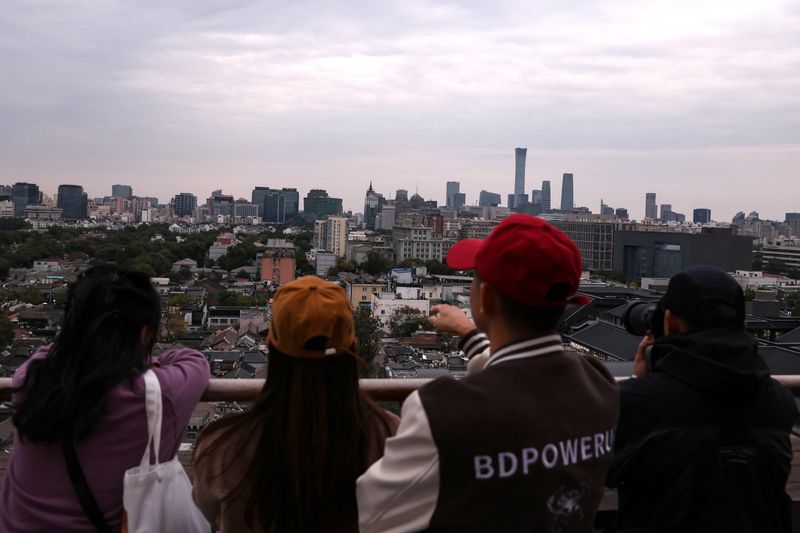

Beijing set to launch Satellite Town as China’s aerospace industry grows
Business
US Stock Market: Wall Street indexes hit record highs as oil falls with Strait of Hormuz declared open
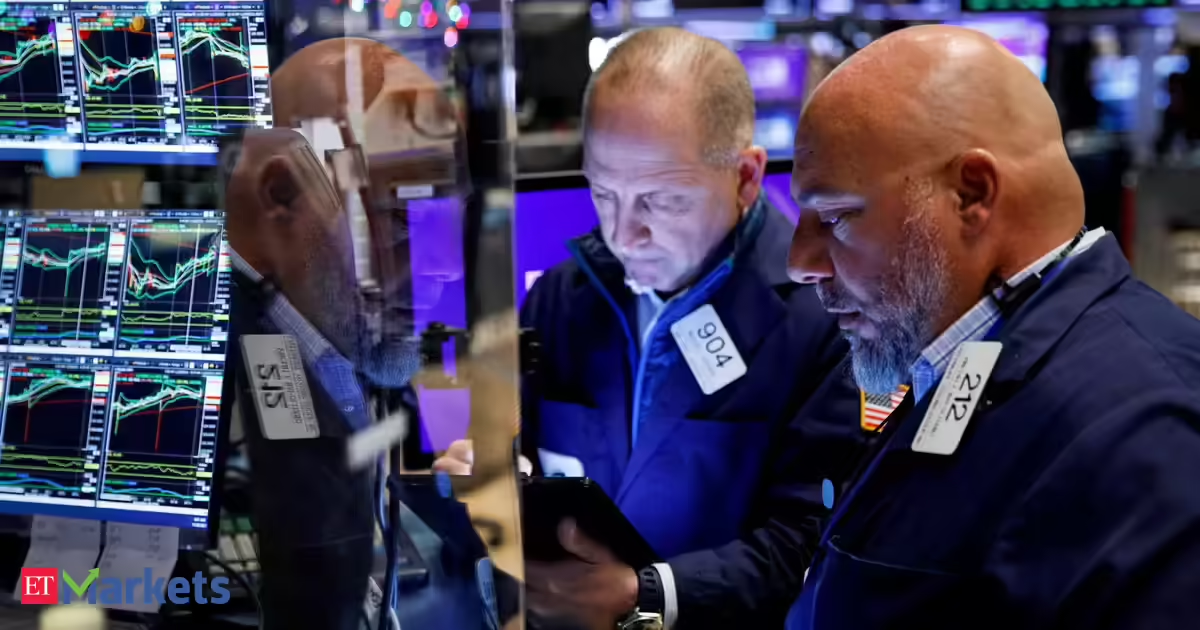
Iranian Foreign Minister Abbas Araqchi said in a post on X that passage for all commercial vessels through the Strait of Hormuz was “completely open” after a ceasefire agreement in Lebanon. This followed U.S. President Donald Trump’s announcement that talks could take place this weekend between Tehran and Washington and that they could soon secure a peace agreement to end the Iran war, which has left thousands dead since the U.S. and Israel launched joint strikes on Iran on February 28. While statements from both sides left uncertainty over how quickly shipping could resume, U.S. crude oil prices tumbled more than 11%, alleviating inflation concerns. The Strait of Hormuz is a vital waterway for global energy transportation.
“The concern about oil putting the world into a slowdown diminishes as it’s onward and upward for a possible final deal,” said Bob Doll, CEO of Crossmark, who noted that while there is still no signed U.S.-Iran deal, “it looks like it’s heading in a direction that’s enough for the market to go up.”
The technology-heavy Nasdaq Composite gained 365.78 points, or 1.52%, to 24,468.48, for its 13th consecutive advance, marking its longest winning streak since 1992.
The Dow Jones Industrial Average rose 868.71 points, or 1.79%, to 49,447.43, the S&P 500 gained 84.78 points, or 1.20%, to 7,126.06.
Unofficially, for the week, the S&P 500 gained 4.53%, the Nasdaq rose 6.84%, and the Dow climbed 3.2%.
ENERGY STOCKS SLIDE AS OIL TUMBLES The small-cap Russell 2000 outperformed large-cap gains, closing up 2.1%, and also registered a record closing high after it earlier hit its first intraday record high since the war erupted. “Energy prices coming down has a bigger impact on small caps because they have tighter margins,” said Nick Johnson, CEO and CIO of Willis Johnson & Associates, adding, “it’s starting to become clear that the U.S. and Iran want to see this behind them.”
Among the S&P 500’s 11 major industry sectors, energy was the biggest loser, ending down 2.9%, with Exxon Mobil, down 3.6%, and Chevron, 2.2%, creating the benchmark’s second and third biggest drags on the day.
The biggest gainer was consumer discretionary, which finished up just under 2%, with cruise operators leading its advances. Royal Caribbean jumped 7.3% while Carnival rose 7%. Industrials was the second strongest sector, finishing up 1.8% with airline United Airlines up 7%, and leading its percentage gains.
CAUTION PERSISTS ON STRAIT PASSAGE Still, some analysts cautioned that logistical challenges remain for shippers.
“Ship operators still face astronomical war-risk insurance premiums, potential mine hazards, and uncertainty about enforcement,” said Erik Bethel, general partner at maritime-focused investment firm Mare Liberum. The S&P’s biggest drag was from Netflix, which tumbled 9.7% after forecasting current-quarter earnings below expectations. The company also announced the exit of co-founder and longtime Chairman Reed Hastings, ending a 29-year tenure.
Alcoa shares ended down 6.8% after the aluminum producer reported first-quarter profit and revenue below analysts’ estimates, citing elevated costs and softening demand.
Advancing issues outnumbered decliners by a 4.03-to-1 ratio on the New York Stock Exchange, where there were 623 new highs and 46 new lows. On the Nasdaq, 3,685 stocks rose and 1,183 fell as advancing issues outnumbered decliners by a 3.11-to-1 ratio. The S&P 500 posted 49 new 52-week highs and no new lows.
Volume was relatively strong on U.S. exchanges, where 20.29 billion shares changed hands, compared with the 19.12 billion moving average for the last 20 sessions.

KWEB: Earnings And The AI Trade in China ETFs

Sen. Tillis says Clarity Act stablecoin yield text unlikely this week

Cosmic Orange is out, Dark Cherry rumored to be new hot iPhone 18 Pro color

Why Israel is blocking foreign journalists from entering

Bitcoin: We’re Entering The Most Dangerous Phase

Alan Cumming Brands Baftas Ceremony A ‘Triggering S**tshow’

Trump Declares Bitcoin US Strategic Reserve! Price Surges!

Why Old Computers Look Better Than New Ones #design #vintage #nostalgia

Why the Next 10 Years Will Decide Your Financial Future & What You Should Do | Vijai Mantri | FWS109
-
 NewsBeat5 days ago
Pep Guardiola and Gary Neville agree over Arsenal title problem that benefits Man City
-

 Crypto World4 days ago
The SEC Conditionalises DeFi Platforms to Be Avoided for Broker Registration
-

 Politics6 days ago
World Cup exit makes Italy enter crisis mode
-

 Crypto World4 days ago
SEC Signals Exemption for Crypto Interfaces From Broker Registration
-

 News Videos3 days ago
Secure crypto trading starts with an FIU-registered
-

 Sports19 hours ago
NWFL Suspends Two Players Over Post-Match Clash in Ado-Ekiti
-

 Crypto World4 days ago
SEC Proposes Certain Crypto Interfaces Don’t Need to Register as Brokers
-

 Business6 days ago
Ireland Fuel Protests Enter Day 5 as Blockades Spark Shortages and Government Prepares Support Package
-

 NewsBeat4 days ago
Trump and Pope Leo: Behind their disagreement over Iran war
-

 Fashion10 hours ago
Weekend Open Thread: Theodora Dress
-
 NewsBeat6 days ago
JD Vance announces ‘no agreement’ with Iran over nuclear weapons fear
-

 Crypto World6 hours ago
Russia Pushes Bill to Criminalize Unregistered Crypto Services
-
Sports6 days ago
Dexter Lawrence, Stefon Diggs, Trading for De’Von Achane
-

 Crypto World5 days ago
Trump whales load up ahead of Mar-a-Lago luncheon.
-
 Crypto World5 days ago
Sei Network Enters Quiet Reset Phase as On-Chain Metrics Signal a Slowdown in 2026
-
Business5 days ago
Kering slides after Morgan Stanley downgrade, Gucci woes loom
-
 Entertainment4 days ago
Karol G’s ‘Ultra Raunchy’ Coachella Set Gave ‘Satanic Vibes’
-
 Business1 day ago
Creo Medical agree sale of its manufacturing operation
-

 Sports5 days ago
NWFL opens Pathway for new Clubs ahead of 2026 Season
-
 Entertainment4 days ago
Brand New Day’ Footage Reveals the Devastating Impact of ‘Now Way Home’
You must be logged in to post a comment Login