

Politics
Israel begins ground invasion of Lebanon

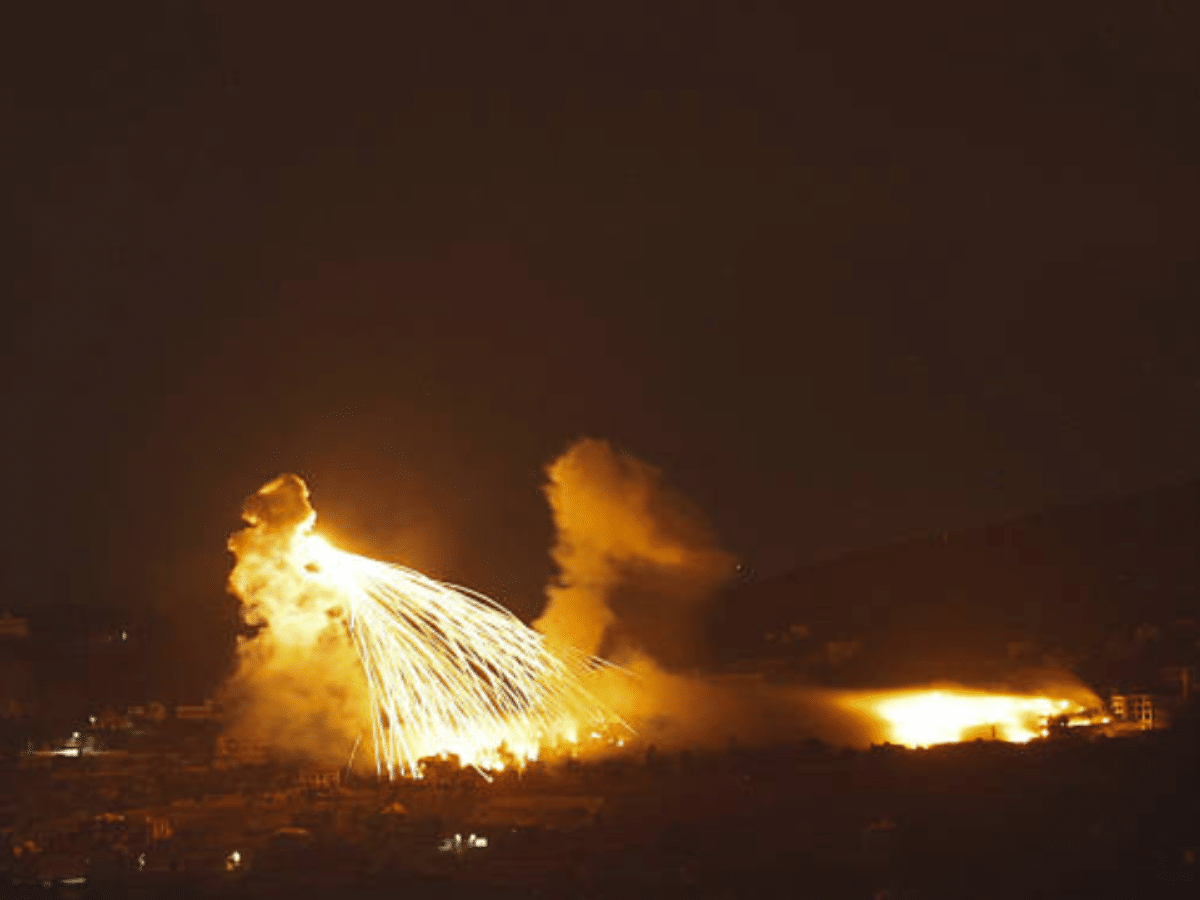
Israel’s ground invasion of Lebanon appears to be underway as US-Israeli aggression threatens to pull the entire region into open war. Israel mobilised 100,000 reservists on 2 March and issued threats to civilians. Hezbollah, their primary adversary in southern Lebanon, has said the age of patience is over.
Hezbollah is a Shia political party and paramilitary force. It is distinct from the Lebanese army and has seats in the country’s parliament. The US and Israel launched unprovoked attacks on Iran on 28 February. Hezbollah is a regional ally of the Iranian regime.
Middle East Eye (MEE) reported on 3 March that Israeli forces had pushed deeper into Lebanon:
In a statement on Tuesday, Katz said that he and Prime Minister Benjamin Netanyahu had authorised the army to “advance and hold additional dominant terrain in Lebanon”.
He said the aim was to “prevent the possibility of direct fire on Israeli communities”.
MEE added
The Lebanese group began launching rockets at northern Israel on Monday, which it said was in retaliation for the assassination of Iran’s Supreme Leader Ali Khamenei.
Israel responded with heavy air strikes in southern Lebanon and in Beirut’s southern suburbs, killing dozens and triggering a fresh wave of displacement.
Hezbollah said the ‘era of patience’ is over:
BREAKING: Hezbollah official says’ era of patience has ended’
🔴 LIVE updates: https://t.co/ZGG7iEbuuE pic.twitter.com/9v5ITQrPCf
— Al Jazeera Breaking News (@AJENews) March 3, 2026
And there were reports an Israel tank was hit by a guide missile near the border:
Israeli media reported that an Israeli tank was struck by a guided missile along the border with #Lebanon. pic.twitter.com/NtkSPBfamz
— Al Mayadeen English (@MayadeenEnglish) March 3, 2026
Displacement crisis
Reports suggest locals are fleeing north in droves. The Intercept’s Seamus Malekafzali warned:
The whole displacement crisis has become a footnote amidst all of this.
Almost everyone I know in Lebanon is posting appeals to find housing for their relatives, or relatives of friends, who have become displaced from south Lebanon and south Beirut amidst the intense IDF attacks. The whole displacement crisis has become a footnote amidst all of this.
— Séamus Malekafzali (@Seamus_Malek) March 3, 2026
Israel has also intensively bombed Beirut:
Israel claims it is responding to Hezbollah firing rockets into its territory on 2 March:
Yesterday, Hezbollah chose to join the Iranian regime in their terrorist fight against Israel.
Today, they have begun to see the consequences. pic.twitter.com/shNsoo85Ec
— Israel Defense Forces (@IDF) March 3, 2026
In theory, Hezbollah breached a US-brokered ‘ceasefire’ with Israel which had held since their last war in 2024. In practice, the US has given Israel carte blanche to strike Lebanon ever since. Israel has done so constantly since the deal was struck.
You can read about the secretive Israel-US ‘side letter’ pact here. And our extensive coverage of Israel’s ceasefire breaches here.
Let it be open war
Middle East Observer reported Hezbollah is moving to a war footing:
⚡️🚨 Deputy Head of the Political Council of Hezbollah, Mahmoud Qomati:
The enemy wanted it to be an open war, so let it be an open war pic.twitter.com/vRUE4eTy07
— Middle East Observer (@ME_Observer_) March 3, 2026
The Lebanese government has also banned Hezbollah’s “military activities”:
#Lebanon’s President Joseph Aoun says the decision to ban #Hezbollah’s military activities is “irreversible,” as the Iran-backed movement claimed responsibility for new attacks targeting Israeli positions.https://t.co/qBhrAV36M7
— Al Arabiya English (@AlArabiya_Eng) March 3, 2026
And Lebanese forces in the south have been seen pulling out in anticipation of an Israeli assault:
⚡️🚨 Under the orders of the Lebanese Government, The Lebanese Army withdraws from borderpoints to allow the safe entry of the Chosen People of God’s army and the occupation of Lebanese territory. The Lebanese Government consider the lives of Israeli soldiers as sacred and worth… pic.twitter.com/IeakWNTafS
— Middle East Observer (@ME_Observer_) March 3, 2026
The legacy media seems to be mincing its words about Israel’s actions. Associated Press (AP) reported on 3 March:
The Israeli military said it has sent additional troops into southern Lebanon and took new positions on several strategic points close to the border, while Lebanon’s state-run National News Agency said the Lebanese army was evacuating some of its positions along the border.
They posted on X:
The Israeli military says soldiers are operating in southern Lebanon as part of a broader effort to increase security for residents in northern Israel near their shared border. It says troops are positioned at several points near the border in what it described as a “forward
But Middle East historian and author Assal Rad put more plainly:
So many words to avoid saying invasion. https://t.co/oPE4CG08H8
— Assal Rad (@AssalRad) March 3, 2026
Israel is now bombing Iran and Lebanon at the same time. It’s genocidal assault on Gaza and the West Bank is also still underway. Opening a new front in the war will stretch the settler-colonial state further, but only time will tell what the long term implications are.
Featured image via the Canary


Met Police Chief Sir Mark Rowley has told the BBC that he ‘can see why women don’t trust the police’. His interview comes as we mark the fifth anniversary of the murder of Sarah Everard, murdered in 2021 by a serving police officer in the Met. Referring to ‘several ghastly cases of police officers committing awful offences against women’, Rowley agrees they were undoubtedly intrinsic in the flailing public trust in the Metropolitan Police.
Women and girls face increasing levels of sexual abuse driven by the entitlement, misogyny, and harmful attitudes held by too many men in Western societies. That trauma often damages their ability to feel safe or to trust others.
However, Rowley actually appears to minimise the scale and diversity of abuse that women experience. After all, for marginalised women that threat can be even greater. Black and brown women not only endure sexual violence but also face racist abuse that compounds and deepens the trauma they must navigate in their daily lives. We also have our LGBTQ+ community who we must also not forget in this critical issue.
Sarah, remembered five years on.
I understand why women don’t trust the police, says Met chief on Sarah Everard anniversary – BBC News https://t.co/t6nnBXybbB
— Vernal Scott (@vernalscott) March 3, 2026
All women matter, not just white women
In March 2021, Met police officer Wayne Couzens identified himself to Sarah Everard before making a false arrest. He then proceeded to kidnap, rape and murder Everard, even using police handcuffs to make her submissive. He had also been found to have indecently exposed himself on two recorded incidents.
Since her murder, officials have conducted reports and inquiries into the institution. Campaigners have also made widespread calls for reform to address the terrifying risks women face when interacting with police officers. Nevertheless, it hasn’t escaped our attention that Sir Rowley’s interview today makes no mention or reference to the other institutional issues that we know are rife within the UK’s biggest police force.
After all, we mustn’t forget the report in 2023 conducted after Everard’s murder at the hands of a Met police officer, which found the force are institutionally racist, misogynistic and homophobic. Given how these behaviours often interplay for abusers, Rowley’s lack of acknowledgement suggests they have learned little respect for the experience of women.
Our own Alex/Rose Cocker wrote in October about racist and misogynistic attitudes in the Met, after a BBC Panorama revealed an apparently ‘hidden culture’. As Cocker astutely pointed out, there is nothing ‘hidden’ about it:
Rory Bibb, the Panorama reporter, spent seven months in the custody suite of Charing Cross police station as a designated detention officer. In that time, Bibb recorded a vast array of truly heinous and discriminatory remarks and actions from the officers around him. His sterling work resulted in the suspensions of eight bigot cops and one other staff member.
adding:
The Met’s bigotry has only been driven underground if you have the luxury of never having to deal with an officer whilst you yourself are marginalised in any way. Its discrimination can only be considered hidden if we automatically discount the Met’s victims as credible witnesses.
Two Met Police officers have been sacked after being found guilty of gross misconduct over the stop and search of two black athletes.
The police followed them as they travelled home from training in their car with their baby son.
Read more: https://t.co/1E2j6M7s0o pic.twitter.com/I2vV63j0ZI
— Sky News (@SkyNews) October 25, 2023
‘The Met Police’s problems extend beyond a systemic hatred of women’
Joe Glenton wrote for the Canary later that month about a Met police officer who avoided a custodial sentence despite spying on a 14-year-old girl. Instead, his conviction of voyeurism and making indecent images of a child was given a suspended sentence of 13 months. He wrote:
The Met’s problem’s extend beyond a systemic hatred of women. On 2 October a BBC Panorama documentary showed how racism and far-right ideas thrived in the force.
The BBC reported:
The evidence of misogyny and racism challenges the Met’s promise to have tackled what it calls “toxic behaviours” after the murder of Sarah Everard by a serving police officer.
Panorama’s secret filming shows officers making sexualised comments to colleagues and sharing racist views about immigrants and Muslims.
What sort of deterrent is this when pretty much every abuser wants to believe they won’t get found out? The lack of a serious sentence when he was in a position of trust in his community speaks to a woeful underappreciation by the Met for the long-term harm these abuses inflict on those victimised.
Five years since Sarah Everard was raped and murdered and a Sky News investigation has found there have been widespread criminal investigations into officers for rape and sexual offences since then, across forces in England and Wales. Including the Met.https://t.co/yCBvHWyUxy
— Amanda Lees (@amandalees) March 3, 2026
Met Police — little sign of change or progress for women
Former victims’ commissioner Dame Vera Baird added her voice this morning. She argued on Sky News that women’s safety and confidence haven’t improved much at all since Everard’s horrifying murder. Alarmingly, she also pointed out that applicants to the Met with a caution on their record seem to be perfectly acceptable:
Former victims commissioner Dame Vera Baird tells @SophyRidgeSky that she doubts the safety of women, and the confidence of women has moved forward much at all since Sarah Everard’s murder.https://t.co/N5m5d2cuKJ
📺 Sky 501, Virgin 602, Freeview 233 and YouTube pic.twitter.com/lNz1NnmivK
— Ridge & Frost (@RidgeandFrost) March 3, 2026
The Angiolini inquiry referenced by Baird was released in December last year, and highlighted ‘massive and continuing failures’ in the Met’s handling of violence against women and girls (VAWG). We wrote at the time:
Racism and misogyny shouldn’t be conflated here. However, last month’s report illustrates the ways in which the police can work directly counter to efforts at reform, both within and without their organisation. The solution to VAWG cannot, and must not, be built around the expectation that the police can resolve this issue.
Time and again, we have seen that the police are part of the problem.
I mean, it’s hard to argue against an independent third party stepping in to fix this serious issue within the force. Especially when they were clearly more than happy to ignore Prince Andrew’s abuse:
Dai Davies, former head of Royal protection and commander at the Met Police, says ‘there are a lot of questions for the Met’ as the Epstein files suggest the force provided security for the former prince Andrew and Jeffrey Epstein after the latter was convicted for sex offences. pic.twitter.com/iL38QZNkrE
— BBC Radio 4 Today (@BBCr4today) February 23, 2026
Deal with the root issue, not just the inevitable abuse
If the Epstein Files teach us anything, it is that sexual abuse often follows where powerful men go. Therefore, it isn’t a stretch to imagine that men attracted to the Met are doing so because they want to feel powerful. That is why it is essential that the scrutiny they receive is far reaching and cannot ignore cautions or any indication that abuse is possible as Dame Vera Baird underscored.
The harm that men have the potential to inflict is far reaching and life-changing for victims and survivors. The greater good and preventing that harm should always be the priority but evidently hasn’t been for far too long.
That might lead to a recruitment issue as there aren’t the number of suitable applicants. On the other hand, it might finally prompt the long overdue national conversation about harmful male attitudes in the UK.
Featured image via MyNewsDesk

Ahead of the Spring Statement tomorrow, the Trades Union Congress (TUC) released new analysis. It shows that a million 18-20 year olds (85%) already earn above the youth minimum wage. This, the TUC claims, renders the youth rate not only unfair, but also “obsolete” as only 1 in 7 receives it.
Youth minimum wage increasingly irrelevant
740,000 young people (63% of those in work) are paid at or above the adult national minimum wage. So the youth rate doesn’t apply to them at all.
Given the majority of employers already pay young people a fair wage, “doomsday” warnings about the impact of equalising rates are “scaremongering and misleading”, says the TUC. Needless to say, the millionaire Scrooges at Reform are leading this cry and want to pay young people even less.
At the moment, adults 21 and over must get a minimum of £12.21 per hour. The youth minimum wage, for those aged between 18 and 20, is £10 per hour.
This speaks to a fundamental issue of fairness. Young people, the TUC says:
pay the same bills as everyone else, and deserve a fair wage for their work.
Unions find that many businesses report they don’t want to deal with this unfairness. And they want to avoid the administrative burden of changing workers’ pay as they get older.
Closing the gap
Labour’s manifesto promised to remove discriminatory age bands. In fact, successive governments have reduced the gap between the adult rate and youth rate. And yet this has had no negative impact on employment.
Reform and the Conservatives have both called for youth rates to stay in place. But the process of equalising youth minimum wage rates actually began under the previous (Conservative) government. First as 23–24-year-olds became entitled to the adult rate in 2021, and then as 21–22-year-olds joined them in 2024. Further increases since the election have been following this trend.
Despite scaremongering at the time, the Low Pay Commission found previous equalisations happened:
without an increase in unemployment and underpayment.
The Low Pay Commission is the independent body responsible for balancing youth employment with equalising the minimum wage. It’s been doing this effectively for 26 years. The TUC argues it should be trusted to continue its evidence-based approach to finishing the job.
The inherent unfairness of the youth rate became worse over recent years as it fell significantly behind the adult rate. Between 2010 and 2024, the 18-20 rate fell from 83% to just 75% of the full minimum wage.
There is now a small gap remaining – the 18-20 rate from April 2026 will be 85% of the adult rate.
The UK is behind similar countries in still having a youth rate. Countries such as France, Germany and New Zealand do not have lower rates for adults aged 18 and above.
Especially given that even when the youth minimum wage goes, workers under 21 will still be cheaper to hire, as employer National Insurance Contributions only apply to workers aged 21 or over.
Real solutions
The government is right to be sensitive to young people’s unemployment levels. But we need real solutions, not scaremongering about the minimum wage.
The TUC has consistently argued sluggish consumer demand is keeping the UK economy in the slow lane.
Industries which have a greater proportion of minimum wage jobs, like hospitality and retail, need customers with money in their pockets.
It is also important to recognise that recent rises in youth unemployment have been offset by falls in youth economic inactivity rates.
To tackle rising youth unemployment the government should bring forward stronger employment rights, an ambitious jobs guarantee and quality apprenticeships.
TUC general secretary Paul Nowak said:
Young people pay the same bills as everyone else and deserve a fair wage for their work.
Youth rates are not only unfair, but they’re also increasingly obsolete as most businesses hardly use them.
Youth unemployment is a serious issue that deserves real solutions, like stronger employment rights, an ambitious jobs guarantee and quality apprenticeships – not doomsday scaremongering and misleading claims about the minimum wage.
The Low Pay Commission are the trusted experts and should be trusted to finish the job, setting out a plan to abolish the minimum wage youth rates this parliament.
The government promised to deliver change. Rowing back in the face of unsubstantiated business lobbying – at real cost to young people’s living standards – would be exactly the wrong approach.
Featured image via the Canary
!function(n){if(!window.cnx){window.cnx={},window.cnx.cmd=[];var t=n.createElement(‘iframe’);t.display=’none’,t.onload=function(){var n=t.contentWindow.document,c=n.createElement(‘script’);c.src=”//cd.connatix.com/connatix.player.js”,c.setAttribute(‘async’,’1′),c.setAttribute(‘type’,’text/javascript’),n.body.appendChild(c)},n.head.appendChild(t)}}(document);(new Image()).src=”https://capi.connatix.com/tr/si?token=19654b65-409c-4b38-90db-80cbdea02cf4″;cnx.cmd.push(function(){cnx({“playerId”:”19654b65-409c-4b38-90db-80cbdea02cf4″,”mediaId”:”b020c36c-0e4a-4946-b8b2-2d32966a556f”}).render(“69a72556e4b076ac5d6407d2”);});
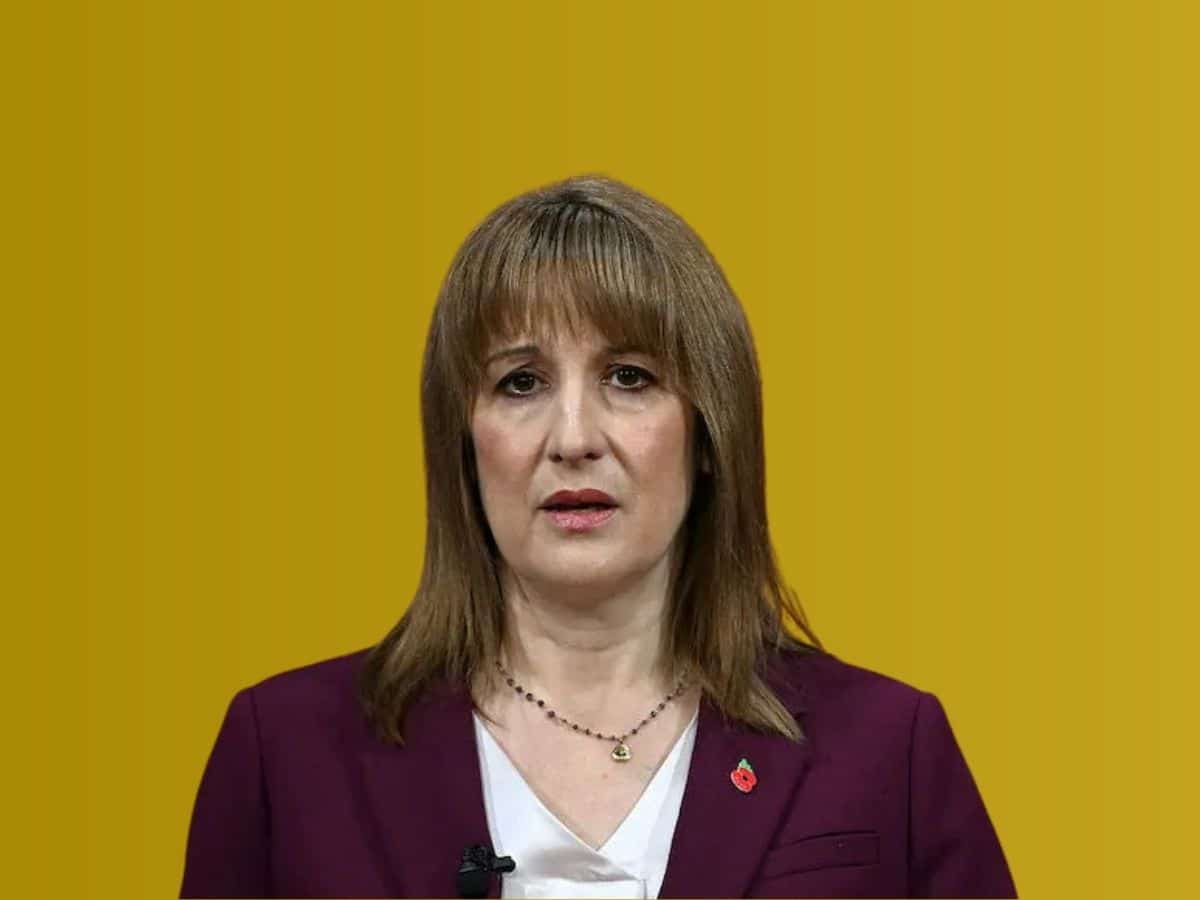
Today, 3 March, chancellor Rachel Reeves delivered her ‘spring statement’ on the progress of the UK’s finances. With clear pride, she spoke about growing the country’s economy following her autumn budget.
However, according to the Office for Budget Responsibility’s (OBR) accompanying report, the outlook is somewhat mixed.
Mixed outlook
Notably, the OBR collated its findings before the US and Israel mounted their illegal attack on Iran. This is already having a massive impact on the UK’s energy prices, among other knock-on costs.
For what it’s now worth, the government spending watchdog reported that:
- The government’s fiscal headroom — the emergency fund for economic shocks, like a sudden war in Iran — has increased to £23.6bn from £21.7bn.
- The economy should grow by 1.1% in 2026. That’s down from November’s original 1.4% forecast.
- However, inflation will likely fall faster than predicted, dropping past 2.3% over 2026. By the end of the year, it should reach as low as the Bank of England’s 2% target.
- Unemployment is predicted to reach 5.3%. That’s a hike from the previous 4.9% peak forecast.
The OBR stated that there are “significant risks” around its forecast, and added that:
Conflict in the Middle East, which escalated as we were finalising this document, could have very significant impacts on the global and UK economies.
Rachel Reeves — ‘The right economic plan’
Before the statement itself, the chancellor indicated that three major issues would “determine the course of our economy”. These, she claimed, were overcoming trade barriers, improving global relationships, and harnessing AI.
Reeves began her address to the Commons with that claim that:
This government has the right economic plan for our country.
She went on to state that the Bank of England indicated that inflation should fall faster because of
action that I took at the Budget.
The claims around inflation here are somewhat… flexible.. with the truth. The most recent figures showed 3% inflation in January, down from December 2025’s 3.4%. However, that’s still up from 2% in June 2024, immediately before Labour came to power.
Rachel Reeves — ‘Largely unchanged’
Rachel Reeves also dismissed the OBR’s downgrade of the growth forecast as “largely unchanged”:
The OBR has adjusted the profile of GDP so that it grows slightly slower in 2026, and faster in 2027 and 2028.
On that note, the spending watchdog’s long-term predictions do look fairly positive. Growth should rise to 1.6% in 2027 and 2028, and then dip slightly to 1.5% in 2029 and 2030.
This led the chancellor to claim that:
By the next election, after accounting for inflation, people are forecast to be £1000 better off per year.
Unfortunately, as the BBC explained:
She’s talking about a measure called Real Household Disposable Income (RHDI) per person. The Office for Budget Responsibility said today, external that measure had grown strongly in 2024-5 (broadly the first year after the general election). It has grew by 3.1%.
In 2025-26, RHDI per person is expected to grow by much less — only 0.1% — and then average 0.5% growth a year until 2029, when the next election is likely to happen.
The OBR says RHDI per person was £25,500 in 2023-24 and it does indeed predict that it will be a bit more than £1000 higher than that by the time of the next election, but you’ve already had most of that increase.
Objections from the opposition(s)
The chancellor wrapped up by voicing confidence that the UK can “navigate the challenges we face”:
The plan that I have been driving forward since the election is the right one: stability in our public finances, investment in our infrastructure and reform to Britain’s economy.
However, the other parties in the Commons were predictably less enamoured with Reeves patting her own back. The Lib Dems’ Daisy Cooper, citing Trump’s war on Iran, pushed for:
put a laser-like focus on getting a better trade and defence deal with Europe.
Meanwhile, Reform’s Robert Jenrick likened Reeves to a:
rogue landlord who keeps squeezing the tenant with higher and higher rent. All the while, the property is going to wrack and ruin.
As a reminder, Jenrick was a Conservative MP under the Liz Truss government, which nearly crashed the economy completely.
Lastly, Tory shadow chancellor Mel Stride called the address “not a Spring Statement” but a “surrender statement”. He pointed out that government borrowing is up (true), and also claimed the UK’s youth unemployment rate is:
the highest in Europe for the first time in a quarter of a century.
According to the latest figures from the Organisation for Economic Co-operation and Development (OECD), this is false. In fact, 13 EU countries had higher youth unemployment rates last year alone.
Rather, the UK’s youth unemployment rate was 15.3% in summer 2025. This was 0.1% above the EU average of 15.2%. Simple mistakes like this are likely why Stride is safer as the shadow chancellor than in a job where he actually has any power.
Overall, Reeves’ speech was self-congratulating, and optimistic in a manner than was mildly at odds with the OBR’s forecast itself. However, with the shadow of Trump and Israel’s war with Iran looming, any predictions now come with extremely heavy caveats.
Featured image via the Canary
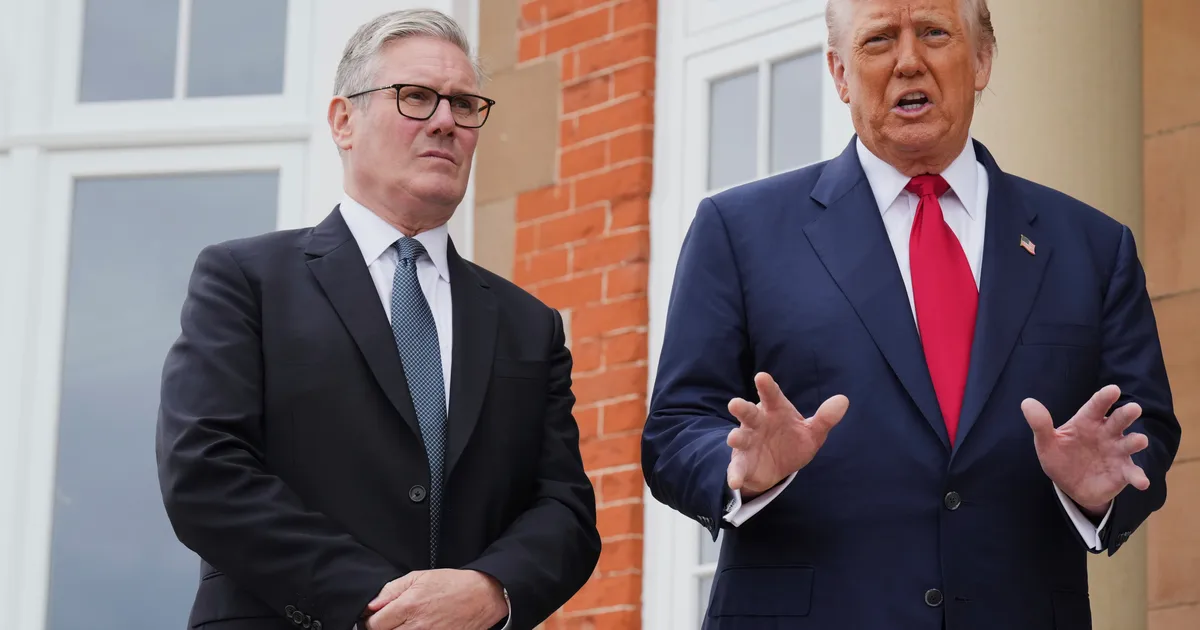
Donald Trump has mocked Keir Starmer over the UK’s response to the US-Israeli bombing of Iran.
The American president said “this is not Winston Churchill that we’re dealing with” after Starmer initially refused to let the US use British bases to launch their attacks.
The PM eventually changed his mind after Iran began bombing countries across the Middle East, putting British lives at risk.
Trump’s Oval Office comments mark a new low in the so-called “special relationship” between America and the United Kingdom.
Referring to the UK military base at Diego Garcia, he said: “That island… It’s taken three, four days for us to work out where we can land there, it would have been much more convenient landing there as opposed to flying many extra hours, so we are very surprised.
“This is not Winston Churchill that we’re dealing with.”
Welsh Water’s (Dwr Cymru) supposed ‘not for profit’ status hasn’t stopped it raiding the welfare of customers in poverty who need support from the Department for Work and Pensions (DWP).
Across 18 months, the water and sewerage utility deducted £2.6m from customers’ Universal Credit. Amid a group of 10 privatised joint water and sewage suppliers, it ranked third by proportion of postcodes it covers.
The damning figures sit next to the staggering multimillions the company has paid bondholders and other speculators. And all as it wrecks the environment to boot.
Welsh Water: the ‘not for profit’ nabbing claimant’s DWP benefits
Welsh Water operates under a different model to water and sewerage companies in England. It defines itself as a ‘not for profit’ because it is:
owned by Glas Cymru a single purpose company with no shareholders.
And, it claims that this means it runs it:
solely for the benefit of customers.
However, this didn’t stop the supposed public benefit company from making stonking deductions to claimants’ Universal Credit. Notably, between March 2024 and the close of August 2025, estimates by the Canary suggest it took more than £2.6m from people’s benefits to cover debt arrears.
As it stripped DWP Universal Credit claimants of this, it paid out £200m in debt interest to its overseas creditors. Because while it likes to show off its supposed not for profit credentials, the reality is it’s merely a trojan horse for a different kind of profiteering.
Welsh Water itself describes its model as aiming:
to reduce Welsh Water’s asset financing cost, the water industry’s single biggest cost.
Specifically, it utilises bonds to finance its work, and boasts how its:
Financing efficiency savings to date have largely been used to build up reserves to insulate Welsh Water and its customers from any unexpected costs and also to improve credit quality so that Welsh Water’s cost of finance can be kept as low as possible in the years ahead.
Yet, at the close of 2024, regulator Ofwat greenlit Welsh Water increasing bills 42% by 2029/2030. As a result, Welsh Water customers will have the highest bills in England and Wales. Of course, that’s likely to push many more vulnerable customers into debt arrears. And the Canary data shows how the company clearly has no qualms chasing customers through the DWP deductions regime.
Fatcats and sewage spills: the same old story
What’s more, it’s clear Welsh Water is little different from shareholder-owned companies in England as far as its underinvestment, pollution, and fatcat payouts are concerned.
In December 2024, former Welsh government economy minister Andrew Davies penned a damning report ripping into the company.
He wrote how:
Although privatisation was intended to stimulate investment in the water industry, it has fallen by almost a fifth in the past 30 years, from £2.9bn a year in the 1990s to £2.4bn in 2022. A Financial Times article showed how water companies cut their investment in infrastructure since the 1990s, with most companies, including Dŵr Cymru Welsh Water, investing less in the 2020s than they did in the 1990s.
Unsurprisingly, the company has a pollution record to match its chronically underinvested infrastructure.
In 2025, Natural Resources Wales awarded it a 2-star rating for the third year in a row. Like its counterparts in England, Welsh Water has been at the centre of multiple pollution incidents. That same year, the company pleaded guilty to 800 breaches for sewage discharges beyond its legal limit. Initially fined £1.35m, the court reduced this to £120,000 plus £70,237.32 prosecution costs. In October 2025, nearly 4,000 people launched a legal case against Welsh Water and other companies for “extensive and widespread” pollution in the Wye, Lugg, and Usk rivers.
And while Welsh Water bosses aren’t lining their pockets in the millions, they’re still swimming in six figure sums, with ‘variable pay’ – eye-watering bonuses by any other name. These payouts fluctuate because Welsh Water’s board sets this based on performance. Yet, in 2025, base pay for outgoing CEO Peter Perry still closed in on half a million (£460,000) with a target remuneration of £894,000.
That’s a large salary for the boss of a water company wrecking the environment and snatching people’s benefits.
PR sting operation: your friendly neighbourhood water utility
Nevertheless, Welsh Water has gone in hard painting itself every bit the company run in the public interest. So-called ‘social tariffs’ is one way in which it projects this charitable persona. But the amount it’s losing out on to ‘help’ vulnerable customers pales in comparison to the levels at which it’s making deductions.
In the 2025/26 financial year, it forwent circa £16,000 in order to reduce people’s bills. That same period, it clawed back nearly £1.8m in arrears from customers’ Universal Credit.
And notably, social tariff caps have also shot up significantly more than bill increases. In a decade, Welsh Water’s HelpU social tariff scheme cap has soared by 84%. Specifically, in 2016-2017, it capped bills at £190. In 2026-2027, that’s set to be £350 – £190 for sewage alone. In that time, Welsh Water has hiked average bills 56% by comparison (from £437 to £683).
The company has also tried to spin the narrative that its ‘not for profit’ status means it invests in jobs “to support the Welsh economy”. However the 500 “back-office” employees it’s replacing with AI and data “efficiencies” across 2026/27 might be wondering how it figures that.
Privatisation by any other name
Ultimately, it has revealed the true privatised nature of Welsh Water. Because despite its not for profit claims, the company has still continued to line the pockets of its wealthy bondholders and directors.
At best, it’s a not for dividend model that marks only a marginal improvement on England’s shareholder-laden water sector. Bosses profiteer less. But capitalists cashing in through the financial markets are still the clear winners. The losers are still people seeking DWP support, the environment, workers, and the public – whose bills continue to soar.
Once again, it exposes the scandal of commodifying a resource vital to human survival. In a functioning society, access to the most basic materials for life wouldn’t be in question. And they most certainly wouldn’t be a cash cow for greedy profiteers. Welsh Water is a cautionary tale for why anything less than full nationalisation is an egregious, trojan horse-adjacent capitalist scam. And ultimately, it’s one the poorest will inevitably pay for most.
Feature image via the Canary
The post Iran: can the Islamic Republic be toppled? appeared first on spiked.

The al-Khaleel Valley, on the outskirts of the village of al Mughayyir in the West Bank and was, until very recently, home to two Palestinian families. But over the weekend of 20 and 21 February, both families were forcibly displaced from their homes and land. This marks the end of a two year campaign of harassment and violence towards these Palestinians, by armed settlers and Israeli occupation forces (IOF).
The Abu Najeh family compound comprised of 12 families, a total of around 50 people.

But, fearing for their lives, they packed up their belongings and evacuated the area. A few days previously, the IOF entered their homes, with the excuse they were looking for three men who had supposedly thrown rocks at settlers. The IOF did not find the men they claimed to be looking for. But they broke security cameras, and detained a family member overnight, because he had been seen filming settlers.
West Bank violence continues
Majid Omari, 32, is Abu Najeh’s grandson and one of the three men the IOF had wanted to arrest. Because the settlers recognise his face and his car, Omari was terrified they would attack or kill him. This led the family, under the cover of darkness, to finally flee their homes and land, with no chance of returning in the near future. When they left, they burnt their remaining possessions, to prevent the settlers materially benefitting from the Abu Najeh family’s dispossession.
This is the sixth time the Israeli occupation has displaced Abu Najeh in his lifetime of 80 years.
Israeli occupation’s intention is ‘to expel Bedouin people who illegally occupy the area’
On 1 February a deportation hearing took place, involving International Solidarity Movement (ISM) activists who had provided protective presence for the Abu Najeh and Abu Hammam family. During the hearing, the Zionist regime admitted it’s intention is to “expel Bedouin people who illegally occupy the area.”
When the family left, Omari told ISM activists:
Urgent intervention is needed to protect us. But we trust we will return one day. Because the land is ours. It’s Palestinian.
The next day, 21 February, saw settlers violently attacking the Abu Hammam family. This was the only other remaining family in the Khaleel Valley, but has now also been forcibly displaced.
Umm Hammam told the Canary the Israeli occupation’s army had, on the previous Tuesday, demanded the family leave the area within four days or they would be expelled by force. She says that for four miserable days after the army’s visit, the family was unable to sleep, eat or do anything because of the escalating settler violence.
She recounts the events of the Saturday to the Canary:
We were visited by settlers at about 2pm. They cornered us in the cave, and started throwing stones at us. While they were inside the cave, they destroyed everything around them. They destroyed the water tanks, the solar panels, the whole kitchen. Olive oil, flour and sugar were poured everywhere. When they left, Moshe came.


Settlers not only violently attacked Umm Hammam’s family but also destroyed everything
Umm Hammam described the scene:
He was accompanied by four settlers. They were all armed to the teeth. They started attacking us, beating us. The first to be beaten were Hidaya (Umm Hammam”s daughter in law),and Rizq ( Umm Hammam’s 70 year old husband, known as Abu Hammam).
After they finished attacking us, Moshi told us to go home, meaning back to the tent. He said he would shoot us if we didn”t go.
And:
The settlers then stole the batteries, and destroyed the solar panels and all our edible things. Flour, olive oil and sugar were tipped over the floor. They even fed our chicken food to their animals. Then the settlers set the tents alight. There was only time to run away, and we left with only the clothes we were wearing. They destroyed everything, and burnt the blankets and matresses we slept on, they told us that if we didn’t leave that day we would all die. Moshe had his gun prepared, and was ready to shoot all of us.

At the same time, residents of al Mughayyir village along with international activists attempted to reach the Abu Hammam family home and provide them with support. But settlers and the IOF opened fire on them, and prevented them from doing so. 13 year old Naseem Shaker Thabta was shot in the foot, while Ayham Rizq Awad Abu Hammam, 36, was shot in the back and, as of 27 February is still hospitalised.
A doctor told the Canary, on 27 February, that Ayham is still in hospital but has now been moved from the intensive care unit to the surgical ward. He is on strong painkillers, and is in a stable condition although internal bleeding is still occuring. Doctors are observing him, and have scheduled a CT scan in the next few days, to locate the source of bleeding and the bullet location.
Crimes of Israeli occupation forces and illegal settlers are only possible because of international inaction
By Saturday evening, a huge Israeli flag had been erected on the hilltop between where Abu Najer’s and Abu Hammam’s families had been living.

What has happened to the Abu Najeh and Abu Hammam families are not isolated incidents. The same pattern of violence and displacement is happening throughout the West Bank, on a daily basis. The IOF and settlers work together to carry out their crimes, and are never held to account. Palestinians have no one to protect them, and no hope of any justice. Attacks on their families and homes usually result in their arrest, while global impunity ensures the perpetrators of these crimes answer to no one.
According to the UN Office for the Coordination of Humanitarian Affairs (UNOCHA), almost 700 Palestinians in nine communities have been displaced between 1 January and 18 February 2026. During the same time period, the Israeli occupation has also demolished around 170 Palestinian homes, due to a lack of building permits – which the occupation refuses to issue to Palestinians.
According to the International Court of Justice, in July 2024, ‘Israel’s’ continued presence in the occupied Palestinian territory is illegal under international law. ‘Israel’ has a legal obligation to end its occupation ‘as rapidly as possible’, dismantle it’s settlements and pay reparations to Palestinians. The court ruled that all settlements in the West Bank and East Jerusalem are illegal, and ‘Israel’ must evacuate all settlers from the occupied territory.
Featured images via the Canary
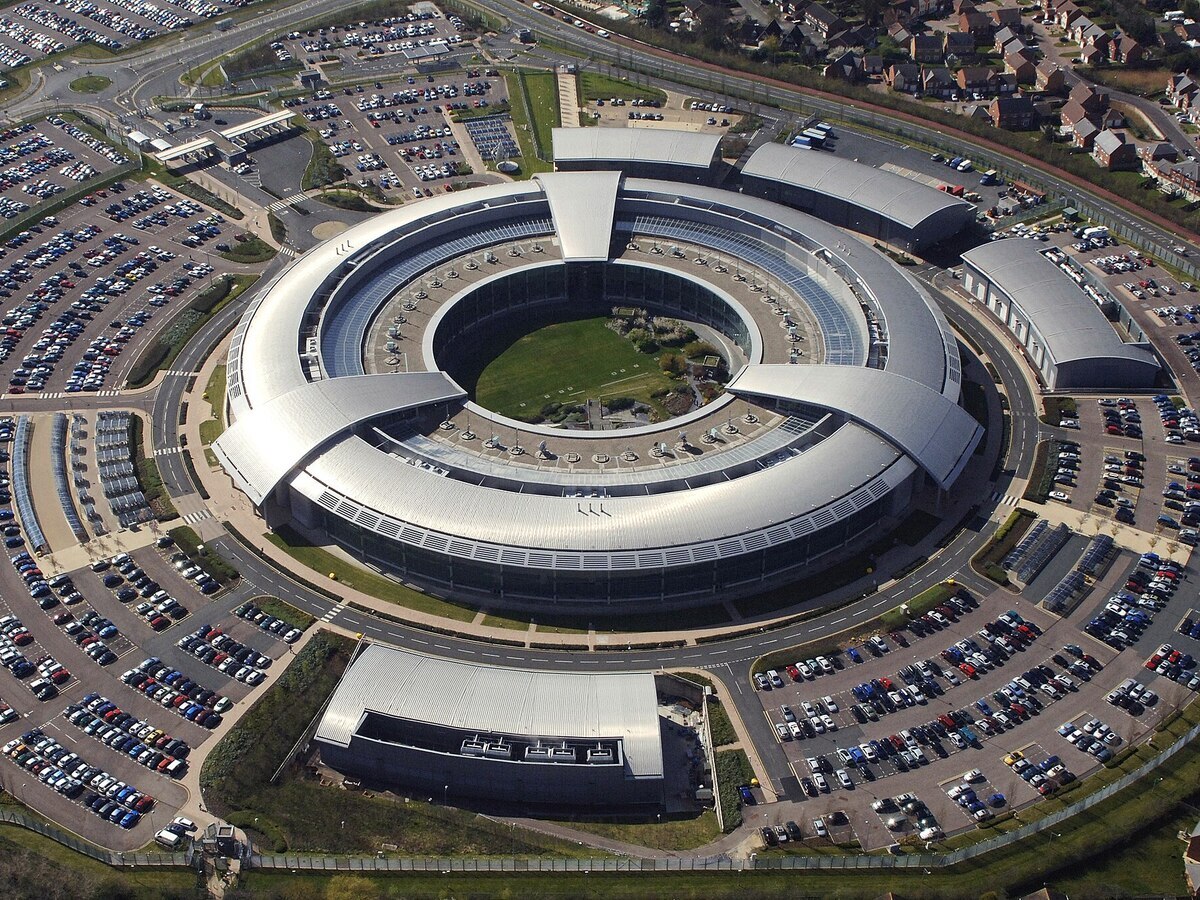
The British government has spent decades trying to undermine the government in Iran, whilst simultaneously selling it chemical weapons and spying on opposition activists.
Despite this, the UK government has claimed it has not participated in military action led by Israel and the US.
UK meddling in Iran
In 1953, the UK helped the US to engineer a coup against Mohammad Mosaddegh, Iran’s democratically elected prime minister.
Why? Because Mossadegh decided to nationalise the operations of the Anglo-Iranian Oil Company (later British Petroleum) in 1951.
Of course, the UK government saw nationalisation as a threat to its strategic and economic interests, i.e., it would lose money. However, it needed support from the US.
So only two years later, the UK and US secretly backed a coup to remove Mosaddegh and centralise power under a repressive “pro-western” regime.
The operation was codenamed TPAJAX by the CIA and Operation Boot by MI6.
The archived CIA documents include a draft version of the coup, titled:
Campaign to install a pro-western government in Iran
The objective of the campaign was:
through legal, or quasi-legal, methods to effect the fall of the Mosaddeq government; and to replace it with a pro-western government under the Shah’s leadership with Zahedi as its prime minister.
According to Declassified UK, MI6 spent well over £1.5m. It:
recruited agents and bribed members of Iran’s parliament.
The coup installed the US and British-backed dictatorship under Shah Mohammad Reza Pahlavi and supported him for the next 25 years. His regime oversaw decades of repression, human rights violations, and torture.
Declassified CIA documents also show how the British government then attempted to block the release of information related to its own involvement in the overthrow during the 1970s.
More meddling
The 1979 Iranian revolution established the Islamic Republic. Ayatollah Khomeini, another dictator, led this. However, British spies continued to collaborate with the regime when it was in their interests.
In 1983, British intelligence gave Khomeini a list of Iranians supposedly working for the Soviet Union. In response, he rounded up over 1,000 communists and executed up to 200 of them. Iran’s communist party, the Tudeh, was banned and forced underground.
Once again, in the early 1990s, MI6 helped supply Iran with materials to make chemical weapons. This was despite its own ban on such sales.
All along, Britain aimed to insert operatives into the Iranian government and gather intelligence on weapons programs.
GCHQ cyber-warfare on Iran
In 2009, Israel and the US attacked Iran’s nuclear facilities with the Stuxnet computer virus — a notorious digital weapon. Reports suggest that British agencies also played a role, risking a new Chernobyl.
However, British Government Communications Headquarters (GCHQ) intercepted phone calls in 2007. These proved that Iran had stopped working on its nuclear program four years earlier.
Additionally, a specialist GCHQ unit called the Joint Threat Research Intelligence Group (JTRIG) targeted the “general population” of Iran between at least 2009 and 2011. It worked by:
discrediting the Iranian leadership and its nuclear programme, causing disruption to the nuclear programme, conducting human intelligence operations online, and counter-censorship campaigns.
To make matters even worse, documents leaked in 2014 show that British spies used a URL shortening website called lurl.me to send innocent-looking links to Iranian citizens. This allowed them to gain access to their IP addresses, emails, and social media pages.
JTRIG was attempting to encourage dissent while using their personal information gained through sketchy links to monitor them.
Around the same time, GCHQ was also using honeytraps, spoof email addresses, changing the outcomes of online polls and amplifying particular messages on YouTube.
According to documents published by WikiLeaks, GCHQ:
long advocated that it work with NSA and the Israeli SIGINT Service (ISNU) in a trilateral arrangement in prosecuting the Iranian target.
Iranian nuclear deal
The UK remains a member of the Iran nuclear deal, despite the US leaving in 2018. This should restrain British spies; however, many have found quiet workarounds.
One example includes MI6 smuggling an Iranian nuclear scientist into the UK via the English Channel in a dinghy.
According to Declassified UK:
Iran was later named as one of the two main targets of a new unit called the National Cyber Force, run jointly by GCHQ and the Ministry of Defence. Set up in 2020, its tactics included launching “covert operations” against IT networks and trying to “influence hostile actors”.
And in May this year, the government announced that the unit would work alongside a new Cyber and Electromagnetic Command, to “put the UK at the forefront of cyber operations”.
Meanwhile, a GCHQ base near Iran has undergone major construction work. Satellite imagery analysed by Declassified last year showed building work at the site in Oman, the pro-British autocracy located between Iran and Yemen.
With the UK’s imperialistic history of collusion with the US and Israel over Iran plainly laid out, it’s hard to believe it’s pathetic, evasive claims now.
Already, UK military bases are buzzing with moving US warplanes, and Starmer is spinning the UK’s ‘defensive’ role while greenlighting the US using the UK’s overseas airbases.
The UK has been deeply involved in destabilising the region for decades — for oil and gas and other capitalist colonial bullshit. Therefore, the government can hardly claim to be a bystander in this illegal, unprovoked bombing campaign — it’s an active participant.
Feature image via Ministry of Defence/ Wikimedia Commons
Politics
Politics Home Article | Labour Deputy Leader Opposed By-Election Attack On Green Drug Policy

4 min read
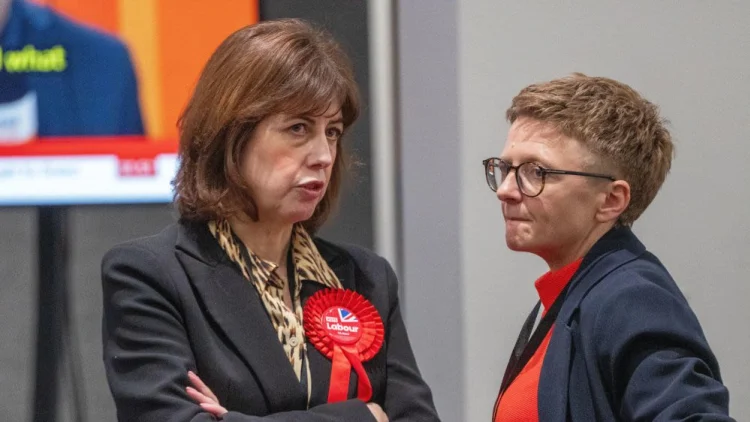
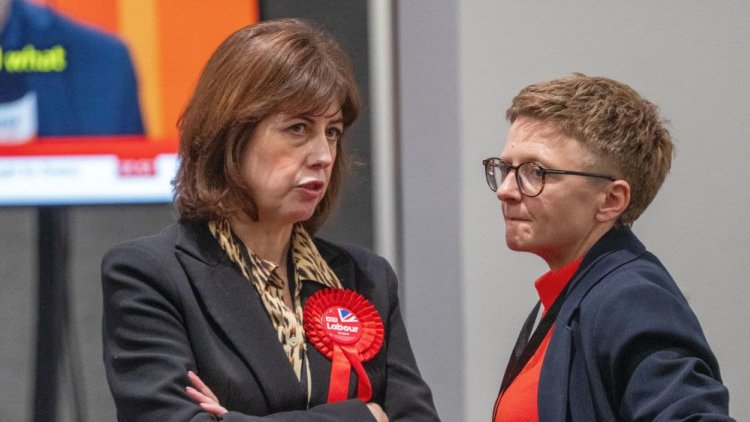
Lucy Powell was among the Labour figures privately concerned about attacking the Greens’ drug policy during the Gorton and Denton by-election campaign, PoliticsHome understands.
Powell, who succeeded Angela Rayner as Labour’s deputy leader last year, played a key role in the party’s campaign in Greater Manchester. She herself is an MP in the region.
However, several sources have told PoliticsHome that she expressed concern about particular attacks used by Labour against Zack Polanski’s party late in the campaign, which focused on Green positions on drug legalisation and prostitution.
A Labour spokesperson declined to comment on internal campaign discussions.
Many Labour MPs, including ministers, have complained that the party’s unsuccessful campaign in Greater Manchester was misjudged, focused too much on criticising the Greens rather than setting out a positive case for what the government had achieved in office. One minister told PoliticsHome that the lesson from the by-election defeat to the Greens was that Labour “can’t be negative” if it wants to win back progressive voters.
Cat Eccles, the Labour MP for Stourbridge, last week told PoliticsHome: “I cannot understand the choice to attack the Greens on their drug policies with sensationalism and misinformation. It did the party no favours whatsoever.”
Powell has appeared to publicly distance herself from elements of the Labour campaign.
In an interview with The Observer at the weekend, the MP for Manchester Central said her party would not succeed by trying to “out Reform” Nigel Farage’s party, and instead should present itself as a “progressive alliance that is against the politics of the right”.
The government has doubled down on the drug policy attack, despite concern in parts of the Parliamentary Labour Party (PLP).
In a letter to Labour MPs following their defeat in Greater Manchester, first reported by PoliticsHome, Keir Starmer said he would continue to highlight the risk posed to the country by the Greens, including “extreme policies like legalising all drugs and pulling out of NATO”.
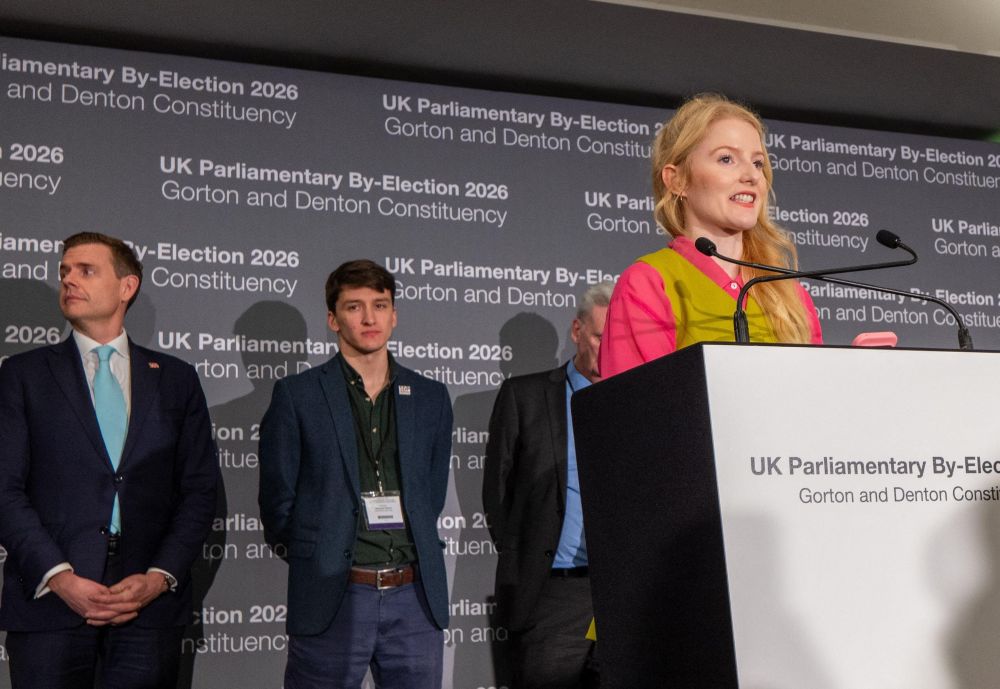
The seismic Labour defeat to Green candidate Hannah Spencer has triggered a debate within the party about the direction it should go in to recover its electoral position.
In her weekend interview, Powell also said stricter immigration rules being introduced by Home Secretary Shabana Mahmood Powell were “a real concern to our ethnic minority communities” in Gorton and Denton.
Starmer’s description of the Greens as “sectarian” and “divisive” in his letter to the PLP unsettled some Labour MPs, who felt that it risked further alienating progressive voters whom the party must win back. “That letter is what the Greens will use to raise the money. Slow clap,” one backbencher complained last week.
The PM is also being warned that the Green victory in Greater Manchester means a strategy of presenting Labour as the party best-placed to stop Farage’s Reform can no longer be relied upon.
London Mayor Sadiq Khan has intervened, arguing that his party must abandon its “flawed” strategy of “taking liberal, progressive voters for granted”.
Echoing a feeling widespread in the PLP, one Labour MP told PoliticsHome that coming second to Reform in Gorton and Denton would have been a more palatable result for the party, as, in that scenario, Labour could continue to argue that it is in a stronger position than the Greens to stop Farage. But now, “the barbarians are at the gate”, they added.
However, other Labour figures have warned that it would be misguided to shift to the left in response to the defeat last week.
Mahmood is pressing ahead with immigration and asylum reforms, with allies of the Home Secretary warning that rowing back would be to misinterpret public sentiment.
Paul Ovendon, former adviser to Starmer, today wrote in The Times: “If the government, reeling from recent events, now fails to fully back the Home Secretary, it will reap a far worse hangover than the one it is currently suffering.”
Recent research suggests that the Green policy of legalising drugs could be a problem for Polanski as his party gains more attention and exposure.
Focus groups carried out by Thinks Insight & Strategy for PoliticsHome last month picked up strong concern about the policy among people considering voting Green in Sheffield and East London. Allie Jennings, director at the research organisation, told PoliticsHome: “We found that focus group participants were often unaware of the Green Party’s policy on drugs. However, once informed, there was either disbelief or strong opposition. For those who opposed the policy, it confirmed their sense that the Green Party are idealistic and their policies are unlikely to work in reality.”
One Labour source claimed that the attack would have had more cut through had the party used it earlier in the by-election campaign.
A YouGov poll published on Tuesday, carried out following the Green victory in Gorton and Denton, put Polanski’s party in second place, five per cent ahead of both Labour and the Tories.
Additional reporting by Adam Payne

BitGo Launches MiCA-Compliant Crypto-as-a-Service Across 30 EEA Countries
‘Mummified’ pet dogs found at woman’s home in ‘heartbreaking case’
Alphatec Holdings director Ward W. Woods retires; board reduced to seven members


-

 Politics5 days ago
ITV enters Gaza with IDF amid ongoing genocide
-

 Fashion4 days ago
Weekend Open Thread: Iris Top
-

 Politics13 hours ago
Alan Cumming Brands Baftas Ceremony A ‘Triggering S**tshow’
-

 Tech3 days ago
Unihertz’s Titan 2 Elite Arrives Just as Physical Keyboards Refuse to Fade Away
-

 NewsBeat6 days ago
Cuba says its forces have killed four on US-registered speedboat | World News
-
Sports4 days ago
The Vikings Need a Duck
-
 NewsBeat3 days ago
Dubai flights cancelled as Brit told airspace closed ’10 minutes after boarding’
-
 NewsBeat6 days ago
Manchester Central Mosque issues statement as it imposes new measures ‘with immediate effect’ after armed men enter
-

 NewsBeat2 days ago
‘Significant’ damage to boarded-up Horden house after fire
-
 NewsBeat3 days ago
The empty pub on busy Cambridge road that has been boarded up for years
-

 NewsBeat3 days ago
Abusive parents will now be treated like sex offenders and placed on a ‘child cruelty register’ | News UK
-
 NewsBeat7 days ago
Police latest as search for missing woman enters day nine
-

 Entertainment2 days ago
Baby Gear Guide: Strollers, Car Seats
-

 Business6 days ago
Discord Pushes Implementation of Global Age Checks to Second Half of 2026
-

 Business5 days ago
Only 4% of women globally reside in countries that offer almost complete legal equality
-
 Tech4 days ago
NASA Reveals Identity of Astronaut Who Suffered Medical Incident Aboard ISS
-
 NewsBeat3 days ago
Emirates confirms when flights will resume amid Dubai airport chaos
-
Politics3 days ago
FIFA hypocrisy after Israel murder over 400 Palestinian footballers
-

 Crypto World7 days ago
Entering new markets without increasing payment costs
-

 Crypto World5 days ago
From Crypto Treasury to RWA: ETHZilla Retreats and Relaunches as Forum Markets on Nasdaq