
Politics
Job vacancies drop as Reform vows to punish unemployed people

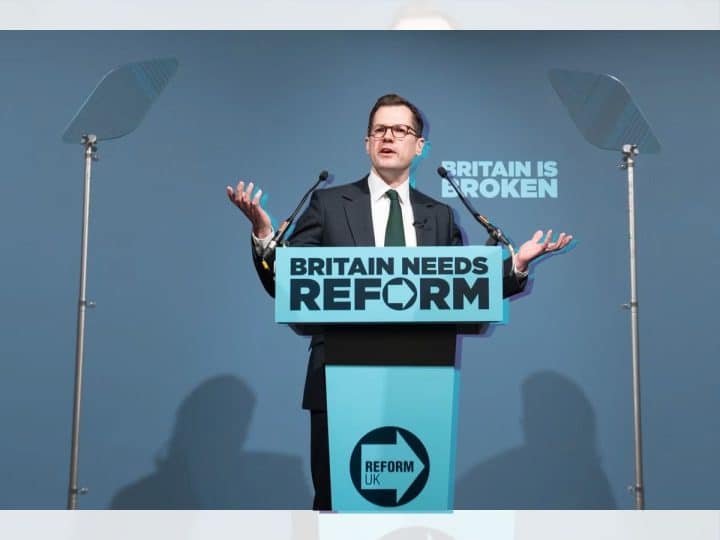

On Monday 17 August, Reform UK announced a suite of new policies designed to target and punish sick, disabled, and unemployed people. The party’s plan to target unemployed people is based on the idea that there’s a significant number of voters who are just ‘layabouts’. In reality, most of the people who don’t work can’t work, and the rest are facing a particularly tough market – as the latest job vacancies show:
all while every single major party says it’s going to cut benefits for people that “refuse to work” https://t.co/TsAZeBlXwb
— mike ☭

 (@__mike91) August 18, 2026
On the attack (and ignoring the job vacancies chaos)
Reform’s Making Welfare Work policy would completely abolish Personal Independence Payments (PIP). As we reported, this is an odd move for Reform to make, given that many Reform voters are PIP claimants. It’s one thing to pretend the system is full of ‘scroungers’ and to promise a crackdown; it’s quite another to directly target every PIP claimant in the country.
I canvassed a disabled voter in Crook recently who told me she was voting Reform because the first time she applied for PIP it was rejected. "I had to fight damn hard for my PIP" she told me, "but foreigners get it for nothing".
I hope people like her become better informed. https://t.co/l5emWDM0QD
— Sam Rushworth MP (@SamJRushworth) August 16, 2026
Predictably, Reform’s policy is likely to result in a massive increase in child poverty. PIP payments help sick and disabled people juggle part-time work with their ongoing health issues. Removing PIP might push some people into full-time work, but it will also force many into full-time unemployment.
The new policy will mandate that anyone who’s on Universal Credit for 12 months will have to complete 20 hours of community work a year. As the Standard reported:
Robert Jenrick, the party’s Treasury spokesperson, said the long-term unemployed would have to work 20 hours a week scrubbing high streets, carrying out minor repairs and “beautifying neglected places”.
The scheme would be run by local councils and those who do not accept work placements will have their funding cut.
This really betrays two things:
- It’s entirely possible to just create job vacancies – including jobs which benefit the local area.
- For whatever reason, some voters will only get behind such a move if there’s an element of punishment to it.
And all this is especially bad when you factor in the current unavailability of jobs.
There are now 2.5 unemployed people for every job opening in the UK. https://t.co/dAkoigaAgb pic.twitter.com/tKpis4jAmE
— Bull Theory (@BullTheoryio) August 18, 2026
 THIS IS INSANE
Job hunt
As the BBC reported, the number of job vacancies:
has fallen to its lowest level in more than five years as smaller businesses cut back on recruitment, official figures indicate.
Vacancy numbers fell over the May-to-July period to 707,000, according to the Office for National Statistics (ONS), which said small firms were citing labour and operating costs as reasons for scaling back hiring.
Energy costs have risen since the Iran war began, and companies have also said that increases in National Insurance and the minimum wage have made it more expensive to employ staff.

While it’s essential that the minimum wage rises to meet the cost of living, it can cause issues in a Cost-of-Living Crisis. The problem is that even with wages going up a bit, most people are still feeling the pinch. When that happens, people spend less; when people spend less, businesses attract fewer customers; when businesses attract fewer customers, they employ fewer people.
It’s a vicious circle, in other words. And it’s not one we’re going to get out of by punishing people who are out of work.
Reform says it will save £50bn a year by abolishing PIP. That’s £50bn which was being sent to PIP claimants who were in turn spending it on food, clothes, and essentials. Now ask yourself this: will pulling £50bn out of the economy be good for businesses who are already struggling, or will it be an absolute disaster?
Job seekers vs job vacancies
The BBC article carries the following interview with a job seeker:
Aaron Diangienda told BBC Newsbeat he has been looking for a role for more than a year.
“I’ve been trying my best, just making sure that I am finding the correct stuff to suit me and keeping on going with [the job hunt]”, he says.
Under Reform, Diangienda would have been put on the scheme to carry out labour for benefits – i.e. he’d be working for less than the minimum wage. Would that really help him find work?
Another job seeker said this:
For Jasmine Walker, it’s been a case of applying for jobs “literally anywhere and everywhere”.
The 24-year-old says she has been looking for marketing jobs since she graduated from university in July, and estimates she has applied for more than 300 roles so far.
“It’s a bit frustrating because you’re researching and practising how to make your CV and applications pristine, and yet you still can’t get anywhere with that,” says Walker.
Imagine if applying for 100+ jobs wasn’t enough, and suddenly you had to work 20 hours a week just to maintain your benefits – benefits which already failed to ensure any quality of life.
You can be mad about how things are, but you can’t pretend Reform’s plan will fix anything.
Farage wants 300k unemployed scrubbing the streets for free or starve. Call it community service. It’s the workhouse rebranded. Class war from the top. Always.
20 hours unpaid labour a week or lose your benefits. That’s Reform’s big idea. Taxpayers get paid. Claimants get… — Spirit Of Attlee (@SpiritOfAttlee) August 17, 2026
Costly
Another thing to note is that Reform’s plan is going to create whole new layers of bureaucracy and enforcement for local councils. Who’s going to pay for all this? Because the policy isn’t going to generate cash as far as we’ve been told. And this is supposed to be part of a plan to save money.
It’s almost like Reform hasn’t thought this one through.
Featured image via PA
By Willem Moore

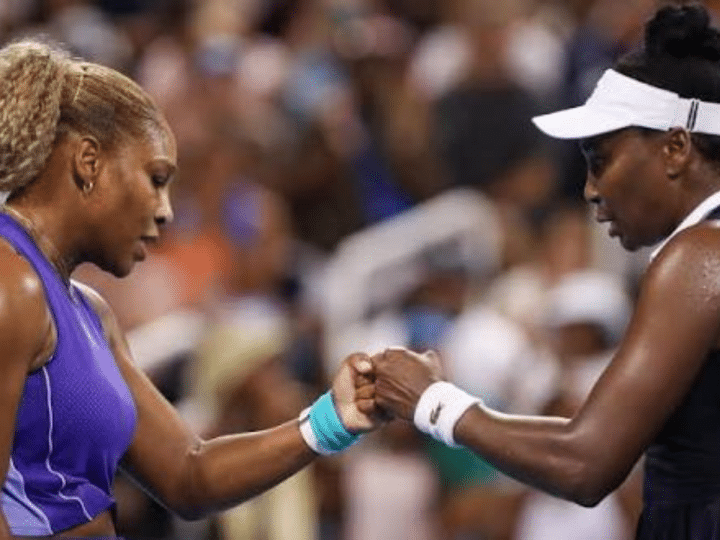

Serena Williams and Venus Williams were beaten 2-6 6-1 10-8 by Marta Kostyuk and Peyton Stearns in a gripping first‑round doubles contest at the Cincinnati Open, marking their first match together since the 2022 US Open.
The sisters, competing as wild cards, returned to the doubles court after four years apart, having been forced to abandon a planned reunion at Wimbledon earlier this summer when Serena suffered a knee injury during her singles defeat. Their comeback in Cincinnati with Serena aged 44, Venus 46. Drew a packed crowd eager to witness one of tennis’ most decorated partnerships back in tandem.
Rusty start, sharp response
The opening set exposed early rust. Kostyuk, from Ukraine, and Stearns, a Cincinnati native, settled quickly, breaking serve with clean returns and sharp movement. The Williams sisters struggled for rhythm, particularly on first‑serve placement, and were out‑hit in baseline exchanges as Kostyuk and Stearns closed out the set 6-2.
The response was emphatic. Serena and Venus tightened their patterns, stepped inside the baseline, and began dictating with heavier ball-striking. Serena’s drive volleys and Venus’s cross‑court angles repeatedly opened the court, flipping momentum entirely. They surged through the second set 6-1, producing the cleanest stretch of tennis either had played all summer.
Dramatic match tie-break swings
The 10‑point match tie-break delivered the drama the crowd came for. Kostyuk and Stearns raced ahead 6-0, capitalising on two loose returns and a pair of mis‑timed approaches from the sisters. But the Williamses, long known for their ability to flip matches under pressure, mounted a trademark surge.
Back‑to‑back double faults from Kostyuk dragged the score to 8-7, and Serena hammered an overhead to close the gap further. At 9-8, the comeback looked possible until Venus, serving to stay in the match, double‑faulted. The contest ended on that anticlimactic note, sealing a narrow defeat after 90 minutes of fluctuating momentum.
A partnership with historic weight
The Williams sisters’ doubles résumé remains one of the most formidable in tennis history. 14 Grand Slam doubles titles together, plus three Olympic gold medals. Their last non‑Grand Slam doubles appearance before Cincinnati came at the Italian Open in 2016, underlining how rare these moments have become.
Serena has 23 singles Grand Slam titles; Venus has seven. Their doubles success has always been built on complementary strengths. Serena’s explosive finishing and Venus’s reach, anticipation, and net coverage. Even in defeat, those patterns resurfaced in Cincinnati, particularly during the second set surge.
The comeback
The Williams sisters’ fightback from 6-0 down in the tie-break was vintage. Serena’s overhead at 9-8 was the loudest moment of the night, drawing a roar from the crowd and a fist pump from Venus. But the final point was a Venus double fault. Underlined the fine margins of match tie-breaks. The reality is that a tiebreak is a lottery. You never know which way it’s going to go.
Serena’s return this summer has been cautious. She had been off the tour since 2022 before reappearing at Queen’s. The Cincinnati outing was part of a gradual rebuild, with no stated expectation of deep runs. Venus, meanwhile, has played sporadically across the season, including mixed doubles commitments. Their reunion was less about results and more about reconnecting on court.
Ahead of the US Open
The sisters had hoped to play doubles at Wimbledon but withdrew after Serena’s knee injury. Their Cincinnati appearance now serves as a tune‑up ahead of potential involvement at the US Open, though Serena has not yet confirmed her plans. Venus is scheduled to play mixed doubles in New York later this month.
Whether they reunite again at Flushing Meadows remains to be seen, but Cincinnati demonstrated that. Even after four years apart, their chemistry remains intact. The timing, movement, and instinctive patterns that defined their dominance resurfaced in flashes, particularly in the second set.
Measured, and still competitive
There was no over‑celebration, no dramatics, just two legends enjoying the chance to compete together again. The match offered a reminder of their enduring presence in the sport, even as their schedules become selective and their appearances rarer.
Their Cincinnati return may not have produced a win, but it delivered what mattered. A competitive, high‑quality contest, a glimpse of familiar brilliance, and confirmation that the partnership still has life.
Featured image via the Canary
By Faz Ali
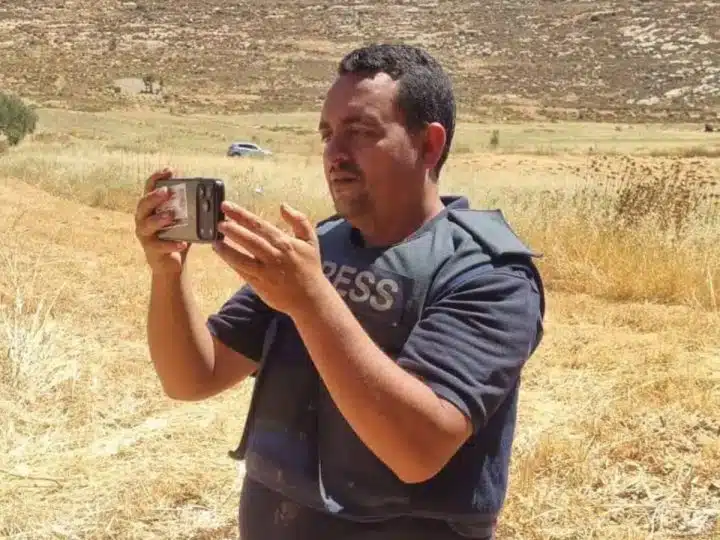

Palestinian journalist Mohammed Awad, 38, was recently arrested by Israel’s occupation forces at his home in Beitunia, west of Ramallah, in the occupied West Bank. His wife, Eman Awad, told the Palestinian Centre for Development and Media Freedoms (MADA) that Israeli occupation forces (IOF) raided the family’s home around 6am. This was after they blew open the door of the family’s old apartment, but found no one inside so left.

Mohammed Awad is one of 40 Palestinian journalists currently detained by the Israeli occupation
Eman Awad said her husband – a freelance journalist who worked for AFP and Al Jazeera, and was a DropSite News contributor- was then arrested. ‘Israeli’ soldiers “blindfolded him, handcuffed him and took him” to a military vehicle. After around 15 minutes, the IOF left the house without searching it or confiscating any of its contents.

Following Awad’s arrest, the Palestinian Prisoner’s Society (PPS) said 40 Palestinian journalists were being detained by the occupation. Five of these being women.
But in the early hours of 19 August, photojournalist Abdul Rahman Hassan became the 41st journalist to be detained by the Israeli occupation. Amid a widespread campaign of raids across the Bethlehem Governorate, Hassan’s home in central Bethlehem was stormed by the IOF and searched. He was blindfolded, and has been abducted to an as yet unknown location

Since the beginning of ‘Israel’s’ genocide in Gaza, a total of 250 journalists have been arrested and detained, in what the PPS describes as a campaign of:
systematic targeting of Palestinian journalists.
Almost half of these Palestinian journalists are being held under administrative detention. This means they are imprisoned without charge or trial, based on ‘secret evidence’ the detainee and their lawyer are not permitted to see. But if they are charged with a crime, journalists are often accused of “incitement, ” in an attempt by the occupation to silence their social media activity and news stories of the occupation’s crimes.
Once detained, ‘Israel’ then exposes them to a multitude of human rights abuses, including the routine use of torture, medical negligence, starvation, sexual violence, and enforced disappearance.
‘Israel’ routinely interrogates Palestinian journalists
Palestinian journalists are routinely interrogated by Israeli occupation authorities, especially since October 2023. A February 2026 investigation by the Committee to Protect Journalists (CPJ) was based on interviews with 58 Palestinian journalists released from ‘Israeli’ detention.
Mohammed Badr told CPJ that interrogators questioned him for hours about his journalism. They then gave him a choice between becoming an informant or remaining imprisoned longer. Other journalists reported being threatened with prolonged detention, violence against themselves or family members, or other consequences. The testimonies collected by CPJ also include torture- beatings, stress positions, sleep deprivation, forced nudity and sexual abuse.
Freelance journalist Ossayd Amarneh was arrested in December 2024. He told CPJ that he was questioned about his journalism and Facebook posts. This included his reporting on ‘Israeli’ settlers storming the Al-Aqsa Mosque compound and his support for Palestinians in Gaza. He was later arrested again in August 2025 and remains in administrative detention; CPJ reports that he was interrogated again in June 2026.
Radwan Qatanani was detained for 15 months. After his release he told CPJ that he had been beaten and subjected to stress-position torture and had lost around 30 kg.
Psychological trauma from time in Israel’s detention often prevents journalists returning to work once released
In May 2026, RSF also reported it had interviewed five Palestinian journalists from Gaza who had been imprisoned by ‘Israel’ after 7 October. They included journalists Alaa al-Sarraj, Diaa al-Kahlout, Shady Abu Sedo and Emad al-Ifranji. Their accounts describe harsh treatment by the IOF, Shin Bet personnel and prison authorities.
These five journalists also describe severe physical and psychological abuse at the hands of the occupation. And because the psychological effects of ‘Israel’s’ crimes still haunt them, none have felt able to work as journalists since being released.
Detainees are exposed to degrading treatment, starvation, humiliation and physical and mental torture. So it is not surprising that thousands of released prisoners emerge looking totally different to when they were first detained.
Mohamad Arab, a freelance journalist with Al Araby TV, has been detained for more than two years without trial. He was arrested in March 2024, when the IOF attacked Gaza City’s Al Shifa Medical Complex for the second time. During a recent hearing in the “Israeli’ Supreme Court, Arab appeared via video link. Arab had not been in public view for over two years, and the change in him was shocking.

Huge physical and mental changes due to immense suffering while in detention.
The photos below are of journalist Mujahid Bani Mifleh, who continues to face a long journey of treatment and recovery. He spent 14 months in Israeli occupation prisons, without charge or trial. Mifleh experienced severe health complications due to his time in ‘Israeli’ prisons. Just days after his release, he suffered serious brain hemorrhage and underwent multiple surgeries.


Many Palestinians in the Gaza Strip have been forcibly disappeared, and their fate is still unknown. This includes two young photojournalists, Nidal al-Wahidi and Haitham Abdel Wahed, who disappeared on 7 October 2023. Although Israeli occupation authorities insist the two are not in their custody, this should not be believed.
Ihab Mohammed Abdelqader Diab, 36, was a father of two children, and a photographer for Gaza-based Ain MediaIn. In December 2023, he was abducted from his home. His family received no information about his whereabouts or fate. And, until 9 August 2026, the occupation continued to deny he had ever been detained.

They then announced he was martyred while in custody almost two years previously, in September 2024. The circumstances and cause of his death have not been independently established, so there are now calls for an investigation. According to his family, Diab was healthy and had no health issues at the time he was detained.
Another journalist to die whilst in prison was Marwan Fathi Hussein Herzallah, 54. He was an employee of the Palestinian Broadcasting Corporation in Nablus, and died in March after two months in Megiddo prison. In 1995, Herzallah had a leg amputated after he was shot by the IOF. His son is currently being detained by ‘Israel’, without charge or trial.
Humanitarian system plagued by paralysis since genocide in Gaza
‘Israel’ has killed more than 260 journalists in Gaza, since the start of its genocide in the Strip. Two have also died while in ‘Israeli’ custody – Ihab Diab was a photographer for Gaza-based Ain Media, while West Bank based Marwan Harzallah was a technician with Palestinian Authority-affiliated Palestine TV.
According to the Palestinian Centre for Prisoners’ Advocacy, the IOF use enforced disappearance as:
a tool of collective punishment and revenge, keeping families rapped in anxiety and psychological suffering.
The PPS has reiterated its demand for the international human rights system to
end the systematic paralysis that has plagued the humanitarian system since the beginning of the genocide.
And it is calling for the guaranteed protection of journalists, as well as their right to perform their essential work. PPS says the targeting of Palestinian journalists with killings, arrests, torture, and enforced disappearance is
part of a systematic policy” aimed at obscuring the truth, preventing the dissemination of information about what is happening inside the occupation’s prisons and in the Palestinian territories, and suppressing the Palestinian narrative.
The prisoner’s advocacy organisation is not only calling on the international human rights system to work to guarantee the protection of journalists and their right to perform their essential work. It is also demanding an end to the
systematic paralysis that has plagued the humanitarian system since the start of the genocide in Gaza.
Since October 2023, ‘Israel’ has carried out more than 25,600 arrests in the occupied West Bank and Jerusalem. There are currently more than 9400 Palestinian political prisoners in Israeli occupation prisons. This figure includes 370 children and 92 women. Almost 3200 are held without charge or trial, in addition to around 1360 detainees from Gaza, who are classified by ‘Israel’ as “unlawful combatants” and also held without charge or trial.
Featured image and additional images supplied
By Charlie Jaay
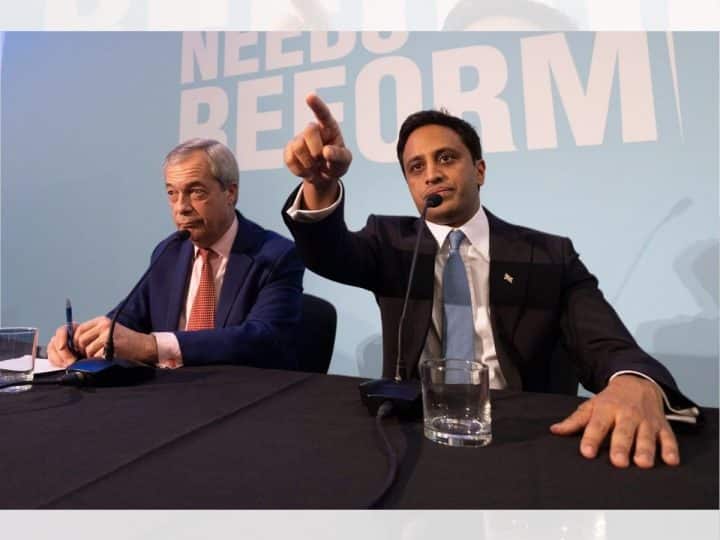

On 18 August, we learned that Reform UK had suspended prominent member and journalist Tim Montgomerie. The suspension came after Montgomerie criticised Zia Yusuf. Since then, more has come out – including the fact that Nigel Farage was allegedly unaware of the suspension. This has led some to speculate that Yusuf was the man behind what happened:
ZIA YUSUF HAS GONE ROGUE.
This is NOT a drill. I repeat. ZIA YUSUF HAS GONE ROGUE!
— Don McGowan (@donmcgowan) August 18, 2026
 Farage didn't know about Montie's suspension

On top of all this, Yusuf has had something of a meltdown on X/Twitter.
Reform at war
If you’re unfamiliar with Tim Montgomerie, he’s the founder of Conservative Home. Despite this, Montgomerie abandoned his beloved Conservative Party to
jump on the Reform gravy trainsupport Nigel Farage. Now, he’s found himself on the outs with his new party.
Montgomerie was suspended after criticising Yusuf. The picture he painted of the man was that Yusuf is a loose cannon who struggles to maintain working relationships with colleagues (and presumably Farage). Going off Yusuf’s posts, it’s easy to believe this:
Yusuf, we have a problem pic.twitter.com/B9ZDWEW0lf
— Mr Ethical
 (@nw_nicholas) August 18, 2026
People are also mocking Yusuf because he referred to himself as a “lethal electoral threat”:
What I’d do to have the phone number of Zia Yusuf’s drug dealer
Boy’s off his chops
The absolute Benny Hill of this is spectacular pic.twitter.com/5oAXT3FiOJ — Stuzi
 (@stuzi_pants) August 18, 2026
Given that Reform’s polling has been on a downwards trajectory for the past 12 months, this threat seems to be somewhat exaggerated. We also know that his colleagues don’t agree with the assessment. After all, they’ve turned him down every time he’s begged to run as an MP.
Montgomerie has since said the following about Yusuf:
“Can you look us in the eye and tell us that Mr Yusuf… he is suitable for one of the great Offices of State?”
“I don’t know…”
Suspended Reform UK supporter Tim Montgomerie discusses Zia Yusuf's approach as Reform’s Home Affairs spokesperson.
Reform says he has been suspended… pic.twitter.com/xq9sCDLHP5
— BBC Newsnight (@BBCNewsnight) August 18, 2026
Fading fortunes for Farage?
People have an alternative explanation as to why the media turned on Yusuf and Reform UK:
“Tory client press” translated means Telegraph. TImes and Mail which have ended the mid term flirtation with Farage and Reform UK. Why? Not so much crypto donation scandal, but owners (Dopfner, Murdoch, Rothermere) who don’t see him as a winner, quite apart from policies… https://t.co/MJWJzus2F5
— Lionel Barber (@lionelbarber) August 18, 2026
Reform UK and Farage definitely won’t win the establishment media over with Yusuf running his gob; the party also doesn’t agree that he’s a “lethal electoral threat”. Given that, it seems like it’s only a matter of time before he’s ejected. That or Farage goes first, and Yusuf emerges as his replacement.
Either way, Reform is increasingly rudderless.
Featured image via Karl Black
By Willem Moore


Nick Kyrgios’ stop‑start career has lurched into its most serious crisis yet after the Australian tested positive for Benzoylecgonine. A metabolite of cocaine was registered at an ATP tournament in Majorca in June. The International Tennis Integrity Agency (ITIA) confirmed on Wednesday 19 August that the 31‑year‑old has been provisionally suspended since August 4, ruling him out of all competition and barring him from attending tournaments while a tribunal assesses his case.
Kyrgios, once a Wimbledon finalist and one of the sport’s most mercurial talents, admitted to a “huge mistake” in an Instagram post, accepting full responsibility for the failed test and apologising to fans, family, sponsors and young followers who look up to him.
Kyrgios’s statement: ‘I take full responsibility’
The Australian did not attempt to deflect blame. Instead, he addressed the failed test head‑on, acknowledging the impact of his actions and the example it sets.
I made a huge mistake and I take full responsibility for it,” he wrote:
I’m sorry to my fans, my family, my sponsors and everyone close to me. Above all, I’m sorry to the kids who follow me. I know the example this sets and I’m deeply disappointed in myself.
Cocaine is banned in competition, and the positive test triggered an automatic provisional suspension. The ITIA confirmed Kyrgios has the right to appeal but “has not done so to date”.
Injuries, isolation and a career on decline
Kyrgios’ admission came with wider context about the physical and mental toll of the last four years. Since reaching the Wimbledon final in 2022 and losing to Novak Djokovic. He has played only twice in the main draw of a Grand Slam. Persistent injuries have reduced him to just four singles matches this season.
He described feeling “helpless and alone” during long spells on the sidelines, struggling with the reality that his body could no longer meet the demands of his mind.
“The last couple of years of injuries have taken a huge toll on me, both physically and mentally,” he said:
My body hasn’t been able to do what my mind expects it to do, and coming to terms with being near the end of my career has been harder than I ever imagined letting go of something that has been my whole life is one of the hardest things I’ve ever had to face.
He stressed that none of this excuses the failed test.
Kyrgios is currently ranked 919th in the world, a stark fall for a player who once threatened to reshape the sport with his explosive talent and unpredictable brilliance. His only appearance at Wimbledon this year came via a doubles wild card alongside Alexander Bublik, with the pair losing in the first round.
The suspension now leaves his future in limbo. Until the tribunal reaches a decision, Kyrgios cannot compete or attend tournaments. The length and severity of any sanction will depend on the panel’s findings, including whether mitigating factors are accepted.
What happens next to Kyrgios?
The ITIA’s process will determine whether Kyrgios faces a lengthy ban or a reduced sanction. For now, the Australian remains sidelined, unable to train or compete within the ATP environment. With injuries already limiting his schedule, the suspension threatens to accelerate the winding down of a career that has veered between brilliance and turbulence.
Kyrgios’ admission of responsibility and public apology may count in his favour, but the failed test marks a significant breach of tennis’ anti‑doping rules. His decision not to appeal so far suggests he is preparing to accept whatever outcome follows.
For a player who has long divided opinion, this episode lands at a moment when Kyrgios was already confronting the possibility of retirement. His Instagram post made clear the emotional strain of stepping away from a sport that has defined his life.
Whether he returns depends not only on the tribunal’s verdict but on his willingness and physical ability. A career rebuild after another setback will not be easy. For now, Kyrgios’ future remains uncertain, overshadowed by a suspension that has pushed him to the brink of the sport he once lit up.
Featured Image courtesy of The Independent
By Faz Ali
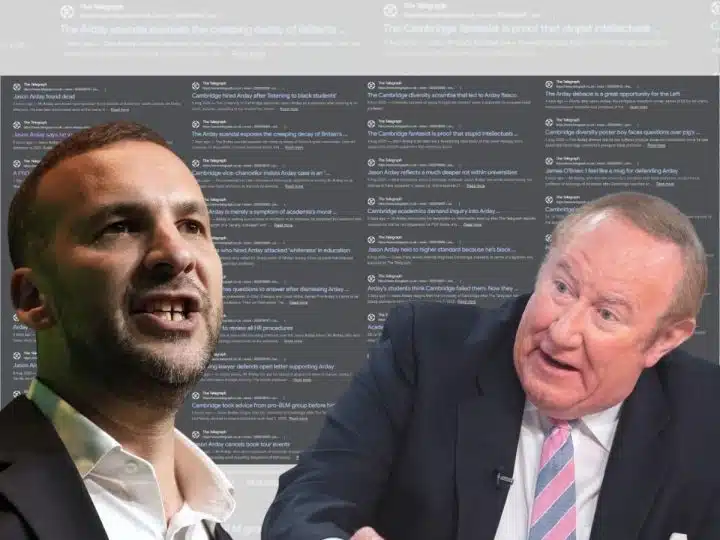

In the aftermath of the media witch hunt against Jason Arday, people are once again talking about the need for media reform. Unsurprisingly, the people saying we don’t need any further regulation are the hack journalists who’ve made a killing towing the establishment line – as Green Party leader Zack Polanski has highlighted:
Andrew Neil really having a meltdown in real time.
What is it about some actual press regulation that sends them like this?
A few billionaires owning the majority of the press and behaving however they want is not a free press. Change is coming. https://t.co/MaCurX0wn4
— Zack Polanski (@ZackPolanski) August 18, 2026
Polanski: change is needed
As Polanski notes, the big issue is that almost all of the British media is owned by a handful of billionaires. Of course this is going to result in bad outcomes.
In an article looking at alternatives to our bought-and-paid-for media, Reuters Institute interviewed several media companies with different structures. The story covered some local outlets:
Some media companies have decided to forge their own path in these countries, defying the traditional ownership structures of the news industry. But there is not a single model when it comes to journalist-owned media.
The West Highland Free Press became an employee-owned newspaper in 2009. After the original owners retired, they gave their employees an opportunity to take control of the company.
It also covered national outlets:
In… Uruguay, one of the most widely-read newspapers in the country is La Diaria, a profitable outlet with more than 21,000 subscribers in a country with a population of three million people. With 170 employees, La Diaria operates within the same cooperative model. After three months of working for the newspaper, employees have the choice to join the cooperative or simply be only employees.
When I asked editor-in-chief Natalia Uval why an employee would want to join the cooperative, she said that journalists are attracted to having decision-making power over the future of the newspaper.
“We haven’t distributed any dividends and we are not planning to do it in the short term,” she said. “If we make a profit, we want to reinvest it, or maybe generate a fund to support journalism. So the real benefit of being a shareholder is to be able to make strategic decisions for the company.”
Collective models won’t always ensure ethical journalism. At the same time, media concentration does seem to consistently produce journalism that benefits the wealthy owners.
Trouble ahead
Of course, it’s not wrong to argue that media regulation could go too far. In fact, Britain also has problems on that front – most notably with the government’s National Security (State Threats) Bill. As we reported in July:
Kim Johnson (Labour) and Jeremy Corbyn (Your Party) raised significant concerns about the legislation’s potential impact on journalists in the final debate on amendments.
Johnson warned that under the legislation as drafted, “journalists could still face a prison sentence of 10 to 14 years for working with or even approaching sources in hostile Governments.”
The absolute last thing we want is a situation in which actual news cannot be reported on. At the same time, it is possible for us to establish that certain behaviours fall outside of what could be considered ‘journalism’. The phone hacking scandal was one example of that. Pushing misinformation that genuinely puts lives at risk is another, although trickier to regulate, because consensuses can change.
Another thing to consider, of course, is the recent hounding of Jason Arday.
Jason Arday
One thing that’s clear about the Jason Arday story is that the primary driving force was racism. The campaign against him was started by known “race realist” Nathan Cofnas who believes there would be no Black people in academia if not for social engineering. The fact that some outlets chose not to make this clear suggests they’re sympathetic to Cofnas’s beliefs.
Another factor in the Arday story is the profit motive. Stories and social media posts about Arday clearly generated a lot of attention, and with that attention comes profit. Because media outlets are pretty much exclusively owned by billionaires who expect a return on investment, it’s not surprising that the people who get elevated to positions of power are those who think first and foremost about the bottom line:
"Combined, The Times and The Telegraph produced 87 articles in 22 days, and most of those came AFTER Jason Arday resigned on August 4th 2026…"
Well worth a read. https://t.co/m2G83wLfvD
— Lorna_TVeditor (@Lorna_TVeditor) August 18, 2026
This obscene desire to profit from Arday was most notable in Rupert Murdoch’s Times’ decision to use stories about him as part of an ad campaign:
Did @thetimes ever put an ad budget behind a story about British royal family member Prince Andrew Windsor fucking babies on Epstein Island? Did they spend money to boost a story about Peter Mandelson , Epstein's British bestie, and chase you around Twitter with it for days?… pic.twitter.com/8GUMBoPzSi
— David Hundeyin (@DavidHundeyin) August 15, 2026
We’re not noting the above to diminish the racism at the heart of the Arday story; we’re noting it to highlight that several things have gone wrong at once.
Of course, moving away from a billionaire-bought media ecosystem would not mean outlets could ignore the need to make money. At the same time, it would make two things less likely:
- Outlets primarily being driven by profit concerns.
- Outlets pursuing class warfare in a way that favours the billionaire class.
Change
In the UK, journalists are among the least trusted professions. This is obviously a huge problem, and one that needs to be tackled. While we certainly don’t think all regulation is good, we do need to be talking about how we can ensure our media is finally fit for purpose.
Featured image via PA / Channel 4
By Willem Moore


Another Filton trial jury has been discharged after refusing to return a verdict on charges against eight Palestine Action supporters. The group is accused of helping to organise an attack on a factory operated by Israeli weapons manufacturer Elbit in Filton, Bristol, even though they were not present during the raid.
Retrial for more Filton activists?
The prosecution will now decide whether to seek a retrial. The Filton defendants are:
Teuta Hoxha, 30, of Southwark
William Plastow, 35, of Manchester
Hannah Davidson, 53, of Edinburgh
Madeleine Norman, 31, also of Edinburgh
Ian Sanders, 47, of Leamington Spa
Aleksandra Herbich, 42, of Brent
Sean Middlebrough, 34, of Liverpool
Julija Brigadirova, 34, of Chorlton
All are accused of criminal damage; Plastow is also accused of violent disorder. They deny all charges. The jury gave up after thirty-seven hours of deliberations. The judge has set a next hearing in the case for 14 September.
Home secretary Shabana Mahmood’s record suggests the state will seek a retrial of the Filton activists in its eagerness to criminalise anti-genocide protest. Mahmood has also sought – in at least one trial successfully – terrorism sentences against activists even though they have not been charged with terror offences.
The Home Office is doing the same in the case of activists who threw paint on a Barclays Bank building for the bank’s ties to Israel. The judge in the case of Filton defendants sentenced as terrorists is trying to jail their lawyer for even informing jurors of their legal right to acquit. The same judge also ordered that jurors must not be informed that he would impose terror sentences if they returned a guilty verdict.
Featured image via the Canary
By Skwawkbox


Finding a single, definitive “best” site for booking flights isn’t about looking for a one-size-fits-all name, it’s about knowing what tools and guarantees a top platform must provide. While every traveler has unique destination goals and budgets, the ideal booking platform always shares core advantages: transparent pricing, extensive flight coverage, local payment options, and reliable support. Rather than pointing you to a single rigid choice, this guide will walk you through the essential features of a top-tier flight booking platform, empowering you with the knowledge to easily spot, compare, and book through the best site for your next trip.
The Challenges of Booking Flights
When you book a flight, you usually stay up late with fifteen tabs open on your computer, chasing a fantastic price, only to see it disappear on the checkout page. The total goes back and forth between seat selection and adding a bag. A 2026 review of major travel apps by Unstar found that these pricing inconsistencies and hidden checkout fees account for approximately one in five of all unfavorable customer reviews across leading booking platforms, just behind cancellation and refund disputes.
Travel hacks are filled with tips like deleting your cookies, booking only on a Tuesday, and utilizing incognito mode so sites can’t monitor you and bump up rates. These tactics don’t make any difference. Airline prices are based on demand, the number of seats left, and the departure time of the flight instead of looking at your browsing history. The answer to these travel fallacies is a single platform that shows the full, final price upfront. That way you don’t have to go to 10 different sites, all of which have a variety of fees hidden somewhere.
Understanding Your Flight Booking Options
To get the best airfare, you need to understand how booking systems function and where ordinary search platforms fall short vs integrated travel apps.
- Booking Directly Through An Airline (Single Carrier Websites)
You will obtain no route optimization when booking directly via a single airline’s website. You are locked into that carrier’s limited flight network and usual price, so if there is a cheaper ticket on a competitor airline only an hour later, you will never see it.
- Generic Flight Search Engines (Meta-Search Engines)
Popular search engines crawl the web, searching for tickets on hundreds of sites, then lead you to purchase the ticket elsewhere. They regularly exclude small, cheap regional airlines, and because they don’t have a direct checkout and they often send you to third-party, unverified merchants with horrible customer care.
- Standard Online Travel Agencies (Legacy Third-Party OTAs)
Standard international online travel agencies (OTAs) offer tickets directly on their own websites. Seems easy enough; however, these sites often hide international transaction costs and add on surprising luggage fees right at the checkout. If your flight is delayed, your sole customer support option is often some kind of computerized bot.
- All-in-One Regional Travel Apps (Integrated Market Leaders)
Booking platforms that provide all-in-one matching and combining flights from hundreds of airlines. They operate on native payment processing, thus they provide full pricing transparency, 24/7 customer support, and flexible local payments.
How to Spot the Best Flight Booking Site
There are four major requirements that a booking platform must achieve. If a site doesn’t have even one, find another.
- Inventory: The site should include the big international airlines as well as smaller regional low-cost carriers so that you can view all possibilities accessible to you for your journey.
- Transparency: You should notice regional taxes, luggage regulations and payment processing costs on the first screen. It’s annoying to find out about these expenses at checkout.
- Payments: The platform should be able to support your local payment networks. It helps if it also offers secure, interest-free installment tools for budgeting.
- Support: If your plans change or your flight is cancelled, you need to be able to contact solid human support 24/7 in your language.
Why Local Travel Apps Beat Global Search Engines
In the Middle East, local booking apps typically outperform generic search engines, as they are designed for the region.
- More Flight Choices and Split-ticketing
Top integrated platforms like Almosafer collect inventory from 450+ worldwide and regional carriers, thereby enabling “split-ticketing”. The platform can book an outward flight on a low-cost carrier and a return journey on a full-service airline. While major global search engines also identify mixed-carrier itineraries, integrated platforms often provide a more streamlined experience by allowing users to book these specialized combinations in a single transaction. This gives you three major advantages:
- Savings: Mix budget fares instead of paying for a premium round-trip ticket.
- Flexibility: Pick the exact flight times that match your schedule.
- Convenience: Fly light on the way out, and choose full-service with extra baggage for the trip home.
- Honest Prices with No Hidden Bank Fees
Global platforms often route payments through foreign acquiring banks and display prices in foreign currencies, triggering dynamic currency conversion and cross-border markups. Regional applications handle transactions locally; therefore, this pricing on the screen is the final price at checkout. Platforms like Almosafer process payments through local banking channels, so the fare you see when you search is the exact amount charged at checkout, with no last-minute conversion surprises on your statement.
- Easy Local Payments and “Buy Now, Pay Later”
Global search engines rarely integrate region-specific payment methods and local BNPL providers, so they can’t offer 0% installment plans or truly local checkout experiences that reduce friction and cost for Middle Eastern users. Local payment solutions such as Mada and Apple Pay on sites like Almosafer can reduce foreign banking expenses. Regional businesses such as Tamara and Tabby are also available to divide the cost of a flash sale into payments with 0% interest.
- Smart Mobile Apps and Real-Time Tracking
Almosafer app has over 10 million downloads with 4.7-star reviews on iOS and Android, and 85% of their transactions are on mobile. This is the first AI-powered platform in Saudi Arabia. The app offers real-time flight monitoring, adjustable date grid analysis and flash sales. It also connects you to bilingual customer service in Arabic and English so you can sort out a delay, cancellation, or booking change without a language barrier slowing you down. While generic search engines function mainly as discovery layers, not end-to-end booking and post-booking management platforms tuned to the region.
Quick Comparison: Which Platform is Better?
| What You Get | Single-Carrier Sites | Search Engines | Third-Party OTAs | All-in-One Regional Apps |
| Flight options | Just one airline | Booked on selected websites rather than the search engine. | Few regional airlines | Many airlines, bundled together for best price |
| Final price shown | Accurate | Can change at checkout | May hide extra fees | What you see is what you pay |
| Payment Options | Standard credit cards | Depends on the site you’re sent to | Basic cards only | Cards, local wallets, pay-in-installments |
| Extra bank charges | Rare | Common | Common | No hidden conversion fees |
| Help if something goes wrong | Only that airline can help | The user does not know if the website they are booking is legit or not. | Automated chatbots | 24/7 dedicated localized support |
Watch Out for the Checkout Trap
This section refers to global or generic travel platforms that lack regional authority and local payment infrastructure in the Middle East.:
- They may show pricing in your local currency, but the transaction is processed via a foreign bank, which might result in surprise cross-border credit card costs.
- On a generic site, a base cost of $60 frequently does not include basics. Add in a carry-on bag and required seat selection and the total may easily exceed $160.
- Most generic search engines send you to unknown third-party suppliers for the actual booking. The search engine does not assume responsibility if there is a problem with your flight and the vendor might be difficult to reach.
Final Thoughts: The Best Way to Book Your Next Flight
Switching between a dozen generic sites and single-airline websites rarely results in any real savings. When you book via a single platform such as Almosafer with millions of users and hundreds of thousands of 5-star reviews, you receive larger airline options, transparent pricing, and no bank costs. Also, these platforms provide 0% interest payment plans and 24/7 customer service in Arabic and English.
Disclaimer: Data validated in August 2026. All values are subject to real-time changes.
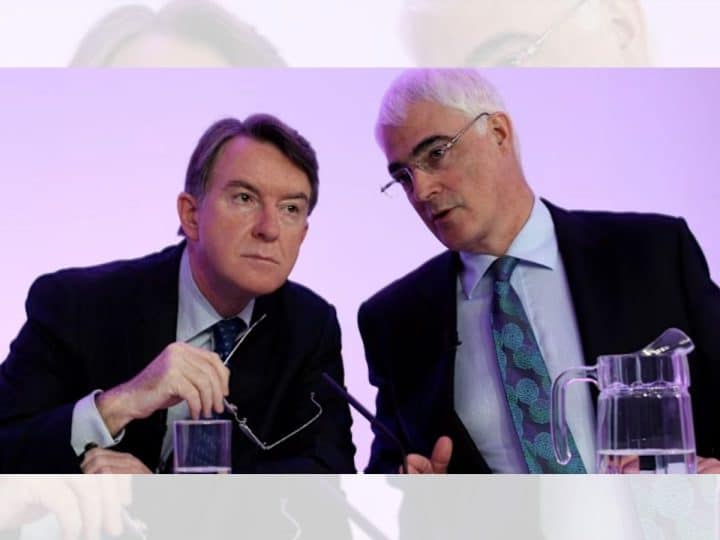

Earlier this year, we learned that Peter Mandelson had allegedly conspired with a US bank against UK interests. Specifically, he advised JP Morgan boss Jamie Dimon to ‘mildly threaten’ then-chancellor Alistair Darling. Now, that same banking boss is once again mildly threatening the UK over plans to raise taxes… unsurprisingly, the Mandelson and his sticky fingers continue to cast a long shadow.
JP Morgan CEO warns UK chancellor not to hike taxes on banks, could raise £19bn.
Says it would lose jobs.
From industry that has closed bank branches, profiteered, taken bailouts, sold dud products, engaged in frauds, facilitated illicit financial flows.https://t.co/PrHcwLUURi — Prem Sikka (@premnsikka) August 17, 2026
It’s yet another sign that the wealthy can get away with pretty much unlimited bad behaviour.
Mild threats
The Mandelson revelations came to us via the ‘Epstein Files’. As British economics journalist Faisal Islam reported in February:
For a decade and a half, I have wondered about a private conversation I had with the late Alistair Darling, Chancellor of the Exchequer under Gordon Brown, about the financial crisis.
Darling told me about a painful and angry telephone conversation he had with Jamie Dimon, chief executive of US banking giant JP Morgan, at the end of 2009 when the UK government announced plans to tax bankers’ bonuses.
Some of it had been reported at the time, such as a threat to pull plans for JP Morgan’s massive new headquarters in the UK.
But — to my utter astonishment – details of the background and the context to this call appear to be in the Epstein files released on Friday, and appear to have involved the unlikely combination of Peter Mandelson, Jeffrey Epstein and the suggestion of “mild threats” over the bonus tax.
It was Mandelson who advised Dimon to threaten the chancellor. And we know this because he later blabbed about it to the paedophile Jeffrey Epstein in an email.
Given this unseemly history, you’d think that Dimon would think twice about giving the appearance of threatening the UK. This would of course require the man to have some shame. And if he had that, he almost certainly wouldn’t still be running the bank more than a decade later.
In hock
Dimon had raised the fact that JP Morgan was one of the biggest purchasers of UK government debt, leaving the clear suggestion in Darling’s mind that America’s biggest bank could effectively stop lending to Britain.
While Darling refused to cave, he did recall that a number of bankers rang him up with what seemed like a script to complain about the bonus tax, urging a U-turn.
It occurred with such regularity that Darling started to tell them what they were about to say before they said it, having heard the words repeatedly.
How long can we continue to permit a system in which wealthy Americans tell us how we run our country? It would be one thing if the system we lived under provided stability and security; as we all now know, though, things are actually in a constant state of deterioration. On that note, Mandelson’s involvement in these ongoing machinations should not be forgotten.
Skipping forward to today, the Guardian has reported:
Jamie Dimon, the boss of the US bank JP Morgan, has urged John Healey not to use his first budget as chancellor to increase taxes on banks’ bumper profits.
Speculation has been growing that a windfall tax could be imposed on UK lenders to fund Andy Burnham’s cost of living agenda, with campaigners estimating such a move could raise £19bn.
Dimon told Healey in a phone conversation that higher levies could hit jobs, citing a fall in finance roles in New York that he blamed on the city’s tax regime.
Oh no, wherever would we be as a society without an excess of greedy bankers? Again, Mandelson’s shadow is never far from these financial narratives.
On and on
We live in a world in which no one ever seems to be punished and no one ever goes away. Peter Mandelson may be out of public life, but his recent sacking was the third time he was ejected from office in disgrace. Dimon, meanwhile, has continued at JP Morgan without pause.
The question now is whether Burnham plans to govern for the bankers or the rest of us. Ultimately, the Mandelson name serves as a reminder of how often elite figures resurface in the corridors of power.
Featured image via the Canary
By Willem Moore


The US has been striking alleged ‘narcoterrorism’ boats in the Caribbean and east Pacific since September 2025. The Trump administration has been militarising the region, backing like-minded dictators and killing people ever since. They even kidnapped the Venezuelan president.
Now, new reporting suggests a parallel but separate operation carried out in March 2026 killed or kidnapped fisherman near the Galapagos islands. It is not clear if this operation was carried out by the CIA itself or private military contractors in its employ.
— Drop Site (@DropSiteNews) August 13, 2026
 According to new reporting from The Washington Post, the CIA was behind the secret attacks on three Ecuadorian fishing boats near the Galápagos Islands that Drop Site contributor Camila Lourdes Galarza first reported on in-depth in our April exposé.
 Drop Site uncovered NASA… pic.twitter.com/89E3ibJCIl
Either way, a new aspect of Trump’s shadow war in the Americas has been exposed. And yet huge questions remain unanswered.
Three ships are known to have been attacked in January and March 2026. The crew of the ship attacked in January has not been seen since. The crews attacked in March survived. The Washington Post reported:
The eight missing Ecuadorian nationals were aboard a 52-foot longline fishing boat called the Fiorella. The men on two boats that were struck in March, the Negra Francisca Duarte II and the Don Maca, all survived.
Survivors said:
that small quadcopter drones either dropped munitions on the vessels or detonated by crashing into them. The men said they were then taken aboard a nearby ship, hooded and cuffed by armed men, and transported to El Salvador — only to be returned later without explanation to Ecuador.
The New York Times reported on 12 August:
One fishing boat [the January attack] has been lost at sea since January, the U.N. says, with eight people still missing and presumed dead.
The survivors of two other vessels said they came under attack in March by English-speaking assailants wearing matching uniforms with American flag patches, but without any clear insignia to link them to an official government force.
Mysterious private jet overflew boats
Another part of the mystery involves a mysterious American-registered jet which left El Salvador in the direction of the ships on each occasion. It turned off its tracking transponder mid-flight and later disappeared.
Survivors said the plane:
followed and seemingly surveilled them before the strikes.
The NYT analysed:
flight data and found that a maritime patrol plane — based out of a military base in El Salvador — flew in the direction of all three boats in the days before they were attacked. The pilots onboard spoke English with American accents, according to air traffic control communication recordings.
The jet is registered to a UPS postbox in Virginia — the CIA’s backyard — but does not appear on the Pentagon’s public lists of aircraft.
The US authorities have openly gloated over strikes carried out as part of the US war on ‘narco-terrorists’. They even posted ‘snuff’ videos of the strikes. Yet they have offered no comment on the three Galapagos attacks.
Legal NGO, Just Security’s Brian Finucane told the NYT:
It would be one thing if the U.S. didn’t have an overt maritime strike campaign, but they do, and they’re posting snuff films of boats going up in flames regularly. And that’s what makes this even more squirrelly.
Who are these people that are operating, and under what authority? And they are using a UPS store as their company address? Come on.
The mysterious jet, which was modified with advanced surveillance equipment, flew out of:
Ilopango International Airport, a small airport that was a hub for covert U.S.-backed operations in Nicaragua in the 1980s.
A Trump-kowtowing, fascist Latin America?
El Salvador’s far-right president Nayib Bukele is a close ally of President Donald Trump. Ecuador’s president Daniel Noboa is also a Trump ally. Neither country has commented on the case. The US government has also refused to comment.
The Canary has written extensively on US operations in Latin America. This includes Trump’s plans for an Americas remade as a ‘homeland empire‘ in which the US calls the shots. We also reported Trump’s backing of Latin American leaders who align with his worldview.
A July piece published by Canadian socialist author Naomi Klein, but written by regional experts Verónica Gago and William Callison, does a good job of describing this process.
They asked:
What might an increasingly far-right hemisphere look like?
Their answer?
Modeled on Argentine President Javier Milei and Salvadoran President Nayib Bukele, and unfolding in the shadow of Donald Trump and Marco Rubio, it appears violent, chaotic, and yet also coordinated.
The details of this secretive mission in the Pacific are yet to emerge. But the operation is clearly part of a broader strategy in the Americas to consolidate US power through overt and covert means. The US is currently absorbed by its failed war in Iran. But sooner or later Trump’s war machine will turn its full attention back to the western hemisphere.
Featured image via the Canary
By Joe Glenton
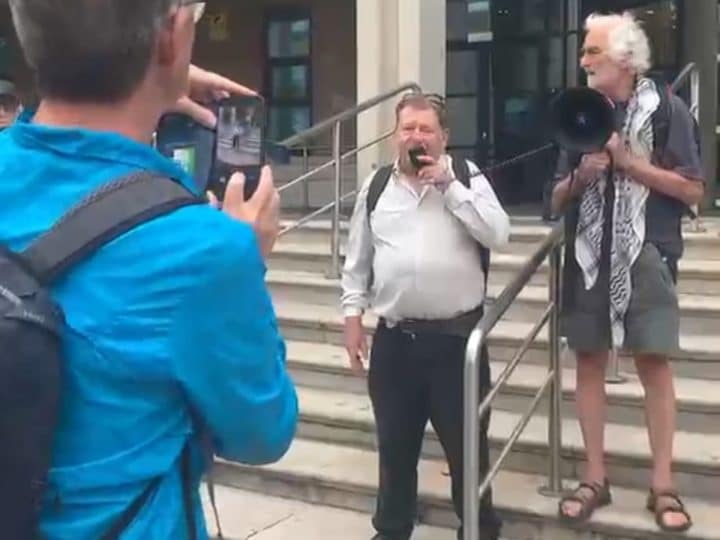

The trial of veteran Jewish anti-Zionist writer and activist Tony Greenstein opened today at Kingston Crown Court, where he faces prosecution under Section 12(1A) of the Terrorism Act 2000 over social media posts published in late 2023. Following preliminary legal submissions heard in the absence of the jury, the Crown opened its case to the panel of twelve jurors.
The Crown’s opening allegations against Tony Greenstein
Prosecuting counsel Kate Temple-Mabe outlined the charge, telling the court that Section 12(1A) makes it illegal to publish views supportive of an outlawed group without caring whether the post might encourage other people to support it. The prosecutor told jurors that the UK government banned Hamas in its entirety as a proscribed terrorist organisation in 2021.
Jurors were presented with a series of online exhibits, centring on an exchange dated 15 November 2023. The court heard that after another user prompted him to simply post “I support Hamas”, Tony Greenstein responded with qualifications and specific context, writing:
I support the Palestinians that is enough and I support Hamas against the Israeli army
The full context heard in court
To argue the defendant’s mindset, the Crown placed before the jury wider blog posts and tweets from October and November 2023. The prosecution’s case focused once again on isolating very specific phrases from these exhibits—notably Greenstein’s description of his initial reaction to the 7 October offensive as “elation not despair” and his posts titled “Full Support for the Gaza Ghetto Uprising”. The Crown argued that, taken on a plain reading, these words crossed the legal line into expressing and encouraging unlawful support for a banned entity.
However, the complete texts of the exhibits read out by the Crown in open court also placed on the record the wider historical context and specific arguments Tony Greenstein had incorporated into his writing:
Contextualising Armed Conflict, as Opposed to Organisation Loyalty: In the indicted 15 November exchange, the statement began with “I support the Palestinians that is enough” and strictly defined the support as being “against the Israeli army”.
Contextualising the Specific Armed Resistance Role: In an exchange with veteran human rights campaigner Peter Tatchell, the exhibit showed Tony Greenstein framing his support around the specific armed role of resisting military aggression, stating:
Whatever their faults Hamas is fighting Israel’s genocidal war whereas you’re criticising those laying down their lives.
Criticisms of Western Double Standards: The prosecution read extracts targeting Western political figures, in which Greenstein condemned what he termed the “nauseating hypocrisy” of US President Joe Biden and former UK Foreign Secretary James Cleverly (referred to as “Not So Cleverly”) for backing Ukrainian resistance while condemning Palestinian resistance.
Historical Analogies and Published Works: The blog posts shown to the jury framed events explicitly around the 1943 Warsaw Ghetto Uprising, comparing siege warfare and referencing Nazi commander Jürgen Stroop alongside Warsaw resistance leader Marek Edelman, rather than endorsing religious or political extremism. The exhibits also included a sidebar promoting Greenstein’s published book, “Zionism During the Holocaust: The Weaponisation of Memory in the Service of State and Nation”.
The 2014 Operation Protective Edge Context: The prosecution went through blog exhibits highlighting the 2014 war in Gaza, in which over 2,200 Palestinians, including 551 children, were killed. Jurors saw screenshots embedded in Tony Greenstein’s posts citing a July 2014 Guardian report by Harriet Sherwood, which documented Israeli civilians gathering on hilltops with armchairs to watch and cheer airstrikes on Gaza.
Political Criticisms of Regional Actors: The Crown’s exhibits included passages where Greenstein openly criticised Middle Eastern leadership, calling for the Arab masses to rise up and overthrow Egyptian President Abdel Fattah el-Sisi and Saudi Crown Prince Mohammed bin Salman (MBS) for their complicity in the siege of Gaza. He also dismissed the late Hezbollah leader Hassan Nasrallah as a “paper tiger” who was failing to assist Palestinians.
Online Reach: Exhibits presented by the Crown noted that the tweets in question had an extremely modest audience, recording view counts between 56 and 151 views.
The defence stance for Tony Greenstein
Tony Greenstein entered a plea of not guilty to the charge.
The prosecution’s opening case is ongoing, and the defence will present its formal evidence and arguments to the jury later in the trial.
The trial continues.
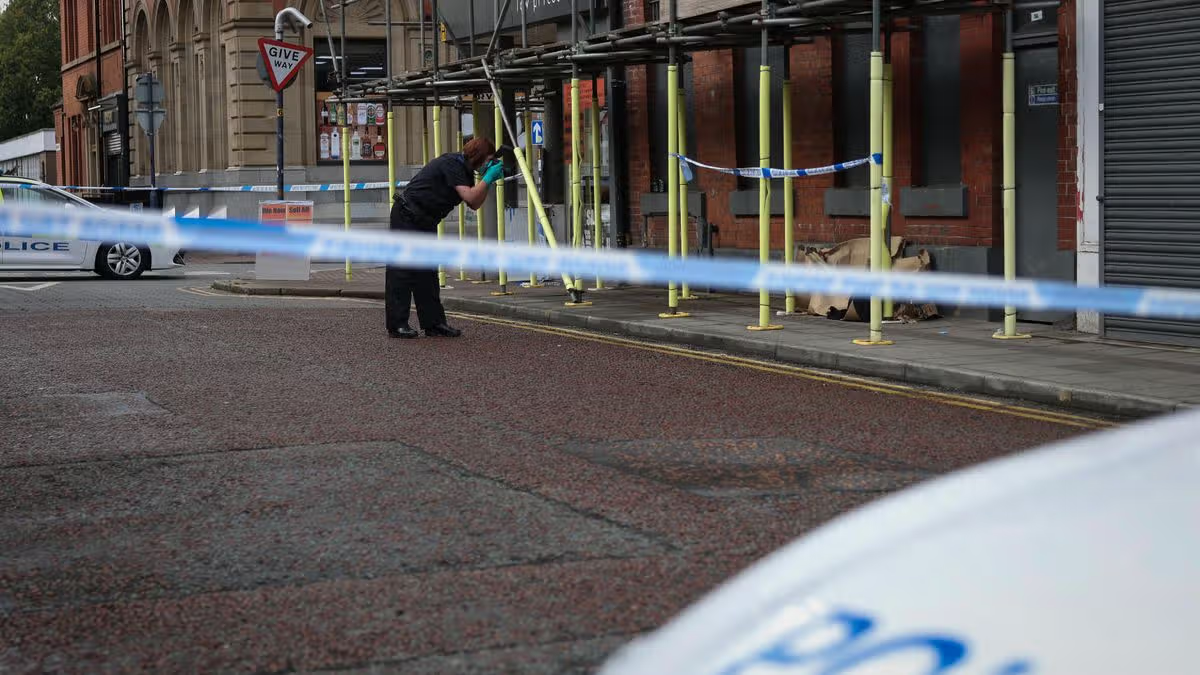
Ashton cordon RECAP as street taped off after two men stabbed and assaulted with chilli oil

SpaceX Stock Falls 3% Ahead of Major 319 Million Share Unlock as Growth Stock Selloff Continues Wednesday

Strategy Just Stopped Bitcoin News: Is the Market’s Biggest Corporate Bid Gone for Good?





-

 Fashion5 days ago
Weekend Open Thread: Ann Taylor
-
 Sports6 days ago
This U.S. Amateur is a glimpse into golf’s future in more ways than you think
-

 Tech5 days ago
11 Ways to Rank Your Videos
-
 NewsBeat4 days ago
Myanmar says over 300,000 Rohingya refugees verified for repatriation as exodus enters ninth year
-

 Sports4 days ago
Birmingham 2026: Day 6 Timetable for Irish Athletes
-

 Politics4 days ago
SEQ Code: The Three Letter Boarding Pass Code That Could Give You The Worst Seat
-

 Sports7 days ago
DeQuan Jones in ‘high spirits’ after successful leg surgery
-

 Tech6 days ago
DeepSeek Harness launches as open source rival to Claude Code, alongside V4-Pro on API with higher prices
-
 Crypto World7 days ago
Perplexity AI Predicts an XRP Scenario Few Analysts Are Discussing
-

 Crypto World2 days ago
OCC Greenlights Trump Family Crypto Firm for Trust Charter
-
 Entertainment7 days ago
2026’s Most Ambitious Fantasy Movie Officially Scores Sequel Update
-
 Entertainment7 days ago
All 10 Hayao Miyazaki Fantasy Movies, Ranked
-
 Entertainment7 days ago
Travis Kelce Breaks Silence On ‘Crazy’ Taylor Swift Wedding
-
 Entertainment5 days ago
10 Netflix Shows That Quietly Became Modern Classics
-

 Tech1 day ago
Qwen3.8-27B runs frontier-class coding agents and reasoning locally, no cloud API required
-

 Fashion5 days ago
Weekly News Update, 8.14.26 – Corporette.com
-
 Business7 days ago
Nebius shares soar 22% as AI demand powers revenue beat
-

 Fashion6 days ago
The Details Do the Dressing
-

 Business4 days ago
Facebook Down Now? Users Report Login And Loading Problems As Outage Trackers Monitor Ongoing Issues
-
 Entertainment4 days ago
Marvel Studios Reveals New X-Men Cast Including Adam Driver and Sadie Sink
You must be logged in to post a comment Login