

Politics
Labour accused of making nuclear sector ‘more dangerous’ after capture by ‘vested interests’

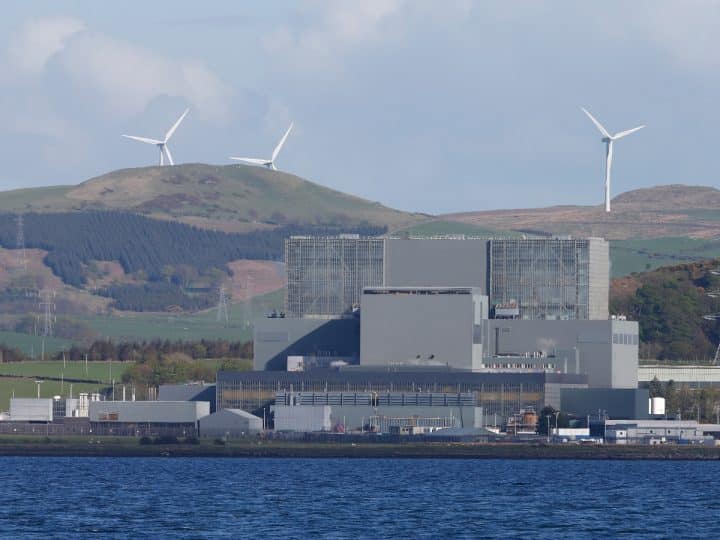

The nuclear industry will become “more dangerous” and regulation of the sector has been captured by “vested interests,” campaigners and experts have told the Canary, after the Nuclear Regulation Bill was put forward in the 2026 King’s Speech.
The Labour Government had already said in March 2026 that it was committed to implementing the recommendations of the Nuclear Regulatory Review, which was led by John Fingleton – sometimes referred to as the Fingleton Review.
Announcing the findings of the review in March 2026, the government said:
overly complex regulation in the UK has contributed to the ‘relative decline’ in the UK’s global leadership position in nuclear.
It also set out 47 recommendations to:
to speed up building new nuclear projects.
King’s speech 2026
The King announced the Bill in his King’s Speech, saying:
My Ministers will also take forward recommendations of the Nuclear Regulatory Review and encourage a new era of British nuclear energy generation.
In briefing notes published by the government, which explain their plans in more detail, the government referenced the Fingleton Review, which it characterized as calling for “a radical refresh” of the nuclear regulatory regime.
It went on to say that the Nuclear Regulation Bill is:
modernising the way that new nuclear projects are regulated so we can deliver safe, secure and affordable nuclear power and infrastructure sooner, while maintaining strong environmental protections.
The briefing notes tried to placate fears that the recommendations in the Fingleton Review could erode environmental protections.
They added:
To speed up the delivery of new nuclear and reduce costs, the Government is overhauling planning and regulation in a boost to the UK’s energy sovereignty and the nuclear deterrent.
This Bill will support quicker delivery of nuclear projects in a way that produces a win-win for building critical infrastructure while protecting nature and the environment, and high standards of nuclear safety.
‘Industry falsehoods’ used to justify risk nuclear projects pose to nature – conservationist
The Wildlife Trusts‘ head of public affairs Matthew Browne told the Canary:
This Government was elected to govern on the basis of a manifesto that promised to restore the natural world. We are a long way from this promise being delivered. Today’s King’s Speech is silent on nature recovery, and includes measures that will actively harm wildlife.
Whilst early proposals for the ripping up of nature protections have thankfully been dropped, the Nuclear Regulation Bill is justified on the grounds of industry falsehoods which minimise the risk projects can pose to nature. The Regulating for Growth Bill gives environmental regulators an inappropriate focus on growth, bending their work away from vital nature recovery objectives.
With ongoing nature loss impacting our ability to grow food, to protect communities from flooding and our ability to stay healthy, this failure to respond to a growing national security crisis risks fundamental dereliction of duty. The Government needs to change course, and face up to environmental reality, before it comes an economic and social disaster.
Bill will make ‘inherently dangerous’ nuclear power ‘more dangerous’ – anti-nuclear campaigner
Campaign for Nuclear Disarmament (CND) general secretary Sophie Bolt told the Canary:
When you think of nuclear accidents like at Windscale in 1957, Chernobyl in 1986, or Fukushima in 2011, it’s easy to see that Britain’s current nuclear regulatory procedures and rules are in place for a simple reason – that nuclear power is inherently dangerous.
Rather than acknowledge these risks or legacy issues – like tackling the toxic waste generated by nuclear power – the government’s plan to cut regulations essentially means this industry will be more dangerous.
This is disturbingly similar to what Donald Trump did earlier this year when he gutted the US Nuclear Regulatory Commission and the US Environmental Protection Agency.
These proposed regulatory changes are also for the benefit of Britain’s deadly and costly nuclear weapons programme, which already accounts for almost a quarter of Britain’s military budget. Rather than strengthening our security, these proposals will instead weaken it and put us all at even greater risks from the nuclear industry.
Government should pursue renewables instead of nuclear – SNP
Scottish National Party (SNP) Alex Kerr MSP told the Canary:
Under Keir Starmer’s watch, energy bills have spiralled out of control, 1,000 jobs are being lost every month in the North Sea and Scotland’s only refinery at Grangemouth has closed – the Labour party has zero credibility when it comes to energy.
Now Labour is ripping up regulations to pursue its dangerous obsession with nuclear power.
Scotland has an abundance of clean energy sources – we don’t need new nuclear power stations, which are ludicrously expensive, take years to build, and leave us with dangerous waste.
Another energy superpower, Norway, has just ruled out using nuclear energy. With the fresh start of independence, Scotland can do the same and use our vast energy wealth to lower bills, enhance our energy security, and build a wealthier country.
Pursuit of nuclear instead of renewables unjustifiable – academic
University of Sussex emeritus professor Andy Stirling told the Canary that the evidence shows renewables should be pursued instead of nuclear, and the only reason that the government wants a civil nuclear sector is to enable the UK’s nuclear weapons programme.
He said:
Detailed plans for deregulating nuclear power set out in the King’s speech further underscore how deeply policy making in this field has been captured by vested interests.
Despite huge official noise around this issue, no UK Government document has systematically compared nuclear with alternative options to deliver affordable, safe, secure, domestic low carbon power. This situation in itself seriously undermines both sound policy making and wider democracy.
If any such analysis were to have been undertaken, the overwhelming independent evidence is, that it would have had to conclude that nuclear is verging on obsolescent as a means to deliver these objectives. Even existing mature forms of nuclear power costs many times more than comparable means to deliver firm-equivalent electricity and are far slower and problematic in other ways. So consumer bills are raised and climate action delayed.
That the Government does not even try to make arguments against this, shows the real reason for supporting high price, slow, troublesome nuclear power, is to underpin equally problematic and ineffective nuclear weapons ambitions.
Bill sets government on ‘collision course with communities’ – anti-Sizewell C campaigner
Stop Sizewell C executive director Alison Downes told the Canary:
The government is on a collision course with communities over its plans for a Nuclear Regulation Bill, for example in response to the Nuclear Regulatory Task Force it included the concerning promise to ‘go further’ in creating a new pathway to allow semi-urban nuclear power stations.
Ironically, rigorous public consultations are promised, but the Prime Minister’s inflammatory rhetoric directed at those who express concern about new nuclear plants in no way builds public confidence. We need assurances of strong, independent regulators and affected communities to be allowed to actively engage, not be insulted.
At the time of writing, the cabinet minister with responsibility for the Bill is Ed Miliband – the secretary of state for energy security and net zero. However, Miliband is widely touted as a potential leadership challenger to Keir Starmer.
Miliband would likely have to resign from his ministerial role if he did stand for the Labour leadership, so it may be some time before the Bill has a proper advocate in parliament.
Featured image via the Canary
By Tom Pashby

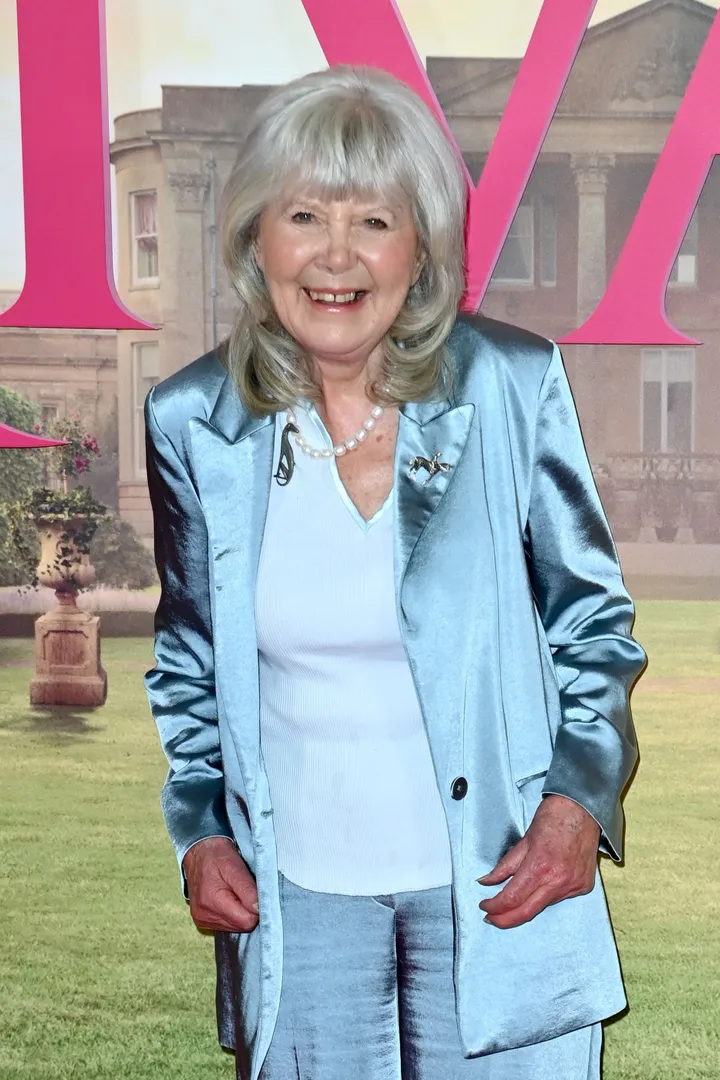
The “naughtiest show on television” is finally back, and Rivals’ second season pays homage to the late Dame Jilly Cooper, who wrote the source material beloved by millions for decades.
Dame Jilly, the author of Rivals and 10 other novels set in the world of Rutshire, died suddenly in October 2025 at the age of 88, but before her death, she gave her input into the second series.
According to the show’s creative team, Jilly signed off on all the scripts for season two, and was giving production team notes up until a few days before her death.
“Jilly signed off every script of the 12 and was on set for quite a lot of production as well,” executive producer Alexander Lamb told Tech Radar.
“So it feels that this series totally has Jilly’s seal of approval. She’s an exec producer, which she’s credited for, and was giving me notes on the Thursday before she died on episode 12.”

Dave Hogan/Hogan Media/Shutterstock
“Her fingerprints are all over this series, and we’d also sat with her and talked about season three and the future, about how to mould the other books around Rivals,” he added.
“We’ve got her blessing on things. We’ve got her notes written down. She’s always with us.”
Jilly’s agent, Felicity Blunt, was one of the executive producers of the show and, according to the showrunner and self-proclaimed Jilly Cooper superfan Dominic Treadwell-Collins, was “Jilly’s representative on Earth, like the Pope is for God.”
“Jilly always said that her job was to entertain,” Felicity told Deadline. “We all try and ensure that that is our North Star. So this season is 150% a tribute.”
The show frequently pays tribute to Jilly with the author even making a cameo in season one.
While the series has expanded beyond Jilly’s source novels and characters, the writing still takes inspiration from the literary icon.

“If you are a Jilly aficionado, you will be able to point to certain scenes, beats or words that she uses,” Felicity – who also happens to be the sister of Emily Blunt and wife to Stanley Tucci – told the outlet.
“We are able to play out the repercussions of some of the bigger dramatic beats of series one, and I think we do that really effectively and still utterly in sync with Jilly’s voice and her storytelling practice. She read every script, celebrated all our choices and gave us complete permission to deviate from the text.”
At the season two premiere of Rivals, Emily Atack opened up about losing the novelist mid-way through filming the series.
“Losing her halfway through the shoot, it was really kind of bizarre and it just gives the show a whole new layer of love and sentiment to it,” she told the press.
“All we want to do is make her and her family proud and it’s a love letter to Jilly this.”

Rufus Jones, who plays Emily’s on-screen husband, also revealed at the premiere that Jilly did manage to see some of the second season before her death.
“She saw some of the assemblies and some of the episodes, you know, the rough episodes, so she got to see something,” the actor explained.
According to Emily, Dame Jilly was “nothing but complimentary and happy” about the episodes.
“You know, she was a mate by the end of it. It’s still a big loss,” Rufus added.
Looking at the rave reviews from critics and 100% Rotten Tomatoes score, we’re sure the late Dame would be proud of how well her characters have been brought to life.
The first three episodes premiere on Friday 15 May, on Disney +, followed by one a week until 5 June. The second half of the season will air later in 2026.
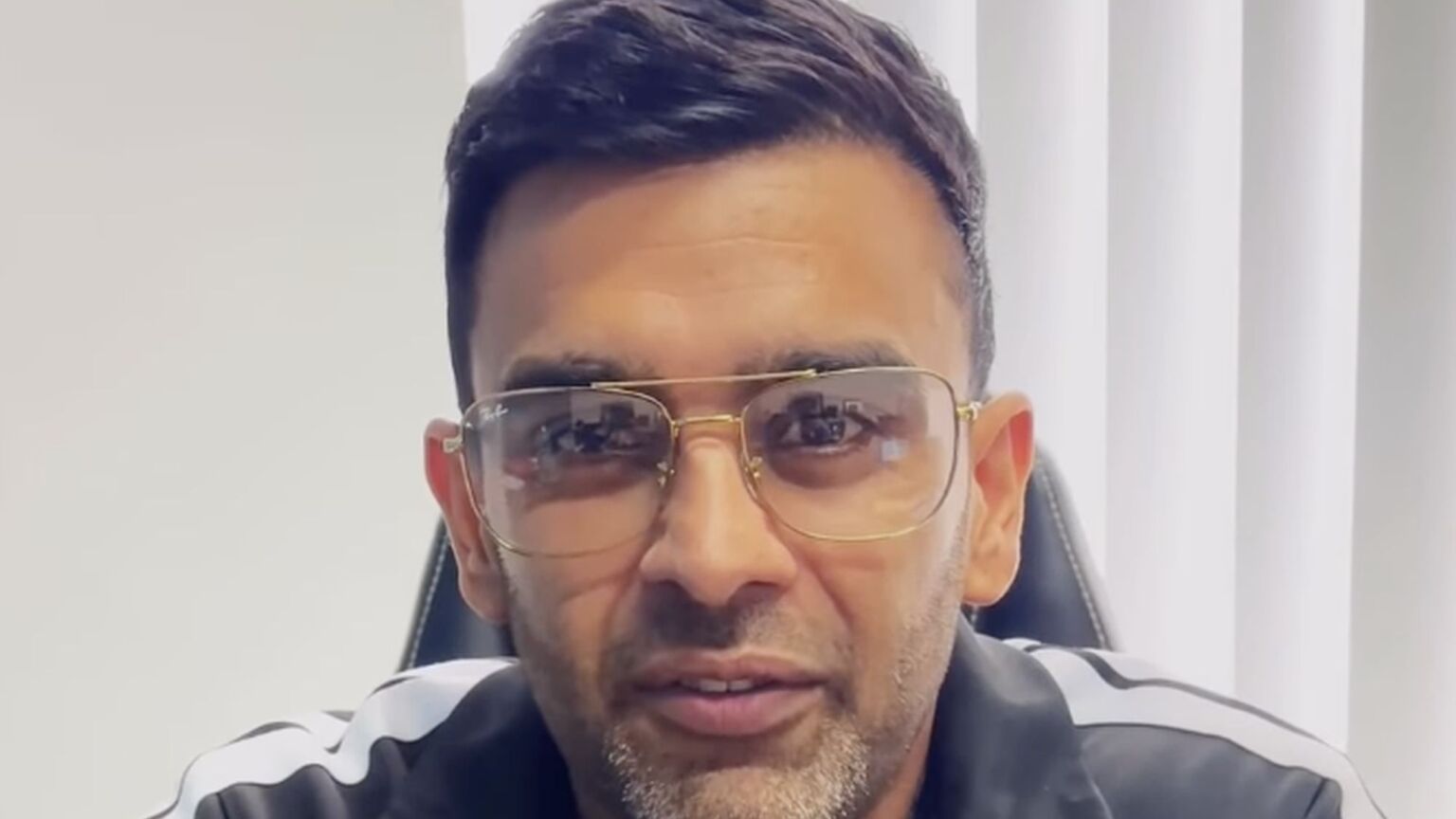
Birmingham-based criminal-defence lawyer Akhmed Yakoob has become an unlikely kingmaker in his city’s local politics, built on his relentless self-promotion, on his ‘straight-talking’, no-holds-barred online persona and on the public’s growing distrust of mainstream politics.
Yakoob has regularly promoted his legal services through catchy TikTok videos aimed at young people drawn to glamour and conspicuous wealth. He films himself next to his Lamborghini. Many in Britain would once have found his brash, Americanised style of marketing distasteful. Yet that style clearly resonates with a section of younger voters who feel alienated from traditional British politics, and who increasingly consume news and current affairs through social-media snippets, rather than through party manifestos or serious debate.
To some, Yakoob may appear clownish. But dismissing him as a joke misses the point entirely. He played a critical role in the election of nine independent councillors on Birmingham City Council in last week’s local elections. With the council now under no overall control, that bloc of councillors will inevitably seek influence and leverage through deal-making with larger parties.
When one looks closely at Yakoob’s campaigning themes, two issues dominate: bin collections and Palestine. The former is at least a local-government issue. The latter has virtually no relevance to the practical services local authorities are supposed to provide to residents.
The more important question is this: how have we reached a point where sectarian politics can secure sizeable clusters of council seats and where similar identity-driven politics delivered five parliamentary victories for independent candidates two years ago?
Having worked for more than 25 years within Muslim communities, I have seen first-hand how Palestine has repeatedly been used as a political football to suit the agendas of different groups in Britain. The first people to recognise its emotional and political potential were Islamist groups, affiliates of the Muslim Brotherhood and toxic agitators such as Abu Hamza and Omar Bakri Muhammad, the self-styled ‘Tottenham Ayatollah’. They understood early on that Palestine could be weaponised emotionally to cultivate grievance, anger and communal identity politics.
Such is the gravitational pull of the Palestinian issue that for some British Muslims, it can cloud basic common sense. Many of those most animated by the issue will never visit the West Bank, let alone Gaza, yet they are drawn into the black-and-white thinking that now dominates discourse around Israel and Palestine. Israel is viewed as wholly evil, incapable of doing anything right, while everything Palestinian is automatically cast as virtuous.
The contradictions are glaring. Some passionately denounce Israel while taking Teva-manufactured medication for blood pressure or chronic illness, apparently oblivious to the fact that the medicine helping to prevent catastrophic health events originates in Israel. That is how emotionally charged and irrational this debate has become in certain circles.
On the far end of this polarised spectrum, some have even come to see Hamas as ‘freedom fighters’. The cognitive dissonance runs so deep that they refuse to acknowledge the most basic reality: that Hamas’s barbaric actions on 7 October 2023 directly triggered the catastrophe we are witnessing in the Middle East today.
It is precisely this constituency that Yakoob appeals to – people angry about Palestine, angry about Britain and emotionally invested in a permanent victim narrative claiming that ‘Muslims have it bad in Britain’. This narrative persists even among those whose families own extensive property portfolios across the Midlands and the north of England, and who enjoy opportunities unavailable to millions across the world.
Yakoob himself is not the root cause of the problem. He is a symptom of a much deeper malaise: the catastrophic failure of successive integration policies that abandoned muscular liberalism in favour of passive multiculturalism. Rather than confidently promoting shared civic values, governments retreated into hand-wringing platitudes about ‘communities coming together naturally’.
Indeed, the current Labour government appears determined to continue with the same failed ‘melting pot’ fantasy – the kumbaya politics of assuming that social cohesion somehow emerges automatically without challenge, accountability or a firm defence of democratic norms. Ordinary British people increasingly see through this. They are tired of sectarianism, tired of anti-Semitism and tired of the relentless ‘Britain is uniquely awful’ rhetoric pushed by parts of the activist left.
A closer examination of Yakoob’s own public record reveals a deeply divisive and polarising figure who has nevertheless succeeded in mobilising thousands of voters.
In March 2026, Yakoob was arrested on suspicion of racially abusing a West Midlands police officer. Footage showed him detained in the back of a police van and, true to form, he turned the incident into yet another performance for the cameras, using confrontation and controversy to reinforce his outsider image. He was later released on bail in what is becoming an expanding catalogue of allegations surrounding him.
In May 2025, he was charged by the National Crime Agency with money-laundering offences allegedly committed between February 2020 and January 2021. Yet even then, he brushed aside the seriousness of the allegations with characteristic swagger, remarking that ‘Today’s newspapers are only going to be used to wrap up tomorrow’s bag of chips’.
Other remarks are also cause for concern. In June 2024, Yakoob was heard suggesting that ‘over 70 per cent of hell is going to be women’. Then, during a Sky News interview in March 2026, he reportedly suggested to voters that ‘the Zionists control everything’ – rhetoric that veers dangerously close to classic anti-Semitic conspiracy-theory tropes.
I grew up in Britain during the 1980s and 1990s, when local and national politics revolved around issues such as council tax, Europe, standards of living, economic opportunity and Britain’s place within NATO. Those issues still matter profoundly today, arguably more than ever. Yet the politics now emerging on the streets of Birmingham bear little resemblance to the civic politics many of us once knew.
What we are witnessing points to two uncomfortable truths. First, how deeply divided Britain has become. And second, how identity politics has been allowed to fester unchecked for decades. How have we arrived as a country when a young British Muslim who has never worked, who still lives in his mother’s home and who has little stake in Britain’s economic future can be mobilised more passionately around Palestine than around building a career, contributing to society or strengthening the nation in which he lives?
No, Yakoob is not the disease, but he is a symptom of our age – and of weak, hesitant governments that lacked the courage to challenge sectarianism before it embedded itself into our politics.
Fiyaz Mughal is founder of Faith Matters and Tell MAMA.
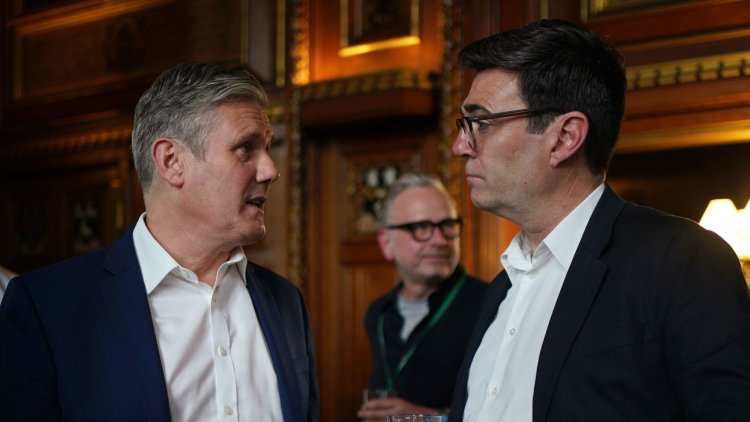
(Alamy)
4 min read
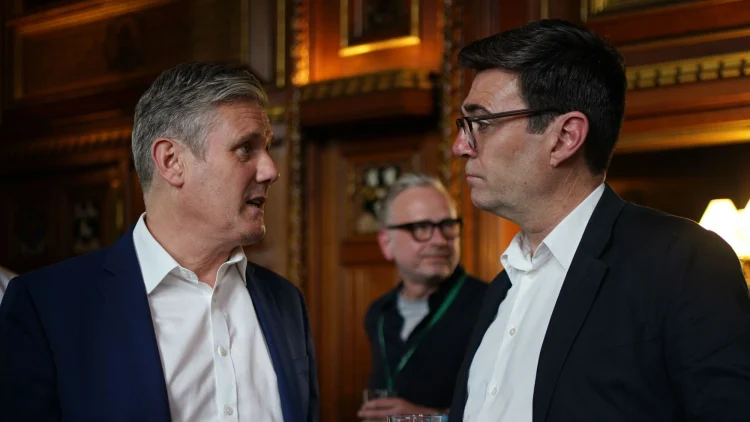
Former minister Josh Simons is stepping down from Parliament to allow Andy Burnham to run as a Labour candidate.
Simons, MP for Makerfield, posted on X that he was standing aside so the mayor of Manchester could enter Parliament and “drive the change our country is crying out for.” Burnham will have to be approved by the NEC to stand as a candidate and step down from his current position as mayor.
Simons said it had not been an easy decision but he said Burnham provided the last chance to provide the change the country needed.
In his statement, the outgoing MP said: “For decades, Westminster has overseen the managed decline of towns like mine. We have talked big, then acted small, stuck in a politics of incrementalism that cannot meet the moment. We have lost the trust of those our party was built to serve. It is my unwavering belief that nothing short of urgent, radical, courageous reform will make a difference. That must start with a change in leadership.
“Today, I am putting the people I represent and the country I love first and will be resigning as MP for Makerfield. I am standing aside so that Andy Burnham can return to his home, fight to re-enter Parliament, and if elected, drive the change our country is crying out for.”
At the last election, Simons won a majority of 5,399 votes, with Reform coming in second place. Makerfield has been Labour since its inception, but has been moving rightwards for the last decade. A victory for Burnham in a by-election would in itself therefore make a strong case that he should be allowed to run for the Labour leadership.
Reform UK leader Nigel Farage said: “We look forward to the contest and we will throw absolutely everything at it.”
Simons added: “This has not been an easy decision. This is my family’s home, where only a few weeks ago, doctors and nurses at Wigan Infirmary saved our newborn son’s life. But we all must make choices and in recent days I found myself with a difficult one: defend the status quo or step forward and act.
“I have made my choice. I am in politics because politics is how you change lives for the better. My party has one last chance to do that: deliver for the people and places I represent, drive economic growth, secure our borders, reform our state and politics, and change a status quo that is not working. That is the fight. I believe Andy is the one to lead it.”
Burnham has been trying to locate a seat in the North West for the last few days, as Keir Starmer has faced mounting leadership challenges since the local elections.
Wes Streeting resigned as health secretary on Thursday morning after he had lost confidence in the prime minister. He said a future leadership contest should be broad and protracted to allow the best candidates to challenge one another.
Burnham said he will be requesting the permission of the NEC to stand in the by-election, claiming he grew up close to Makerfield for 25 years.
In a statement, he said: “Millions are struggling and they need the Labour Government to succeed. It has already made changes to make life better for them in its first two years. After this week, we owe it to people to come back together as a Labour movement, giving the Prime Minister and the Government the space and stability they need as the by-election takes place.”
Burnham addded that he wanted to recognise the “difficult decision” taken by Simons.
The Manchester mayor added: “Finally, I truly do not take a single vote for granted and will work hard to regain the trust of people in the Makerfield constituency, many of whom have long supported our party but lost faith in recent times. We will change Labour for the better and make it a party you can believe in again.”
In the recent local elections, Reform UK won all eight wards by a comfortable margin. The breakdown of the results were:
Reform: 50.4 per cent
Labour: 22.7 per cent
Green: 10.9 per cent
Conservative: 9.9 per cent
Lib Dem: 3.8 per cent
Other: 2.2 per cent
!function(n){if(!window.cnx){window.cnx={},window.cnx.cmd=[];var t=n.createElement(‘iframe’);t.display=’none’,t.onload=function(){var n=t.contentWindow.document,c=n.createElement(‘script’);c.src=”//cd.connatix.com/connatix.player.js”,c.setAttribute(‘async’,’1′),c.setAttribute(‘type’,’text/javascript’),n.body.appendChild(c)},n.head.appendChild(t)}}(document);(new Image()).src=”https://capi.connatix.com/tr/si?token=19654b65-409c-4b38-90db-80cbdea02cf4″;cnx.cmd.push(function(){cnx({“playerId”:”19654b65-409c-4b38-90db-80cbdea02cf4″,”mediaId”:”4b32ce3c-43c9-4012-a93c-69dd638b3ebd”}).render(“6a05f520e4b0ee7169708d61”);});

!function(n){if(!window.cnx){window.cnx={},window.cnx.cmd=[];var t=n.createElement(‘iframe’);t.display=’none’,t.onload=function(){var n=t.contentWindow.document,c=n.createElement(‘script’);c.src=”//cd.connatix.com/connatix.player.js”,c.setAttribute(‘async’,’1′),c.setAttribute(‘type’,’text/javascript’),n.body.appendChild(c)},n.head.appendChild(t)}}(document);(new Image()).src=”https://capi.connatix.com/tr/si?token=19654b65-409c-4b38-90db-80cbdea02cf4″;cnx.cmd.push(function(){cnx({“playerId”:”19654b65-409c-4b38-90db-80cbdea02cf4″,”mediaId”:”4c2615b8-caae-4d5a-bab7-30953fac6785″}).render(“6a05f51ee4b098065be7eb57”);});
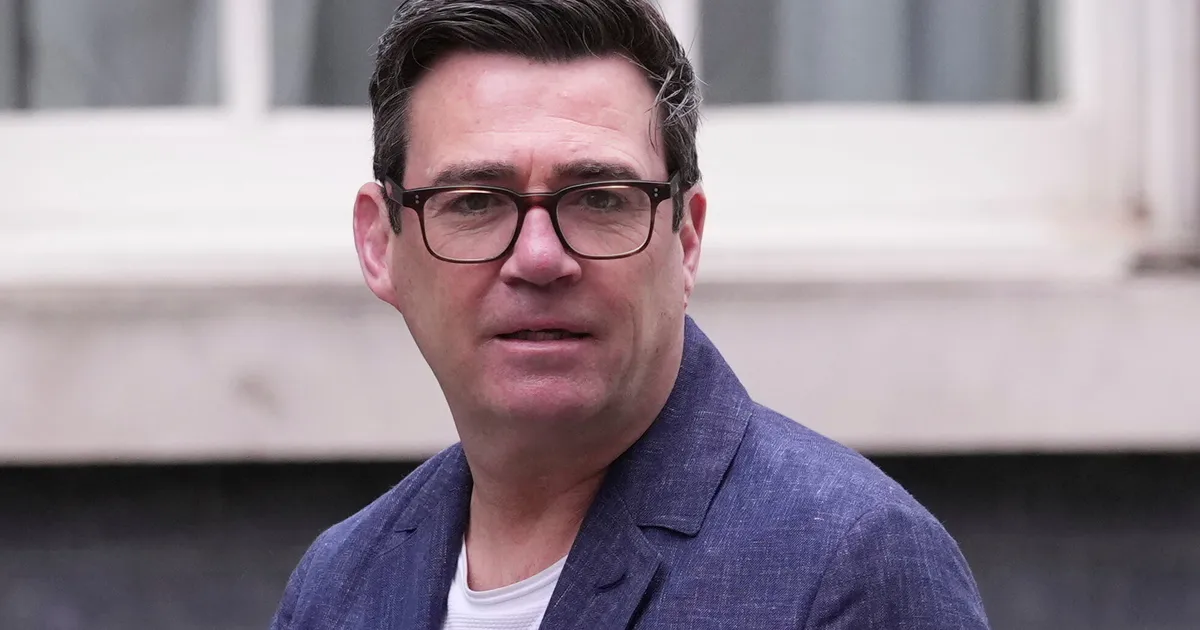
Andy Burnham has revealed the Commons constituency he wants to stand in so he can become an MP again and challenge Keir Starmer for the Labour leadership.
Labour MP Josh Simons has agreed to stand down from his Makerfield seat to make way for the Greater Manchester mayor less than two years after being elected.
In a statement, Simons said: “I am putting the people I represent and the country I love first and will be resigning as MP for Makerfield. I am standing aside so that Andy Burnham can return to his home, fight to re-enter parliament, and if elected, drive the change our country is crying out for.
“This has not been an easy decision. This is my family’s home, where only a few weeks ago, doctors and nurses at Wigan Infirmary saved our newborn son’s life.
“But we all must make choices and in recent days I found myself with a difficult one: defend the status quo or step forward and act. I have made my choice.
“I am in politics because politics is how you change lives for the better. My party has one last chance to do that: deliver for the people and places I represent, drive economic growth, secure our borders, reform our state and politics, and change a status quo that is not working.
“That is the fight. I believe Andy is the one to lead it.”
Simons won the seat with a majority of 5,399 over Reform at the general election.
In a statement, Burnham – who was MP for Leigh between 2001 and 2017 – said: “Over the last decade, I have been challenging this failure from the outside and building a new and better way of doing politics.
“We have built Greater Manchester into the fastest-growing city-region in the UK and put buses back under public control, introducing a £2 fare cap to help people with cost-of-living pressures.
“However, there is only so much that can be done from Greater Manchester. Much bigger change is needed at a national level if everyday life is to be made more affordable again.
“This is why I now seek people’s support to return to parliament: to bring the change we have brought to Greater Manchester to the whole of the UK and make politics work properly for people.
“Millions are struggling and they need the Labour government to succeed. It has already made changes to make life better for them in its first two years.
“After this week, we owe it to people to come back together as a Labour movement, giving the prime minister and the government the space and stability they need as the by-election takes place.”
Reform leader Nigel Farage said his party “will absolutely throw everything at” the by-election campaign.
Before he became an MP, Simons used to run Labour Together, the moderate think-tank which helped Starmer become party leader in 2020.
He was forced to resign as a Cabinet Office minister in February over his part in a Labour Together smear operation against journalists.
Despite being a former ally of the PM, he said in the wake of Labour’s drubbing in last week’s elections that Starmer had “lost the country” and needed to go.
The dramatic development comes after Burnham’s leadership rival Wes Streeting resigned as health secretary with a ferocious attack on Starmer on Thursday afternoon.
He said it was clear that the prime would not lead Labour into the next general election on the back of the party’s drubbing in England, Scotland and Wales last week.
Streeting said: “Where we need vision, we have a vacuum. Where we need direction, we have drift.”
Burnham stood down as an MP in 2017, and needs to find a way back to Westminster in order to challenge for the Labour leadership.
He tried to stand as Labour’s candidate in the Gorton and Denton by-election in February, but was blocked by the party’s ruling national executive committee (NEC).
However, the NEC will be under intense pressure to let him stand again in the hope that he can win the seat and return to Westminster, which he quit in 2017.
Communities secretary and Starmer loyalist Steve Reed says: “I’m sorry Josh has taken this decision.
“If anyone thinks there is a caped superhero that is coming our way with all the answers they have another thing coming.”
Subscribe to Commons People, the podcast that makes politics easy. Every week, Kevin Schofield and Kate Nicholson unpack the week’s biggest stories to keep you informed. Join us for straightforward analysis of what’s going on at Westminster.
Subscribe to Commons People, the podcast that makes politics easy. Every week, Kevin Schofield and Kate Nicholson unpack the week’s biggest stories to keep you informed. Join us for straightforward analysis of what’s going on at Westminster.
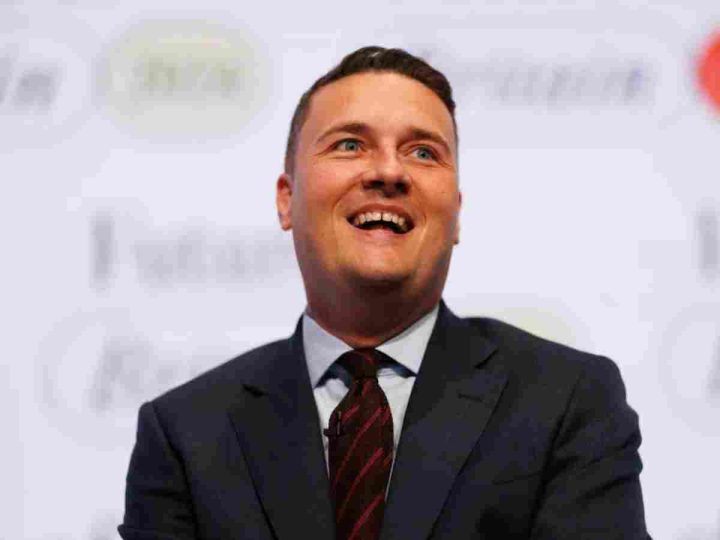

Mandelson-protégé health secretary Wes Streeting is preparing to announce his bid to oust Keir Starmer. Labour’s national executive committee (NEC) is likely to play a major and potentially decisive role in who gets to stand in the contest to replace Starmer in Number 10.
Starmer is the worst PM in living memory. That’s quite an ‘achievement’ in a decade that has seen Boris Johnson and the dire Liz Truss in the same seat. But the odds are that the NEC – stacked as it is with Starmeroid and Blairite factionalists – will want a continuity candidate to win. That fact alone would have made it unlikely that Andy Burnham would be allowed anywhere near the contest.
Burnham is deeply flawed, but has a personality and some basic principles. Either would be enough to beat any of the Starmer-clones with which his faction crammed the parliamentary party. Either is enough to make him persona non grata for the NEC.
But Streeting’s rationale for announcing his leadership bid quickly will largely be based on making sure Burnham can’t even think about participating. Burnham would need time to find a parliamentary seat he could stand in before he can bid to lead. Even if the NEC allowed him to stand – rather than find a pretext to block him (again) – it’s far from certain any Labour candidate would win a by-election, even if a 2024 winner stepped down to make way for him.
Optics
But a single-candidate contest, or a Starmer v Starmer mini-me election, wouldn’t be great optics for what remains of Labour.
Former deputy PM Angela Rayner conveniently got a free pass on alleged tax-dodging from HMRC, just in time to throw her hat in the ring, though she’s not Blairite enough for most NEC limpets. And the NEC is currently under the control of the hardest-core factionalists, as new NEC members won’t be in place until the party’s annual conference in the autumn.
So, who might stand and what obstacles do they face? Might sheer inertia allow Starmer to cling on as the most hobbled of lame ducks? Ranjan Balakumaran looked at the situation for the Canary:
View this post on Instagram
Featured image via the Canary
By Skwawkbox
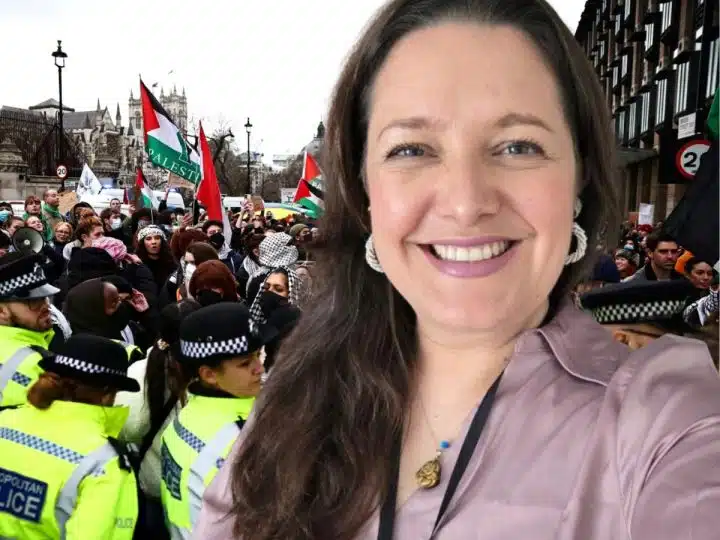

As the Met police tool up ahead of a big day of protest in London on Saturday 16 May, the UN has warned that the UK is eroding people’s rights.
The UN special rapporteur on the rights to freedom of peaceful assembly and of association, Gina Romero, has called on the UK to uphold its international human rights obligations.
This follows the adoption of restrictive legislation and political calls for a blanket ban on pro-Palestinian demonstrations.
Romero said:
The entry into force of the UK Crime and Policing Act on 29 April introduces provisions fundamentally incompatible with international human rights obligations regarding the rights to freedom of peaceful assembly, association, and expression, and the right of participation.
Of primary concern is the vague concept of ‘cumulative disruption,’ which grants law enforcement excessive discretionary powers to restrict assemblies, disregarding the standard that peaceful protests inherently entail a level of disruption that must be accommodated.
The Act’s criminalisation of face coverings is especially problematic amidst intensified surveillance, as anonymity is often essential to protect privacy and prevent chilling effects.
By imposing further restrictions on mobilisations near places of worship, the State risks creating ‘no-go zones’ for dissent, undermining its duty to facilitate assemblies within ‘sight and sound’ of their target audience.
Yes, Starmer does take a ‘two tier’ approach to protest
On 29 April, following multiple stabbings in Golders Green, London, UK prime minister Keir Starmer said that he would consider banning some pro-Palestinian protests due to the “cumulative” effect that they were having on the UK Jewish community.
This statement followed Tory calls for a moratorium on all pro-Palestinian protests. The (allegedly) independent reviewer of terrorism legislation Jonathan Hall echoed these calls and:
claimed that it was ‘clearly impossible at the moment’ for such demonstrations not to ‘incubate’ antisemitism.
However, Romero called on the UK government to refrain from stigmatising and banning pro-Palestinian marches in the name of preventing antisemitism:
Antisemitism is a serious problem that must be addressed through targeted and lawful measures. It cannot justify a blanket prohibition on peaceful protest.
Romero expressed concern that the government’s approach appears to apply heightened security scrutiny to protest activity associated predominantly with Muslim communities. But it doesn’t apply equivalent scrutiny to other forms of protest with direct links to antisemitic and racist incidents.
International human rights law prohibits discrimination in the enjoyment of the right to peaceful assembly on grounds including religion and race. Romero said:
Where restrictions are framed around conduct, such as antisemitism, but are applied in a manner that disproportionately burdens one community defined by religion or ethnicity, this may amount to discrimination.
The freedom to assemble is foundational to a democratic society. Banning pro-Palestinian protests would be an affront to democracy. This is especially important ahead of the Nakba mobilisations that will take place on 16 May.
The special rapporteur has previously raised these concerns with the government.
Featured image via the Canary
By The Canary
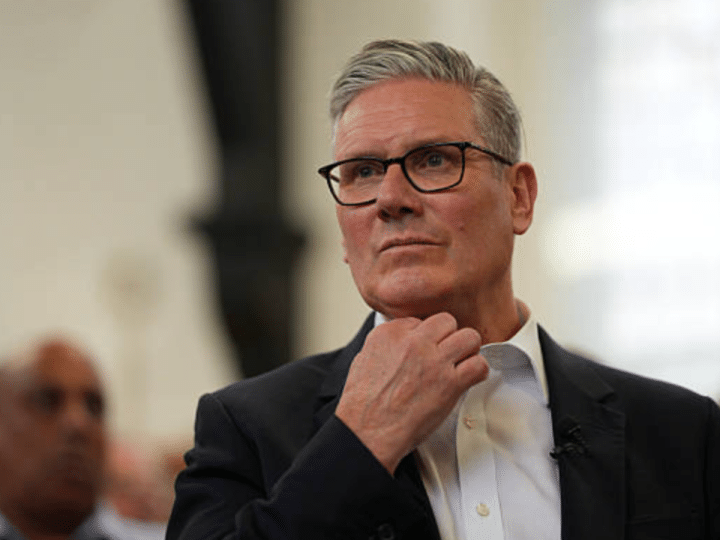

President of the Bakers, Food and Allied Workers Union (BFAWU) has joined other trade unions in recognising that the ‘Starmer project’ has utterly failed. However, Ian Hodson goes further than the Labour-affiliated unions by arguing that people must collectively rebuild class politics itself.
Until then, he said:
the vacuum will continue to be filled by division, nationalism and billionaire-backed forces pretending to speak for working-class communities – whilst protecting the very system that caused the crisis in the first place.
Proving his commitment to solidarity, Hodson has worked with many groups including Platform for a Democratic Party. He told the Canary that he fully supports the idea of a grassroots political movement that empowers communities to shape policy decisions, and he has made clear that top-down politics harms the interests of working-class people.
After all, ordinary people always foot the bill in our crumbling society, while the rich evade tax and responsibility as they buy off politicians.
Thank you to @PlatformforaDP, of which I am proud to be a part, for this endorsement. Other members are Eric Barnes, Graham Bash, Michael Forster, Ian Hodson, Ken Loach, Ben Sellers and Audrey White. https://t.co/SlxQA98dH2
— NaomiFromKent (@NaomiFromKent) January 13, 2026
‘Starmer project has failed to deliver’
Ian Hodson spoke to the Canary following the moves by other unions to attempt to ‘right the ship’ that is Starmer’s failing Labour Party. In contrast to the other unions, Hodson believes the system will simply replace one stooge with another unless people force through radical, transformative change.
Hodson shared his insights with us, having worked alongside Labour and its leaders for many years, saying:
The Labour movement is at a pivotal moment. The Starmer project has failed to deliver the change our class was promised and in doing so has created the space for Reform to grow by feeding disillusionment, division and anger.
When politics abandons the language of class, inequality and collective hope, the far right step in with scapegoats and slogans.
He then spoke of how powerless trade unions are increasingly becoming to defend workers’ rights due to the blatant neoliberal status quo:
Trade unions cannot organise around managed decline, attacks on our own movement, and a political strategy built more on defeating the left than transforming society. Our class needs a real alternative that challenges poverty, insecurity and exploitation, not another version of the status quo dressed up as change.
Pointing to the radical change desperately required to remind politicians that the 99% matter and are the engine which drives our economy – even if the 1% offer lucrative, appealing backhanders:
What is needed now is a politics rooted once again in solidarity, public ownership, trade union freedom, redistribution of wealth and democratic control over the economy. A movement confident enough to confront corporate power, rebuild communities stripped apart by decades of neoliberalism, and give people something real to believe in instead of simply something to fear.
If we fail to rebuild that class politics, the vacuum will continue to be filled by division, nationalism and billionaire-backed forces pretending to speak for working-class communities whilst protecting the very system that caused the crisis in the first place.
Live launch of 'For the Many', with Audrey White, Ken Loach, Ian Hodson, Andrew Feinstein and more https://t.co/SRNQWrO1Ru
— SKWAWKBOX (@skwawkbox) October 9, 2023
Hodson: ‘We are conditioned to believe we are not meant to be heard as a class’
We then asked Hodson about the barriers that prevent working-class people from engaging in politics – or even considering it in the first place.
After discussing the barriers I personally felt putting my name forward in 2024 for the general election, Hodson said:
We are conditioned to believe we are not meant to be heard as a class. And women even more so.
Which is why it matters that we challenge and ultimately smash the machine that keeps power and wealth in the hands of the few.
It may take a generation, but every gain our class has ever won came because ordinary people refused to stay silent. We have had victories and defeats along the way, but every struggle leaves something behind for those who come next.
The BFAWU President isn’t alone in this principled ambition for the working classes. Your Party MP Zarah Sultana has strongly advocated for building collective power and has repeatedly warned that British society urgently needs to take “bold action”.
And, our own Ed Sykes wrote:
Sultana made it clear that strong policies and stances are necessary, and that the active participation of ordinary people matters, saying:
“The crises we face, which everyone in this room knows about – climate, cost of living, housing, inequality – they are too big for tinkering around the edges. They demand bold action and collective power. And that power starts here: it starts with you, it starts with our members, our communities, and our activists.
And Your Party has to be that platform for that power, a politics driven by the people: a politics that values diversity, but not as this window dressing exercise. It gives a voice to those who have deliberately made voiceless, and makes democracy feel real, feel tangible.”
Hodson: “Refuse to accept invisibility”
He finished by saying that it is essential that socialists today work to build a platform and provide the tools for a new generation to be even more empowered to “speak up and speak out”.
Beautifully, he finished by reminding us that courage and commitment today for working-class politics will provide:
Another step forward for our class, and for the generations of women that will follow and refuse to accept invisibility ever again.
We at the Canary couldn’t agree more: it is high time working-class people are finally taken seriously in UK politics.
Featured image via the Canary
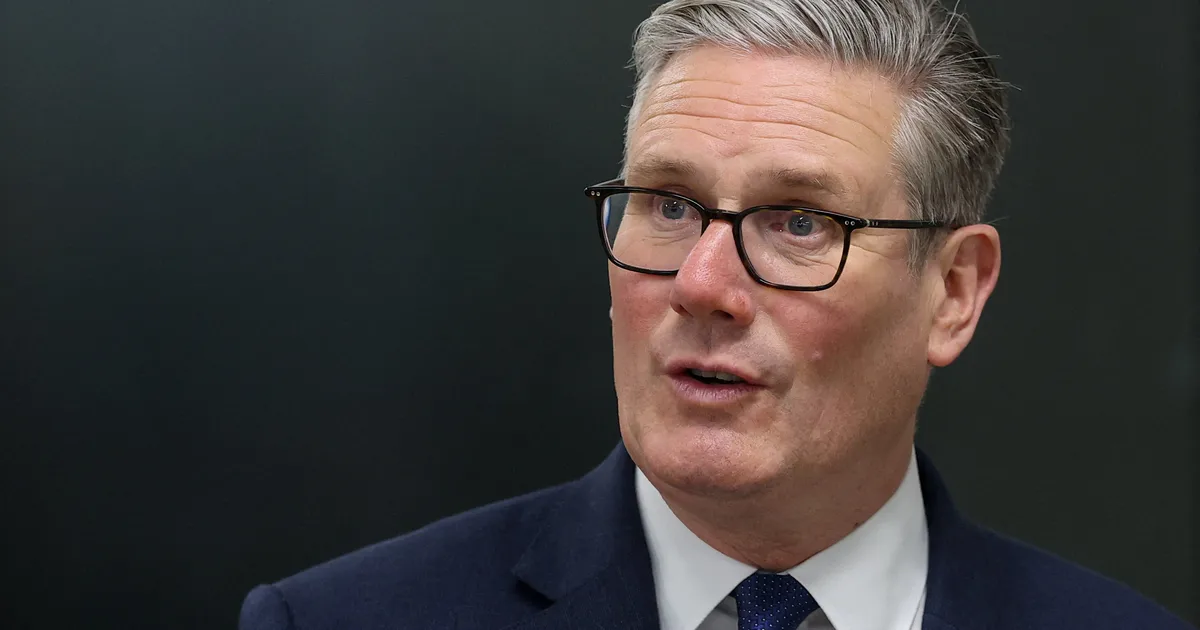
The Labour MP who effectively pulled the plug on Keir Starmer’s premiership has now suggested she could still end up backing him to stay on as prime minister.
Catherine West announced last Saturday that she would run as a “stalking horse” in a leadership challenge to the prime minister in response to the party’s horrendous performance in last week’s elections.
The former Foreign Office minister said she planned to gather the required 81 Labour MPs’ names to formally challenge Starmer.
After Starmer vowed not to “walk away” from Downing Street in his make-or-break speech on Monday, she then decided to collect names of Labour MPs who would agree to set a timetable for the election of a new leader by September.
But her efforts were overtaken as ministers started to resign, putting more direct pressure on the prime minister.
Speaking after health secretary Wes Streeting dramatically resigned on Thursday, West then bizarrely claimed she could potentially vote for Starmer in any subsequent contest.
She said the “important thing” was the Labour Party is now having the conversation about how to beat Reform UK.
Asked if this was the outcome she wanted on Radio 4′s World At One, West said: “The original request I made was for the cabinet to get around the table and nominate someone to explain, to highlight, all the fantastic things the government has been doing with some urgency.”
She said she wants an “honest conversation” from candidates, including from the prime minister if he is a candidate.
“Many of us like Keir very much as a person, he’s got excellent credentials on the international stage and he could well win a competition if he were to put his name forward,” the MP for Hornsey and Friern Barnet said.
Asked who she would vote for, she said: “We don’t know who the other candidates are.”
But she added: “If Keir Starmer decides he’s got the bottle, then he can come and fight, fight as though he’s fighting for the working people of this country, then he could beat the others!
“Because he’s a very bright man but the impression he gives is that he’s driving a car but he’s not putting the gears into action.”
She said the country is “idling like a car which cannot go forwards or backwards”.
Subscribe to Commons People, the podcast that makes politics easy. Every week, Kevin Schofield and Kate Nicholson unpack the week’s biggest stories to keep you informed. Join us for straightforward analysis of what’s going on at Westminster.

How I Built a Live Finance Dashboard With Claude (Full Tutorial)
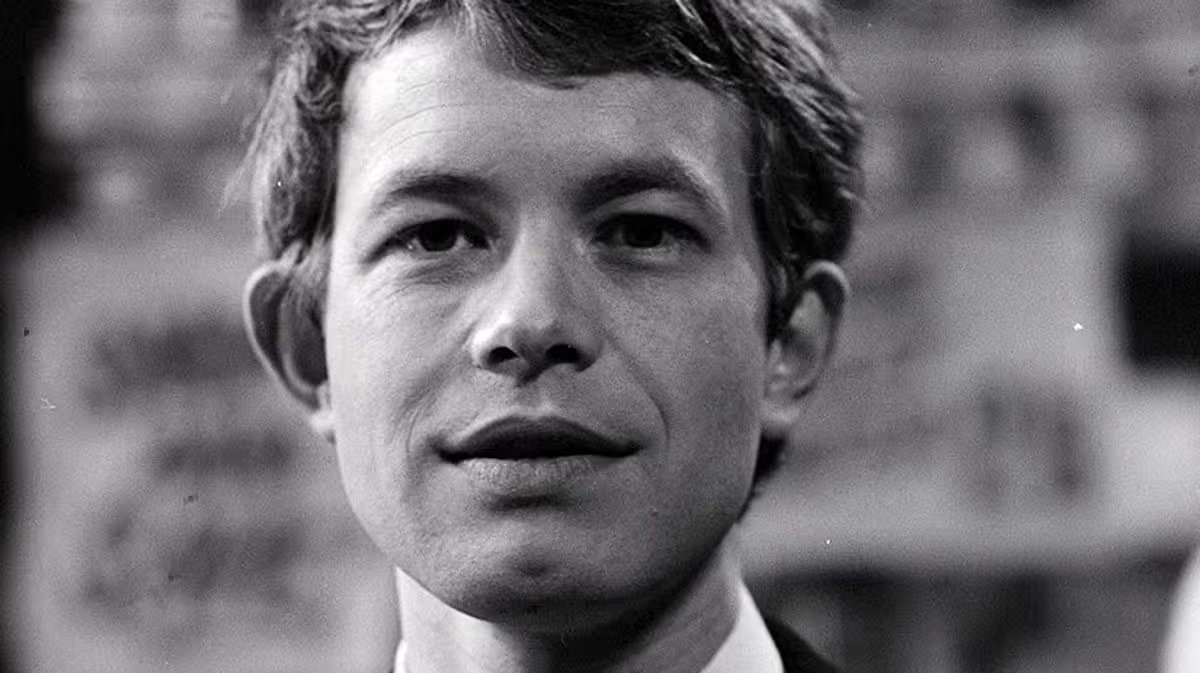
Coronation Street David Barlow star, Alan Rothwell, dies aged 89

Premier Foods profits rise as Mr Kipling cake tubs tap into bitesize trend

Manchester United reach agreement with Casemiro over contract clause amid transfer speculation

US brings back mandatory military draft registration

Steven Gerrard disagrees with Gary Neville over ‘shock’ Chelsea and Arsenal claim | Football
How I Built a Live Finance Dashboard With Claude (Full Tutorial)

By the age of 40, every individual should have a strong financial foundation to secure their future.

The US Crypto Game Changer?? #shorts #cryptocurrency #digitalassets #crypto
-
 Crypto World6 days ago
HarrisX Poll Found 52% of Registered Voters Support the CLARITY Act
-

 Fashion6 days ago
Weekend Open Thread: Marianne Dress
-

 Fashion3 days ago
Coffee Break: Travel Steam Iron
-

 Fashion4 days ago
What to Know Before Buying a Curling Wand or Curling Iron
-

 Tech5 days ago
Auto Enthusiast Carves Functional Two-Stroke Engine from Solid Metal
-

 Politics3 days ago
What to expect when you’re expecting a budget
-
 Business5 days ago
Ignore market noise, India’s long-term story intact, say D-Street bulls Ramesh Damani and Sunil Singhania
-

 Politics5 days ago
Politics Home Article | Starmer Enters The Danger Zone
-

 Tech3 days ago
GM Agrees To Pay $12.75 Million To Settle California Lawsuit Over Misuse Of Customers’ Driving Data
-

 Entertainment7 days ago
General Hospital: Ric & Ava Bombshell – Ric’s Massive Secret Exposed!
-

 Crypto World5 days ago
PROS explodes 48% as Upbit and Bithumb listings ignite demand
-

 Crypto World4 days ago
CZ says US crypto rivals tried to block Trump pardon
-

 Sports6 days ago
Bayern Munich vs PSG UEFA Champions League SF2 live match time, streaming | Football News
-

 Entertainment6 days ago
YNW Melly Denied Bond Again Ahead Of Double Murder Retrial
-

 Tech3 days ago
GM agrees to $12.75M California settlement over sale of drivers’ data
-
Entertainment7 days ago
Hantavirus — cause of death for Gene Hackman's wife — at the center of Dutch cruise outbreak
-
Crypto World6 days ago
The Hantavirus Danger: Can a Potential Outbreak Spark a New Meme Coin Frenzy?
-
 Politics6 days ago
David Attenborough ‘Overwhelmed’ By Love Shown Ahead Of 100th Birthday
-

 Sports6 days ago
After Waka Waka, Shakira now drops first teaser for FIFA WC 2026 song | FIFA World Cup 2022
-

 Sports7 days ago
Ibom Air Anniversary Football Tournament Begins May 9 in Uyo
You must be logged in to post a comment Login