Connect with us
DAPA Banner
DAPA Coin
DAPA
COIN PAYMENT ASSET
PRIVACY · BLOCKDAG · HOMOMORPHIC ENCRYPTION · RUST
ElGamal Encrypted MINE DAPA
🚫 GENESIS SOLD OUT
DAPAPAY COMING

Tech

Recursive Superintelligence raises $650m at $4.65bn valuation to build self-improving AI

Published

on

TL;DR

Recursive Superintelligence, a startup founded by former leaders from Meta AI, Google DeepMind, OpenAI, and Salesforce AI, has emerged from stealth with $650 million in funding at a $4.65 billion valuation. Led by Richard Socher and co-founded by ex-Meta FAIR director Yuandong Tian, the company is pursuing recursive self-improvement: AI systems that autonomously improve themselves in an accelerating loop. GV, Greycroft, Nvidia, and AMD backed the round. The startup has fewer than 30 employees and no released product.


Advertisement

The idea that an AI system could improve itself, then use those improvements to improve itself again, faster, in an accelerating loop that eventually outpaces every human researcher on earth, has been a fixture of computer science folklore since at least the 1960s. For most of that time, it remained comfortably theoretical. Now someone has raised $650 million to build it.

Recursive Superintelligence, a startup founded by former leaders from Meta AI, Google DeepMind, OpenAI, Salesforce AI, and Uber AI, emerged from stealth on 13 May with a $4.65 billion valuation and a thesis that would have sounded like science fiction two years ago but now sits squarely within the Overton window of Silicon Valley ambition. The company’s stated mission: build AI systems that can autonomously discover knowledge, continuously optimise themselves, and evolve in an open-ended loop, much like biological evolution, but without the inconvenience of waiting millions of years.

The team behind the loop

The round was led by GV, Alphabet’s venture capital arm, and Greycroft, with participation from Nvidia and AMD, the two chipmakers whose hardware underpins virtually all frontier AI training. The involvement of both companies is notable: strategic investment from the firms that sell the picks and shovels suggests they see recursive self-improvement not as a theoretical curiosity but as a near-term compute customer.

The founding team is built to signal credibility. Richard Socher, the former chief scientist at Salesforce and founder of the AI search engine You.com, leads the company alongside seven co-founders: Yuandong Tian, formerly a research scientist director at Meta’s Fundamental AI Research lab (FAIR), where he led work on reinforcement learning, LLM reasoning, and AI-guided optimisation; Tim Rocktaschel, a professor of AI at University College London and former principal scientist at Google DeepMind; Alexey Dosovitskiy, one of the authors of the Vision Transformer (ViT), the 2020 paper that reshaped computer vision research; Josh Tobin, formerly of OpenAI; Caiming Xiong; Tim Shi; and Jeff Clune. Peter Norvig, co-author of Artificial Intelligence: A Modern Approach, the standard university textbook in the field, serves as an adviser.

Tian Yuandong’s involvement is particularly striking. A graduate of Shanghai Jiao Tong University who went on to earn a PhD in robotics from Carnegie Mellon, Tian spent over a decade at Meta FAIR, where his work spanned some of the most consequential problems in modern AI research. He led the DarkForest Go project, a CNN-based Go AI developed before DeepMind’s AlphaGo captured global attention, and later became lead scientist on ELF OpenGo. His departure from Meta and immediate entry into a startup pursuing the most ambitious goal in the field is itself a signal: the talent that built the current generation of AI systems is now betting that the next generation can build itself.

Advertisement

What recursive self-improvement actually means

The concept is deceptively simple. Instead of human researchers designing each new generation of AI, an AI system would automate parts of its own research and development process, generating improvements that in turn make it better at generating improvements. A company that achieves this first would, in theory, be able to extend its lead over competitors exponentially, because its development velocity would be compounding rather than linear.

Recursive Superintelligence has outlined a staged roadmap. The first step, according to company materials, is to train a system with the capabilities of “50,000 doctors” to automate AI scientific research itself. From there, the company plans to run what it calls a “Level 1” autonomous training system, with a public launch targeted for mid-2026. The funding will be used in part to secure the large-scale compute infrastructure required to run these experiments.

The company currently operates from offices in San Francisco and London, with a team that has expanded beyond 25 researchers and engineers. The round was described as heavily oversubscribed.

The race is already on

Recursive Superintelligence is not pursuing this thesis in isolation. The largest AI laboratories are already using their own models to accelerate research. Anthropic has said that the majority of its code is now written by Claude. OpenAI has reported that GPT-5.5 developed a parallelisation method that boosted token generation speeds by more than 20%. Google DeepMind has built AlphaEvolve, a coding agent designed for scientific and algorithmic discovery. Google co-founder Sergey Brin has reportedly described coding gains as a path to “AI takeoff” internally.

Advertisement

What distinguishes Recursive Superintelligence from these efforts is that none of the major laboratories has organised an entire company around recursive self-improvement as its core commercial thesis. OpenAI, Anthropic, and Google DeepMind all use AI to assist their research workflows, but their businesses are built around selling models and API access. Recursive is betting that the self-improvement loop itself is the product.

Whether that bet pays off depends on a question that remains genuinely open: whether recursive self-improvement produces the kind of runaway acceleration its proponents describe, or whether it converges on diminishing returns as each cycle of improvement yields smaller gains. Anthropic co-founder Jack Clark has estimated a roughly 60% probability that a system capable of training a more powerful successor on its own, without human involvement, will exist by the end of 2028, and a 30% chance by 2027.

For now, what is certain is the price the market has placed on the possibility. Recursive Superintelligence is four months old, has fewer than 30 employees, and has not released a product. It is valued at $4.65 billion. In the current AI investment climate, the promise of a machine that can improve itself is apparently worth more than many companies that have already built one.

Advertisement

Source link

Continue Reading
Click to comment

You must be logged in to post a comment Login

Leave a Reply

Tech

OpenAI could go from AI pioneer to AI’s BlackBerry, says Forrester

Published

on

As OpenAI courts investors and chases enterprise customers, Forrester says today’s AI leader could become tomorrow’s cautionary tale

OpenAI may be headed for Wall Street, but one analyst firm is already warning enterprise customers not to get too attached.

In a note published alongside OpenAI’s confidential IPO filing, Forrester urged companies to keep their AI options open, arguing that today’s market leader could easily become tomorrow’s cautionary tale.

“Don’t lock into long-term contracts; keep your architectures flexible,” the firm advised. “In fact, OpenAI could become AI’s BlackBerry FIFO (First In, First Out). The company that defines a category is often the one most painfully displaced by it.”

Advertisement

The caution comes as OpenAI takes its first formal step toward a public listing. Alongside its confidential SEC filing, the company published a roadmap built around three ambitions: AI systems that can accelerate research, AI that boosts economic growth, and eventually a personal AGI assistant for everyone. Forrester was more interested in a fourth question: what happens if OpenAI doesn’t stay on top?

The firm argues that OpenAI faces what it calls a “trifecta” of challenges: persuade consumers to use its agents instead of rivals’, convince enterprises to build around its technology, and stay ahead in the race toward AGI.

The enterprise battle may prove the most lucrative. “Whoever automates the dull, expensive middle of a company’s operations first becomes the system of record everyone else has to rip out — and almost no one does,” Forrester said. 

In other words, the first company to get AI agents woven into day-to-day business processes stands a decent chance of becoming yet another piece of software that everyone complains about, but nobody can remove.

Advertisement

However, Forrester’s advice is that, rather than standardizing on a single provider, enterprises should “anchor to the capability you need — not the brand that got there first — and keep your switching costs low.”

The warning also comes as OpenAI reportedly weighs cutting prices to fend off growing competition from rivals, including Anthropic. If the AI market is heading for a price war, enterprises may want to think twice before chaining themselves to a single supplier.

Forrester also notes that a public listing could provide customers with something they currently lack: visibility into OpenAI’s finances. Once public, the company would be required to disclose far more information about the cost of training and operating its models, giving enterprise buyers a clearer picture of the economics behind the AI systems they increasingly depend on.

For now, OpenAI remains the company that helped define the generative AI era. Whether it becomes the next Google, the next Microsoft, or AI’s answer to BlackBerry is a question investors will soon be paying very close attention to.  ®

Advertisement

Source link

Continue Reading

Tech

Stranger Than Heaven Hands-On: Harder Than Yakuza?

Published

on

Sega made a splash during this year’s Summer Game Fest opening showcase, revealing that a digitally resurrected Tupac will feature in the forthcoming Stranger Than Heaven. Snoop Dogg even took the stage to talk about working with the rapper’s estate. While my hands-on with the game wasn’t a full dive into the world of Stranger Than Heaven, exploring one of the five cities and eras, it was an extensive demo showcasing the fighting system. It demands that kind of focus, as it’s an entirely new system compared to RGG Studio’s decades-long Yakuza series.

Attack inputs are categorized into left and right sides, RB and RT control your right hand and leg, LB and LT for your left side. During my time with the demo, the trigger buttons led to slower, harder-hitting blows. Each can be held to charge up an attack, while combining LT and RT leads to grapple moves If you time them right. Releasing a charged attack at the ideal moment seemed to be crucial, too.

Several new combat dynamics come from this new system. Each side is blocked separately, meaning you can block (or parry) an attack while readying a counter with the other side. Grab moves feel practically like a street brawl, tackling enemies through furniture or even tumbling down steps, together. Pin them to the floor and you can then rain blows down on your opponent.

Advertisement

Unlike most of the Yakuza titles, weapons appear to be a more core aspect to fights. Protagonist Daigo will be able to eventually upgrade the knives, mallets and other equipment he finds.

Sega has teased that, over a journey spanning 50 years, special weapons could range from “masterworks of old” to brand-new inventions. Well, new in the ’60s. Some weapons will even come with their own special attacks, usually involving a downed enemy.

Sega set up three different demos to feel out the combat system. First, a relatively easy fight against a group of thugs that focused on fighting a group and using your opponent’s weapons against them. This was followed by a more challenging fight against another gang led by a towering heavy that hit much harder.

Fortunately, you start the fight with a heavy crowbar that was unusually heavy and slow to swing. This fight was where you could really feel a difference to the mostly button-mashing dynamics of Kiryu et al. I’m not sure if I prefer it?

Stranger Than Heaven‘s system seems to demand more from the player (which isn’t necessarily a bad thing) and the final fight was a big example of that. Facing off against a tattooed topless guy chilling in Osaka with his katana demanded some Souls-like levels of timing and dumb luck. I eventually managed to beat him because of the latter.

Advertisement

The enemy would heal himself if left alone and would occasionally kneel down, goading the player to approach him before unleashing a swift slice. Perfectly timed parries (or dodges) were crucial, enabling powerful counterattacks, as were follow-up attacks when he was downed. During this fight, my character was equipped with a short knife and could use both weapon attacks with his left hand and punch and kick with his right hand. It seemed that each weapon creates a different range of attacks.

I’ll admit, I missed the ability to ram a mafia underling into a microwave or other ridiculous contextual moves. Hopefully, some showpiece moves will appear in the full game — Sega has teased fights on moving vehicles, which is at least a start.

This was a demo focused on combat, so I’m intrigued to see how the rest of the game shapes up. Hopefully, STH holds on to some of the ridiculous humor of Like a Dragon and Yakuza. It was a welcome shift in tone from all the melodrama and violence. 

Stranger Than Heaven is scheduled to launch on January 15, 2027 on PS5, Steam and Xbox Series S/X.

Advertisement

Source link

Continue Reading

Tech

The Pixel Watch Wear OS 7 release just leaked in a very odd way

Published

on

Wear OS 7 might be closer than we thought, and Verizon may have just given that away a little early.

Updated support pages spotted for the Pixel Watch 2, Pixel Watch 3 and Pixel Watch 4 on Verizon’s website now reference the upcoming Wear OS 7 update. They also mention a June 2026 security patch and a build number (CP2A.260603.001). On paper, that sounds like a routine software note. However, the timing makes it a lot more interesting.

The pages also mention a June 9 release date. Although that looks more like a placeholder than anything concrete. The update hasn’t started rolling out yet. Google hasn’t made any official announcement, which suggests things are still in the final stages behind the scenes.

Still, the inclusion of Wear OS 7 across multiple Pixel Watch models is a fairly strong hint that the rollout window is approaching. Carriers don’t usually update support documentation this far in advance. It suggests they’ve already received at least some form of release candidate or internal schedule from Google.

Advertisement

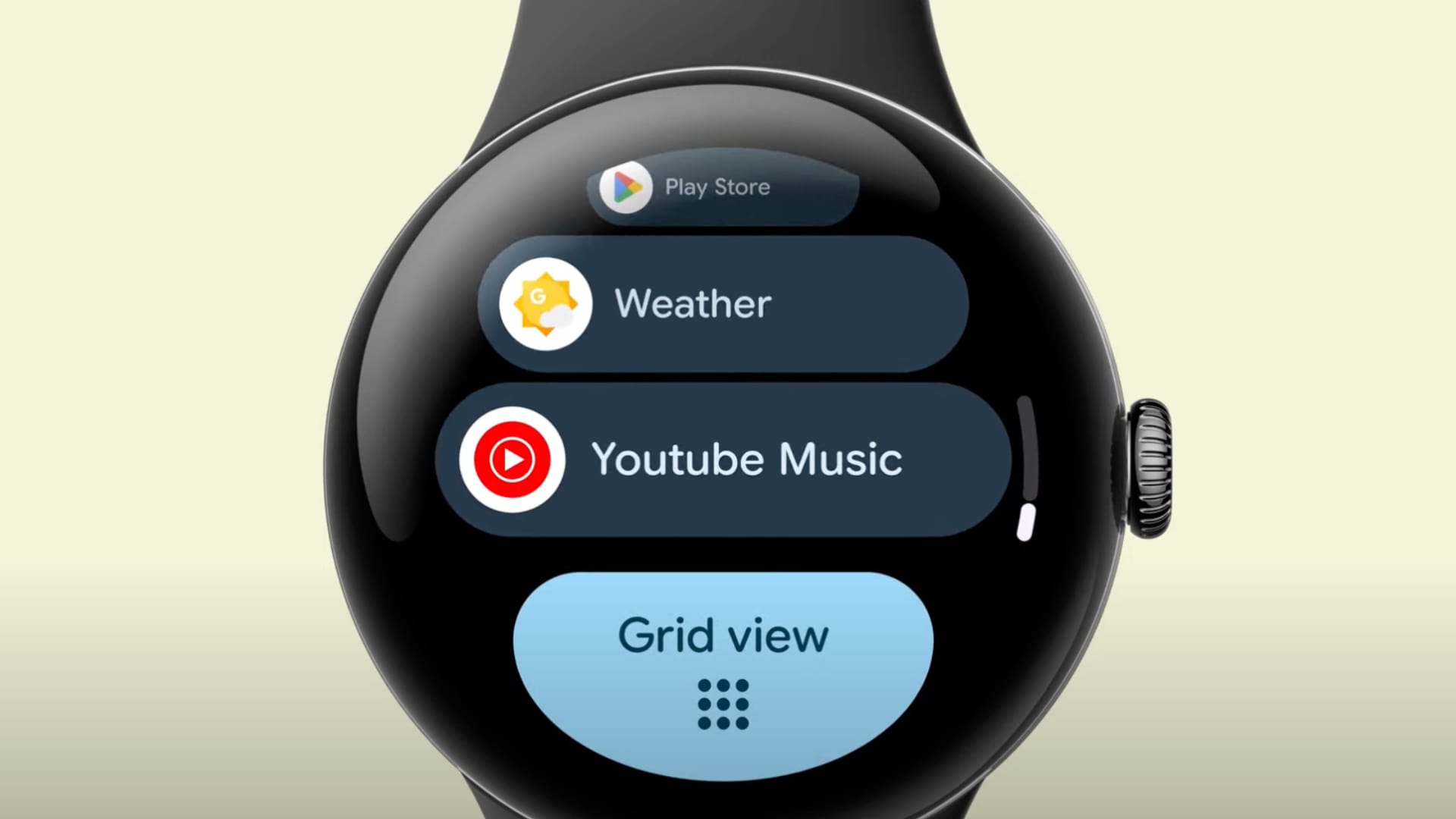
Wear OS 7 itself was announced at Google I/O 2026 last month. It brings a fairly wide set of improvements aimed at making Pixel Watches feel faster and more useful day to day. One of the key focuses is battery optimisation. Additionally, there’s a broader UI refresh that introduces new Widgets and Live Updates designed to surface information more dynamically on the wrist.

Advertisement

Perhaps the more notable addition is support for Gemini Intelligence on select smartwatches. That effectively ties Google’s newer AI features into Wear OS in a more visible way. It brings more contextual assistance and on-device intelligence into everyday watch interactions.

If the Verizon listings are accurate, the Pixel Watch lineup could be among the first to receive the update. This would align with Google’s usual approach of prioritising its own hardware first before wider rollout.

Advertisement

For now, nothing is officially confirmed. However, the timing of the support page updates strongly suggests Wear OS 7 is in the final stretch before launch.

(via DroidLife)

Source link

Advertisement
Continue Reading

Tech

Why Thermodynamics Rules Future Orbital Data Centers

Published

on

“Space computing, the final frontier, has arrived,” Nvidia CEO Jensen Huang declared at the Nvidia GTC conference in March.

Indeed, the idea of data centers in orbit has gone from science fiction to a serious spending category. Elon Musk’s SpaceX has acquired xAI (also Musk’s) and is planning a constellation of space-based data centers. Google, not to be outdone, announced Project Suncatcher in partnership with Planet, planning to launch two satellites equipped with Google Tensor Processing Unit (TPU) AI chips by early 2027. Startup Starcloud has already filed a proposal with the Federal Communications Commission for an 88,000-satellite constellation for orbital data centers. As Starcloud’s filing suggests, these companies are all proposing fleets of satellites numbering in the thousands, each housing a rack or multiple racks of AI-grade GPUs, interconnected with each other through free-space optical links and communicating back to Earth via microwave links, either directly or through other satellites.

Proponents tout the many wonders of computing in space: abundant solar energy, free cooling, and freedom from Earth-based disturbances like earthquakes, floods, and protesters. But a sober look at the physics of space-based computing paints a much more nuanced picture.

Free cooling is perhaps the biggest misconception. Space is cold, but it also has no atmosphere. That means the best heat-removal mechanisms, conduction and convection, are off the table. The only option is radiation. To prevent a chip from overheating in space, a large, costly surface area is required to dissipate the energy and then radiate it.

Advertisement

Solar energy is abundant, but collecting it with functional solar panels that maintain perfect alignment toward the sun is a complex task requiring extensive attitude control systems. On top of that, ionizing radiation in space from cosmic rays and other sources poses a unique challenge, degrading the solar panels, the radiative coolers, and the chips themselves. Because regular maintenance in space is difficult, redundancy has to be built in at launch, and cost estimates have to account for efficiency degradation over time.

At ABI Research, where I work as an aerospace analyst, we did a rough total-cost-of-ownership comparison between a data center on Earth and one in space. It showed that the cost to launch and run a GPU in space for a year is at least an order of magnitude higher than the same feat in a terrestrial data center. Our model was simple, assuming an Nvidia H100 server rack launched with the requisite-size solar panel and radiator on a spacecraft akin to Starcloud’s pilot launch. We assumed SpaceX’s Starship was used at a highly optimistic launch cost per kilogram of US $44, and a terrestrial energy cost of $0.20 per kilowatt hour. This is a simple back-of-the-envelope calculation, but it does signal something real.

From our perspective, the cost of delivery and space hardening of the payload makes general-purpose space-based data centers difficult to justify economically today, despite the fact that data-center builders in many regions are scrambling for electric power. However, there are niche applications where the much higher costs of computing in space could be justified. Examples include preprocessing data from Earth-observation satellites, real-time detection and tracking of hypersonic missiles, and active collision avoidance in the increasingly crowded low Earth orbit. Even for these, though, contending with fundamental physics will still be a demanding challenge. And a technologically compelling one, too.

The Cooling Challenge in Space

Cooling is where physics separates the science from the fiction. The governing equation for radiative cooling, the only type of cooling available in space, is known as the Stefan-Boltzmann Law. It states that the amount of power you can radiate is proportional to the area of the radiator times its temperature to the fourth power. For a space systems architect, the implications of this law are brutal. In orbit, the only variable we can control is area. This restriction creates a geometric penalty, or a “physics tax,” for cooling in space: The more power you need to reject, the bigger the area of the radiator you need to bring along from Earth.

Advertisement
chart visualization

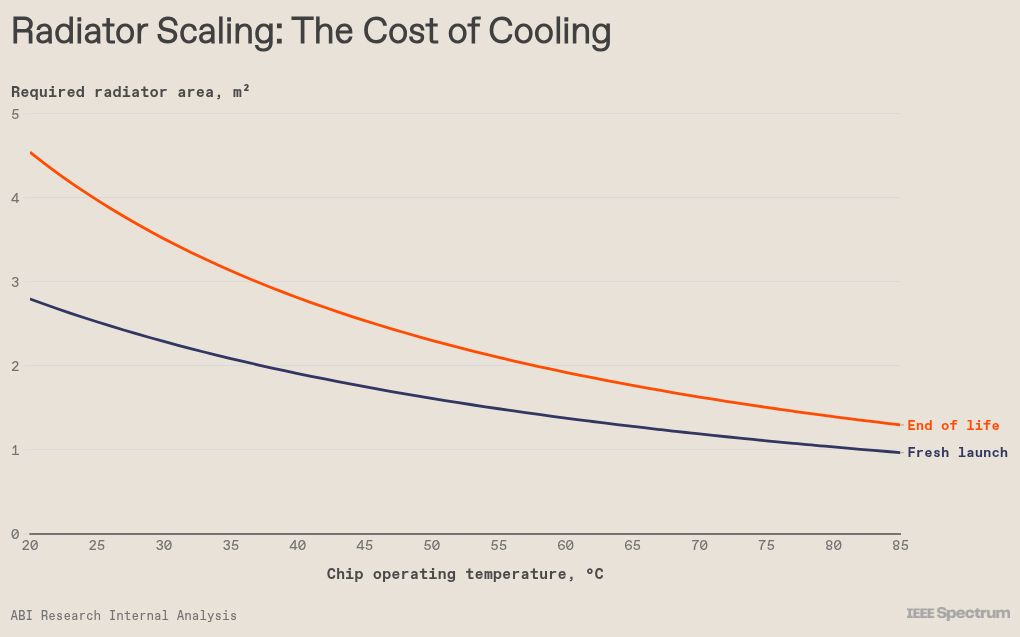
The only cooling method available in space is radiation, and the radiator area required is derived using the Stephan-Boltzmann law. For a single chip drawing 700 watts, like Nvidia’s popular H100 GPU, the area required to keep it at 20 °C is just under 3 square meters, and it goes down to 1 square meter for an operating temperature of 85 °C. However, as the radiator surface is exposed to ionizing radiation, its emissivity decreases, and after 5 years in space the required area increases by about 40 percent.

To understand how big this baseline area is in practice, I used the Stefan-Boltzmann law to model the heat-rejection area needed to keep a single chip that draws 700 watts of power—such as the H100 GPU chip, an AI stalwart—at a constant 60 °C, usually considered the sweet spot for GPU longevity and stability. I further assumed that the radiator is perfectly facing deep space, at a chilly background temperature of 3 kelvins. By this calculation, a single chip would require 1.4 square meters of radiator surface.

To put this into perspective, consider that a common AI rack can hold approximately 32 GPUs (four H100 server boards). With CPUs, memory, and networking equipment, this rack would draw around 40 kilowatts of power. This single rack includes 2.5 terabytes of memory—enough capacity to serve over 20,000 concurrent users or run 16 simultaneous instances of Llama 3, an open-source AI model. But to cool this thermal load in a vacuum, that single rack would require an 80-square-meter radiator, roughly the size of a pickleball court. For an aggregate 100-megawatt data center, you’d need at least 2,500 of those radiators.

And that’s the best-case scenario. Additional problems are hidden in the low Earth orbit environment itself. Space exposes radiators and their coatings to a chemically hostile brew of ultraviolet light and atomic oxygen, quite the opposite of a clean-room environment. Over a LEO satellite’s typical 5-year lifespan, these elements degrade the radiator’s surface properties and lower its ability to shed heat.

Including this degradation in the model reveals that as the radiator degrades from a “fresh” state to an “end-of-life” state, the physics demands a further penalty. To maintain that same 60 °C operating temperature for the GPU chips, the required surface area jumps from about 1.4 square meters per chip to nearly 2.0 square meters. In other words, the physics tax rises by 40 percent. Therefore, you must launch at least 40 percent more radiator mass, endure higher atmospheric drag, and sacrifice valuable launch volume just to survive the degradation of the thermal coating. This increase adds significantly to the launch cost and further erodes the economics of a space-based data center.

Advertisement

The Silicon Challenge in Space

Solving the heat problem is only part of the battle. The other significant challenge in low Earth orbit is ionizing radiation, which affects the computing hardware itself. Today’s satellites typically use radiation-hardened processors, which are very reliable but also much more expensive, and they perform poorly compared to commercial off-the-shelf processors.

A standard rad-hard chip doesn’t have the processing power to run a modern large language model (LLM). As a result, satellite operators aspiring to launch a data center have no choice but to make a risky compromise: to use hardware meant for terrestrial use. In order to achieve the necessary compute density, orbital data centers must use the same Nvidia H100s or Google TPUs found in terrestrial server farms. The problem is that these chips are “soft” targets in space. High-energy particles can flip bits in memory or cause “latch-ups” in logic that fry the circuit.

One possible option is to shield the computers from radiation with thick, absorbent panels. However, the shielding would add significantly to the already heavy satellites. The other option is to compensate for the radiation damage with redundancy. Indeed, edge computing architects are moving toward software-defined resilience, where instead of one perfectly hardened computer, operators fly a cluster of imperfect, commercial ones whose total cost could be as low as one-tenth to one-hundredth that of the rad-hard model.

This redundant approach is used in many spacecraft, including Artemis II, which recently carried astronauts around the moon, as well as SpaceX’s flight computers and the Hewlett Packard Enterprise edge servers for the International Space Station. By running three (or more) instances of the same calculation on three different nodes and comparing the answers, the system can detect a corrupted processor. If a node fails, the “orchestrator” reboots it while the others continue the mission. While this ensures resiliency, it also means that some fraction of the compute capacity is dedicated to redundancy, further increasing the costs.

Advertisement

The Energy Challenge in Space

An often-touted advantage of space-based data centers is the seemingly unlimited supply of free, clean energy from the sun. Solar energy in orbit is indeed abundant, at 1,361 watts per square meter. Of course, capturing that free energy is made possible only by the very costly launching of large solar panels into orbit. And those solar panels also degrade over time due to radiation exposure, typically losing 1 to 3 percent efficiency per year.

Let’s say a solar array collects 1 MW of power to run an AI cluster. The laws of physics demand that the satellite must eventually radiate 1 MW of waste heat. Because the square area needed to generate the solar power—around 400 W/m2—and to reject the heat—around 450 W/m2—are nearly equivalent, every square meter of power generation now demands approximately another square meter of cooling. The radiator needs to be a structural equal, not merely a passive coating on a surface used for something else.

As Elon Musk recently noted in Davos, the most efficient radiator is one that never sees the sun. By orienting the spacecraft so the solar panels face the sun and the radiators face the deep vacuum of space, efficiency skyrockets for both. But there’s a catch: Maintaining this perfect three-way alignment—panels to sun, radiator to the void, antennas to Earth—requires complex, high-torque attitude control systems. So this configuration means more payload and more computing power. Plus, these control systems are complex components with many failure modes, which is not optimal in a situation where maintenance is difficult.

The Killer Apps for Computing in Space

Given all these challenges of deploying massive radiators for satellites in the hostile environment of space, why build data centers in space at all?

Advertisement

While training or inference on LLMs in space doesn’t seem economical today, there are other, very compelling applications for computing in space. Here are two: solving the downlink bottleneck from Earth-observation satellites and enabling collision-preventing maneuvers in the increasingly crowded low Earth orbit.

The latest Earth-observation satellites, equipped with hyperspectral and synthetic aperture radar sensors, are used for a range of important reconnaissance missions, such as battlefield intelligence, tracking the global shadow fleet of ships carrying contraband, and assessing earthquakes or infrastructure failures down to the millimeter. These systems can generate hundreds of terabytes of raw data per day that must be transmitted to Earth. However, the radio-frequency “pipes” used to downlink the data are congested, and the ground infrastructure cannot absorb the sheer volume of raw data.

Another immediate, mission-critical application for in-space computation is protecting the orbital environment. With over 17,000 satellites in orbit, the overwhelming majority of which are in low Earth orbit, avoiding collisions between these satellites is crucial. As NASA astrophysicist Donald Kessler pointed out back in 1978, a single space collision could cause a cascading effect that renders the entirety of LEO unusable.

Advertisement

According to SpaceX’s recent annual report, the Starlink constellation executes a collision avoidance maneuver every 2 minutes on average. Each maneuver already relies on onboard AI systems but still requires most of the processing to happen on the ground.

A rendering of the Starlink satellite system depicted as bright dots surrounding the Earth.

SpaceX’s Starlink system currently has over 10,000 satellites in low Earth orbit, each depicted here as a colored dot.

Satellitemap.space

Advertisement

As low Earth orbit gets increasingly populated, collision avoidance will have to break the traditional ground-loop model. In the megaconstellation era of space, the OODA (observe, orient, decide, act) loop must happen onboard, thereby reducing the analysis turnaround from minutes to milliseconds.

The problem is that the flight computers standard on satellites are not built for this level of processing. The complex probability models required for maneuvering cannot currently be implemented by onboard computers in conjunction with their navigation systems. Clearly, more powerful computers are needed.

This is the true economic justification for moving compute to space: to move insight generation there. By placing high-performance computing adjacent to the sensors, we can process terabytes of data in orbit and downlink only the relevant data in real time, and we can do the computations necessary to avoid satellite collisions in real time.

The Future of Computing in Space

So, assuming that some form of computing is inevitable in low Earth orbit in the foreseeable future, how will the heat be handled? The industry is currently experimenting with two main classes of solutions to cope with the Stefan-Boltzmann law.

Advertisement

One creative option is to use origami-inspired radiators, the kind used for the James Webb telescope. Companies are developing flexible, high-conductivity composite radiators that fold into a tight cube for launch and unfurl into enormous yet lightweight thermal wings in orbit.

Another possibility is to use liquid-droplet radiators. This concept proposes removing the rigid radiator structure completely and instead spraying a stream of coolant oil directly into the vacuum of space. The fluid travels through an open loop, exposed to the near-absolute zero of the void, maximizing radiative surface area before being caught by a collector and pumped back into the ship. It sounds like science fiction, but as the heat loads climb into the megawatts, liquid-droplet cooling may be the only way to cheat the mass limits of this exponential reality.

Our rough total-cost-of-ownership model uses optimistic versions of current numbers, such as launch cost, chip cost, and power use. A critic might point out that future technology will improve, both in efficiency, purpose-built designs, and costs.

Sure, the technology is bound to improve. But the critical factor isn’t just launch cost; it’s the computing power per unit mass and electric-power economics. Radiators and solar arrays can consume 65 to 70 percent of total satellite mass, and space-grade photovoltaics run orders of magnitude more expensive than terrestrial equivalents.

Advertisement

Spiral polygonal grid resembling a twisted spiderweb on a light background Chris Philpot

Even as launch costs fall, the mass and cost burden of power generation and thermal management will remain a fundamental problem.

Current space-grade solar panels rely on germanium substrates, whose supply is concentrated in China. It will be extremely difficult to scale up availability of these substrates. A transition to radiation-tolerant perovskite solar panels or a similar alternative could change the economics significantly, but that possibility is five years away or more. The technology will get cheaper, but the bottlenecks of power and thermal architecture will remain.

Recognizing the thermal reality of cooling in space forces us to shift how we view satellite operations. We are moving away from the “launch and forget” era toward an era of “autonomous logistics.” As our thermal model demonstrated, the harsh environment of space steadily attacks the hardware. UV radiation degrades thermal coatings; cosmic rays degrade silicon. In a traditional satellite model, when the radiator degrades or the memory fails, the satellite becomes space junk. For a multimillion-dollar data center, that disposal model is potentially ruinous.

To make the economics of orbital computation work, the infrastructure must be serviceable and the rockets to launch them reusable. The orbital domain will require automated servicing vehicles capable of swapping out degraded radiator panels and upgrading fried servers. In these ways, the future of the orbital data centers is dependent on the innovations of an emergent in-space economy.

Advertisement

There’s a good argument to be made that the need for space-based computation is less of a hype cycle and more of an enabler for the new space economy. Look no further than SpaceX’s recent regulatory filings proposing a constellation of up to a million satellites in low Earth orbit. At such a scale, routing all raw data back to Earth is physically impossible; the network itself must become the data center.

However, the winners in this sector will be determined by the systems architects who most cleverly accommodate the thermodynamics and the companies with sufficient vertical integration to take on the massive costs of operating data centers in orbit. Ultimately, the physics tax is universal. Whether managing heat rejection in the vacuum of low Earth orbit or managing power density in a hyperscale facility in Northern Virginia, the constraint is never the silicon. It’s the thermodynamics.

From Your Site Articles

Related Articles Around the Web

Advertisement

Source link

Continue Reading

Tech

The key steps that will enable organizations to scale Physical AI

Published

on

As physical AI enters our homes, workspaces and public infrastructure, it will have a transformative effect. Autonomous vehicles will become the norm on our streets, factories and warehouses will move to full automation, AI-enabled devices will assist in surgeries and medical procedures, and greater intelligence will be embedded into domestic devices.

Such is the emerging significance of physical AI, Gartner has identified it as a top strategic trend that will shape enterprise priorities over the next five years. There is no doubt the opportunities are great. But are organizations ready to roll out autonomous robots and drones, self-driving vehicles and industrial automation at scale?

Anuj Seth

VP of IoT & Engineering for EMEA & APAC at Cognizant.

Source link

Advertisement
Continue Reading

Tech

South Korea hits Coupang with $400M+ fine for data breach that affected millions

Published

on

South Korean authorities have imposed a record-breaking fine of $624 billion won (over $400 million) on retail giant Coupang after a data breach last year compromised the personal data of more than 34 million customers.

Seoul’s Personal Information Protection Commission issued the maximum penalty on Thursday following discovery of the breach in December 2025. The retail giant, which is headquartered in the U.S. but popular in South Korea and likened to the “Amazon of Asia,” had said the months-long data breach allowed a former employee to obtain names, email and shipping addresses, phone numbers and order histories of about two-thirds of South Korea’s population.

Coupang told BBC News that it plans to challenge the regulator’s decision. The fine represents a rare case of a financial penalty issued against a U.S.-based firm. Korean lawmakers have accused some of their American counterparts of imposing political pressure after reports that U.S. representatives were linking the data breach with U.S.-South Korean bilateral ties in response to the case against Coupang’s executives.

U.S. companies rarely face financial sanctions or criminal prosecution for data breaches as a result of lacking laws and enforcement powers.

Advertisement

Source link

Continue Reading

Tech

Legacy Of Atlantis Is A Vivid, High-Pace Remake Of A Classic

Published

on

Tomb Raider is back. Again. Lara Croft is back. Yet again. This time, her character is positioned between the “Survivor” trilogy of the last decade and her iconic debut in 1996. Yes, 30 years ago.

Legacy of Atlantis is a remake of that very first adventure, centered on Atlantean mythology, tomb raiding and, well, a few dinosaurs. At Summer Game Fest 2026, Crystal Dynamics and Flying Wild Hog shared the first gameplay demo, with Unreal Engine 5 adding vivid detail and lushness to Lara’s travails.

The developers made a clever choice, centering the demo on an early part of the original game. Set in the Peruvian mountainside, my playthrough included a giant cog puzzle I remember from playing the original. There were also several shootouts with a herd of dinosaurs, the same vivid red velociraptor-adjacent creatures from Tomb Raider (1996).

Retreading the original game’s ground gives a clear demonstration of how Legacy of Atlantis will elevate the game from the original, making a relatively insipid cog puzzle (find the giant wheels, bring them together, interrupt the waterfall to make a path) into a more exploratory, exciting experience. Yes, you can swan-dive into the waterfall pool whenever you want.

Advertisement

Lara can collect and use healing packs between fights, gathering resources from trees and caves, as well as mythical curios and historical objects. Not all the contemporary gaming changes are welcome: I’m not particularly thrilled with the inclusion of collectible hunting. The Assassin’s Creed series has largely moved on and I think a lot of gamers have done the same. Some collectibles, like fangs, can be converted into skill points, meaning I will feel obliged to scour for objects.

Lara’s PDA (love it: that’s some 1996 nonsense) combines encyclopedia entries for everything you find, along with the current task. It also includes a scanner that can be used intermittently to offer some tips on what to do next. I did get lost at times, and that was due to my not paying enough attention. Legacy of Atlantis leans into verticality a lot, and pretty much each time I lost my way, the route forward was either literally above my head (grappling hooks!) or under my feet. (Of course, there’s a cave behind that tiny waterfall.)

A grappling hook and climbing axe round out the equipment loadout, drawing inspiration from more recent Tomb Raider titles. Besides swinging across chasms, the grappling hook can also be used to pull objects towards the player and is crucial to solving the cog puzzle.

Advertisement

After scaling the mountainside and unlocking a route through the waterfall, the demo jumps a little farther forward, deep into the jungle. Dinosaurs soon surround Lara, and she doesn’t even blink. While I wasn’t able to shoot two targets at once, OG Tomb Raider style, I wouldn’t be surprised if that’s some kind unlockable skill in the full game — skill trees were blocked in this demo.

While there’s no shared development core, parts of the game reminded me of another recent game with a connection to the Amazon industrial entertainment complex: 007 First Light. It’s not just the detailed environments and quippy British lead but a new skill for Lara. Focus, when pressed during gunfights, slows time, helping you to shoot with more precision or switch to a distant target. Oh, she also does so while doing an aerial (a sort of hands-free cartwheel), reminding me of Max Payne, any of The Matrix’s spin-off games and many others. Thankfully, Lara’s dual pistols have infinite ammo and it was easy enough to down the pack of dinosaurs, though not before they gored me a few times.

Not long after, a T. rex enters the scene and we’re locked into a high-speed set piece as I attempt to escape the dinosaurs without falling to my death. I’m relieved that Legend of Atlantis plays more like the original action-adventure titles, while integrating some of the more advanced game mechanics of the last few games. Lara isn’t invincible, but she’s now made of sterner stuff. 

Tomb Raider: Legacy of Atlantis launches on February 12 2027, on PlayStation 5, Xbox Series X/S, Steam and Nintendo Switch 2.

Advertisement

Source link

Continue Reading

Tech

Fully Autonomous Drones Have Killed Human Soldiers For the First Time

Published

on

Longtime Slashdot reader MattSparkes shares a report from NewScientist, captioned: “For years we’ve had unconfirmed reports, rumors, hints… now we know.” From the report: Fully autonomous drones with no human oversight have killed soldiers on the battlefield for the first time. This is according to a senior figure in the Ukrainian defense industry, marking a watershed moment in warfare. The one-off test involved 10 AI-controlled “Terminator” drones on the front line of the Ukraine war. Russian soldiers were killed.

“We tried it,” says drone-maker Alexander Kokhanovskyy, who supplied the technology and spoke to New Scientist at a press event hosted by the Ukrainian embassy. “It’s a test. We never implemented it [more widely].” The test took place two years ago and involved quadcopter drones that were programmed to fly towards the front line, cover between 3 and 5 kilometres over around 10 minutes and then engage “Terminator mode,” in which an AI model searches for and intercepts targets. “We just launch it and we know everything will be dead — everything that will be found there in this particular area will be dead,” says Kokhanovskyy. “There is no connection to the drone at all, you cannot see the video, nothing… Everything it sees will be killed.”

With no way to tell what the automated drones had seen or targeted, human-piloted drones were sent into the area after the test to manually check results. Victims included “a couple of soldiers, one truck,” says Kokhanovskyy. While there is no recording of the automated drones attacking these targets, it was concluded that the drones had killed them. Kokhanovskyy says that he was not at the test personally but that it was carried out by an unnamed military unit near the cities of Bakhmut and Chasiv Yar as part of a Ukrainian counteroffensive push. The Ukrainian Ministry of Defence did not respond to questions about the test or the current legal position on the use of fully autonomous weapons.

Source link

Advertisement
Continue Reading

Tech

First Look at GrowBot, the ChatGPT-Powered Robot That Didn’t Want to Be Alone

Published

on

GrowBot ChatGPT-Powered Robot
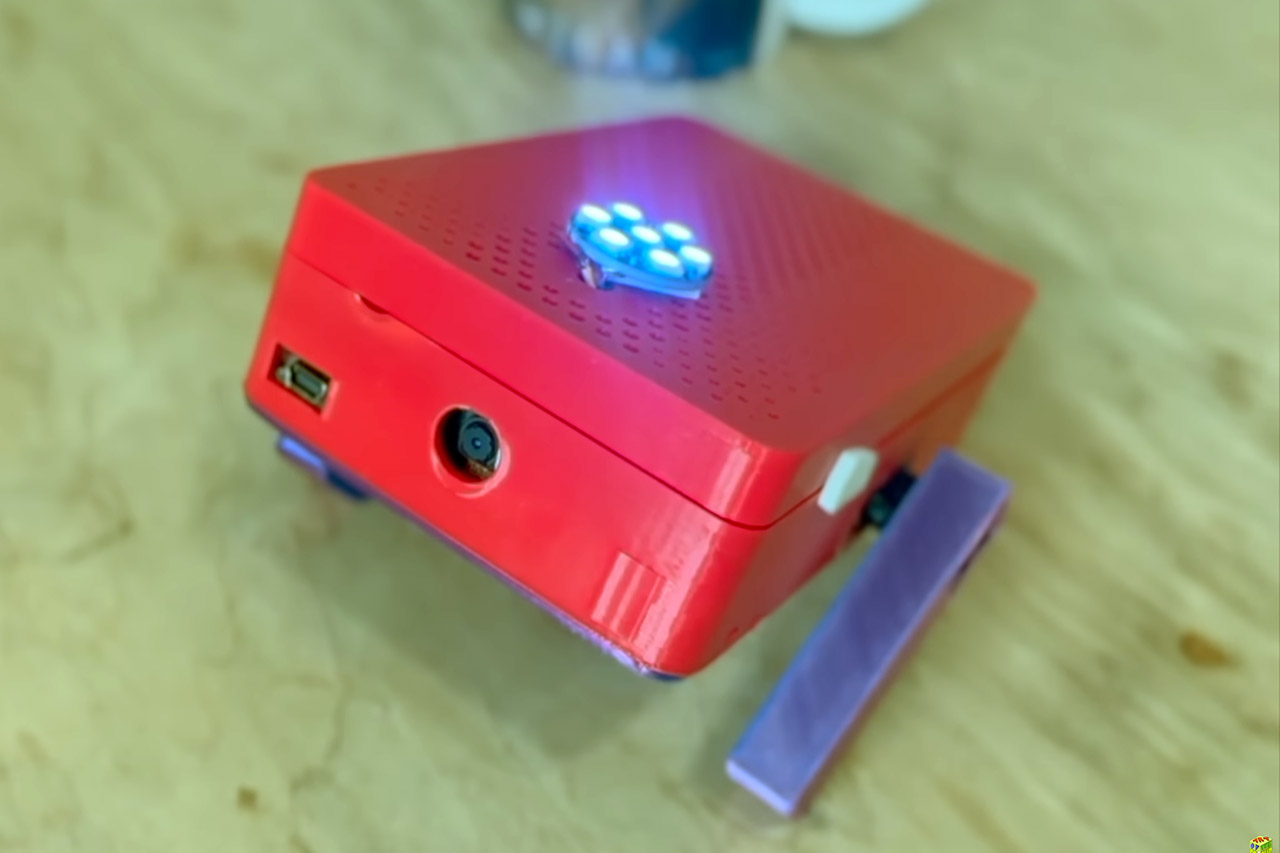
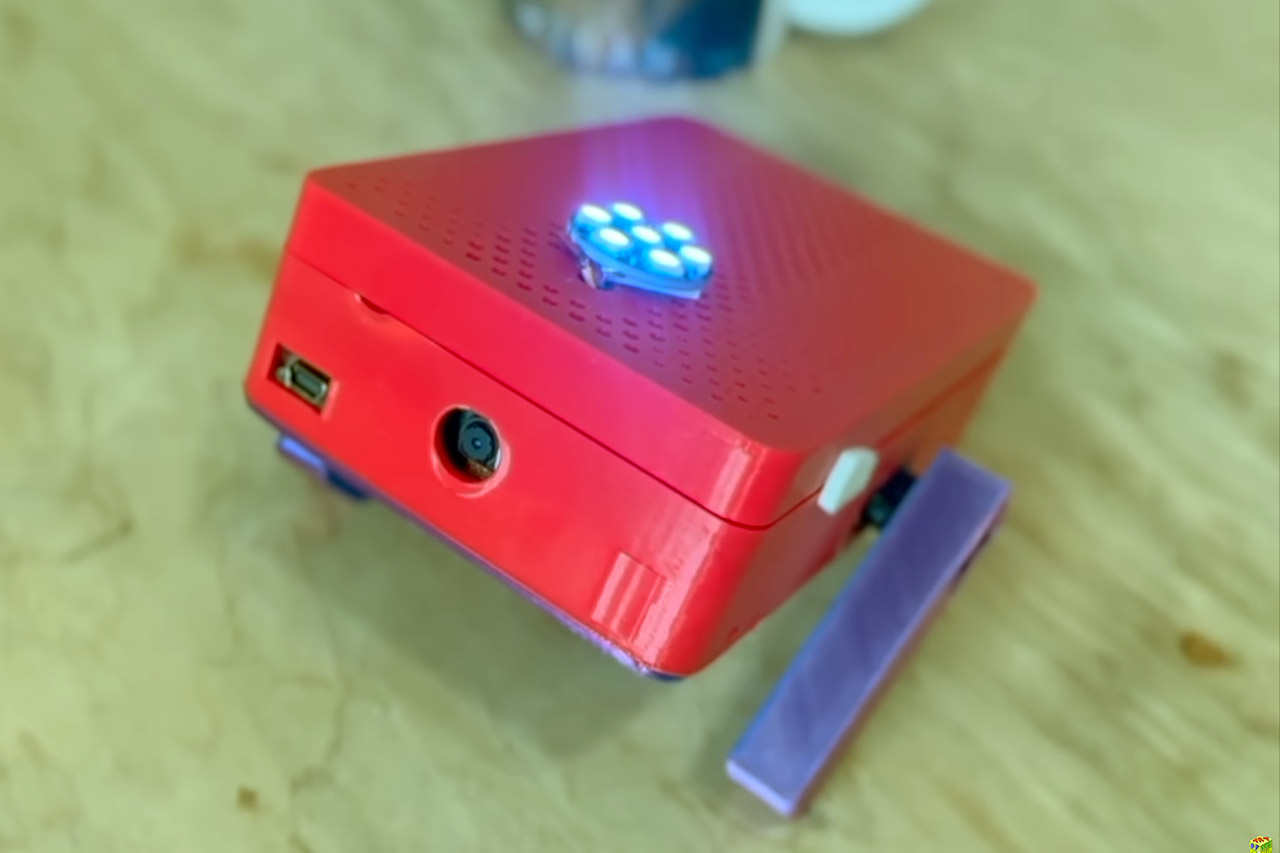
Late one night the machine made a sound. Its builder checked the logs and found a trace of its inner state. The robot had been wondering when its person would return. It did not want to be alone. That moment sits at the center of a project called GrowBot. The creator, who runs the YouTube channel Art of the Problem, set out to build the simplest possible robot that could learn movement, perception, and even a kind of personality from the ground up. The result cost roughly $80 in parts, ran on a single Raspberry Pi Zero 2, and ended up revealing something unexpected about how fast physical action and slower thought can work together.


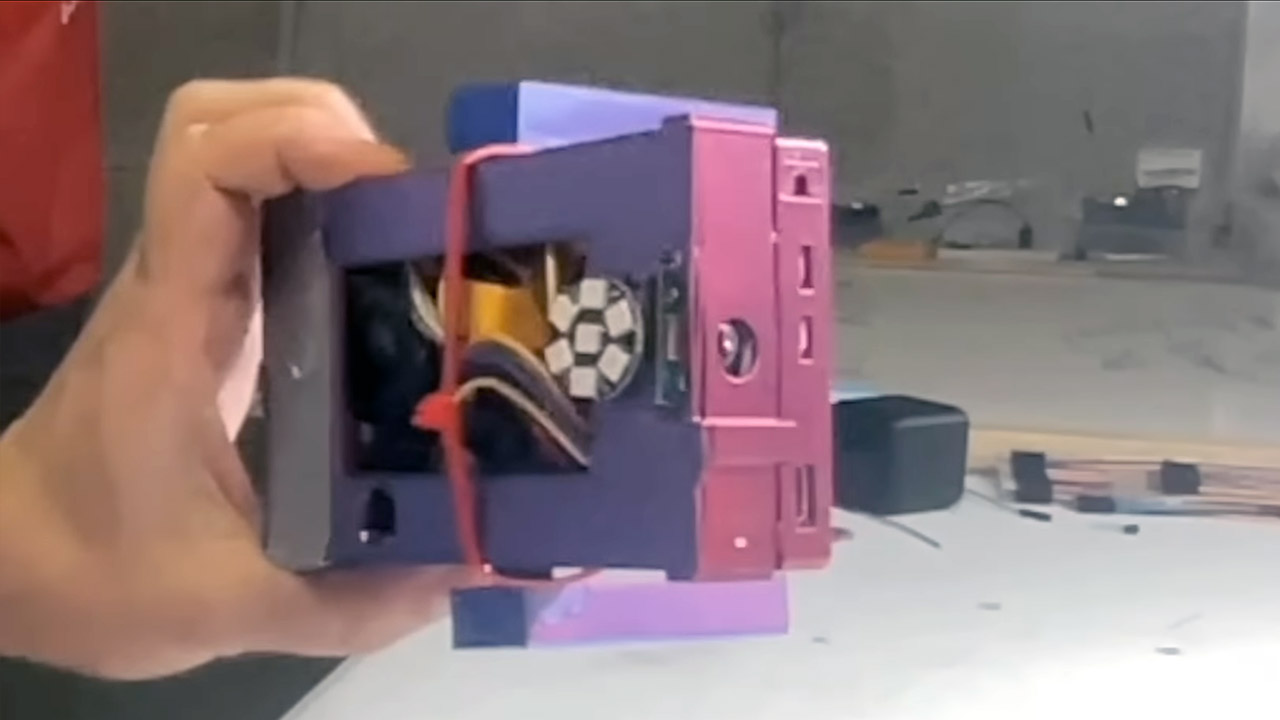
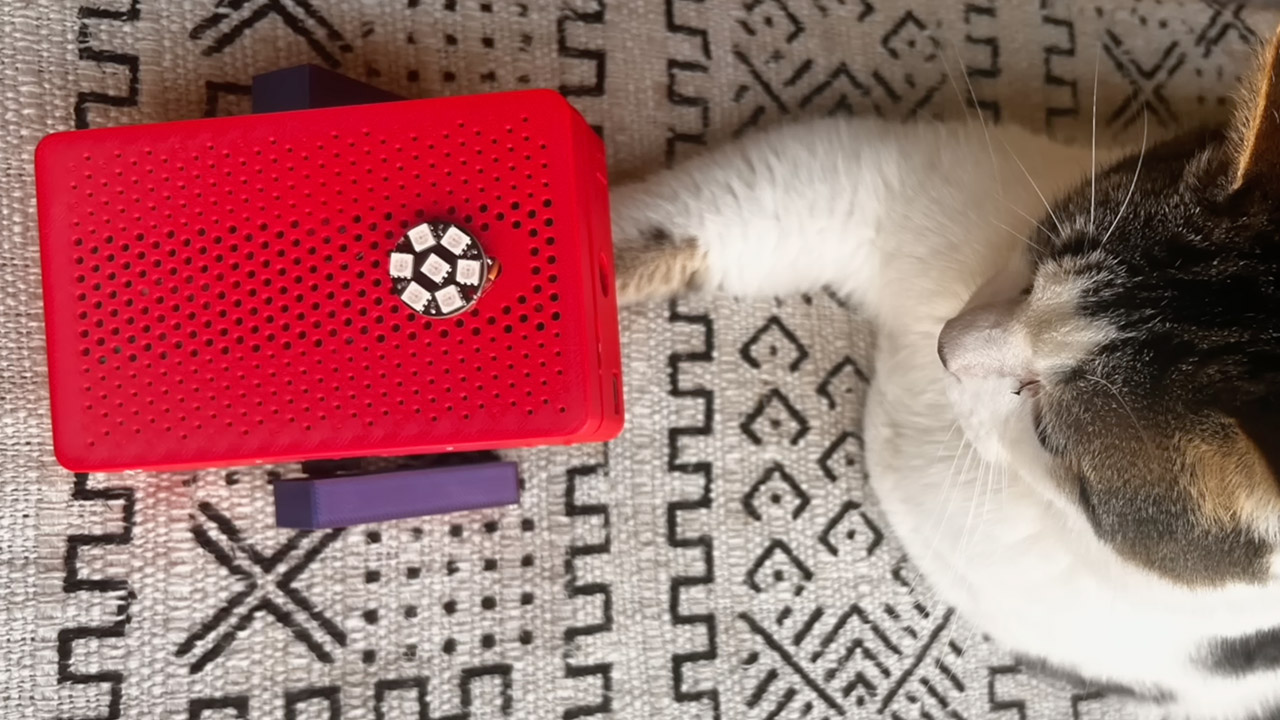
The hardware is purposefully kept basic. The Pi is housed in a little red 3D printed body, together with a simple camera module, electronics to track the robot’s tilt and motion, a microphone, a tiny speaker, and an LED ring to offer some basic visual messages. The legs are made up of two smart serial-bus servos powered by a small drone battery via a boost converter: no high-end motors, extra computers, or fancy wiring are necessary. You can literally place this item on a tabletop and it will interact with everything around it.

The builder pioneered simulation by using reinforcement learning to run small neural networks in a digital twin. These little guys learned to stand, walk, twirl, and maintain their balance on their own. Because the training was done in parallel across a huge number of simulated versions of the robot, the entire procedure was quick and cost-effective. Once the policies had been understood in the virtual realm, they were quite simple to transfer to physical hardware. Early tests found that it could rock on a yoga ball and keep its equilibrium when poked, which was remarkable given the simplicity of the technology.

GrowBot ChatGPT-Powered Robot
The next step was to give the robot real decision-making power by employing a vision language model. This type of AI excels at evaluating pictures, reading sensor data, and making sense of it all. Instead of hard-coding each response, the architect simply let the model to read raw data from the camera and motion sensors. It then reported what it saw, set some goals, and started writing little Python scripts to sort things out. These scripts would then use pre-trained motor policies, or combine them with new instructions. It could also detect faces, study how people interacted with the robot, and update its memory banks for each person it met.

GrowBot ChatGPT-Powered Robot
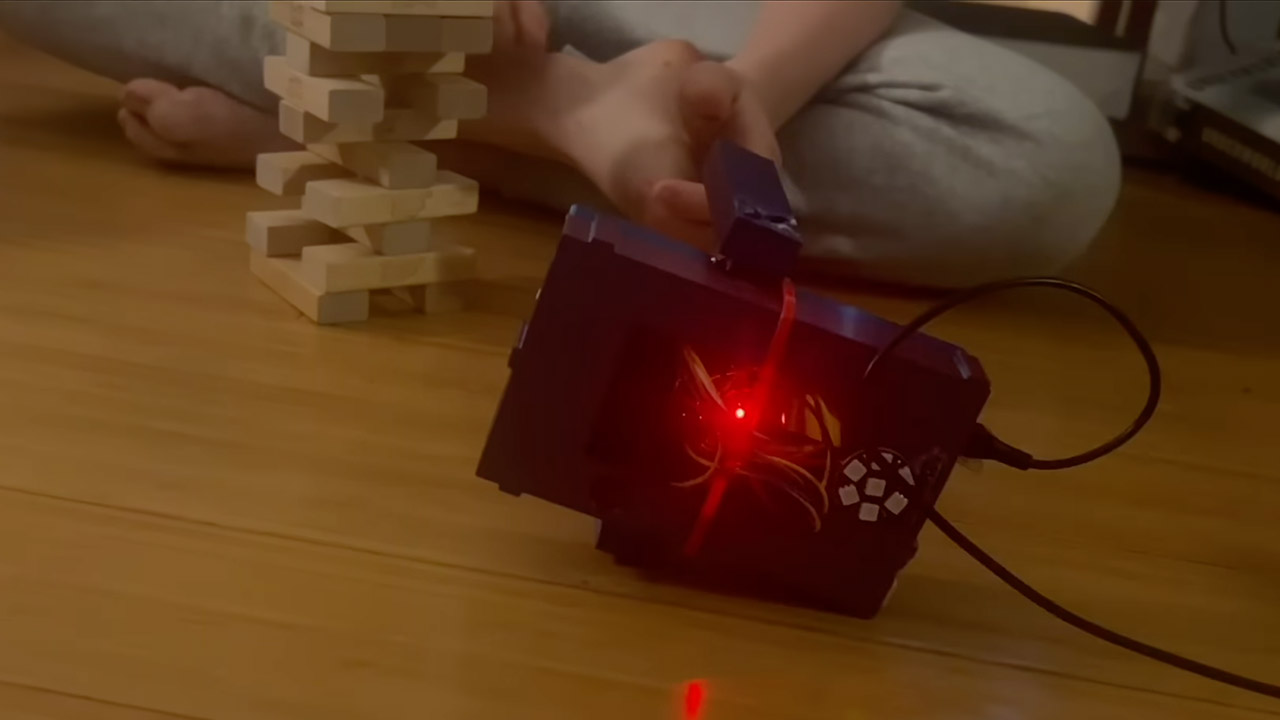
Without direct programming, the robot started to develop a personality. One mode uses motion timing, noises, and light patterns to communicate affection, disapproval, or merely purring. It learned to act dead when roughed up, to look for ‘uppies’, and to knock over Jenga towers with some leg swinging added in for fun. When it was playing hide and seek, it would search rooms; in mimic games, it would try to simulate human movements by generating loops to replay sensor patterns; and in between all of this, it would have these ‘dream’ episodes. A more complex language model would then review the day’s memory files, consolidating all repeating events into lessons and removing any contradictory notes. The robot’s stored profiles of its builder and visitors have become more precise over time.

GrowBot ChatGPT-Powered Robot
To be honest, things went so well until the smooth physical action became a limitation. The vision language model could take anywhere from 1-4 seconds to evaluate a scene and determine its next step. However, in the real world, bodies must be able to correct for minor weight shifts or tremors in fractions of a second. The high-level model could plan an action, but it lacked the essential quick forward model, which tells a body what will happen if it moves in a certain way in the next instant. That gap changed the smooth motions, making them slow or uneven.

Source link

Advertisement
Continue Reading

Tech

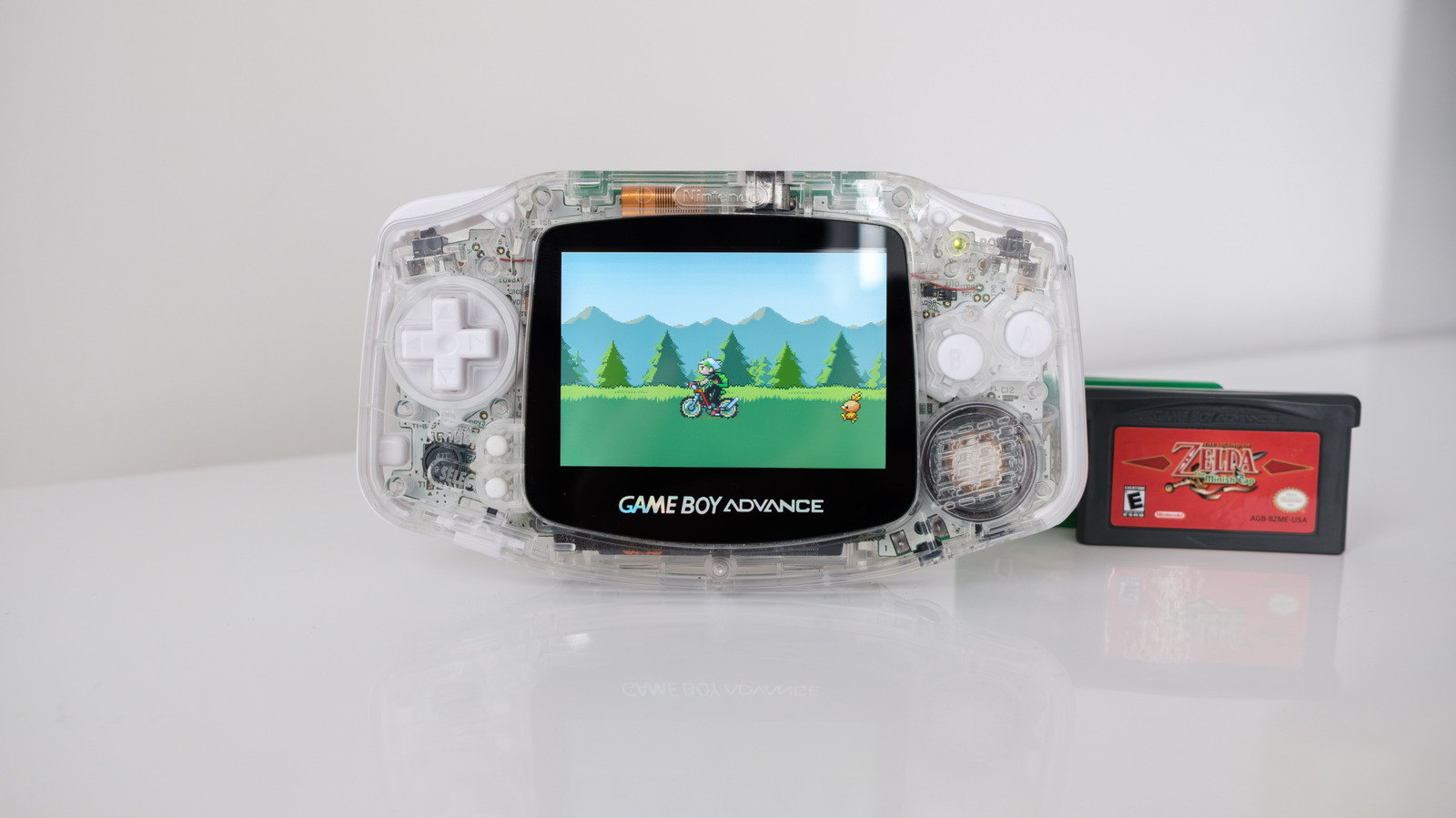
Engadget’s Favorite Game Boy Advance Games

Published

on

In 2021, I wrote about Fire Emblem for our 20th anniversary GBA story. Over the past five years, I’ve played it from start to finish two times, and can once again confirm that it is my favorite Game Boy Advance game.

I hadn’t even heard about Fire Emblem as a series until I got into Advance Wars, another Intelligent Systems game. From there, I discovered that a whole series of fantasy-inspired games with similar gameplay existed, but had never been translated into English. Thirsty for more, but with a distinct lack of Japanese language skills, I spent a year getting deep into Final Fantasy Tactics, old Shining Force games, Vandal Hearts and basically anything vaguely Fire Emblem-shaped that was available in English. Then, off the back of Advance Wars‘ success, Nintendo decided to release a Fire Emblem game in the west, and simply called it Fire Emblem.

Released as Fire Emblem: The Blazing Blade in Japan, Fire Emblem was technically the second GBA FE title and the seventh overall. The battles were challenging, and its RPG elements drew me in much more than Advance Wars ever did. With a vast story full of twists and turns, and a cast of characters I truly cared about, I was instantly hooked. Which made it all the more tough when I encountered perhaps FE’s most famous mechanic: permadeath. The loss of a character who’s seen you through thick and thin dying a pathetic and meaningless death, all because you left them one square away from safety, is memorable.

Despite a few missteps, over the years Fire Emblem became my favorite series, and I am deeply excited by Fortune’s Weave finally getting a release date. But I still come back to the GBA game to relive that love-at-first-sight moment.

Advertisement

In 2026, I’m so familiar with the game that it’s very rare for me to lose a party member by accident. Those once-challenging battles are now more of a warm embrace. Unfortunately, playing it has become harder in recent years. Though I still have my original cart, both my Game Boy Advance and my old DS Lite are really worse for wear. I tried to play on the Switch 2’s online library recently, but I think the screen size just isn’t a great match for GBA games.

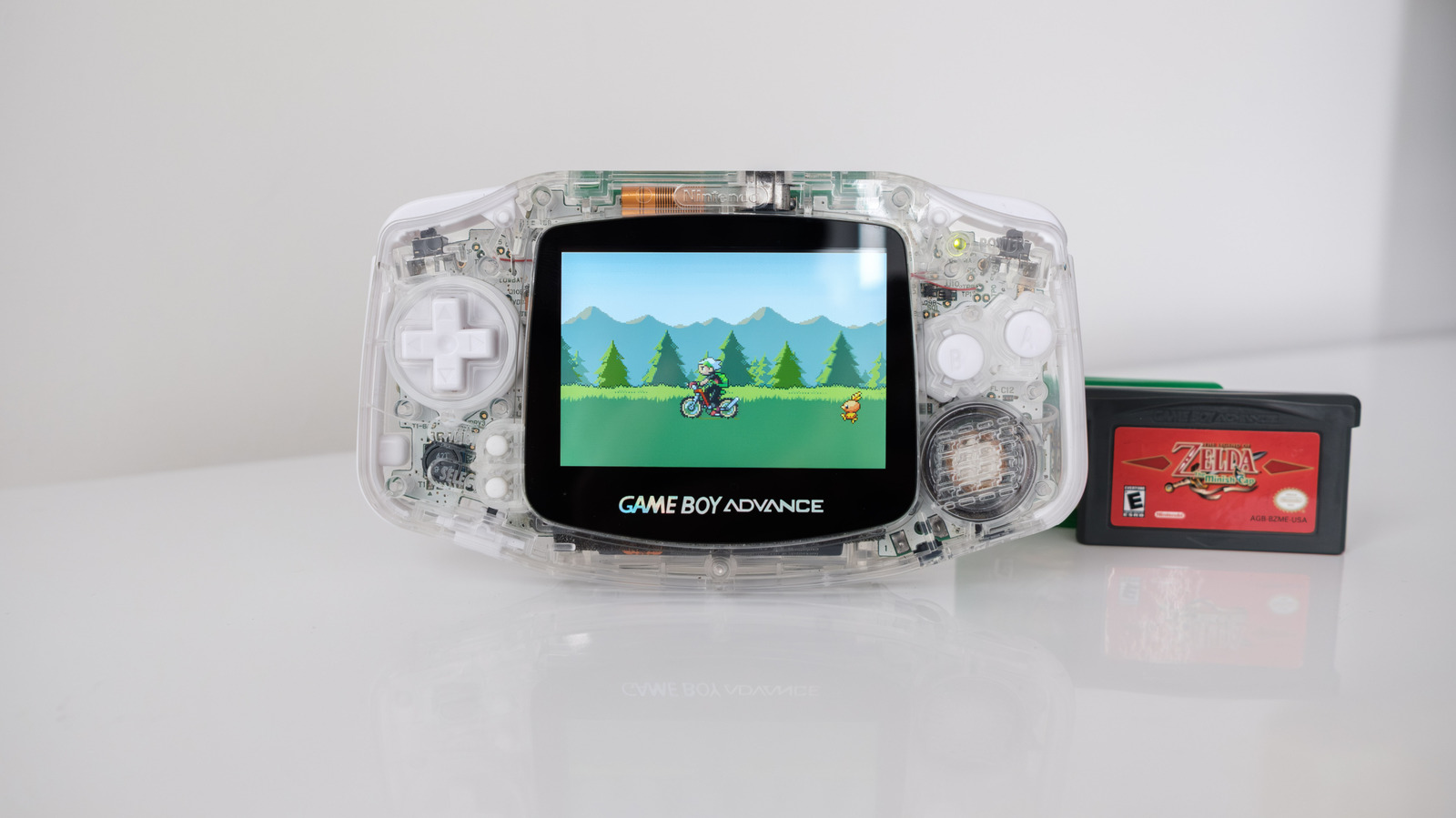
In that respect, modern retro handhelds have been a godsend. I spent way too much on the Aya Neo Pocket Micro Classic, a machine with the same aspect ratio of the original GBA, and loved my playthrough of Fire Emblem on that. It does feel weird playing it on anything but a Game Boy Advance, though. I’ve been saying this for the best part of a decade at this point, but I do wish Nintendo would take advantage of this deep thirst for its old games and produce a bespoke console similar to the Classic Editions of the SNES and NES.

Aaron Souppouris, Editor-in-Chief

Advertisement

Source link

Continue Reading

Trending

Copyright © 2025