
Politics
Labour accused of staging by-election video

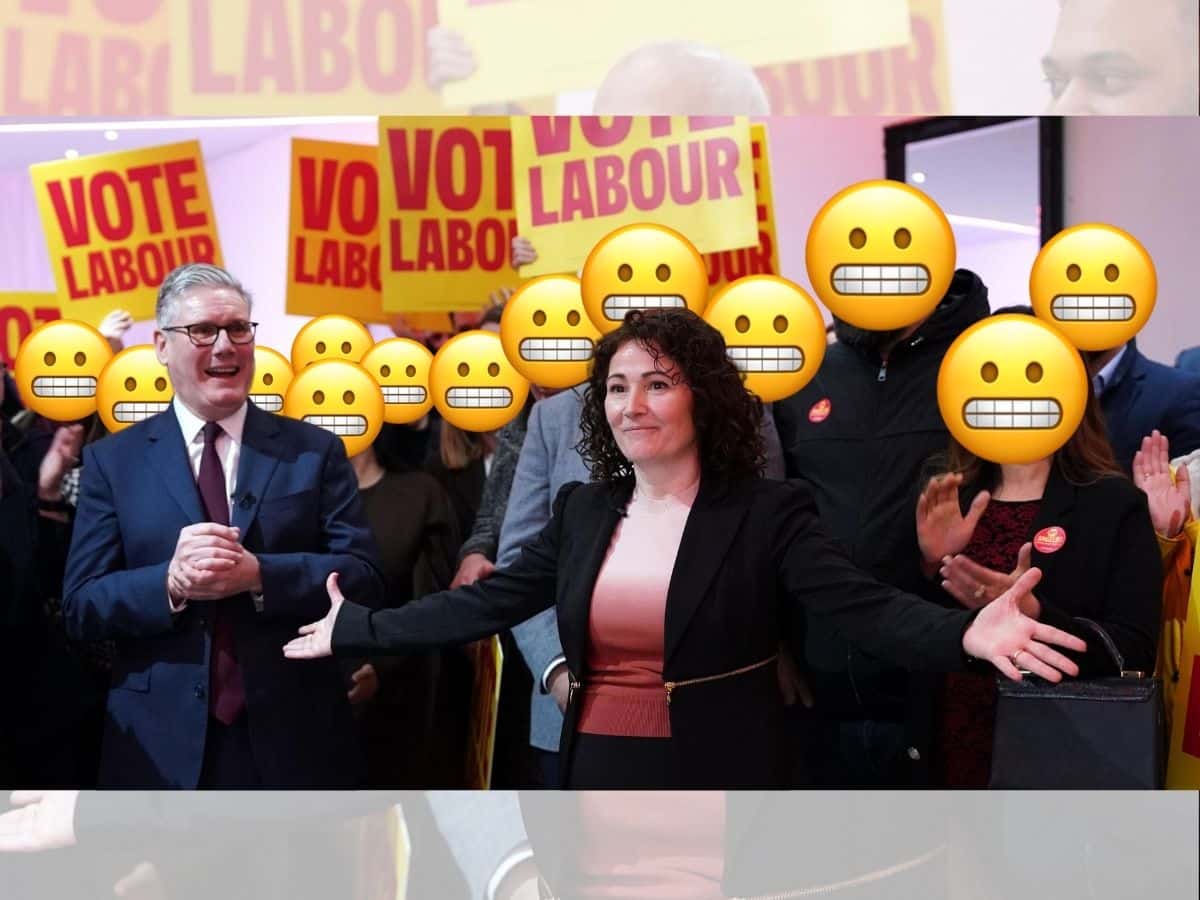
According to Labour, the Greens never stood a chance in the Gorton & Denton by-election. What’s strange is Labour are now saying voters are switching from the Greens to Labour, suggesting they did actually abandon the incumbent Labour Party at some point, but have now switched back?
We’re unsure what Labour have done to convince people they can win besides shouting ‘ONLY WE CAN WIN‘, but apparently that is happening.
Unless, of course, this is all staged:
this feels so fucking staged lmao https://t.co/x0BEfcquwo
— Nat ✨ FREE 🇵🇸 (@loopzoooop) February 24, 2026
“So fucking staged”
Let’s do a detailed breakdown of the above video, shall we?
What seems to be happening is Labour candidate Angeliki Stogia is speaking with a resident on their doorstep. The camera person is standing behind some bushes for some reason, with their focus trained on the resident’s window. In said window there’s a flyer for the Green Party, and the video ends with the resident replacing it with a Labour flyer.
The problem is not everything adds up:
- For whatever reason, the audio isn’t aligned with the footage. You can tell this because Stogia walks away from the house while the resident is still speaking.
- The fact that the camera person is stood behind a bush suggests they were recording the scene without the resident’s knowledge.
- The camera person is focused on the window while Stogia was still speaking to the resident, suggesting they somehow knew what was going to happen with the flyer.
How did they know that the man would immediately replace the Green Party flyer with the Labour once? Unclear. But the simplest explanation is ‘it was staged – they faked that shit‘.
Others had similar suspicions:
I, for one, believe that this is completely authentic, and not at all staged.
Yes, this newly-converted Labour supporter doesn’t appear on camera, but that’s probably just down to shyness, and not because he’s a Labour councillor pretending to be a member of the public. https://t.co/6IcO6iJf4S
— Plutôt la Barbie (@plutotlabarbie) February 23, 2026
Labour’s entire campaign in Gorton and Denton is not “look at what great things we have done”, but instead “don’t vote for the scary Greens”.
— Robespierre (YouTube) 📢 (@MaxFRobespierre) February 24, 2026
If Labour have faked it, it’s another sign Labour are once again copying a Reform MP. As Emily Apple wrote for the Canary in 2019 on then-Conservative Lee Anderson:
Lee Anderson is running in the Tory/Labour marginal seat of Ashfield, in the East Midlands. Labour narrowly won the seat in 2017 by just over 400 votes. But Anderson’s dirty tactics should provide yet another reason why no one in Ashfield should vote for him.
She added:
Michael Crick from Mail Plus caught Anderson redhanded “setting up the apparently spontaneous doorstop encounter beforehand”. The reason Crick could do this? Anderson had seemingly forgotten he was wearing a radio mic!
Absolute scenes as @MichaelLCrick catches a candidate in the act of setting up a “friendly voter” on the doorstep. (Video credit @MailPlus_) pic.twitter.com/azdtVk20eA
— Dino Sofos (@dinosofos) November 25, 2019
TLDW
For a full 4 hour breakdown of the 10 second clip, be sure to check back in tomorrow.
If you want a TLDW on that – yeah – we also think Labour staged it.
Featured image via The Canary

Alert readers will have noticed something of a furore in recent days around a boneheaded Scottish Greens candidate (as if there were any other kind) calling for the complete abolition of prisons.
So far Kate Nevens – who on the latest polling has a reasonable chance of being elected on the list – has resisted calls to step down, which is probably for the best as, incredibly, her replacement would be even worse.

With the implosion of Your Party concentrating the nutter vote firmly in Green hands, the next term of the Scottish Parliament is set to feature the worst array of MSPs in Holyrood’s history, with almost everyone in the SNP with any sort of ability or experience resigning to be replaced by hyper-obedient young party drones, while the opposition are mostly putting forward the same old faces who’ve been such utter failures for the last 20 years.
It’s a grim prospect, but we do have a solution to propose.

No, wait, hear us out. The current election will usher in dozens of useless candidates nobody likes, largely by default for want of any better alternatives. We know nothing about most of these people. The Greens may get two list MSPs per region, but see what you can find out about most of their second-placed list candidates – it’s nothing.
Here, for example, is the entirety of the Greens’ web page for their #2 list candidate in Central And Lothians West, Claire Williams.

And here’s pretty much everything we could find out about her:


As far as we can tell she has no personal site and no social media presence except a Facebook page, which mostly contains notifications about upcoming roadworks.
This is the most substantive or personal statement we’ve been able to find from Cllr Williams on any subject:

Good luck with your informed voting decision. We’re using Cllr Williams purely as a typical example of a list candidate, not picking on her particularly, because there’s nothing to pick on, other than the basic assumption that she supports all the repulsive policies of her party in general.
So we’re about to elect a whole herd of pigs in pokes without the slightest notion of whether any of them might be capable MSPs. (And let’s face it, the odds aren’t good.) If we had a Squid Game parliament we’d at least know that they were good at SOMETHING.

The 129 survivors would have demonstrated intelligence, co-operation, adaptability and strength under pressure – all fine traits for anyone, let alone politicians, a job for which there are no qualifications. (Indeed, most of the things that qualify someone as a good and useful human being, like the ability to think for yourself, are an active hindrance in politics.)
And it’s not a brute-force contest either. To win at Squid Game requires a wide and diverse range of skills, as well as the bravery to enter in the first place. You’d know your representatives REALLY wanted that seat, not just because they lacked the talent to get any other job. (There’d be no financial prize other than their normal wages, of course.)
We already know that Squid Game is box-office, compared to the current election which most people already desperately wish would just be over. Voters would actually care. Put it on pay-per-view and you could generate many millions of pounds for hard-pressed public services, as well as improving the quality of your public servants a thousand-fold.
There are no downsides. Convince us we’re wrong.

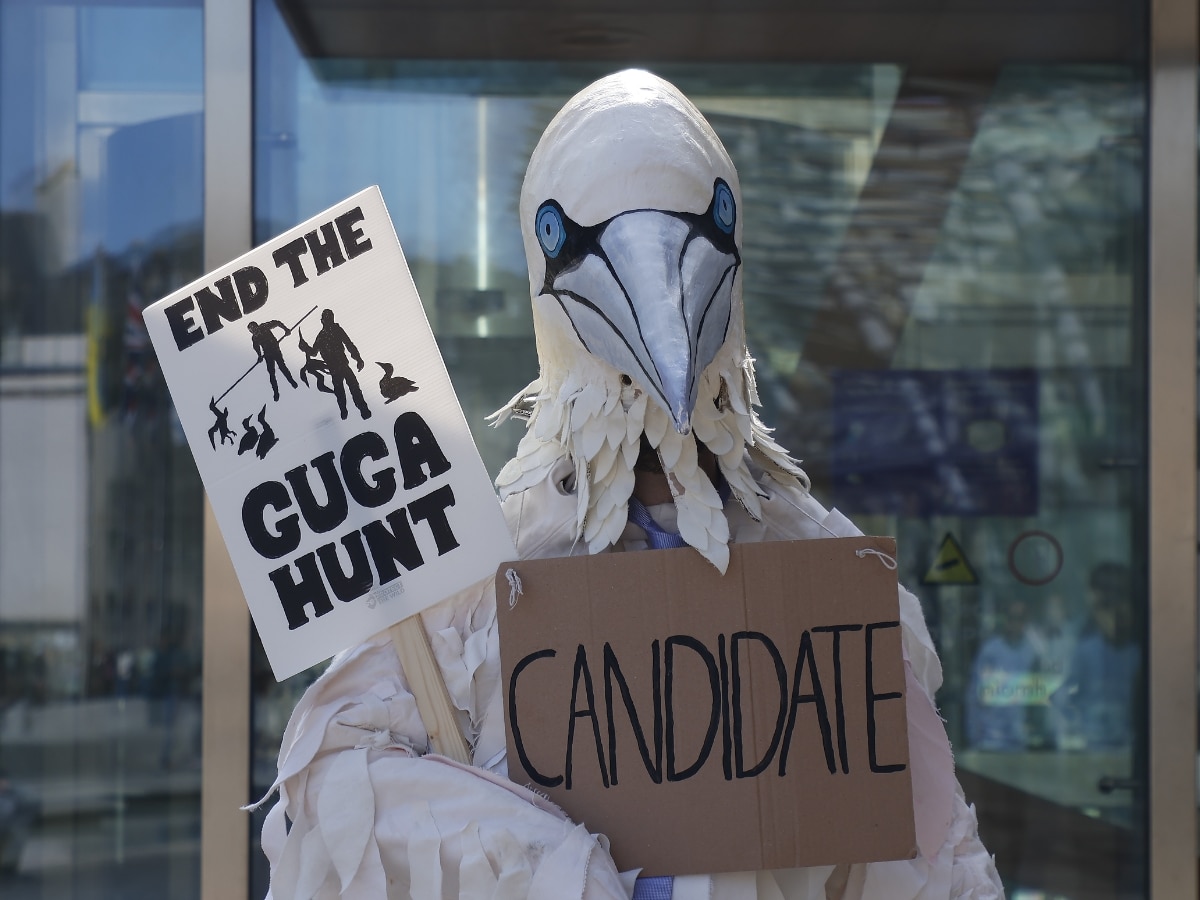
An Edinburgh Central MSP candidate dressed as a giant gannet seabird has attempted to gatecrash the Scottish Conservatives’ manifesto launch. He was calling for an end to the UK’s last legal seabird hunt.
Scottish parliament hopeful Robert Pownall turned up in full costume at an Edinburgh press event on Tuesday 7 April. He attempted to present his own “Ganifesto”. This is a single-issue campaign calling for an end to the guga hunt.
Footage shows Pownall holding the oversized gannet head under his arm as he speaks with security at the entrance. Staff refuse him entry and decline to confirm the nature of the event.
In the video, Pownall calls on:
the Conservative Party… and all parties, and the future government to end the guga hunt for good.
He adds:
This is meant to be a protected species. It’s about time they were properly protected.
The guga hunt, which takes place annually on the remote island of Sula Sgeir, involves the killing of young gannet chicks. They’re taken from their nests, bludgeoned to death, and eaten as a local delicacy on the Isle of Lewis.
It remains legal due to an exemption under Section 16 of the Wildlife and Countryside Act.
Pownall says his election campaign has just one demand: end the guga hunt by removing the exemption that allows it to continue:
This isn’t complicated. This isn’t controversial. This is about whether we think it’s acceptable to kill wild animals for tradition alone.
My Ganifesto has one line: end it.
The stunt comes as Pownall, founder of non-profit organisation Protect the Wild, launched his campaign for the Edinburgh Central seat. He’ll be standing against the likes of the SNP’s Angus Robertson and the Scottish Conservatives’ Jo Mowat.
Pownall says he is aiming to force the issue of wildlife protection onto the political agenda ahead of May’s election:
Gannet chicks are being snatched from their nests and bludgeoned to death for nothing more than a tradition. You don’t need a 50-page manifesto to know this is wrong.
If political parties won’t talk about the Guga hunt, then I’ll bring it to their doorstep, dressed as the bird they’re failing to protect.
The candidate says he will continue using “creative disruption” to force political attention onto the issue throughout the election campaign.
Featured image via Protect the Wild

Vladimir Putin wants the UK to be distracted by the ongoing tensions in the Middle East, according to the British defence secretary.
John Healey revealed how British forces have uncovered “increased Russian activity in the Atlantic, north of the UK” while giving a statement from Downing Street.
He said a nuclear-powered attack submarine and two specialist submarines from Russia’s main directorate for deep sea research were detected in the Atlantic Ocean.
These ships were in the UK’s exclusive economic zone. It’s not clear what they were threatening to do, but Healey pointed out that Britain has undersea fibre optic cables which are key for the UK’s digital communications.
He claimed these vessels were all directed by the Russian president to “conduct hybrid activities against the UK and our allies, specifically around critical undersea infrastructure”.
He said the submarines are meant to survey underwater infrastructure “during peacetime and sabotage it in conflict”.
The UK military has been tracking these vessels by sea and air in a month-long mission with allies.
The attack submarine – since discovered to have been a distraction from the Russian forces to shift focus from the other vessels – has since “retreated home”, while the specialist submarines are still being monitored.
The defence secretary said there was no evidence the submarines caused any damage to UK pipelines or cables.
“We wanted to ensure that we could warn them that their covert operation had been exposed and reduce the risk that they made to attempt any action that could damage our pipelines or our cables,” he said.
When asked if the timing of these Russian operations was deliberately timed in line with the Iran war, Healey said: “I’m pretty clear that Putin would want us to be distracted by the Middle East.
“What I’m setting out today demonstrates that we are not just exposing his covert operation, but we are saying to him that we recognise Russia as the primary threat to the UK and to Nato, and that we will not take our eyes off Putin, whilst at the same time we act to protect our British interests and our British allies in the Middle East.”
Putin is a known ally to Iran, and according to Ukrainian president Volodymyr Zelenskyy, helping Tehran target US bases in the Middle East.
When asked about the reports that Russian shadow fleet ships escorted sanctioned tankers through the English Channel, Healey said the UK stands “ready to take action” and to “interdict shadow fleet vessels”.
“Any attempt to damage [undersea cables] will not be tolerated and will have serious consequences,” he said.
“Our message to Putin, it’s deliberate and it’s clear: We see you. We see your activity over our pipelines and our cables. And we will not tolerate any attempt to damage what our way of life and our modern way of life depends on so much.”
The UK has seen a 30% increase in Russian vessels posing a threat to British waters over the last two years.
Keir Starmer reacted to the update saying: “We will not shy away from taking action and exposing Russia’s destabilising activity that seeks to test our resolve.
“Our armed forces are among the best in the world, and the British public should be in no doubt that this government will do whatever it takes to defend our national and economic security, wherever in the world that is needed.”
Ali Ahmadi, Catherine Barnard and Fiona Costello argue that while the UK’s restrictions on employment for asylum seekers do not act as a strong deterrent, they do drive up asylum costs, risk pushing asylum seekers into exploitative working conditions and harm their wellbeing and integration.
The UK has one of the strictest systems in Europe concerning the right to work for asylum seekers. This blog considers why this is the case and the consequences for asylum seekers, the Home Office, and the economy as a whole.
Most European countries allow asylum seekers to work immediately or within six months of making an asylum application. In the UK, most asylum seekers are not allowed to work while their claim is being decided. This has been the case since 2002, when the Labour government removed the previous rule allowing asylum seekers to apply for permission to work after waiting six months for an initial decision. Today, asylum seekers can apply for permission to work but only if they have been waiting 12 months or more, and the delay is not the claimant’s fault. Even then, they are restricted to jobs on the Immigration Salary List of skilled occupations and, from 26 March, RQF level 6 or above (i.e. degree level roles). They cannot be self-employed or take most entry-level jobs.
The government says that allowing asylum seekers to start working early would not only undermine local labour markets but also act as a ‘pull factor’, encouraging economic migrants to abuse the asylum route. However, as we have discussed before, there is little evidence that labour market access has any significant impact on the number of arrivals.
Yet not allowing asylum seekers to work brings its own costs. While waiting for a decision on their asylum application (and not working), those who would otherwise be destitute are entitled to asylum support under section 95 of Immigration and Asylum Act 1999. This includes accommodation and/or a weekly payment for essentials, currently £49.18 (approx. £7 per day). For those living in hotels that provide meals the rate is £9.95 per week. For many, this support is not enough and they are often forced to rely on food banks and charities to meet their basic needs. As of June 2025, over 106,000 people were receiving asylum support.
Home Office spending on asylum support is increasing significantly: from £739m in 2019-20, to £4.7bn in 2023-4 (and £4bn in 2024-5). The growing costs are largely due not only to an increase in the number of asylum seekers but also to backlogs in decision-making. In 2014, 25% of asylum seekers (11,629 people) waited six months or more for a decision. In 2024, 59% (73,866 people) waited that long. A study from the National Institute of Economic and Social Research (NIESR) shows that allowing earlier permission to work could significantly reduce these costs.
So not allowing asylum seekers to work is an expensive policy. Allowing asylum seekers to work would also bring benefits to the UK economy. Analysis by the Lift the Ban coalition suggests that if one in two adults among the 73,866 people waiting an initial decision for longer than six months found employment at the average UK salary, the benefit from tax, national insurance contributions, and savings in asylum support, could be over £280m. Based on the Home Office data from 2022, NIESR calculate that allowing asylum seekers to work would increase tax revenue by £1.3bn, reduce government expenditure by £6.7bn, and increase GDP by £1.6bn, annually.
Instead, a ban on employment pushes some asylum seekers into ‘survival-related’ illegal and exploitative employment where, studies show, they work for well below the minimum wage, ‘cash in hand’ (from which the government does not benefit in terms of tax take), and in unacceptable work conditions. The exploitation is more severe for vulnerable asylum seekers. For instance, one study showed that some female asylum seekers had been pushed into ‘abusive situations’ and/or ‘sex work’ because they had no legal means of income. There is also evidence that those working lawfully as delivery riders ‘rent’ their passes to those who cannot work legally, taking a cut off the top. Likewise, organised crime networks help failed and/or limbo asylum seekers run or work illegally in mini-marts, barbershops, and car washes by faking paperwork and providing ‘ghost directors’.
It is not just the economic costs: preventing asylum seekers from working affects their mental health, with longer term consequences for them and the NHS if they subsequently get refugee status. Asylum seekers in the UK are five to six times more likely than the general population to have mental health needs, and 61% will experience severe mental illness. A systematic review studying the impact of asylum processes on mental health found that policies restricting work or meaningful activities contributed to psychological distress and social exclusion. The Mental Health Foundation reported that not being allowed to work leads to ‘loss of self-esteem, loneliness, and an increased risk of depression’ for asylum seekers. Employment has been shown to reduce psychological distress and depression in this population.
A ban on working also affects the long-term economic integration of refugees. Research consistently shows that being unable to work causes de-skilling, reducing employment prospects even after refugee status is granted, creating what researchers call an ‘economic scarring effect’. A study from Germany found that those who waited longer for permission to work were less likely to find employment within 5 years, and it took nearly 10 years for this gap to close.
In conclusion, the UK’s restrictions on asylum seekers’ right to work do not appear to act as a strong deterrent, yet they drive up asylum costs, risk pushing asylum seekers into exploitative working conditions, and harm their wellbeing and integration. You Gov polling, albeit somewhat dated, has shown that the British public are largely in favour of lifting the ban on asylum seekers working, with 81% in favour of asylum seekers being able to work after 6 months of submitting their application (as suggested by the Commission on the Integration of Refugees). Allowing employment in all types of jobs would reduce asylum costs, bring in tax revenue, and treat people with dignity. It would also help those granted refugee status to rebuild their lives faster and is likely to cost taxpayers less in the long run.
By Ali Ahmadi, Research Associate, University of Cambridge and PhD student at Anglia Ruskin University, Catherine Barnard, Senior Fellow, UK in a Changing Europe & Professor of EU Law and Employment Law, University of Cambridge and Fiona Costello, Assistant Professor, University of Birmingham.
It’s a day ending in a ‘y’, so you know red Tory Wes Streeting is going to be spouting some tripe about the British Medical Association (BMA) somewhere or other.
The health secretary’s latest desperate gambit is waving around a public opinion poll on the upcoming BMA resident doctors’ strike:
The BMA think their demands are more important than patients.
Unsurprisingly, patients don’t agree.
Patients deserve better. The BMA must call off these strikes. pic.twitter.com/XaCPGJ7kaD
— Wes Streeting (@wesstreeting) April 8, 2026
A howling moral vacuum called Streeting
You might think a Labour health secretary like Streeting would devote less of his time to bashing the doctor’s union, but that forgets a crucial detail. Namely, Starmer’s shower of a party wouldn’t know socialist values if they slapped them round the face.
First and foremost, what a bloody disgusting thing to say from Streeting. This swine is trying to frame doctors as not caring about their patients, purely because they won’t stand for years of real-terms pay cuts.
Sure, it’s nice to have public backing for a strike. It’s a pity the public aren’t on-side with the striking workers. However, going ahead with industrial action without public support is a far cry from thinking that patients are unimportant.
Given his utterly shameless display, it’s unsurprising that the health secretary got absolutely cooked on social media. It’s no secret we at the Canary also think Streeting is a howling moral vacuum in the shape of a man – so let’s take a look, shall we?
Threats to the NHS
Some commenters pointed out the this isn’t just about pay restoration – Starmer and his henchman like Streeting have also threatened to take away residents’ training places:
Have you asked the patients if they agree with pulling 1000 training posts?
Or pivoting away from resident doctors (who will be future GPs/consultants)?
You can’t solve a staffing crisis by cutting doctors.
Work with us and both doctors and patients benefit https://t.co/m4ZfuMBNJt
— Dr Melissa Ryan 🦀 (@Melissa_S_Ryan) April 8, 2026
Is there anybody out there who thinks that threatening to take away training is a good call? Labour is threatening the healthcare system itself in an attempt to break the strike here.
Others pointed out that public opinion is likely being swayed by the dire state of the NHS:
No surprise that patients don’t want strikes
Patients want to be seen promptly by doctors – we need funding for more GPs and consultants
Meanwhile @wesstreeting is cutting training posts and planning wholesale doctor substitution with people who aren’t medically trained https://t.co/qpT5WTzaGO
— Dr Asif Qasim MA PhD FRCP (@DrAsifQasim) April 8, 2026
Remind us again who’s meant to be responsible for the welfare of the NHS? Oh yeah, it’s the fucking health secretary.
Wes Streeting: Tory in disguise
Then there’s the good old standard – pointing out that Streeting is a Tory in a red tie:
We have a Labour Health Secretary actively campaigning against medical professionals.
What a disgrace Wes Streeting is. https://t.co/sLK4Js0zVA— Anne Greensmith 💙 (@snowleopardess) April 8, 2026
Anyone else remember back when Labour was a friend of the unions? Wasn’t that nice? Moving on then.
Oh, and of course, there’s the fact that Streeting’s framing was low-down, even for him:
Trying to characterise doctors as uncaring is an incredibly unprincipled and disappointing thing to see from a Labour Health Secretary.
Shame. https://t.co/2sab8JUAmN
— Harry Eccles (@Heccles94) April 8, 2026
Nobody mention the public approval
Then, we’re breaking out the big guns – highlighting that the Labour Party are hardly brimming with public approval:
Why do politicians think that basically everyone else *except* themselves have to act in a way that has public support? https://t.co/rNmhQVXh0P
— Sean Biggerstaff (@Seanchuckle) April 8, 2026
Just 16% of the public currently intends to vote for Labour in the event of a general election. Oh, and 63% of the public disapprove of the current government.
Looks like Streeting will be out of a job even faster than the doctors he’s trying to chase off.
Then, of course, there’s the popularity of the health secretary himself:
So still a higher approval rating than you or your Government.
Waiting lists are over 6 million and you’ve cut 1000 consultant and GP training posts out of spite.
The public want someone who can fix the health service, not someone using it as a stepping stone to their PM run. https://t.co/bX57ioZFij pic.twitter.com/rM8JPdibap
— DoctorsVote (@DoctorsVoteUK) April 8, 2026
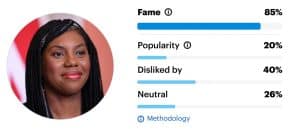
Did anyone else know that YouGov tracks the popularity of individual politicians? That has the potential to become utterly soul-destroying.
I bet this is going to come in handy.
What unites us?
Anyway, let’s see what the ‘opposition’ thinks:
I will ban resident doctors and consultants from going on strike – as we already do for the Police and Armed Forces.
Labour has chosen the unions over patients. The @Conservatives choose patients, because only we are serious about getting Britain working again.
— Kemi Badenoch (@KemiBadenoch) April 8, 2026
You know, it’s got to be difficult for the likes of Badenoch and the other Tory scum at the moment. Labour keep coming out with all of the horrific right-wing policies that used to be the Conservatives’ bread and butter.
Look, poor Badenoch has had to resort to making shit up. ‘Labour has chosen the unions over patients’ – come again now? Are we listening to the same Labour health secretary?
You know, if Streeting and Badenoch sat down and talked it out like grownups, they’d find they’re more alike than they are different.
Both clearly think they have free rein to abuse NHS doctors.
Likewise, they both think they can lie to the public and get away with it.
And, of course, both of them are working as hard as they can to ensure that Labour are never elected again.

Well would you look at that – it came in handy immediately.
Featured image via the Canary
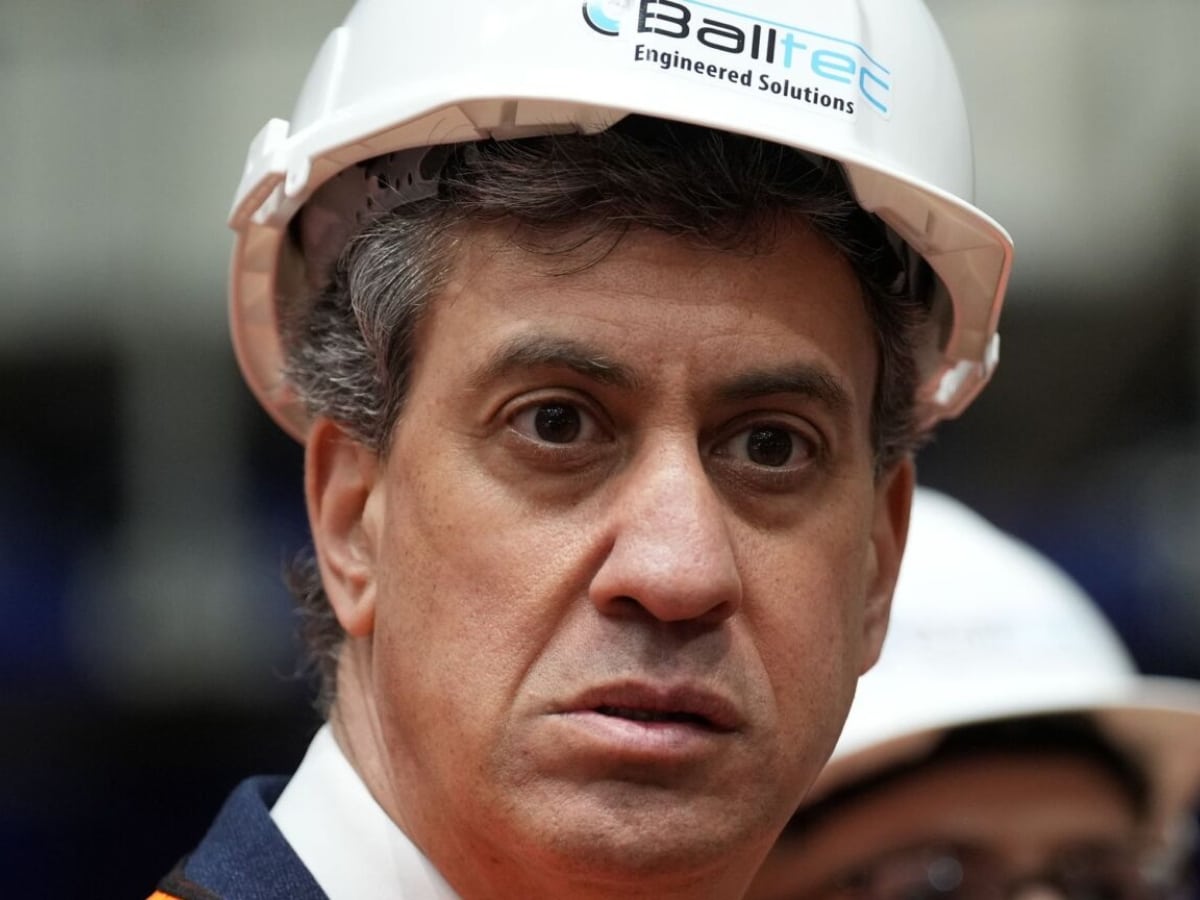
Experts have issued a stark warning to the UK Labour government: opening up new fossil fuel fields in the North Sea could ruin international climate targets.
Likewise, this terrible climate leadership from the UK would also embolden other countries to draw on their own fossil fuel reserves, greatly magnifying the predicted negative impact. One senior development official told the Guardian that:
What we are hearing already from developing countries is: why shouldn’t we tap into our own fossil fuel resources if the UK is doing so? That is a legitimate point. You have to provide leadership.
Oil industry shills wearing various different disguises – whether Tory, Reform, trade unionist or the drillers themselves – have put pressure on the government to issue permits for new oil and gas fields.
However, we at the Canary would just like to chip in with our two cents. Namely – holy shit, how are we still having this fucking conversation? You don’t get ‘just a little bit more oil’. We’ve already used too much. Are these genocidal cunts actively trying to kill everything and everyone at this point?
A dangerous example
The two largest remaining oil and gas reserves in the North Sea are the notorious Rosebank and Jackdaw fields. However, even these are already over 90% depleted. As such, they’d require the use of extraction methods that are both energy-intensive and extremely costly.
Even after that, research has predicted that the two fields combined would only produce around 3% of the gas that the UK currently imports.
But again, and not to belabor the point, even if they provided 100% of our fuel they still wouldn’t be worth it, because of the aforementioned rapidly accelerating death of all things.
Beyond that, climate diplomats and analysts have warned that the UK greenlighting new drilling would also send a dangerous signal to other countries.
If developing nations followed the UK’s dreadful example and used up their own fossil fuel reserves, the world would massively exceed the carbon limits that would otherwise ward of the most ruinous effects of climate breakdown.
‘Short-term interests are being prioritised’
Mohamed Adow – director of the Nairobi-based Power Shift Africa thinktank – explained that:
The UK approving new oil and gas projects would send a shock wave around the world that short-term interests are being prioritised over long-term responsibility. I dread to think what example that would set to the rest of the world. […]
Countries across Africa are being asked to leapfrog to clean energy systems, often with limited financial support. We are told, often by European nations, that the future lies in renewables, and increasingly we are proving that it does. When wealthier nations continue to invest in fossil fuels, they undermine this message and diminish their credibility.
Speaking to the Guardian, one anonymous senior African negotiator stated that their continent would oppose any new drilling on the Labour’s part. The diplomat called the proposal “fundamentally inconsistent” with the Paris climate agreement, and warned that it would weaken climate-vulnerable nations’ trust:
At a moment when science is unequivocal about the need for a rapid transition away from fossil fuels, new oil exploration by a historic emitter is as contradictory as it is regressive. It also risks setting a dangerous precedent for other countries to follow.
‘Solutions of the past’ from Labour?
Likewise, Christiana Figueres – ex-UN executive secretary for the framework convention of climate change – issued similarly damning criticism. She stated that there was neither an economic nor climatological basis for new drilling:
It’s entirely understandable that in today’s geopolitical context, countries must seek greater energy security and independence. But reaching for solutions of the past – such as expanding oil and gas drilling – risks locking in infrastructure that is increasingly out of step with where the global energy system is heading. True energy independence today lies in scaling clean, domestic energy, not in extending the life of declining industries.
UK Labour net-zero secretary Ed Miliband has already signaled that he plans to snub a global conference on the green energy transition later this month. In his place, the country will send special climate envoy Rachel Kyte.
With Miliband’s decision on the oil fields being imminent, and the world watching, the UK stands at a crossroads. The choice is clear – we can stand firm and resist the frantic appeals of the far right and the oil lobby, or we can give in to the climate-wrecking and economically non-viable allure of further drilling.
Remind us again how this even remains a question at this point?
Featured image via the Canary

Sleep is one of those things, like wi-fi or anaesthesia, that gets odder the more you think about it. In fact, scientists still don’t know for sure why we spend a third of our lives unable to move or perceive the world around us.
So perhaps it’s no wonder it’s a heavily-searched topic. According to sleep expert Dr Deborah Lee from Doctor Fox, who is working with Comfybedss, millions of us turn to the web every month with questions about everything from REM to magnesium.
Here, she answered five of the most-searched-for questions:
1) Can sleep apnoea kill you? (About 13,000 monthly searches)
“Sleep apnoea itself won’t exactly ‘kill’ you in a way that illnesses might, although it can lead to serious health problems further down the line,” Dr Lee explained.
“Sleep apnoea, a condition that causes repeated pauses in breathing as you’re sleeping, contributes to high blood pressure, heart disease, stroke, diabetes and even accidents that can be related to daytime fatigue.”
In very severe cases, “these risks can compound and become fatal, so you’re best getting it checked by a doctor sooner rather than later, especially if you have several of the symptoms that come alongside sleep apnoea.”
Signs include daytime sleepiness, loud snoring, and choking during sleep.
“The good news is that it is treatable, usually with some generic lifestyle changes, CPAP machines or medical interventions.”
2) How much deep sleep do you need? (About 11,000 monthly searches)
Experts advise that deep sleep should make up about a quarter of your sleep. It is the “most physically restorative stage of the sleep cycle… During this stage, your body repairs tissues, builds muscle, strengthens the immune system, and even consolidates memories,” Dr Lee said.
But, she added, “This isn’t a ‘one-size-fits-all’ answer, and the right answer is dependent on each person. Some people may feel as though they can’t function if they get under eight hours sleep a night, whereas some people may feel as though anything above five hours works perfectly well for them.”
Still, she said, we should aim for at least seven hours’ sleep a night. “The easiest way to know whether you have had enough deep sleep is by waking up refreshed, alert and ready to seize the day.”
3) What is sleep apnoea? (About 9,600 monthly searches)
“Sleep apnoea is a common sleep disorder where your breathing repeatedly stops and starts while you sleep. The most common type, obstructive sleep apnoea (OSA), happens when the muscles in the throat relax too much, temporarily blocking the airway,” Dr Lee explained.
It can lead you to wake up during the night, even if you don’t notice it.
“Symptoms typically include loud snoring, gasping for breath or choking during sleep, morning headaches, and, as it can lead to reduced time in REM sleep, it can therefore lead to increased daytime sleepiness.”
Speak to your GP if you notice signs of sleep apnoea.
4) Does magnesium help you sleep? (About 9,600 monthly searches)
Magnesium does seem to be somewhat effective in helping to regulate our body clock. But while it can “help lower [stress hormone] cortisol levels and also support the production of melatonin,” it’s not a “magic pill,” Dr Lee advised.
“The evidence is fairly mixed on magnesium, and it’ll differ on a case-by-case basis. If you’re struggling to sleep and you’ve not made any lifestyle changes before taking magnesium, i.e, reducing smoking, drinking, sugary drinks, etc., then do this before becoming reliant on magnesium.”
Speak to your GP before starting any magnesium supplements if you have chronic illnesses or take regular medication, she continued.
5) What is REM sleep? (About 8,400 monthly searches)
“REM stands for Rapid Eye Movement, and this type of sleep is the stage of the cycle that is most associated with dreaming. It typically occurs in cycles throughout the night, becoming longer in the early morning hours.
“During REM sleep, brain activity increases to levels similar to when you’re awake, while the body temporarily becomes paralysed to prevent you from acting out dreams.” Dr Lee said.
Most adults spend about 20-25% of their sleep in REM, which is key for emotional regulation, memory consolidation, and learning.
“Disruptions to REM sleep, often caused by stress, alcohol, or poor sleep routines, can leave you feeling mentally foggy and seriously fatigued throughout the day, even if you’ve had a long enough sleep overall.”



3 min read
Our immigration system clearly needs reform. But unfair changes to Indefinite Leave to Remain are the wrong approach.
Fairness must be at the heart of our immigration system. Fairness for the British taxpayer, and fairness for those who seek to come here in search of a better life.
What the government is proposing to do to our immigration system, retrospectively applying changes to the amount of time for those who have made Britain their home must wait for Indefinite Leave to Remain (ILR), is the opposite of fairness.
Under the current system, migrants coming to Britain legally must wait years for proper stability. Years spent waiting to restart their lives. Frozen.
That is why ILR is so important. It offers them stability and security, the assurance that this is their home and community. Most importantly, it gives them a stake in the country.
For the thousands of migrants currently working towards ILR, they came on the promise that if they follow the rules we have set, wait the requisite number of years, and pay the right application fees, they will get that security and become part of that community. It is this promise that gives them a stake in the country.
By changing the rules and moving to an ‘Earned Settlement’ model, we are taking that stake away. Taking it away from those who have spent years working and contributing to the economy. We are moving the goalposts, and that is not fair.
It will penalise those who, for whatever reason, have received benefits. Whether it is someone working in social care receiving tax credits to make ends meet, or a victim of domestic abuse being placed in temporary accommodation, or a mother of a child receiving disability benefit.
These proposed changes have real impacts, like the constituent I met who was forced to claim Universal Credit after becoming unable to work due to his cancer diagnosis, and for whom the proposals could see decades added to his waiting time – for something entirely out of his control.
Or another constituent who has spent years setting up successful businesses in the UK, but because his earnings are not over £125,000, is included in the group whose waiting time faces being extended by years.
I am very unclear as to what it is the Home Office is trying to achieve with these reforms. These two men are not going to leave the UK, nor does my community want them to, but their lives will be made inexplicably more difficult.
Reform to our immigration system is obviously needed, but in my view, Labour’s way has always been to aspire to have a firm immigration system that is also fast, but above all, is fair.
These proposals, as they stand, will not achieve that. The government needs to think again.
Emily Thornberry is Labour MP for Islington South and Finsbury and Chair of the Foreign Affairs Select Committee
It’s a day ending in a ‘y’, so you know red Tory Wes Streeting is going to be spouting some tripe about the British Medical Association (BMA) somewhere or other.
The health secretary’s latest desperate gambit is waving around a public opinion poll on the upcoming BMA resident doctors’ strike:
The BMA think their demands are more important than patients.
Unsurprisingly, patients don’t agree.
Patients deserve better. The BMA must call off these strikes. pic.twitter.com/XaCPGJ7kaD
— Wes Streeting (@wesstreeting) April 8, 2026
Howling moral vacuum
You might think a Labour health secretary would devote less of his time to bashing the doctor’s union, but that forgets a crucial detail. Namely, Starmer’s shower of a party wouldn’t know socialist values if they slapped them round the face.
First and foremost, what a bloody disgusting thing to say from Streeting. This swine is trying to frame doctors as not caring about their patients, purely because they won’t stand for years of real-terms pay cuts.
Sure, it’s nice to have public backing for a strike. It’s a pity the public aren’t on-side with the striking workers. However, going ahead with industrial action without public support is a far cry from thinking that patients are unimportant.
Given his utterly shameless display, it’s unsurprising that the health secretary got absolutely cooked on social media. It’s no secret we at the Canary also think Streeting is a howling moral vacuum in the shape of a man – so let’s take a look, shall we?
Threats to the NHS
Some commenters pointed out the this isn’t just about pay restoration – Starmer and his henchman have also threatened to take away residents’ training places:
Have you asked the patients if they agree with pulling 1000 training posts?
Or pivoting away from resident doctors (who will be future GPs/consultants)?
You can’t solve a staffing crisis by cutting doctors.
Work with us and both doctors and patients benefit https://t.co/m4ZfuMBNJt
— Dr Melissa Ryan 🦀 (@Melissa_S_Ryan) April 8, 2026
Is there anybody out there who thinks that threatening to take away training is a good call? Labour is threatening the healthcare system itself in an attempt to break the strike here.
Others pointed out that public opinion is likely being swayed by the dire state of the NHS:
No surprise that patients don’t want strikes
Patients want to be seen promptly by doctors – we need funding for more GPs and consultants
Meanwhile @wesstreeting is cutting training posts and planning wholesale doctor substitution with people who aren’t medically trained https://t.co/qpT5WTzaGO
— Dr Asif Qasim MA PhD FRCP (@DrAsifQasim) April 8, 2026
Remind us again who’s meant to be responsible for the welfare of the NHS? Oh yeah, it’s the fucking health secretary.
Wes Streeting: Tory in disguise
Then there’s the good old standard – pointing out that Streeting is a Tory in a red tie:
We have a Labour Health Secretary actively campaigning against medical professionals.
What a disgrace Wes Streeting is. https://t.co/sLK4Js0zVA— Anne Greensmith 💙 (@snowleopardess) April 8, 2026
Anyone else remember back when Labour was a friend of the unions? Wasn’t that nice? Moving on then.
Oh, and of course, there’s the fact that Streeting’s framing was low-down, even for him:
Trying to characterise doctors as uncaring is an incredibly unprincipled and disappointing thing to see from a Labour Health Secretary.
Shame. https://t.co/2sab8JUAmN
— Harry Eccles (@Heccles94) April 8, 2026
Nobody mention the public approval
Then, we’re breaking out the big guns – highlighting that the Labour Party are hardly brimming with public approval:
Why do politicians think that basically everyone else *except* themselves have to act in a way that has public support? https://t.co/rNmhQVXh0P
— Sean Biggerstaff (@Seanchuckle) April 8, 2026
Just 16% of the public currently intends to vote for Labour in the event of a general election. Oh, and 63% of the public disapprove of the current government.
Looks like Streeting will be out of a job even faster than the doctors he’s trying to chase off.
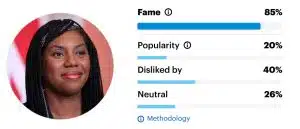
Then, of course, there’s the popularity of the health secretary himself:
So still a higher approval rating than you or your Government.
Waiting lists are over 6 million and you’ve cut 1000 consultant and GP training posts out of spite.
The public want someone who can fix the health service, not someone using it as a stepping stone to their PM run. https://t.co/bX57ioZFij pic.twitter.com/rM8JPdibap
— DoctorsVote (@DoctorsVoteUK) April 8, 2026
Did anyone else know that YouGov tracks the popularity of individual politicians? That has the potential to become utterly soul-destroying.
I bet this is going to come in handy.
What unites us?
Anyway, let’s see what the ‘opposition’ thinks:
I will ban resident doctors and consultants from going on strike – as we already do for the Police and Armed Forces.
Labour has chosen the unions over patients. The @Conservatives choose patients, because only we are serious about getting Britain working again.
— Kemi Badenoch (@KemiBadenoch) April 8, 2026
You know, it’s got to be difficult for the likes of Badenoch and the other Tory scum at the moment. Labour keep coming out with all of the horrific right-wing policies that used to be the Conservatives’ bread and butter.
Look, poor Badenoch has had to resort to making shit up. ‘Labour has chosen the unions over patients’ – come again now? Are we listening to the same Labour health secretary?
You know, if Streeting and Badenoch sat down and talked it out like grownups, they’d find they’re more alike than they are different.
Both clearly think they have free rein to abuse NHS doctors.
Likewise, they both think they can lie to the public and get away with it.
And, of course, both of them are working as hard as they can to ensure that Labour are never elected again.
Well would you look at that – it came in handy immediately.

In the day following President Donald Trump’s announcement of a two-week ceasefire with Iran, dozens of congressional Republicans released statements of support for the administration’s peace negotiations.
But the lawmakers largely steered clear of one major topic: oil.
Crude prices tumbled following Trump’s Tuesday night announcement that the Strait of Hormuz would reopen as part of the ceasefire agreement. It’s what many Republicans were hoping for heading into the midterm elections.
But despite the ceasefire, it’s unclear when international oil shipments will return to normal through the Strait of Hormuz, and there’s alarm about Iran gaining more power over a waterway that carries roughly 20 percent of the world’s oil traffic.
“This is an important step toward ending the conflict, but we need to remain vigilant,” said Sen. John Hoeven (R-N.D.), a member of the Energy and Natural Resources Committee. “We must maintain pressure on Iran to follow through on its commitment to re-open the Strait of Hormuz and agree to a deal that achieves our objectives.”
Indeed, Iran state media reported Wednesday that the country would move to close the strait again if Israel kept bombing targets in Lebanon. The White House said Lebanon was not part of the ceasefire and downplayed the closure threat.
Still, the president has appeared open to Iran keeping some influence over the strait and charging ships for crossing. That’s something causing alarm with industry leaders.
“The supposed negotiating document, in my view, has some troubling aspects, but time will tell. I look forward to the architects of this proposal, the Vice President and others, coming forward to Congress and explaining how a negotiated deal meets our national security objectives in Iran,” Sen. Lindsey Graham (R-S.C.), long an Iran hawk, wrote on X about initial reports on the ceasefire deal.
Other Republican were less specific in their response. Energy and Natural Resources Chair Mike Lee (R-Utah) wrote on social media that the ceasefire was “excellent news.” But he did not weigh in on the oil price declines Wednesday or lingering concerns about energy markets, and his office did not respond to request for comment.
On the House side, Energy and Commerce Chair Brett Guthrie (R-Ky.) similarly kept his ceasefire comments focused on military objectives, rather than the energy ramifications of the conflict.
“I pray that the end of hostilities will be lasting, that the Iranian regime permanently ends their nuclear ambitions, and stops their spread of terror once and for all,” Guthrie wrote.
Sen. Kevin Cramer (R-N.D.), another outspoken Republican on energy issues, took a tone of caution while celebrating the ceasefire agreement. “We have to keep our eyes wide open obviously, it’s not like the Iranian regime is good for keeping its word, but in my mind, this is a pretty good breakthrough,” he said in a statement.
Rep. Andy Biggs (R-Ariz.) was one of the only GOP lawmakers to comment about energy and Iran on Wednesday. But rather than calling attention to plummeting oil prices, he instead made an argument for American energy independence.
The president and his allies have been touting their support for more U.S. fossil fuel production as an insurance policy against global disruptions, even though average gasoline prices spiked from $3.25 a year ago to more than $4.
“If the past two months have taught us anything, it’s that we can’t put a price tag on American energy independence and dominance,” Biggs wrote on social media.
Democrats keep up attacks

The ceasefire announcement and drop in oil prices didn’t blunt the Democrats’ campaign that the administration’s war — and other policies — are hurting American consumers.
Minority Leader Chuck Schumer highlighted the continued volatility in the Strait of Hormuz during a press conference Wednesday and said he didn’t expect prices at the pump to ease anytime soon.
“At home here, American families have paid the price for this war. Gas prices have skyrocketed in just a matter of days. They’re not going to change until August. And in general, the world oil markets will be unsettled for years,” Schumer said.
House Energy and Commerce ranking member Frank Pallone (D-N.J.) said, “Even though there’s now a ceasefire, the oil supply chain has unfortunately been disrupted — and may be for a long time.”
Iran’s control over Strait of Hormuz traffic — something it didn’t have before — is also giving Democrats ammunition against the president’s decision to join Israel in attacking Iran.
“A waterway that was free to the world is now a toll booth that Iran controls,” wrote Rep. Mike Levin (D-Calif.) on social media. “Every barrel of oil that gets taxed on the way through raises prices for American families”
Andres Picon contributed to this report.

Forza Horizon 6 Initial Drive Trailer Captures an Epic Opening Drive Across Japan with In-Game Footage

NATO’s Mark Rutte faces Trump over US-Israel war on Iran

Family offices see gains after making opportunistic bets on oil

Why Israel is blocking foreign journalists from entering

Bitcoin: We’re Entering The Most Dangerous Phase

Alan Cumming Brands Baftas Ceremony A ‘Triggering S**tshow’

Which 2 would you pick? #finance #investmenttips #investmentadvice #investmentforbeginners #trader

google pay pocket money kya hai | how to use google pay pocket money | gpay pocket money new update

WARNING: Bitcoin is 11 Days Away from a MASSIVE Move! (ETH, XRP, SOL, AVAX)
-

 NewsBeat7 days ago
Steven Gerrard disagrees with Gary Neville over ‘shock’ Chelsea and Arsenal claim | Football
-

 Business7 days ago
No Jackpot Winner and $194 Million Prize Rolls Over
-

 Fashion6 days ago
Weekend Open Thread: Spanx – Corporette.com
-

 Business5 days ago
Expert Picks for Every Need
-

 Business4 days ago
Three Gulf funds agree to back Paramount’s $81 billion takeover of Warner, WSJ reports
-

 Sports5 days ago
India men’s 4x400m and mixed 4x100m relay teams register big progress | Other Sports News
-

 Tech2 days ago
How Long Can You Drive With Expired Registration? What Florida Law Says
-
Business4 days ago
No Jackpot Winner, Prize to Climb to $231 Million
-

 Fashion3 days ago
Massimo Dutti Offers Inspiration for Your Summer Mood Board
-

 Fashion2 days ago
Let’s Discuss: DEI in 2026
-

 Tech7 days ago
Commonwealth Fusion Systems leans on magnets for near-term revenue
-
Politics6 days ago
Wings Over Scotland | The quality of mercy
-

 Business5 days ago
Akebia Therapeutics, Inc. (AKBA) Discusses Pipeline Progress and Strategic Focus on Kidney Disease Treatments at R&D Day – Slideshow
-

 Fashion7 days ago
Statement Sunglasses: The Accessory Shaping Modern Fashion
-

 Crypto World23 hours ago
Bitcoin recovers as US and Iran Agree a Ceasefire Deal
-

 Politics6 days ago
East Jerusalem Palestinian families eviction orders
-

 Fashion7 days ago
For Love & Lemons’ Spring 2026 Line is for the Romantics
-

 Sports7 days ago
Which German players will make final cut?
-

 Politics6 days ago
Why so many children are now classified as ‘disabled’
-

 Fashion7 days ago
Coffee Break: Santa Croce Tote
You must be logged in to post a comment Login