
Politics
Mandelson Messages Reveal Streetings Government Criticism

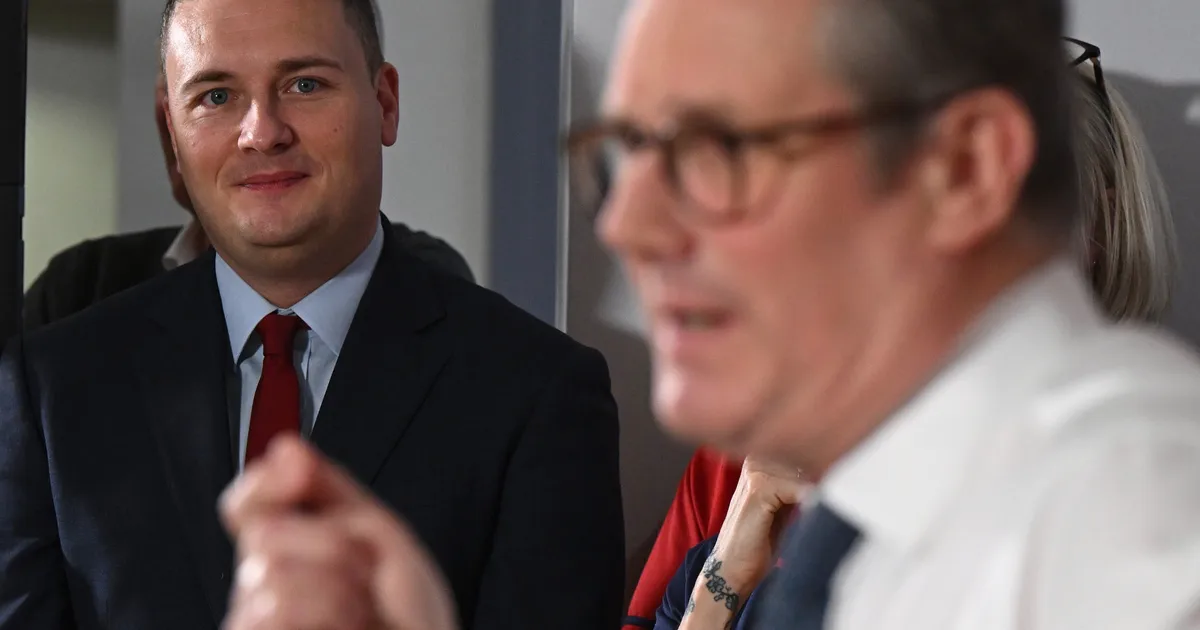
Wes Streeting has gone to war with No.10 again as it emerged he criticised the government in private messages to Peter Mandelson.
The health secretary accused Keir Starmer’s allies of briefing against him with claims that he was behind Anas Sarwar’s failed coup against the prime minister.
Sarwar, the Scottish Labour leader, became the most senior party figure to call on Starmer to resign yesterday.
However, the attempted putsch spectacularly failed as more than 100 Labour MPs, including every cabinet minister went public to back the prime minister.
Some Labour figures speculated that Sarwar may have been acting with the approval of Streeting, who has never made any secret of his own leadership ambitions.
But a spokesperson for Streeting said: “Wes did not ask Anas to do this, he did not co-ordinate with Anas on this.
“Anas is the leader of the Scottish Labour Party, he is his own man, and Wes has the highest respect for him.
“At the same time as Wes was in an interview saying that Keir needed a chance to set out his case and his plan, No.10 were briefing that Wes had told Anas Sarwar to make his statement. This is the problem.”
That was a reference to an interview Streeting did on Monday with Sky News political editor Beth Rigby on her Electoral Dysfunction podcast.
In it, the health secretary replied “no” when asked whether the PM should quit.
However, he also published WhatsApp messages between him and Mandelson, the disgraced former Labour peer, in which he is critical of the government in areas including the economy and the war in Gaza.
In one, Streeting says: “There isn’t a clear answer to the question: why Labour?”
Mandelson replied that the government “doesn’t have an economic philosophy which is then followed through in a programme of policies”, to which Streeting said: “No growth strategy at all.”
On Gaza, Streeting said Israel was “committing war crimes before our eyes” and engaging in “rogue state behaviour”, putting him at odds with the official government policy on the conflict.
Elsewhere in the messages, Streeting – who only retained his Ilford North seat in 2024 with a majority of 528 – said he was “toast at the next election”.
By voluntarily releasing his messages with Mandelson, Streeting is attempting to get ahead of the story about his links with the former UK ambassador to America, who is now facing a criminal investigation over claims he leaked sensitive government information to convicted paedophile Jeffrey Epstein.
Although the pair sign off some of their messages with kisses, Streeting insisted he was “not a close friend of Peter Mandelson”.
A Labour source said the controversy had scuppered any hope Streeting had of being prime minister.
“Someone needs to take Wes to one side and tell him, you’re not getting it,” the source told HuffPost UK.


The Department of Work and Pensions (DWP) is bragging about how “successful” the Managed Migration to Universal Credit has been. This is despite over 360,000 vulnerable people being stripped of vital benefits in the process.
The DWP announced the closure of Employment Support Allowance and Housing Benefit following the campaign to force claimants to move to Universal Credit.
They bragged:
Over 1.9 million people now better supported to find good, secure jobs as the Government moves customers off outdated benefits and on to Universal Credit
Considering ESA was a benefit for disabled people who couldn’t work as much or at all, it’s absolutely gross that the focus here is on work. But it doesn’t come as a surprise from the department that wants to force disabled people into work by any means necessary.
What about those who haven’t migrated?
However, this ignores how many haven’t been able to claim or have been stripped of their benefits. The DWP sent out over 2,352,886 managed migration notices, and 1,985,703 have moved over. That means 367,183 people haven’t successfully moved over yet and could have them stripped away.
That means a huge number of disabled people who already live in poverty will be forced into even harsher living conditions. As the Canary has previously reported, making the move is especially difficult for chronically ill and disabled people, who struggle with stress and lack the energy to fill in excessive forms.
An internal report showed that some disabled claimants often have very little of what they were being asked to do. As a result, many failed to make a new claim for Universal Credit and lost their legacy benefit.
It’s been such a cause for concern that mental health professionals have warned the DWP that migration will put claimants at risk.
The National Association of Welfare Rights Workers told Work and Pensions committee chair Debbie Abrahams that:
These claimants will all have long-term health conditions and/or disabilities, and their legacy benefits are likely to be their only source of income. A failure to migrate to universal credit therefore carries a high risk of destitution, rapid deterioration in their health, and even death.
The latest DWP statistics, published on 11 November 2025, provide a detailed analysis of the migration of the ESA cohort to universal credit. The Department highlights that, for those sent a migration notice between July 2024 and May 2025, 3% failed to make a claim to universal credit and had their legacy benefits stopped. However, for claimants who were in receipt of ESA only, the figure alarmingly doubles to 6%.
Many lose out while DWP pushes workshy narrative
What’s also missing is that many forced onto UC have their benefits reduced and somehow have to survive on less as prices rapidly increase. Policy in Practice found that around 200,000 households lost around £59.54 a week. That’s over £230 a month that people are just expected to do without.
The DWP release also only mentions two of the benefits that are being amalgamated into Universal Credit. Others have an even worse success rate. As the Canary has previously reported, nearly a quarter of Tax Credits claimants who’ve been forced onto Universal Credit ended up without any benefits.
And once again, despite ESA claimants having already been found too sick to work, the DWP is obsessed with pushing the workshy narrative.
This Government is committed to updating the welfare system so that it promotes opportunity, rather than stifling it – as part of our Plan for Change.
The campaign means the number of people on Universal Credit has increased, particularly the number of people who receive the benefit with no requirement to look for work, as, since June last year, the focus has been on moving vulnerable people from Employment and Support Allowance.
There’s absolutely no need for them to constantly mention people with ‘no work requirements’ other than to remind people of this fact. By using this wording, they make it sound like people are choosing to work, as opposed to not being well enough to.
While the DWP are celebrating ‘supporting’ so many to switch to UC, it’s clear what their motives are. It’s easier to push people into work from Universal Credit, and even easier to turn the public against people with ‘no work requirements’.
Featured image via the Canary

4 min read
The Cyber Security and Resilience Bill must go further to bolster our energy security in the face of growing digital threats.
One lesson from the conflict in Iran is that a cyber attack is the opening move of modern warfare. Israel proved this, hacking Tehran’s CCTV cameras to mark key targets and the Ayatollah himself for US and Israeli bombing.
But the UK is severely underprepared for this reality. As our energy sector rapidly digitalises like the rest of the world, a new target is opening up for hackers, and unless we learn from the Iran-US war, they will be able to strike at the heart of our industries, government and households.
Our nation is no stranger to having its energy weaponised, causing economic and social pain to British households. From blackouts in the 1970s due to the miners’ strikes and the oil crisis, to energy bills soaring when gas prices spiked following Russia’s invasion of Ukraine in 2022.
Cyber attacks can recreate this economic damage, and no form of energy supply is safe from attack. Whether it is gas, renewables or nuclear, every form of energy that our nation relies upon is susceptible. And as our energy system continues to digitalise, the threat cyber attacks pose to our country is growing.
The UK’s energy system is not prepared for such attacks, and Labour is failing to address this threat to our security.
Our enemies know this all too well. Over 90 per cent of the largest energy firms have already fallen victim to cybersecurity breaches to date, with attacks becoming increasingly regular. And they can repeat the damage other hackers have done to major British companies on our energy system, similar to the attack on Jaguar Land Rover in my constituency of Meriden and Solihull East in 2025 that cost the UK economy an estimated £1.9bn. This also caused major disruption throughout the automotive supply chain and has left companies facing bankruptcy.
Unless we strengthen our security, a cyber attack from anywhere in the world could switch off our energy supply, bringing much of our daily life and our economy to a grinding halt.
Despite this urgent need to take action, the government has ignored the severity of this threat and failed to tackle it since taking office. The Cyber Security and Resilience Bill is a unique opportunity to tackle this glaring oversight. However, Labour ministers are squandering this opportunity to protect our energy supply from cyber attacks.
This is why I am calling on the government to strengthen our energy system against cyber attacks by going further in the Cyber Security and Resilience Bill.
Firstly, the bill should only allow data from the UK energy sector to be processed either within UK territory or that of allied countries with robust cybersecurity mechanisms. By limiting the processing of this data to places we can trust, we would make it harder for cyber criminals to access energy firms’ data and use it for nefarious purposes.
Furthermore, the government should also expand the requirements for energy companies to report when they are victim to cyber attacks. Reporting these attacks to government cybersecurity agencies is essential for deterring further attacks and alerting them to existing holes in our security. Although there are already reporting requirements in the UK, they are not fit for purpose, and the bill does not go far enough to improve them. The current state of the bill means many cyber attacks will continue to go unreported to the relevant cybersecurity agency, reducing our ability to establish where our energy grid is exposed and to respond accordingly.
The risk cyber attacks pose to the UK’s energy security is clear, as is the government’s failure to address this threat. By amending the Cyber Security and Resilience Bill to secure energy firms’ data and ensure more cyber attacks are reported, we can strengthen our cyber security and make it harder for our enemies to turn off our power.
Saqib Bhatti is Conservative MP for Meriden and Solihull East
4 min read
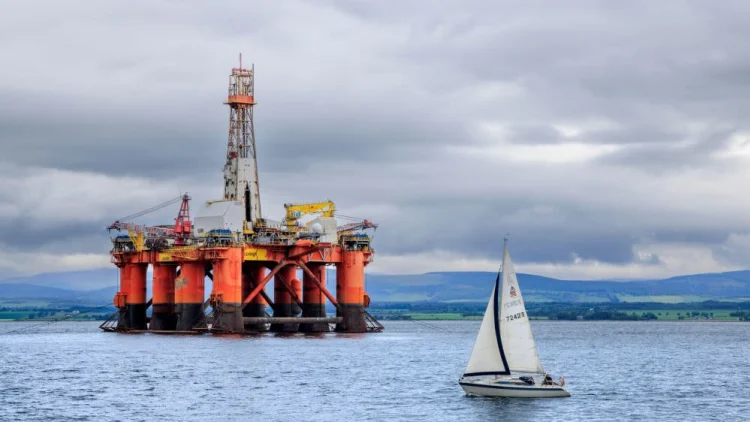
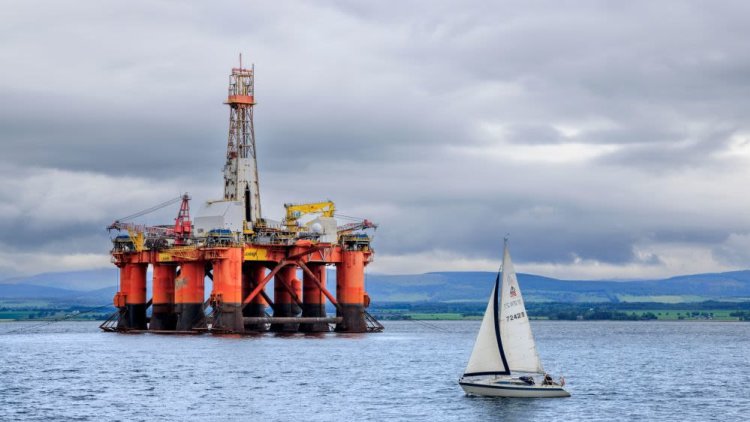
North Sea extraction won’t bring down energy bills or fund government subsidies. But, done responsibly, it has a role to play in our national security.
For decades, China has realised the importance of energy security to its long-term success. It increased electrification, with a corresponding rise in domestic renewables and a massive increase in strategic oil and gas reserves.
Meanwhile, the UK has failed to learn the lessons of energy crises dating back to the 1970s. The dual shocks of the Russian invasion of Ukraine in 2022 and the ongoing conflict in the Middle East present an opportunity to correct this.
These events have shown in the starkest terms that relying on global markets alone leaves the UK dangerously exposed to external shocks. Energy security is why the government and the oil and gas industry must abandon short-term, distracting arguments around price and tax revenues, and work together.
The physical protection of energy infrastructure is central to national resilience and our deterrence posture. In 2024, the UK relied on imports for 43.8 per cent of its primary energy, up sharply from 28 per cent in 2020, reflecting a significant rise in dependence on external suppliers.
Domestic oil and gas production fell to a record low, declining 6.5 per cent year on year, as output from the UK’s mature continental shelf continued to contract. Production is now around 20 per cent of its 2000 level. Meanwhile, UK gas consumption in 2024 reached 689 TWh, compared to domestic production of just 344 TWh, leaving a substantial structural deficit.
In a world of rising geopolitical tension, that deficit is a strategic weakness. A stable, managed level of North Sea output is not about returning to past production peaks; it is about ensuring the UK retains sovereign access to critical energy supplies when global markets tighten, or hostile states attempt to disrupt or attack our country.
Offshore Energies UK accepts that increased production in North Sea oil and gas would have no meaningful impact on UK energy prices, as that product is sold on an international market, which dictates the price. A secondary claim that increased production would generate tax receipts to bring down energy prices is also questionable. Research by the University of Oxford found that even in the implausible scenario of the UK being able to maximise North Sea oil and gas and use all revenues to subsidise lower energy bills, the impact would be limited, a maximum of £82 per year off a household bill.
However, there are two reasons the future of North Sea oil and gas remains critical and should be supported.
First, given the volatility and increased tension around the world, the government should explore an agreement to allow increased extraction with a binding commitment that a sufficient reserve is created against future shocks and, in the event of a crisis, North Sea oil and gas would be provided to UK markets for a fixed, lower price to protect households and businesses.
Second, we must fully bridge the skills gap between current oil and gas and a more secure renewables future. Around 154,000 workers are employed across the UK’s offshore energy sector. These are well-paid and highly technical jobs protected by trade unions.
The UK recently secured a record 14.7 GW of new renewable capacity, enough to power up to 16m homes. The UK now has an unprecedented acceleration in renewable deployment and a major reinforcement of the UK’s long-term energy security and resilience.
This represents a once-in-a-generation opportunity to build careers in high-skill, high-wage, union-protected industries. But that opportunity only exists if we preserve the workforce pipeline built by the North Sea.
Skills in the North Sea oil and gas supply chain are directly transferable to the renewable system: subsea engineering, marine operations, fabrication, grid upgrades and home construction. Yet the oil and gas workforce risks falling to between 57,000–71,000 by the early 2030s. Losing that capability would weaken our security and our ability to deliver large-scale clean energy projects.
A stable tax regime matters too. That is why the Oil and Gas Price Mechanism should replace the Energy Profits Levy, supporting investment while ensuring the public benefit when prices are high. The oil and gas industry should be working with government to make the case that a secure, responsibly managed North Sea is essential to national resilience and deterrence, and is the bridge to the skills we need for the UK’s renewable future.
Graeme Downie is the Labour MP for Dunfermline & Dollar

FIFA President Gianni Infantino has confirmed the organization’s commitment to Iran’s participation in the 2026 World Cup finals, emphasizing that there is no alternative plan to exclude them despite the political complexities surrounding the tournament.
ESPN quoted Infantino as saying during an interview with the Mexican channel N+ Univision:
We want Iran to play… they will play in the World Cup. There is no Plan B, C, or D; there is only one Plan A.
Infantino explained that FIFA remains committed to holding the tournament as scheduled, with the participation of all qualified teams, stressing that the organization seeks to “build bridges” through football, far removed from political tensions.
These statements come amid escalating geopolitical tensions, particularly with the United States, along with Canada and Mexico, hosting the next World Cup. This has raised questions about Iran’s potential participation or the possibility of moving its matches to another country, given the escalating US-Israeli conflict with Iran.
According to the agency, the Iranian Football Federation had proposed playing its matches outside the United States, but FIFA has not yet shown any inclination to amend its organizational plans.
The 2026 World Cup is scheduled to take place between June 11 and July 19, marking the first edition to feature 48 teams and be held across three countries.
Featured image via the Canary
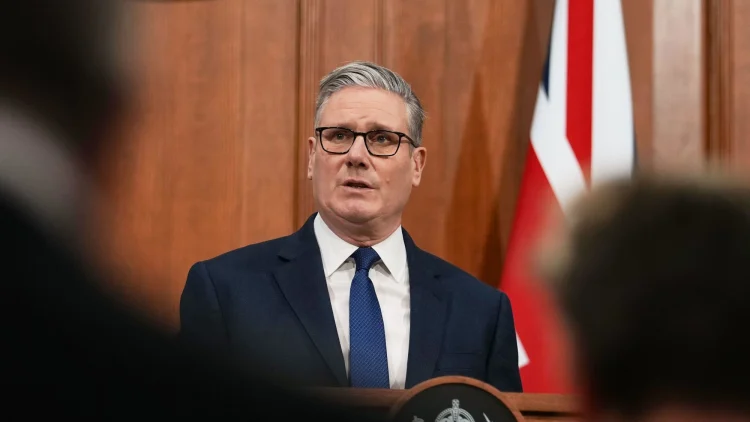

Keir Starmer spoke from Downing Street on Wednesday morning as the Iran war entered its second month (Alamy)
3 min read
Keir Starmer has warned that attempts to resume the vital flow of traffic through the Strait of Hormuz “will not be easy” in a Downing Street statement on the Iran war.
Speaking on Wednesday morning, the Prime Minister said that while the Iran war “will impact the future of our country”, the UK is “well placed to weather it”.
“I want to reassure the British people that no matter how fierce this storm, we are well-placed to weather it, and that we have a long-term plan to emerge from it a stronger and more secure nation.”
Starmer announced that Foreign Secretary Yvette Cooper will host a meeting with 35 nations on the reopening of the Strait of Hormuz later this week, with military planners to also “look at how we can marshal our capabilities and make the strait accessible and safe after the fighting has stopped”.
But he said: “I do have to level with people on this. This will not be easy.”
The PM said “the most effective way” to alleviate the cost of living in Britain is to push for “de-escalation in the Middle East, a reopening of the Strait of Hormuz”.
Significant proportions of the world’s oil and gas supplies pass through the Strait of Hormuz, making it a vital shipping lane.
However, traffic through the lane has plummeted since the US and Israel launched strikes on Iran, with Tehran threatening to attack ships passing through it.
The disruption is causing energy prices to increase around the world, and there are also concerns about the impact it could have on food prices. The Food and Drink Federation has estimated that food inflation will hit 9 per cent in the UK this year as a result of the conflict.
On Wednesday, several measures aimed at tackling the cost of living come into force, including increases to the national living wage and the national minimum wage, support for households using heating oil, and money off energy bills.
However, the government is expected to announce further support for households most exposed to rising energy prices in the coming weeks, with household bills expected to rise significantly when the Ofgem price cap expires in July.
The war in Iran has now entered its second month, after the US and Israel began a series of strikes on Iran in February this year. US President Donald Trump said on Tuesday that the US would pull out of Iran in “two or three weeks” and is set to give an “important update” on the war in the early hours of Thursday morning.
On Tuesday, Buckingham Palace confirmed that King Charles and Queen Camilla’s state visit to the US would go ahead this month, despite Trump having repeatedly attacked the UK in public over its refusal to play a greater part in the US and Israel’s war with Iran.
On Monday, Starmer reiterated that the Iran conflict is “not our [the UK’s] war”.
PM says Iran war shows UK must be closer to EU
Speaking from Downing Street this morning, Starmer said that it is “increasingly clear” in light of the war in the Middle East that the UK’s “long-term national interest requires closer partnership with our allies in Europe and with the European Union.”
The Prime Minister indicated that he wanted to take the UK even closer to the bloc’s single market as part of a major reset, announcing that there would be a new summit with the EU later this year.
“We want to be more ambitious, closer economic cooperation, closer security cooperation, a partnership that recognises our shared values, our shared interest and our shared future, a partnership for the dangerous world that we must navigate together, a world where this government will be guided, at all times, by the interests of the British people.”
Politics
Squeezed from all sides: What Denmark’s election tells us about the crisis of the European centre parties
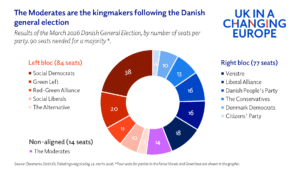
Sara Hagemann unpacks the results of the recent elections in Denmark and argues the distribution of votes speaks to broader patterns of political change across Europe.
Denmark went to the polls on 24 March, and the result was, by any measure, historically striking. The Social Democrats under Prime Minister Mette Frederiksen won the most seats — 38 out of 179 in the Folketing — but with just 21.9% of the vote, this marks the party’s worst result since 1903. Their two coalition partners, centre-right Venstre and the Moderates, also lost ground significantly: Venstre fell to 10.1% and 18 seats, its worst result in the party’s 156-year history, while the Moderates ended on 7.7% and 14 seats. Neither the left-leaning “red bloc” (84 seats) nor the right-leaning “blue bloc” (77 seats) secured the 90 seats needed for a majority. It is clear that the ongoing coalition negotiations will be protracted and complex, with Foreign Minister Lars Løkke Rasmussen’s Moderates occupying a decisive kingmaker role.
The elections can hence be described as a muddy outcome, yet with a clear message from the voters: the incumbent centre parties may have performed well on the international stage as they handled the unwelcome attention from the US over Greenland, and also delivered on a stellar EU presidency last year, but they did not convince the Danes on domestic issues. Indeed, the campaign exposed a deep divide over two issues in particular: environmental policy and immigration. Taken together, the results show a set of structural dynamics worth examining carefully — not least because they speak to broader patterns of political change across Europe.
One of the most striking features of this election was the degree to which the traditional left-right axis has become blurred among the larger centre parties. The outgoing government was itself an unusual creature: a cross-bloc coalition of the Social Democrats, Venstre, and the Moderates, straddling the historic red-blue divide. Its formation in 2022 was widely seen as an anomaly; the 2026 result suggests it may instead signal something more structural.
The Social Democrats have spent years migrating rightward on immigration while maintaining a strong welfare-state platform, and in this campaign moved further still — proposing a new wealth tax while simultaneously competing with Venstre on deportation policy. Venstre, in turn, entered the election supporting VAT cuts on food, a traditionally centre-left position, while promoting corporate tax reductions. The result: it became increasingly difficult for voters to locate clear ideological distance between the major parties on core economic questions.
This convergence in the centre of the main parties has now fed a flight of voters towards alternatives at both ends of the spectrum. The Green Left’s rise is the clearest expression on the left: around 15% of former Social Democrat voters switched to the more left-wing Green Left (SF) — a single shift that accounted for close to half of all Social Democrat losses. Conversely, the resurgence of the Danish People’s Party reflects a mirror image on the right, all based on a campaign to get even tougher on immigration (where Denmark is already a notorious hard-liner in Europe).
Hence, what this election makes clear is that Danish politics is increasingly organised around two cleavages that cut across the old left-right axis: immigration and environmental policy. This pattern is well-documented in comparative European politics — the transformation from one-dimensional left-right competition to multi-dimensional contestation around cultural, communitarian, and ecological values is a central finding of the past decade’s scholarship on Western European party systems. The common term is GAL-TAN: indicating the endpoints of a new “scale” based on ‘Green-Alternative-Libertarian’ and ‘Traditional-Authoritarian-Nationalist’ values.
On immigration, the competition across the spectrum was striking. The Social Democrats campaigned on a package of measures Frederiksen herself described as the strictest immigration regime in Europe, including proposals for a new Deportation Agency to handle cases through an administrative rather than judicial track, and continued support for offshore asylum processing in partnership with other EU countries. Venstre matched this with a stricter deportation reform as a central plank. The Danish People’s Party went further, calling for “remigration” — the large-scale removal of immigrants, particularly Muslims — and leader Morten Messerschmidt stated publicly that his party would only support a government committed to actively reducing the number of Muslims in Denmark.
The effect of this cross-party bidding war was paradoxical for the Social Democrats: having moved substantially rightward on immigration — a strategy that alienated some left-leaning voters — they were nonetheless attacked from the right as insufficiently tough. Immigration, once primarily the terrain of the radical right, has become a contest across the whole party system.
The environmental dimension is equally revealing. The 2026 campaign became, improbably, as much about pigs as about any other single domestic issue. Denmark is Europe’s most pig-dense country, producing close to 30 million animals annually, and the environmental consequences — nitrate pollution of groundwater, pesticide contamination, and threats to drinking water quality — became a major campaign theme in the final weeks, driven by new research and a citizens’ initiative that gathered over 80,000 signatures. Green organisations launched what they called a ‘svinevalg’ — pig election — framing the vote as a choice between agricultural interests and environmental and public health.
Alongside farming policy, opposition to large-scale onshore solar development emerged as a distinct political fault line — particularly among rural parties on the right, pointing to a broader urban-rural dimension in environmental politics. The Denmark Democrats campaigned against the siting of solar farms on agricultural land under the slogan “yes to fields of wheat, no to fields of iron,” framing Denmark’s rapid renewable energy expansion as a threat to rural landscapes and agricultural communities.
Coalition negotiations will now revolve almost entirely around the Moderates. Løkke Rasmussen’s call on election night to stop talk of “corner flags” and come play “in the middle” was both a negotiating position and an accurate description of his strategic leverage. A continuation of some form of centrist arrangement — whether under Frederiksen or Venstre’s Troels Lund Poulsen — remains the most likely outcome.
For observers in the UK and across Europe, the most important question is what this means for Danish foreign policy. Here, the answer is considerably clearer than the domestic picture. On Ukraine, European defence, and NATO, Denmark has been among the most consistent and vocal European voices — and this position enjoys cross-party consensus. Regardless of who leads the next government, Denmark’s commitment to Ukrainian sovereignty, its support for European defence investment, and its role as a reliable EU partner will not waver.
By Sara Hagemann, Professor, University of Copenhagen, and Visiting Professor, London School of Economics and Political Science.

MLAs and representatives of the community and voluntary sector are among those who have slammed the Labour government for the decision to push ahead with funding cuts to charities in the north of Ireland. As a result of post-Brexit expenditure changes, on April 1 Westminster will replace the UK Shared Prosperity Fund (UKSPF) with the Local Growth Fund (LGF). The UKSPF supplied money previously provided by the EU. The move will result in a loss of £16m per year for the community and voluntary sector, going from £25 million to just £9 million.
People Before Profit MLA Gerry Carroll was among those who condemned the decision, saying:
From Wednesday, Westminster will reduce funding for community support programmes by a staggering 64%. This will leave 11,000 people without employment support, and equates to roughly 400 job losses in the sector. It’s particularly cruel that on the same day hundreds of charity workers are handed redundancy notices, a £14,000 pay increase for MLAs will come into effect.
Politicians to get 27% pay rise as charities have funds slashed
The independent remuneration board confirmed last month that MLAs would be receiving the obscene salary uptick, taking salaries up to £67,200. Part of their reasoning was that it will be combined with penalties in the event of another Stormont shutdown. There will be 10% cuts on each of weeks 6, 12 and 18 in the event of a collapse. This seems like curious logic, given the whopping pay boost gives MLAs a buffer that makes financial penalties much easier to absorb.
Carroll called on Stormont to fix the problem through transfer of moneys from corporate rates relief:
Rather than begging Westminster for help that clearly isn’t coming, the Executive must step in today. It is entirely within their remit to provide the £15.8 million to keep these services afloat. The five big parties found £1.2 million for a 27% pay hike and handed over £76 million in rates breaks for the likes of Moy Park and Coca Cola last year alone. It’s time they cough up for people who need it most.
England, Scotland and Wales have all long since abolished these corporate handouts. Carroll also criticised Democratic Unionist Party (DUP) education minister Paul Givan for “overseeing a slow-motion collapse of youth services“. He concluded:
Working class communities didn’t create this crisis and they shouldn’t be made to pay for it.
The cuts will primarily affect employment support programs. The Northern Ireland Council for Voluntary Action (NICVA) represents charity and community groups across the Six Counties (a decolonial term to refer to the north of Ireland). Earlier in March their CEO Celine McStravick highlighted the effect cuts will have on already marginalised groups:
This drastic reduction in funding for Local Growth will strip away vital services for people furthest from the labour market – including young people, those with disabilities or returning to work after long‑term illness and those with caring responsibilities. These are precisely the groups most in need of targeted, sustained intervention and support.
Disabled people to lose crucial support
The Chief Commissioner for the Equality Commission for Northern Ireland Geraldine McGahey had previously highlighted the support needed by disabled people to assist them into employment. She said:
Recent figures report that the disability employment rate here remains stubbornly low at 43.4%, while the disability employment gap is most recently reported as 40.3 percentage points and remains the largest of any of the UK regions.
Ultimately Northern Ireland simply cannot afford cuts to the very limited budgets that currently exist for this important and often life changing work.
NICVA’s McStravick contrasted the support Westminster provides other nations under its control with that granted to the North of Ireland:
Today’s announcement from the Prime Minister highlights a growing disparity between the opportunities being created elsewhere in the UK and the shrinking support available for those most acutely in need across Northern Ireland. While England is benefitting from billions in new investment to tackle youth unemployment and expand apprenticeships, Northern Ireland is witnessing its core employability infrastructure being hollowed out.
Secretary of state for Northern Ireland Hilary Benn has said he expects Stormont to cover the gap in funding itself. However, multiple Northern Ireland Executive ministers have already said they are unable to cover the bare minimum for their departments as it is.
The first day of April is offering fresh opportunities for Westminster to once again show it is populated by fools. Labour continues its trend of being penny wise and pound foolish, as it fails to cough up tiny sums that would pay off many times in the long run.
Featured image via the Canary
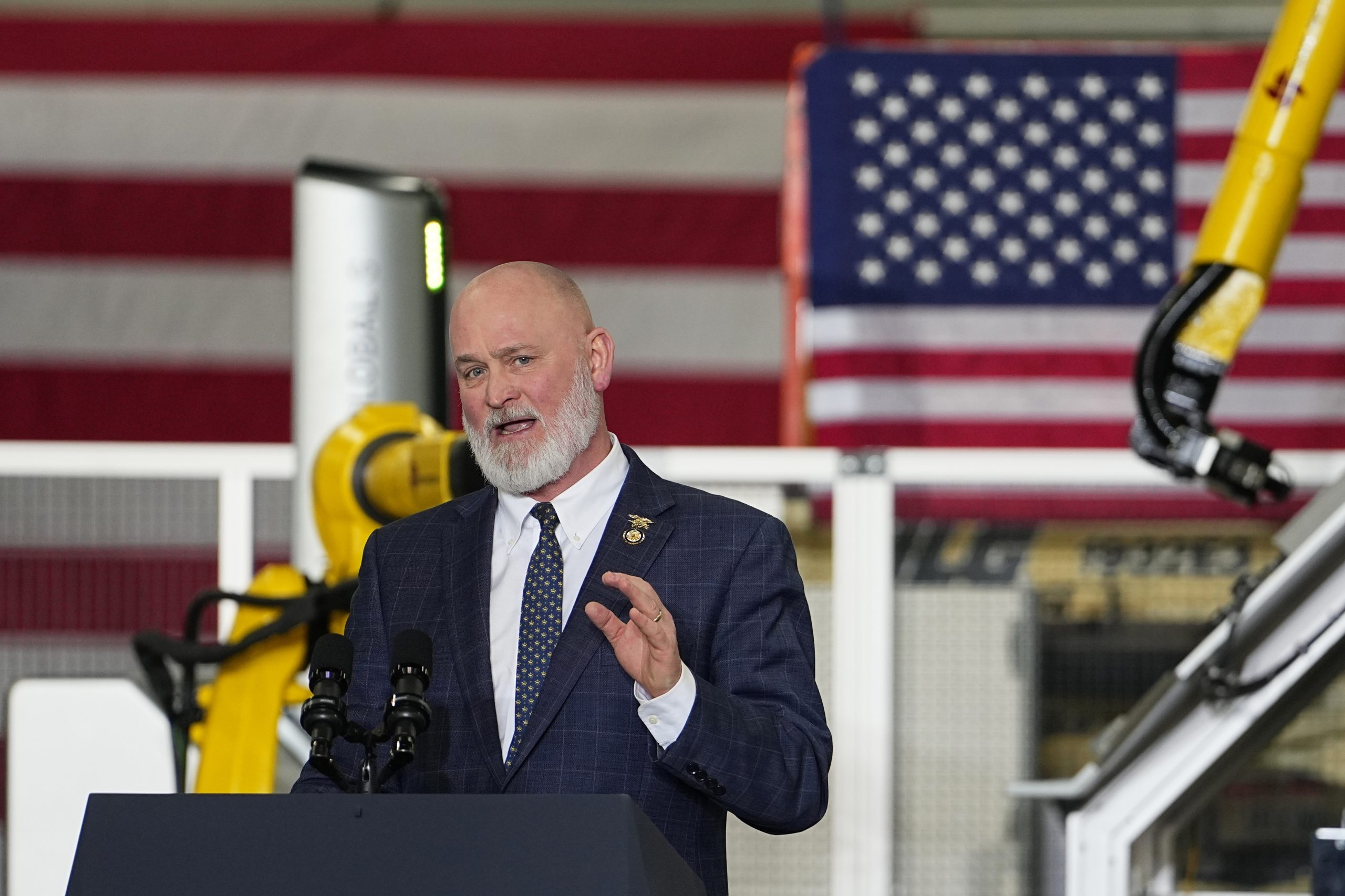

Democrats are opening a new front in their midterm offensive over Iran.
VoteVets Action Fund is rolling out a $250,000 ad campaign Wednesday targeting Rep. Derrick Van Orden (R-Wis.) over his support of the war with Iran, according to details shared first with POLITICO.
It’s one of the first examples of Democrats putting real money behind the issue in the midterms since President Donald Trump’s attack on the country more than a month ago. And it comes as Republicans grow increasingly worried that the war’s impact on prices could hurt the party at the ballot box this fall.
The ad attacks Van Orden, an at-risk Republican and combat veteran, for backing a Pentagon push for $200 billion more for the Iran operation as prices at the pump continue to rise, and after he called last year for cuts to the Department of Veterans Affairs. The ad accuses Van Orden of backing cuts to veterans’ care — though in the hearing referenced, the Republican advocates for slashing bureaucrats to add more doctors.
The spot sheds light on how Democrats are working to weaponize the war: by arguing that Trump is spending big abroad while further pinching voters’ pocketbooks and, in VoteVets’ case, stiffing veterans.
“Look at that gas pump. We’re paying the cost every damn day of this war in Iran. But for Congressman Van Orden, we’re not paying enough. He’s going for another $200 billion dollars to spend in Iran,” a male Marine Corps veteran narrates in the clip.
“This is the same guy who backed big cuts to VA care for vets,” the veteran says, referring to significant staffing reductions at the agency since Trump returned to office, including thousands of medical personnel. “Vets like me, we understand the cost of war. But if we don’t have the money to take care of our veterans, we damn sure can’t afford another war. Call Van Orden on it.”
VoteVets, whose PAC works to elect Democratic veterans, intends to expand its Iran ad campaign into other battleground districts, with a particular focus on GOP veterans who the group argues are blindly following Trump in abandoning his campaign-trail pledge to end endless wars.
“There’s absolutely no doubt that voters throughout the country, and particularly in Rep. Van Orden’s district, are very aware of the fact that every single day we spend billions of dollars [on] this war in Iran is yet another day that not only is the affordability crisis ignored, but it’s getting even worse,” said former Rep. Max Rose, a New York Democrat who serves as a senior adviser to VoteVets. “What this first video represents is our commitment to holding every single Republican veteran in the House of Representatives accountable for their lies, hypocrisy and absence of courage.”
Van Orden, a retired Navy SEAL who served in Iraq and Afghanistan, slammed VoteVets as a “running joke in the veteran community” in a statement to POLITICO. He expressed support for Trump’s military operation and the supplemental funding plan that the White House has been reviewing. But Van Orden stressed that he continues to oppose putting uniformed troops on the ground in Iran.
“Iran has been at war with the United States for 47 years. When we start putting a price tag on American citizens’ lives, we’ve already lost sight of our responsibility,” Van Orden said. “Every single American murdered by these radical Muslim mullahs is priceless, and every American life we can save is beyond value.”
The 30-second spot will run during NCAA games and other live sporting events, as well as on broadcast, radio, streaming services and social media platforms. It represents an escalation in Democrats’ rhetoric and aggression as the party seizes on growing voter backlash to the now monthlong conflict that Trump is threatening to intensify.
Democrats have already been hammering Republicans over affordability as the average price of a gallon of gas soars over $4. Now they’re eyeing ways to connect other cost concerns to the ballooning spending on the war amid reporting that Republicans are considering further reductions to federal health spending to bankroll the military effort — returning to some of their signature issues of the cycle to argue that the GOP is prioritizing fealty to the president over voters’ pocketbooks.
Other Democrat-aligned groups are joining in. Battleground Alliance PAC flew a plane over a minor league baseball game in Pennsylvania over the weekend with a banner targeting Republican Rep. Ryan Mackenzie that read “Mackenzie: Your Iran Vote = Sky High $$$Gas.” The group is planning similar stunts in more than half a dozen other swing districts across Michigan, Iowa, Nebraska and Ohio.
“We’re in a war of choice, which is spending an enormous amount of money, and we’re going to get more health care cuts and oil price increases,” said Andrew Grossman, a senior adviser to the labor-backed Battleground Alliance PAC. “And so the cost of living — like the chaos and the Republican Congress just saying yes always to President Trump — is hitting Americans in our pocketbooks, and that is the single most important issue of our moment.”
Mackenzie’s campaign manager, Andres Weller, dismissed the move in a statement as “the same political stunts that people are tired of. An outside group did the same thing at the same place in 2024, and all it accomplished was annoying people who were trying to enjoy a baseball game with their family and friends.”
Democrats’ ramp-up comes as Republicans are increasingly fearful a prolonged war will hurt their chances of holding onto power in the midterms. The conflict is already fracturing the MAGA coalition. And polls show a majority of Americans are against the operation in Iran, including an Ipsos survey released Tuesday that found two-thirds of Americans want the U.S. to end its involvement even if the president does not achieve all his goals, and that 56 percent expect the conflict will have a negative impact on their personal financial situation.
Voters are “going to look to their members of Congress to see if they double down or be an independent voice [on Iran],” Samuel Chen, a Pennsylvania-based GOP strategist, said. “If they’re doubling down on it in these tight seats in Pennsylvania and Wisconsin and other places, that could be the difference.”
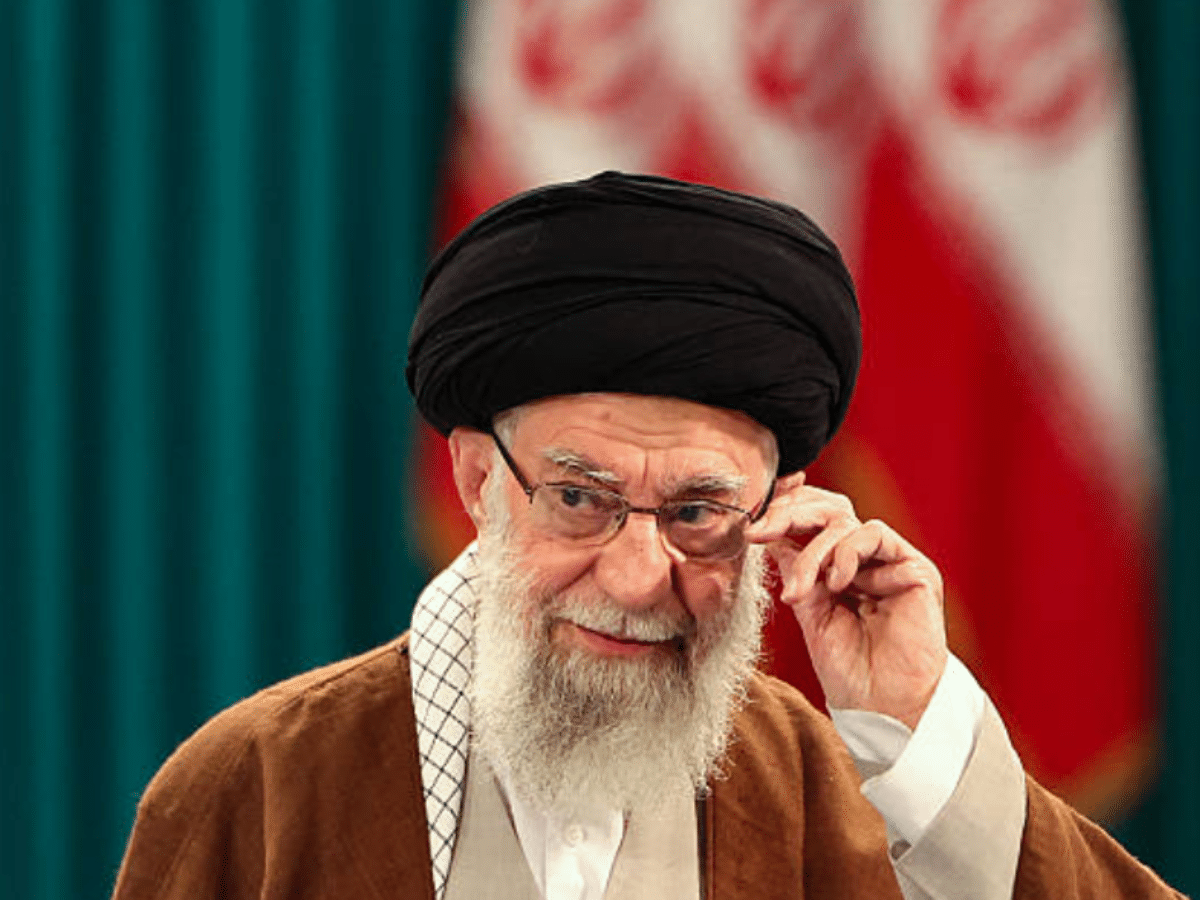
Western media’s reporting of the Anglo-American-Zionist strategy of decapitation of leaders in the Middle East is so prolific that one might think they don’t see a problem with it.
As ever, a central element of settler colonialism and imperialism is cognitive dissonance. After all, imagine the absolute uproar in the West if a political leader was beheaded. But for leaders from the Global South, suddenly beheading is a genius military manoeuvre ripe with incisive intelligence operations.
Western media salivates
Greg Miller of the Washington Post, describing what amounts to state terrorism by Israel, uses words like “tactics,” “honed,” and “capable.”
How Israel tracks and targets Iran’s leaders – with an expanding role from AI. A story from Tel Aviv. https://t.co/tGSd54V9CU
— Greg Miller (@gregpmiller) March 30, 2026
He says:
Israel’s targeted killing tactics — bombs planted months before being detonated, drones capable of slipping into apartment windows and supersonic missiles fired from stealth fighter jets — have been honed by years of conflict in Gaza, Lebanon and Iran.
“Years of conflict” is a funny way of saying ‘belligerent invasions from a rogue state,’ but okay Greg.
The assassination of Khamenei is described a “singular intelligence breakthrough.”
Even when Miller offers criticism, it is not of the terrorism or extrajudicial killings, but because the goals of the decapitation strategy are “elusive” or the AI is not “foolproof.”
There are many such cases.
‘A whiff’
The FT asks whether the killing of a sovereign state’s leader can ever be justified.
When, if ever, is it an appropriate tactic of war or foreign policy to engage in a ‘decapitation strike’ — the intentional targeted killing of the leaders of another state?
Martin Sandbu reports: https://t.co/wGDMLpIRlh pic.twitter.com/YQOcSCgzWW
— Financial Times (@FT) March 28, 2026
To the FT’s defence, at least it concludes that there is “more than a whiff of racism or imperialism” about this strategy. We’d call it an unbearable, rancid stench – but there we are.
Sandbu says:
And it is not a coincidence that when heads of state or government have been targeted, it has usually been in what used to be known as the third world. There is more than a whiff of racism or imperialism in the selective respect the norm enjoyed in the first place, of the same type as has been called out in the International Criminal Court for tending to pursue the leaders of poor countries.
The whole essay, nevertheless, is an ice-cold bucket of imperialism. The essay worries about “what we lose when we lose the norm.” The “we” is unmistakably Western.
And, the framing Iran’s ability to survive decapitation is also replete with racist innuendos.
The hydra at the core of Iran’s regime built to survive decapitation https://t.co/AT708WPILP
— The Times and The Sunday Times (@thetimes) March 27, 2026
The Times, for instance, somehow calls Iran’s government a hydra. Calling a sovereign government a mythical beast strips it of legitimacy before the analysis even starts. It frames Iran not as a country with people, laws, and a history, but as a monster that needs killing.
State terrorism
Across Western media, the killing of leaders is often framed as a strategy.
Iran’s UN ambassador, Amir Saeid Iravani, in a letter to the Security Council, called the US-Israeli policy of “assassination lists” as state terrorism.
He said the promotion of such lists is no different from the terrorist actions that have deliberately bombed and killed hundreds of schoolchildren, targeted hospitals, and destroyed cultural heritage sites.
The Wall Street Journal has reported that Foreign Minister Abbas Araghchi and Iran’s Speaker of Parliament Mohammad-Bagher Ghalibaf were on the US-Israeli assassination target lists.
Iran’s Supreme Leader, Ayatollah Ali Khamenei, and the head of the Supreme National Security Council, Ali Larijani, are among those killed by US and Israeli strikes.
Norman Finkelstein said in a recent interview that the assassination of Khamenei on February 28 was “the most brazen, flagrant, outrageous breach of the UN Charter ever.” He specifically pointed to Article 2 and Article 51 of the UN Charter.
He pointed to Article 2 of the UN Charter, which requires states to exhaust diplomatic means before resorting to war. The Omanis were mediating between the US and Iran. Oman confirmed that talks were moving forward.
Secondly, he pointed to Article 51, which allows self-defence only in the event of an armed attack.
Finkelstein explained that there is a narrow exception for a preemptive strike, like if missiles were already in the air or planes were on route and couldn’t be turned back. “None of those applied in this situation,” he said.
So let’s ask Western media: why is state terrorism called “strategy,” and why are UN violations treated as a “dilemma”?
Featured image via the Canary

If the above headline makes no sense to you, it’s because you’re unfamiliar with the tradition of egg rolling. This is a game played around Easter in which children roll hard-boiled eggs down a big hill. The reason you’ve never heard of it is because it’s localised to Scotland and the Lancashire city of Preston.
It’s hitting the news now, because PETA have stepped in to ask that we use potatoes instead of eggs. And as a Prestonian myself, I want to say this is the worst thing to ever happen to someone in the Easter period (barring the crucifixion, of course).
PETA is urging a city council to “modernise” their famous Easter egg roll – by swapping traditional hens’ eggs for dyed potatoes.https://t.co/pdCFY6vRaE
— ITV Granada Reports (@GranadaReports) March 31, 2026
The spud, the bad, and the eggly
Wikipedia notes the following about egg rolling:
In Lancashire there are annual egg rolling competitions at Holcombe Hill near Ramsbottom and Avenham Park in Preston. Egg rolling has been a tradition at Avenham Park for hundreds of years, but in recent years chocolate eggs have been used.
We were already using chocolate eggs when I grew up in the 90’s, so this is nothing new. If it rained, we used to roll them down the stairs at home. When I grew up, I was baffled to learn that most people eat their chocolate eggs without first rolling them down some sort of incline.
Wikipedia adds:
Traditionally, the eggs were wrapped in onion skins and boiled to give them a mottled, gold appearance (although today they usually are painted), and the children competed to see who could roll their egg the farthest. There is an old Lancashire legend that says the broken eggshells should be crushed carefully afterward, or these would be stolen and used as boats by witches.
No one believes the above now, of course, because it’s well known Preston witches build their boats from fiberglass.
Getting to the story at hand, Blog Preston reported:
An animal rights organisation has urged Preston City Council to swap eggs for dyed potatoes for the annual tradition of egg-rolling.
People have been visiting Avenham Park to roll eggs down the hill for more than 150 years and thousands of people attend every year.
But PETA has written to Preston City Council urging them to switch eggs for dyed ‘Easter potatoes’ – despite the majority of people now rolling chocolate eggs rather than boiled eggs.
In PETA’s own words:
Children love animals and would be sad to learn that the eggs used for fun and games at Preston’s egg rolling event come from tormented hens who live miserable lives on Britain’s farms.
Easter should be a time of renewal and joy for all sentient beings – and that means hens, too.
There are a couple of problems with PETA’s stance. The first is they’re several decades too late, because people mostly use chocolate eggs now. The second is there are no inspectors checking attendees’ eggs to ensure they’re up to code. People just rock up and roll; it’s incredibly informal like that.
As Preston City Council said:
The event does not prescribe the type of egg to be rolled, and visitors have the choice as to what they roll down the hill.
This isn’t the first time that PETA has attached itself to a baffling campaign anyway:
Dear @peta
As the parent of a child with Autism, kindly get in the bin.
What is your issue with people who are neurodivergent?
This is next level ableism and flat out lies. pic.twitter.com/G8gvVgsRhE
— Alex Tiffin (@RespectIsVital) January 5, 2021
If you’ve read this and would like to know more about Preston, our other big controversy is that historians keep asking our promoters stop claiming Toto wrote their smash hit Africa in one of our nightclubs. We’re also the birthplace of R2-D2 actor Kenny Baker (RIP).
Featured image via Visit Preston

Volvo’s parent just revealed a $15,000 extended-range EV, and it shows how wide the US value gap has become

My daughter was 12 when she was first sexually harassed

HOLT Architects Transforms Lavery Library Into a Modern Student Success Center


-

 News Videos6 days ago
Parliament publishes latest register of MPs’ financial interests
-
 Tech6 days ago
Intercom’s new post-trained Fin Apex 1.0 beats GPT-5.4 and Claude Sonnet 4.6 at customer service resolutions
-

 Business6 days ago
Instagram, YouTube Found Responsible for Teen’s Mental Health Struggle in Historic Ruling
-
 NewsBeat7 days ago
Tesco is selling new Cadbury Dairy Milk bar and people can’t wait to try it
-

 NewsBeat5 days ago
The Story hosts event on Durham’s historic registers
-

 Sports5 days ago
Sweet Sixteen Game Thread: Tide vs Michigan
-
Entertainment2 days ago
Fans slam 'heartbreaking' Barbie Dream Fest convention debacle with 'cardboard cutout' experience
-
 Entertainment4 days ago
Lana Del Rey Celebrates Her Husband’s 51st Birthday In New Post
-
Crypto World1 day ago
Dems press CFTC, ethics board on prediction-market insider trades
-

 Sports20 hours ago
Tallest college basketball player ever, standing at 7-foot-9, entering transfer portal
-
 Fashion7 days ago
How to Style Spring Like WeWoreWhat: Easy Outfit Ideas for 2026
-

 Tech2 days ago
The Pixel 10a doesn’t have a camera bump, and it’s great
-

 Entertainment6 days ago
HBO’s Harry Potter Series Will Definitely Fail For One Big Reason, And It’s Not J.K. Rowling Or Snape
-

 Fashion6 days ago
En Vogue in Brown Leather and Tailored Neutrals by Atelier Savoir, Styled by J Bolin
-

 Crypto World2 days ago
U.S. rule change may open trillions in 401(k) funds to crypto
-

 Fashion6 days ago
What Are Your Favorite T-Shirts for the Weekend?
-

 Politics2 days ago
Should Trump Be Scared Strait?
-

 Tech1 day ago
How to back up your iPhone & iPad to your Mac before something goes wrong
-

 Fashion5 days ago
Weekly News Update, 3.27.26 – Corporette.com
-

 Sports2 days ago
Women’s hockey camp eyes fitness boost, tactics ahead of WC 2026 campaign | Other Sports News
You must be logged in to post a comment Login