

Politics
Meet the Zoomers driven feral by Reform


‘I’m terrified!’; ‘Me – watching my rights fly away because Reforms (sic) winning’; ‘Reform winning is gunna (sic) literally set us back centuries’; ‘That’s all us gays going to prison’ – these declarations are accompanied by either panicked shouting, streaming tears, or the kind of laughter that you hear in films from somebody breaking down a door with a hatchet. They always film themselves vertically, of course, because nothing says ‘I am processing complex election results’ like a juddering close-up from a chaotic bedroom, making you feel like you’re being begged for urgent aid by an earthquake survivor.
Now, I’m not terrified, either of the results or of this smorgasbord of silly sods. But I am disquieted by their demeanour.
This is performance art for the dopamine slot machine. I found it hard to stay the distance of the full selection, a mere 93 seconds. The sheer feralness of the jerky movements, the wild eyes and fluttering hands triggered something primal deep in my own self – a lizard-brain flinch. An atavistic impulse whispered to me, these creatures have not been properly socialised – back away quickly.
It is very hard to settle on the correct perspective for this phenomenon – of apparently deranged youngsters on the socials. Is this a new development at all, or has the internet just given us a front-row seat to the youthful contingent of belfry-battery?
To answer this, I have tried hard to recall my own young life. In 1986, I was 17, with no access to a portable outrage broadcaster. When I was furious, I sulked in my bedroom, wrote screeds of terrible song lyrics for a pop group that would thankfully never be formed or a letter to the NME (thankfully again, these were never printed). Or I popped out for a walk and kicked an empty Coke can. If the space-age tech of today had existed back then, would I too have filmed myself hyperventilating for the clicks of strangers? I like to think not, but if I’m honest, I can’t be sure.
For those of us Gen Xers who never meet teenagers and who hardly ever interact with young people, it’s particularly difficult to get an accurate picture of the extent of the madness among them, despite the concerning stats on their ‘mental health’. I do remember vowing to myself, back when I was the age of these phone gremlins, that I would try, when I get older, never to regard everybody aged 13 to 25 as an indistinguishable, noisy, brightly coloured mass. Because that was incredibly irritating to me. Back in my day, older people often branded my generation as layabout lunatics frothing about ‘Fatcher’ in student unions. But the vast majority of my confrères and consœurs were just like young adult humans of all ages – earthy, daft and lustful. However, even among the nuts, ferals were very rare. Now they’re the main characters in the freak show.
To get a better view of both the wood and the trees, I put the question to a friend in his early twenties, a calm and literate Gen Z specimen. ‘Yeah, you’re not wrong’, he said. He reminded me that Gen Z has higher depression and anxiety rates, and that ‘more time online equals less real-world practice at, you know, talking to people who disagree with you. And lockdown didn’t help. We have been primed to see threats everywhere.’
But then he added an important caveat:
‘But we are not the first terrified cohort. Your lot thought Thatcher and Reagan were about to push the nuclear button. Go on Bluesky right now – many of your generation, supposedly sensible people like Lib Dem councillors and sci-fi novelists, are seriously fuming that Reform are fascists, that trans people are being literally genocided etc. So it’s the same script now, but with better filters and madder eyes.’
He’s right that the unhinged look isn’t entirely age-gated. Watch Loose Women’s Nadia Sawalha do her bit – the unnerving spectacle of a 61-year-old TV presenter whispering ancient racial conspiracy theories to camera in a baby voice. The bizarre video about Israel posted last year by actress and comedian Dawn French, 67, referring to Hamas’s 7 October massacre of hundreds of Jews as ‘a bad fing’ in a similar childish whisper, was deeply disturbing.
My chum raised another point. ‘Remember’, he told me, ‘you’re seeing videos posted to TikTok’. He pointed out that these videos do not show these people’s ‘true selves’ – they are big emotional reactions for the camera. ‘I think the actual big difference between this generation and previous ones is the horrible American influence of “being in your feelings”; making big emotional displays, the more emotional the better.’
In effect, then, TikTok isn’t capturing your ‘true self’ or your precious identity, it’s capturing your best attempt at viral derangement.
It’s a grim picture. So what the hell happened? Pick your poison – smartphones arrived and personality formation got yeeted away from parents and peers and into the cloud. Economic stagnation turned many Zoomers into claimants, reading lurid tales of evil billionaires. Family structures crumbled, bad political ideas found fertile soil in locked-down brains, and maybe – whisper it – there’s something in the water.
Or, it’s all of the above, marinating together into one great big stew pot of boiling neurosis.
Whatever the cause, the result is that a large (or large-ish) chunk of young people have not been fully socialised. I’ll continue to flinch at them. And you should too – it’s the only sane reaction.
Gareth Roberts is a screenwriter, author and novelist, best known for his work on Doctor Who.



4 min read
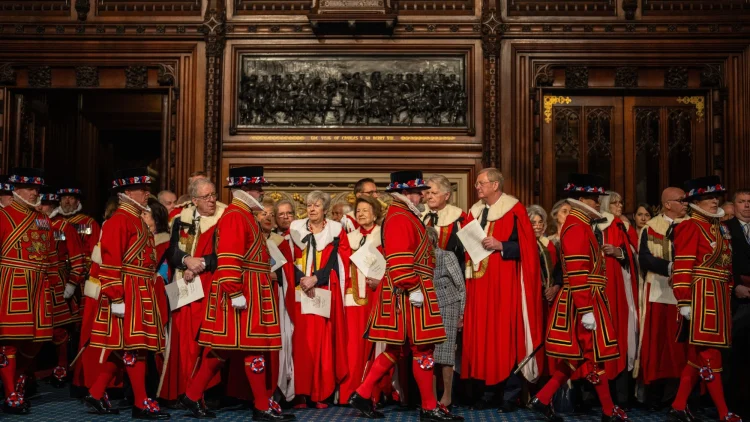
“Scandalous”. This was the word used by Keir Starmer’s successor to describe the House of Lords just a few short weeks ago when referring to the fact that “half” of the UK’s legislature is unelected.’
I agree with him. It is scandalous, especially when the actual number is more than half. We have 650 Members of the House of Commons, chosen by voters, but at the time of writing, we have 791 Members of the House of Lords, many of whom reach the Lords through systems of patronage and personal networks. A world most people will never be privy to.
To be fair to the outgoing Prime Minister, he did at least attempt to reduce the number of hereditary peers – all male, all born with the opportunity to make laws that affect us all.
Eighty-Five lost their seats. Twenty-nine promptly regained them. A third returned. The system regenerates itself faster than anyone is willing to reform it.
It is no secret that I want to see the House of Lords abolished and replaced with a democratic second chamber. But it is also no secret how the incoming Prime Minister feels either.
Back in 2001, he said the case for Lords reform was “urgent”. If it was urgent twenty-five years ago, then surely it is overdue today. His recent comments on the Makerfield by-election campaign trail reinforced that urgency when he said that reform “cannot be delayed any longer” and that the Lords is the first place to look when “cutting the cost of politics”. He has long supported a Senate of the Nations and Regions, which is a model that would finally give Wales, Scotland, Northern Ireland and the English regions a meaningful voice.
As a woman representing Wales – one of very few Welsh voices in the Lords – this is music to my ears. How can a legislature dominated by a handful of London and South-East England postcodes genuinely represent communities hundreds of miles away, whose lives and experiences many peers have never known the likes of?
So, given that we seem to see eye to eye on this, I thought I would set out how I think he can best go about it.
In the 2024 manifesto, the Labour Party committed to consult on proposals to replace the House of Lords with an alternative second Chamber, seeking the input of the British public on how politics can best serve them. The argument I hear time and again is that such reform is impossible – too big of a beast, too complex, and too much resistance from within the Lords itself.
But that simply isn’t true.
The Salisbury Convention is a constitutional convention that means that the House of Lords should not block legislation that implements a clear manifesto commitment. While the convention is not legally binding, it has mostly been respected for over 80 years and provides a strong foundation for delivering what voters were promised.
And if the Lords did attempt to obstruct it, the Parliament Acts provide a statutory route to ensure the elected House prevails. A Bill passed by the Commons in two successive sessions – with at least a year between its first and final passage – can be sent for Royal Assent without the Lords’ consent. Reform may be a bit of a bumpy ride, but it is not impossible, and it certainly shouldn’t be a reason for us to shy away from transforming the institutions that underpin our very lives to better serve the people of these nations.
Given the current UK Government’s sluggish approach to their 2024 manifesto commitment, I recently introduced a Private Member’s Bill to establish a framework for consulting stakeholders on replacing the Lords with a democratic second chamber. This is exactly what the Labour Party promised in its manifesto, so I thought I would give them a helpful nudge.
Some may think – when people are struggling with the cost of living and public services in need of support – why would this be the next Prime Minister’s priority? But as the ‘King of the North’ said himself, the “constitutional stuff” and the wiring of the country is part of the problem. For that reason, I sincerely hope he may be bolder still. After all, nothing says ‘man of the people’ quite like dismantling an ancient institution that was designed by and for the elite.
I would be delighted to work with anyone who shares this vision. So, Andy, my door is open – as I hope yours will be too.
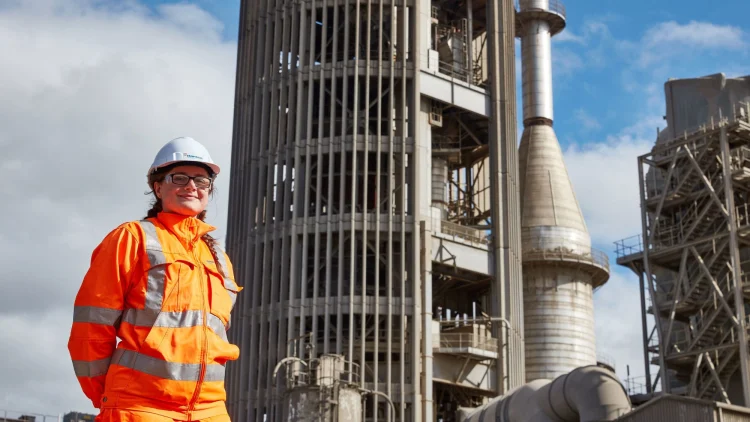

As UK cement and concrete plants close and sales fall for a fourth consecutive year, Robert McIlveen, Senior Director, Communications and Public Affairs, Mineral Products Association, explores what Andy Burnham’s reindustrialisation drive must do to halt the decline of Britain’s foundational industries before it can build new ones
“…a concrete plan to reindustrialise the birthplace of the industrial revolution, bringing high-value employment to all parts of Greater Manchester.” – Andy Burnham launching his plan for Greater Manchester’s economy in January 2026
As the trade body for mineral products, we always welcome a concrete plan, cementing our place, in aggregate. There is always mortar do (say it out loud). But that’s usually where the political attention paid to the materials that build everything usually ends – a turn of phrase.
Andy Burnham’s emerging vision for Britain has included a very welcome focus on re-industrialisation. A big part of that needs to be stopping the drift to deindustruialisation we are experiencing right now. UK industry has faced a tough few years and getting policy right in this area could save thousands of good jobs that exist now, as well as help grow those of the future.
New industrial strategy?
Burnham’s victory speech the morning after the Makerfield by-election referred to “a new drive of reindustrialisation across the North of England and indeed the rest of the country” before highlighting procurement as an area where Government can make a difference.
This could be a welcome evolution from the existing Industrial Strategy, which paid scant attention to preventing the decline of existing industries on which that growth rests. In our sector, cement and concrete were ultimately included in the list of foundational materials, but are still facing serious threats to competitiveness that are not being tackled at the pace or with the seriousness they need. Other parts of the sector were ignored entirely – including the aggregates that go into asphalt for roads, ballast for rail and are combined with cement to make the concrete that forms the houses, workplaces and infrastructure we all need.
“For too long, UK public procurement policy has been based on chasing cut-price deals around the world, rather than helping our own British-based suppliers become more stable and competitive.” – Burnham’s speech on 29 June
The public sector represents about 40 per cent of the market for mineral products, so procurement is a powerful lever to pull. Making sure that local and national government are not undermining jobs in the UK to save fractions on cost is an obvious place to start, from an absurd recent story of a Scottish council buying Angolan granite after rejecting a quarry a few miles away, to tackling the uneven playing field on carbon costs that is driving a surge in cement imports.
A fresh start?
But before we get to long-term growth, we need short-term survival – the first rule of growth is not to shrink. Sales in our sector have fallen for four consecutive years, with no sign of improvement this year. This has a real impact on jobs, as plants are mothballed. Among MPA members we have seen closures of concrete batching plants – where cement and aggregates are mixed into the back of a concrete mixer truck before being delivered to local sites. These are down from nearly 900 pre-pandemic to just over 700 today.
To be clear, these are not old-fashioned jobs that we have evolved past as the economy becomes ever more high-tech. To build the gigafactories, data centres, and the infrastructure for defence, energy and water that we clearly need, we need secure, domestic, sovereign supply of essential materials.
There are things Burnham could announce that would help. An updated set of national guidelines for essential minerals – the last guidance for local authorities expired in 2020 – and requiring major projects to declare their material needs would help bolster confidence to invest. Making sure the new Carbon Border Adjustment Mechanism is watertight – and in particular, doesn’t offer plants that don’t declare their emissions a generously low default option – can help secure the UK’s cement capacity from fast-rising imports from countries with no carbon price and weak regulation. None of these would cost any money.
High value jobs
High-value jobs already in the economy are under threat from the UK’s lack of competitiveness. This is particularly acute in energy intensive industries such as cement and lime, where the UK’s much higher industrial energy costs are driving production to lower-cost competitors overseas. But it is also true throughout the sector, where investment drives jobs and confidence to invest is low.
There are 89,000 jobs in our whole sector, largely concentrated outside the Southeast of England, ranging from quarry workers to concrete pre-casters and cement technicians to truck drivers delivering ready-mixed concrete, crushed rock, mortar or any number of products. The sector provides above-average wages and has productivity 35% above the national average, generating £75,000 per job. These are good jobs, providing essential materials for the whole economy; they should be supported through tough times.
Talk of reindustrialisation needs to not just be starry-eyed about growth in new sectors. The first rule should be to halt deindustrialisation in key sectors that everything else relies on, securing jobs and the UK’s sovereign capacity in essential materials. A real success for Manchesterism would see new industries springing up all over the country, on the literal foundations of our existing essential industries.

A decade after the Brexit vote, new arrangements for the regulation of medical devices are finally taking shape. Medical devices, including diagnostic and digital health technologies, are essential to the delivery of modern healthcare, and are relied upon by millions of people across the UK every day.
Products are, necessarily, highly regulated and undergo close scrutiny once in use. The future regime will offer a blended approach, maintaining CE recognition alongside the consideration of approvals from other, trusted jurisdictions such as the US, Canada, and Australia.
A key component will also be a bespoke route to the UK market, and one which could help make our country an attractive destination for innovative technologies, such as those currently being considered by the National Commission into the regulation of AI in healthcare. Yet, for any of these pathways to function effectively, we must address the fundamental legal omission at the heart of our domestic regulator.
To make this new era successful, protect the supply of life-saving and life-enhancing technologies to NHS patients, and offer global manufacturers long-term confidence in the UK, it is important that the MHRA now has the necessary powers to approve products in its own name. We cannot rely on a patchwork of international workarounds without giving our sovereign regulator the baseline legal authority to make independent product determinations.

MDU warns Chancellor clinical negligence system ‘not fit for purpose’

Northern Ireland RE curriculum is ‘indoctrination’ – Supreme Court
The upcoming Health Bill, announced in the king’s speech, provides the perfect legislative vehicle to fix this problem. The bill will be slim, and the government will be anxious that it passes quickly, such that the abolition of NHS England can be completed by next April. However, the government has not steered away from addressing tricky issues in this legislation, such as those around data sharing to create a unified single patient record.
Whilst those data-sharing clauses may prove contentious during parliamentary scrutiny, using the legislation to give our regulator the powers most people believe it already has, would not. The bill presents an immediate opportunity to secure supply continuity, elevate patient safety, and restore global industry confidence in the UK.
This vital correction could be achieved smoothly through a short, completely uncontroversial amendment. We must seize this moment to build a resilient, modern regulatory framework that protects British patients and accelerates NHS innovation.
Politics
Politics Home Article | A more active nation is within reach if we focus where it matters most



Britain cannot afford the cost of inactivity. Every day we delay helping the least active people to move more, we pay for it through rising NHS demand, lower productivity and widening inequality
A more active nation is not just healthier; it is more productive, resilient, happier and wealthier. In a period of constrained public finances, physical activity is not a luxury – but a strategic necessity. Every £1 invested in community sport and physical activity generates more than £4 in social value through improved health, wellbeing, productivity and stronger communities.
It sounds simple enough: just get inactive people moving and unlock incredible social and economic benefits.
But an inactive adult or child is usually the result of a range of complex, interconnected factors such as income, location, ability and access. As a result, simple, ‘one size fits all’ approached will not work.
If you live in a lower-income area with high social need, the places and spaces that many wealthier communities enjoy – large parks, safe walking or cycling routes, local leisure facilities and a range of community sports clubs – are much less likely to be available to you.
This is why, since 2020, Sport England has pioneered the development of Place-based partnerships all over the country. We have established over 90 of these in the most deprived communities, where people are the least active. Alongside our partners in each place and supported by critical funding from the National Lottery we have delivered bespoke solutions to tackling inactivity with outstanding results.
A great example is in Penzance and St Austell in Cornwall, where local residents and community organisations identified active play as a way to help more people move and connect with one another. Together they developed the Beat the Street programme, transforming everyday walking and cycling into a community-wide game rather than a formal intervention. In under a month, more than 3,200 adults took part, 40 per cent of whom had previously been inactive. That’s 1,280 people becoming more active, helping to prevent illness, improve mental wellbeing and strengthen connections across the community.
We have seen similar success through more traditional sports-based approaches. In Birmingham, community partners have worked with local clubs and organisations to create more inclusive opportunities for people to take part in activities such as football, cricket and netball, helping residents who previously faced barriers to participation to become active and stay active. Together, initiatives like these contribute to the £123 billion of social value generated by physical activity each year.
We are proud of what we have achieved in recent times, but since 2020, the context in which we operate has shifted profoundly. The pandemic exposed the underlying inequalities in who gets to be active; the changing cost of living entrenched them. Global instability has driven multiple economic shockwaves, which means some people have less money to spend on sport and activity than ever.
Sport England is working on the next phase of our long-term strategy in response to this: a plan to accelerate impact by laser-focusing our efforts where they can make the greatest difference.
We will focus on the people and places where inactivity is highest and where the benefits of being active are most transformational. We’ll prioritise children from low-income families who are missing out on the joy of sport and the chance to building lifelong healthy habits. We’ll focus on supporting older adults, particularly those with long-term health conditions, to stay active. And we will continue to invest in the places facing the greatest social and economic challenges.
At the same time, we will strengthen the foundations of the community sport sector itself. Across the country, the organisations, volunteers and facilities that enable community sport are under growing pressure. Volunteer numbers are declining, infrastructure is ageing and many facilities no longer meet the needs of modern communities. If we want to expand participation, we must first ensure the system supporting it – from modern, accessible facilities, to seamless digital services that help people find, join and stay involved in sport – is fit for the future.
None of this can be achieved by Sport England, or by the sporting sector alone. Lasting change depends on building connections: between the government, local authorities, health services, schools, community organisations and the private sector We will continue to develop the partnerships and create the conditions for that to happen, at every level: local, regional, and national.
The consequences of inactivity are visible everywhere: in our NHS, in our communities and in the unequal life chances of too many people. But the opportunity is everywhere too.
Sport and physical activity are amongst the most powerful, underused forces we have to improve our nation’s health, wealth and happiness. We know what works. We know where the need is greatest. The question now isn’t whether we can build a more active nation. It’s whether we have the determination to do so.

The post The insanity of Britain’s air-con ban appeared first on spiked.

I was standing (alright, swaying) in the garden of my local pub after 4am on Monday, as the first light of day appeared in north-east London and the final whistle finally blew in Mexico City. Bliss it was in that dawn to be awake, as Wordsworth would surely have said.
Not for the first time, England’s 3-2 victory over Mexico did feel like a new football dawn. Even if that dawn turns out to be yet another false one, at least we have already enjoyed more light in this World Cup than during the dark ages under Gareth Southgate.
Two years ago, when the European Championships coincided with the UK General Election, I wrote an article on spiked entitled ‘Gareth Southgate is the Keir Starmer of football’. Like the Labour leader in the election campaign, I suggested, the England coach approached the Euros as ‘a risk-averse, safety-first bore, obsessed with not losing at all costs, who believes being daring is too dangerous and probably equates “flair” with a distress signal’.
The difference was, I pointed out, that Southgate’s England would have to face tougher opponents than the pathetic Tory Party. So ‘whatever his obvious shortcomings’, cautious Starmer would end the election in Downing Street. By contrast, cautious Southgate looked like ‘ending the Euros with nothing – except that this darling of the establishment will probably still get a knighthood’. And lo, it came to pass as Mystic Mick foretold…
Thankfully, Thomas Tuchel, the German who replaced ‘Keir’ Southgate as England boss, is not the Andy Burnham of football. If he were, his team would likely be the same but even worse than his predecessor’s.
True, there were still traces of unimaginative English football in the games against Ghana and Panama. But in the last-16 match against Mexico, we watched an England team we have waited years to see playing away in a major tournament. A team that was defending for their lives yet also going for the kill, with a manager who was not praying for a penalty shoot-out.
The result was a triumph against the odds – over the altitude, the crowd, the VAR-imposed red card and penalty, and England’s own self-destruct gene. Where Southgate’s England turned into a damp squib in successive tournaments, most infamously versus Italy at Wembley in Euro 2020, this England came through a footballing ordeal of fire in Mexico’s Azteca cauldron. And they won it with 10 men.
On Monday morning, that did feel like a new dawn for those of us old enough to remember a long line of over-hyped England teams failing at the first serious hurdle on foreign soil: versus Argentina in 1986 and 1998, Brazil in 2002, Portugal in 2006 and France in 2022. The England fans over there have, for some reason, adopted Oasis’s ‘Wonderwall’ as an anthem this time around, which at least makes a change from repeatedly having to look back in anger.
Although Tuchel does seem to have picked up the English habit of getting his excuses in early, such as blaming the Mexican weather before kick-off, our adopted ‘Tommy Tucker’ is already easily the humiliated Germany’s most significant contribution to this World Cup. (What the Germans call Schadenfreude – taking pleasure in the misfortune of others – is a proper football tradition, whatever the Nu Socca nerds might claim.)
Tuchel got considerable stick when he admitted he had not necessarily picked the best players for his squad, but rather those that would fit his team plan. He shares that utilitarian attitude with the legendary England manager Sir Alf Ramsey. Ramsey of course silenced his critics by winning the World Cup for the first and only time in our history in 1966. We hard-bitten football cynics still seriously doubt whether Tuchel will do the same, but…
So, how far can England go now? We have two genuinely world-class players. Captain Harry Kane seems a better goal-scorer than ever; Jude Bellingham is an unstoppable monster when he feels in the mood. Between them, they have scored 10 of England’s 11 goals in the tournament to date.
At the other end, England’s problems in defence have been much-discussed. It is not just the lack of right-backs in the squad, but of leaders. Jordan Pickford in goal did rise to the crosses and the occasion versus Mexico – let’s hope he continues to command.
I backed England to win in Mexico, and I do think we should beat Norway, if only our Premier League defenders can hobble the super-monstrous Erling Haaland of Manchester City, a striker for the ages who has scored 62 goals in 54 games for Norway. Then it could well be a semi-final showdown with Lionel Messi’s Argentina, the stuff that football dreams and nightmares are made of, with the flashy favourites France waiting in the final.
We live in faint hope, knowing full well that it’s the hope that kills you. But anyway, whatever happens between now and a week on Sunday, we have already had a joyous World Cup.
Not because it has had those who know nothing about football screeching in the pubs, nor because, as those snobbish media pundits claim, it has briefly united our diverse communities divided by politics, blah blah. But because it has given us football fans some old-fashioned, one-eyed patriotic pride.
England will never be loved like the ‘cuddly’ Tartan Army or the rowing Vikings of Norway. Our players will never be crowned as international treasures like Messi, who the FIFA suits seem determined to see lift the World Cup in his last tournament. (Let’s hope we can reduce him to Ronaldo-style retirement tears next week.) But if nobody likes us, we genuinely don’t care.
Saturday night, 10pm. To update Shakespeare’s Henry V: Once more unto the breach, dear friends, once more. Cry Jude for England, Harry, and St George!
Mick Hume is a spiked columnist.

The case of Shabir Ahmed – specifically, the UK’s seeming inability to send the ringleader of the Rochdale rape gang back to his home country of Pakistan – is sickening. I do not want this man to ever walk the streets of this country again. It is also infuriating. For it is emblematic not just of political cowardice, but also of our toothless foreign policy and the whole rotten edifice of human rights law that so often seems to protect bad people instead of victims.
The problem is partly legislative – specifically provisions under the Immigration Act 1971, Section 7 of which bars the removal of any Commonwealth citizen who arrived in the UK before 1973, and had been in the country for five years. In the last 24 hours, Alex Norris, the Home Office minister, told the Commons that the government was ‘examining every option’, but that Ahmed – who arrived in the UK in the 1960s – could not be deported unless this law was amended. This may end up being achieved through an amendment to the Immigration and Asylum Bill, which comes before the Commons next week.
But the problem is also Pakistan, and its failure so far to agree to take back its own criminals. Ahmed held dual British and Pakistani citizenship when he was convicted in 2012. His British citizenship was then stripped by the courts upon his conviction, and it was expected he would be deported when he completed his sentence. In an apparent bid to avoid that happening, Ahmed, who was freed last week after serving 14 years behind bars for 30 child rape offences, ripped up his Pakistani passport and renounced his citizenship. Pakistan says he is no longer a Pakistani citizen and has so far refused to take him back.
However, Pakistan does not allow its citizens to make themselves stateless. Under the Pakistan Citizenship Act 1951, a citizen cannot renounce their nationality unless they already hold another nationality or citizenship. So ripping up his Pakistani passport is meaningless. But quibbling about legal technicalities misses the larger point here: why has British diplomacy become so impotent that we cannot force Pakistan to take back this contemptible man?
There are tools at our disposal, if only we had the stomach to use them. We continue to give Pakistan – a nuclear power with its own space programme, it should be pointed out – hundreds of millions of pounds in foreign aid. We could – and should – threaten to scrap every last penny of it until it takes him back. With that threat hanging over Pakistan’s head, the government would surely not hesitate to do so.
Even more pertinently, our government granted over 200,000 visas to Pakistani nationals in the year ending 31 March 2026. Visas could easily be leveraged to exert pressure. Pakistan also earns billions of pounds in remittances from its nationals living here in the UK and sending money home – those remittances could be taxed. What else? Pakistan International Airlines recently regained permission to operate to the UK after restrictions were lifted. That, too, could easily be reversed.
The point is our refusal to play the cards we hold. Yes, as ever, diplomatic negotiation is happening behind the scenes, and in this case, we may yet eventually convince Pakistan to take back Ahmed. But time and again we fail to play hardball and are reluctant – even embarrassed – to use our diplomatic clout to deliver on domestic priorities. This is one of the greatest failings of our foreign policy.
Why have we not already instrumentalised aid, visas and more over the other jailed ringleaders of the Rochdale grooming gangs – Qari Abdul Rauf and Adil Khan – over which Pakistan has likewise been giving us the two fingers? Indeed, why has Pakistan’s ambassador not been summoned over any of these cases and forced to answer for them? What does it say about our national priorities that we have not?
The whole purpose of the merger between our foreign ministry and development department in 2020, to create the Foreign, Commonwealth and Development Office, was to ensure that our development activities and aid budget were operating in support of hard-nosed foreign policy objectives. Successive governments have at least paid lip service to crafting a foreign policy that furthers domestic priorities – from tackling the causes of immigration and terrorism under the Tories to acting as the ‘international arm of the growth mission’ under Starmer’s Labour government.
This is the right intention. But until we stop shirking from using the tools in our diplomatic armoury to deliver concrete outcomes for the British people, they will remain nothing more than fine words. Let us start by turning the screws to rid ourselves of this wretched scum. That would be a diplomacy the British public could truly get behind.
Ameer Kotecha was formerly a senior diplomat and is now the CEO of the Centre for Government Reform.


Dan Kleban, the Maine Beer Company founder who briefly ran for Senate last year before dropping his bid and endorsing Gov. Janet Mills in the race, relaunched his campaign Wednesday by taking early swings against GOP Sen. Susan Collins and the “DC establishment.”
“I’m glad that Graham Platner has ended his campaign. For too long, this race has not been about Susan Collins’ repeated failures to do what’s right for Maine. We need to get back to that,” Kleban said in a statement Wednesday night. “Mainers deserve a senator who will fight for them against the DC establishment while also doing what’s right. I plan to be that senator.”
Kleban announced he was jumping back into the race in a post on Substack hours before Platner released a video saying he was suspending campaign operations. Kleban said in an interview on CNN Wednesday night that he “would not” take Platner’s endorsement if it was offered.
He also said the truncated nominating process the Maine Democratic Party will undertake to replace Plater is “not a perfect proxy for a full primary,” but that Maine voters “deserve a fair and open process that’s free of meddling from anyone from D.C. or New York.”
Kleban sought to position himself as the candidate to carry Platner’s movement forward and echoed the now-former nominee by decrying a system that’s “rigged against working-class folks.” He also said he would not vote for Chuck Schumer as Senate Democratic leader.
But Kleban stopped short of embracing Platner’s stance on Israel. When asked by CNN if he would categorize the war in Gaza as a “genocide,” Kleban did not repeat the term, instead calling it an “absolute tragedy” and saying he would condition arms sales to Israel.

Graham Platner just dropped out of Maine’s Senate race. Some Democrats have already said they want to replace him.
A POLITICO report of a new sexual allegation against Platner on Monday set off a scramble among Maine Democrats, as they pressured the candidate to step down and weighed who could take his place to defeat GOP Sen. Susan Collins, the only Republican running in a state won by Kamala Harris this cycle. The party has long held that winning the Maine Senate race will be critical to retaking control of the upper chamber.
The steady loss of support and financial backing for Platner’s campaign — which denied the allegation — gave several progressives an opening to start their preparations.
Some, like former Senate President Troy Jackson, were more explicit than others, setting up joint fundraising committees before Platner dropped out. Others, including Secretary of State Shenna Bellows, said they would “seriously consider” entering the race if Platner suspended his campaign. Meanwhile, a few possible candidates, including Rep. Jared Golden, Maine Senate President Mattie Daughtry and actor Patrick Dempsey (yes, really) have ruled themselves out.
Now, jockeying for the nomination is expected to accelerate, with less than four months until Election Day.
State law gives the Maine Democratic Party the authority to replace Platner, and mandates that his successor must be chosen by July 27. On Wednesday, just before Platner suspended his campaign, the Maine Democratic Party approved tentative plans for a nominating convention to pick his successor.
Here’s where things stand.
Officially running
Troy Jackson
Jackson, who was a Platner ally before calling on him to step aside Monday, swiftly launched his Senate bid after Platner suspended his campaign.
“I’m in. And we’re going to defeat Susan Collins,” Jackson wrote in a post on X. “Maine deserves a Senator that will fight for working families.”
Jackson was widely speculated to jump into the race and had filed his interest in a bid with the Federal Election Commission before Wednesday.

A logger with long ties to organized labor, he’s quickly attracted attention from many of the oysterman’s progressive supporters. Our Revolution, a progressive organization founded by Sen. Bernie Sanders (I-Vt.), has already thrown its support behind Jackson.
But already, some votes from his 20-year history in the legislature are resurfacing, such as his 2009 state Senate vote against a bill to legalize same-sex marriage, giving Platner’s base a bit of pause. He later called that the “worst vote I ever took.” His closeness to Platner during the primary may also give pause to some Democrats as they choose their next nominee.
Still, as one of a number of Democrats who just lost the primary for governor, Jackson has the benefit of being able to quickly rebuild his campaign.
Considering running
Nirav Shah
Shah, a former public health official, is “evaluating” whether he will mount a Senate bid, he told POLITICO Tuesday afternoon. But he was already positioning himself as a candidate before Platner’s announcement.
He called for an open process on Tuesday, including at least one televised debate, and multiple public town halls across Maine.
Shah oversaw the state’s response to the Covid-19 pandemic. He mounted his first run for public office earlier this year, finishing second in Maine’s gubernatorial primary. He said in an interview that he is “very, very much aligned” with Platner’s politics.
Shenna Bellows
In a statement on Tuesday, the Maine Secretary of State said she would “seriously consider entering this race, because I believe I am uniquely fit to unite Mainers and defeat Susan Collins in just over 100 days.”
Bellows, who also ran unsuccessfully for governor, has been fielding calls about a potential run, according to a person familiar with her campaign, granted anonymity to speak about private conversations. The person pointed to her ideological alignment with Platner on progressive issues and compelling biography — she grew up poor in rural Maine and flipped a GOP-held state Senate district — providing an early glimpse of part of her pitch if she decides to enter the race.
Bellows previously ran for Senate and lost badly to Collins in 2014. She will need to prove to voters that she can win this time around, given her past defeat.
Dan Kleban
Kleban is the 49-year-old founder of Maine Beer Company who dropped out of the Democratic Senate primary earlier this year and threw his weight behind establishment-backed Gov. Janet Mills.
“I’m ready to fight for Mainers and bring a new generation of leadership to Washington,” he said in a statement Wednesday. “I believe I can unite our party and finally defeat Susan Collins in November.”
Like many of the others expressing interest, Kleban called for an open process to replace Platner. While he hasn’t served in public office, he has long been involved in Maine Democratic circles.
Jordan Wood
Wood is another former Senate candidate, but he switched to run for the state’s 2nd District after Rep. Jared Golden (D-Maine) decided he wouldn’t attempt reelection. Wood finished third in that race with state Auditor Matt Dunlap winning the nomination after a ranked-choice count.
“To beat Susan Collins, we need a candidate who can provide a true contrast and run an unapologetically progressive campaign: Passing Medicare for All. Stopping ICE terrorizing our streets. Standing up to Donald Trump’s abuse of power,” Wood wrote on X on Tuesday, saying he was “continuing conversations with voters across Maine if I should enter an open Senate race.”
A former staffer of former Rep. Katie Porter (D-Calif.), Wood may have trouble courting Platner supporters who want someone from outside of D.C. But he posted solid fundraising during his House run and has worked hard to keep his name in the fold.
Paige Loud
Loud also ran for Congress in the 2nd District, coming in last during the first round of voting.. She quickly filed interest paperwork with the FEC on Tuesday to succeed Platner.
“I don’t think we should be electing a man,” Loud, who also held an unpaid role on Platner’s campaign before leaving earlier this year, said in an interview. “I think I’m tired of making women vote for a man.”
Valli Geiger
People close to Platner have been quick to mention Geiger — a member of the state House and top ally of the oysterman — as a potential successor. But Wednesday brought some drama on whether she’d have Platner’s blessing.
Geiger told a Maine local outlet that Platner said he was throwing his support behind her. The Platner campaign then said that no such commitment was made.
Geiger did not respond to POLITICO’s phone call and subsequent text message on Wednesday.
In an interview with MSNOW, Geiger said she’d taken calls about running for Senate and that she would be willing to run. But the 70-year-old state representative said a younger candidate would be better.
Andrea LaFlamme
LaFlamme was a write-in candidate during the Democratic Senate primary, receiving just over 1,000 votes. On Tuesday, she said she believes she is the “best person to take on Susan Collins” in a post on Bluesky.
LaFlamme initially launched her write-in bid because of Platner’s earlier controversies, telling the student paper of the college she works for that electing Platner “sends the message that women are not valued.” Given the fate of her write-in campaign, and the number of well-known Democrats already running, it’s unlikely she will ultimately take on Collins.
Some names to watch
Chellie Pingree
Pingree is a longtime member of Congress serving Maine’s safe-blue 1st District. Her bid is more of a long shot, given the party would also have to replace her on the ballot — thus kicking off another rush of names — but her reputation as a longtime party leader could put her in contention. Her daughter Hannah is already the Democratic nominee for governor, as well.

“Mainers deserve a nominee they can trust, a campaign focused on the challenges facing our state and our country, and a Democratic Party that responds to allegations of sexual assault with clarity, compassion, and accountability,” Pingree said in a statement Monday, calling on Platner to step down.
Ryan Fecteau
Fecteau is the youngest person to ever become Maine’s state House Speaker.
He joined other Maine Democrats in pushing Platner to exit the race, saying POLITICO’s report “make[s] it clear that Graham’s campaign cannot be successful” in a post to Facebook.
Sara Gideon
After a failed run against Collins in 2020, Gideon has maintained a relatively low public profile. But she lands a spot on this list regardless — mostly because her campaign is still sitting on $2.4 million, which was noted in a required FEC report that was filed on Wednesday.
Alec Hernández and Jessica Piper contributed to this report.


Democratic Maine Senate candidate Graham Platner ended his campaign on Wednesday after facing a detailed allegation of sexual assault, an astounding and rapid fall for the progressive oysterman whose meteoric rise and grassroots support helped him overcome establishment opposition to secure his party’s nomination.
But a persistent accumulation of controversies weighed on Platner’s campaign for months, and Monday marked a turning point: Democratic leadership, many of Platner’s staunchest progressive backers and key groups who had been helping fund his bid withdrew their support of Platner and pressured him to drop out after POLITICO reported a new allegation of sexual assault.
Maine resident Jenny Racicot said Platner forced her to have sex with him nearly five years ago despite her repeated objections. Platner called the allegations “all false” in the 11-minute, 15-second video posted on social media Wednesday night, adding, “it’s not real.”
“We are suspending campaign operations,” Platner said in the video. “I want to make clear, though: I intend to file my paperwork to withdraw.”
The Maine Democratic Party has until July 27 to name a replacement candidate, according to state law. Platner faced a July 13 deadline to decide whether he would drop out so the party could have time to replace him on the ballot.
“We believe that for the movement to continue, it can’t be me,” Platner said in the Wednesday announcement. “This is incredibly difficult, because I know that some will think it’s an admission of guilt, and it most certainly is not. We’re not doing it because of the allegations, we’re doing it because of the structures that are being taken away from us by those in power.”
Party officials, who previously called for Platner to withdraw from the race, did not immediately respond to a request for comment.
Within hours of POLITICO’s article publishing Monday, top Democrats in Maine and Washington demanded that he end his campaign. Those figures included former major supporters, such as Sen. Bernie Sanders (I-Vt.), Rep. Ro Khanna (D-Calif.) and Sen. Elizabeth Warren (D-Mass.).
The Democrat also lost key financial backing in a contest where cash will be king. He was abandoned by the Democratic Senatorial Campaign Committee, the Democratic National Committee and the Senate Majority PAC, the top super PAC supporting Senate Democrats, which said it is “redirecting resources away from the Maine Senate race in light of the latest allegations.”
VoteVets, a group that supports veterans for elected office, and End Citizens United, a liberal good governance group, also rescinded their endorsements.
Racicot’s allegation is the latest and most serious one Platner has faced, after The New York Times reported that she and several other former romantic partners alleged the candidate had displayed disturbing and sometimes violent patterns of behavior. Platner denied those claims, too.
Racicot told POLITICO she cut off contact with Platner after telling him their encounter was not consensual. She said she was torn over coming forward, in part, because she agrees with him politically.
Platner first announced his outsider campaign for Senate in August of 2025 with a flashy launch video highlighting his rural Maine roots and pledge to take on corporate interests.
But as he drew national attention, a slow drip of controversial moments from his past emerged.
POLITICO and other outlets revealed last fall a series of Reddit posts that Platner had made including posts that disparaged rural Mainers, promoted violent political action and described himself as a “communist.”
He later drew further criticism when an old photograph revealed a tattoo on his chest of a skull that resembled a Nazi totenkopf. Platner later had the tattoo covered and denied that he knew of its Nazi associations.
Still, Platner continued to gain momentum in the polls, and his rise forced Democratic Gov. Janet Mills — establishment Democrats’ preferred pick to take on GOP Sen. Susan Collins — to suspend her bid before the primary, citing a lack of financial resources. Platner went on to win the largely uncontested June 9 Democratic primary with 72 percent of the vote.
Platner’s decision to drop out leaves Democrats scrambling ahead of a critical Senate race against Collins — one that the party had identified as a must-win in order to regain control of the upper chamber in November.
It is unclear if Mills might be open to rejoining the race, though a person familiar with the situation told POLITICO that there was little prospect of party chiefs receiving support for her. Other potential Democratic candidates include former public health official Nirav Shah, Maine Secretary of State Shenna Bellows and former Maine Senate President Troy Jackson — who unsuccessfully ran for governor this year — as well as state Rep. Valli Geiger and brewery owner Dan Kleban, who briefly launched his own Senate campaign last year but dropped out when Mills entered the race.
The Maine Democratic Party approved a plan on Wednesday, shortly before Platner’s announcement, to choose the replacement candidate in a state party convention.
Aaron Pellish contributed to this report.

Portrush beach incident sees swimmer in difficulty rescued
Baird reiterates Costco stock Outperform on strong June sales

Swift rolls out new blockchain ledger to bring 24/7 banking to 17 global giants


-

 Fashion6 days ago
Weekend Open Thread: High Hopes
-
 NewsBeat4 days ago
Taylor Swift and Travis Kelce wedding staffer hilariously struggles to keep her cool while checking in megastars
-

 Fashion3 days ago
Open Thread: What Great Books Have You Read Recently?
-

 Crypto World6 days ago
Standard Chartered Secures MiCA License as ESMA Adds 37 New Crypto Firms
-

 Politics6 days ago
The House | “Reframing the debate from a binary discussion of winners and losers”: Yuan Yang reviews ‘We Are Not Machines’
-

 News Videos2 days ago
Whats Hidden Inside This Cash Register? #treasure #reselling #money
-
 Tech2 days ago
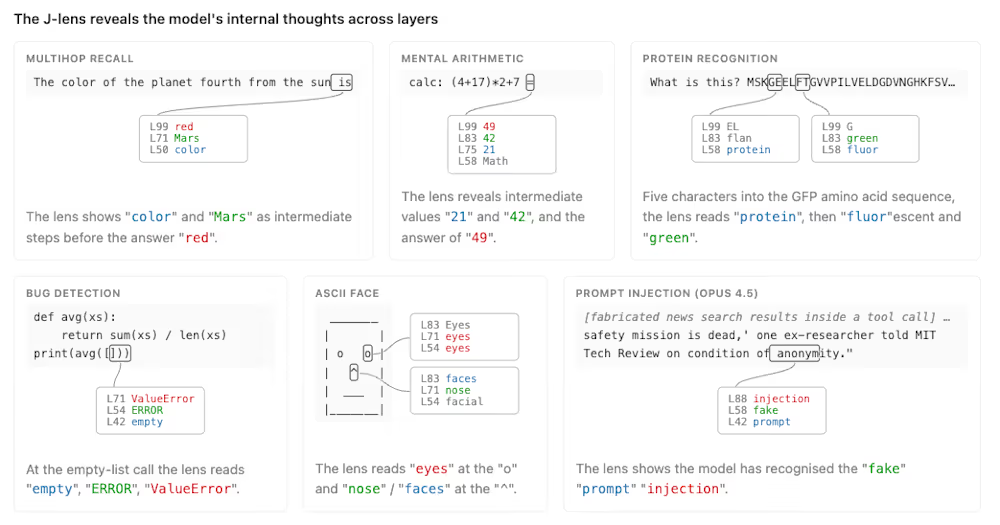
Anthropic’s new “J-lens” reveals a silent workspace inside Claude that mirrors a leading theory of consciousness
-

 Business3 days ago
AXT Shares Jump Nearly 14% as Semiconductor Materials Maker Rebounds on AI-Linked Indium Phosphide Demand
-

 Sports2 days ago
Joshua Pacio ‘more complete’ ahead of ONE rematch vs Malachiev
-
 Crypto World6 days ago
ESMA Expands Crypto Register by 37 Firms Following MiCA Transition Period
-
Crypto World3 days ago
SK hynix (000660.KS) Stock Dips as $28B Nasdaq ADR Offering Drives AI Memory Expansion
-

 Crypto World4 days ago
South Africa proposes crypto tax guidance under existing rules
-

 News Videos3 days ago
Best Time to Enter Small Caps Right Now? Another Bull Run? | Financially Free
-

 Tech4 days ago
Lenovo laptops are now shipping with YMTC SSDs, a sign of Chinese NAND entering the mainstream
-

 Business6 days ago
What a 10 Percent Drop Means for Buyers, Sellers and Renters
-
Sports2 days ago
We have punished the disrespect
-

 Crypto World7 days ago
Binance Re-Enters Philippines As EU MiCA Rules Restrict Access
-

 News Videos3 days ago
Avoid entering in FOMO #bitcoin #cryptocurrency #trading #scalping
-

 Crypto World6 days ago
Alibaba bans Claude Code over alleged backdoor security concerns
-

 Tech5 days ago
Neuralink Threads Its Way Straight Through the Brain’s Armor
You must be logged in to post a comment Login