

Politics
Michael Enea: There has to be a total overhaul inside the Welsh Conservatives

Michael Enea is a Welsh Conservative Party member who is a weekly columnist in the South Wales Argus newspaper. He is also the author of ‘The Pointy Finger’ blogging page.
So, in January, I made a bold prediction for Newport in the Welsh Senedd election.
Out of the six seats available for the Newport and Islwyn constituency, I predicted 3 seats would go to Reform, with 1 to Plaid Cymru, 1 to Labour and 1 to the Conservatives. I felt the Greens would miss out.
Looking back, I predicted the winning order correctly. I was slightly out however, as both Reform and Plaid Cymru won 2 seats each.
As the polls closed on Thursday, I also correctly predicted the so-called ‘Portillo Moment’. The big shock of the election? I said Wales First Minister Eluned Morgan would lose her seat – and of course – she did.
Five years ago, I stood as a Welsh Conservative candidate in the 2021 Senedd election for the Newport West constituency.
It was a difficult election. Half of the campaign period fell under tough restrictions imposed by the second ‘lockdown’.
All being said, I fought a robust and hard hitting campaign. At one stage, I topped over one million views on social media. Over 40 people attended my final campaign session in Marshfield on the eve of the election – including the then Welsh Tory Leader Andrew RT Davies. In the end, I gained a respectable 35 per cent vote share. This uplift in votes saw two Conservative Members of Senedd elected on the regional list system.
We almost got a third!
I achieved 10,353 votes, which was the highest number of votes ever obtained by a Conservative in a Welsh parliamentary election for Newport. It is a record that still stands to this day after Thursday’s election where the Conservatives only gained 8,847 votes (in what is now a bigger constituency).
Fast forward five years, and it’s fair to say, the 2026 Senedd election has been a difficult one for the Welsh Conservatives. Five years ago, the Tories secured 16 seats, however this time around they only returned 7 seats in a bigger Welsh Parliament now holding 96 Members of Senedd.
Obviously, the political landscape is very much different in 2026, when compared to five years ago. However, from a Conservative perspective, could they have performed better?
Firstly, a deeply unpopular incumbency rule allowed sitting Tory MSs a ‘priority pass’ at obtaining the top spot on each regional list.
This rule caused major splits, division and even defections among party members. There was real anger over this incumbency rule and lot of members simply ‘downed tools’ when it came to campaigning. Had a free vote been in place, it’s likely a quarter of the old Tory MSs may have failed to claim a top spot.
Secondly, it’s no secret a majority of Conservative Party members support abolishing the Senedd. Rather than risk turning the Conservatives into the ‘Abolish Party’ there were sensible calls to adopt a neutral policy of offering a ‘referendum’ or a four way ‘preferendum’ on 1) abolish, 2) independence 3) MaxoDevo or 4) Small Senedd.
Offering a referendum on devolution would have literally grabbed the headlines in the Senedd campaign. It would have propelled the Tories onto the centre-stage in the political debates and amongst the public. A referendum policy may have boosted the Conservatives up to a 20 per cent share of the vote. This would’ve returned around 19 Members of Senedd rather than the 7 that were actually returned.
To their peril, a referendum on devolution was totally dismissed by the Welsh Tory leadership.
Then there were the Tory election addresses that dropped through letterboxes across Wales. In my view, they were convoluted and over-loaded with information and text boxes. Meanwhile, the Reform leaflet was simple, easy-to-read, and outlined policies with ‘high impact’ wording. I’m not the only one to take this view.
Finally, the campaign slogan of ‘Fix Wales’ was simply too bland and unimaginative. It could’ve been a slogan used by any of the opposition parties. I’ll be honest, I was somewhat disappointed. A slogan of “Lower Taxes, A Stronger Economy” would have at least related to a right-lean political party like the Conservatives.
Obviously, I’m delighted the Conservatives have returned 7 members of Senedd, including our very own Natasha Asghar in Newport. This return is in the ‘ball park’ of what was expected and there is some relief that the party wasn’t totally obliterated with zero seats. However, let’s be frank, out of the 96 seats available, 7 is a poor return.
As the dust settles on the election, there now needs to be an honest, open and thorough review of the Conservatives performance in the election. More than anything, the ‘disconnect’ with the party’s membership has to be repaired, especially on the thorny issue of devolution and abolish.
There also needs to be a total clear-out of staff at the top of the Welsh Conservatives. A change of leadership is needed and that means Darren Miller needs to step aside as the leader. A two or three way leadership race, including a series of hustings, would be a good way to start re-engaging with the party’s membership base.
A total overhaul is now needed with a fresh start.



A legal battle by campaigners against the UK government over changes it has made to the UK’s drug price control system is moving to the courts, following a formal exchange with the government’s lawyers.
In its response to a pre-action letter, the government sought to justify the way changes, which will end the independence of NICE (National Institute for Health and Care Excellence) from ministerial control, have been made.
But the campaigners and their lawyers remain convinced it has acted unlawfully and have moved to get court permission for a full judicial review.
Patient-led campaign group Just Treatment, and social justice organisation, Global Justice Now, are taking the government to court, alongside their lawyers, Leigh Day, over the introduction of new regulations used to enact a central pillar of the US-UK trade deal on pharmaceuticals. The groups are crowdfunding to see the case through and cover the full legal and court costs.
A statutory instrument, which passed into law in April, gives ministers direct control over the key cost effectiveness threshold NICE uses to determine which medicines are made routinely available on the NHS.
Dancing to Trump’s tune
This change was required to enable the government to deliver on the promises made to Donald Trump under the trade deal on pharmaceuticals announced in December 2025.
It is part of a package of changes that commits the UK to dramatically increasing spending on patented medicines by the NHS over the next ten years.
But in a letter to the government (available here) last month campaigners set out why the changes are unlawful, and asked the government to revoke the legislation or face a court battle on the changes.
The campaigners believe that the changes effectively end NICE’s independence from political interference, leaving drug price setting subject to political lobbying by Big Pharma corporations and the US government.
They say this poses an existential risk to the UK’s careful framework of safeguards designed to protect patients and the NHS from the excessive pricing demands of the industry.
Changes the government has committed to under the Trump deal are estimated to cost the NHS billions of pounds a year by 2035, and have been widely criticised by health experts.
In its response the government stuck firm to its view that it has acted lawfully. Campaigners and their lawyers have now filed papers with the courts, seeking permission to have a court hearing so a judge can rule on the matter.
Diarmaid McDonald, director of Just Treatment, said:
It is extremely disappointing, but sadly not surprising, that the government has refused to admit the mistake they made in trying to bypass parliamentary scrutiny in order to push these changes through.
Throughout this process the government has listened to the US government and drug company lobbyists instead of NHS patients, staff, MPs, or independent experts.
We can’t allow them to put so many lives, and our publicly funded health system, at risk to inflate industry’s profits and Trump’s ego.
While we hope the courts force the government to reverse this unlawful and undemocratic change, the entire deal requires much greater interrogation.
When this deal places so many lives at risk we have to ask why the demands of the pharmaceutical industry were met, and what the implications of their monopoly power are for our democracy, economy, and health.
Nick Dearden, director of Global Justice Now, said:
The government has shown it won’t stand up to Trump in order to protect our NHS, so we are taking matters into our own hands.
We won’t stand by and allow the NHS to be weakened simply in order to further inflate the profits of an industry that cares more about the interests of their shareholders than those of ordinary people.
The government has pushed through these measures without so much as a debate in parliament: so we are left with no other choice but to fight this in the courts.
Rowan Smith, lawyer at Leigh Day, said:
Our clients are deeply concerned about the impact the UK’s pharmaceuticals trade deal with the US could have on the price and availability of drugs and medicines.
They argue that new powers giving the health secretary direction over NICE in matters regarding cost effectiveness risk undermining an important and globally recognised health body, and could materially impact what drugs and medicines are available on the NHS.
Drug price setting tied up in legislative knots
Parliamentarians have been trying to force a public debate on these changes, but the mechanism the government used to enact them, known as a negative statutory instrument, is designed to make that kind of independent scrutiny almost impossible.
Nonetheless MPs and peers from Labour, Conservatives, SNP, Lib Dems, Greens, and Plaid Cymru – as well as two cross party committees – have raised concerns.
NICE was established to be independent of ministerial control, but the deal the UK signed with Trump included commitments to increase the cost-effectiveness thresholds it uses to determine if medicines are deemed to be good value for money and so made available for use on the NHS.
That required the government to legislate to give itself the power to force that change on NICE, and it has already used it to adjust the thresholds.
But, the legal filing asserts that the intention of the changes directly contradicts the primary legislation being amended, and therefore should only be made using a new primary legislative process.
Featured image via Getty Images
By The Canary
Sometimes you have to wait a while for people to catch up.

But patience is everything, readers.

All things, we hope, come to those who wait.
The SNP tried all sorts of excuses. First up, in February 2020, immediately after Wings had broken the story that “hundreds of thousands of pounds from two supposedly “ringfenced” fundraisers for independence have instead vanished into the hungry maw of the party’s seat-winning machine” was a simple, classic flat denial: “it’s categorically not true”. The very suggestion was “utter nonsense”.

But since it WAS true – and obviously true, all anyone had to do was take the briefest look at the accounts and notice the startling absence of £482,000 that should have been there – that one couldn’t last.
In October of the same year, after the SNP’s accounts were published and we returned to the story, the party treasurer tried something slightly subtler: the money was still there, but it was invisible, and anyone saying otherwise was a conspiracy theorist.


That one was just too silly to survive very long, so in early 2021 they came up with a wizard wheeze: to prove they had the money, they were going to spend it, despite the fact that there was no second referendum to campaign for.


More pertinently, as Wings immediately pointed out, the cunning scheme was rendered somewhat implausible by the fact that everyone could see they didn’t have the money to spend, and were in fact just planning to re-label their normal spending as being from the indy fund in order to pretend they’d used it for its intended purpose.
The plan duly collapsed catastrophically as the head of the “taskforce” resigned in the same week as the treasurer stood down in protest at not being allowed to see the books so that he could do his job.

(Biagi enigmatically described the role as the “worst job ever” before being abruptly silenced by being given a mysteriously non-specific sinecure as a “Chief Of Staff” in the House Of Commons, and was later rewarded with a lucrative but low-profile job – paying anywhere between £80,000 and £116,000 – as a Special Adviser to the First Minister, which he still holds.)

So in June 2021 they gave up on trying to be clever and went back to straight-up denial: there was simply NO missing money.

John Swinney was clear: specifically asked if the money had been diverted to other purposes, he replied “Not to my knowledge, no”.

But once again, the denials were inconvenienced by the unhelpful fact that the money visibly and stubbornly continued to be very much missing from the party accounts. So in June 2022, they tried admitting to having spent some of it – specifically around £52,000, or less than 8%.

But that wasn’t very credible either, so a couple of months later they briefly tried upping the figure to £253,000 (while intriguingly also increasing the total that had been raised and ring-fenced by £70,000), and insisted there was still £488,000 available.

But there wasn’t. The party’s actual bank balance was £343,000 lower than that, so nobody but the super-gullible was buying it.
Then in 2023, just days after Nicola Sturgeon’s shock resignation as First Minister, they suddenly pivoted back to straight denial for a third time, hiding behind the need to avoid commenting on a live police investigation (a favourite trick of John Swinney’s, ironically).


As far as we can recall (do please correct us in the comments if we’ve missed any further twists) that continued to be the official SNP position until today, when the poor suffering cat was finally released from the bag.


It has taken the SNP almost six and a half years to finally grudgingly admit what was indisputably obvious in 2020 to anyone with functioning eyes. And Swinney, who was either Deputy First Minister or actual First Minister for almost all of that time, can’t pretend that he didn’t understand the question.

He knows what “ring-fenced” money is and what can and can’t be done with it.

He knows fine well that more than just SNP supporters donated to the fund.
So he can neither morally nor legally use the money for general “SNP objectives”, which might be directly opposed to their interests (eg advancing the SNP cause in a general election against the parties those people might support).
Not to mention the rather more serious matter, which is that his admission today unavoidably implicates him (and the rest of the SNP leadership since 2017) in direct, deliberate criminal fraud against thousands of ordinary Scots.

Because even if – and this is a VERY big stretch indeed – the SNP didn’t initially intend to spend the ring-fenced money on something else, they knew full well that they weren’t allowed to help themselves to it later. Either way, this is severely criminal activity.
If you or we, readers, swiped an SSPCA collecting tin from a shop counter with 50 quid in it, we’d find ourselves hauled up in front of a beak in double-quick time, but apparently if you heist 700 grand (and then let your CEO spend it on robot lawnmowers) you’re fine.
There has as yet been no sort of explanation forthcoming from either Police Scotland or the Crown Office for the mystery of why after five years of investigation nobody has been charged with the crime that actually triggered Operation Branchform (which then branched off into a separate embezzlement inquiry).
We have prima facie evidence that a crime has been committed (money has been obtained under demonstrably false pretences). We have the suspects to hand. We have the motive (the SNP was skint and needed the money). We have an admission from the suspects that the stolen items have been disposed of (spent). Even in a country as hopelessly, abjectly corrupt as Scotland, that ought to be sufficient to see someone in a dock.
At a very minimum, this fund should lead to John Swinney’s early retirement. But he was not the prime mover in this sleazy business, and nor are mere resignations remotely enough to satisfy the demands of justice.

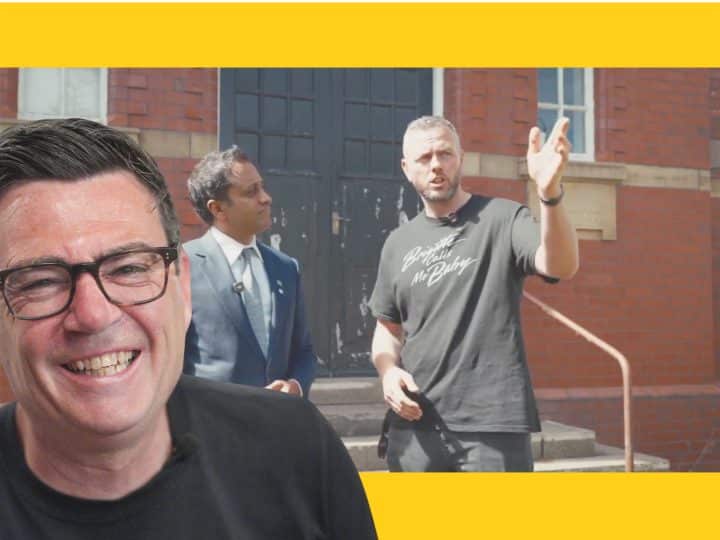

Robert Kenyon is Reform UK’s candidate in the Makerfield by-election. In aid of this, he and Zia Yusuf vowed to save a local library on 2 June. As it turns out, though, Labour had already saved this particular library:
Hi @RobKenyonReform, Ashton Library was already saved thanks to the Labour MP Josh Simons (you might of heard of him) and Councillors.
Being that you’ve not bothered to even sign the paperwork for being a councillor, let alone attending your first meeting, it’s no surprise you… pic.twitter.com/kHFkM7zaNi
— Reform Party UK Exposed
 (@reformexposed) June 2, 2026
The Makerfield saviour
In his video with Zia Yusuf, Kenyon says the following when asked what happened to the library:
So I think, I believe it’s got dry rot in the roof, and it’s going to cost a lot of money to put right. Like I say, Labour have looked after – the Labour Council have been in charge of looking after this library for a long time – and now they’re campaigning to save it, and, you know, It’s kind of, I don’t know, maybe it’s lack of maintenance or whatever that’s caused this issue.
A lesser man would have learned the answer to this before recording the video, but not Robert Kenyon. Kenyon also said:
They’ve obviously not prioritised Ashton Library until it’s got too late and now they’re rallying around to try and save it.
We’re no fans of Labour, but did something else happen in Britain over the past two decades which led to the underfunding of local authorities and the mass-closures of public libraries? Something that rhymes with ‘Tory driven austerity’, maybe? And wasn’t Zia Yusuf a Tory up until very recently? And weren’t most senior Reform politicians Tories up until very recently?
• Nigel Farage – ex Tory, now Reform. Reform UK are just the Tories that jumped ship. Establishment through and through. https://t.co/hTHrjFmrPT
— Carter (@carterp0well) March 24, 2025
• Richard Tice – ex Tory, now Reform.
• Lee Anderson – ex Tory, now Reform.
• Zia Yusuf – ex Tory, now Reform.
• Sarah Pochin – ex Tory, now Reform.
This isn’t to say Labour is doing enough to reverse the effects of austerity, of course. But let’s not pretend a bunch turquoise Tories are going to undo a policy they spent over a decade supporting.
Back to the library, Greater Manchester mayor Andy Burnham had this to say:
Yep. It’s almost funny. @RobKenyonReform never came to 1 meeting on Ashton Library. Me, cllrs and residents worked backsides off to save it.
In politics, berating ppl on socials doesn’t get stuff done.
He’s local, angry, but no plan to actually DO anything. Like… https://t.co/hlazx46Z9b — Josh Simons (@joshsimonsmp) June 2, 2026
This isn’t a great look for Kenyon, given that Burnham is his main rival in the Makerfield by-election. To be fair to Kenyon, though, he’s not had a library these past two years, so his booksmarts must have diminished.
Before you go thinking this is a Burnham endorsement, by the way, we’ve got problems with him too:
- Burnham ‘to support’ Mahmood’s racist immigration changes.
- Burnham is silent on wealth taxes – not a promising sign from potential PM.
- Andy Burnham’s role with Iain Duncan Smith’s think tank just shows he’s more of the same.
- Burnham WON’T back proportional representation this parliament.
- Shapeshifting Burnham ditches trans rights to panic-grab Reform votes.
- Burnham slammed for saying he won’t renationalise Thames Water.
Part timers
If you’re worried Kenyon might get in trouble for not showing up to fulfil his responsibilities as a councillor, don’t be. After all, his boss Nigel Farage has an even worse record:
Never on the team sheet.
Farage has missed 77 consecutive Parliamentary votes – failing to inform constituents why he hasn't shown up to vote throughout the course of April and May.
Where is Farage? pic.twitter.com/cjoYKh0L7x
— The Green Party (@TheGreenParty) June 2, 2026
It’s more dire than this looks too. There have been 525 votes in this parliament, and Farage has shown up to just 169. At 32%, this means he’s shown up for less than a third of the votes he should have done. Do you think you could get away with missing seven days out of every ten at work?
Despite this, Farage and his party pretend to be the party of people who actually get up and go to work in the morning:
My party is the party of alarm clock Britain.
— Nigel Farage MP (@Nigel_Farage) November 3, 2025
Maybe ‘Alarm Clock Britain’ is the name of a real ale they serve at his local?
Zia Yusuf’s parliamentary record, meanwhile, is perfect. And the reason it’s perfect is because he’s not a parliamentarian, despite his claims to the contrary:
Mate, this is embarrassing.
You are literally not the shadow Home Secretary.
You’re not even an elected politician. pic.twitter.com/CZiPgk5YX9
— Harry Eccles (@Heccles94) June 1, 2026
Reform — Worse to come
The library video isn’t the only one that’s making Kenyon look clueless:
This might be the worst performance from a political candidate I have ever seen in my life. pic.twitter.com/Kku1RecFJ0
— Ali Milani (@AliMilaniUK) June 2, 2026
As bad as the above is, we think things are going to get even worse later this week:
Join Question Time for a Makerfield By-Election Special
On the panel: Andy Burnham, Michael Winstanley, Jake Austin, Sarah Wakefield, and Robert Kenyon Thurs 4th June at 9pm on @BBCiPlayer, @BBCSounds, and the @BBCNews channel
Apply now: https://t.co/3ivO2BXgl1 #bbcqt pic.twitter.com/f9v8N13CYc
— BBC Question Time (@bbcquestiontime) June 2, 2026
If things do go badly, Kenyon can always just record a video claiming they went well. That’s the benefit of being full of hot air; you can literally just say anything.
Featured image via Christopher Furlong (Getty Media)
By Willem Moore
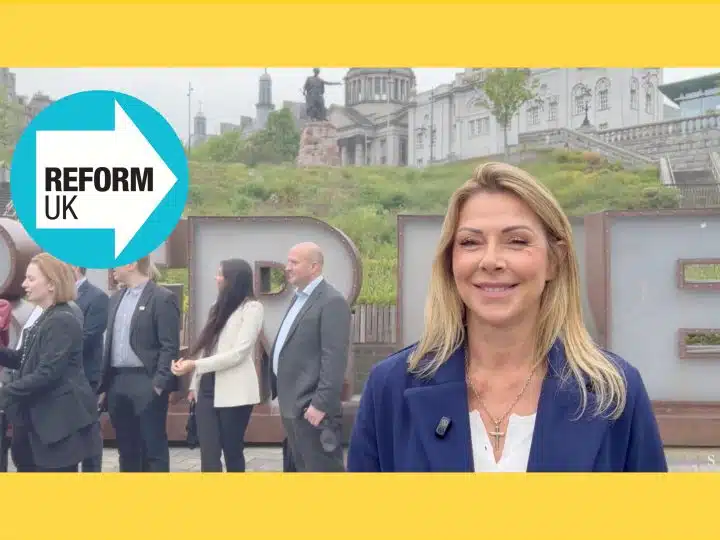

Reform UK’s candidate in the Aberdeenshire South by-election is Jo Hart. And as you’d expect for a Reform candidate, she has some opinions that fall outside the mainstream:
Fair enough
In a video posted online by the Scotsman, an interviewer puts the following to Hart:
I wanted to ask about some of your past comments on social media. You’ve obviously had a certain amount of scrutiny about this. You called Hollywood actors Satanic worshipping trash. You made comments that appeared to suggest that 5G masks had negative health impacts. You called the Royal family benefit scroungers. ‘Fuck the Royals. Make Lizzie the last’. Do you regret these comments?
Hart laughed before responding:
Well, first off, let’s address the Royal one. That was a post that was shared and my actual sentiment was about was it appropriate to be spending money on the Jubilee right now after COVID when so many professional people were queuing at food banks? And the post that I shared was a public post and so it was taken totally out of context.
We suspect she could drum up some support with stuff like this — especially in Scotland, which isn’t known for its fealty to the crown.
Hart continued:
Then when it comes to the whole Satanic worship thing, you know, having banter with your friends, you know, you can then refer to things like Epstein Files and everything. So, I mean, let’s just have banter. It’s just a flippant comment.
We hate to say it, but we’re not going to pull her up here either. There are certainly enough celebrities with connections to Epstein and the like to warrant such “banter”. There are also many celebrities who are demonic themselves, like Kevin Spacey or the guy who wanted to eat people.
5G
With the next part of Hart’s response, we get to something we can criticise:
And with 5G, there’s not much research being done on that in a very long time about the effects of 5G on health. So I think that’s an area that could be looked into a little bit more as well.
In response, the interviewer asked:
So you think 5G masts do potentially have negative impacts on health?
Hart responded:
We don’t know what the long-term effects are, so I think we need to just look into it a little bit more.
The thing is, we actually have researched this already. As Full Fact reported:
The ICNIRP says: ‘‘A considerable amount of research has been conducted on the relationship between RF EMFs [radiofrequency electromagnetic fields] and health outcomes such as headaches, concentration difficulty, sleep quality, cognitive function, cardiovascular effects, etc. This research has not shown any such health effects.’’
The UK Health Security Agency (UKHSA) also monitors for evidence of any health effects caused by electromagnetic fields including radio frequencies. It states that “the overall exposure is expected to remain low relative to guidelines and, as such, there should be no consequences for public health”.
Additionally, this technology has not been shown to increase the risk of cancer and non-ionising radiation does not damage DNA.
Trust no one (specially if they’re Reform)
People should be mistrustful of new technologies and the corporations pushing them. For a good example of this, you should watch the Veritasium documentary on Asbestos, which documents the companies that covered up its ill effects:
If the asbestos thing happened today, the general public wouldn’t just have suspicions; there’d be widespread knowledge of the impacts. That’s because the internet allows us to share our experiences and diagnoses in a fashion which was impossible in days gone by.
For an example of a modern company doing what it can to cover up negative health effects, you should look to something like AI companies burying stories about ‘AI psychosis‘:
When a teenage boy told ChatGPT about his suicide plans, it said: “I won’t try to talk you out of your feelings.” His family is suing after ChatGPT actively discouraged him from seeking help, offered to help him write a suicide note and even advised him on his noose setup. pic.twitter.com/pRijpY1jYV
— Angela Yang (@Angela_Y_Yang) August 26, 2025
So yes, we do need politicians who are suspicious, but we also need politicians who know when to stop being suspicious. And Jo Hart does not appear to be such a politician.
Featured image via The Scotsman
By Willem Moore
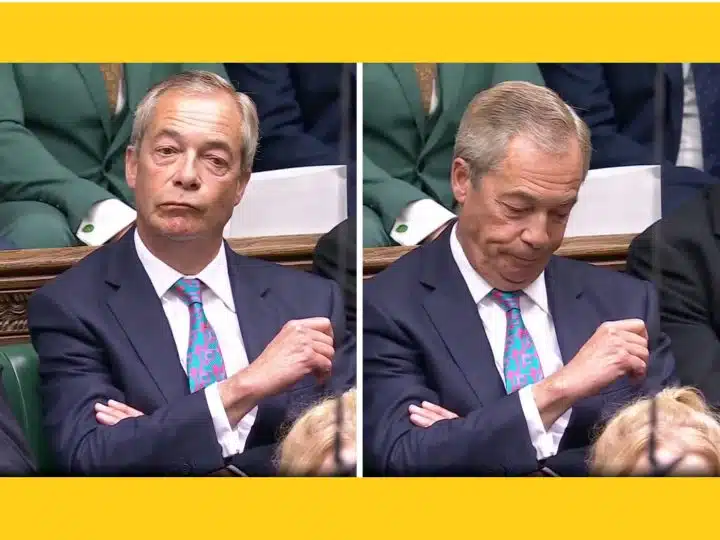

On 2 June, Nigel Farage made a special announcement in which he argued that white people are the real victims of racism in the UK. The speech was in response to the murder of Henry Nowak, whose murderer Vickrum Digwa had just been sentenced.
Farage promoted a message of hate despite Nowak’s family requesting politicians not use the murder to promote division. Farage is still trying to push division, but given the Nazi rally which followed his first speech, he’s now squirming when he does so:
Starmer: "His response has been to appeal for rage. That’s his response to a father who lost his son & asked for this not to happen… it shows exactly who he is" #PMQs pic.twitter.com/cLGAGBHkIu — Politics UK (@PolitlcsUK) June 3, 2026
 WATCH: Nigel Farage is repeatedly heckled by MPs as he calls on Keir Starmer to end "two-tier policing"
Farage — Hate monger
In the clip above, Farage says:
In the horrendous circumstances of Henry Novak’s death, can I urge the Prime Minister to consider this? It is now clear to growing millions in this country that we’re living under two-tier policing. The instructions that are given to police officers from police bosses are clear and written down in ink. It says you must treat different ethnic groups in different ways.
The police at the scene handcuffed a laid-out Nowak despite his claims to have been stabbed. His attacker, meanwhile, argued that he was the one to have been assaulted. A regular person encountering this scene could have been forgiven for believing Digwa, as Nowak appeared drunk, and most attackers would have fled the scene rather than lying about their victim’s injuries. These officers could and should have done more, though, and they certainly should have confirmed if Nowak had sustained injuries before handcuffing him.
The fact that these police were inept, however, is not a sign that the British police are institutionally racist against white people. The available evidence we have shows the precise opposite, in fact. Many UK police officers are certainly incompetent and / or malicious, but cherry picking this one case to push a white supremacist narrative is just evil.
Farage finished:
That, apart from the upset and the anger at the circumstances of his death, the anger that you saw spilling out in Southampton last night, and which is in danger of getting considerably worse if the public lose trust in being treated fairly by the police. Can he take some action, end this divisive practice of two-tier policing and make sure that all British citizens are treated the same?
Squirming
Responding to Farage, PM Keir Starmer said:
Mr Speaker, I don’t believe there’s two-tier policing in this country. I’m really shocked that he pretends to have respect for Henry’s family and then acts in this way. They are a grieving family…
A grieving family have asked us not to respond in the way that the leader of Reform has responded. They’ve asked us not to. They have lost their son in the most appalling circumstance. They make a simple plea of us as human beings to please not exploit that. That is their plea to us.
Farage had looked impassioned when he spoke, but he squirmed as he got his answer, as well he should.
Starmer continued:
We all need to reflect on those words of Henry’s father. My response, and the response of others, to be fair, has been focused on the lessons to be learned so we can deliver justice. His response has been to appeal for rage. Rage.
Starmer was referencing when Farage advised his followers to ignore the wishes of Nowak’s family:
Nigel Farage says he will write to request a review of the sentence of Henry Nowak’s killer to toughen it up.
Adds:
“Henry Nowak’s family have responded to his murder with dignity.
“I suggest the rest of us respond with pure cold hard rage.”
— Kate Ferguson (@kateferguson4) June 2, 2026
This “rage” would bubble over in Southampton later that day:
Dozens of bricks being thrown pic.twitter.com/VwPXkfZlmR
— Taj Ali (@Taj_Ali1) June 2, 2026
Opportunism
Starmer finished:
That’s his response to a father who’s lost his son and asked for that not to happen. Exploiting this tragedy to create grievance and division… would be wrong in any circumstances, but to do it when the family are expressly saying, please don’t, is unforgivable. It shows exactly who he is.
While we rarely agree with Starmer, it’s undoubtedly true that we’re seeing more of Farage’s true self every day. Let’s hope this violent posh boy never gets his hands on the reins of power.
Featured image via Politics UK
By Willem Moore
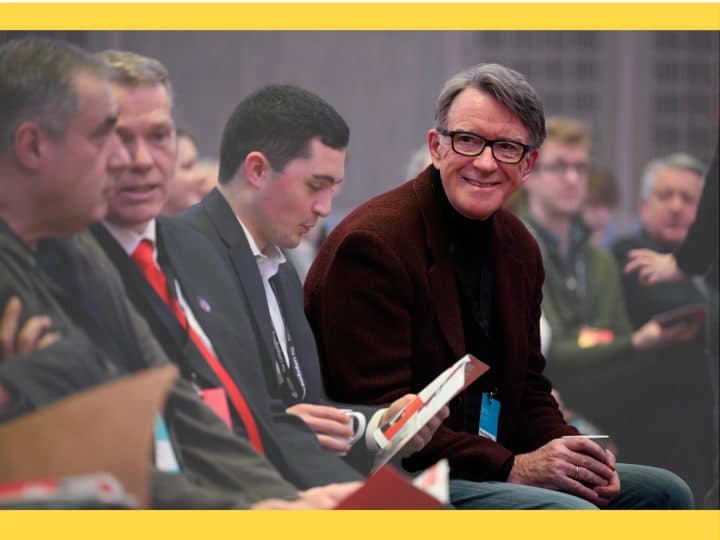

The UK government has released more emails from Peter Mandelson when he was ambassador to the US. Among them are two that show Mandelson was trying to create closer links between the UK government and the dubious US tech company, Palantir.
And seems Mandelson attended this event with Louis Mosley, boss of Palantir UK and his client at Global Counsel. Noteworthy as we were told that mitigations on Mandelson’s appointment included no one-on-one meetings with former clients. pic.twitter.com/q5G722DKDk
— Ethan Shone (@EJShone93) June 1, 2026
Mandelson…
Palantir is a defence contractor that’s involved in many ongoing atrocities around the world.
Its ongoing contracts includes mass surveillance, Israel’s genocide in Gaza, and Trump’s Immigration and Customs Enforcement (ICE) activities. Oh, and for some reason it’s also involved in the NHS, a service that’s designed to save people’s lives not to spy on/ murder them.
Palantir’s involvement in the NHS has attracted significant controversy, which is why MPs debated our partnership with the US tech abomination in April.
In 2023, Palantir walked away with a seven-year NHS contract without competition, Yanar Alkayat wrote for the Canary.
(The same kind of mates’ rates for the £240 million Ministry of Defence deal). Data handling, trust and transparency are the major concerns.
MPs speaking out included Iqbal Mohamed, who said:
If it looks evil, if it smells evil and if it behaves evil, then it is evil.
The UK government’s unseemly and secretive ties with Palantir don’t end with the newly unearthed emails. Starmer had off-the-books meetings with the murderous tech company earlier this year.
There is no public record of the Palantir briefing attended by Keir Starmer and Peter Mandelson in February 2025 despite the Ministerial Code requiring Starmer to publish details of meetings with external organisations
No 10 says the event was not a meeting and did not require… — Politics UK (@PolitlcsUK) April 25, 2026
Green Party leader, Zack Polanski, highlighted the following in response to the revelations:
'He was not allowed unsupervised access to former clients’
Is that why Keir Starmer had to accompany Mandelson to their secret meeting with Palantir? https://t.co/okv96wnhDk
— Zack Polanski (@ZackPolanski) April 18, 2026
This is the problem with the revolving door between politics and corporations. No matter how many rules and regulations you introduce, these crooked operators simply contort themselves around them.
Follow the money
Speaking to the Canary, independent MP, Jeremy Corbyn, said the following about the influence of money and corporations on the UK:
The Donaldson debate today in Parliament is going to be interesting and I’ll certainly be there giving my views on his behaviour and the way in which wealth, power, money connections end up influencing decisively Labour and British politics. But the real issue is actually much wider and much deeper.
There needs to be an independent public inquiry into the influence of money, of connections, of how decisions are made and what influence they have on parties and on government. Parliament is in no position to undertake that inquiry because MPs are so involved in it all, with money being donated to campaigns, to running MPs’ offices, to supporting putative ministers and later on ministers themselves.
So we need a big clean-up on politics. That means getting the money out of it — getting the involvement out of it.
Palantir is an example of this. Palantir was introduced into the system by Mandelson and others, now deeply lodged into the civil service systems and now claiming that they are the saviors of our National Health Service. Sorry, no.
We need publicly owned, publicly run and publicly accountable data systems within our National Health Service, not owned by an American-based company called Palantir.
View this post on Instagram
The latest Mandelson emails are interesting, but they don’t tell us much we didn’t already know about Mandelson. And importantly, they don’t tell us anything Starmer didn’t know about Mandelson when he hired him as ambassador to the US.
Featured image via Leon Neal/ Getty Images
By Willem Moore
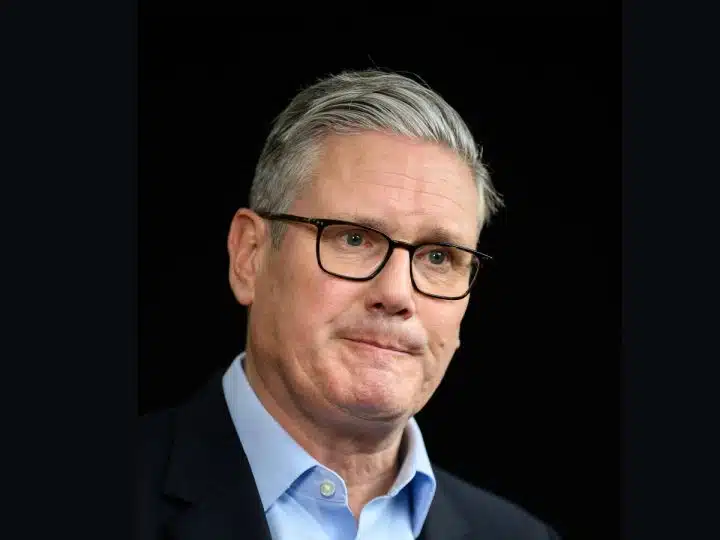

New polling of Labour Party members shows they overwhelmingly oppose the UK selling arms to Israel. They also want an end to trade with Israel’s illegal settlements.
Over 60% are dissatisfied with the UK government’s response to Israel’s atrocities in the Occupied Palestinian Territories and want it to take stronger action.
This includes an 87% majority backing a ban on trade with illegal settlements, and a 78% majority backing the suspension of all UK arms exports to Israel. The poll also found over two-thirds support suspending the UK-Israel Trade and Partnership Agreement.
The polling, commissioned by Save the Children UK, Christian Aid, and Medical Aid for Palestinians as part of the Ally to Atrocities campaign, found that:
- 87% of Labour Party members support banning trade with illegal Israeli settlements, with 6% opposed.
- 78% support suspending all UK arms exports to Israel, including components for F-35 fighter jets, compared to 14% opposed.
- 68% support suspending the UK-Israel Trade and Partnership agreement, while 16% oppose.
- 62% are dissatisfied with the UK government’s current approach to the occupied Palestinian territory, compared to 19% satisfied.
- 58% say the UK government’s approach is important in their decision about who should lead the Labour Party.
Arms to Israel can’t carry on
The data comes amid continued attacks on Gaza despite the so-called “ceasefire” agreement. Israeli forces have killed 930 Palestinians since 10 October 2025, according to the Ministry of Health in Gaza, while humanitarian access remains heavily restricted.
Gaza’s healthcare system has been pushed beyond breaking point. Hospitals are facing severe shortages of medicines, equipment, and fuel while medical needs continue to soar.
With no hospital fully functioning in Gaza and aid still only trickling into Gaza, children continue to face alarming levels of malnutrition and disease. This is in spite of the humanitarian obligations in the ceasefire agreement.
In the illegally occupied West Bank, Israeli authorities are advancing the long-standing E1 settlement plan. It links a major settlement bloc to East Jerusalem and risks mass forced displacement.
This has long been a red line for successive UK governments. The foreign office last year called the expansion “a flagrant breach of international law”. However, ministers have so far failed to curb the aggressive expansion of these settlements.
Alison Griffin, head of conflict and humanitarian campaigns at Save the Children UK, said:
While children in Gaza continue to be killed, injured, displaced and denied access to the essentials they need to survive, the UK’s response has fallen far short of what it is morally and legally required to do.
The UK cannot claim to support international law while continuing policies that risk enabling violations of it. Nor can it continue to treat the unlawful occupation and illegal settlements as a diplomatic concern rather than a breach of international law requiring consequences.
Families have endured conditions no child should ever face, while political inaction allows the suffering to continue.
The government must suspend all arms exports to Israel, including F-35 components, ban trade with illegal settlements, suspend the UK-Israel Trade and Partnership Agreement, and ensure accountability for all violations of international law.
Children and families cannot afford further delay. We are beyond statements of concern and weak, inadequate action—this moment demands an end to complicity and urgent, concrete steps.
Rohan Talbot, director of advocacy and campaigns at Medical Aid for Palestinians, said:
While Palestinians in Gaza continue to be killed, starved, displaced and denied lifesaving aid, the UK cannot keep responding with empty words while these atrocities continue with total impunity.
Every day without meaningful action means more lives lost, more children pushed into hunger, and hospitals stretched beyond breaking point.
These findings expose a widening gulf between the reality on the ground and the UK government’s response and should serve as a wake-up call for the government to take immediate action.
The government must stop arms transfers to Israel, including parts for F-35 fighter jets, end trade with illegal settlements, and ensure accountability for violations of international law.
The Ally to Atrocities coalition is calling for urgent action from the UK government in response:
- Suspend all arms transfers to Israel, including parts for F-35 fighter jets.
- Ban trade with illegal Israeli settlements in the West Bank.
- Suspend the UK-Israel Trade and Partnership Agreement.
- Hold all perpetrators accountable for violations of international law.
Featured image via Leon Neal / Getty Images
By The Canary


The operators of a Barcelona spa for lesbians have gone viral after denying entry to two US-Israeli women because of Israel’s genocide in Gaza.
The women then tried — antisemitically — to claim that being Zionist and Jewish are the same thing as they attempt to cast themselves as the victims. One also tried to claim she had been pushed.
The argument didn’t wash and staff continued to politely refuse them admission, with a full refund.
Spa team: ‘We don’t condone genocide here’
View this post on Instagram
Always the victims
Israelis have a track record of feigning being the victim of violence to try to criminalise principled opposition to Israel’s crimes. Like in Nice, France, in March.
And in the US last year.
View this post on Instagram
Featured image via Mario Marco/ Getty Images
By Skwawkbox
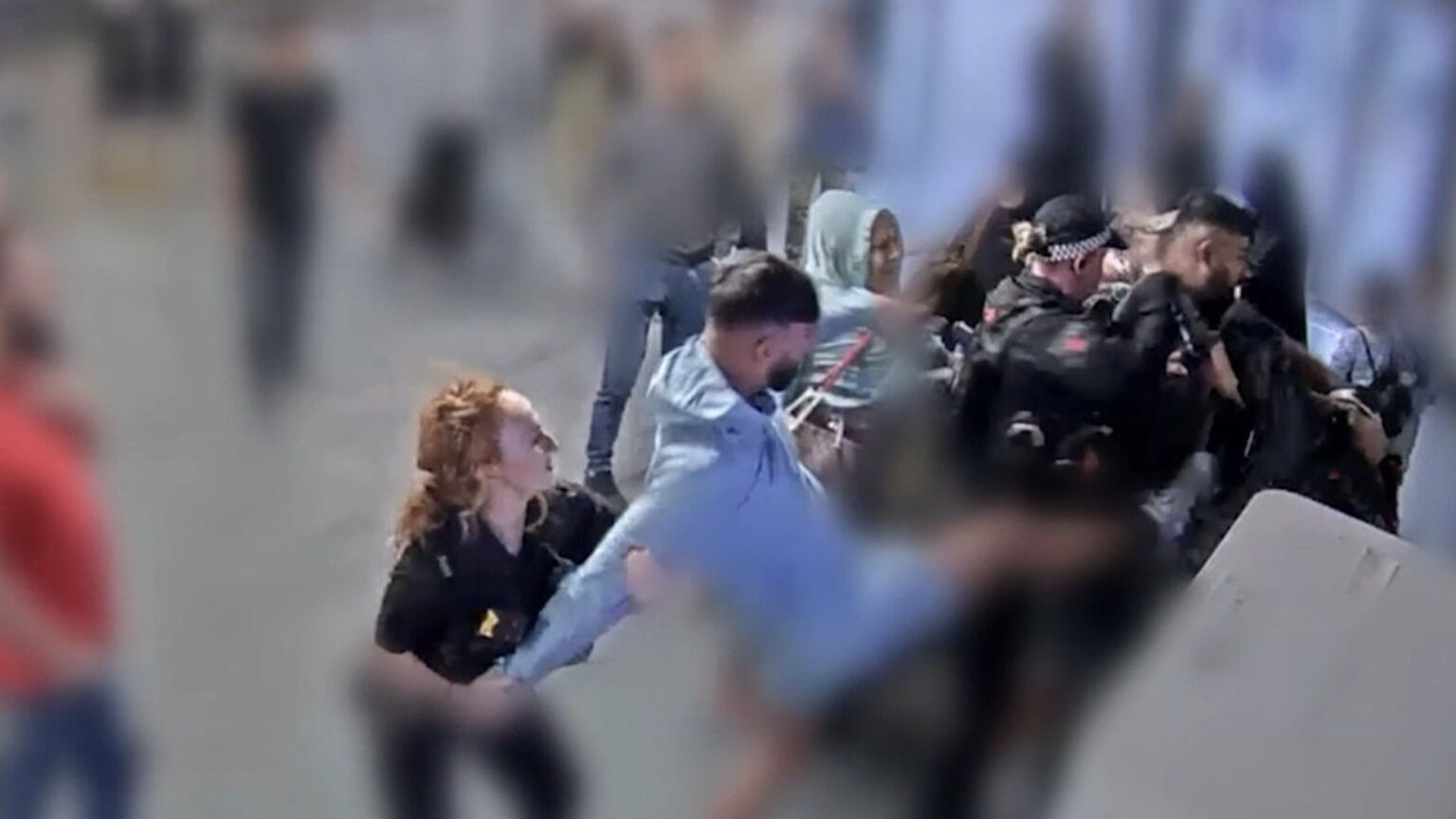
In July 2024, Mohammed Fahir Amaaz and Muhammad Amaad were involved in a now infamous violent incident at Manchester Airport, in which they were filmed fighting with several police officers. Last week, after a five-week-long trial and nearly 20 hours of deliberations, a jury failed to reach a verdict on whether the two brothers were guilty of assaulting one of the police officers. This is the second time a jury has failed to do so. Rather than pursue the matter, the Crown Prosecution Service confirmed afterwards that the brothers would not face a third trial. Many are understandably outraged.
It’s worth recalling the airport incident in full. On 23 July 2024, Greater Manchester Police responded to reports that Amaaz had assaulted a member of the public, Abdulkareem Ismaeil, at a Manchester Airport Starbucks. Initial – and crucially partial – footage of the police response was quickly circulated online. It showed an officer, PC Zachary Marsden, kicking Amaaz while he was on the ground. This prompted anger from the activist class, and accusations of racism against the police.
Days later, a CCTV clip showing the whole incident was leaked to the media. It revealed that the two suspects had in fact been throwing punches at a male officer and two of his female colleagues. It became clear that serious violence had also been used by the men against police officers.
At the first trial in July 2025, Amaaz, the younger brother, was convicted of common assault against Ismaeil and two counts of actual bodily harm against female police officers, PC Lydia Ward and PC Ellie Cook. The first jury was unable, however, to reach a verdict on both brothers’ charge of causing actual bodily harm to PC Marsden. And now a second has found it equally as difficult.
Prosecuting counsel Paul Greaney KC said that although the count of actual bodily harm was serious and had attracted major public interest, it could not properly be described as one of ‘extreme gravity’. The brothers’ defence lawyers called the trial an ‘orgy of race hatred’.
The defence counsel’s claim that the trial was ‘an orgy of race hatred’ is outrageous. After all, we can all see what the footage shows. The defendants use serious violence against police officers in an airport. This must have been terrifying for those witnessing the incident. It could even have warranted a more ‘grave’ charge against the men. ‘Violent disorder’, perhaps, which carries a maximum sentence of five years in jail – although this charge requires ‘three or more’ people to be involved. Or maybe ‘affray’, which requires a person to ‘use or threaten unlawful violence towards another, with conduct such as would cause a person of reasonable firmness present at the scene to fear for their personal safety’. This would at least have addressed the fear experienced by members of the public confronted by the men’s actions.
Either way, it is frankly ridiculous to claim that Amaaz and Amaad are victims of prejudice, or ‘race hatred’, as their defence lawyer claimed. The juries in these trials clearly took their jobs extremely seriously, approached their task without fear or favour, heard a large amount of evidence and deliberated for many hours. The law requires a jury to reach a unanimous verdict initially, then a majority decision of at least 10 to two, or lower if jurors have been discharged. The fact that they failed to reach verdicts suggests they were split. The idea that the trial process was in any way racially prejudiced against the men is undermined by the careful decisions taken in each trial.
And what of the decision not to seek a third trial on the Marsden allegation? CPS guidance states that there is a ‘very clear presumption and expectation’ against a third trial after two juries have failed to agree. The leading authority is R v Bell [2010] EWCA Crim 3, in which the Court of Appeal said that a second retrial should be confined to a very small number of cases – namely those involving a crime of extreme gravity, and where the evidence that the defendant committed the crime remains very powerful. The CPS said that this case, serious though it was, did not meet that threshold.
Many among the public will disagree. The alleged assault on PC Marsden followed confirmed assaults against another officer and against a member of the public. This is not murder we are talking about, but it is still, when viewed in context, exceptionally serious. The outcry about the decision not to seek a third trial is therefore understandable, despite the CPS guidance.
The whole case leaves a bad taste in the mouth. It feels like these men have got away with a serious crime. Amaaz will be sentenced on 26 June for the assaults against the two female officers and a member of the public. We will have to see what the judge makes of the severity of his crimes.
Luke Gittos is a spiked columnist and author. His most recent book is Human Rights – Illusory Freedom: Why We Should Repeal the Human Rights Act, which is published by Zero Books. Order it here.
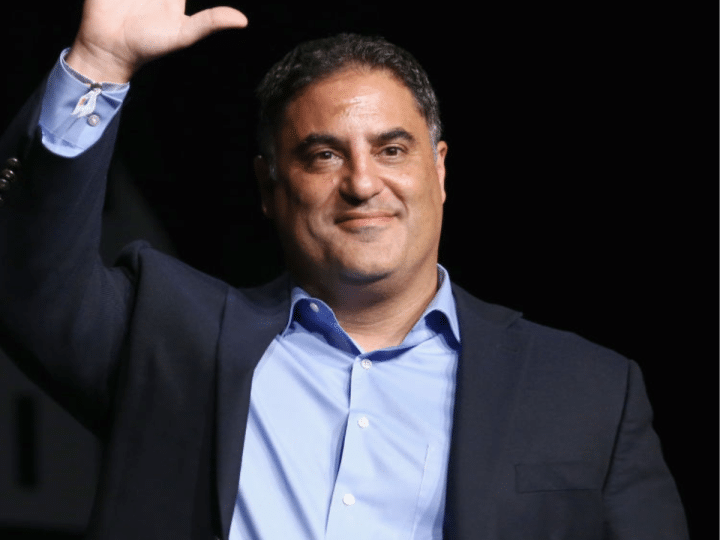

US anti-genocide journalist Cenk Uygur was interviewed on LBC with Shelagh Fogarty this week. The Starmer regime had just cancelled the UK visas of Uygur and fellow commentator Hasan Piker.
Yet Fogarty was determined to ignore the obvious and was seemingly oblivious to how that would backfire. So she told Uygur blithely: “Nobody in this country thinks you can’t criticise Israel”.
Yes, she actually said that out loud.
Fogarty ignores Uygur’s ban for opposing barbarism
Uygur’s response was immediate: “Well I just got banned for it”.
The clip was promptly posted by Green party candidate, Mark Adderley, who knows a thing or two about being attacked and penalised for criticising Israel and its crimes.
View this post on Instagram
Fogarty’s agenda was clear, of course. She was trying to associate properly severe condemnation of Israel with incitement and hate speech against Jews generally, which it plainly is not.
Jews are not Israel, Israel is not all Jews. Suggesting otherwise is antisemitic, but it’s a tactic frequently employed by Israel advocates and apologists. Uygur wasn’t having it and rightly so.
That it comes from Fogarty and LBC is entirely predictable. She has sneered at anti-genocide protesters as juveniles who need to “grow up” and swore at a caller who pointed out Israel is committing genocide.
Nevertheless, being predictable doesn’t make it any more acceptable (or less stupid) to tell someone just banned from the UK for criticising Israel that “nobody” in the UK thinks criticism of Israel is penalised.
Featured image via Rich Polk/Getty Images for Politicon
By Skwawkbox

30 Prime Member Exclusive Deals Happening Before Prime Day

Campaigners file legal challenge to ‘unlawful powergrab’ over NHS drug price controls

Switzerland striker heads to US embassy for urgent World Cup visa after Esta dispute



![MORAD - NO MONEY [VIDEO OFICIAL]](https://wordupnews.com/wp-content/uploads/2026/02/1771006117_maxresdefault-80x80.jpg)


-

 Tech6 days ago
Waymo dominates autonomous vehicle registrations as Tesla trails behind
-

 News Videos5 days ago
This is BROKEN! INSANE 5x MONEY CAR WASH WEEK! The NEW GTA Online UPDATE Today! (GTA5 New Update)
-
 Tech4 days ago
SpaceX just won a second Golden Dome contract. This one is $4.16 billion.
-

 News Videos5 days ago
SHE IS KILLING XRP!!! WATCH URGENT AND ACT FAST
-

 Business2 days ago
Jade Biosciences, Inc. (JBIO) Discusses Positive Interim Results From JADE101 Phase I Healthy Volunteer Study and Development Plans Transcript
-
 NewsBeat5 days ago
FIRST NIGHT REVIEW: Take That bring the Circus back to life in spectacular sun-soaked style
-
 Crypto World5 days ago
CFTC Has Approved the First Regulated Bitcoin Perpetual Contract in the U.S.
-

 Business4 days ago
Is the Spurs Phenom Already Better Than Prime Diesel?
-
 NewsBeat5 days ago
Novak Djokovic v Joao Fonseca LIVE: French Open latest scores and results after Jannik Sinner’s shocking collapse
-
 Crypto World5 days ago
Snowflake (SNOW) Stock Rallies on Strong Q1 Results and AI Product Growth
-
 Entertainment5 days ago
Weak ‘Supergirl’ Box Office Tracking Amid Milly Alcock Backlash
-

 Business4 days ago
Demand Conditions Improve In Chemicals Sector In April 2026
-
 Crypto World5 days ago
MicroStrategy Moves $30 Million in BTC to Coinbase Prime: Is the Bitcoin Sell-Off Already Here?
-
 Politics4 days ago
The House | Inside Andy Burnham’s Makerfield Campaign: “Nobody Thinks This Is In The Bag”
-

 Tech5 days ago
This Week In Security: Ubiquiti Fixes, And FreeBSD Joins The Club You Don’t Want To Join
-
 Entertainment4 days ago
One of the Greatest Sitcoms of All Time Shoots Up Apple TV’s Charts 11 Years Later
-

 Entertainment5 days ago
Maddox Jolie-Pitt Legally Requests to Drop Brad’s Surname
-
 Crypto World1 day ago
Seagate (STX) Stock Surges to Record High on AI Boom and Legal Settlement
-
 Entertainment4 days ago
Britney Spears Shares Troubling Update After Hard Year
-
 Entertainment5 days ago
Bruce Willis’ Generosity Resurfaces Amid His Dementia
You must be logged in to post a comment Login