
Politics
Michael Jackson Biopic Sequel Gets Update From Studio Despite Controversy


A senior exec at the film studio Lionsgate has confirmed that the wheels are in motion on a sequel to the company’s recent controversial Michael Jackson biopic.
Upon its release in April, Michael was met with a lukewarm response from critics, many of whom took issue with the fact that the movie ended in the late 80s, meaning the allegations of child sexual abuse made against the singer in his lifetime were not addressed.
Ever since Michael’s release, there’ve been plenty of conversations about whether a follow-up could be on the cards, with Variety reporting that Lionsgate’s vice chair Adam Fogelson told employees that production on the sequel will get underway at “the end of this year or early next”.
“We do have a number of sequences, particularly some big musical sequences, that were shot previously, that are almost sure to be incorporated but we are mostly focused right now on how to make sure we can deliver, at the right price, the biggest, best sequel,” he was quoted as saying. “That is what the audience is going to want and deserve after the experience we gave them the first time.”
As for a release date, he suggested that it could hit cinemas as early as next year, if not early 2028.

Earlier this year, he was quoted by the same outlet as saying: “We are really excited about the progress we’re making with respect to a second Michael film. All the conversations that we’ve been having with all of the appropriate parties continue to go exceptionally well.”
Director Antoine Fuqua has previously made clear that it was his intention to include the allegations made against the film’s subject in the original movie, and some scenes were even shot depicting a police raid on the Neverland ranch.
However, it was later discovered that part of the settlement between the Grammy winner and one of his accusers made it clear that neither the child’s name nor likeness could ever be used, leading to costly reshoots and major tweaks being made to the film’s plot.
It had previously been reported that a sequel to Michael could focus on the chart-topping performer’s later years, and the controversies he faced around that time, which looks increasingly likely given part one’s box office success.
Fogelson also suggested that a Michael sequel would include some of the controversies that the musician faced in his later years, claiming: “From my perspective, it’s important to try to give the audience an authentic understanding of who Michael Jackson was.
“So I think that that can be done with or without some of what was in the third act that had to be scrapped.”


For reasons we don’t fully understand yet, most people with dementia (about 65%) are women.
That might be because women live longer than men – old age is the number one risk factor for dementia. Some think that hormonal changes, including menopause, as well as differences in known risk factors, such as spending fewer years in education compared to men, might contribute to the discrepancy, too.
And now, a paper from the Montreal Neurological Institute at McGill University has suggested that some common verbal tests used to help diagnose dementia could be leaving women undiagnosed for 2.7 years longer.
Why might women’s dementia look different to men’s?
Verbal memory tests such as the Rey’s Auditory Learning Test (RAVLT), which tests how well people remember lists of words in both immediate and delayed settings, are “widely used in Alzheimer’s disease assessments”, the paper said.
But the researchers think women, on average, have better verbal memory. Their study suggests that women keep that “advantage”, even when their brains are facing as many Alzheimer’s-related brain changes as men.
So, the study authors wanted to see whether “this form of cognitive reserve masks symptoms and delays diagnosis in females”.
They found that compared to men whose brains appeared to be in the same stage of dementia development, women kept healthy verbal memory for about 2.7 years longer.
That might leave them undiagnosed for longer. “This masked period represents a window for earlier detection and timely intervention before irreversible neurodegeneration,” the authors wrote.
After that 2.7-year point, the cognitive abilities of women with dementia-related brain changes seemed to decline 25-50% faster than men’s.
Typically, the study suggested, this is when tests begin to pick up the condition among women.
Alzheimer’s Society has mentioned issues with gender in past studies
On their site, Alzheimer’s Society said that “the vast majority of experiments and clinical trials carried out by dementia researchers have not been designed to see differences between male and female participants”.
But we know that women have both different possible risk factors (including hypertensive pregnancy disorders) and symptoms (women with dementia are more likely to report anxiety and depression).
The charity added that this means we still have a “poor understanding of how diseases causing dementia might work differently in females,” and that it might take us a while to catch up.


Israeli occupation forces (IOF) have ended their raid on Qalandiya Refugee Camp and neighbouring Kafr Aqab, north of occupied East Jerusalem. This followed a dawn assault on 5 August that saw roads blocked and residents placed under strict curfew.
The Palestinian Prisoner’s Society (PPS) reported that more than 60 Palestinians had been arrested and interrogated by 12pm local time on 6 August. Those detained included women and children.
Israeli occupation forces continued their raid on Qalandiya refugee camp for the second day, demolishing shops, raiding homes, and blocking roads. The Palestine Red Crescent said 10 Palestinians were injured, while its crews were prevented from reaching patients. pic.twitter.com/xuC9jBVyo0
— Government Communication Center (@pal_gcc_en) August 6, 2026
Israeli occupation forces raid Qalandiya
“They closed the road between Kafr Aqab and al-Ram until 10 or 11. Anyone who tried to pass during that period was assaulted. They searched vehicles and people’s ID cards, harassing and mistreating them.”
The IOF’s arrest and interrogation campaign in the refugee camp was accompanied by serious assaults and violations against civilians. A total of 51 Palestinians were injured. Of those, 35 were hospitalised after being severely beaten. One person was hit by a rubber-coated steel bullet. Meanwhile, 60 others were treated for suffocation caused by tear gas inhalation.
Shops were demolished. In addition, the IOF raided the headquarters of the Popular Service Committee and Palestinian homes in Qalandiya Refugee Camp. Families were forced out at gunpoint as soldiers vandalised their homes and stole cash and jewellery. The occupation forces also seized several homes. These were then turned into interrogation centres, military outposts, and surveillance positions.
Turkman explains:
“The situation in the camp was very difficult, to the point that the Jerusalem governorate, together with the Civil Affairs Liason managed to bring in bread, medicine, and other supplies to the people who had been trapped throughout the day. The occupying forces also prevented the Red Crescent and ambulance crews from reaching a number of medical cases, except after hours of interventions and lengthy coordination efforts with them. There were also repeated attacks on press crews, suppressing and preventing media coverage during this raid.”
The IOF also tried preventing coverage of the raid, forcing journalists away from the camp’s main entrance and closing the road from the adjacent Sikkal neighbourhood near the main Jerusalem–Ramallah road to block access. Journalist Muhammad Sumrin was reportedly severely beaten while covering the assault, while other reporters were targeted with stun grenades
Israel’s assault on refugee camps
The Jerusalem Governorate has called for urgent international action. It said these violations must end, and that Palestinian refugee camps must be protected as a core element of the inalienable rights of the Palestinian people.
What happened in Qalandiya is not an isolated incident. West Bank refugee camps have faced Israeli military violence for decades. But since the start of Israel’s genocide in Gaza, they have witnessed an unprecedented escalation in scale and intensity.
In January 2025, Israel launched Operation Iron Wall, targeting Jenin, Nur Shams, and Tulkarem refugee camps in the northern West Bank. The IOF destroyed large parts of these camps, using helicopter gunfire, airstrikes, ground operations, and tanks against largely unarmed residents. More than 40,000 Palestinians were forcibly displaced during the operation. In the process, the Israeli occupation emptied the camps, destroyed homes and infrastructure, and continued preventing Palestinians from returning.
Operation Iron Wall: A campaign of expulsion
According to the UN, the occupation targeted these camps with more than 100 airstrikes. These statistics show that the IOF killed 361 men, 10 women, 70 boys, and 4 girls. 258 people were killed by airstrikes and 46 by shoulder-fired projectiles.
Less than 10 days before the Qalandiya Camp raid, the occupation’s so-called “defence” minister, Israel Katz, instructed the IOF to capture another Palestinian refugee camp in the West Bank. Although he did not identify which camp would be next, he said the operation should follow the:
“Tulkarem, Nur Shams and Jenin model.”
Palestinians in Qalandiya Refugee Camp were understandably extremely worried and concerned, as this violent raid could have been the start of a much bigger military operation. Next time they may not be so lucky.
Despite the growing mountain of evidence of war crimes and crimes against humanity government’s continue to remain silent. According to Human Rights Watch:
“Katz’s announcement shows that when serious international crimes go unpunished, they can happen again.”
Human Rights Watch has warned that when serious international crimes go unpunished, they can happen again. The organisation is calling on governments to act urgently to prevent further forced displacement, including by sanctioning those responsible for grave human rights violations, suspending arms transfers, ending trade with illegal settlements, and supporting the International Criminal Court’s investigations and arrest warrants.
But for Palestinians in Qalandiya and across the West Bank, the question is not only what happens after another raid — it is why repeated warnings, documented violations, and mounting evidence of crimes have still failed to stop them.
Featured image via the Canary
By Charlie Jaay

!function(n){if(!window.cnx){window.cnx={},window.cnx.cmd=[];var t=n.createElement(‘iframe’);t.display=’none’,t.onload=function(){var n=t.contentWindow.document,c=n.createElement(‘script’);c.src=”//cd.connatix.com/connatix.player.js”,c.setAttribute(‘async’,’1′),c.setAttribute(‘type’,’text/javascript’),n.body.appendChild(c)},n.head.appendChild(t)}}(document);(new Image()).src=”https://capi.connatix.com/tr/si?token=8b034f64-513c-4987-b16f-42d6008f7feb”;cnx.cmd.push(function(){cnx({“playerId”:”8b034f64-513c-4987-b16f-42d6008f7feb”,”mediaId”:”150e8cef-1a09-40bd-a8f5-f53040cbd428″}).render(“6a75a3f0e4b0a79b03a7e92e”);});
Heatwaves wreak havoc on everything from our mood to our gardens.
And now, it seems, they might affect our teeth too (oh, good).
Following hot spell after relentless hot spell in the UK, Dr Pippa Nicholls, a dentist and the founder of Dimples, said four heatwave-related habits could end up leaving us more cavity-prone.
With a predicted sixth heatwave possibly on its unwelcome way, here’s what those risk factors are, as well as what we can do about them:
1) Dehydration
The issue: Dr Nicholls told us that when we’re dehydrated, our mouths produce less saliva.
And that can have a serious knock-on effect on our teeth, as the fluid “plays a crucial role in protecting our teeth by neutralising acids, washing away food, and helping to remineralise enamel.”
Therefore, the dentist said, “Less saliva can increase the risk of tooth decay, bad breath, and gum problems.”
During a heatwave, we use a lot more water than usual, so dehydration is more likely. Some estimate that 70-80% of people start their day in a state of dehydration during a hot spell.
The fix: This one’s pretty simple – “Keep water close by throughout the day (and night!) and try electrolytes to help for an extra boost,” said Dr Nicholls.
2) An interrupted sleep routine
The issue: Anyone who’s sweated through a “tropical night” will know how badly hot temps can mess up your usual routine. In fact, June’s sweltering heatwave is believed to have led to mass sleep deprivation this year.
That might affect your dental hygiene, Dr Nicholls suggested. “When we’re tired, our routines are the first thing to slip. Saliva production naturally drops while we sleep, so going to bed without properly cleaning your teeth leaves them far more vulnerable overnight.”
The fix: “Even on the hottest nights, two minutes morning and evening with a remineralising hydroxyapatite toothpaste will keep you smiling,” the dentist said.
3) Sneaky sugar fixes
The issue: Why is it that so many cooling foods – ice cream, a cool can of fizzy drink – are laden with sugar?
As the dentist said, “Iced coffees, lollies, and cold sugary drinks are brilliant for cooling us down, but they do increase acid attacks on our enamel, and sipping or grazing throughout the day is the worst thing you can do for your teeth.”
The fix: Happily, Dr Nicholls isn’t asking us to give up our treats entirely.
But do “Try to enjoy them in one sitting at the end of a meal when saliva flow is at its highest, and always wait around 30 minutes before brushing afterwards so you’re not scrubbing softened enamel,” she advised.
4) Heatwave stress
The issue: We’ve written before at HuffPost UK about “heatwave anxiety”. But higher temps can make us irritable and tired too.
“Heatwaves breed tension, often without our realising it, and many of my patients clench or grind more during periods of poor sleep and stress,” the expert told us.
That can lead to a painful jaw and worn-down, or even broken, teeth.
The fix: “My biggest piece of advice is to prioritise winding down before bed,” ended the dentist.
“Relaxation techniques, breathing exercises, and meditation all help shift your body into a calmer state before sleep, which can really make a difference in clenching overnight.”
Related…




Sellafield teams safely removed radioactive material from a legacy tank into modern containment.
We have recently completed a complex operation to remove radioactive material from a legacy storage tank. This is a key risk reduction activity on the Sellafield site.
The storage tanks, constructed in the 1950s, contain complex radioactive sludge known as flocculant. This ‘floc’ was created as a by-product during early reprocessing operations.
Over time, the radioactive material settled and compacted. This increased the technical challenge of its safe removal and continued storage.
Our teams developed a method to resuspend the settled solids. Converting the material back into sludge allowed for safer transfer into a modern storage tank.
The modern tank feeds into Sellafield’s Enhanced Actinide Removal Plant. This is where the material will be treated to ensure safe, stable storage.
A useful way to picture the challenge is a snow globe. When left undisturbed, particles settle to the bottom. To mix them back into the liquid, they must be lifted and redistributed throughout the vessel.
Our teams achieved the industrial equivalent in a highly controlled environment.
To deliver this capability, engineers and operators recommissioned specialist resuspension equipment. They rebuilt and tested the system. They ensured it could operate continuously over extended periods.
Water was added to the tank and specialist equipment continuously mixed the contents. Over time, the settled material at the bottom of the tank was gradually broken up. It was then brought back into suspension.
The process ran continuously, 24 hours a day, for around three weeks. Once the contents formed a uniform mixture, it could be safely transferred.
This approach enabled the removal of 1302-metre cubed of flocculant. This volume equates to over half an Olympic-sized swimming pool.
Head of Operations, Alan Prince said:
“Reducing legacy risk safely is central to our mission. Our teams collaborated to deliver this complex, high‑hazard operation, efficiently. It demonstrates the expertise we have to execute demanding engineering and operational work.
Completing this activity removes radioactive material from ageing infrastructure. Placing it into modern containment means it will have a clear treatment route.”
There are two remaining legacy tanks that will require emptying using a similar method.
This work supports our commitment, as part of the Nuclear Decommissioning Authority, to reduce risk, protect the environment, and deliver value for taxpayers.

2 min read
Nuclear Waste Services (NWS) has confirmed Seth Kybird as its permanent Chief Executive Officer (CEO). Seth has led NWS as interim CEO since April 2025, and his appointment took effect from 1 July 2026.
NWS Chair Liz Peace, said:
“I am delighted to confirm Seth as our permanent CEO. The time he has led NWS has shown exactly why he is the right person to take the organisation forward – he has brought focus, clarity, and ambitious leadership. I have every confidence in him as we pursue our vision to make nuclear waste permanently safe, sooner.”
Nuclear Decommissioning Authority (NDA) group Chief Executive David Peattie, said:
“Since stepping into the interim CEO role, Seth has provided strong leadership for NWS, further strengthening its position as the UK’s dedicated radioactive waste management and disposal organisation. He has maintained a clear focus on high performance and delivery, helping to advance the waste solutions the nation needs. I’m delighted he will continue to lead NWS and its role in the NDA group.”
Seth Kybird, said:
“It is a privilege to continue leading NWS. For me, this has always come down to two things: the mission and the people. What NWS does matters – protecting people and the environment today and taking responsibility for the generations that come after us. This year has asked a lot of us, delivering for the country while working within real financial constraints, and it is the skill and commitment of my colleagues that has carried us through.
“And we will keep building on our progress: widening the waste solutions we provide; operating the Low Level Waste Repository safely, and making progress towards permanent disposal, especially a Geological Disposal Facility.”
Seth has led NWS as interim CEO since April 2025. He joined from Nuclear Transport Solutions (NTS), where he was CEO from its formation in 2021, and was previously Managing Director of International Nuclear Services.
NWS is the UK’s dedicated radioactive waste management and disposal organisation and is part of the NDA group. Its work focuses on three core areas: providing sustainable waste solutions for customers; the safe, secure operation of the UK’s principal Low Level Waste Repository in Cumbria; and delivering a GDF – internationally recognised as the best solution for the most hazardous radioactive waste.

Tom Holland is getting candid about the unglamorous truths of playing Spider-Man.
In the run-up to the latest film’s release, the stars of the billion-dollar-making Spider-Man: Brand New Day sat down with IMDb to answer burning questions about the film.
Asked about the reality of wearing that Spidey suit for 12 hours a day, Tom happily confessed: “The worst thing is definitely the smell.”
“You know, like, I’m not going to shy away from it,” he laughed. “You spend 12 hours in that thing in a deep lunge, jumping up and down all day.”
He went on to praise the movie’s costume department, and revealed he had sat down with them and Brand New Day’s director, Destin Daniel Cretton, to speak about all the things they loved about previous Spider-Man suits.
“We did a really interesting exercise when we were in pre-production, where I tried on Tobey [Maguire]’s suit, I tried on Andrew [Garfield]’s suit, and I tried on my original suits,” Tom explained.
Tom added that the new Spidey suit took inspiration from both of his predecessors Tobey Maguire and Andrew Garfield’s outfits, which makes sense, since his Peter Parker crossed paths with them in the previous Spider-Man film No Way Home.
“The idea behind the design of the suit was to try and make an homage to the things we loved about those original costumes,” he noted.
Elsewhere in the interview, Tom claimed that the two actors who had previously played the superhero had a much easier time of it thanks to the logistics of their costumes.
“They had zips in different places. They could use the bathroom. They could take their mask off by themselves. Take their gloves off. They could take their gloves off,” he told IMDB, but hilariously added: “You are still in a onesie.”
So, did Tom get any upgrades to his suit, considering this was his fourth film and he’s now one of Marvel’s hottest properties?
“It was the first time I could comfortably go to the bathroom,” he replied.
Brand New Day is also the first movie in the franchise where he could comfortably take his mask off and drink.
“And it also made working with Destin a lot easier because, you know, it is weird when you’re talking to someone with a mask on, and you’re trying to have, like, a human conversation,” he explained.
While amendments were made to Tom’s Spider-Man suit to help give the actor more “freedom”, the filmmaker discovered there were lots of other benefits.
“They had designed these new lenses, and in certain light, the camera looks straight through those lenses, and you can see my eyes underneath the mask,” Tom explained, revealing that he believes this “humanises” the iconic superhero.
Anyone who has seen the film will know that the new suit moves and wrinkles as the actor talks and does his superhero business.
“I love the imperfections of the suit,” Zendaya added.
Spider-Man: Brand New Day is in cinemas now.
Nuclear Decommissioning Authority helps tackle digital exclusion by donating surplus mobile phones, iPads, laptops and monitors to schools and charities.
The Nuclear Decommissioning Authority (NDA) is helping to tackle digital exclusion by donating surplus mobile phones, iPads, laptops and monitors to schools and charities across North West England.
The refurbished devices are enabling children and adults to access education, essential support and information services, stay in touch with family and friends, and stay connected to the networks they rely on.
Since 2021, the NDA has donated over 1,500 devices to around 50 schools and charities across Cumbria, Lancaster, Warrington and Manchester including Northwest Blood Bikes and Royal Air Force Air Cadets.
NDA Group Chief Operating Officer, Frank Rainford, said:
“What makes this initiative particularly special is the role our employees play in identifying the organisations that could benefit most, drawing on their local knowledge and connections within the communities they live and work in.
As an organisation rooted in towns and regions across the UK, we have a responsibility not only to deliver our mission, but also to support the people and places around us. It reflects our commitment to creating lasting social value for future generations.”
In the last two and half years the NDA has donated around 200 mobile phones to a large residential care provider supporting children and young people with special educational needs and additional needs across the North West.
Access to these devices has helped the children stay connected with family members and professionals, engage with educational resources, and develop important digital and communication skills.
The phones have also provided practical support for young people who may otherwise experience barriers to communication, helping to increase their independence, confidence, and sense of inclusion.
Debbie Reid, a therapist working within the residential care provider, said:
“The donated mobile phones have made a real difference to some of the children and young people in our care. Many of the young people we support have additional needs and can struggle with communication, social connection, and accessing opportunities.
Having access to a mobile phone has helped them stay connected with important people in their lives, develop independence, and engage more confidently with education and the wider community. We are extremely grateful for the donation and the positive impact it has had on the young people we support.”
Recently the NDA also donated over 130 old iPhones to Women’s Community Matters in Barrow, South Cumbria, a charity providing practical and emotional support to women and girls including support with domestic abuse, mental health and financial aid.
Some are being used by staff, saving the charity money on purchasing new devices and enabling them to contact clients by text and WhatsApp which is better for those with limited access to phones, for example victims of domestic abuse.
The majority went directly to clients affected by domestic abuse, struggling with mental health, or experiencing the criminal justice system, or young people struggling with their mental health and family life.
Find out more and hear from our staff here: Tackling digital exclusion through community connections.
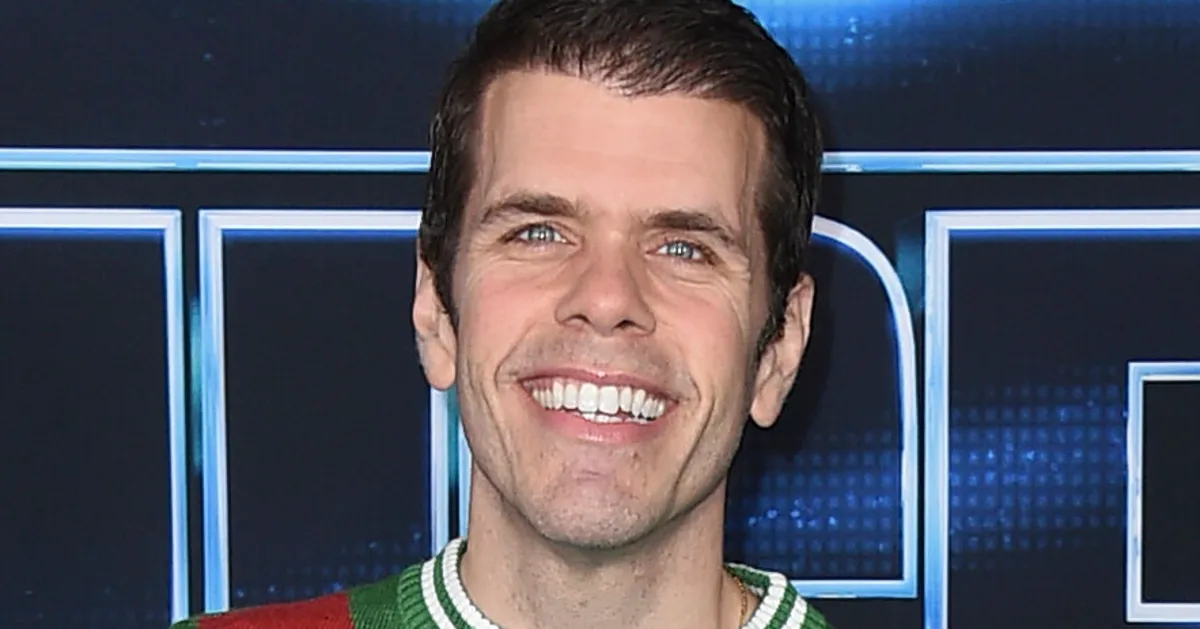
Perez Hilton’s family is calling on the media to respect his children’s “privacy and well-being” in light of the celebrity blogger’s recent hospitalisation.
Earlier this week, Perez – whose legal name is Mario Lavandeira – was taken to hospital after a TikTok livestream in which he appeared to be self-harming.
On Thursday, his family posted a new update on his website, which began by thanking the media personality’s supporters for their “overwhelming outpouring of love, support, and prayers” during “this incredibly difficult time”.
“The events of the past several days have been nearly unbearable for our family,” they continued.
“Just minutes before the public livestream incident, Perez’s children, niece, and sister were inside the home. When it became clear that Perez was experiencing a severe mental health crisis and harming himself, they immediately fled to protect the children from witnessing any further trauma.
“Our highest priority right now is helping the children begin to heal from what they experienced. An important part of that process is allowing them to safely return home and begin rebuilding a sense of security and normalcy.”
They then called on “members of the media, paparazzi, content creators and the public” to leave “the area surrounding the family’s home and not return” for the safety of Perez’s children.
“Please allow his children the privacy and space they need during this unimaginably difficult time,” they wrote, before concluding: “Again, thank you for your compassion, understanding, and continued prayers.”
The former Celebrity Big Brother housemate is a father to a 13-year-old son and 11-year-old and eight-year-old daughters.
Earlier this year, he experienced a number of health struggles, including being hospitalised with severe sepsis back in March and a subsequent stay due to deep vein thrombosis.
In a previous update, Perez’s family said: “We have also been able to confirm that Perez is able to communicate, which has given our family hope. We respectfully ask for your continued prayers, understanding, and grace as Perez continues to recover.
“We will share additional updates as we receive confirmed information and are able to do so.”
Help and support:
- Mind, open Monday to Friday, 9am-6pm on 0300 123 3393.
- Samaritans offers a listening service which is open 24 hours a day, on 116 123 (UK and ROI – this number is FREE to call and will not appear on your phone bill).
- CALM (the Campaign Against Living Miserably) offer a helpline open 5pm-midnight, 365 days a year, on 0800 58 58 58, and a webchat service.
- The Mix is a free support service for people under 25. Call 0808 808 4994 or email help@themix.org.uk
- Rethink Mental Illness offers practical help through its advice line which can be reached on 0808 801 0525 (Monday to Friday 10am-4pm). More info can be found on rethink.org.


Plans to build data centres have been controversial across the UK, but the latest example comes from Brick Lane.
Housing Secretary Angela Rayner approved a £500 million redevelopment of the Truman Brewery on Brick Lane, which will include a data centre. This is despite unanimous opposition to the development from Tower Hamlets council, the local mayor and campaigners.
In a borough with over 30,000 households on the social housing waiting list, the council wanted 800 homes on the same site instead. The government’s decision letter gives that plan “no more than limited weight.” Meanwhile, it gives the data centre “significant weight” for its economic benefits in meeting “the need for data centre capacity,” but never states how many jobs it will create.
The Save Brick Lane coalition argues the site should be housing-led, warning the development could push up rents, displace long-standing residents, and hollow out Brick Lane’s community. With unanimous opposition by locals and 30,000 people waiting for homes, the government pushing ahead with this data centre shows in whose interests the government is willing to make tough decisions.
Computer says no
The late great theorist Mark Fisher might refer to the government’s behaviour in this case as “market Stalinism.” Fisher identifies a system that opposes centralized, bureaucratic and authoritarian Stalinist planning, but, in fact, reproduces it via capitalism.
Under this system, the pursuit of material progress for everyday people is overlooked in favour of hitting targets for profits or growth, standing in for Stalin’s five-year plans, so that the metrics become the ends in and of themselves. That means branding achievements become more important than achieving any sort of material benefit for ordinary people.
A Guardian investigation showed how much market Stalinism is at play in the UK’s AI strategy. CoreWeave’s announced £1 billion UK “investment” turned out to be renting space in two existing datacentres and plugging in chips it had already bought without building anything new. Nscale’s £2 billion “supercomputer” – that the government said would be completed by the end of 2026 – was still just a scaffolding yard when reporters visited in February.
Ordinarily, market Stalinism at least performs the audit; here, the Department for Science, Innovation and Technology didn’t even manage that, admitting it wasn’t:
playing an active role in auditing these commitments.
Economist Cecilia Rikap speaks of ‘phantom investments’ whereby:
big tech companies artificially inflate datacentres’ job creation and economic impact to please governments [who] are desperate to claim they are making the economy grow.
Britain’s AI roadmap
Britain’s AI roadmap was supposed to have accounted responsibly for its own carbon costs, yet the Department for Science, Innovation and Technology had underestimated the emissions from AI data centres by roughly a hundredfold. A since-deleted estimate of 0.142 million tonnes a year was revised to a range of up to 123 million tonnes over the next decade.
This estimation was only corrected after the campaign group Foxglove and the outlet Carbon Brief checked the working themselves. The correction landed a week after Kendall urged the public to “embrace AI” after announcing the first £500 million tranche of a new government AI fund. The ministries love the announcements, but how often do they check it against the world?
Brick Lane fits that pattern. A data centre approved for “significant” benefits nobody has to specify, while the quantifiable loss – more homes in an area needing homes – is overshadowed in the pursuit of growth. The case is not isolated. Data centres were designated critical national infrastructure, and planning rules were rewritten to give data centre applications more weight. Ministers even proposed folding projects into the fast-track regime for nationally significant infrastructure. That urgency might relate to the financial story behind AI.
Betting the house
AI-linked firms have climbed in value by $27 trillion in 3 years, built on what Goldman Sachs analysts called “Panglossian” profit assumptions</a. The Bank of England’s Andrew Bailey has warned that an AI bubble bursting could shrink UK GDP by 2.2%, while the IMF’s Kristalina Georgieva has compared today’s AI boom to “the bullishness about the internet 25 years ago”, which resulted in the dot-com crash.
Local opposition to data centres could play a part in bursting the AI bubble. Each local area that refuses to have a data centre, to not participate in building out AI’s physical infrastructure, contributes to a mechanism that could trigger a correction of the Panglossian profit assumptions. When national governments view local opposition to data centres, they are not just assessing local planning disputes, but deciding whether an overleveraged bet pays off.
The way in which governments make decisions is at the heart of the issue. The case of the Truman Brewery was not simply about creative differences, but also testing whether the alternative Tower Hamlets wanted – 800 homes instead of a data centre – was ever seriously weighed at all.
That phrasing of the government’s decision letter does the same work as Thatcher’s “there is no alternative”. It does not seek to defeat the opposing case, but rules it outside the range of things a government needs to weigh at all, granting it an unbearable lightness. All that is solid then melts, as the government looks at the human need for housing as an obstacle to a financial story it has already decided must come true, bending reality to the bubble.
Featured image via BBC
By Hugo Harvey

Tan France might be known for his ‘eye’ for fashion on telly, but that doesn’t mean he can’t play ball in other courts.
Inspired by his British-Pakistani background, the collection takes inspiration from a range of traditions, which results in rich upholstery, warm colours, wood finishes, and a blend of structure and comfort.
My favourite pieces include expansive leather sofas and hand blown glass table lamps, which provide the perfect environment to get wrapped up in a good book of a warm evening.
But honestly, I want it all. If you also can’t decide, I’ve rounded up the best of the collection to shop now.

Victoria Beckham, 52, and Kim Turnbull, 25, wear matching black bikinis as shirtless David, 51, tops up his tan on luxury yacht in St Tropez after estranged son Brooklyn’s latest social media jibe

Freddy’s CEO backs California business climate amid expansion as rivals retreat

CLARITY Act Delay Creates Window for Asian Crypto Hubs: First Digital CEO


-

 Fashion7 days ago
Weekend Open Thread: Wit & Wisdom
-

 Politics7 days ago
Meta enters AI-training agreement with far-right ‘propaganda rag’ Newsmax
-

 Politics5 days ago
Zack Polanski: an incitement to murder Nigel Farage?
-

 Crypto World6 days ago
MicroStrategy Post-Earnings CLARITY Act Push Could Add New Catalyst for Its Stock
-

 Crypto World6 days ago
XRP Ledger v3.3.0 brings five institutional features
-

 Crypto World6 days ago
New York sues Kalshi over prediction market gambling
-

 Crypto World5 days ago
Crypto PAC spending tops $2M in Michigan House race
-

 Business7 days ago
Trump Announces Hamas Disarmament Agreement as Iran Strikes Kuwait Air Base and US Attacks Pause Overnight
-

 Business4 days ago
DTCR: Deleveraging And A Hedge Fund Collapse Point To A Possible AI Bottom
-

 Tech5 days ago
ESET tracks rise in malicious AI skills and adaptable malware
-
 Crypto World7 days ago
3 Fed Officials Just Explained Their Rate Hike Vote: Is Inflation Winning?
-

 Tech7 days ago
Building A Reproduction PlayStation Motherboard
-

 Sports6 days ago
France Cricket implodes: letters hidden in a drawer and a board at war
-
Crypto World5 days ago
XRP Ledger urges node upgrade after manifest flood
-

 Crypto World6 days ago
Moneyflip CEO charged in $40K murder-for-hire plot
-
 Sports6 days ago
Bruno Fernandes decision made as Man United ‘discuss’ striker transfer option
-

 News Videos6 days ago
Financial Crash Expert: The 90-Day Collapse Timeline They Are Desperately Hiding.
-

 Sports7 days ago
Commonwealth Games 2026 Live Updates | Day 9 CWG 2026: Lovlina Borgohain, Sachin Siwach Enter Final After Indian Judokas Script History
-

 Sports1 day ago
Jordan Coyle & Cordiamo take Laya Arena Stakes at RDS
-
Business6 days ago
FIFA has scrapped $20 billion World Cup sell-off plan, New York Post reports
You must be logged in to post a comment Login