
Politics
Monty Don’s Only Pruning Rule

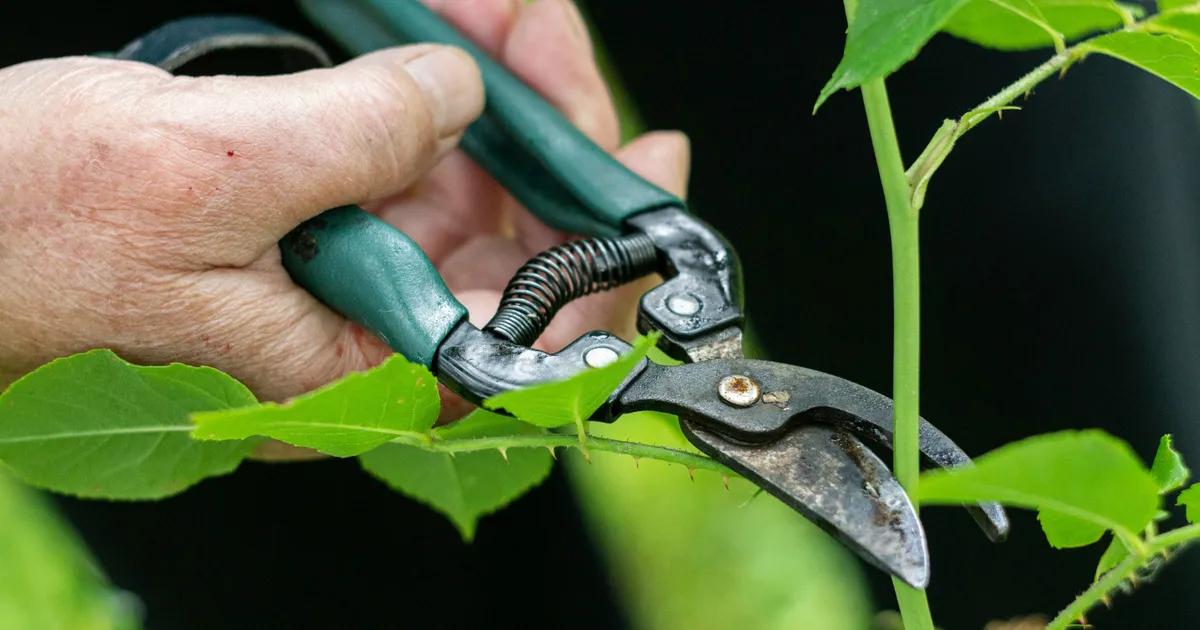
This month’s gardening checklist includes pruning roses, which can help to ensure a bright and bountiful bloom come summer.
In fact, according to gardening guru Monty Don, “The first half of March is the best time to prune any shrubs and climbers that will flower on new growth”.
That can include roses and buddleia. Some shrubs, like willow and cornus, can benefit from pruning right now, too.
It can be a little nerve-wracking to hack back plants you’ve spent ages growing. But the expert is here to help: “I know that pruning can be the cause of some anxiety but there is only one rule to follow,” Don continued.
“Always cut back to something”
The gardener said that when pruning, you should “always cut back to something, be it a side shoot or leaf bud.
“Other than that, do not worry unduly about outward-facing buds or any such finessing.”
This is in line with the Royal Horticultural Society’s (RHS) advice.
When pruning roses, they warn you not to prune more than 5mm away from a bud.
And Gardener’s World said that you should always prune just above a bud – neither so close that it damages it, nor so far away that water can gather on the stump when it rains and lead to rot.
“As a general rule, cut above the bud at a distance of about a quarter of the thickness of the stem,” they wrote.
Why should you prune back to a side shoot or bud?
Gardener’s World said these spots of growth form “nodes” on the plant.
And when you cut too far away from a period of plant growth, it might not have enough energy to regrow quickly enough. Then, you risk “dieback” and disease.
“Also, by cutting above a node, you can manipulate new stems, leaves or flowers to form in a desired direction, as nodes form on different sides of a stem,” the publication said.
They added that no matter what, you should avoid cutting more than 1cm above a node.

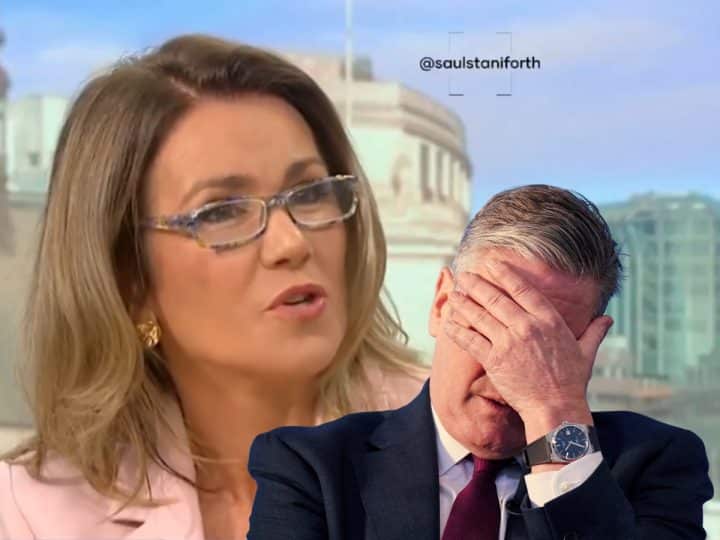

On Good Morning Britain, Susanna Reid tore apart the weak excuses put out by UK PM Keir Starmer over the ongoing Peter Mandelson scandal.
Susanna Reid: on it
This followed the PM’s latest round of pathetic denials he had any knowledge of disgraced Peter Mandelson failing to pass security vetting before he was appointed as ambassador to the US.
By setting out a clear timeline alongside Keir Starmer’s own past comments on ‘Petie’ Mandelson, Reid shows Starmer’s measly attempts to escape accountability simply do not stack up.
Moreover, this takedown of the UK Prime Minister underscores a serious issue in our democracy, where corrupting influences hold far too much sway in the corridors of power in Westminster. All the while, ordinary people are fed lie after lie and expected to swallow them.
Reid, like many across the country, appears to have had quite enough of Starmer’s nonsense.
Susanna Reid lays it out. Keir appointed Mandelson despite knowing everything about him, he claims he didn't know Mandelson had failed the vetting, which means he never followed it up & never asked about it, & finally we know no.10 did know months ago so someone is lying
Damning pic.twitter.com/B3XDafRk5H
— Saul Staniforth (@SaulStaniforth) April 20, 2026
Keir Starmer is a liar
It will hardly surprise many in the electorate to learn that their PM is a liar. Frankly, his career has been littered with lies as he navigated his way to the upper echelons of power. In fact, we only have to look to 2019 Labour under Corbyn to see that lying has quite literally been Starmer’s comfort zone.
Reid makes this reality unmistakably clear by laying out a timeline of what was known and when. That, in turn, will tighten the pressure on Keir Starmer as scrutiny intensifies ahead of the May 7 local elections. Once again, the PM has left himself little room to wriggle out of a political mess of his own making. A mess he will undoubtedly be made to pay for at the ballots in just over two weeks.
Susanna Reid’s takedown in full:
Susanna Reid: It feels like there are three different issues here.
One is the judgment of Sir Keir Starmer right at the beginning, appointing Lord Peter Mandelson. He had been given a due diligence report. And on that report, it said Peter Mandelson had numerous conflicts of interest and described him carrying reputational risk.
A week later. It is announced by Sir Keir Starmer that Peter Mandelson was going to be the ambassador to the States.
So right off the bat, who appoints someone that you have been warned is a reputational risk? Never mind the vetting. You had been given a report that he was a walking red flag. So that’s the first issue.
The second issue is then he goes through this developed vetting. How competent are you as a prime minister that you then are not, as you say, either curious enough to know, well, what happened? Have we cleared him? Is it all safe? Keir Starmer in that position says, well, nobody told me.
As you say, it’s absolutely beggars belief that someone at number 10 wouldn’t have then said, is everything OK? Are we sure that we can now give him the green flag?
And then the third issue, it seems to me. is whether there is any lying going on, because that’s what Kemi Badenoch says. So, the Prime Minister has actually lied about this. As you mentioned, Gillian, there was a report a few months ago in The Independent. Downing Street knew Peter Mandelson had failed security vetting for the US ambassador role seven months ago because the reporter David Maddox at The Independent had… put concerns to Number 10, the then Director of Communications, Tim Allen, and said, I found out, or I’ve got a source that says MI6 had failed to clear Mandelson.
So David Maddox, the Independent, knew, Number 10 knew. So how can the Prime Minister say he didn’t know?
Finally, getting to the far more likely reality at the sinister heart of this sordid saga:
Gillian Keegan: Because he did not want to know.
It seems Starmer has even lost favour from pro-Israel voters, who he really should have in the bag:
Starmer has lost Good Morning Britain https://t.co/HFdsdwo2Fp
— Sandy.
 Starmer is a disaster (@AddictScrabble) April 20, 2026
Of course, he bloody well knew – as Susanna Reid pointed out
The optics can no longer be denied, as our own Skwawkbox wrote recently:
In any other walk of life both Starmer and Mandelson would be toast. But it seems running a protection racket for the predatory elite comes with very little in the way of consequences these days. This is a whole lot more than just a typical Westminster sleaze story, isn’t it? Starmer’s Labour is recycling the very worst of Blairite cronyism instead of breaking with it, once and for all.
This is the same Starmer who purged socialists to the glee of the pro-Israel parliamentary Labour party, ditched public ownership, and told poor and working-class voters their demands for wealth taxes and rent controls were unrealistic.
Yet protecting a mate with extremely fucking grubby Epstein ties? That was apparently non-negotiable for Keir Starmer. It can be so very easy to mistakenly assume this is down to Starmer’s incompetence and horrific lack of judgement. But this is elite impunity baked into his DNA.
Cover-Up Keir Always Lies, Always
Make Keir Former PM Now https://t.co/nQTOSNzeZe — CaseClosed (@wds08) April 20, 2026
Political advantage?
Others have gone further than Susanna Reid, questioning whether Mandelson’s ties to Epstein – and the shadow of the Epstein ‘kompromat’ files – may have played a role in his swift path to the White House. After all, it is becoming clearer by the day that a powerful and seedy few likely shape foreign affairs through damaging information they hold. Seen in that light, it doesn’t take a great leap to suggest that Starmer may have believed he could turn that cynical dynamic to his own advantage.
Here, Reid’s intervention powerfully hits the mark. It also exposes a wider truth: political leaders often prioritise their own advantage over decency, integrity in office, and, frankly, basic morality.
This has all come against the backdrop of our government’s ongoing complicity in the genocide on Gaza and Israel’s terrorism in the West Bank. Therefore, this palpable imbalance hardly surprises anyone.
For many across the UK, it will only change once Labour is out of government.
Featured image via the Canary

My pugalier Rocky has always had a gift. His ability to sniff out a tennis ball anywhere is remarkable. At the park in thick grass, under the couch, buried in someone’s garden. For years, I joked that I wished I could teach him to find gold or truffles or anything more valuable. Once he found one, he’d demand a long game of fetch before chewing it for hours. It seemed like exactly what a happy dog was supposed to do.
When Rocky was 9, we took him in for a routine dental checkup. The vet said his teeth weren’t in great condition and she needed to put him under anaesthesia to assess the damage properly. We expected one or two teeth might need work. Instead, she removed 10.
The cause of the problem? Tennis balls.
The vet told us it is more common than we’d ever imagine. I texted every dog owner I knew that day to warn them.
Tennis balls are so embedded in dog ownership that most people never question them. They’re cheap, they’re everywhere and dogs go crazy for them. But veterinarians have been watching the damage accumulate for years.
“The fuzz on tennis balls acts like sandpaper when it contacts a dog’s teeth, especially once it traps dirt and grit,” said Dr. Ezra Ameis, owner of Paw Priority veterinary clinic. “When a dog repeatedly chews or carries the ball, that abrasive surface slowly wears down the enamel. I have seen canines that are literally flattened across the tips from chronic tennis ball chewing. This is not a fracture problem. It is attrition.”
Ameis diagnoses tennis ball-related dental wear almost daily, particularly in high-drive retriever and shepherd breeds. “Owners assume tennis balls are safe because they are sold everywhere and often marketed for dogs,” he said. “People are shocked when I show them smooth, worn-down canines and explain what caused it.”
Veterinarians even have a name for it: tennis ball mouth.
Dr. Stephanie Liff, a New York City-based veterinarian and practice owner, sees the same pattern. “I frequently see the crowns of teeth worn down significantly in chronic tennis ball chewers,” she said.
Her own parents have a 13-year-old golden retriever whose teeth are all blunted from his obsession with tennis balls. “Even though the balls feel soft, the consistent gnawing motion over time can wear the teeth down significantly, and most owners have no idea it’s happening,” she said.
Callum Russell, a dog owner in Kent, England, watched this happen with his Jack Russell, Gunner. “She would often fetch a ball and then chew for hours after her walk,” he said. “As she got a bit older, we noticed her teeth looked unusually flat and worn down, not to mention her bad breath.” Gunner was eventually diagnosed with tennis ball mouth. She is 11 now, and by the time the damage was caught, the vet recommended removing all her remaining teeth to end her pain.
Not every case ends in an emergency. Raziul Hoque found out about the problem when his dog’s vet flagged it during a routine visit.
“There was no dramatic incident. No choking. No emergency,” he said. “Just slow wear that blended into normal behaviour. I realised the surface isn’t actually soft in the way we think. It’s abrasive. Combine that with repetitive chewing pressure, and it acts more like sandpaper than a plush toy.”

Lysandra Cook via Getty Images
Worn teeth are only part of what tennis balls can do.
“The most common emergency we see is an intestinal blockage, often when the pet swallows a tennis ball without the owner realizing it,” said Dr. Danielle DeBrincat, a veterinarian and medical director at VEG ER for Pets in Colorado.
A colleague of hers treated a dog that choked on a tennis ball and stopped breathing. He was revived, but a second tennis ball in his stomach still required surgery to remove. “These owners are often shocked when they learn the cause,” DeBrincat said. “A lot of them say they wish they’d known the risks beforehand.”
Dmitrii Malashkin took his German shepherd, Ernie, to an emergency vet after a night of retching and drooling. An X-ray confirmed Ernie had swallowed a tennis ball whole. “Everyone assumed immediate surgery was required,” Malashkin said, “but the vet suggested attempting to remove it with an endoscope to minimize the trauma.”
While the endoscope camera was inside, the vet found leaves, crumbled plastic wrappers and a piece of string that the fraying ball had collected at the park and carried into his mouth. Everything was removed without surgery. Malashkin said he never imagined a tennis ball could carry that much debris into a dog’s stomach.
Dental damage can be easy to miss. Ameis encourages owners to check their dog’s front teeth every few months. “Early on, the front teeth may look shorter or blunted. The tips lose their normal sharp point. Sometimes you will see a subtle yellow center as enamel thins and dentin becomes exposed,” he said.
By the time a dog shows sensitivity, the damage is already permanent. “In severe cases, I have seen pulp exposure requiring extraction or root canal treatment,” he said. “Dogs are stoic. They often act normal despite significant oral pain.”
Fetch itself is not the problem.
“Fetch is fine, since most dogs playing fetch are holding the ball rather than gnawing on it continuously,” Liff said. The issue is unsupervised chewing. She recommends dental rawhides, soft rubber Kongs, or indestructible rope toys as alternatives, and points owners toward the Veterinary Oral Health Council’s approved product list for guidance.
Ameis offers a simple test for any ball or chew toy. “If you can press your thumbnail into it and it has some flexibility, that is usually a good sign,” he said. “If it is hard enough that you would not want it hitting your own kneecap, it is probably too hard for your dog’s teeth.”
Rocky is 12 now. He has very few teeth left, but he still eats his wet food faster than seems physically possible. Fetch is still his favorite game, but now we swap in a rubber toy the vet recommended, and we don’t leave him alone with it.
It’s a shame it took 10 of Rocky’s teeth to teach us that.
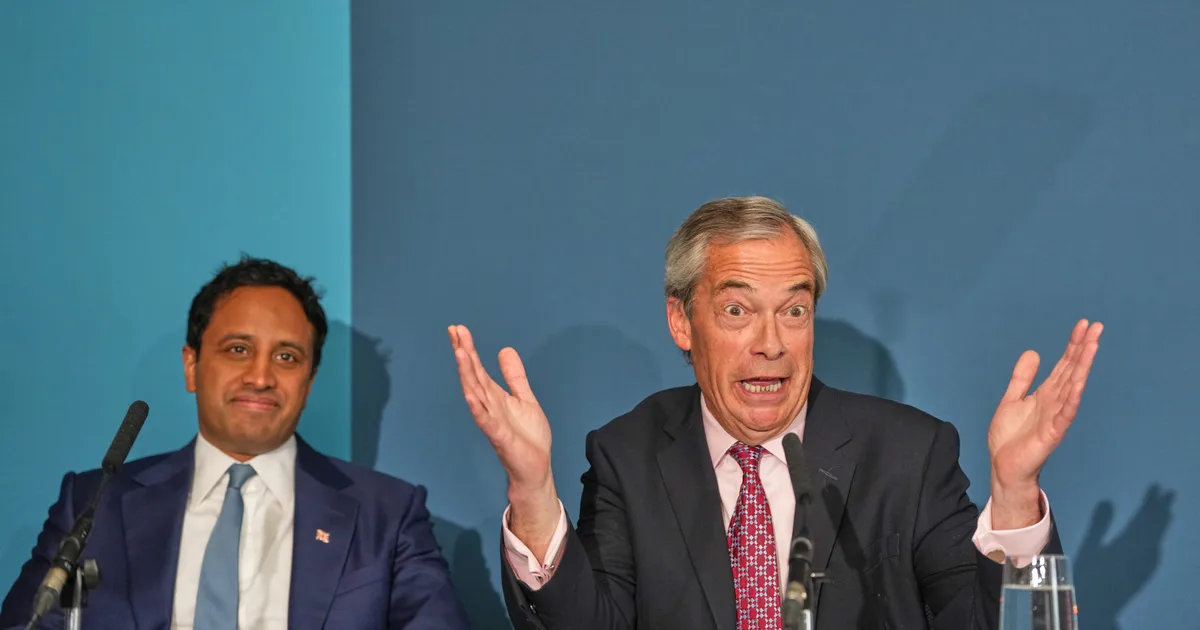
Reform UK has been condemned over the party’s “cruel” plan to deport hundreds of thousands of migrants if it wins the next election.
Zia Yusuf, the party’s home affairs spokesman, said a Reform government would review all successful asylum claims going back five years.
Anyone found to have arrived in the UK illegally or overstayed their visa would be deported, he said.
As many as 400,000 immigrants would potentially be affected by the policy, according to the party.
Yusuf said: “Reform will reverse the invasion of Britain. Anyone who broke into the country illegally, or came in on a visa and overstayed to claim asylum (which is almost all of them) will have their status revoked and be deported.
“This is an addition to all those currently in Britain illegally.”
At a press conference on Monday, Reform leader Nigel Farage said Britain was being “invaded” by illegal immigrants.
The announcement comes after 602 people crossed the English Channel on small boats on Saturday, making it this year’s second busiest day for crossings and bringing the total number of arrivals in 2026 to more than 6,000.
Green Party deputy leader Rachel Millward condemned the Reform plan.
She said: “Another superficial, ill-thought-out and cruel announcement by Reform UK, which will fail to tackle the roots of the asylum crisis whilst making sure more suffering is heaped on the most vulnerable.
“We do not want to see people risking their lives crossing the Channel in small boats. What we need is strong international co-operation to address the reasons that people are having to seek asylum in the first place: war, poverty and the climate crisis, and to provide safe and managed routes that would offer a real alternative to people smugglers.”
“We must remember our basic humanity. Many of those seeking asylum have endured horrendous trauma. They include mothers and children. We have a duty to offer compassion and sanctuary, not insecurity, fear and intimidation.”
Will Forster, the Liberal Democrat immigration and asylum spokesman, accused Reform of “churning out hostile, headline-grabbing” plans that will “do absolutely nothing to tackle our broken asylum system”.
He added: “The backlog of cases is already sky high thanks to the mess the Conservatives left us in. Reviewing five years worth of asylum grants is an impractical farce that will just slow down the process even more.”
Subscribe to Commons People, the podcast that makes politics easy. Every week, Kevin Schofield and Kate Nicholson unpack the week’s biggest stories to keep you informed. Join us for straightforward analysis of what’s going on at Westminster.
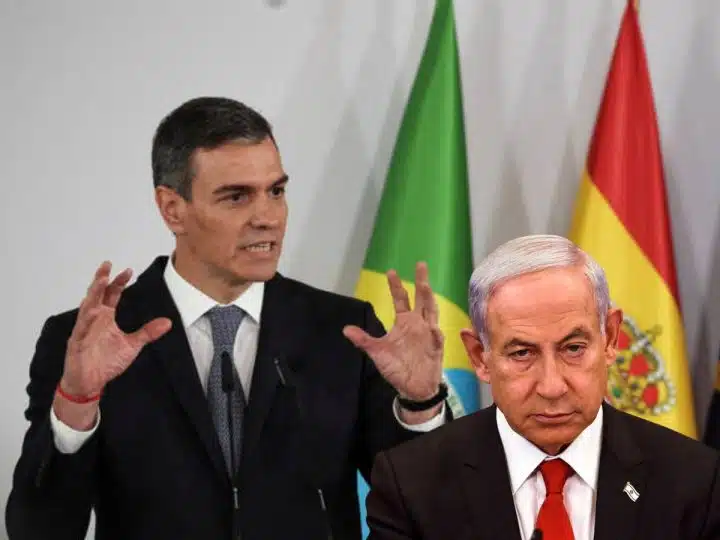

Spanish PM Pedro Sánchez has said that Spain will demand an end to the EU’s ‘association agreement’ with Israel at tomorrow’s (21 April 2026) meeting of EU foreign ministers in Luxembourg. Spain will be joined by the governments of Ireland and Slovenia. The association agreement gives Israel preferential trade access to the EU as well as setting a framework for political negotiations.
Spain moves further on Israel again
Sánchez told a rally in Andalusia that he is calling for the move because:
a government that violates international law or the principles of the EU cannot be its partner.
Sánchez has been one of the few EU leaders to take a strong stance – or any at all – against Israel’s genocide in Gaza and its wars on Lebanon and Iran. In April 2026, he derided ‘leaders’ who were fawning over Trump’s supposed ceasefire in the US-Israel war on Iran, saying they were “praising those who set the house on fire” for turning up with a bucket. A month earlier, Spain removed its ambassador from the colony.
Last Saturday 19 April, the Spanish, Irish and Slovenian foreign ministers wrote to the EU’s senior diplomat Kaja Kallas, accusing Israel of breaching its obligations under the agreement:
including executive decisions, military decisions and laws adopted by the Knesset, that contravene human rights and violate international law and international humanitarian law. Our many statements in this regard, and direct calls for the Government of Israel to fully comply with its international and moral obligations, and to revert those measures, have been ignored.
The letter goes on to says that an agreement with Israel is incompatible with EU core values:
In such a grave situation, we call on the European Union to uphold its moral and political responsibility, and to defend the very core values that have underpinned the European project since its foundation. Respect for human rights must remain a fundamental pillar and guiding principle of all our actions and of all our relationships with our partners. By principled coherence and for the sake of its own credibility, the European Union can no longer remain silent or inactive in the face of such breaches…
…In light of these grave circumstances, we ask that the next meeting of the Foreign Affairs Council includes a discussion of the EU-Israel Association-Agreement. The earlier review of Israel’s compliance with its obligations under Article 2 of the Agreement was clear that Israel is in breach of its human rights obligations, and the situation has only deteriorated since then. Given the level of violence and the gravity of the current situation, there is a need to urgently revisit the question of the EU’s response, including the proposals put forward by the President of the Commission. Bold and immediate action is required, and all actions must remain on the table. The European Union can no longer remain on the sidelines.
However, Kallas is a supporter of Israel who has blamed its genocide on the Palestinians while mouthing token opposition to its ‘excess’. She has rightly been accused of saying “nice words” about Palestinian people while supporting “more weapons for Israel”.
And with the ending of the Israel ‘association’ requiring unanimity among the EU’s 27 governments – many of whom are run by politicians and parties in hock to the genocidal colony or ideologically committed to it – the move to end the association is doomed to fail.
But it’s still the right thing to do and shame on any government that helps defeat it.
By Skwawkbox

We hope you love the products we recommend! All of them were independently selected by our editors. Just so you know, HuffPost UK may collect a share of sales or other compensation from the links on this page if you decide to shop from them. Oh, and FYI — prices are accurate and items in stock as of time of publication.
There’s truly nothing worse than realising you’ve forgotten someone’s birthday, especially when you’re sitting across the desk from them.
That is, unless you are said colleague, who not only has had to come into work on their birthday, but hasn’t had it acknowledged.
You know the drill: you check your team calendar and realise it’s your colleague’s birthday. Like, today.
Cue the hundreds of panicked Slack messages and email threads, rushing out to find a suitable birthday card, and awkwardly driving by everyone’s desk to have them sign it on the sly before the end of the day – all while making it look like this was totally planned ahead of time.
Add remote working into the mix and you have the dead giveaway of a seriously sad and empty birthday card. Yeah… embarrassing.

GroupTogether Celebration Cards
Thankfully, in 2026 we can finally evolve past this. We’ve found the solution to giving office birthdays (engagements, births, and just general appreciation) the attention they deserve: GroupTogether.
To save on awkward apologies, GroupTogether has a whole host of actually cute digital birthday cards that scream “we’ve been preparing for this for weeks”.
As well as being able to choose a pre-made design that speaks to everyone from Christen in Creative, to Dan from accounts, GroupTogether also allows you to create your very own cover.
The best part is that GroupTogether provides the whole experience of opening a personalised birthday card without anyone having to leave their desks.
Whether you have colleagues working from home, out on location, or being on the other side of the world, anyone can sign thanks to GroupTogether offering unlimited signatures. And you get to choose just what you want that special message to say: from a funny GIF, to a messages from the heart or, if you need a helping hand, with the help of its AI tool.
Once everyone has signed, you can either choose to email the final product to the lucky recipient – which they’ll receive in an embossed ‘envelope’ – or print it off as a PDF so you can smugly hand it to them.

GroupTogether Cards
You know what that means: hours of saved time from not having to chase your already-busy team, and colleagues that feel celebrated and appreciated as they should be. Smashed it!
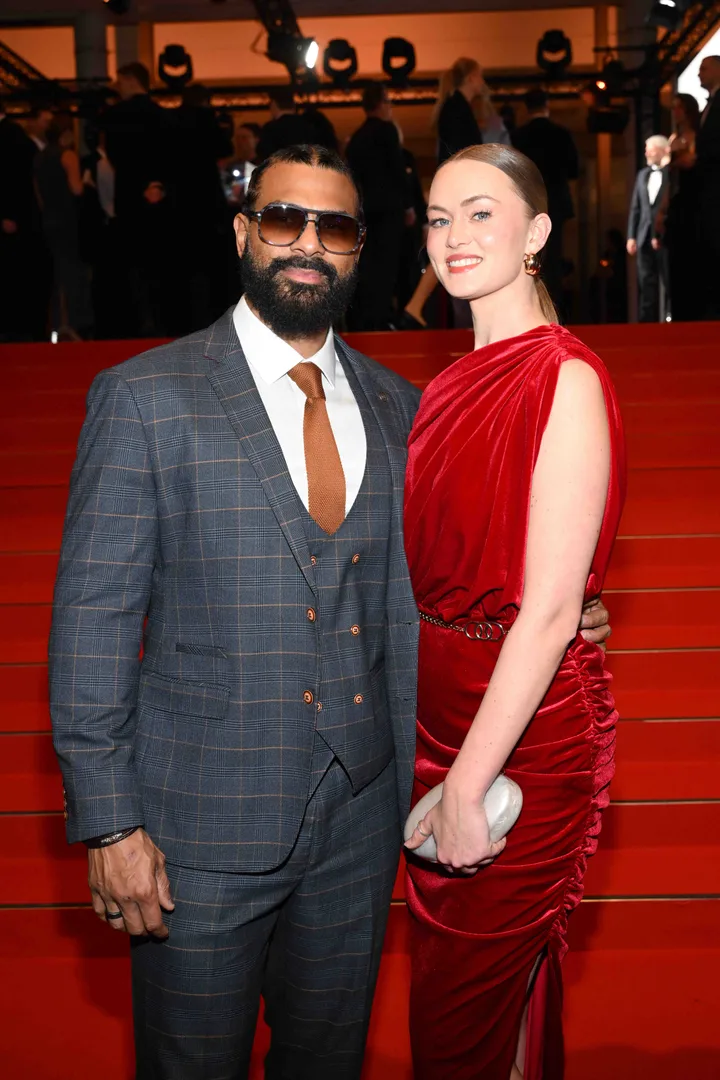
Throughout his time on the current all-star series of I’m A Celebrity, David Haye has repeatedly raised eyebrows due to his treatment of his campmates and various controversial comments.
Of them all, the one that perhaps ruffled the most feathers came early on in the series, when the former heavyweight champion opened up about his relationship with model Sian Osborne.
When Sinitta said he’d said it “sounds like she’s drop-dead gorgeous”, David agreed that Sian is “lovely”, before observing: “She’s got the personality of a proper ugly bird.”
As his co-stars voiced their shock at this remark, he continued: “She has, honestly. Most ugly girls realise they’ve got to have a personality, and the banter, to tell jokes and shit, so people overlook the fact that they’re not aesthetically amazing straight away.”
“It’s called ‘ugly duckling syndrome’,” he then told his stunned campmates. “Where girls are ugly when they start off, then they get pretty as they get older, but they’ve still got the personality of when they were ugly.”
At the time, Scarlett Moffatt said the quip went down “like a lead balloon”, while Beverley Callard commented that she’d “never heard anything so sexist in my life” – and the reaction among viewers was much the same.
Speaking to The Sun over the weekend, Sian responded: “I consider it a compliment. A big one.
“I’m fluent in David by now, and my family find it hilarious.”

BabiradPicture/Shutterstock
“When David tells me I have the personality of an ugly bird – meaning a girl so full of life and character that her looks become irrelevant he is giving me something the entire modelling industry never once did,” she then claimed.
“I don’t class it as inflammatory. That’s everybody else scratching their heads looking for something to be offended.”
Meanwhile, David has once again found himself at the centre of a furore after a spat with co-star Adam Thomas, which the Emmerdale star has claimed left him feeling “broken”.
Even hosts Ant and Dec have weighed in, suggesting that the retired boxer has “crossed the line” with some of his behaviour.
The current season of I’m A Celebrity: South Africa welcomed back 12 former campmates to vie for the title of the show’s next “Legend”.
It was pre-recorded last year, meaning fans have no say over who stays and goes, but viewers will choose a winner at the end of the season through a public vote.
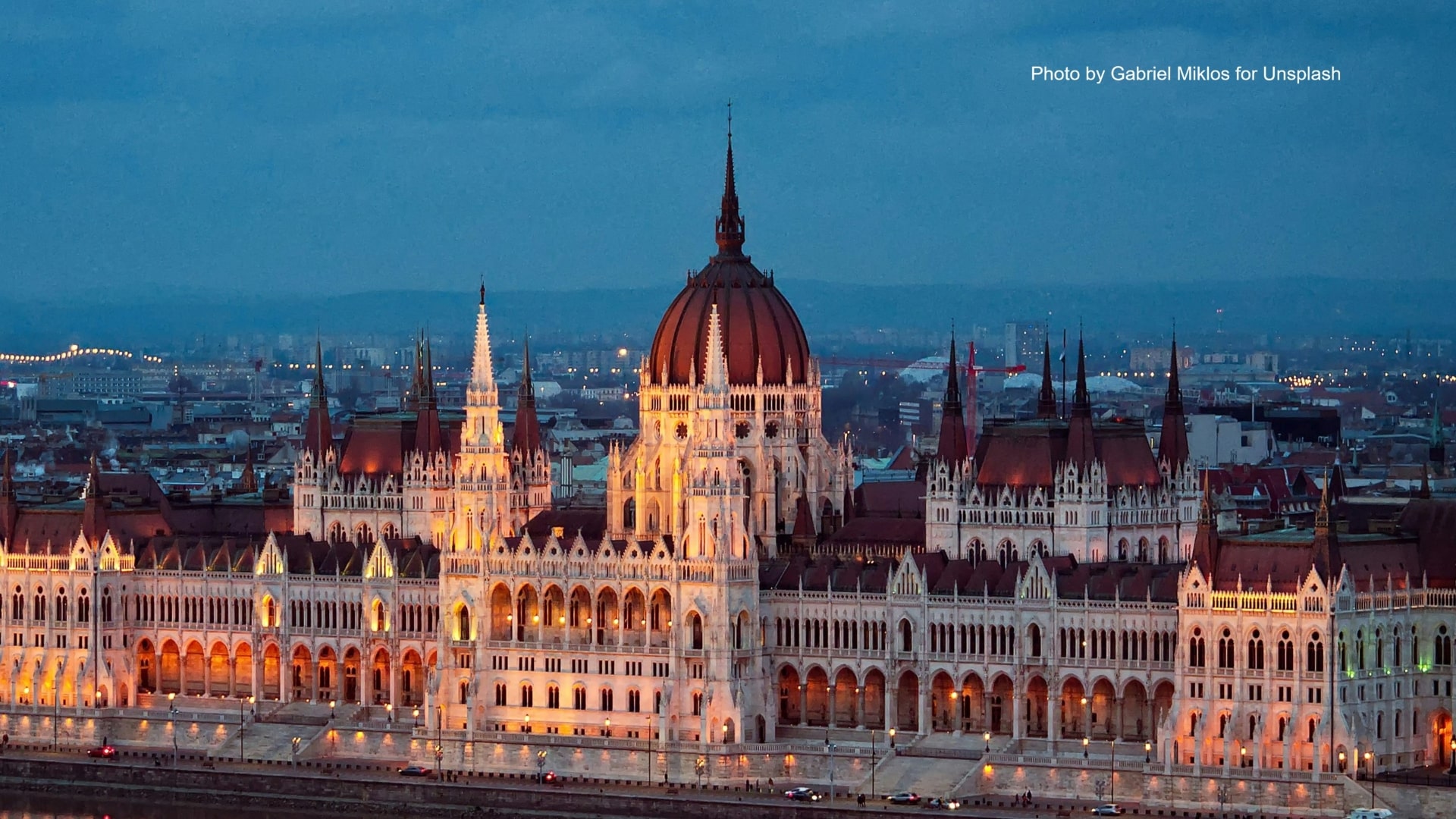
Alexander Faludy reflects on the landslide election victory for Péter Magyar‘s Tisza party over Viktor Orbán‘s system of ‘illiberal democracy’ in the Hungarian parliamentary elections and analyses what might happen next in Hungary’s relationship with the European Union.
The landslide election victory on 12 April for Hungary’s centre-right Tisza party, led by former Fidesz insider Péter Magyar, surprised analysts. With limited exceptions, the consensus had been that Tisza could hope for a bare majority of parliamentary seats, but not a two thirds constitutional one.
Achieving the latter was, however, essential to have a shot at dismantling Viktor Orbán‘s system of ‘illiberal democracy’. A bare majority, on the other hand, would have left the incoming Tisza government either paralysed, or dependent on unpalatable deals with the extreme-right Mi Hazánk party.
Tisza won the vote in Hungarian geographical constituencies with an 18.5-point lead over Fidesz (55.3% v. 36.7%).
The party can boast 141 seats in the unicameral national assembly, eight more than the 133 needed for a constitutional majority. It represents the largest parliamentary majority in Hungary’s post-1989 democratic history. Fidesz and Mi Hazánk, meanwhile, have a mere 52 seats and 6 seats respectively.
Pessimists have long argued that Fidesz had consolidated power and manipulated Hungary’s electoral system to such an extent that real change could not be brought about through normal electoral means. Rather, the reasoning went, Hungarians would have to wait for ‘regime entropy’ to develop and for Orbán to be pushed out by reformists from inside Fidesz. Such a pattern would echo Hungary’s 1989 transition of power in which ‘reform communists’ were pivotal.
The prediction proved to be only partially correct.
Admittedly, Magyar and several other prominent members of the Tisza leadership, are disillusioned former Fidesz insiders. It became clear in the run-up to the election that Magyar retained discreet friendly contacts inside the governing party, ones willing to leak him sensitive information. This allowed him to anticipate and forestall smear campaigns planned by Fidesz’s propaganda apparatus.
Nevertheless, change has come about through an open electoral victory, not a closed-door palace revolt. This can probably be credited to three interlocking factors: socio-economic reality, Magyar’s personal communications, and the misdirection of Fidesz’s campaign.
Emotive scandals, especially concerning the cover-up of child sexual abuse in public institutions, created openings for Magyar and Tisza to enter public consciousness. More importantly, though, growing discontent with Fidesz had its true roots in political economy.
Problems with corruption and the rule of law failed to cut through as long as general living standards were improving. But, since 2022, this no longer applied thanks to stagnant growth and high inflation. Hungarians have seen living standards decline sharply. This is true relative to their own past experience, and to life in post-communist EU neighbours like Croatia, Romania and Slovakia.
The latter is a sensitive point given that, at the time of Hungary’s EU accession in 2004, the country was considered a regional leader in development. But today there is no amount of Fidesz propaganda that could cover up the underfunding and dysfunctionality of public services, especially in the areas of healthcare, child protection and education.
Magyar worked this groundswell of sentiment effectively via relentless personal appearances across Hungary over the last two years. He was also able to compensate for his lack of access to Fidesz-controlled broadcast media through a large, organic, social media following. His posts were frequently seen by hundreds of thousands in a country of less than ten million. Significantly, unlike the older opposition leaders he was adept at deploying humour and emotion, not just arguments.
Fidesz, meanwhile, chose to fight the election on foreign policy issues without addressing domestic concerns — except for suggesting that things would become even worse should Tisza come to power. The spotlight on Viktor Orbán‘s personal international connections, including the visit of US Vice President J.D. Vance, may have back-fired, consolidating suspicions that the Prime Minister had lost touch with what mattered to voters at home.
Magyar’s remarks at his first press conference as Prime Minister-elect were delivered in front of a wall of Hungarian flags bracketed at each end by that of the EU. This represented a notable departure from practice under Orbán’s far-right Fidesz government and signalled Tisza’s intention to return Hungary to a European path. Clearly this is vital if frozen EU funds are to be released and Hungary returned to economic growth.
We’ve seen now seen the first signs of what this might look like. Asked whether Tisza would end Hungary’s longstanding defiance of an EU court judgment concerning breaches of asylum law (which is costing the country €1m in fines per day) Magyar signalled a break with past policy.
The dispute, he noted, had now cost Hungarians over €1bn which is ‘missing from Hungarian funds for healthcare, education and infrastructure’. EU countries led by allies of Viktor Orbán were able, he noted, to comply with EU asylum law, ‘and yet stop illegal migrants from coming to their countries’. If it was possible for them, it should be possible in Hungary too, he argued.
This will be welcome from an EU perspective. However, there was some domestic messaging too. Magyar made it clear that he would not accept the quota allocation of asylum seekers under the EU Migration Pact, nor make solidarity payments to other countries. Hungary would, however, stay within the Pact’s framework by providing seconded police units to support border control in other EU countries.
A similar accommodation of domestic concerns was evident in Magyar’s stance on Orbán’s recent veto of the €90bn EU loan package for Ukraine, financed through shared borrowing. Magyar said Hungary would not hinder other EU countries from supporting Ukraine by such means through wielding a veto. It would, however, not itself become a party to the common debt.
How effective these compromises will prove in maintaining the support of Magyar’s eclectic voter coalition will be a key question in coming months.
By Alexander Faludy, freelance journalist.
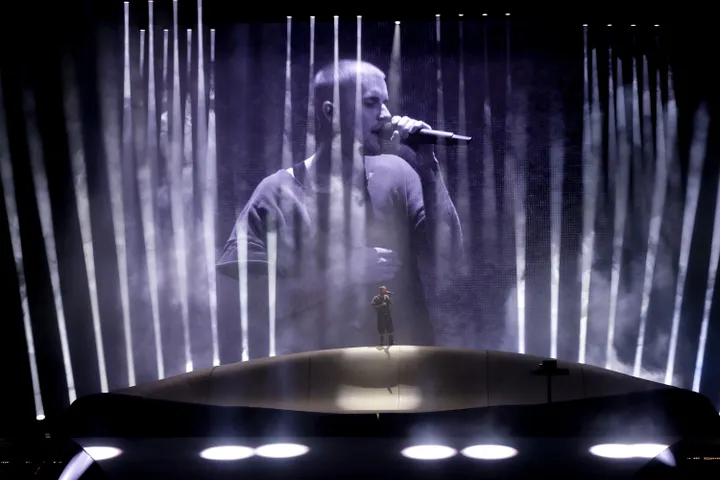
After dividing opinion with his set at Coachella earlier this month, Justin Bieber’s second consecutive week headlining at the US festival has been much better received.
Just over a week ago, the Canadian star sparked a heated debate on social media after a stripped-back performance on the Coachella stage on Saturday 11 April, which included him seated at a laptop scrolling through his old hits on YouTube and singing along for one portion.
It is worth pointing out, though, that while there were plenty of headlines about the supposed controversy over Justin’s Coachella show, many critics were quick to praise the show immediately after it ended, with several claiming that his detractors had “missed” the “point” of what Justin had set out to do.

Kevin Mazur via Getty Images for Coachella
Over the weekend, the Beauty And A Beat singer returned to Coachella for the second week of the festival, where the reaction to his set was much more unanimous.
USA Today claimed that Justin was much “more at ease” during his second performance, claiming that the Grammy winner “managed to outdo himself by settling onto the stage with confidence, having fun with fans and bringing out an onslaught of guests”.
Variety’s review agreed that Justin had “brought out the big guns” for week two, while Consequence Of Sound wrote that the singer “levelled up”.
Over on Reddit, a popular discussion also suggested the set may have “the biggest [week one to week two] improvement” in Coachella history.
Justin’s second set was packed with even more surprise guests than his first, perhaps most notably SZA, who joined her former collaborator to perform their song Snooze.
Meanwhile, Billie Eilish also made an unscheduled on-stage appearance as Justin sang his early hit One Less Lonely Girl, which he often used to dedicate to a different fan each night on tour.
Billie – who has made no secret of her Belieber status – wrote on Instagram that she could “not stop crying” after the viral moment.
A night earlier, Sabrina Carpenter also headlined Coachella for the second time, where she was joined on stage by Madonna, unveiling a new duet with the Queen of Pop as well as performing some of her signature hits.
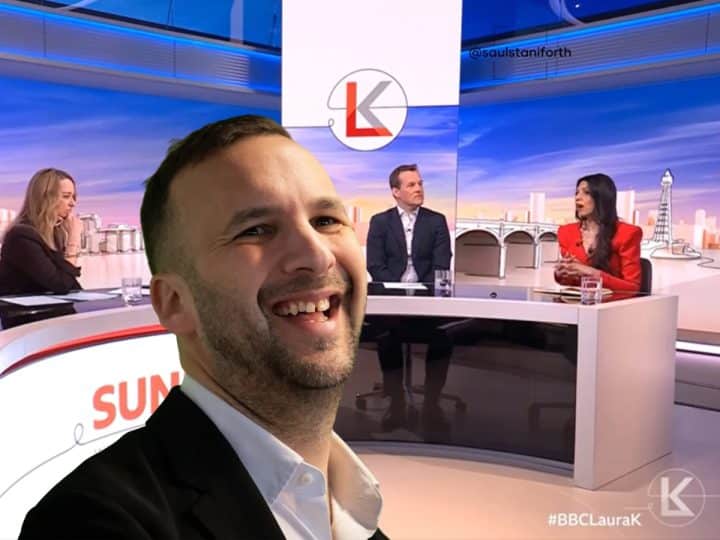

Ex-Labour candidate Faiza Shaheen has given her support to the Green Party in an interview with Laura Kuenssberg. Recognising that the majority of people wish to live in a society that cares for each other, Shaheen says people are choosing the Greens because it is where they can find real change.
The May 7 local elections are turning into a stark, polarised battle at the ballot between Reform UK and the Green Party. Polls regularly swing back and forth, signalling a sharp divide in the electorate.
As a result, voters face a stark choice between two fundamentally different visions for the country: one rooted in hope and solidarity, the other in division that pulls communities further apart.
.@faizashaheen: "I support the Greens.. everyone sees the rot in the political system, typified by Mandelson.. no politician is delivering for people.. lots of people are turning to the Greens.. we want to live in a country where we care for each other, where change does happen" pic.twitter.com/ECXSwZKkOC
— Saul Staniforth (@SaulStaniforth) April 19, 2026
Faiza Shaheen: “everyone sees the rot in the political system”
Faiza Shaheen quit the Labour Party in 2024 after being deselected as a candidate in the General Election for Chingford and Woodford Green. At the time, Shaheen described the decision as “cruel and devastating” stating that she was being punished for detailing her experiences of Islamophobia within Labour. Going further, she confronted the blatant hierarchy of racism at play, which also worked to prevent her speaking out against the genocide on Gaza.
Subsequently, Shaheen stood as an independent and came close behind the chosen Labour candidate. Nevertheless, Tory and austerity champion Iain Duncan Smith won the election following the clear split in the progressive vote.
Since then, Shaheen now appears to be in support of the Green Party. It is worth noting that the Greens have been much more forthcoming in their solidarity with Palestinians and their public condemnations of the genocide on Gaza. This is likely to add to Shaheen’s support for the party, however she goes further and argues the party will change the way that our politics is done.
Her interview response in full:
Laura Kuenssberg: These elections, Faiza, are going to be absolutely enormous. Why do you think people like you used to be in the Labour Party and other people are turning away, many of them to the Greens. And I know you’re interested perhaps in the Greens these days?
Faiza Shaheen: No, I, you know, I support the Greens. But I, yeah, absolutely. And it’s because everyone sees this political rot in the system, typified by Mandelson, but not just that. And also that… Yeah, no politician is delivering for people, people’s pockets and material well-being. They’ve forgotten that in all this political drama.
And so absolutely, lots of people are turning to the Greens and are also really fed up with the kind of divisive politics that we heard just there from Robert Jenrick. And we want to live in a country where people are cared for, where we care for each other, compassionate type of politics, where actually change does happen.
Green Party is closing the gap
Indeed, Shaheen is right – the choice really is between compassionate politics or politics of division which seeks to hurt the most vulnerable in our communities. Leaders might not see it in their Westminster bubbles, but people are overwhelmingly turning to hope. The Green Party is massively increasing its membership numbers as it closes the gap with Reform UK, with latest reports of 216,000 members.
One X user commented on Shaheen’s response, stating:
@faizashaheen
is correct & embodies everything the @UKLabour party SHOULD stand for (and did do under Corbyn). But Liar Starmer transformed Labour into a Red Tory party with extra racism.#VoteGreen for progressive policies for the 99%.
Join @TheGreenPartyHope is here now

Others have highlighted that Shaheen’s public choice to lend support to the Greens just further underscores the absolute failure of Your Party:
Your Party is just absolutely dead in the water if even Fazia Shaheen has joined the Green Party https://t.co/rZGuJRt5Bx
— liv


 (@liveraldemocrat) April 19, 2026
It is time to choose – hope or hate.
Shaheen’s public commitment to support the Green Party, who she once competed against, is indicative of the choice many are facing across the country. Many have had concerns about the Green’s broad church membership and the future potential for a repeat of Corbyn’s Labour in 2019. Those concerns appear to be waning.
On the other hand, a clearer priority now appears to override those doubts: keep the far right out of local government. Your Party’s failure to deliver on its promises only makes that choice easier. After nearly two decades of austerity and underinvestment, communities are already under strain – voters deserve more than words; they deserve actual results.
After all, a Reform UK–run council would serve no one but its wealthy backers, as its record in Kent has already shown. As Shaheen argues, only a vote for the Greens can deliver real change rooted in compassion.
Featured image via the Canary


Ireland’s president Catherine Connolly has told a gathering of largely progressive leaders that they must cooperate to fight back against a growing tide of “might is right”.
Speaking at the Defence of Democracy conference in Barcelona, Connolly offered a defence of the UN as the best available means to achieve this, even if, “the United Nations was not created in order to bring us to heaven, but in order to save us from hell,” she said, quoting ex-UN secretary general, Dag Hammarskjöld.
Hell is precisely what so-called ‘Israel’ promised repeatedly to unleash on Gaza and has proceeded to do so through its genocidal campaign there. The US and the Zionist entity have inflicted similar unspeakable carnage on much of West Asia. They have committed these atrocities while constantly dismissing and denouncing the UN, and attacking its institutions.
These include Zionist land thieves’ attempts to destroy the United Nations Relief and Works Agency for Palestine Refugees in the Near East (UNRWA). Washington has sought to use sanctions to wreck another body for international cooperation and accountability — the International Criminal Court (ICC) — which tries those accused of war crimes.
The efforts these mass murderers have put into attacking the UN shows it does have the potential to be an obstacle to grotesque violations of human rights. Zionist butchers have frequently declared how crucial the destruction of the UNRWA is to their efforts to exterminate or drive out Palestinians from their land.
‘Ireland knows what imperial brutality looks like’
Connolly then said:
Ireland is uniquely placed to offer a valuable perspective as a neutral, post-famine, post-colonial republic, and I am conscious that many in this room share that post-colonial experience.
Not entirely post-colonial, of course, given the north of the island is still occupied by Britain, albeit less so than previously. That being said, Ireland was indeed a testing ground for many of the horrors being unleashed today. Britain spent several hundred years testing its imperial methods in Ireland, including mass murder, destruction of crops and property, and enforced famine.
The modern incarnations of these crimes have been allowed to happen by too many nations being ready to cow-tow to the global hegemon, the US. They have been happy to kiss the godfather’s hand and reap whatever transient benefits this sycophancy granted them. They have done this rather than acting collectively in their own interests, and those of global justice, by bolstering international institutions.
Connolly alluded to this when she said the UN has waned:
…through accommodation, through the quiet retirement of inconvenient principles, and through our collective willingness to treat violations by powerful states as exceptional cases rather than the precedents they have become. Each time a violation was absorbed without consequence, the threshold for the next one was raised.
The Irish president certainly managed to piss off the right people by attending the event. The Irish Times launched a protocol-bore themed hit piece on Connolly, claiming she had:
…triggered official and political unease over her first overseas trip…
Quoting ever reliable and highly accountable anonymous sources, they say “officials” would rather she had visited London on her first trip outside Ireland. The main pearl-clutching seems to centre on Connolly not maintaining presidential neutrality amid:
…a flurry of concern in Dublin that Connolly could sign declarations arising from the conference which could run contrary to Government policy.
Head of state has a right to warn on dangers of growing lawlessness
You’d have to wonder quite how long the Irish Times and these mysterious hand-wringing officials think a head of state should wait before speaking up.
If the current wave of barbarism were to be left untamed to the point it reached Ireland’s doorstep, would we expect the Irish president to remain tight-lipped? If not, then why should we expect silence when people thousands of miles away are enduring a holocaust? Do they not count too?
The journalistic standards of the legacy media outlet are about as robust as their morals. They claim the event should have been off limits due to it “not being attended by the UK and the US”.
Aside from the obvious question — why the fuck Ireland should wait for British or American permission before doing something? — this claim is false. British deputy prime minister and seasoned war criminal, David Lammy, managed to slither his way into the event. We know this by the deafening clanging sound that could be heard when he said, without a trace of self-awareness:
We’re meeting at a time of extraordinary challenge globally with rising prices as a result of conflict once again in the Middle East.
That being the “conflict” — aka US and Israeli-led war crimes — which Britain has massively contributed to.
When it comes to international institutions, Britain’s most notable recent contribution has been its attempts to destroy the ICC. This occurred when David Cameron threatened lead prosecutor, Karim Khan.
If the UN is to become a genuinely effective institution, it will be Connolly’s words that must be heeded rather than those of a man whose actions have served to further undermine it.
Featured image via AP Photo/Peter Morrison

What went right this week: a healthy kickstart for school dinners, plus more

(VIDEO) Japan’s 10 Deadliest and Strongest Earthquakes in History Highlight Nation’s Seismic Vulnerability

Melbet APK Maroc scurit et protection des utilisateurs.94


-

 Crypto World7 days ago
The SEC Conditionalises DeFi Platforms to Be Avoided for Broker Registration
-

 NewsBeat6 days ago
Trump and Pope Leo: Behind their disagreement over Iran war
-

 Fashion3 days ago
Weekend Open Thread: Theodora Dress
-

 Crypto World7 days ago
SEC Signals Exemption for Crypto Interfaces From Broker Registration
-

 News Videos5 days ago
Secure crypto trading starts with an FIU-registered
-

 Sports3 days ago
NWFL Suspends Two Players Over Post-Match Clash in Ado-Ekiti
-

 Crypto World6 days ago
SEC Proposes Certain Crypto Interfaces Don’t Need to Register as Brokers
-

 Business22 hours ago
Powerball Result April 18, 2026: No Jackpot Winner in Powerball Draw: $75 Million Rolls Over
-

 Crypto World3 days ago
Russia Pushes Bill to Criminalize Unregistered Crypto Services
-

 Politics3 days ago
Palestine barred from entering Canada for FIFA Congress
-
 Business4 days ago
Creo Medical agree sale of its manufacturing operation
-

 Politics1 day ago
Zack Polanski demands ‘council homes not luxury flats for foreign investors’
-
 Entertainment6 days ago
Brand New Day’ Footage Reveals the Devastating Impact of ‘Now Way Home’
-

 Tech5 days ago
Microsoft adds Windows protections for malicious Remote Desktop files
-
 Entertainment6 days ago
Karol G’s ‘Ultra Raunchy’ Coachella Set Gave ‘Satanic Vibes’
-

 Crypto World3 days ago
Russia Introduces Bill To Criminalize Unregistered Crypto Services
-
 Sports7 days ago
Aaron Judge says Yankees need to ‘simplify’ approach amid offensive slump
-
 Entertainment7 days ago
How Babylon 5 Turned Brief Side Story Into Emotional Masterpiece
-

 Tech7 days ago
What was the first ransomware attack to demand payment in Bitcoin?
-

 Tech5 days ago
‘Avatar: Aang, The Last Airbender’ Leaked Online. Some Fans Say Paramount Deserves the Fallout
You must be logged in to post a comment Login