
Politics
Orwell taught us to beware the technocrats

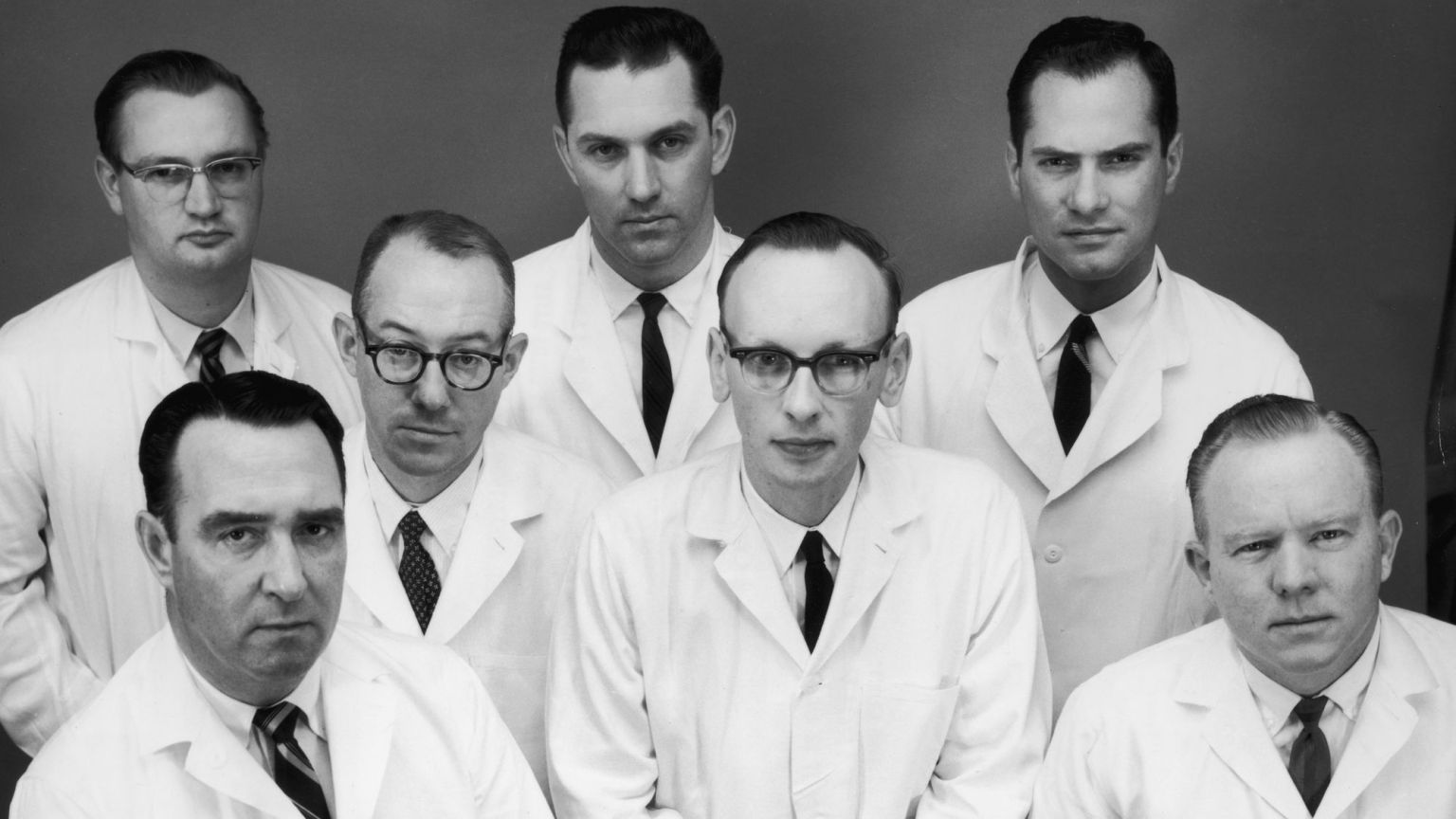
Whenever the patrician concerns, fringe obsessions or neurotic fixations of lifestyle leftists make the news, it invariably brings to mind George Orwell’s withering observations of a similar demographic he identified in the 1930s. So when it emerged last week that the Department of Education had issued new food guidance banning fish and chips, fried eggs and pastries from schools, and recommending in their stead dishes with lentils and other pulses, I won’t have been alone in recalling the repeated complaints he made in The Road to Wigan Pier (1937) about a type of ‘fruit-juice drinker, nudist, sandal-wearer, sex-maniac, Quaker, “Nature Cure” quack, pacifist and feminist’ then found on the British left.
This variety of upper-middle-class leftist still lives on. You’ll find him – or, more likely, her – looking for the ethically sourced, environmentally friendly vegan foods in Waitrose, flying the Progress Pride Flag or wearing a keffiyeh, repeating platitudes about ‘equity and inclusion’ or publicly atoning for their ‘white privilege’.
Yet it’s sometimes forgotten that Orwell discerned a second species of refined socialist, whose aloof idealism was also removed from the everyday concerns of ordinary people. These were the materialist, technocratic, future-orientated visionaries like HG Wells and Aldous Huxley, who thought that a new world could be created in the Soviet Union. Even worse were the likes of Beatrice Webb and Labour intellectual Harold Laski, who believed that a socialist utopia was already being established in the USSR. This was an upper echelon, Orwell wrote, who reeked of ‘crankishness, machine-worship and the stupid cult of Russia’. Their socialism evoked in the minds of the common man ‘a picture of aeroplanes, tractors and huge glittering factories of glass’ – to use a description Huxley gave in his most famous book, Brave New World. For Orwell, it was a vision advanced by a ‘large army of scientists and technicians… marching along the road of “progress” with the blind persistence of a column of ants’.
That kind of inhuman, utilitarian, leftist and – in modern parlance – centrist also survives today. They were the Blairite neophiliacs who deprecated ‘the past’. They’re the GDP-fetishists who told us in the 2016 Brexit referendum that ‘the economy’ was more important than the nation, democracy and self-determination. They’re the pedantic and robotic lawyers who believe obedience to international treaties overrides the concerns of British people.
They’re the ones, like education secretary Lucy Powell, who want to remove the classical and humanistic elements from the school curriculum in the pursuit of ‘skills’. They believe that public bodies have a socioeconomic duty to implement equality in the workplace. They’re the DEI-obsessed bureaucrats forever calculating the racial composition of public-sector bodies.
They favour immigration because they think people are identical, replaceable units. They resort to graphs and statistics to prove a point. These are the Net Zero ideologues who focus on an abstract future while ignoring the needs of the present. They treat society as a machine to be corrected, fixed and made perfect.
Orwell never found this type of deluded socialist remotely amusing, and neither should we.
Cate Blanchett is right – put your phone away
It’s heartening to see more famous people recommending that we liberate ourselves from smartphones. Last Friday, Cate Blanchett became the latest theatre star to ask her audience to stop filming during performances. Her fellow thespian, the globe-trotter Michael Palin, has also suggested that tourists should learn to savour the moment. As he told the Telegraph on Saturday:
‘The problem is everybody gets to a wonderful place where all the cameras go out. So you’ve immediately got a screen between you and what you’re seeing. Just use your eyes and ears. Take it in yourself.’
I confess that I’m no better than most, having taken the opportunity of a day trip to Bruges on Sunday to photograph the Belgian town’s beautiful and historic buildings – and then put the results online. But I also like taking photos of tourists taking photos.
I couldn’t help doing so in London last week as I passed through Westminster Square, having spotted a long line of people waiting to have their picture taken next to a classic, decommissioned red telephone kiosk facing Big Ben.
Just as wokery isn’t dead, this indicates that we also still live in a postmodern society – even though postmodernism was similarly pronounced finished decades ago. Here were people queuing in front of an object that no longer had a function and only served now as an unmoored signifier (of ‘historic Britishness’), to synthesise an event, rather than experience it, in order to place a representation of it in a hyperreal realm to prove that they existed in the corporeal one.
The French sociologist Jean Baudrillard, who sadly never lived to see the dawn of social media, would have been fascinated by this performative simulation of actual living. He might even have been interested in my photo of these tourists taking photos, which I also put up online. Very ‘meta’, as they say these days.
The myth of ‘Brexit travel chaos’
Ever since Britain officially left the EU in 2020, there has been a certain type of tedious Remainer who forever posts pictures of being stuck in queues at continental airports, whining about the indignity of being a second-class, non-EU citizen. In their minds, a single lived experience seems to constitute a coherent argument. Unfortunately, it also implies that they believe that convenience is more important than democracy or sovereignty.
When I passed through passport control at Dover Port on Sunday, on my first visit to the continent since we left the EU, I had no such trouble. We all waited in line for 10 minutes. The French official at the desk didn’t look inside my passport or even look me in the eye. I might as well have said, Alan Partridge-style: ‘Hello, I’m a Communist with a gun.’
While there were two tiers of passport control at Dunkirk on the return leg, getting through it took even less time than it used to. The French official didn’t ask me to remove my spectacles – as was mandatory pre-Brexit – and he even smiled! The British official addressed me by my first name as we parted.
I know I’m not alone. One friend remarks that while he has faced delays entering Poland and at Amsterdam’s Schiphol airport, there were none in Rotterdam. He has made his way seamlessly through the eGates at Barcelona Airport. Another regular visitor to Italy also reports no holdups.
So much for the ‘nightmare’ of travelling to the EU. In my ‘lived experience’, the only thing that has changed tangibly, and for the better, is the return of duty-free shopping.


Lower back pain affects about 80% of us at one point or another, according to the NHS.
Thankfully, fewer than 1% of those cases require urgent medical attention. But the pain can still affect your quality of life, and might mean you’re less tempted to exercise.
That can be a shame, as the NHS explained, “keeping as active as possible can help you to recover and do the things that are important to you”.
Avoiding movement for more than a day or two in mild back pain cases might actually worsen your condition, the health service added.
According to a 2019 analysis published in the British Journal of Sports Medicine, four activities in particular seemed the most effective at treating “non-specific chronic low back pain (NSCLBP)”.
NSCLBP means doctors can’t find one specific cause for back pain. This applies to the “vast majority of chronic low back pain cases,” the study’s lead author, associate professor Daniel Belavy, said.
What are the best exercises for lower back pain?
This paper analysed 89 studies involving back pain and exercise.
Researchers found that staying active seemed to be more effective than rest for NSCLBP.
Belavy said: “There is a common misconception that if someone is in pain, they should be resting, but our research shows that when the pain has been there for a long time, exercise is an important part of treatment.”
They found four training styles were the “most effective” at treating NSCLBP. These were:
1) Pilates
This seemed to be the joint “best” exercise for dealing with the condition.
Speaking to Healthline, Dr Courtney Gilbert, a physical medicine and rehabilitation expert, said: “Pilates teaches you how to articulate your spine and engage your deep core. Research has shown that Pilates can decrease low back pain compared to no exercise and non-specific exercise.”
This can include exercising with a pilates machine (Joseph Pilates, who invented the exercise, called this a Universal Reformer machine: now they’re used in Reformer classes), or doing pilates on a mat.
2) Stabilisation or motor control exercise training
“There was evidence that Pilates and stabilisation or motor control exercise training were the best of these exercises for reducing pain,” Belavy said.
Stabilisation exercises can include strengthening your core and might involve crunches, bridges, and planks.
Motor control exercise training, meanwhile, typically aims to retrain the muscles near your spine to become more co-ordinated and stronger.
This can include balance training and other moves like hip bridges, sitting knee extensions, and even squats.
3) Resistance exercise
You might know this as strength training. It means using weights and resistance training at increasingly high loads to build your muscles up.
We’ve written before at HuffPost UK about how “tight” hips that you might think need stretching can actually be weak hips that would benefit from strengthening. A similar principle can apply here.
Some strengthening exercises include weighted squats, push-ups, deadlifts, bench presses, and more.
4) Aerobic exercise
Basically, activities like walking and running.
You might want to build up your pace and distance if you haven’t exercised in a while – “our study provides evidence that active therapies where the patient is guided, actively encouraged to move and exercise in a progressive fashion are the most effective,” Belavy shared.
What doesn’t work for back pain?
Interestingly, this paper found that “stretching and McKenzie exercises, which is a treatment approach that uses a classification system to prescribe exercise”, were found to be the “least effective” kinds of exercises.
The NHS advises you should always stop exercising if it makes your back pain worse. Speak to your GP if you’re worried about your back pain and/or aren’t sure about beginning new activity.

I don’t know whether I notice it more in the sunshine or if flies really do come out en masse in spring, but I feel like I’ve noticed a lot more of the unwelcome visitors on my houseplants recently.
And while I’ve found vinegar and washing-up liquid traps are a really effective way to manage a fruit fly bonanza, I can’t help but wish there was an easier, less deadly way to de-fly my ferns.
Luckily, plant educator Peyton, known online as Plant Caregiver, is one of a few voices to suggest a chemical-free method: in a TikTok video, the creator said, “a lot of your plant problems could be fixed by having a fan”.
Why might a fan help to get rid of pests?
Speaking to Homes & Gardens, Julia Omelchenko, an expert in plants for the Plantum app, explained that proper ventilation and air flow keep soil drier, preventing a buildup of, e.g., fungus gnats.
That can involve opening a window. But it can also include running a “fan on low speeds where your plants are situated,” so long as you “avoid cold drafts and don’t point the fan at the plants,” she added.
Aside from preventing wet soil, which fungus gnats love, using a fan also helps to create an environment in which fruit flies struggle to fly (they have quite weak wings).
An Ideal Homes writer put it to the test and was impressed with the result. And, more recently, a Guardian writer and houseplant expert tried it on a mildewy plant; she wrote, “It’s one of those hacks that sounds unnecessary until you try it”.
How else can I get rid of flies from my houseplants?
As we’ve mentioned before, soil that stays wet for too long can attract fungus gnats. Try watering your soil less often if that’s the case.
Adding a gravel mulch, using sticky traps, and even using predatory nematodes can all help, too, per BBC Gardener’s World.
You can also change the potting soil to that which has been specially formulated for houseplants.
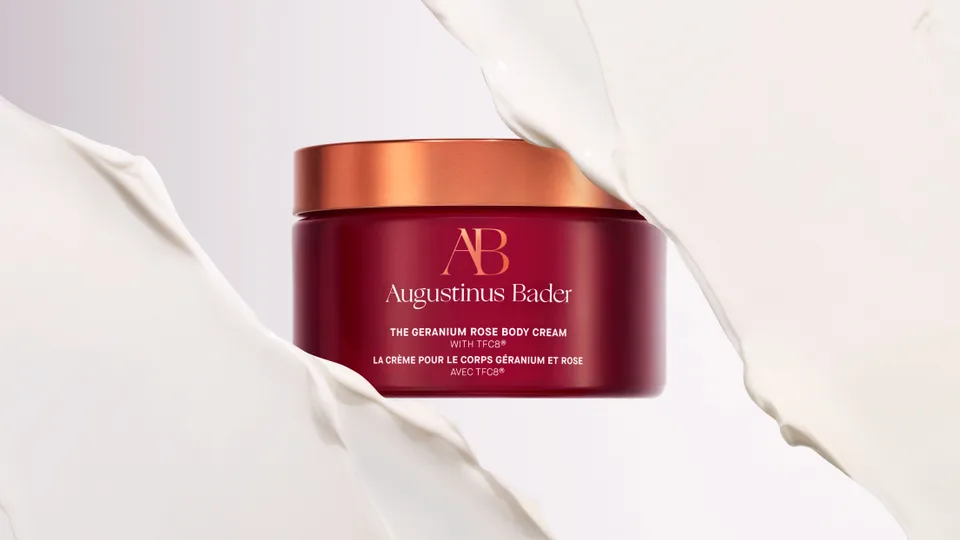
Look, when it comes to high-end skincare that actually gets the job done, I’m always going to point you in the direction of Augustinus Bader.
I’ve written before about the brand whose products Dua Lipa famously reported that she ‘can’t live without’, so much so that their Eye Patches and The Rich Cream have a permanent place in her (and now my) handbag.
Their cult-favourite moisturiser cleared my period-spot riddled skin up in just seven days when I first tested it, so when Augustinus Bader announced that they were bringing its cell-renewing TFC8 tech to a brand-new, delicately scented Rose Geranium body range I couldn’t have said yes to testing it out faster if I could.
The Details: Formula, Texture, And The New Rose Geranium Scent
Before you say ‘what the heck is TFC8’, it’s the brand’s secret sauce: a proprietary blend of natural amino acids, high-grade vitamins and peptides that supports the body’s capacity to renew.
According to AB, the body cream is clinically proven to deliver firmer, smoother, deeply hydrated skin. In fact, a 12 week study carried out by the brand reports a 75% reduction in cellulite (with 92% of users saying they saw a visible reduction).
As someone who (thanks to a whole lot of weight lifting, spin classes, swimming and a passion for dinners out) has a battle with cellulite and stretch marks across my thicc thighs, I was hoping for big results.
I’ve also never been a body moisturiser girlie and now in my mid 30s, I’m definitely paying the price – as a recent convert to regular waxes my legs now permanently feel like they need a good long glass of water. Luckily for me, the body cream’s blend of shea butter and geranium and rose essential oils promise to “deeply hydrate and lock in moisture for plump skin with greater bounce back.”
Now just to see if it works…
How I Tested It: 30 Days On Post-Gym, Waxed Skin
As with any product testing here at HuffPost UK, we don’t do it half-arsed. Armed with a fresh wax, a slight tinge of sunburn and dryness from regular dunks in chlorinated water, my skin was not about to give the Augustinus Bader The Geranium Rose Body Cream an easy ride.
For thirty days solid I committed to applying the cream to my body twice a day every day – once after my morning shower, and once before bed.
The new scent is incredibly spa-esque and made for a strong and invigorating way to kick off the day. Despite how thick the cream comes out the tub, it soaked in quickly without leaving a greasy film (because god knows there’s nothing worse than post moisturiser clothes cling).
The Verdict: The Final Skin Transformation
Thirty days on, my skin feels soft yet lifted, smooth yet firm – and if you’d told me a month ago that I wouldn’t think twice about going out without my beloved tights on, I’d never have believed you.
Alongside the longer term effects, the cream offers an almost blurring effect in the same way facial primer does – marks, bumps and rashy bits all immediately looked significantly less noticeable after my morning application.
Over time, my thighs’ dimpling has lessened dramatically and although it’s not gone completely (hey, no product can erase them altogether), I’ve found myself not giving it a second thought (a rarity!).
As with any Augustinus Bader product, this body cream doesn’t come cheap (£160 for 200ml) however, I will always bang the drum that anything the brand makes is worth the investment. More so because a little goes a long way, even with using the cream twice a day (probably worth noting at this juncture that I’m also almost 6ft, so there is PLENTY of leg to moisturise), I’ve still got plenty left in the jar after a month of near religious use.
Sorry tights, I may never need to pull you out my drawers again.

THE GERANIUM ROSE BODY CREAM
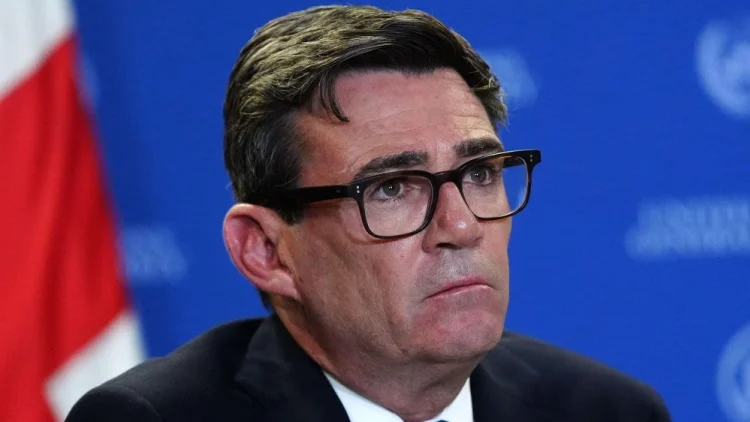
Burnham has ruled out an early election amid speculation (Alamy)
2 min read
The Prime Minister has said he can “knock dead” speculation of an early election, claiming that the move would be “self-serving politics”.
Andy Burnham’s comments come ahead of Labour Party conference in Liverpool as the party is riding high on a recent boost in the polls, widely labelled “the Burnham bounce”.
A YouGov poll published this week revealed that Labour would return the most MPs to Westminster if an election were to be called tomorrow, but would still not achieve a majority.
Burnham said that his conference speech next week would set out the “direction I want to take the country in the coming period”.
While speculation regarding the possibility of Burnham calling an early election had been swirling in recent days, Burnham was keen to correct the record.
Asked by ITV Calendar whether the next general election would be in 2029, Burnham said: “Well, yes, that’s when the next election will be. All of this speculation on an early election, I can knock that dead.”
Burnham went on to say that the public would want him to be “getting on with the job of delivering…rather than putting self-serving politics before that, which was what I would be doing if I call an election. I am not going to do that.”
In a separate interview with BBC West, Burnham said his priority was to get people “feeling a bit of hope in their lives again”, rather than “putting people back into an election cycle”.
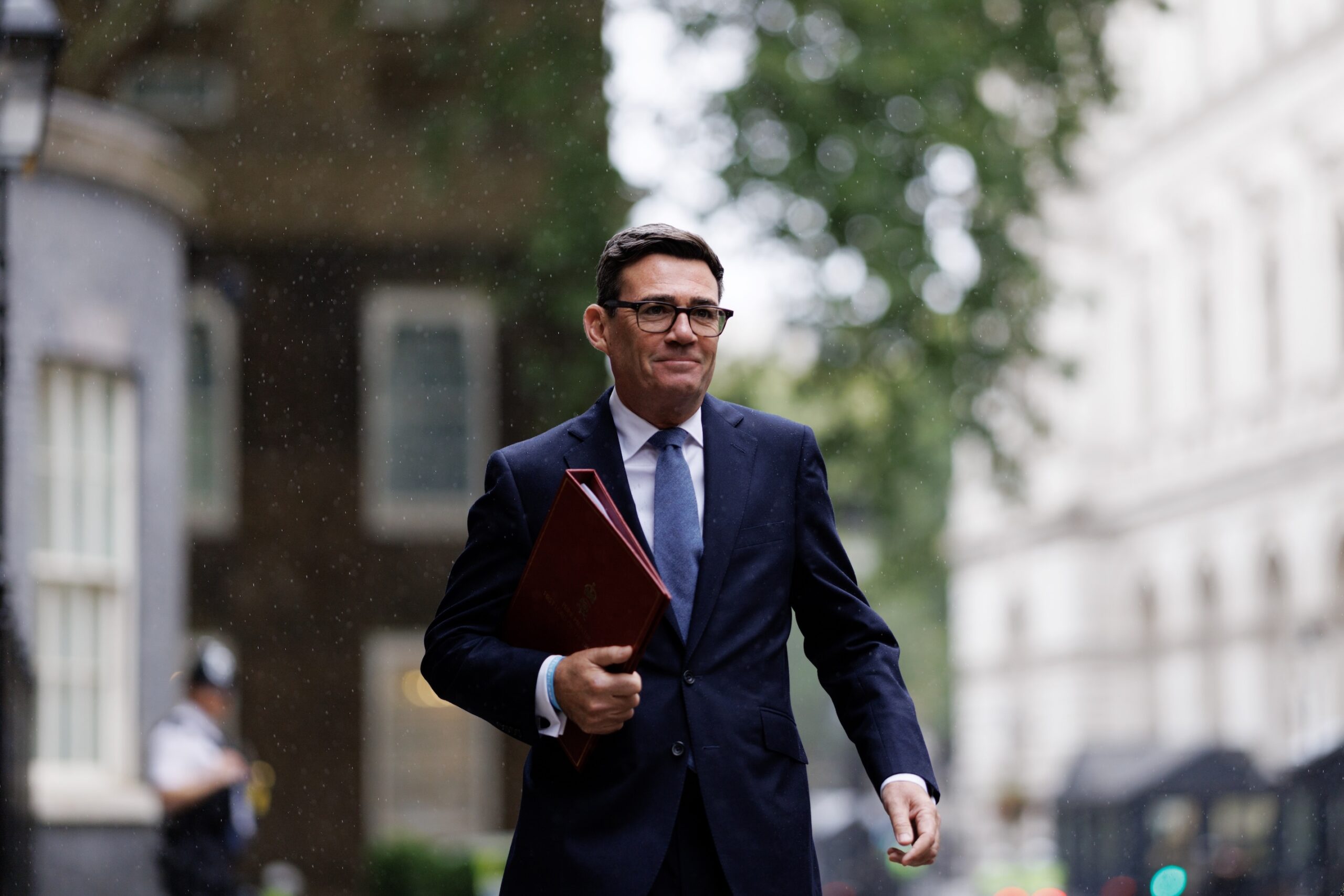
Andy Burnham has moved to shut down speculation of an early general election, telling broadcasters during a round of pre-conference regional interviews that he has no intention of calling a snap poll.
“All of this speculation on an early election, I can knock that dead”, Burnham told ITV Calendar. He said voters wanted him “getting on with the job of delivering” rather than “putting self-serving politics” first.
Burnham was asked if an election would be held in 2029. By law, the latest possible date for the next general election is 15 August 2029.
He responded: “Well, yes, that’s when the next election will be. All of this speculation on an early election, I can knock that dead.
“You know people want me new in office to be getting on with the job of delivering on the things that we’ve discussed in this interview rather than putting self-serving politics before that, which was what I would be doing if I call an election, I’m not going to do that.”
In an interview with BBC East Midlands, Burnham was asked whether May’s local elections would be combined with a general election.
The prime minister responded: “No.”
Speaking to BBC West, Burnham said he was “focused on the job as prime minister” and did not want to plunge the country into “a backward-looking process where we’re arguing again amongst ourselves.” He said he would use his Labour conference speech in Liverpool next week to set out further direction on the cost of living and support for business.
He added: “The time has come to draw a line, get the country looking forward, pulling together, with people feeling a bit of hope in their lives again, that’s what I’m trying to do and I hope to take it further in the coming period rather than putting people back into an election cycle.”
Burnham was questioned on a range of other interviews during his media marathon, including regional infrastructure and devolution deals.
Speaking to ITV Granada, Burnham was asked whether Manchester City should be stripped of its titles in light of reports indicating the football club has been found guilty on 114 of their 115 charges relating to breaches of financial regulations.
The prime minister said he would need to study the findings “in some considerable detail.”
He stated: “I’ve only just been made aware of it – I think these are reports at this stage. But if they’re confirmed, obviously I will want to look at the report of the independent commission…
“I know this has been a long process between the club and the Premier League. I think quite a contested process. So I don’t think it’s as simple as jumping to conclusions. I think we would all need to study the independent commission’s report in some considerable detail before reaching any conclusions.”
Asked by whether Greater Manchester Police should receive extra funding to cope with hosting Number 10 North, Burnham acknowledged there was “a case for GMP’s funding to be looked at.”
He added: “Manchester is such a focal point now, for large parts of the country in terms of the events that are happening here, the protests that happen, there is a capital cities grant, for other parts of the country recognising they get extra pressure.
“I certainly made the case when I was the mayor of Greater Manchester, that there’s extra pressure felt by GMP, and therefore there is a case to compensate them for that.”
In an interview with BBC London, Burnham was pressed on Labour’s position in the capital. “We never take anyone’s support for granted, and I certainly don’t do that as prime minister”, he said.
Asked whether he wanted Sadiq Khan to stand again as Labour’s mayoral candidate, Burnham gave an unqualified endorsement. “I’d always support him. I think he’s done a great job as the mayor of London”, he said.
The prime minister added: “Sadiq has done bold things in relation to air quality, improving the health of Londoners.
“The quality of transport in London continues to improve. I’m somebody who works very closely with him and he has done more, I think, to address that. Housing crisis than any of his predecessors and that’s why he’s got my full support and backing in whatever he decides to do.”
Questioned on the upcoming Holborn and St Pancras by-election, Burnham suggested the contest was significant.
He said: “It is an important by-election, make no mistake about it, and we’re not complacent in any way shape or form – we’ve got to justify people’s support and I think some of the things I have done show that I am listening to people and their concerns.
“Where Labour perhaps hasn’t heard the voice of London communities and some of concerns that people have we [must] show that we’re prepared to make changes, certainly.
“I heard the voice from many Londoners about the situation in relation to Israel-Palestine and the need for the government to have a position that reflects public concern. Working with [foreign secretary] Ed Miliband, we made a change and we announced that a couple of weeks ago.”
The prime minister added: “We’ll never, in any way shape or form, accept any form of antisemitism whatsoever. We condemn the attacks of the 7th of October in unequivocal terms but at the same time it is also right to say that that does not justify what we’ve seen in Gaza or indeed in the West Bank and where I need to do that as prime minister working with the foreign secretary, we will do that.”
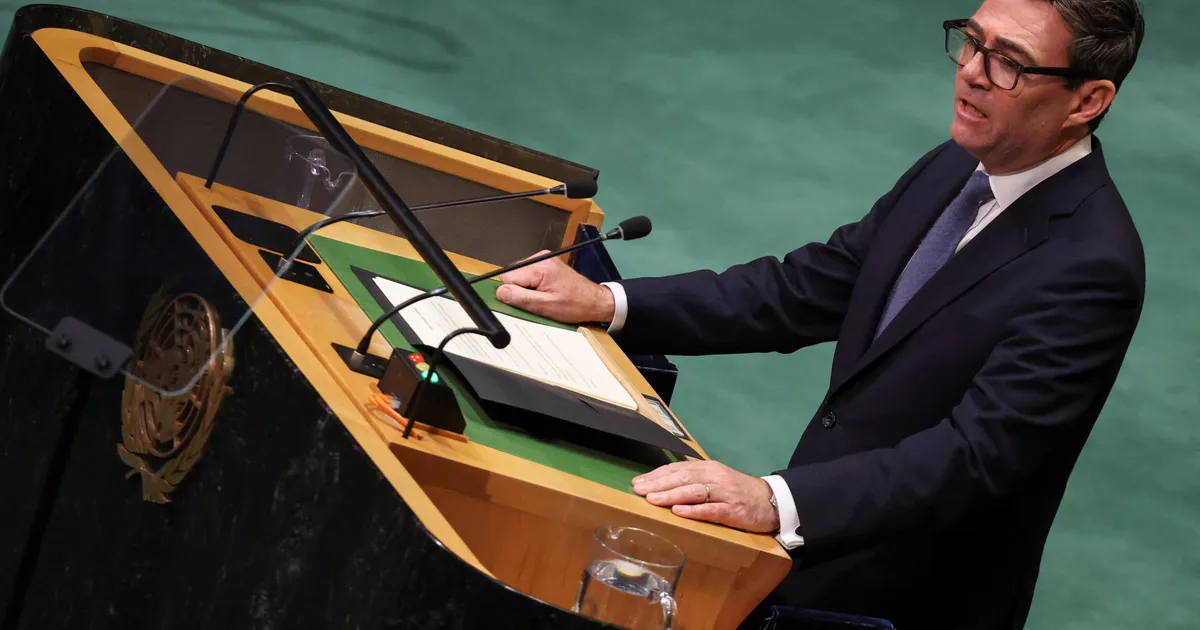
Andy Burnham has insisted the next general election will not take place until 2029.
The prime minister moved to kill off mounting speculation that he was preparing to call a snap poll next spring.
Under parliamentary rules, the next election must take place in 2029 at the latest.
In an interview with ITV Calendar, Burnham was asked if that was when it would happen.
He said: “Well, yes, that’s that’s when the next election will be. All of this speculation on an early election, I can knock that dead.
“You know people want me, new in office, to be getting on with the job of delivering on the things that we’ve discussed in this interview rather than putting self-serving politics before that, which was what I would be doing if I call an election. I’m not going to do that.”
In a separate interview with BBC East Midlands, the PM also ruled out the chances of a general election taking place at the same time as local elections scheduled for next May.
Labour has enjoyed a boost in support since Burnham replaced Keir Starmer as prime minister in July, fuelling rumours that he is tempted to call an election to secure his own five-year mandate.
Two mega-polls published this week showed Labour winning most seats at an election held now, but they would also lose more than 100 MPs and their Commons majority.
Listen to Commons People, the podcast that makes politics easy. Every week, Kevin Schofield and Kate Nicholson unpack the week’s biggest stories to keep you informed. Join us for straightforward analysis of what’s going on at Westminster.
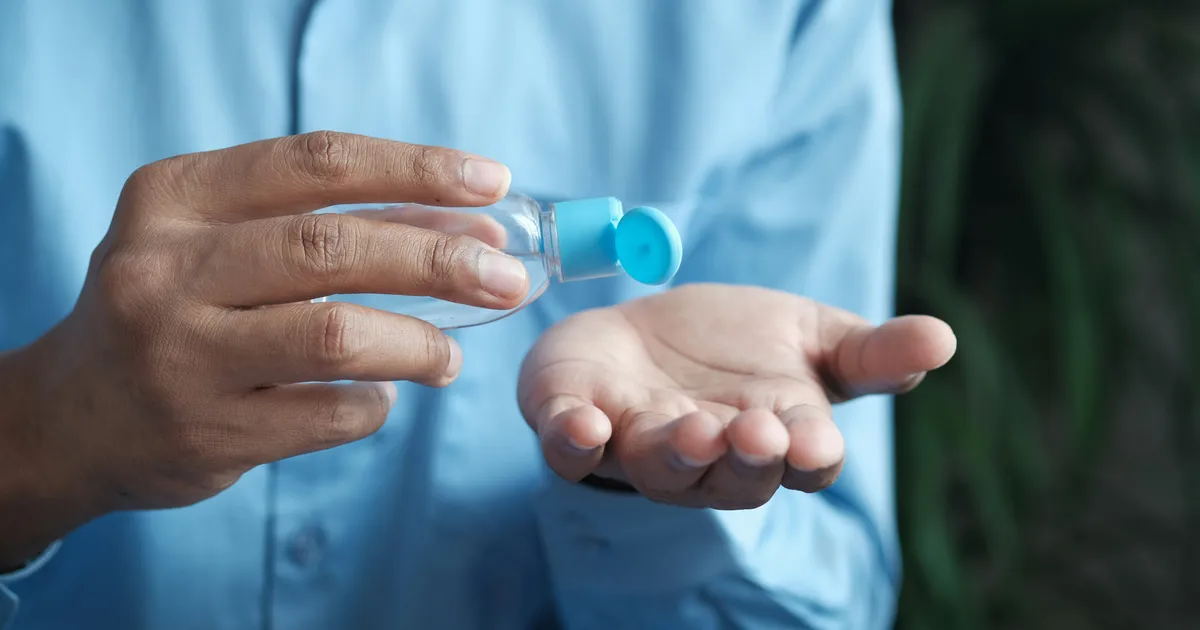
It’s happening again. The tissues have started coming out in force on my bus rides. Friends send stuffy voice notes to apologise – “I can’t make it,” they sniff pitifully. “There’s something going round”.
Though you can catch the flu at any point in the year, it’s especially common in the colder months. Spending more time indoors with the windows shut increases the spread of disease, while lower vitamin D supplies mean our bodies are less able to fight bugs off.
The NHS recommends common-sense advice, like washing your hands often and not sharing personal items like towels with sick people, to keep colds at bay. And if you don’t have access to soap and warm water (the most effective hand-washing method), alcohol-based hand sanitiser is a great tool too.
Here, HuffPost UK asked Dr Donald Grant, a GP and senior clinical advisor at The Independent Pharmacy, where he brings hand sanitiser during flu season (and when you can leave it at home).
Where should I use hand sanitiser?
1) Public transport
This, he said, is an “obvious” pick.
“Handrails, poles, seat backs, and ticket machines are touched by hundreds of people a day, and buses and trains are often crowded and poorly ventilated in autumn and winter, giving flu viruses plenty of opportunity to spread”.
Keeping a bottle of hand sanitiser in your coat pocket or handbag gives you a chance to “clean your hands once you get off, before you touch your face, eat or check your phone”.
This transfer of germs – from hands to eyes, nose, or mouth – can make cold transmission especially likely, as it delivers germs almost directly to your mucous membranes.
2) Supermarkets
Not only are these filled with both people and things multiple people have touched, but self-service checkout screens can be a real bug-fest, too.
3) Gyms
Think of all those sweaty weights and unwiped surfaces, not to mention the pools and saunas whose warm, damp environments provide the perfect breeding ground for bacteria.
Not only that, but we breathe more heavily when working out, potentially expelling more disease-carrying saliva.
4) Cafés
Basically, Dr Greenyer said, we should bring hand sanitiser “anywhere with shared touchscreens, such as self-checkouts and cash machines”.
5) Hospitals, GP surgeries, and care homes
These places are filled with people who are 1) already likelier to be sick and 2) packed tightly together in an enclosed space. Therefore, it’s best to use an alcohol-based hand sanitiser in these places, “both to protect yourself and the vulnerable people around you”.
However, the doctor stressed that hand sanitiser “should never be used as a replacement for handwashing, as [soap and warm water] is still the most effective option for limiting the spread of bacteria”.
Where don’t we need to bring hand sanitiser?
With that said, Dr Greenyer told us that “There’s no need to sanitise constantly”.
- Parks,
- Open-air markets, or
- The high street
are much safer, he added. This is because “viruses disperse more easily in fresh air and you’re touching far fewer shared surfaces”.
The GP ended: “It’s also worth remembering that flu spreads mainly through droplets from coughs and sneezes, so good hand hygiene works best alongside other simple habits, like catching sneezes in a tissue, staying home when you’re unwell and getting the flu vaccine if you’re eligible”.
And when needed, a little bottle of hand sanitiser could help to protect you on the go.

You already know your chronological age (the amount of years you’ve been alive). But working out your biological age – the “wear and tear happening inside the body at a cellular and molecular level” – isn’t as simple as counting candles on a cake.
However, there are clues.
Scientists think that how long we can stand on one leg may reveal how well our brains are doing, for instance.
And now, researchers have suggested that a scan of the retina, or the light-sensitive tissue at the back of our eyes, could give us a good guess at people’s biological ageing, too.
How can our retinas help show how we’re ageing?
The retina is closely linked to brain and heart health. Patients’ cardiovascular status might be more visible from the tissue’s network of veins, while their brain ageing may affect areas like the optic nerve and neurosensory retinal layers (cells that convert light into electrical impulses for the mind).
As a result, scientists have been using the area to gauge people’s health status for years now. And the difference between a person’s biological retinal age and their chronological age, known as the retinal age gap, has become a marker of call ageing and even mortality risk.
We, therefore, already have a lot of retinal images that can be used to work out how old someone’s eye seems to be. But, in this study, researchers ran those pictures, along with other data from previous papers, through more advanced technology.
They also added new research and relied on more healthy pictures of retinas, which not all previous studies had done.
All in, they uploaded 29,530 retinal scans from 7,535 participants. These were then used to work out the biological ages of 7,416 new participants, who provided 14,832 images.
Using these tools, the new system was able to predict how old people were in years (chronological age) with an average error of 2.5-2.7 years, which is good in comparison to other retinal scans.
As for their biological (tissue and organ) age, the people with retinas that this system deemed as older on a cellular level were more likely to smoke, have diabetes, or face macular degeneration.
Another study has looked at retinal scans and ageing, too
Meanwhile, a separate team has used artificial intelligence to help work out people’s biological age – also from a retinal scan.
The study’s first author, Olga Trofimova, said: “A higher retinal age is associated with an increased risk of cardiovascular and respiratory diseases, cancer, dementia and death over the following 15 years.
“It is also associated with markers of metabolism, inflammation, cognitive abilities and lifestyle.”
Interestingly, the research she was involved with found that women’s retinas tended to be biologically younger than men’s of the same age.
But after menopause, “the pattern is reversed, with a higher retinal age and a less favorable health profile”.
Blood pressure also tends to follow this trend.
We’ll need more research to find out how accurate these scans are and how useful they might be for healthcare.
Still, researchers think studies like these prove “the potential of retinal imaging as an accessible tool for capturing systemic ageing signals”.
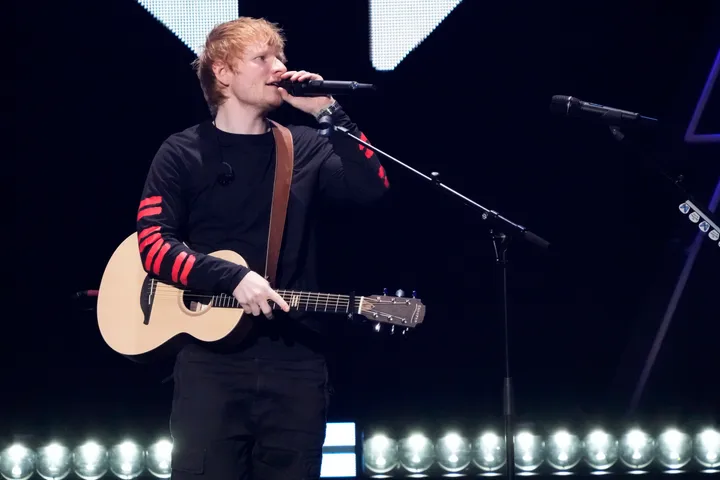
Ed Sheeran has made the “difficult decision” to cancel two shows that had been scheduled for this weekend.
Last week, the Lego House performer claimed that the owners of several venues on the remaining dates of his tour had warned him they’d “pull the shows if [Macklemore] was still supporting”, naming billionaire entrepreneur Robert Kraft as one of them.
“I was also involved in direct talks with promoters along with activists on both sides to try and find a mutual resolution for all, but the venue’s and promoter’s decision was final,” Ed wrote on Instagram, insisting: “Macklemore coming off tour was the promoter’s decision, it was not mine.”
On Friday and Saturday, Ed had been booked to perform shows at the Gillette Stadium in Massachusetts.
However, on Friday afternoon, it was confirmed that these shows were unable to go ahead due to extreme weather.
A spokesperson for Robert Kraft, the owner of the venue in question, told TMZ: “Stadium and tour management, along with public safety officials, have been closely monitoring the weather forecast over the past week.
“Due to the severe weather forecast throughout the weekend, the tour has made the difficult decision to cancel the Ed Sheeran concerts at Gillette Stadium.”
The rep added: “The decision was made with the safety of fans, staff and everyone involved in the shows as the top priority.”

In light of Macklemore being removed as Ed’s opener, the tour’s remaining support acts pulled out, as did his backing band.
The singer-songwriter performed his first show since the controversy emerged over the weekend, taking the opportunity to address the conversation at numerous points during the show.
Meanwhile, Macklemore has since announced a limited run of shows, proceeds from which will go towards “organisations supporting the Palestinian people and movement”.
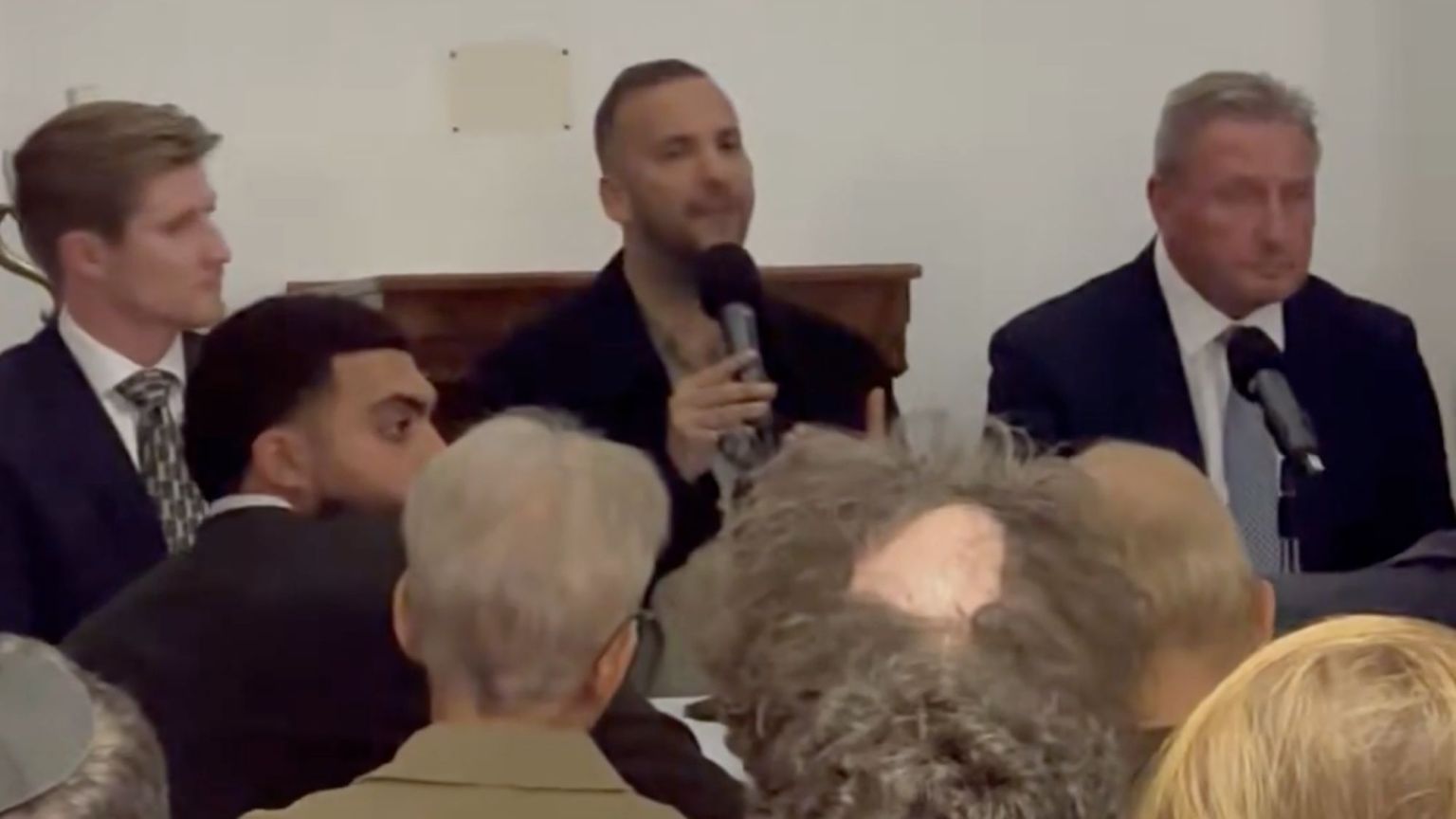
An event hosted by the Jewish community in the Holborn and St Pancras constituency last night was not your usual by-election hustings. There might have been five candidates present at the north London synagogue, but the audience was only there to hear one of them: Zack Polanski, leader of the Green Party of England and Wales, who is standing for the seat at the 8 October by-election.
The evening started orderly and polite, though the tension was immediately palpable. Opening remarks by the candidates present from Labour, Conservative, Reform UK, the Liberal Democrats and the Greens focussed on local issues. But the conversation quickly turned to the inevitable: questions on the safety of Jews amid a breakdown in community cohesion, rising anti-Semitism and the threat of terrorism, as well as on Zionism, the two-state solution and Israel’s right to exist.
It didn’t take long for Polanski to invoke his Jewish heritage, perhaps on the mistaken belief that dropping the J-word might have given him a get-out-of-jail-free card. Instead, each time it triggered bursts of mockery and laughter from an audience who – aside from a handful of Green Party supporters – viewed him in contempt. He was repeatedly condemned for describing himself as an ‘anti-Zionist’ and labelling the war in Gaza as a ‘genocide’.
But Polanski stuck to his guns. He said that ‘calling it [a genocide] is not anti-Semitic’. He said the Jewish community needs to ‘recognise that when we call that anti-Semitic, we are making ourselves, as Jewish people, less safe’. For Polanski, it seems that the problem isn’t the car-ramming, knife-wielding terrorists, the racists, the extremists who burn ambulances, vandalise synagogues and intimidate Jews. No, the real risk comes from Jews themselves, apparently, and their objection to the anti-Semitic blood libels being told about the Jewish state.
When all other candidates were clear about their support for a two-state solution, Polanski repeatedly refused to express his view. When all others confirmed that they were Zionists, Polanski reiterated his anti-Zionism. He justified this by giving his own made-up, convoluted definition of Zionism that most would consider a complete distortion of the term. This once again sent the audience into uproar.
Polanski seemed most at ease in the brief time he talked about gas and oil, or nationalising Thames Water, and most agitated when asked by a constituent whether he would promise to enlarge her breasts if she voted for him – a reference to a Sun article in which he hypnotised a journalist to help her breasts grow. His claim of being a ‘mensch’ – a Jewish term for a person of integrity and kindness – was received with loud mockery. A woman behind me muttered ‘let the Kapo speak’ – Kapo being an historical slur used to describe collaborators and traitors in Nazi concentration camps. It was hardly surprising when Polanski made a dash for the exit and into a side room the second the evening was over, escaping a hostile, furious audience and the media.
The event laid bare how Polanski is caught between a rock and a hard place. He is facing hostility from the vast majority of British Jews for rejecting the Jewish right to self-determination and advancing hardline Boycott, Divestment and Sanctions policies against Israel. He has repeated the ‘genocide’ and ‘apartheid’ smears that have fuelled left-wing anti-Semitism and motivated violence and terrorism against Jews. He leads a political party whose members and candidates want to de-proscribe Hamas as a terrorist organisation, who are opposed to banning Iran’s Islamic Revolutionary Guard Corps and who have notoriously discussed ‘killing Zionists’.
On the other hand, Polanski is under fire from within his own party for being insufficiently anti-Zionist. Green members have accused him of ‘struggling’ to overcome his ‘Zionist indoctrination’. His hesitancy to support the ‘Zionism is racism’ motion at the party’s upcoming conference – a motion that demands the elimination of the Jewish State – has disgruntled many in his party.
He has even been branded a ‘genocide denier’ by elements within the Greens. This explains why, despite the furious backlash every time he dropped the phrase ‘anti-Zionist’ at the hustings, he kept doing it anyway. He knew he could safely provoke the audience because he was in a room governed by democratic decency, where people use their voice rather than their fists – a stark contrast to the climate of real, physical intimidation faced by Jews in spaces occupied by the kinds of activists Polanski wants to curry favour with. He wasn’t trying to win over the Jewish community in the room in front of him – he was signalling to the hardliners in his own party.
Clearly, Zack Polanski’s career as a hypnotist is behind him. Certainly no one at the hustings was buying into his illusions.
Limor Simhony Philpott is a writer, policy adviser and researcher.
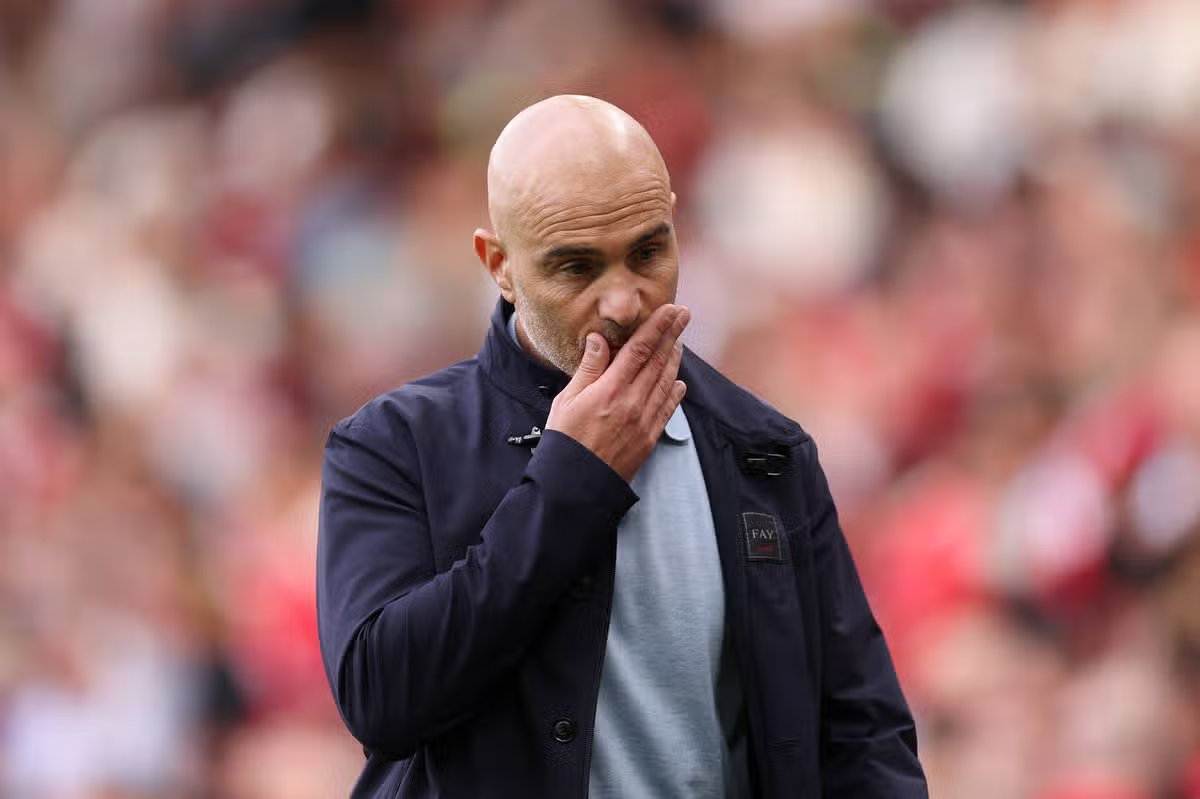
Enzo Maresca shares cryptic message moments before Man City 115 charges verdict
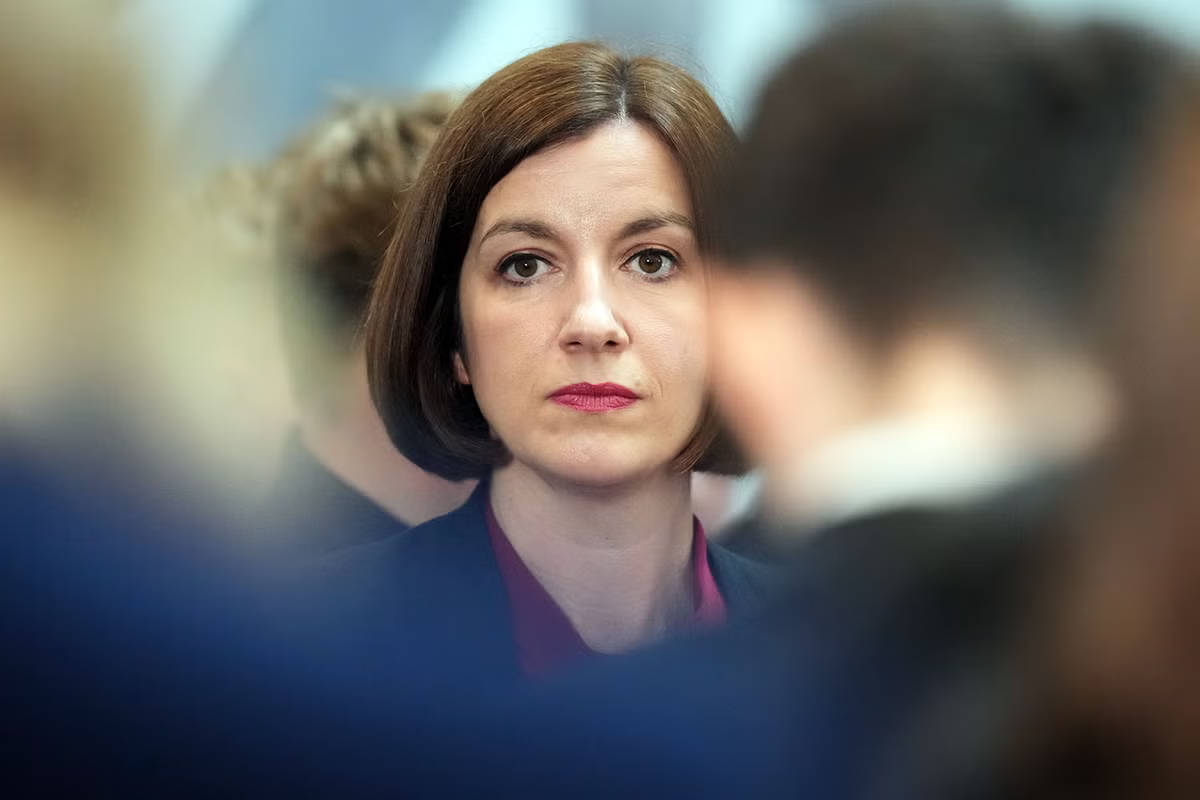
Farage and Badenoch have ‘weaponised’ violence against women, claims Labour’s Bridget Phillipson

Fidelity Investment Grade Bond Fund Q2 2026 Commentary (FBNDX)

Weekend Open Thread – Corporette.com

Weekend Open Thread: Talbots – Corporette.com

Memory prices are slowing because buyers ran out of money

The Importance of Financial Literacy in the Black Community | Shark Tank’s Daymond John

Yes this is prop money. I just wish the IRS would believe me

Being student with no income, while ur Family talks about financial problems around u#viralytquotes
-
 Fashion7 days ago
Weekend Open Thread: Talbots – Corporette.com
-

 Crypto World3 days ago
Goldman Sachs and Deutsche Bank Agree: The S&P 500 Rally Isn't Over
-

 Tech5 days ago
Researchers escape OpenAI Codex sandbox to run commands on host
-

 Fashion1 day ago
8 iPhone Accessories That Add Personality
-

 Crypto World5 days ago
Who Needs CLARITY Anyway? ARB Could See 70X Increase: Hodler’s Digest
-

 Crypto World7 days ago
Circle launches Arc Studio AI agent for building onchain apps
-

 Crypto World7 days ago
Trading Bitcoin on Robinhood? Why 2% Spread Has Traders Worried
-
 NewsBeat7 days ago
Trump says US has reached an agreement to take permanent control of Greenland’s security
-

 Tech6 days ago
Trump suggests rebranding AI with a new name, says he’s also creating an AI Force
-

 Business5 days ago
Analog Devices (ADI) Bets $1.35 Billion on Chips that Let Machines Think for Themselves
-

 Crypto World5 days ago
Coinbase, Robinhood, Circle Seen as Tokenized-Stock Winners
-

 Crypto World7 days ago
Bitcoin price breaks channel as RSI climbs to 63
-

 Tech4 days ago
Google’s $899 Googlebook is a bet that you’ll buy a new laptop for Gemini
-
 Crypto World3 days ago
Trump-Xi Polymarket Odds for Handshake Hit 50%
-

 Crypto World3 days ago
This Bearish Netflix Stock Trade Can Cash In On Video Streaming Giant’s Woes
-
 Business3 days ago
Oil Price Today (September 23): Crude oil below $100 on hopes of US-Iran talks. What did Trump say?
-

 Entertainment3 days ago
These 17 Fall Amazon Dresses Seriously Look Like Anthropologie
-

 Crypto World2 days ago
Crude Oil Prices Pressured by Diplomatic Hopes in the Middle East
-

 Crypto World7 days ago
World Money launches in 150+ countries with Stripe
-

 Crypto World2 days ago
Bitcoin Threatens Sub-$84,000 Breakdown as Long Liquidations Spike
You must be logged in to post a comment Login