

Politics
Palestine Action Scottish Judicial Review: Stitch-Up Incoming?

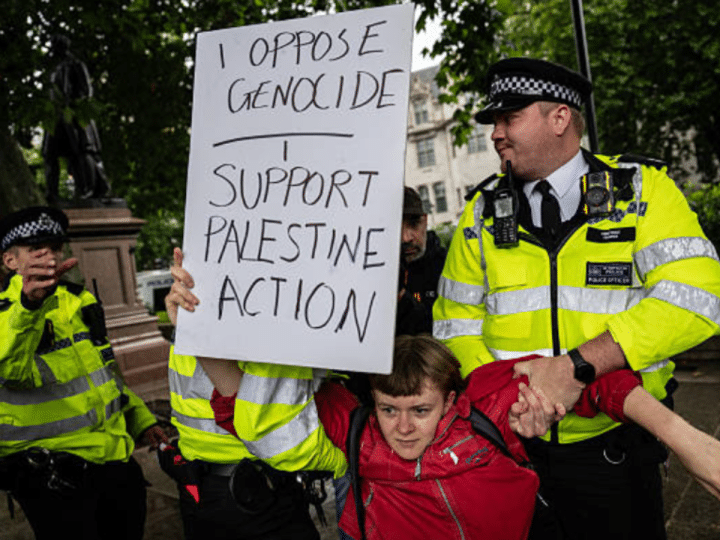

The proscription of Palestine Action was sold to MPs and the media on the basis of a deliberate campaign of lies, fronted by Yvette Cooper, then Home Secretary, and Mark Rowley, Commissioner of the Metropolitan police. Both have deep commitment to Israel. Cooper is owned by the Israel lobby.
What is worse, they then attempted to reinforce these lies by fitting up young activists with false charges and corrupting all principles of justice in an effort to obtain false convictions. This was brought home to me most forcefully in examining thousands of pages of documents released to me by the Home Office as disclosure in the Scottish judicial review of the legality of the proscription of Palestine Action.
Redacted documents and lies
I am not allowed to reveal these thousands of pages to you, even though they have already been redacted, with large sections blacked out, and in some instances gisted, or given in precis, removing “sensitive” information.
But I shall reveal one single paragraph of one single document because I think it is overwhelmingly in the public interest to do so. It is an essential illustration of the appalling behaviour which our Israeli controlled Establishment has been exhibiting throughout this attack on Palestine Action – an organisation which, I would remind you, is trying to prevent the provision of arms to a genocide:
The criminal offences of Aggravated Burglary (s.10 Theft Act 1968) and Violent Disorder (s.2 Public Order Act 1986) have been applied to the majority of offenders identified as being directly involved in each of these incidents, while more specific criminal offences have been applied to individual subjects for: Administering a Noxious Substance (s.24 Offenes against The Person Act 1861); Threats to Kill (s.16 Offences against The Person Act 1861); Actual Bodily Harm (ABH) (s.47 Offences against The Person Act 1861); Grevious Bodily Harm (GBH) with intent (s.18 Offences against The Person Act 1861); and Participating in Activities of an Organised Crime Group (s.45 Serious Crime Act 2015).
That paragraph is from the Proscription Advisory Group, prepared by the Counter Terrorism Police, recommending proscription. It is part of a narrative they seek to build of an “escalating pattern of violence”. The claim is in essence that Palestine Action has moved from violence against property to violence against people.
The problem is, it is not true.
The Filton 25
In the Filton trial, the attempts to convict activists of violence against people – the aggravated burglary and violent disorder charges – all failed before a jury. There were twelve charges between aggravated burglary and violent disorder – and twelve acquittals. In the other incident referenced in the above paragraph – the Sandwich action – the charges of personal violence have all quietly been dropped.
So let us go through the extremely alarming list of serious charges involving violence given in that essential paragraph, from the internal Home Office documents arguing for proscription. And let us mark up the actual truth.
Aggravated Burglary – no convictions
Violent Disorder – no convictions
Administering a Noxious Substance – no convictions
Threats to Kill – no convictions
Actual Bodily Harm – no convictions
Grievous Bodily Harm – no convictions
Participating in Activities of an Organised Crime Group – no convictions
The only footnote to this is that there is one single conviction of GBH, but the jury specifically found not guilty of intent, in relation to the melee that developed at Filton after the security guards attacked the activists.
This is an astonishing, lengthy list of fabrication – offences in which the jury found as a matter of fact against the Crown. Non-existent offences were listed by the Police to recommend the proscription.
The proscription was based on an entire litany of offences that never happened.
Enforcing convictions under false pretences
But much worse than this is the attempt to enforce convictions under false pretences in the Filton trial. The catalogue of how this was done is now well known:
- Judge Johnson ruled that the defendants were not permitted to refer to their motives. He ruled that the jury may not be informed of their absolute right to acquit.
- He attempted to have the leading defence barrister, Rajiv Menon KC, prosecuted for contempt of court for informing the jury of their rights.
- He ruled that terms including “genocide” and “ethnic cleansing” may not be used in court.
- He ordered that the notebooks and other writings of the accused be redacted to withhold from the jury any information related to Elbit’s supply of weapons to Israel.
- He enforced the concealment from the jury of the nature of the weapons and equipment that had been damaged.
- He granted anonymity to senior Elbit staff and admitted their evidence without the defence being able to cross-examine.
- He ruled that the trial had not been prejudiced by the Secretary of State and the Commissioner of the Metropolitan Police stating the offences as fact throughout national media.
- He allowed the release to the media of highly edited and selective prosecution video footage during the trial, which gave a false impression of events.
- He permitted the admission of Metropolitan Police video evidence, which they had given over to Elbit’s sole custody for an entire year.
- He ruled that the jury must not be told of his stated intention to consider adding a ‘terrorist’ aggravation to any convictions.
That is an astonishing list of nefarious actions by Judge Johnson. Read it again. Many people will surely conclude that it is Judge Johnson who should be in jail.
Crown failures further undermine proscription
Despite all of Johnson’s attempts to rig the trial, despite the state trying the defendants twice when it failed to achieve convictions the first time, the Crown failed to attain its convictions on Aggravated Burglary, Violent Disorder and GBH with Intent.
But my God, they tried. How they tried!
Yvette Cooper specifically relied on the specific police litany of lies in her article for the Observer to promote the proscrpition, where she wrote:
Palestine Action has claimed responsibility for – and promoted on its website – attacks that have seen those allegedly involved subsequently charged with violent disorder, grievous bodily harm with intent, actual bodily harm, criminal damage and aggravated burglary. Charges that include, in the assessment of the independent Crown Prosecution Service, a terrorism connection.
The “independent” Crown Prosecution Service is of course a joke – the independence of both the prosecutor and of judges like Johnson being a polite fiction of the British Establishment. The executive does not issue direct orders to judges like Johnson nor to the Director of Public Prosecutions. They don’t have to issue direct orders. Those people are only in their positions because they know what is expected of them.
The one thing they cannot reliably control is a jury, however much they may try to manipulate the information available to them. The charges in the Filton trial of aggravated burglary (which means going equipped with a weapon intending to use it against a person), of violent disorder and of GBH with Intent were always massive, politically motivated overcharging.
They were never likely to be got through a jury – given the total lack of evidence for them – no matter how much Judge Johnson attempted to manipulate the trial.
Yvette Cooper was prepared to disregard legal advice that her article would prejudice the trial, safe in the knowledge that Johnson would only ever bring contempt of court charges against the defence and not against the State.
Deproscription in Scotland
Our hearing in the Scottish Court of Session tomorrow will hear our motion that the proscription in Scotland should be suspended pending the Scottish judicial review, because in the meantime hundreds of people are having their civil liberties restricted, are facing possible arrest, and scores are facing charges for terrorist offences merely for exercising their right of free speech.
The UK government is opposing with a counter-motion to sist (postpone) the entire Scottish judicial review until all English proceedings are concluded, including a probable eventual Supreme Court decision. Their key argument is that it is constitutionally undesirable for English and Scottish courts to reach opposing decisions in a matter of “national security”.
That Scottish courts should respect English decisions they present not as colonialism but as “comity“.
They state that the constitutional argument is so important that the Advocate General herself, Catherine Smith KC, will represent the UK government in person. Indeed, this hearing was delayed two weeks to fit her diary.
Their argument is, of course, disingenuous. They are not seeking to postpone the Scottish hearing; they are seeking to stop it altogether. If it is constitutionally unacceptable to reach a different decision from the English court, then what would be the point of a Scottish judicial review at any stage?
Furthermore, they are entirely illogical because the status quo is that the government has lost to Palestine Action in England at the High Court. It is the government that is appealing there. So if they really believed in “comity”, they would drop the government case in Scotland to achieve the same position as England!
An establishment stitch-up?
Most of the argument we have submitted to court consists of analysis of the effects of the proscription and the impact of suspending it.
The government, by contrast, have not addressed the proscription at all. They are depending entirely on the constitutional argument that the court should not be hearing the case. But these exact arguments were already dismissed by the court at the permission stage. They do not become any more compelling just because a UK government minister is stating them.
Why is the government so confident it will win on the constitutional point and does not need to address the proscription?
I fear the appearance of the minister is evidence of an establishment stitch-up. My hackles rise particularly at the remarkable fact that, while the permission hearing was livestreamed and in Court No 1, this much more important hearing is not being livestreamed and is relegated to court No 6, with a much smaller public gallery. If the case is, as the government itself states, of such constitutional importance that the minister must appear in person, why is it being hidden from the public gaze?
Unfortunately, I can’t think of any answers to that question which are not deeply troubling.
Support the campaign
We desperately need more money to continue this legal case. Each stage of hearing like this costs about £30,000 and the eventual judicial review will cost much more.
Again, please contribute if you can, but do not contribute if it causes you difficulty. If you know people who are able to afford to help and likely to be sympathetic, please do contact them and ask their assistance. We are trying to keep a lot of very good people out of prison.
You can donate through the link via Crowd Justice, which goes straight to the lawyers, or through this blog.
Featured image via the Canary
By Craig Murray

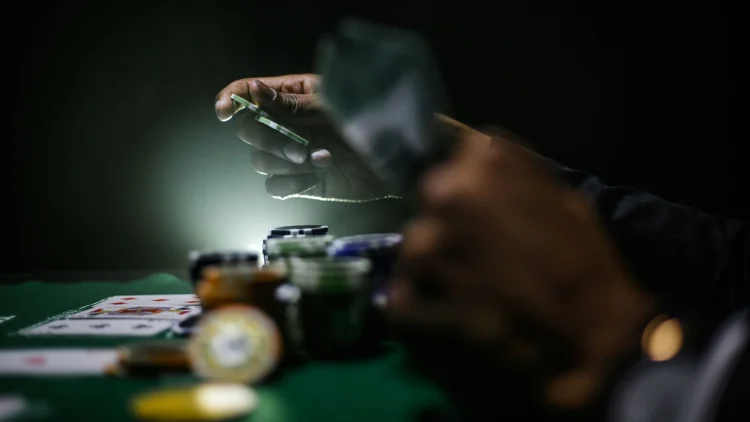

Credit: Kennan Constance, Unsplash

Some anti-gambling campaigners would have policymakers believe concerns about the gambling black market are exaggerated. They are wrong
The regulated betting and gaming sector takes gambling harm seriously and recognises its responsibility to protect consumers. Millions of adults enjoy betting safely each month, but we know gambling can cause harm for a small number of individuals and families. NHS figures estimate that 0.7 per cent of adults experience problem gambling, and every one of those cases is a cause for concern. That is why our members continue to invest heavily in safer gambling tools, technology and interventions designed to reduce risk and support those who need help.
But if we are serious about protecting consumers, we must also be serious about confronting the growing threat posed by the criminal gangs operating the illegal gambling market.
Recent claims have suggested concerns about illegal gambling are overstated because unlicensed operators account for less than 10 per cent of the market. Even if that figure is accepted, it should alarm everyone involved in this debate.
Britain is home to 22.5 million adults who place a bet each month. If anything close to one in ten pounds staked is taking place with illegal operators, that is not a reassuringly small figure. It represents a major consumer protection failure, exposing hundreds of thousands of consumers to criminal operators who offer none of the protections available in the regulated market.
That is not a marginal issue. It is one of the most significant consumer protection challenges facing the sector today.
Independent analysis by H2GC forecasts that stakes with illegal operators could almost double from £17bn in 2025 to more than £33bn by 2028. On that trajectory, almost one in every five pounds staked online could be placed with an unlicensed operator within three years.
That should concern anyone who genuinely cares about reducing gambling-related harm. Because every customer who moves from a regulated operator to a criminal one loses the protections, safeguards and interventions designed to keep them safe.
Too often, discussions about gambling policy focus solely on restrictions placed on licensed operators, without considering where customers go if they become frustrated with the regulated market. History shows that consumers do not stop gambling because of increased regulation, product restrictions or outright bans. Many seek alternatives.
When they do, illegal operators are waiting.
Unlike licensed betting and gaming businesses, black market operators are not accountable to the Gambling Commission. They do not have to conduct safer gambling interventions. They do not participate in self-exclusion schemes such as GAMSTOP. They do not face the same requirements around age verification, customer protection or anti-money laundering checks. They pay no UK tax, contribute nothing to British sport and have no obligation to support research, prevention or treatment programmes.
Most importantly, they offer customers no meaningful protection when things go wrong.
That distinction matters. Customers who use licensed operators know games are independently tested, funds are protected and winnings are paid fairly, protections that simply cannot be guaranteed in the illegal market.
The debate should never be framed as a choice between regulation and no regulation. The real question is whether policies strengthen the regulated market or inadvertently drive consumers towards illegal alternatives.
Well-designed regulation is essential. But regulation must also be proportionate, evidence-led and focused on achieving its intended outcomes. It should be reviewed regularly, with policymakers and regulators willing to adapt when evidence shows change is needed.
The impact of regulation must always be assessed in the round. Policymakers should consider the cumulative effect of multiple interventions rather than drawing conclusions from individual measures in isolation.
When customers remain within the regulated sector, they are protected by a framework of safeguards that has become increasingly robust in recent years. Standards have risen significantly, and operators continue to work closely with regulators, government and charities to improve protections further.
The danger comes when policies create incentives for customers to seek out operators who simply ignore British law altogether.
Every customer lost to the black market is a customer lost to protection.
This challenge requires a coordinated response. The Government’s Illegal Gambling Taskforce is a welcome step forward, but it must be matched by practical action.
The Betting and Gaming Council has proposed a five-point plan to tackle illegal gambling, including stronger action against illegal advertising, faster disruption of unlicensed websites, tighter controls on payment providers facilitating unlawful transactions, greater accountability for businesses that enable illegal operators, and tougher enforcement against those targeting British consumers.
This is not about protecting the interests of licensed operators. It is about protecting consumers.
There will always be those who oppose gambling in all its forms. But policymakers should be wary of arguments that minimise the risks posed by criminal operators or dismiss concerns about consumer migration to the black market.
There is a fundamental difference between a regulated British business operating under licence and an illegal offshore operator operating outside the law.
One is accountable. The other is not.
One is required to protect customers. The other has no such obligation.
One contributes to society through jobs, tax revenues and support for sport. The other simply extracts money from British consumers while avoiding responsibility.
That is why the debate about illegal gambling matters.
Whether the black market accounts for five per cent, nine per cent or more today is not the point. The real question is whether policymakers are willing to act before it grows larger still.
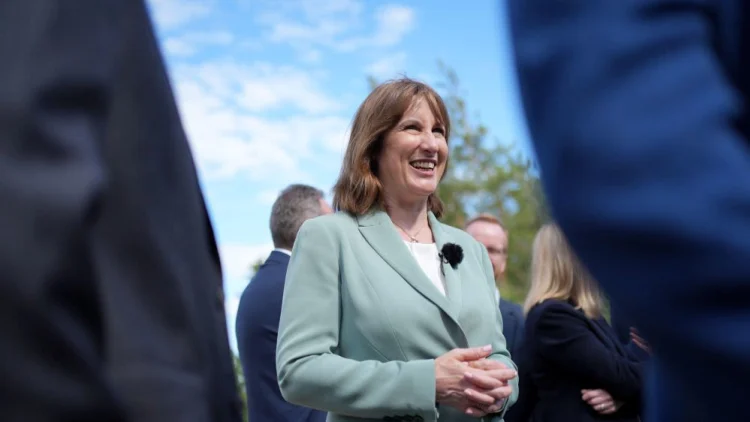

Rachel Reeves is expected to lose her role under Andy Burnham’s premiership (Alamy)
2 min read
Chancellor Rachel Reeves has confirmed her support for Andy Burnham to become the next prime minister as speculation over the future cabinet heats up.
Speaking to the BBC on Thursday morning, Reeves said: “I’m supporting Andy to be prime minister.”
Keir Starmer announced on Monday that he would resign as PM this summer, triggering the process to replace him as leader, which could conclude as early as next month.
It comes after reports that Reeves will lose her job as Chancellor under the former Manchester mayor and instead be handed a more junior role.
Reeves, who has been in the role since Labour won the general election in July 2024, had hoped to stay in No 11, but The Times reported that Burnham’s allies had concluded a personnel change was needed to show a shift in direction.
Sky News reported earlier this week that Reeves’ aides had been calling Britain’s top businesses asking them to lobby Burnham to keep her as Chancellor.
On Thursday, Reeves said she had known Burnham for “more than a decade and a half” but was “not going to pre-empt his decisions” about top jobs.
Burnham was sworn in as the MP of Makerfield on Monday after winning a landslide by-election victory. It is looking increasingly likely that he will become PM next month. His likeliest contender former health secretary We Streeting on Monday announced his support for Burnham.
The Chief Secretary to the Prime Minister Darren Jones has also said he will not be standing in a leadership contest for Labour leader, after sparking suspicion among colleagues that he was quietly sounding out support for a future leadership bid of his own.



The Government’s Animal Sentience Committee warns the sale of glue traps is putting people “at significant risk of breaking the law”: a sales ban will protect both animals and the public
In recent years, British governments have passed laws to limit or prohibit the use of rodent glue traps. But given that these traps are still widely available through major online marketplaces like Amazon and eBay, and in hundreds of hardware stores in England, it’s understandable that most people don’t know that using these traps could lead to a criminal conviction. The problem is a fragmented patchwork of legislation that is putting both animals and the public at risk.
We’re urging action from the UK Government to get the public, retailers and animals out of this sticky situation.
What are glue traps?
Glue traps are flat cardboard or plastic boards coated with a strong adhesive. Food is added as bait and when animals run across the board they become stuck. Trapped animals may struggle for hours, sustaining severe injuries such as torn skin, broken bones, and can even chew through or tear off their limbs while trying to escape.
While these traps are designed to catch insects or rodents, they are indiscriminate. Animal rescue organisations report cases of robins, bats, hedgehogs and even cats being caught and killed.1
What are the current laws?
In Wales, the use of glue traps has been illegal since October 2023, but sale to the public remains legal. In England, the Glue Traps (Offences) Act 2022 made it an offence to set a glue trap without a licence (only issued to professional pest controllers in limited circumstances), but our research has shown that they are still widely available for public purchase.2 In Scotland, the Wildlife Management and Muirburn (Scotland) Act 2024 went further by banning the use, supply and possession of glue traps.
The Internal Market Act 2020 prevented devolved governments from enacting sales bans unless a specific exclusion was permitted by the UK Government. In February 2026, the UK Government passed the exclusion regulation requested by the Scottish Government. This contributed to a delay of nearly two years between legislation being passed and the ban taking effect on 1st July 2026.
Why aren’t the laws working?
Professional pest controllers appear to have moved away from using glue traps, and most national DIY and hardware chains have ceased selling them. But our research suggests that hundreds of independent shops in England are selling these traps for as little as £1.99, promising ‘safe’, ‘effective’ and ‘non-toxic’ control of unwanted rodents. Major online marketplaces such as Amazon also still list them, sometimes rebranded as insect traps and with misleading claims such as ‘harmless to both humans and pets’.3
In March 2026, the Animal Sentience Committee published a report noting the clear evidence that glue traps capable of trapping rodents remain on sale at retailers and online in England, and warned that “the continued sale of glue traps has the effect of placing people at significant risk of breaking the law”.4 Products rebranded as insect traps often lack any guidance on how to humanely kill a trapped rodent, leading to additional suffering for trapped animals. Some shops contacted by Humane World for Animals’ mystery shopper suggested putting trapped animals, still alive, in the bin, or flushing them down the toilet. These would be offences under the Animal Welfare Act 2006.
Enforcement is also a problem, with evidence indicating that some police forces have received no specific training on the new law and no guidance on handling reports.5 A combination of widespread availability and lack of enforcement means that Britain has bans on cruel glue traps on paper, but not in practice.
What comes next?
On 1st July, Scotland’s new comprehensive ban on the sale, use and possession of glue traps will come into effect. This will be the strongest restriction on glue traps in the UK, and is extremely welcome. But for NatureScot and Police Scotland to prevent glue trap use they must overcome significant enforcement challenges, including preventing the use of traps purchased in England or online.
There is a simpler solution.
If British governments accept that glue traps are cruel enough to justify criminal restrictions on their use, then continuing to allow public sale makes no sense. The simplest and most effective next step is for England and Wales to also ban their sale, online and offline. A full ban on use and sale would give much-needed clarity to the public and retailers and make enforcement achievable.
Without this, the law will remain muddled, animals will continue to suffer needlessly, and the public will remain at risk of buying products that they cannot legally use, and facing criminal convictions if caught. If we are serious about ending the cruelty of glue traps, a piecemeal approach can no longer be an option. The UK Government and the Senedd must follow Holyrood’s lead and ban the sale of glue traps.
References
- https://www.bbc.co.uk/news/articles/c0m4exrp0k9o
- https://www.humaneworld.org/en/news/undercover-shopping-reveals-widespread-high-street-sale-cruel-rodent-glue-traps-despite-being
- https://www.amazon.co.uk/s?k=mice+trap&crid=ZKSIPJV796RP&sprefix=mice+trap%2Caps%2C127&ref=nb_sb_noss_1
- https://www.gov.uk/government/publications/animal-sentience-committee-glue-traps-offences-act-2022/animal-sentience-committee-views-on-animals-as-sentient-beings-in-relation-to-the-glue-traps-offences-act-2022
- https://bpca.org.uk/News/met-police-caught-unprepared-on-glue-trap-act-2022/278534
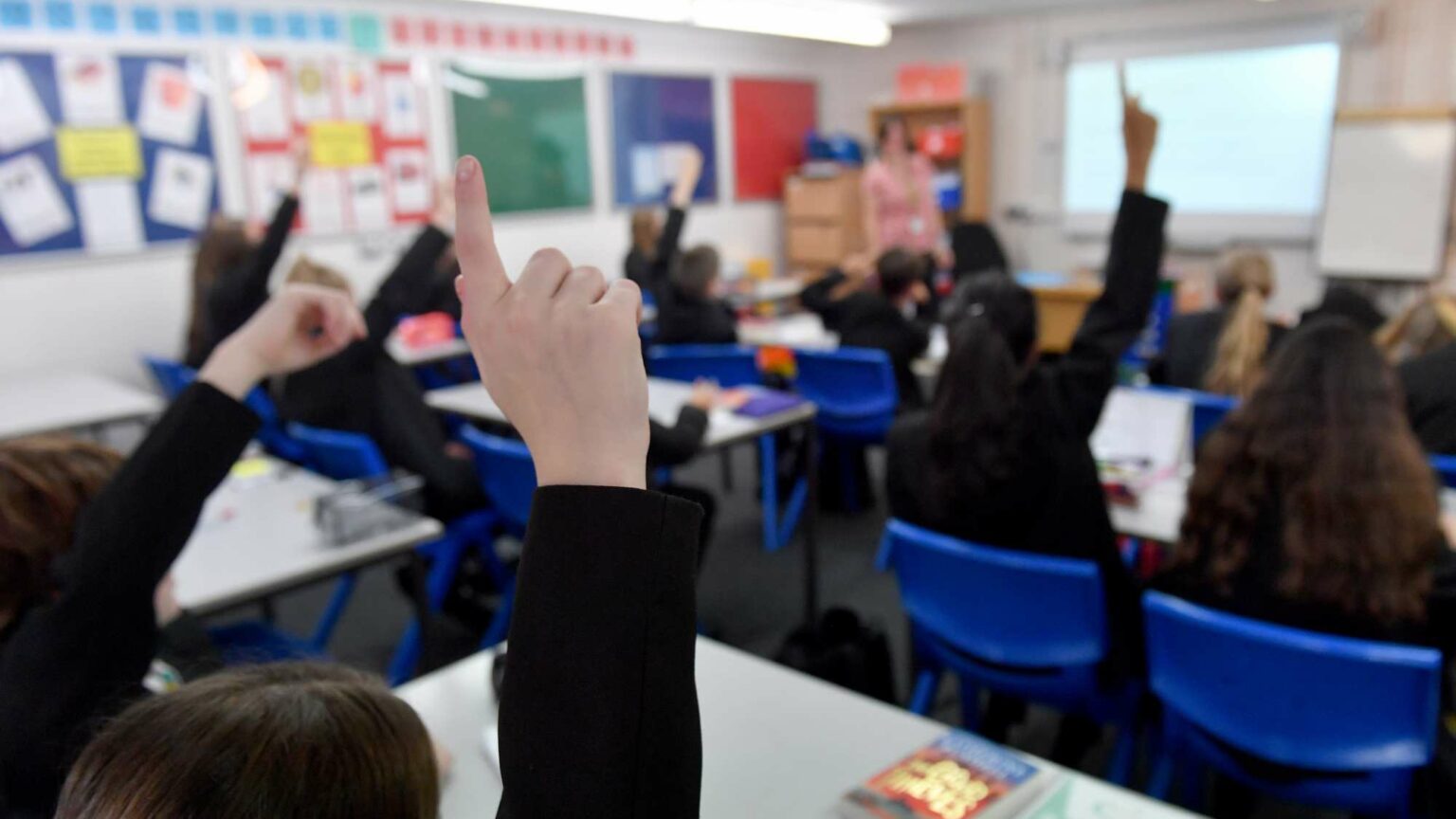
In May, it emerged that a group of Sheffield schools had devised a set of ‘anti-racism’ lesson plans. Among other things, they encouraged teachers to educate children as young as seven to believe that white people are privileged because of the colour of their skin. They were also to inculcate the belief that while black people can be racially prejudiced, because they lack cultural power, they can’t be racist.
The existence of such racial-identitarian dogma in Sheffield is not a surprise. Like most local councils in the UK, Sheffield City Council is facing some enormous challenges. Housing is in short supply and the city itself is in debt for tens of millions of pounds. But over and over again, one challenge is apparently more urgent and pervasive than the rest: racism.
Take Sheffield council’s decision in 2020 to establish a Race Equality Commission to assess ‘the nature, extent, causes and impacts of racism and race inequality within the city’. Its chair, Kevin Hylton, a professor emeritus at Leeds Beckett University, handpicked 24 Sheffielders as race commissioners. ‘The diversity of this group was exceptional in terms of gender and ethnicity’, Hylton said. This was one way of describing the appointments. Only three of the 24 commissioners were white (two women, one man). In other words, 88 per cent of the commissioners were drawn from minorities who make up approximately just 20 per cent of Sheffield’s population. Talk about ‘exceptional’.
In 2022, the commission delivered its report and concluded that Sheffield was indeed racist. Not just slightly racist, but super racist. The council heard testimonies from people accusing every one of the city’s institutions – from education to crime and justice to business – of all types of discrimination: ‘institutional, structural, microaggression, direct, indirect, conscious and unconscious bias’. One expert witness even testified to the existence of invisible racism. ‘Yes, racism is there’, he said. ‘It’s just very hard to prove it, but you know for yourself because there’s a lot of unfairness.’
‘Racism and racial disparities remain significant’, Hylton wrote in the report’s foreword. He then called for ‘positive measures and improvements in organisations and among its citizenry’. Improvements among the citizenry? Like ‘anti-racism’ training in Sheffield schools, for instance.
Indeed, this anti-racist fanaticism has been injected into the education system. As we’ve seen in Sheffield, education programmes seeking to embed ‘racial literacy’ and ‘anti-racism’ into every institution have become the prisms through which teachers are encouraged to interpret children, classrooms and achievement. The logic is as crude as it is revealing: racial disparities are treated as proof of racism, and the remedy is to send teachers into classrooms to lecture small children about white privilege.
Of course, Sheffield is hardly an aberration. It is a local manifestation of a national obsession. The belief that schools must be ground zero for decolonisation efforts is widespread. Teachers must examine their own unconscious biases to create what are called ‘more equitable and inclusive learning spaces’. Advocates of this strategy promise that non-white students will be empowered by the acknowledgement of the structural barriers to their success.
The anti-racist training seen in some Sheffield schools is not mandatory in British schools. But it might as well be. The Department for Education allows schools to implement it, provided they adhere to guidelines on political impartiality. These guidelines, outlined in the Education Act 1996 and expanded upon in 2022, require that teaching does not promote partisan political views and that balanced views are presented on politically contentious issues. In practice, however, these guidelines are often vague and inconsistently applied. In the case of race and identity, they are often ignored by educators who insist ‘anti-racism’ is beyond politics altogether.
Far from being inclusive, anti-racism training often divides children into crude racial categories – oppressors or victims – and replaces the idea of individual moral character with collective racial identity. This is because it is informed by critical race theory (CRT), which claims race is a social construct invented by white people to preserve their privilege and supremacy. The result is that white children, regardless of their economic or social situation, are ‘privileged by virtue of being white’.
At the same time, non-white children are encouraged to see themselves as victims of a system rigged against them. The classroom becomes a battleground of racial grievance. While white-skinned people are the problem, everyone else is morally pure – unless, of course, you are East Asian and doing well. In that case, you become ‘white-adjacent’, a term used in social-justice discourse to describe non-white groups that align with white people enough to benefit from their privileges.
Despite CRT’s promise of liberation from power structures, its only real purpose is chaining young people to perpetual victimhood. Yet its proponents cannot see this. They do not worry about its miasma of contradictions: that race does not exist, but it also explains the meaning of life; that race is a social construct with no biological basis, yet everything must be seen through a racial lens; that race is supposedly meaningless, though white children must constantly reflect on their whiteness so as not to let it overtake them.
To point all of this out invites outrage from the usual suspects. When then equalities minister Kemi Badenoch addressed parliament in 2020 to argue that teaching white students about inherited guilt was unacceptable, she came under fire from teachers. This is because many believe that, without anti-racist training, their white students will grow up to become the next generation of oppressors.
All of this leaves us to wonder: if anti-racist educators truly believe that race is a social construct, why do they not simply deconstruct it? Why not teach children that race is morally meaningless, and that they should judge one another as individuals? Until we as a society stop telling people that the organising principle of their lives is race, I’m afraid any hope of actual ‘progress’ will remain a fantasy.
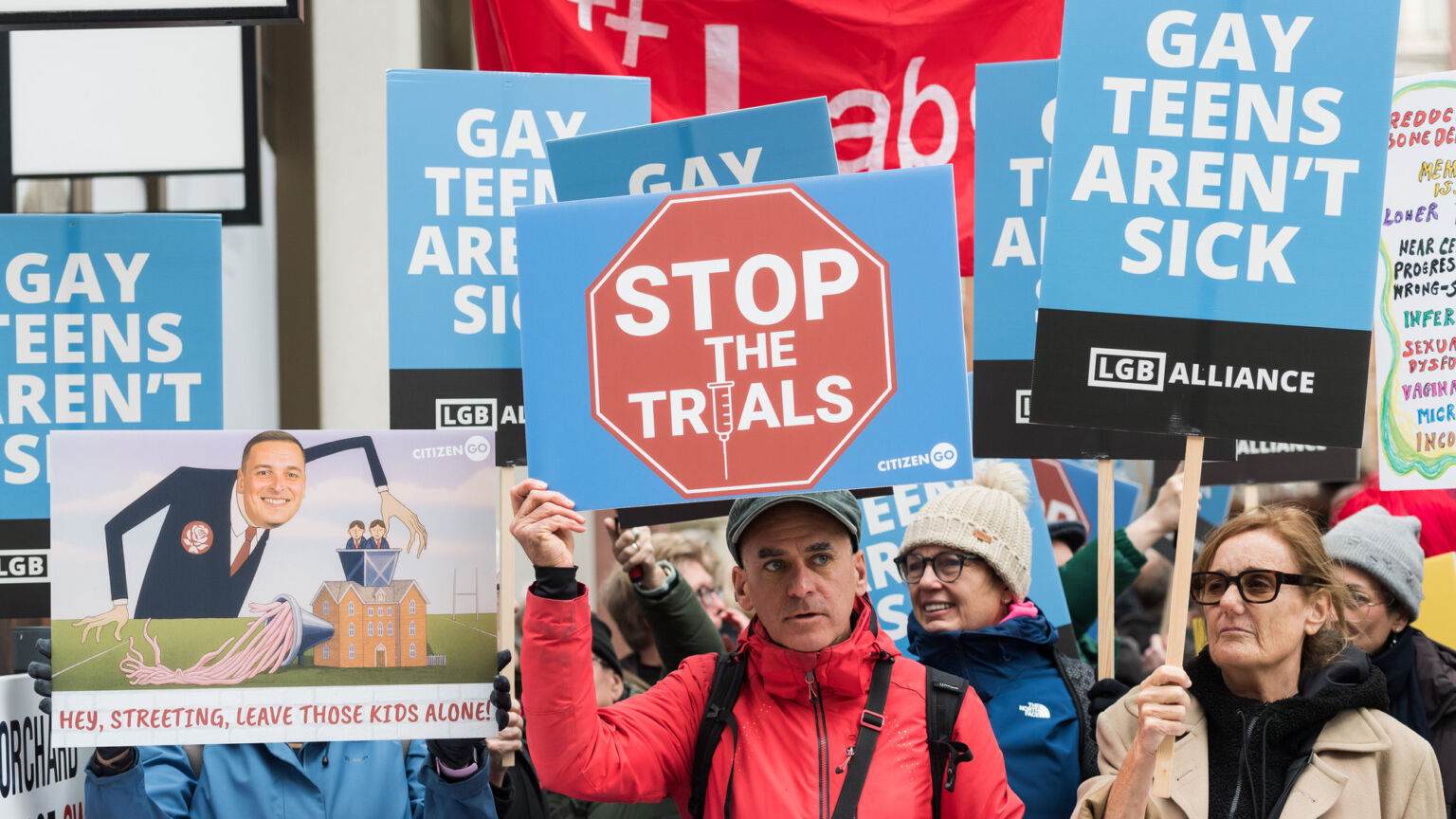
On Tuesday, 283 MPs voted to proceed with a medical experiment that seeks to recruit some of the most vulnerable children in Britain, including those in care. They did so despite being repeatedly warned that injecting healthy children with puberty blockers could damage bone density, impair cognitive ability and lead to infertility.
Despite the best efforts of the Conservatives – who forced parliament to hold the vote – and campaigners such as detransitioner Keira Bell, the NHS-backed Pathways Trial will almost certainly now go ahead. This in itself is astonishing, considering that it was paused in February after the Medicines and Healthcare products Regulatory Agency raised concerns about the potential harm to the more than 200 children – some as young as 10 – who will be subjected to the trial. It is also pointless, given that NHS trusts continue to hold unpublished data that could answer many of the questions the trial is supposed to answer.
Conservative MP Caroline Johnson, a former consultant paediatrician, opened the debate. She asked Labour’s beleaguered and slightly confused-looking new health minister, James Murray, whether he ‘is aware of new evidence allowing clinicians to work out confidently which children will persist with the trans identity at 11 and which will not?’. She continued: ‘We need to think about the risk involved in the treatment, and whether it is worth the benefits that they will purportedly receive’.
Johnson drew attention to other serious concerns. Among them is the fact that 12-year-olds enrolled in the trial will be asked to complete questionnaires about whether they have engaged in oral sex during the previous year, ostensibly to assess their understanding of the impact that puberty blockers may have on future sexual function. They will also be paid for filling out the questionnaires. Murray opted not to address this point.
Throughout the debate, Murray hid behind the ermine-fringed authority of Baroness Hilary Cass, the paediatrician who recommended a trial as part of her review of gender-identity services for children, published in 2024. He solemnly informed the chamber that he had ‘struggled with the profound challenges this subject raises’. Yet when Conservative MP Rebecca Paul reminded him of the doubts he had professed about the trial only the day before the vote, his struggle appeared to be with remaining in the chamber, which he promptly left.
The authority on which ministers continue to rely has itself become increasingly controversial. Earlier this week, Cass defended the trial in an interview with the BBC, warning that 11-year-old girls are presenting to clinics having already taken testosterone, a claim repeated by Murray. One might have expected such a revelation to prompt calls for police action against those supplying these hormones to children. Instead, Cass argued that this was evidence that these children should be enrolled in a trial of puberty blockers. As Johnson explained to her colleagues in the House of Commons, ‘we would not give children cocaine on the basis that they wanted it and would get it illegally otherwise’.
Cass’s task of reviewing gender-identity services for children in the UK was an unenviable one. She stepped into no man’s land in search of evidence, with a target on her back and shots coming from all sides. But when the smoke cleared and the Cass Review landed, it was clear to anyone with eyes that the war was somewhat one-sided. She concluded that, ‘the evidence base underpinning medical and surgical interventions in this clinical area is remarkably weak’, and found ‘insufficient and / or inconsistent evidence’ regarding the effects of puberty suppression on psychological wellbeing, cognitive development and bone health.
To anyone whose brain has been spared the rot of trans ideology, this was no more surprising than discovering that Ozempic harms anorexic children. But it took someone of Cass’s stature to force the government to confront reality. Even those of us whose expectations of officialdom are calibrated somewhere between ‘low’ and ‘abysmal’ assumed no ethics board would approve a trial of puberty blockers. For her pains, Cass became public enemy No1 to trans activists, inside and outside parliament.
It is hard to escape the feeling that the paediatrician has been knobbled. Panicked by the prospect of children buying hormones online, she has backed a poorly designed and potentially dangerous experiment. Even trans-cheerleading rag PinkNews is supporting Cass on Pathways.
There is nothing more depressing than the politics of defeat, of managed decline. Giving distressed children puberty blockers because they might otherwise buy hormones from dodgy providers online is no different from giving girls who are being sexually exploited the pill to prevent pregnancy. What is happening is a crime, and yet, just as with the vulnerable children exploited by rape gangs, it is one the state is prepared to accommodate if the alternative is confronting its own prejudice.
The proper response to children obtaining powerful drugs illegally is not to provide those drugs under official supervision. It is to stop the people supplying them, protect the children involved and enforce the law. That ministers now present a clinical trial as the only realistic alternative is an admission not of compassion, but of failure.
Jo Bartosch is co-author of Pornocracy. Order it here.
So, outside Downing St this week, Two-Tier Keir turned into Two-Tear Keir. He followed Weepy Reeves into the crying game with a very confident and effective performance. The manful containment of emotion could easily have been genuine and as a prime ministerial achievement it probably tops all his others. Let it lead his political obituary:…
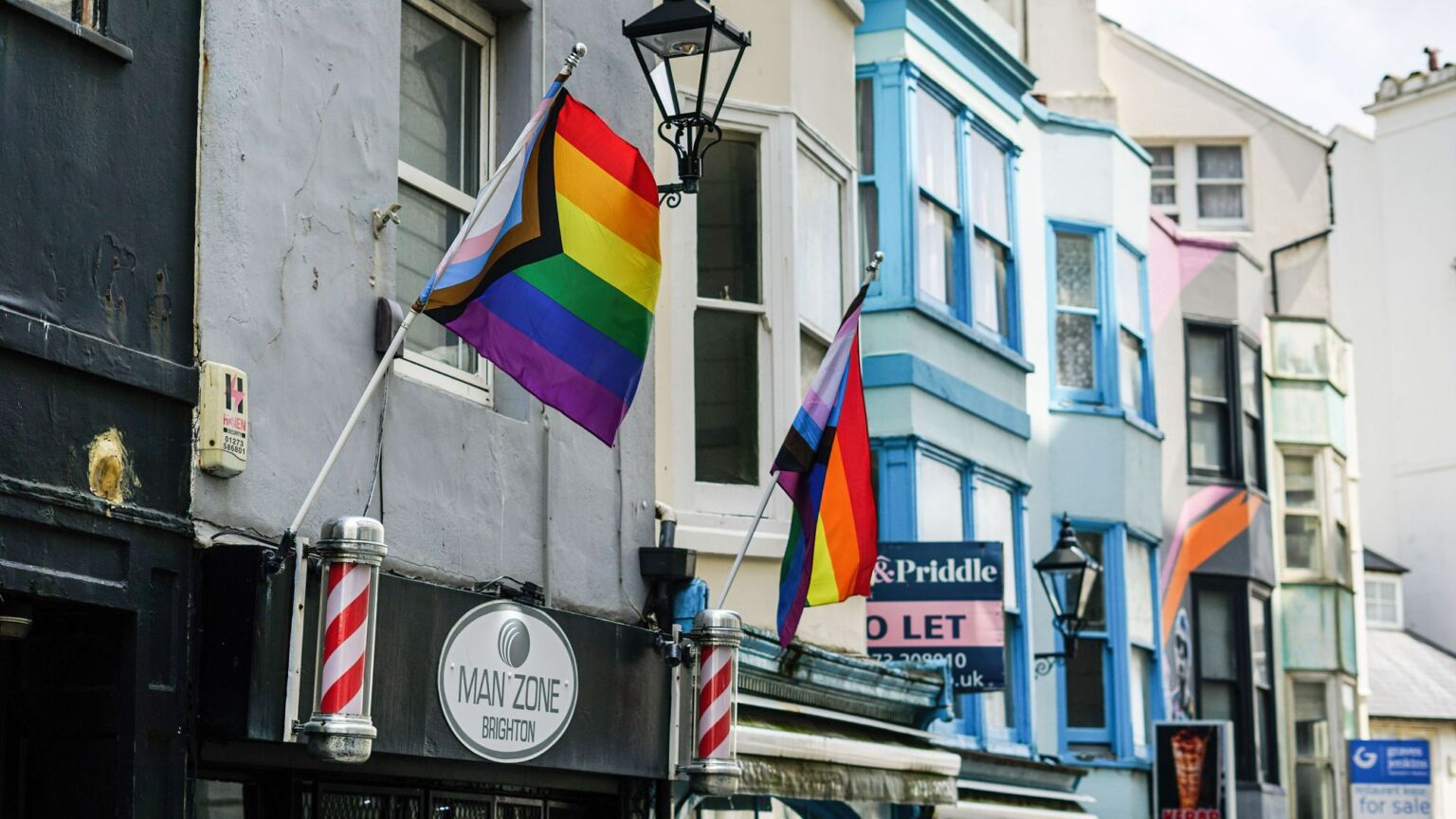
The publication of an NHS investigation into a GP clinic in Brighton deserves to be a watershed moment in the never-ending scandal of so-called gender medicine.
The findings, published last month, concern the WellBN practice – and they are excoriating. According to the investigation, 78 young people and children – some as young as 12 – at the clinic’s ‘Trans Health Hub’ were given puberty blockers and cross-sex hormones from January 2023 to December last year. In 22 cases, gender treatment was given to patients without even a face-to-face consultation. Disturbingly, the report found that 53 of the 78 patients might have had neurodevelopmental issues. The NHS guidance formulated in the wake of the Cass Review says that puberty blockers should never be prescribed, outside of a clinical trial. As of March 2026, NHS England no longer prescribes cross-sex hormones to under-18s, and has never recommended prescribing them to anyone under-16.
Yet perhaps the most striking aspect of this scandal is not what happened inside a Brighton GP practice. It is how many people knew enough to raise concerns long before the NHS finally acted. According to the report, NHS Sussex was aware something was amiss at WellBN as early as September 2024.
In fact, authorities should have acted even sooner. Last year, Hannah Barnes wrote in the New Statesman that the General Medical Council and NHS England had concerns over WellBN going back to 2019. Barnes wrote that, if the investigation ultimately concluded there had been malpractice, ‘none of the organisations responsible for protecting these young people and ensuring they receive safe care will be able to say it could not have been prevented’. Now, the NHS has confirmed that those warnings deserved to be taken seriously all along.
One of the most revealing details concerns WellBN’s use of an ‘informed consent’ model. Under this approach, the patient – usually a minor – is treated as the expert on themselves. Legitimate mental-health assessments are sidelined. The role of the clinician becomes less about investigation and diagnosis, and more about facilitating the patient’s stated wishes.
It is this kind of lax thinking that has characterised so much of the trans debate in Britain. Traditionally, adults had responsibilities precisely because children were not expected to navigate every complex question alone. This was particularly the case when it came to medically ‘transitioning’, which involves medication and sometimes surgery that will carry lifelong consequences for those who choose to undergo it.
Parents, teachers and doctors were expected to exercise judgment, ask questions and sometimes challenge assumptions. In the gender-identity field, however, questioning increasingly came to be regarded as harmful. Affirmation was seen as kindness, while scepticism was seen as suspicion.
The result was not merely a lack of scrutiny. It was a culture in which scrutiny itself became suspect. Brighton offers perhaps the clearest example of this.
Long before the NHS investigation into WellBN, parents had raised concerns about local gender-identity practices in the area. Some alleged that schools were facilitating the social transitioning of children – that is, letting them adopt the pronouns, dress code and a name fitting the opposite sex – without any parental involvement. Others questioned the influence of activist organisations working in schools. Some warned about pathways that appeared to steer vulnerable children towards medicalisation.
Whatever anyone thought about those concerns, they were plainly safeguarding questions that deserved to be examined. Instead, critics often found themselves represented as the problem. In 2023, Labour councillor Bella Sankey accused local parents of spreading ‘baseless smears’ when they were concerned about the fact that their daughter’s school had allowed her to use chestbinders without their permission.
This pattern has become familiar across Britain. Institutions increasingly retreat behind process, guidance and procedure. Questions are acknowledged but never really answered. Concerns are noted but never seriously investigated. The appearance of engagement replaces the reality of scrutiny.
One parent quoted by Barnes captured the problem with WellBN perfectly: ‘The tragedy isn’t that nobody knew. The warnings were known, the prescribing was celebrated, and institutional curiosity went missing precisely when it was needed most.’
That observation should trouble anyone concerned with safeguarding. Because the real lesson of WellBN is not that there was too little compassion. If anything, everyone involved believed they were acting compassionately.
Many questions remain. The NHS report tells us what happened at one GP practice. It does not tell us how so many children arrived there. It does not explain the role played by schools, local authorities or activist groups. It does not explain why so many adults acted like rabbits in the headlights, frozen in fear, seemingly unable to ask obvious questions.
The WellBN scandal should prompt a reckoning not only with one clinic, but also with an entire institutional culture. A culture in which scepticism was treated as hostility, parental concerns were too easily dismissed, and curiosity itself became something to tiptoe around.
The children at the centre of this story deserved better than. Some of them – now adults with profound medical problems – are likely to ask why on Earth their schools sent them along a classroom-to-clinic pathway.
They deserved adults willing to ask difficult questions before the harm was done. They deserved a system that prioritised the interests of children and young people, instead of the interests of trans activists. They deserved so much better.
Downing Street says Keir Starmer will stay on as the MP for Holborn and St Pancras after he leaves Number 10 in a few weeks. He won’t be triggering a by-election – unless he U-turns, obviously…
Politics
Politics Home Article | Labour members are not as unrepresentative of voters as widely assumed

(UrbanImages / Alamy)
6 min read
Descriptions of ‘unrepresentative anoraks’ are wide of the mark, write Patrick Seyd and Paul Whiteley, who find that Labour Party members are only a little to the left of the average voter
It now seems overwhelmingly likely that Andy Burnham will be crowned as the next Labour leader, thus becoming prime minister, without a full contest ending in a vote of party members.
Plans are being drawn up that would see the decision instead lie principally with Labour MPs. Some might argue that this is acceptable, or even good, because members are not representative of the public anyway. Our findings suggest that assumption is not quite right, however.
Over the past 50 years, the powers of party members in the UK have increased significantly. All seven British parties now competing for electoral support have leadership election systems in which party members participate, with the sole exception of Reform UK. This trend in membership empowerment has resulted in both significant benefits and costs for the parties concerned. The benefits have been primarily financial, involving donations and subscription income in a climate of strict regulation of campaign finance, and also electoral, involving campaigning foot soldiers and online keyboard warriors. But the cost of this membership empowerment trend has been, on occasions, the election of party leaders who are unrepresentative of the party’s voters.
In 2015 the power to elect the Labour Party leadership was given to party members, registered supporters and affiliated members. These are the prevailing rules today, although the registered supporters’ section has been abolished and in 2021 the preliminary MP nomination threshold was raised from 10 per cent to 20 per cent of the parliamentary party. In the current House of Commons, candidates require the support of 81 Labour MPs.
To progress, candidates reaching the MP nomination threshold are then required to obtain support from at least five per cent of Constituency Labour Parties or three affiliated organisations (representing a total of five per cent of the affiliated membership), before the process usually moves on to a one-member-one-vote ballot. Party members are required to have a continuous membership of at least six months before they can participate in such a leadership ballot.
Thus, Labour Party members, in their choice of party leaders, typically play a key role in influencing the performance of the party in Parliament and in elections. This raises the question of whether this system is more likely to produce successful or failed leaders. The answer depends, in part, on how representative members are of the party’s wider supporters in the electorate. It also depends on the reliability of members’ judgements about who would make a successful leader.
A key to understanding this relationship between Labour voters and party members is to examine their respective views with respect to broad ideological beliefs. If the two differ in broad beliefs, this is more of a problem than if there are differences on specific issues that have always existed in political parties. Accordingly, we investigated this in relation to the two major ideological dimensions in British politics: the left-right division, which is primary; and the liberal-authoritarian division, which is secondary in importance.
We can identify the extent to which the attitudes of party members are representative of the electorate using data from the British Election Study internet panel wave 27, which contained questions about party membership and measures of ideology. This survey of the British electorate was conducted in 2024, shortly before the general election, with a sample size of 30,445. Some 471 respondents indicated that they were Labour Party members, making it possible to compare the opinions of the members with those of the voters.
The survey contained a battery of questions designed to measure the left-right ideological dimension in British politics. These are Likert scaled items in which respondents indicate if they agree or disagree with the various statements using a five-point scale. The statements are as follows:
- Government should redistribute income from the better off to those who are less well-off
- Big business takes advantage of ordinary people
- Ordinary working people do not get their fair share of the nation’s wealth
- There is one law for the rich and one for the poor
- Management will always try to get the better of employees if it gets the chance
By combining voters’ responses to these five statements, we can devise an overall Left-Right scale. The mean Left-Right ideology score for all voters is 10.5, which shows that the average voter in Britain is very much on the centre-left of the scale, whilst the mean score for Labour party members is 8.5. The distance between the two shows how ideologically close the members are to the average voter, although unsurprisingly Labour members are clearly more left-wing than voters.
Turning to the second ideological scale in British politics, the Liberal-Authoritarian scale, the survey included a battery of five items which can be used to identify this dimension. Agreement with the statements is consistent with an authoritarian set of values favouring tradition, obedience to authority, strict morality reinforced by censorship, and a punitive approach to dealing with crime. In contrast, disagreement with statements implies that the respondents are more liberal in their attitudes. The statements are as follows:
- Young people today don’t respect traditional British values
- For some crimes, the death penalty is most appropriate sentence
- Schools should teach children to obey authority
- Censoring is necessary to uphold moral standards
- Lawbreakers should be given stiffer sentences
Among respondents there is a clear skew towards the authoritarian end of the scale with a mean score of 16.7 for all voters. Labour members score 13 on the scale. They are clearly significantly more liberal in their values on this scale than voters in general.
But overall we conclude that Labour Party members are not that unrepresentative of their voters. A recent assertion by The Economist that the party membership is “an unrepresentative body of left-wing anoraks” is wide of the mark.
That Labour members could, within weeks or months, elect a new leader and prime minister should concentrate their minds on the qualities required for this role. So, what ought they be looking for?
Archie Brown, the distinguished political scientist and historian, has suggested the following desirable qualities: integrity, intelligence, articulateness, collegiality, shrewd judgement, a questioning mind, willingness to seek disparate views, ability to absorb information, flexibility, good memory, courage, vision, empathy and boundless energy. To this list of desirable virtues we would add another – excellent communication skills.
It is, to put it mildly, unlikely that such a paragon is waiting in the wings. And however good the system for finding a new leader, it cannot identify someone who does not exist.
There is a good argument that nomination and scrutiny procedures should be as extensive as possible, given it is not just Labour’s leader that will emerge victorious but our prime minister. Yet on this occasion, the responsibility may well lie almost solely with Labour MPs.
Patrick Seyd and Paul Whiteley are professors of politics
The independent ‘Rape Gang Inquiry’, set up by Restore Britain leader Rupert Lowe, published its report last week. So did it add anything fresh to our collective understanding of grooming-gang activity or shed new light on the factors driving this decades-long, nationwide scourge?
Credit should certainly be given to the inquiry for thrusting grooming-gang activity, formally known as group-localised child sexual exploitation (GLCSE), back into the spotlight. And the survivors who contributed their testimonies to the inquiry – describing the torture, abuse and exploitation they endured – are deserving of the utmost admiration.
Furthermore, Restore’s inquiry has at least injected some urgency into proceedings. The UK government’s own national statutory inquiry into grooming-gang activity – reluctantly being held by the Labour government after it was recommended by Baroness Louise Casey in her national audit – is moving at a glacial pace. Restore has reminded us that Britain needs to face up to these horrific, unspeakable crimes against some of the most vulnerable and exposed members of our society, and explore the institutional mismanagement and neglect that allowed it to happen.
However, the report has not gone down as well as its authors may have hoped – even among those who have a proven track record of highlighting the horrors of grooming-gang criminality. Much of this criticism stems from the nature of the inquiry. It already had no statutory powers to compel witnesses to attend and provide evidence under oath. And it compounded these limitations by proceeding with no clearly defined objectives or ‘terms of reference’.
The report itself provides little in the way of fresh insight. It fails to dig into the scale of this nationwide epidemic or explore the societal, cultural and economic drivers of grooming-gang activity. Instead, the report is overly reliant on the victims’ admittedly harrowing testimonies. These then form the basis for what often amounts to pseudo-intellectual analysis. Much of the report reads more like punditry than a genuine examination of how these vile paedophilic crimes have been allowed to take place over decades.
The report is simply not a credible piece of research. Some of it is closer to anti-Muslim slop. There is an entire chapter dedicated to the ‘influence of Islam’ in the context of grooming-gang activity. It is true, as academics Kish Bhatti-Sinclair and Charles Sutcliffe argue in their 2020 paper on GLCSE (which was not cited at all in the rape-gang inquiry report), that Muslims dominate grooming-gang prosecutions. But they clearly show that it is specifically Pakistani Muslims originating from the Mirpur district of Azad Kashmir who comprise the vast majority of perpetrators. As they put it in their analysis of GLCSE prosecutions in local areas, ‘the proportion of the local population of Pakistani origin is more powerful in explaining the level of GLCSE than the Muslim proportion’. By the same token, the proportion of Bangladeshi-origin people (overwhelmingly Sunni Muslim) in an area had no effect on the level of GLCSE, in their analysis.
While it may be tempting for some on the radical right to exaggerate the role of Islam in the context of grooming-gang activity, it doesn’t do them any favours. The tight-knit, biraderi-style multi-generational kinship networks (reinforced by cousin marriage) and the patriarchal clan structures dominant within certain British-Pakistani communities seem to have played a far greater role than religion. These kinship and clan structures provide the bonds of secrecy and mutual protection that allow such large grooming gangs to operate undetected.
It is also somewhat baffling that Bradford is barely mentioned in the report. It should have been a case study in its own right, especially since previous local investigations into grooming-gang activity in the city have been threadbare at best. What needs to be thoroughly investigated is not only how these child-abuse networks operate within communities, but also how they were allowed to do so by public institutions – including local councils, police forces, schools, social services and safeguarding partnerships.
Tellingly, grooming-gang convictions involving non-Muslim criminal enterprises receive no mention whatsoever. Hence the exclusion of the Romanian grooming gang jailed last October for raping and sexually abusing 10 women in flats across Dundee in Scotland.
The Rape Gang Inquiry was a golden opportunity for fresh and hard-hitting insights on grooming-gang activity. It had the potential to be a serious and illuminating piece of work. Unfortunately, as someone who wanted this to be the case, the report has proven a profound disappointment.
Rakib Ehsan is the author of Beyond Grievance: What the Left Gets Wrong about Ethnic Minorities, which is available to order on Amazon.

Wishaw rugby star gains a different cap by graduating from university
Why is Soitec stock rallying today?

Brutal Bitcoin Liquidation Cascade Imminent Below $59K, Warns Analyst


-

 Fashion6 days ago
Weekend Open Thread: Miami – Corporette.com
-

 Entertainment4 days ago
Renter of Home in Anne Heche Crash Denies Settlement With Son
-
 Sports2 days ago
Two goals and an assist by sheer aura: Cristiano Ronaldo just entered the World Cup chat
-

 Tech3 days ago
Microsoft accidentally kills epic Outlook email threads
-

 Business4 days ago
Soccer-U.S. defends Iran World Cup travel restrictions, says discussions ongoing
-
Crypto World1 day ago
Bitcoin (BTC) Dips Below $62K, Ethereum (ETH) Plunges 6% Daily: Market Watch
-

 Politics5 days ago
Andy Burnham and the meaning of Makerfield
-

 Politics7 days ago
BBC Reporter Discusses Cross Party Criticism Of Trumps Iran Deal
-

 Crypto World1 day ago
Securitize Wraps Roubini's SEC-Registered ETF as Dubai VARA Digital Security
-
Business1 day ago
Entergy settles forward sale agreements, raises $672 million in cash proceeds
-

 NewsBeat6 days ago
Keir Starmer Allies Question His Chances For No 10
-
 Business5 days ago
Wall Street Week Ahead: Investors see Micron earnings as pulse check of AI rally momentum
-

 Tech7 days ago
AWS enters the context layer race with a graph that learns from agents, not manual curation
-
 Crypto World5 days ago
Can Charles Hoskinson Really Rescue Cardano?
-

 Crypto World5 days ago
HIVE shares jump as $220M AI deal speeds Bitcoin mining pivot
-

 Crypto World5 days ago
Jake Chervinsky accuses CME of protecting derivatives monopoly
-
 Entertainment5 days ago
Jose Alvarado Wants Taylor Swift at More Knicks Games
-
 Tech4 days ago
Signal’s Meredith Whittaker says AI chatbots ‘are not your friends’ and calls Copilot agents a backdoor
-

 Tech3 days ago
Nearly 7,000 fake Amazon domains registered ahead of Prime Day 2026, researchers warn
-

 Sports6 days ago
FIFA World Cup 2026: Canada beat 9-men Qatar 6-0 to register first ever win | FIFA World Cup 2026
You must be logged in to post a comment Login