

Politics
People Left Stunned As They Discover What Paprika Is Really Made From

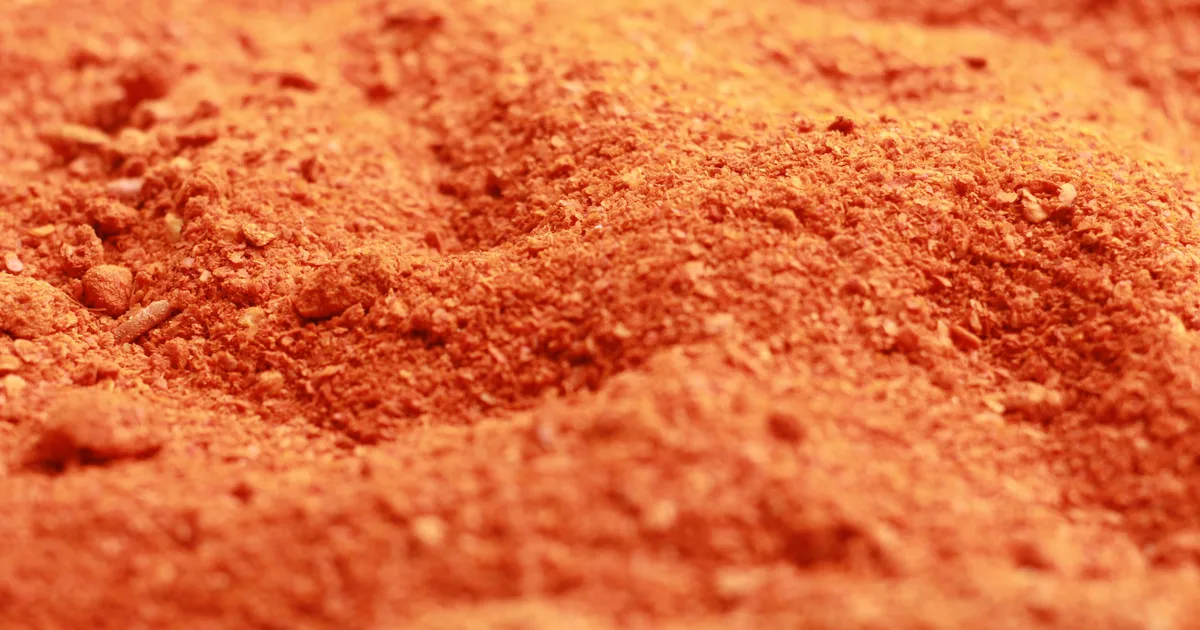
Sometimes, learning more about your favourite foods makes you feel good.
For instance, I was pretty happy to discover that a pumpkin spice mix is really easy to make at home, and that the secret to Biscoff’s distinctive taste is more than likely just… sugar.
Other times, though (like when I learned that cola is flavoured with a kola nut), the news changes my perspective forever.
Such is the case with paprika, which I always thought was some variety of dried… chilli? With tomato powder, maybe?
Nope ― it’s usually a sweet, moist veg we all eat on the reg.
Go on then ― what is it?
A lot of the time, paprika is made from plain, spag-bol-staple bell peppers, a fact that’s left people like Redditor u/albertpaca11 surprised.
Writing to r/cookingforbeginners, they said: “I just found out Paprika is just Bell Pepper… my mind is blown. Why is it spicy?”
Granted, it’s a particular species of bell pepper (Capsicum annuum) ― but the ruby-red variety wouldn’t be out of place on your crudité plate.
Though more traditional paprika can be made from Aleppo, Hungarian, and a range of other peppers, herb and spice company McCormick’s Science Institute (MSI) says the mass-made stuff “is typically made from ‘bell’ or ‘sweet’ type peppers, milder varieties that contain a recessive gene that eliminates (or greatly reduces) capsaicin, the compound responsible for heat.”
BBC Good Food writes that the spice’s “main purpose is to add flavour and colour, more than heat”.
BuzzFeed’s cooking vertical Tasty shared a YouTube Short on how to make the spice at home, revealing that whacking a bell pepper in the oven or air fryer for hours and then whizzing its dried remains in a blender creates perfect paprika.
MSI has also shared that paprika can have a sugar content of up to 6%, though “the spice can range in flavour from mild and sweet to very hot”.
That’s because while lots of paprika is made from bell peppers, it can be made from other, hotter sweet red peppers too.
How come it can be so pungent?
While it’s easy to see how eye-watering raw chilli can become the piquant spice we love, it can be harder to connect the dots between cooling, fruity bell pepper and smoky paprika.
But the preparation has a bigger effect than you’d think, MSI says.
“Some Spanish paprikas are dried by smoking and thus have a smoky flavour,” they write, while certain Hungarian peppers are specially-selected for extra heat.
In general, though, the MSI says paprika is a mild spice that mostly adds colour to dishes.
This article has been updated to added to clarify specific varieties of non-bell pepper traditional paprika can also be made from.

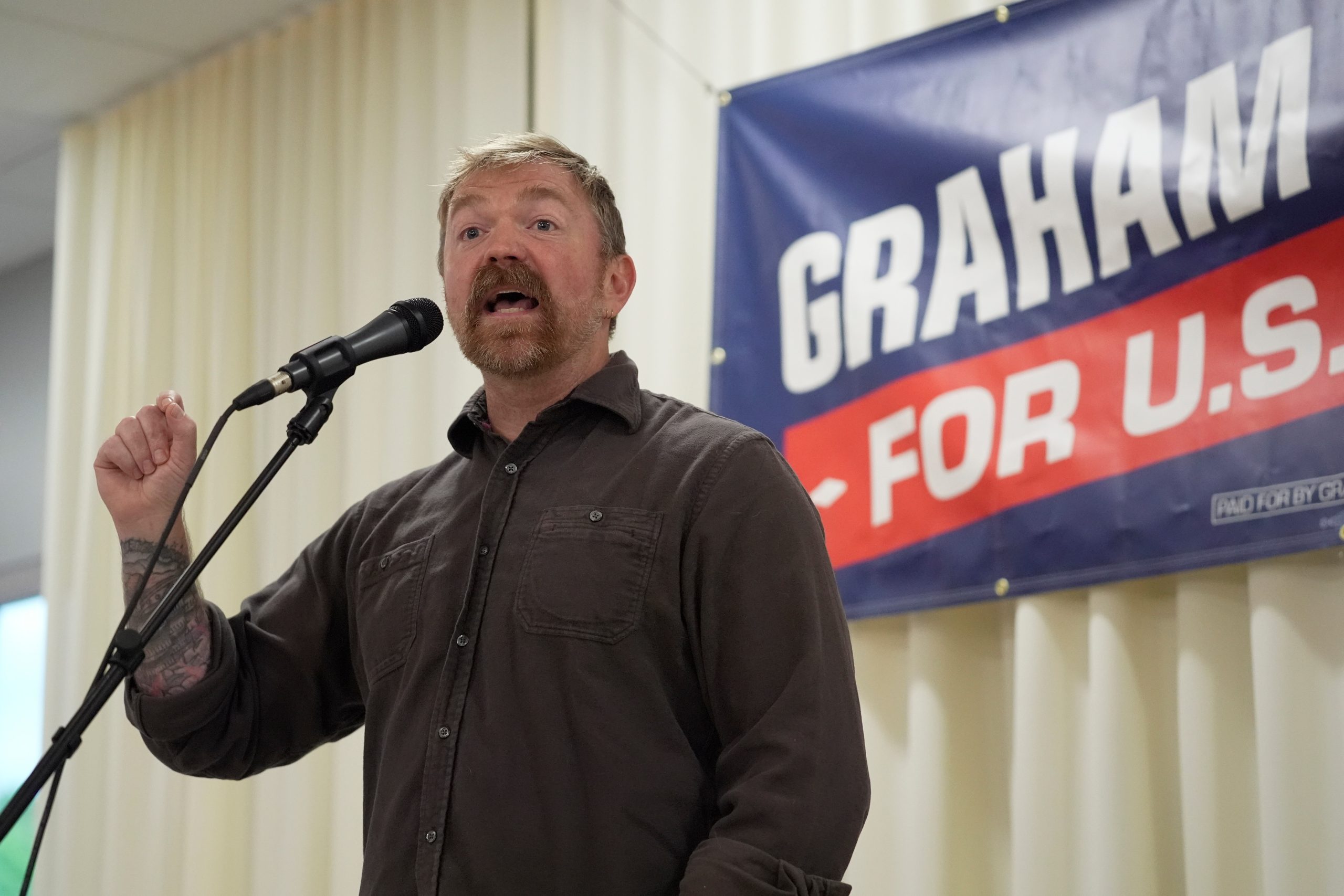

PORTLAND, Maine — Darcy Halvorsen, 59, had already cast her ballot early for Graham Platner in Maine’s Democratic U.S. Senate primary when she read news of sexual text messages the oysterman had sent while married to a woman who wasn’t his wife.
Halvorsen, who described herself as a Platner skeptic-turned-fan, is back to being a skeptic. As she attended a town hall of his at the Elks Lodge in Portland on Sunday — at least her eighth Platner event since last fall — she was regretting the vote.
“I’m feeling very let down, disappointed,” she said. “Because I don’t think it was handled well. I don’t think he took responsibility for it.”
Platner’s continued drumbeat of scandals has divided both Democratic Party leaders and voters as they stare down the must-win Senate race. Defeating Republican Sen. Susan Collins in November is crucial to the party’s plans to take back control of the upper chamber and provide a check on President Donald Trump. But even as Platner’s staunch supporters stick with him, his political baggage is threatening to sink him with some Democratic and independent voters heading into the general election, according to interviews with nearly two dozen Maine voters.
Several Democratic voters were hesitant to weigh in on the Senate race, saying they felt Platner’s candidacy was all but certain at this point and sharing their opinion on him was likely to be met with backlash. Others who were planning to vote Democratic in November are now toying with backing Collins or sitting out the Senate race entirely — a challenge for the likely nominee and his party.
Peter and Kelly Dufour were manning the grill at a Get-Out-the-Vote event for gubernatorial candidate Hannah Pingree in Portland on Saturday and excited about the former Democratic state House speaker’s candidacy for governor. Asked about the Senate race, Kelly put her head in her hands.
The pair were looking to learn more about David Costello, who was Democratic Senate nominee in 2024 and is running in the primary again this year — the only Democrat candidate on the ballot besides Platner and Gov. Janet Mills, who suspended her campaign in April.
Peter said he was “disappointed” by Collins’ votes in the past few years, particularly to confirm judges, but he’s “torn” over giving up her prime seat on the Senate Appropriations Committee for Platner.
“I want someone of good moral character to be my senator,” he said, describing himself as 50-50 on the race right now.
Kelly said she wasn’t sure if she was 50-50 anymore in light of the latest Platner news.
With Platner, she said, “it just seems like one thing after another.”
Platner and his allies have attributed his past poor conduct to his struggles with post-traumatic stress disorder and alcohol use after leaving the military. He has said he found community after moving back to Maine and asked voters to judge him on who he is now. But some Maine voters are still skeptical of his story of redemption.
Kathy Bonk, a Brooksville resident and president of the Maine chapter of the National Organization of Women, plans to vote for Mills in Tuesday’s primary, though she expects Platner to prevail.
“There’s been a lot of press coverage about, ‘Well, we’ll let Maine voters decide.’ The Maine Democratic voters are going to decide the primary, but then you put that question to all Maine voters in the general,” she said. “I just think there’s a number of people that after everything that’s come out on Platner just can’t bring themselves to vote for Platner.”
Some Democrats are hoping that a poor showing from Platner in Tuesday’s primary would help them convince him to step aside and allow the state party to replace him with another candidate. But the idea seemed fairly ludicrous to most voters in Maine, given not only Platner’s record of surviving scandals but also his strong base of supporters — many of whom see his controversies as outside attacks on his movement that have only hardened their resolve for him.
“Mainers don’t want to see one of their own cut down at the knees,” said Constantine Dixon, a 36-year-old from Portland who attended the Sunday town hall for Platner.
Platner has inspired many Maine voters in a way few other candidates have in the state’s recent political history, drawing massive crowds like few in the state have seen and going from an unknown oysterman to consistently leading the sitting governor in primary polls. Many of his backers brush off his recent controversies as less important than the issues he is running on: universal health care, getting money out of politics, and making the state affordable for working people.
He has maintained support from lawmakers like Sens. Bernie Sanders (I-Vt.) and Elizabeth Warren (D-Mass.). Rep. Ro Khanna (D-Calif.) rallied with him in Bar Harbor on Friday, and Sen. Brian Schatz (D-Hawaii), in his first public display of support, hosted a virtual fundraiser for him on Sunday.
“Since this campaign launched, we have been and remain deeply humbled by the support and loyalty of this movement,” Ben Chin, Platner’s campaign manager, said in a statement. “Mainers know Graham, they understand what he stands for, and they believe in what this campaign is fighting for. Lifting people up and fighting for working Mainers has been and always will be our priority.”
Days after reports of the extramarital sexting, the New York Times published accounts of several of Platner’s ex-girlfriends who recalled disturbing patterns of behavior. One woman alleged that he had grabbed her in ways that left marks and once locked her in a room.
Platner’s campaign acknowledged he sent sexual text messages to other women while married, but had already addressed the issue with his wife. He admitted to being a “bad boyfriend” in past relationships but said he had never been violent.
At the town hall in Portland on Sunday, Platner was received enthusiastically by hundreds of supporters. Some attendees said they showed up specifically to indicate their support for him after a difficult week.
Charlotte Brown, an unenrolled voter, said she had supported Collins until the senator’s vote to confirm Supreme Court Justice Brett Kavanaugh. In Platner, she finally found a politician who “represented us.”
“We wanted to come to stand up for him with all the attacks,” she said. “We wanted him to know that we have his back.”
Platner’s supporters, which include many older women who make up the core of the Democratic Party in Maine, largely don’t condone his past behavior — but they believe in his personal growth.
“What happened in his personal life was a long time ago,” said Janet Miles, an Air Force veteran attending an event for Pingree over the weekend. “People change. Do I approve of the things he did? Definitely not. If he did all those things a week ago, that would be different.”
“I was really upset when I heard his comments about women drinking and rape,” said Cathy Walter, a retiree from Gorham, Maine, referencing Platner’s Reddit history that was uncovered last fall. In posts more than a decade ago, Platner had written that sexual assault victims should take responsibility and avoid alcohol so as not to end up in a “compromising situation.”
But Walter appreciated how Platner owned up to his past conduct and said what happened “does not disqualify him.” She’s taking cues from national leaders on whether he can still beat Collins in November.
“I’m watching, what is Bernie Sanders saying? What is Elizabeth Warren saying?” Walter said. “They would be pulling their support if he couldn’t get elected.”
Platner’s political rise has captivated the state since his campaign launch last August. News reports about his old social media posts and a tattoo that resembled a Nazi symbol did not meaningfully slow his momentum. Mills, who was recruited for the race by Senate Minority Leader Chuck Schumer, ended up suspending her campaign at the end of April, as Platner continued to lead her in fundraising and public polls.
Mills has not endorsed Platner, and some of his skeptics are planning to vote for her in the primary. The governor hasn’t publicly remarked on the race other than reminding a Maine Trust for Local News columnist a week ago that she remains on the ballot.
Mills campaign signs still dotted Portland neighborhoods this weekend. In Portland’s Back Bay, one sign was improvisationally stapled to a wooden post. Written by hand in blue marker was a reminder for passersby: “She’s still in! Vote!”
National Republicans have been gearing up for a general election battle against Platner for months, with the pro-Collins super PAC Pine Tree Results launching ads last month that focused on Platner’s Reddit comments and tattoo. In the aftermath of the recent controversies, Collins told reporters in Maine on Friday that Platner had “a lot of questions to answer.”
Halvorsen, the former Platner fan who was frustrated with his recent scandals, said she could not remember seeing Maine Democrats so at odds over something — and she recalled many contested primaries in the state. On social media, she said, she’d faced attacks for being a Platner skeptic, attacks for being a fan, and now attacks for being ambivalent about him.
“Trump wants us to be divided,” she said. “And that’s what’s happening in Maine.”
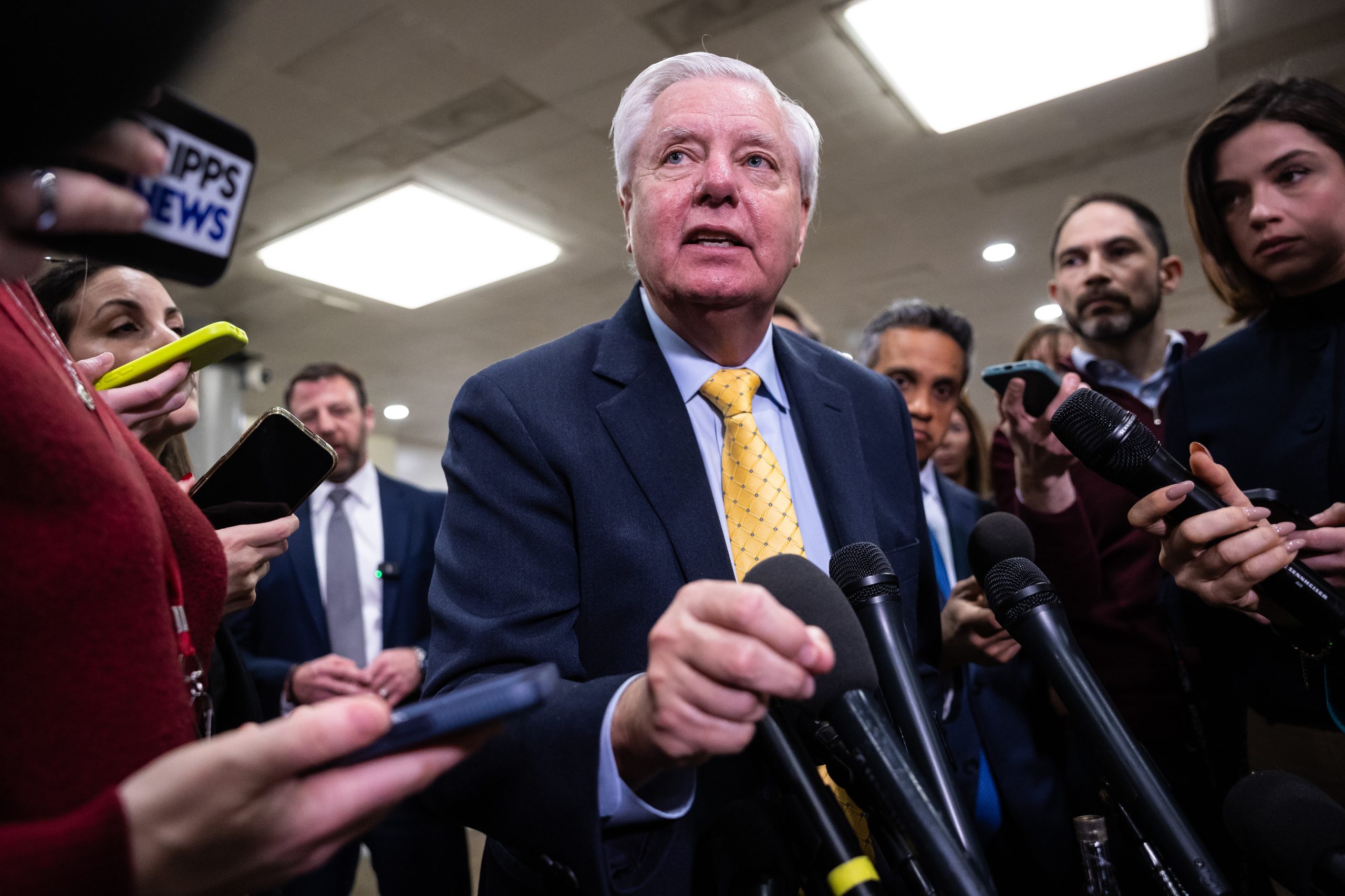

The far right is trying to defeat Sen. Lindsey Graham. He’s burning serious cash to make sure that doesn’t happen.
Spending from his campaign and allied outside groups ahead of Tuesday’s primary has already topped $18 million, according to an AdImpact analysis — an eye-popping sum in the relatively small state, and a sign that Graham is taking seriously the primary challenge from businessman Mark Lynch as he seeks to avoid a runoff election.
Graham allies including a pro-cryptocurrency organization, an outside group closely aligned with GOP Senate leadership, and a super PAC that has not yet been required to make its donor list public have combined to dump millions into the race on Graham’s behalf.
Lynch has held his own, mostly self-funding his campaign with $5 million of his retirement savings. He is running hard to Graham’s right, setting up a proxy test of whether the “America First” GOP base views President Donald Trump’s recent interventionist turn with some skepticism even as they continue to support the president. Core to his message is an attack on the senator’s long history in Washington, including his past support of amnesty for undocumented immigrants — and his stridently interventionist foreign policy, including his vocal support for Trump’s war in Iran. Lynch’s campaign ads feature clips of Graham from his 2016 presidential bid calling Trump a “bigot” and praising former President Joe Biden.
Lynch’s campaign has also attracted the support of some of the president’s most prominent MAGA Republican critics, like former Rep. Marjorie Taylor Greene (R-Ga.), who says the GOP has moved away from Trump’s “America First” platform.
The few public polls of the primary show Graham either narrowly topping or just under the 50 percent threshold he’d need to avoid a two-week runoff. In addition to Lynch, four other Republicans will appear on the ballot, which could further dilute Graham’s share of the vote.
The big spending against a little-known primary opponent has drawn some attention in the closing days of the primary.
“Lindsey is well-funded. You might as well make sure you’ve got all the i’s dotted and all the t’s crossed to make sure that you win without a runoff,” said Tyson Grinstead, chair of the Richland County GOP and a former Graham campaign adviser. “For Lindsey, I think it’s not outside the norm, especially in Lindsey dollars.”
The matchup between the longtime senator and the Upstate South Carolina businessman is shaping up to be a test of what “America First” means and who can claim that mantle in the Republican Party: close allies of the president like Graham, or those who are the staunchest adherents to MAGA’s original values, like Lynch.
Anti-interventionism was a core tenant of Trump’s meteoric rise that helped him squash more hawkish Republicans, including Graham, to win the White House in 2016. But now, more than 100 days into a conflict with Iran, the president has aligned himself with Graham’s hardline approach to foreign policy — a complete reversal of his perennial campaign promise to keep the U.S. out of foreign wars.
Trump has backed Graham’s reelection bid, but several anti-interventionist Republicans have come out in support of Lynch in the closing days of the campaign, painting Graham as an avatar of establishment support for U.S. military intervention.
Greene, a former Trump acolyte who broke with the president over voting to release the Jeffrey Epstein files and the war in Iran, posted a long message supporting Lynch and slamming Graham as an “America Last warmonger.” Joe Kent, who left his Trump administration post in March because of the Iran war, posted a similar endorsement message a few days prior.
“All the double dealing, all the lies, all the selling out the country to foreign powers — now [Graham] faces the humiliation of being forced into a runoff,” Steve Bannon, Trump’s former chief strategist, told POLITICO.
Graham is still seen as a heavy favorite to hold the seat. He has been sent back to the Senate three times since he first won in 2002, warding off a primary challenge from the right each time. He’s a fixture of both Palmetto State and national Republican politics, and has successfully rekindled a close alliance with Trump amidst their long-running on-again, off-again relationship.
Regardless of whether he wins outright or has to keep running for two weeks, Graham is still expected to defeat Lynch. But the viability of Lynch’s challenge so far reveals yet another fissure between a faction of MAGA and the Republican establishment that has been remade in Trump’s image.
“I take everything seriously when it comes to representing the people of South Carolina, including my primary,” Graham said in a statement to POLITICO.
The senator has long been a prolific fundraiser. He amassed the single biggest war chest of any Republican running this cycle and had just over $4 million cash on hand as of late May, despite the likelihood that he will not face a competitive general election. And he’s no stranger to spending big to ward off a primary challenge. In 2014, Graham spent $8.5 million to overcome a crowded primary field that became a test to prove his conservative credentials. And he spent nearly $100 million in 2020, successfully dispatching Democrat Jaime Harrison in the general election by 10 points in the deep-red state, even as Harrison outspent him.
But more important than money in deep-red South Carolina, he has firm backing from the president, who has stuck with Graham even as cracks emerge in his home state support — and in spite of their occasional splits.
Trump swooped in to boost Graham with a tele-rally on the eve of Election Day.
“He’s outstanding. He’s been at my side for a long time. We fought each other initially a long time ago,” Trump said Monday. “But after that fight was over, we were best of friends, and he’s helped me as much as anybody in the Senate.”
In encouraging Republicans to vote for Graham, Trump also tacitly acknowledged the challenge Lynch poses. “We don’t want any surprises, we don’t want any bad things to happen. Elections, you never know, so we have to be very careful,” he said.
Lynch’s campaign declined to make him available for an interview. His spokesperson and adviser Noel Fritsch said that if the campaign can push Graham into a runoff, it would be “a huge shock to the system” in South Carolina because Graham has won easily in the past.
Lynch’s platform is centered around spending money domestically rather than overseas, and he has spent significant time on the stump and on far-right media outlets hammering Graham’s record as more “Washington-first” than “America First.” He’s blasted Graham for his support of Trump’s war in Iran, in particular.
While Lynch casts himself as a strong supporter of Trump and his MAGA movement, Fritsch brushed aside concerns that the president’s endorsement of Graham will be insurmountable in the Republican primary.
“Everybody that we’re talking to is like, ‘what’s going on with his endorsements?’ There’s a couple of folks out there who are kind of like, ‘I’ll do whatever Trump says,’ but most of the folks are just like, ‘What is going on? This is not the Trump that we knew or voted for over and over again,’ Which, by the way, is what Mr. Mark Lynch did.”
Lynch’s campaign faces an uphill battle against a well-funded incumbent with deep ties to the Republican Party in Columbia and Washington. Graham’s campaign has spent $13 million alone on advertising, several million of which have been in negative ads hitting Lynch over his complicated past with drug use and arrest on charges of cocaine trafficking in 1984.
“Mark’s been very open about the fact that in the early 80s … he had some issues with substance abuse, specifically cocaine. He’s been a teetotaling, stone-cold sober, Southern Baptist guy for over four decades since then,” Fritsch said.
Observers and allies say that others have tried this kind of primary challenge with Graham before — and it hasn’t worked.
“Lindsey has only lost one county in any primary race in his career for the Senate, and that was — gosh, that was 2008,” Grinstead, the Richland GOP chair, said.
“The same people who are always against Lindsey are against Lindsey this time,” he added. “I’m not seeing a lot of new folks who are on the conservative side of the grassroots establishment starting to leave Lindsey.”
Andrew Howard and William Steakin contributed to this report.
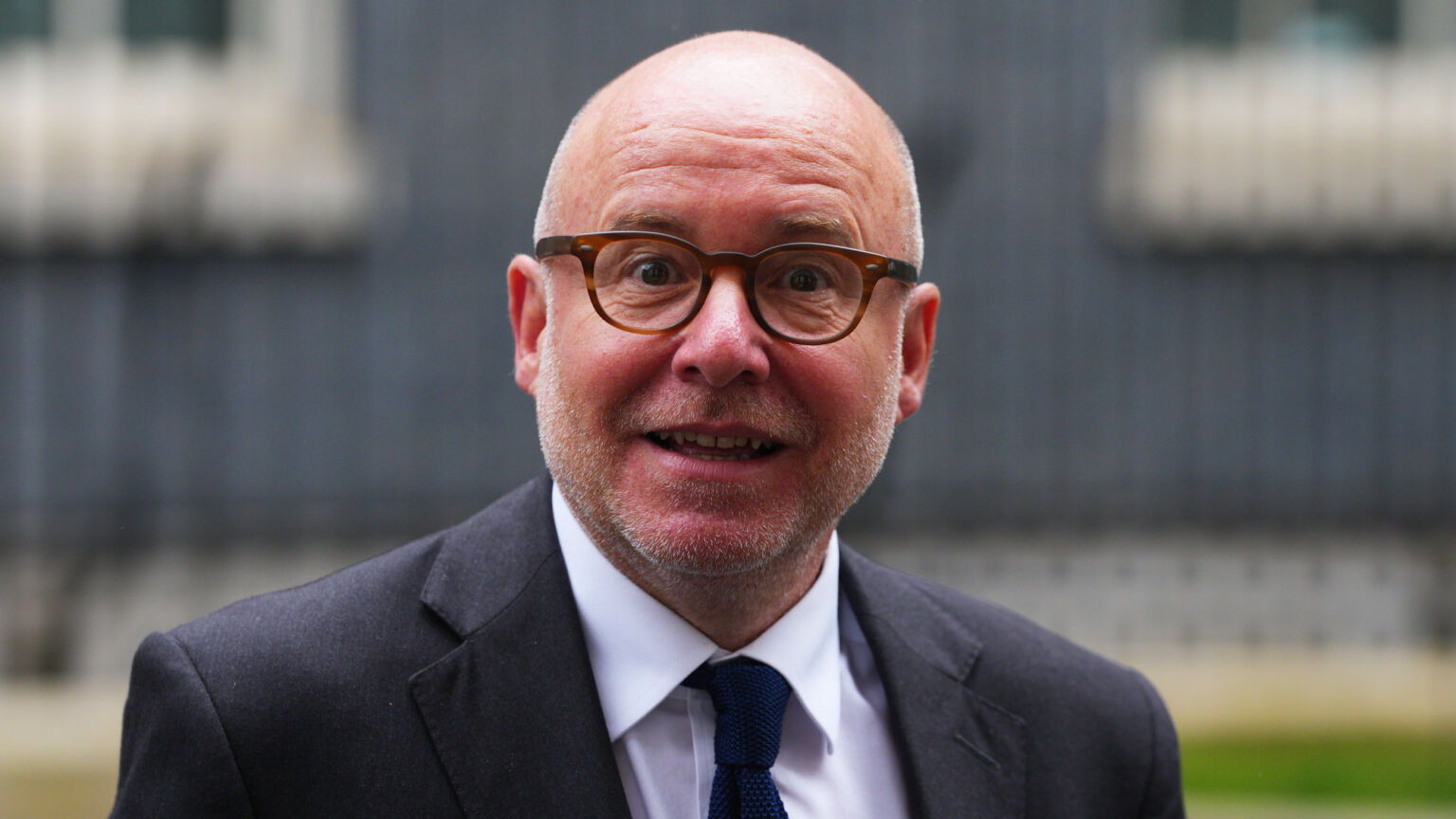
Lord Hermer just doesn’t get it. The problems created by the European Convention on Human Rights have become blindingly obvious even to some Labour ministers. Yet the attorney-general is still doubling down on his insistence that we need to remain signed up to the ECHR at all costs.
Last week, desperate for ammunition against Reform UK leader Nigel Farage and his Tory counterpart Kemi Badenoch (both committed to withdrawal), Hermer insisted on BBC Radio 4’s Political Thinking that ECHR membership is crucial to immigration control – that is, it aids co-operation with France to stop the boats and led to recent German legislation criminalising the provision of help to people smugglers, including those targeting Britain. Hermer then added that Reform, and likely the Tories too, would be happy to have people drown in the Channel.
That this is baloney is the easy bit. The ECHR makes a mockery of our immigration system. We read almost every week of an irregular migrant or foreign criminal who a UK court decides can’t be deported for human-rights reasons. Think of the terrorist who wanted to blow up the London Stock Exchange but couldn’t be returned to Bangladesh because his government isn’t kind to Islamist fanatics. Or the Albanian criminal who defeated deportation because his son dislikes foreign chicken nuggets. Or the Jamaican murderer who couldn’t be sent back to Kingston because a rival gang might kill him. And that’s just a few cases from the past year.
As for Hermer’s claim that ECHR membership has helped stop the boats, that’s risible. Everyone knows that Labour’s ‘one in, one out’ agreement with France, even if it did depend on the ECHR, is window-dressing on a grand scale and has done almost nothing to stem the flow of illegal immigration from French shores. As for the German law against people smuggling, while this was admittedly passed partly as a result of pressure from Britain, it applies to trafficking aimed at all third countries. In any case, it has nothing to do with the ECHR.
There are, however, deeper reasons for Hermer’s advocacy of the ECHR. He isn’t stupid – he almost certainly knows that our ECHR membership does almost nothing to promote, and a good deal to hinder, proper immigration control and a good many other things British voters think strongly about. But for him, and the self-appointed ‘progressives’ who have taken over Labour, that isn’t the issue. The ECHR represents a last-ditch defence against two ideas that existentially threaten the power of the ruling and lanyard classes he represents – namely, national sovereignty and democracy.
The first is the idea that final decisions on matters of social policy are best left to national electorates. This is actually one of the best protections against authoritarianism and top-down uniformity, not to mention the imposition willy-nilly of lunacies like Net Zero or transgender fanaticism. But it spooks progressives big-time. They vastly prefer to link across borders with like-minded people from UN bodies, NGOs, the EU and, of course, the Council of Europe, which drafted the ECHR. That way, they can ensure that as many big decisions on social policy as possible are taken by people like them. And there are few better embodiments of this than the ECHR itself, overseen by transnational judges with no particular national or cultural affiliation, and informed by an international blob of academic human-rights theorists who wouldn’t be where they are if they seriously questioned the human-rights system that feeds them.
The other idea that terrifies ‘progressives’ is that of letting ultimate decisions lie with ‘uneducated’ voters, especially ones who don’t share their intellectual worldview and who can’t be easily manipulated if they threaten to fall out of line. The Starmer-Hermer types, patrician and distrustful, regard it as axiomatic that major decisions must not be left up to the public. And this is where the ECHR comes in very useful. For all the references in the convention to a ‘democratic society’, the Strasbourg court that interprets it warns over and over again about the supposed evils of populism and what voters can get up to if unrestrained. And of course, once the court has pronounced its judgements, these are expected to be applied, whatever electorates may think.
Reverential wonder at the ECHR may currently represent established thinking. But voters increasingly see through the human-rights façade. They rightly detest a party that puts human rights before the economy, the society they live in and their right to make a decent living. Whatever happens in the Makerfield by-election later this month, a General Election looms in 2029. And by then, voters’ rejection of the human-rights stitch-up might very well help cook the lanyard classes’ goose to a cinder. Anti-populists and patricians, you have been warned.
Andrew Tettenborn is a professor of commercial law and a former Cambridge admissions officer.
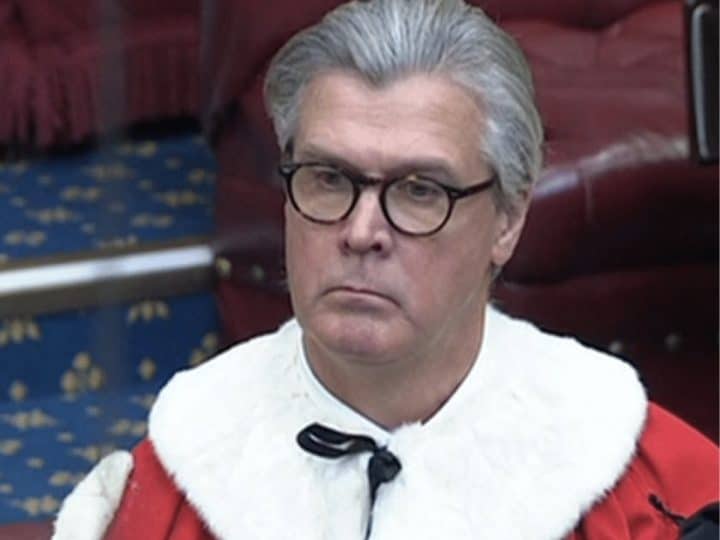
The Scottish parliament has voted to approve a new wealth tax on high-end luxury goods, especially mansions and houses over £1m and private jet travel.
Scottish parliament leading the way
MSPs went to the Scottish parliament chamber to debate a new “fair, progressive and sustainable” approach to tax. This included the plans for a levy on private jets and houses owned by the wealthiest in society.
The motion — which passed 84-28, with 10 abstentions — highlighted the role taxes play in the delivery of essential public services. The motion welcomed all of Scotland’s recent
progress made towards the creation of a private jet tax and a mansion tax
The vote was largely symbolic, as the SNP‘s budget already outlined plans to implement a mansion tax by 2028, alongside a private jet tax. Labour’s amendment calling for an “immediate and comprehensive review of business rates” also passed by 95 votes to 27.
Posting on X, Scotland’s newly (re-)elected SNP First Minister John Swinney celebrated the vote:
In a cost of living crisis, it is right that those with the broadest shoulders contribute a bit more – while the majority of taxpayers in Scotland continue to pay less tax than elsewhere in the UK.
These are the words we head from Starmer once upon a time. How refreshing that they should actually be taken to mean something and be acted upon.
BREAKING: Parliament backed our plans for a private jet tax and a mansion tax.
In a cost of living crisis, it is right that those with the broadest shoulders contribute a bit more – while the majority of taxpayers in Scotland continue to pay less tax than elsewhere in the UK. pic.twitter.com/ABAZ0tQs7f
— John Swinney (@JohnSwinney) June 4, 2026
Call it the ‘Offord Tax’
The Scottish Greens have long campaigned for a private jet levy and other forms of wealth taxes, and joined the SNP politicians in celebrating the vote online.
However, a Greens’ amendment was defeated by 30 votes to 37, with 55 abstentions It argued that:
progressive reform of property tax could play a powerful role in wealth taxation
Nonetheless, the Greens have clear cause for celebrating the policy which they, alongside other progressives, have made the loudest case for. This is partly thanks to Zack Polanski’s bold messaging to the south.
Private jet flights are 30 times more polluting than regular flights.
After years of campaigning from Scottish Green MSPs, the Scottish Government is set to introduce a private jet tax! pic.twitter.com/WoURMlQsqc
— Scottish Greens (@scottishgreens) June 4, 2026
But it’s Scottish Greens leader Ross Greer’s sharp jibes at Reform UK’s leader Malcom Offord in the final stretch of May’s Holyrood elections which clearly captured the wealth debate.
Appearing together on the party leaders’ televised STV debate, the multi-millionaire ex-BoJo donor Lord Offord bragged about his wealth accumulation. Offord stated:
Today, I own six houses, five cars, and six boats. …
Mr Greer, in your Scotland … Do you want more people like me or fewer people like me?
To this, Greer swiftly and unapologetically replied: “Fewer people like you.” He said he was glad Offord finally admitted how many homes he owns! He also pointed out that there’s three times as many empty homes in Scotland as there are homeless children.
Reform UK’s amendment warned that increases in wealth taxes lead to “significant flight of tax revenues.” It lost by 16 votes to 94, with 10 abstentions. Perhaps with some luck, Mr Offord will take Mr Greer’s advice and flee away, taxes and all if needs be.
The Conservatives’ amendment called on the Government to “reduce income tax to stimulate growth.” It was also defeated in the Scottish parliament by 28 votes to 94. Reducing tax burdens on working people and focusing on wealth tax isn’t a bad idea — but Tories don’t support that. Let’s sort out wealth taxes before we reconsider income, eh?
Reform’s Scottish leader brags about owning ‘6 houses’ in debate
Featured image via the Canary
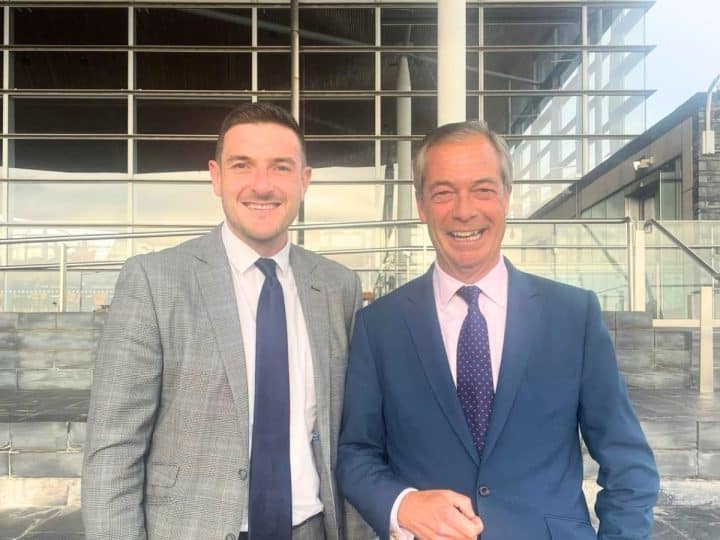

Award-winning Welsh journalist and author Will Hayward has criticised a senior Welsh Reform politician over his comments that “infantilise” the proud people he claims to represent.
The Reformer’s statement came at the Hay literary festival in Hay-on-Wye in Wales. Hayward indicated the Member of the Senedd (MS) in his post as James Evans. He’s the Shadow Minister for Health, Prevention and Sport in Reform’s Welsh cabinet.
Since May’s Senedd elections, James Evans MS has occupied that position within Welsh Reform. The comments were made in the context of significant ongoing debates around devolving the Crown Estate.
The MS stated that Wales shouldn’t have more devolved powers because:
I don’t think it should devolve, for the simple reason being: if you devolve it you’ve got to then set up an office to run it. And we’re not very good in Wales at being efficient in running things…
The crowd, presumably with a large Welsh contingent, groaned in unison at these ignorant comments. There’s at least one audible exclamation of “come on,” and certainly not a positive one.
Reform are the official opposition since Labour collapsed in Wales in May’s historic Senedd elections which delivered pro-independence party Plaid Cymru to power for the first time. It’s hardly very patriotic for a Welsh Reform politician to belittle his people in such a demeaning manner.
Reform’s three-page plea to Wales doesn’t mention ‘Wales’ once
Hayward hits back at Reform
Will Hayward makes it clear that, while he favours devolution of Wales’ land away from the English crown to its people, being against evolution is not inherently anti-Welsh. Evans’ comments, however, do seem to be.
Responding to the Reform shadow minister’s comments, Hayward wrote online:
the argument that “we are not very good in Wales at being efficient” is one of the most infantile descriptions of a nation I have ever heard, especially coming from a man/party who claimed they wanted to lead that nation. The idea that Wales and the Welsh are uniquely incapable of running something illustrates a level of self-hate and lack of confidence that we need to shed.
It’s a narrative that holds us back more than almost anything.
In Hayward’s view, this mindset makes a mockery of the idea that Welsh Reform are serious about winning power in the Celtic nation. It gives credence to the idea that Welsh Reform’s political agenda in Wales is only really ever about laundering consent for Reform in Westminster, and not about the Welsh people.
It’s a retrograde, patronising state of mind, which we should always push back on when it comes from outside of Wales. But it’s particularly damaging when it comes from politicians who claim that they want to lead Wales. …
Reform are deeply hostile to treating Wales as a thing in and of itself. They’re really hostile to the idea of Wales having devolution, of having its own parliament. … If you thought you could lead Welsh government, why would you not want that government to be equipped?
As Hayward points out in another video, Reform appear to have abandoned some major demographic groups. They need to win these around if they were serious about winning meaningfully in Wales:
- Women, who make up 51% of voters, yet lag ten percent behind Welsh male support for Reform;
- Young people, who overwhelmingly oppose Reform at both the Welsh and the UK level; and
- People who feel “more Welsh than British,” which is Wales’s largest single identity group across all other demographic dividers (ethnic background, age, gender, etc.).
To that list I’d add Wales’ Black and Brown people, since multiple Reform figures have shared vile racist posts.
Wales moves to decolonise its museums, and GB News is losing it
Time to devolve the Crown Estate?
The Crown Estate is the land owned by the King in Wales, and all moneys earned by it go to the Treasury in London. It’s not like Scotland’s estates, where money earned from royal estates remains in Holyrood.
Constitutional law wonk Gareth Evans explains the significance of the Crown Estate:
The Crown Estate holds a diverse portfolio of assets in Wales which includes 65 per cent of the foreshore, over 50,000 acres of land, and the majority of the seabed out to 12 nautical miles. It also holds general rights over the seabed and subsoil out to 200 nautical miles, including natural resources and the licensing of offshore energy projects, but excluding fossil fuels. …
The economic importance … of these assets is reflected in the recent changes in the stated value of the Crown Estate’s assets in Wales, which increased from £95 million in 2020 to £853 million in 2023.
So this sudden uptick in value has clearly made the Crown Estate a hot topic. But the issue of the Crown Estate has gained particular significance since Plaid Cymru took power in Wales.
In 2025 a Private Members’ bill was introduced by Lord Wigley, Plaid’s former leader. But it did not pass, and the UK government remains opposed to devolving the money-maker. Because of course it does.
However, in 2024, the Independent Commission on the Constitutional Future of Wales recommended that the Crown Estate should:
become the responsibility of the devolved government of Wales, as it is in Scotland.
Advocates like Hayward argue that if it’s not devolved, Wales might forgo opportunities to shape and capture value from its own natural resources. In Scotland, Holyrood’s management of their devolved Crown Estate estimate that over £90b investments into offshore wind energy could be made within 10-15 years.
Ultimately, like all of Wales, the Estate was only brought under English rule by military conquest centuries ago. It remains, like some say of all Cymru, colonised by England’s crown.
Featured image via the Canary

England manager Thomas Tuchel has sent a direct message to Real Madrid star Jude Bellingham, emphasising that competition for starting places in the squad heading to the 2026 World Cup will be wide open, with no guarantees for any player.
Bellingham’s place not confirmed – yet
According to Sky Sports, Tuchel emphasised that Bellingham is one of several players in contention for the playmaker role (No. 10), given the wealth of options available within the England squad.
This comes at a time when Bellingham has featured in just four matches during the qualifiers, whilst the coaching staff have relied on other players, most notably Aston Villa’s Morgan Rogers, who played in all eight qualifying matches, reflecting the fierce competition for this position.
According to the same source, Tuchel emphasised that England’s squad includes a large number of players capable of filling key roles, noting that the coaching staff have around 14 or 15 players who could be considered for the starting line-up, which means the final selections will remain open until the very last moments before the tournament kicks off.
This statement presents Bellingham with a direct challenge to prove his worth, at a time when England are preparing to enter the World Cup with high ambitions and a squad brimming with options in the attacking midfield.
Featured image via the Canary
By Alaa Shamali

Senegal enters the 2026 World Cup finals with a rare blend of ambition, experience and renewal, in an attempt to rewrite one of the most beautiful stories in African football on the world stage.
Although the ‘Lions of Teranga’ were unable to go beyond the quarter-finals of the 2002 World Cup, the signs leading up to the current edition suggest that the West African side possesses the qualities to make it one of the leading contenders to play the role of ‘dark horse’ in the tournament.
Senegal had made their way to the World Cup with remarkable consistency, topping their qualifying group with seven wins from ten matches, conceding just three goals – a statistic which the Guardian considered to reflect the enduring strength of the Senegalese school of football, which has long built its success on defensive solidity and tactical discipline.
A new generation from Senegal is knocking on the door
Since taking charge, coach Pape Tiéaou has worked to reshape the national team’s identity without completely breaking with the generation of stars that led Senegal to continental glory.
The squad set to feature in the United States, Canada and Mexico includes six players with only limited international experience, a fact to which the Guardian clearly pointed as indicative of the renewal process being led by the coaching staff. Tiaw has opted to rely on younger, faster players, giving the team a style based on possession and constant movement rather than simply relying on the physical strength associated with the national team in previous years.
This shift does not mean abandoning the pillars of experience, as captain Kalidou Koulibaly remains the defensive linchpin, whilst Idrissa Gueye and Edouard Mendy continue to play pivotal roles within the squad.
A balance between solidity and quick transitions
In FIFA’s report on the Senegal national team, which details information, statistics and analysis, it is stated that Senegal’s technical approach relies on a clear blend of traditional defensive discipline and speed in attacking transitions, with an increasing tendency towards direct play when regaining possession. The team is characterised by a strong defensive unit led by Kalidou Koulibaly, which gives the side the ability to withstand high pressure, whilst Edouard Mendy provides a key anchor at the back.
In attack, Senegal tend to exploit the flanks through the pace of Ismaïla Sarr and Nicolas Jackson’s ability to get behind the lines, relying on quick vertical passes rather than slow build-up play.
Lamine Camara also plays a key role in linking the lines and setting the tempo in midfield, giving the team the flexibility to switch between quick transitions and positional play depending on the opposition.
This balance has made the team more adaptable in big matches, but they still need to improve their effectiveness against teams that defend in deep blocks, which is the main challenge ahead of the World Cup.
The team has also reverted to a 4-3-3 formation following an unsuccessful experiment with a back three, which has given the side greater balance between defence and attack.
Mané and the final chapter
If every World Cup has a human story, Senegal’s story begins and ends almost entirely with Sadio Mané.
The star, who missed the 2022 Qatar World Cup through injury, returns this time knowing that this may be his last chance to make a major mark at the World Cup. It is true that his pace is no longer what it was during his golden years at Liverpool, but his influence on and off the pitch remains decisive, whether through his attacking leadership or his symbolic status in the dressing room.
The 2026 edition looks set to be Mané’s final attempt to lead his country to a global achievement that matches his status among the greatest African players of the modern era.
Despite the abundance of stars, all eyes are on the young talent Amara Diouf, who turned 18 just before the tournament kicked off.
The rising winger is regarded as Senegal’s most promising footballing prospect at present, having established himself in the senior squad at a very young age, thanks to his speed, dribbling ability and knack for breaking down defensive blocks, as described by the Guardian.
A group that tests ambition for Senegal
Senegal’s task will not be an easy one in a group featuring France, Norway and Iraq, as their campaign begins with a historically significant clash against France, the very side Senegal knocked out in one of the biggest upsets of the 2002 World Cup.
But what sets this edition of the ‘Lions of Teranga’ apart is that they do not rest on past glories. With the experience of Mané and Koulibaly, the dynamism of Jackson and Sar, and the daring of Diouf and Kamara, Senegal appear to be at a crossroads between a generation that made history and one trying to surpass it.
And perhaps for this very reason, many view the Senegalese national team as one of the sides most capable of defying the odds at the 2026 World Cup.
Featured image via the Canary
By Alaa Shamali

The US-Israeli imperial war machine has been hitting Iran and Hezbollah for months. That machine is a vastly superior killing implement – on paper, at least. Yet the so-called ‘axis of resistance’ is still alive and kicking as a potential Pakistan-brokered peace deal edges closer.
This all speaks to US decline, but it also outlines a deep Western misunderstanding of how the opposition functions. Faced with a US-provisioned force with a full suite of air-power, artillery, drones and cyber, Hezbollah killed 15 Israelis overnight, reports say:
[@tparsi] — Politics Global (@PolitlcsGlobal) June 7, 2026

 NEW: The US and Israel say that Hezbollah killed 15 Israeli soldiers overnight, which prompted strikes on Beirut
Even a former Israeli PM Ehud Barak has said Hezbollah cannot be conquered:
A year and a half has passed since Prime Minister Benjamin Netanyahu declared, after the cease-fire, that “We’ve set Hezbollah back decades.” What empty boasting.
He added:
We’ve indeed seen some amazing achievements – the pagers operation, the elimination of Hassan Nasrallah and other senior Hezbollah figures, the fatal attack on the Radwan forces and the missile array and its operators.
But all of this has melted away as if it never existed.
Barak, no stranger to war crime accusations himself, also lamented that fact that Israel had “no solution” to Hezbollah’s FPV drone tactics.
Hezbollah appeared to be in a pugnacious mood. According to the Cradle, they refuted Trump’s claim he was in dialogue with them:
Senior Lebanese Resistance figure, Deputy Chairman of Hezbollah’s Political Council Mahmoud Qamati, confirmed to AFP earlier today that no direct communication channels exist between Trump and Hezbollah officials, dismissing Washington’s attempts to portray a direct diplomatic breakthrough regarding the war.
Qamati reportedly said:
Trump may have intentionally mischaracterized indirect diplomatic channels, noting that Lebanese Parliament Speaker Nabih Berri’s adviser regularly communicates with the US ambassador to convey messages.
Westerns misreads and miscalculations
Meanwhile academic Trita Parsi said the West has routinely misunderstood the nature of the Iran-Hezbollah relationship. And the media has repeated these errors verbatim.
There is a surprising level of surprise in the West that Iran was serious about its demand for a region-wide ceasefire and that it would act against Israel if it continued attacking Lebanon.
I explain here: https://t.co/Rs000ZMhJM
…why Tehran was dead serious about forcing… — Trita Parsi (@tparsi) June 7, 2026
There is a surprising level of surprise in the West that Iran was serious about its demand for a region-wide ceasefire and that it would act against Israel if it continued attacking Lebanon.
He said the idea Hezbollah was simply a “proxy” for Iran was a fatal error in analysis:
Hezbollah is consistently described in the Western discourse as an Iranian proxy. And it appears that this statement was genuinely believed by Western observers.
Adding:
So if the belief is that Hezbollah is no more than a proxy, it also becomes more difficult to take Iranian threats that it will defend Lebanon seriously. A proxy, after all, is a piece on the chessboard whose fate almost invariably is to be sacrificed or consumed.
The reality is that the relationship is:
a mutually beneficial alliance in which Tehran clearly is the bigger party but not one that can simply issue dictats for Hezbollah to follow.
If this had been properly understood:
Iran’s warnings against continued Israeli attacks on Lebanon would likely have been taken more seriously.
Iran and Hezbollah still standing
The US expended $25bn in munitions, fuel and other areas in the first eight weeks of the war. This is a conservative estimate. Some sources say:
that the $25 billion estimate did not account for damage from Iran’s retaliatory attacks, which could put the total cost of the war so far as high as $50 billion.
Israel spent around $11bn.
Yet the signal achievement of the attack is a global economic crisis. Hardly something to write home about.
Even legacy media outlets like The Atlantic were withering in their assessment:
If these are indeed the conditions under which the war is concluded, the U.S. emerges from the conflict in worse strategic shape than it started, and Iran emerges in better condition in the long run.
Although the U.S. demonstrated tactical and operational excellence throughout the conflict, it was not sufficient to provide a real victory.
The ‘butcher’s bill’ of this Trumpian blunder has not yet been counted. But when it is, US – and Israeli – influence in the region will have been vastly diminished. Despite lacking any of the fancy equipment and eye-watering war budgets available to the US, Iran, and Hezbollah are intact and undefeated.
Featured image via the Canary
By Joe Glenton

Smile design blends art and dental science to improve alignment, color, gums, and bite in a single plan. By assessing facial proportions and lip-tooth relationships, dentists create natural results tailored to each patient. Digital imaging previews outcomes, supporting realistic expectations. The before-and-after difference is often striking. Many patients report higher self-esteem and social confidence after treatment.
Smile Design Results: What Kind of Changes Should You Expect?
Cosmetic dentistry before and after results demonstrate substantial transformations across multiple aesthetic parameters. Patients undergoing smile makeover smile designing before and after procedures consistently observe improvements in tooth alignment, colour uniformity, shape refinement, and proportional balance. These modifications address concerns ranging from minor discolouration to comprehensive structural irregularities.
Dental treatment before and after documentation reveals that veneers typically correct chipped edges, gaps, and uneven tooth surfaces within a concentrated treatment period. Orthodontic interventions reshape smile architecture by repositioning misaligned teeth, creating symmetrical curves and proper bite alignment. Professional whitening procedures eliminate deep staining and restore brightness levels that home treatments cannot achieve.
Before and after smile designing outcomes vary according to initial conditions. Patients with mild discolouration experience noticeable brightening, while those with severe misalignment require combined approaches involving orthodontics and restorative work. Dental Care in Turkey has documented extensive case portfolios showing composite bonding resolving minor chips and gaps, whilst full-mouth rehabilitations transform worn dentition into balanced, functional smiles.
Smile design before and after comparisons illustrate that gum contouring adjusts tissue levels to eliminate excessive gingival display, and crown lengthening creates balanced tooth proportions. Patients reviewing their transformation photographs observe enhanced facial harmony, improved confidence, and measurable aesthetic refinement. These documented changes confirm that smile design delivers predictable, substantial improvements when treatment plans address individual anatomical characteristics and aesthetic goals through evidence-based techniques.
Which Smile Design Procedures Show the Most Dramatic Before and After Differences?
Cosmetic dentistry transformations vary significantly depending on the specific procedure selected and the initial condition of the teeth. Clinical evidence demonstrates that certain treatments deliver more pronounced aesthetic improvements than others.
| Procedure | Transformation Impact | Primary Aesthetic Problems Addressed |
| Porcelain Veneers | Extremely High | Severe discoloration, chips, gaps, misalignment |
| Dental Crowns | High | Extensive decay, fractures, structural damage |
| Orthodontics | High | Crooked teeth, bite issues, spacing problems |
| Professional Whitening | Moderate | Staining, yellowing, mild discoloration |
| Composite Bonding | Moderate | Minor chips, small gaps, surface irregularities |
Porcelain veneers consistently produce the most striking transformations in our clinical practice. These ultra-thin shells completely reshape the visible tooth surface, correcting multiple aesthetic concerns simultaneously. Patients with severely stained or misshapen teeth experience the most dramatic visual improvements, with transformations often appearing to take decades off their appearance.
Dental crowns offer comprehensive coverage for extensively damaged teeth. Combined orthodontic and veneer treatments available through dental design turkey facilities demonstrate how sequential procedures amplify overall results. This strategic approach addresses both alignment and surface aesthetics.
Professional whitening procedures brighten tooth enamel by several shades but cannot alter tooth shape or position. Composite bonding provides conservative solutions for minor imperfections, though the material lacks the longevity and stain resistance of porcelain alternatives.
Combined treatment protocols consistently outperform single-procedure approaches. Orthodontic alignment followed by veneer placement creates comprehensive smile transformations that address both structural and superficial concerns. Our clinical observations confirm that multi-modal treatment strategies generate the most impressive before-and-after differences in modern cosmetic dentistry.
Smile Design Before and After Transformations: Achieving Natural-Looking Results
Modern cosmetic dentistry has revolutionised the way dental design procedures deliver transformations, with natural-looking outcomes now the industry standard. Our extensive experience working with diverse patient cases confirms that authenticity depends on several critical factors rather than a single technique.
Key elements that distinguish natural smile design transformations include:
- Facial symmetry analysis – Dental professionals assess bone structure, lip contour, and gingival architecture to ensure veneers or crowns complement individual features
- Proportional tooth dimensions – Width-to-length ratios typically follow the golden proportion (1:1.6), preventing the artificial “chiclet” appearance
- Translucency matching – Advanced ceramics replicate natural enamel properties, with IPS e.max and zirconia materials offering superior optical characteristics
- Gingival contouring precision – Soft tissue modification creates balanced gum-to-tooth ratios, eliminating the bulky aesthetic associated with poorly executed cases
Digital smile design technology enables clinicians to map transformations with microscopic accuracy. Intraoral scanners capture three-dimensional data, allowing customisation that respects ethnic variations and age-appropriate characteristics.
Professional dental design procedures prioritise harmonious integration rather than dramatic alteration. Teeth should appear proportionate to facial dimensions, with colour gradients mimicking natural tooth structure. Collaboration between restorative specialists and ceramists ensures each restoration exhibits depth, texture variation, and appropriate surface characterisation—qualities absent in overly uniform, artificial-looking transformations that lack biological authenticity.
How Long Does It Take to See Your Smile Design Before and After Results?
The timeline for observing smile design transformations varies significantly depending on the specific cosmetic procedures undertaken and the complexity of each case.
Timeline Based on Procedure Type
- Immediate transformations occur with composite bonding and porcelain veneers, where patients witness their enhanced appearance within a single appointment or maximum two weeks following final placement.
- Gradual improvements characterise teeth whitening treatments, typically requiring 14-21 days for professional bleaching systems to achieve optimal shade enhancement.
- Extended timeframes apply to orthodontic alignment combined with restorative work, where comprehensive smile makeovers may span 3-18 months before complete before and after documentation becomes possible.
Several clinical factors influence the treatment duration beyond procedure selection:
- Individual healing capacity and tissue response to dental interventions
- Complexity of malocclusion or aesthetic concerns requiring correction
- Laboratory fabrication time for custom prosthetic components
- Number of teeth involved in the comprehensive treatment plan
Our clinical experience demonstrates that patients undergoing multi-disciplinary approaches typically observe progressive improvements throughout their journey, with final transformations becoming fully evident once all restorative phases reach completion and soft tissues achieve complete maturation around new dental work.

Iran, Yemen, and Hezbollah have retaliated against Israel’s aggression, bombarding targets inside the settler-colonial state’s borders. Iran and Israel pledged to stop firing on 8 June. But Trump’s humiliation in this, his war of choice, draws closer by the hour.
Iran and Yemen push back
Journalist Jeremy Scahill captured the sheer cynicism of the Israeli government:
Netanyahu, in part, began his scorched earth bombing in southern Lebanon—and the seizure of territory north of the Litani—so that he could establish a new “yellow line” in advance of any agreement between Iran and the U.S. He wants this to be Israel's place when the music stops…
— jeremy scahill (@jeremyscahill) June 8, 2026
Israeli aggression precipitated the first Iranian strikes for a month:
Sirens sounded across northern Israel as the IDF said it detected the launches and was working to intercept the missiles.
An initial wave of two ballistic missiles fired at northern Israel was intercepted by air defenses, the IDF said. A second wave was then detected, with sirens expected to sound again in coming minutes.
Israel has cancelled schools nationwide and limited outdoor gatherings to 200 and indoor gatherings to 500 as the Home Front Command issued emergency guidelines.
The Times of Israel reported that the region had been “catapulted”:
back to the cusp of all-out war after two months of a shaky ceasefire, with Israel initially vowing to respond before US President Donald Trump attempted to limit the fallout and keep truce negotiations with Tehran on track.
Though the paper’s top line neglected to mention that Iranian missiles were a response to Israeli attacks. Those strikes caused a number of deaths in Beirut’s southern suburbs:
Israeli forces struck the Dahiyeh district of Beirut’s southern suburbs Sunday, killing at least 2 people and wounding 11 in strikes on residential apartments, according to Lebanon’s National News Agency. The strikes came after several weeks during which Israel had refrained from targeting Beirut’s southern suburbs amid Iranian pressure via its negotiations with the U.S.
So much for the ‘anti-war’ president
Donald Trump, whose assault on Iran has left him flailing to exit while claiming victory, has tried to say the war has not undermined his supposed anti-war credentials.
Trump tapped into domestic fatigue from the Iraq and Afghan wars to get elected. Any goodwill toward him on that front has evaporated.
A new poll says the Iran war is as unpopular as Vietnam – a war Trump himself allegedly dodged.
Associated Press reported:
Trump, in an interview that aired Sunday on NBC’s “Meet the Press,” said he “didn’t guarantee” there would be no wars if he were back in office.
“First of all, I didn’t guarantee no war. Why would I have built the strongest military in the world?” Trump said.
The under-pressure president said:
I didn’t promise anything.
I don’t like these endless wars. This is not an endless war. We’ve been doing this for three months.
Trump tried to claim:
he was “doing the world a service” and “doing our country a service” because he had to stop Iran from having a nuclear weapon. But elsewhere in the interview, Trump repeated a contradictory message where he said U.S. strikes last year “obliterated” Iranian nuclear sites.
The response to Israel’s latest aggression – which came despite Trump’s insistence he’d discipline Benyamin Netanyahu – came from Hezbollah and Yemen as well as Iran:
Yemen also declared a ban on Israeli shipping in the Red Sea:
➤ The Yemeni Armed Forces launched a missile barrage targeting what it described as sensitive Israeli targets in the Jaffa area of Tel Aviv, claiming the strikes “achieved their objectives with… pic.twitter.com/lGdQ5uFazJ
— Drop Site (@DropSiteNews) June 8, 2026
Yemen Strikes Tel Aviv Area, Declares Total Ban on Israeli Shipping in Red Sea
Yemeni strikes targeted Tel Aviv and central and southern Israel:
The Israeli army confirmed missile launched from Yemen toward Israel, saying defense systems are actively intercepting it. Alarm sirens sounded across Tel Aviv and large areas of central and southern Israel, with a rocket… pic.twitter.com/FValEXsB2S
— Drop Site (@DropSiteNews) June 8, 2026
 Missile From Yemen Targets Central and Southern Israel
US-Israel attacked Iran first on 28 February without provocation. Iran was offering unprecedented concessions in negotiations at the time. The Pentagon has since stated there was no imminent threat from Iran. And the UN’s atomic watchdog, the IAEA, has said there is no evidence Iran was developing a nuclear weapon.
The US has achieved none of its original war aims. Iran predictably closed the Straits of Hormuz, a vital oil channel, once attacked – creating a global energy crisis. Far from being defeated, Iran has said the war will continue until “the enemy’s inevitable and permanent humiliation, disgrace, regret, and surrender”. Trump came to power on an anti-war ‘America First’ ticket. He now faces worldwide humiliation.
Trump took to social media to say:
Both sides Israel and Iran are looking to do an immediate ceasefire in final negotiations.
Demonstrating a frankly nuclear lack of self-awareness, he added:
Peace is proceeding subject to ignorance or stupidity getting in its way.
He said:
The blockade will remain in place and in full force and effect until a final deal is reached and things should move quickly. Thank you for your attention to this matter.
With mid-terms approaching Trump is unable to get an exit out of a deeply unpopular war. And a fading US empire, driven by hubris and arrogance, is accelerating its own decline while its international rivals look on. Iran increasingly looks like Trump’s Vietnam – even without US boots on the ground.
Featured image via the Canary
By Joe Glenton

Huge fire tears through Valleys business centre – live updates

Hyperliquid (HYPE) Rallies 10% as Coinbase Takes Control of USDC Treasury Operations
How these Titleist golf balls can easily improve your golf game



-

 Fashion4 days ago
Weekend Open Thread: Evereve – Corporette.com
-
 Sports6 days ago
French Open 2026 results: Alexander Zverev beats Rafael Jodar and will play Jakub Mensik in semi-finals
-
 Crypto World4 days ago
Jensen Huang Approves Samsung, SK Hynix, and Micron for NVIDIA (NVDA) HBM4 Memory Supply
-

 Tech7 days ago
CryZENx Releases Fresh Playable Content Deep Inside Jabu-Jabu for His Ocarina of Time Remake
-
 Business6 days ago
Trump Taps Housing Chief Bill Pulte as Acting Intelligence Director After Gabbard Exit
-
 NewsBeat6 days ago
Republicans balk at Trump’s attempt to appoint a MAGA enforcer to lead National Intelligence
-
 Business2 days ago
The Pain Points Taking a Fragile Tech Rally Down a Notch
-
 Crypto World3 days ago
Senator Cynthia Lummis Calls CLARITY Act the Most Consequential Financial Legislation of This Generation
-
 Entertainment2 days ago
The Best Mystery Series of All Time Is Surging on Streaming 30 Years After It Ended
-
Crypto World4 days ago
LBank Surpasses 25 Million Users Worldwide as AFA Partnership Continues to Drive Global Growth
-

 Tech4 days ago
Microsoft launches MXC, an OS-level sandbox for AI agents, with OpenAI and Nvidia already on board
-

 Tech2 days ago
Microsoft unveils seven homegrown AI models in new bid for ‘long term self-sufficiency’
-

 Crypto World2 days ago
Trump’s AI Ownership Plan Could Benefit Anthropic at OpenAI’s Expense
-

 Tech3 days ago
Suspicious Polyfill login prompts pop up on Toshiba, Muji websites
-

 NewsBeat1 day ago
Alexander Zverev wins the French Open to finally earn a 1st Grand Slam title
-

 Business4 days ago
(VIDEO) Justin Bieber Delivers Surprise Happy Birthday Serenade to Diners at Los Angeles Mexican Restaurant
-

 Tech4 days ago
RCS Messages Between iPhone and Android Get End-to-End Encryption With iOS 26.5
-

 Tech4 days ago
Meta steals a tactic from Tesla and builds data centers in tents
-

 Business6 days ago
PagerDuty, Inc. (PD) Presents at Bank of America 2026 Global Technology Conference Transcript
-

 Crypto World1 day ago
Anatomy of the June crypto crash: Fed, Iran, Saylor
You must be logged in to post a comment Login