

Politics
PM Sacks Top Civil Servant In Foreign Office Amid Mandelson Row


Keir Starmer sacked the top civil servant in the Foreign Office last night after the row over Peter Mandelson appointment returned.
Hours after it was revealed that the ex-Labour peer failed security vetting but still got the top job as the UK’s ambassador to Washington, the prime minister fired Olly Robbins.
According to the BBC and the Times, Starmer was “furious” after the Guardian reported that the Foreign Office had defied advice from the vetting process and appointed Mandelson anyway.
No.10 insists neither Starmer nor his ministers were aware of this detail until this week.
It read: “Neither the Prime Minister, nor any Government Minister, was aware that Peter Mandelson was granted Developed Vetting against the advice of UK Security Vetting until earlier this week.”
It remains unclear why Mandelson failed the vetting and if Robbins was the person who decided to override security advice.
Mandelson worked as the ambassador to Washington between February and September 2025 before he was fired as the depth of his relationship with convicted paedophile Jeffrey Epstein was revealed.
He has denied any wrongdoing in connection to the disgraced financier.
Mandelson is currently being investigated by police on suspicion passing market-sensitive information to Epstein when he was a minister under New Labour.
The Conservatives, Reform UK and the Greens have all called for the prime minister to resign.
They accuse him of misleading MPs when he told them in September that “due process had been followed” when it came to hiring the former ambassador to Washington.
According to the Ministerial Code, ministers who knowingly mislead parliament are expected to stand down.
Subscribe to Commons People, the podcast that makes politics easy. Every week, Kevin Schofield and Kate Nicholson unpack the week’s biggest stories to keep you informed. Join us for straightforward analysis of what’s going on at Westminster.



The European Union (EU) has agreed to impose sanctions on illegal Israeli settlers in the occupied West Bank.
This comes after Hungary’s new government lifted the country’s veto, which Viktor Orban, the former Prime Minister, had imposed.
According to the Peace Now settlement watchdog, the organisations the EU will sanction are: Amana, HaShomer Yosh, Regavim, and Nachala. Alongside these organisations, the EU is also sanctioning three settlers who lead these groups – Avichai Suissa, Meir Deutsch, and Daniela Weiss.
Weiss is already sanctioned by the UK and is known as the “godmother” of the settler movement.
The US sanctioned Suissa in 2024; however, Donald Trump removed them from the sanctions list.
All four organisations, and their respective leaders, are collectively responsible for the dispossession, expulsion and murder of Palestinians. Additionally, the organisations work to promote ‘settlements’ in both the West Bank and in Gaza, organising groups and openly boasting about the establishment of new illegal outposts.
West Bank settlers
As expected, Gideon Saar, Israel’s Foreign Minister, slammed the decision.
He would, though, given that he previously lived in both ‘Mitzpe Ramon’ and ‘Sde Boker’, both of which are illegal Israeli settlements in the Negev desert in Occupied Palestine.
Similarly, Ben-Gvir, a seasoned war criminal, claimed the EU was “antisemitic”. Again, he himself is an illegal settler-terrorist. He lives in the occupied West Bank and is known for his extremist views and actions. He has numerous criminal convictions, including eight for offences related to racism, and has promoted racist ideologies against Arabs. Ben Gvir is also arming settlers and calling for the execution of Palestinian prisoners.
In Israel, the rot starts at the top.
An illegal terrorist state
Since Israel launched its genocide on Gaza, illegal settlers have murdered more than 1,000 people in the West Bank.
However, occupation and stealing Palestinian land are a core part of Israeli government policy.
In December 2022, in a post on X, Benjamin Netanyahu stated:
These are the basic lines of the national government under my leadership:
The Jewish people has an exclusive and indisputable right to all spaces of the Land of Israel. The government will promote and develop settlement in all parts of the Land of Israel—in the Galilee, in the Negev, in the Golan, in Judea and Samaria.
There are currently more than 737,000 illegal Israeli settlers living in the West Bank and East Jerusalem. They have the full backing of the state – both ideologically and materially. They are armed by the government and protected by the IOF and the Israeli police.
As the Canary previously reported:
These settlers only aim is to force Palestinians off their land, so their colonial settlements can be built there instead, and they do this by storming villages and terrorising residents, burning homes, killing livestock, and destroying crops and trees.
Currently, Israel is perpetrating its biggest expansion of Jewish settlements in decades across the West Bank and East Jerusalem.
Settlements are illegal under international law.
Article 49 of the Geneva Convention states:
The Occupying Power shall not deport or transfer parts of its own civilian population into the territory it occupies.
Additionally, the Hague Regulations (1907) prohibit the seizure and destruction of private property. This means that both the building and the expansion of settlements breach international humanitarian law.
Increasing violence
From settlers expelling an entire Palestinian village, to murdering a farmer, harassing Palestinian shepherds, and stopping children from playing football, there is a clear conscious effort among Israeli settlers to cause physical, emotional, and mental suffering to Palestinians.
The systematic attempts to expel Palestinians from their native land are colonialism with a ‘do not touch, antisemitic’ label plastered to them.
Even the former head of Mossad has compared settler violence to the Holocaust, and who are we to argue with such a man?
Featured image via Al Jazeera English/YouTube
By HG
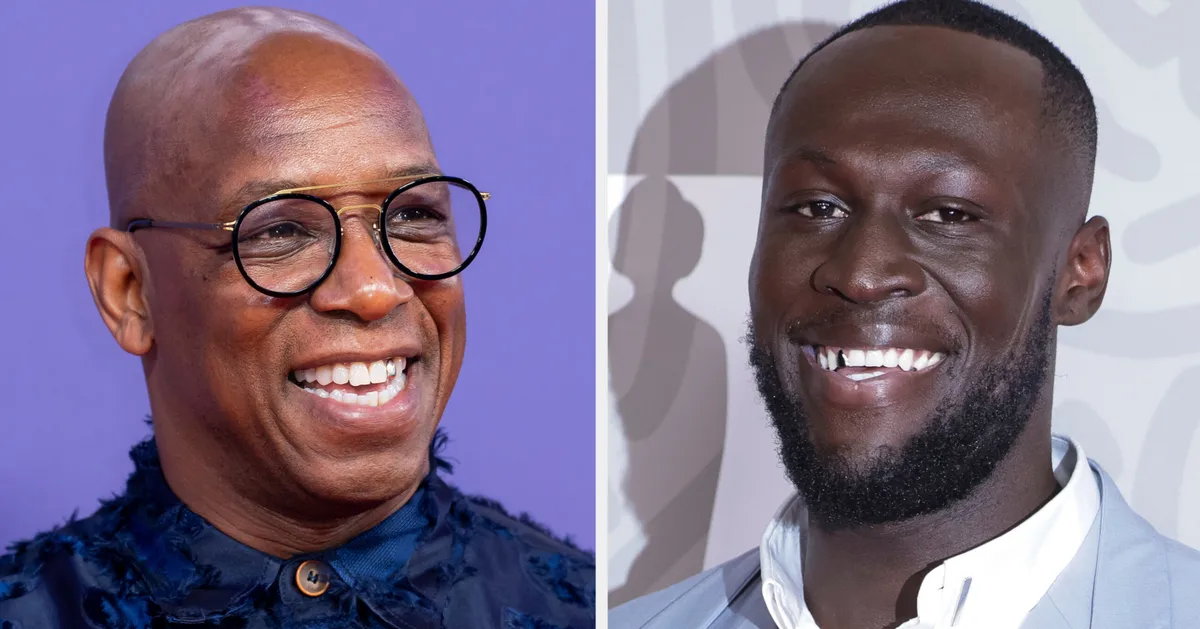
Ian Wright is to be the focus of a new biopic executive produced by Stormzy.
On Tuesday afternoon, it was announced that a film chronicling the football legend’s journey from a South London housing estate to becoming one of British sport’s most recognisable faces was in the works, produced by Stormzy’s #Merky Films production company.
The currently-untitled movie has been written by Tom Wilton, who is also attached to direct.
Ian enthused: “Telling my story in full for the first time feels surreal and, in some ways, a long time coming. There are parts of my life that will be familiar because they’ve been talked about over the years, but this film is the first time we’re bringing it all together.
“Retelling my story to Tom has also made me realise how much Britain has changed from my parents arriving here on the Windrush, what that meant for me and my brothers, and the experiences that will never leave me. I hope it shows how complicated life can be for a young person and the influence people around you can have – good and bad.”
He added: “My story is one that truly shows how the company you keep can break you down and build you up. There are hard-hitting moments but in the end I want it to give people hope and joy.”
An official press release for the project teased: “Ian’s journey begins on the Honor Oak Estate in Brockley, south London, where football is the young boy’s only escape from his tough home life.
“Schoolteacher Sydney Pigden recognises Ian’s struggles and dares him to believe in who he could be. Despite this spark of hope, by his teens, Ian’s dreams of becoming a footballer are falling apart as rejection, oppression and his own internal rage take their toll.
“By the time he is in his early twenties, Ian’s hope has faded, not least because he strives to be the parent he never had. But with his raw talent finally causing a stir, Ian faces a life-altering choice – risk the only security he has ever known, or take one last shot at the big time.”
Stormzy said of the project: “Wrighty’s journey goes far beyond football – it’s about resilience, family and believing in yourself against the odds.
“He’s inspired generations on and off the pitch and we’re so proud to help bring such an important and powerful story to the screen.”
Over the course of his football career, Ian was best known for playing for Arsenal, Crystal Palace and England’s national team.
Since retiring in 2000, he has become a prolific football pundit and TV personality, and was awarded an OBE for services to football and charity in 2023.


The following is a statement from the Peace & Justice Project. It concerns the actions of insurer Allianz relating to pro-Palestine activists.
The Peace & Justice Project condemns Allianz and its abhorrent use of legal intimidation against pro-Palestine activists it alleges targeted the company over its insurance of Israeli weapons manufacturer Elbit Systems in Britain.
Allianz is claiming nearly £300,000 total in a civil suit against two groups of activists it alleges damaged the company through separate Palestine Action protests in Guildford and London in 2024 and 2025.
In December 2025, Allianz had requested a lower sum before tacking on a further £200,000 in symbolic damages which the six activists have branded a “protest licence fee”, raising the total to £289,604 plus legal representative costs.
The increased demand came after activists wrote to Allianz’s lawyers asking them to wait for criminal proceedings to conclude before continuing their civil case.
Renée Eshel, a tutor who is one of the Allianz6, said:
Allianz ordering us to civil courts while our criminal cases are pending indicates they are using intimidatory fear tactics to bully us into submission and to deter future activists from exposing their complicity in war crimes through Israel’s genocide of the Palestinian people.
The defendants cannot afford legal representation in the civil case, where the standard of proof required is lower than in criminal proceedings. The Allianz6’s lives would be torn apart if forced to pay the enormous symbolic damages, with the money taken from savings and future salaries – potentially causing lifelong financial distress, despite Allianz reporting a 2025 operating profit of £15.2bn.
Featured image via the Canary
By The Canary
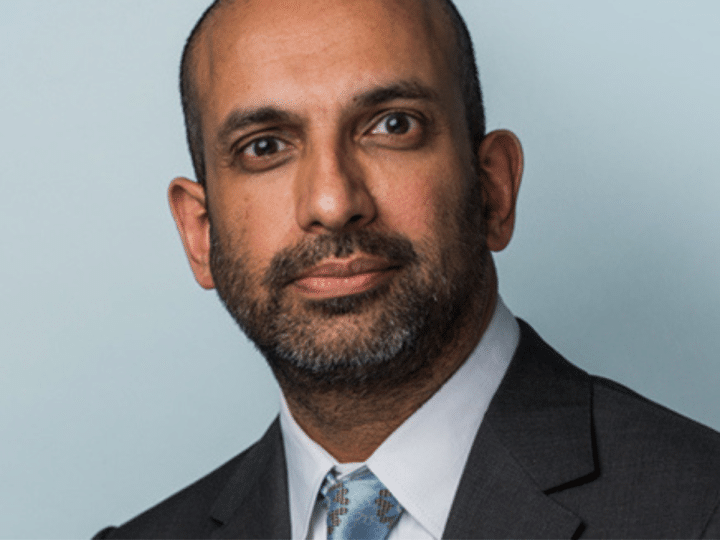

Barrister Rajiv Menon has defeated a judge’s attempt to prosecute him for doing his job of defending Palestine Action activists.
Menon was charged with contempt of court for reminding jurors in his closing speech of their legal right to acquit according to conscience. Mr Justice Johnson had ordered this information to be withheld.
In 2024, Judge Saini threw out an attempt to imprison a pensioner for holding up a sign reminding jurors of this ‘jury equity’ right during a different trial. He derided the idea that informing someone of the law could possibly be contempt of court.
However, this has not stopped the Starmer regime and “rogue judges” from continuing to treat the law as an inconvenience to be prevented and prosecuted.
The appeal court’s ruling this morning is a slap to the Starmer regime and its war on our rights to protect Israel.
Defend our Juries has summarised the Menon case, its outcome and its significance on X.
If a jury decides that the person who stands accused of a crime made the morally correct choice in their actions, the jury can find them “not-guilty”, even if the evidence shows that they did carry out the actions they are on trial for
This has been a legal principle since 1670. pic.twitter.com/TlqD6tBoNC
— Defend Our Juries (@DefendOurJuries) May 12, 2026
The court of appeal ruled today that Mr Justice Johnson had no jurisdiction to refer Rajiv Menon KC directly to the High Court. This was unlawful.
It is no coincidence that this attempt to silence a barrister is connected to activists who disrupted Israel’s genocidal war crimes. pic.twitter.com/oxJWDkwmH0
— Defend Our Juries (@DefendOurJuries) May 12, 2026
Rogue judges are attempting to remove any mention of this principle to jurors, blocking their lawful rights.
Labour is attempting to heavily restrict jury trials, preventing access to fair justice.
The attack on juries is an attack on everyone.
Join us: https://t.co/cE6tKTcXBg pic.twitter.com/9hBzv23PJy
— Defend Our Juries (@DefendOurJuries) May 12, 2026
The regime suffered another blow this week with the refusal of a jury to convict anti-genocide activist Majid Freeman. The government has ordered a retrial and is likely to attempt the same tactic of banning mention of jury equity, despite the clear legal precedent.
The Starmer regime is a police state and a rogue one.
Featured image via Garden Court Chambers
By Skwawkbox


For those living in the UK and looking to create a Safety Net for their families back home (in India), the planning process should include both the day-to-day Health Care Costs that come with common chronic/acute Health Conditions and the catastrophic Financial Impact associated with Critical Illnesses. Although generic Health Insurances generally cover the Cost of Hospitalisation in the event of a Health Condition, generic Health Insurance does not account for the Financial Impact created when a Critical Illness is diagnosed (lost income & ongoing rehabilitation, experimental treatments, etc.). Therefore, Critical Illness Plans India (also known as CI Insurance India) provides an added layer of Protection by providing a lump sum payment upon diagnosis of a covered Critical Illness, which can be used as immediate Liquid Money, as well as for any expense incurred at such time.
Decoding the Core Features of a Superior CI Plan
When considering Critical Illness Plans India from the UK, it is essential to not only look at the Premiums and Sum Insured amounts, but to also focus on the following specifics:
Comprehensive/Defined list of covered ailments: The policy should have a comprehensive list of Illnesses (typically covering 15-30+) that are classified as Major types, i.e. Cancer, Heart, Neurological, Organ Transplant. Ultimately, it is mandatory to review the specific Medical Definitions of the various ailments listed in the Policy Document. Many policies have restrictive definitions, which could delay or deny the payment in case of Critical Illness Diagnosis due to having been diagnosed with an ailment that is not specifically defined.
Payment Structure with Lump Sums: It features upon diagnosing a covered illness that matches the policy’s severity level (e.g. Stage 1 cancer), an insurance provider will pay the entire sum to you as a lump sum with no further tax liability when your claim is paid out as per its terms and conditions. This is considered the most beneficial aspect of having these types of products.
Providing Partial Payments: The best Critical Illness (CI) policies in India provide for initially paying out a portion of the sum (25% – 50% depending upon how many years a person has had coverage) for early (or intermediate) stages of any critical illnesses; such as cancer in situ (early stage) where these patients will require added support to assist with the financial impact during the time they must recover from their critical illnesses.
Survivorship Clause: The majority of critical illness plans include a “Survivor Clause” which generally states that once a person has been diagnosed, they will receive their full amount provided they live for a particular number of days after that diagnosis. Receiving the payouts sooner (or at all) if diagnosed early can be very beneficial for those patients, as it will help them start to recover financially.
Waiver of Premium Payments: Upon having a valid claim, the insurance provider should not charge premium payments for the rest of your family’s life while assisting them through recovery.
Lifelong Renewal Options: When purchasing critical illness products, look for companies that offer options for lifetime renewals. This assures you that as your parents/mother/father continues to age, these options will remain in force.
Leading Providers in the Indian CI Market
Numerous insurers in India have strong critical illness plans in place that support NRIs from the UK. These insurers are those that have strong digital infrastructures and a market reputation.
HDFC ERGO (Critical Illness Plan) – Offers comprehensive coverage, policy wordings, and an advanced digital claims experience, which makes this policy a great selection for NRIs.
ICICI Lombard (Critical Illness Protector) – Has a range of plans that include staged payouts and a solid service network. They would make great critical illness plans for NRIs in the UK.
Bajaj Allianz (Critical Illness Care) – Very well established and provides critically structured plans with staged payouts for certain illnesses.
Max Bupa (now Niva Bupa) and Star Health both provide critical illness riders and standalone critical illness plans. Both have received positive feedback for their high level of customer service.
Conclusion
For NRIs living in the UK, planning ahead for potential critical illnesses is a vital step in protecting family well-being in India. Choosing the right critical illness plans in India ensures your family is financially prepared, allowing them to focus on care and recovery rather than the burden of medical expenses during a health crisis.
Within the framework of NRI health insurance, a thoughtfully selected critical illness insurance policy in India provides a lump-sum benefit that gives families true financial agency. This support enables access to the best possible treatment options while also covering ongoing living expenses, ensuring stability and dignity regardless of the diagnosis outcome.

You might have heard of post-dinner “fart walks,” linked to better cardiovascular health, steadier blood sugar, and better ageing.
Perhaps it would be unkind of me to compare the term to Italy’s time-honoured tradition of ‘passeggiata’ strolling. But some research suggests the benefits are similar.
What is a ‘passeggiata’?
The word literally translates to “stroll”.
It’s an evening walk that some Italians make between about 5pm and 8pm. Some people take it multiple times a day, and certain roads may be more associated with the walk than others.
A passeggiata can be as short as 15 minutes or go on for hours. It’s not usually rushed and might not have a clear “point”: it’s just about the joy of moseying about together.
You might stop and talk to a neighbour or meet up with friends.
Just don’t mistake it for a strict exercise regime, orthopaedic surgeon Dr Gbolahan Okubadejo told Real Simple.
″[Italians] stroll through town or along a beachfront promenade. It’s communal, slow-paced, and intentionally not a workout.”
What are the health benefits of the passeggiata?
We already know that, in general, walking is great for our health. One paper found that people who walk 7,000 steps a day saw a 47% risk reduction in all-cause mortality, with a reduced likelihood of developing heart disease, cancer, type 2 diabetes, dementia, and depression.
But that’s not the only benefit here, especially if you take your passeggiata after your evening meal.
A 2016 study involving people with type two diabetes found that 10-minute strolls after each meal seemed to help to regulate their blood sugar better than walking in half-hour blocks. (All walking can be good for blood sugar, though.)
Walking can also make digesting your dinner easier.
Taking an evening walk can be useful for improving your sleep, too.
Then, there are the benefits of “mindful walking,” which can lower your stress, and/or socialising, which is linked to a longer life and a healthier heart.

Every day, my inbox gets clogged by endless marketing, promotional and publicity emails that make it hard to quickly assess which emails are important and which ones aren’t.
When I started noticing the same marketing email addresses land in my inbox each week, I decided to take action. The Federal Trade Commission requires companies to provide an easy way to opt out of email communications and to honour those requests in a timely manner under the CAN-SPAM Act. In reality, opting out can mean hunting for obscured unsubscribe buttons that are barely legible.
But there’s one quick way to clear up a cluttered inbox that doesn’t involve any scrolling: I used a common Gmail hack to review every subscription my email address was subscribed to to see what I could cut. I recommend that you do the same.
Here’s how: Copy and paste this link in your browser and simply replace the word “inbox” in the link https://mail.google.com/mail/u/0/#inbox with the word “sub.” It should read https://mail.google.com/mail/u/0/#sub. From there, you can see all your subscriptions and unsubscribe from listservs that no longer serve you. Gmail helpfully lists your subscriptions by the number of emails the subscription has sent you, so you can see your biggest culprits.
When I tried this for myself, I focused on the subscriptions that had sent me over 20 emails recently, and discovered marketing listservs that I had no memory subscribing to on my list. Unsubscribing from all these unwanted mailing lists was quick, easy and satisfying.
And the bonus from doing this is that you will free up valuable storage space. Just know that on this Gmail page, the company states that “it can take senders a few days to stop sending messages” once you unsubscribe.
Going forward, another subscription clutter hack is to stop using the exact same email address to sign up for newsletters. Instead, try using an email address alias that Gmail provides. If you add a plus sign after your email address username, all Gmail will still go to that address.
For example, you can do janesmith+beauty@gmail.com and janesmith+news@gmail.com when you sign up for something, and the emails will still go to janesmith@gmail.com. The difference is that with a specific email address for your beauty subscriptions, like janesmith+beauty@gmail.com, you can create a label and filter rule to clearly sort how certain subscriptions to this email address appear, which inbox they go to, and how these emails get deleted or archived.
Or you can stop using your personal email address when subscribing to newsletters. One way to do this is to use iCloud’s Hide My Email feature, which will generate a random email address when you sign up for services in Apple Mail.
The one Gmail subscription tip I don’t whole-heartedly recommend is using third-party unsubscribe tools because of the potential privacy risks, as seen by a 2019 settlement between email unsubscriber Unroll.me and the FTC over allegations that the company deceived users about how it accessed and used personal emails.
“I’d suggest thinking deeply before granting any third-party tool access to your inbox,” said Thorin Klosowski, a security and privacy activist for the Electronic Frontier Foundation. “Any tool designed to unsubscribe you would likely need full access to your inbox to do its job, and unless you’re going to read the company privacy policy, it’s hard to say what it might do with any information it collects.”
“Instead, I’d recommend sticking to the tools already built into your email provider or email app,” he continued. It’s also potentially safer to do this within Gmail or your email provider over “clicking to unsubscribe” on a spammy email you think is suspicious. Software company DNSFilter actually found in 2025 that one in every 644 “unsubscribe” links went to a malicious site.
Reviewing your current email subscriptions on your own takes a few seconds, but it’s not hard to do, and you won’t risk your digital privacy.

Alamy

2 min read
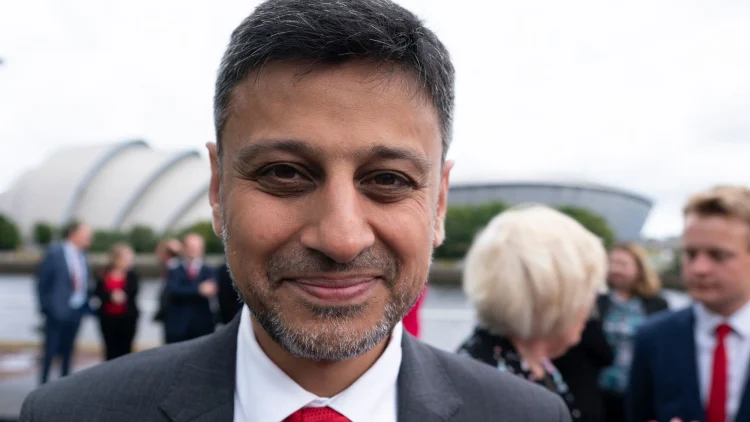
Zubir Ahmed, a junior minister in the department of health and social care, has resigned from government saying he has “irrevocably” lost confidence in the Prime Minister.
The Scottish Labour MP for Glasgow South West has said the “lack of values-driven leadership” at the centre of government has “undermined” his ministerial work in the health deparment.
Ahmed is the fourth minister to resign from the government so far. He was preceeded by faith and communities minister Miatta Fahnbulleh, Home Office minister Jess Phillips and Justice minister Alex-Davies Jones.
The former minister is a close ally of Health Secretary Wes Streeting, who is expected to run for the Labour leadership if Keir Starmer steps down and a contest takes place.
This latest resignation plunges the government into further chaos, taking the number of MPs calling for the Prime Minister’s resignation to 90.
Ahmed said the election results in the Scotland last week were “as intolerable as it was avoidable”.
In the letter, first published by The Guardian, he wrote: “The noise created at the centre of government you lead, inadvertently became the midwife for the delivery of an incompetent fifth term SNP government, and one which will now inflict more division and decay on my constituents of Glasgow South West.”
“Throughout the entirety of my surgical career, I have been guided by the principles of precision, clarity, candour and above all else an aspiration for excellence.
Those are the principles that I have attempted to bring to Parliament and to my ministerial office. And it is those principles that sadly lead me to conclude that yur continuation in office is wholly untenable.”
Calling for fresh leadership, he added: “I will forever be grateful for your decency and tireless work in turning our party around, in inhibiting in us all a sense of national duty before party. You also once said out work is urgent. I now ask you for the sake of that urgency and that national duty, to step aside and set a timetable for an expedient and orderly transition to new leadership that commands the confidence of our country.”

Barry Keoghan has opened up about why we won’t be seeing him in the new season of Peaky Blinders.
Earlier this year, the Oscar nominee played Tommy Shelby’s grown-up son Duke in the stand-alone Peaky Blinders movie The Immortal Man.
However, in the upcoming reboot of Peaky Blinders, set around a decade after the events of the Immortal Man, the character of Duke has been recast for a second time, with Jamie Bell taking over the role in the upcoming episodes.
During a new interview with Variety, Barry explained that he “loved making the movie”, describing the process as an “incredible” one, he confirmed it was his decision not to carry on in the role of Duke, but would not share any more about his reasoning.
“I pick projects quite specifically,” he said. “I carefully, cautiously pick because I just want to enjoy, and I want to heal, I want to tell, I want to find, I want to explore. I want to discover all of those things while I’m making a movie with people who are like-minded.”

Joining Jamie in the new episodes will be Stranger Things star Charlie Heaton will also be joining the line-up in a lead role, along with James Bond star Lashana Lynch and Downton Abbey’s Jessica Brown Findlay.
He is the third actor to play Duke Shelby after Barry, who took it over from Bafta rising star winner Conrad Khan during the show’s original run.
An official synopsis for the new season of Peaky Blinders previously teased: “Britain, 1953. After being heavily bombed in WWII, Birmingham is building a better future out of concrete and steel.
“In a new era of Steven Knight’s Peaky Blinders, the race to own Birmingham’s massive reconstruction project becomes a brutal contest of mythical dimensions.
“This is a city of unprecedented opportunity and danger: with the Shelby family right at its blood-soaked heart.”
Creator Steven Knight also enthused: “I’m thrilled to be announcing this new chapter in the Peaky Blinders story.
“Once again it will be rooted in Birmingham and will tell the story of a city rising from the ashes of the Birmingham blitz. The new generation of Shelbys have taken the wheel and it will be a hell of a ride.”

Sir Ian McKellen has revealed he finally got the chance to watch himself in Cats – and he doesn’t quite understand what all the hate was about.
The six-time Olivier winner was among the star-studded cast of Tom Hooper’s ill-fated adaptation of the classic stage musical, which was savaged by critics upon its release in 2019.
Back in 2024, Sir Ian claimed that he’d still not had the chance to watch Cats all the way through, but during a more recent interview with Magic, he revealed he’d recently been won over by the movie when he caught it by mistake.
“The other day, I did chance upon myself singing in the film of Cats,” he recalled. “And I played through the song and I thought, ‘well, that’s better than what most people thought of the film – what was wrong with that?’.”

When the interviewer pointed out that she “didn’t hate Cats”, he responded: “Who knows – maybe other people will be allowed to discover it.”
“But,” the Oscar nominee continued. “I did make the mistake of reading the comments after.
“I’m my own worst, or best, critic. There are very, very few performances I’ve given that I would give a big tick to.”
During an interview with USA Today, Sir Ian said that he and co-star Dame Judi Dench had a “lovely time” making Cats.
He claimed at the time: “I haven’t actually seen the complete version of the film – I saw it before we had ears and tails put on.
“It probably would’ve been better if they hadn’t had those additions.”
Sir Ian was previously full of praise for Cats when he told his social media followers that he’d watched a “final cut” in December 2019.
The Lord Of The Rings star wrote on Facebook: “A confession: I’ve never been a fan of cats. Dogs for me every time, to look at and be friends with. But I’ve just seen the final cut of the imminent Cats movie and I’m a convert.”
Other members of the Cats cast have been less effusive about the film, with James Corden and Rebel Wilson raising eyebrows at the 2020 Oscars when they appeared on stage dressed as their characters to mock the movie’s special effects – getting on the wrong side the Visual Effects Society in the process.

EU to impose sanctions on illegal Israeli settlers in occupied West Bank
Former Vikings DT Signs with Falcons

In The Vacuum Of AI Legislation, Libraries Have The Playbook

Manchester United reach agreement with Casemiro over contract clause amid transfer speculation

US brings back mandatory military draft registration

Steven Gerrard disagrees with Gary Neville over ‘shock’ Chelsea and Arsenal claim | Football

Jahvillani – MONEY-POWER-RESPECT | Official Music Video

XRP Ripple Believe IT or NOT, XRP USE CASE ONLY FLARE Delivers, SBI LEADS with XRP CANTON SOLANA ETH

$30,000 XRP BUYBACK WON’T HAPPEN! – DTCC IS JUST ONE XRP SWITCH – BRAD SAYS IT ALL CONNECTS TO XRP!
-
 Crypto World4 days ago
HarrisX Poll Found 52% of Registered Voters Support the CLARITY Act
-

 Fashion4 days ago
Weekend Open Thread: Marianne Dress
-

 Crypto World5 days ago
Upbit adds B3 Korean won pair as Base token gains Korea access
-
 NewsBeat5 days ago
NCP car park operator enters administration putting 340 UK sites at risk of closure
-

 Fashion23 hours ago
Coffee Break: Travel Steam Iron
-

 Fashion2 days ago
What to Know Before Buying a Curling Wand or Curling Iron
-

 Tech2 days ago
Auto Enthusiast Carves Functional Two-Stroke Engine from Solid Metal
-

 Politics19 hours ago
What to expect when you’re expecting a budget
-

 Politics3 days ago
Politics Home Article | Starmer Enters The Danger Zone
-
 Business3 days ago
Ignore market noise, India’s long-term story intact, say D-Street bulls Ramesh Damani and Sunil Singhania
-

 Tech1 day ago
GM Agrees To Pay $12.75 Million To Settle California Lawsuit Over Misuse Of Customers’ Driving Data
-

 Crypto World6 days ago
BlackRock CEO Larry Fink Discusses a New Asset Class
-

 Entertainment5 days ago
Sarah Paulson Called Out For Met Gala ‘Hypocrisy’
-
 Sports6 days ago
NBA playoff winners and losers: Austin Reaves is not loving Lakers vs. Thunder matchup, but Chet Holmgren is
-

 Entertainment6 days ago
Bold and Beautiful Early Spoilers May 11-15: Steffy Revolted & Liam Overjoyed!
-

 Entertainment5 days ago
General Hospital: Ric & Ava Bombshell – Ric’s Massive Secret Exposed!
-

 Crypto World6 days ago
Robinhood says Wall Street is building onchain
-

 Politics5 days ago
Simon Cowell Says He Was ‘Horrible’ To Susan Boyle During BGT Audition
-

 Sports5 days ago
UEFA Champions League final schedule, teams, venue, live time and streaming | Football News
-

 Tech7 days ago
Apple and Samsung are dominating smartphone sales so thoroughly that only one other company makes the top 10
You must be logged in to post a comment Login