
Politics
Politics Home Article | No choice but childhood



Health Surveillance Assistant Dingase measures 8-month-old Sosten’s arms while his mother, Leah, holds him outside their home in Northern Malawi. Photo credit: UNICEF/UNI919830/Elephant.

Dr Philip Goodwin, CEO of Unicef
| The UK Committee for UNICEF (UNICEF UK)
Investing in childhood and supporting the most vulnerable children around the world isn’t just the right thing to do – it’s one of the smartest choices the UK government can make
Childhood is being cut short by conflict, eroded by poverty and harmed by climate change. With a new Prime Minister and Cabinet, the government must take the opportunity to put children at the top of its foreign policy and international development agenda.
Children are among those most affected by aid reductions worldwide. Without a deliberate and strategic focus on children within the FCDO, spending decisions will ignore their unique needs and vulnerabilities. It’s vital that UK development policy prioritises children’s rights, wellbeing and access to essential services.
The UK has contributed towards significant progress for children globally. But cuts to UK aid will undermine these efforts. In 2024, 4.9 million children died before their 5th birthday – almost half in their first month of life.
While official statistics will be released next March, early modelling predicts that 2025 will be the first year this decade that the under-5 mortality rate increases. UK Official Development Assistance (ODA) allocations published in March reveal that more than half of current funding to African countries will end by 2028-29, despite these being the countries facing the highest burden of child mortality.
Countries like Malawi, which has some of the highest mortality rates in the world, stand to lose 90 per cent of their UK ODA funding. This will undoubtedly have a detrimental impact on health systems that are working to protect children from infectious disease.
Humanitarian funding has been cut by 20 per cent at a time when there are more children impacted by conflict than ever before. One in five children are living in conflict – that’s one in five childhoods upended by fear, violence and displacement.
The climate crisis is a child rights crisis. 1.1 billion children globally are exposed to at least three climate hazards. Climate driven health risks, such as infectious diseases, threaten children’s survival while increasing pressure on health systems that impact economic stability and resilience for all. Sustained child-focused UK investment and leadership is critical.
Investing in children has one of the best returns on investment. Vaccinated children who are in education, well-nourished and protected from conflict and climate shocks are more likely to grow into adults who contribute to society, drive economic growth, and support a more stable world.
Every £1 invested in children through ODA leads to £10 in benefits to their community. Cutting aid does the opposite and risks reversing decades of progress on child immunisation, health, nutrition, and education. The UK must not allow progress to row back any further.
Children don’t choose to be born into conflict, hunger or poverty. But the UK government can choose how to respond. UNICEF UK is calling on the government to choose childhood and prioritise children in its international approach by investing at least 25 per cent of the ODA budget on childhood, with a focus on health, nutrition, and education.
If caring about childhood is ‘yes’ in principle, it should be ‘yes’ in practice. By choosing childhood, we can build better futures for children and help make childhood unstoppable.
Please join us at our stall, at Stand H3, in the Exhibition Hall at Labour Party Conference to learn about UNICEF UK’s work to protect children’s rights around the world.

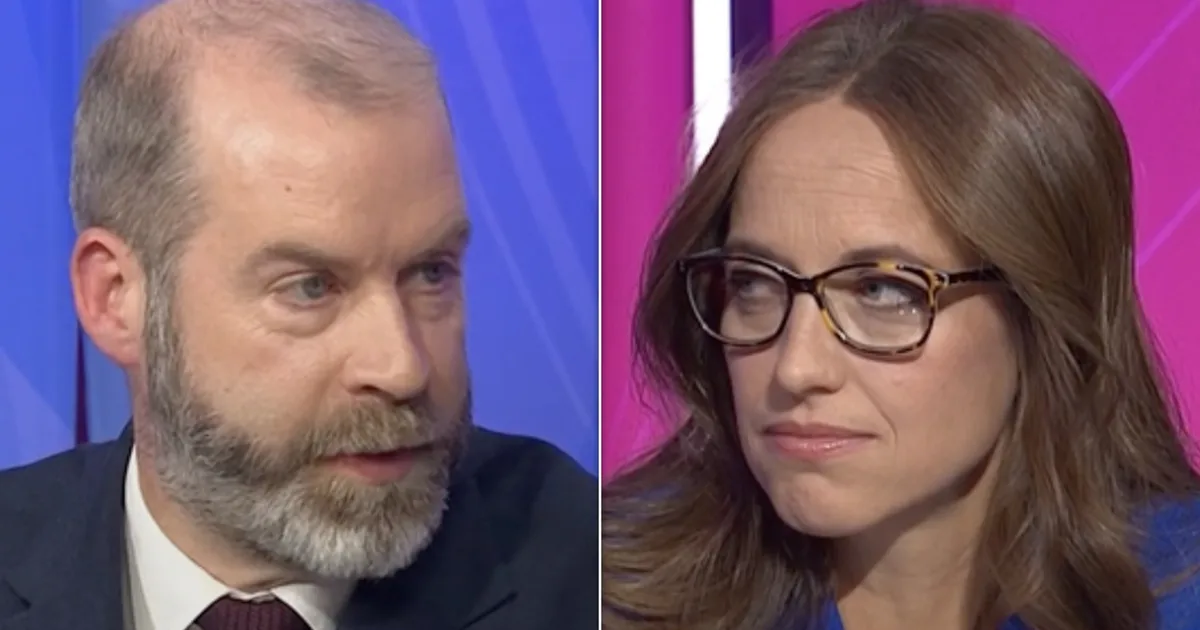
A senior Tory was told “you don’t like poor people” as she was monstered over her party’s plans to slash welfare.
Conservative leader Kemi Badenoch said the long-term unemployed who haven’t contributed enough tax into the system will see their Universal Credit payments cut by nearly a third if she becomes prime minister.
The new “subsistence level” benefit they do receive would be loaded onto a pre-payment card, which would ban spending on cigarettes, alcohol and betting.
Shadow work and pensions secretary Helen Whately defended the policy on BBC Question Time on Thursday.
She said: “Fundamentally, we have a problem that our welfare bill is out of control and we can’t afford it as a country.
“We also have a problem of people who are long-term unemployed, and I’m talking about people who should be working but aren’t.”
Whately insisted the policy was “about stopping people living a lifestyle on welfare”.
But she was condemned by business secretary Jonathan Reynolds, who accused the Tories of reheating the policies of some of their previous leaders.
He said: “You can tell how old you are by how many times you’ve heard Tory MPs announce this policy before.
“Iain Duncan Smith announced this, I’m pretty sure William Hague might have mentioned it. You can probably go back to Michael Howard.
“The reason you never do it is that frankly there is no evidence to suggest unemployed people spend all their money on fags and booze. It just isn’t there.”
To applause from the audience, he added: “It’ll never happen. It’s just a way of you saying you don’t like poor people.”
Listen to Commons People, the podcast that makes politics easy. Every week, Kevin Schofield and Kate Nicholson unpack the week’s biggest stories to keep you informed. Join us for straightforward analysis of what’s going on at Westminster.

Taylor Swift has unveiled the Encore edition of her Life Of A Showgirl album – which includes one song that references her recent wedding to Travis Kelce.
More than a decade on from her signature hit Shake It Off, the Grammy winner has unveiled another new track poking fun at the public’s perception of her in the Encore cut Cleveland!.
Riffing on the comments that have frequently been made about her over the years, Taylor opens the song singing: “She’s not as hot as she was, but she was only a four She was never a girls’ girl, she was just a…
“And with all of that money, why’s she dressed like trash? When she smiles, it’s annoying, and have you seen her? Stumbling clumsily? Would you even call that dancing?”

Shrugging off these criticisms, Taylor then continues in the chorus: “I guess there’s something we all can agree on, but my baby likes what he likes.
“He already took me to Cleveland, and showed me The Heights, so hate all you like, this is the love of my life.”
It’s probably worth pointing out that Taylor’s NFL star husband grew up in Cleveland Heights, Ohio and also fronts a podcast with his brother Jason Kelce titled The Heights.

Towards the end of the song, Taylor makes light of her public persona even further when she declares: “You only need to find one person in this entire world who doesn’t find you completely insufferable, and I have an important announcement to make: I found mine.”
As the song reaches its climax, she tweaks the chorus’ lyrics to say: “He already took me to Cleveland, now I’m wearing white, so hate all you like, this is the love of my life.”
Taylor and Travis have lived much of their romance in the public eye, but have successfully managed to keep details out of their July wedding out of the spotlight.
What we do know is that they tied the knot in an elaborate ceremony at the New York venue Madison Square Garden, attended by a 1000-strong crowd of friends, family and A-list celebrities, with Adam Sandler officiating the ceremony.
Photos of her wedding dress have not been made public, but it was designed by Jonathan Anderson for Christian Dor, with performers at the reception including Sir Paul McCartney, Stevie Knicks, Haim and Avril Lavigne.
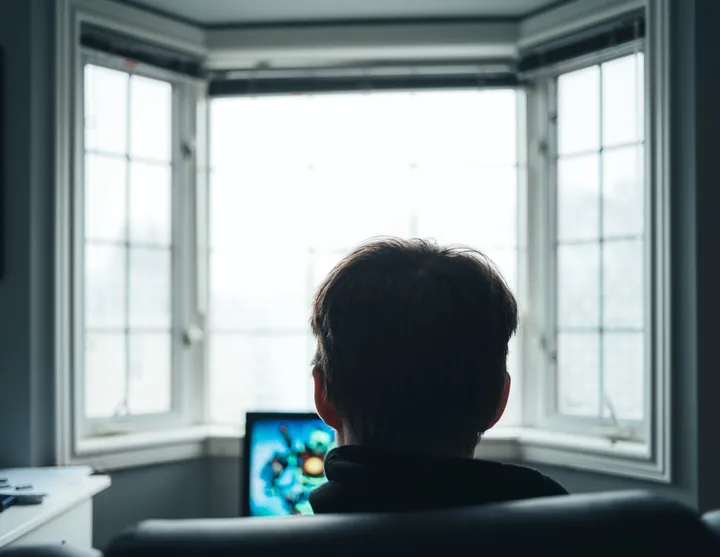
Before I spent 13 weeks interviewing experts about children and screens, I was convinced the rules existed.
Someone had them. Some brilliant researcher, psychologist, educator or parenting expert had cracked the code and could tell me exactly how much screen time was acceptable for an 11-year-old with ADHD and anxiety.
I wanted a number. I wanted a schedule. I wanted someone with several impressive letters after their name to say: Let him have this many minutes. Turn it off at this exact time. Allow these activities. Block these apps. Follow these steps and his attention, sleep, mental health and development will all be fine. Your child will develop a healthy relationship with technology and never scream, “BUT I WASN’T DONE!” when the timer goes off.
Instead, after 13 weeks of conversations with internationally recognised experts, I had accumulated a notebook full of nuance, a phone full of additional research and approximately 700 new questions.
The 13 weeks of interviews were both a professional project and a very personal attempt to understand how I could protect and guide my own son. I am a neurodivergent single mother raising an 11-year-old son with ADHD and anxiety. Screens are not a simple subject in our house because my child’s relationship with technology is not simple.
Technology gives him access to things that are genuinely good for him.
He can explore an interest for hours, teach himself how something works, create, problem-solve and connect with other kids. He can experience competence in digital spaces on days when the nondigital world has mostly reminded him about the things he forgot, misplaced or failed to finish.
A screen can help him regulate after holding himself together through an exhausting school day.
It can also make the next transition approximately 4,000 times harder.

FOTOGRAFIA INC. via Getty Images
The same game that gives him connection and confidence can become the thing he cannot stop playing. The same video that teaches him something fascinating can lead directly into 36 more videos selected by an algorithm that has never once said, “You know what? That’s probably enough for today.”
Technology can be a tool, an accommodation, an escape, a social space, a creative outlet and a complete pain in my ass. Sometimes it is all of those things before dinner.
That is why generic screen-time advice has never completely worked for us. “Just take the device away” sounds simple until the device is also where his schoolwork lives.
“Let him experience the natural consequence” sounds reasonable until the natural consequence is missing an assignment posted on one of several platforms I was apparently supposed to check.
“Encourage offline interests” is wonderful advice. We do. But offline interests do not erase the fact that his friends communicate online, his teachers assign work online and much of the world he is learning to navigate exists online.
I cannot raise him for a childhood that no longer exists. I also cannot pretend every digital experience is harmless just because technology is unavoidable.
So when I began those 13 weeks of expert conversations, I was looking for certainty. What I found was context.
Not all screen time is the same. Twenty minutes spent creating something is not necessarily equivalent to 20 minutes of passive scrolling.
Talking to a real friend is different from interacting with a chatbot designed to imitate one.
A video that helps a child understand a maths concept is different from an endless feed engineered to remove every natural stopping point.
The same digital activity can also affect two children very differently. That is particularly important in neurodivergent families. A child who struggles with impulse control, transitions, time awareness or immediate rewards may experience certain technology differently from a child who can easily put down a device when asked.
Even within the same child, the answer can change. A game might be fine on Saturday morning and disastrous after a long school day when his nervous system has already used every available coping skill. A video might help him decompress one evening and keep him awake another. A device might support learning during school and completely derail homework 20 minutes later.
I kept waiting for the experts to remove the uncertainty. Instead, they kept giving me more things to consider. What is he doing on the screen? How does he feel while he is using it? How does he respond when it is time to stop? Is it replacing sleep, movement, responsibilities or connection? Is it helping him participate in his life, or helping him avoid it?
Those are good questions. Considering them also requires much more work than setting a timer. A universal limit would have been easier. I could have followed it, enforced it and congratulated myself on being a responsible mother. Context requires me to pay attention.
It asks me to notice patterns, adjust expectations and accept that a rule that worked last month may suddenly fail because my child changed, the platform changed or some developer introduced a new feature designed to make leaving less appealing.
And there it was again: responsibility returning to the parent.
Create the family media plan. Research the app. Check the privacy settings. Activate the parental controls. Monitor the messages. Watch for behavioural changes. Know what the algorithm might show them. Keep up with every new platform, feature, threat, trend and workaround. Then repeat the entire process every time something updates.
At some point, I began to wonder whether I was researching healthy screen boundaries or training to become my family’s unpaid trust-and-safety department.
This work rarely looks dramatic. It looks like standing in the kitchen reading app reviews while pasta water boils over. It looks like researching whether a chatbot is safe after your child is asleep. It looks like receiving another school notification while you are trying to work and checking a screen-time report from the supermarket car park.
It looks like attempting to remember which parental-control PIN belongs to which device while your child stares at you like you are the sole obstacle standing between him and happiness. It is dozens of tiny decisions scattered across the day. And like so much invisible family labour, it frequently lands on mothers.
A 2026 Pew Research Center survey found that in different-sex couples where both parents work full time, 52% said the mother performs more parenting tasks. Only 10% said the father does more. Full-time working mothers were also roughly twice as likely as fathers to say they frequently manage parenting responsibilities while working.
The survey did not specifically ask who stays up late researching whether a child’s new app allows strangers to send private messages. I have some theories.
Mothers are told that good parenting requires vigilance. We should know what our children are watching, who they are talking to, what they are searching for and how long they have been online.
If our kids spend too much time on screens, we have failed to establish boundaries. If they are excluded socially because they cannot use the platforms their friends use, we have failed to understand their world. If something harmful reaches them, we should have been monitoring them more closely. If we monitor too closely, we invade their privacy and prevent independence.
Cool. That seems manageable.
For most of my 13-week campaign, I believed the solution was for parents to become better at this impossible job. Then California enacted a package of 13 laws addressing technological risks to children.
The measures address multiple parts of children’s digital lives, including addictive social-media features, AI companion chatbots, AI-enabled toys and school-issued devices.
Assembly Bill 1709 prohibits covered platforms from providing addictive features to users younger than 16 and requires them to take reasonable measures to keep those features away from young users. The legislation does not merely focus on what children view. It addresses how platforms are designed to keep them engaged, including features such as addictive feeds and autoplay.
Senate Bill 1119 requires operators of companion chatbots to assess and mitigate risks to children. It includes requirements involving crisis responses, advertising, children’s data, accessible safety controls and independent audits.
The laws are not perfect. Age-verification systems create legitimate privacy concerns. Restrictions can have unintended consequences for disabled children, LGBTQ+ youth and other young people who rely on online communities for information, accessibility and connection.
Technology companies will challenge regulations. Enforcement will be complicated. New risks will appear faster than lawmakers can name them. But reading about those laws, I felt something I had not experienced during my entire search for the perfect screen-time rules. Relief. Not because California had solved the problem. It had acknowledged who created it.
For once, the official response was not simply another list of things parents should do. Lawmakers were placing responsibility on the companies designing the products. That distinction matters.
Parents absolutely have a role in helping children develop a healthy relationship with technology. I am not suggesting we hand an 11-year-old an unrestricted phone, wish him luck and blame Silicon Valley for everything that happens next.
But no amount of excellent parenting can transform a deliberately persuasive product into a neutral one. No timer can eliminate an algorithm designed to anticipate what will hold a child’s attention next. No family media plan can make a chatbot safe if the company operating it has not adequately assessed how it affects a vulnerable child.
We have been treating children’s technology as a private parenting challenge when it is also a product-design and public-policy problem.
I spent 13 weeks talking to experts because I believed the right rules would remove my uncertainty. What I learned is that uncertainty is part of parenting a real child in a rapidly changing digital world.
We still need boundaries. But we also need products designed with children’s well-being in mind. We need meaningful default protections, transparent data practices, independent safety testing and laws that recognize parents cannot personally outsmart every algorithm placed in front of their children.
Most importantly, we need to stop treating every digital risk as evidence that a mother somewhere failed to pay enough attention. No mother can personally monitor every interaction occurring inside every device while also working, cooking dinner, answering school emails and occasionally attempting to use the bathroom alone. I can set boundaries without pretending those boundaries are powerful enough to correct every decision made by a multibillion-dollar technology company.
I never found the perfect screen-time rules. But I finally stopped believing their absence made me a bad mother.
Danielle Kelly is a neurodivergent writer, single mother and host of Chaos & Caffeine, an ADHD parenting podcast reaching more than 10,000 monthly downloads. She writes honestly about raising her 11-year-old son with ADHD and anxiety while navigating the beautiful, exhausting reality of neurodivergent family life.
Do you have a compelling personal story you’d like to see published on HuffPost? Find out what we’re looking for here and send us a pitch at pitch@huffpost.com.

We know a healthy, balanced diet can benefit people with attention-deficit hyperactivity disorder (ADHD) – particularly children – and might even improve some of their symptoms.
It’s estimated almost 882,000 children in the UK have ADHD, which is typically characterised by symptoms such as struggling to pay attention, hyperactivity and impulsive behaviour.
Once diagnosed, it’s typically managed with lifestyle changes (like prioritising activity and healthy eating), adaptations at school and at home, and/or medication.
But are there specific foods you should be aiming to prioritise in their diets to manage overall wellbeing?

ADHD is widely considered a neurodevelopmental disorder, which means it affects how the brain develops. Dr Kripalani highlighted that the brain needs nutrients including iron, zinc, magnesium, vitamin D and omega-3 to function properly.
Yet research suggests people with ADHD might be more prone to deficiencies in omega-3 fatty acids, zinc, magnesium, and iron, compared to those without ADHD.
Iron, zinc and magnesium are all involved “in regulating or making the neurotransmitters that affect attention and concentration”, according to UCLA Health, while omega-3 and omega-6 fatty acids “show promise for improving hyperactivity, impulsivity and attention”.
“ADHD is a complex condition, and diet isn’t a treatment in itself but it can help,” Dr Mukesh Kripalani, a consultant psychiatrist at The ADHD Centre, told HuffPost UK.
Dr Michael Milobsky, a father-of-seven and paediatrician, shared a video in which he discussed which foods specifically might be beneficial for children with ADHD.
In his view, it’s important to offer red meat for iron, which he said is “the building block for dopamine” (ADHD may be linked to the dysfunction of dopamine); pumpkin seeds “for zinc and magnesium”; and plain Greek yoghurt for protein, which “can help maintain focus”.
We know fruit and veg is important generally for health – and it might be crucial for limiting ADHD symptom severity, too. One study suggested eating fewer fruits and veggies was associated with more severe ADHD symptoms. So, prioritising those five-a-day is (as always) key.
“Eating a balanced diet with plenty of protein, such as eggs, fish, yoghurt, beans and lentils; alongside vegetables, wholegrains, nuts and seeds is a good place to start,” said Dr Kripalani. “Oily fish is also a good source of omega-3.”
Oily fish, like salmon, mackerel, sardines and fresh tuna, can be an acquired taste at the best of times, so it might help to disguise these in fishcakes, homemade fish fingers or pasta dishes.
Pumpkin seeds could be ground and sprinkled on porridge or yoghurt, or mixed into pancake batter or homemade muffins.
Children with ADHD who struggle with impulsivity may be prone to binge-snacking on sugary foods which can increase blood sugar levels and worsen their ADHD symptoms. While it’s not really about cutting these out, moderation is key.
“There isn’t good evidence that everyone with ADHD needs to avoid sugar or particular foods. However, it’s important not to underestimate the importance of following a healthy diet,” said Dr Kripalani.
He ended: “Eating regularly and not relying too heavily on ultra-processed foods and sugary drinks is much more useful than following a restrictive ‘ADHD diet’.”
 lead image
Ed Davey is a twat. Everyone knows that.
Many still believe the Lib Dem leader has sub-postmasters’ blood on his hands, thanks to his sorry role as minister for postal affairs at the height of the Post Office scandal. Be that as it may, his recent catalogue of woeful adventures in toytown politics is of a much softer hue – and would make a delightful bath-safe vinyl picture book for younger children.
Look! Ed is on his paddleboard! Splosh! Oh no – Ed is in the lake! And has thus ironically raised the sewage level above the approved safety limit. (Acceptable level of Daveys in British lake water? 0 ppm.) His bungee-jumping escapade made Boris Johnson – waving his little Union Jack as he dangled like a sack of laundry from a jammed zip wire – look like Lord Palmerston accepting the Prussian surrender (not an actual historical event) by comparison.
If this week’s annual party conference in Brighton was anything to go by, Davey is getting worse. His feeble attempts to invoke the spectre of fascism in the wake of the illegal-migration protests in Dover and Portsmouth, before leading a chant of ‘We Care! We Fight!’ that would barely have woken a sleeping janitor, were hard to watch.
It ‘feels different this time’, he warned darkly of those protests. Well, yes it does – but not (as Davey claims) because immigration concerns are being amplified by Elon Musk, the new Moriarty or Fu Manchu of the Lib Dem imagination. Rather, what ‘feels different’ is the more than 200,000 people who have entered the country illegally since 2018, the ‘Boriswave’ of nearly four million legal migrants since 2021, the exodus of many thousands of Brits over the same period, and the sudden, almost violent reconfiguration of our demography, our high streets and our schools.
This is what is alarming people, not Elon Musk’s tweets. It’s the collapse of the share of the native population in our major cities to below half. It’s areas like the Lake District – where no significant Muslim population exists – accommodating huge mosques, like grappling hooks from which the population hoping to worship in them can then be winched into place. The past few years, especially for residents of places like Crowborough and now Piddington, have been vastly more horrific than the most alarmist projections that past anti-immigration campaigners felt able to throw at the wall and hope to make stick.
So-called centrists should at least be centred. Yet Davey is perhaps the most eccentric, off-beam figure in the entire House of Commons.
His vibe at the Lib Dem conference was desperate. He called to mind a beleaguered deputy headmaster of a failing school, in the final scene of a comic novel by Kingsley Amis or perhaps Michael Frayn, gallantly trying to wrap up the annual prize-giving with the unpopular school hymn, pressing on unawares while scenes of a hilariously cascading catastrophe unfold behind him.
Given that they have always been regarded as something of a joke, it is remarkable to consider how far the Lib Dems have fallen. In the bad old days, when such things were both infra dig and technically illegal, the Liberals often seemed to attract the politically ambitious who sadly had a lot to lose should their private lives come under too much scrutiny. David Steel’s 12 years as leader – from 1976 to 1988 – were at least free from the kind of notoriety that Jeremy Thorpe had brought to the party.
I remember it being all too easy to characterise the Liberals’ conferences in that decade as preoccupied with legalising Class-B drugs and other student-activist concerns. Then the arrival of the Social Democratic Party – which would later merge with the Liberals to form the Lib Dems – elevated their esteem to a degree it is easy to forget. Steel’s rallying cry from the 1981 SDP / Liberal Alliance conference – ‘Go back to your constituencies and prepare for government!’ – sounds pathetic in hindsight, but, without the Falklands War, it is not inconceivable that they might have been in with a shout.
Then came Paddy Ashdown. Regardless of his own blind spots and occasional misjudgements, this was a leader of such gravitas, experience, confidence, proven nerve and character that I am tempted to say that he was like Hyperion to a satyr next to Ed Davey. After he left the House of Commons, Ashdown was a plausible candidate for the secretary-general of NATO. Davey would hardly be credible as a candidate for moderator on Mumsnet. His main experience of the North Atlantic would be falling in it.
Charles Kennedy, too, was a man for whom I am unapologetic in my admiration. Though he was well to the left of me politically, his sharpness (when sober) was never less than impressive. The speed with which he responded to a facetious suggestion from Billy Bragg on Question Time – that he join forces with Boris Johnson – was, I think, the single most quick-witted reply I’ve ever seen on that show. The last Kennedy–Johnson ticket, he said, had proven inauspicious.
Tragically – I think that is not too big a word – Kennedy’s drinking problem did for him, and the subsequent loss of his seat to Ian Blackford in 2015 was a disaster, if only because it brought to parliament the biggest windbag in Scotland (and I include in that category actual bagpipes).
Since then, it has been like watching once plucky contenders for a Champions League place start to slip down into the lower tiers. Although still popular among certain bien-pensant constituencies in the south-west that have yet to be ‘Piddingtoned’, Davey is now widely regarded as a joke outside of his clique. And, judging by the lack of enthusiasm with which the Lib Dems joined in his painfully weak ‘We Care! We Fight!’ chant, increasingly within it, too.
How the middling have fallen.

The post Gosport protests: how the migrant crisis ripped up the social contract appeared first on spiked.
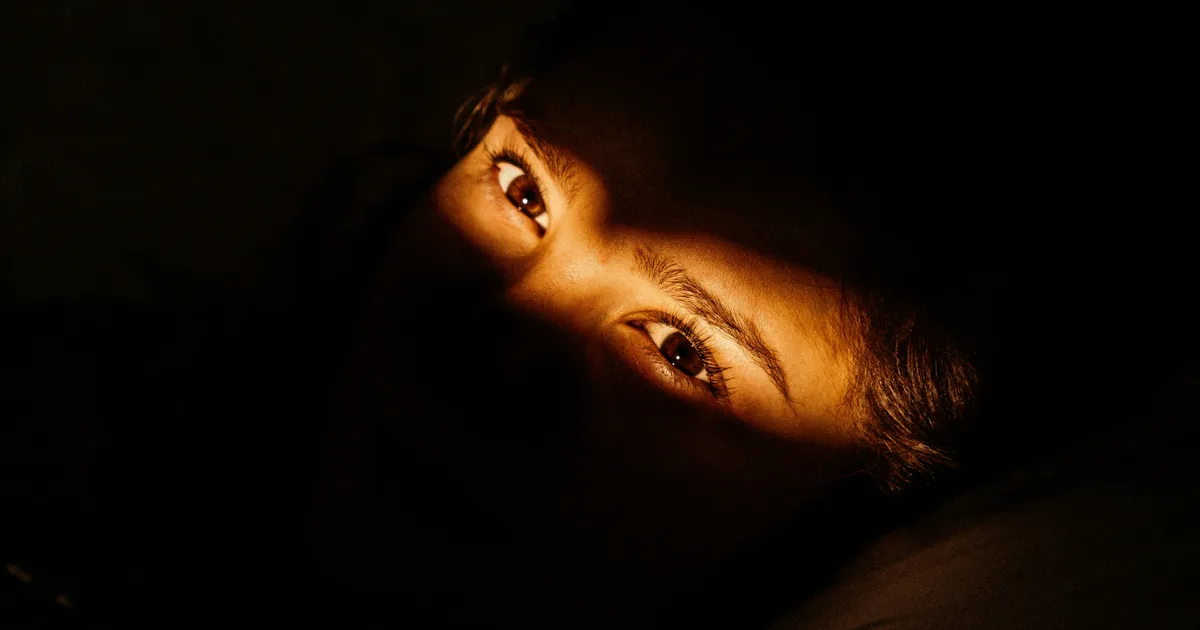
You probably already know that people have different “chronotypes”, or natural sleep-wake patterns.
Some of us really are born early birds or night owls. And trying to “beat” your body’s built-in preference might have negative effects, like potentially making your workouts less effective.
But there are limits here, too. For instance, a 2024 paper found that even for those with late chronotypes, it’s best for their health to go to bed before 1am. This result surprised researchers so much that they spent six months trying to disprove it – but couldn’t.
A separate 2022 study titled “The Mind After Midnight” carried an even more extreme warning.
“During the biological night, cognitive capacity and mood regulation are diminished and ‘reason sleeps’”, it reads.
The ‘mind after midnight’ hypothesis suggests being awake very late may impact “attentional biases, affective regulation, reward processing, and executive functioning” which can “set the stage for dysregulated behaviors and psychiatric disorders”.
Why might being up past midnight be so bad for our brains?
That all sounds pretty intense, doesn’t it? But we do know that crime rates, substance abuse and overdoses, impulsive eating, and suicides seem to happen disproportionately often at night, when our “biological circadian night” (after midnight for most of us) is in full swing.
The study’s senior author, Dr Elizabeth Klerman, said that “from a high-level, global, evolutionary standpoint, your internal biological circadian clock is tuned towards processes that promote sleep, not wakefulness, after midnight”.
So, she argues, neurophysiological changes take place in our minds during the wee hours, because we’re primed to be alert in situations like these.
Her study suggests that positive affect, or our tendency to see things in a better light, peaks in the daytime. But at night, negative affect – a negative view on life – becomes far more common.
Meanwhile, the body produces more dopamine when you’re awake too late, which could drive impulsive behaviour. This, combined with a worse outlook on life, might help to explain some of those troubling nighttime stats.
Dr Klerman said “there are millions of people who are awake in the middle of the night, and there’s fairly good evidence that their brain is not functioning as well as it does during the day”.
She added: “My plea is for more research to look at that, because their health and safety, as well as that of others, is affected.”
‘Mind after midnight’ theory is just a hypothesis, but others share it
So far, mind after midnight theory hasn’t been the topic of a formal trial – but these are in the works.
However, this is far from the only paper to suggest that our brains might not run at their best when we should be sleeping.
Dr Jamie Zeiter, the author of the sleep and chronotype study we mentioned earlier, said: “If I had to hazard a guess, morning people who are up late are quite cognisant of the fact that their brain isn’t working quite right, so they may put off making bad decisions… Meanwhile, the evening person who is up late thinks, ‘I’m feeling great. This is a great decision I’m making at 3 o’clock in the morning’”.
This could put night owls who stay up too late in harm’s way, he suggested.
Another paper found that those who said they like to sleep late tended to have more repetitive negative thinking.
Speaking to HuffPost UK previously, registered dietitian and longevity specialist Melanie Murphy Richter said: “Going to bed between 10pm and midnight and waking with the sun supports circadian rhythms, hormone balance, and cellular repair – all critical for healthy ageing”.

Journalists from CNN, MS NOW and Politico on Thursday were allowed back into the White House after earlier being denied access as President Donald Trump’s media ban descended into chaos.
A federal judge had earlier ordered Trump to restore access for journalists from the three outlets, saying his ban on them was likely unconstitutional.
But reporters and staffers from all three were barred from entering the White House on Thursday morning as they attempted to return to work, prompting the outlets to file a request for an emergency hearing.
As of roughly noon Washington DC time, however, reporters from all three had successfully entered the building after their press badges were reactivated.
The restored access came just minutes before the US Justice Department’s deadline to respond to a request from District Judge Tim Kelly explaining why the administration defied his temporary order lifting Trump’s ban.
“We are back and we are ready to cover the president,” CNN’s Betsy Klein said from the grounds of the White House.
In a declaration to the court, the director of White House Press Operations, Micah Stopperich, said the department was notified on Thursday morning to “restore access to affected reporters by turning on their hard badges.”
It is unclear whether the access change means press pool operations are back to normal for now.
“It remains to be seen whether CNN is indeed going to be included in the network TV pool rotation,” Klein added. “But for now, we are back on campus and ready to get back to work.”
This is a developing story. Please check back for updates.

There are a plethora of benefits associated with walking, so it’s no wonder the NHS previously called the activity “overlooked” as a form of exercise.
As little as 2,337 steps a day can lower your risk of dying from heart-related health conditions. The activity can also help to manage blood pressure and cholesterol, and has been linked to stronger bones, better sleep quality and even a reduction in dementia risk.
But while we know it’s important for our health, less is said about how it can benefit our relationships, too.
In fact, a new study suggests that couples who exercise together – mostly, through walking – report better communication, stronger conflict resolution and lower levels of marital stress than couples who don’t.
For the study, published in Family Relations, researchers from Brigham Young University (BYU) looked at survey data from nearly 1,700 newly-married couples.
The team compared the effects of individual workouts and physical activity performed together as a couple on three outcomes: communication, conflict resolution and marital stress.
Walking was the most commonly reported form of shared exercise among couples in the study.
Both individual workouts and couple workouts were associated with healthier marriages, but exercising together consistently showed stronger associations with positive relationship outcomes than exercising solo.
“About 60% of husbands and wives in the sample said they exercised, but only about a third exercised together,” said BYU professor Jeremy Yorgason.
“That means about half the people who exercise are not exercising with their spouse. While the impact is not necessarily large, it is very consistent, which gives me confidence that it is influencing relationships in some meaningful way.”
Researchers said exercising together creates opportunities for positive interactions and conversation, which can strengthen relationships over time.
“Out of all three outcomes, exercise had the biggest impact on communication,” said study co-author Ashlyn Hiatt Mildenhall, who began the project as an undergraduate researcher.
“That’s why it was interesting that walking was the number one reported exercise. It naturally provides opportunities to communicate.”
Walking can give you the space to have deep and meaningful chats, free from distraction.
The research also found that couples who exercised together reported better listening and greater feelings of being heard and supported by their spouse.
Prof Yorgason said these interactions may help explain why shared exercise was associated with healthier communication and conflict resolution.
The authors did warn that shared exercise isn’t a cure for relationship challenges, but it can create regular opportunities for connection amid the demands of school, life and parenting.
As for what Prof Yorgason wants people to take away from the study, he told HuffPost UK: “It’s my hope that couples will make time in their busy lives to exercise together regularly. Not only will this benefit their physical and mental health, but our research suggests it will also strengthen their relationship.”

What to know, and a prediction, for Purdue football vs Notre Dame

Save 15% Off a Japanese eSIM Data Plan With Ubigi and Our Exclusive Code

Bitcoin: Where I Went Wrong




-

 Fashion7 days ago
Weekend Open Thread: Talbots – Corporette.com
-

 Crypto World2 days ago
Goldman Sachs and Deutsche Bank Agree: The S&P 500 Rally Isn't Over
-

 Tech4 days ago
Researchers escape OpenAI Codex sandbox to run commands on host
-

 Fashion21 hours ago
8 iPhone Accessories That Add Personality
-

 Crypto World4 days ago
Who Needs CLARITY Anyway? ARB Could See 70X Increase: Hodler’s Digest
-

 Crypto World6 days ago
Circle launches Arc Studio AI agent for building onchain apps
-
 NewsBeat6 days ago
Trump says US has reached an agreement to take permanent control of Greenland’s security
-

 Crypto World6 days ago
Trading Bitcoin on Robinhood? Why 2% Spread Has Traders Worried
-

 Crypto World6 days ago
Bitcoin price breaks channel as RSI climbs to 63
-

 Tech5 days ago
Trump suggests rebranding AI with a new name, says he’s also creating an AI Force
-

 Business4 days ago
Analog Devices (ADI) Bets $1.35 Billion on Chips that Let Machines Think for Themselves
-

 Tech4 days ago
Google’s $899 Googlebook is a bet that you’ll buy a new laptop for Gemini
-

 Crypto World4 days ago
Coinbase, Robinhood, Circle Seen as Tokenized-Stock Winners
-

 Crypto World2 days ago
This Bearish Netflix Stock Trade Can Cash In On Video Streaming Giant’s Woes
-
 Business2 days ago
Oil Price Today (September 23): Crude oil below $100 on hopes of US-Iran talks. What did Trump say?
-
 Crypto World3 days ago
Trump-Xi Polymarket Odds for Handshake Hit 50%
-

 Crypto World6 days ago
World Money launches in 150+ countries with Stripe
-

 Crypto World1 day ago
Crude Oil Prices Pressured by Diplomatic Hopes in the Middle East
-

 Crypto World7 days ago
Silver prices recover quickly, hitting weekly high today
-

 Entertainment2 days ago
These 17 Fall Amazon Dresses Seriously Look Like Anthropologie
You must be logged in to post a comment Login