With Britain’s hydrogen ambitions gaining pace, National Gas sets out why the Humber’s geography, industrial heritage and skilled workforce make it the natural home for the UK’s first integrated hydrogen network
As the home of British industry, the Humber is the obvious choice for the UK’s first integrated hydrogen network.
Advertisement
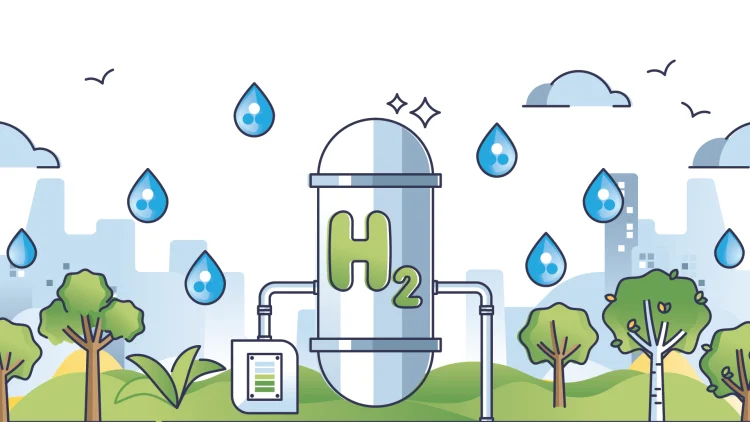
Hydrogen has a critical role to play in meeting Britain’s energy needs – from decarbonising hard-to-electrify industries such as steel and glass manufacturing, to enabling clean power generation, to providing feedstock for high-value products such as ammonia and Sustainable Aviation Fuel.
The government will soon launch a competitive process for £500m of investment through the Hydrogen Transport and Storage Business Models.
The Humber: Britain’s hydrogen opportunity
Advertisement
Home to pioneering advances such as the landing of the first North Sea gas at Easington in 1967 and one of the country’s oldest chemicals parks at Saltend, the Humber has become a centre for oil refining, petrochemicals, power generation, gas storage and offshore wind – all of which play a vital role in Britain’s economy and energy security.
Nearly six decades on, the region is ready to build on its proud heritage and deliver on the next phase of Britain’s energy transition, with a highly skilled workforce and established projects developing modern infrastructure at pace.
The region’s connected geography, natural salt caverns, heavy industrial base and skilled workforce make it the ideal location for large-scale hydrogen infrastructure development.
The Humber industrial cluster contributes £18bn to the economy each year and supports hundreds of thousands of high-value jobs.1
Advertisement
Humber Hydrogen: the deliverable plan for Britain’s hydrogen heartland
Through the Humber Hydrogen partnership, National Gas, Centrica, Equinor and SSE Thermal are bringing their expertise in hydrogen transport, production, usage and storage to develop a first-of-its-kind coordinated hydrogen network in Britain.
Humber Hydrogen will be an integrated network of hydrogen production, transport and storage across East Yorkshire and North Lincolnshire. By supporting hard-to-electrify sectors, unlocking clean power and meeting existing feedstock demand in the chemicals and refining industries, our partnership will anchor long-term industrial activity, attract investment, protect and create skilled jobs and reduce emissions – all while bolstering Britain’s energy security.
Working in partnership with local industry leaders such as the Humber Energy Board, British Steel and global ammonia and fertiliser producer Yara, alongside elected representatives from across the political spectrum and local trade unions including the GMB, we are ready to propel the Humber into a new era of global leadership in low-carbon industry.
Advertisement
Together, we’re backing the Humber.
Three reasons to back the Humber
Britain’s biggest opportunity for large-scale and rapid industrial decarbonisation. The Humber Industrial Cluster is the biggest CO₂ emitter in the UK.
Bolstering the UK’s energy security, industrial resilience and global competitiveness. Power stations in the region are considering investing in more than 4GW hydrogen-to-power – that’s more than 10 per cent of Britain’s average electricity demand. This could be supplied by up to five green and two blue independent hydrogen projects.
The Humber’s unique advantages. The Humber’s geology is a key asset – 65 per cent of the UK’s total potential new-build storage capacity for hydrogen is in East Yorkshire. Natural salt caverns at Aldbrough are already used for existing gas storage and this will be adapted and extended with new caverns for safe hydrogen storage.
Humber Hydrogen project data, National Gas
Advertisement
Reference
Advertisement
Humber Industrial Cluster Plan and UK Research and Innovation; Humber Industrial Cluster Plan (2023), Together it is possible
Sarah O’Connor’s examination of technological change is an engrossing discourse on power, politics and humanity
Advertisement
“I used to be a techno-optimist,” writes Sarah O’Connor, the Financial Times columnist, in her debut non-fiction book We Are Not Machines. After starting her career in journalism with a brief stint at The House magazine, O’Connor spent over a decade making a name for herself at the FT through her bold coverage of the world of work, including award-winning investigations into clothing sweatshops in Leicester and “shit-life syndrome” in Blackpool – both discussed in Parliament. O’Connor had seen plenty of bad jobs, she writes: “Why not turn over jobs like these… in which people are expected to work like machines – to the machines?”
Ten years on, O’Connor is not a techno-pessimist either. Instead, she thinks that economists and tech bosses are posing the wrong questions about the rise of artificial intelligence. Rather than pitting humans against machines, she wants to uncover the humans on both sides of the equation: workers, who sometimes try to use AI at work without supervision, and managers, trying to automate the workplace.
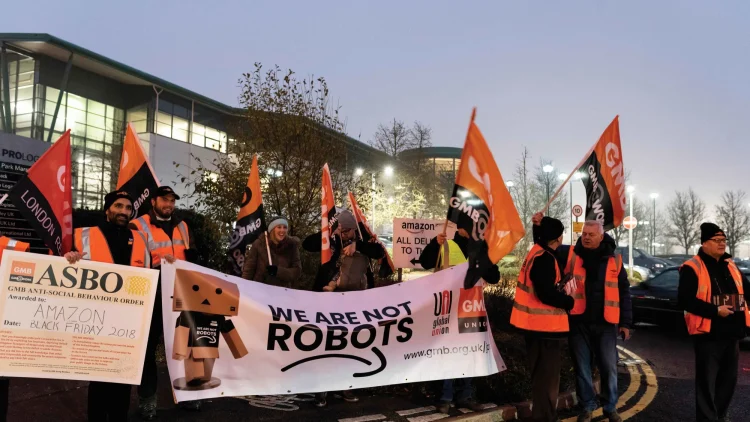
O’Connor’s favoured method of reporting is one that “gets [her] shoes dirty”, whether at an Amazon strike near Birmingham, down a mine shaft in Sweden, or on a home visit with a social care company in France.
Advertisement
At the heart of this book is an exploration of how humans not only make tools, but are shaped by them
But while all the people she interviews have access to roughly the same global suite of AI tools, what happens in each setting differs because of the human relationships within them. In one chapter, she visits a Swedish mine run by Boliden, a company that prides itself on its automation experiments. Here, union representatives have seats on the company board, and worked with the management to introduce self-driving, remotely monitored trucks to extend the lifespan and productivity of their mine. They negotiated to do this while preventing new tech features that the workers feared, such as excessive surveillance.
Advertisement
The result was a ‘Swedish compromise’, including Boliden asking its software supplier to redesign technology according to the union’s concerns. Both sides got a far better deal than they would have otherwise. A union official tells O’Connor that their members were “more friendly to doing new things”, and praised the doubling of productivity through automation. In O’Connor’s telling, the fact that both sides had the power and information to be equal partners, and had worked with each other for decades, led to trust, which then led to the ability to navigate change effectively.
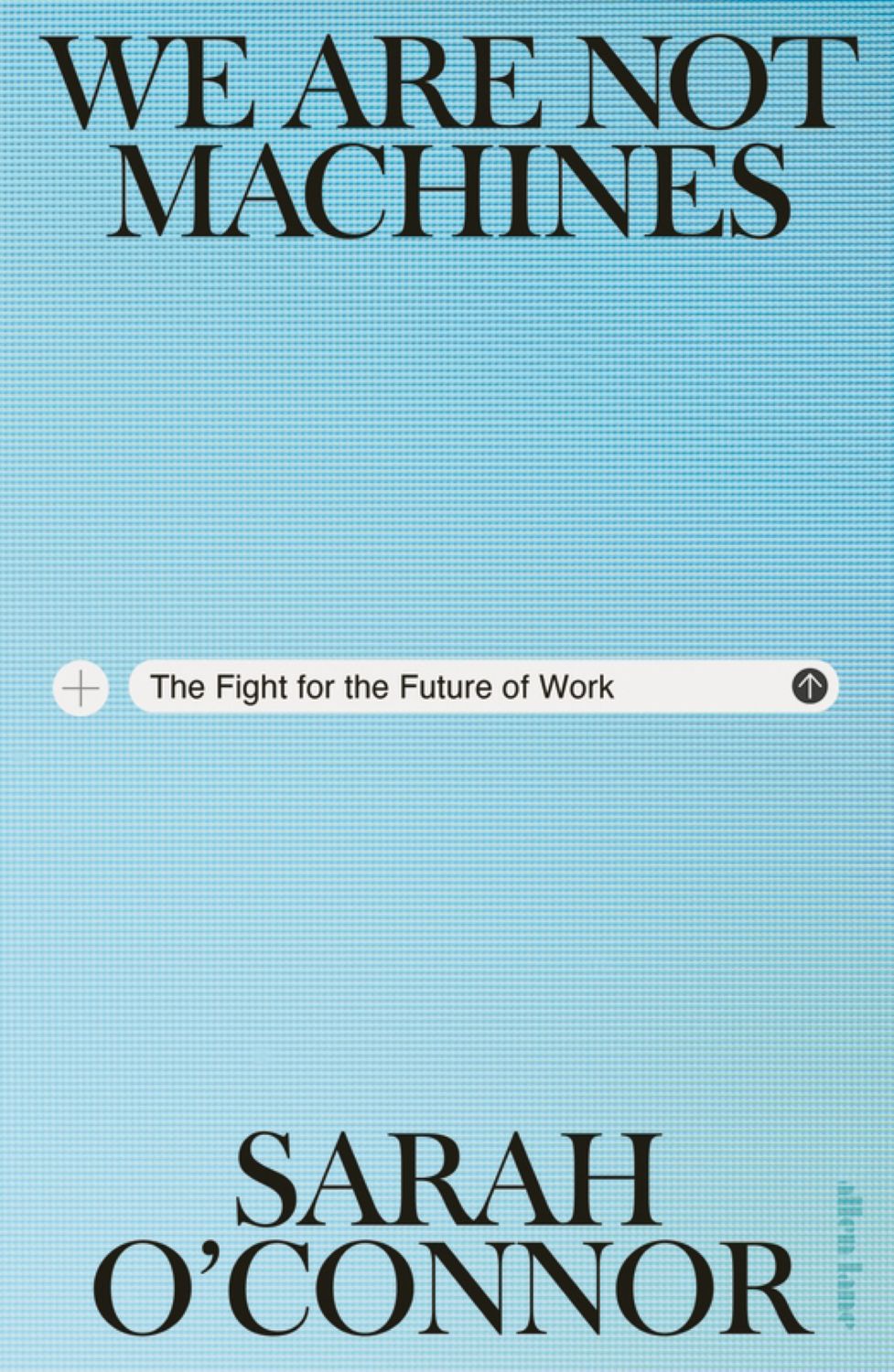
We Are Not Machines is an engrossing read that reframes the ongoing debate about technological change away from binary lists of winners and losers, and towards a discussion of power, politics and humanity. It is well-rooted in economic history yet brisk, taking in the development of factory management since the Industrial Revolution, and why John Ruskin rued that “it is not… the labour that is divided; but the men – divided into mere segments of men”.
At the heart of this book is an exploration of how humans not only make tools, but are shaped by them.
“The future of work can be more worthy of the human mind, more careful of the human body, more satisfying to the human soul,” she concludes. “But not without a fight.”
Yuan Yang is Labour MP for Earley and Woodley
Advertisement
We Are Not Machines: The Fight for the Future of Work
We’ve just sent this letter to the Crown Office and Procurator Fiscal Service.
Dear Sirs/Madams,
Thank you for your response, which I have considered with care.
I note you have advised that “full consideration was given to whether the crime of fraud could be established. That investigation did not disclose sufficient evidence of fraud, or for any crime other than the crime of embezzlement. These conclusions were agreed by the procurator fiscal, by Crown Counsel who was a KC and by a reviewing KC.”
I agree that the evidence to which I have pointed demonstrates the crime of embezzlement, as I said to you in my previous correspondence. The point is, however, that there are two instances of embezzlement: that to which Mr Murrell pled guilty (ie his embezzlement from the SNP); and that which has seemingly not been the subject of investigation and certainly not prosecution, for reasons which remain unclear.
Advertisement
The evidence to which I have pointed admits of little doubt. In short:
Money was ingathered by the SNP on the basis of assurances that it would be “ringfenced” for defined purposes
That money was thereafter subject to a trust under Scots law, in terms of which it could only be spent for those defined purposes
The First Minister of Scotland has now confirmed that the money was spent on other matters.
It really is that simple. It defies belief to think that the Procurator Fiscal and two KCs could look at that simple factual matrix and conclude that there was no evidence of a crime.
That being so inherently unlikely, I can only assume that those involved were not considering that point, and were (as your last reply suggests) considering rather whether or not it could be shown that fraud was involved in the solicitation of donations. I can quite understand that proving fraudulent intent at the time the donations were sought would be difficult.
But again (and at the risk of repetition) that is not the point. Assume that the donations were solicited in bona fide for the defined purposes: thus no fraud in ingathering the money.
That does not answer the question which I am posing, which is on what possible basis could it be lawful for those donations then to be spent on anything other than the defined purposes for which they were solicited?
Advertisement
I thus invite you to reconsider.
I should say that I have instructed the drafting of civil proceedings based on fraudulent breach of trust, which as I am sure you are aware is the civil equivalent of embezzlement.
Given that fact, I dare to suggest that it would be rather embarrassing for the Crown Office to be found to have ignored repeated requests to look at this very point if a civil court decides that what I have described above as a simple factual matrix does indeed show that which I contend is blatantly obvious: embezzlement, in the form of the wrongful use of money held on trust by those to whom it had been entrusted.
Ministers insist they are tackling youth unemployment, but is AI transforming the world of work too quickly for government to keep up? Zoe Crowther explores young people’s despair over AI and whether government is doing enough to help
Advertisement
Young people increasingly find themselves applying for jobs without ever interacting with another human being.
In response to her application for a door-to-door sales role, 22-year-old graduate Siena tells The House she received repeated emails addressed to “Dear English” after the recruitment system – likely powered by AI – appeared to mistake the word ‘English’ on her CV for her name.
“I understand some companies are overwhelmed with applications, but it’s got to a different level now,” she says. “It just feels like there’s a lack of actual personal connection with the people who are hiring.
Advertisement
“It is just demoralising. I’ve seen people with so much experience who can’t even get a hospitality job. It makes me feel like everything I’ve worked towards isn’t really worth it in the end.”
Others report that thousands of AI-generated ‘ghost’ adverts have made online job searches even harder to navigate.
The automation in the job application process works both ways. Danny, who has spent months struggling to get a graduate job, resorted to taking a free online course by digital learning platform TechTalk that taught him how to use AI to his own benefit when applying for jobs.
Advertisement
Danny uses AI to edit and tailor CVs and cover letters for each application, as he says he has to write up to 10 applications a day, which “gets a bit tedious when companies either don’t read them or reject them”.
“I don’t want to overuse AI because it creates generic cover letters which lack personality,” he says. “But I’m not sure it makes any difference, as it seems that AI is reading them too.”
The use of AI has rapidly expanded at a time when young people’s confidence in the future is already collapsing. Former health secretary Alan Milburn’s detailed review revealed a “lost generation” of more than one million 16- to 24-year-olds who are now Neet (not in education, employment, or training) – the highest level for over a decade and still growing.
The IPPR think tank has published new research showing a crisis of hope among young people, with only a quarter of 16- to 29-year-olds believing talent and hard work lead to fair opportunities. The report suggests that pessimism itself is becoming a policy problem as it could further discourage people from pursuing education, training or employment.
Advertisement
While many young people say AI is deepening those fears, Keir Starmer’s government made clear it saw adoption of AI as central to its mission to grow the economy. For many of those ministers still in post, the greatest risk of all would be businesses failing to build trust around adoption and bringing workforces with them.
Notably, both those worried AI is moving too quickly and those urging Britain to adopt it faster argue that the country is getting the transition wrong.
Experts and employers are concerned that Britain is failing to prepare workers, employers and the education system for an AI economy. This uncertainty is already forcing difficult questions about the advice young people have long been given, in terms of which skills to develop and which routes they can take towards achieving their career goals.
Dex Hunter-Torricke spent more than a decade leading communications for some of the world’s biggest technology companies, including Google DeepMind, before leaving the industry in autumn last year. He then joined the HM Treasury Board as a non-executive director to advise Chancellor Rachel Reeves on how AI could transform the economy.
Advertisement
He tells The House he would encourage young people to have a “wide-ranging intellectual curiosity” and build up skills and knowledge around a broad range of areas, rather than rely on narrow technical expertise in an increasingly automated economy.
“The tech industry in particular pushed this idea that coding and Stem were the key to success in the future,” he says.
“I have always strongly disagreed with this; it turns out machines are very, very good at doing lots of quantitative work, and are having a transformational impact on how many of those domains are operating.”
Anna Brailsford, CEO of Code First Girls, an organisation that provides free coding courses to women and connects them with employers, recently shared similar reflections with The House while considering the future of software engineering.
Advertisement
“The most well-rounded candidate is a humanities student that is technically brilliant. Their ability to articulate themselves, their ability to go client-facing – those women are absolute gold dust,” she said.
But the crisis of hopelessness among young people has cast doubt over whether going to university remains the most important guarantor of success, as many graduates struggle to find jobs. The British Social Attitudes Survey published this month found that 34 per cent of the public believes a university education “just isn’t worth the time and money it usually takes” – up from 14 per cent in 2005.
When ChatGPT was launched to the public in late 2022, it made powerful generative AI accessible to ordinary people overnight and changed the policy conversation almost instantly.
According to Francesca Fraser, former No 10 special adviser in the previous Conservative government, the adoption rate of ChatGPT took some parts of the government “by surprise”.
She says governments “always struggle with doing really long-term thinking”, particularly when the nature of technological impacts on the economy is so unpredictable.
Advertisement
Fraser is now head of policy and public affairs at Multiverse, the British educational technology company co-founded by Euan Blair that works with employers to deliver apprenticeships and workforce training.
“Ultimately, the impact that AI will have on the labour market will definitely be profound, but the precise way it lands depends on the economics of supply and demand and how people continue to use it,” she says. “So, it’s a really hard thing to map out.”
Starmer ministers point to the Youth Guarantee pledge that every 18- to 21-year-old should have access to education, training, an apprenticeship, work experience or employment, as well as expanded youth hubs and more than £1bn of AI investment, as evidence they are preparing young people for the future labour market.
However, critics argue these initiatives remain fragmented and do not amount to a coherent strategy to address the overall decline in entry-level jobs and the long-term impact of technological change, including AI, on junior roles.
Advertisement
Hunter-Torricke believes, as many do, that AI will deeply transform our societies and our economies, and that young people will need to be protected from an impending huge shock to the job market. The former tech insider tells The House that the money the government is throwing at the problem is simply acting as a sticking plaster.
“It makes me feel like everything I’ve worked towards isn’t really worth it in the end”
“But there are huge question marks about whether it’s even going to be competitive against the enormous amounts of investment from US big tech and other ecosystems,” he says.
Advertisement
“British businesses generally have been bad at adapting towards technology – that has been the case for decades now.”
AI adoption among UK SMEs is rising rapidly, with 35 per cent having actively used AI in 2025, up from 25 per cent in 2024, according to the British Chambers of Commerce. However, only around 11 per cent are deploying AI extensively to automate or streamline services.
“If you can’t invest in the general transformation and modernisation of industries and companies and workers, how do you expect them to be in a position where they’re able to hire young people?” Hunter-Torricke asks.
He says “sporadic announcements” and investments in AI-related infrastructure and supercomputers will not be as impactful as fixing the physical infrastructure in schools and investing back into public spaces and civil society.
Advertisement
“If you are only investing in those things which you know are likely to attract approving nods from Silicon Valley and from the tech elite, then you’re going to [see] what we’ve seen over the last couple of decades: which is a very small number of companies and people are going to do extraordinarily well, and the vast majority of workers remain stuck in low-wage jobs, which have very limited growth opportunities.
“What we have clearly been missing is the kind of political vision of what kind of country we want to be and how we intend to prepare our country to deal with a set of societal-wide and global transformations that are under way as a result of the arrival of the most powerful technology in history.”
Fraser from Multiverse argues that the problem lies partly in the way Britain develops skills policy. With the government struggling to build a system that keeps pace with technological change, she says employers need greater freedom to respond quickly to emerging skills gaps.
“There is a need for a slightly more agile skills system, whereby if employers see gaps they can fill those gaps without having to go to government and have an 18-month process to work out how the training should look,” she says. “The existing route to develop apprenticeship standards is probably a little bit too clunky.”
Advertisement
Fraser argues that helping people adapt to AI will be essential if governments are to maintain public confidence in the technology. “The best way you maintain consent for AI is by giving people human agency. The best way you can empower people is by training them, so that they can adapt in an AI-affected world.”
Labour MP Natasha Irons, who chairs the All-Party Parliamentary Group on Youth Affairs, tells The House that AI is simply exacerbating deeper structural issues that have created a “hostile environment for young people in this country”.
She believes that a feeling of despair among young people has built over years of events that have stacked up against them: the stripping back of youth services through austerity in the 2010s; the Brexit referendum; worsening mental health and the rise of addictive social media algorithms; rising housing costs and insecure living standards; the disappearance of traditional routes into stable careers; and the Covid pandemic.
For Irons, the problem with the government’s approach to helping young people has been a lack of “joined-up vision” for what growing up in this country should look like.
“I’m not sure there’s that thought leadership on this at the moment,” she says. “I would hope that the new Milburn review is an opportunity for the government to make this a real cross-government mission.”
Advertisement
Irons, who has children aged five and 11, says young people themselves might have to find ways to individually adapt to a changing world.
“Perhaps we’re moving to a world where, instead of having your path planned out for you the second you’re a teenager and you pick your GCSEs, we’re going to have to be more flexible and resilient to the jobs market around us,” she says.
“Our job as government and politicians is to ensure that our young people have those opportunities to develop those skills. The current education system is ‘pass an exam’ and that’s it, but actually we need our kids to be resilient and confident and be able to seek opportunities around them and not wait for things to happen for them.
“With votes at 16, young people have a real chance to flex their political muscles. If they’re concerned about the impact of AI, then perhaps it’s time they pull together their views and put forward a counterargument to it being an inevitable thing that we will have to just deal with. Maybe that’s where the hope will come from – from young people themselves.”
The Royal Courts of Justice in London (Glenys Kill/Alamy)
3 min read
When the wealthy and powerful turn to the courts to silence public interest speech, the British justice system has few protections in place to ensure that those targeted can defend themselves.
Advertisement
This is why we announced our Private Members’ Bills in both houses earlier this month to stamp out strategic lawsuits against public participation, or SLAPPs.
Abusive legal threats and actions disincentivise speaking out on issues in the public interest. If people such as journalists, academics, local campaigners and victims of crime – including survivors of sexual and gender-based violence – have been threatened into silence, they will stop communicating on issues that are important to them. Not only do they suffer, we all do, as there is less information in the public domain upon which we can depend to play a role in society around us.
The purpose of our bills is straightforward: to create an early-stage filter mechanism that allows courts to distinguish quickly between legitimate claims and abusive ones. Where a claim has genuine merit, it should proceed through the courts in the normal way. But where a claim is designed primarily to suppress public-interest speech through excessive cost and pressure, judges should have the power to identify it at an early stage and bring it to an end before irreparable harm is done.
Advertisement
Such abuse is not new. The term SLAPPs has been used since the late 1990s and countries across the globe have slowly moved to shield their legal systems from such abuse.
Around 40 US states have brought forward anti-SLAPP laws, with similar progress seen in three Canadian provinces. Last month marked the transposition deadline for the EU Anti-SLAPP Directive, which established minimum standards for member states to establish their own laws. And, last year, the Scottish government responded to a public consultation on the issue, stating: “the law should be reformed to address SLAPPs and would intend to do so at the next legislative opportunity”.
While we both represent the same party, this is not a partisan issue
Advertisement
While we both represent the same party, this is not a partisan issue. Over the last few years we have seen parliamentarians from across the political spectrum call for action on this issue, whether that means speaking out in debates or writing to the government as the Labour backbench, Tory Party, Lib Dems and Green Party did earlier this year, alongside a letter signed by 111 peers. In the last parliament, the then Labour MP Sir Wayne David introduced a similar bill which only failed due to the early calling of the general election. The Labour government has also indicated that it supports the introduction of legislation against SLAPPs and that it was only the lack of parliamentary time that prevented it from being included in this session’s King’s Speech.
Across the country, people speak out every day on issues that matter to their communities, their professions and the wider public. They expose wrongdoing, challenge powerful interests, raise concerns and contribute to democratic debate. In many cases, it is only after these people have taken the courageous step to speak out that others, be they the police, regulators or other bodies, have been able to act. These voices must be protected at all costs – and ensuring they can access justice and defend their speech is the least that we, as parliamentarians, can do.
The aim is simple: to give people a fair chance to defend themselves and greater confidence in the justice system. We hope our colleagues in both Chambers will support this necessary reform.
Advertisement
Baroness Stowell is a Conservative peer and John Whittingdale is Conservative MP for Maldon
Katy Hayward and David Phinnemore consider why voters in Northern Ireland have stronger convictions and opinions on Brexit – in both directions, and the political implications of this.
The most recent polling conducted on behalf of UK in a Changing Europe and the Policy Institute at King’s College London has shown that the British public have become more doubtful about Brexit – both in principle and in practice. The gap between those who think calling the 2016 referendum was the right rather than the wrong decision (43% to 38%) is much narrower than it was (66% to 24%). Relatedly, most people (48%) think Brexit is going worse than they expected and a similar proportion would like to see a second referendum within five years (compared to 27% who would not).
These and other polls are often read as reflecting the popular mood nationwide. However, polling companies generally only survey voters in Great Britain, i.e. England, Scotland and Wales. Not included in the results are the views of voters in Northern Ireland, which is, of course, the part of the United Kingdom where Brexit has had some of its most significant economic and political impacts, as attested to by the contestation around an ‘Irish Sea border’ that ran from on-street loyalist protests to EU infringement proceedings against the UK.
Over the last five years, we have been ‘temperature testing’ public opinion in Northern Ireland on various aspects of Brexit, notably the Protocol on Ireland/Northern Ireland – now the ‘Windsor Framework’. In our most recent poll (April 2026) we asked questions aligned with some of those put recently to voters in Great Britain. Generally speaking, we find that voters in Northern Ireland have stronger convictions and opinions on Brexit – in both directions.
Advertisement
The strength of opinion in Northern Ireland may reflect the intense ways in which Brexit has played out for the region, with implications for both unionism and nationalism. Relatedly, it may also be a consequence of the fact that many aspects of Brexit are viewed through the lens of identity politics. For the majority of voters in Northern Ireland, their Brexit-related identity is ‘very important’ to them: 57% of Leavers and 53% Remainers. Moreover, on most questions there are clear differences between those who identify as unionist (generally supportive of Brexit and wary of closer EU-UK relations) and nationalists (plus those who are ‘neither’) who take the opposite view.
In Northern Ireland there has been comparatively less overall movement in ten years on the question of membership of the EU. There have, however, been notable reversals of majority views in England where, excluding ‘don’t knows’, 60% support rejoining the EU compared to 47% voting Remain in 2016 and in Wales (65% v 48%), and a strengthening of the pro-EU position in Scotland (74% v 62%). In Northern Ireland, our polling shows that, excluding ‘don’t knows’, 62% in Northern Ireland are in favour of rejoining the EU, which is far less of an increase on the Remain vote (56%) a decade ago than in other parts of the UK.
One explanation may be found in the way that, as noted above, Brexit has reinforced identity-based divisions in Northern Ireland. Whereas in 2016, 34% of unionists voted Remain, only 18% of unionists believe the UK should rejoin the EU; 73% oppose the idea. Meanwhile, 85% of nationalists and 88% of neutrals (i.e. identifying as neither nationalist nor unionist) would like the UK to rejoin. These would suggest that our finding of 62% today wishing to rejoin comes as a result not so much of unchanging positions but polarising ones, i.e. unionists are more trenchantly pro-Brexit and nationalists/others are more staunchly anti-Brexit than they were a decade ago.
Such polarised views are extremely significant in Northern Ireland, and not just in terms of its constitutional and political future. They are also reflected – and to a greater extent – in responses to a question that has every possibility of being the ‘next Brexit’: whether the UK should leave the European Convention on Human Rights (ECHR), a core policy of both Reform UK and the Conservatives. This matters for Northern Ireland since the application there of the ECHR is a legal requirement under the 1998 Belfast (Good Friday) Agreement.
Advertisement
In Great Britain, 75% of voters have a view on whether the UK should leave the ECHR: 29% agree, 46% disagree. In Northern Ireland, our polling shows 94% have a view: 36% support the UK leaving the ECHR, 58% disagree, with almost half of all voters (49%) ‘strongly’ of that view. Here again, voters are split on along identity lines. Almost three quarters of unionists (73%) support the UK leaving the ECHR; 91% of nationalists are opposed, as are 86% of neutrals. The strength of polarised opinion is also greater in Northern Ireland than the rest of the UK, with 74% of Leave voters here compared to 61% of Leave voters in Great Britain wanting out of the ECHR.
This stands as a warning to political leaders in the UK. Whatever direction they choose to take for the UK in its relations with the EU and on the ECHR, the ramifications for a polarised Northern Ireland will be intensely felt and difficult to manage. If Brexit was a genie most people in the UK regret releasing, those with their hands on the next bottle marked ‘Taking back control’ need to think very carefully about Northern Ireland before they twist the cap to release whatever is inside.
By Katy Hayward, Professor of Political Sociology, and David Phinnemore, Professor of European Politics, Queen’s University Belfast.
The House of Lords has effectively blocked the Assisted Dying Bill through delay tactics and filibustering. Dr Simon Opher, Chair of the House of Lords Reform APPG, calls for change
This article was commissioned by the Total Politics Impact team.
Reform of the House of Lords is something many governments have been toying with for over a hundred years.
Advertisement
A second chamber, where leaders in religion sit beside crony donors and, until recently, those who have been lucky in the lottery of life, is rapidly becoming an anachronism in a modern democracy.
We are blessed to have many impressive peers who work hard and have immense experience. However, the fact remains that this House is entirely undemocratic. It’s a job for life unless you have done something very bad.
On top of this, there are no rules concerning the governance of the House. There are gentlemen’s agreements about allowing through government legislation. But these are unenforceable conventions.
The Lords pride themselves on being self-governing, run by a few good chaps. The Speaker cannot curtail speeches or insist on the grouping of amendments. Debates under this system can, literally, go on forever.
Advertisement
During the passage of the Assisted Dying Bill, twice given backing by the Commons, a handful of Peers, many very recently rejected by the electorate, simply blocked progress of the bill.
By tabling 1,200 amendments and talking for hours on end, a full 16 days of debate were had with no end result. And the worst thing was, these peers did not break any rules; it was all entirely legitimate.
Opponents in the Lords claimed they were being constructive. But their tactics meant there was no opportunity for amendments to be adopted. Let’s be clear – they were simply ideologically opposed to the principle of assisted death.
Advertisement
This bill is the safest of its kind – I say this having worked in palliative care for 30 years.
Peers have every right to disagree with the legislation. Many people do. However, they have no right to overturn the will of the elected chamber and impose their beliefs on the British people.
We have, since this thoroughly undemocratic moment that all of Parliament should be ashamed of, set up an APPG to reform the House of Lords.
We see this in two stages.
Advertisement
First, the Lords need to adopt rules around their governance to prevent filibustering. This means giving primacy to the Speaker, who can set speech limits, group amendments and rule on other procedural issues.
Secondly, we need to reform the structure of the Lords. This government has already thrown out the hereditary peers and is set to introduce retirement and participation rules.
My feeling is that a system where religious leaders and party donors get to legislate is not fit for purpose.
The government should establish a national commission of citizens and experts who can form a consensus around what an alternative upper chamber could look like.
Advertisement
Ultimately, we must do all that we can to prevent a gross abuse of power by unelected officials from ever happening again.
It appears that the handful of peers who were so strongly against the Assisted Dying Bill may have actually enabled the death of their own chamber.
spiked is funded by readers like you. Only 0.1% of regular readers currently support us. If just 1% did, we could grow our team and step up the fight for free speech and democracy.
Become a spiked supporter and enjoy unlimited, ad-free access, bonus content and exclusive events – while helping to keep independent journalism alive.
Alert readers may note that while Wings has repeatedly noted that the misappropriation of the fundraiser money by the SNP could constitute either fraud OR embezzlement (or both), entirely separate to the embezzlement FROM the SNP by Peter Murrell, the Crown Office continues – as its agent John Logue did in a recent BBC interview – to address only the possibility of fraud, which would be by far the more difficult of the two to prove, and to ignore the elephant in the room, which is that no less a personage than the First Minister has already admitted to spending all of the money on a purpose other than that which it was raised for.
The response is therefore plainly unsatisfactory, which we will deal with in our own reply within the next 24 hours, which will again be drafted by counsel. We will of course publish it here once it’s sent, so stay tuned.
Bosnia salutes their fans after World Cup exit/Alamy
4 min read
Early this morning, Bosnia and Herzegovina’s World Cup journey ended with defeat to the United States. Today, its players begin the journey home.
Advertisement
Yet the most important story was never the result.
Some of these young footballers are the children of survivors of the genocide at Srebrenica. Others come from families that endured the siege of Sarajevo, survived concentration camps or were driven into exile by war.
They represent a generation that exists because their parents and grandparents survived an attempt to destroy both a people and a state.
Advertisement
For the four weeks of the tournament, they achieved something Bosnia’s political leaders—and much of the international community—have failed to accomplish in almost three decades: they gave Bosnians a reason to believe in their country, in one another and in a shared future.
Since the Dayton Peace Agreement ended the war, Bosnia’s nationalist elites have built an entire political economy around division. They do not solve problems; they manufacture crises. They do not govern; they manipulate. Rather than competing over economic growth, education or the rule of law, they compete over fear. Every election is turned into a referendum on ethnic survival. Every reform is portrayed as an existential threat. Every compromise is denounced as surrender.
For secessionists, the argument goes further. They portray Bosnia and Herzegovina as an artificial state—unworkable, unsustainable and destined eventually to disappear. The country’s political dysfunction is treated not as a problem to solve, but as proof that the state itself cannot succeed.
Advertisement
The tragedy is that too much Western policy has accommodated this narrative rather than challenged it. Obstruction has been rewarded in the name of stability. Secessionist threats have been managed rather than defeated. This national team exposed the bankruptcy of that approach.
Its players came from different cities, different communities and families shaped by war in profoundly different ways. Some were born in Bosnia and Herzegovina. Others were raised in the diaspora because conflict forced their families to flee. Their histories were different. Their shirt was the same.
Nobody asked whether the goalkeeper was Bosniak, Serb or Croat before celebrating a save. Nobody cared which entity a defender came from after a last-ditch tackle. The only qualification that mattered was whether a player could help the team win. Merit replaced ethnic arithmetic, and patronage. Shared purpose replaced manufactured division.
That is how successful teams are built. It is also how successful states are rebuilt.
Advertisement
Football cannot rewrite Bosnia’s constitution. It cannot reform public administration, strengthen the judiciary or stop young people leaving. It cannot dismantle the patronage networks that have hollowed out public life.
But it can expose a lie. The lie is that Bosnia’s citizens are incapable of acting together. The lie is that ethnic division is immutable. The lie is that Bosnia and Herzegovina exists only because outsiders insist upon it. For four weeks, millions of Bosnians disproved all three.
That is why reports that public screenings and celebrations were discouraged in some predominantly Serb municipalities should not be dismissed as isolated incidents. They reveal something more profound. A successful Bosnian national team threatens political movements whose legitimacy depends on denying the existence of a shared Bosnian civic identity. A population united by achievement is harder to manipulate through fear.
The players did not defeat nationalism. They demonstrated that nationalism is a political strategy, not a historical inevitability.
Advertisement
No one should romanticise what happened. Bosnia’s constitutional paralysis remains. Corruption remains. Secessionist rhetoric remains. So does the unresolved legacy of genocide, including its denial and the glorification of convicted war criminals by some political leaders.
But one assumption has become much harder to sustain. If a team made up of young people from families shaped by genocide, siege, displacement and exile can unite around a common purpose and earn success through merit alone, what excuse remains for politicians who have spent thirty years insisting that the country itself cannot function?
The players are going home. Bosnia’s nationalist leaders remain exactly where they have always been. They deserve a political red card. Increasingly, so do those in democratic capitals who continue to indulge them.
For too long, the Internal community has, in the name of “stability”, all but legitimised those who undermine Bosnia and Herzegovina’s constitutional order, normalised secessionist threats and treated political spoilers as indispensable interlocutors rather than as the principal obstacle to a secure, democratic European state.
Advertisement
The lesson of this World Cup is that Bosnia and Herzegovina’s citizens have once again demonstrated that they are ready for a country built on merit, competence and shared citizenship. Bosnia is not held together by international supervision or constitutional engineering. It endures because its people continue to choose it.
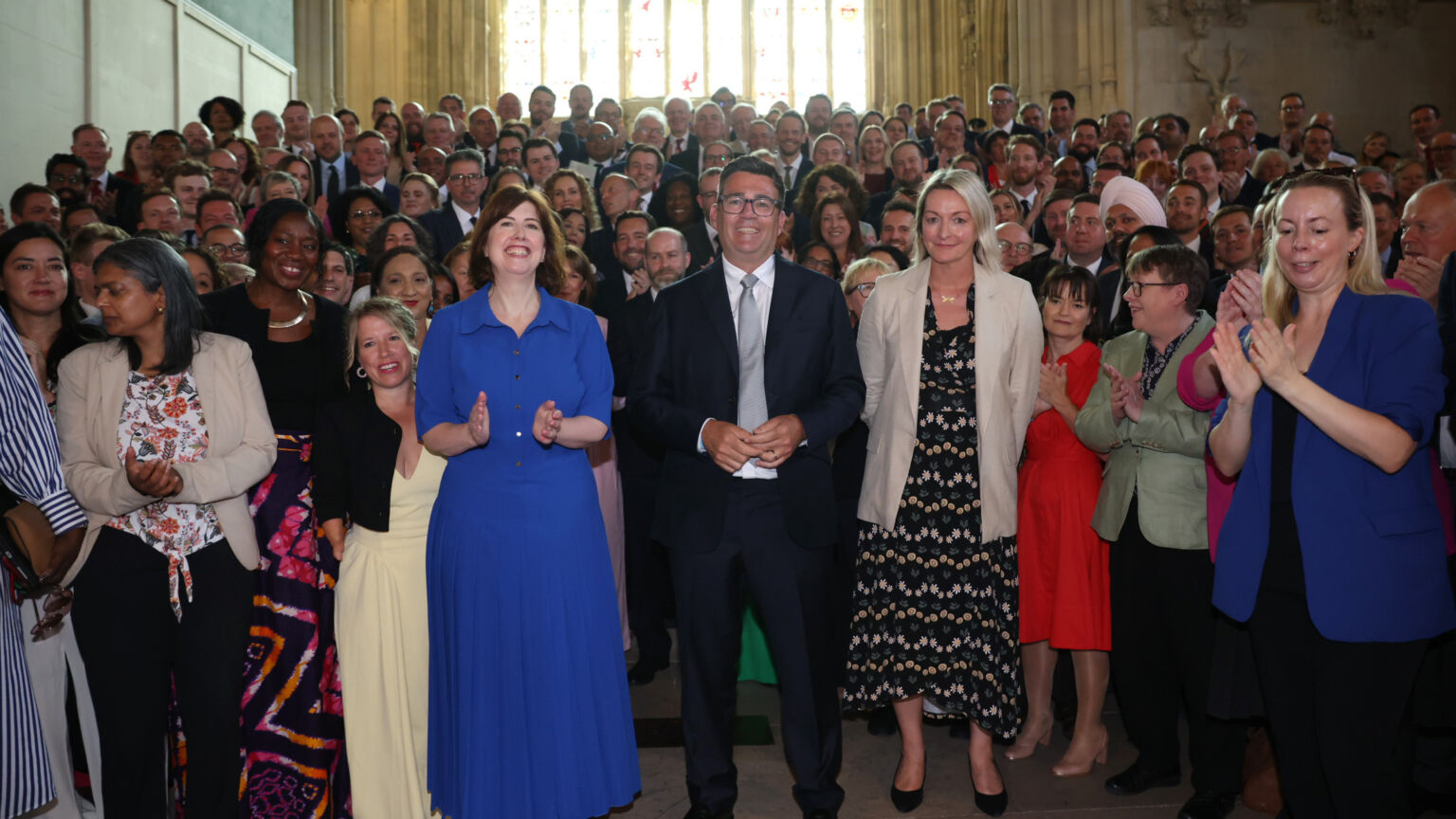
Could Britain be about to get its first female Labour prime minister? Fear not, there’s no sign of Angela Rayner or Lucy Powell stepping up to the plate. It’s Andy Burnham himself who could be ‘Labour’s first woman PM’, a senior Labour source told the Spectator last week, because he is ‘genuinely passionate about all those traditionally female-oriented issues’.
The Labour source who misgendered Burnham went on to explain that, unlike female Conservative prime ministers, a woman Labour leader would ‘have an unashamedly female agenda, focussed on health, education, family finances and issues like safer streets, social care, online safety for kids’. Issues, we were told, that are ‘disproportionately important to women’. And the person with these priorities? ‘Along comes Andy, surrounded by female advisers and backers, but more importantly, genuinely passionate about all those traditionally female-oriented issues, and much less about bombs and budgets.’ Got that, girls? Leave the big stuff to the boys, and focus on the family finances. And Labour wonders why it has a woman problem.
To be fair, the idea that Burnham could be a female prime minister ‘in all but sex’, because he is interested in health and education, is no more bonkers than thinking a man can become a woman simply by donning a frock. And, in the not-too-distant past, this is exactly what Burnham thought.
Advertisement
In an exchange from 2022, our presumptive PM responded to the idea that female toilets should be a space only for women by saying, ‘I think it’s a minority view and quite a small minority view, actually’. He left no room for doubt: ‘I support trans rights, and I want that to be known.’ Indeed, Burnham supported reforming the Gender Recognition Act, and in 2019 co-wrote a letter urging the then Conservative government to back self-identification, which would allow people to change their legal sex without a medical diagnosis of gender dysphoria.
With Downing Street now firmly in his sights, it seems that Burnham now agrees that women should have access to single-sex spaces. The Supreme Court ruling on gender, he said last month, ‘has to be implemented’. And, it seems, he now accepts that he will not be Labour’s first female prime minister. ‘I want to put on record that I never have and never will describe myself as the first female Labour PM!’, he told Labour’s women MPs this week. Phew!
Advertisement
Burnham might not see himself as a literal woman, but he clearly does fancy himself as a feminist. He wants to put an end to the idea that the Labour Party has a woman problem and that Downing Street has been operating as a boys’ club. So he has promised the women in the Parliamentary Labour Party that, when he is in charge, there will no longer be any government meetings ‘with no women in the room’.
Plenty of Labour’s women MPs seem determined to hold him to his word. A group of them have drafted a letter, expected to be sent next week, urging him to address the ‘toxicity and misogyny’ within the party by appointing a named minister with responsibility for women in every department in government, and by ensuring that half of all government jobs go to women.
Advertisement
But Labour’s woman problem is hardly numerical. Almost half of all Labour MPs are women. And there is no lack of shiny-haired women in the top jobs. There’s Shabana Mahmood in charge at the Home Office, Yvette Cooper at the Foreign Office, Rachel Reeves at the Treasury and Bridget Phillipson in the Department for Education. Other than the role of prime minister, nearly all the major offices of state are currently held by women.
Yet still, Burnham is under pressure to go further, and he seems all too happy to oblige. He will end the ‘culture of briefing against female ministers’, he told Labour’s women this week. Anyone who undermines female members of his team will be sacked, he has promised. But what if female ministers deserve criticism? Whether it’s raising employers’ National Insurance contributions or pledging to increase inheritance tax paid by farmers, Rachel Reeves has been a disaster as chancellor. Phillipson’s VAT raid on private schools has cost more money than it has saved and forced hundreds of schools to close. Shabana Mahmood’s one-in, one-out migration deal with France has been an abject failure. It is neither toxic nor misogynistic to point this out.
And then there are Labour’s backbenchers. The party’s deputy leader, Lucy Powell, dismissed grooming gangs as a ‘dog whistle’ issue not worthy of discussion. MPs Stella Creasy and Nadia Whittome are busy trying to overturn the Supreme Court ruling on women. Kim Leadbeater seems to have more to say about women’s right to be helped to die than she does about their right to give birth safely.
Advertisement
If Labour has a woman problem, it lies with Labour’s women themselves. But Burnham’s patronising pledge to use quotas to guarantee women top jobs and then shield them from criticism will only make things worse. He needs to man up and reject such tokenistic demands.
If Andy Burnham wants to win back women voters, he should start by clearly stating that he knows what a woman is. He could pledge that the Supreme Court ruling will be fully implemented and women’s single-sex spaces will be protected. He could put a stop to the planned trial of puberty blockers for children. Defending women’s rights – whether that’s access to single-sex spaces, protecting white working-class girls from rape gangs or ensuring women can give birth without risking their lives – will take more than promoting a few woke women into well-paid government jobs.







 We Are Not Machines is an engrossing read that reframes the ongoing debate about technological change away from binary lists of winners and losers, and towards a discussion of power, politics and humanity. It is well-rooted in economic history yet brisk, taking in the development of factory management since the Industrial Revolution, and why John Ruskin rued that “it is not… the labour that is divided; but the men – divided into mere segments of men”.





















































You must be logged in to post a comment Login